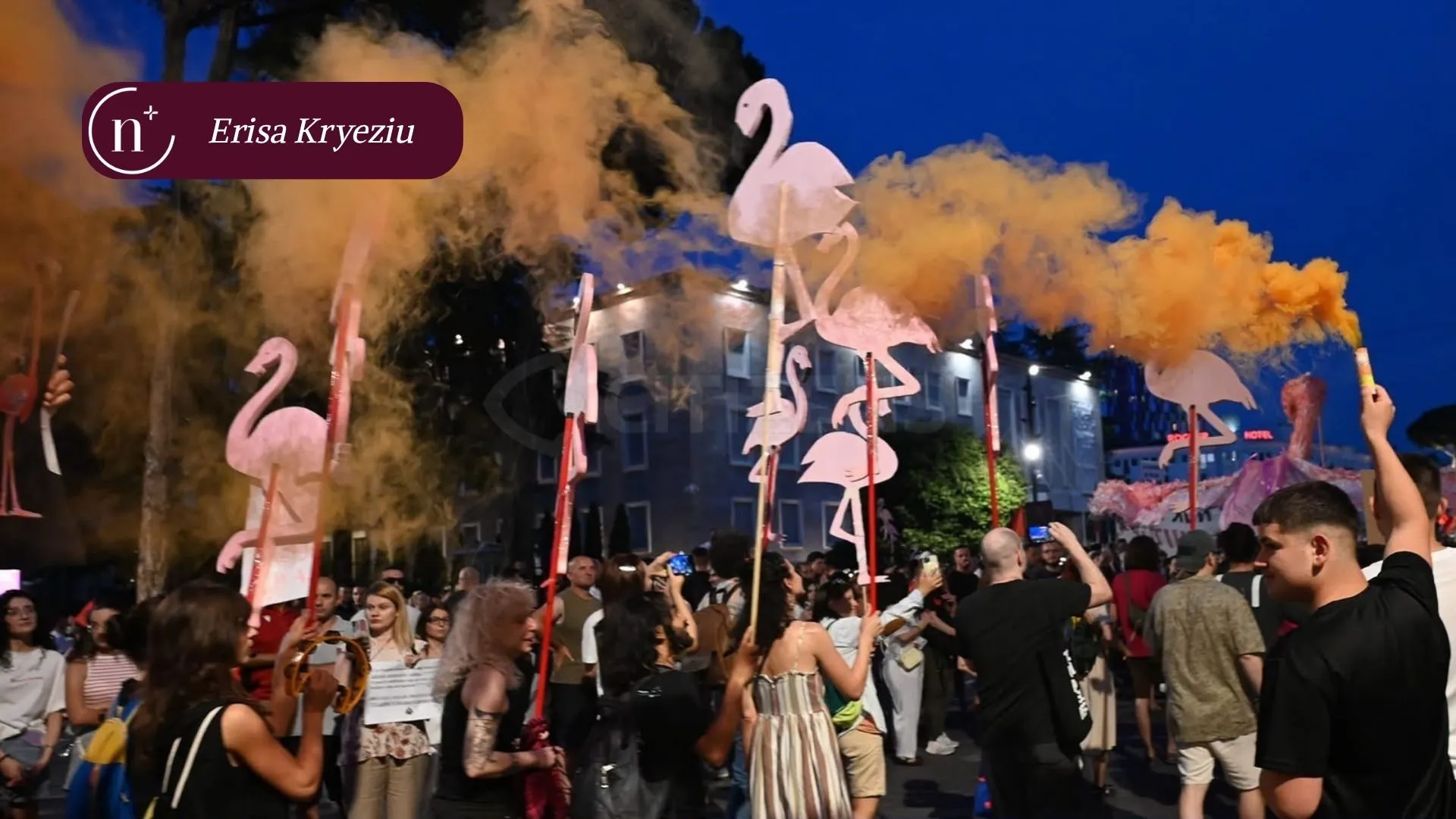
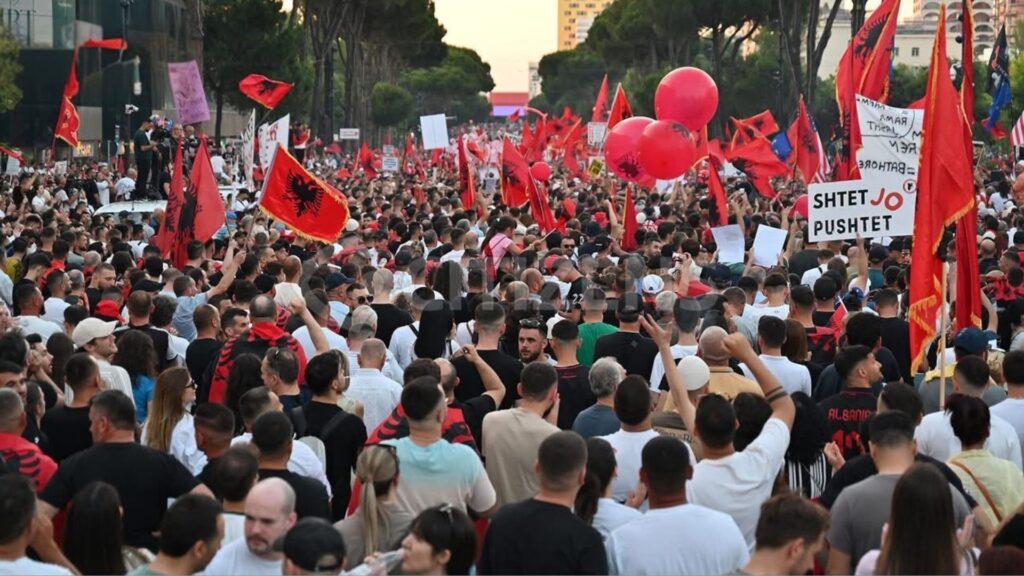
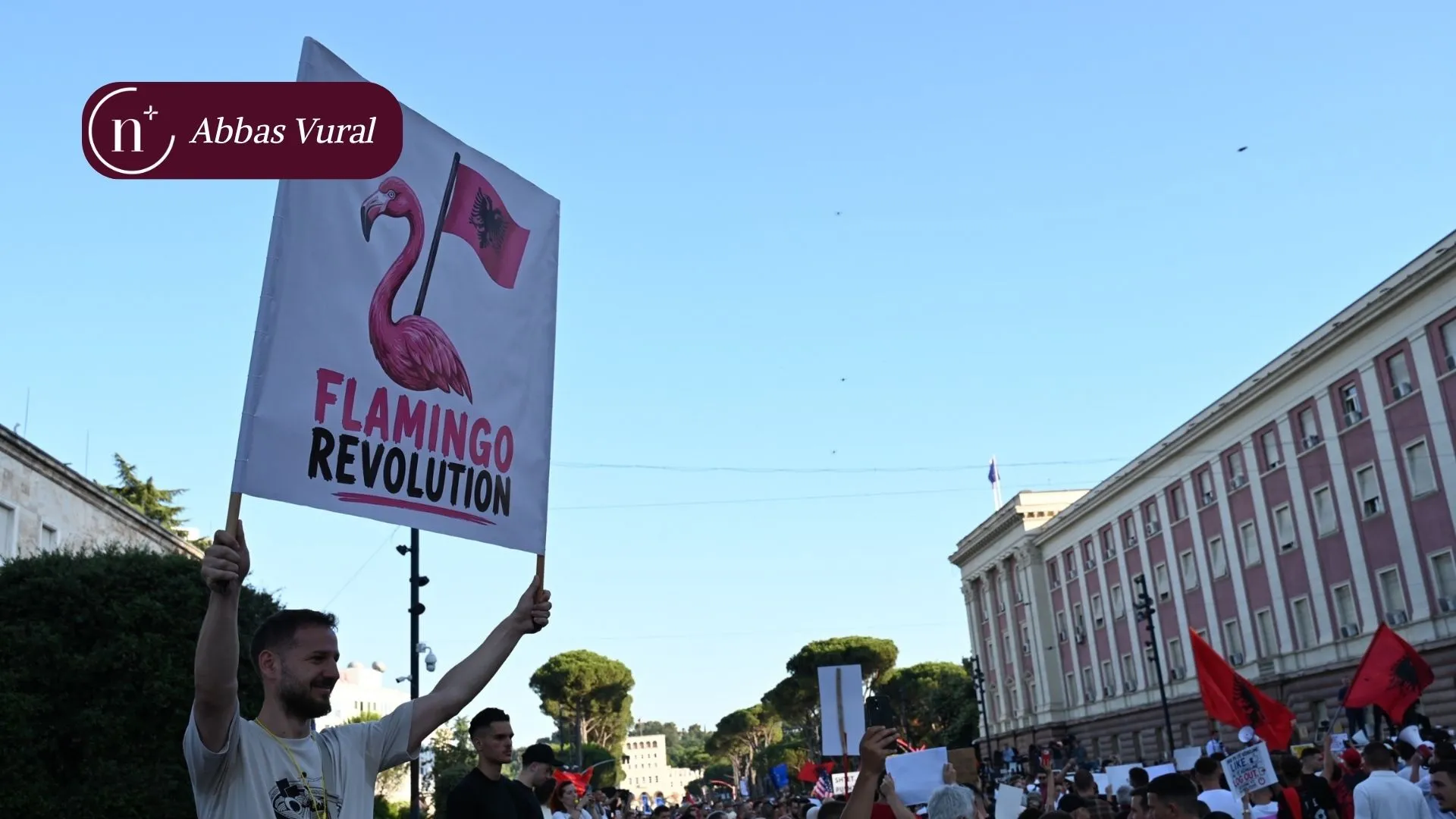
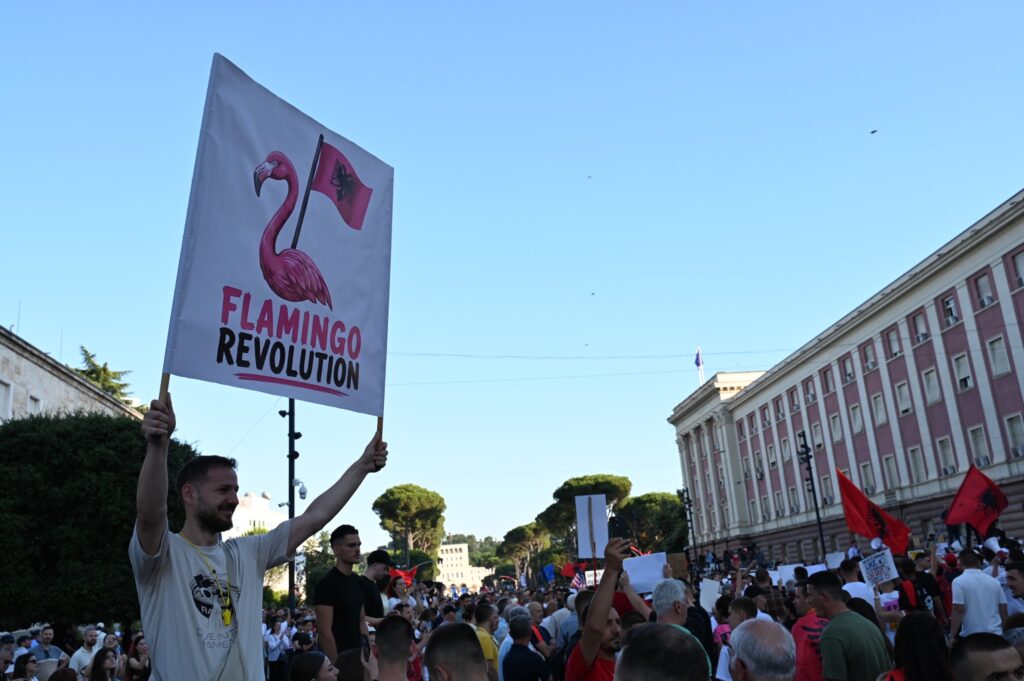
In Tirana, protests that began as an environmental movement have transformed into a mass anti-government movement, with demonstrators demanding the resignation of Prime Minister Edi Rama and fundamental institutional reforms.
Photo: Citizens Channel
The citizen-led protest movement against the Albanian government has entered its 24th consecutive day, marking one of the longest sustained civic mobilizations in the country in recent years. Every evening, protesters have gathered in central Tirana to express their dissatisfaction with the government of Prime Minister Edi Rama, demanding political and institutional changes that, in their view, would ensure a more democratic system that is more accountable to citizens.
What began as a protest against the construction of tourist resorts in the protected Pishe Poro–Narta area has now evolved into a broader movement against the government and the way Albania has been governed over the past 35 years by all major political parties. Protesters are calling for a “New Albania” and for investigations into all politicians who have held power and made decisions that they believe have harmed the Albanian people.
After more than three weeks of daily demonstrations, the organizing group unveiled five key demands, which they described as “legitimate and non-negotiable.” The first demand is the immediate resignation of Prime Minister Edi Rama and his government. Organizers argue that the government has lost its legitimacy to govern and that a political solution is needed through the establishment of a transitional technocratic government.
The second demand calls for the creation of a non-partisan technical government with a limited mandate, which would administer the country for at least one year and prepare the conditions for free elections and institutional reforms. Protesters are also calling for constitutional amendments and electoral reform, which they argue should be approved through a popular referendum.
The list of demands also includes changes to the law on political party financing, with organizers arguing that the current system lacks transparency and allows illicit interests to influence politics. Another demand seeks to introduce a constitutional limit of no more than two terms for any prime minister.
In addition to these demands, organizers have reiterated their opposition to several government policies, including legal changes affecting protected areas, cultural heritage sites, and the strategic investor scheme, which they consider a mechanism that has facilitated controversial development projects.
Photo: Citizens Channel
While the protests have remained largely peaceful, tensions between the organizers and Prime Minister Rama have intensified in recent days. Activists accuse the prime minister of publicly targeting and discrediting protest participants through statements and social media posts that they describe as defamatory and dismissive. The government, on the other hand, has downplayed the protests and questioned the motives of the organizers.
Organizers and participants say the demonstrations will continue every evening until their demands are met.
The protests are unfolding in a highly polarized political environment and represent the most sustained civic challenge faced by the Albanian government in recent months. It remains unclear whether the movement will lead to concrete political or institutional changes, but it has already become a significant expression of public discontent and demands for greater accountability in Albania.
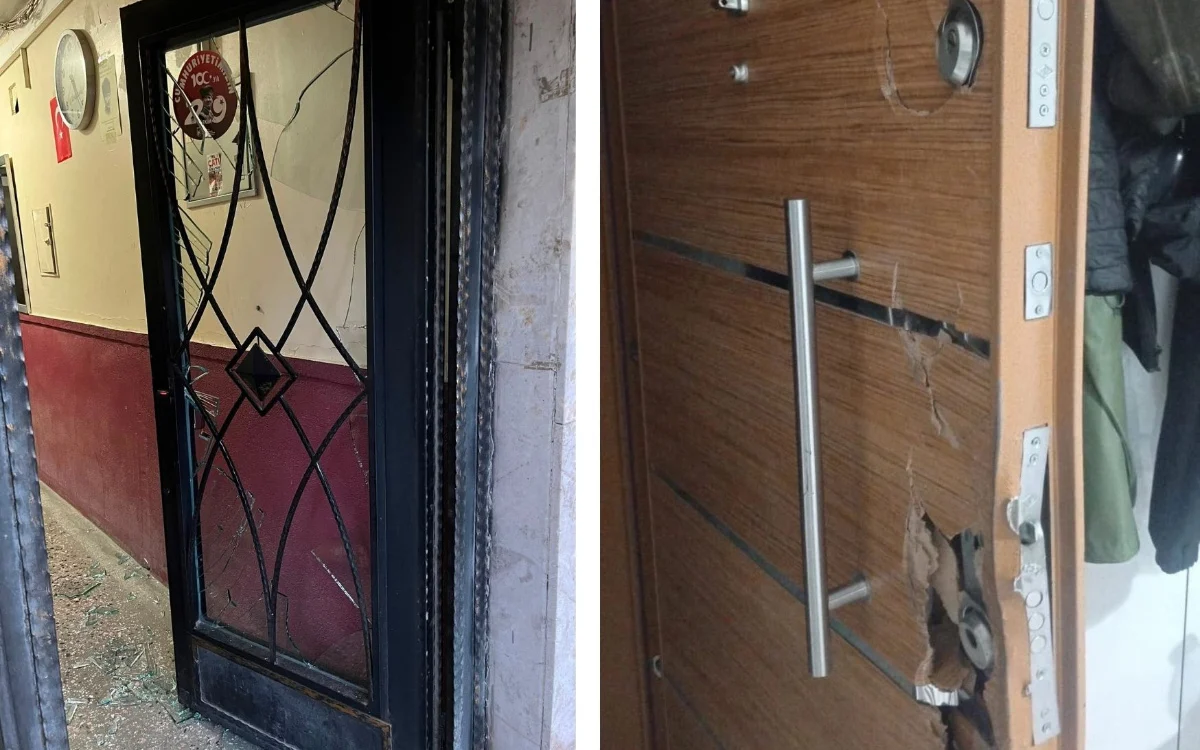
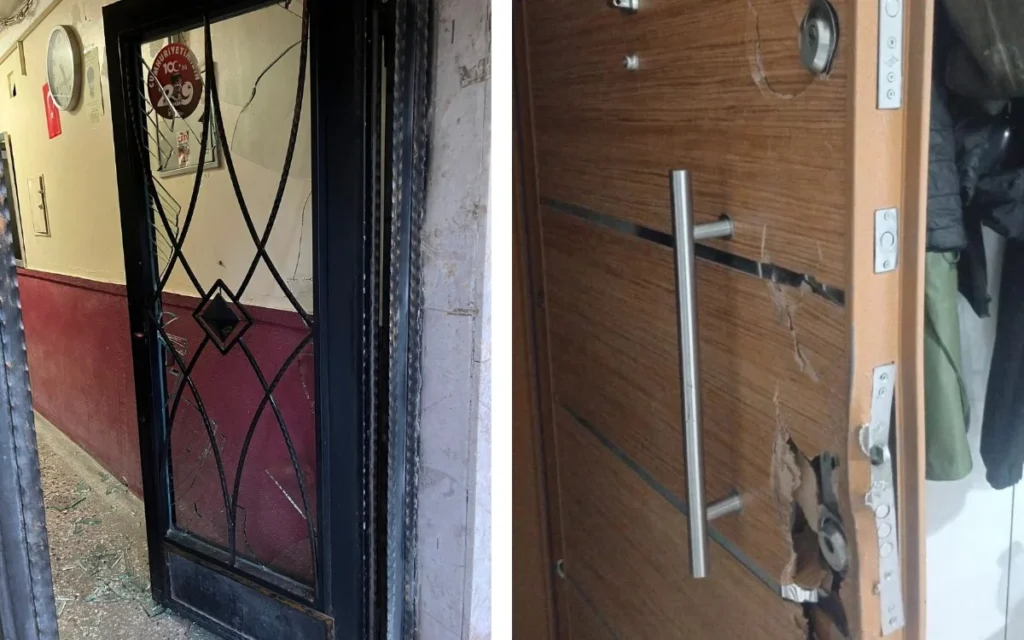
Ahead of the NATO summit to be held in Ankara on July 7–8, numerous people were detained during house raids. Among the 209 detained individuals are Elif Torun Öneren, the Chairperson of the Revolutionary Party, Hediye Yıldırım, a member of the Executive Board of Halkevleri, and journalist Yıldız Tar. A 24-hour restriction on lawyer access has been issued for the case file.
Photo: Evrensel
Following the Ankara Governorship’s 13-day ban on all demonstrations and events across the city for the NATO summit to be held on July 7–8, 2009 people were detained during morning raids targeting the homes of those who participated in anti-NATO protests.
During simultaneous morning house raids, numerous individuals from various institutions were detained, including the New Democratic Youth (YDG), the Federation of Socialist Youth Associations (SGDF), the Free University Movement, the Contemporary Lawyers’ Association (ÇHD), the People’s Law Office, and the Union of Precarious Unemployed Workers (UMUT-SEN). According to a statement by the Ankara Chief Public Prosecutor’s Office, detention warrants were issued for a total of 241 people, and 209 individuals have been detained so far. A 24-hour restriction on lawyer access was imposed on those detained.
Backlash against rounding up stray animals
The Ankara Governorship had previously announced that, on the grounds of “ensuring summit security,” various bans would be implemented from 00:00 on June 28 until 23:59 on July 10, ahead of the NATO Summit to be held in Ankara on July 7–8.
On the other hand, ahead of the NATO Summit, the Ankara Provincial Security Directorate requested the rounding up of street dogs, particularly along the routes the delegation will pass and around accommodation areas. The official letter sent to municipalities requesting the rounding up of stray animals drew sharp criticism from various segments of society, led by animal rights defenders.
Melodi Zengin from the İzmir Life Rights Defenders stated, “We do not accept the rounding up of animals for the murderer NATO.” Zengin noted that rounding up animals is the product of a completely “anthropocentric” perspective that rejects ecological integrity.
The press release issued by the Turkey’s Ankara Governorship regarding the restrictions is as follows:
“Within the scope of the 36th NATO Summit to be held in Ankara on July 7–8, 2026; necessary security measures have been taken both to ensure the security of the summit and to maintain the peace and safety of our citizens by preserving public order. Accordingly, the following decisions have been made.
In order to prevent actions/activities that violate the provisions of Articles 6–10 and 22 of the Law No. 2911 on Meetings and Demonstrations, which state, ‘Meetings cannot be held in parks, places of worship, buildings and facilities performing public services and their annexes, and within an area of 1 km from the Grand National Assembly of Turkey. In meetings held in public squares, it is mandatory to comply with the regulations to be made by the Governorships and District Governorships to ensure the passage of the public and transport vehicles’;
Based on the provision of Article 17 of the Law No. 2911 on Meetings and Demonstrations, which states, ‘The regional governor, governor, or district governor may postpone a specific meeting for a period not exceeding one month, or ban it if there is a clear and imminent danger of a crime being committed, for the purpose of protecting national security, public order, prevention of crime, public health and public morals, or the rights and freedoms of others,’
and Article 11/C of the Provincial Administration Law No. 5442, which states, ‘It is among the duties and responsibilities of the Governor to ensure peace and security, personal immunity, safety regarding disposition, public welfare, and to exercise preventive law enforcement authority within provincial borders. (Additional sentence: 25/7/2018-7145/1 art.) The Governor takes the necessary decisions and measures to ensure these’;
Taking into account the protests previously held by various groups in places where guests will be accommodated and where the meeting will take place, as well as the calls made by these groups through social media;
For the purposes of ensuring national security, the reputation of our country, the peace and security of citizens, public order, the prevention of crime, and protecting the rights and freedoms of others, as well as the life safety of the delegations participating in the summit at the highest level;
ACROSS OUR PROVINCE,
Preventing the entry of unauthorized vehicles and individuals into designated sensitive areas, particularly the zones where the summit will be held, places where the delegation will stay, and transition routes,
Banning all kinds of unmanned aerial vehicle (drone, etc.) flights in the airspace of our province between the specified dates (except with the permission of the Governorship),
BANNING all kinds of open and closed area gatherings, meetings and demonstration marches, press statements, hunger strikes, sit-ins, protest actions, rallies, setting up stands, pitching tents, distributing flyers/manifestos/brochures, hanging posters/banners, etc., actions/activities within the scope of Article 11/C of Law No. 5442 and Article 17 of Law No. 2911 on Meetings and Demonstrations, from 00:00 on June 28, 2026, until 23:59 on July 10, 2026 (for a duration of 13 days), necessary decisions have been made.
Afghan women’s rights defender Laleh Osmany said the chanting of “Woman, Life, Freedom” during the protests in Herat reflects “a deep, transnational solidarity among women rooted in a shared cultural sphere, as well as their high awareness of their fundamental rights.”
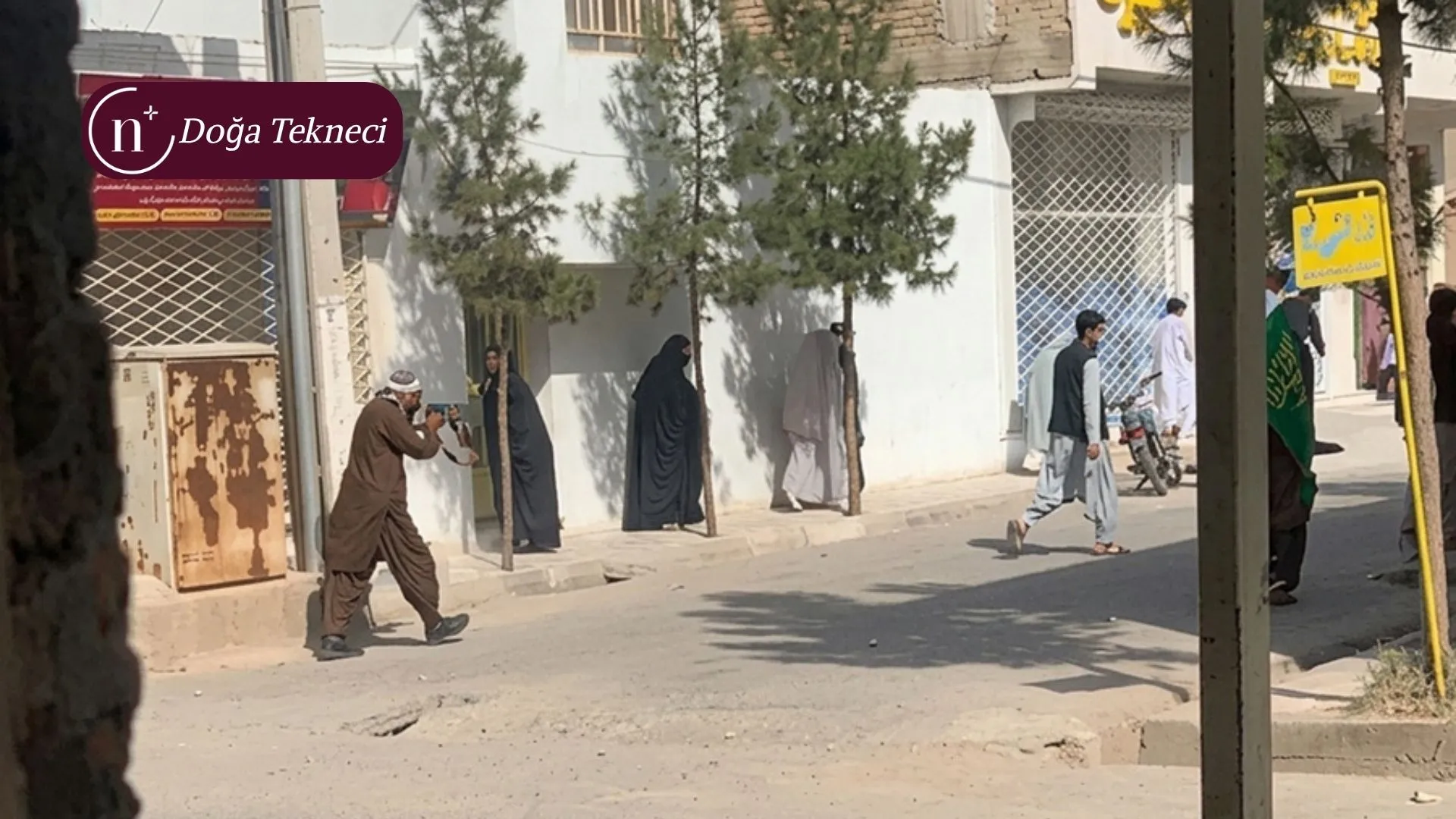
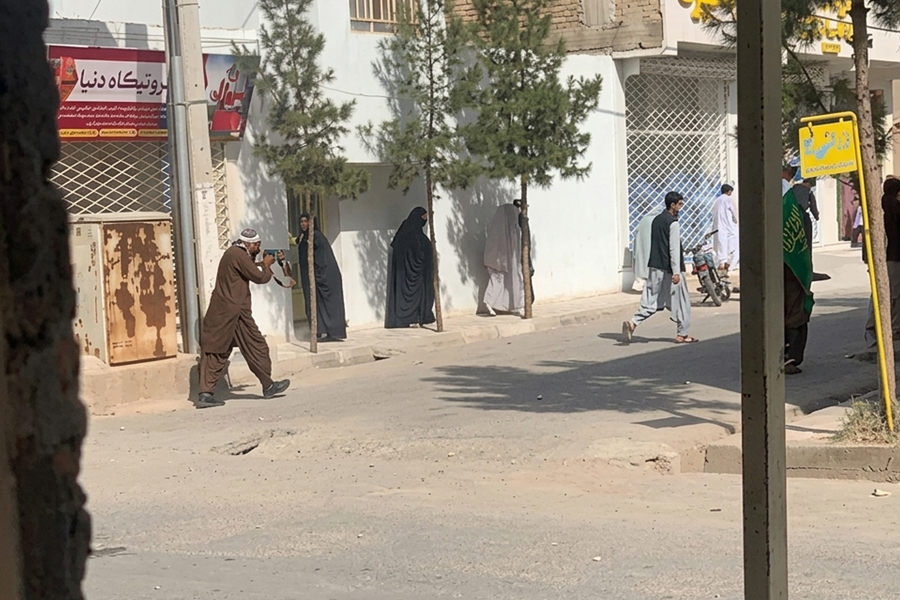
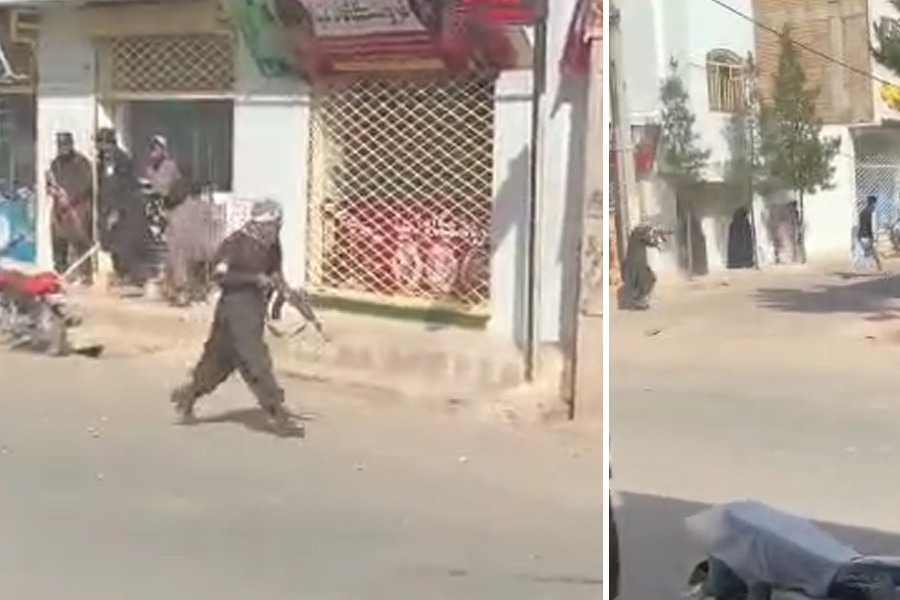
Taliban crackdown on protest in Herat on June 9th, 2026. Photo: 8am Media
In Afghanistan, some residents from the Jibrail area of Herat Province held a protest rally on June 8th. The protests have raised over the ongoing arrests and harsh treatment of women by the Taliban’s Morality Police starting on June 6th. According to local resources, Taliban began to forcefully make women to wear Chadari or burqa and warning that those who do not wear will be imprisoned.
On June 11th, in a second wave of protests, the people of Herat gathered in front of the governor’s office to protest the acts of detention and violence against women, chanting “Death to the Dictator,” “Women, Life, Freedom,” and “Education, Work, Freedom.” Since June 8th, Taliban police had been trying to disperse the crowds by opening fire on the gathered people for days.
Murtaza, a 16-year-old Afghan youth, was wounded by two bullets to his leg during the Taliban police’s crackdown on the protests in Herat and passed away on June 16th. It was reported that at least 20 people were injured as a result of the Taliban police opening fire on the protesters.
Najibullah Ali, the Taliban’s police commander for security affairs in Herat, has announced on June 18th that so far more than 19 women – this number escalated to 30 according to local sources – have been detained by the Taliban’s forces for promoting virtue and preventing vice for what this group calls “failure to observe hijab.” He adds that the detention of women by the forces for promoting virtue and preventing vice in this province will continue.
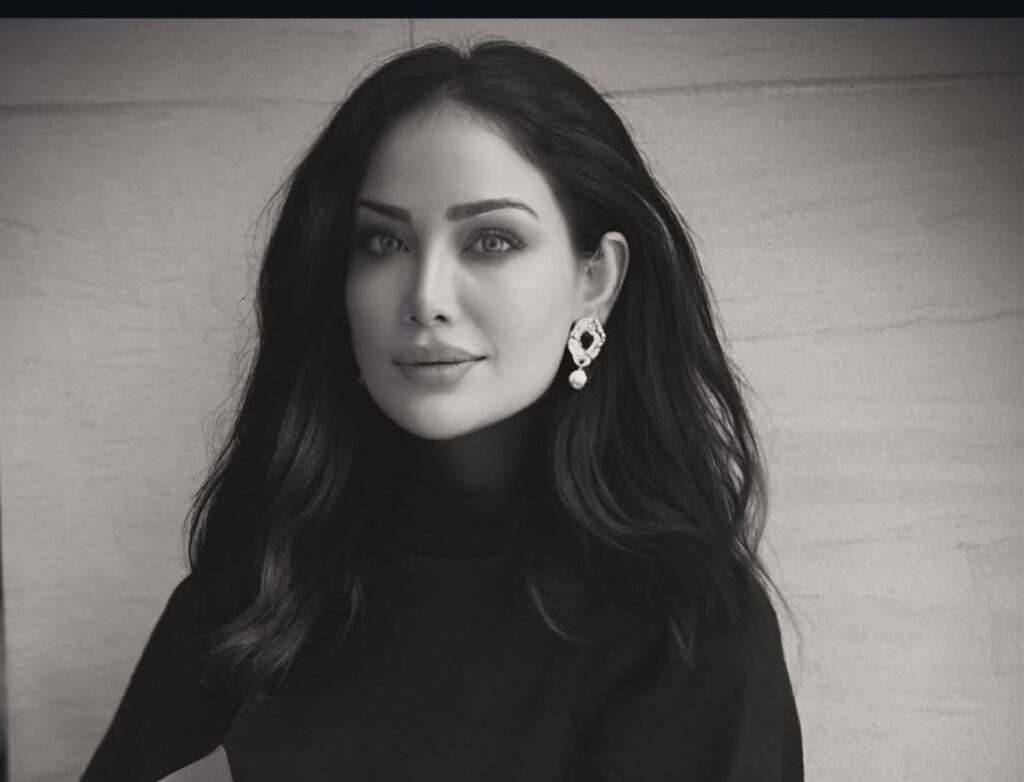
Afghan women’s rights defender Laleh Osmany spoke about the wave of women-led protests in Herat and the systematic repression women face under Taliban rule.
Laleh Osmany
“A strategy to erase women from public life”
According to Osmany, violence, terror, arbitrary detention, and public humiliation of women — carried out under the pretext of “inappropriate hijab” or leaving home without a male guardian, or mahram — have become “a structural, daily policy enforced by the Taliban’s Ministry for the Propagation of Virtue and Prevention of Vice and their intelligence agencies.” She noted that Taliban vice units, known as muhtasib, have set up numerous checkpoints across cities specifically to police women’s attire.
“In many cases, young women and girls are arrested without a male guardian present, brutally beaten with cables and whips, and released only after their families are forced to pay heavy ransoms or sign coercive pledges,” Osmany said. She described these practices as part of a calculated, larger campaign:
“These actions are a deliberate part of a broader strategy aimed at the complete eradication of women from the public sphere.”
“Woman, Life, Freedom” echoes through Herat
Osmany said the chanting of “Woman, Life, Freedom” during the Herat protests reflects “a deep, transnational solidarity among women rooted in a shared cultural sphere, as well as their high awareness of their fundamental rights.” She said the city’s history as a center of progressive civil movements: “Herat has historically been a cultural hub and a breeding ground for progressive civil movements in Afghanistan.”
Despite live gunfire, violence, and the threat of imprisonment, Osmany stated the protests demonstrated that women’s will to resist remains alive:
“These protests proved that despite brutal suppression, direct live fire, violence, and imprisonment, the will of women to resist remains alive. The protests in Herat sent a clear message to the world: the roots of Afghan women’s quest for freedom cannot be dried up by decrees of gender segregation and Taliban intimidation, and they are prepared to pay the highest price for their human dignity.”
Underground networks of resistance
Asked whether organized resistance persists despite the risks, Osmany confirmed that Afghan women have built extensive underground and overt networks, structured around three main pillars.
The first, she said, is citizen documentation: “Upon their release, detained women use pseudonyms to expose their experiences of torture and the Taliban’s inhumane treatment across social media and international news outlets.”
The second involves safe houses and underground schools: “Establishing secret home-based schools for girls deprived of education, alongside creating psychological and financial support circles for women who have lost their breadwinners.”
The third pillar, she said, is sustained civil mobilization: “Grassroots groups continuously issue statements and hold protests in closed indoor locations, raising their voices to UN human rights bodies to actively prevent the Taliban from gaining international legitimacy.”
Call from women’s organizations
Numerous calls to action continue to circulate on social media, organized by citizens of Afghanistan abroad, with protests planned in Berlin and many other places.
Members of the Justice-Seeking Women’s Movement, by launching a protest campaign and using the global distress symbol, have expressed concern over the increasing restrictions on women in Herat and urged the international community not to remain silent in the face of this situation on June 18th.
Members of this movement, through a campaign with the slogan “Afghan Women Are in Danger, Join This Campaign”, by darkening the map of Afghanistan on their faces and using the global distress symbol, have called for the international community’s immediate attention to the situation of women in the country.
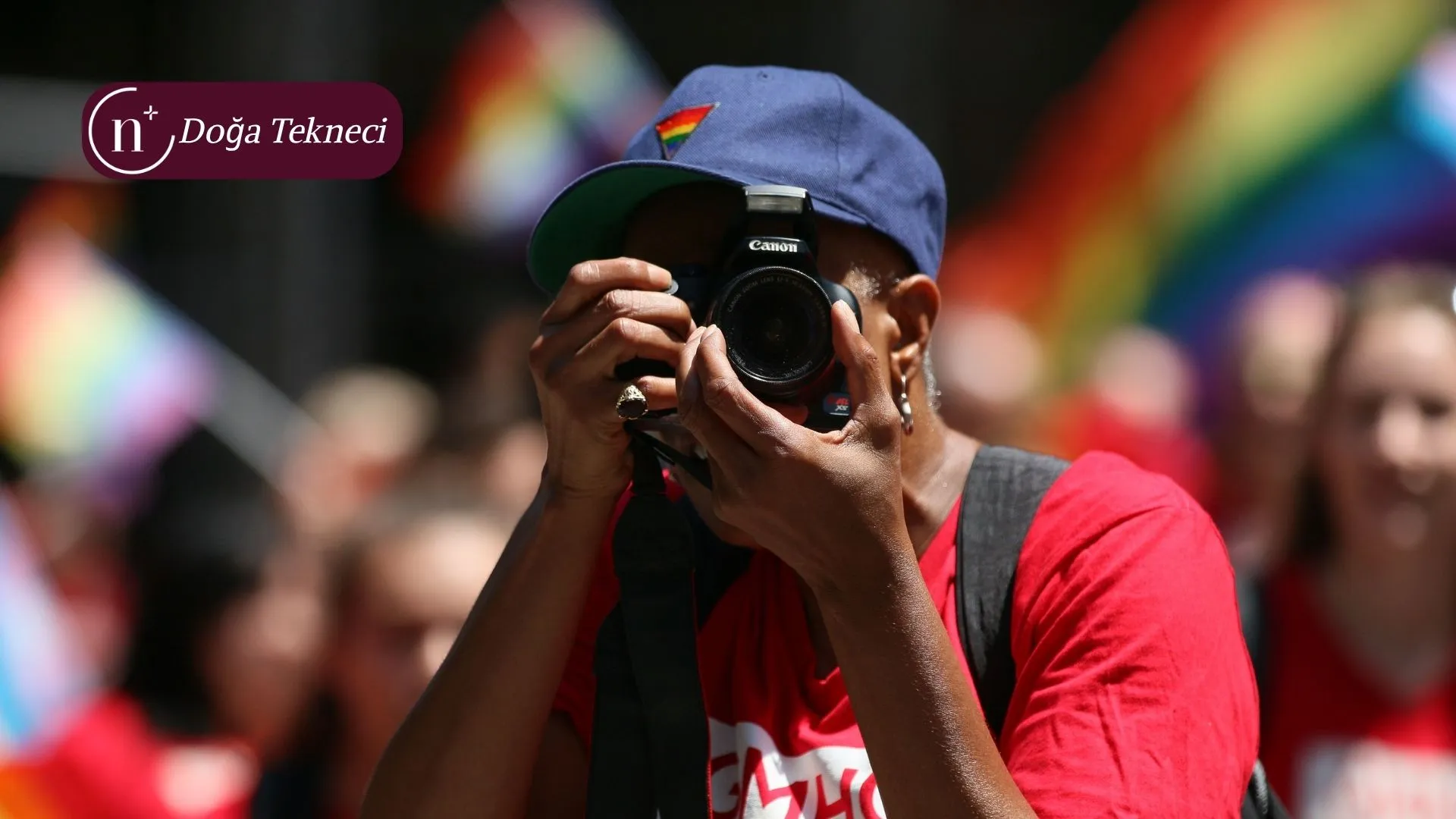
At least ten people, including Niha+ editor Doğa Tekneci and journalist Yusuf Çelik, who were covering the 12th Trans Pride March, were detained.
Photo: Doğa Tekneci/Nihaplus
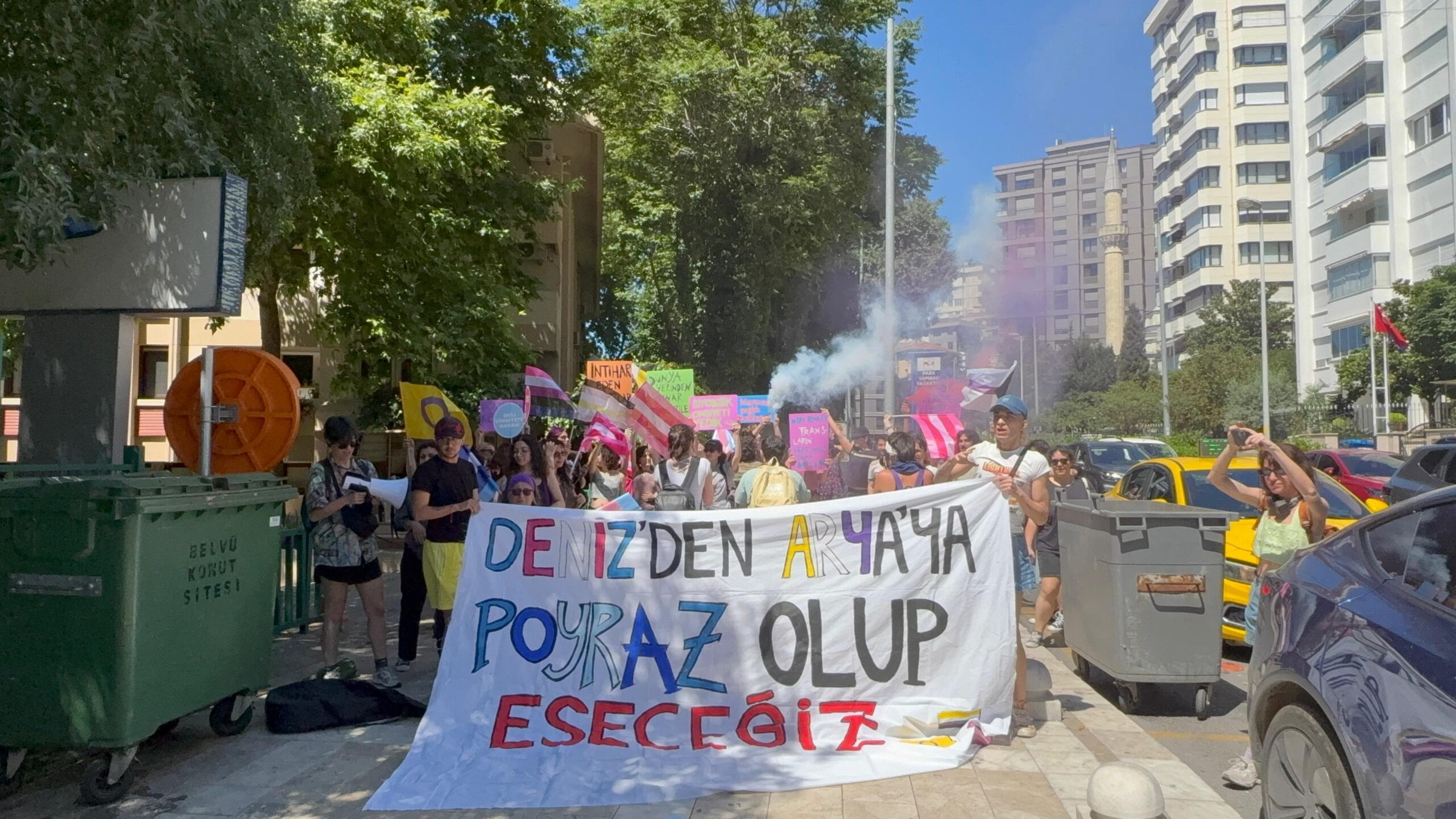
Our editor Doğa Tekneci and journalist Yusuf Çelik, who were covering the 12th Trans Pride March in Kalamış, Kadıköy, Istanbul, organized by Istanbul Trans Pride Week, were detained.
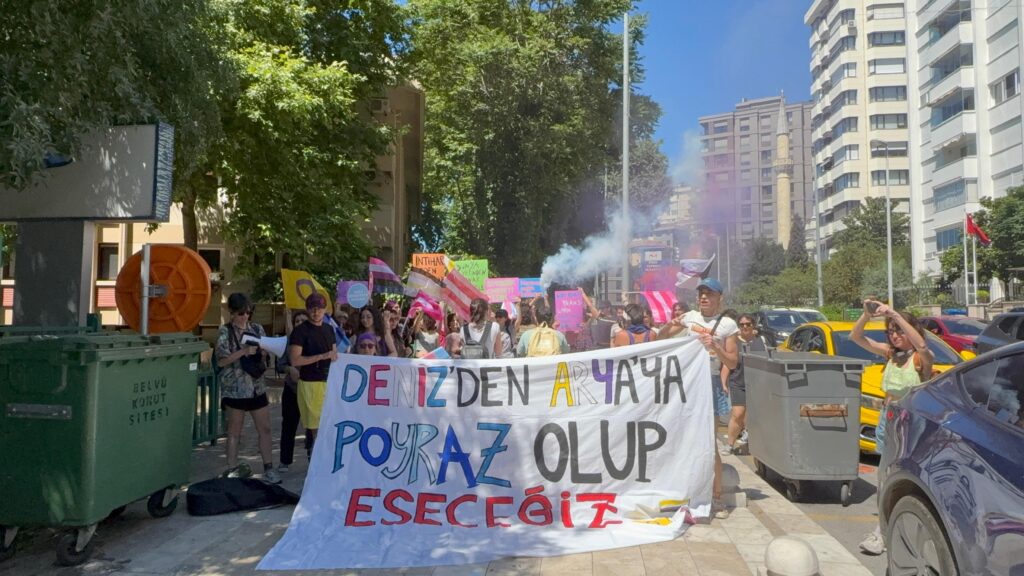
Despite the bans imposed by the Istanbul Governorship the previous day, trans rights advocates gathered and marched with a banner reading “We will be like the Poyraz [North] wind blowing from Deniz to Arya”, commemorating their murdered trans friends. Throughout the march, participants chanted the slogan “The transphobic state will surely fall”.
Following the march, the dispersing crowd was subjected to identity checks by law enforcement. At least ten people, including our editor Doğa Tekneci and journalist Yusuf Çelik, who were covering the event, were detained.
Eylem sona erdikten sonra alandan ayrılan LGBTİ+’lar, kafelerde otururken, araçlarında ve taksilerde seyahat ederken polis tarafından tek tek gözaltına alındı. pic.twitter.com/oogMqB0xIh
Meanwhile, the Kadıköy District Governor’s Office issued a statement announcing that all meetings, marches, press conferences, sit-ins, setting up stands, erecting tents, distributing leaflets, protests, and similar actions/events are prohibited in all open areas within the Kadıköy district between 00:01 and 23:59 on Sunday, June 21st, in relation to the events announced on social media under the title “Pride Takvimi Yayında” [Pride Calendar on Air].
The District Governor’s Office based its justification for the ban on Article 17 of Law No. 2911 on Meetings and Demonstrations and Article 32/ç of Law No. 5442 on Provincial Administration. The statement argued that, based on social media posts, the event is “contrary to general morality,”“could cause public outrage,”“could offend national, conscientious, and humanitarian values,” and “could threaten social peace.”
The district governor’s office also claimed that “verbal and physical provocations” could occur between those organizing the events and citizens.
Statement from DİSK Basın-İş
Press division of the Confederation of Progressive Unions of Turkey, DİSK Basın-İş, stated that the detention of journalists Doğa Tekneci and Yusuf Çelik is a form of pressure directed at the public’s right to information and the visibility of LGBTI+’s, and demanded their immediate release.
🏳️⚧️ 12. İstanbul Trans Onur Yürüyüşü kapsamında en az 10 hak savunucusuyla birlikte gazeteciler Yusuf Çelik ve Doğa Tekneci de gözaltına alındı.
Barışçıl bir şekilde gerçekleştirilen bir yürüyüşü takip eden gazetecilerin gözaltına alınması kabul edilemez. Basın ve ifade… pic.twitter.com/9Mffs4WJni
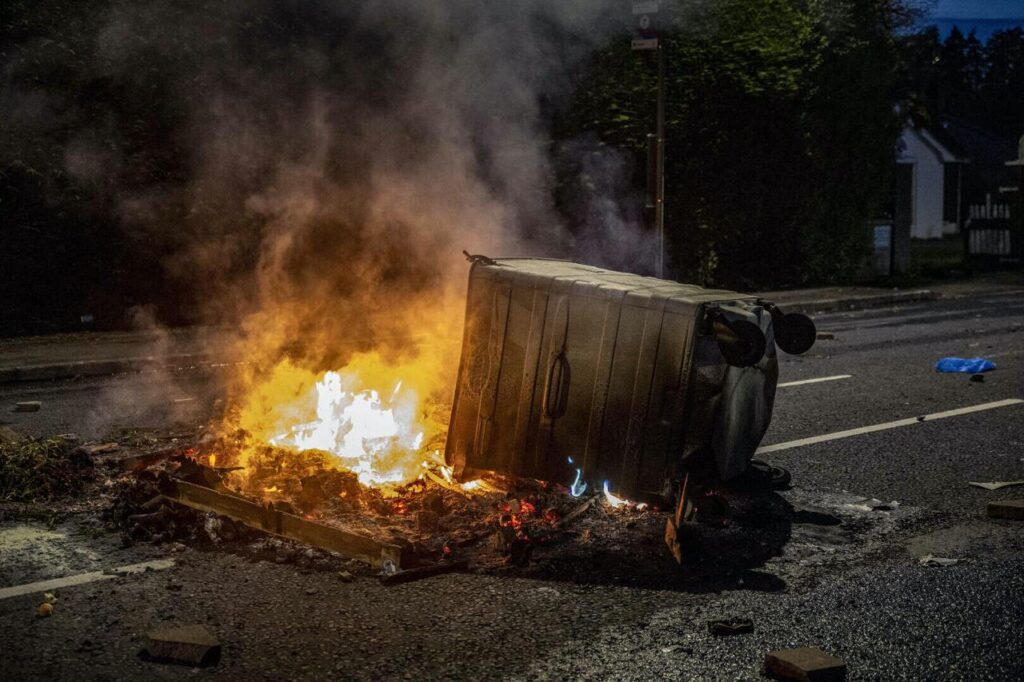
A stabbing incident in Belfast has sparked violent anti-immigrant riots fueled by social media misinformation, raising serious concerns about racism, public safety, and Northern Ireland’s fragile social fabric.
Image: Kevin Scott (@Kscott_94)
Riots in Belfast after a serious knife attack have raised concerns about anti-immigrant violence, misinformation on social media, and whether police and political leaders can stop tensions from growing.
The riots started after Stephen Ogilvie was seriously injured in a knife attack in north Belfast on 8 June. A 30-year-old Sudanese man, Hadi Alodid, was later charged with attempted murder, carrying a knife in public, and making threats to kill. He has not been convicted, and police have not publicly confirmed a motive for the attack.
The incident quickly became more than a criminal investigation. Videos and claims about the attack spread rapidly online. The suspect’s nationality and immigration status became a major topic of discussion. Soon after, anti-immigration protests took place in parts of Belfast, and some of these protests became violent.
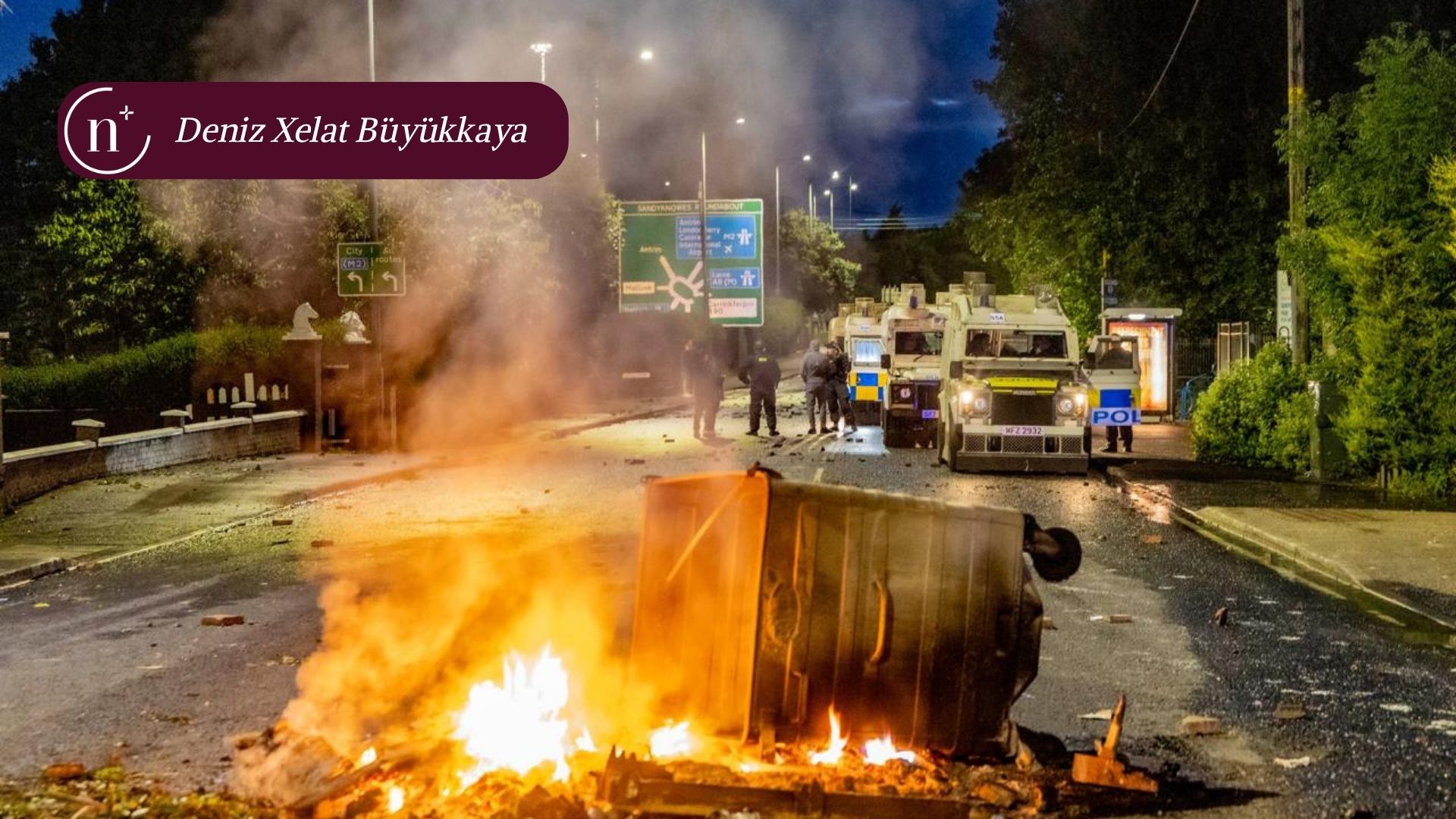
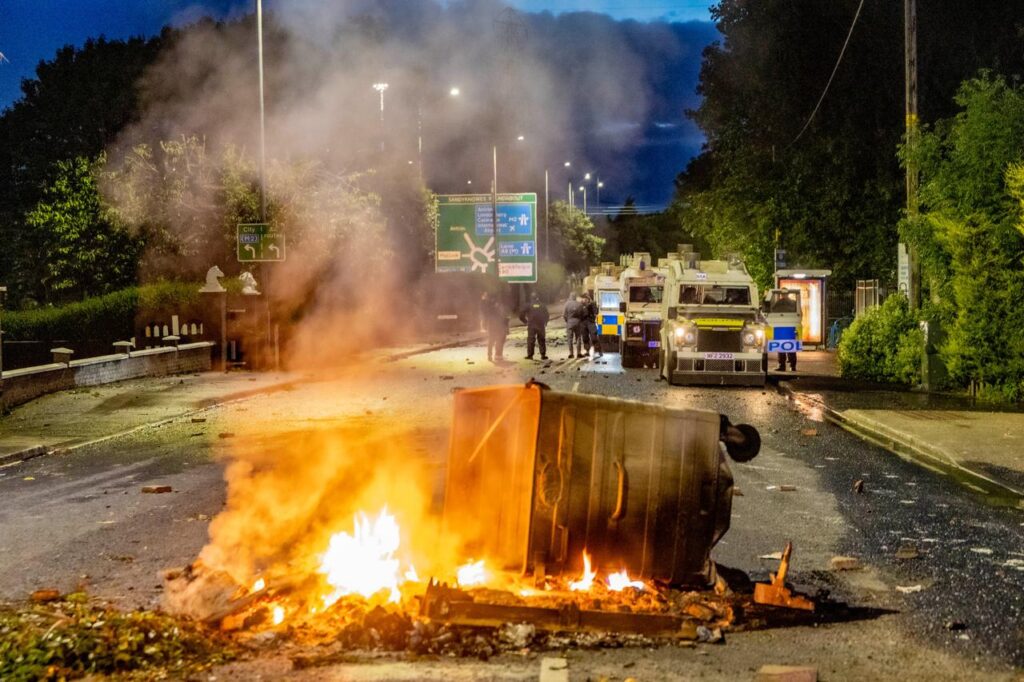
Police officers were attacked with bricks, bottles, and fireworks. Vehicles were set on fire, and homes and businesses were damaged. Some properties linked to migrants or ethnic minority residents were also targeted. The Police Service of Northern Ireland (PSNI) responded by deploying public order units and using water cannon and plastic bullets.
The violence prompted warnings from community groups that minority families were living in fear. Some people had to leave their homes for their own safety. Police asked the public to remain calm and avoid sharing material that could increase tensions.
In a statement released through the PSNI, Ogilvie’s family said they were devastated by the attack. However, they said they did not want the case to divide communities or create hostility towards migrants. They added that many migrants make an important contribution to the country and should not be blamed for the actions of one individual.
In an update yesterday, Stephen Ogilvie’s family confirmed that he is now out of an induced coma and continuing his recovery. However, his condition remains serious. His family said he has lost sight in his left eye and still faces the possibility of losing sight in his right eye.
Social media misinformation
Political leaders in Belfast and London also condemned the violence. Prime Minister Keir Starmer said the disorder was unacceptable and that those responsible would face the full force of the law. Northern Ireland Secretary Hilary Benn described the violence as “racist thuggery” and said people had been targeted because of their race or background.
First Minister Michelle O’Neill condemned the intimidation of families and the burning of homes. Deputy First Minister Emma Little-Pengelly said that anger about one person’s alleged actions could never justify attacks on innocent people. Justice Minister Naomi Long also criticised people who were using fear and anger to encourage anti-immigrant actions.
Long said social media had helped increase tensions. According to The Guardian, some people encouraging the riots were not even from the local area, saying that they would have “struggled to find Belfast on a map”.
The role of social media has become one of the central issues following the riots. Police and politicians say that videos, rumours, and inflammatory posts online helped make the situation worse. There are also concerns that threats against migrant-related addresses were not taken seriously enough before the violence began.
Image: Kevin Scott
The Guardian reported that a volunteer group called The Accountability Project Northern Ireland sent many reports to the PSNI between November 2025 and June 2026. The group warned police about anti-immigration activity online and about addresses being shared in extremist networks. A spokesperson said that a list circulated during the riots appeared to match one that had previously been sent to police.
The PSNI says investigations are continuing. Officers are trying to identify those involved in the disorder and are monitoring online activity. Police are also taking steps to protect people and places that may be at risk.
Northern Ireland’s context
The riots have been compared to other anti-immigrant violence in the UK. In 2024, riots broke out in several towns and cities after the murder of three girls in Southport. False information about the attacker spread online, and mosques, asylum accommodation, and police officers were targeted. A parliamentary report later described the unrest as the worst public disorder in the UK since 2011.
Northern Ireland also witnessed anti-immigrant violence in 2025. Riots erupted in Ballymena after two teenagers were accused of a serious sexual assault, but the riots soon moved beyond the specific criminal allegation and turned into hate-motivated attacks against migrant communities. Homes, cars, and businesses were burned, and police described the disorder as hate-motivated. Reuters later reported that the charges against the teenagers were withdrawn, highlighting how an unproven allegation had been mobilised to justify collective hostility toward immigrants.
The Belfast riots appear to fit a wider pattern in which serious crimes or allegations can quickly become a focus for anti-immigrant mobilisation, especially when claims and rumours spread online.
The events have also renewed debate about Northern Ireland’s unique social and political situation. Belfast has a long history of sectarian division and political conflict. Because of this history, outbreaks of street violence are especially concerning. The Guardian reported that the riots led to questions about possible loyalist paramilitary influence, although there is currently no clear evidence that such groups organised the disorder.
For police and political leaders, the challenge is now about more than restoring order. They also face pressure to respond more effectively to online threats, misinformation, and the targeting of minority communities after local incidents.
The criminal case connected to the knife attack will continue through the courts. However, the violence that followed has already left Belfast facing difficult questions about racism, social media, policing, and the risk of blaming entire communities for the alleged actions of one person.
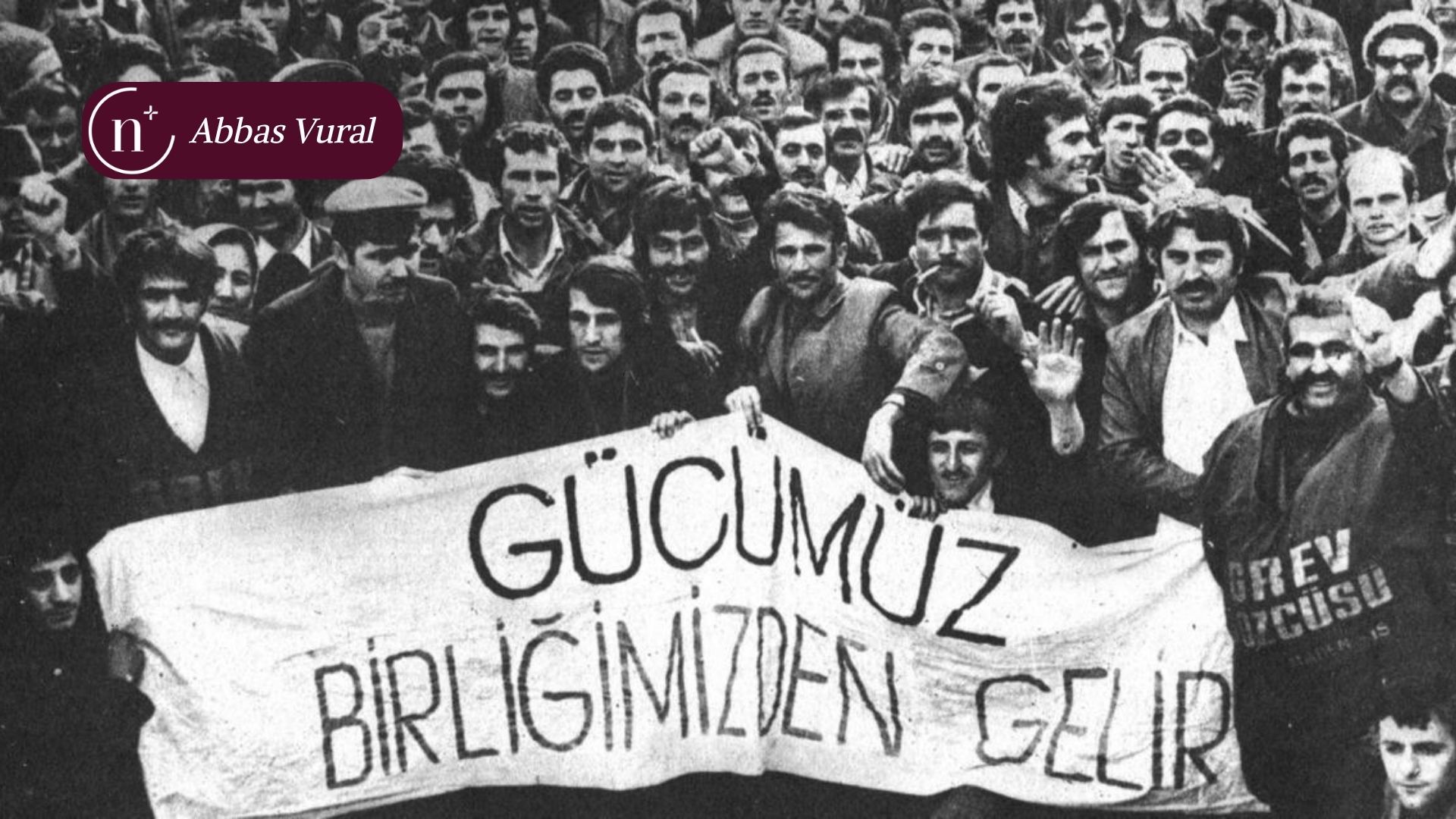
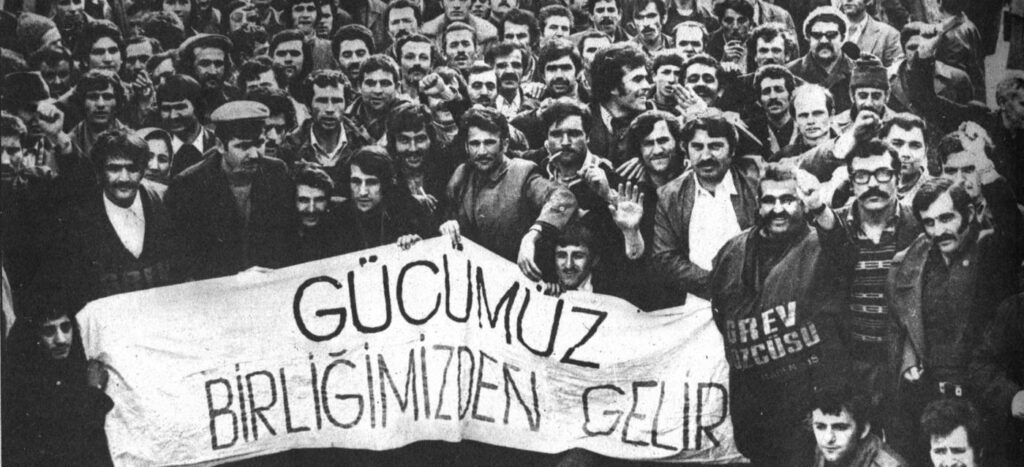
On June 15-16, 1970, nearly a hundred thousand workers took to the streets against regulations targeting union rights. Despite 56 years having passed, we have compiled a day-by-day account of the events, which remain one of the greatest resistance movements in Turkish working-class history.
Photo: DISK Archive
Today marks the 56th anniversary of the June 15-16 resistance, one of the largest worker actions in Turkish history.
The June 15-16 resistance, the subject of numerous books, films, documentaries, and research, has maintained its status as one of the greatest actions of the Turkish working class for over half a century. The memory of these actions, in which nearly one hundred thousand workers from companies such as Türk Demir Döküm, Sungurlar, Derby, Elektrometal, Rabak, Auer, Çelik Endüstrisi, Mutlu Akü, Vinileks, Otosan, Arçelik, and Vita took to the streets, still needs to be preserved 56 years later.
On the 56th anniversary of the June 15-16 resistance, which began as a protest against the Justice Party government’s planned changes to the trade union law but transformed into a much more radical and widespread movement, we discussed the state of labor struggles and trade union rights in Turkey with Prof. Dr. Aziz Çelik, Assoc. Dr. Hakan Koçak, Özkan Atar, General President of the United Metal Workers Union, and labor historian Zafer Aydın.
The June 15–16 Resistance: A Day-by-Day Account of Events and Legal Proceedings
In June 1970, close to a hundred thousand workers took to the streets in protest against regulations targeting trade union rights. Remembered to this day as one of the greatest acts of resistance in the history of Turkey’s working class, we have compiled the course of the events and the massive legal struggle that followed — day by day.
June 11, 1970
A bill proposing amendments to Trade Unions Act No. 274 and Collective Bargaining, Strike and Lockout Act No. 275 was passed in the Grand National Assembly with the votes of all parties except the Turkish Workers’ Party (TİP) — including the Justice Party and the CHP. The bill’s primary aim was to halt the flow of workers from Türk-İş to DİSK. It introduced a requirement that a union must have enrolled as members at least one-third (1/3) of the insured workers employed in the sector in which it operates in order to function nationwide. A similar one-third representation threshold was also set for confederations.
June 13, 1970
Under the legislation, which had completed its parliamentary process, salaried state personnel such as orderlies, janitors, and cleaning workers would be classified as workers and permitted to form unions; a minimum of three years’ employment in the sector would be required to establish a union; withdrawal from union membership would be processed through a notary; union general assemblies would convene every three years rather than two; and unions’ investment permissions for funds would be subject to confederation approval.
June 14, 1970
On the grounds that the bill would eliminate freedom of union choice, workplace representatives of unions affiliated with the Confederation of Revolutionary Trade Unions (DİSK) in Ankara, İzmir, Kocaeli, and Sakarya convened a joint meeting and resolved to take action until the bill was withdrawn.
June 15, 1970
Tensions that had been building on factory floors for years spilled into the streets as between 75,000 and 100,000 workers marched toward various points across Istanbul. Although the protests were led by DİSK, large numbers of Türk-İş members also joined the marches in class solidarity, rejecting the stance taken by the parties they had previously supported. By the evening of the first day, the Council of Ministers declared 60 days of martial law.
Asian Side: A march column departing from Kartal advanced along the Ankara Highway (E-5). With workers from Otosan and DMO in Göztepe joining, along with groups from Beykoz and Paşabahçe, an enormous crowd formed and moved toward Üsküdar and Kadıköy.
European Side: Marches were held along the Bakırköy–Topkapı–Sağmalcılar route. The Istanbul–Ankara highway was closed to traffic.
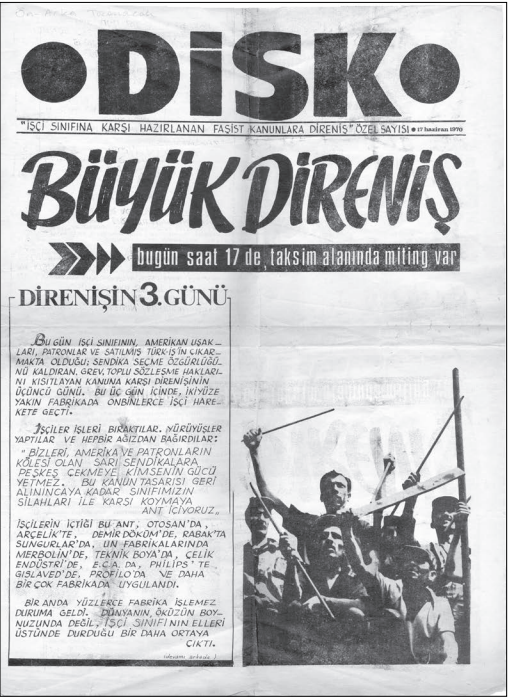
A newspaper front page published by DİSK under the headline “The Great Resistance,” highlighting the June protests and the participation of tens of thousands of workers.
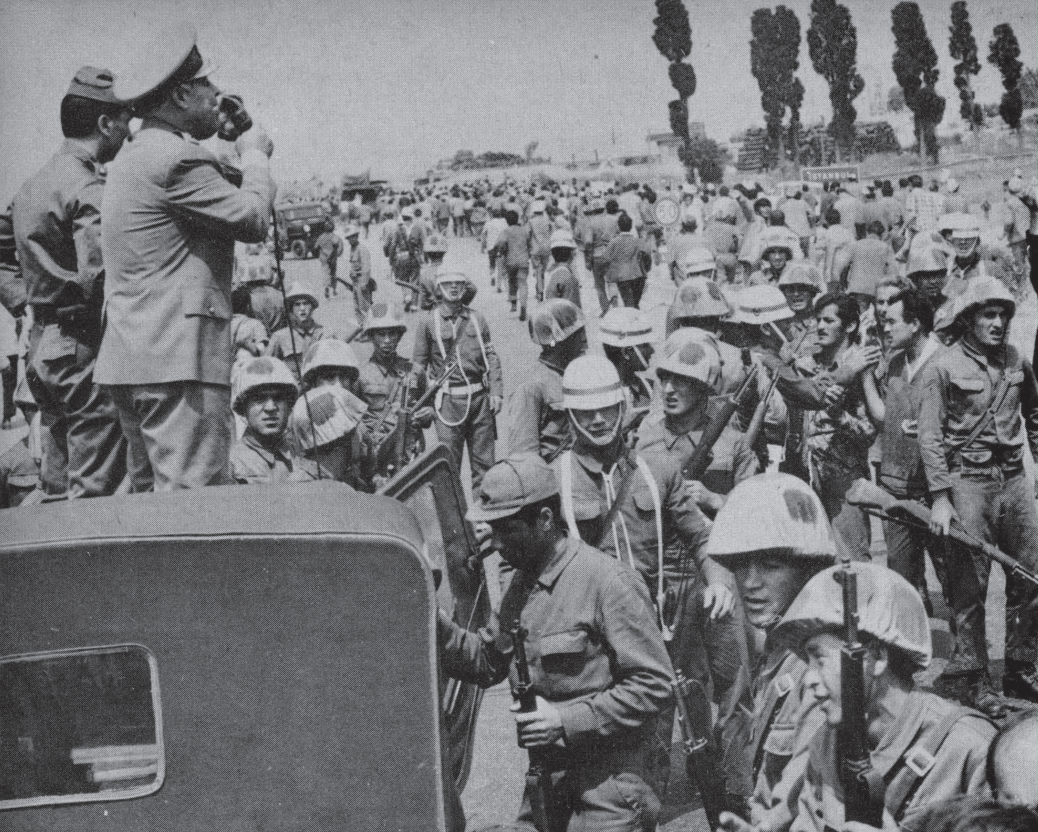
Security measures taken by military units during the demonstrations and the moment of an announcement made through a loudspeaker.
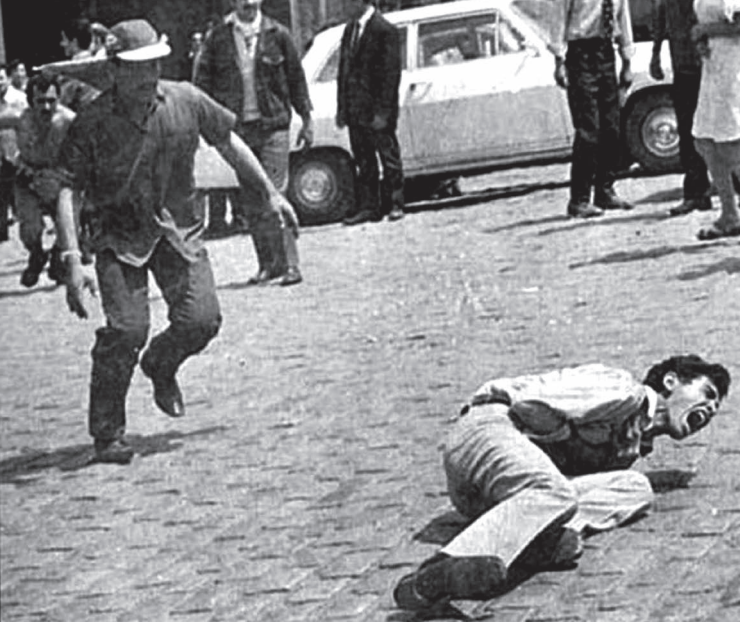
Violent clashes in the streets during the June 15–16 protests, and workers injured in the unrest.
June 16, 1970
The workers’ protests continued in full force. A march that began in Gebze merged with workers from Kartal and reached Kadıköy Ferry Square along Bağdat Avenue. On the European side, columns advancing from outside Topkapı descended via Aksaray to Sultanahmet, Cağaloğlu, and the front of the Governor’s Office, and from there to Eminönü. Actions also took place in Ankara, Adana, Bursa, and İzmir.
Opening of the Bridges: The Istanbul Governorship opened the Galata and Unkapanı bridges to traffic in order to prevent the Asian and European columns of the movement (or passage to the Beyoğlu side) from converging.
Casualties: As a result of police fire and clashes in Kadıköy, workers Yaşar Yıldırım (Mutlu Akü), Mustafa Bayram (Vinleks), and Mehmet Gıdak (Cevizli Tekel), along with shopkeeper Doğukan Dere and police officer Yusuf Kahraman, lost their lives.
Martial Law and DİSK’s Stance: Martial law was declared in Istanbul and in the Merkez and Gebze districts of Kocaeli. DİSK General President Kemal Türkler, in a message read on the radio, warned workers against provocations and called on them not to step outside the constitutional framework.
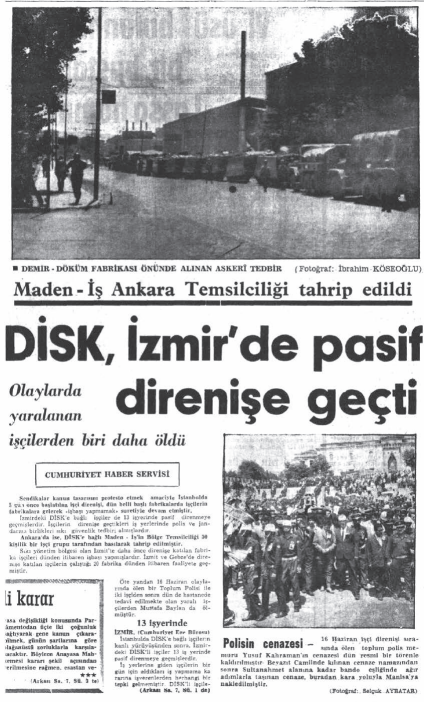
A Cumhuriyet newspaper clipping: military measures in front of the Demir-Döküm factory and news reports on those who lost their lives in the events.
June 17, 1970
The Martial Law Command detained 23 union officials — including DİSK General President Kemal Türkler and Secretary General Kemal Sülker — on charges of instigating and inciting the events. These individuals were tried by the Martial Law Military Court on the grave charge of “attempting to alter, transform, and abolish the Constitution.” In addition, close to a hundred workers were taken into custody during the events, and a curfew was imposed from 21:00 onward.
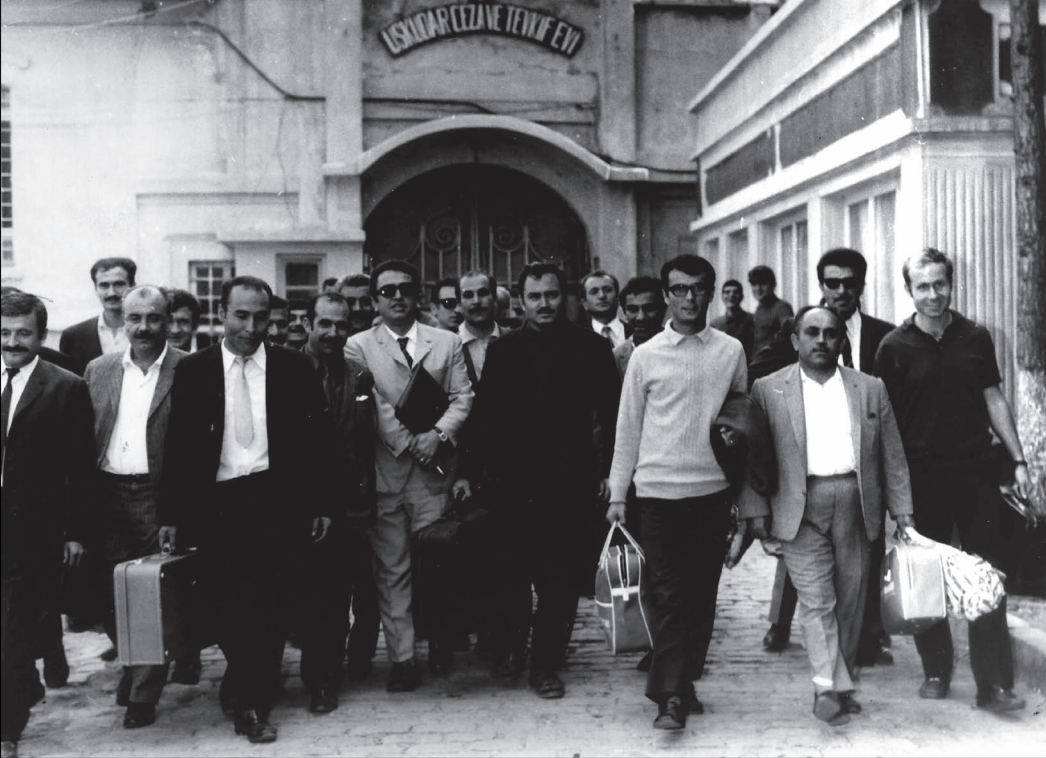
Union officials, including DİSK General President Kemal Türkler and Secretary General Kemal Sülker, in front of Üsküdar Prison.
June 18, 1970
In İzmir, where martial law had not been declared, workers at certain workplaces affiliated with Lastik-İş, Maden-İş, and Gıda-İş also walked off the job in solidarity with the resistance.
June 19, 1970
Through Communiqué No. 13 of the Martial Law Command, the exercise of the right to strike was banned; a separate communiqué made collective bargaining negotiations subject to official authorization.
June 20, 1970
The printing and distribution of Maden-İş Gazetesi, the publication of the Maden-İş Union affiliated with DİSK, was banned.
June 22, 1970
Military units entered the İzsal strike zone, where a strike had begun prior to the events and was still ongoing. Martial law officials issued an order to open fire on anyone approaching within 25 metres of the military units.
Post-Resistance Mass Dismissals (July 1970)
In the aftermath of the June 15–16 events, 5,090 workers who had participated in the protests were dismissed and blacklisted. The targeted dismissal of workers silenced the labor movement in the Marmara region for a long time to come. Meanwhile, the bill amending Act No. 274 — following the suppression of the protests — received its final parliamentary approval on July 29, 1970, as Law No. 1317.
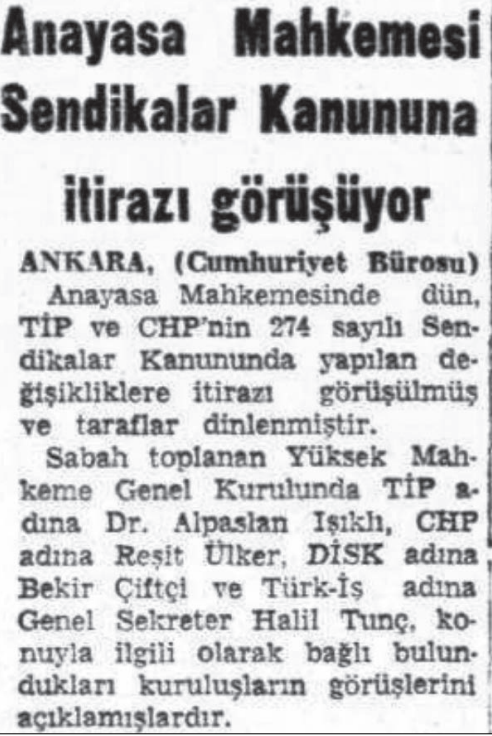
A hearing report on the annulment case filed at the Constitutional Court challenging the amendments to Trade Unions Act No. 274.
August 12, 1970
Law No. 1317 was published in the Official Gazette and entered into force. On the same day, a petition prepared on behalf of the Turkish Workers’ Party (TİP) by Prof. Dr. Alpaslan Işıklı was formally submitted to the Constitutional Court (AYM) to have the law annulled.
August 18, 1970
Shortly after TİP’s application, the Republican People’s Party — under the leadership of Secretary General Bülent Ecevit and party leader İsmet İnönü — filed a separate application with the Constitutional Court seeking the annulment of the law. (The Court later consolidated these cases and examined them under case number 1970/47.)
March 12, 1971
The Turkish Armed Forces issued a memorandum citing street conflicts and economic instability, forcing the incumbent government to resign and effectively seizing control of the administration.
October 19, 1972
The Constitutional Court’s ruling of February 9, 1972 was published in the Official Gazette and entered into force. The Court annulled the majority of the amendments in their entirety, on the grounds that they were “contrary to the constitutional principles of the right to form trade unions and the right to strike.”
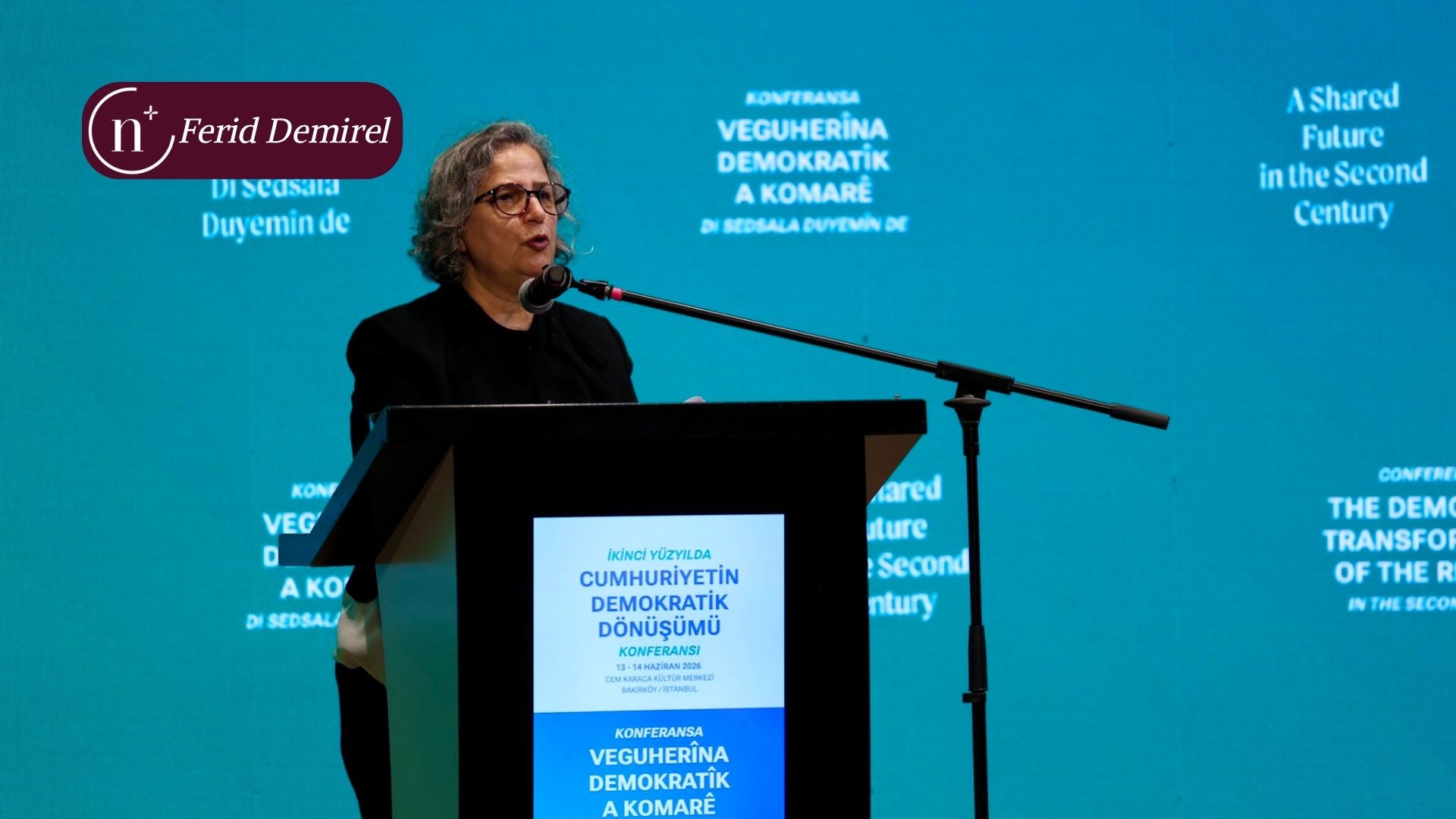
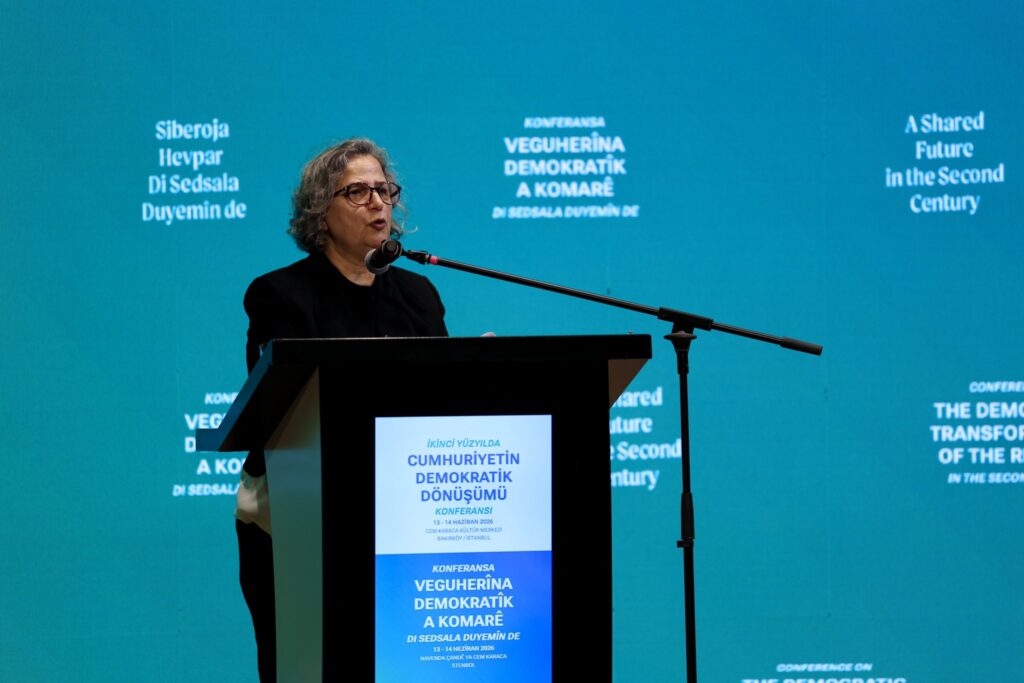
Kurdish politician Gültan Kışanak, speaking about creating an inclusive legal system, said, “Change and transformation are at our doorstep. We can no longer continue like this. We need to move forward.”
Gültan Kışanak. Photo: X / @CDDkonferans
Participating in the “Conference on the Democratic Transformation of the Republic in the Second Century,” held on June 13-14, 2026, at the Cem Karaca Cultural Center in Bakırköy Municipality, Istanbul, Kurdish politician Gültan Kışanak asked in her opening speech, “Will we be able to create an inclusive legal system?”
Kışanak, who had various contacts in Europe shortly before the conference, gave Niha+ her assessments regarding both her European trip and the content of her speech at the conference.
Gülten Kışanak, who participated in meetings and events in France and Germany, said that everyone there was asking, “When will the law be passed?” Stating that they asked, “We have prepared our governor. We want to come. They are expressing a longing and yearning for the law to be passed here. At the same time, they are expressing a desire for democratic transformation,” she provided the information.
“Demanding from the government doesn’t get us anywhere”
Regarding the question she raised in her opening speech at the conference, “Can we create an inclusive legal system?”, Kışanak said, “We need to fight for it”:
“If we want something, we can do it. But if we want someone to prepare it and bring it to us tomorrow, that’s not possible. Therefore, if you want something, you have to fight for it, put in the effort, and unleash its social power. I think this state of demanding from the government doesn’t get us anywhere.”
Noting the political challenges in making this happen, Kışanak said, “A change and transformation has arrived at our doorstep. We can no longer continue like this, we cannot carry on. We need to move forward. For this, we, as a society, need to take responsibility and do something. At the same time, there is no shortcut solution. This path is long, difficult, and arduous. We have no option but to walk this path.”
Regarding President Recep Tayyip Erdoğan’s statement at a program he attended in Edirne on June 12, 2026, where he said, “We have made significant progress on the path to this goal so far. God willing, we will increase our pace a little more,” Gülten Kışanak commented, “There are commitments. We all must follow up on these commitments. Even from the most authoritative sources, from the President himself, there are statements that the law will be passed before the parliament closes. We all now expect this to be done.”
When asked about whether the framework law, which has been the subject of behind-the-scenes discussions, will meet expectations, he said, “We are fighting to ensure it does. Just as we fought to get that commission report written in parliament, we will fight to ensure that this law is passed in a holistic and comprehensive manner.”
Independent journalist Yusuf Çelik and freelance journalist İbrahim Türk spoke about what LGBTI+ journalists experience while doing their jobs in the field and beyond: “Even if I’m subjected to phobic attacks, I won’t give up reporting.”
Fotoğraf: pexel.com
Pride Month is a time when LGBTI+ experiences of violence and discrimination tied to their identities become more visible. Among those who make visible not only Pride-related issues but social events of all kinds throughout the year are LGBTI+ journalists themselves.
While journalists in Turkey already face economic insecurity, police violence, censorship and unemployment, LGBTI+ journalists confront an additional layer of discrimination based on sexual orientation and gender identity. A concrete example of this came last February, when Yıldız Tar, editor-in-chief of Kaos GL—Turkey’s oldest and largest LGBTI+ news platform—and a prominent LGBTI+ rights advocate, was detained. In the field, LGBTI+ journalists often become targets for police while reporting, sometimes become “invisible” in job applications and are forced to conceal their identities for safety reasons.
Independent journalist Yusuf Çelik and freelance journalist İbrahim Türk spoke to Niha+ about the discrimination they face in the field and what they expect from professional organizations.
Çelik: “LGBTI+ journalists face ‘compounded discrimination’”
Journalist Yusuf Çelik said that while all journalists already face economic and professional difficulties, queer journalists experience “compounded discrimination” in the field. Çelik said they have faced discriminatory attitudes from police, older male colleagues, and news sources, describing many moments in which they felt rendered invisible.
Independent journalist Yusuf Çelik
Noting that police violence is a shared problem for all journalists, Çelik said the consequences can be more severe for LGBTI+ journalists. “If there’s going to be violence, if there’s going to be an intervention, it’s us, LGBTI+ and women journalists, who are targeted first” they said.
Recalling the “Gezi” commemoration held in Taksim on May 31, 2026, Çelik said a police officer directly singled them out. “There were many journalists there, but the police grabbed my arm and tried to remove me. My colleagues intervened, asking, ‘Why are you touching a journalist?’” they said.
Çelik also said that during their detention in Dersim on July 25, 2025, they faced pressure specifically because of their queer identity, recalling that police made remarks implying they should stop doing this kind of reporting. “There was essentially a push to recruit me as an informant—comments like, ‘Why don’t you just stay out of this? Why don’t you stop doing these kinds of stories?’” they said.
Referring to a detention they experienced on May 1, 2026, Çelik said:
“There was no real justification—the protest had already dispersed—but I was told, ‘Turn off your camera, we’re taking you in,’ and detained. I can’t explain this through journalism alone, because I face things my colleagues don’t, and I think this is deeply tied to my queer identity. On top of that, when we’re detained and can’t work in the field, we go home that day having earned nothing, which puts us under economic strain too. We face a whole series of violations and difficulties like this.”
“There are unspoken ‘buts’”
Çelik have also struggled to find work because of their identity, noting that they have been unemployed for about six to seven months:
“During my job search, even though I spoke with some institutions and journalists, the process went nowhere because of unspoken ‘buts.’ They like my journalism, they know and appreciate the work I do in the field. But I need work, and during the hiring process everyone takes a step back. There are unspoken ‘buts’ there. ‘But you’re a queer journalist,’ ‘but you’re an activist,’ ‘but you can’t separate journalism from being queer’… Even when these things aren’t said out loud, I can feel those ‘buts.’ There’s no other explanation for why someone who is normally out in the field, following the news, and voluntarily sharing their work with institutions would remain unemployed for this long.”
“Even if I face phobia, I won’t give up reporting”
Çelik said that while they haven’t faced direct censorship in covering LGBTI+ news, they have often been kept away from certain assignments. They said they haven’t been assigned to out-of-town stories or coverage of workers’ strikes, with the reasoning usually framed around concerns that “something might happen to them”:
“I’m told, ‘If you go, you’ll face phobic attacks, it’ll be hard for you.’ But the person saying that is, in that moment, actually subjecting me to phobia themselves. Even though I carry an activist identity, when I go out into the field, I go out as Yusuf the journalist. Being LGBTI+ comes after that. This isn’t the first time I’ve been out in the field, and it won’t be the last. I might face hostility from a crowd—that’s understandable, because women journalists experience this too. They don’t give up reporting. Neither will I.”
Çelik also noted that women and LGBTI+ journalists are often not assigned stories like economic news, and said they end up being treated as if they’re not capable—which is part of why they continue working as an independent journalist.
According to Çelik, the discrimination starts the moment they leave the house:
“Everything—how I dress, how I walk, how I talk—gets assigned a gender. Sometimes I’m ‘the LGBTI+ journalist,’ sometimes slurs get used. Some police officers single me out, asking things like ‘isn’t that the gay journalist?’” Çelik also said they regularly face online harassment campaigns, and that in particular, following certain stories, they have been targeted with HIV-related smears. “We have to fight this on the street, at home, and on social media, all at once.”
“We don’t have strong structures to organize through”
Çelik said there are serious gaps in solidarity networks among LGBTI+ journalists. While some of these issues have been discussed at meetings held in Ankara, they said this has not translated into lasting organization.
Assessing the work of professional associations and unions, Çelik said independent and freelance journalists in particular face serious barriers to accessing union rights:
“I’m currently unemployed, and since I don’t have social security registration, I can’t directly join a union. I can’t organize. Independent and freelance journalists can’t access union rights, and they can’t even get through the union’s door. The first thing we need to do is strengthen LGBTI+ journalists in the field. Strengthen journalists in the field.”
Çelik said unions could offer workshops and protective equipment support tailored to LGBTI+ journalists, adding: “LGBTI+ people are a reality now. We’re more visible than yesterday, and we’ll be even more visible tomorrow. At this point, institutions and unions need to transform themselves too.”
“We have to tell our own stories”
Addressing young LGBTI+ people entering journalism, Çelik encouraged them to stay in the field as much as possible and keep producing stories.
“If there’s an LGBTI+ story, let a queer journalist cover it first—because they understand the issue best,” Çelik said, adding that the discrimination young journalists will face shouldn’t push them away from the profession.
Çelik concluded:
“My journalism has been questioned, and it still is. You have to fight that. You do more work. The more work you do, the more those who try to erase you will be forced to back down. Just as we as LGBTI+ journalists carry our struggle into every part of life, we have to carry it into our profession too. The phobia may never end—but neither will the struggle.”
Türk: “In some stories, I have to hide my identity”
Freelance journalist İbrahim Türk, based in Ankara, said they began their journalism career in 2021 as a photojournalist and now work for various national and international media organizations.
Freelance journalist İbrahim Türk
Türk said they take a somewhat distanced view of the constant pairing of journalism with sexual identity: “I’m a journalist and I’m queer. Journalism is a job, being queer is an identity. The fact that these two are constantly mentioned together feels a bit strange to me.”
Türk said one of the biggest challenges they face in the field is having to hide their queer identity during certain assignments for their own protection. They said they feel especially uneasy at events organized by Islamist and radical right-wing groups, and that they use different methods to ensure their safety while reporting in such settings.
“When talking to people, you sometimes have to say you work for Anadolu Ajansı so you don’t get beaten up—because some of our friends have been beaten. You have to make sure you’re not wearing anything in rainbow colors. You try to approach people as neutrally as possible so you can get unbiased responses.”
Türk said this isn’t always a disadvantage, however—in left-wing and democratic circles, their queer identity can actually make communication easier. “In left-wing circles, sometimes all doors open. People communicate more freely, and trust can build faster.”
“I met every requirement, but I wasn’t hired”
While Türk said they have never directly been told “don’t cover this story” or “don’t do this job,” they believe their identity may have been a factor in some job applications and at some organizations where they’ve worked. They said they haven’t faced such problems at the organizations they currently work with.
Türk said that during a period of unemployment, they applied to several media outlets but never heard back. “I met every requirement, but I wasn’t accepted,” they said.
“I was attacked by the police”
Türk said they have also experienced physical violence in the field, recalling one incident during the protests against the 11th Judicial Package.
Describing what happened during the protests, Türk said: “I was choked by police officers. A trans woman saved me—if she hadn’t intervened, it could have ended much worse.”
Türk said the police generally recognize them, yet they were still subjected to violence: “There was no chance they didn’t know who I was. And they attacked me anyway.”
“First, we need to learn to protect each other”
Türk said they find the work professional associations and unions have done for LGBTI+ journalists insufficient. While they said they’re aware of some union-led initiatives, they argued that there still isn’t enough contact with journalists actually working in the field.
Türk said that to address the problems LGBTI+ journalists face, solidarity networks need to be strengthened—and that this starts with journalists supporting one another:
“We need to support more queer journalists, there need to be more queer journalists. We don’t support each other. What we actually need to do first is look out for ourselves. We need to learn to protect each other first. If we did that, we wouldn’t even need any organization—or we’d be in a position to tell organizations what they need to do. But right now, both the organizations and the journalists themselves are preoccupied with how to get more funding, how to grow, so nobody really cares.”
“Journalism is journalism”
Türk said they feel journalism is increasingly being defined by an excessive number of labels:
“Journalism is journalism. Labels like ‘opposition journalism’ or ‘queer journalism’ don’t really sit right with me. Of course our identities shape how we see the world. But we can’t explain everything we do solely through that lens. First and foremost, I’m a journalist. Yes, at some point my identity affects what I write or which stories I look at. But not in every story I do.”
After the AKP declared 2025 the “Year of the Family,” provisions directly targeting LGBTI+ people emerged in the draft 10th and 11th Judicial Packages expected to be submitted to Turkey’s Parliament (TBMM) in 2025. Numerous media organizations and professional associations issued a statement in 2025 regarding the 11th Judicial Package, which sought to criminalize reporting on LGBTI+ issues. The statement read as follows:
Journalists reporting LGBTQ+ issues risk criminalisation: Withdraw the proposed law!
The draft of the 11th Judicial Package was shared with the members of the press last week and is expected to be submitted to Parliament in the coming days. Under the heading “Obscene acts,” the draft introduces a so-called “Turkish-style ban on homosexual propaganda.” It stipulates prison sentences of up to three years for any behaviour or attitude that is “contrary to one’s biological sex and public morality,” as well as for praising, promoting, or encouraging such behaviour. In its current form, the proposal is even broader and more vague than Russia’s 2013 “gay propaganda ban,” posing a grave threat to freedom of expression and press freedom in Turkey.
If enacted, this regulation would restrict LGBTQ+ people of their right to access and share information central to their lives.. Journalists reporting on LGBTQ+ issues such as human rights violations, sexual health, Pride marches etc. risk criminal prosecution on the grounds of “promotion.”
Since 2025 was declared the “Year of the Family,” numerous violations have occurred targeting LGBTQ+ journalism in Turkey. In February, Yıldız Tar — Editor-in-Chief of KAOS GL, the country’s largest and oldest LGBTQ+ news platform, and a prominent LGBTQ+ rights advocate — was arrested.
In June, the KAOS GL news website and its social media accounts were blocked for allegedly “publicly inciting to commit crimes.” That same month, journalists covering the LGBTQ+ Pride March in Istanbul’s Beşiktaş district were detained and later prosecuted.
T24 correspondent Can Öztürk was questioned by prosecutors after publishing a story about sexual harassment allegations against an academic who claimed to offer “conversion therapy” to LGBTQ+ children. The Radio and Television Supreme Council (RTÜK) also fined streaming platforms such as Netflix for hosting LGBTQ+ content.
Following all these violations, the inclusion of the proposed provision in the 11th Judicial Package would escalate rights violations even further and criminalize the already difficult task of reporting on LGBTQ+ issues. Moreover, vague terms such as “contrary to one’s biological sex” or “contrary to public morality” would allow arbitrary interference with the press and civil society.
This proposal would not only target LGBTQ+ individuals but also place journalists reporting on LGBTQ+ issues and related rights violations under threat of criminal punishment.
For all these reasons, as the undersigned press and freedom of expression organizations, we urgently call for the immediate removal of this provision from the 11th Judicial Package.
Signed by:
Media and Law Studies Association (MLSA)
Dicle Fırat Journalism Association
European Centre for Press and Media Freedom (ECPMF)
Anti-corruption protests that began after a beach in Zvernec was sold off as part of a tourism project have continued for two weeks. Citizens explaining the reasons behind the protests, how they were organized, and what people are demanding say that local actions launched by environmental activists have grown into a national movement calling for “a new Albania.”
Protests against a planned tourism project in the Zvernec area, near the city of Vlora, have continued since May 30. Protesters have said the demonstrations will continue until the project is canceled and Albanian Prime Minister Edi Rama resigns.
The protests were sparked by the sale of a beach in Zvernec as part of a tourism project reportedly linked to Ivanka Trump, daughter of US President Donald Trump, and her husband Jared Kushner. For nearly two weeks, the slogan “Albania is not for sale” has been at the center of demonstrations involving thousands of citizens. We spoke with activists and experts about the reasons behind the protests, the corruption allegations, and what the Albanian public is demanding.
Jared Kushner, Trump’s son-in-law, is also an American businessman and adviser to the US president. His investment firm, Affinity Partners, plans to turn part of Sazan Island on the Adriatic coast into a luxury resort—reportedly part of a $4 billion tourism project that would include hotels, villas, apartments, a marina and other high-end facilities.
Kushner has also served as a US representative in a series of diplomatic efforts involving Iran, Ukraine and Russia. In February 2026, Trump formally appointed him as Special Representative for Peace.
“The protests aren’t just about this one incident”
Anila Hoxha, who has taken part in the protests, said there were multiple reasons behind the demonstrations, and that the recent incident was simply the tipping point of a much longer process. Hoxha stressed that the protests aren’t only a reaction to the tourism project, arguing that Albanians have voiced numerous complaints about what they see as a corrupt government for some time.
Hoxha said the protests have nothing to do with the policies of other states, such as the US or Israel, underlining that the issue is with their own government and corruption.
“This isn’t just Albania’s problem”
Hoxha said the nationality of the investors isn’t really the point—what matters is that the project is being built in an area of major importance for natural resources, which is why the issue concerns everyone:
“The real issue isn’t the nationality of the investors—it’s the investment itself, made in a region of major importance for natural resources. This shouldn’t be seen as just Albania’s problem, because it’s an environmental issue.”
“Our only expectation now is the government’s resignation”
Hoxha said the way the tourism project has been presented—as an exclusive, elite island—has raised serious questions among the public, and that people don’t want this land to belong to anyone as private property:
“This land has belonged to the Albanian people throughout history. It should remain that way. We no longer have any expectations from the current government, but our demand is clear: resignation, and the formation of a new government that will work for Albania based on the rule of law, always standing on the side of what is right.
Since corruption has persisted for years, it may be difficult to eliminate it quickly. But we believe there are ways to address this problem, and that it can be fought through taking measures, carrying out various activities, and raising awareness.”
“State indifference sparked major outrage”
Journalist Erisa Kryeziu said the protests began in May after environmental activists noticed heavy machinery on site, after which the area was surrounded with bulldozers and barbed wire. She said the situation escalated when a private security company tasked with guarding the area responded aggressively, beating a protester and dragging them on the ground.
Kryeziu said the incident took place in front of police, who did not intervene against the private security guards—triggering widespread public outrage. She said videos of the incident spread rapidly on social media, fueling distrust among many citizens toward the state and its security forces.
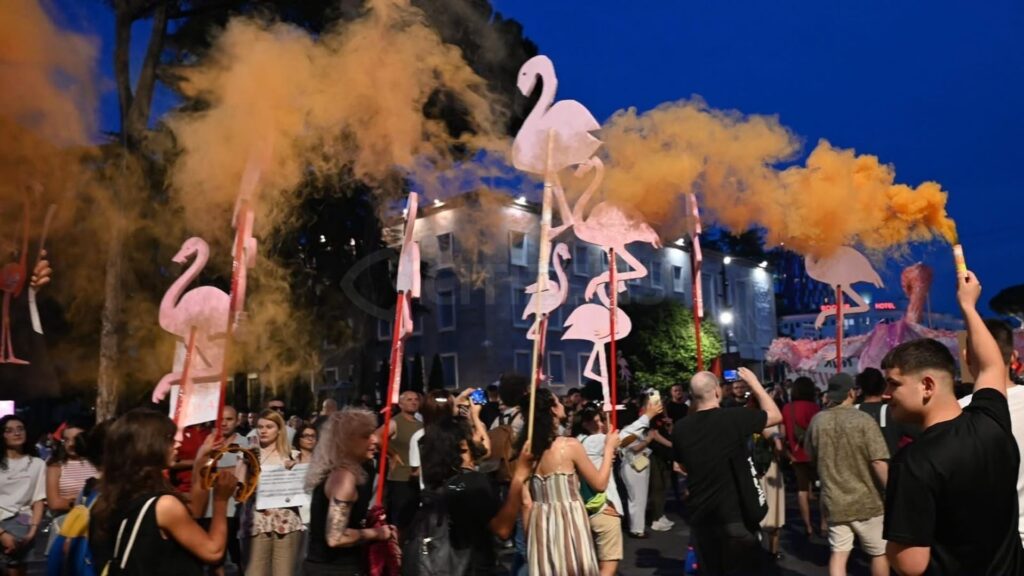
By the 12th day of the protests, demonstrations had spread to the main boulevard of the capital, Tirana, Kryeziu said. The movement came to be known as the “Flamingo Uprising,” a reference to the flamingos that symbolize the region’s rich biodiversity.
Kryeziu said the main slogans were “Albania is not for sale” and “Cancel the project,” and that the movement has since moved beyond purely ecological concerns to become a broader expression of frustration over governance, transparency, participation in decision-making, and the relationship between political power and capital groups.
“We can’t describe this as an anti-imperialist movement”
Kryeziu said that while some activists and commentators have linked the project to foreign investors and broader geopolitical interests, the movement’s core demands center on the public interest and environmental protection in Albania—meaning it cannot be characterized as a movement against American or Israeli foreign policy:
“What’s happening in Albania is that major decisions are being made in the name of tourism development. But these decisions lack transparency, and appear to benefit a small group of investors close to those in power, while offering little to no benefit to ordinary citizens. At the same time, many of these projects come at the expense of nature, biodiversity, and Albania’s protected areas. This raises serious concerns about environmental protection, the public interest, and democratic decision-making.”
“The squares are full of women and young people”
Kryeziu said that although the protests have received support from some opposition politicians and organizations, the movement itself is independent, and the one thing everyone seems to agree on is Albania’s future.
The journalist said the protests have been organized through social media pages and groups, and that the squares are filled especially with young people and women, with the direction of the protests being decided collectively by large groups.
“The protests have turned into an anti-system movement”
Kryeziu said that in the early days, many media outlets failed to report on the protests and clashes in Zvernec, and that coverage only began once the story gained international attention.
She said this reflects the close relationship between Albania’s mainstream media and the political establishment. Another point the media has overlooked, she argued, is the diversity of the protesters themselves:
“People from every part of society are in the squares. They’re tired of the Rama government, its propaganda, and a traditional opposition that has failed to represent society for years. Because of this, the protests are no longer just a reaction to a specific environmental project, they’ve become a broader anti-system movement built around the demand for ‘a new Albania.'”
In Herat Province of Afghanistan, protests have occured over the ongoing arrests and beating of women until they fainted, for not wearing “proper hijab, Chadari or burqa”, by Taliban Morality Police.Taliban members shot some of the protesters in Herat.
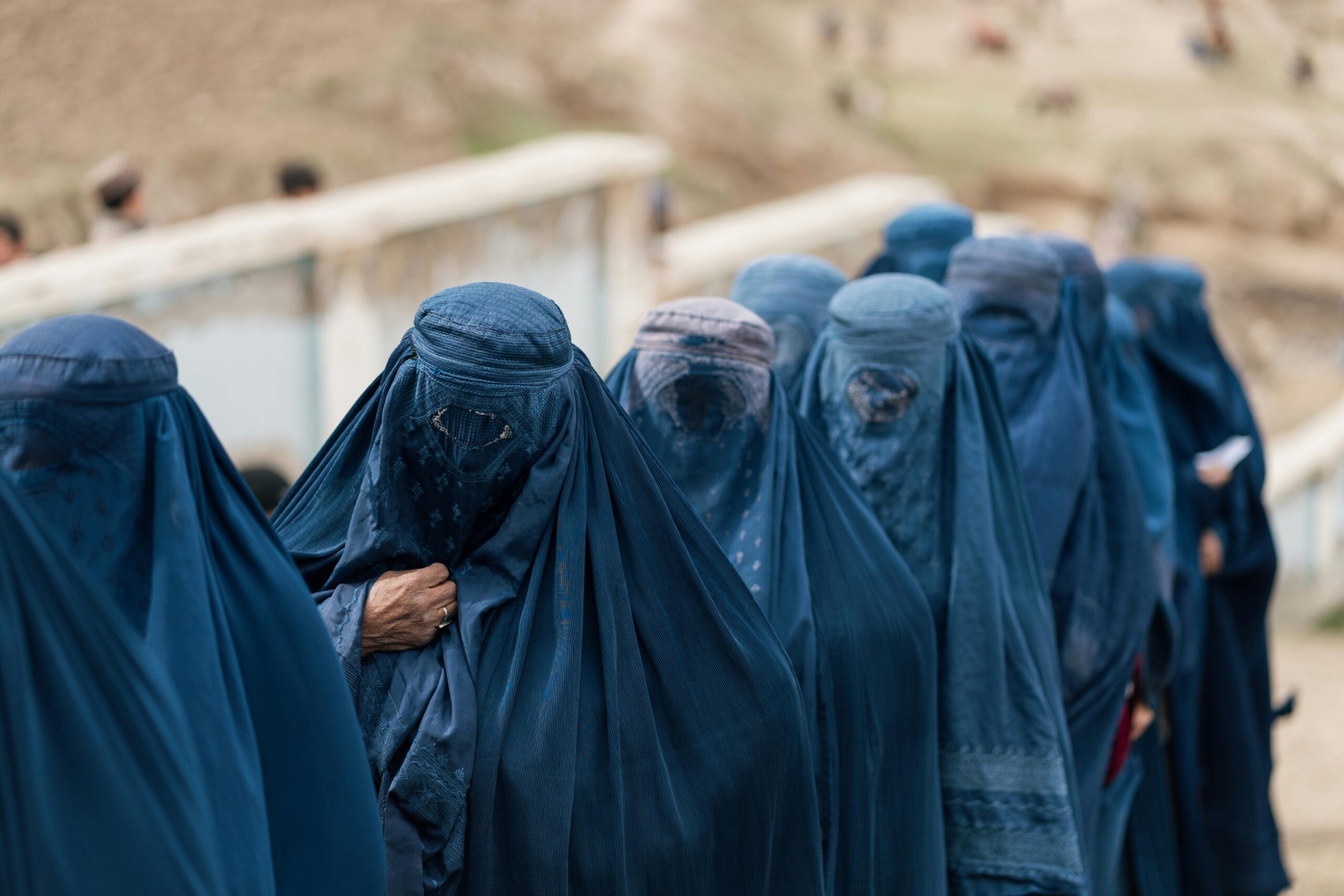
Women wearing Burqa in Afghanistan.
In Afghanistan, some residents from the Jibrail area of Herat Province held a protest rally this morning to protest the detention of women by the Taliban. Sources reported that residents chanting “Education, Work, Freedom” were met with gunfire from Taliban forces.
Afghanistan Women’s News Agency (AWNA) shared that the protest rally was suppressed by Taliban forces, who opened fire on the demonstrators.
The protests have raised over the ongoing arrests and harsh treatment of women by the Taliban’s Morality Police. This treatment of Taliban began on Saturday in various parts of Herat to forcefully make women to wear Chadari or burqa and warning that those who do not wear will be imprisoned.
The Taliban’s supreme leader, Hibatullah Akhundzada, formally endorsed a sweeping 119-article criminal regulation framework. Crucially, this regulation decentralized enforcement, effectively legalizing vigilante violence by stating that any citizen who witnesses a perceived “sin” (including improper dress) has a duty to stop it on the spot.
Photo: 8AM Media
According to 8AM Media, Taliban members have been detaining and beating women until they fainted, for wearing manteau coats. Women in Herat are saying that after these events of Taliban members beating women on the streets, the presence of women in public has dropped sharply, since women are afraid of going out even for the groceries.
ترس از بازداشت؛ حضور کمرنگ زنان در بازارهای هرات
همزمان با افزایش نگرانیها از بازداشت زنان بهدلیل رعایتنکردن حجاب مورد نظر طالبان، حضور زنان در جادهی لیلامی هرات در روزهای اخیر بهگونهی چشمگیری کاهش یافته است.
— Afghanistan Women News Agency (@AWNANEWS) June 9, 2026
Taliban shot protesters
Today (June 9th) local sources told 8AM Media reporters that Taliban members fired shots to disperse and suppress the protesters. They also reported that they can continuously hear the sound of ambulances and Taliban ranger vehicles throughout the area. The exact number of casualties remains unclear. In a video on social media, residents carrying wounded individuals away as gunfire is ongoing.
Herat Protests Continue Amid Reports of Taliban Gunfire
Sources in Herat told Aamaj News that several protesters were wounded after Taliban forces resorted to ‘live fire’ to break up the demonstrations.
At least four sources told the Afghanistan Women’s News Agency today, Taliban forces checked women’s attire and hijabs at the entrances to these halls before allowing people to enter in several places of Herat.
“’Improper Hijab’ is neither consistent with Islamic values”
Zarifa Ghafari Bashir who is a former female mayor of Maidan Shahr of Afghanistan, told on her X account:
“The Taliban violently cracked down on a peaceful demonstration of residents in Herat’s Jibril area who were protesting the detention of women and girls since last few days in Herat. Videos circulating online show Taliban forces firing shots to disperse the crowd and physically assaulting several protesters. This latest incident reflects the regime’s continued use of violence to silence dissent and suppress those who stand in solidarity with Afghan women.”
Nasir Ahmad Faiq, Afghanistan’s representative at the United Nations, told on his X account that the detention of women by the Taliban’s morality police carried under the pretext of “improper Hijab” is neither consistent with Islamic principles and values nor with the culture and traditions of the Afghan people. “How do Taliban enforcers consider themselves entitled to forcibly detain and transport women in public when they are not even their mahram (stranger/legal guardian)?” he asked, and continued “This comes amid credible and well-documented reports of violence, sexual abuse and rape in Taliban prisons, as well as forced marriages involving Taliban members – cases that have never been transparently investigated nor those responsible held accountable.”
Amnesty: “Every woman has the right to choose what to wear”
Regional Office of Amnesty International South Asia called on the Taliban to immediately disclose the whereabouts of the detained women, ensure their safe return, and end measures that target women because of their clothing:
“Reports of multiple women being arrested by the Taliban in Herat province for not adhering to their restrictive dress code are deeply alarming. It is a stark reminder of the continued crackdown on the rights of women and girls in Afghanistan. Every woman has the right to choose what to wear, move freely, participate in public life, and live without fear or intimidation.”
“These arrests are part of Taliban’s gender persecution”
Afghan Women Activist’s Coordinating Body which is a global protection network and diasphora advocacy group, told on their X account that “According to eyewitnesses, photos and video footage received from Herat, Taliban forces arrested women in public spaces simply because their faces were not fully covered. These arrests are not isolated incidents. They are part of the Taliban’s systematic campaign of gender persecution, fear and total control over Afghan women’s bodies, movement and existence.”
Statement by the Afghan Women Activists Coordinating Body on the Arrest of Women in Herat
The Afghan Women Activists Coordinating Body strongly condemns the reported arrest of dozens of women and girls by the Taliban in Herat under the pretext of “bad hijab”.
— Afghan Women Activist´s Coordinating Body (AWACB) (@AWACB_DE) June 7, 2026
Tahera Nasiri, The founder and head of the “Women’s Movement Towards Freedom” stated that “The Taliban are attempting to erase women from public life, making them increasingly vulnerable whenever they leave their homes”. To Nasiri, through systematic restrictions and oppression, Taliban seek to exclude women entirely from society and deny them their fundamental rights and freedoms.
“Shame on those who lobby for this regime or portray the current situation as normal. The reality is that women in Afghanistan continue to face severe discrimination, exclusion, and repression every day” she said.
The Taliban are attempting to erase women from public life, making them increasingly vulnerable whenever they leave their homes. Through systematic restrictions and oppression, they seek to exclude women entirely from society and deny them their fundamental rights and freedoms.… pic.twitter.com/RlizxHBiKn
— Tahera Nasiri ~ طاهره ناصری (@nasiri_tahera) June 8, 2026