Belfast riots raise concerns about anti-immigrant violence

A stabbing incident in Belfast has sparked violent anti-immigrant riots fueled by social media misinformation, raising serious concerns about racism, public safety, and Northern Ireland’s fragile social fabric.
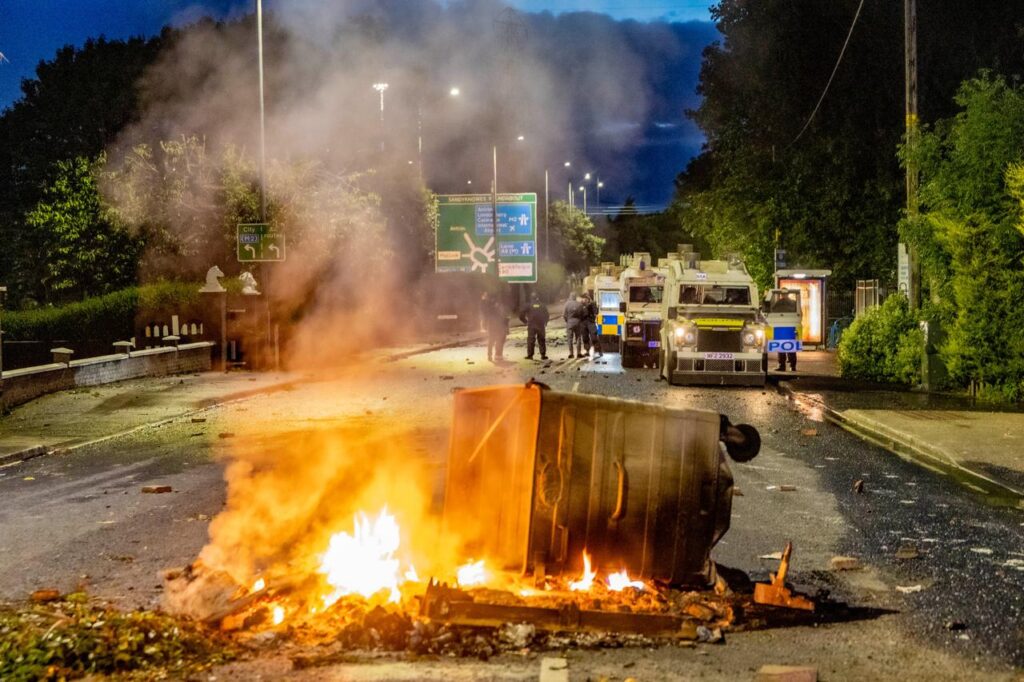
Image: Kevin Scott (@Kscott_94)

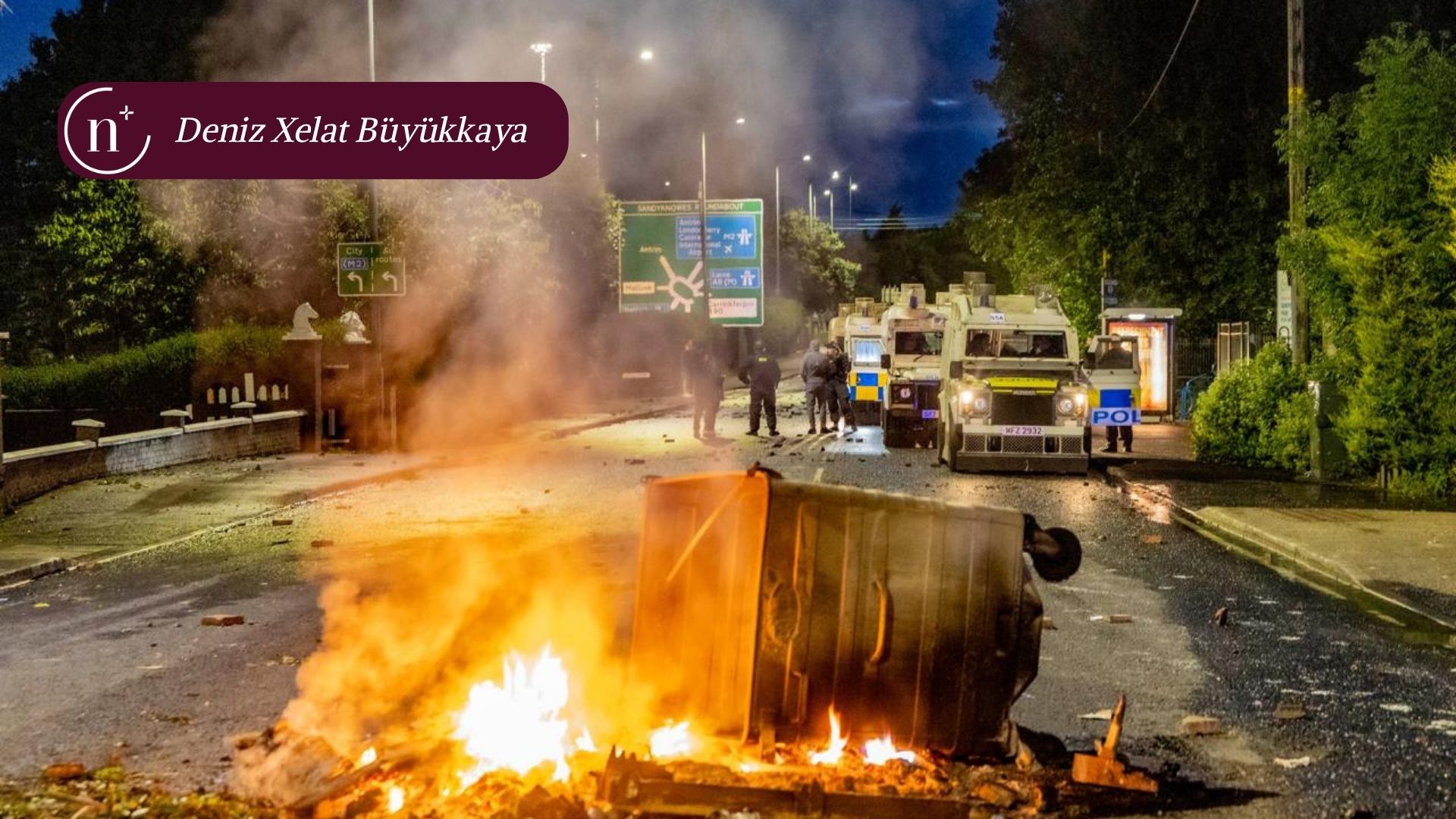
Riots in Belfast after a serious knife attack have raised concerns about anti-immigrant violence, misinformation on social media, and whether police and political leaders can stop tensions from growing.

The riots started after Stephen Ogilvie was seriously injured in a knife attack in north Belfast on 8 June. A 30-year-old Sudanese man, Hadi Alodid, was later charged with attempted murder, carrying a knife in public, and making threats to kill. He has not been convicted, and police have not publicly confirmed a motive for the attack.

The incident quickly became more than a criminal investigation. Videos and claims about the attack spread rapidly online. The suspect’s nationality and immigration status became a major topic of discussion. Soon after, anti-immigration protests took place in parts of Belfast, and some of these protests became violent.

Police officers were attacked with bricks, bottles, and fireworks. Vehicles were set on fire, and homes and businesses were damaged. Some properties linked to migrants or ethnic minority residents were also targeted. The Police Service of Northern Ireland (PSNI) responded by deploying public order units and using water cannon and plastic bullets.

The violence prompted warnings from community groups that minority families were living in fear. Some people had to leave their homes for their own safety. Police asked the public to remain calm and avoid sharing material that could increase tensions.

In a statement released through the PSNI, Ogilvie’s family said they were devastated by the attack. However, they said they did not want the case to divide communities or create hostility towards migrants. They added that many migrants make an important contribution to the country and should not be blamed for the actions of one individual.

In an update yesterday, Stephen Ogilvie’s family confirmed that he is now out of an induced coma and continuing his recovery. However, his condition remains serious. His family said he has lost sight in his left eye and still faces the possibility of losing sight in his right eye.

Social media misinformation

Political leaders in Belfast and London also condemned the violence. Prime Minister Keir Starmer said the disorder was unacceptable and that those responsible would face the full force of the law. Northern Ireland Secretary Hilary Benn described the violence as “racist thuggery” and said people had been targeted because of their race or background.

First Minister Michelle O’Neill condemned the intimidation of families and the burning of homes. Deputy First Minister Emma Little-Pengelly said that anger about one person’s alleged actions could never justify attacks on innocent people. Justice Minister Naomi Long also criticised people who were using fear and anger to encourage anti-immigrant actions.

Long said social media had helped increase tensions. According to The Guardian, some people encouraging the riots were not even from the local area, saying that they would have “struggled to find Belfast on a map”.

The role of social media has become one of the central issues following the riots. Police and politicians say that videos, rumours, and inflammatory posts online helped make the situation worse. There are also concerns that threats against migrant-related addresses were not taken seriously enough before the violence began.
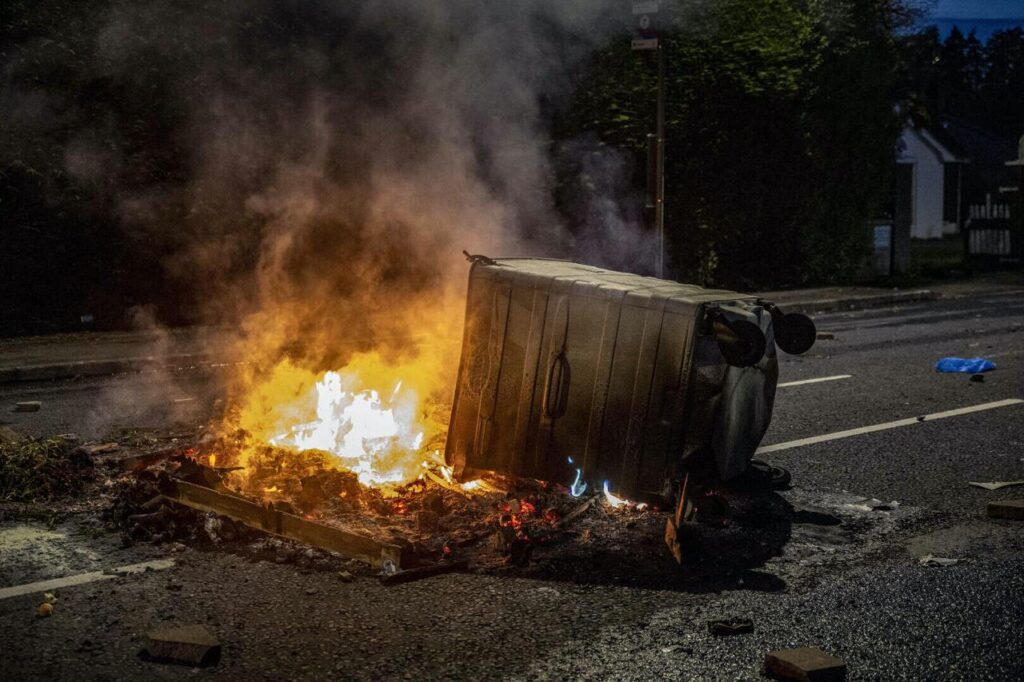
Image: Kevin Scott

The Guardian reported that a volunteer group called The Accountability Project Northern Ireland sent many reports to the PSNI between November 2025 and June 2026. The group warned police about anti-immigration activity online and about addresses being shared in extremist networks. A spokesperson said that a list circulated during the riots appeared to match one that had previously been sent to police.

The PSNI says investigations are continuing. Officers are trying to identify those involved in the disorder and are monitoring online activity. Police are also taking steps to protect people and places that may be at risk.

Northern Ireland’s context

The riots have been compared to other anti-immigrant violence in the UK. In 2024, riots broke out in several towns and cities after the murder of three girls in Southport. False information about the attacker spread online, and mosques, asylum accommodation, and police officers were targeted. A parliamentary report later described the unrest as the worst public disorder in the UK since 2011.

Northern Ireland also witnessed anti-immigrant violence in 2025. Riots erupted in Ballymena after two teenagers were accused of a serious sexual assault, but the riots soon moved beyond the specific criminal allegation and turned into hate-motivated attacks against migrant communities. Homes, cars, and businesses were burned, and police described the disorder as hate-motivated. Reuters later reported that the charges against the teenagers were withdrawn, highlighting how an unproven allegation had been mobilised to justify collective hostility toward immigrants.

The Belfast riots appear to fit a wider pattern in which serious crimes or allegations can quickly become a focus for anti-immigrant mobilisation, especially when claims and rumours spread online.

The events have also renewed debate about Northern Ireland’s unique social and political situation. Belfast has a long history of sectarian division and political conflict. Because of this history, outbreaks of street violence are especially concerning. The Guardian reported that the riots led to questions about possible loyalist paramilitary influence, although there is currently no clear evidence that such groups organised the disorder.

For police and political leaders, the challenge is now about more than restoring order. They also face pressure to respond more effectively to online threats, misinformation, and the targeting of minority communities after local incidents.

The criminal case connected to the knife attack will continue through the courts. However, the violence that followed has already left Belfast facing difficult questions about racism, social media, policing, and the risk of blaming entire communities for the alleged actions of one person.
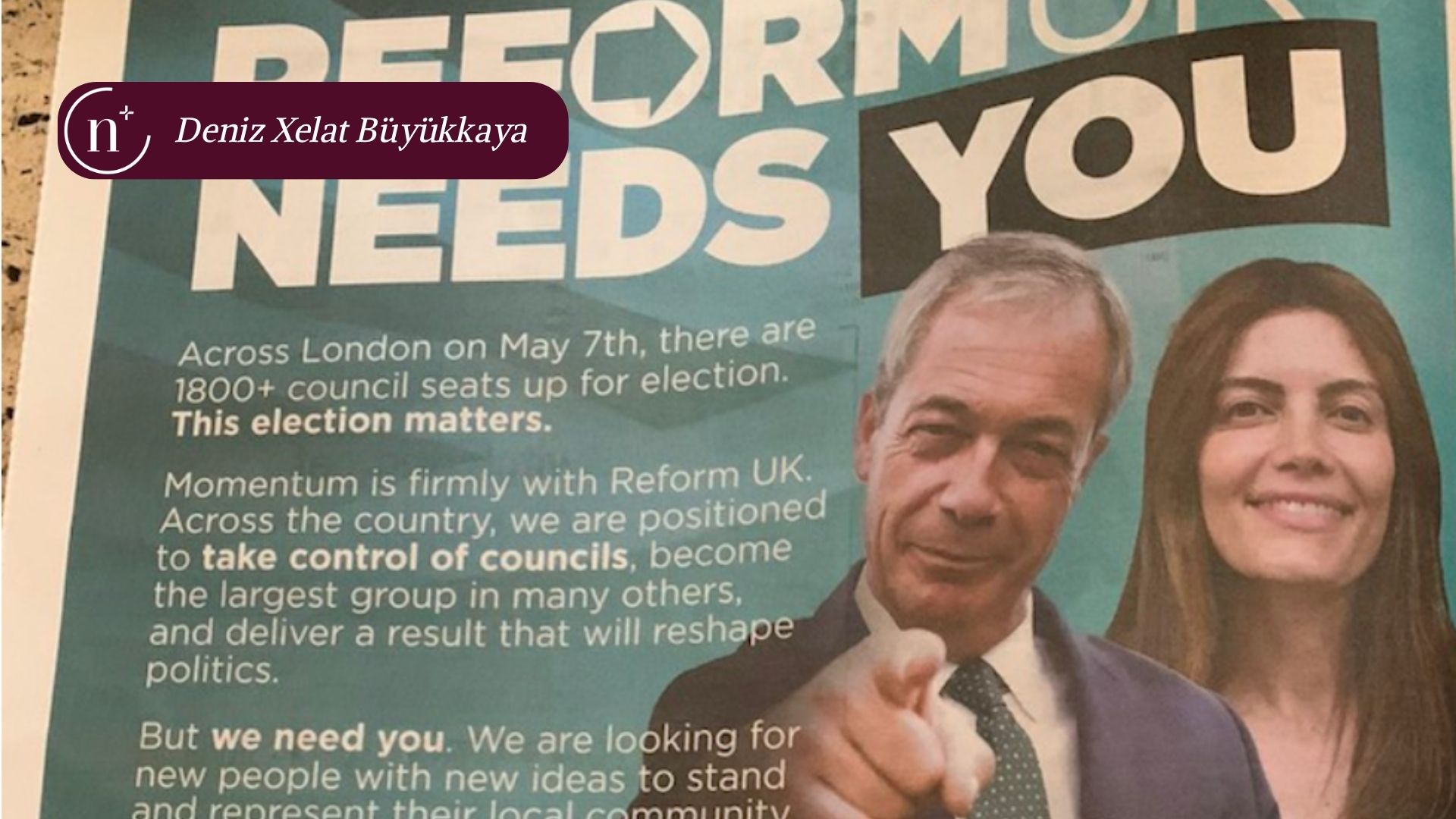
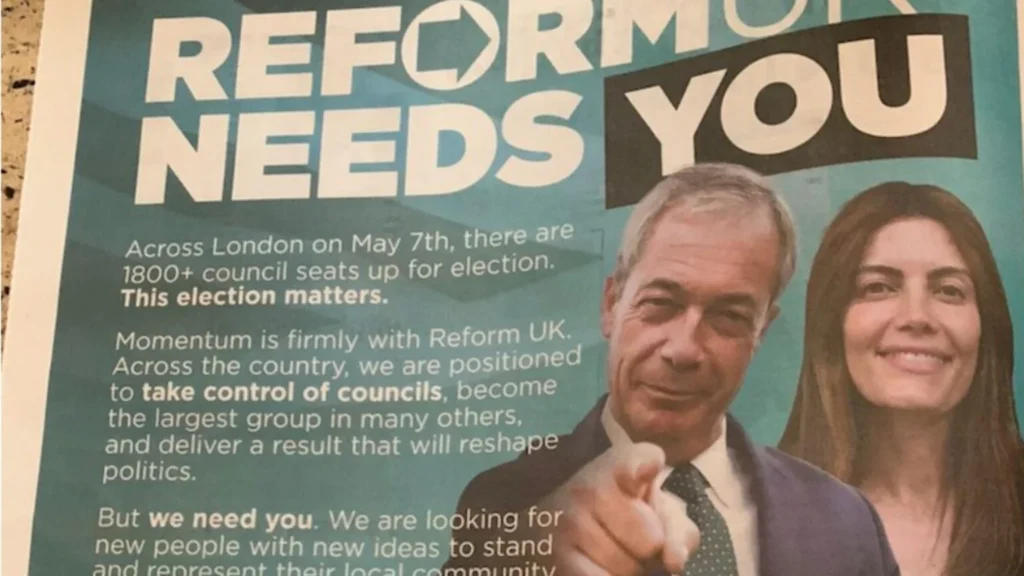
May 2026 Elections: A New Era in UK Politics?

The May 2026 United Kingdom elections were a serious warning for the Labour government, a sign of pressure for the Conservative Party to rebuild itself, a big opportunity for Reform UK, and a sign of a new period in domestic politics. These elections show that UK politics is becoming more fragmented, more competitive and more unpredictable.

The elections held in the United Kingdom last month were not general elections, but they were still an important turning point because they showed the political direction of the country. Local elections were held in many parts of England, while parliamentary elections were held in Scotland and Senedd elections were held in Wales. These elections gave a serious warning to the Labour government. Labour came to power with a large majority in the 2024 general election, but only two years later, the party lost a lot of support in all three countries.

Perhaps the most important result of the elections was the rise of political fragmentation. For a long time, politics in the United Kingdom was mainly shaped by the competition between Labour and the Conservative Party. However, the 2026 election results showed that the two-party system is becoming weaker. Reform UK gained strength as a right-wing populist alternative, while the Green Party, the Liberal Democrats, Plaid Cymru and the SNP increased their support in different regions. This shows that voters are no longer automatically loyal to traditional parties.

It would not be wrong to say that the May local elections were especially disappointing for Labour in England. In the elections held on 7 May, Labour either lost in many areas that could be described as its strongholds or saw a serious fall in its vote share. Reform UK achieved successful results, especially in areas where support for Brexit was high. Reform UK, which has been criticised for its anti-immigration position but has also increased its support recently, won more than 1,400 council seats in England. This has already put pressure on its rivals before the 2029 general election. Reform UK’s success shows that issues such as immigration, economic insecurity and public services still have a strong influence on voters.

The Green Party also achieved an important success in these elections, winning more than 500 council seats and two mayoralties in London. The Liberal Democrats also increased their number of council seats compared with the previous election.

May 2026 United Kingdom Elections

Political fragmentation, warning signs, and a roadmap analysis for 2029

Regional seat allocations and radical shift

Wales Senedd elections

Plaid Cymru
43
Reform UK
34
Labour
9

Scotland Holyrood elections

SNP (Scottish National Party)
57
Reform UK
17
Scottish Labour Party
17

England local elections & alternative powers

In council seats across England, voters looking for alternatives to the traditional two-party system drove radical shifts across both the right and left wings:

1,400+
Reform UK Council Seats

Achieved massive success particularly in high Brexit-support areas, creating a huge pressure element for 2029.

500+
Green Party Council Seats

Won two mayoralties in London and more than 500 seats, becoming the new focal point for left-wing/progressive voters.

Key dynamics shifting voter behavior

Chronic issues lie behind the end of “automatic” loyalty toward traditional parties:

  • Economic Instability & Cost of Living: Voters feel that the change of government in 2024 has not reflected onto their daily lives.
  • Healthcare (NHS) and Public Crisis: The decline in public services is being blamed on the traditional parties.
  • Immigration and Security Debates: This became the main fuel powering the rise of the right-wing populist Reform UK.

Political projection towards the 2029 general election

Although Prime Minister Keir Starmer, who is under heavy pressure, announced following the election results that he would not resign and would not drag the country into instability, the government’s room for maneuver has narrowed. In this new era where politics has turned into a much more fragmented, competitive, and unpredictable structure, the May 2026 results serve as a stark warning to all parties on the path leading to the 2029 general elections.

Exclusive HTML Infographic Module | Created using AI tools based on the article text.

Labour won only 9 seats in Wales

On 7 May, people in Scotland and Wales also voted to choose representatives for their national parliaments, and Reform UK achieved successful results in both countries. In Wales, the Welsh nationalist party Plaid Cymru won the highest number of seats, with 43 seats, and became the largest party in the Senedd. Reform UK became the second-largest party with 34 seats. Labour won only 9 seats in Wales.

In the elections for the Scottish Parliament, also known as Holyrood, the Scottish National Party, or SNP, won the election for the fifth time, but lost its majority. The SNP won 57 seats, while Reform UK and Scottish Labour shared second place with 17 seats each. The elections in Scotland showed that the question of independence is still very important for many voters. However, issues such as the cost of living, the NHS and public services were also important factors in how people voted.

The most important message of the 7 May elections for Labour is that its big victory in the 2024 general election was not a permanent vote of confidence. Keir Starmer’s government had promised economic stability, better public services and the rebuilding of political trust. However, the 2026 elections showed that many voters have not yet felt this change in their daily lives. After the election results, Starmer said that he would not resign and would not leave the country in “chaos”. This clearly showed that his government is under pressure.

Housing crisis, debates on migration

The wider meaning of the 2026 elections is that voter behaviour in the United Kingdom is now more affected by current problems. Economic difficulties, debates about immigration, the condition of public services, the housing crisis and political distrust are changing traditional voting habits. For this reason, the May 2026 elections were not only local or regional elections. They also gave serious warnings to political parties on the road to the 2029 general election.

The May 2026 United Kingdom elections were a serious warning for the Labour government, a sign of pressure for the Conservative Party to rebuild itself, a big opportunity for Reform UK, and a sign of a new period in domestic politics. These elections show that UK politics is becoming more fragmented, more competitive and more unpredictable.

After the ceasefire: Iran’s silent Kurdish war

While the ceasefire reached between Iran and its rivals in 2026 may have reduced tensions in the region, the situation is different for the Kurdish opposition. This “silent war,” continuing with drones and operations along the border, proves that the ceasefire is not peace but merely a change of strategy.

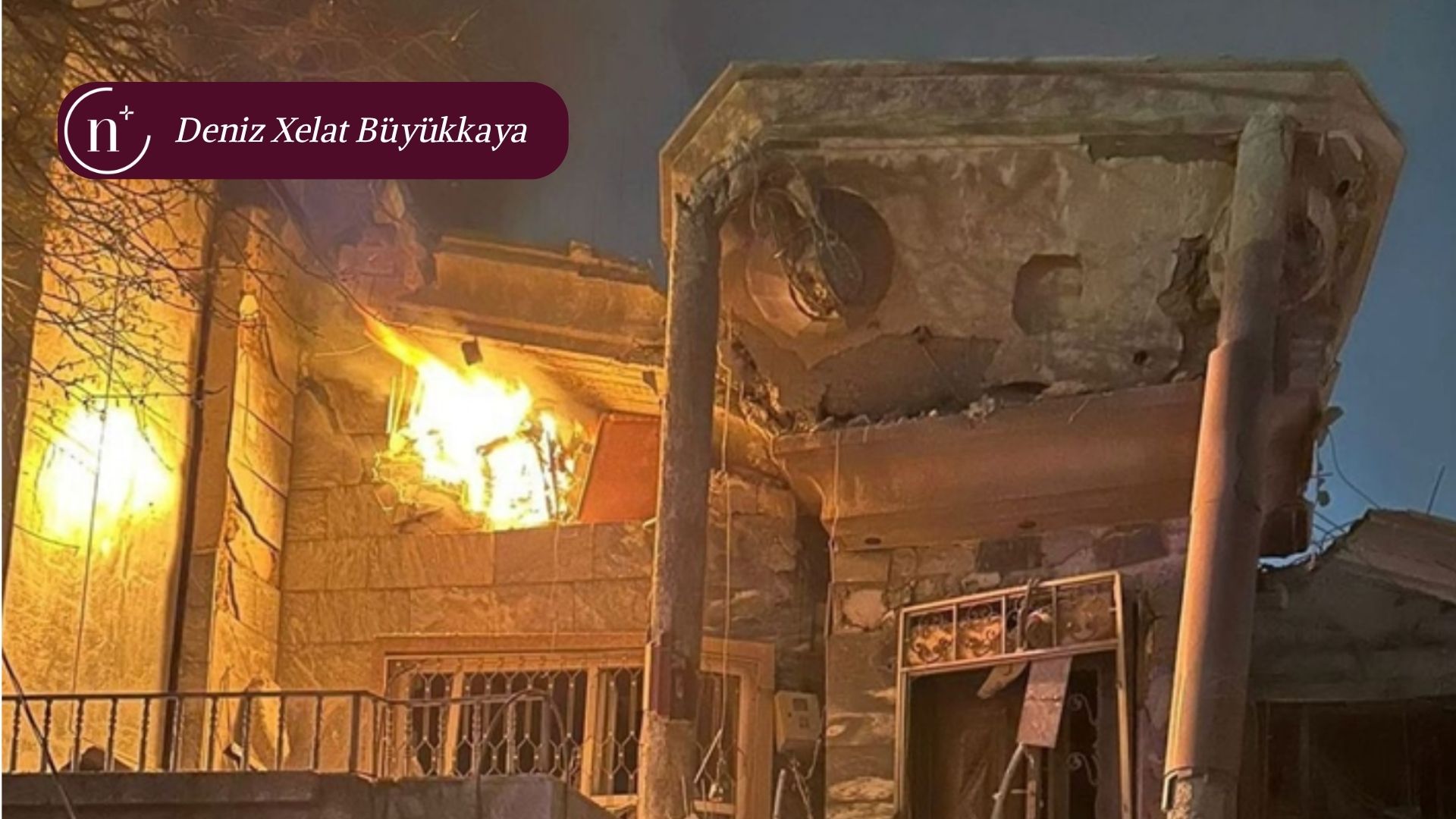
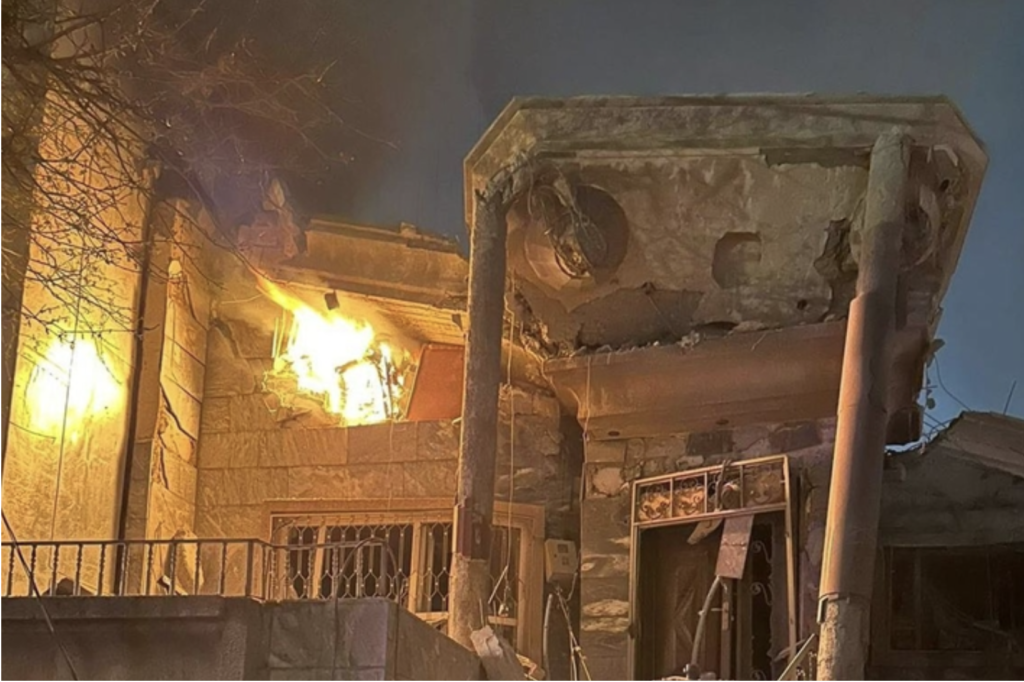
A drone strike in Sulamaniyah (Rudaw)

The ceasefire announced on April 8, 2026, between Iran and its external opponents was seen by many as a sign of lower tension in the region. However, for Iran’s Kurdish opposition movements, it did not mean sign of peace. In the area between Rojhelat, Eastern Kurdistan, and the Kurdistan Region of Iraq, the conflict did not end; it just changed its form.

While international attention focused on Iran, the United States, and Israel, another conflict continued along the Iran-Iraq border. After the ceasefire, Iranian military operations appeared to focus more directly on Kurdish opposition groups. These groups were targeted with drones, missiles, arrests, and security pressure.

This is why the situation can be called a “silent war.” It is not an official war, and there is no formal declaration. But attacks, pressure, fear, and deaths continue. It is “silent” because it receives much less international attention than other conflicts in the region.

From ceasefire to targeted attacks

After the ceasefire, Iran’s military focus seemed to shift toward Kurdish opposition groups based in Iraqi Kurdistan, including the Kurdistan Democratic Party of Iran, PDKI, Komala, and PAK.

Reports by human rights and regional monitoring organisations indicate that violence did not end after the ceasefire but shifted toward Iranian Kurdish opposition groups. CPT Iraqi Kurdistan recorded 48 attacks between 8 and 24 April 2026, of which 37 targeted Iranian Kurdish opposition camps and bases, compared with only four attacks on U.S. diplomatic or military facilities. The same report stated that 75 percent of post-ceasefire attacks were carried out directly by the IRGC, while 25 percent were attributed to affiliated groups. Human rights organisations such as the Kurdistan Human Rights Network and Hengaw also documented deadly IRGC attacks on PDKI and Komala-linked sites, including the killing of Kurdish opposition members and civilians.

The Kurdistan Regional Government’s Media and Information Office announced that between February 28 and April 20, the Kurdistan Region was targeted in a total of 809 attacks, despite not being a party to the war.

This pattern points to a clear shift in Iran’s security focus. Tehran sees these Kurdish groups as both an internal and cross-border threat because they are linked to Kurdish areas inside Iran and are also based in the Kurdistan Region of Iraq. For Kurdish groups, the ceasefire did not bring real security. It only changed the direction of Iran’s pressure.

The geography of the “silent war”

This conflict mainly takes place along the mountainous Iran-Iraq border, especially around Hewler and Sulaymaniyah, where Iranian Kurdish opposition groups have had bases for many years.

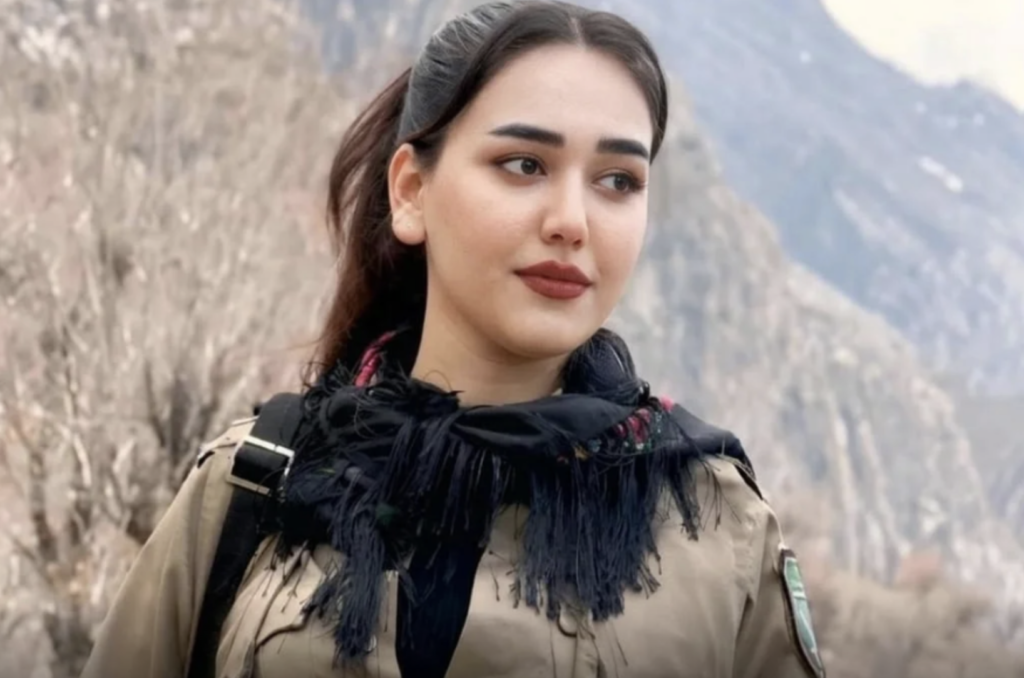
In mid-April 2026, a drone attack hit the Surdash area near Sulaymaniyah. The attack seriously injured Ghazal Mawlan Chaparabad, a young Kurdish female peshmerga affiliated with Komala Toilers of Kurdistan, who later died from her injuries. According to a HANA Human Rights Organization legal team report, she first received only initial emergency care at Shorsh Hospital and then needed urgent higher-level treatment, including advanced imaging, specialist trauma care, and intensive care support. HANA also reported serious allegations that her admission or transfer to other hospitals was delayed or refused, and that her condition worsened during these delays. This case shows that Kurdish opposition camps and nearby remote areas may be especially vulnerable after drone attacks, not only because of the strikes themselves, but also because wounded people may face delays in reaching advanced medical care.

Ghazal Mawlan Chaparabad (hana.org)

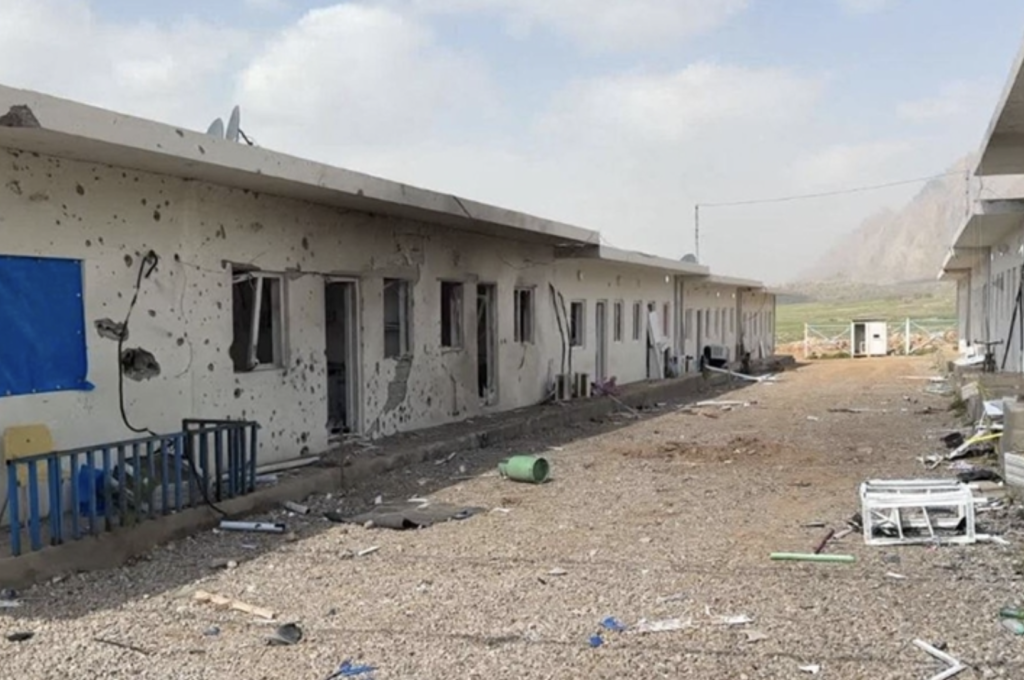
A few days later, another attack hit the Jezhnikan camp near Hewler. Rudaw reported that a drone attack killed Shahin Azarbarzin, the son of a Peshmerga fighter, and seriously wounded his father. Kurdistan24 also reported that the camp housed civilians and that women and children were among the injured in related attacks. This shows that these camps are not only military or political spaces; families and civilians also live there. Together with the case of Ghazal Mawlan, this raises concern about whether wounded people in remote camp areas can reach advanced emergency care quickly after drone or missile attacks.

The danger was not limited to fighters or military sites. Civilian areas were also at risk. As a result, many Kurdish camps and nearby communities now live with constant insecurity.

Rojhelat under internal pressure

At the same time, pressure inside Iran’s Kurdish regions also increased. Hengaw reported that Iranian authorities increased the presence of plainclothes forces and created new checkpoints at city entrances, on inter-city roads, and on rural roads around Sine. It also reported that security-linked forces were deployed in several Kurdish border areas to create fear, prevent possible protests, and control public space. The report mentioned Hashd al-Shaabi forces, tanks, and armored vehicles in some Kurdish border areas. A Washington Kurdish Institute digest also described expanded military and proxy-force deployment in Kurdish areas. Together, these reports suggest that Kurdish areas were under stronger public security control after the ceasefire.

For Kurdish people, this meant more surveillance, less freedom of movement, and constant pressure. Human rights reports from the same period mentioned arrests without warrants, detention without family contact, and the execution of a Kurdish political prisoner. For example, KHRN reported that Yousef Karimi, a Kurdish man from Bukan, was arrested without a warrant and held without contact with his family. Separately, Hengaw reported that Kurdish political prisoner Naser Bakrzadeh was executed in May 2026 after his death sentence had been upheld by Iran’s Supreme Court.

These actions show that Iran was using two strategies at the same time: outside Iran, it tried to weaken Kurdish opposition groups in Iraqi Kurdistan; inside Iran, it tried to stop political mobilisation in Rojhelat.

Why Is Iran doing this?

Image: Rudaw

Iran’s strategy seems to be based on fear of instability. During the wider crisis in early 2026, Chatham House reported that Kurdish opposition groups faced pressure and uncertainty because of mixed U.S. messages about a possible Kurdish uprising. It also noted that Kurdish groups based in Iraq could, in theory, create space for wider opposition activity inside Iran, but that this would be very risky because Iranian security forces still had strong capacity for violence.

The attacks after the ceasefire can therefore be understood as a warning. Iran wanted to stop Kurdish groups from reorganising, weaken their cross-border networks, and prevent Kurdish mobilisation inside Rojhelat and across the border in Iraqi Kurdistan. In this sense, the post-ceasefire attacks were not random. They were part of a security strategy aimed at controlling Kurdish political activity both inside and outside Iran.

The Conflict has changed, not ended

The April 2026 ceasefire may have reduced the risk of a larger regional war, but it did not bring stability everywhere. For Kurdish opposition movements and the wider area between Rojhelat and Iraqi Kurdistan, the conflict continued without being officially recognised.

It was not a traditional war with large battles. It was a conflict fought through drones, surveillance, arrests, and targeted attacks. For this reason, the situation in Rojhelat was not real peace, but a transformed conflict.

The Kurdish question in Iran is no longer only an internal issue. It has become part of a wider regional security struggle. The conflict has not ended; it has only become quieter, less visible, and easier for the world to overlook.

Privacy overview

Niha+ respects your digital footprint within the framework of independent journalism principles and reader privacy. While browsing our site, cookies are used to provide you with an uninterrupted reading experience and to secure the technical infrastructure of our platform. You can manage your cookie preferences as you wish by using the menu on the left. For detailed information on how your personal data is processed, please review our Privacy Agreement and KVKK Clarification Text.