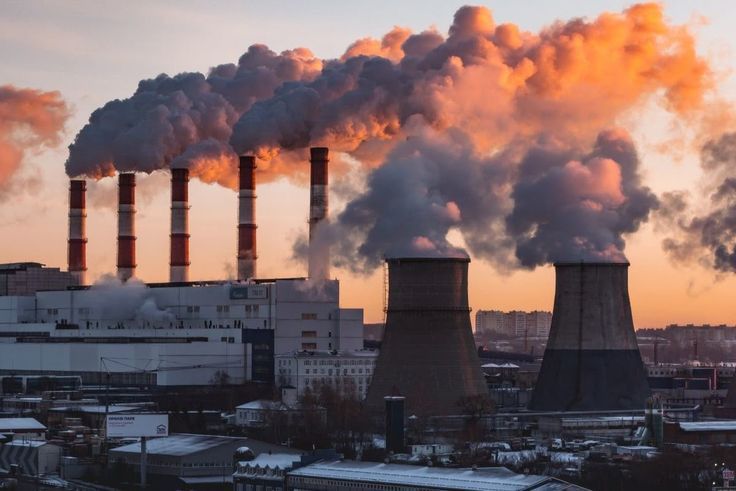
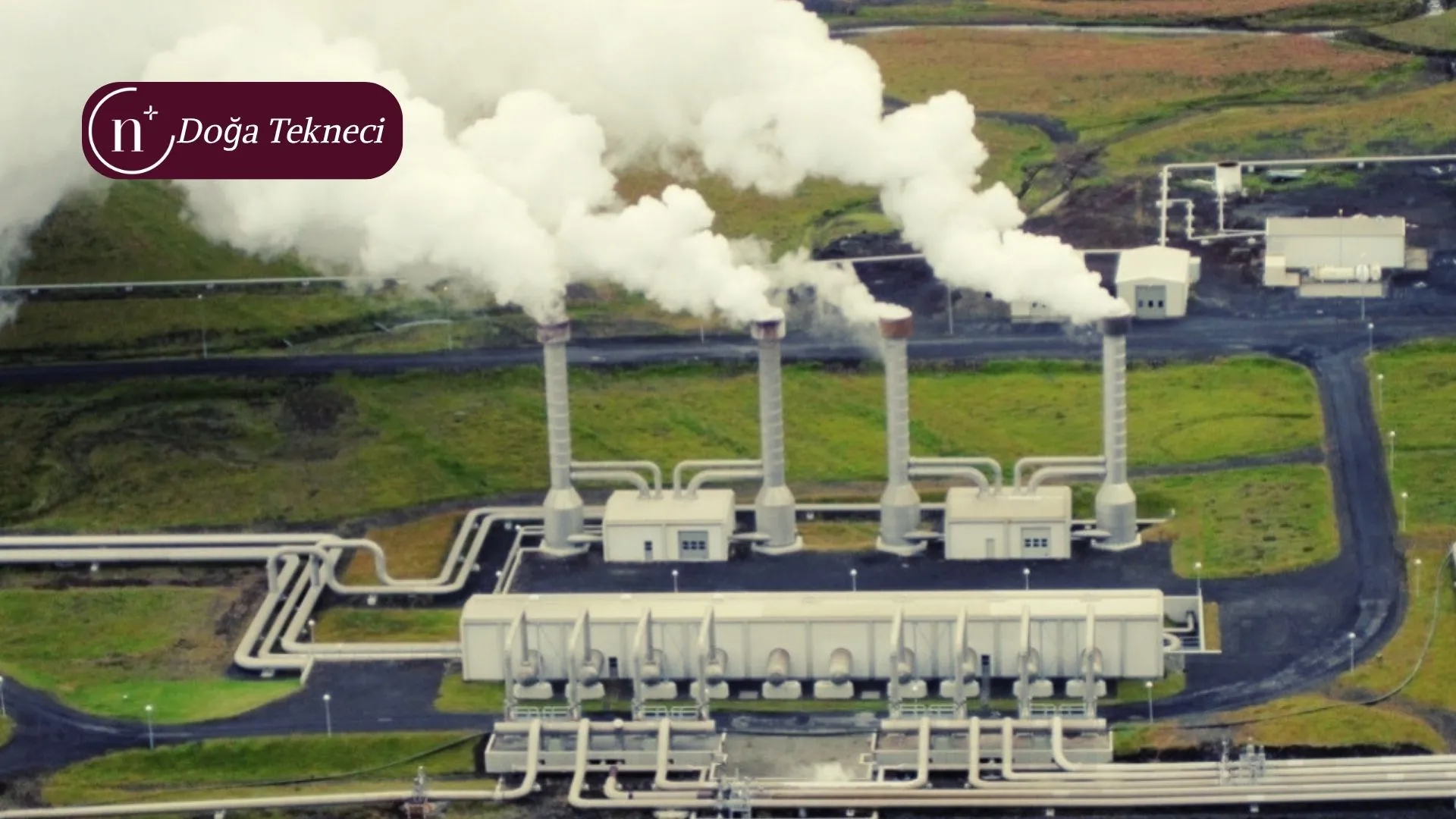
“Geothermal fluid is being released into the ground and aquifers”

“While geothermal power companies have reaped huge profits thanks to incentives and purchase guarantees, the local population has not even been able to benefit directly from the electricity generated,” says Deniz Mine Öztürk, pointing out that ecological and social devastation lies hidden behind the “clean energy” rhetoric of geothermal power plants.
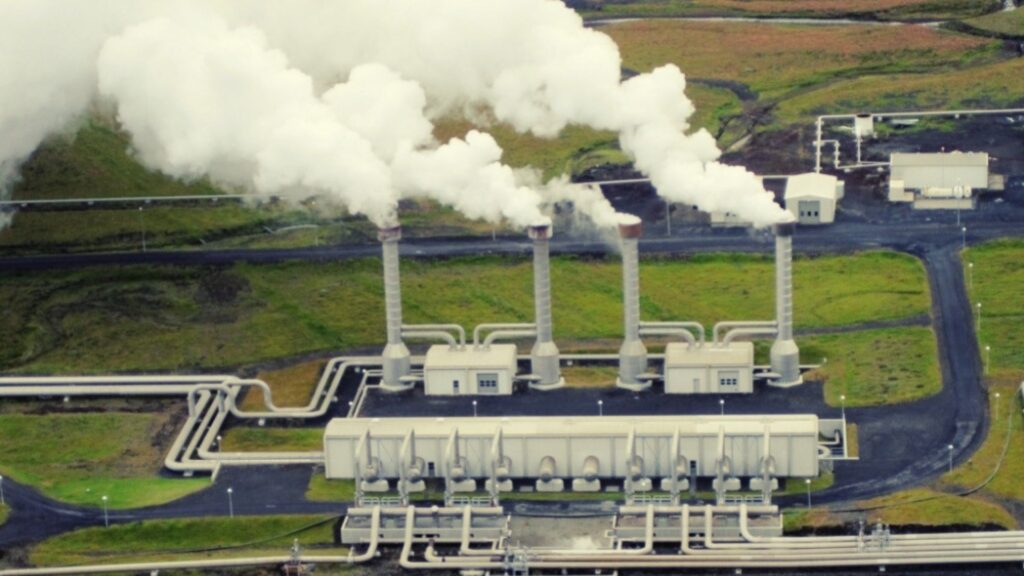
Source: Afyonkarahisar University of Health Sciences Energy Management Unit website

Geothermal power plant (GPP) projects, which are concentrated in the provinces of Aydın, İzmir, Manisa, and Denizli, are facing backlash from local communities and experts. The GPP projects planned for the districts of Varto in Muş and Karlıova in Bingöl will affect the natural habitats of a total of 22 villages. Experts and local residents are opposing two separate GPP projects to be implemented by the U.S.-based Ignis H2 Energy Production Inc. in Varto and Karlıova, stating that these projects will have a severely negative impact not only on human life but also on natural ecosystems and animal life.

Residents in the Aegean region, particularly in Aydın, continue to voice complaints about increased cancer risks, the smell of rotten eggs, and the decline in agricultural productivity due to geothermal power plants.

Öztürk: Underground minerals, gases, and heavy metals have toxic effects
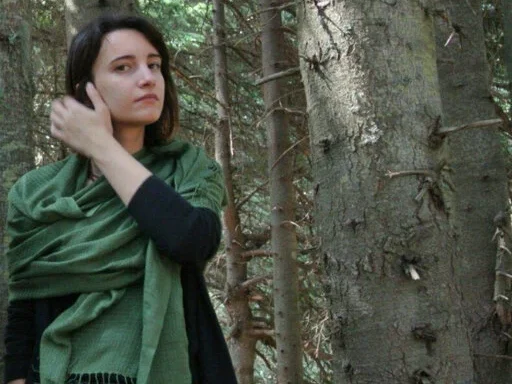
Deniz Mine Öztürk

Deniz Mine Öztürk, a Ph.D. candidate in energy geography at Clark University, shared her insights with Niha+ regarding the ecological damage caused by geothermal power plants. Öztürk explained that there are different types of technology used to generate energy from geothermal sources:

“Most of the sources in Turkey are hydrothermal, formed when underground water reserves are heated by heat transmitted from the Earth’s core. Heat from the core can be transmitted to points near the Earth’s surface through fractured rocks in areas with tectonic activity. In these regions, geothermal fluid is extracted to the surface through drilled wells to generate energy. To both extend the sustainability of the resource and protect surface ecosystems, this extracted fluid must be reinjected back into the same location after energy is generated.”

Öztürk explained that as one descends deeper into the Earth, temperature and pressure increase, and this causes the minerals, metals, and gases present in the rocks contacted by the accumulated fluid to dissolve more readily. He emphasized that geothermal fluids vary depending on the region, depth, and the rock they come into contact with; in geothermal sources in Anatolia, minerals such as sodium, calcium carbonate, and sulfate, along with trace metals like boron, arsenic, and lithium, have been identified:

“When these minerals, heavy metals, and gases from the subsurface ecosystem are brought to the surface, they can have toxic effects on living organisms.”

Sodium
Na
Calcium Carbonate
CaCO₃
Sulfate
SO₄²⁻
Boron
B
Arsenic
As
Lithium
Li
Carbon Dioxide
CO₂
Hydrogen Sulfide
H₂S
Sulfuric Acid
H₂SO₄

Referring to the consequences of the fluid extraction process, Öztürk stated the following:

“Due to the high cost of reinjecting the extracted fluid back into the same location and the flexibilities provided by the Geothermal Law No. 5686, it has been observed that some geothermal power plants in the Western Aegean discharge the fluid into the ground or nearby water bodies. This has caused contamination in the soil, as well as in groundwater and surface water sources. Additionally, when re-injection is not fully carried out, over time the decline in the source’s pressure and the resulting decrease in groundwater levels have led to ground subsidence and fissures.”

“Hydrogen sulfide with a rotten egg smell in Aydın”

Explaining that non-condensable gases present in the fluid are released into the atmosphere through power plant chimneys during reinjection, Öztürk added that these gases include carbon dioxide (CO2)—one of the primary causes of climate change—and hydrogen sulfide (H2S), which has a rotten egg odor and is both toxic and flammable:

“One of the most frequently mentioned concerns in Aydın is the smell of hydrogen sulfide. Hydrogen sulfide can also react in the air to form sulfuric acid, leading to acid rain. Acid rain, in turn, causes respiratory difficulties in humans and animals and disrupts plant growth.”

Öztürk, noting that geothermal companies produce energy under the guise of “clean” energy compared to fossil fuel use, reminded that carbon dioxide emissions from geothermal power plants in Turkey are far above global averages:

“At some plants, emissions rival those of fossil fuel power plants. This means they contribute to global climate change in the long term. In addition, geothermal power plants release large amounts of water vapor, which alters the local climate.”

“Drilling can cause stress in animals”

According to Öztürk, the various elements contained in geothermal fluids, along with the resulting acid rain and climate change, can negatively impact the development of plant and animal species. Noting that these processes threaten biodiversity and endemic species, Öztürk said, “The intense noise and vibrations generated during drilling, exploration, and power plant operations can cause stress in animals and affect their migration and reproductive behaviors.”

Additionally, Öztürk noted that geothermal power plants (GPPs) built near agricultural areas can degrade soil quality, contaminate irrigation water, and consequently reduce agricultural yields. He added that damage to pastures and water sources can create significant pressures on livestock farming activities.

“These projects were implemented through top-down decisions”

Öztürk stated that authoritarian methods and corporate policies aimed at increasing company profits have caused multi-dimensional injustices in the Büyük Menderes and Gediz Graben regions—where geothermal power plants are predominantly built—specifically in Aydın, İzmir, and Manisa:

“Polluted air, water, and soil have had negative effects on the health of humans, non-human living beings, and ecosystems. The food produced in the region has been contaminated. Future generations have been deprived of their right to benefit from these natural and clean ecosystems. While geothermal power companies have reaped huge profits through incentives and purchase guarantees, the local population has not even been able to benefit directly from the electricity produced. On top of that, they lost their means of livelihood and their living spaces.”

Reminding that these projects were implemented through top-down decisions, Öztürk said, “Expropriation orders were issued in haste for land that villagers did not want to sell. People were deprived of the land where they had labored for generations, accumulated memories, and shaped their culture.”

“The local community, municipalities, experts, civil society organizations, and opposition parties were not included in the decision-making processes. They were deprived of the rights to ‘participation’ in decision-making processes—one of the most fundamental democratic rights—and the right to be recognized as a subject,” according to Öztürk’s observation. While JES companies are free to organize and easily convey their demands to the government, the organization of local communities opposing these projects was criminalized:

“The villagers’ right to protest the companies was met with attacks by law enforcement; lawsuits were filed against protesters, and they were detained. In fact, following the JES resistance in Aydın/Mezeköy, a state of emergency was declared for one week; entry and exit to the village were banned. Thus, multi-dimensional injustices—ecological, economic, political, social, and cultural—were created in the Western Aegean.”

“The displacement of Kurds and Alevis will exacerbate social inequality”

Öztürk noted that the planned new geothermal power plant projects in Muş and Bingöl, which are set to be built in Kurdish and Alevi villages historically forced to migrate in Turkey, add another dimension to the situation:

“The potential for Kurds and Alevis to be effectively driven from their living spaces and deprived of their means of livelihood poses profound social and cultural threats. In a region where people were forcibly displaced through the emptying of their villages throughout the 1980s and 1990s, the prospect of their being dispossessed once again—deprived of their living spaces, cultures, and social ties—will lead to the reproduction of historical injustices and the deepening of social inequalities. “However, despite all the injustices created and the deepening power imbalances throughout the process, the people organized in the Western Aegean have halted numerous projects through their determination and persistence. In this sense, I am certain that the organizational experience and political awareness demonstrated in Muş and Bingöl will serve as an example for energy projects in other parts of Turkey.”

Referring to Ignis H2’s report that new hot water sources had formed around Kaynarpınar village following the 2023 Maraş earthquakes, Öztürk noted that the region lies on two highly active fault lines.

According to Öztürk, the risks associated with the project can be assessed from two perspectives in this context: first, the earthquakes that geothermal activities could trigger, and second, the responses that geothermal systems might exhibit to natural earthquakes.
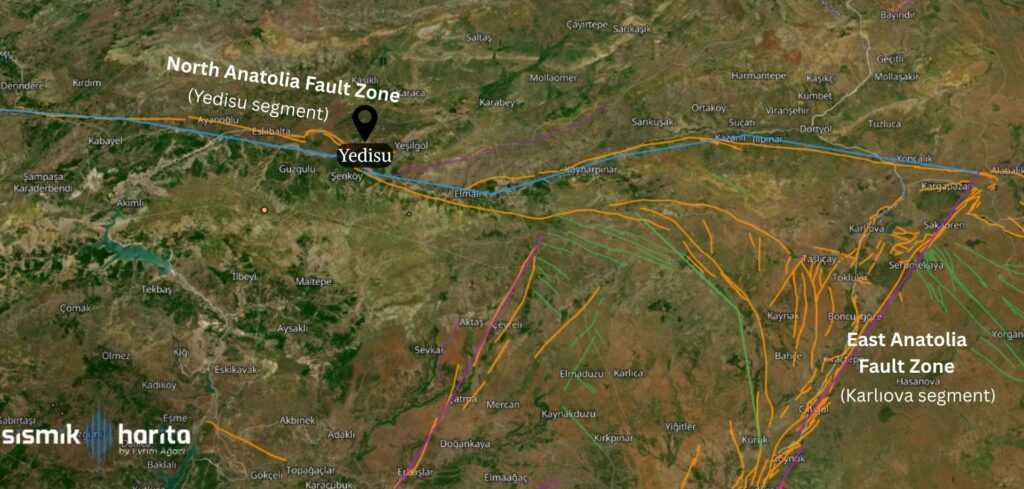
Photo collected from https://sismikharita.com/

After the 4.3-magnitude earthquake centered in Güzgülü-Yedisu on the morning of April 26, statements from the Kandilli Observatory and Naci Görür were reported in the press. In a statement made via social media, the Kandilli Observatory highlighted that the tremor in Yedisu occurred along one of Turkey’s most high-risk “seismic gaps.”

Geoscientist Prof. Dr. Naci Görür stated in his social media post that if the Yedisu fault—identified as one of Turkey’s most high-risk areas—were to rupture, a major earthquake would severely impact Erzincan, Bingöl, and Dersim.

  • A seismic gap is a segment of an active fault known to have remained stationary for a relatively long period compared to other segments along the same line, and which produces significant earthquakes.
  • The Yedisu fault is located at the eastern end of the North Anatolian Fault (NAF).

Öztürk, noting that there are examples of projects that were canceled due to studies indicating that well drilling and the reinjection of fluid into the ground at high pressure at geothermal power plants could trigger earthquake risks, listed the following examples:

“For example, in Pohang, South Korea, a geothermal power plant was shut down in 2017 after it was determined that the reinjection of fluid into the ground had triggered a 5.5-magnitude earthquake. In Germany, a geothermal project developed in 2014 sparked public backlash due to earthquake risks and potential pollution. Ultimately, it was decided that the electricity to be generated would not justify the risk, and the project was canceled before it even began.”

“On the other hand, these geothermal pipes can sometimes burst on their own. According to Öztürk, who noted that “examples of this have occurred repeatedly in Manisa and Aydın,” the company must also clarify whether it has an emergency action plan in place to address the risk of an explosion (blow-up) under any circumstances, and whether it has developed a plan to assess and mitigate the consequences of explosion and leakage risks.

“Projects are being carried out without transparency”

He noted that one of the biggest problems with all energy projects in Turkey, including geothermal power plants, is that these projects are carried out without transparency from the exploration phase all the way through to the operation of the power plant:

“Announcements and news items are prepared solely to inform investors and are removed shortly thereafter. There is no intention to involve the public in the decision-making process, nor is there any aim to provide equal access to information about the process or the project. In Aydın, there have been instances where even villagers who own titled land in the exploration area only learned of the situation a month or two before drilling began. When official documents are collectively sent to the village head, it is up to him to decide when to share this information with the villagers. This can lead to villagers starting the legal process and practical organization from a position of disadvantage.”

In 2026, it was reported in the media that geothermal exploration areas in Balıkesir, Kayseri, Bitlis, Niğde, Malatya, Konya, Çorum, Kırşehir, and Erzincan were put out to tender. Additionally, it was noted that tenders were initiated for three geothermal areas in Ağrı, Adana, and Diyarbakır.
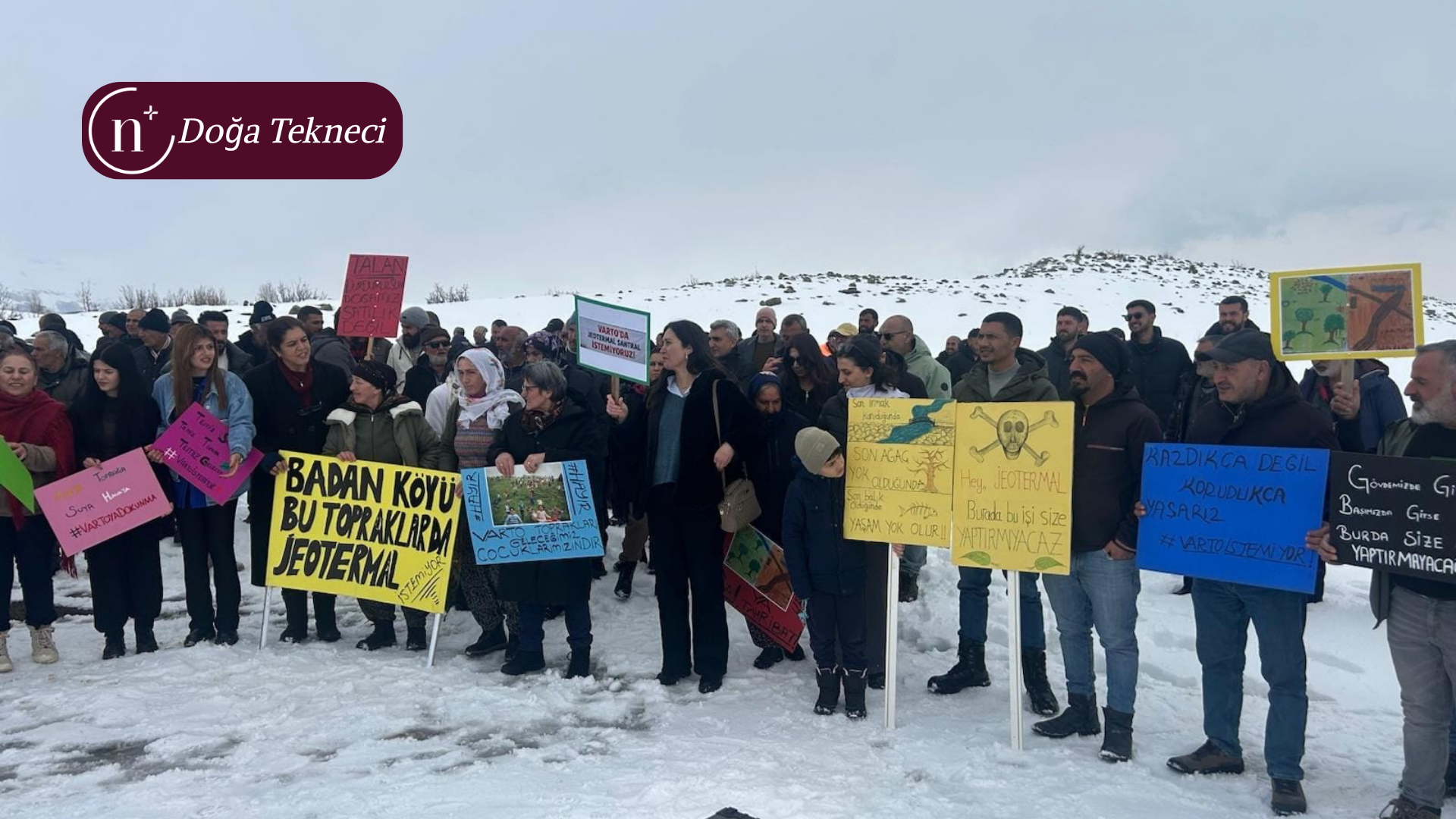
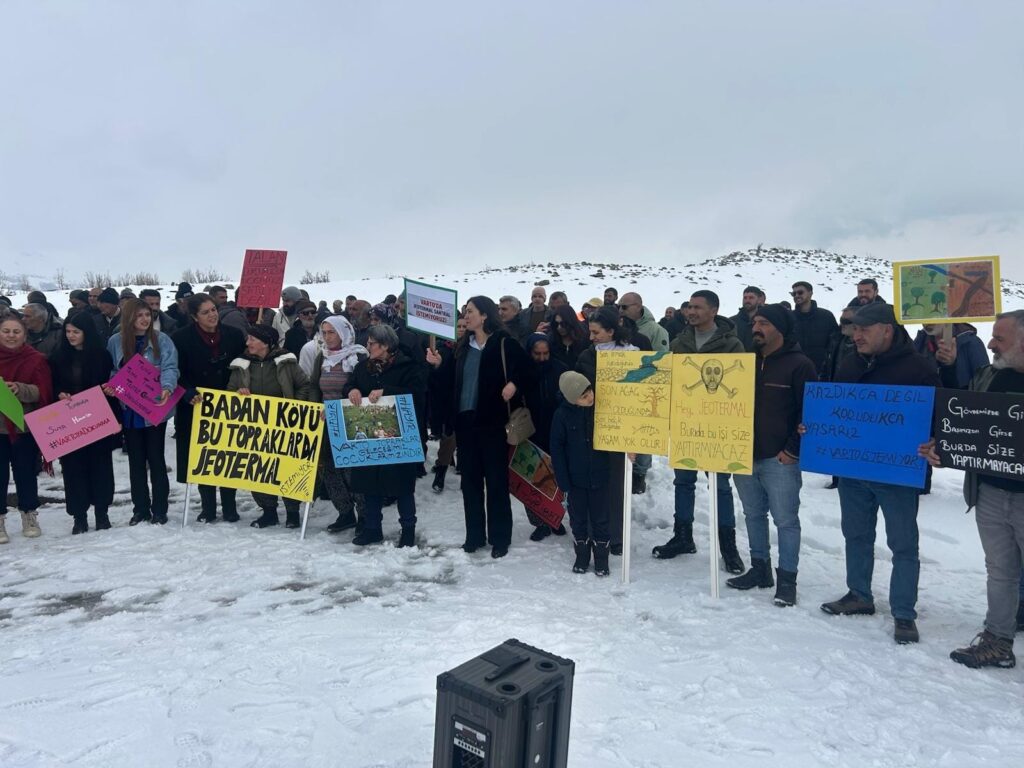
Opposition to the Varto’s GPP: “These lands are entrusted to us by Hızır”

Local residents are protesting the geothermal power plant (GPP) project, which is set to be implemented in an area covering 16 villages and is planned to begin within the boundaries of the village of Xwarik (Çallıdere) in Varto.

In recent weeks, the Provincial Pasture Commission of the Muş Governor’s Office approved a “drilling project as part of a geothermal resource exploration project” to be carried out by IGNIS H2 Energy Production Inc., which directly affects 16 Kurdish-Alevi villages in Varto (Gimgim). The villagers submitted a petition of objection to the relevant governor’s offices regarding this project. The petitions were rejected by the governor’s offices.

Although geothermal energy is a renewable and sustainable energy source, studies have shown that it causes significant ecological damage due to its environmental impacts. Power plants, which are mostly built in areas with villages and agricultural lands, leave the village communities facing the threat of forced displacement. In many provinces, local residents claim that geothermal power plants (GPP), as well as mines and other energy projects, are causing harm to agricultural and livestock activities, water sources, and living areas.

Local residents are voicing opposition to the GPP project, which will be implemented in an area covering 16 villages and will begin within the boundaries of the village of Xwarik (Çallıdere) in Varto.

Alev Yılmaz from the Varto Ecology Platform and Erdoğan Ödük, co-spokesperson for the Mesopotamia Ecology Movement, spoke to Niha+.

Alev Yılmaz from the Varto Ecology Platform stated that the geothermal power plant project threatens the villages, water sources, animals, and places of worship in the region, declaring, “We will not let Varto be taken over.”

IGNIS H2 Energy Production Inc.

IGNIS H2 Energy Production Inc., an American company that opened a branch in Yedisu, Bingöl in 2023 and operates in the Karlıova (Kanîreş) – Varto region; has obtained search licenses in the villages of Kızılağaç (Aynik), Kaynarpınar (Licik), Kantarkaya (Şorik), Ilıpınar (Çêrmûk), and Kargapazar (Qerxabazar), which are part of Karlıova in Bingöl.

The company states it aims to reach 1 GW of renewable energy capacity by 2030, and plans to conduct operations in the Varto-Karlıova region, where the North Anatolian Fault (KAF) and the East Anatolian Fault (DAF) intersect. Currently, the company aims to begin drilling 10 wells in Varto and Güzelkent, and the work it will carry out within an area of 453,494.83 square meters will cover approximately one-third of Varto.

“Who is this Ignis?”

Yılmaz, who has spoken against the projects of a company called Ignis seeking to operate in Varto, stated that they do not believe the company’s claims of “development”:

“Varto has been handed over to profit-seekers. There’s this company called IGNIS—we can barely even bring ourselves to say its name. What is Ignis? Who are they? Where do they come from? Why are they coming? Is IGNIS just saying, ‘I have nothing better to do, so I’ll go develop this distant, poor town of Varto’? Do you think something like that is possible?”

Yılmaz, noting that nothing the people do not want can be in the public interest, explained how the process began by pointing out that no details regarding the project had been shared with the public:

“IGNIS coming here isn’t new but we’re only hearing about it now. That’s the problem here. No one in the village knows anything about it. It’s a very high-handed situation on our land. These are our living spaces, our livelihoods, but the governor and the district governor are making the decisions. Even the current village head hasn’t been told anything to the people. They’ve spoken with the municipality. It’s claimed that very different things were told to the municipality.”

Yılmaz claimed that company representatives had held meetings with local representatives regarding the project, but the actual plans were being kept secret from the public.

“There is someone working for Ignis. They are meeting with the local bureaucrats, the governor, the district governor and the municipality. There is absolutely no mention of a geothermal power plant. They don’t say ‘We’re going to open up your 16 villages, settlements, and center of faith for profit.’ They say there’s hot water, and we’ll identify it. We’ll build thermal hotels, thermal pools and greenhouses. They say the villagers’ heating needs will be met here.”

“It’s impossible for this hot water to heat us.”

Yılmaz said that the company had made various promises to convince the local people but that they did not believe them:

“We won’t die if we don’t eat tomatoes all winter. They say they’ll heat our homes, but definitely we don’t want that either. We’ll heat ourselves with dung. Besides, we get 2.5 to 3 meters of snow here. There’s no way the hot water they’ll send through those pipes can keep us warm.”

They’ve already destroyed Goşkar Baba

Noting that the planned GPP project isn’t just about building a plant, Alev Yılmaz drew attention to the destruction that has already taken place:

“First, they came to us with the hydroelectric power plant. They plundered Goşkar Baba. They shattered the Goşkar villages and our mountains. They trapped our waters. Now they say they’ll build a geothermal power plant. They use fancy words, but we know it won’t be like that. We’re talking about 16 villages and their hamlets. Within these villages we have places of worship, our sacred sites—everything we hold dear. It’s certainly not limited to just 16 villages. We also know they’re after other mines, not just geothermal ones. Right now, who knows how many projects they have in the works that we’re not even aware of. No one is giving us any real information about this.”

Earthquake-prone region

Yılmaz, who reported that drilling is planned to reach a depth of 2500 meters, emphasized that Varto is an earthquake-prone region and that scientists’ warnings must be taken seriously. Yılmaz also reported that given the area’s status as an earthquake zone, a scientist had told them, “Don’t allow something like this.”

“They will destroy endemic species”

Alev Yılmaz, who stated that three drilling wells are planned to be opened in the village Bağdan, noted that this would disrupt the ecological balance in the region:

“When you go 3 km underground, the earth’s soil and mud will come out. There are substances in this mud. These will harm nature. When we ask, ‘What will you do with these?’ they say they’ll award the contract to local authorities. But the local authorities you’re talking about can’t even provide a shovel when we have a funeral. You’ll take them and dump them in Mengel River. There are red-spotted trout, an endemic species, in the Mengel River. You’ll kill them. You’ll disrupt the ecological balance. Here we have lynxes and chukar partridge. They live freely. We don’t touch them. Because all of these are entrusted to us by Hızır.”

In the Alevi faith, Hızır is regarded as an immortal wisdom figure who helps those in distress and those in need, provides relief from suffering, and symbolizes abundance and prosperity. Typically, during the second week of February, a three-day fast (Tuesday–Thursday) is held, rituals are performed, and lokma (kavut) is shared as a prayer for Hızır’s companionship and assistance.

“I want all the women to stand by my side”

Reminding everyone that the Çepanik Plateau, Gundêmîra, Dadina, and İnalı—all part of Varto—have been devastated by mining operations, Yılmaz stated her opposition to the company’s claims that “we will make you rich.”

Yılmaz concluded her remarks by stating that Varto’s ecology and cultural values must be protected:

“I’m afraid of snakes. I want to be afraid of snakes every day. I don’t want the bears to leave here. I want all women to stand by me as I continue this struggle. I want everyone to hear our voices. When they cut down Goşkar Baba, Grêboxa, Şehîdê Qawax, and Şehîdê Ciran, we’ll have nothing left. Let’s not abandon Varto. This is our village, our homes. If we withdraw our hands from Varto, Hızır will leave us too.”

Ödük: Projects will affect a wide geographical area

Erdoğan Ödük, Co-Spokesperson of the Mesopotamia Ecology Movement, stated that the Muş Ecology Platform has been established, noting that it was formed through the merger of organizations active in the region, such as the Varto Ecology Platform and the Goşkar Ecology Association.

Ödük expressed that the planned projects will affect not only Varto but a wide geographical area:

“Ultimately, this issue is not just Varto’s problem; it is a regional problem. There is currently a situation in the region where a geothermal energy field stretching from Varto to Karlıova and Bingöl Yedisu is being handed over. Last year, we also organized a large-scale protest there, in the Peri Valley.”

Eco-genocide policies have been implemented in the Goşkar Valley for a long time

Ödük emphasized that the eco-genocide policies that have been ongoing for a long time in Muş and the Kurdish regions are not only capital-oriented policies.

“For a long time, it has been claimed that eco-genocide has occurred in this region of Kurdistan during the war, yet even now, both domestic and foreign capital continue to commit eco-genocide in various forms across different areas. This is currently the situation in Varto, Muş. The region has already faced severe ecological destruction due to the Alparslan 1 and 2 dam projects in previous phases. Numerous villages were evacuated. Historical archaeological sites were submerged. Following that, there is another hydroelectric power plant (HES) project in the Goşkar Valley, carried out by Çağlar Elektrik in 2002.”

“Ecological destruction is also triggering migration”

Ödük noted that the exploitation in the Goşkar Valley affects not only nature but also social life, and continued:

“The last remaining water in the region is a spring called Ava Spî. Since the people there follow the Alevi faith, this situation is actually triggering migration in the region. These issues are not merely about ecological destruction; they also bring social problems in their wake.”

Companies are trying to break the resistance

“They told the villagers that a permit would be obtained, but they said it might happen or it might not. These are statements intended to break the resistance. However, it is not possible for an American company to come here, conduct no research, hand over 4 million dollars—which is the minimum cost of drilling—and then just open the well and leave.”

Success will be achieved if the area of resistance is expanded

Explaining that this is not merely a local issue, Ödük outlined the regional solidarity efforts they will carry out together with the people. Noting that village meetings and awareness-raising activities are ongoing in Varto, Ödük said they have also held meetings with members of parliament.

Unity of action in Varto

Emphasizing that the people’s role is decisive in the ecological struggle, Ödük highlighted that the plundering policies implemented in Kurdish provinces are based on more cultural and social factors compared to those in the West.

“The forests of the Black Sea are our too. The forests of India are our forests. But the difference is this: The current situation in the West revolves around a capital-centered dynamic. Here, the issue is not just capital. We saw this clearly with the Alpaslan 1-2 dams. We saw it with the dam planned for the Nerbüş River in Cizre. We saw it in the villages displaced as part of the GAP project. We saw it in the massive Ilısu Dam, in the destruction of Hasankeyf, and in the erasure of cultural memory. This situation is not merely a problem for the peoples living in Kurdistan.”,

Ödük stated that international and local environmental organizations must pay greater attention to the ecological destruction in Kurdish regions.

“We’ve managed to raise our voices for both the forests of the Black Sea region and the Kaz Mountains. Our friends are also working there to protest against the pesticides used in the Çukurova region. This nature is our shared living space. Once it’s gone, neither ideological divisions nor ethnic origins nor cultural distinctions will remain. Therefore, ecology organizations in the West must also approach Kurdistan in this way. In other words, when this place is gone, when it is devastated, they too will suffer the consequences.”

Varto Ecology Platform made press statement

Varto Ecology Platform issued a press statement on March 7, and DEM Party parlamenterian Sümeyye Boz Çakı also expressed her support for the platform members.

What are these “GPPs”?

Eventhough geothermal power plants (GPP) are being constructed to provide energy, their ecological impacts are really high.

JES görseli

Photo of GPP.

Geothermal Power Plants (GPP) and Their Ecological Affects

What is Geothermal Energy?

Geothermal energy is the use of hot water and steam found deep within the Earth’s crust, brought to the surface to generate energy.

How is the Energy Produced?

Hot fluid extracted from deep drilling wells spins turbines and generates electricity.

Ecological Risk

Geothermal fluid may include arsenic, boron and various heavy metals. If this fluid mixes with the environment, it can affect water resources and soil. In addition, the heavy metals and gases in the fluid can cause air pollution.

Earthquake Risk: Geothermal fields are often established near active fault lines. Drilling activities and the injection of fluid underground can, in some cases, trigger micro-earthquakes. This phenomenon is referred to in scientific studies as “induced seismicity.”

Substances Found in GPP Fluids

As
Arsenic
Hg
Mercury
B
Boron
CO₂
Carbon dioxite
H₂S
Hydrogen sulphur

Chain of Impact of GPP Projects

Drilling
Deep drilling wells opened for geothermal energy can affect underground geology and water ecosystems by mixing chemicals into water. In addition, the discharge of high-temperature wastewater into rivers can alter mineral concentrations.
Groundwater
When geothermal fluid reaches the surface or when reinjection fails, groundwater may become contaminated.
Agriculture
Changes in water quality and chemical impacts on soil reduce agricultural production. Fig orchards and olive groves in the Aegean region are being damaged.
Livestock
The decline in agricultural production affects feed production. Livestock, a main source of livelihood in Kurdish regions, is therefore a sensitive sector.
Village Life
The weakening of agriculture and livestock affects the rural economy. Gases and heavy metals released into the air increase health problems such as cancer. This situation forces villagers to migrate.
Biodiversity
The expansion of plant areas and the discharge of geothermal fluids lead to the fragmentation of natural habitats. Endemic plant and animal species face the danger of extinction.

Geothermal Power Plants on Fault Lines

Geothermal energy fields mostly form along fracture systems and fault lines in the Earth’s crust. These fractures make it easier for underground hot water to reach the surface. A large portion of geothermal power plant (GPP) projects are concentrated along active fault lines in regions with high earthquake risk.

GPP drilling well GPP drilling wellActive fault lineGround surface Earth’s crust

Power plant facilities, pipelines, and generators in high earthquake-risk areas may be damaged or explode. During earthquakes, uncontrolled leakage of geothermal wastewater may occur.

GPP → Soil → Crop yield → Relation of migration

In rural areas, energy projects can affect not only the environment but also the local economy. Considering the forced displacement policies historically experienced in Türkiye—especially in Kurdish regions—economic and social changes can be seen as a result of occupation policies.

GPP Activities
Drilling wells and plant sites spread over large areas.
Soil and Water
Changes in groundwater systems affect agricultural land and food production.
Crop Yield
In Aydın, fig and olive production is at risk. In Kurdish regions, the impact on pasture lands may affect livestock.
Rural migration
Weakening of agriculture and livestock farming can reduce livelihoods and accelerate migration.

How do GPP Projects Progress?

1. Exploration License: Companies apply to provincial governorships or special provincial administrations to obtain a geothermal exploration license.
2. Drilling: Deep wells are opened
3. EIA Progress: An Environmental Impact Assessment (EIA) report is prepared by the Ministry of Environment, Urbanization and Climate Change.
4. Land Permits: Non-agricultural land-use permits are granted by the Ministry of Agriculture and Forestry.
5. Expropriation: In some cases, expropriation may be carried out by presidential decree.
6. Plant Installation: Energy production begins.

Where Are GPPs Concentrated in Turkey?

  • Aegean Reagon: Aydın, Denizli and Manisa host the majority of geothermal power plants in Türkiye.
  • Central Anatolia: Konya and Nevşehir are also among the regions where exploration licenses are granted.
  • Kurdish Provinces: In recent years, geothermal exploration projects have come to the agenda around Muş and Bingöl.

How Large is Kızıldere GPP Area?

The Kızıldere geothermal field in Denizli covers approximately 528 hectares. This corresponds to an area roughly equal to 739 football fields. Across Türkiye, there are about 71 geothermal power plants.

GPP Statistics in Turkey

  • Around 71 geothermal power plant is found across Turkey.
  • 46 of them are located in Aydın.
  • Kızıldere GPP area is approximately 528 hectares.
  • The exploration license area in Tokat covers 36,000 hectares.
Geothermal energy projects are met with opposition from local people in many regions. Due to concerns that agricultural land may be damaged, water resources affected, endemic species driven to extinction, and expropriation processes imposed, local people and ecological organizations are carrying out various forms of resistance and legal struggles. For this reason, the question of whether GPP investments truly serve the public interest continues to be debated in some regions.
Privacy overview

Niha+ respects your digital footprint within the framework of independent journalism principles and reader privacy. While browsing our site, cookies are used to provide you with an uninterrupted reading experience and to secure the technical infrastructure of our platform. You can manage your cookie preferences as you wish by using the menu on the left. For detailed information on how your personal data is processed, please review our Privacy Agreement and KVKK Clarification Text.