
May 1: A chronicle of the past 13 years

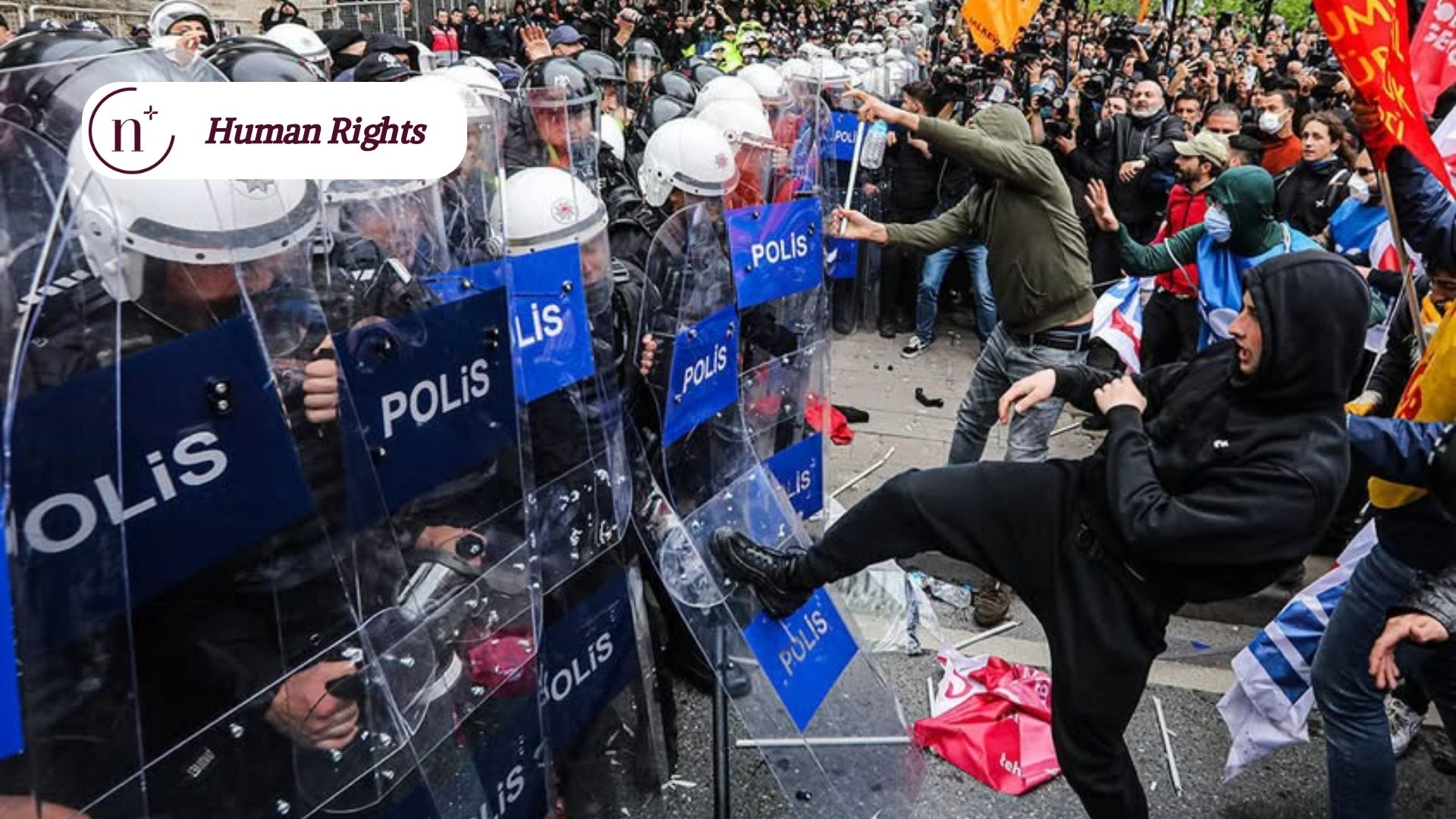
May 1st in Turkey, lastly celebrated in Taksim Square in 2012. We have compiled a chronicle of May 1st celebrations marked by police interventions and mass detentions against the ban on Taksim.
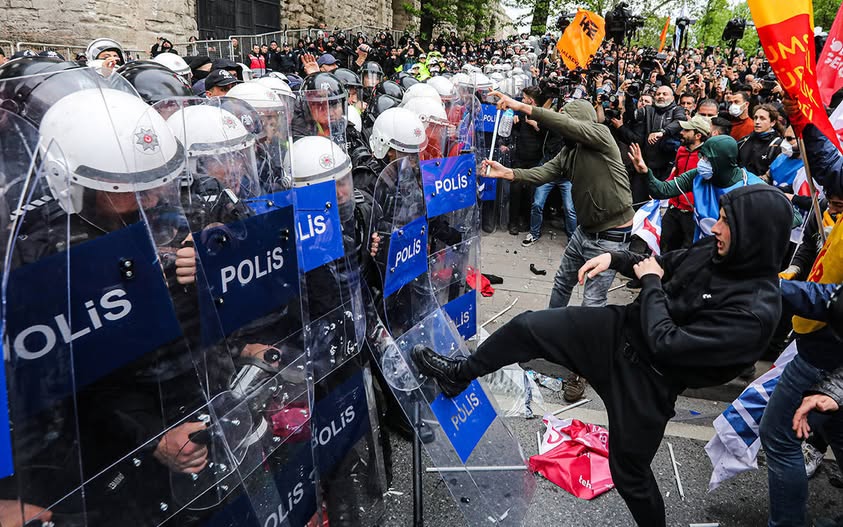
Photo: Murat Bay

Since 1976, May 1st in Turkey has been defined by the persistence of workers to reach Taksim Square. Following the “1977 May Day Massacre,” the square became both a symbol of labor rights and the country’s most contested protest site. Despite long-standing bans, unions and leftist organizations continue to claim Taksim as the traditional heart of May Day celebrations.

Here is a summary of the events following the ban on Taksim Square over the last 13 years:

May Day in Istanbul from 2013 to 2025: The Taksim ban, police interventions, mass detentions, and the ongoing struggle.
1,000+
Total detentions (at least)
13 years
Ongoing Taksim ban
100+
Total number of arrests
2013
Following its reopening in 2010, Taksim was banned once again. The Governor’s Office cited the “pedestrianization project” as the reason. Extraordinary security measures were taken across the city; bridges were raised, and roads were closed. Hours-long police interventions occurred in many areas, particularly Beşiktaş and Şişli. Even hospitals and homes were affected by tear gas. It was reported that 30,000 police officers were deployed to Taksim that day. According to the Governor’s Office, 25 protesters (3 serious), 6 journalists, and 22 police officers (3 serious) were injured.
72 detentions
2014
Taksim Square was completely cordoned off. Intense tear gas and water cannons were used throughout the day in Şişli, Mecidiyeköy, and surrounding areas. Health institutions and journalists were also impacted by the interventions.
171 detentions • 12 journalists injured
2015
Entry to Taksim was prohibited. Only a limited number of unions were allowed to lay wreaths at the monument. Interventions targeted small groups across the city. Allegations surfaced regarding police entering political party buildings.
203 detentions, 13 arrested
2016
Celebrations were moved to Bakırköy. Despite this, interventions continued against groups attempting to reach Taksim. Various political and union groups were redirected to alternative areas. A citizen named Nail Mavuş lost his life after being crushed due to an uncontrolled maneuver by a water cannon vehicle (TOMA).
231 detentions, 5 arrested
2017
The Taksim ban remained in effect. Groups gathering at various points in Istanbul were detained, including individuals attempting to hold sit-in protests.
165 detentions
2018
The Governor’s Office rejected all applications. The rally site was moved to Maltepe. Taksim was sealed off with barriers starting from the early hours of the morning.
84 detentions
2019
Interventions were carried out against groups gathering in Şişli. Detentions of those attempting to march toward Taksim continued throughout the day.
119 detentions
2020
Curfews under pandemic conditions were cited as grounds for restrictions. Reports included allegations of ill-treatment, assault, and reverse-handcuffing during detentions.
48 detentions
2021
Despite the curfew, groups attempting to march to Taksim faced harsh intervention. Union representatives were among those detained.
212 detentions
2022
After a two-year hiatus, a mass rally was held in Maltepe. Groups heading toward Taksim were once again blocked, leading to further detentions.
100+ detentions
2023
Numerous groups attempting to march to Taksim from Şişli and Beşiktaş were detained. There were attempts to prevent members of the press from recording the events.
80+ detentions
2024
The Constitutional Court (AYM) ruled that Taksim is a legitimate May Day site and declared the Governor’s ban a “rights violation.” Thousands gathered in Saraçhane to march to Taksim, but police blocked the route with barricades. The confrontation lasted approximately 1.5 hours, followed by house raids. In 2025, the court found the ban to be unlawful.
268 detentions, 77 arrested
2025
Operations were conducted against organizations calling for a Taksim gathering. Throughout the day, barricades in Mecidiyeköy were challenged amidst ongoing interventions. According to the Progressive Lawyers Association (ÇHD), a total of 419 people, including 10 children and 11 lawyers, were detained in Şişli.
419 detentions, 13 arrested
Source: Human rights organizations and press compilations.

2013: The return of the ban

After allowing celebrations in 2010, the AKP government reimposed the ban in 2013. The Governor’s Office cited a “pedestrianization” project as the reason.

  • 30,000 officers were deployed.
  • Bridges of Galata and Unkapanı were dismantled to block access.
  • Police used tear gas and water cannons against groups in Beşiktaş and Şişli. Tear gas was fired at ambulances and into the garden of Şişli Etfal Hospital.
  • At least 72 people were detained.

2014, May 1

Taksim was closed to everyone except police and accredited journalists.

  • While small pro-government unions were briefly allowed to lay wreaths, others faced heavy intervention in Tarlabaşı, Şişli, and Beşiktaş.
  • 22 people were hospitalized with fractures, 12 journalists were injured by gas canisters and rubber bullets.
  • 171 people were detained.

2015, May 1

Unions like DİSK and KESK insisted on Taksim, but were blocked.

  • Police fired tear gas into the CHP district building in Beşiktaş.
  • 203 people were detained; 13 were officially arrested.

2016, May 1

Major unions (DİSK, KESK, TMMOB, TTB) decided to hold the main rally in Bakırköy for this year only. However, other leftist groups still marched toward Taksim.

  • 231 detentions and 5 arrests near Beşiktaş and Şişli.

2017, May 1

The Interior Minister announced Taksim would remain closed. Main unions moved to Bakırköy again.

  • 165 people attempting to reach Taksim were detained across various districts.

2018, May 1

Main unions moved to Maltepe, while socialist groups headed for Taksim.

  • The square was completely surrounded by barriers early in the morning; even journalists were barred.
  • 84 people were taken into custody.

2019, May 1

Groups gathered at Şişli Cevahir Mall to march to Taksim but were met with police intervention.

  • 119 people were detained.

2020, May 1

  • During the pandemic, 48 people were detained. Lawyers from ÇHD reported that detainees were subjected to “plastic handcuff torture,” beatings, and insults. One person’s arm was broken during the intervention.

2021, May 1

Despite a lockdown and rejected applications, unions tried to march from Dolmabahçe.

  • 212 people were detained, many of whom were dragged on the ground. DİSK President Arzu Çerkezoğlu was among those detained.

2022, May 1

After a two-year pandemic break, mass celebrations returned.

  • At least 100 people were detained while trying to reach the square from multiple points. The official rally was held in Maltepe.

2023, May 1

Groups from various unions and socialist parties attempted to walk from Şişli and Beşiktaş.

  • At least 80 people were detained.

2024: The Saraçhane barricade

Unions and the CHP gathered at Saraçhane to march to Taksim, citing a Constitutional Court ruling that the ban was illegal.

  • Police formed a massive barricade under the historic Bozdoğan Aqueduct.
  • Police used water cannons, tear gas, and rubber bullets.
  • 210 people were detained on the day, 47 more were taken in during house raids on May 3.
  • Governor Davut Gül stated, “The state may leave it for tomorrow, but it won’t let it go unpunished.”

2025, May 1

A new May 1st organizing committee declared “Taksim belongs to the people.”

  • Police operations targeted organizers on April 29 and 30, around 92 people were detained.
  • Protesters repeatedly challenged police barriers in Mecidiyeköy throughout the day.
  • 407 people were detained, 7 were arrested. Reports of reverse-handcuffing and police brutality were documented in Mecidiyeköy.
Privacy overview

Niha+ respects your digital footprint within the framework of independent journalism principles and reader privacy. While browsing our site, cookies are used to provide you with an uninterrupted reading experience and to secure the technical infrastructure of our platform. You can manage your cookie preferences as you wish by using the menu on the left. For detailed information on how your personal data is processed, please review our Privacy Agreement and KVKK Clarification Text.