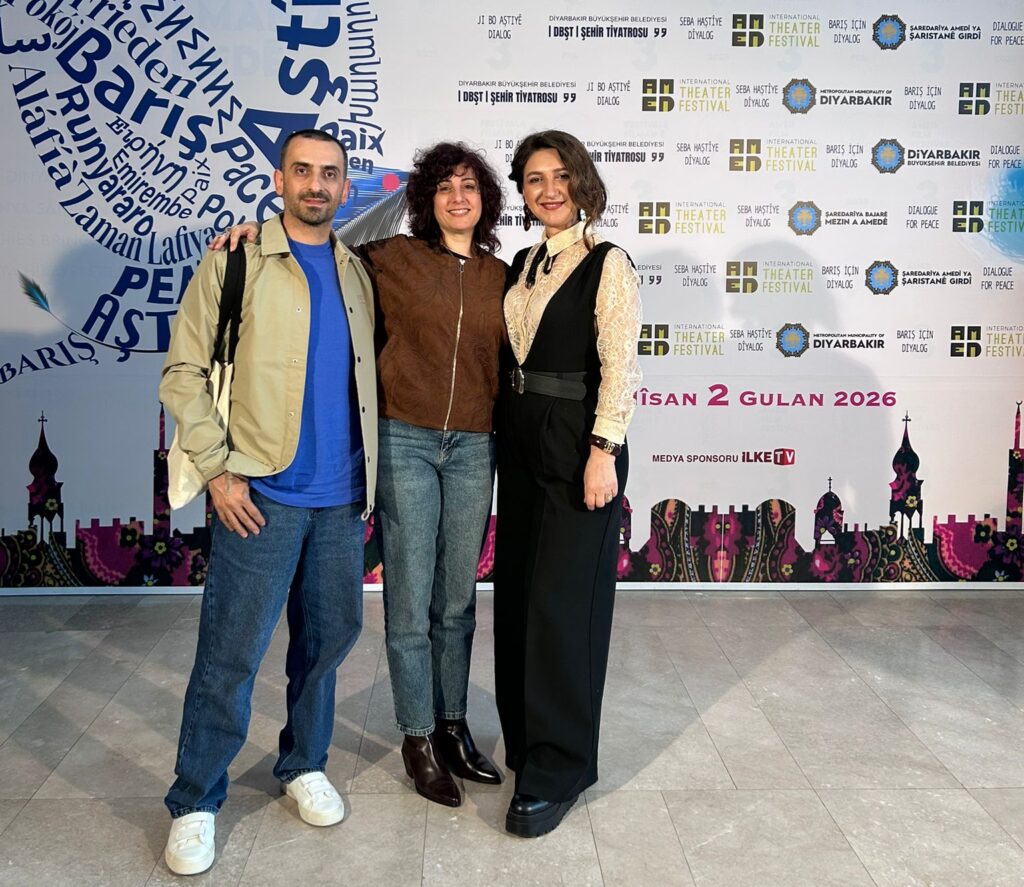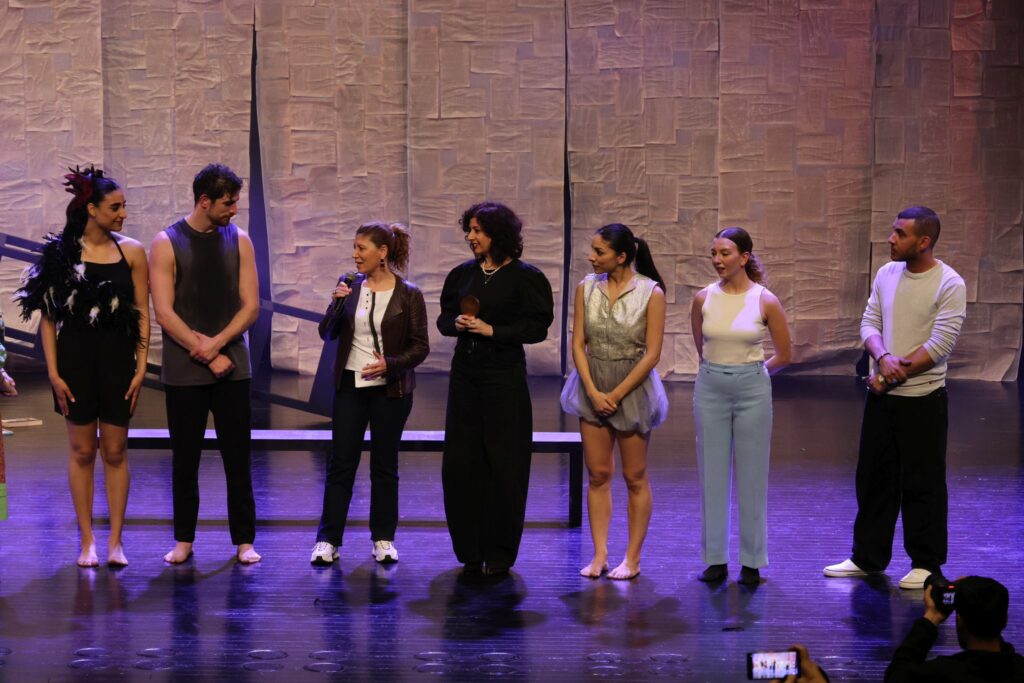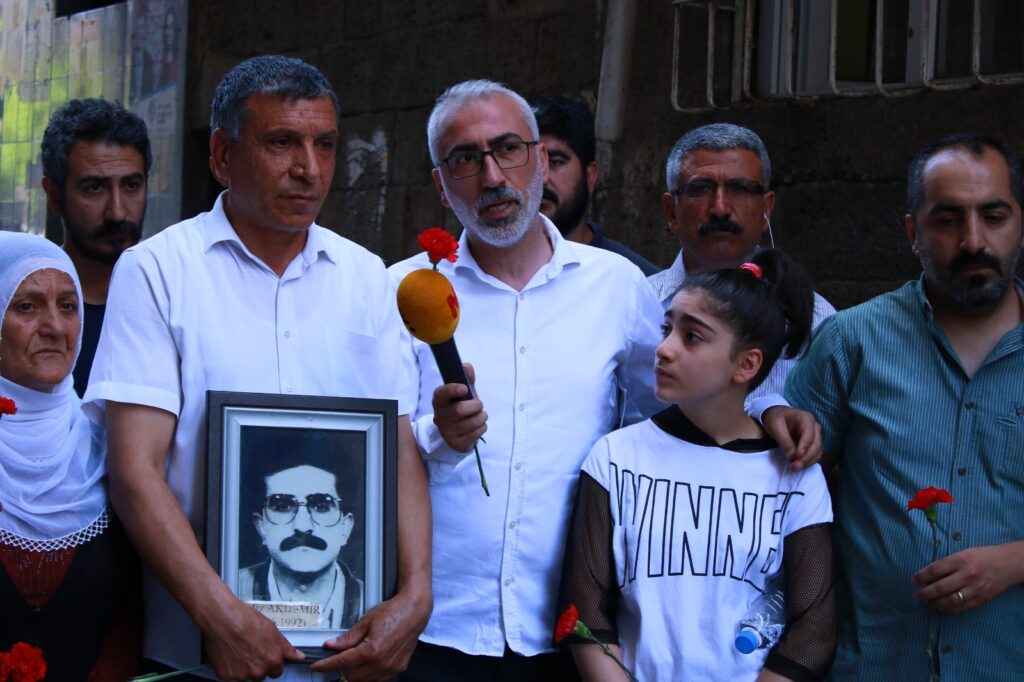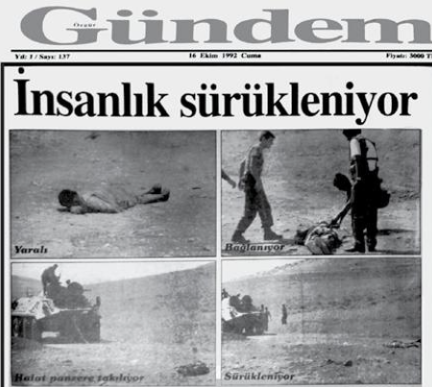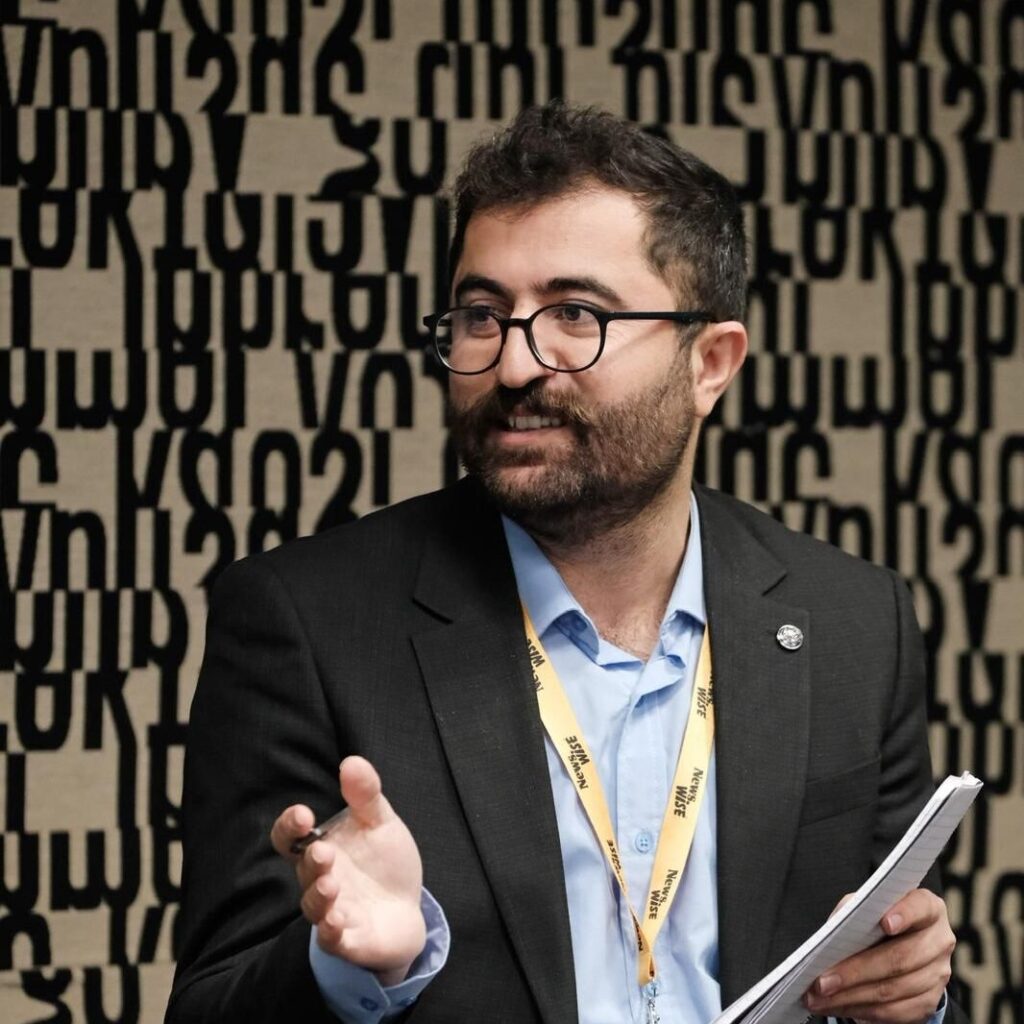
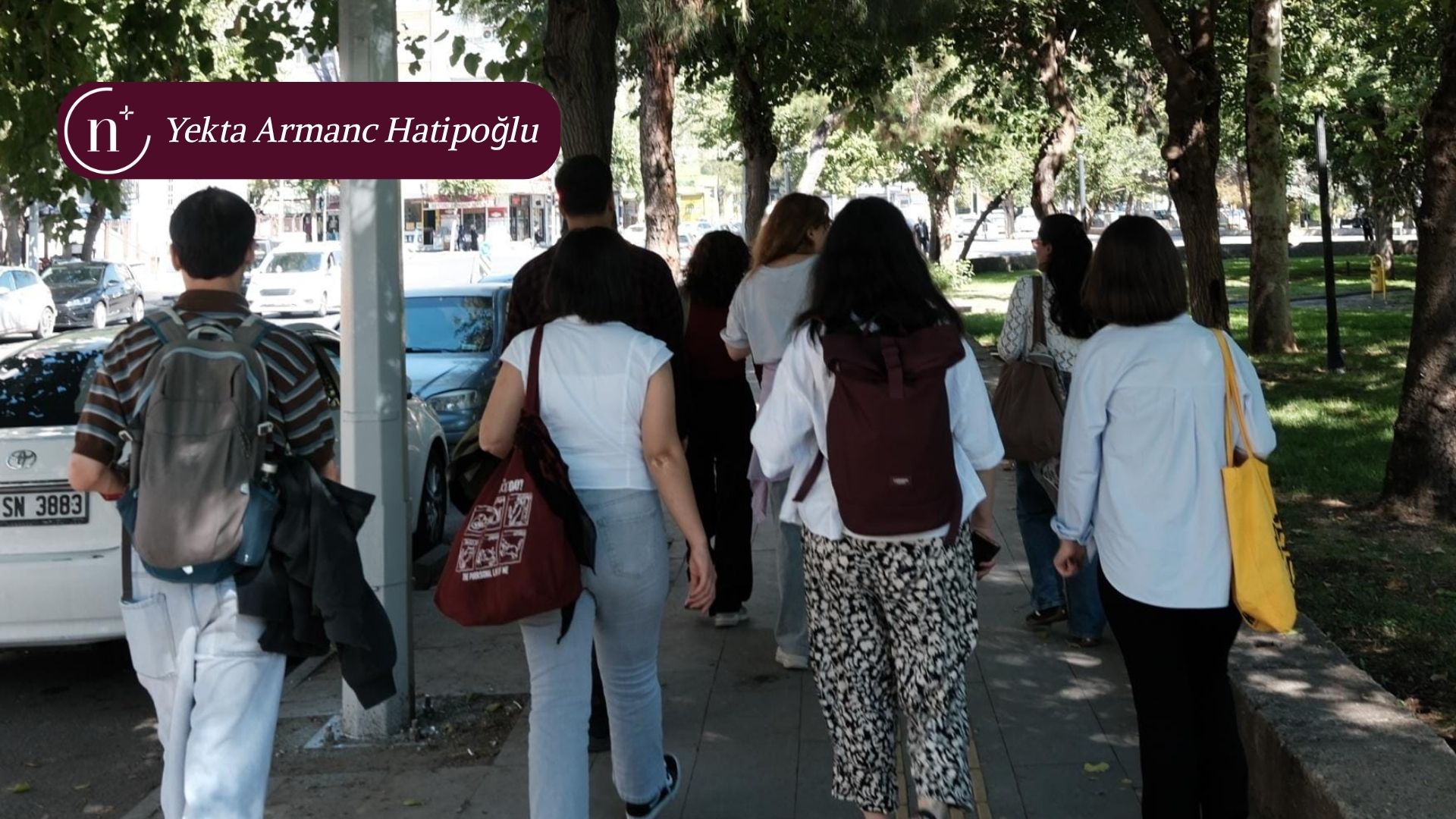
September 12, Koşuyolu; June 5, the Station; Dağkapı with its peace text; Sur after the ban… The “Barışın İzleri” (“Traces of Peace”) project aims to explore Diyarbakır’s memory sites through a “geography of the senses.”
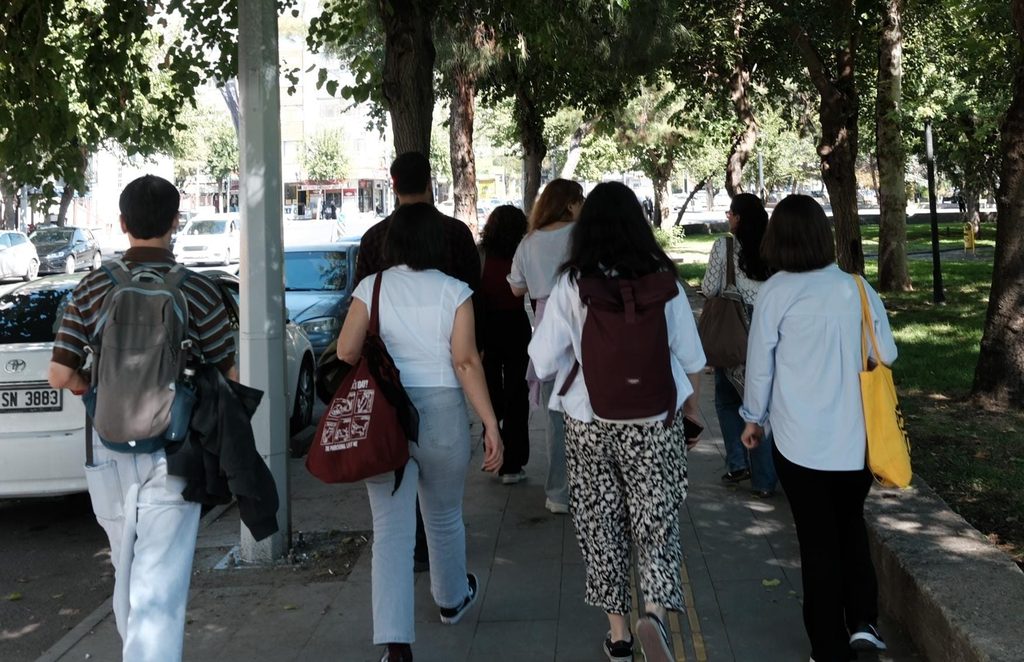
Photos: Yekta Armanc Hatipoğlu/Niha+
On Saturday, October 10, I went to Koşuyolu Park to participate in the “Barışın İzleri” (“Traces of Peace”) project, supported as part of the Truth, Justice, and Memory Center’s “Square: Regaining the Freedom of Assembly and Public Space” initiative.
The walk, during which we would discuss the city’s memory sites together, began at 10:00 a.m. There were 12 of us in total, including the four-person “Barışın İzleri” team.
Koşuyolu and the Station Square: Two bombings
After our first stop at Koşuyolu Park where 10 people, including 8 children, were killed in the explosion on September 12, 2006; we spoke with relatives of the missing who were asking about the fate of their loved ones in front of the Monument to the Right to Life, and discussed what this park means to each of us individually. We then walked to our second stop, Station Square.
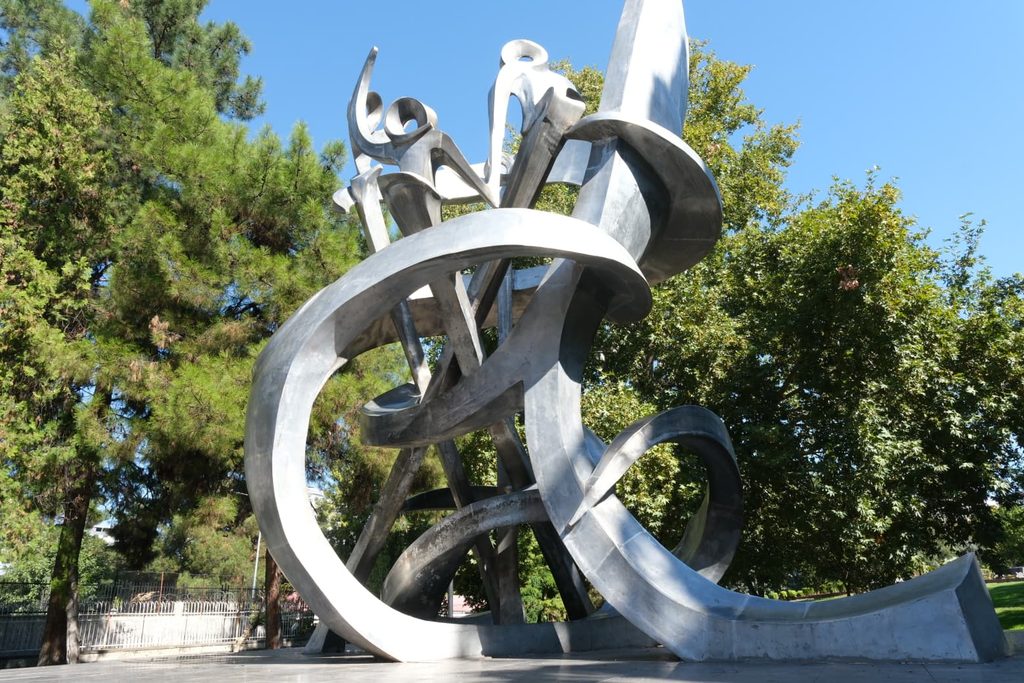
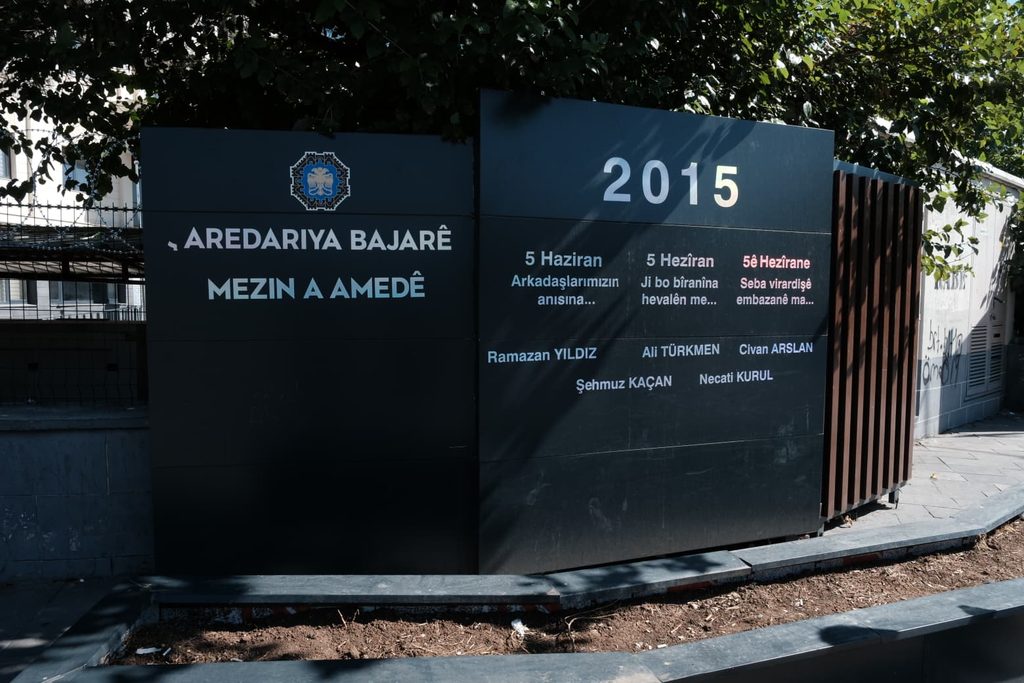
Station Square, which holds significant importance in Diyarbakır’s collective memory, is remembered less for the large rallies held here or the grand marches that passed through it, and more for the attack carried out by ISIS during a rally of the Peoples’ Democratic Party (HDP) on June 5, 2015—an attack that killed 5 people and injured over 400.
After talking about June 5, the rallies here, the crowds spilling over, the honking horns, and the narrow sidewalk, we rest for a bit at the Çand Amed Cultural Center and then head toward Dağkapı.
Diyarbakır saw Öcalan in Dağkapı Square after many years
We sit on the grass near the walls of the Old City, close to Dağkapı Square, and talk about the square.
Diyarbakır saw Abdullah Öcalan’s photo here for the first time in years during the February 27 call for peace; it was here that the city heard his message calling for the laying down of arms and a transition to democratic politics. Sadness, bittersweetness, joy, curiosity, excitement, and so many other emotions were felt most intensely right here.
Newroz Square and Kemal Kurkut
When discussing places of memory in Diyarbakır, one cannot fail to mention Newroz and Newroz Square. The conversation, which began with the square’s location far from the city center, continued with a discussion of the place Kemal Kurkut—who was killed by a police bullet during the 2017 Newroz celebrations—holds in the public’s political memory.
The transformation of Old Sur through photographs, Margosyan’s Street
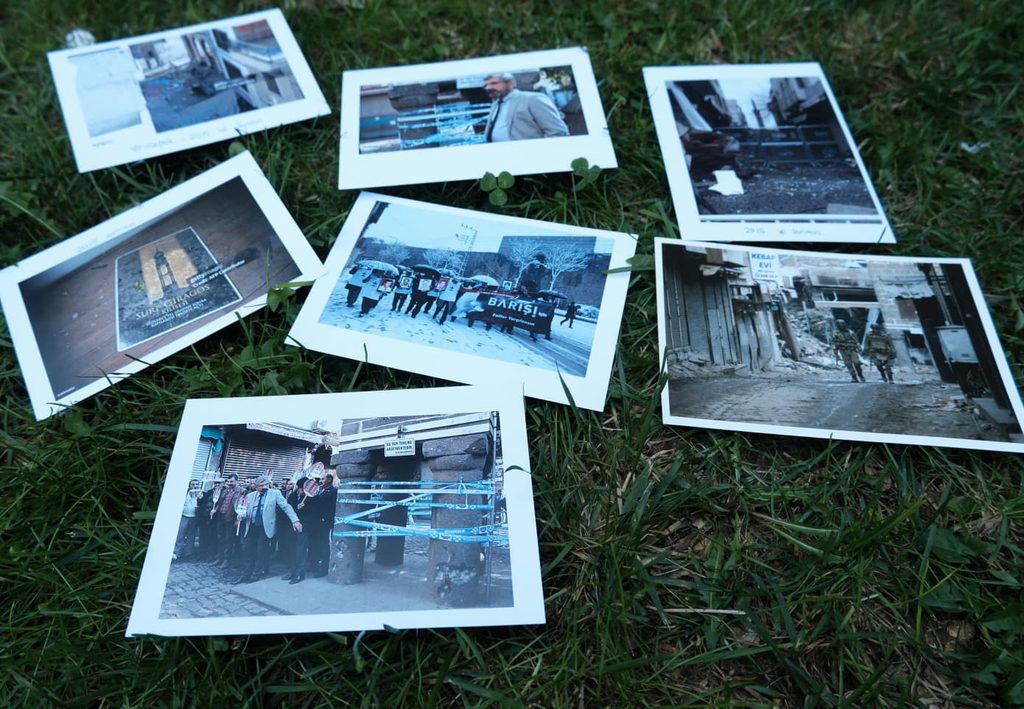
We also looked at photographs of Old Sur here. We examined photos from the 2015–16 period—a time that, while not particularly long ago for most cities, feels very distant for Diyarbakır. We witnessed the intensity of the change. The city, politics, people—everything had changed, very quickly and destructively…
Next, we find ourselves in the streets of Sur. Amid the scent of liver and the sound of hammering iron, we make our way down from the Blacksmiths’ Bazaar (Demirciler Çarşısı). Here, we pay tribute to the writer Migirdich Margosyan and talk about him.
At its December 9, 2009, session, the Sur City Council renamed the street formerly known as Direkçi to “Mıgırdiç Margosyan.” Margosyan, however, had declined to have his name given to the street where he was born, arguing that the mindset in Turkey had not yet changed and that the steps taken today could be undone tomorrow, and his name could be removed from where it had been displayed. Despite this, his name was not removed from the street.
However, the 103-day curfews announced in December 2015, the clashes in Sur, and the subsequent destruction resulted not only in Margosyan’s name being taken down from the wall but also in the complete leveling of many streets, including the one bearing his name.
From there, we went to the Four-Legged Minaret, where we witnessed how a city’s memory space had been “sacrificed” to tourism. On our way there, after witnessing the tradition of offering Kurdish coffee—which no one in the city drinks anymore—and the ritual of spinning beneath the Four-Legged Minaret, which has “become a tradition” following the period of conflict, and after truly observing these from the outside, we went to the Rengarenk Umutlar Association.
The walk ended, and we moved on to the workshop session.
Here, we had the opportunity to reflect on what we had seen, heard, and experienced throughout the day.
After the workshop ended, I spoke with project director Bervan Tan and project facilitator Dr. Sevcan Tiftik about both the project in general and how the meetings so far had gone.
“The goal is not to tell history or take a cultural tour”
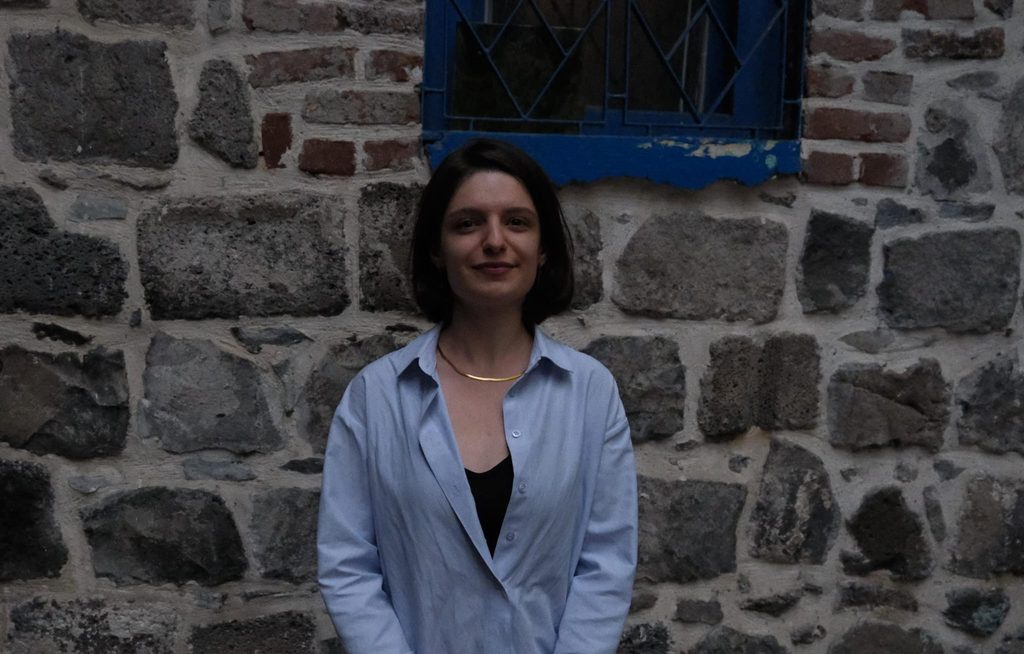
Project manager Bervan Tan began by explaining that the Traces of Peace Project is supported under the Memory Center’s “Meydan” program, a program designed to reclaim social and public spaces and bring all segments of society back into the public squares.
Bervan Tan
She noted that the “Memory of Diyarbakır Square” also consists of five stops: Koşuyolu Park, Station Square, Dağkapı, the streets of Sur, and the Four-Legged Minaret. Tan said they also discussed the old Newroz celebrations in Dağkapı.
Tan explained that they approached these topics through the lens of sensory geography:
“The goal isn’t to tell a story of history, nor is this actually a cultural tour; nor am I a storyteller of history. We’re actually focusing on the impact that the events experienced here have had on me and the reflections that arise in the participants as I share this… While speaking there, by asking the participants questions, we aim to see their individual experiences—that process extending from the individual to the collective. That’s what we’re discussing,” she said.
“Our senses are part of the relationship we form with a place”
Project facilitator Sevcan Tiftik said they also discussed the impact of emotions on the collective.
Tiftik emphasized that what they do on these walks is not merely about touring Diyarbakır’s memory spaces or simply recounting what happened in the past here. “We also try to look at what we encounter, see, and hear in those spaces today, and what is no longer there. Because what we call ‘memory’ isn’t just made up of what happened in the past or what was told to us. When we walk down that street today, when we look at a square, when we hear a sound, or when we notice something that is no longer there, we’re also connecting with the past. “That’s partly why we start from the geography of the senses. I mean, the sounds, the smells, the rhythm of our bodies as we walk, sometimes stopping to look around, and sometimes wanting to get away from there as quickly as possible… All of these are actually part of the relationship we form with that place,” she said.
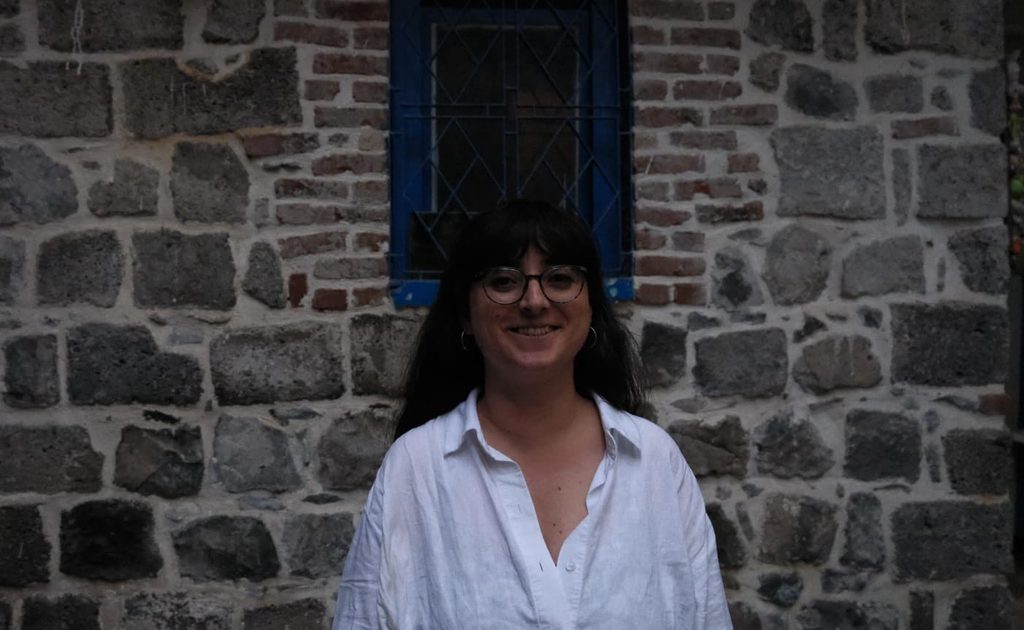
Sevcan Tiftik
Tiftik also touched on the subject of emotions, noting that they approach emotions in a more political way and in conjunction with touch, drawing inspiration from Sara Ahmed. Tiftik explained that they do not view emotions as purely individual, internal experiences; rather, emotions also have a social, collective, and political dimension.
Bringing together different experiences
Tiftik illustrated her points with the following example:
“For instance, whose pain is visible, whose grief can we mourn, which losses do we remember, and which ones are erased from the public sphere? These are also issues related to emotions and memory. And of course, we don’t all feel the same things in the same space. A street where one person spent their childhood and walked every day can be the setting for a loss or a story that another person is hearing about for the first time. Something that is very familiar to one of us can be completely foreign to another. I think that’s precisely what’s important here. In other words, we don’t expect everyone to remember the same thing, to be angry about the same thing, or to share the same emotions. In fact, we aren’t even trying to establish that kind of common ground. We’re thinking a bit about how we can come together despite our different experiences and memories.
That’s why, during our walks, we bring along Bervan’s testimonies, our own testimonies, and our personal experiences—including those of the participants—as well as what we’ve heard from our families and those around us, what we’ve read, what we remember, and sometimes even things we’ve never known. We ask each other questions, and sometimes we rethink things we thought we knew. For example, even a tiny detail shared by a participant can make all of us see that place in a different light. So, in a way, we’re learning together and connecting with each other’s memories. But there’s something else we prioritize here. We want this to be a space where no one feels obligated to speak, share their own experiences, or recall specific details. Because staying silent—or simply listening—is also part of this encounter.”
Tiftik responded to the likely question, “What does all this have to do with peace?” by saying that they had explored this question a bit during the walk. Noting that they cannot think of peace in narrow terms—such as the end of conflicts or the remembrance of past events—Tiftik said, “For example, who is able to gather in those squares today, and who isn’t? Whose voices are heard, and whose stories are given space? Who can walk comfortably on those streets, and who cannot? All of this, and much more is related to peace. And of course, while discussing all these losses, the destruction, and the violence, we also need to look at how life goes on. How do people continue to live amidst all of this, how do they relate to one another, what do they protect and what do they trying to reform?”
Tan continued by saying that, as of now (October 10), they had held a total of four meetings and had addressed a wide variety of topics during each of them. Tan noted that the same events can have very different effects on individuals or vary significantly from group to group, saying, “While in one group we focus more on the cultural aspect of this, in another we discuss the gender or queer aspects, and in yet another we might talk about the memory of war.”
The writings will be published on the blog and social media
Tiftik also noted that they wanted to document all of this in some way and share it with others later, which is why they concluded the walks with a writing workshop.
During the walk, they did not ask participants to constantly take notes or record anything because they valued them simply being present in the moment—paying attention to their surroundings, to one another, and to themselves—but afterward, at the end of the day, they gathered to write down what they had talked about, what they hadn’t been able to discuss, what they remembered, what they had forgotten, where they had fallen silent, what had bothered them, and what had caught their attention.
Tiftik explained that everyone would create short texts and passages based on their own experiences and feelings, and that these would be shared on blogs and social media accounts with the participants’ consent. “This way, the thoughts they shared during the walk won’t be limited to those present that day—they’ll have the chance to reach other people as well,” she said.
“As tracing the traces of other losses in Diyarbakır, we also remembered Ankara”
Referring to the October 10 Ankara Train Station Massacre, Tiftik, to illustrate what Tan had said about the uniqueness of each gathering, noted, “For example, today is October 10. It’s the anniversary of the Ankara Train Station Massacre. In Diyarbakır, while following the traces of other losses and other struggles, we also commemorated Ankara and spoke at length about it. In fact, this is one of the reasons why every march is different from the others. The day itself, what the participants bring with them, the country’s current events, and sometimes an unexpected encounter while walking between stops—all of these can change the course of the march. “In other words, what we call ‘memory’ is moving with us today,” she said.
“We’re not just talking about the participants’ memories, actually,” said Tiftik, noting that the memory walk also encompasses the relationship established with the city, and continued:
“And then, of course, there’s the city itself. Its streets, walls, trees, animals, trash, sounds, water, smells—the entire landscape… Even the things that sometimes bother us, the things we don’t want to see or smell, are part of it. We look at the city, but at the same time, we’re exposed to the gazes of others within it. There are things about the city that we find repulsive, and there are people who find us repulsive. Whose body is acceptable on that street? Who is seen as belonging there, and who isn’t? Who we are, how we look, where we stand, and how we walk also shape this encounter.
“Walking down a street doesn’t mean the same thing to everyone. That’s why we’re talking together about how we exist in this city, and how we relate to the city and to one another.”
“Do we feel safe in the public squares?”
Tan said that one of her first impressions of the march was about gender equality.
“How safe do women, queer people, or minority groups really feel here, and how much space can they find in the squares? Yes, we’re collectively together, but how safe do we feel as individuals—or do we even feel safe at all? We discussed these issues a bit with the participants. Hearing these perspectives from the participants was truly valuable to me. Because it was a topic I’d been thinking about constantly. We received comments from participants like, ‘I don’t feel comfortable either. Yes, I’m in the square, but I’m actually not at all comfortable—or I’m not really participating.’”
Tan also shared another topic that caught her attention:
“Especially young people in their early 20s don’t know much about Istasyon Square or the events that took place in the early 2000s—the events that happened in the very places they walk through or pass by every day: the Istasyon bombing, the Koşuyolu Park bombing… This is a result of young people becoming apolitical. Because young people are actually one of the most important custodians of this place’s memory, but they feel the city has largely shut them out.”
“Young people don’t know where they are in the peace process”
Tiftik said that one of the things that caught his attention during the memory walks was the young people’s accounts.
“Especially when we think in terms of ‘Traces of Peace,’ our goal is, in part, to make peace a social reality; for young people to become active agents of peace, part of the process, and both the bearers and direct recipients of memory… But I’ve observed that they don’t know how to channel this memory into the construction of peace, or where they themselves fit into this process. Especially when discussing Amed’s memory from the 1990s to the present, we see that young people’s relationship with this memory is largely built not through direct witnessing, but through what has been passed down to them. “If you’re politically engaged, part of a movement, or focusing on and researching a specific news story, event, or incident, you can access this information. But from what I gather from the young people’s accounts, peace often presents itself to them not as an experience whose memory they’ve inherited, but rather as an issue they don’t really understand—one they’ve come to know primarily through war and conflict.”
Tiftik explained that on this journey they’ve embarked on as “Barışın İzleri” they’ve sought to examine the memories of these public squares through a participatory sensory geography approach. He noted that the common issue he encountered in all four walks was this:
“We don’t really know how to trace the path to peace, where we stand in relation to peace, or even what peace itself is. Because we’ve always faced war, conflict, and loss. The participants also said they didn’t know what they could do for peace, how to talk about peace, or how to establish a connection between memory and peace.”
Noting that the participants came from a wide range of ages, genders, and educational backgrounds, “We learned a great deal from one another as each person brought their own experiences, intersecting identities, and diverse perspectives to this space. It was a process in which we reimagined Amed’s memory through each other’s memories, opened up to one another, and worked to create a safe space. We hope that this kind of work will continue,” she concluded.