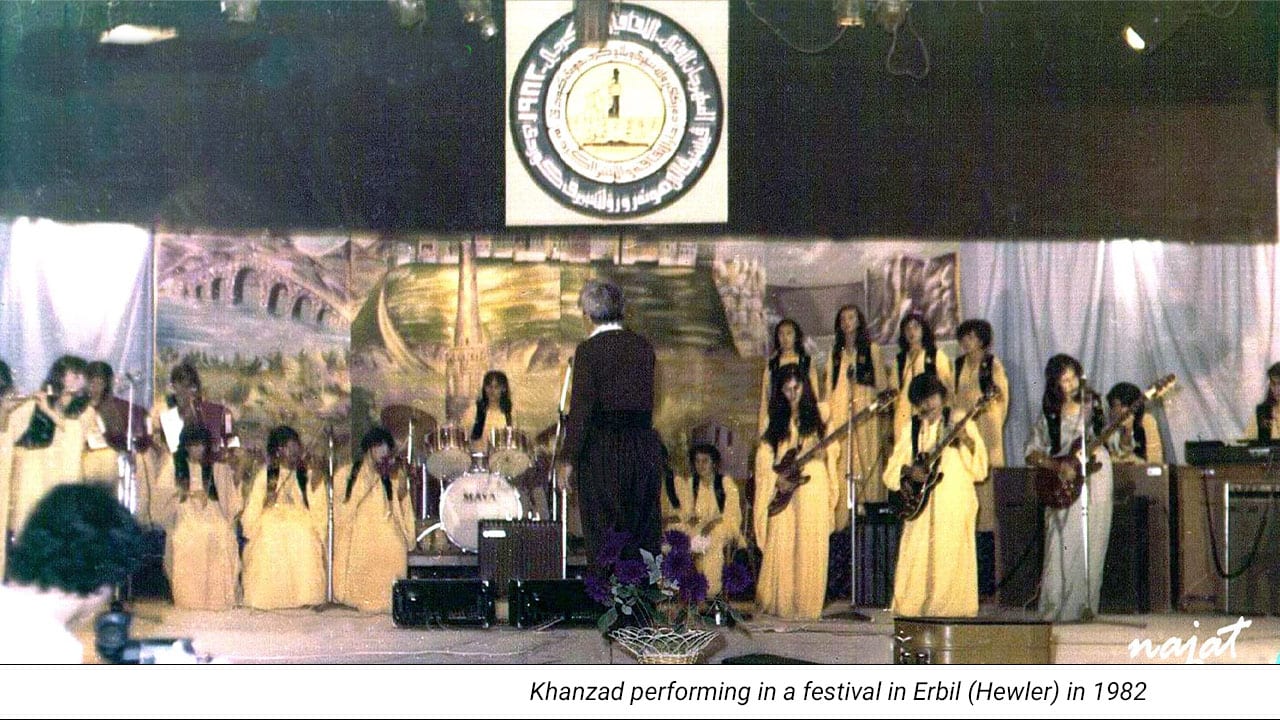
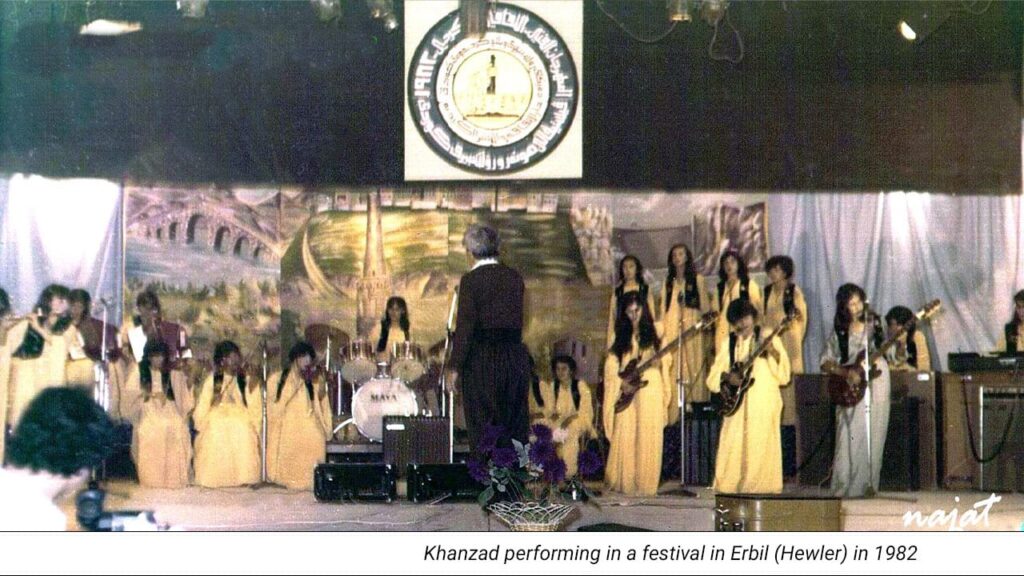
Founded in Erbil in 1980, Xanzad was the first known all-female rock band in Kurdistan and Iraq. Formed under the leadership of Kurdish musician Wirya Ahmed, the group left its mark on both the music world and society with songs like “Mina My Life Mina,” “Khan Amiry,” and “Hop Zindan.”
Photo: thejiyanarchives.com
Founded in Erbil in 1980, Xanzad went down in history as the first known all-female rock band in Kurdistan and Iraq. Formed under the leadership of Kurdish musician Wirya Ahmed, who began by training young women, the group was at the time the only all-female music ensemble performing in Kurdistan.
With members including lead vocalist Viyan Fiaq and flutist Naska Ezadin, Xanzad made both a musical and social impact with songs like “Mina My Life Mina,”“Khan Amiry,” and “Hop Zindan.” The group recorded for Kirkuk Television and performed at festivals across Iraq.
At a time when artistic activity was restricted under the pressure of the Iran–Iraq War and the Ba’ath regime, Xanzad’s presence in public life was seen as remarkable. The band disbanded not long after: some members went abroad, while others gave up music altogether. Today, very few recordings or images of Xanzad survive.
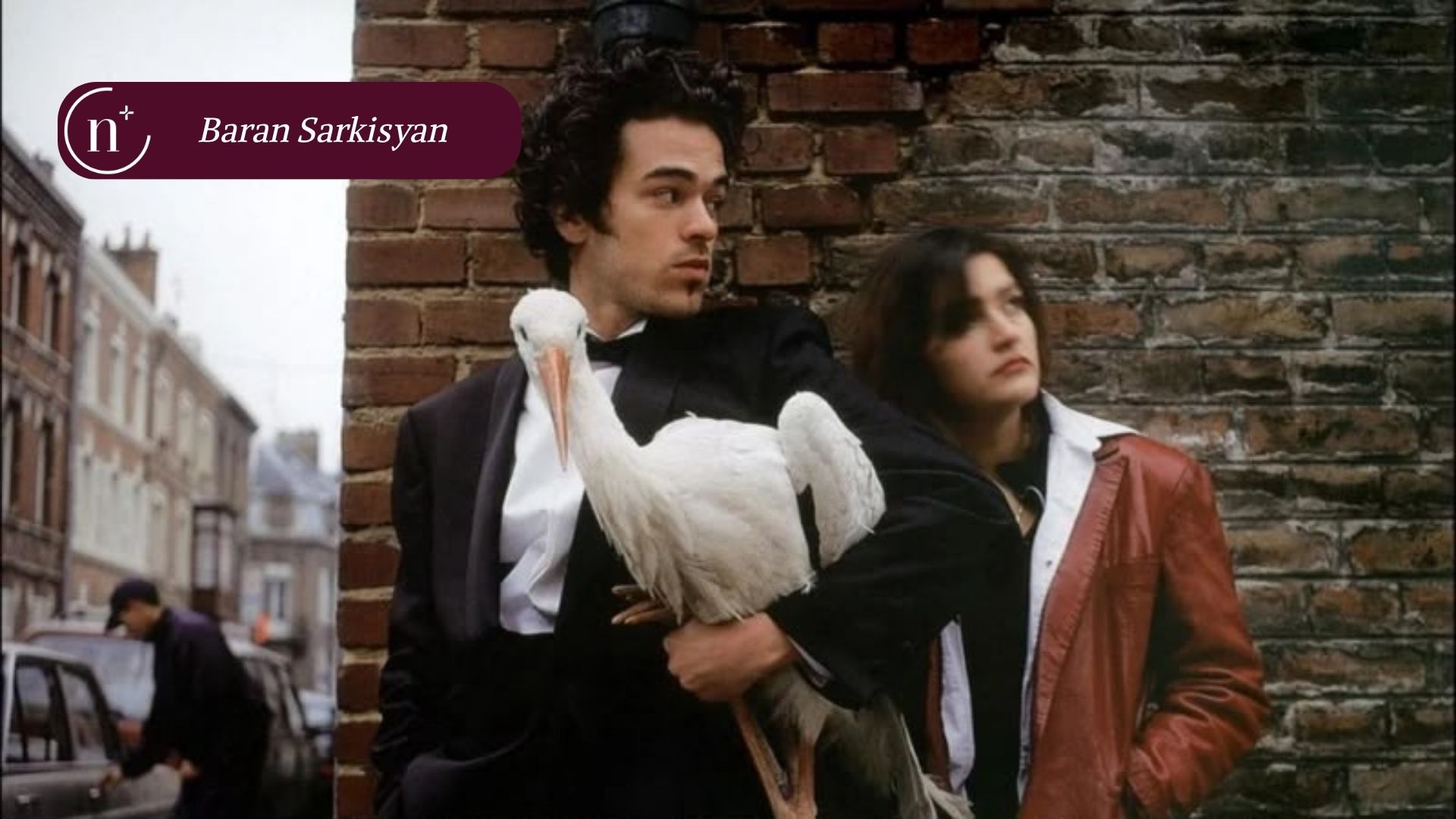
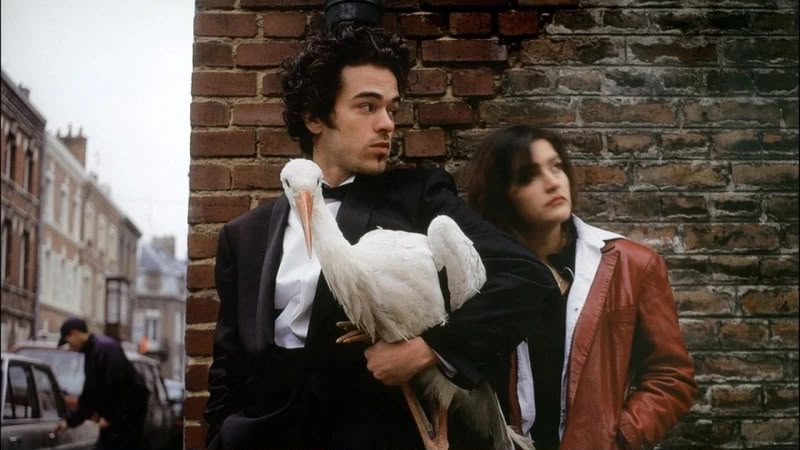
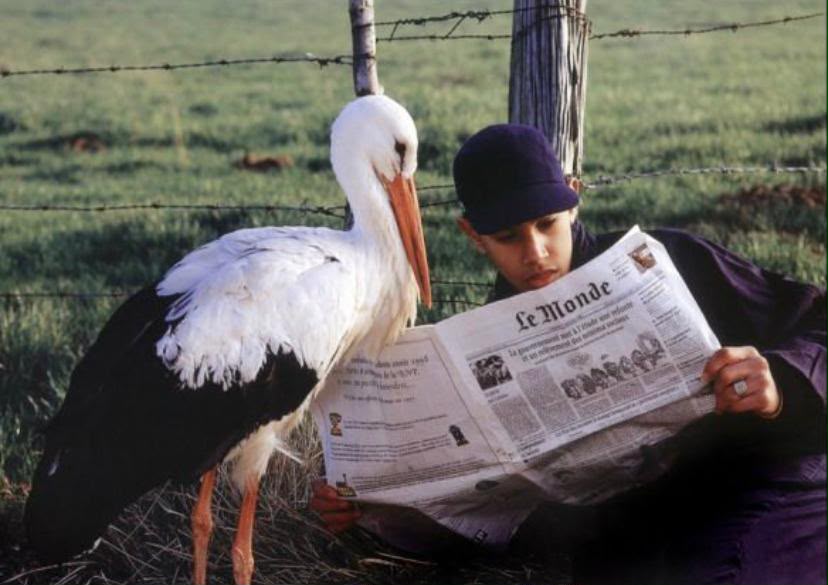
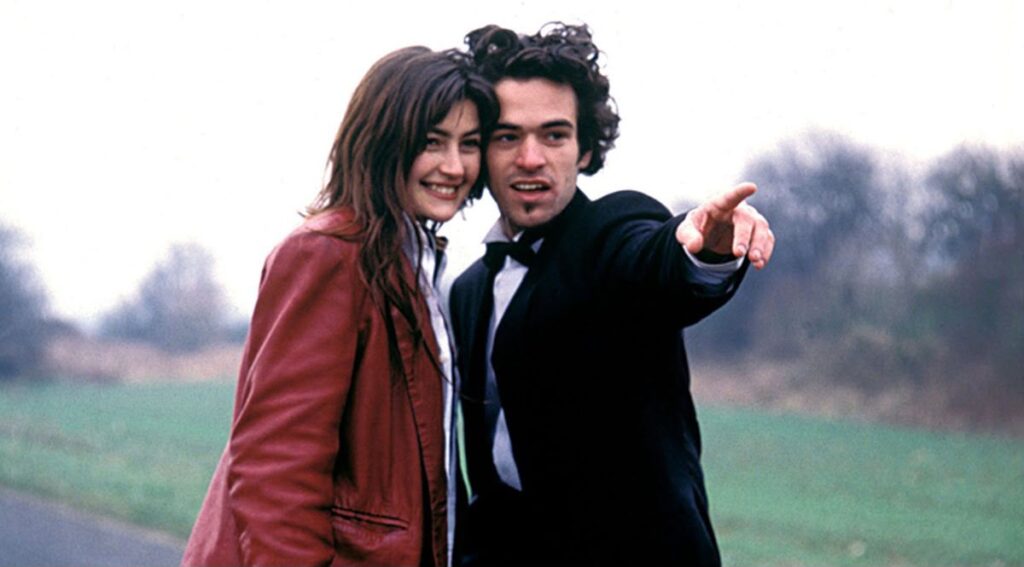
Written and directed by Tony Gatlif, Children of the Stork places an injured stork at the film’s center as the main character, alongside three young people living in Paris who are also cast as that stork’s children. Because all of us are the settled, assimilated children of a wounded, nomadic stork.
Otto is an unemployed young man living with his mother, making his living selling newspapers on trains. Launa, whom he meets while selling papers on the trains, is a hairdresser whose constant lateness worries her boss on commercial grounds, but she is also a free spirit who will soon join the rebellious union of the unemployed. Ali, also living in Paris with his family, is an intellectual living with his assimilated family, who will soon be thrown out by his father for refusing to assimilate himself. The condition that will bring these three characters together is their resignation from the roles and duties assigned to them by their families and employers within the established order.
Setting out with nothing left to lose, these three young people, without starting from anywhere in particular or arriving anywhere in particular, present the very possibility and course of being on the road.
In the film, Otto’s unemployment is emphasized in particular. Unlike the way unemployment tends to be seen in today’s conditions — as uselessness, almost as a plague — here it is highlighted with pride and praise. Unemployed Otto does not live as someone perpetually dependent on another, instead, like Launa, he turns his unemployment into a protest, an opposition to the established order.
A mocking gaze at the system
In the film, law and the state are briefly represented — without any need for elaboration — through the figure of the police officer and bailiff who come to seize a home. The serious, tense, emotionless face of the mechanism of discipline and surveillance is loosened and rendered absurd by a series of anarchist hammer blows. Before the disorderly uprising launched by the three unemployed young people against the established order, the film underscores that having a job and conforming to the system produces distress, stress, and unhappiness. In this sense, the film is, in a way, a praise of idleness. But the principle of this idleness is not inaction, since what makes the difference is action, and since difference is affirmed, it is action that produces neither commodity, exploitation, nor alienation.
Parrots, the sovereign’s echo
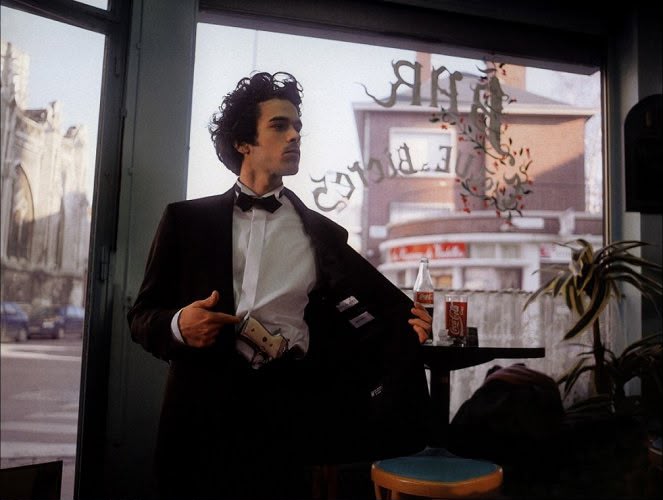
In anarchist ethics, theft is not absolute evil; done out of need — without requiring courtesy — it becomes a kind of borrowing: a gun becomes not a symbol of massacre but of unemployment, a tool that breaks a lock opened by wages; the nomadism of storks becomes a symbol of freedom, and the hunters who wound the stork become a symbol of fascism. The parrots being symbolized as fascists lies in their repeating their owners. The parrot that squawks, as its owner’s voice, phrases like “foreigners go home!” and “dirty Arabs” ends up — fittingly, with Launa’s modest contribution — in a trash bin along with its cage; meaning, all fascists belong in the dustbin of history.
Borders exist even for storks
The film’s central character, the stork named Muhammed, is in fact a free bird pursuing its own course within its own nature, unaware of bourgeois borders — the very kind of bird we were told as children brings us into the world. But its journey is interrupted when it is wounded by a hunter while migrating over France. The hunter is called a fascist; the stork, transformed into a symbol of freedom, is wounded in the eyes of all nomadic souls and migrants. Three young people, having abandoned themselves to chance encounters without map or purpose, encounter the stork while traveling in their stolen/borrowed vehicle, and after bandaging its wounds, they take it upon themselves to smuggle it back to its migratory path through illegal routes. In a world where even storks get caught up in borders and wounded because of hunters/fascists, what state is human freedom in?
For migrants whether for political, economic, or educational reasons, the options awaiting them in our age are limited: either a deep-rooted integration and assimilation, felt as a perpetual pressure, meaning walking around perpetually wearing a mask, or else the threat of being disregarded and sent back.
As the film discusses the phenomenon of migration, it also problematizes today’s relatively milder form of assimilation — integration/adaptation — through the impression: “what if the thing we are adapting to is itself sick?”
The low-level acts of violence set off by Laura spray-painting “burn it, tear it down” on a wall are presented — if we look at it from Fanon’s perspective — as a purifying force at the individual level, a gain in self-confidence, in the face of the pressure of assimilation and exploitation.
Through the character of Ali who constantly reads Che Guevara, Guy Debord and anti-colonial writers, and who despises bourgeois cinema, the perception of migrant identity is scattered apart. Ali, as a migrant, is someone who knows what exploitation and assimilation are, and is engaged in an act of rebellion against them.
There are also scenes in the film where characters argue with the camera, flee from it, and speak directly to the audience. This too is a blow against mainstream cinema’s structure of producing representation and alienation. Industrial cinema, which produces entertainment through representation, spectacle, and commodification, is defeated both technically and through the screenplay.
Through its emphasis on nomadism, the film can be read as a colorful, joy-filled gypsy air — or equally, as a loose salute of respect.
*The film is dedicated to Muhammed, an Algerian who crossed from Morocco to France underneath a truck at the age of 22.
Film credits: Director: Tony Gatlif Screenplay: Tony Gatlif Year of release: 1999 Film title: Children of the Stork (Je Suis né d’une Cigogne)
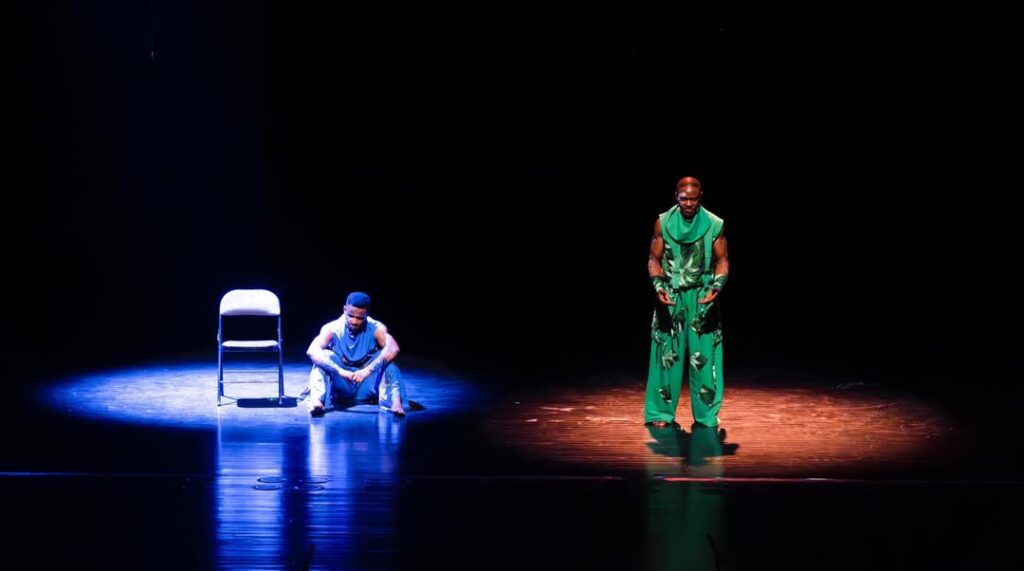
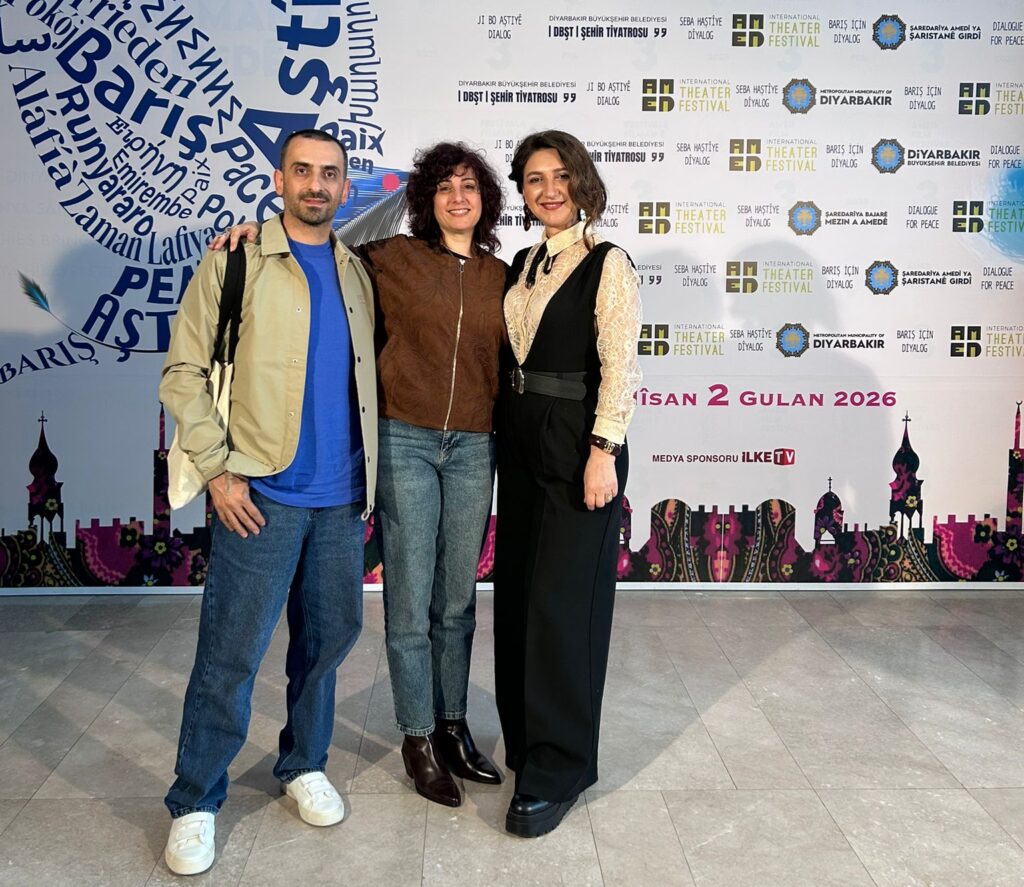
Elevatorz NG, the Nigerian guests of the International Amed Theater Festival, surprised the audience by blending their modern performance with the Kurdish dance Cida: “Movement is a universal language; this warm welcome in Diyarbakır made us feel right at home.”
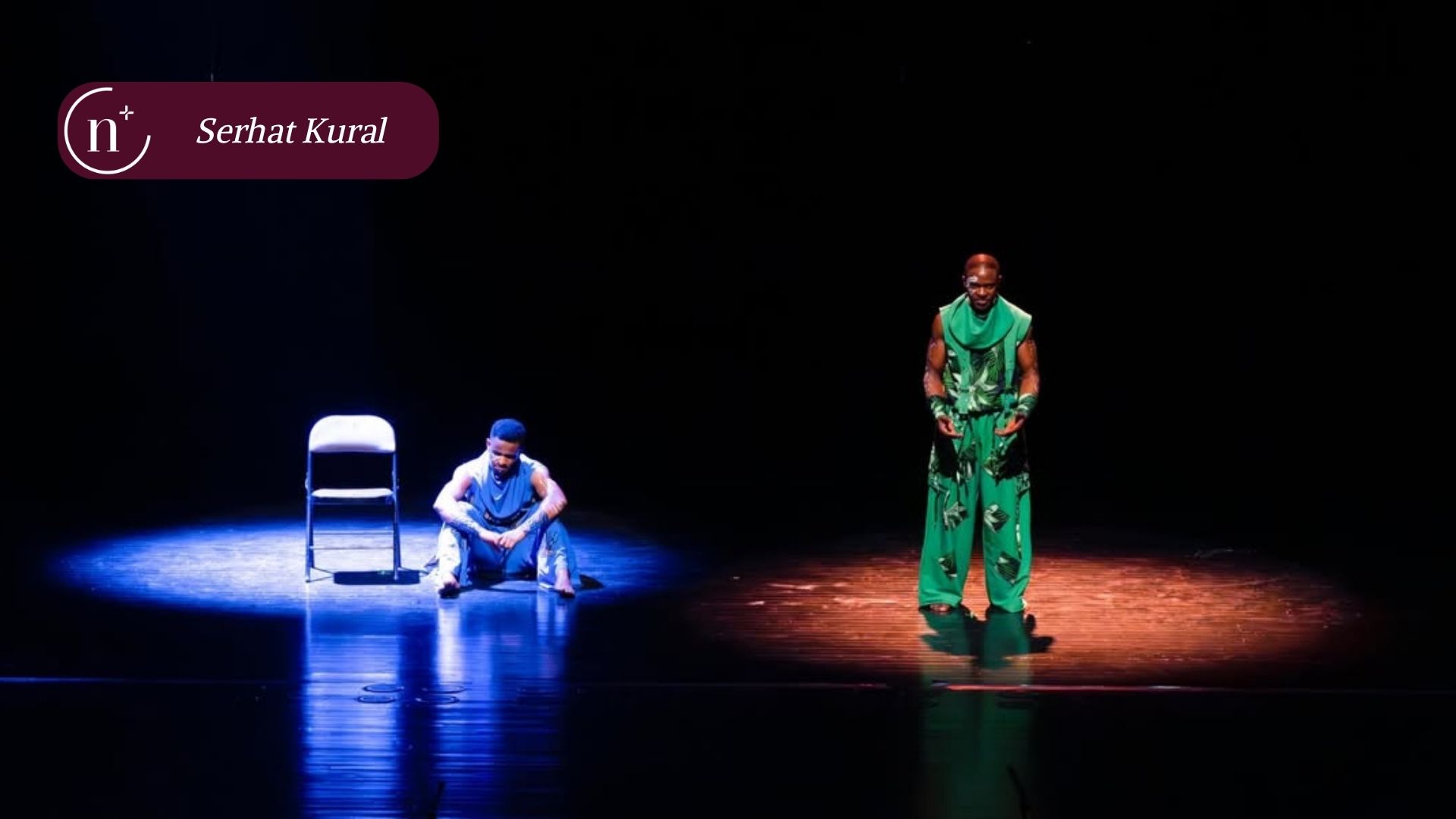
“A scene from the ‘Connecting Bridges’ dance performance. Photo: Elevatorz NG”
Elevatorz NG, participating from Nigeria in the 11th Amed International Theater Festival organized by the Diyarbakır Metropolitan Municipality, presented a dance performance titled ‘Connecting Bridges.’ Founded by two brothers, Michael and Samson Vatorz, the group aims to convey a message of ‘unity’ and ‘respect’ by bringing together Nigeria’s national dances with dances from various parts of the world.
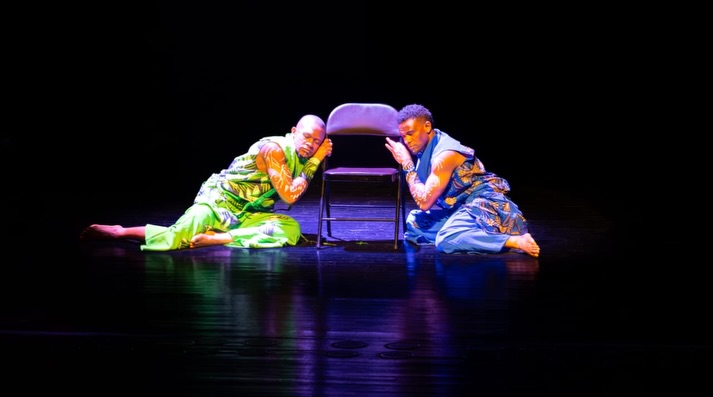
The staging approach adopts a minimalist and symbolic aesthetic that places the performer’s body, movement, and voice at the center of the theatrical experience. The stage is designed as an open, fluid space, allowing choreography and spatial relationships to define shifting emotional and narrative landscapes. Stage props are minimal, functioning as abstract representations of barriers and bridges that can be reconfigured to evoke division, negotiation, and connection. The aesthetic language emphasizes physical expression; lighting is used to isolate moments of conflict and gradually opens up to warmer, more inclusive states as dialogue emerges. The costumes are made of African fabrics in contemporary styles, allowing the performers to represent multiple identities rather than fixed characters. Overall, the staging prioritizes clarity, intimacy, and adaptability, supporting the work’s focus on themes of dialogue, empathy, and peace, while allowing the audience to engage imaginatively with the symbolic world of the performance.
The show met with the audience on April 27th at the Çand Amed Great Hall. Dance and music artist Serhat Kural spoke with Michael and Samson Vatorz for Niha+ about their dance performance, their dance work in Nigeria, and their impressions of Diyarbakır.
“There is nothing that dialogue cannot solve”
Serhat: First of all, I want to welcome you to Amed and this international theater festival. As a dancer, I am very happy to have watched your show; it was truly beautiful. Could you tell us a bit about who you are and your background?
Michael Vatorz: Hi, my name is Michael, also known as Michael Vatorz.
Samson Vatorz: My name is Samson, also known as Samson Vatorz, and together we are Elevatorz NG.
Michael: Elevatorz NG is a dance and theater company; beyond dance, we also act. We have a bit of a singing background as well, so we incorporate that into our work, but we are primarily active as actors, dancers, and creative directors. We have been established as Elevatorz NG since 2010. So far, we have competed in several competitions and are currently the winners of World of Dance Nigeria. We were the first K-pop ambassadors in Nigeria and represented our country in Seoul, South Korea. We have participated in several other festivals outside of Nigeria, and this is what we do full-time.
Serhat: And when did you start working together?
Samson: Well, we are brothers. We have been working together since birth.
Serhat: Could you tell us a bit about your piece? What message do you want to convey to the audience?
Michael: The piece, “Connecting Bridges,” is simply about “dialogue for peace,” much like the festival’s theme. We actually created this dance piece back in 2023. We performed a shorter version of it when we represented Nigeria at the ITI World Congress in Fujairah. That was where the organizers saw us and invited us here because the dance-theater piece matches the festival theme so well. We created an extended version specifically for this festival. The piece is designed to say that regardless of our ideologies, family backgrounds, or religious beliefs, we are humans first. There is nothing that dialogue cannot solve; we simply need to sit together and talk about it, and we will definitely find a way. We wanted to express these thoughts through our dancing and the dialogue within the piece.
“Peace means unity and respect.”
Serhat: If you had to use just one word to describe peace in your country, what would it be?
Samson: You mean the meaning of peace for our country?
Serhat: Yes.
Michael: If it is just one word, we will likely have different ones. He can say his word, and then I will say mine.
Samson For me, the word is respect . I say respect because if you respect another person’s culture, views, and traditions, you can live together. You do not necessarily have to adopt their culture or do what they do. You have your own culture; they respect yours, you respect theirs, and everyone can coexist.
Michael: To add to what he said, we went out today and witnessed something that represents why I chose the word unity. We visited a church and saw Muslims inside who were very welcoming. Then we went to a mosque, and they were so happy to see us; they hugged us regardless of where we came from or who we were. They just wanted us to be their friends. One man in particular was so happy, and it was quite emotional for me. We said to ourselves: if we can all act this way, there will be so much unity and peace.
Serhat: What was the journey like while creating this project? From the beginning to the end of the piece, you emphasized that we can live much more peacefully and beautifully. You also had great concentration on stage; could you tell us a bit about that?
Michael: Regarding the experience of creating the piece and maintaining the tempo and character throughout… I will start with the fact that we have been together all our lives because we are brothers. That is a major advantage. I know there are brothers who fight or do not even speak to each other, but we see ourselves as more than just brothers; we are one. That bond kept us together and made creating the piece much easier because we already have a shared mindset on how we flow. Secondly, maintaining the tempo in the performance was not something we just learned; we had to practice over and over again. Practice is what makes a dancer a professional. Anyone can dance, but not everyone can perform at a professional level. Repeated practice and engagement with the audience were key. We fed off the energy the audience gave us. When they gave us positive energy, it boosted our morale on stage and kept us going. We didn’t even notice when the piece came to an end.
Serhat: Your piece featured traditional costumes. Why did you choose traditional costumes for this mix of dance styles?
Samson: Because they are beautiful. We started a movement in 2017 that we called “Trado-HipHop” at the time. We see ourselves as cultural ambassadors. Nigeria has many languages, and while that can sometimes cause minor hiccups, it is also our unique strength that makes us dynamic. Nigeria is a beautiful country because, despite these many tongues, it remains one nation. To have stayed together for 66 years as one country despite this diversity is commendable. We feel a responsibility to promote this culture for the world to see. As for the hip-hop element, we started as hip-hop dancers and later added traditional dancing professionally. We decided we couldn’t throw hip-hop away because it is a culture, specifically a Black culture, and we love cultures from all around the world. We wanted to fuse our traditional dances with hip-hop without diluting either. We have now evolved the name to trado-pop as of 2026. The reason for the change is that “hip-hop” felt limiting. We love salsa, Afro-dance, Kizomba, Bachata, and many other styles. We wanted to fuse traditional dance with popular culture as a whole. The consistent element is the Nigerian traditional dance. If you watch closely, you will see parts where I did some funk and locking, and Michael did some locking as well. You will notice we have backgrounds in hip-hop, contemporary dance, and salsa. We tried to chip in various elements of popular culture and then added your culture as well.
“A scene from the ‘Connecting Bridges’ dance performance. Photo: Elevatorz NG”
Michael: And then we added the cida.
Samson: Yes, we brought the cida on stage. We wanted to express that the world is one and that movement is a universal language.
Serhat: Have you been to the here before, and how do you feel here?
Samson: It’s a new era in the Middle East… like the United Arab Emirates…
Michael: I’ll take this one. We haven’t been to this part of the world before—I’m not sure if UAE counts as the same experience—so this feels like our first time. We feel so welcome; the reception has been awesome. We love it. If you asked me to come back, I would come back again and again because it feels like Nigeria. Nigerians are warm people; we treat guests right and make them feel loved. The reception here feels just like that. It is so warm, and we honestly love it here.
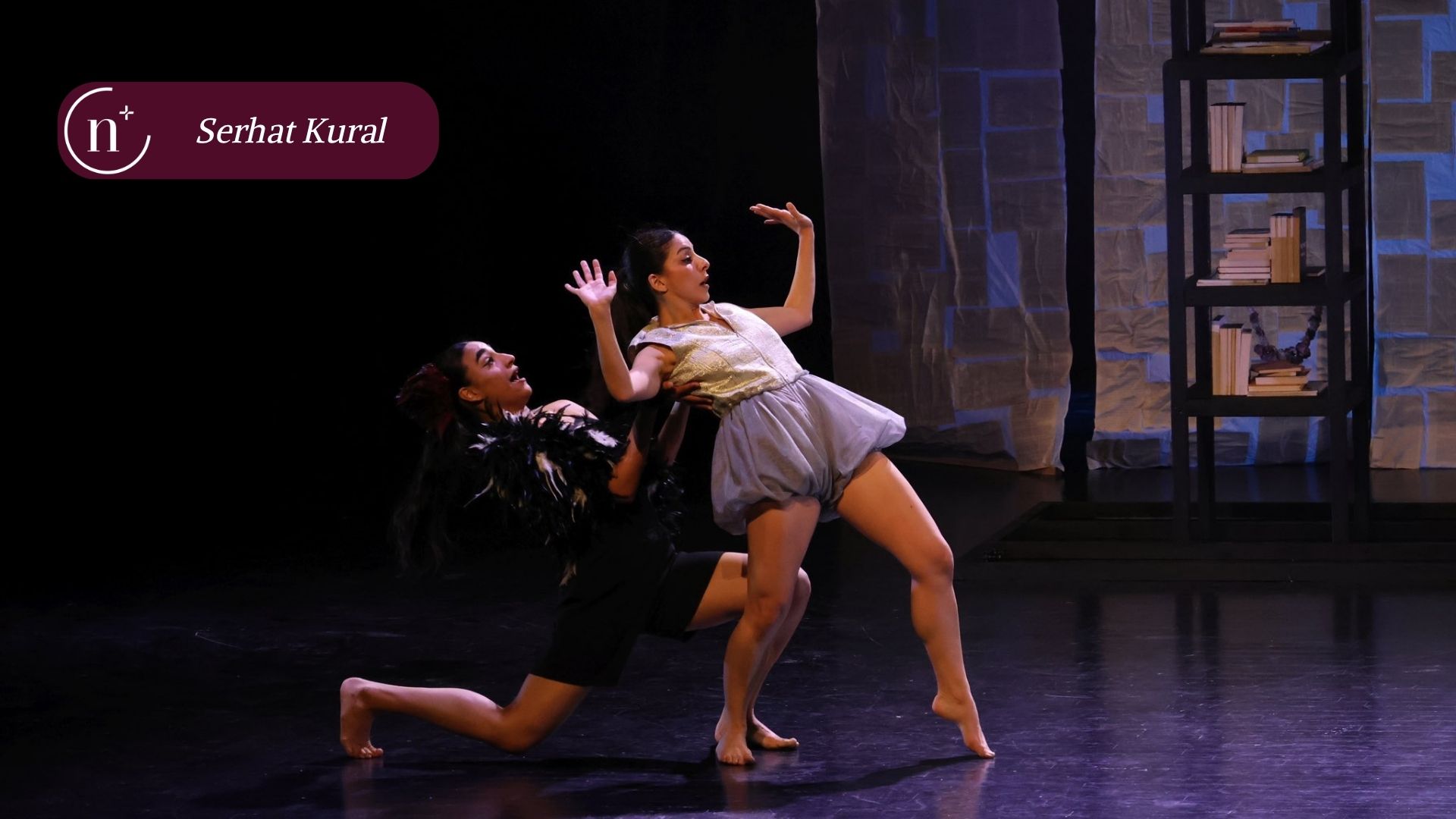
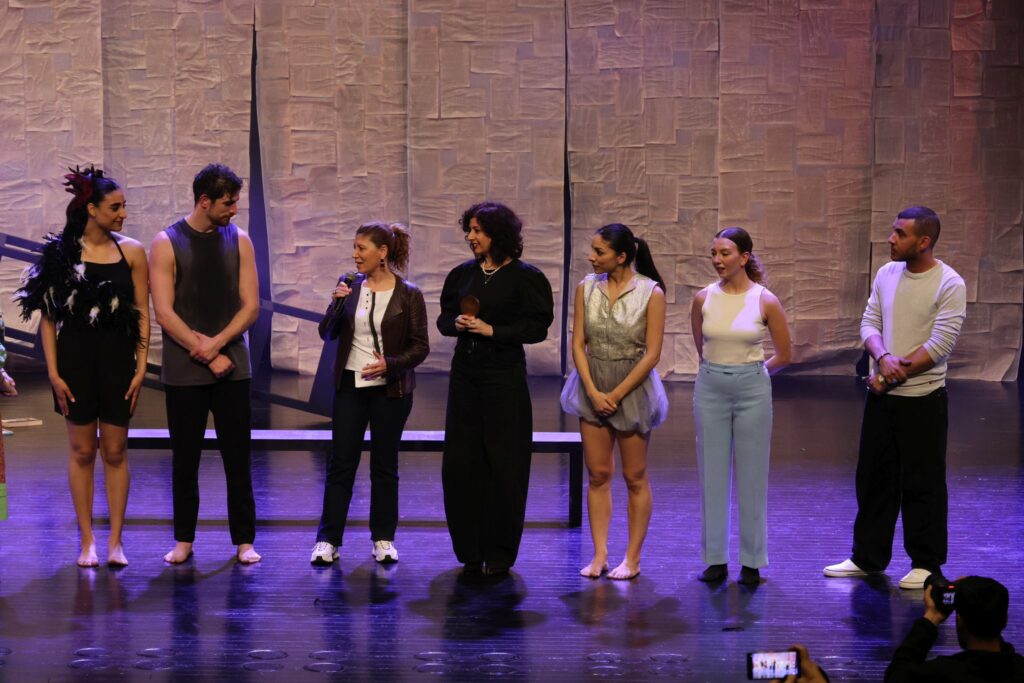
Palestinian dance artist Shaden Abu Elasal, whose dance group, Shaden Dance Company, presented a performance titled “Feathers” at the 11th Amed International Theatre Festival, expressed that she was deeply moved by the Kurdish people’s commitment to their culture. Abu Elasal noted that in her works, she does not merely copy reality but generates something new from it.
The theme of this year’s 11th Amed International Theatre Festival, held in Diyarbakır, was set as “Dialogue for Peace.” Led by the Metropolitan City Theatre, which continues its work under the auspices of the municipality, the festival opened with a reception on April 22nd.
During the ten-day festival, which runs until May 2nd, numerous plays and dance performances by theatre troupes from 19 countries will meet the audience. Various panels and workshops related to theatre will also be organized.
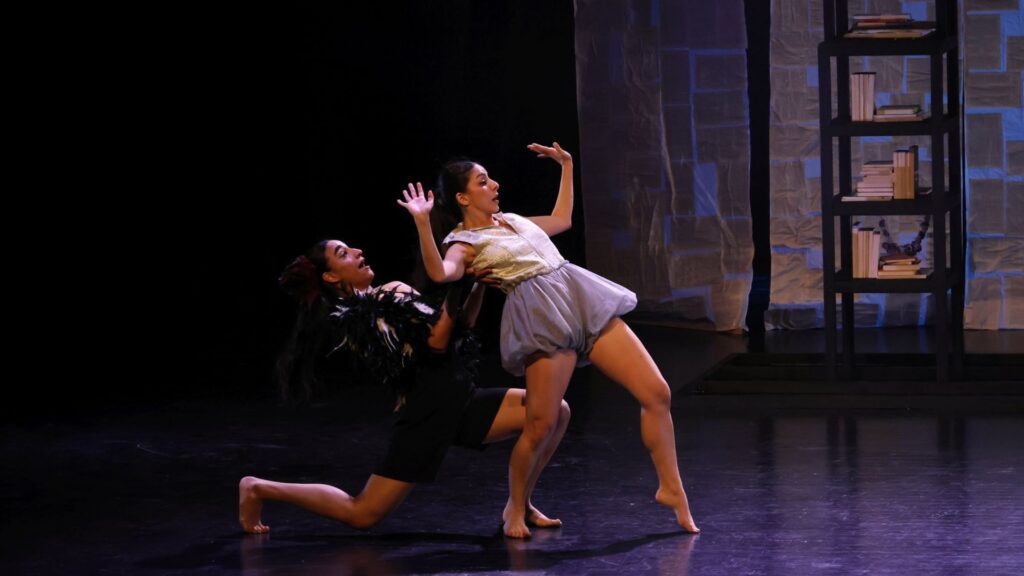
Alongside participants from countries such as Sudan, Ukraine, Syria, and the Kurdistan Region, the Shaden Dance Company from Palestine is among the groups and artists attending the festival. The team’s project, “Feathers,” met with the audience on April 25th at the Çand Amed Grand Hall.
The performance was introduced in the promotional bulletin with the following words: “When our consciousness forms, we realize that we do not know how free we truly are or whether we can ever escape the clutches of power. Feathers explores how power shapes our identity, influences our perception of beauty and goodness, and how it can drive a human being from love to hate. In Feathers, four beings come together and intertwine in scenes that reveal the complexity of human interaction and the forces of power shaping their lives. This is embodied in a love story between two beings—one dominant, the other submissive. The submissive being does not realize what they are.”
Dance and music artist Serhat Kural spoke with the founder of the ensemble, Shaden Abu Elasal, for Niha+ about this dance performance, the experience of being a female dancer in Palestine, and the festival itself.
Serhat Kural, Shaden Abu Elasal, Rugeş Kırıcı
Hello Ms. Shaden. Welcome to Amed. Welcome to our International Theatre Festival as a Palestinian choreographer and dancer. First of all, I want to ask: Who is Shaden Abu Al-Assal, and what is the Shaden Dance Company? Could you tell us a bit about yourself?
First, I’m happy to be here and thank you, Serhat, for this interview. I am Shaden Abu Al-Assal. I was born in Nazareth, in the north of Palestine. I finished my degree in Dance at the Academy of Music and Dance in Jerusalem. Then I came back to Nazareth and I started establishing projects and programs around dancing—educational programs. Besides that, I started doing my own creations as an independent choreographer. So, there was one path of education, focusing on dance, ballet, and contemporary dance, and the other line was developing myself as a choreographer. In 2016, I established a dance group for ballet and contemporary dance in Nazareth for ages 14 to 18, and we used dance as a tool for understanding ourselves and understanding the world and our complicated reality. So, besides the technique, we searched the body as a tool for education. In 2019, I established the Shaden Dance Company. After I did many projects as a dancer and created and performed my own dance works, I decided that I would now be only a choreographer and create not on stage, but behind it. I started this in 2019, and there are dancers from Palestine, Palestinian dancers, and also dancers from all over the world.
Could you explain your identity, as a dancer in Palestine and also as a woman? What kind of journey have you had regarding this?
In a society that has been under oppression for many years since the Nakba of 1948, as a third generation of the Nakba, as a Palestinian living in a very “hot” place… it’s a very hard, complicated, and difficult situation. It’s like everyday suffering. So I want to say that the values that I embrace as a woman and as a human being created who I am. I also came from a family that was very active politically and socially. So the meaning of justice, the meaning of equality, and the meaning of respect for humanity were really powerful parts of who I am. Since I was a child, I was asking myself many questions about the world that we are living in, about myself, about what I can do in this situation, and what my influence is. Can I make my voice louder than it is, seeing the suffering of the Palestinians through all these years?
I can understand this very well because our story is more or less the same as Kurdish dancers. When I met you and your group, and when I watched your performance, a part of me was really happy. Another part of me was so sensitive because even when I listened to your panel, you said you created choreography about how power can affect the body. A lot of pieces are also about this, because balance is really changeable and we don’t have to take our decisions for it to be more free. And that’s why I can understand you very, very much. I want to ask about your piece; what did you want to tell us about it? Can you tell us a bit about your project?
Yes, it’s a combination of who I am, how I was created in this reality as a person, and also how I am a revolutionary in my life. Usually, in anything, I look for something different, new, something that is unique. So, in my art, I don’t want to be a victim—not in reality and not in my art. I want to look for this combination of having a message for the world and being an artist that is looking for something new. I don’t want the authority to decide how my art is going to be. So I am very, very sensitive about not wanting to copy reality. I’m taking reality and digging and creating something new. My biggest happiness is when I enter the studio and start searching, and in one moment something is created—something different, something that I haven’t seen before. This astonishment that I have from art makes me feel powerful, and this power makes me survive in this place. I feel my power when I create. I feel my power when I create as I want to create, not as they want me to create. It’s a combination between who I am as a woman and a human being, and who I am as an artist. I hope that you understand me.
Exactly, I understand very much. Do you think you are giving courage to women who live in Palestine as an artist?
I don’t know. I know that I’m giving…
Sorry, I want to open this topic; maybe it can help you. I watched two videos about your pieces. They were so affecting. I saw many women dancers inside, and I think you have many women dancers. You create something and they find an opportunity to do something with you. I have to say you are like a choreographer, but at the same time, a leader as a woman. That’s why I ask this.
I find it hard to talk about it because it’s hard to talk about myself as a leader. I can say that I can affect people around me in a positive way so that they can do something that wasn’t done before. If they have the tools, if they insist, if they believe in themselves and if they work hard, I think that maybe I am an example of that. Because as an Arab woman, I was the first one to study in the Academy of Dance. At that time, the words “contemporary dance” were not common in our society. But I took this step because I wanted to do that. And coming back and creating things there… my performances are not “shows” shaped in a beautiful way. My performance is different; it’s not superficial. And I insist on that. I also succeeded in creating a very good school at a very high level, technically and artistically. So, I think that these students—women that I taught and who dance in this group—maybe, and I hope, see the world differently than how society wanted us to see it. I’m happy that some of them continued dancing and they are finding their own ways now as choreographers. I hope that I had a positive effect on them.
I’m pretty sure you’re going to be an example for these women. I want to talk about your experience in Amed. What do you feel about Amed and about your performance? How did the audience criticize your piece? Could you share a bit of this experience with us?
First of all, the idea of this festival is really powerful and important, both in its panels and performances. Because there is always an attention to shut our mouths. In this festival, they give people who are under oppression the power to stand and to express themselves with all the beauty that this place has. The people are so kind, so generous. I’ve been to many festivals, but being in a festival that a woman is directing… I should say that it’s different. It has its own spirit. I really admire this community, the Kurdish people, for their commitment to their culture and their insistence on expressing themselves through art. They don’t lose their culture. I saw the opening and I said, “Wow.” Yes, I see people here and how connected they are to each other. The position of the woman as mayor is something unique. I think it’s something that I can learn from.
My last question. Deeply, I want to say I have really high respect for the Palestinian community. We are always with you. I know there is a condition that is so difficult. But as I said to you, we are a bit similar. And I hope Palestine is going to be free soon. How do you relate to the audience in Palestine as a contemporary dancer?
I must say, as I said before, that it is new in Nazareth and in the north of Palestine, and also in the West Bank. But people are curious. People come to our performances and they ask questions. Even though sometimes they say, “we don’t understand,” what is good is that we talk to people. There’s a dialogue about it. I must say that the last work, Feathers, because it has a clearer drama and characters, the audience interacts with it more than my previous work, which was more abstract. So I think these kinds of works make the people closer to you. I think sometimes they are afraid of these kinds of performances because they don’t have the tools to analyze them. But when you come to them and you talk and explain, and you say it’s okay, you can take it however you want, people feel comfortable. When they feel comfortable, their imagination works. So I’m happy that we have an audience for this. It is not huge, but there’s an audience that is growing more and more.
Exactly. I understand very much because we are in the same process. We are doing the same way for us to be more understandable for the audience. But another part of us wants to be more abstract. I don’t want to say this is our destiny, but we need a balance to be closer to the audience.
Exactly. And I think it’s so important not to be “above” the audience. Because our work is going on stage, and without this audience, there is no meaning for us. This combination between being loyal to yourself as an artist and staying loyal to your audience… we have to find this balance without giving up our artistic vision.
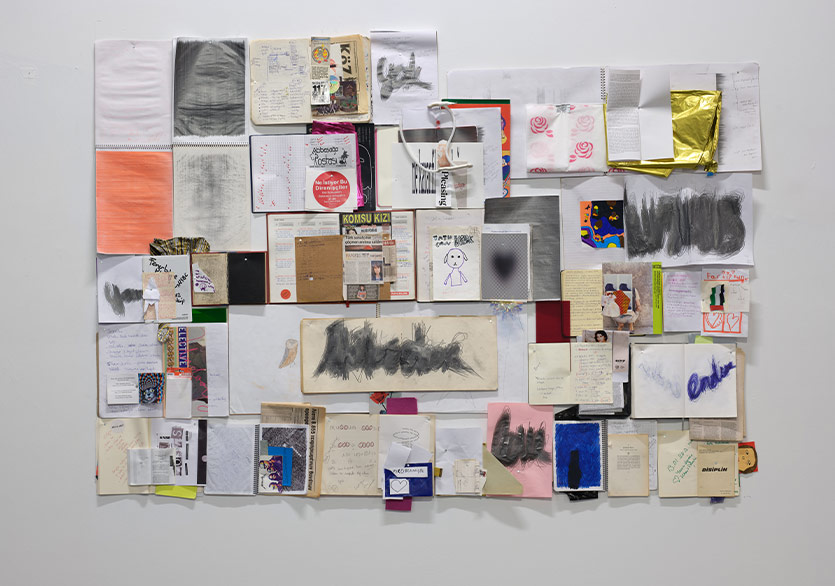
In her solo exhibition “neither carnation nor frog,” Banu Cennetoğlu invites us to think about fatherhood, rights, boundaries, loss, and power.
From the exhibition “neither carnation nor frog”. Photo: artfulliving.com
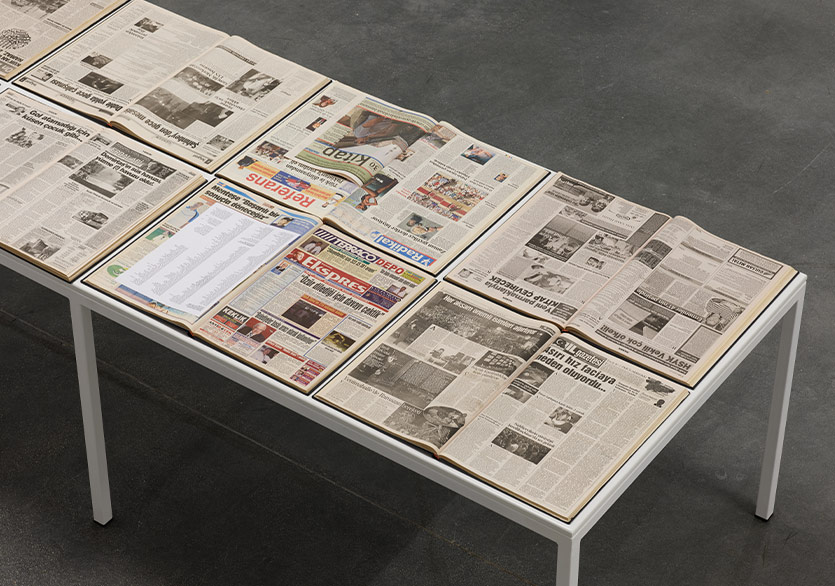
Artist Banu Cennetoğlu’s solo exhibition “ne karanfil ne kurbağa” (neither carnation nor frog) was shown in Bursa at İMALAT-HANE between October 25, 2025 and January 20, 2026, curated by Yavuz Parlar. It is now viewable online at https://nknk-erika.imalat-hane.com.
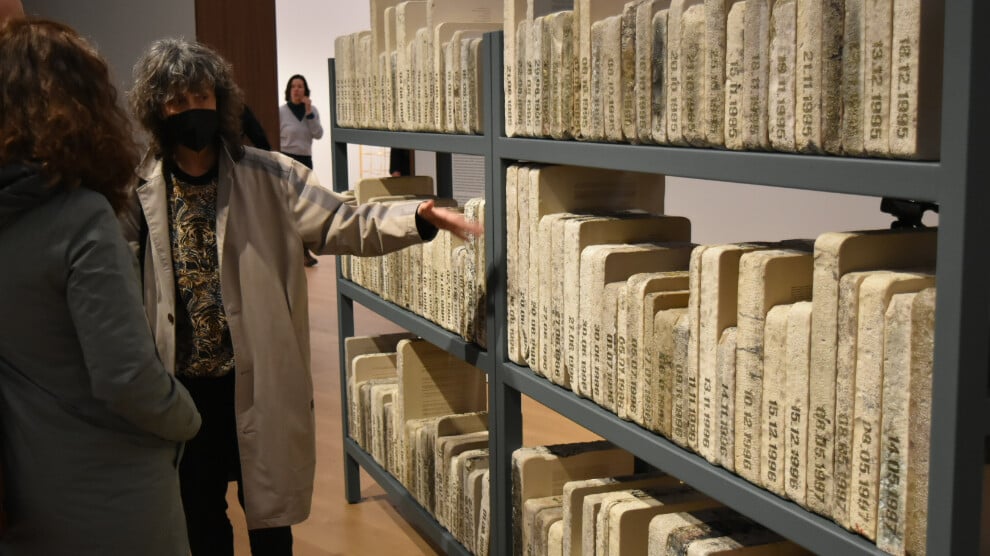
Cennetoğlu is known for her long, research-based projects rooted in personal and collective memory. In a previous work, she engraved the book “Yüreğimi Dağlara Nakşettim” which is based on the diaries of Gurbetelli Ersöz, Turkey’s first female editor-in-chief, onto 145 limestone tablets. In this new exhibition, she looks at three connected ideas: power, reputation, and denial.
Banu Cennetoğlu’s work is rooted in long, careful research and draws on both personal and shared memory. Her practice often focuses on how knowledge is produced, organized, and circulated. In this exhibition, she thinks through ideas of fatherhood, rights, boundaries, loss, and power — alongside the slipperiness of both speaking and making promises. The exhibition was curated by Yavuz Parlar. The emails, arguments, and personal outpourings that Cennetoğlu and Parlar exchanged during their collaboration didn’t just shape the exhibition, they also became a companion publication called nknk-erika.
The exhibition itself didn’t come together through a typical curatorial process. Instead, it grew naturally out of the back-and-forth between the two. It started as a digital exchange, messages sent without any fixed goal in mind. Once they decided to just begin, a simple rhythm took over: each day, one would send something to the other, and the other would respond.
“The personal is also political”
In the exhibition, the figure of the father — and everything connected to it — serves as a research space that stretches from personal experience to collective memory, and from there to apologies that can never quite be made.
The exhibition also helps us remember the grief and pain carried by children who lost their fathers, fathers killed in the struggle against the system, against what might be called the “state as father”: a power and authority that defines and enforces the rules.
In a conversation with Sina Ergün, Cennetoğlu describes the exhibition like this:
“Starting from a personal place, I’d describe it roughly as a state of being haunted. Setting aside fathers and forms of fatherhood that have managed to be different, for me, fatherhood is, both personally and socially, a way of existing that is self-satisfied, certain of itself, arrogant, and apparently without doubt about the unwritten rules it considers absolute truth.
And to keep that certainty going, three things are essential: power, reputation, and denial. A structure that loves, protects and spreads these things, that punishes those who object, wants to ‘correct’ them, and feels entitled to cross other people’s boundaries, all while claiming it’s for their own good.”
Photo: artfulliving.com
Looking at fathers and children who have experienced loss in the Kurdish conflict
Viewing the exhibition and reading the conversation afterward brings to mind the enormous cost of grief carried by fathers who lost their children — and children who witnessed their fathers’ deaths — in the struggle against political violence in Kurdistan. This cost, for any hope of peace, democracy, and living together, is immense and raw. These losses leave an indescribable pain and emptiness, felt most deeply within families and close communities.
The long-term effects of this pain and absence don’t stay private. They become part of how children who lived through it see and remember the world, and through them, part of society itself. When past suffering goes unaddressed, when those responsible are never held accountable, the sense of justice fades. And with it, so does mutual trust and the hope of sharing a future together.
Looking again at Kurdish fathers and children who have experienced such loss should be understood as an act of rebuilding memory. On one hand, it means examining the fractures in the father-child relationship through a political and social lens. On the other, it means listening to the memories of children who lost their fathers to state forces — memories filled with absence, grief, and pain. This can be read either as a wound that never fully heals, or as a genuine act of resistance.
It is also worth remembering that these children are now the adults of today and tomorrow people who carry and keep reproducing an emotional memory tied to a specific period of history.
Looking at the roots of the Kurdish conflict through the inner lives of children who were left carrying the consequences of what their fathers went through will also shed light on how these collective experiences keep being reproduced inside individual lives.
As the poet Hasan Hüseyin Korkmazgil wrote – and as this exhibition reminds us – fatherhood, where the personal is as social as the social is personal, is “neither carnation nor frog.”
“Yüreğimi Dağlara Nakşettim” was exhibited at Lausanne Art Museum. Photo: ANF
About Banu Cennetoğlu
Banu Cennetoğlu works across disciplines, using archival methods to question how memory is shaped, and how knowledge is produced, shared, and consumed. Her solo exhibitions have been shown at institutions including Kunsthal Charlottenborg, Copenhagen (2025); Sylvia Kouvali, Athens (2024); K21 Ständehaus, Kunstsammlung Nordrhein-Westfalen, Düsseldorf (2019); Sculpture Center, New York (2019); Chisenhale Gallery, London (2018); Bonner Kunstverein (2015); Salonul de proiecte, Bucharest (2013); and Kunsthalle Basel (2011). She has participated in numerous group exhibitions and biennials in Berlin, Istanbul, Liverpool, Gwangju, Athens, and Venice, as well as Manifesta 8 in Murcia, documenta 14 in Athens/Kassel, and the 58th Carnegie International in Pittsburgh. Cennetoğlu is the founder of BAS, an artist-run initiative in Istanbul focused on artist books and printed matter, and serves as an advisor at the Rijksakademie in Amsterdam. She lives and works in Istanbul.
In 1991, the ban on the Kurdish language was partially lifted, and from that point on, Istanbul particularly the Mesopotamia Cultural Center in Beyoğlu became a hub for a new wave of music production aimed at urban Kurdish youth.
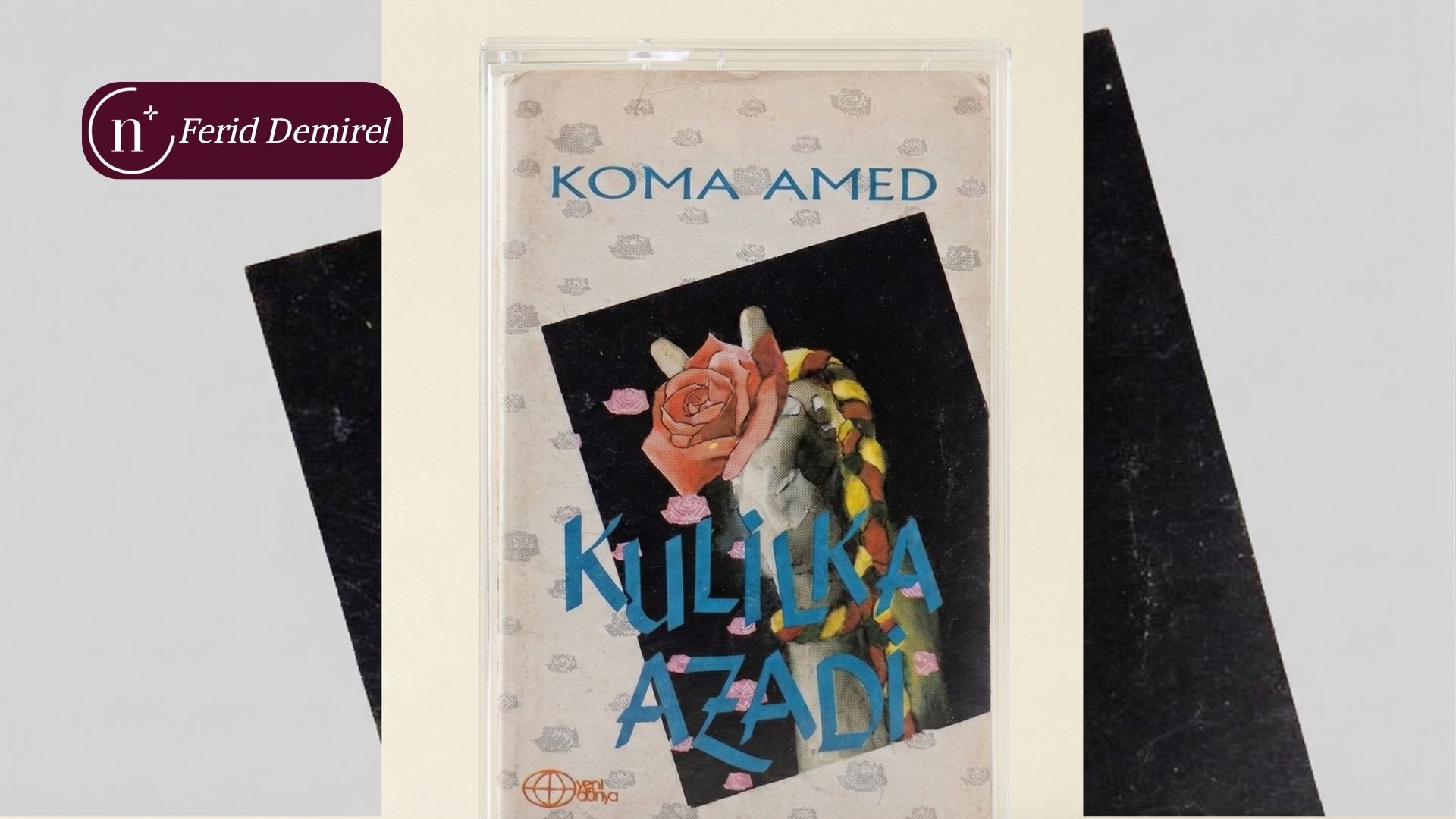
“Koma Amed’in Kulîlka Azadî albüm kaseti”
The 1990s marked a period of transformation for Kurdish music in Türkiye. With the partial lifting of the ban on the Kurdish language in 1991, Istanbul became the center of Kurdish cultural production. Numerous groups, operating both within the Mesopotamia Cultural Center (NÇM/MKM) and independently, reinterpreted traditional Kurdish folk music with contemporary arrangements. During the same period, diaspora communities in Europe were developing a completely different musical political approach through groups like Koma Berxwedan.
The ban on the Kurdish language in Türkiye was expanded in both public and private spheres following the 1980 military coup. In 1991, the ban was partially relaxed. From that point on, the Mesopotamia Cultural Center (Navenda Çanda Mezopotamya, NÇM) in Istanbul, particularly in Beyoğlu, became a focal point for new music production aimed at urban Kurdish youth. Meanwhile, in Europe, especially in Germany, Belgium, and the Netherlands, established diaspora communities continued the circulation of Kurdish music through cassettes smuggled into Türkiye.
Timeline — Kurdish music groups of the 1990s
On mobile, the timeline can be scrolled horizontally.
Groups with roots spanning the 1980s into the 1990s
Koma Berxwedan
One of the most important groups in the history of Kurdish music. It was founded in Germany in 1983 under the umbrella of Hunerkom, a Kurdish cultural and artists’ organization; this structure was renamed the Kurdish Academy of Culture and Arts in 1994. The group had a constantly changing membership structure, making it an “open group”.
The group, which spread to Kurdish cultural centers in France, Germany, and the Netherlands, carried out the most comprehensive research and preservation work on traditional Kurdish folk music. Albums released in the 1990s were smuggled into Türkiye and reached a wide audience through cassettes smuggled across the border. The group, which disbanded in 2019, recently announced that it will resume its work.
Founded: 1983, Germany Selected albums: Dîlan (1985), Botan (1987), Newroz (1989), Amed (1991) Area of activity: Germany, France, Netherlands; banned in Turkey Notable songs: Lê Amedê, Oy Kurdistan, Herne Pêş, Newroz
Koma Dengê Azadî
Founded in Istanbul in 1990 and led by Hakan Ener, this group became one of the most popular and long-lasting Kurdish music ensembles of the 1990s. They created a unique sound appealing to urban Kurdish youth: a style entirely new for the time, blending traditional folk music with funk, funk-jazz, and rock’n’roll. They combined Eastern instruments such as the bağlama, duduk, and mey with guitar and trumpet.
The group, which included a Kurdish translation of “Bella Ciao” in its repertoire, had all four of its albums banned by the state for a period. Despite the bans, hundreds of thousands of copies were sold. They continued their extensive concert activity in Germany, Belgium, the Netherlands, and the United Kingdom.
Songs like “Selîmo”, “Hat karwanê Helebê”, “Lo şivano”, and “Roj roja me ye” have achieved cultural icon status and have been covered countless times to this day. Recently, the song “Çavên me sondxwarîne” has become very popular.
Founded: 1990, Istanbul Albums: Hêvî (1991), Em Azadîxwaz in (1993), Welatê min / Roj wê bê (1995), Fedî (1998) Musical style: Jazz-funk, rock’n’roll, folk Label: Ses Plak
Groups associated with the Mesopotamia Cultural Centre
On MKM / NÇM
Navenda Çanda Mezopotamya (NÇM) was founded in Beyoğlu, Istanbul in 1991, following the easing of the ban on the Kurdish language. Becoming a center for Kurdish cultural production, it housed numerous music groups. Most of these groups worked with the same studio, sound engineer, arranger, and recording musicians; this collaboration gave the sound of the era a distinct unity.
Map — musical centres and cassette circulation
Borders are schematic and do not represent political boundaries.
Koma Amed
It was founded in 1988 in Ankara by medical students. Among the founders, Evdilmelik Şêxbekir (Melek), a Kurd from Rojava studying at Hacettepe University, stood out. During its establishment, they faced significant difficulties finding a studio that played Kurdish music. In 1993, they moved to Istanbul and began working with NÇM.
The group, applying a folk-jazz synthesis with an experimental approach, broke away from the conventions of traditional Kurdish music. Their first album included “Çav Bella,” a Kurdish adaptation of “Bella Ciao.” This transformation was orchestrated by Şêxbekir. The Dergûş album sold over 400,000 copies; the then Minister of Foreign Affairs, İsmail Cem, presented this album as a gift to his EU counterparts, arguing that “Kurdish is not banned.”
Founded: 1988, Ankara Albums: Kulîlka Azadî (1990), Agir û Mirov, Dergûş (1997) Musical style: Folk-jazz, experimental folk Label: Ses Plak
After Koma Amed: Çar Newa
Following the dissolution of Koma Amed, four members of the group came together to form Çar Newa. The number “çar” (four) in its name directly refers to this founding story. It was active in the late 1990s and early 2000s.
Koma Amed, a group that sought to build its own sound upon the folk-jazz heritage of the past, continued the musical language of its predecessor.
Founded: Late 1990s, Istanbul Origin: Continuation of Koma Amed — four former members Period: Late 1990s – early 2000s
Koma Rewşen
Recognised as the first Kurdish-language rock group in Turkey. Operating under the NÇM, the group occupies a distinctive place in the Kurdish music landscape of the period by virtue of this pioneering role. Koma Rewşen combined a rock formation with Kurdish lyrics and traditional motifs, becoming known through live performances in student circles and at NÇM events.
Significance: First Kurdish-language rock group in Turkey Affiliation: NÇM, Istanbul Period: Early to mid-1990s
Koma Asmîn
A music group composed entirely of women. This characteristic gives it a singular place in the Kurdish music landscape of the period, carrying distinct symbolic weight in terms of both gender and cultural identity. Active at the same time as NÇM-affiliated groups, Koma Asmîn contributed to the visibility of Kurdish women’s voices in public life.
Composition: Women members only Affiliation: NÇM circle, Turkey Period: 1990s
Agirê Jiyan
One of the prominent groups of the 1990s, developing a distinctive approach in an effort to bring Kurdish music onto a modern and popular footing. It operated in connection with the NÇM, sharing the same studio infrastructure and technical team as the other groups of the period. Known particularly for its dance rhythms and arrangements, it is frequently cited alongside Koma Çiya, Koma Azad and Koma Amed in academic sources.
Selected album: Adarê (1995) Musical style: Modern Kurdish folk, dance Period: Early to late 1990s
Koma Çiya
One of the groups operating within the NÇM. Consistently present across the recordings of Kurdish music production of the period, Koma Çiya is grouped with other ensembles sharing similar political themes and sonic approaches. It is best known for the album Dîlana Bêsînor, released in 1998 on the Kom Müzik label.
Selected album: Dîlana Bêsînor (1998, Kom Müzik) Affiliation: NÇM, Istanbul
Koma Rojhilat
The group took on a musical identity shaped by its reference to Iranian Kurdistan (Rojhilat), as the name indicates. One of the principal groups of the NÇM, it produced work in Istanbul throughout the 1990s. Its recorded centrepiece is the album Mezrabotanim Ez, released in 1997 on the Kom Müzik label.
Selected album: Mezrabotanim Ez (1997, Kom Müzik) Affiliation: NÇM, Istanbul
Koma Azad
It is one of the groups documented to be active both in Türkiye and in the diaspora. It is the most widely known among the Kurdish groups bearing the name “Freedom”. In terms of musical style, its name is mentioned alongside Koma Azadî and Koma Dengê Kawa.
It was active during the same period as groups affiliated with NÇM. It shared a common aesthetic in terms of political themes and the reinterpretation of folk music.
Other groups of the period
Vengê Sodirî
A group occupying a singular position in the Kurdish music landscape of the period: it produced music exclusively in Zazaki and worked with an experimental approach. Taken together, these two characteristics place it in a rare position among the groups of the era.
Language: Zazaki (distinct from other groups active in Turkey) Musical approach: Experimental Period: 1990s
Gulên Mezrabotan
One of the most unusual formations in the Kurdish music landscape of the period: all of the group’s members were children. It took on a symbolic role in the transmission of Kurdish cultural identity to younger generations. Its direct incorporation of children into Kurdish music production stands as a singular undertaking within the era.
Composition: All members children Affiliation: Turkey Period: 1990s
Koma Gulên Xerzan
Taking its name from the Xerzan region of Batman, the group combined folkloric roots and political lyrics in Kurdish music of the 90s. Their music, which spread through cassette culture, carried themes of identity, exile, and resistance. They became synonymous with names like Rojda and Çiya.
A pioneering group from the Soviet sphere
Koma Wetan
Although its historical significance extends back well before the 1990s, this group, founded in Soviet Tbilisi in 1973, holds the distinction of being the world’s first Kurdish-language rock ensemble. Its lineup consisted of three Yazidi Kurds and one Armenian; the lead performer, Kerem Gerdenzerî, was born in Tbilisi, though his family was originally from Kars and Van. With state support from the Soviet authorities, the group was granted the status of a “vocal-instrumental ensemble” and featured on state television and at festivals.
It recorded demos in 1979; its sole album, Bayê Payizê (Autumn Winds), was not released until 1989. Combining Kurdish poetry with classic rock, psychedelic textures and the works of the region’s Kurdish bards, the record attracted considerable interest among Kurdish musicians in Turkey during the 1990s and was acknowledged by a number of groups as a source and point of reference.
Founded: 1973, Tbilisi (USSR) Album: Bayê Payizê (1989) Musical style: Kurdish poetry + rock, psychedelic Significance: World’s first Kurdish-language rock group.
*The map and timeline were generated using the AI tool Claude.
When the queer film selection, which the organizers had announced would be included in this year’s program, will be once again excluded from this year. Filmmakers and cultural and arts workers renewed their call for a boycott.
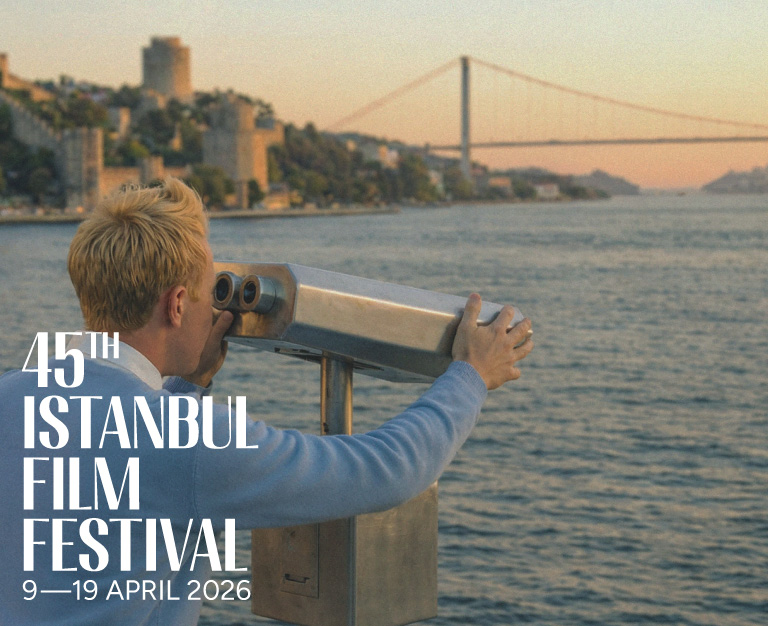
The program for the 45th Istanbul Film Festival organized by the Istanbul Foundation for Culture and Arts (İKSV), was announced.
In addition to three competitive sections—the Golden Tulip Competition, New Perspectives, and the Short Film Competition—the festival will feature six sections consisting of different thematic selections.
The “Neredesin Aşkım?” (“Where Are You, Love?”) section, dedicated to queer films, was not included in this year’s program either, despite statements made by the İKSV on social media following the censorship debates in 2025.
Filmmakers and cultural and artistic workers, who characterized this decision as “censorship,” expressed their outrage toward the İKSV and the festival management. The Istanbul Pride Week Committee has once again called for a boycott of the Istanbul Film Festival this year.
What happenned last year?
The decision to exclude the “Where Are You, Love?” section -which has been part of the festival since 2014 and showcases queer films- from the last year’s festival, had led to criticism from the LGBTQ+ community (such as, Pembe Hayat KuirFest) and certain artists, leading to calls for a boycott of the festival. Following the boycott calls, the festival stated in an Instagram post last year that it planned to include “Where Are You, Love?” in the program again the following year; which
Many artists point out that this decision is a clear act of censorship and is linked to the ruling government’s policies of oppression.
Comments on social media also highlighted that the festival’s decision was part of the Erdoğan government’s policies targeting the LGTBQ+ community under its “Year of the Family” campaign in Turkey.
Archeological excavations at the ancient city of Syedra in Antalya uncover a mosaic figure, with the inscription “Haters gonna hate”.
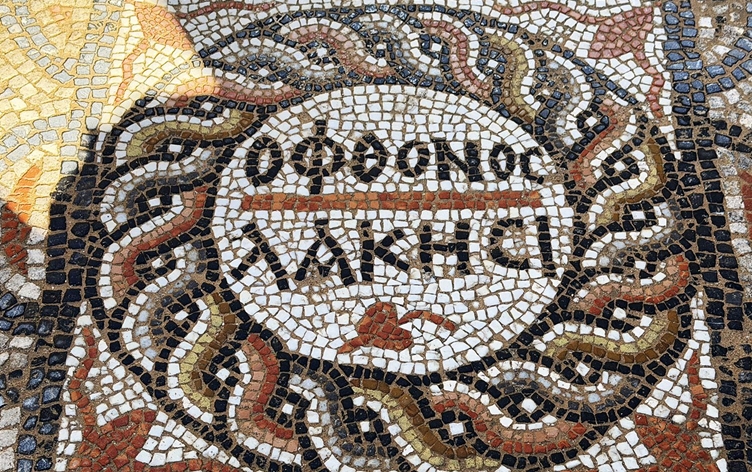
During archaeological excavations at the ancient city of Syedra in the Alanya district of Antalya, Turkey; a mosaic estimated approximately 15 square meters -believed to have been created between the 4th and 6th centuries A.D. and with the inscription “let the jealous burst”, roughly equivalent to “haters gonna hate”- had been discovered.
Excavations are being carried out under the Culture and Tourism Ministry’s Heritage for the Future Project, led by Associate Professor Ertuğ Ergürer.
Excavation Director Assoc. Prof. Dr. Ertuğ Ergürer told an Anadolu Agency (AA) journalist that they had made an important discovery during excavation work being carried out in one of the city’s largest residential structures, which dates back approximately 3,000 years.
The ancient city of Syedra, whose history dates back to the 9th century B.C., is located in the Alanya district of Antalya Province, Turkey, and is known to have been home to numerous empires.
Turkish phrase “Let the jealous burst” is on the mosaic
Noting that what makes the approximately 15-square-meter mosaic unique is the presence of two writings on it, “In the central part of the mosaic, there is an expression meaning something like ‘use it well.’ In the entrance door section of the room, there is a second inscription within a circular border. This inscription also has a somewhat metaphorical meaning. The first word in the inscription means ‘jealousy’ or ‘the jealous one,’ while the second word means ‘cracking’ or ‘bursting.’ It corresponds to the expression ‘may the jealous one burst,’ which we still use (in Turkish) today. Coming across such an expression in the entrance section of a structure built approximately 1,500 years ago was a huge surprise for us.” said Ergürer.
Ergürer explained the AA, that the northern section of the triple building has entrances to the second and third floors, “The structure, which has numerous rooms and a central courtyard in the middle, was in use from the 2nd to the 7th century A.D. During this period, the owners changed, new spaces were added, additional floors were built, and some sections were closed off. In later periods, the entrance area and the upper part of this mosaic-covered section were enclosed. The fact that the mosaic was covered has ensured that it has survived to the present day in such good condition,” he said.
Ergürer noted that they believe the construction to be one of Syedra’s significant residential structures and that excavation and restoration work will continue at certain points of the structure.
The archaeologists aim to uncover new evidence regarding daily life during the late Roman Empire and the early Byzantine period.
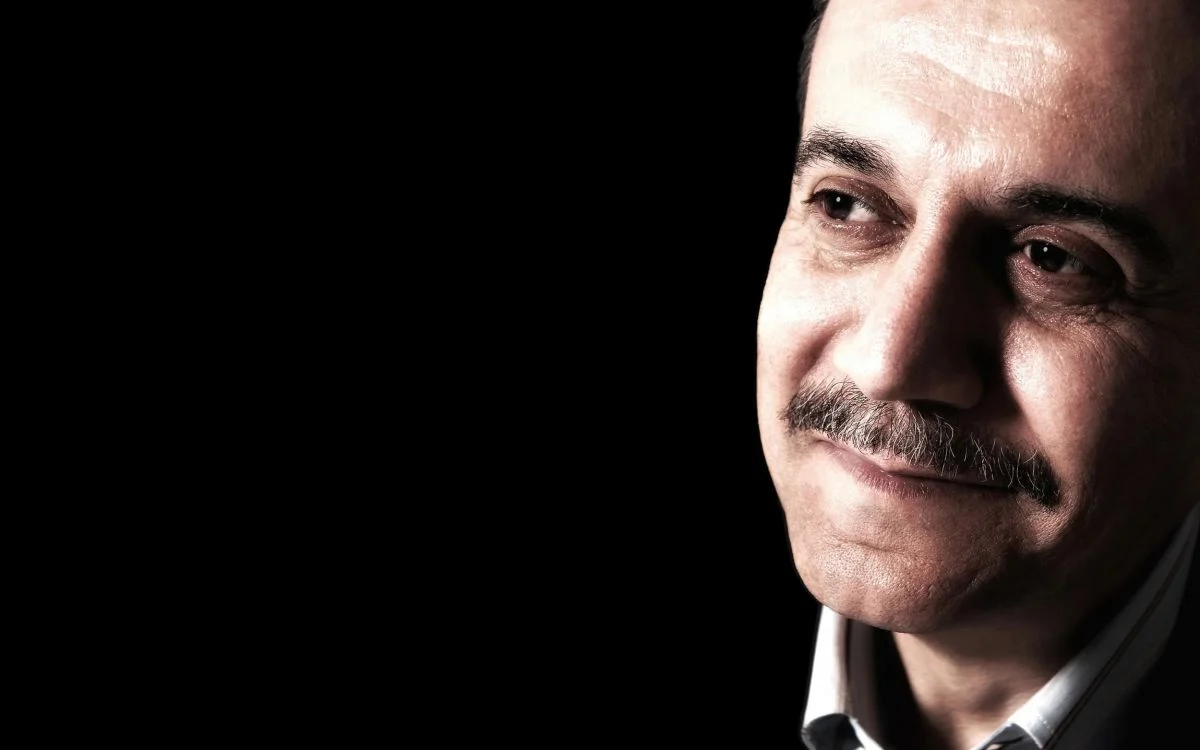
Ahmad Kaabour, the Lebanese artist whose music left an impressure on political and cultural memory amid the shadow of the Lebanese Civil War, has passed away.
Ahmad Kaabour, the Lebanese musician, composer, and actor who set the “Ounadikom” (I call to you) of Palestinian poet Tawfiq Ziad to music, passed away as his family announced on Thursday.
Kaabour, whose father was “Mahmoud Al Rashidi”, one of the first violin players in Lebanon, was born in Beirut in 1955. In the atmosphere of during the outbreak of Lebanese Civil War in 1975, in a city like Beirut that was constantly under attack, he composed and sang his first song “Ounadikom”, poem of the Palestinian poet Tawfiq Ziad.
In 1978, he enrolled in the Theater Department at the Institute of Fine Arts at the University of Lebanon and graduated with a degree in theater.
Kaabour established people’s committees to support his fellow citizens during the Civil War. In this atmosphere of resistance that he gifted the world with his most enduring legacy, “Ounadikom”. While songs like “They Called Me a Refugee”, “Pulse of the West Bank”, and “O Lovers of the Land, Come Forth” gave voice to the resistance of victims of war and displacement.
Throughout his career, Kaabour produced works dedicated to Palestine and the Palestinian cause.
Musical and theatral performances
Starting from 1975, Ahmad Kaabour revived hundreds of concerts and theatres in cultural, educational, and social committees. He is also known by his works of children’s theatre, such as “Lebanese Puppet Theater”. Kaabour also stood out in his acting career, portraying Wadih Haddad, one of the leaders of the Popular Front for the Liberation of Palestine (PFLP), in the film “Carlos”.
According to the information on his website, he performed musical shows in many Lebanese and international festivals, including the Beiteddine Festival, Anjar, Beirut. He also took performances on programs like Future TV.
He also performed concerts lately, titled “Peace to the Children of Gaza” at Beirut Arab University in 2023 and “Gaza’s Sounds of Resistance” at the Al Balad Theater in 2025.
His works; included the themes of resistance, Palestinian tragedy, forced displacement, war, exile, identity, and loss, still carry the mourning and resistance across generations.