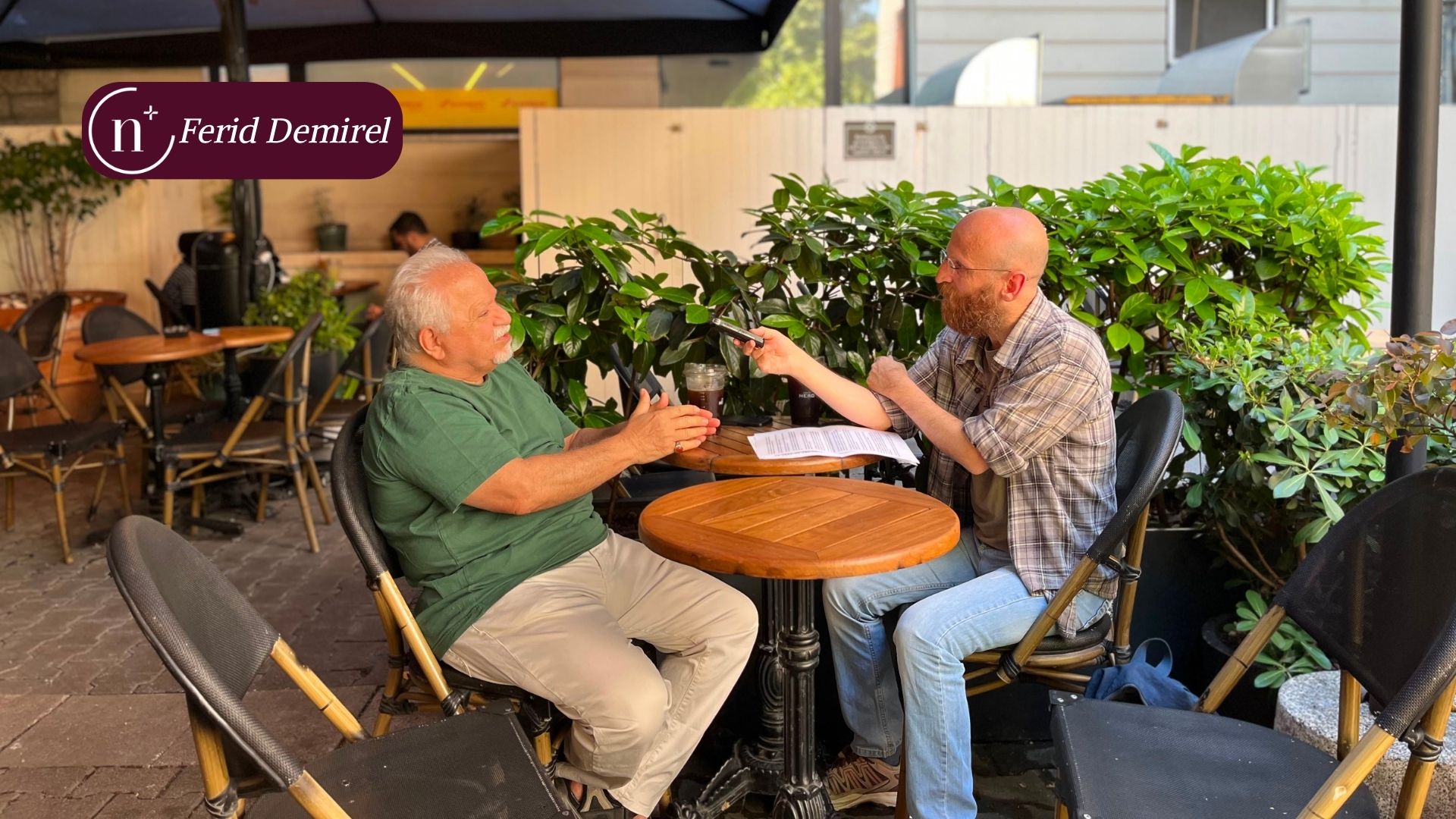
Eren Baskın of the Hakkari branch of the Human Rights Association (İHD) and Ergün Canan, head of the Hakkari Bar Association, say decades of deaths caused by landmines, unexploded ordnance and armored vehicles in Turkey’s Kurdish-majority provinces stem from a pattern of rights violations and unresolved trauma. “Responsibility does not lie with the citizen — it lies with the state,” Canan said.
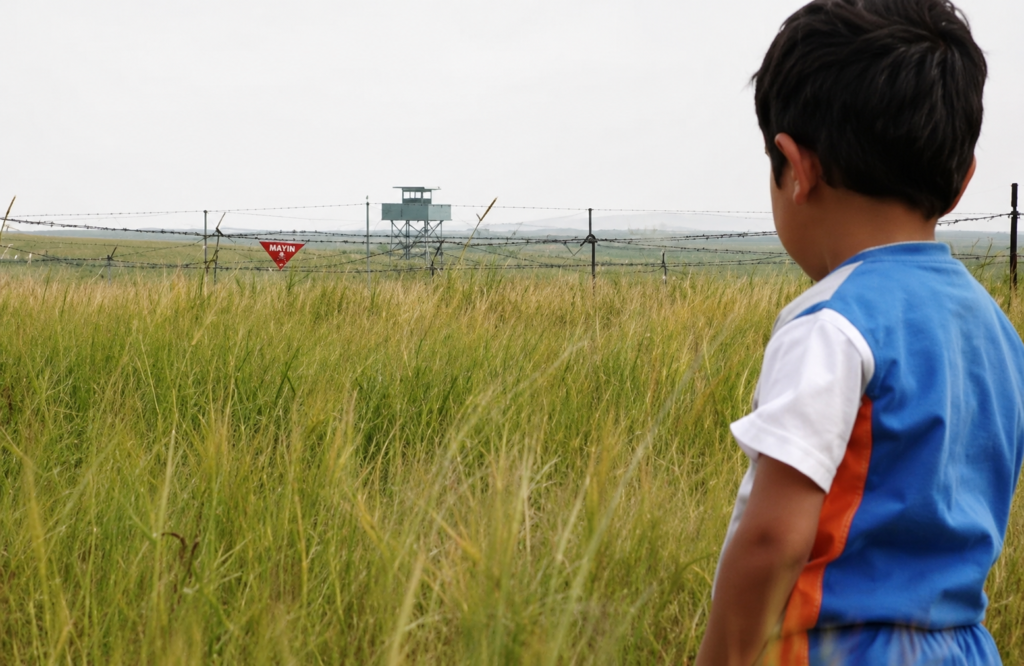
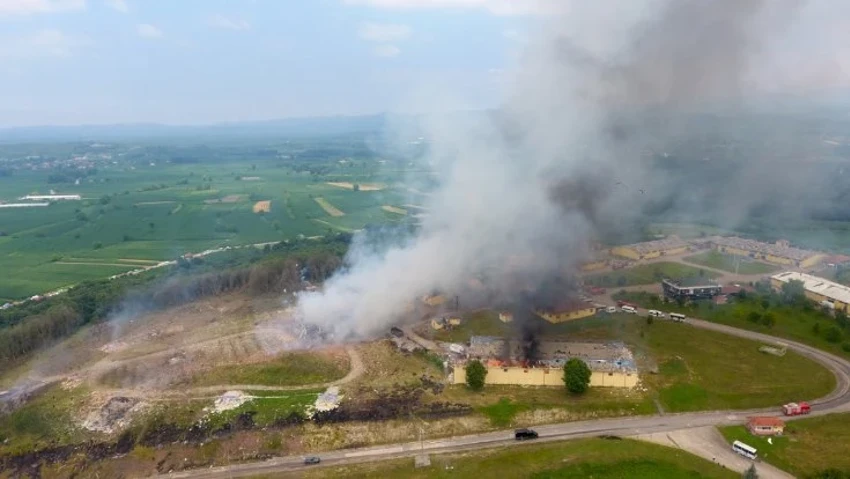
This year, on May 9, 2026, 17-year-old Muhammed Aykut was wounded when he stepped on a landmine while herding animals in Hakkari; several of his animals were killed. Two years earlier, on July 24, shepherd Bedrettin Düzen, also in Hakkari, was killed in a landmine explosion while grazing his sheep. These incidents have renewed scrutiny of deaths and injuries from mines and explosives across Kurdish provinces — and of how investigations into such cases have been handled.
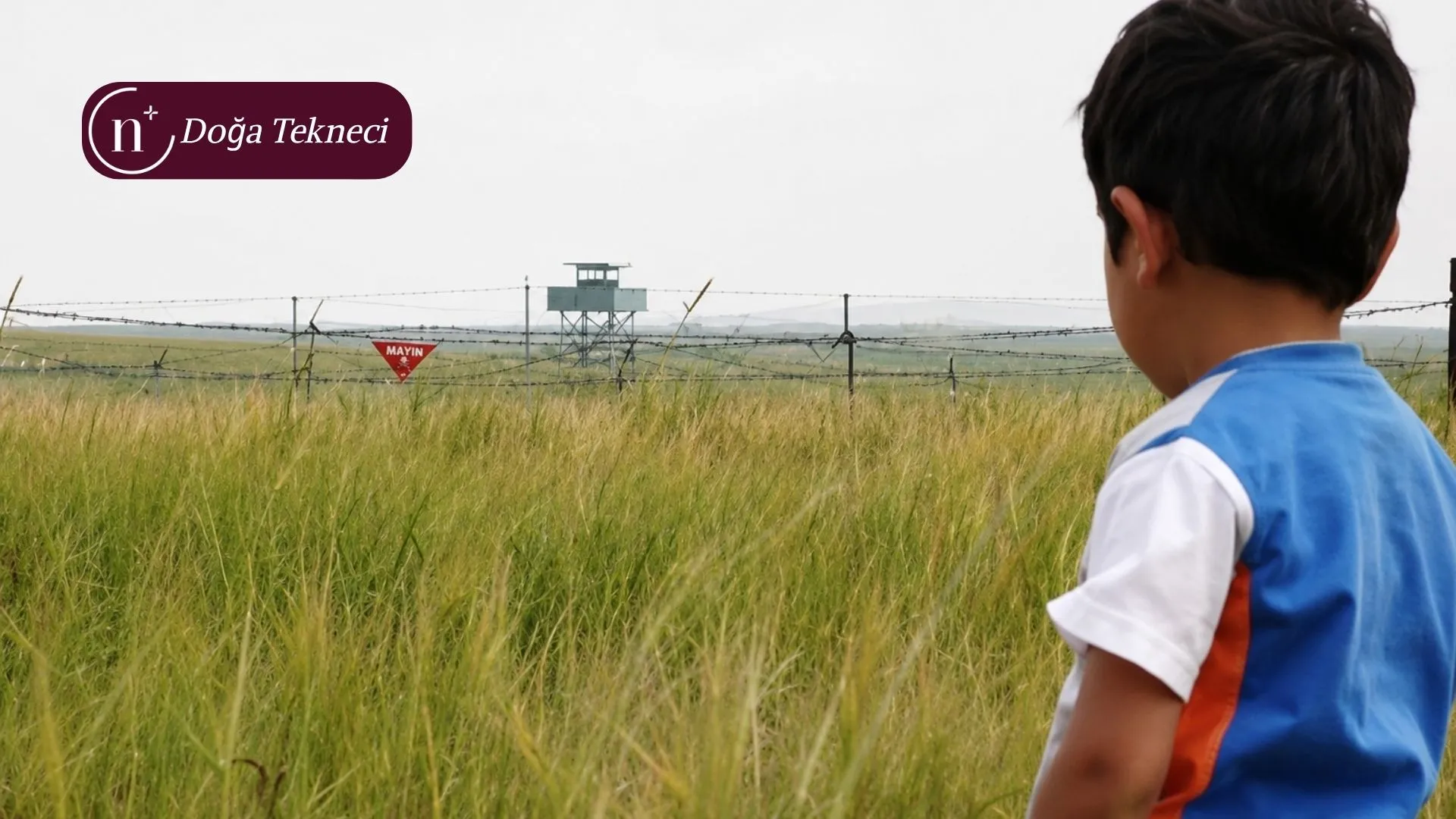
Thousands of landmines and pieces of unexploded ordnance remain buried in areas used by civilians across most Kurdish provinces in Turkey. According to the Turkey Without Mines Initiative, roughly one million mines remain underground nationwide; the Ministry of National Defense’s 2021 figures put the number at closer to 850,000, spread across nearly 3,800 mined areas.
A report by the Diyarbakır Bar Association covering 2011–2021, titled “Child Rights Violations Caused by Armored Vehicles, Landmines and War/Conflict Remnants,” found that children bear the brunt of these hazards. Over that ten-year period, 45 children were killed and 135 injured by war ordnance or landmine explosions. A further 22 children were killed and 27 injured by armored vehicles. İHD’s annual human rights violation reports show the pattern persisting: between 2020 and 2024, at least 23 people — including eight children — were injured, and eight people, including three children, were killed in ordnance and landmine explosions. Diyarbakır, Şırnak, Hakkari and Mardin recorded the highest concentrations of deaths and injuries.
Mine and Ammunition Explosions in Kurdish Cities
Based on data from the Human Rights Association’s annual Human Rights Violations Reports (2020–2024)
Total HRA data between 2020–2024
Number of dead and injured by year
Caused by mines and abandoned explosives/munitions
Deaths and injuries from armored vehicles, war ordnance and landmines have declined compared with the 2000s, following an end to mass mine-laying and large-scale clearance along the border. But the underlying problem has persisted for decades in Kurdish provinces, largely because that clearance work has focused on the borders with Armenia and Iran. According to the European External Action Service, a total of 50,000 landmines were cleared from Turkey’s borders with Armenia and Iran between 2021 and 2023. The greater risk lies inland: the pastures of villages emptied in the 1990s and later reopened to returning residents, along with the areas around former military outposts and bases, remain uncleared. Under the Ottawa Convention, which Turkey joined in 2003, the deadline for mine clearance has been repeatedly postponed — the most recent extension request was valid through the end of 2025. Throughout this period, those responsible for deaths and injuries have largely gone unpunished, with no effective investigations carried out. Head of Hakkari Bar Association Ergün Canan and İHD Hakkari’s Eren Baskın assessed the legal and political landscape behind these deaths.
The Ottawa Convention
The Anti-Personnel Mine Ban Convention (the Ottawa Convention) is an international treaty banning the use, production, stockpiling and transfer of anti-personnel mines and requiring their destruction. Turkey joined the treaty in 2003, and it entered into force for Turkey on March 1, 2004. Anti-personnel mines were originally laid by Turkey along its borders with Armenia, Iran and Iraq, as well as along the Syrian border between 1956 and 1959, to prevent illegal border crossings. Mine-laying later expanded into Turkey’s interior with the outbreak of conflict in 1984. In July 2006, the Kurdistan Workers’ Party (PKK) signed the Geneva Call deed of commitment, declaring an end to its own use of landmines.
In 2013, Turkey’s National Defense Minister announced a request to extend the Ottawa Convention deadline for clearing landmines — originally set for March 1, 2014 — to 2022. At the Mine Ban Treaty’s intersessional meetings held June 22–24, Turkey requested a further extension of three years and nine months, covering March 1, 2022, through December 31, 2025, and indicated it would likely need yet another extension after that period.
According to the International Campaign to Ban Landmines’ (ICBL) “Landmine Monitor 2023,” Ottawa Convention states parties Bosnia and Herzegovina, Cambodia, Croatia, Ethiopia, Iraq, Turkey and Ukraine are among the countries with the largest numbers of landmines still in the ground.
“Responsibility cannot be placed on the citizen”
Head of Hakkari Bar Association Ergün Canan recalled that Bedrettin Düzen, who died in Hakkari, and Muhammed Aykut, who was severely wounded, both stepped on mines while grazing sheep. Noting that unexploded ordnance left over from past conflict is present throughout the region, Canan said: “Responsibility here cannot be placed on the citizen. Legally, primary responsibility here belongs, of course, to the state.”
Canan said that in a province that has endured the heavy toll of decades of conflict, it is the state’s obligation to protect civilian life, clear high-risk areas, secure them, and carry out effective investigations. He stressed that the state fulfilling these obligations is a matter of life and death:
“It is simply unacceptable for children or adults to encounter mines or ordnance in pastures, on village roads, in rural areas, or near residential zones. These areas need to be cleared as soon as possible. Otherwise, we may well see similar incidents again. Agriculture and animal husbandry are people’s only source of livelihood here. They have to take their animals out to graze on those pastures. When there are no safe areas, people are forced to use those areas anyway. There is a security failure here as well. Unfortunately, the state has not carried out any real work on this to date — at least not in the Hakkari region.”
“A truth and reconciliation commission should be established”
Canan said that during past peace processes, truth-seeking, giving voice to victims, and the prospect of resolution were discussed more openly, whereas during periods of conflict a security-first approach has tended to dominate, pushing families’ pursuit of justice to the sidelines. He said that for the current peace process to succeed, confronting the truth must come first:
“A truth and reconciliation commission needs to be established as soon as possible. These investigations — or at least these incidents — need a process for more effective investigation to be carried out. There is a social peace process under way that all of us support. In particular, these mined areas absolutely need to be cleared as soon as possible.”
Cases involving ordnance and mine explosions, or deaths under armored vehicles, generally end in impunity. Canan said reversing this requires ending the practice of impunity, transparently mapping mined and high-risk areas, clearing those areas while informing affected families, and conducting independent, effective investigations. Absent these steps, Canan warned, “We will keep losing our children — in the mountains, in rural areas, or within city limits.”
Canan noted that under the Ottawa Convention, the Turkish state is obligated to clear mined areas, that this obligation has been extended to 2025, and that the repeated postponement of this obligation shows that sufficient, concrete progress has not been made on the ground. He said that while Turkey’s Constitutional Court and the European Court of Human Rights have issued rulings on the matter, Turkish courts have failed to comply with them despite the treaty. “We believe that once this process finally concludes, concrete steps will follow within the Turkish state, and particularly within the Grand National Assembly of Turkey,” Canan said.
“These files are treated as unsolved”
Canan said Muhammed Aykut’s case remains ongoing and that they continue to follow it, noting that the case is still effectively being treated as an unsolved matter with an unidentified perpetrator:
“The court has conducted no investigation into who placed that ordnance there. Unfortunately, no effective investigation or prosecution is being carried out. When that doesn’t happen, these cases either remain permanently under search status or are recorded as having an unidentified perpetrator. The emotional toll on families is enormous as well, victims may be left disabled for life. What families want from the state and from the Turkish judiciary is this: for the truth to come out, for those responsible to be identified, and for them to be tried before the courts.”
Canan said that mined or unexploded-ordnance-contaminated areas must be cleared before they can be reopened to civilian use, and that as long as they remain uncleared, similar incidents will continue to occur.
Child Rights Violations Caused by Landmines and Armored Vehicles
Diyarbakır Bar Association, “Child Rights Violations Caused by Armored Vehicles, Landmines and War/Conflict Remnants” report (2011–2021)
Child deaths and injuries, 2011–2021
Source: Diyarbakır Bar Association Children’s Rights Center, “Child Rights Violations Caused by Armored Vehicles, Landmines and War/Conflict Remnants” report, 2011–2021 period. Graphic prepared for niha özel haber.
“If ordnance exploded, it is administrative negligence”
For Eren Baskın of İHD’s Hakkari branch, ordnance explosions in Hakkari, Diyarbakır, Şırnak and Mardin are not merely a legal term or a line of data in a report. Baskın put it this way:
“For us, this issue means children losing their hands, their feet, their lives — while grazing sheep on pastures, while playing on paths just outside their villages. It is Ceylan Önkol. It is Nihat Kazanhan. It is our children who died crushed under an armored vehicle that brought down the wall of their home.”
Baskın said that when they arrive at the scene after receiving news of an explosion, the first thing they encounter is the gulf between the theory of the law and the state’s practice on the ground:
“Under international treaties and Article 125 of the Constitution, the state is obligated to protect the right to life of every citizen within its sovereign territory. If ordnance has exploded, that means there has been administrative negligence — a ‘service fault.’ The administration failed to close off the area, failed to post warning signs, left the ordnance unattended.”
Baskın said that in practice in Hakkari, administrative courts and prosecutors’ offices tend to shift responsibility onto the victim. He said children are effectively declared at fault on grounds such as “they entered a restricted military zone,” “there was fault on their own part,” or “parental supervision was neglected,” adding: “A child cannot be expected to know the boundary of a restricted military zone — but the state is obligated not to leave that ordnance there, and to seal off that area so that a child cannot enter it.”
“The right to life is not equal”
Describing landmine- and explosive-related death and injury case files not as files with an “unidentified perpetrator” but as files whose perpetrator is being protected, Baskın said impunity is experienced in Kurdish cities as an instrument of injustice, one that has produced widespread rights violations and trauma across the region:
“When a perpetrator is not punished, the violation does not end for the family — it continues, and grows. No effective investigation is carried out after an explosion. The crime-scene examination is either delayed or the evidence is tainted. When prosecutors want to open an investigation into suspect security personnel, the local administrative authorities [the governor’s or district governor’s office] refuse to grant permission. Files sit on court shelves for years until they run out the statute of limitations. Asking a mother who has lost her child, in the courtroom, ‘What was the child doing there?’ inflicts psychological violence on that family as severe as the explosion itself. Impunity sends an implicit message to the people living on this land: ‘Your right to life is not protected equally with that of a citizen in the west.’ This is the gravest violation, one that severs the bond of social peace.”
“There is pressure to drop the case”
Baskın said İHD has repeatedly documented how the justice mechanism shifts direction according to the political winds in Ankara. He recalled that during periods of escalating security policy, the judiciary falls entirely into a reflex of protecting security forces, and that cases are moved, on “security” grounds, hundreds of kilometers away from victims’ families — to places such as Ankara, İzmir or Karabük. “It is physically and financially impossible for a poor villager in Hakkari to travel to a western province every month to follow their child’s case. This is a deliberate strategy to let the case go unpursued,” he said.
“During periods without active conflict, the doors of the courts open somewhat more for us,” Baskın said, noting that in those periods prosecutors can operate more freely and that civil society organizations are able to visit the scene and prepare independent investigation reports. He added: “But unfortunately, even during these periods, no fundamental or lasting structural steps have been taken toward confronting the perpetrators of the past — peace processes have never gone beyond a temporary breathing space.”
Recalling the Ottawa Convention, to which Turkey is a signatory, Baskın said that reviewing the data and visiting border villages made clear that Turkey remains far behind its commitments. According to Baskın, some concrete steps — funded internationally through EU- and UNDP-backed projects — have been taken along the Iran and Armenia border lines, and a significant number of mines have been cleared. But that is precisely where the real problem begins:
“In the interior of Hakkari and Şırnak — in the pastures of villages emptied in the 1990s and now reopened to return, and around former military outposts and base areas — no clearance is being carried out. Maps are not being shared with civilian institutions. Obligations keep being postponed through repeated extension requests.”
“Risk education should be given in the mother tongue”
Baskın laid out İHD’s demands for preventing further deaths and injuries:
“The National Mine Action Center (MAFAM) must cease to be a military structure and must be opened to civilian, transparent oversight that includes us — human rights organizations — as well as local bar associations and medical chambers. Leaving ordnance in ways that lead to the death or maiming of children must be treated as a grave violation of the right to life, and the statute of limitations must be abolished entirely in these cases. If mine-risk education is to be given to children in the villages of Hakkari, Yüksekova and Çukurca, it absolutely must be given in the language in which those children feel safest — their mother tongue. A child fully understanding the warning means that child staying alive.”