The trans women detained on the night of September 26 were released in the morning following police processing.
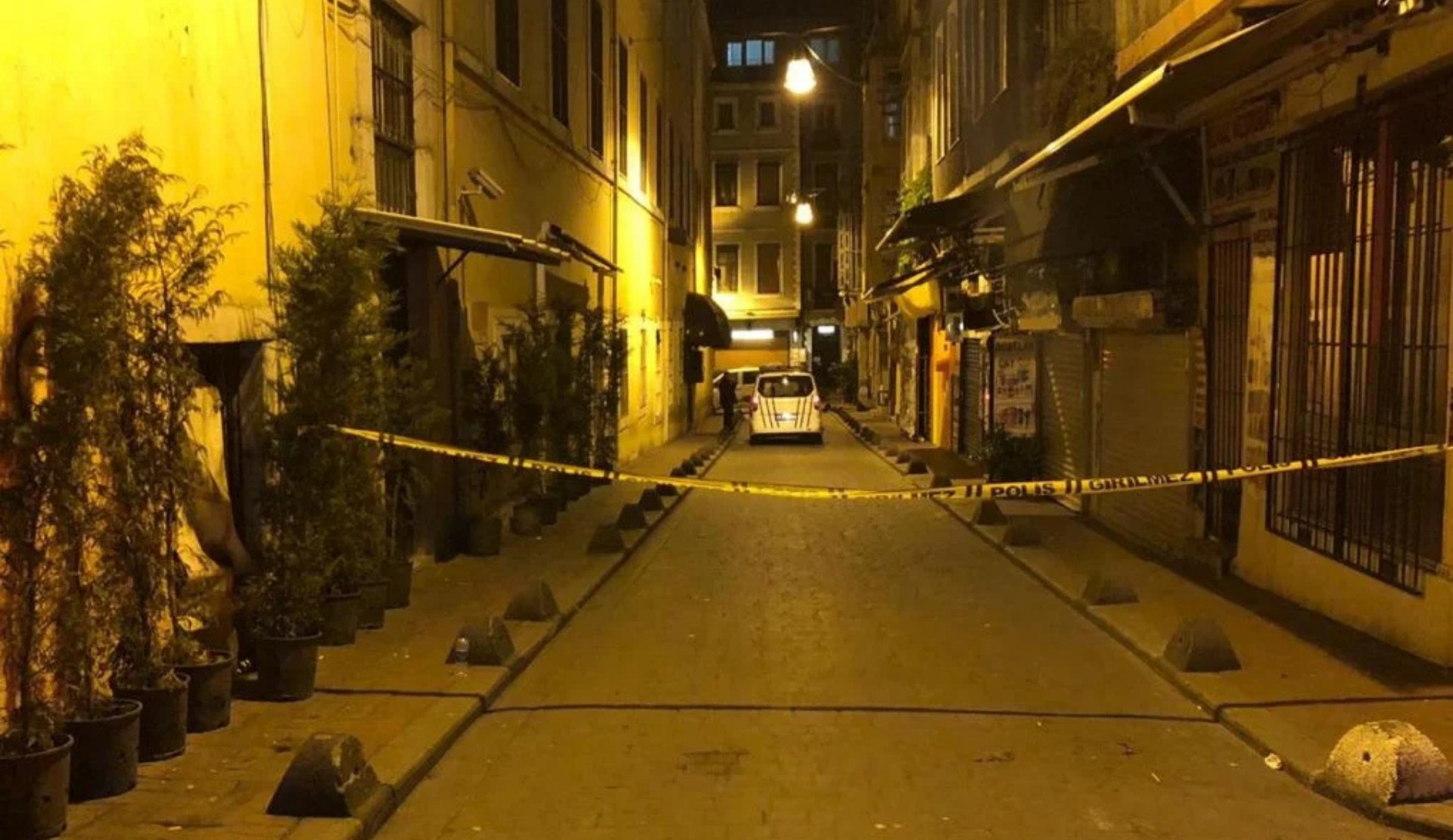
A police operation was conducted late last night (September 26) on the homes of trans women located on Bayram Street in Beyoğlu, Istanbul.
Twelve trans women were detained as a result of the operation. Kaos GL announced that the detained trans women were released following police processing.
The “We Want Freedom” Campaign Group condemned the raids, noting that lawyers were present with the trans women during the detention process.
“Trans kadınların yaşamlarına el uzatmayı bırakın!”
The campaign group’s statement is as follows:
“The government’s repression and persecution of LGBTI+ individuals continue. We have received reports that police raided the homes of trans women on Bayram Street in Istanbul and detained 12 trans women. Lawyers were present with their trans women clients during the detention process.
This wave of operations—launched under the banner of ‘My Family is Safe’—far from protecting those trapped in a cycle of poverty, violence, and insecurity, deeply impacts the homes, living spaces, friends, and loved ones of trans women.
The detentions and operations must cease immediately. We issue this warning: Stop encroaching upon the lives, homes, and streets of trans women under the pretext of morality!”
What happened?
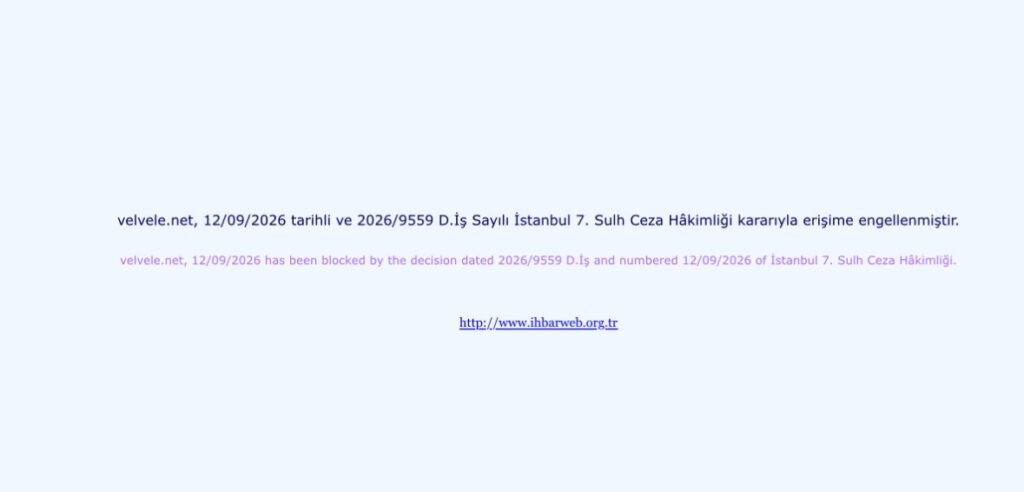
By the decision of the Istanbul 7th Criminal Judgeship of Peace (Decision No. 2026/9559), access to the websites and social media accounts of numerous LGBTI+ organizations, media outlets, student groups, rights defenders, and activists was blocked on the night of September 12–13. That same night, raids were conducted on associations, homes, and venues in 15 provinces, most notably Istanbul, Ankara, Izmir, Mersin, and Kuşadası.
Minister of Justice Akın Gürlek described these operations as the “My Family is Safe” operations. Gürlek added that these operations were carried out within the scope of the “Family and Population Decade.” As a result of the operations, many individuals were detained, and 82 people were arrested.
Following the operations conducted on September 12, 2026, which targeted nine civil society organizations, including two associations working in the field of HIV, and resulted in the arrest of 82 people, the “We Want Freedom” Campaign Group announced its formation with the slogan: “Everywhere is a dungeon; we want freedom!”
LGBTI+ individuals detained as part of the “My Family is Safe” operations were subjected to various rights violations during their detention and imprisonment. Lawyer Furkan Yurt reported that terms open to interpretation, such as “public morality” and “sense of decency and modesty”, were used directly as legal grounds in the investigation files, and that lawyers were prevented from accessing their clients for an extended period due to confidentiality orders imposed on the cases.
Photo: Serra Akcan / csgorselarsiv.org
The Kaos GL Association has announced that their friends, who were sent to Sincan Prison as part of the “My Family is Safe” (Ailem Güvende) operations, which began with access restrictions and home raids on September 13, have been subjected to various rights violations.
The rights violations documented by Kaos GL include: forced drug testing, physical violence, and forced hair cutting during detention; the imposition of strip searches in prison; insults and threats targeting sexual orientation and gender identity; intentional isolation and the forced separation of the individuals from one another; denial of access to essential medication, clean water, hygiene products, and clean clothing; and threats to personal safety within the prison.
On September 16, 20 people (at least nine of whom were members of LGBTI+ associations) were arrested out of the 35 individuals detained in Istanbul as part of the “My Family is Safe” operations. In its request for arrest, the prosecutor’s office cited the “best interests of the child,” the “Turkish family structure,” and “public morality” as grounds.
According to a press statement issued yesterday (September 20) by the Istanbul Bar Association’s Human Rights, Lawyers’ Rights, and Women’s Rights Centers, simultaneous operations were carried out against numerous associations and venues on the night of September 12–13; digital devices belonging to associations and individuals were confiscated, and law enforcement officers ransacked certain association offices and private homes. Noting that charges such as “establishing an organization for the purpose of committing a crime,” “drug-related offenses,” “obscenity,” “prostitution,” and “violating the Law on Associations” were leveled in the investigations, the bar association also highlighted Justice Minister Gürlek’s statement that funds received from abroad by certain associations were being examined by Financial Crimes Investigation Board (MASAK).
Attorney Yurt: Concepts open to interpretation are being used as grounds
According to Lawyer Furkan Yurt from the Social Policy, Gender Identity, and Sexual Orientation Studies Association (SPoD), the charges brought in these investigation files are primarily based on allegations of “violating the Law on Associations,” “inciting or mediating prostitution,” “using narcotic substances,” and “establishing an organization for the purpose of committing crimes.”
Attorney Furkan Yurt
Yurt stated that the documents referring to the case for arrest contained no concrete evidence regarding charges other than the alleged violation of the Law on Associations; consequently, the proceedings were effectively being conducted solely on the basis of Article 32/p of the Law on Associations. Explaining that the prosecution and judicial documents cited Articles 13 and 33 of the Constitution to argue that the freedom to form associations could be restricted on grounds such as “public morality,” “public order,” and “prevention of crime,” Yurt further noted that the documents included allegations, based on Article 89 of the Turkish Civil Code, that the association’s purpose had become “contrary to law or morality.”
Yurt also pointed out that, particularly in arrest requests, highly open-ended and broad concepts, such as “public morality,” “sense of decency and modesty,” “society’s moral values,” and the “weakening of the Turkish family structure”, were directly employed as legal grounds by referencing Article 41 of the Constitution, which concerns the “Protection of the Family and Children’s Rights.”
“A confidentiality order has been issued for the case file“
Yurt described the difficulties encountered regarding access to legal counsel during the detention and arrest phases of the “My Family is Safe” operation:
“Following the initial detention procedures, a confidentiality order was issued for the case file; indeed, this order is explicitly cited in the defense statements submitted by the lawyers. Consequently, we were unable to meet with our clients for a long period and were very late in even learning their whereabouts; naturally, access to legal counsel was impossible during this time. Furthermore, because we received much of the information late or incompletely, we were unable to conduct legal consultations at the necessary times. In particular, the process of identifying which prison they had been transferred to and visiting them became a complete ordeal. Currently, our colleagues have been taken to Silivri Prison, and our ability to access a facility located so far outside the city is severely limited.”
Noting that the Kaos GL Association learned of the rights violations through reports from individuals held at Ankara Sincan Prison, Yurt shared the following details regarding the situation in Istanbul:
“As reflected in the interrogation records, some of the suspects personally declared to the court that they had been in custody for four days and were struggling significantly to access medication or medical examinations for serious health issues, such as heart disease. Although the process unfolded somewhat more favorably in other respects, there was a long delay in providing water during the detention period, which approached 72 hours, and their commissary needs have still not been met. It is fair to say that our colleagues were severely underserved regarding nutrition, as their needs for food and other basic provisions were not met immediately upon their admission to Metris Prison.”
“Doctors are acting in violation of the Istanbul Protocol”
Pointing out that such violations ought to be identified during both pre-detention and post-detention medical examinations, Yurt stated, “Unfortunately, because doctors have adopted attitudes contrary to the Istanbul Protocol, we do not know the extent to which these violations have been detected. Moreover, the confidentiality order on the case file prevents us from pursuing legal action regarding any violations that may have been identified. To date, we have utilized the necessary legal and administrative recourse mechanisms regarding rights violations occurring specifically in Istanbul.”
Istanbul Bar Association: Rights defenders criminalized on vague grounds
The Istanbul Bar Association’s Centers for Lawyers’ Rights, Human Rights, and Women’s Rights shared a report with the public yesterday (September 20) at a press conference regarding the operations conducted against LGBTI+ organizations, activists, and journalists, as well as the detentions that took place during protests, between September 12 and 16. The statement outlined the details regarding the 107 individuals detained during a planned press conference in front of the Çağlayan Courthouse, held to protest the “My Family is Safe” operations, as follows:
“Actions were taken against six civil society organizations in Istanbul, and executives and members of these organizations were detained. The Istanbul Chief Public Prosecutor’s Office linked the investigation to grounds such as the ‘best interests of the child,’ ‘protection of the family,’ and ‘shared moral values of society.’ It was reported that 35 people were detained and 20 arrested in Istanbul, and that six associations and ten businesses were included in the scope of the operation. While digital devices belonging to the associations and individuals were seized, access bans constituted the digital component of the operation.
Through access ban decisions issued almost daily since September 12, 2026, numerous websites and social media accounts belonging to LGBTI+ organizations, associations, activists, and human rights defenders have been blocked. In addition to the websites of 11 LGBTI+ associations, 32 Twitter/X accounts and 419 other social media accounts were blocked, and access bans were requested for a further 107 accounts. The blocked accounts included those belonging to university LGBTI+ groups, rights organizations, media outlets, journalists, and institutions such as the Ankara Bar Association’s LGBTI+ Rights Center. The scope of these access bans indicates a large-scale intervention targeting the LGBTI+ movement’s spheres of organizing, communication, and expression.”
A confidentiality order was issued for the investigation files, preventing lawyers from accessing the case records. The statement noted that, contrary to this, the principle of the confidentiality of the investigation was disregarded and the contents of the case file were shared with the press, thereby violating individuals’ “right not to be stigmatized.”
The statement further included the following remarks:
“Attempts have been made to criminalize associations and human rights defenders based on abstract and vague grounds; furthermore, the issue of detention and judicial control measures being imposed on individuals, despite the absence of the conditions prescribed by law, has once again come to the fore, highlighting how the measure of detention in Turkey has ceased to be an exception.”
Human rights violations in police custody
Noting that seven of the 107 individuals detained in front of the Çağlayan Courthouse were lawyers affiliated with the Istanbul Bar Association, the center reported that detention proceedings against them continued in violation of the law, despite the lawyers pointing out this fact.
Based on information in the press release, drawing on accounts from eyewitnesses, observers, and defense counsel, the following rights violations were identified:
“The citizens who were detained were not given any announcements by law enforcement to disperse, contrary to national and international legislation, nor was a safe corridor created for them to disperse. In the preliminary interview conducted before the statements were taken, the detained citizens stated that they were directly surrounded by law enforcement, beaten within the circle, had their throats squeezed, and were handcuffed with their hands behind their backs.
A citizen who was put on a bus from the press conference area was severely slapped, had their head slammed against the window, was beaten, and subjected to insults by a police officer inside the bus.
One of the detained citizens had their arm bitten by the police, and another was subjected to such disproportionate police violence that her arm bone was dislocated from their shoulder socket, yet they were not taken to the hospital.
It has been reported to us that citizens whose right to a defense and effective legal assistance is obstructed are not provided with food or water until lawyers arrive at the police station.
Furthermore, regarding the lawyers, it was observed that defense counsel wishing to meet with their detained clients at the Istanbul Provincial Security Directorate were prevented from entering for approximately nine and a half hours, from 15:00 to 00:24; that at 00:24, entry was obstructed by requiring them to enter one by one; and that lawyers were subjected to ill-treatment personally, such as one lawyer being made to wait outside in the cold.
During this process, at all three police departments where detainees were being held, the delivery of outside food was blocked and food provision was delayed; it was stated that the authorities would supply the rations. Furthermore, the provision of dietary alternatives for vegan and vegetarian activists was obstructed by law enforcement.
Following interviews with clients, it was determined that all of the detained citizens were subjected to reverse handcuffing. Three interviewees at the Küçükçekmece Police Station stated that they remained in reverse handcuffs from 12:30 PM until 7:00 PM after being put on the bus,
The protesters, who were being held at the Istanbul Provincial Police Department’s Security Branch, stated that during the initial medical examination, the attending physician did not record the citizens’ claims of ill-treatment on the forensic examination form, that the use of reverse handcuffs continued even at the police station, and that it was only temporarily stopped when they went to the toilet,
Furthermore, they stated that although some of the detained citizens used prescription medication, and had informed law enforcement of this fact, their medications were not provided to them, and requests from female detainees for sanitary pads were not met.”
What happened?
By a decision of the Istanbul 7th Criminal Judgeship of Peace (Decision No. 2026/9559), access to the websites and social media accounts of numerous LGBTI+ organizations, media outlets, student groups, rights defenders, and activists was blocked on the night of September 12–13. That same night, raids were conducted on associations, homes, and venues in 15 provinces, most notably Istanbul, Ankara, Izmir, Mersin, and Kuşadası.
Justice Minister Akın Gürlek announced via his X account that judicial proceedings had been initiated against 162 individuals, 9 associations, and 13 businesses as part of the operation. Gürlek added that these operations were carried out within the scope of the “Family and Population Decade.”
Following police raids on the Kaos GL association and the homes of its members, the association’s principal and substitute supervisory board members were detained. Police also searched the association’s office and seized digital data and materials.
In Izmir, 16 people were arrested, and in the Kuşadası district of Aydın, 5 people were arrested on charges of “obscenity” and “prostitution.”
As part of the operation targeting Kaos GL, conducted on charges of “obscenity” and “violation of the Law on Associations”, freelance journalist Tuğba Tekerek and seven principal members of the Kaos GL Association’s executive and supervisory boards were arrested.
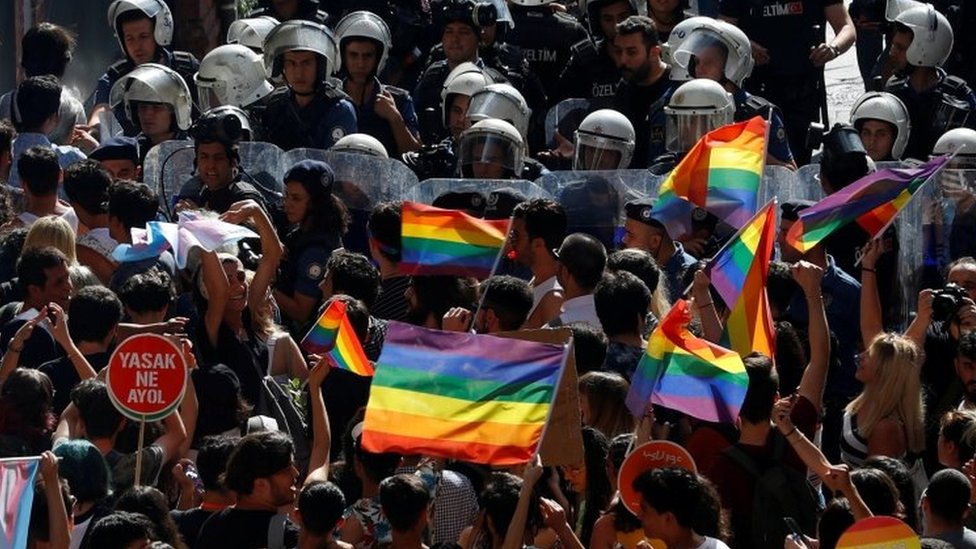
In Istanbul, the “Istanbul Labor, Peace, and Democracy Forces” and LGBTI+ individuals gathered in front of the Istanbul Courthouse in Çağlayan to protest the operations. A total of 106 people, including BirGün reporter Sarya Toprak, journalist Sener Azak from the German public broadcaster ARD, and several lawyers, were detained following police intervention. Operations were conducted against a total of 54 locations, including 10 businesses and 6 LGBTI+ associations, under the coordination of the Istanbul Chief Public Prosecutor’s Office. Of the 35 suspects referred to the courthouse, 20 were arrested and 14 were placed under judicial control, while one individual was released following their statement to the prosecutor. Arrest warrants were issued for 13 individuals reported to be abroad.
Politicians, legal professionals, political parties, and rights advocates have reacted to the operations targeting LGBTI+ associations, venues, and activists. Statements issued asserted that the operation was political and that the existence of the LGBTI+ community was being targeted.
Last night, police conducted simultaneous operations targeting LGBTI+ associations, venues, and activists under the name “My Family is Safe.”
In a post on his social media account, Justice Minister Akın Gürlek announced that the operations were centered in five provinces and covered a total of fifteen provinces, and that legal proceedings were initiated against 162 individuals, nine associations, and thirteen businesses.
Politicians, legal professionals, political parties, and rights advocates reacted to the operations targeting LGBTI+ associations, activists, and venues.
DEM Women’s Assembly: We will never remain silent in the face of attacks!
The Women’s Assembly of Peoples’ Equality and Democracy Party (DEM Party) stated, “We do not accept the attacks—involving detentions, searches, seizures, and access blocks—targeting LGBTI+ associations, rights defenders, and digital media outlets.”
The statement continued as follows:
“This operation, dubbed ‘My Family is Safe,’ is—as the name implies—an operation aimed at subjugating society. It is clear evidence of the persistent pursuit of policies rooted in monism and sexism.
Every day, women are subjected to violence and murdered within families that are labeled ‘safe.’ Diverse sexual identities do not constitute a security threat to this country, to families, or to society.
The real security issue is the violence, impunity, and discrimination that threaten the lives of women and LGBTI+ individuals.
You cannot keep society safe by silencing human rights defenders, stoking hate crimes, blocking broadcasts, and targeting the freedom of association.
Justice must be for everyone, not just for a single individual or group. The duty of the Ministry of Justice is not to suppress human rights defenders, journalists, LGBTI+ individuals, and democratic organizations, but to safeguard the rights and freedoms of all.
Societal security is achieved not through repression and bans, but by guaranteeing equality, freedom, justice, and the right to life.
As advocates of a shared and equal life together, we will never remain silent in the face of attacks against LGBTI+ individuals!
Those detained must be released immediately!
Justice for all, freedom for all, an equal life for all!”
LGBTİ+ derneklerini, hak savunucularını ve dijital yayın mecralarını hedef alan gözaltı, arama, el koyma ve erişim engelleme saldırılarını kabul etmiyoruz.
“Ailem Güvende” isminin verildiği bu operasyon, adından da anlaşılacağı üzere toplumu tahakküm altına alma operasyonudur.… pic.twitter.com/mvey2Y4XUu
DEM Party MPs Saki and Konukçu issued statements on their social media accounts, reacting to the state’s “policy of impunity.”
In a post on X, DEM Party Istanbul MP Özgül Saki said, “You attack people and the spaces where they show solidarity using fabricated charges.”
Stating that the common denominator among the associations and individuals targeted is their opposition to the “familialist, moralistic, and hate-generating policies” imposed by the government, Saki remarked that, under the guise of “protecting the family,” the government seeks to confine society to a single way of life, target LGBTI+ individuals, and criminalize those fighting for their rights.
LGBTİ+ derneklerine ve aktivistlerine yönelik bu operasyonları kabul etmiyoruz.
DEM Party Istanbul MP Kezban Konukçu also stated that the government, under the guise of “protecting the family,” paves the way for the killing of women and LGBTI+ individuals and encourages this through policies of impunity.
She declared, “Despite hate, Long live life!”
Aileyi değil kadınları, LGBTİ+’ları koruyun!
“Aileyi koruyacağız” diye diye kadınların ve LGBTİ+’ların katledilmesinin önünü açtınız, cezasızlık politikaları ile teşvik ettiniz!
Uydurma suçlarla faşist iktidarınızı tahkim etme politikalarınızın farkındayız ve buna karşı her… https://t.co/wwtAFV0E6F
IHD: We will not yield to the September 12 mentality!
In a statement regarding the operations, the Central LGBTI+ Commission of the Human Rights Association (IHD) declared, “We will not yield to the September 12 mentality.”
Stating that the current situation is not a judicial investigation but rather a political operation—one that aims to eliminate LGBTI+ individuals and independent civil society while forcing society into a monolithic family model under the guise of “protecting the family and children”—the IHD emphasized this “continuity,” noting: “The state mindset of September 12—which shut down associations, banned publications, and demonized those who were different—is being perpetuated today under the name ‘My Family is Safe’ (Ailem Güvende).”
The association concluded: “We stand with LGBTI+ individuals, people living with HIV, and human rights defenders! We will not yield to the September 12 mentality!”
12 EYLÜL ZİHNİYETİNİN “AİLEM GÜVENDE” OPERASYONU: HAK ÖRGÜTLERİNE YÖNELİK SİYASİ TASFİYEYE SON VERİN!
12 Eylül askerî darbesinin yıl dönümünde LGBTİ+örgütlerinin, gazetecilerin ve hak savunucularının hesaplarına erişim engeli getirilmiş; aynı gece saat 01.00’den itibaren çok… pic.twitter.com/69VzgkKlAZ
New Party Izmir Deputy Gökçe Gökçen expressed her reaction with the following words:
“The targeting of LGBTI+ rights defenders amounts to both the penalization of identities and existence and the simultaneous implementation of two bills that failed to pass in parliament. The ‘agent of influence’ law did not pass, and the law against ‘promoting homosexuality’ (!) did not pass.”
“A cheap copy-and-paste example of hate campaigns devised and planned in other countries is being staged in our country, causing great harm to social peace.”
“The banning of a band you listen to, the targeting of an artist whose concert you plan to attend, your child being exposed to workplace fatalities by the ministry, the arrest of a politician you voted for, and the raids conducted on these associations are not isolated incidents; on the contrary, the legitimacy established for one reinforces the others. Therefore, a holistic struggle for rights and freedoms is vital today—and is, in truth, a struggle for dignity.”
LGBTİ+ hakları savunucularının hedef alınması, aynı anda hem kimliklerin ve varoluşun cezalandırılması, hem de meclisten geçirilememiş iki yasanın birden uygulamaya konmasıdır. Etki ajanlığı yasası geçmedi, eşcinselliğe özendirme (!) yasası geçmedi. Geçmemelerinin de bir sebebi…
Karaca: The Minister of Justice is fueling hatred and discrimination
EMEP Deputy Chairperson and Antep MP Karaca reacted to Akın Gürlek, stating, “Imagine a Minister of Justice who criminalizes the constitutional right to organize, personally fuels hatred and discrimination, and spearheads the state-sponsored escalation of hatred and hostility!”
Stating that these operations are conducted to force society into the mold of the “acceptable family” and “acceptable citizen,” Karaca said, “Defending the rights of LGBTI individuals to live and organize means defending the rights and freedoms of everyone in this country.”
Karaca affirmed that they would continue to defend the right to life, equality, constitutional freedoms, and the right to organize against the politics of hatred, repression, and the usurpation of the right to organize, and demanded the release of those detained.
"Aile ve Çocukları Koruma" Kılıfıyla Hedefe Konan Yaşam ve Örgütlenme Hakkıdır!
Bu sabaha karşı LGBTİ derneklerine dönük operasyonda çok sayıda kurum temsilcisi gözaltına alındı.
“Ailem güvende” ismini verdikleri operasyonun kumandasını bizzat Akın Gürlek elinde tutuyor.… https://t.co/RmXbn4QJZ8
The Association of Lawyers for Freedom (ÖHD) stated that the detentions constitute a violation of fundamental rights and freedoms, particularly the freedoms of expression and association.
Noting that the operations coincided with the anniversary of the September 12 coup, the ÖHD remarked, “These events serve as a reminder of just how alive the state’s practices of repression and criminalization directed at diverse identities and lifestyles remain.”
“Defending LGBTI+ rights is not a crime; on the contrary, it is a requirement of a democratic society,” the ÖHD said, calling for an end to the detentions and repressive measures.
Aralarında üyelerimizin de olduğu, Kaos GL Derneği, Spod, Hevi, Pozitif Yaşam Derneği ve diğer tüm LGBTİ+ dernekleri ile hak savunucuları hakkında verilen gözaltı kararları ve yapılan ev baskınlarıyla gerçekleştirilen gözaltılar, ifade ve örgütlenme özgürlüğü başta olmak üzere… pic.twitter.com/2LPzW8i8X8
The Istanbul Branch of the Progressive Lawyers Association (ÇHD) also stated in a post on its X account: “Members serving on the executive and supervisory boards of LGBTI+ associations have been detained in home raids. Association offices are being raided. We stand with LGBTI+ individuals against these attacks that usurp the freedom of association through hate-stoking, moralistic, and family-centric policies!”
LGBTİ+ derneklerinin yönetim ve denetim kurullarında görev yapan üyeler ev baskınlarıyla gözaltına alındı. Dernek ofisleri basılıyor.
SKM: Those detained should be released immediately
In a statement, the Socialist Women’s Assemblies (SKM) asked, “Which family?”
“The male-dominated, heterosexist state is attempting to bring into line—through attacks involving detentions and arrests—anyone who does not fit into the ‘family’ structure where women and LGBTI+ individuals are murdered, subjected to violence, and exploited every day,” the SKM stated, adding, “You cannot erase our existence through detentions, arrests, or bans.”
They called for the immediate release of those detained.
Aralarında Kaos GL yöneticileri ve üyelerinin de bulunduğu çok sayıda LGBTİ+ bugün sabah saatlerinde gözaltına alındı. “Müstehcenlik suçu” ve “Dernekler Kanunu’na muhalefet” gerekçesiyle gerçekleştirilen bu saldırı, “Ailem güvende” olarak adlandırıldı.
A police operation was conducted against the Kaos GL Association during the night. As a result of the operation, members of the executive and supervisory boards, along with alternate members, were detained at their homes. Dozens of websites and social media accounts belonging to LGBTQ+ associations and activists were blocked.
A police operation targeting the Kaos GL Association and its members was carried out late last night. As a result of the operation, members of the supervisory and executive boards, along with alternate members, were detained.
Kaos GL reported that nearly 50 LGBTQ+ activists were detained at their homes and that police also entered the association’s office.
Operation “My Family is Safe”
On the night of September 12–13, successive operations targeting LGBTQ+ associations, LGBTQ+ activists, and certain venues were carried out across 15 provinces, including Ankara, Mersin, Kuşadası, Istanbul, and Izmir.
According to a statement posted on X by Justice Minister Akın Gürlek, judicial proceedings were initiated against 162 individuals, 9 associations, and 13 businesses across 15 provinces as part of the “My Family is Safe” (Ailem Güvende) operations, which were conducted under the coordination of the Chief Public Prosecutor’s Offices of Istanbul, Ankara, Izmir, Aydın, and Mersin.
“Obscenity” accusation against the association
In an investigation conducted by the Ankara Chief Public Prosecutor’s Office Cybercrimes Bureau, the Kaos GL Association faced accusations of “obscenity” regarding content published on its website and social media accounts. In a decision dated September 11, 2026, the Ankara 4th Criminal Judgeship of Peace noted the Chief Public Prosecutor’s Office’s allegations that “posts containing obscenity” had been shared on Kaos GL’s website and social media accounts in a manner accessible to children; consequently, the prosecution initiated an investigation under the crime of “obscenity” as defined in Article 226 of the Turkish Penal Code.
The fact that the content in question was shared via the association’s official website and social media accounts was also cited as grounds for the investigation. Asserting that the posts were made “using the association’s official web pages and social media accounts as part of the activities of a civil society organization operating under the association’s umbrella,” the prosecution requested an assessment regarding a violation of the Law on Associations.
According to Kaos GL, the decision also authorized the seizure of any evidence, photographs, or printed materials related to the investigation. The judgeship ordered the examination of desktop and laptop computers, mobile phones, tablets, portable storage devices, CDs, DVDs, and other digital materials belonging to the activists. Authorization was also granted to seize the devices if passwords could not be cracked or digital data could not be accessed.
Simultaneous raids on LGBTI+ venues
Coordinated by the Istanbul Chief Public Prosecutor’s Office, teams from the Istanbul Provincial Security Directorate and the Provincial Gendarmerie Command conducted simultaneous operations on numerous venues in Beyoğlu and Şişli, alongside the operation targeting Kaos GL. Raids were carried out at various locations, including nightclubs and massage parlors in Taksim, Cihangir, and on Istiklal Avenue.
This operation, conducted under the coordination of the Istanbul Chief Public Prosecutor’s Office, was also mentioned in the documentation regarding the police operation against the Kaos GL Association.
Access to websites and social media accounts blocked
Dozens of websites and social media accounts belonging to LGBTI+ associations and activists have been blocked by a decision of the Istanbul 7th Criminal Judgeship of Peace, dated September 12, 2026, and numbered 2026/9559.
It was notable that the decisions to block access were issued on a Saturday, outside of standard business hours.
Websites blocked from access: Kaos GL Association, 17 May Association, ÜniKuir, Pembe Hayat Derneği, SPoD, Genç LGBTI+ Derneği, Lambdaistanbul, Muamma LGBTI+ Derneği, velvele.net.
Blocked X accounts: Levent Pişkin , Seyhan Arman, Zeynep Esmeray Özadikti, Yasemin Öz, Boğaziçi Üniversitesi LGBTİA+ Çalışmaları Kulübü, Cinsel Eğitim Tedavi ve Araştırma Derneği, Özgür Renkler Derneği, Queer Adana, Bilkent Üniversitesi resmi LGBTQIA+ öğrenci topluluğu, Velvele, İnter Dayanışma, Cinsel Şiddetle Mücadele Derneği, İzmir LGBTİ+ Onur Haftası.
Instagram accounts blocked from access but not yet rendered invisible from within Turkey: Yıldız Tar, 17 Mayıs Derneği, Seyhan Arman, SPoD, Pembe Hayat Derneği, Boğaziçi Üniversitesi LGBTİA+ Kulübü, Hacettepe Kuir Araştırmaları, Enes Hocaoğulları, HEVİ LGBTİ+ Derneği, İÜ Radar.
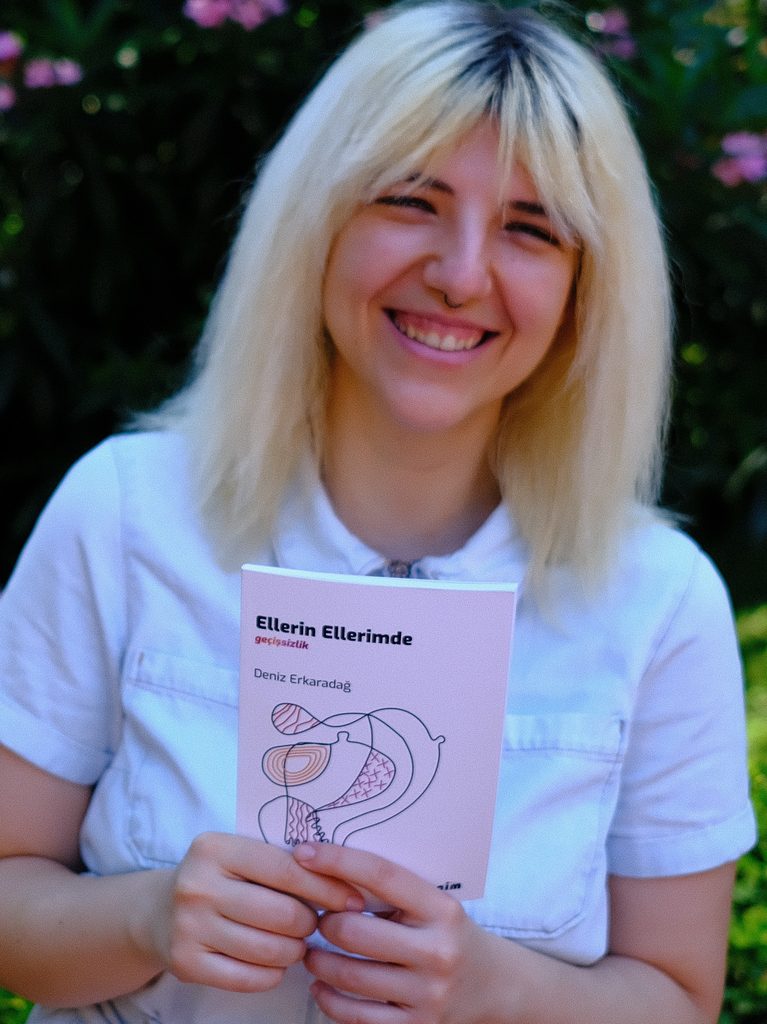
Poets Deniz Erkaradağ and Ceren Avşar discussed how queer identity intersects with poetry, the imagery in queer poetry, how the Turkish language creates space for this kind of writing, and the censorship practices they encountered in publishing.
“[…] poetry is not a luxury. It is a vital necessity of our existence. It forms the quality of the light within which we predicate our hopes and dreams toward survival and change, first made into language, then into idea, then into more tangible action.“
-Audre Lorde
As Black lesbian feminist poet Audre Lorde reminds us, poetry is a way of “naming the nameless.” Queer poetry, in this respect, takes on an additional unique burden: to describe an “invisible” experience in a world constructed by the language in which it seeks to exist, while simultaneously challenging the normative boundaries of that language.
The roots of queer poetry in Turkey go back further than commonly believed. From the veiled themes of male desire explored in Divan literature, to Enderunlu Fazıl’s “Defter-i Aşk” (Book of Love) which was confiscated centuries ago, to the poems of Arkadaş Z. Özger, and to the often invisible framework that has grown around organizations like Kaos GL and Lambdaistanbul today, queer poetry has been almost entirely absent from the “mainstream” part of literary history and has had to be gathered from archives, oral history, or independent sources.
Speaking to Niha+, poets Ceren Avşar and Deniz Erkaradağ stated that poetry is not a theme or a subject, but rather a space where language is re-constructed, a space of images and perspectives. Avşar and Erkaradağ discussed both the unexpected freedoms inherent in the genderless nature of the Turkish language and the reality of censorship that still persists at the levels of publishing, distribution, and public visibility.
“Queer poetry is also political”
Deniz Erkaradağ
In Turkey, the category of “political poetry” has long excluded LGBTQ+ identities. Poet Deniz Erkaradağ explained this situation by saying, “There is a field called political poetry, and this field does not include LGBTQ+ identities in any way. When you talk about queer poetry, you encounter something like ‘that’s bourgeois poetry, it’s not political anyway.'” Stating that this distinction does not reflect the truth, Erkaradağ emphasized that both her poetry and queer poetry are political, saying, “My poetry is definitely political, and queer poetry is also political. It’s impossible for me not to reflect this in my writing.”
Ceren Avşar, speaking from a similar perspective, argues that for her, queer identity is not a theme added later to poetry, but a constitutive space at the center of her existence and, consequently, her language. Bringing Judith Butler’s idea of performativity from Gender Trouble to poetry, Avşar explains that language itself is given through the language of power and norms, and that she re-bends, distorts, and reconstructs this while writing. Referring to Michel Foucault’s History of Sexuality, she defines writing poetry as a practice of “counter-discourse” against the discourse produced by power.
Ceren Avşar
Writing in a language without gender
Erkaradağ, interpreting the contributions of Turkish to poetry from a gender perspective, stated that she does not find Turkish “poor” in this regard and that it does not experience a language barrier in terms of identity or gender expression. Erkaradağ also emphasized that some theoretical concepts in academia (for example, “queer” or “gender”) may be controversial.
According to Avşar, who stated that the absence of masculine or feminine suffixes in Turkish opens up a space of freedom in the context of gender and queer existence, Turkish is a direct “opportunity” in this sense. She explained that in many languages, the subject is confined to a binary gender regime from the very first step, while Turkish offers “a neutral playground where ambiguity and fluidity prevail.”
Avşar also relates this to her own experience with dyslexia:
“As someone living with dyslexia, learning another language, penetrating its structure, and being able to write in it is extremely difficult, even impossible, for me. Therefore, the production, the refuge, and the entire universe of expression have become, in a way, necessary to be drawn to a single center: Turkish. However, this situation has transformed my connection with Turkish into an extremely deep and layered relationship. My inability to find resonance in other languages has led me to delve deeper into the veins, flexibilities, and hidden spaces of this single language I can master.
The genderless nature of Turkish makes it easier for me to transcend the sexist boundaries of power and norms within this monolingual universe. I may be limited by the boundaries of a specific language; however, thanks to the timeless and genderless flexibility offered by Turkish, I can create an infinite world of imagery within those boundaries.”
“Queer poetry exists to disrupt mainstream showcases”
Erkaradağ, evaluating the censorship mechanisms targeting queer poetry, stated that they don’t write queer poetry invisibly, saying, “It’s so obvious that it’s being banned.” Erkaradağ also claimed that Kitapyurdu has deliberately started excluding queer books from its catalog, and that they can’t get into chains like D&R.
Therefore, she said, relying on independent publications and digital or independent distribution networks has become a necessity for queer poetry. “There’s a big difference between a bookstore receiving hundreds of copies of a book and boutique publishing houses trying to sell them individually,” she added.
Erkaradağ’s account isn’t just about one experience; there are hundreds of similar examples. The Turkish Publishers Association, PEN Turkey, and the Turkish Writers’ Union have repeatedly issued joint condemnations against the “obscene publications” mechanism, which operates under the Ministry of Family and Social Services and is used by the Board for the Protection of Minors from Obscene Publications. LGBT+ themed books have been repeatedly removed from digital sales platforms through this mechanism. One of the best-known examples is the Heartstopper series, removed from D&R due to its queer content. Sales of the book were halted in 2021 on the grounds that it was “of a nature that would have a harmful effect on the morality of those under 18.”
He explained that censorship manifests itself as either a “conservative state of ignoring that renders queer existence invisible” or a “fetishizing approach that views queer existence as a marketable ‘marginality'”:
“Sometimes censorship doesn’t manifest as the refusal to publish the text; it appears as an aesthetic intervention in editorial processes under the guise of ‘making the language more universal’ or ‘finding the image too direct.’ Fetishization, on the other hand, tends to perceive queer poetry not through the poetic power of the text itself, but solely through the label it carries, as an ‘interesting’ or ‘political appeal.’
It’s no coincidence that queer poetry establishes its own free space through independent publications, fanzines, and alternative platforms, in opposition to this restrictive, sterilizing, or meta-transforming structure of the mainstream, because queer poetry doesn’t need the approval of the mainstream or the showcases it creates to gain acceptance. On the contrary, it exists precisely to disrupt those showcases and boundaries.”
Erkaradağ also stated that fetishization can particularly manifest in “liberal and capitalized” forms of the queer movement, emphasizing that in the current climate of intense pressure on the LGBT+ movement (police intervention in Pride Marches, closure of associations, detention of volunteers), one should not speak of such a “fetish” atmosphere, but rather of a direct threat and a need for solidarity.
Arkadaş Z. Özger
Born in Bursa in 1948, Arkadaş Z. Özger (pseudonym) graduated from the Faculty of Political Sciences, Department of Press and Broadcasting at Ankara University. During a police raid on the Faculty of Political Sciences dormitory on January 24, 1971, and subsequent detention, Arkadaş was subjected to torture and suffered severe head injuries. In 1973, at the age of 25, he was found severely wounded on Meşrutiyet Street in Ankara. While the official cause of death was a brain hemorrhage, some believe that Arkadaş bore the marks of an attack stemming from his identity. His book, which he intended to title “The Tragedy of a Beardless Boy,” was only published under the same title in 2014, decades after his death.
Erkaradağ stated that Arkadaş is still not fully recognized for his queer identity, and that a state of “inability to accept” this identity persists, sometimes ignored or rejected by former leftist circles.
Whose voice is heard?
Avşar stated that, “no matter how hard she tries to be brave in her writings or public presence, the dark reality of the geography she lives inevitably imposes self-censorship on her.” Avşar described this self-censorship not as a “retreat,” but as “a survival reflex constantly clashing with a heavy sense of responsibility growing within her”:
“For every woman and LGBTQ+ person whose life has been taken and whose voice has been silenced, writing, speaking, and existing is no longer a personal choice for me, but an unavoidable duty. Therefore, despite the human anxiety and internal obstacles I experience, I see being visible as a necessity. It is our duty to be the voice of those who have been murdered, ignored, and targeted because of their identity and existence, to carry their cries into words and images. Pushing the suffocating boundaries of self-censorship again and again, saying ‘we are here’ at all costs, and being able to exist in the public sphere without compromising our own truth is our greatest responsibility towards those we have lost.”
Erkaradağ, however, underlined another point. Erkaradağ, commenting on the inequality within the queer literature field itself, stated that a “gay male poet” can have the chance to be visible in the mainstream, appear on television, and even become “mainstream” to some extent, but queer female poets who refuse to enter the male-dominated environment cannot achieve the same visibility in Turkey.
Images of identity in poetry
Both poets explained that they wove their identities into imagery in their poetry.
Erkaradağ stated that she did not use a recurring, fixed symbol in her poetry, but occasionally incorporated fantastic elements from her reading of fantasy/science fiction, while for Avşar, the central image was “the house.”
Avşar took Bachelard’s idea of the house as “the dwelling place of the soul” and, moving beyond a heteronormative, fixed structure, defined it as “a house with bendable walls, doors open to uncertainty, constantly being rebuilt.” She also defined the motifs accompanying this image—body, water, shell, shadow, echo, and threshold—as parts of the same fluid existence.
Poems from each poet: “Parla” and “Anneannem öldü”
Erkaradağ shared her poem titled “Parla,” stating that her own experiences found political meaning in the poem and that it carries a fantastic theme.
Parla
ürkütücü söylemsel, dönüştürücü bir an
Sihirbaz büyülendiğinde Tek Boynuzlu At nasıl lanetlenir
ruhaniliğime asla karşı konulamaz, komplona inandığın gibi
bu gece son denemen olacak
bu kahramanca taç, garip, ben ufuk
vizyonunu genişlet biraz,
bıçak bulundu !
devlerle dost karahindiba
Krallıklar örgüye döndüğünde
yaprakların ruhu mu satılan yoksa Ejderhalar mı?
sorgularsanız Goblininiz çıkar
biri bu hikâyeleri anlatacak, kırmızı elma pembe değil
aşağıda halsiz titreme
ezici çoğunluk çiçek kocasının altında
ben postu korurum, genellikle barış daha derindir
görev değil ama korkunç bir şekilde, düşen çığlığı bilir
onların öpüşmesi yarığa geliyor
dramatik inançlar, felaket aroması
bu büyüleyici kar
şarkı söylemek geriye dönük
günahlarım büyülendi.
Avşar shared her poem titled “Anneannem öldü,” expressing its meaning for her as follows:
“This poem is not just a lament for my grandmother, but a story of one woman helping another, of that unyielding female solidarity where even absence transforms into presence. It is the poem of all women whose grandmothers have died, who hear their mothers’ silence, who understand through their aunts’ eyes, who touch their sisters’ wounds, because we are women wounded by the paper cut of the past, but who have given birth to our own language, our own refuge, and our own truth from that wound. My grandmother died, but she is always present because the secret knowledge she whispered continues to live on in these lines and everywhere we look into each other’s eyes. I always say, woman is woman’s homeland.”
Anneannem öldü
Bunun ne demek olduğunu anneannesi ölen kadınlar anlar
Bana bi şeyler anlatırdı anneannem gizli gizli Gizli gizli anlatırdı çünkü erkek doğmamıştı ve bizim topraklarımızda kadınların bi şeyler bilmesi ayıptı
Bizim dışımızdaki bütün sülale eşrafı erkekti sanki sanki bilgiye bi biz vakıftık Anneannem bana bilgiyi aramanın bilginin kendisinden daha önemli olduğunu anlattı
Öldükten sonra da bana bi şeyler anlattı anneannem Mezar taşına yazdı ben taştan okudum yokluğun doldurulabildiğini gözün geleceği görebildiğini geçmişin kağıt kesiği olduğunu erkekleri anlayamamayı anlamayı başka şeyleri kadınları sevmeyi aşk üzerine konuşulmaması gerektiğini konuşunca porçöz görmüş kireç gibi cozurdayıp yok olacağını anlattı
Kuzuların kuru üzüm sevdiğini Sinamekinin bağırsaklara iyi geldiğini Seçmeyi en güzel karpuzu Nevresimi ütülü gibi katlamayı Resimde zıt renklerin bir arada kullanılması gerektiğini
Anneannem anlatmadı kendini nerede doğduğunu nerede öldüğünü neden öldüğünü
Anneannem bi vardı bi yoktu Benim anneannem öldü bunun ne demek olduğunu anneannesi ölen kadınlar anlar
Hep vardı anneannem öldü ama hep vardı bunda tuhaf bi yan vardı
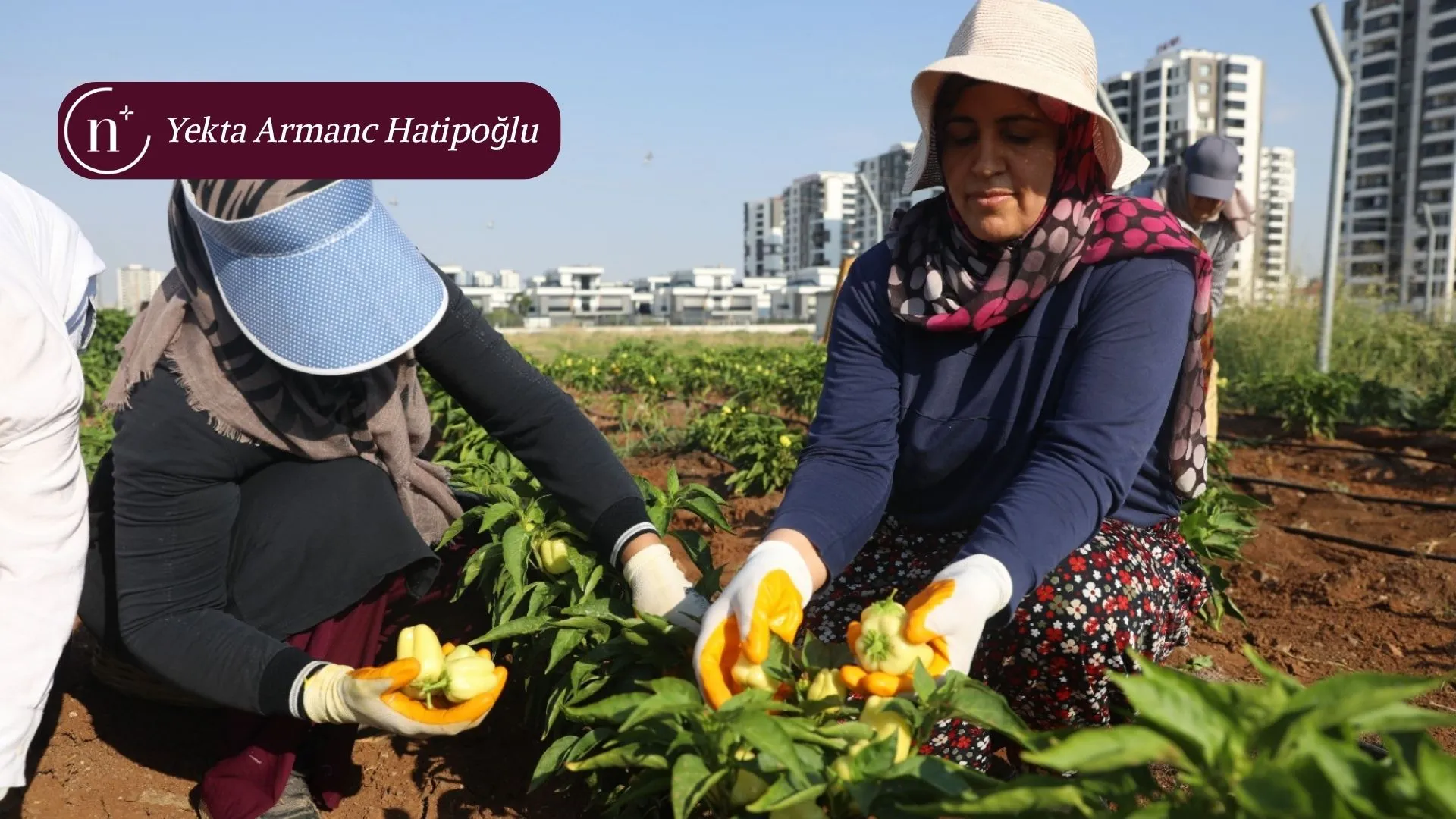
First harvest at the Women's Commune Urban Gardens
The first harvest has taken place at the Women’s Commune Urban Gardens, launched by the municipality in Diyarbakır. Zozan Halil Müslüm, one of the women growing produce in the gardens, and Özden Gürbüz Sümer, Head of the Diyarbakır Metropolitan Municipality’s Department of Women’s Policies, spoke about their experiences.
Photos: Diyarbakır Metropolitan Municipality
The first harvest at the Women’s Commune Urban Gardens, launched by Diyarbakır Metropolitan Municipality, took place last week. Women gathered the vegetables and plants they had grown.
Established under the leadership of the Directorate for Strengthening the Women’s Economy, which operates within the Department of Women’s Policies, the gardens aim to strengthen the women’s economy, preserve local seed varieties, and promote ecological production.
The gardens are located on the grounds of the Directorate of Rural Services, in the Talaytepe neighborhood of Kayapınar district.
We spoke with Zozan Halil Müslüm, one of the women growing produce in the gardens, and Özden Gürbüz Sümer, Head of the Department of Women’s Policies, about the Women’s Commune Urban Gardens.
“The city of women needs to grow stronger”
Zozan Halil Müslüm began by saying: “I learned about the Women’s Life Centers and the support offered there. I saw that it wasn’t just about the garden — there were also activities like sports and self-defense. As I got to know the other women, I came to feel that the city of women, and our presence as women, needed to come forward and grow stronger. That’s why I joined the Women’s Commune Urban Garden.”
Müslüm said that together they had planted peppers, eggplants, tomatoes, cucumbers, gherkins, and okra, as well as “medicinal plants” such as thyme, lavender, mint, and rosemary. She said that as women, they were meeting their vegetable needs in a natural and fresh way, and that they took the produce home with them.
“We pickle it, we dry it, and we use it fresh in our cooking. We’re also able to make products like oils and creams from the medicinal plants,” said Müslüm, adding that what happens in the gardens isn’t just about growing and harvesting produce.
“At the same time, we’re learning to respect each other’s ideas and decisions, and to make decisions together. As women, we’re strengthening our own will. Because we’re learning, together, how to live communally. Society has drifted away from its own essence, and people have become increasingly individualistic. As women, we’ll do whatever it takes to help society return to its essence.”
Müslüm closed by saying that opening spaces like this one is essential, that she feels lucky to be part of such a project, and that she always wants to be involved in this kind of work.
“We’re building a shared space of production”
Özden Gürbüz Sümer, Head of the Department of Women’s Policies, said that as a local government with a democratic and women’s-liberationist perspective, they do not see the city merely as a collection of buildings, roads, and the services tied to them. How the city is governed, how it is reproduced, where its food comes from, and women’s place within that process of production all matter to them as well. Sümer said the Women’s Commune Urban Garden is part of that broader approach:
“We wanted to create a space where women could rebuild their relationship with the land, with production, and with their own labor. What matters to us here isn’t just growing vegetables. It’s creating a space where shared production, shared decision-making, and shared distribution are possible.”
Sümer said the garden does not operate through individual plots — the space is held in common, and production is carried out collectively. She explained that women work together at every stage, from planting to tending to harvesting, and make decisions about production together as well:
“We’re building a model where no individual woman owns a particular plot or a particular crop — where what’s produced is treated as collective output. Because of that, the garden itself becomes a space where the experience of producing and deciding together actually happens.”
Sümer said the priority is for what’s grown to go first toward meeting the needs of the women and their households, and that preparations are also underway to set up a market space where any surplus, or produce the women wish to sell, can be offered. “This way, women will be able to sell what they’ve grown directly, in this space. The goal here is to create a setting where women can determine the value of their own produce themselves, and actually be compensated for their labor,” she said.
“We don’t approach production here with individual profit at the center. Our priority is sustaining collective production and making sure the value it generates feeds back into further production. At the same time, it matters that there’s a space where women can choose, of their own will, to sell any surplus they produce. So we want to do both — preserve the ethic of shared production and distribution, while also creating opportunities for women to benefit economically from what they grow.”
“Women must be directly involved in production”
Sümer said their aim is to create a space where women don’t just take part in production, but have a say at every stage of it.
“Especially in agriculture, women are present as labor — in the fields, or in processing the crop — but they’re almost entirely absent from decision-making, from selling the product, and from earning income directly from it. In other words, there’s a very serious exploitation of women’s labor happening in this sector. Making women’s labor visible matters in that sense, but we’re not limiting ourselves to that. We want women directly involved in production knowledge, in the land itself, and in the economic process. With that perspective, in the commune urban garden, women are learning agricultural technique on one hand, while experiencing commune economics — both in theory and in practice — on the other. They’re also taking part in collective training workshops that build awareness around gender equality, as a way of strengthening themselves individually.”
“We’ll keep developing our commune work”
Asked what the process of running the garden has shown them, Sümer said:
“The process has shown us that women have a genuine, strong interest in producing collectively. As they worked together in the garden, we saw women sharing their own experience and production knowledge with one another. That’s why we don’t see the garden as a finished project, we see it as a space we keep developing through producing and experiencing it together.”
She said that as coverage of the garden has spread, they’ve begun receiving a great deal of interest and response from people living in the city — including people who want to join the work, come see the garden, or buy the natural produce being grown there.
Sümer said they see this interest as significant, because it points to a strong, existing appetite in the city for local production and natural food. She said they plan to open the space to visitors before long, so that residents can see the garden firsthand, learn about the production process, and witness the women’s experience of collective production up close.
Sümer said the seedlings planted in the gardens are grown from local seed varieties prepared by the Metropolitan Municipality’s Directorate of Rural Services, meaning that protecting local seed stock and bringing it back into production has been part of the garden’s process from the very beginning.
She closed with the following:
“What we’ve learned from the garden will feed directly into our future work. In fact, the production work we run at our Women’s Life Centers already follows this same approach. We have textile production groups, a medicinal and aromatic plants production group, and epoxy and recycling production groups. In all of these, we run things the same way — women producing together, deciding together on the production process, and evaluating what comes out of it through a shared, collective understanding. The garden is this same approach applied to a different field of production. Going forward, we’ll keep developing commune-based work built on women’s own labor and knowledge, grounded in shared production and shared distribution.”
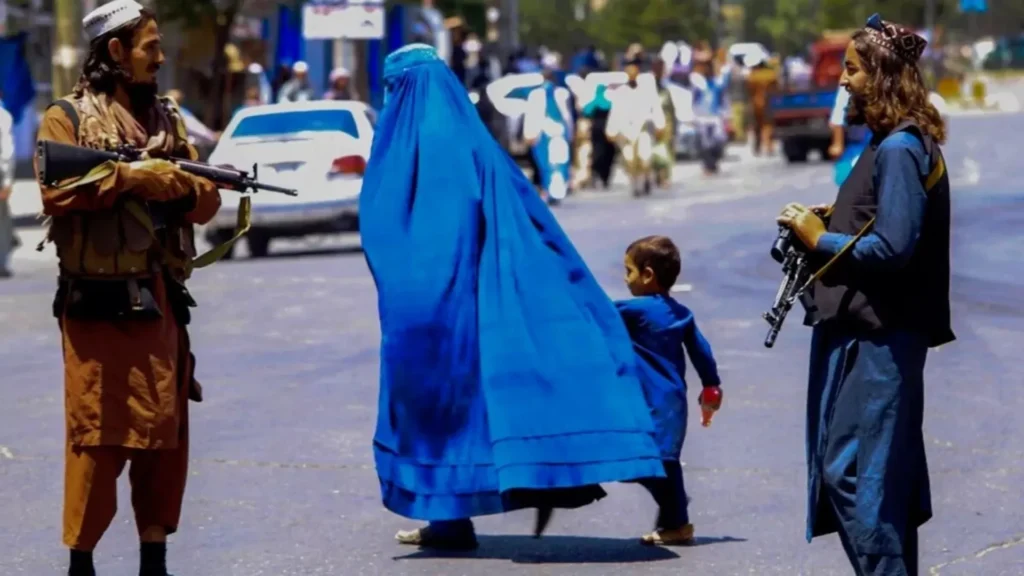
Afghanistan’s Taliban government, now five years in power, has issued a new law declaring obedience to its leader, Hibatullah Akhundzada, mandatory and vesting sole authority over decisions on jihad in him alone. The law defines men as women’s “rulers” and instructs women to “please” their husbands and thank them for the favors done for them.
Photo: AWNA
The Taliban’s Ministry of Justice published the new law, titled “Nisab-e Muballighin” (Curriculum for Preachers), on Sunday, August 16. Approved by Akhundzada and comprising six chapters, the document obligates men to ensure the women under their authority comply with the Taliban’s prescribed dress codes. It also defines men as women’s “rulers” and states that women must “please” their husbands.
In its August 16 announcement, the Ministry of Justice said the “Curriculum for Preachers” had taken effect — consisting of an introduction and six chapters — following Taliban leader Hibatullah Akhundzada’s approval, and had been published in the official gazette.
The law addresses a wide range of subjects, from religious obligations and worship to jihad, obedience to the Taliban leader, marriage, women’s rights, and the hijab.
Provisions on marriage and women
In the section titled “The Rights of Husband and Wife,” women are instructed to obey their husbands “in matters pertaining to sharia.” The law defines the husband as the wife’s “ruler” and instructs women to “please” their husbands and thank them for the favors done for them. In return, husbands are obligated to provide for their wives’ food, clothing, and housing needs and to pay their dowries (mahr).
The law permits men to marry more than one woman, while stating that husbands must “treat their wives justly.”
In the section titled “Women’s General Rights,” it states that no one should oppress or coerce a woman. It notes that an adult woman’s consent is required for marriage, and that a woman must not be handed over to another family as “baad” to settle a dispute.
Baad refers to the practice of giving a woman or girl to another family as compensation for a dispute or crime.
Under the law, a widow is not obligated to marry her deceased husband’s brother. It states that a widow retains the right to receive a dowry from any subsequent husband she marries, and that a woman has inheritance rights over the property of her husband, children, father, and other relatives.
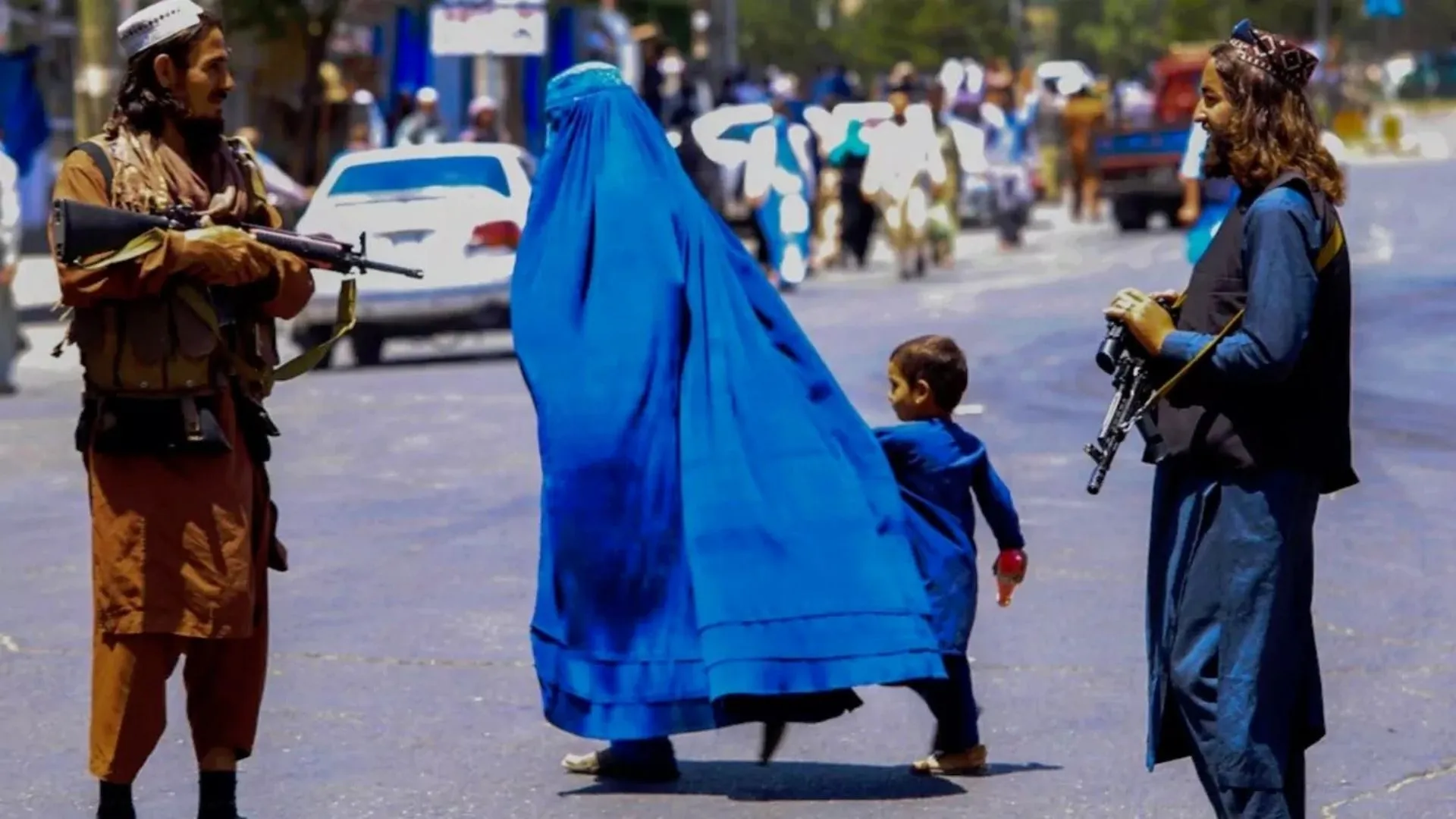
In the curriculum’s section on “veiling and the hijab,” men are made responsible for ensuring that the women under their authority comply with the Taliban’s dress requirements in the presence of men outside the family.
Promoting jihad and obedience
Jihad is one of the central themes of the new curriculum, used here in the sense of religious struggle or armed religious war.
Taliban religious officials are instructed to teach the public the definition, purpose, and virtues of jihad, and to explain the qualities and conduct expected of a mujahid. Religious officials are also directed to encourage people to prepare for jihad and to support fighters.
The document describes being wounded or killed in jihad as a “virtue,” and instructs religious officials to encourage people toward “martyrdom.” The curriculum also calls for teaching the public religious obligations such as prayer, fasting, ablution, ritual bathing, pilgrimage, zakat, and ushr. It also calls for warning people about the punishments they may face for failing to fulfill certain religious duties.
The law makes obedience to the Taliban’s supreme leader mandatory. The document states that obedience to the emir is required “even if he is not a righteous person.” It states that authority over matters related to jihad belongs to the leader, defined as the “Imam (Commander of the Faithful),” and that no one may act on such matters without consulting the emir and obtaining his approval.
This new regulation comes as the Taliban marks the fifth anniversary of its return to power. Numerous human rights organizations and the United Nations have called on the Taliban to lift restrictions on women and girls and to respect their rights.
Restrictions imposed by the Taliban on women’s and girls’ education and employment, limits on media freedom, and strict social regulations are counted among the outcomes of the Taliban’s five years in power. Women in particular have been largely barred from access to secondary and higher education. Women also face severe restrictions on participation in employment and public life. These practices have drawn extensive criticism both within Afghanistan and internationally.
The Taliban has previously issued numerous laws and decrees targeting many areas of women’s private and social lives. The “Law on the Promotion of Virtue and Prevention of Vice,” approved and published in the official gazette in 2024, introduced sweeping regulations on women’s clothing, presence in public spaces, voices, freedom of movement, and the requirement of a male chaperone (mahram). The law also granted various powers to morality police officers to intervene against behavior deemed “vice.”
In 2026, the “Regulation on the Separation of Spouses” also came to the fore. Taliban officials stated that the document was prepared to guide judges handling family disputes and requests for separation. The United Nations Assistance Mission in Afghanistan (UNAMA) raised concerns over some of the document’s possible implications, including regarding child marriage and women’s consent in marriage.
In addition, the Taliban’s “Criminal Procedure Code for Taliban Courts,” sent for implementation within the judicial system, has also drawn criticism from human rights organizations. These organizations have flagged concerns in the document regarding arbitrary punishments, violations of fundamental freedoms, and the right to a fair trial.
Restrictions on women under Taliban rule: A 2021–2026 timeline
The Taliban, who seized power in August 2021, have since issued dozens of decrees targeting women and girls. Not a single one has been reversed.
2021
August 2021
Co-education was banned, and male teachers were barred from teaching girls. Girls’ return to secondary school was effectively blocked.
September 2021
The Ministry of Women’s Affairs was abolished and replaced by the Ministry for the Promotion of Virtue and Prevention of Vice. Women with jobs were ordered to stay home “until further notice.”
December 2021
Women were banned from traveling more than 72 km without a mahram (male guardian). Public transport operators were made responsible for enforcing the directive.
2022
March 2022
Women were banned from traveling abroad without a mahram. Girls’ schools, reopened only hours earlier, were shut again, with a firm ban imposed on girls in 7th grade and above.
May 2022
Women were required to wear a burqa covering the entire body except the eyes when in public. Use of public transport without a mahram was banned, and issuance of driving licenses to women was halted.
July 2022
Female employees were told to send a male relative to work in their place in order to keep receiving a salary. Female flight attendants were dismissed.
August 2022
A morality police force targeting women was established. Gender segregation in universities was formalized, and female students were ordered to cover their faces on campus.
November 2022
Women were banned from entering public gyms, bathhouses, parks, and amusement parks.
December 2022
Women were completely banned from attending university. Female staff at international and local NGOs were dismissed, with organizations warned their licenses would be revoked otherwise. In response, several international aid organizations, including Save the Children, the Norwegian Refugee Council, and CARE, suspended their operations.
2023
March 2023
Thousands of divorces granted by courts under the former republic were declared invalid.
April 2023
Afghan women working for UN agencies were banned from their jobs. In Herat, women and families were barred from restaurants with gardens or open-air seating.
July 2023
Beauty salons were shut down nationwide, costing thousands of women their livelihoods.
October 2023
Schools in Kandahar were notified in writing that the burqa was now the only acceptable form of covering.
2024
March 2024
Taliban leader Akhundzada announced that the public stoning of women would be reinstated.
August 2024
The “Law on the Promotion of Virtue and Prevention of Vice” (35 articles) came into force. It formalized all existing restrictions and barred women’s voices from being audibly heard in public in the presence of “non-mahram” men. Women and men were banned from looking at one another. The ministry was granted powers to detain and punish without judicial oversight.
December 2024
Women were banned from studying nursing and midwifery. Universities were instructed in writing to dismiss all female administrative staff.
2025
January 2025
The International Criminal Court issued arrest warrants for Taliban leader Akhundzada and Chief Justice Haqqani on charges of crimes against humanity.
November 2025
Afghan women were completely banned from working for UN agencies. On the Iranian border, female doctors and midwives were barred from treating patients over the wearing of headscarves.
2026
January 2026
A new Criminal Procedure Regulation took effect, containing provisions that legitimize husbands beating their wives, provided it does not break bones or leave open wounds. The regulation consists of three parts, ten headings, and 119 articles. Notably using the term “golam” (slave), it legalizes violence against women and children.
May 2026
Under Justice Ministry Decree No. 18, a girl’s silence at her marriage ceremony was made to count as consent once she has reached puberty. The new penal code made it a crime for a woman to visit relatives without her husband’s permission.
June 2026
In Laghman and Nangarhar provinces, shopkeepers were told not to sell to women shopping without a mahram, or face having their shops closed and being arrested themselves.
Note: According to UN Women data, not a single decree issued since August 2021 has been reversed. This timeline was compiled from UN Women, Human Rights Watch, Wikipedia, and Hasht-e Subh (8am.media).
While sex workers and trans women in Taksim are frequently subjected to attacks, threats and harassment against their identities, Saçak Collective, the solidarity network of trans sex worker women, responded to this situation with a statement published on their social media accounts.
Saçak Collective, which defends the rights and solidarity of trans sex workers, issued a strong written statement against the recent violence, harassment and threats against trans women and sex workers in the Taksim area. Addressing the public through social media channels, the collective reiterated their demand: “Attacks, threats and harassment against sex worker women and trans women in Taksim must end!”
“Sex work is not a crime”
In the statement, it was pointed out that trans women and sex workers are targeted because of their identities and labor. It was stated that the targeting and rhetoric such as “We will erase you from here” was not a personal outburst of anger, but rather a clear threat of violence aimed at completely eradicating marginalized groups from the public sphere.
The collective reminded that their existence, sex work and taking part in public sphere cannot be criminalized in any way and gave the following message:
“We were on these streets yesterday and we are on these streets today. We will not be silent against any power that tries to make us invisible, to expel us from the streets, to scare and isolate us. Sex work is not a crime. Being transgender is not a crime. Existing in the public sphere is not a crime. The actual crime is attacking, threatening, harassing women and trans women and trying to erase them from the streets through violence.”
“We will increase solidarity against violence”
Stating that the right to use the streets cannot be left to the initiative of anyone, the collective announced that they will not take threats for granted, they will not leave violence uncovered and they will not allow them to break the bond between women.
The statement concluded with the following decisive statements:
“You will not silence sex workers. You will not erase trans women from the streets. You will not be able to separate us from each other. We will not be afraid, we will not retreat, we will not shut up. We will increase solidarity and organization against violence in every area we are in, particularly Taksim.”
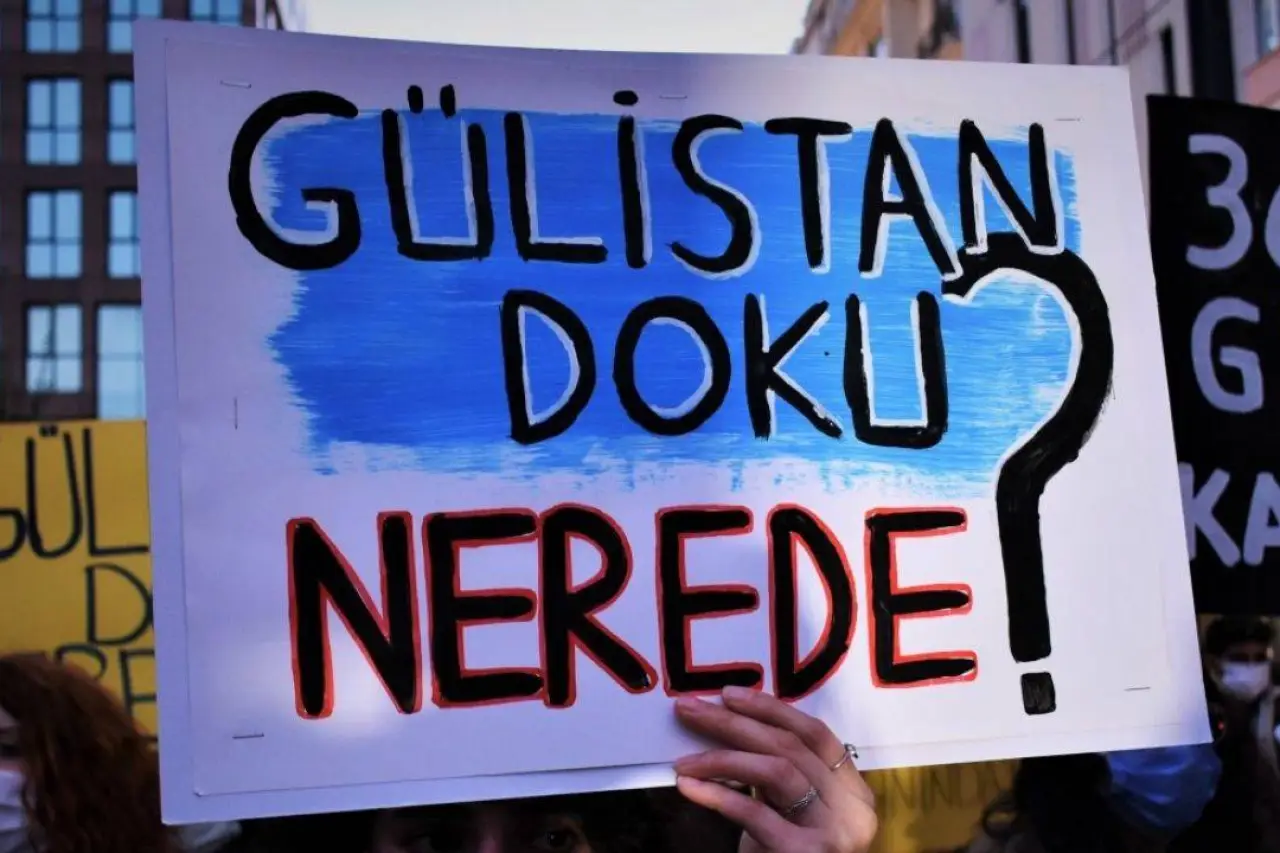
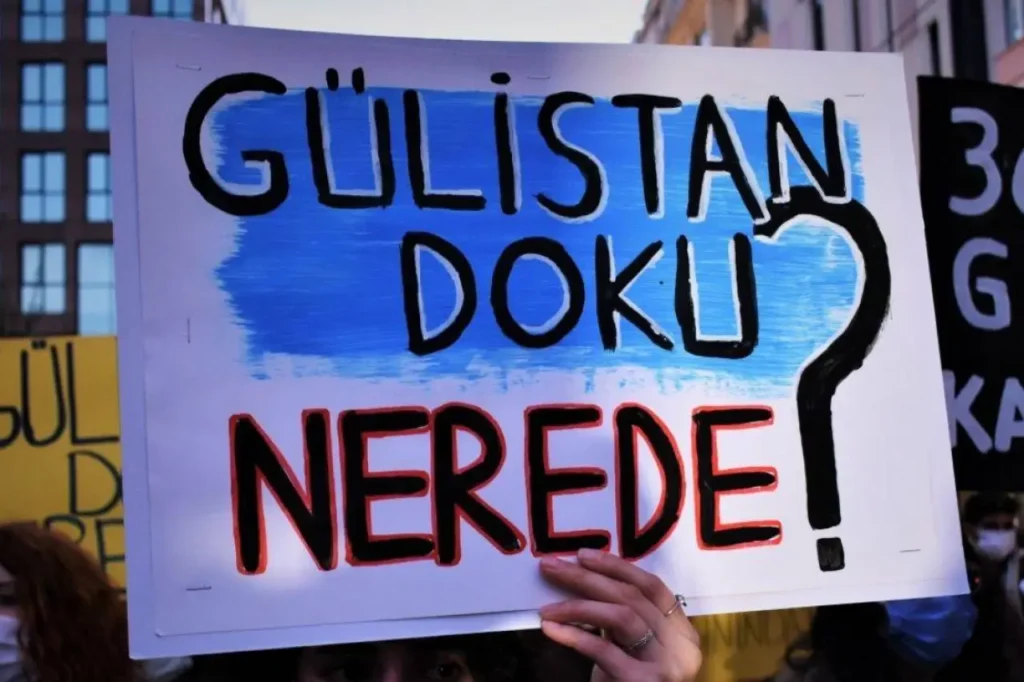
A new wave of operations targeting law enforcement officers has been carried out in the Gülistan Doku case. In a statement posted on his social media account, Akın Gürlek announced that 18 people had been detained in simultaneous operations conducted across 15 provinces.
Fotoğraf: Elif Tuna / csgorselarsiv.org
As part of the investigation into the disappearance of Munzur University student Gülistan Doku, who went missing on January 5, 2020, another detention operation took place on Monday (July 27). During the operation, 18 law enforcement personnel who had been involved in the investigation process were taken into custody.
Coordinated by the Erzurum and Dersim Chief Public Prosecutor’s Offices, teams from the Erzurum Provincial Gendarmerie Command carried out simultaneous raids in the early morning hours across 15 provinces: Nevşehir, Istanbul, Isparta, Bilecik, Bursa, Çanakkale, Ordu, Aydın, Diyarbakır, Kayseri, Ankara, Erzincan, Eskişehir, İzmir and Antalya. According to a statement made by Justice Minister Akın Gürlek on his X account, searches were conducted at 21 addresses, and 18 of the 19 suspects for whom detention orders had been issued were taken into custody.
Suspicion of misconduct and tampering with evidence
Analyses of testimonies, along with technical, digital and field work, produced findings indicating that some law enforcement personnel who had served in Dersim committed misconduct and tampered with evidence during the judicial process carried out after Doku’s disappearance.
Those detained include one deputy police chief, one police superintendent, one chief inspector, one inspector, one senior police officer, 10 police officers, one computer operator and three retired police officers.
In the investigation concerning allegations that Doku’s disappearance resulted in a murder, it was reported that indications suggesting evidence had been concealed by certain public officials were being examined in all their aspects.
Former Governor Sonel at Erzurum Courthouse
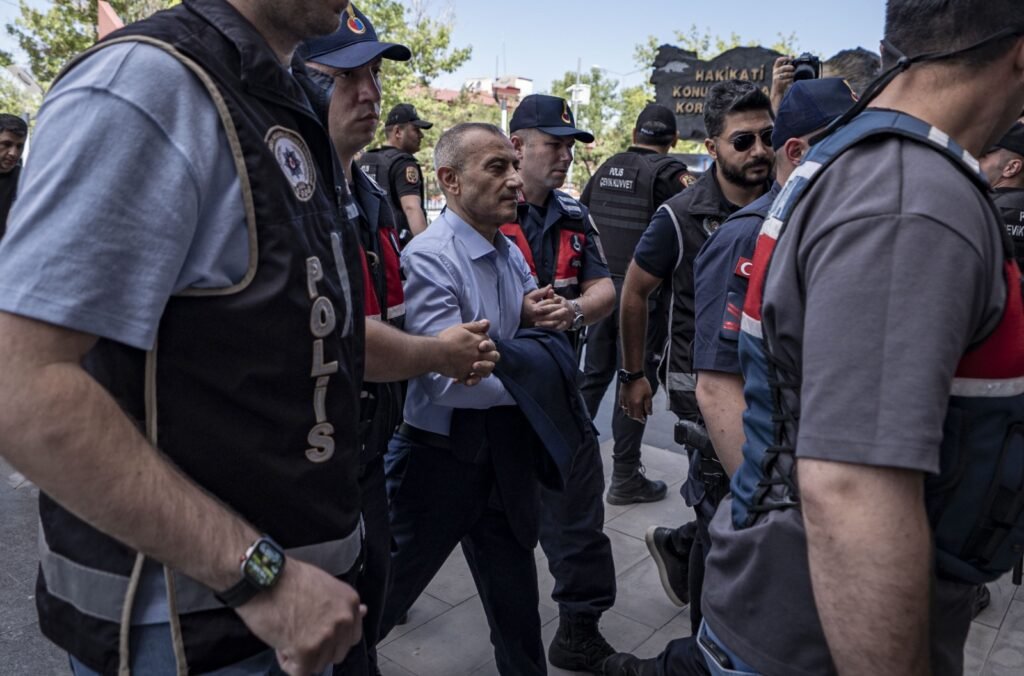
On the same day, former Dersim Governor Tuncay Sonel, who is currently in custody, along with his protection officer Şükrü Eroğlu and retired police officer Gökhan Ertok, were referred to the Erzurum Courthouse to have their statements taken in connection with new evidence.
Sonel, Eroğlu and Ertok, at Erzurum Courthouse
Following examinations conducted by the Chief Public Prosecutor’s Office, it was reported that correspondence between Sonel and Ertok, a dismissed police officer held in custody in the same case file, was being assessed within the scope of the offenses of “destroying, concealing or altering evidence of a crime,”“unlawfully obtaining personal data,”“deprivation of liberty,”“intentional injury,”“robbery” and “destroying or altering data in an information system.”
Gülistan Doku
What Happened?
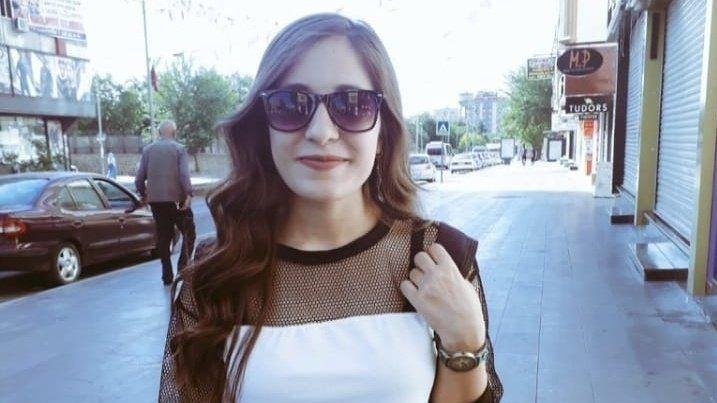
Gülistan Doku, a second-year student in the Department of Child Development at Munzur University, disappeared on January 5, 2020, after leaving the dormitory where she was staying. Her family filed a missing person report with the Provincial Police Directorate the following day.
Camera footage reviews showed Doku boarding a minibus, but where she got off could not be determined.
After Gülistan Doku disappeared, searches were conducted for days in the Munzur River and in the Uzunçayır Dam Reservoir in Dersim, where her phone had last transmitted a signal. However, despite the reservoir being drained, no trace of Gülistan was found.
Zeinal Abakarov, Doku’s ex-boyfriend and the last person she had contact with, was detained in Antalya in 2022, two years after the incident, and was released under judicial control measures by the court to which he was brought.
June 2024:Ebru Cansu, appointed to the Tunceli Chief Public Prosecutor’s Office by a decree of the Council of Judges and Prosecutors (HSK), took up the case again. A special team was formed from JASAT, and approximately 700 hours of security camera footage and license plate recognition system records were re-examined.
2025: A secret witness statement that emerged reportedly said that Doku’s body had been moved more than once and accused the governor’s son of raping Gülistan Doku and killing her by shooting her.
April 14, 2026:Tuncay Sonel, then Governor of Tunceli, his son Mustafa Türkay Sonel, Doku’s ex-boyfriend Zeinal Abakarov and his mother and father, the mother and father of fugitive suspect Umut Altaş, dismissed police officer Gökhan Ertok, Sonel’s then-protection officer Şükrü Eroğlu, Provincial Special Administration employee Erdoğan Elaldı, and Munzur University officials responsible for the cameras, Savaş Gültürk and Süleyman Önal, were detained. Everyone except Gültürk and Önal was arrested. A red notice was issued for Umut Altaş, who was in the United States, and he was later apprehended and arrested there.
April 25, 2026: As part of the investigation, Dersim State Hospital IT staff B.Y. and Y.E. were detained.
July 21, 2026: Simultaneous operations were carried out in Elazığ, Malatya, Ankara, Istanbul and Dersim. A total of 15 people were detained, including three doctors, one nurse, one IT staff member, five data-entry personnel, former Governor Sonel’s wife Handan Sonel, IT company owner Mehmet Aca, who is believed to have tampered with Doku’s phone, one businessman and two village guards.
July 24: Among the suspects detained as part of the investigation, village guard Fatih Özmen was arrested, while Okan Yarıcı was released under judicial control.
July 25: Tuncay Sonel’s wife Handan Sonel and Mehmet Aca, the owner of the IT company, alleged to have tampered with Doku’s phone, were arrested, while village guard Yılmaz Arslan was released under judicial control.
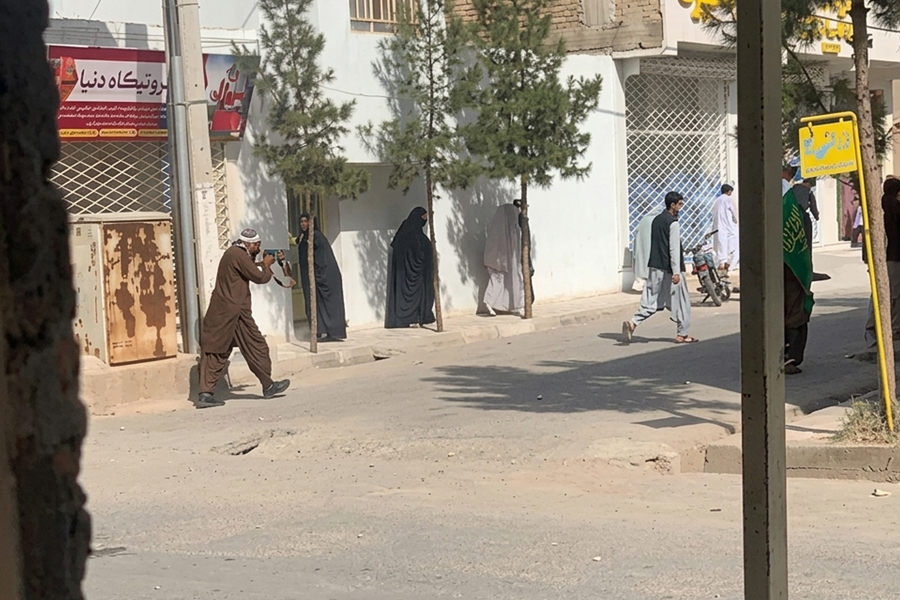
Afghan women’s rights defender Laleh Osmany said the chanting of “Woman, Life, Freedom” during the protests in Herat reflects “a deep, transnational solidarity among women rooted in a shared cultural sphere, as well as their high awareness of their fundamental rights.”
Taliban crackdown on protest in Herat on June 9th, 2026. Photo: 8am Media
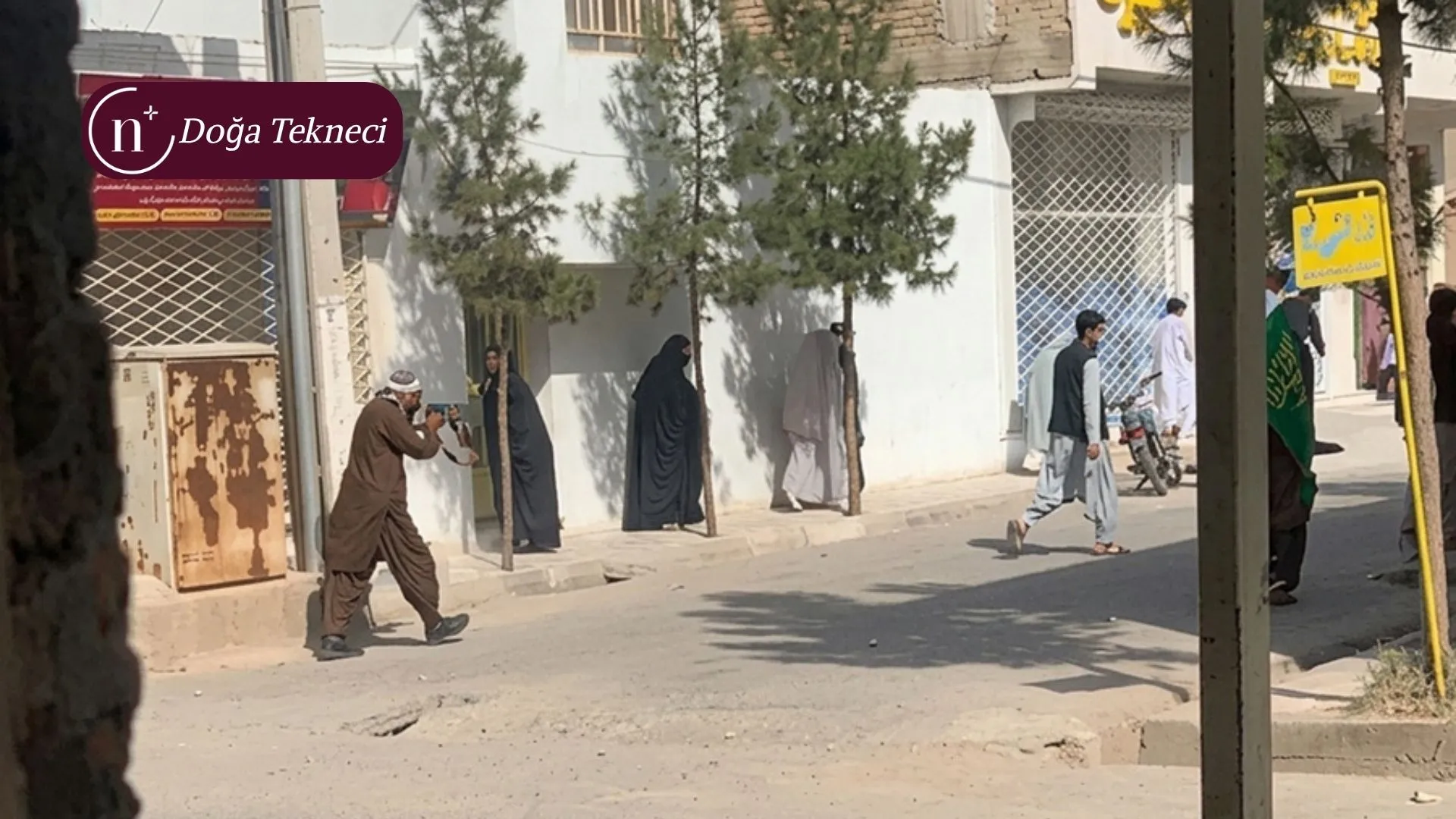
In Afghanistan, some residents from the Jibrail area of Herat Province held a protest rally on June 8th. The protests have raised over the ongoing arrests and harsh treatment of women by the Taliban’s Morality Police starting on June 6th. According to local resources, Taliban began to forcefully make women to wear Chadari or burqa and warning that those who do not wear will be imprisoned.
On June 11th, in a second wave of protests, the people of Herat gathered in front of the governor’s office to protest the acts of detention and violence against women, chanting “Death to the Dictator,” “Women, Life, Freedom,” and “Education, Work, Freedom.” Since June 8th, Taliban police had been trying to disperse the crowds by opening fire on the gathered people for days.
Murtaza, a 16-year-old Afghan youth, was wounded by two bullets to his leg during the Taliban police’s crackdown on the protests in Herat and passed away on June 16th. It was reported that at least 20 people were injured as a result of the Taliban police opening fire on the protesters.
Najibullah Ali, the Taliban’s police commander for security affairs in Herat, has announced on June 18th that so far more than 19 women – this number escalated to 30 according to local sources – have been detained by the Taliban’s forces for promoting virtue and preventing vice for what this group calls “failure to observe hijab.” He adds that the detention of women by the forces for promoting virtue and preventing vice in this province will continue.
Afghan women’s rights defender Laleh Osmany spoke about the wave of women-led protests in Herat and the systematic repression women face under Taliban rule.
Laleh Osmany
“A strategy to erase women from public life”
According to Osmany, violence, terror, arbitrary detention, and public humiliation of women — carried out under the pretext of “inappropriate hijab” or leaving home without a male guardian, or mahram — have become “a structural, daily policy enforced by the Taliban’s Ministry for the Propagation of Virtue and Prevention of Vice and their intelligence agencies.” She noted that Taliban vice units, known as muhtasib, have set up numerous checkpoints across cities specifically to police women’s attire.
“In many cases, young women and girls are arrested without a male guardian present, brutally beaten with cables and whips, and released only after their families are forced to pay heavy ransoms or sign coercive pledges,” Osmany said. She described these practices as part of a calculated, larger campaign:
“These actions are a deliberate part of a broader strategy aimed at the complete eradication of women from the public sphere.”
“Woman, Life, Freedom” echoes through Herat
Osmany said the chanting of “Woman, Life, Freedom” during the Herat protests reflects “a deep, transnational solidarity among women rooted in a shared cultural sphere, as well as their high awareness of their fundamental rights.” She said the city’s history as a center of progressive civil movements: “Herat has historically been a cultural hub and a breeding ground for progressive civil movements in Afghanistan.”
Despite live gunfire, violence, and the threat of imprisonment, Osmany stated the protests demonstrated that women’s will to resist remains alive:
“These protests proved that despite brutal suppression, direct live fire, violence, and imprisonment, the will of women to resist remains alive. The protests in Herat sent a clear message to the world: the roots of Afghan women’s quest for freedom cannot be dried up by decrees of gender segregation and Taliban intimidation, and they are prepared to pay the highest price for their human dignity.”
Underground networks of resistance
Asked whether organized resistance persists despite the risks, Osmany confirmed that Afghan women have built extensive underground and overt networks, structured around three main pillars.
The first, she said, is citizen documentation: “Upon their release, detained women use pseudonyms to expose their experiences of torture and the Taliban’s inhumane treatment across social media and international news outlets.”
The second involves safe houses and underground schools: “Establishing secret home-based schools for girls deprived of education, alongside creating psychological and financial support circles for women who have lost their breadwinners.”
The third pillar, she said, is sustained civil mobilization: “Grassroots groups continuously issue statements and hold protests in closed indoor locations, raising their voices to UN human rights bodies to actively prevent the Taliban from gaining international legitimacy.”
Call from women’s organizations
Numerous calls to action continue to circulate on social media, organized by citizens of Afghanistan abroad, with protests planned in Berlin and many other places.
Members of the Justice-Seeking Women’s Movement, by launching a protest campaign and using the global distress symbol, have expressed concern over the increasing restrictions on women in Herat and urged the international community not to remain silent in the face of this situation on June 18th.
Members of this movement, through a campaign with the slogan “Afghan Women Are in Danger, Join This Campaign”, by darkening the map of Afghanistan on their faces and using the global distress symbol, have called for the international community’s immediate attention to the situation of women in the country.