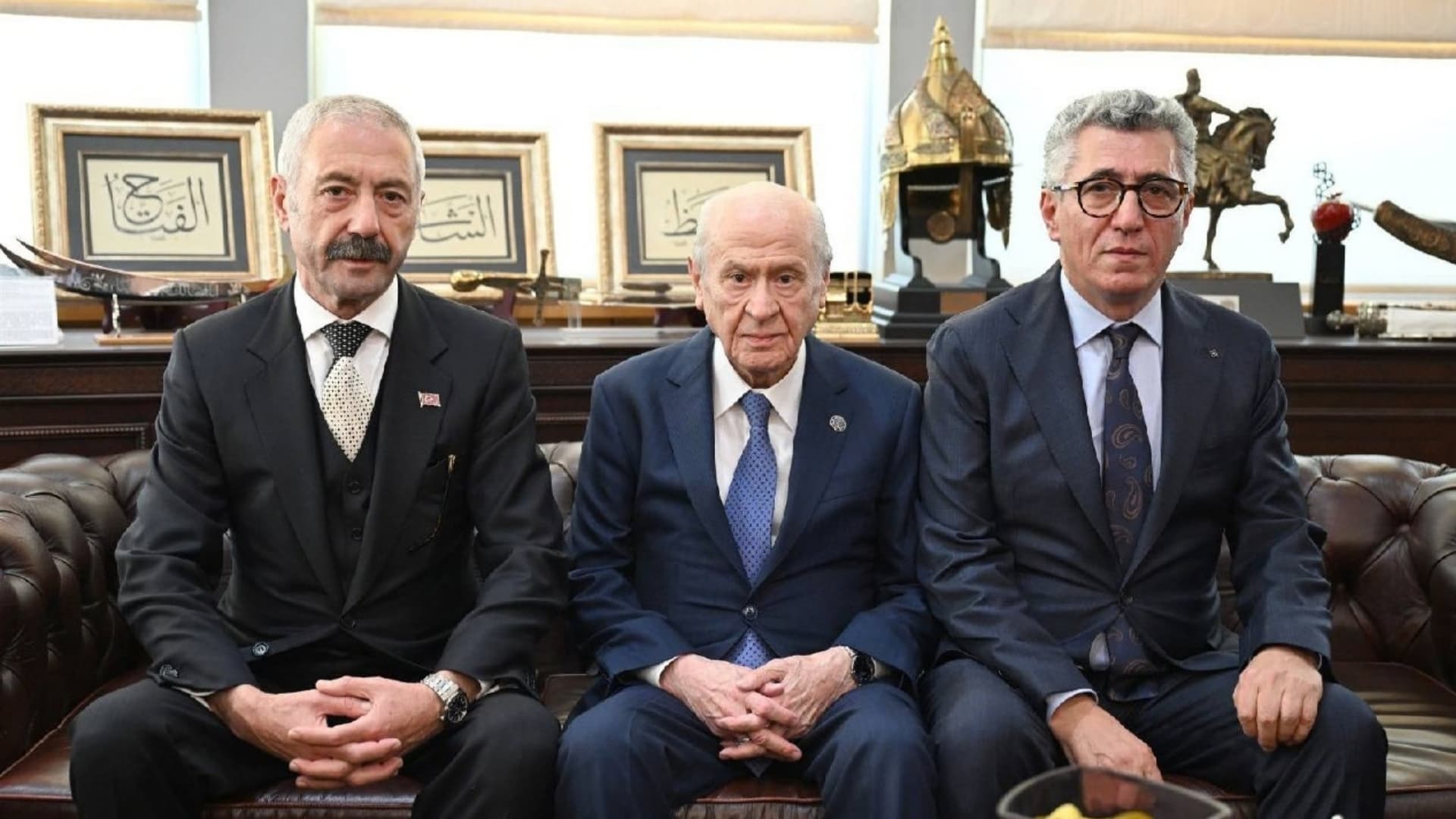
MHP leader Bahçeli has reconciled the Saral and Şahin families. In a statement, the MHP referred to them as “two esteemed families.” What is the history of these two families whose names have been linked to organized crime?
Photo: @MHP_Bilgi/X
The Nationalist Movement Party (MHP) announced via its social media account that its Chairman, Devlet Bahçeli, had met with the Saral and Şahin families at the MHP Headquarters.
The MHP announced the reconciliation of these families, long at odds, with the statement: “Two esteemed families of our country, the Saral and the Şahin, came together at our headquarters with our Chairman, Mr. Devlet Bahçeli, in a historic meeting and embrace.”
So, who are the Saral and Şahin families reconciled by the MHP leader, and how are they known to the public?
“The Sarals are the second-largest criminal organization”
The Saral family originates from the Of district of Trabzon. Although the MHP has referred to them as a “distinguished family,” the public knows them as an organized crime group, a gang, or a mafia. According to 2021 data and police reports, the family is the second-largest organized crime group in Türkiye, with 347 armed members, ranking only behind Alaattin Çakıcı’s organization.
The group was led by Hüseyin Saral from the 1990s until 2005. It is alleged that Hüseyin Saral was killed by Mehmet Ali Büyüksarıoğlu and Sedat Şahin in 2005. On January 30, 2017, Hüseyin Saral’s son, Hüseyin Mert Saral, killed Mehmet Ali Büyüksarıoğlu.
Prosecutor’s indictment: A vast structure comprising 35,000–40,000 people
A report by Serdar Kulaksız of Habertürk, dated January 15, 2017, based on an indictment prepared by the Istanbul Chief Public Prosecutor’s Office, states that the gang was a vast organization comprising 35,000 to 40,000 members.
The indictment prepared following the investigation into the July 19, 2016, killings of Veysel Salihoğlu and Tufan Gedik in Beşiktaş, Istanbul, alleges that Zafer Saral was a member of an armed criminal organization driven by profit motives and attempted to acquire a high-value share in a fuel storage facility owned by Veysel Salihoğlu for a price below market value. It is stated that suspect Yaşar Necmi Dardağan acted as an intermediary, but when Salihoğlu could not be persuaded, Dardağan alerted Zafer Saral and his associates, arranging for them to come to the scene.
Between 2004 and 2017, 23 people were killed in the conflicts between the Saral and Şahin factions. Among the deceased were Hüseyin Saral, Sedat Şahin’s brother Vedat Şahin, and Kenan Şirin, the leader of the Şirinler gang. Additionally, Atalay Cebesoy, a lawyer for grey-wolf mafia figures such as Sedat Şahin, Alaattin Çakıcı, Erol Evcil, and Haluk Kırcı, was killed during this period.
Numerous operations were conducted against the group between 2022 and 2024. Hundreds of individuals were arrested as members of the organization. Journalist Tolga Şardan of T24 reported that friction had arisen between the then-Minister of the Interior, Süleyman Soylu, and the then-Istanbul Police Chief, Zafer Aktaş, as a result of these operations.
According to a report dated November 11, 2022, Soylu asked Aktaş why he had not been informed about the operation targeting the Sarals. In response to Soylu’s criticism, Aktaş replied, “Whenever we told you, there were leaks.”
A plot of assassination attempt against Şahin using a rocket launcher was announced
Most recently, on September 10, 2026, an operation was conducted against the Sarals on the grounds that they were plotting an assassination targeting Sedat Şahin. A statement issued by the Istanbul Chief Public Prosecutor’s Office regarding the matter reported that a location operating as a landscaping site in Beykoz, Istanbul, had been identified and that a large quantity of ammunition was seized during a search involving detector dogs.
The seized ammunition is as follows:
One rocket launcher,
Three rocket launcher propellant charges,
Three anti-tank rocket rounds,
Two Kalashnikov (AK-47) long-barreled weapons,
Two MP5 automatic weapons,
Numerous magazines and rounds of ammunition for the weapons,
One stolen motorcycle,
One BMW vehicle with foreign license plates, assessed to be intended for use in an attack.
It was determined that Yakup Kerem Saral, a fugitive member of the Saral criminal organization who was previously the subject of an Interpol Red Notice, had planned an attempt on the life of Sedat Şahin, the leader of the Şahinler criminal organization, and that the seized criminal materials had been transported to a container at the site one day prior to the operation for use in this planned attack.
Şahins are the third-largets mafia group in Turkey
Like the Saral group, the Şahins also hail from the Black Sea region. The group’s leader, Sedat Şahin, is from Samsun’s Bafra district. According to 2021 police data, the group, with its 257 armed members, ranks as Türkiye’s third-largest mafia organization, following the Alaattin Çakıcı and Saral groups.
Sedat Şahin was released on July 20, 2023, from Izmir Buca Prison, where he had served eight years for charges including “unauthorized possession or transfer of hazardous materials,” “armed robbery of multiple persons via highway interception,” and “intentional homicide.” His release sparked controversy.
On July 19, the day before the judicial recess began, Şahin’s lawyers appealed the court’s decision to continue his detention. Duty judge Hakan Türkön and two other presiding judges, who had stepped in for the regular panel that went on recess on July 20, reviewed the appeal, resulting in the release of Şahin and three other defendants. Türkön, who also issued the release order for Alaattin Ilyas Saral (detained as the leader of the Saral gang) the next day, was appointed to the Supreme Court on July 26. Following his release, Şahin’s first visit was to Bahçeli.
Sedat Şahin’s name was linked to drugs for the first time
Sedat Şahin, whose criminal record involving drugs dates back to 1984, was supported by Alaattin Çakıcı from the early 1990s through the 2000s. However, their relationship later soured after Şahin clashed with Erol Evcil, another mafia figure and close associate of Çakıcı.
Although held responsible for the 1994 killings of Hüseyin Temurtaş and his son Çetin Temurtaş, Şahin was released pending trial in 1997. When the Istanbul Police moved to arrest him that same year, he fled to Germany.
In 1998, he was apprehended in Berlin while visiting his wife, who had just given birth, carrying a forged Italian passport. He remained in custody in Europe for two years before being extradited to Turkey in 2000. He was subsequently imprisoned alongside his brother, Vedat Şahin. Findings that Mustafa Bülent Arslan, Bilal Akın, Oktay Cincioğlu, and Okan Öztürk had also been killed by the Şahin faction were added to the case file, holding him responsible for a total of seven deaths. Despite this, he was released in October 2000; it is alleged that his release was secured through his connections to Alaattin Çakıcı.
Following operations in 2005 that resulted in the detention of 102 individuals across eight provinces, Sedat Şahin was sentenced to three life terms plus 40 years and 5 months in prison for crimes including establishing a criminal organization, instigating intentional homicide, extortion, and unlawful confinement. In 2011, while the case at the Istanbul 9th High Criminal Court was ongoing, Sedat Şahin’s lawyers applied for his release, citing Article 102 of the Code of Criminal Procedure (CMK), which regulates detention periods, on the grounds that his time in custody had exceeded five years. Sedat Şahin and his associates were released.
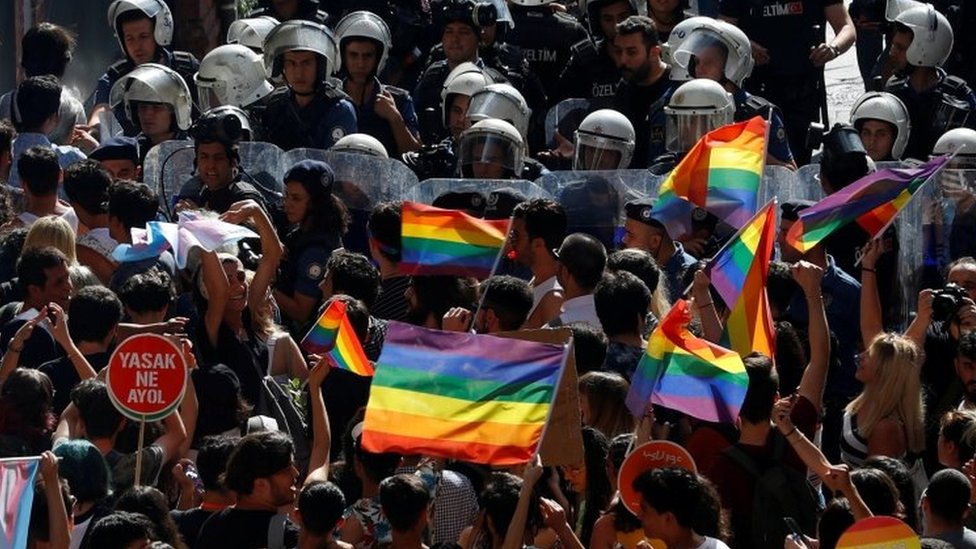
Politicians, legal professionals, political parties, and rights advocates have reacted to the operations targeting LGBTI+ associations, venues, and activists. Statements issued asserted that the operation was political and that the existence of the LGBTI+ community was being targeted.
Last night, police conducted simultaneous operations targeting LGBTI+ associations, venues, and activists under the name “My Family is Safe.”
In a post on his social media account, Justice Minister Akın Gürlek announced that the operations were centered in five provinces and covered a total of fifteen provinces, and that legal proceedings were initiated against 162 individuals, nine associations, and thirteen businesses.
Politicians, legal professionals, political parties, and rights advocates reacted to the operations targeting LGBTI+ associations, activists, and venues.
DEM Women’s Assembly: We will never remain silent in the face of attacks!
The Women’s Assembly of Peoples’ Equality and Democracy Party (DEM Party) stated, “We do not accept the attacks—involving detentions, searches, seizures, and access blocks—targeting LGBTI+ associations, rights defenders, and digital media outlets.”
The statement continued as follows:
“This operation, dubbed ‘My Family is Safe,’ is—as the name implies—an operation aimed at subjugating society. It is clear evidence of the persistent pursuit of policies rooted in monism and sexism.
Every day, women are subjected to violence and murdered within families that are labeled ‘safe.’ Diverse sexual identities do not constitute a security threat to this country, to families, or to society.
The real security issue is the violence, impunity, and discrimination that threaten the lives of women and LGBTI+ individuals.
You cannot keep society safe by silencing human rights defenders, stoking hate crimes, blocking broadcasts, and targeting the freedom of association.
Justice must be for everyone, not just for a single individual or group. The duty of the Ministry of Justice is not to suppress human rights defenders, journalists, LGBTI+ individuals, and democratic organizations, but to safeguard the rights and freedoms of all.
Societal security is achieved not through repression and bans, but by guaranteeing equality, freedom, justice, and the right to life.
As advocates of a shared and equal life together, we will never remain silent in the face of attacks against LGBTI+ individuals!
Those detained must be released immediately!
Justice for all, freedom for all, an equal life for all!”
LGBTİ+ derneklerini, hak savunucularını ve dijital yayın mecralarını hedef alan gözaltı, arama, el koyma ve erişim engelleme saldırılarını kabul etmiyoruz.
“Ailem Güvende” isminin verildiği bu operasyon, adından da anlaşılacağı üzere toplumu tahakküm altına alma operasyonudur.… pic.twitter.com/mvey2Y4XUu
DEM Party MPs Saki and Konukçu issued statements on their social media accounts, reacting to the state’s “policy of impunity.”
In a post on X, DEM Party Istanbul MP Özgül Saki said, “You attack people and the spaces where they show solidarity using fabricated charges.”
Stating that the common denominator among the associations and individuals targeted is their opposition to the “familialist, moralistic, and hate-generating policies” imposed by the government, Saki remarked that, under the guise of “protecting the family,” the government seeks to confine society to a single way of life, target LGBTI+ individuals, and criminalize those fighting for their rights.
LGBTİ+ derneklerine ve aktivistlerine yönelik bu operasyonları kabul etmiyoruz.
DEM Party Istanbul MP Kezban Konukçu also stated that the government, under the guise of “protecting the family,” paves the way for the killing of women and LGBTI+ individuals and encourages this through policies of impunity.
She declared, “Despite hate, Long live life!”
Aileyi değil kadınları, LGBTİ+’ları koruyun!
“Aileyi koruyacağız” diye diye kadınların ve LGBTİ+’ların katledilmesinin önünü açtınız, cezasızlık politikaları ile teşvik ettiniz!
Uydurma suçlarla faşist iktidarınızı tahkim etme politikalarınızın farkındayız ve buna karşı her… https://t.co/wwtAFV0E6F
IHD: We will not yield to the September 12 mentality!
In a statement regarding the operations, the Central LGBTI+ Commission of the Human Rights Association (IHD) declared, “We will not yield to the September 12 mentality.”
Stating that the current situation is not a judicial investigation but rather a political operation—one that aims to eliminate LGBTI+ individuals and independent civil society while forcing society into a monolithic family model under the guise of “protecting the family and children”—the IHD emphasized this “continuity,” noting: “The state mindset of September 12—which shut down associations, banned publications, and demonized those who were different—is being perpetuated today under the name ‘My Family is Safe’ (Ailem Güvende).”
The association concluded: “We stand with LGBTI+ individuals, people living with HIV, and human rights defenders! We will not yield to the September 12 mentality!”
12 EYLÜL ZİHNİYETİNİN “AİLEM GÜVENDE” OPERASYONU: HAK ÖRGÜTLERİNE YÖNELİK SİYASİ TASFİYEYE SON VERİN!
12 Eylül askerî darbesinin yıl dönümünde LGBTİ+örgütlerinin, gazetecilerin ve hak savunucularının hesaplarına erişim engeli getirilmiş; aynı gece saat 01.00’den itibaren çok… pic.twitter.com/69VzgkKlAZ
New Party Izmir Deputy Gökçe Gökçen expressed her reaction with the following words:
“The targeting of LGBTI+ rights defenders amounts to both the penalization of identities and existence and the simultaneous implementation of two bills that failed to pass in parliament. The ‘agent of influence’ law did not pass, and the law against ‘promoting homosexuality’ (!) did not pass.”
“A cheap copy-and-paste example of hate campaigns devised and planned in other countries is being staged in our country, causing great harm to social peace.”
“The banning of a band you listen to, the targeting of an artist whose concert you plan to attend, your child being exposed to workplace fatalities by the ministry, the arrest of a politician you voted for, and the raids conducted on these associations are not isolated incidents; on the contrary, the legitimacy established for one reinforces the others. Therefore, a holistic struggle for rights and freedoms is vital today—and is, in truth, a struggle for dignity.”
LGBTİ+ hakları savunucularının hedef alınması, aynı anda hem kimliklerin ve varoluşun cezalandırılması, hem de meclisten geçirilememiş iki yasanın birden uygulamaya konmasıdır. Etki ajanlığı yasası geçmedi, eşcinselliğe özendirme (!) yasası geçmedi. Geçmemelerinin de bir sebebi…
Karaca: The Minister of Justice is fueling hatred and discrimination
EMEP Deputy Chairperson and Antep MP Karaca reacted to Akın Gürlek, stating, “Imagine a Minister of Justice who criminalizes the constitutional right to organize, personally fuels hatred and discrimination, and spearheads the state-sponsored escalation of hatred and hostility!”
Stating that these operations are conducted to force society into the mold of the “acceptable family” and “acceptable citizen,” Karaca said, “Defending the rights of LGBTI individuals to live and organize means defending the rights and freedoms of everyone in this country.”
Karaca affirmed that they would continue to defend the right to life, equality, constitutional freedoms, and the right to organize against the politics of hatred, repression, and the usurpation of the right to organize, and demanded the release of those detained.
"Aile ve Çocukları Koruma" Kılıfıyla Hedefe Konan Yaşam ve Örgütlenme Hakkıdır!
Bu sabaha karşı LGBTİ derneklerine dönük operasyonda çok sayıda kurum temsilcisi gözaltına alındı.
“Ailem güvende” ismini verdikleri operasyonun kumandasını bizzat Akın Gürlek elinde tutuyor.… https://t.co/RmXbn4QJZ8
The Association of Lawyers for Freedom (ÖHD) stated that the detentions constitute a violation of fundamental rights and freedoms, particularly the freedoms of expression and association.
Noting that the operations coincided with the anniversary of the September 12 coup, the ÖHD remarked, “These events serve as a reminder of just how alive the state’s practices of repression and criminalization directed at diverse identities and lifestyles remain.”
“Defending LGBTI+ rights is not a crime; on the contrary, it is a requirement of a democratic society,” the ÖHD said, calling for an end to the detentions and repressive measures.
Aralarında üyelerimizin de olduğu, Kaos GL Derneği, Spod, Hevi, Pozitif Yaşam Derneği ve diğer tüm LGBTİ+ dernekleri ile hak savunucuları hakkında verilen gözaltı kararları ve yapılan ev baskınlarıyla gerçekleştirilen gözaltılar, ifade ve örgütlenme özgürlüğü başta olmak üzere… pic.twitter.com/2LPzW8i8X8
The Istanbul Branch of the Progressive Lawyers Association (ÇHD) also stated in a post on its X account: “Members serving on the executive and supervisory boards of LGBTI+ associations have been detained in home raids. Association offices are being raided. We stand with LGBTI+ individuals against these attacks that usurp the freedom of association through hate-stoking, moralistic, and family-centric policies!”
LGBTİ+ derneklerinin yönetim ve denetim kurullarında görev yapan üyeler ev baskınlarıyla gözaltına alındı. Dernek ofisleri basılıyor.
SKM: Those detained should be released immediately
In a statement, the Socialist Women’s Assemblies (SKM) asked, “Which family?”
“The male-dominated, heterosexist state is attempting to bring into line—through attacks involving detentions and arrests—anyone who does not fit into the ‘family’ structure where women and LGBTI+ individuals are murdered, subjected to violence, and exploited every day,” the SKM stated, adding, “You cannot erase our existence through detentions, arrests, or bans.”
They called for the immediate release of those detained.
Aralarında Kaos GL yöneticileri ve üyelerinin de bulunduğu çok sayıda LGBTİ+ bugün sabah saatlerinde gözaltına alındı. “Müstehcenlik suçu” ve “Dernekler Kanunu’na muhalefet” gerekçesiyle gerçekleştirilen bu saldırı, “Ailem güvende” olarak adlandırıldı.
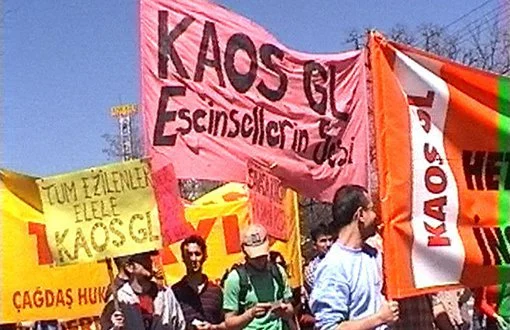
A police operation was conducted against the Kaos GL Association during the night. As a result of the operation, members of the executive and supervisory boards, along with alternate members, were detained at their homes. Dozens of websites and social media accounts belonging to LGBTQ+ associations and activists were blocked.
A police operation targeting the Kaos GL Association and its members was carried out late last night. As a result of the operation, members of the supervisory and executive boards, along with alternate members, were detained.
Kaos GL reported that nearly 50 LGBTQ+ activists were detained at their homes and that police also entered the association’s office.
Operation “My Family is Safe”
On the night of September 12–13, successive operations targeting LGBTQ+ associations, LGBTQ+ activists, and certain venues were carried out across 15 provinces, including Ankara, Mersin, Kuşadası, Istanbul, and Izmir.
According to a statement posted on X by Justice Minister Akın Gürlek, judicial proceedings were initiated against 162 individuals, 9 associations, and 13 businesses across 15 provinces as part of the “My Family is Safe” (Ailem Güvende) operations, which were conducted under the coordination of the Chief Public Prosecutor’s Offices of Istanbul, Ankara, Izmir, Aydın, and Mersin.
“Obscenity” accusation against the association
In an investigation conducted by the Ankara Chief Public Prosecutor’s Office Cybercrimes Bureau, the Kaos GL Association faced accusations of “obscenity” regarding content published on its website and social media accounts. In a decision dated September 11, 2026, the Ankara 4th Criminal Judgeship of Peace noted the Chief Public Prosecutor’s Office’s allegations that “posts containing obscenity” had been shared on Kaos GL’s website and social media accounts in a manner accessible to children; consequently, the prosecution initiated an investigation under the crime of “obscenity” as defined in Article 226 of the Turkish Penal Code.
The fact that the content in question was shared via the association’s official website and social media accounts was also cited as grounds for the investigation. Asserting that the posts were made “using the association’s official web pages and social media accounts as part of the activities of a civil society organization operating under the association’s umbrella,” the prosecution requested an assessment regarding a violation of the Law on Associations.
According to Kaos GL, the decision also authorized the seizure of any evidence, photographs, or printed materials related to the investigation. The judgeship ordered the examination of desktop and laptop computers, mobile phones, tablets, portable storage devices, CDs, DVDs, and other digital materials belonging to the activists. Authorization was also granted to seize the devices if passwords could not be cracked or digital data could not be accessed.
Simultaneous raids on LGBTI+ venues
Coordinated by the Istanbul Chief Public Prosecutor’s Office, teams from the Istanbul Provincial Security Directorate and the Provincial Gendarmerie Command conducted simultaneous operations on numerous venues in Beyoğlu and Şişli, alongside the operation targeting Kaos GL. Raids were carried out at various locations, including nightclubs and massage parlors in Taksim, Cihangir, and on Istiklal Avenue.
This operation, conducted under the coordination of the Istanbul Chief Public Prosecutor’s Office, was also mentioned in the documentation regarding the police operation against the Kaos GL Association.
Access to websites and social media accounts blocked
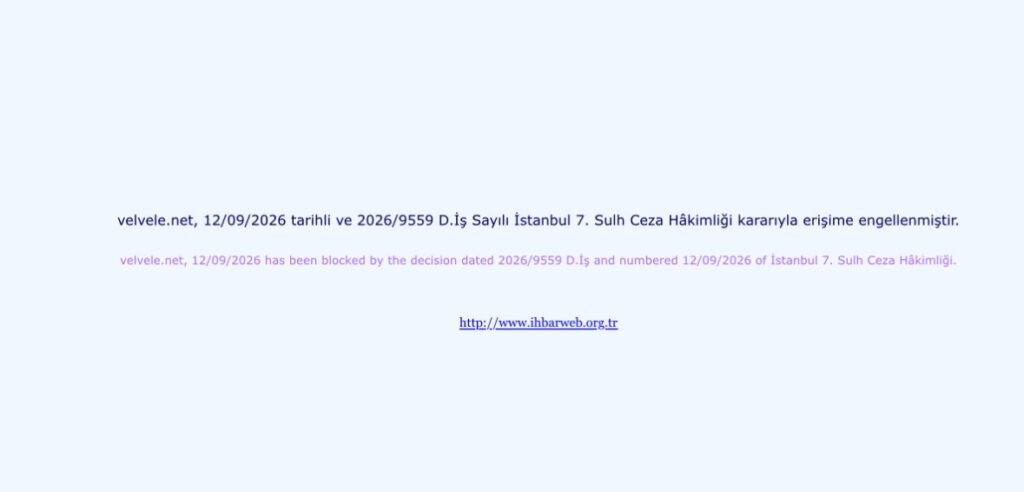
Dozens of websites and social media accounts belonging to LGBTI+ associations and activists have been blocked by a decision of the Istanbul 7th Criminal Judgeship of Peace, dated September 12, 2026, and numbered 2026/9559.
It was notable that the decisions to block access were issued on a Saturday, outside of standard business hours.
Websites blocked from access: Kaos GL Association, 17 May Association, ÜniKuir, Pembe Hayat Derneği, SPoD, Genç LGBTI+ Derneği, Lambdaistanbul, Muamma LGBTI+ Derneği, velvele.net.
Blocked X accounts: Levent Pişkin , Seyhan Arman, Zeynep Esmeray Özadikti, Yasemin Öz, Boğaziçi Üniversitesi LGBTİA+ Çalışmaları Kulübü, Cinsel Eğitim Tedavi ve Araştırma Derneği, Özgür Renkler Derneği, Queer Adana, Bilkent Üniversitesi resmi LGBTQIA+ öğrenci topluluğu, Velvele, İnter Dayanışma, Cinsel Şiddetle Mücadele Derneği, İzmir LGBTİ+ Onur Haftası.
Instagram accounts blocked from access but not yet rendered invisible from within Turkey: Yıldız Tar, 17 Mayıs Derneği, Seyhan Arman, SPoD, Pembe Hayat Derneği, Boğaziçi Üniversitesi LGBTİA+ Kulübü, Hacettepe Kuir Araştırmaları, Enes Hocaoğulları, HEVİ LGBTİ+ Derneği, İÜ Radar.
Source: KaosGL Association
10 years of the legal struggle of academics for peace
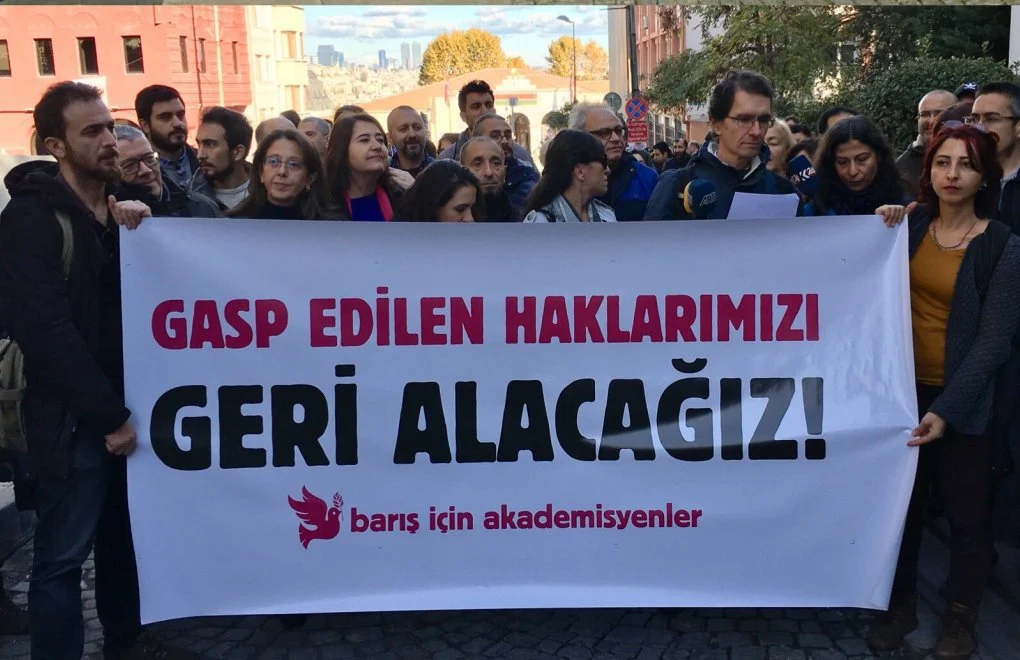
Academics for Peace declared that in the 10 years since being expelled from public service under State of Emergency Decree-Laws (OHAL KHK), 385 of their applications were rejected, 189 lawsuits were dismissed and 173 were ruled in the applicants’ favor. Out of hundreds of applications, only 18 of the scholars were granted to be reinstated to their posts.
The Academics for Peace, who were dismissed under the State of Emergency Decree-Law after issuing a “Statement forPeace,” released a declaration detailing the events that have unfolded since the first expulsions ruled a decade ago.
Through the announcement on their social media account, the Academics for Peace shared statistical data covering the periodfrom 2016 to 2026. According to this data, 10 State of Emergency Decree-Laws issued between 2016 and 2018,resulted in the expulsion of 406 academics, and 385 of the applications made to the Inquiry Commission on State of Emergency Measures (OHAL İşlemleri İnceleme Komisyonu) were rejected.
The commission, established in 2017, did not finish announcing its rejection decisions until the end of 2021. Only after this date could applications be filed with the courts. Emphasizing this barrier, Academics for Peace stated, “Access to justice was blocked for nearly 5 years.”
189 Rejectionsfrom the Administrative Courts
Alongside the data on the administrative courts and regional administrative courts, the announcement provided information regarding the Council of State (Danıştay) and Constitutional Court (Anayasa Mahkemesi).
Accordingly, of the lawsuits brought before the administrative courts, 189 resulted in rejection while 173 were accepted. As for the regional administrative courts, the appeals in 124 cases resulted either in the acceptance of the appeal or the reversal of the decision, both against the applicant.
In contrast, 147 of the cases concluded with a reversal or an acceptance in favor of the applicant, while no decision was reached in 91 cases.
As for the 5th Chamber of the Council of State (Danıştay 5.Daire), where the cases of the Academics for Peace were brought, 18 cases resulted in a favorable upholding decision, finalizing their reinstatement to office. In 4 cases, an unfavorable upholding decision was issued, leading them to be brought before the Constitutional Court. In one case, an unfavorable reversal decision was issued; since this ruling differed from the regional administrative court’s judgment, the case is currently being reconsidered by the regionaladministrative court (BİM).
In an additional 29 cases, the process resulted in favorable reversal. However, as the rulings differ from the Regional Administrative Court’s decisions, they are being re-evaluated by the regional court. In 9 of the cases, the regional administrative court insisted on its original decision to accept the appeal against the applicant. The cases were subsequently brought before the Plenary Session of Administrative Law Chambers of the Council of State (Danıştay İdari Dava Daireleri Kurulu).
Meanwhile, 219 cases remain pending without a decision.
4 Cases are currently before the Constitutional Court
The 4 cases brought before the Constitutional Court by the Academics for Peace are currently being heard. 9 case files are pending before the Plenary Session of Administrative Law Chambers of the Council of State.
Background
The 406 academics who signed the declaration titled “We will not be a party to this crime!” on January 11, 2016, were expelled under Decree-Laws signed by then-President Recep Tayyip Erdoğan on September 1, 2016. In addition, 822 of the signatory academics stood trial before the Heavy Penal Court.
Although the Heavy Penal Court issued acquittals, ruling that the petition fell under freedom of expression, the Academics for Peace were still not reinstated to their posts. This was because, regarding the applications the scholars had pending before the European Court of Human Rights during this period, it was ruled that “domestic remedies must first be exhausted.”
Following the coup attempt on July 15, 2016, the State of Emergency (OHAL) Commission was established to handle all case files related to the Academics for Peace and the Gülenmovement. This commission issued rejection decisionsregarding the reinstatement of nearly all Academics for Peace. Because it took until 2021 for the commission to announce these rejection decisions, the academics’ access to a higher court was delayed by approximately 5 years.
As a result, the Regional Administrative Court proceedingsbegan in 2019. The legal process, which has now spanned nearly 10 years, is still ongoing.
As of June 2023, it was reported that numerous Academics for Peace, who had been dismissed under the decree-laws, were still not reinstated by universities, despite court rulings ordering their return to work.
According to the report regularly published by the Academics for Peace, while some courts rule in favor of the actions for annulment filed for their reinstatement, others might reject.
Furthermore, scholars of every level are being subjected to renewed security clearances, which include everything from screening social media accounts to reviewing memberships in foundations, associations, and similar organizations. As a result,the reinstatement processes take even longer, progressively restricting the academics’ active and critical production of knowledge.
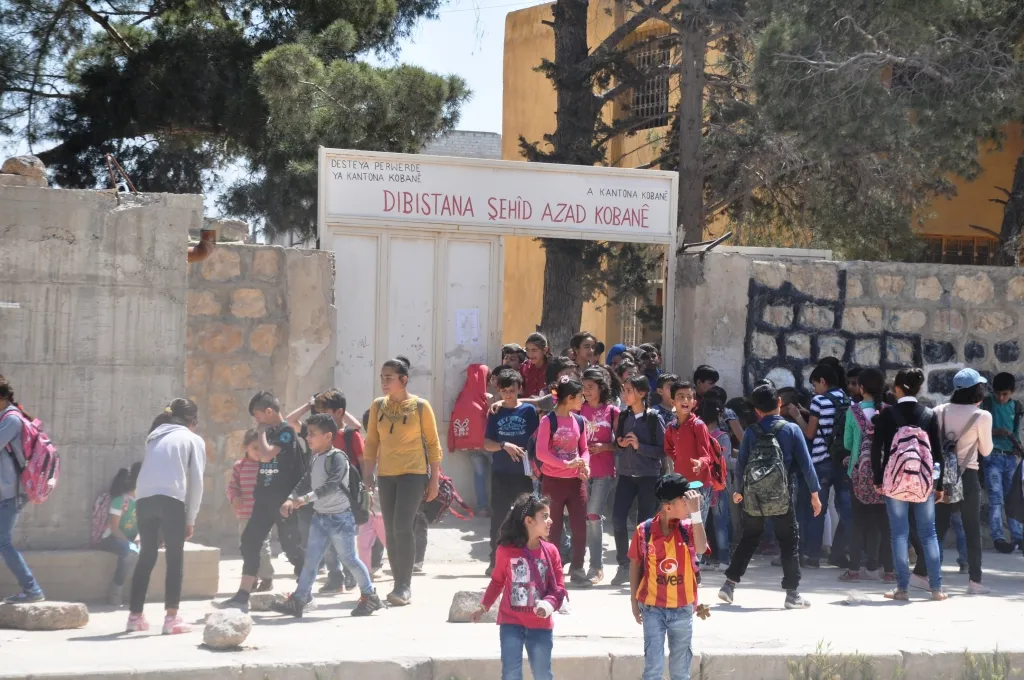
Kurdish, which was excluded from education, publishing, place names, and public life in Syria for decades, is entering the state’s official education system for the first time in the country’s modern history. Under a regulation announced by the interim Damascus administration on 28 August, Kurdish will be taught for three hours a week in public and private schools in areas with large Kurdish populations, while one additional hour will be allocated to social and cultural activities. The decision marks a new phase in the language repression that has accompanied denaturalisation, Arabisation, and prohibition policies since the 1960s.
Rojava, Foto: ANHA
Under a decision issued on 28 August 2026 by Muhammad Abd al-Rahman, the Education Minister of the interim Damascus administration, Kurdish was added to the curricula of public and private schools in Kurdish-populated areas as a national language.
Under the decision, an average of three class hours per week will be allocated to Kurdish lessons. One hour per week will also be set aside for Kurdish social and cultural activities.
The decision states that Kurdish will be regarded as one of the core subjects and that students’ grades in the subject will count toward their overall academic average.
The Syrian Ministry of Education also set out the qualifications required of teachers who will teach Kurdish.
Teachers must be university graduates or graduates of teacher-training institutes, with specialisation in Kurdish.
Where necessary, high-school graduates proficient in Kurdish will also be allowed to teach.
Prospective teachers will be required to take written and oral examinations to demonstrate their proficiency in Kurdish.
Kurdish, now incorporated into the education system for the first time in modern Syrian history, had previously been banned by various laws and administrative decisions. Apart from the limited relaxation during the French Mandate period, the ban persisted until the present day.
However, policies toward Kurdish in Syria were not limited to excluding a language from education or public life. Language policy was implemented alongside measures concerning citizenship, place names, personal names, cultural activities, publishing, education, and demographic engineering. Kurdish-language repression in Syria can therefore be seen as part of a broader state policy intended to reduce the public visibility of Kurdish identity and define the country around a single Arab national identity.
Kerim Yıldız’s 2005 study, The Kurds in Syria: The Forgotten People, notes that Syria’s Kurdish population was long estimated at between 1.5 and 2 million, concentrated especially around al-Hasakah, Afrin, Kobani, and Damascus. According to the book, rather than recognising Kurds as an indigenous ethnic or national community of Syria, the state often viewed them as migrants from Turkey or as a security threat. This approach formed the core ideological framework used to legitimise restrictions on the public and educational use of Kurdish.
1920–1946: The French Mandate period
After the First World War, Syria came under French mandate rule. In order to contain Arab nationalism, the French administration pursued a “divide and rule” policy that allowed different communities a degree of local autonomy and space for organisation.
During this period, Kurds, along with some other communities, enjoyed a relatively broader sphere of cultural activity. Kurdish intellectuals and political circles were able to form organisations, while Kurdish publishing and cultural activities became more visible. Hawar, the journal published by Celadet Ali Bedirxan between 1932 and 1943, played an important role in developing a Latin alphabet-based writing system for Kurmanji Kurdish. The journal is considered one of the most significant products of Kurdish cultural life in Syria.
Nevertheless, when France withdrew from Syria in 1946, it left behind no lasting constitutional or legal arrangements guaranteeing Kurdish cultural and linguistic rights. The relative freedom of the mandate era therefore did not evolve into a sustainable rights framework after independence.
1946–1958: The rise of Arab nationalism
After Syria gained independence in 1946, its political system increasingly took shape around Arab nationalism. While the state’s official identity was defined through the idea of “Arab Syria,” the distinct ethnic and linguistic identities of Kurds, Armenians, Syriacs, and other communities were relegated to a secondary position in public life.
Kurdish was not yet banned with the same intensity in every sphere. However, education, state institutions, and official communication were conducted in Arabic. There was no public policy for teaching Kurdish in schools, and Kurdish publishing came under increasingly tight control.
The formation of the United Arab Republic by Syria and Egypt in 1958 reinforced centralist and Arab nationalist policies. According to Kerim Yıldız, during Gamal Abdel Nasser’s rule, Kurds were associated with accusations of “treason” and “separatism”; Kurdish was banned, Kurdish publications were confiscated, and pressure on Kurdish music intensified.
Human-rights reports also indicate that the prohibition of Kurdish publications became clearly institutionalised from 1958 onward. According to these reports, the distribution and publication of Kurdish-language material were banned, and Kurdish was prevented from being used as a language of instruction in schools and universities.
1962: Denaturalisation
One of the most significant turning points in the Kurdish question in Syria was the special census conducted in al-Hasakah Province in 1962.
Decree No. 93 of 23 August 1962 ordered a special census in al-Hasakah. It was carried out in a single day, on 5 October 1962. The government said the purpose was to identify “foreign infiltrators” and regularise population records. However, according to Human Rights Watch, the process was conducted largely arbitrarily. Members of the same family were assigned different statuses, and many Kurds born in Syria were stripped of citizenship.
Kurds were divided into those who retained Syrian citizenship, those classified as ajanib—meaning “foreigners”—and maktumin, or “unregistered” people who were not entered into any official records.
Human Rights Watch reported that around 120,000 Kurds were deprived of citizenship as a result of the 1962 census, while later reports suggested that the figure was tens of thousands higher. A 1996 Human Rights Watch report stated that the government had stripped 142,465 people of citizenship or classified them as foreigners, while Kurdish sources cited higher figures.
Denaturalisation was not a direct language ban. Yet it severely affected the social conditions underpinning Kurdish language and identity. People deprived of citizenship faced difficulties accessing education and public services; lost opportunities to work in public institutions or hold state positions; could not obtain travel documents or passports; encountered problems with property ownership, marriage, and birth registration; and were unable to secure their children’s status.
For this reason, the policy also indirectly weakened the transmission of Kurdish from one generation to the next. Communities whose access to education, official records, and state institutions was restricted could no longer use their language at a public or institutional level.
1963–1970: The Ba’ath regime
When the Ba’ath Party came to power in 1963, the Arab nationalist conception of the state became more systematic. Syria’s political, educational, and administrative institutions were reorganised around Arab national identity.
A 1963 report by Muhammad Talab Hilal, then responsible for internal security in al-Hasakah, is regarded as one of the key documents revealing the state’s approach to the Kurdish population. It proposed removing Kurds from the region, denying them education, restricting their employment opportunities, relocating Arab settlers to the area, and preventing people who did not speak Arabic from voting or holding public office.
These proposals show that policies toward Kurdish were not viewed merely as a cultural matter. For the state, language was treated as a vehicle of Kurdish identity and therefore as a political threat. Speaking Kurdish or carrying out Kurdish cultural activities was frequently associated with allegations of “separatism” or of harming “national unity.”
Reports published in 1967 stated that references to Kurds had been removed from school geography textbooks. Kurdish presence in Syria’s history and geography was thus rendered invisible in the educational curriculum.
1970–1976: The Arab Belt Project
After Hafez al-Assad came to power in 1970, demographic and administrative policies directed at Kurdish regions continued.
From 1973 onward, the project known as the “Arab Belt” or “Arab Cord” was implemented along the borders with Turkey and Iraq in al-Hasakah Province. Human Rights Watch reported that the project extended along a strip approximately 10–15 kilometres wide and 375 kilometres long. Arab families were settled on Kurdish-inhabited land, some Kurdish land was confiscated, and new settlement centres were established.
A report submitted to United Nations human-rights mechanisms states that Kurdish-owned agricultural land in al-Hasakah was expropriated in 1973 and that the Ba’ath Party administration established 41 settlement centres.
The Arab Belt Project affected language in three ways: Kurdish place names were replaced with Arabic names; Kurds’ historical and geographical ties to their land were erased from official records; and efforts were made to reduce the concentration of Kurdish-speaking populations in border areas.
Although the Syrian government announced that the project had ended in 1976, the settlements that had been established were not dismantled, and a substantial number of displaced Kurds were unable to return to their land.
1977: Kurdish place names changed
From the mid-1970s onward, the Arabisation of Kurdish village and town names accelerated.
Instruction No. 15801 of May 1977 ordered the replacement of numerous Kurdish place names in the Afrin region with Arabic ones. During this period, Kobani became Ayn al-Arab.
Place names are not merely administrative labels. They carry communities’ historical memory, relationship with geography, and collective identity. Changing them thus meant not only removing Kurdish from public life but also officially erasing the historical connection between Kurdish communities and the regions where they lived.
The 1980s: Restrictions on public use
During the 1980s, bans on Kurdish began to be enforced through more explicit administrative decisions.
According to information submitted in United Nations documents, the al-Hasakah Governorate banned the use of Kurdish in workplaces through Decision No. 1012/S/25 of 11 November 1986. Another decision, No. 1865/S/25, issued on 13 March 1989, reaffirmed the prohibition on speaking Kurdish and also banned songs in languages other than Arabic at weddings and holiday celebrations.
According to Kerim Yıldız, the 1986 decision also prevented the use of Kurdish in workplaces, cinemas, and cafés. Kurdish was thus suppressed not only in educational institutions but also in a range of public spaces in everyday life.
A secret decree reportedly issued in 1982 again banned the use of Kurdish as a language of instruction in schools and universities, as well as its use and teaching in official institutions. The implementation of this decision made the institutional transmission of Kurdish almost impossible.
As a result, Kurdish children could not receive education in their mother tongue. Kurdish literacy instruction remained outside formal educational institutions, and some families were forced to organise classes at home or in secret to teach their children Kurdish.
The 1990s: Bans on namesand publishing
During the 1990s, bans on Kurdish expanded to personal names, business names, and publishing.
From 1992 onward, it became more difficult to give children Kurdish names in al-Hasakah. According to Kurdish sources, instructions from the Ministry of Interior required approval from security authorities for non-Arabic names. This practice particularly targeted Kurdish names.
Intervening in a child’s name showed that language policy had extended into family and private life. The state also controlled how a child’s identity would be expressed in official records.
In 1994, al-Hasakah Governor Subhi Harb ordered businesses bearing Kurdish names to change their names into Arabic within one week. Local authorities were instructed not to issue licences to Kurdish-named shops, hotels, and restaurants. Existing businesses could be closed or their owners subjected to legal action. Human Rights Watch reported seeing Arabic, Armenian, and Russian signs in Syria in 1995, but no Kurdish signs.
The printing, distribution, and import of Kurdish books and magazines were largely prevented. Publishers and printing houses risked punishment under broad and vague pretexts such as “national security,” “national unity,” or “public order.”
Those who wanted to publish in Kurdish sometimes had to print their work in neighbouring countries such as Lebanon and smuggle it into Syria. The 2002 arrest of Ibrahim Nasan for distributing Kurdish cultural and educational materials is one example showing that this policy continued into the 2000s.
2000–2010: Continued restrictions
Although Bashar al-Assad’s rise to power created expectations of reform in some circles, the state’s basic policy toward Kurdish did not change.
Kurdish was not recognised as an official language. Kurds were not allowed to open private language schools or institutions providing education in Kurdish. While Armenian, Syriac, and Circassian communities were able to establish linguistic and cultural institutions to a limited extent, no comparable space was opened for Kurds.
Kurdish-speaking teachers were prevented from using Kurdish at school. Pressure on Kurdish publications continued. Kurdish music, cultural gatherings, and Newroz celebrations were subject to security monitoring.
The events that began in Qamishli in 2004 again demonstrated that the Kurdish question was handled through the state’s security-centred approach. Kurdish activists, journalists, and people involved in cultural activities were detained after the events. Kurdish publishing, cultural expression, and political organising were often treated together as suspected “separatist activity.”
Reports submitted to the United Nations stated that the Syrian government used investigations, detention, restrictions on movement, and criminal charges to prevent Kurds from speaking their mother tongue. The same report noted that Kurdish use was not officially recognised and that the administrative decisions of 1986 and 1989 remained in force.
The situation after 2011
The outbreak of war in Syria in 2011 brought a de facto change in the status of Kurdish. As the Syrian government’s control over the north and northeast weakened, Kurdish political and military structures took control of certain areas.
From 2012 onward, the Autonomous Administration of North and East Syria began using Kurdish in education and public life. Kurdish was included in the education system alongside Arabic and Syriac. In some regions, children received instruction in their mother tongue in the early years, with other languages added to the curriculum in later grades.
This development represented a significant break from the Arabic-centred education policy maintained by Syria’s central government for decades. However, diplomas and educational documents issued under this system were not fully recognised in the rest of Syria or internationally. This created difficulties for Kurdish-educated students seeking admission to university and official recognition of their qualifications.
Meanwhile, after Afrin came under the control of Turkey-backed forces in 2018, Kurdish education and public use faced a new source of pressure. Reports stated that the region’s curriculum was reorganised around Turkish and Arabic and that Kurdish’s place in education was weakened. Thus, in the post-war period, pressure on Kurdish ceased to be concentrated in one centre; policies of different actors in different regions became decisive.
2026: Kurdish becomes a national language
The year 2026 marked a significant change in the legal status of Kurdish in Syria.
According to a SANA report of 26 August 2026, Decree No. 13, issued by Ahmed al-Sharaa, head of the interim Damascus administration, on 16 January 2026, defined Kurds as an integral and inseparable part of the Syrian people and recognised Kurdish as a “national language.” The decree permitted Kurdish to be taught in public and private schools in areas with substantial Kurdish populations.
Under the Ministry of Education’s decision of 28 August, Kurdish will be taught in schools beginning in the 2026–2027 academic year.
It was not a policy about language alone
This historical trajectory shows that language policy in Syria cannot be considered in isolation. The banning or suppression of Kurdish was implemented alongside denaturalisation, forced displacement, land confiscation, the changing of place names, the rejection of Kurdish names, and the control of publishing.
In other words, the state regarded Kurdish not simply as a “foreign language,” but as an element carrying Kurds’ collective identity and political demands. For this reason, speaking, writing, teaching, or making Kurdish visible in public was often transformed from a cultural activity into a matter of security.
A long process of prohibition
The history of Kurdish in Syria is as much a history of prohibitions and repression as it is a history of preserving the language within families, in clandestine lessons, at cultural gatherings, and in the diaspora. The limited cultural freedom of the French Mandate period was curtailed by Arab nationalist state policies after independence. The 1962 census weakened the social and institutional transmission of the language by stripping a significant section of the Kurdish population of citizenship. The Arab Belt Project of the 1970s deepened this policy through changing place names and demographic interventions. From the 1980s through the 2000s, restrictions continued on the use of Kurdish in education, workplaces, publishing, and personal and business names.
After 2011, a new period began for Kurdish education and administrative use in northeast Syria. Yet this development did not become a common legal framework across the country. The recognition of Kurdish as a national language in 2026 and its introduction as a school subject are viewed as a significant break with the former policy of denial. Whether this will develop into a lasting rights framework will depend on whether use of Kurdish in universities and public institutions is guaranteed, and on how the legacy of denaturalisation is addressed.
Niha+ Research File · Syria
From Prohibition to the Curriculum: Kurdish Returns to Public Life in Syria
The interim Damascus administration’s decision of 28 August 2026 adds Kurdish to the curricula of public and private schools in Kurdish-populated areas as a national language. The move is seen as the beginning of a new era for a language excluded from education, publishing, and public life for decades.
Decision date
28 August 2026
Scope
Public and private schools in Kurdish-populated areas
Historical background
Language, identity, and citizenship policies from the 1920s to the present
01 /
What is at the centre of the decision?
The new regulation does not treat Kurdish merely as an elective or symbolic activity. Kurdish grades will count toward students’ overall academic average, and the language is defined as one of the core subjects. Teacher selection will also require Kurdish specialisation and written and oral proficiency examinations.
28 August 2026 · Ministry of Education Decision
For the first time in modern Syrian history, Kurdish is becoming part of the official education system.
Apart from the limited cultural freedom of the French Mandate period, Kurdish was largely excluded from education and public life under post-independence state policies.
3 hoursWeekly Kurdish classes
An average of three class hours per week will be allocated to Kurdish lessons.
1 hourCultural activity
One additional class hour per week will be allocated to Kurdish social and cultural activities.
GradedIncluded in overall average
The Kurdish course grade will be added to students’ overall academic average.
TestedTeacher qualification
Prospective teachers will take written and oral tests to demonstrate Kurdish proficiency.
Teaching requirement / Specialisation
Teachers of Kurdish must be university graduates or graduates of teacher-training institutes, with specialisation in Kurdish.
Where necessary / Temporary solution
When qualified teachers are unavailable, high-school graduates proficient in Kurdish may also be permitted to teach.
02 /
Before the decision: Four historical thresholds
Rather than a conventional timeline, this section focuses on four periods that shaped Kurdish’s public status: limited cultural space, state-led exclusion, the spread of bans into daily life, and the de facto education system that emerged after the war began.
1920–1946
Limited cultural space under the Mandate
During the French Mandate, Kurdish intellectuals had a relatively broader space for organisation and publishing. Celadet Ali Bedirxan’s Hawar journal, published from 1932 to 1943, helped develop a Latin alphabet-based writing system for Kurmanji.
1946–1977
Arab nationalism and exclusion
After independence, the state’s official identity was built around Arabness. The 1962 al-Hasakah census stripped thousands of Kurds of citizenship; from 1973, the Arab Belt Project was implemented and Kurdish place names were Arabised.
1980–2011
Bans spread into everyday life
Kurdish use was restricted in schools, workplaces, publishing, and cultural events. Kurdish names, signs, books, and music faced administrative oversight, bans, and the risk of criminal penalties.
2011–2026
From de facto education to official status
After 2011, Kurdish entered the education system in northeast Syria alongside Arabic and Syriac. The model was not recognised nationally, but the 2026 decision makes Kurdish part of the central education system for the first time.
03 /
It was more than a ban on a language
Language policy was part of a broader system designed to limit the public visibility of Kurdish identity.
Repression of Kurdish in Syria was not only about the language used in textbooks or government offices. Denaturalisation, displacement, changes to place names, rejection of personal names, control of publishing, and restrictions on cultural activities were interconnected policies. In this framework, speaking, writing, or teaching Kurdish was often treated not as a cultural right but as an issue of security and “separatism.”
E
Barrier to mother-tongue education
Kurdish was not a language of instruction in state schools for decades, and private Kurdish educational institutions could not be opened.
C
Loss of citizenship
The 1962 census produced statelessness that limited tens of thousands of Kurds’ access to education and public services.
P
Spatial memory
Changing Kurdish village and town names erased the language’s traces in geography from official records.
P
Pressure on publishing and culture
Books, magazines, music, and cultural activities were restricted through censorship, confiscation, and the threat of investigation.
Conclusion
The 2026 decision is a historic threshold, but it does not mean that language equality has been achieved.
Bringing Kurdish into the education system is a clear break with the former policy of open prohibition and denial. Yet the decision does not grant Kurdish official-language status equal to Arabic, and it limits implementation to Kurdish-populated areas. Its durability will depend on teacher and curriculum capacity, the possibility of using Kurdish in universities and public institutions, and how the consequences of past citizenship exclusion are addressed.
Sources
Kerim Yıldız, The Kurds in Syria: The Forgotten People
Human Rights Watch, Syria: The Silenced Kurds
Kurdish Initiative for Syria, Persecution and Discrimination against Kurdish Citizens in Syria
Syrians for Truth and Justice, How the 1962 Census Destroyed Stateless Kurds’ Lives and Identities
Syrians for Truth and Justice, Curricula in Afrin: Between “Turkification” and Restrictions on the Kurdish Language
North Press Agency, Multi-language Curriculum in Northeast Syria Lacks Official Recognition
In a press conference in Damascus after meeting with Syria’s interim President Shara, DSG General Commander Mazlum Abdi announced the end of the DSG’s mission as a military force and the completion of the integration process into the brigades within the Syrian army.
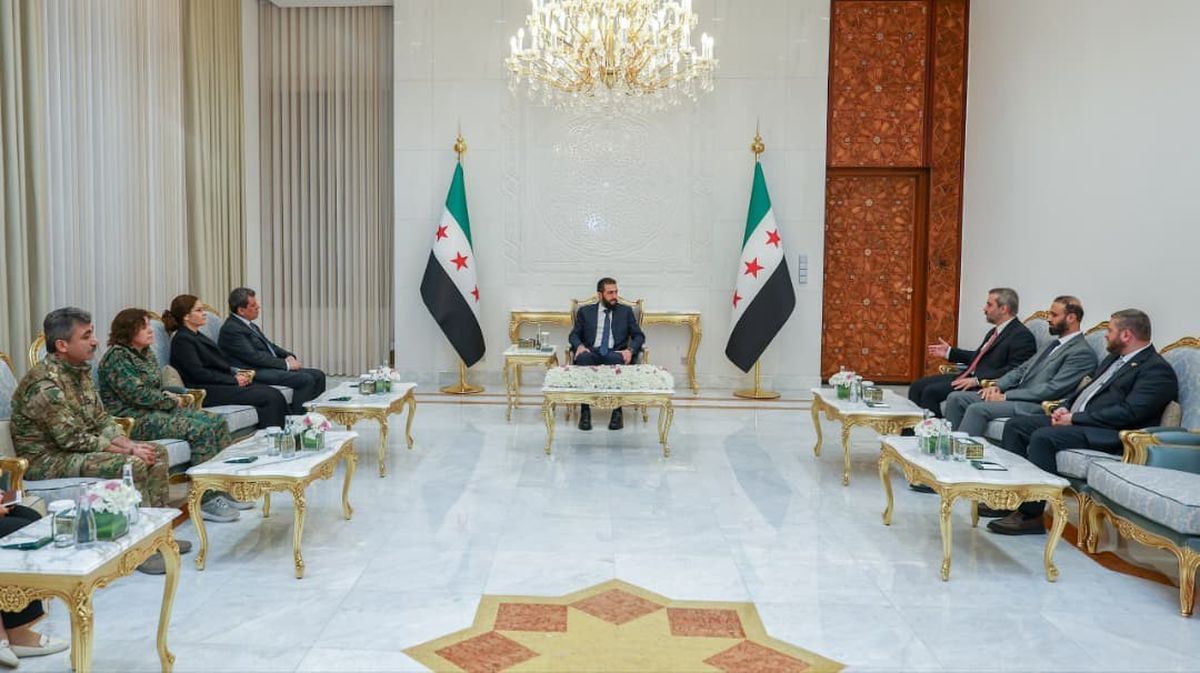
Mazlum Abdi, Ilham Ahmed and a delegation visited Ahmed al-Shara in Damascus.
Ilham Ahmed, Co-Chairman of the Department of Foreign Relations for Northern and Eastern Syria, and Mazlum Abdi, General Commander of the Syrian Democratic Forces (SDF), met in Damascus with Syrian Foreign Minister Assad Shaybani and subsequently with interim President Ahmed al-Shara. The meeting with Shara was attended by Syrian Deputy Defense Minister Sîpan Hemo, YPJ General Command Member Newroz Ehmed, as well as Foreign Minister Assad Shaybani and Syrian Presidential Special Representative responsible for the implementation of the January 29 agreement Ziyad al-Ayish.
After the parleys, Abdi held a press conference at the People’s Palace in Damascus and announced the end of the SDF’s mission as a military force. Stating that an important page in Syria’s history has closed, Abdi announced that the process of integration into the brigades within the Syrian army has been completed. Stating that the new era should be shaped on the basis of “peace, stability and the reconstruction of the country”, Abdi said, “Following the agreement reached with President Ahmed al-Shara and the completion of the integration process of our forces into the brigades within the Syrian army, today we declare with a sense of responsibility that we are ending the mission of the Syrian Democratic Forces and dissolving it as an independent military force.”
Stating that the SDF has assumed great responsibility in one of the most difficult periods in Syria since its establishment, Abdi said that QSD fighters liberated many cities and regions first from the Baath regime and then from ISIS. “We will not forget the sacrifices of the martyrs. They fought not to fight, but for a day when Syrians will no longer have to fight.” Abdi emphasized that the new era should be the beginning of the transition from the battlefields to the reconstruction sites and from the era of weapons to the era of peace.
Reminding that the Kurdish people have been struggling for the right to education in their mother tongue for decades, Abdi said that President of the transitional government Ahmed al-Shara has made several statements to protect this right. “This year we will work to implement this decision and in the near future we will be able to build on it,” Abdi said, adding that they demanded the Damascus administration to take a clear stance on the right to education in the mother tongue and to develop the existing decision in the future.
What kind of Syria?
Stating that Syria must be a country for Arabs, Kurds, Syriacs, Assyrians, Turkmens and all other peoples and components, Abdi said: “The Syria we want to build is a Syria for all its peoples and components. A united and secure Syria must protect the rights and dignity of all citizens and offer a better future for new generations.” Abdi ended his speech by commemorating those who lost their lives within the SDF.
Barrack: There should be education in Kurdish
US Ambassador to Turkey and Special Envoy for Syria and Iraq Tom Barrack, in a statement on his X account regarding the dissolution announcement of the SDF, described the dissolution decision as a historic development and said, “By paving the way for the orderly integration of the SDF into Syrian state institutions, it has transformed a past division into a lasting partnership and restored the opportunity for the Syrian people to shape their shared future” Tom Barrack,
“Recognizing the Kurdish language in education and giving our valued partners Mazlum Abdi and Ilham Ahmed important roles in the Syrian government is a sign of respect for their leadership, the sacrifices of our Kurdish partners and their constructive contribution to regional stability. Thus, yesterday’s divisions are transformed into tomorrow’s common purpose,” he said.
Shara met with Ahmed from YPJ
Speaking to The Amargi after Barrack’s announcement that Abdi and Ahmed had been given important positions, Ilham Ahmed told The Amargi that she and Abdi had been appointed to “new positions within the Syrian state”. However, the Syrian interim government has not yet made an official statement on the issue.
On the other hand, YPJ Command member Newroz Ehmed met with Syrian Interim President Ahmed al-Shara.
Newroz Ehmed, a member of the Women’s Defense Units (YPJ) Command, and Syrian Interim President Ahmed al-Shara met in the Syrian capital Damascus. During the meeting, it was stated that the files related to the YPJ within the scope of the January 29 Agreement and the next step to be taken in the implementation of the agreement were discussed.
Footage has emerged of an attack on over 70 Kurdish seasonal workers who traveled from Şırnak to Zonguldak. DEM Party MP Newroz Uysal released a statement following the social media footage, confirming that judicial proceedings have been initiated. Shortly after, a similar attack on Kurdish seasonal workers was reported in Düzce.
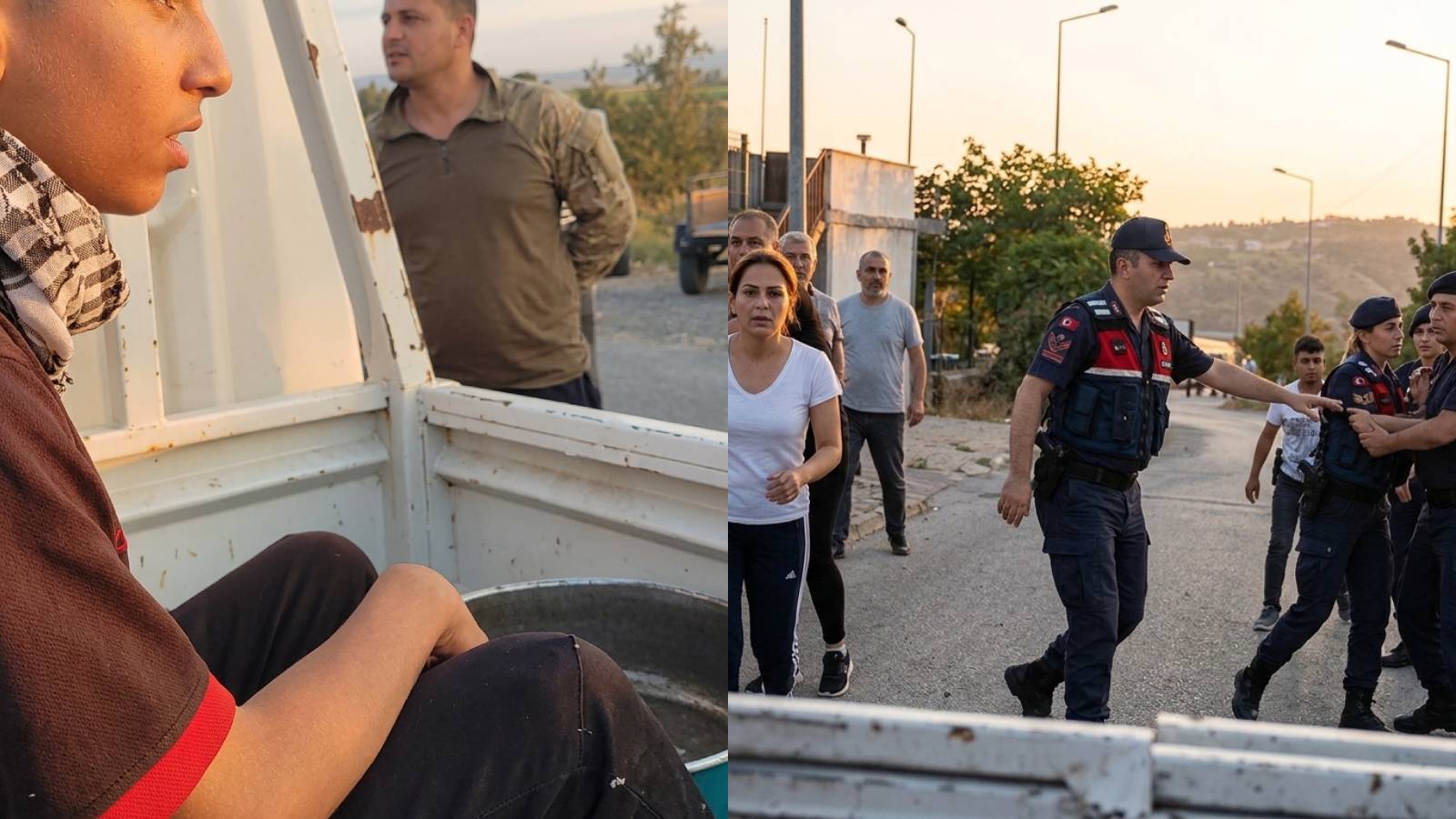
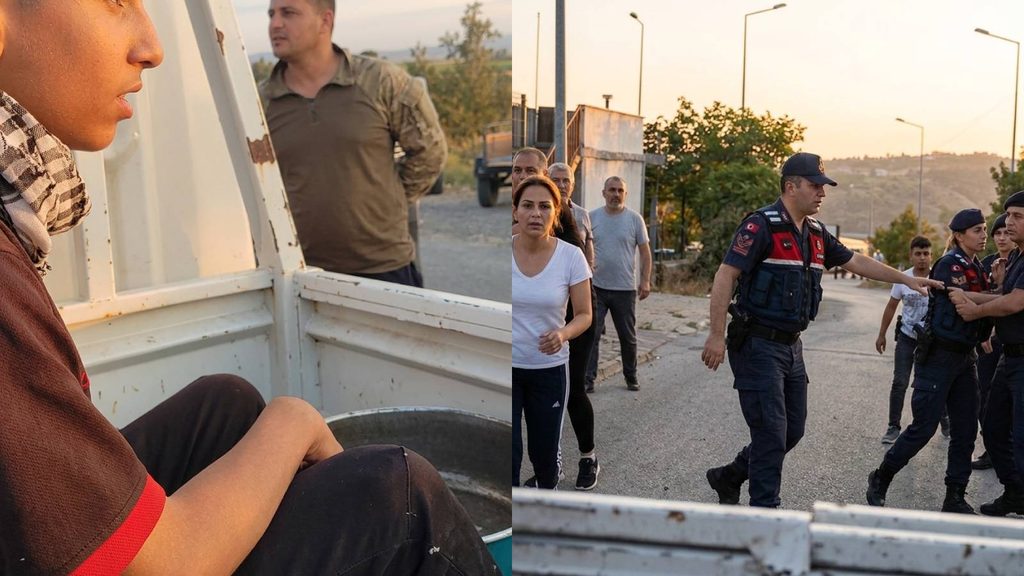
More than 70 Kurdish workers from the Cizre and Silopi districts of Şırnak, who went to work as seasonal hazelnut harvesters in the Bektaşlı village of Alaplı, Zonguldak, have been under attack for two days. Footage of the assault was widely shared on social media.
DEM Party Şırnak MP Newroz Uysal Aslan issued a statement in response to the footage and growing public concern. She stated that she received information about the attack yesterday evening. After the workers made contact with the party this morning (August 23), she held talks with the Zonguldak Governorship and the Alaplı District Governorship.
They were attacked twice
Aslan shared that during her conversation with the workers, she was informed that gendarmerie forces had intervened to ensure their safety. However, she noted that the workers were attacked once again in the evening while returning from the fields.
In her statement, Aslan pointed out that despite the presence of gendarmerie forces at the scene in the public video clips, they failed to prevent the attack. She stressed that the physical safety of the workers and their families must be secured immediately and effectively.
Judicial process initiated
According to the statement, an investigation into the attack has been launched by the Alaplı Chief Public Prosecutor’s Office.
Noting that seasonal agricultural workers travel hundreds of kilometers to Zonguldak to earn a living, Aslan stated, “Ensuring the physical safety of our people is the responsibility of public authorities.” She affirmed that they would closely monitor the process to ensure the security of the workers and their families, a thorough investigation into all aspects of the attack, and the prevention of similar incidents in the future.
*Footage surfaced on social media
Another attack reported in Düzce
Following the racist attack targeting Kurdish seasonal workers in Zonguldak, a similar incident occurred in Düzce. Kurdish workers who traveled from Mardin to the Cumayeri and Gümüşova districts of Düzce told the Mezopotamya Agency (MA) that they were targeted at their residence.
Speaking to MA, the workers expressed deep anxiety over the assault and mentioned that they were considering leaving the area.
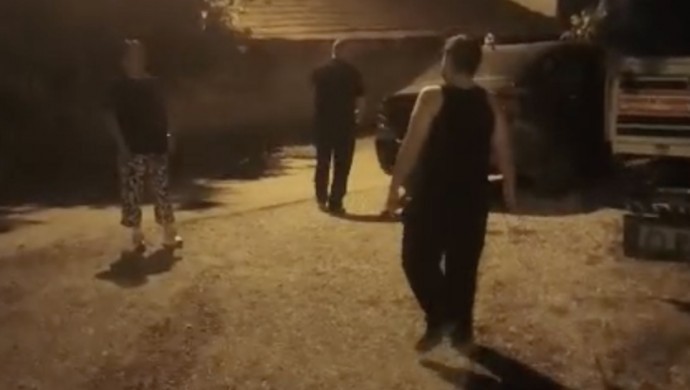
*Images of the attack in Düzce, Photo: MA
The workers explained that the attack occurred in the evening while they were sitting in the yard of their house, reporting that a group approached their home and pulled knives on them.
The bill, which aims to bring a 50-year conflict to a legal conclusion, sparked heated debates in the General Assembly of the Parliament. Following the vote, the bill was passed and became law.
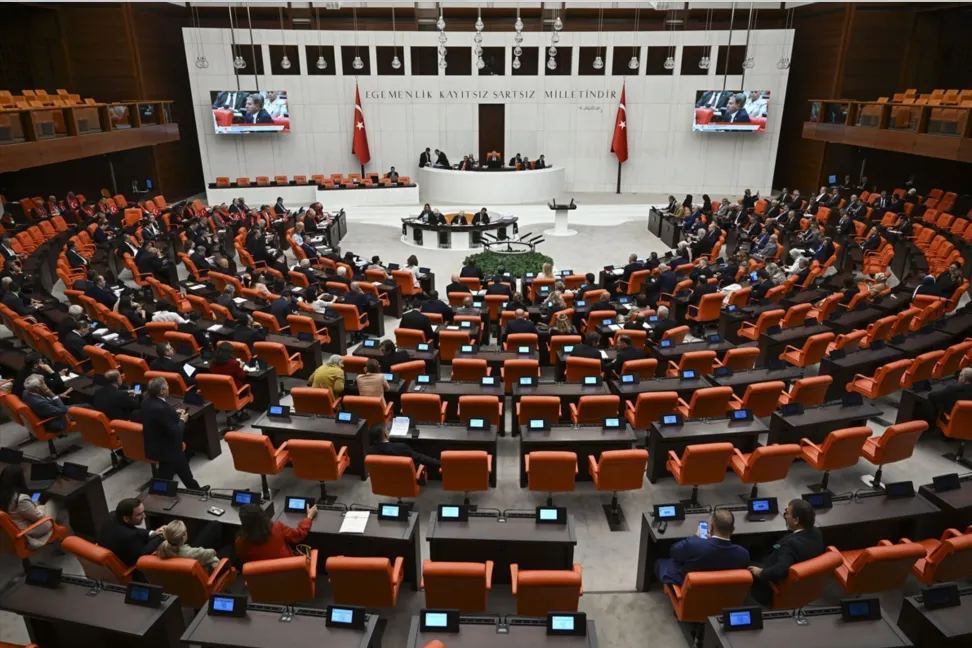
Known to the public as the “Framework Law,” the “Draft Law on Strengthening National Solidarity and Social Integration”—which regulates the PKK’s disarmament and the legal status of PKK members—was passed by Parliament following a vote and became law. In the vote, which was conducted via electronic voting, 562 members of parliament cast their votes, with 468 voting in favor, 88 against, and 6 abstaining. Thus, the “Draft Law on Strengthening National Solidarity and Social Integration” passed the General Assembly of the Parliament and became law.
The General Assembly adjourned following the vote.
Debates on the legislation, known to the public as the “Framework Law,” began at 11:00 a.m.
In the General Assembly, the deputy group leaders of the various parties made statements regarding the bill. Bülent Kaya spoke on behalf of Yeni Yol, Turhan Çömez on behalf of the İYİ Party, Rahmi Aşkın Türeli on behalf of the CHP, Erkan Akçay on behalf of the MHP, Gülistan Kılıç Koçyiğit on behalf of the DEM Party, Murat Emir on behalf of the Yeni Party, and Abdulhamit Gül on behalf of the AKP.
The 12-article bill is expected to establish the legal framework for the new resolution process.
The “Draft Law on Strengthening National Solidarity and Social Integration”—known to the public as the “Framework Law”—which regulates the PKK’s disarmament and the legal status of PKK members, was adopted by the Grand National Assembly of Turkey (TBMM) Plenary following intense debates, and deliberations on its articles have begun.
In an electronic vote held in the General Assembly, the decision to proceed with the bill’s articles passed with 269 “Yes” votes against 28 “No” votes. While the ruling coalition (AKP and MHP) described the bill as “a historic state policy for a Turkey free of terrorism,” the İYİ Party strongly opposed it. The YENİ Party and the CHP, which announced they would vote “Yes” on the bill, noted that the process must be supported by steps toward democratization and justice. Thirty-three members of the YENİ Party parliamentary group declared they would vote “No.”
YENİ Party MPs who announced they will vote “No”
1. İzzet Akbulut
2. Hasan Öztürk
3. Sibel Suiçmez
4 Cemal Enginyurt
5 Süreyya Öneş Derici
6 Deniz Yavuzyılmaz
7 İbrahim Aslan
8 Hikmet Yalım Halıcı
9 Cumhur Uzun
10 Eylem Ertuğ Eryılmaz
11 Murat Çan
12 Servet Mullaoğlu
13 Salih Uzun
14 Uğur Bayraktutan
15 Şeref Arpacı
16 Murat Bakan
17 Seyit Torun
18 Mahmut Tanal
19 Fethi Açıkel
20 Elvan Işık Gezmiş
21 Melih Meriç
22 İsmail Atakan Ünver
23 Mehmet Tahtasız
24 Ümit Özlale
25 Mustafa Erdem
26 Ayşe Sibel Yanıkömeroğlu
27 Reşat Karagöz
28 Ayhan Barut
29 Barış Karadeniz
30 Fahri Özkan
31 Deniz Yücel
32 Seda Kaya Ösen
33 Ednan Arslan
Ekrem İmamoğlu, the detained Istanbul Metropolitan Municipality (İBB) Mayor, issued a statement through his lawyers regarding the “framework law.” Noting that Turkey is at “one of the most significant turning points in its history,” İmamoğlu said that peace, tranquility, brotherhood, democracy, and the rule of law must be strengthened.
Imamoğlu expressed his support for the decision made by Özgür Özel, Chairman of the New Party, during this process. Stating that he believes in “the new political path he has opened, his great struggle, and his leadership,” Imamoğlu said he supports “the exceptional resolve he has demonstrated through all his warnings.”
Imamoğlu said, “I stand behind the decision he made today.”
The DEM Party, meanwhile, described the law as “the first step toward resolving the conflict.”
Ş. Can Atalay, the elected MP for Hatay, sent a message from Silivri Prison emphasizing the importance of a nonviolent political environment, while Tunç Soyer noted that the law is a key to “ending the era of blood and tears.”
Chronology of the Day
11:37 – 13:55
Pre-Session and Lobby Traffic
Devlet Bahçeli, Chairman of the MHP who initiated the process, arrived at Parliament. In the lobby, DEM Party Co-Chairs Tülay Hatimoğulları and Tuncer Bakırhan, alongside Imralı Delegation members Pervin Buldan and Mithat Sancar, approached Bahçeli and shook hands. Prior to this, AKP and CHP Group Chairmen also greeted Bahçeli.
11:58 – 14:01
Initial Statements by Group Deputy Chairmen and İYİ Party’s Motion
Taking the floor at the beginning of the session, AKP Group Deputy Chairman Abdulhamit Gül defined the process as the “spirit of Gallipoli,” while Gülistan Kılıç Koçyiğit from the DEM Party stated, “The winner of peace will be 86 million people.” Representatives from CHP, YENİ Party, and Yeni Yol emphasized that laying down arms alone would not suffice without democratization. The İYİ Party submitted a group motion to prevent the start of deliberations on the grounds that the bill was unconstitutional. The motion, presented by İYİ Party’s Turhan Çömez with harsh criticism stating “You chose the day the Treaty of Sèvres was signed (August 10) to deliberate this bill that will pardon terrorists,” was rejected upon voting.
14:06
İYİ Party’s Fierce Opposition: ‘It Is a Major Uprising’
İYİ Party Chairman Müsavat Dervişoğlu was the figure who delivered the harshest reaction to the process from the podium. Arguing that the law aims to integrate PKK leaders into politics, Dervişoğlu confirmed they would vote ‘No’, stating: “No matter what anyone calls this process, it is a major uprising against our national identity and republic. Who marketed Öcalan as an acceptable political guru?”
15:56
DEM Party: ‘This Law Is Not a Concession, the Homeland Is Shared’
DEM Party Co-Chair Tuncer Bakırhan stated that the bill is the “first step in conflict resolution,” adding: “This bill is not a concession; it is neither victory nor defeat. We are not opening the integrity of the country to debate. If the Kurds wanted to secede, we would not be here. The homeland is shared.” Bakırhan noted that although the law has shortcomings, they support it, and the real step must be taken through democratization when Parliament opens.
16:07 – 16:38
YENİ Party and CHP: ‘We Will Not Stand in the Way of Peace’
YENİ Party Chairman Özgür Özel criticized the process being conducted behind closed doors and the lack of democratic steps such as trustee appointments and ECtHR rulings. However, he stated, “We will not close the door opened for laying down arms; we will vote ‘Yes’.” Özel granted his MPs a free vote based on the sensitivities of their provinces. Speaking on behalf of the CHP, İnan Alp Akgün and Oğuz Kaan Salıcı also confirmed that the CHP would vote ‘Yes’, saying, “The time has come to secure the Republic through democracy.”
18:01 – 18:03
Ruling Bloc (MHP, AKP): ‘This Is Not an Amnesty’
MHP Deputy Chairman Feti Yıldız emphasized that the bill is not an amnesty and does not alter ongoing investigations or the nature of offenses. He stated, “The goal of the process is the rule of law and the strengthening of the internal front.” AKP Group Chairman Abdullah Güler shared that the prepared report was drafted “without a third-party external observer, by the children of this land,” and that the sole objective is to ensure violence is never discussed again.
What had happened?
The bill had been debated for 18 hours in the Turkish Grand National Assembly’s Justice Committee.
The bill bears the signatures of 367 members of parliament, including representatives from the AKP, CHP, MHP, DEM Party, HÜDA PAR, the New Path Group, and the DSP.
During the discussions, which were not without controversy, the AKP and MHP argued that the bill was the “product of a historic consensus” and did not constitute an “amnesty.”
The CHP and the New Party, however, emphasized that the process lacked a democratic dimension. The New Path Group, meanwhile, stated that the measure constituted a “conditional general amnesty.”
Seat distribution in Parliament
AKP 277, New Party 91, DEM Party 56, MHP 46, CHP 45, Good Party 29, New Path Party 20, HÜDA PAR 4, Prosperity Party 4, TİP 3, Democratic Regions Party (DBP) 2, EMEP 2, Felicity Party, Democratic Left Party, and Democratic Party each hold 1 seat. Ten members of Parliament are independents.
Parliament Scoreboard: Framework Law Vote
nihaplus Special Infographic Desk • Detailed Breakdown by Party and MP
The articles of the “framework law” prepared within the scope of the Peace and Democratic Society Process have been announced. In the proposal expected to be passed into law within a week, it was observed that Abdullah Öcalan and those who received life or aggravated life sentences before 2005 were excluded from the scope.
The articles included in the draft “framework law,” expected to be submitted to the Grand National Assembly of Turkey (TBMM) under the Peace and Democratic Society Process, were disclosed. The regulations of the bill titled “Law on the Strengthening of National Solidarity and Social Integration” were announced in a joint press conference held by the ruling Justice and Development Party (AKP) and its nationalist ally, the Nationalist Movement Party (MHP).
AKP Group Chairman Abdullah Güler, AKP Deputy Chairman Abdülhamit Gül, and MHP Vice President Feti Yıldız also attended the press conference held at the Parliament. Güler announced the articles of the bill titled “Law on the Strengthening of National Solidarity and Social Integration” submitted to the Speaker’s Office of the Parliament. Stating that the “Strengthening of National Solidarity and Social Integration” bill consists of 12 articles, including the execution and enforcement articles, Güler said: “Necessary regulations will be made as needed. Furthermore, interviews will be held in İmralı with individuals such as academics and journalists, subject to a certain discipline and procedure.”
According to the articles in the proposal, those who received aggravated life sentences before 2005 or crimes leading to an aggravated life sentence obligation will be kept outside the scope of the law. In this context, the fact that Kurdish People’s Leader Abdullah Öcalan, who is the interlocutor of the process, was not included in the framework law sparked public reaction.
Kartal: “The current arrangement is not an appropriate decision”
Speaking to Mesopotamia Agency, Kurdistan People’s Congress (KONGRA-GEL) Co-Chair Remzi Kartal recalled Nationalist Movement Party (MHP) Chairman Devlet Bahçeli’s rhetoric on the “right to hope,” saying: “If Leader Apo is not effective in this process, if he does not personally make a direct call, this process will not progress. The primary metric in the state’s approach to the Kurdish issue—for both the Freedom Movement and the people—is the state’s approach to Leader Apo. Leader Apo’s status, living conditions, and working conditions are the decisive metrics. If there is no reassuring development on this matter, and if familiar security policies are still being based upon, this situation will not build trust either in the Freedom Movement or among the people.”
In his evaluations regarding the process this morning to Sinan Burhan, Editor-in-Chief of Millet News Agency, MHP Chairman Devlet Bahçeli stated that the “right to hope” should be granted to Kurdish People’s Leader Abdullah Öcalan:
“Selahattin Demirtaş should return to his home, Ahmets to their duties, and Öcalan to the ‘right to hope.’ Turkey must find peace. Our goal is for Turkey and the region to attain peace.”
Kartal continued his remarks as follows:
“It may be handled this way at the initial stage by taking public sensitivities into account. However, this must definitely be resolved through other laws to be enacted and other steps to be taken in the coming period. The authorized bodies of the state and the Parliament need to be very clear on this matter. As the people and the movement, this is how we view it. Because if there is truly no development on this issue, returns to Turkey and participation in the legal-democratic process may face serious problems. Therefore, we do not view the current arrangement as an appropriate decision.”
The draft “framework law,” submitted to the Speaker’s Office of the Parliament and shared with the public, is expected to become law within a week.
CHP and HÜDAPAR also signed
AKP, MHP, DEM Party, HÜDA-PAR, and CHP signed the proposal expected to become law within a week. The bill will come before the Parliamentary Justice Commission on Friday, August 7, and discussions will begin. If accepted in the commission, the proposal will begin to be debated in the General Assembly of the Parliament.
“This law is a first step”
Following the signing meeting held in the DEM Party Parliament group room, DEM Party Co-Chairs Tülay Hatimoğulları and Tuncer Bakırhan held a press conference. Speaking first, Bakırhan said: “We had criticisms regarding the law. The law had shortcomings. Despite all this, we will grow this first step and socialize it. We will try to take it to the 86 million. In addition, we will defend and support to the end every democratic step, word, practice, and action that prevents the reproduction of conflict, primarily in the Parliament.”
Speaking after Bakırhan, Tülay Hatimoğulları stated that as DEM Party, they wanted this law to have the nature of a “core law”, adding: “The Kurdish issue is not a terrorism issue. We have always underlined this. The Kurdish issue is an economic issue. It is a social, political, and societal issue. Therefore, by handling this issue and this matter in this way, we consider this stage important in terms of the emergence of new laws that will pave the way for democratization while negotiation and dialogue continue in the upcoming process.”
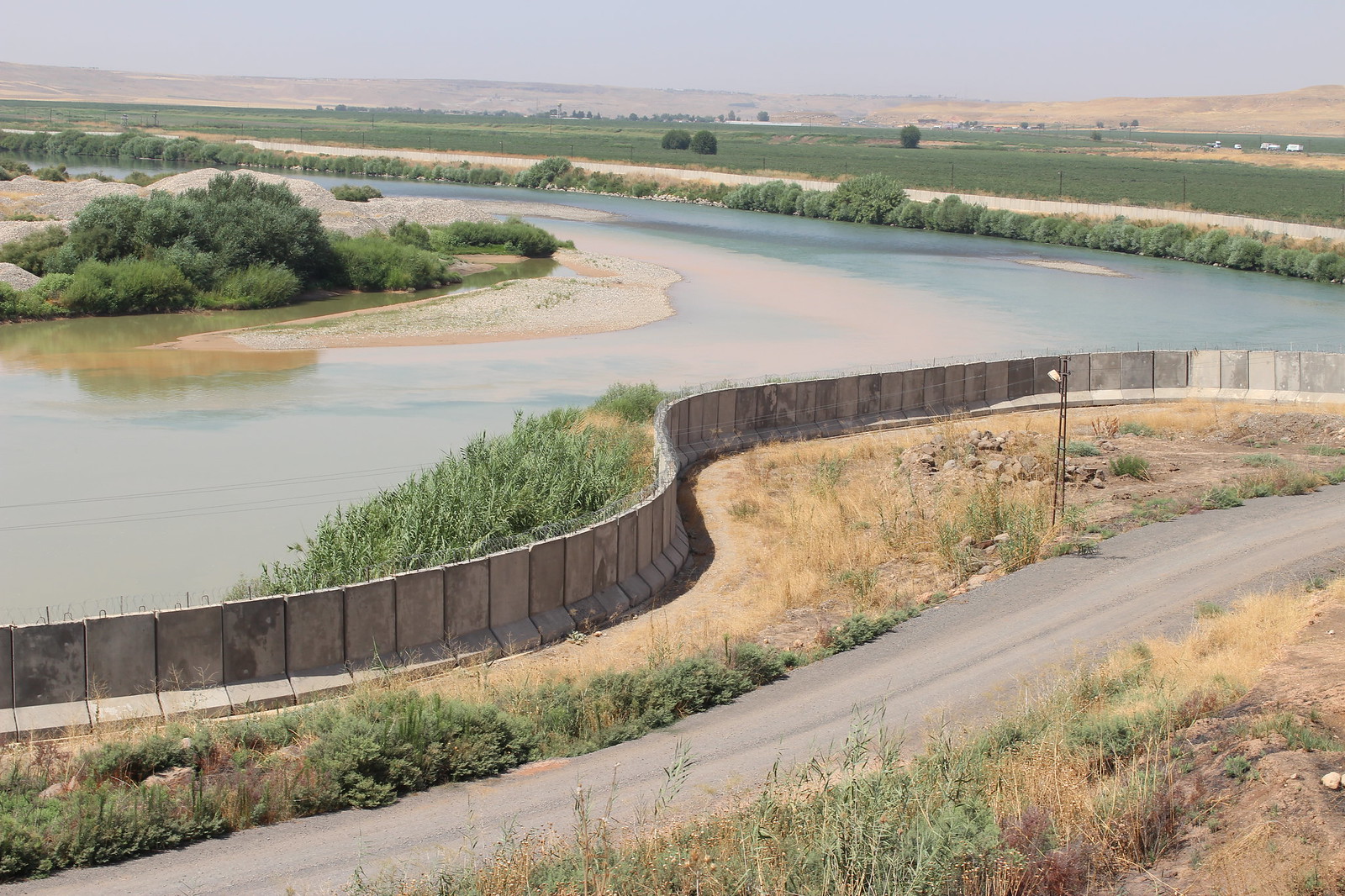
According to the Syrian Observatory for Human Rights (SOHR), Turkish border guards have been responsible for the deaths of nine civilians and the injury of 41 others since the beginning of 2026.
Foto: Wikipedia, (William John Gauthier)
In a statement, SOHR said that during July 2026, two Syrian civilians were killed and 27 others were injured as a result of shootings and acts of torture allegedly carried out by Turkish border guards while they were attempting to cross from Syria into Türkiye through irregular routes.
According to the organization, 11 people were injured in Raqqa, one civilian was killed and 16 others were injured in Hasakah, while one civilian was killed in Aleppo during the reporting period.
SOHR stated that, since the beginning of 2026, Turkish border guards have allegedly been responsible for the deaths of nine Syrian civilians and the injury of 41 others.
The organization’s figures indicate the following regional distribution:
Hasakah: 2 killed, 16 injured
Raqqa: 2 killed, 24 injured
Aleppo: 5 killed
In its statement, SOHR renewed its call for an end to attacks against civilians along the Syrian-Turkish border and urged respect for international humanitarian law and internationally recognized standards on the protection of civilians.
SOHR also condemned what it described as the excessive use of force against civilians attempting to cross the border and called for all those responsible for violations against civilians to be held accountable.
Human Rights Violations on the Syria-Türkiye Border (2014–2026)
Cases documented by human rights organizations and independent monitoring groups
According to the Syrian Observatory for Human Rights (SOHR), Turkish border guards have allegedly been responsible for the deaths of 9 Syrian civilians and the injury of 41 others since the beginning of 2026.
2014
14-year-old child shot near Kızıltepe
A Syrian Kurdish family fleeing from Damascus attempted to cross into Türkiye near Mardin’s Kızıltepe district. During the incident, the family’s 14-year-old son was shot in the back of his head and seriously injured.
Source: Bianet
2014
Saada Darwich killed near the border
Saada Darwich, 28, was killed by gunfire while attempting to cross from Rojava’s Derik region toward Türkiye, alongside her husband and children.
Source: Bianet
2016
HRW: Five killed, 14 injured
Human Rights Watch reported that Turkish border guards opened fire on Syrian civilians attempting to cross the border during March and April 2016, killing five people and injuring 14 others.
Source: Human Rights Watch
2016
SOHR: Eight civilians killed, including four children
SOHR reported that eight civilians, including four children, were killed near the border while fleeing clashes in Manbij. The Syrian opposition coalition reported that the number of deaths was 11.
Source: SOHR
2018
HRW: Shooting, abuse and pushbacks
Human Rights Watch documented allegations of shooting, ill-treatment and forced returns against Syrians attempting to cross into Türkiye.
Source: Human Rights Watch
2023
HRW: 234 civilians killed, 231 injured
According to data reviewed by Human Rights Watch, at least 234 civilians were killed and 231 people injured between 2015 and April 2023 in incidents involving Turkish border guards.
Source: Human Rights Watch
2023
Syrian lawyer killed while attempting to cross the border
SOHR reported that a Syrian lawyer attempting to enter Türkiye from Idlib was killed after being shot by Turkish border guards.
Source: SOHR
2026
Journalist Nujan Mala Hassan shot
According to the International Federation of Journalists (IFJ), journalist Nujan Mala Hassan was wounded by live ammunition while covering protests near the Syria-Türkiye border.
Source: International Federation of Journalists
2026
SOHR: Nine killed, 41 injured
SOHR reported that nine Syrian civilians were killed and 41 others injured since the beginning of 2026. The organization called for an end to the excessive use of force against civilians.
Source: SOHR
Key figures
234
Civilians killed (HRW)
231
People injured (HRW)
9
Killed in 2026 (SOHR)
41
Injured in 2026 (SOHR)
Sources: Human Rights Watch (HRW), Syrian Observatory for Human Rights (SOHR), International Federation of Journalists (IFJ), Bianet.Figures are based on reports and statements published by these organizations.