“While geothermal power companies have reaped huge profits thanks to incentives and purchase guarantees, the local population has not even been able to benefit directly from the electricity generated,” says Deniz Mine Öztürk, pointing out that ecological and social devastation lies hidden behind the “clean energy” rhetoric of geothermal power plants.
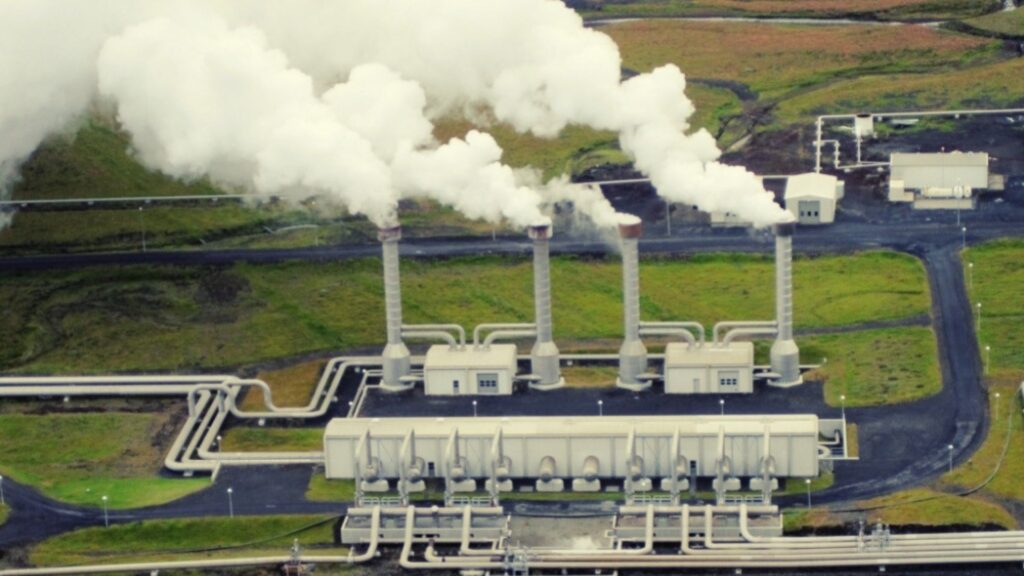
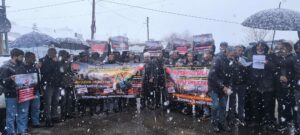
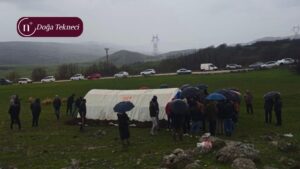
Geothermal power plant (GPP) projects, which are concentrated in the provinces of Aydın, İzmir, Manisa, and Denizli, are facing backlash from local communities and experts. The GPP projects planned for the districts of Varto in Muş and Karlıova in Bingöl will affect the natural habitats of a total of 22 villages. Experts and local residents are opposing two separate GPP projects to be implemented by the U.S.-based Ignis H2 Energy Production Inc. in Varto and Karlıova, stating that these projects will have a severely negative impact not only on human life but also on natural ecosystems and animal life.
Residents in the Aegean region, particularly in Aydın, continue to voice complaints about increased cancer risks, the smell of rotten eggs, and the decline in agricultural productivity due to geothermal power plants.
Öztürk: Underground minerals, gases, and heavy metals have toxic effects
Deniz Mine Öztürk, a Ph.D. candidate in energy geography at Clark University, shared her insights with Niha+ regarding the ecological damage caused by geothermal power plants. Öztürk explained that there are different types of technology used to generate energy from geothermal sources:
“Most of the sources in Turkey are hydrothermal, formed when underground water reserves are heated by heat transmitted from the Earth’s core. Heat from the core can be transmitted to points near the Earth’s surface through fractured rocks in areas with tectonic activity. In these regions, geothermal fluid is extracted to the surface through drilled wells to generate energy. To both extend the sustainability of the resource and protect surface ecosystems, this extracted fluid must be reinjected back into the same location after energy is generated.”
Öztürk explained that as one descends deeper into the Earth, temperature and pressure increase, and this causes the minerals, metals, and gases present in the rocks contacted by the accumulated fluid to dissolve more readily. He emphasized that geothermal fluids vary depending on the region, depth, and the rock they come into contact with; in geothermal sources in Anatolia, minerals such as sodium, calcium carbonate, and sulfate, along with trace metals like boron, arsenic, and lithium, have been identified:
“When these minerals, heavy metals, and gases from the subsurface ecosystem are brought to the surface, they can have toxic effects on living organisms.”
Referring to the consequences of the fluid extraction process, Öztürk stated the following:
“Due to the high cost of reinjecting the extracted fluid back into the same location and the flexibilities provided by the Geothermal Law No. 5686, it has been observed that some geothermal power plants in the Western Aegean discharge the fluid into the ground or nearby water bodies. This has caused contamination in the soil, as well as in groundwater and surface water sources. Additionally, when re-injection is not fully carried out, over time the decline in the source’s pressure and the resulting decrease in groundwater levels have led to ground subsidence and fissures.”
“Hydrogen sulfide with a rotten egg smell in Aydın”
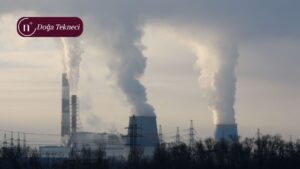
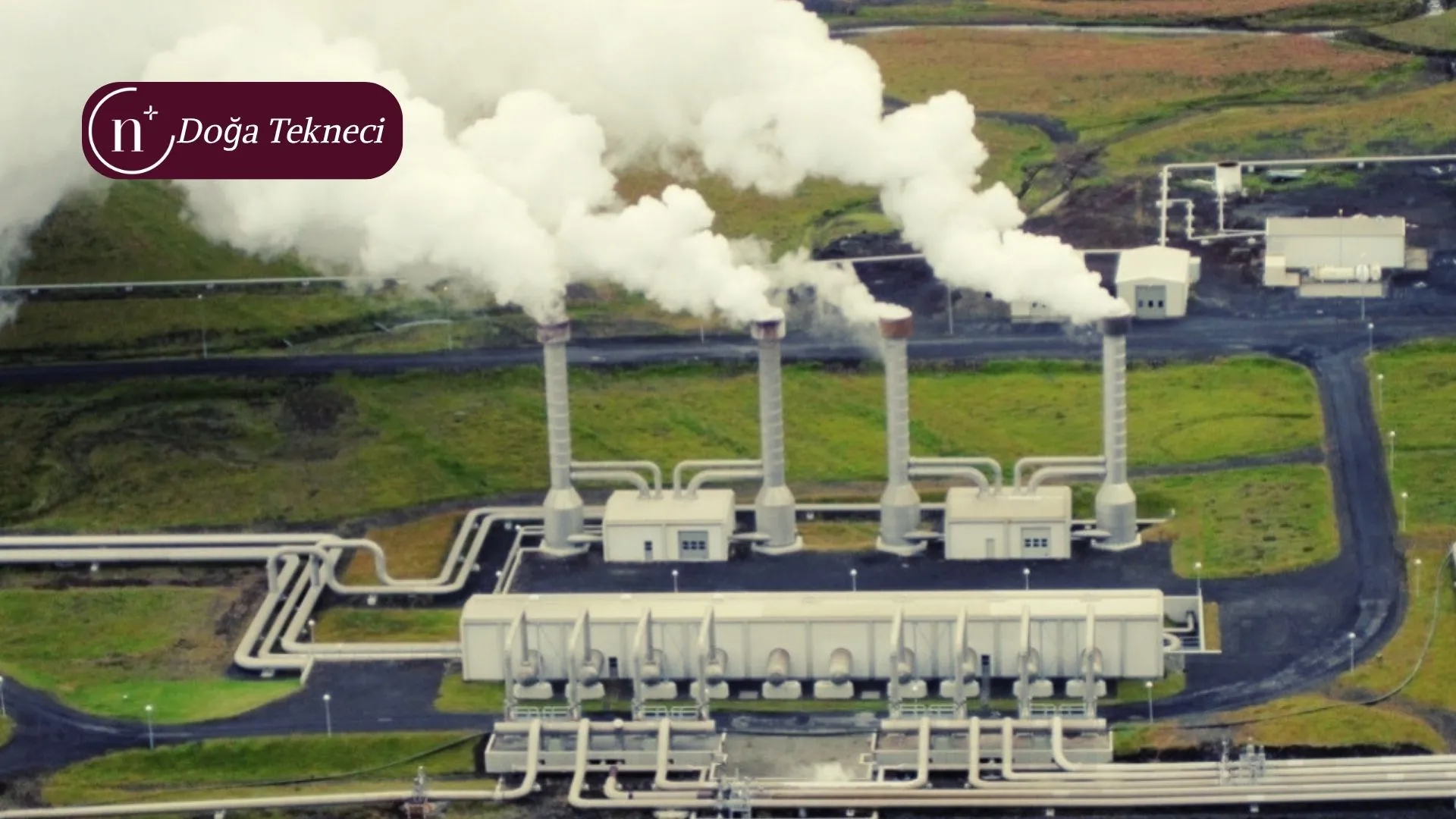
Explaining that non-condensable gases present in the fluid are released into the atmosphere through power plant chimneys during reinjection, Öztürk added that these gases include carbon dioxide (CO2)—one of the primary causes of climate change—and hydrogen sulfide (H2S), which has a rotten egg odor and is both toxic and flammable:
“One of the most frequently mentioned concerns in Aydın is the smell of hydrogen sulfide. Hydrogen sulfide can also react in the air to form sulfuric acid, leading to acid rain. Acid rain, in turn, causes respiratory difficulties in humans and animals and disrupts plant growth.”
Öztürk, noting that geothermal companies produce energy under the guise of “clean” energy compared to fossil fuel use, reminded that carbon dioxide emissions from geothermal power plants in Turkey are far above global averages:
“At some plants, emissions rival those of fossil fuel power plants. This means they contribute to global climate change in the long term. In addition, geothermal power plants release large amounts of water vapor, which alters the local climate.”
“Drilling can cause stress in animals”
According to Öztürk, the various elements contained in geothermal fluids, along with the resulting acid rain and climate change, can negatively impact the development of plant and animal species. Noting that these processes threaten biodiversity and endemic species, Öztürk said, “The intense noise and vibrations generated during drilling, exploration, and power plant operations can cause stress in animals and affect their migration and reproductive behaviors.”
Additionally, Öztürk noted that geothermal power plants (GPPs) built near agricultural areas can degrade soil quality, contaminate irrigation water, and consequently reduce agricultural yields. He added that damage to pastures and water sources can create significant pressures on livestock farming activities.
“These projects were implemented through top-down decisions”
Öztürk stated that authoritarian methods and corporate policies aimed at increasing company profits have caused multi-dimensional injustices in the Büyük Menderes and Gediz Graben regions—where geothermal power plants are predominantly built—specifically in Aydın, İzmir, and Manisa:
“Polluted air, water, and soil have had negative effects on the health of humans, non-human living beings, and ecosystems. The food produced in the region has been contaminated. Future generations have been deprived of their right to benefit from these natural and clean ecosystems. While geothermal power companies have reaped huge profits through incentives and purchase guarantees, the local population has not even been able to benefit directly from the electricity produced. On top of that, they lost their means of livelihood and their living spaces.”
Reminding that these projects were implemented through top-down decisions, Öztürk said, “Expropriation orders were issued in haste for land that villagers did not want to sell. People were deprived of the land where they had labored for generations, accumulated memories, and shaped their culture.”
“The local community, municipalities, experts, civil society organizations, and opposition parties were not included in the decision-making processes. They were deprived of the rights to ‘participation’ in decision-making processes—one of the most fundamental democratic rights—and the right to be recognized as a subject,” according to Öztürk’s observation. While JES companies are free to organize and easily convey their demands to the government, the organization of local communities opposing these projects was criminalized:
“The villagers’ right to protest the companies was met with attacks by law enforcement; lawsuits were filed against protesters, and they were detained. In fact, following the JES resistance in Aydın/Mezeköy, a state of emergency was declared for one week; entry and exit to the village were banned. Thus, multi-dimensional injustices—ecological, economic, political, social, and cultural—were created in the Western Aegean.”
“The displacement of Kurds and Alevis will exacerbate social inequality”
Öztürk noted that the planned new geothermal power plant projects in Muş and Bingöl, which are set to be built in Kurdish and Alevi villages historically forced to migrate in Turkey, add another dimension to the situation:
“The potential for Kurds and Alevis to be effectively driven from their living spaces and deprived of their means of livelihood poses profound social and cultural threats. In a region where people were forcibly displaced through the emptying of their villages throughout the 1980s and 1990s, the prospect of their being dispossessed once again—deprived of their living spaces, cultures, and social ties—will lead to the reproduction of historical injustices and the deepening of social inequalities. “However, despite all the injustices created and the deepening power imbalances throughout the process, the people organized in the Western Aegean have halted numerous projects through their determination and persistence. In this sense, I am certain that the organizational experience and political awareness demonstrated in Muş and Bingöl will serve as an example for energy projects in other parts of Turkey.”
Referring to Ignis H2’s report that new hot water sources had formed around Kaynarpınar village following the 2023 Maraş earthquakes, Öztürk noted that the region lies on two highly active fault lines.
According to Öztürk, the risks associated with the project can be assessed from two perspectives in this context: first, the earthquakes that geothermal activities could trigger, and second, the responses that geothermal systems might exhibit to natural earthquakes.
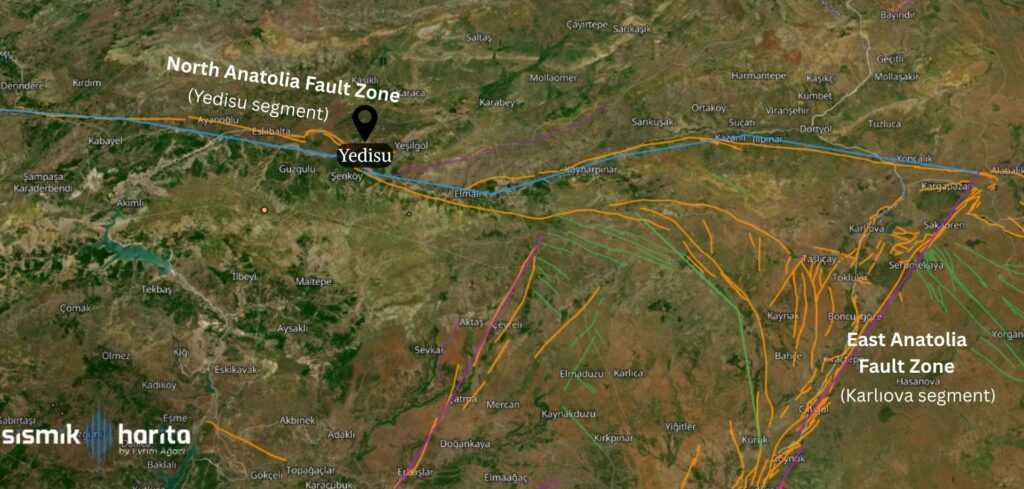
After the 4.3-magnitude earthquake centered in Güzgülü-Yedisu on the morning of April 26, statements from the Kandilli Observatory and Naci Görür were reported in the press. In a statement made via social media, the Kandilli Observatory highlighted that the tremor in Yedisu occurred along one of Turkey’s most high-risk “seismic gaps.”
Geoscientist Prof. Dr. Naci Görür stated in his social media post that if the Yedisu fault—identified as one of Turkey’s most high-risk areas—were to rupture, a major earthquake would severely impact Erzincan, Bingöl, and Dersim.
- A seismic gap is a segment of an active fault known to have remained stationary for a relatively long period compared to other segments along the same line, and which produces significant earthquakes.
- The Yedisu fault is located at the eastern end of the North Anatolian Fault (NAF).
Öztürk, noting that there are examples of projects that were canceled due to studies indicating that well drilling and the reinjection of fluid into the ground at high pressure at geothermal power plants could trigger earthquake risks, listed the following examples:
“For example, in Pohang, South Korea, a geothermal power plant was shut down in 2017 after it was determined that the reinjection of fluid into the ground had triggered a 5.5-magnitude earthquake. In Germany, a geothermal project developed in 2014 sparked public backlash due to earthquake risks and potential pollution. Ultimately, it was decided that the electricity to be generated would not justify the risk, and the project was canceled before it even began.”
“On the other hand, these geothermal pipes can sometimes burst on their own. According to Öztürk, who noted that “examples of this have occurred repeatedly in Manisa and Aydın,” the company must also clarify whether it has an emergency action plan in place to address the risk of an explosion (blow-up) under any circumstances, and whether it has developed a plan to assess and mitigate the consequences of explosion and leakage risks.
“Projects are being carried out without transparency”
He noted that one of the biggest problems with all energy projects in Turkey, including geothermal power plants, is that these projects are carried out without transparency from the exploration phase all the way through to the operation of the power plant:
“Announcements and news items are prepared solely to inform investors and are removed shortly thereafter. There is no intention to involve the public in the decision-making process, nor is there any aim to provide equal access to information about the process or the project. In Aydın, there have been instances where even villagers who own titled land in the exploration area only learned of the situation a month or two before drilling began. When official documents are collectively sent to the village head, it is up to him to decide when to share this information with the villagers. This can lead to villagers starting the legal process and practical organization from a position of disadvantage.”
In 2026, it was reported in the media that geothermal exploration areas in Balıkesir, Kayseri, Bitlis, Niğde, Malatya, Konya, Çorum, Kırşehir, and Erzincan were put out to tender. Additionally, it was noted that tenders were initiated for three geothermal areas in Ağrı, Adana, and Diyarbakır.