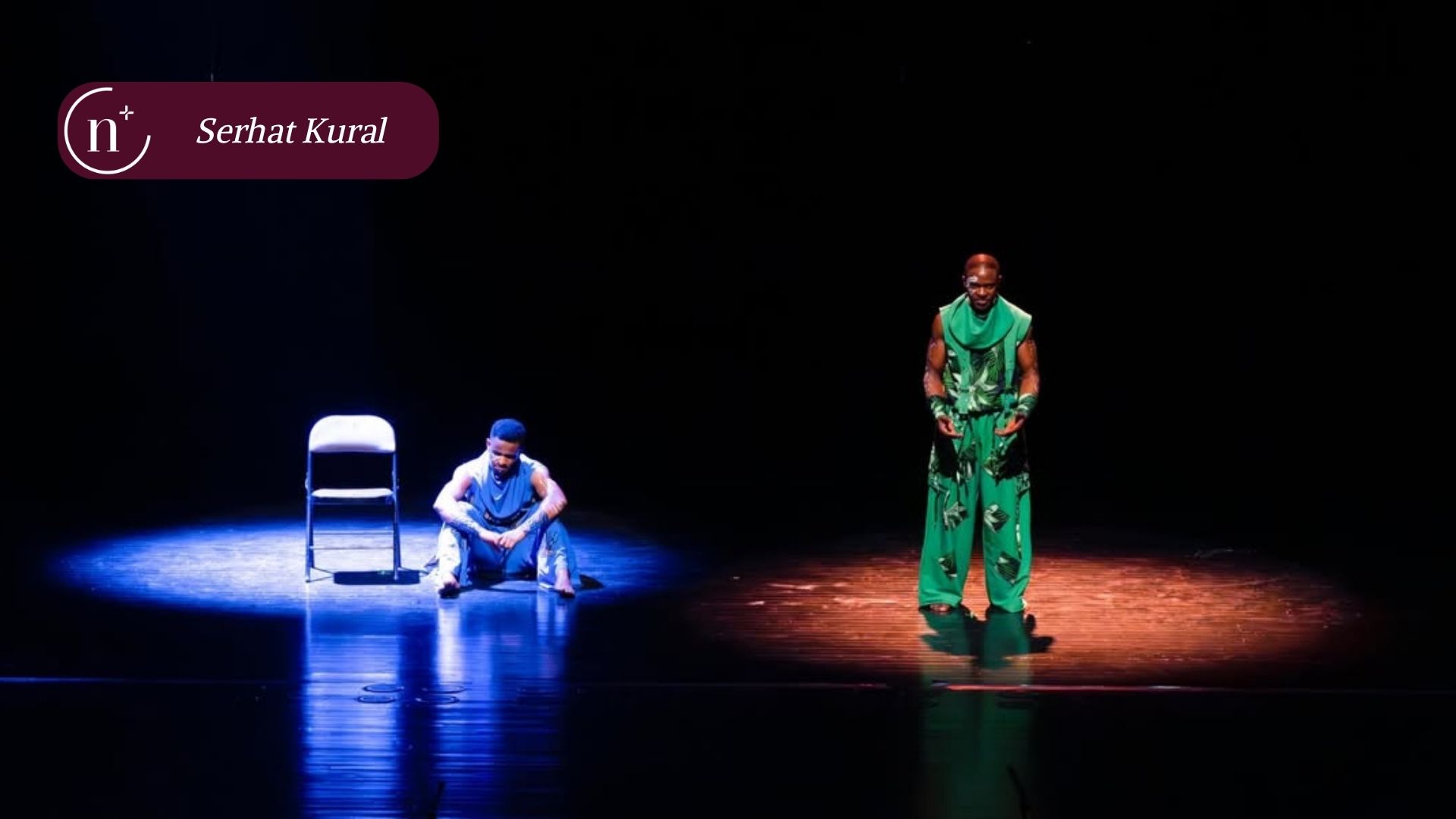
Elevatorz NG, the Nigerian guests of the International Amed Theater Festival, surprised the audience by blending their modern performance with the Kurdish dance Cida: “Movement is a universal language; this warm welcome in Diyarbakır made us feel right at home.”
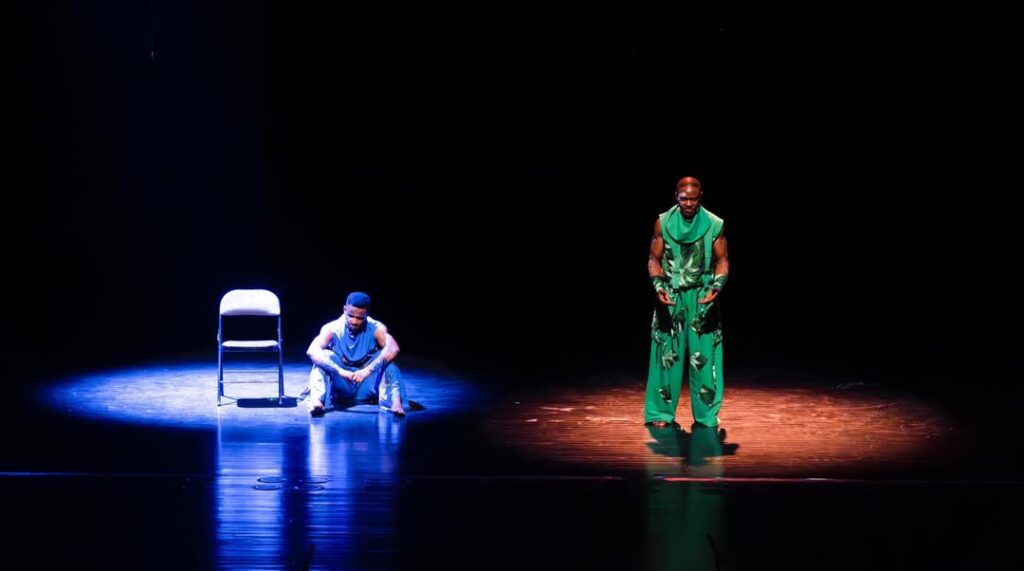
“A scene from the ‘Connecting Bridges’ dance performance. Photo: Elevatorz NG”
Elevatorz NG, participating from Nigeria in the 11th Amed International Theater Festival organized by the Diyarbakır Metropolitan Municipality, presented a dance performance titled ‘Connecting Bridges.’ Founded by two brothers, Michael and Samson Vatorz, the group aims to convey a message of ‘unity’ and ‘respect’ by bringing together Nigeria’s national dances with dances from various parts of the world.
The staging approach adopts a minimalist and symbolic aesthetic that places the performer’s body, movement, and voice at the center of the theatrical experience. The stage is designed as an open, fluid space, allowing choreography and spatial relationships to define shifting emotional and narrative landscapes. Stage props are minimal, functioning as abstract representations of barriers and bridges that can be reconfigured to evoke division, negotiation, and connection. The aesthetic language emphasizes physical expression; lighting is used to isolate moments of conflict and gradually opens up to warmer, more inclusive states as dialogue emerges. The costumes are made of African fabrics in contemporary styles, allowing the performers to represent multiple identities rather than fixed characters. Overall, the staging prioritizes clarity, intimacy, and adaptability, supporting the work’s focus on themes of dialogue, empathy, and peace, while allowing the audience to engage imaginatively with the symbolic world of the performance.
The show met with the audience on April 27th at the Çand Amed Great Hall. Dance and music artist Serhat Kural spoke with Michael and Samson Vatorz for Niha+ about their dance performance, their dance work in Nigeria, and their impressions of Diyarbakır.
“There is nothing that dialogue cannot solve”
Serhat: First of all, I want to welcome you to Amed and this international theater festival. As a dancer, I am very happy to have watched your show; it was truly beautiful. Could you tell us a bit about who you are and your background?
Michael Vatorz: Hi, my name is Michael, also known as Michael Vatorz.
Samson Vatorz: My name is Samson, also known as Samson Vatorz, and together we are Elevatorz NG.
Michael: Elevatorz NG is a dance and theater company; beyond dance, we also act. We have a bit of a singing background as well, so we incorporate that into our work, but we are primarily active as actors, dancers, and creative directors. We have been established as Elevatorz NG since 2010. So far, we have competed in several competitions and are currently the winners of World of Dance Nigeria. We were the first K-pop ambassadors in Nigeria and represented our country in Seoul, South Korea. We have participated in several other festivals outside of Nigeria, and this is what we do full-time.
Serhat: And when did you start working together?
Samson: Well, we are brothers. We have been working together since birth.
Serhat: Could you tell us a bit about your piece? What message do you want to convey to the audience?
Michael: The piece, “Connecting Bridges,” is simply about “dialogue for peace,” much like the festival’s theme. We actually created this dance piece back in 2023. We performed a shorter version of it when we represented Nigeria at the ITI World Congress in Fujairah. That was where the organizers saw us and invited us here because the dance-theater piece matches the festival theme so well. We created an extended version specifically for this festival. The piece is designed to say that regardless of our ideologies, family backgrounds, or religious beliefs, we are humans first. There is nothing that dialogue cannot solve; we simply need to sit together and talk about it, and we will definitely find a way. We wanted to express these thoughts through our dancing and the dialogue within the piece.
“Peace means unity and respect.”
Serhat: If you had to use just one word to describe peace in your country, what would it be?
Samson: You mean the meaning of peace for our country?
Serhat: Yes.
Michael: If it is just one word, we will likely have different ones. He can say his word, and then I will say mine.
Samson For me, the word is respect . I say respect because if you respect another person’s culture, views, and traditions, you can live together. You do not necessarily have to adopt their culture or do what they do. You have your own culture; they respect yours, you respect theirs, and everyone can coexist.
Michael: To add to what he said, we went out today and witnessed something that represents why I chose the word unity. We visited a church and saw Muslims inside who were very welcoming. Then we went to a mosque, and they were so happy to see us; they hugged us regardless of where we came from or who we were. They just wanted us to be their friends. One man in particular was so happy, and it was quite emotional for me. We said to ourselves: if we can all act this way, there will be so much unity and peace.
Serhat: What was the journey like while creating this project? From the beginning to the end of the piece, you emphasized that we can live much more peacefully and beautifully. You also had great concentration on stage; could you tell us a bit about that?
Michael: Regarding the experience of creating the piece and maintaining the tempo and character throughout… I will start with the fact that we have been together all our lives because we are brothers. That is a major advantage. I know there are brothers who fight or do not even speak to each other, but we see ourselves as more than just brothers; we are one. That bond kept us together and made creating the piece much easier because we already have a shared mindset on how we flow. Secondly, maintaining the tempo in the performance was not something we just learned; we had to practice over and over again. Practice is what makes a dancer a professional. Anyone can dance, but not everyone can perform at a professional level. Repeated practice and engagement with the audience were key. We fed off the energy the audience gave us. When they gave us positive energy, it boosted our morale on stage and kept us going. We didn’t even notice when the piece came to an end.
Serhat: Your piece featured traditional costumes. Why did you choose traditional costumes for this mix of dance styles?
Samson: Because they are beautiful. We started a movement in 2017 that we called “Trado-HipHop” at the time. We see ourselves as cultural ambassadors. Nigeria has many languages, and while that can sometimes cause minor hiccups, it is also our unique strength that makes us dynamic. Nigeria is a beautiful country because, despite these many tongues, it remains one nation. To have stayed together for 66 years as one country despite this diversity is commendable. We feel a responsibility to promote this culture for the world to see. As for the hip-hop element, we started as hip-hop dancers and later added traditional dancing professionally. We decided we couldn’t throw hip-hop away because it is a culture, specifically a Black culture, and we love cultures from all around the world. We wanted to fuse our traditional dances with hip-hop without diluting either. We have now evolved the name to trado-pop as of 2026. The reason for the change is that “hip-hop” felt limiting. We love salsa, Afro-dance, Kizomba, Bachata, and many other styles. We wanted to fuse traditional dance with popular culture as a whole. The consistent element is the Nigerian traditional dance. If you watch closely, you will see parts where I did some funk and locking, and Michael did some locking as well. You will notice we have backgrounds in hip-hop, contemporary dance, and salsa. We tried to chip in various elements of popular culture and then added your culture as well.
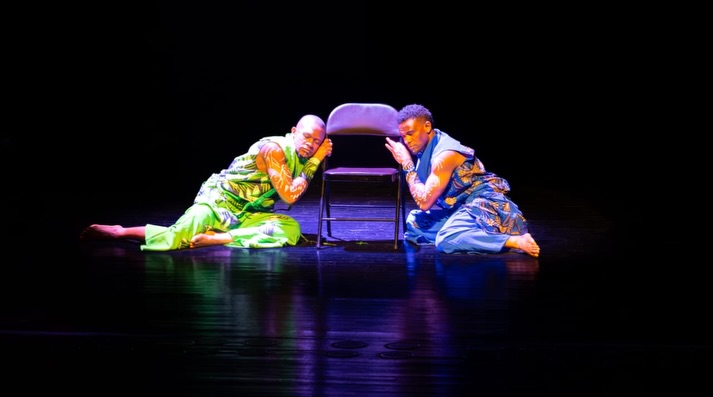
“A scene from the ‘Connecting Bridges’ dance performance. Photo: Elevatorz NG”
Michael: And then we added the cida.
Samson: Yes, we brought the cida on stage. We wanted to express that the world is one and that movement is a universal language.
Serhat: Have you been to the here before, and how do you feel here?
Samson: It’s a new era in the Middle East… like the United Arab Emirates…
Michael: I’ll take this one. We haven’t been to this part of the world before—I’m not sure if UAE counts as the same experience—so this feels like our first time. We feel so welcome; the reception has been awesome. We love it. If you asked me to come back, I would come back again and again because it feels like Nigeria. Nigerians are warm people; we treat guests right and make them feel loved. The reception here feels just like that. It is so warm, and we honestly love it here.
Serhat: Thank you very much.
Michael & Samson: Thank you so much.