Evaluating the relationship between suspicious female deaths, impunity, and security policies, Eralp stated, “When a death remains suspicious, the issue should not only be finding the perpetrator, but also exposing the networks that make it possible to cover it up.”
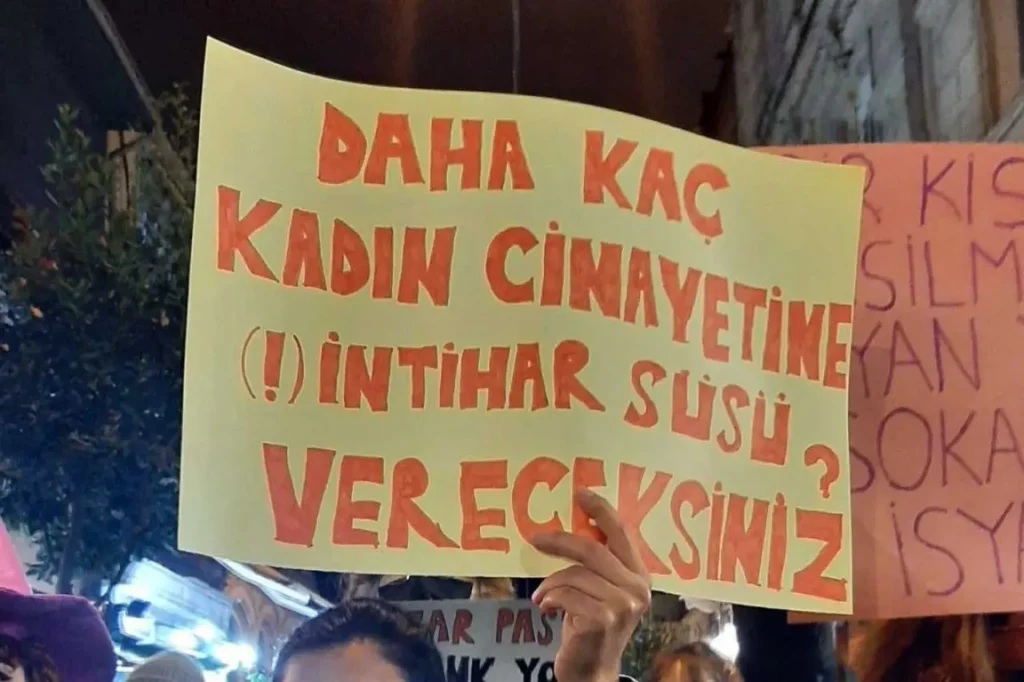
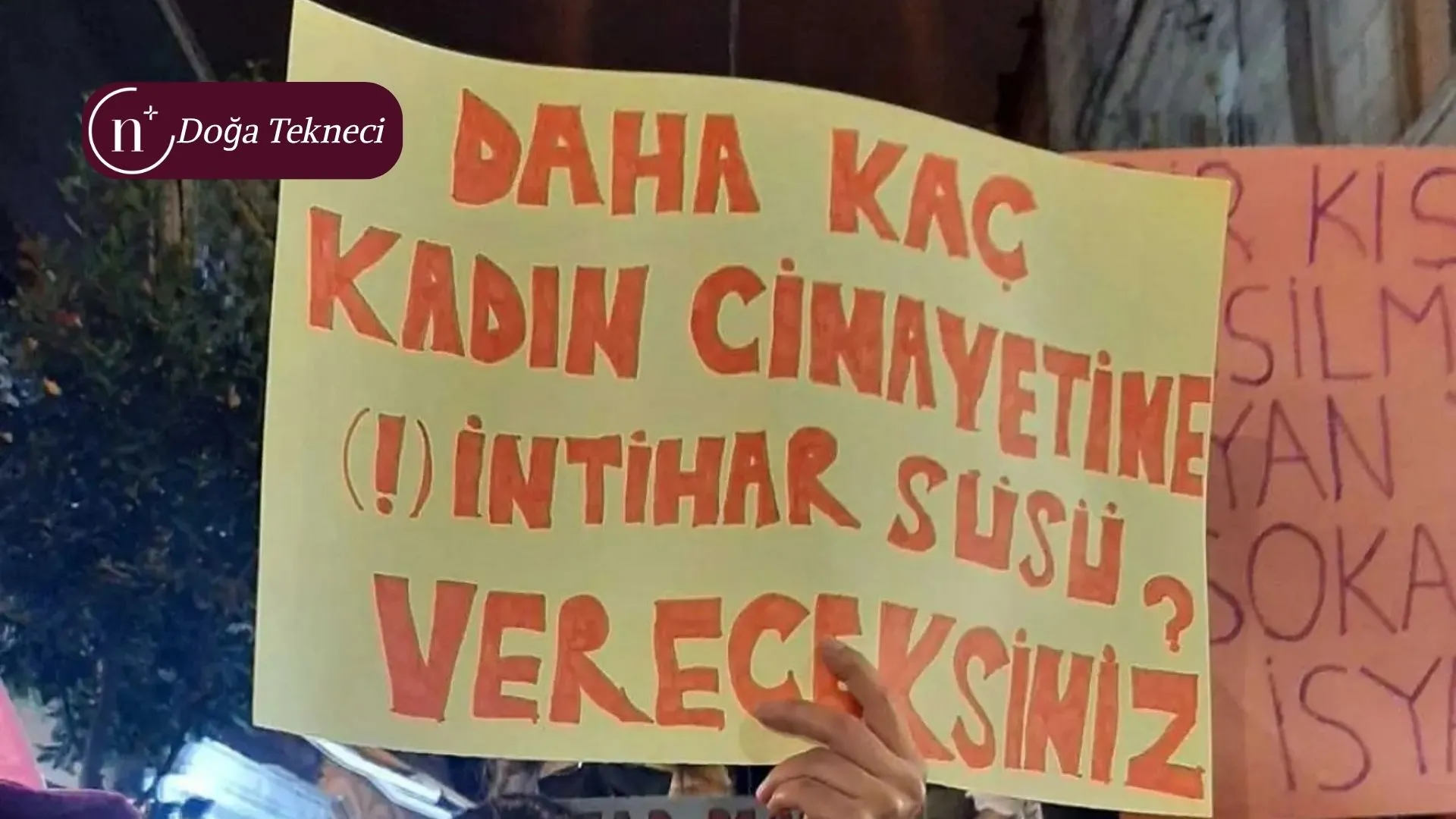
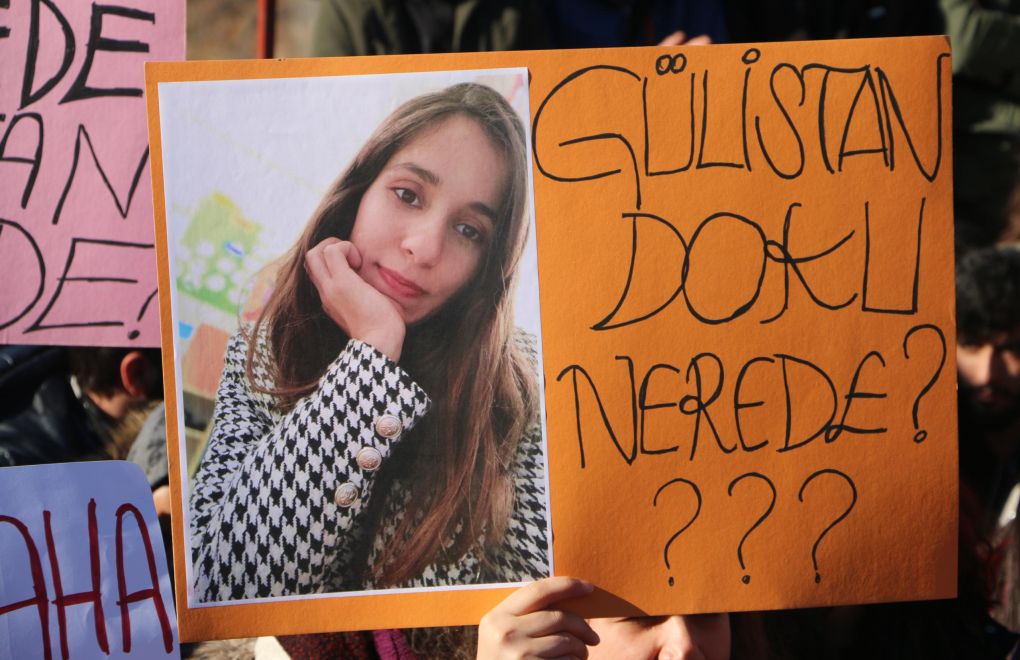
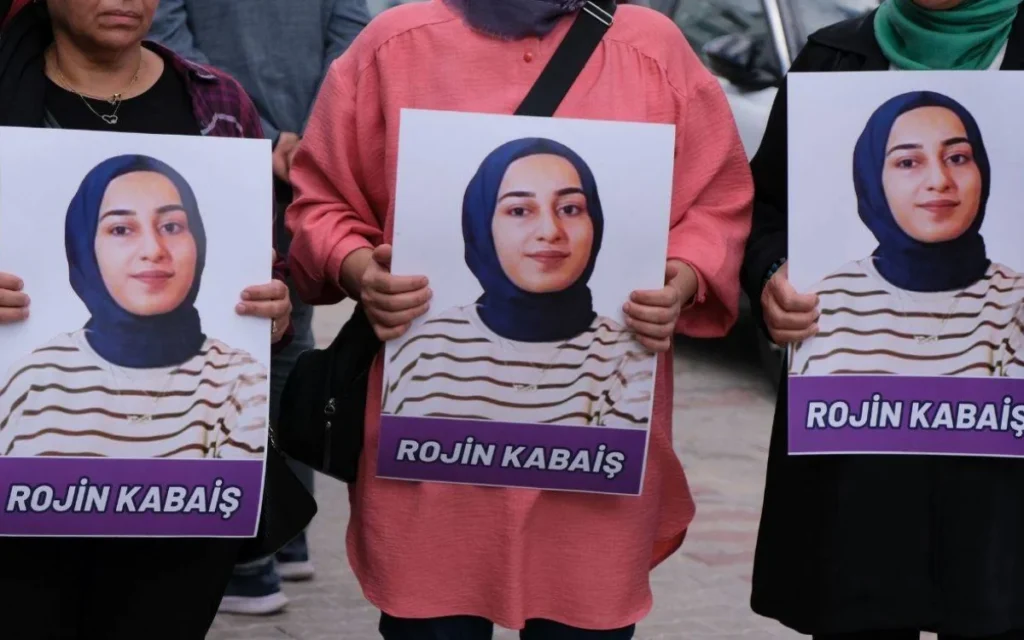
According to data shared by the We Will Stop Femicide Platform, while 294 women were killed by male violence in 2025, 297 women were found dead under suspicious circumstances. Today, many cases of violence defined as “suspicious deaths,” such as those of Rojin Kabaiş, Gülistan Doku, and Nadira Kadirova, are criticized by feminist and women’s movements for the lack of fair trials.
Eralp: Crimes left unpunished are consigned to uncertainty under the guise of ‘suspicious death’
Making an evaluation regarding suspicious female deaths and the judiciary’s policies of impunity, Feride Eralp, a member of Women Are Strong Together, stated that the announced data only covers cases reflected in the press. “These mean at least this many women were killed. When we also take into account the femicides and suspicious female deaths that are not reflected in the press, we can actually talk about much higher numbers,” she said.
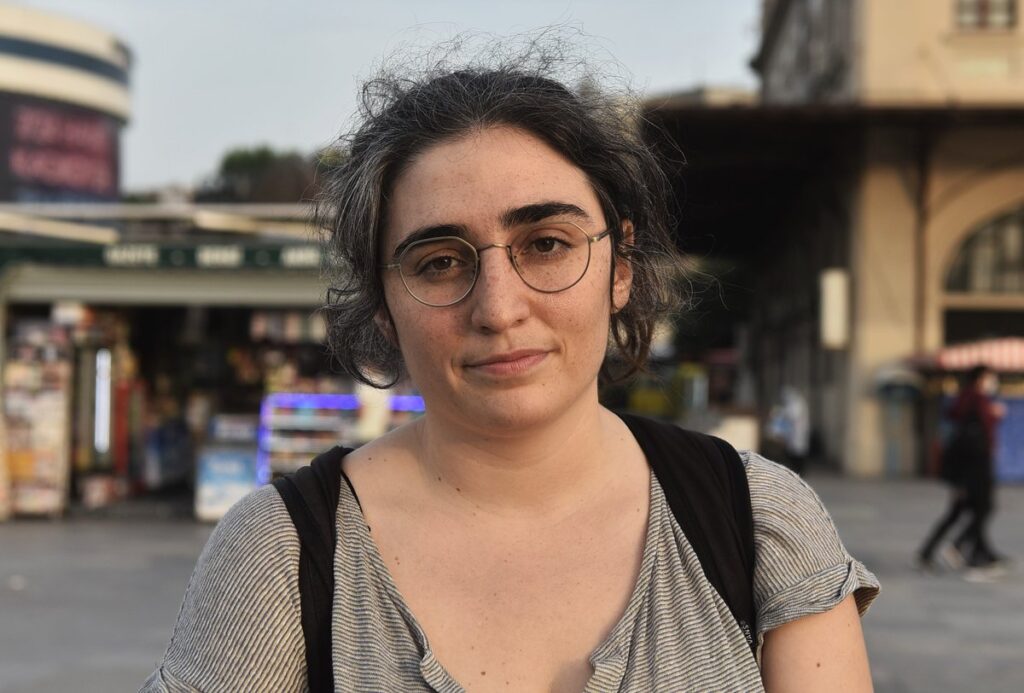
Referring to the period when femicide statistics were announced more realistically, Eralp argued that the data disclosed in the past made the prevalence of male violence visible, which is why it is not shared today, saying, “A reality about how widespread violence against women is had been exposed.”
Stating that suspicious female deaths are not a new phenomenon, Eralp recalled the female suicides reported in Batman and Diyarbakır, especially in the 1990s and 2000s. Expressing that female deaths resulting from systematic male violence were brought to the agenda as suicides, she said, “Today, something similar is operating under the concept of ‘suspicious death’.”
“The crimes of those who feel the freedom to commit crimes by leaning their backs on powerful people—crimes involving various power relations within the state and gang formation—which remain unpunished and whose perpetrators are often not revealed, are consigned to uncertainty under the guise of ‘suspicious death’.”
Stating that the women’s movement has frequently brought this issue to the agenda in recent years by linking it with war policies, Eralp said that this situation is also a practice of making women disappear:
“This geography is accustomed to the result of disappearances in custody and the failure to prosecute perpetrators despite them being known by everyone, a state violence that intensified especially in the 90s but existed after the 80 coup. This has a previously experienced practice and form. Therefore, I can say that the women’s movement has significantly brought to the agenda how this has merged with systematic male violence and transformed into a practice of disappearance against women, especially after the end of the peace process in 2015 and the restart of the conflict process.”
“In theory, sentence increases; in practice, impunity”
Establishing a direct link between suspicious female deaths and policies of impunity, Eralp emphasized that the women’s movement has not followed a line of only demanding heavy sentences for years. Stating that sentence increases often create more impunity, she said the following:
“The last increase in sentences for sexual crimes was in 2015. At that time, as the Istanbul Feminist Collective, we said: ‘In theory, sentence increases; in practice, impunity.’ As sentences become heavier, the likelihood of judges giving those sentences gradually decreases. Especially in areas where evidence is difficult to obtain, such as sexual crimes, and in areas where the woman’s statement is essential, when you increase the sentence, they generally give up on sentencing altogether.”
Stating that changes in the execution system also create a perception in society that ‘they’ll get out anyway,’ Eralp noted that this makes it harder to prevent male violence:
“It constantly brings some aggravations for these types of crimes against women. But what happens in practice? In practice, the execution system is organized in such a way that none of these heavy sentences are executed in that manner. Either a pandemic amnesty comes or another reduction in execution follows. A perception has formed in everyone’s mind that someone who enters prison stays for a year or two, gets out, and moves to an open prison anyway. When this perception is formed, it becomes much harder to prevent male violence.”
“It is not the woman who says ‘the state protects me’ but the male perpetrator”
Emphasizing that women often make repeated requests for help before the murder, Eralp said that the failure to effectively implement restraining orders and complaints paves the way for murders:
“Women go to the state repeatedly, but crimes such as threats, insults, detention, and simple injury are almost never punished. From there, the path leading to murder is opened. While women and children should think ‘the state protects me from violence,’ on the contrary, male perpetrators think ‘no matter what I do to a woman, the state will protect me’.”
Stating that the sexist approach continues in judicial processes, Eralp expressed that even men who have no ties to anyone within the state can receive unjust provocation reductions and good conduct reductions simply due to selective judicial policies.
In the context of this approach in the judiciary, Eralp said that women’s lifestyles, sexual orientations, or clothing can still be made a subject of judgment in courtrooms. “We saw this practice in the Ayşe Tokyaz case. The killer Cemil Koç was trying to defend himself by trying to put the life of the woman he murdered on trial. This is just one example,” said Eralp, noting that women are exposed to this perspective by all men, from the rich to the poor. She added that these practices of impunity normalize violence against women, children, and LGBTI+ individuals.
“Women have now realized that violence is not normal”
According to Eralp, one of the most important gains of the feminist movement has been the social acceptance of male violence as a political issue. “In a country where at the end of the 1980s a judge could easily say, ‘you should never leave a woman’s belly without a foal or her back without a stick,’ it is much more difficult to utter this sentence today. Today, the perception among women that such a sentence cannot be uttered has become very strong,” she said.
Eralp explained that a transformation has taken place regarding the awareness of violence against women:
“Male violence against women is very common in Turkey. But we do not deserve this. In other words, him inflicting violence on me is not because something is wrong, lacking, or bad about me. That is the man’s problem. It stems from that man seeing himself as having the right to establish power over women and thinking he has the right to fortify this through violence the moment it is shaken. In fact, there is a change with the fact that gender inequality is now more widely known as a phenomenon. This change does not mean we face less violence, are killed less, or encounter less sexism. But we are not staying silent about them.”
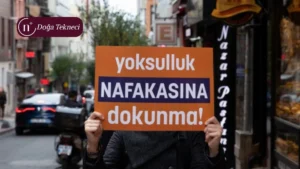
Stating that women’s organizations have been fighting for years to prevent suspicious female deaths from being forgotten, Eralp said that the names of murdered women are specifically commemorated in protests. “Saying ‘suspicious death’ and closing the file is also an attempt at erasure. If we forget those names, they will have succeeded,” she stated.
“Musa Orhan received a sentence but did not go to prison. We continued to pursue this as well. We continued to keep it on the agenda constantly. For Gülistan Doku and Rojin Kabaiş, friends from the ÖGK (Student Youth Organizations) established justice commissions and brought this issue to the agenda in different cities. Different women’s organizations have been continuing to follow and pursue such cases in different cities for years and years. They continue to hold protests on this subject in the streets.”
“Not only the perpetrators, but also the crime networks must be exposed”
Stating that to prevent suspicious female deaths, not only the perpetrators but also the mechanisms that cover up the crimes must be exposed, Eralp drew attention to the networks of relations especially within the security bureaucracy and the judiciary:
“When a death remains suspicious, the issue should not only be finding the perpetrator, but also exposing the networks that make it possible to cover it up.”
Eralp said, “Today, there is talk of establishing a department for unsolved crimes and research. But we see that this is being established once again as a tool for a kind of political reckoning.” She emphasized that bringing some files back to the agenda is not enough on its own:
“The issue here is not just exposing the first stage. In the case of Gülistan Doku, as long as all the mechanisms that have allowed this to be covered up for 6 years are not touched, this system reproduces itself.”
“Security policies do not protect women”
Eralp said that the securitist policies defended on the grounds of women’s safety do not protect women in practice. Recalling the 700 hours of camera footage that went unexamined for years in the Gülistan Doku file, Eralp argued that the state’s security mechanisms are not for women’s safety, but to protect the interests of the state’s power centers.
Stating that the security system is often used for the purpose of suppressing protests and monitoring society, Eralp expressed that the sacralization of the security bureaucracy makes invisible the mechanisms that facilitate the covering up of femicides:
“This security network does not protect the interests of women and girls. When a woman went missing, it served no purpose for 6 years. In fact, on the contrary, it deleted the record. It saw the murdered woman. It ends up using its power directly to commit a crime.”
“The state must do its duty”
Eralp said, “If we pay taxes to this state, if we are citizens of this state, we must not give up demanding that the state do its duty.” Stating that women’s organizations continue to monitor cases for this reason, Eralp said that being present in courts means forcing state institutions to take responsibility:
“By being present in the courtrooms, we are saying this: You are obliged to conduct a trial that will ensure real justice, not one based on male-dominated prejudices.”
Expressing that the women’s movement makes it visible when police officers do not fulfill their duties, Eralp said that the slogan “Where was the police while women were dying?” came to the fore for this reason.
“Trustees in Kurdish provinces blocked the path of social transformation”
Recalling that local governments and women’s organizations developed important experiences in the past, especially in Kurdish provinces, Eralp said that trustee policies served a function that blocked this social transformation. Stating that women’s centers, shelters, and local solidarity networks played an important role in reducing female suicides and murders in Batman and Diyarbakır, Eralp noted that municipalism in Kurdish provinces radically transformed this situation; and that they did this not through a security mechanism, but through policies that erode gender inequality and by increasing the options for women to move away from violence.
Emphasizing that this is lived as social memory and experience, Eralp concluded her words by saying, “The ability of municipalities to produce policies for male violence in their own localities more autonomously without the fear of trustees, and therefore to take steps that strengthen gender equality, will certainly be able to reduce such deaths again, as it has reduced them before.”
26 femicides, 23 suspicious deaths in April 2026
According to data from the We Will Stop Femicide Platform, in just the first four months of 2026, at least 102 women were murdered, and the deaths of 99 women were recorded as “suspicious.”
According to data for April alone, 26 women were murdered, and 23 women were found dead under suspicious circumstances. Furthermore, 38% of the women were killed by the men they were married to. 69% of the women were killed in their homes.
Prominent events in the last 1 month
- It was determined that Mustafa Türkay Sonel, the son of the governor of the period Tuncay Sonel, killed Gülistan Doku, who disappeared in Dersim on January 5, 2020, with a pistol. Sonel was arrested for the crime of “intentional killing” after being taken into custody. A total of 12 people were arrested as part of the investigation.
- Within the scope of the investigation, 700 hours of camera footage were taken under examination 6 years later.
- It was announced that İlayda Zorlu was found dead on April 17 as a result of a shot from her father’s service pistol. Student and youth organizations organized protests in many cities to shed light on İlayda’s death.
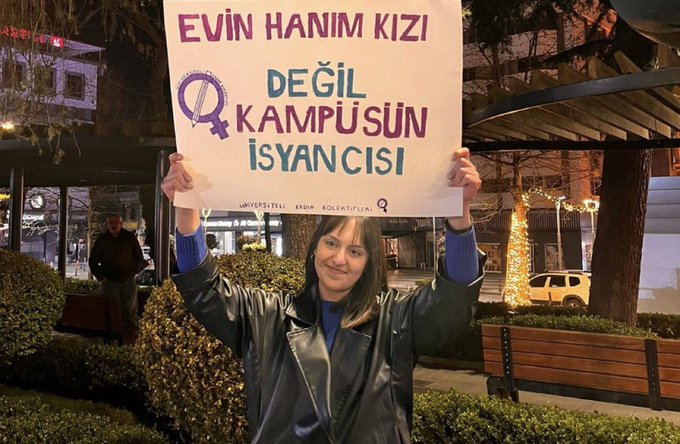
- On May 7, the decision “not to grant permission for investigation” regarding the management of the KYK dormitory concerning the death of Rojin Kabaiş was overturned by the Erzurum Regional Administrative Court upon the appeal made by the Van Bar Association.
- On April 8, it was reflected in the press that a man who entered the Ali İhsan Aldoğan Girls’ Dormitory inside the ITU Ayazağa Campus was caught topless in the laundry room by female students.