While the ceasefire reached between Iran and its rivals in 2026 may have reduced tensions in the region, the situation is different for the Kurdish opposition. This “silent war,” continuing with drones and operations along the border, proves that the ceasefire is not peace but merely a change of strategy.
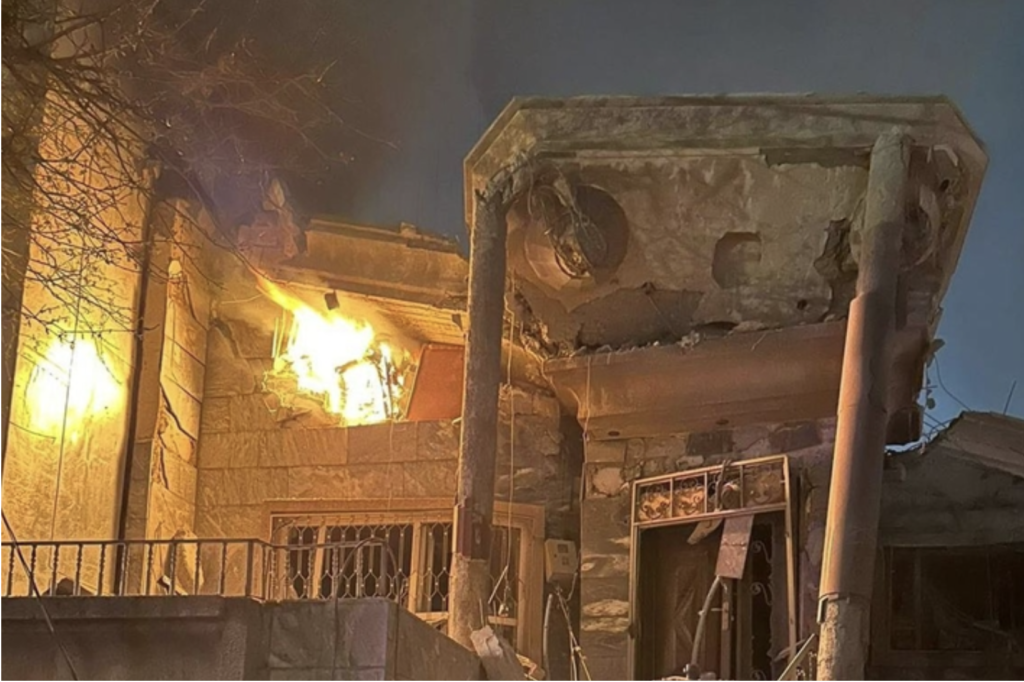
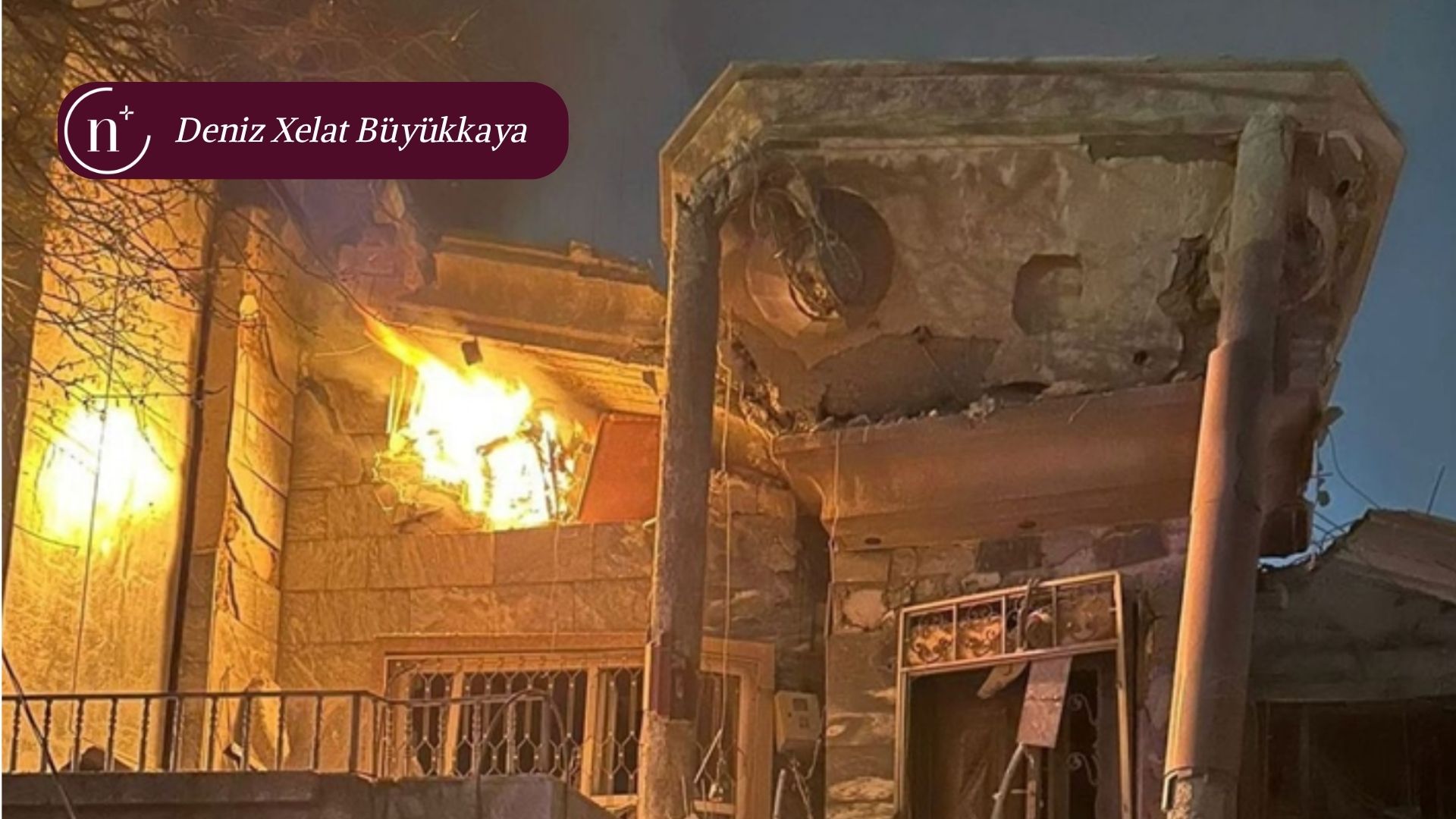
A drone strike in Sulamaniyah (Rudaw)
The ceasefire announced on April 8, 2026, between Iran and its external opponents was seen by many as a sign of lower tension in the region. However, for Iran’s Kurdish opposition movements, it did not mean sign of peace. In the area between Rojhelat, Eastern Kurdistan, and the Kurdistan Region of Iraq, the conflict did not end; it just changed its form.
While international attention focused on Iran, the United States, and Israel, another conflict continued along the Iran-Iraq border. After the ceasefire, Iranian military operations appeared to focus more directly on Kurdish opposition groups. These groups were targeted with drones, missiles, arrests, and security pressure.
This is why the situation can be called a “silent war.” It is not an official war, and there is no formal declaration. But attacks, pressure, fear, and deaths continue. It is “silent” because it receives much less international attention than other conflicts in the region.
From ceasefire to targeted attacks
After the ceasefire, Iran’s military focus seemed to shift toward Kurdish opposition groups based in Iraqi Kurdistan, including the Kurdistan Democratic Party of Iran, PDKI, Komala, and PAK.
Reports by human rights and regional monitoring organisations indicate that violence did not end after the ceasefire but shifted toward Iranian Kurdish opposition groups. CPT Iraqi Kurdistan recorded 48 attacks between 8 and 24 April 2026, of which 37 targeted Iranian Kurdish opposition camps and bases, compared with only four attacks on U.S. diplomatic or military facilities. The same report stated that 75 percent of post-ceasefire attacks were carried out directly by the IRGC, while 25 percent were attributed to affiliated groups. Human rights organisations such as the Kurdistan Human Rights Network and Hengaw also documented deadly IRGC attacks on PDKI and Komala-linked sites, including the killing of Kurdish opposition members and civilians.
The Kurdistan Regional Government’s Media and Information Office announced that between February 28 and April 20, the Kurdistan Region was targeted in a total of 809 attacks, despite not being a party to the war.
This pattern points to a clear shift in Iran’s security focus. Tehran sees these Kurdish groups as both an internal and cross-border threat because they are linked to Kurdish areas inside Iran and are also based in the Kurdistan Region of Iraq. For Kurdish groups, the ceasefire did not bring real security. It only changed the direction of Iran’s pressure.
The geography of the “silent war”
This conflict mainly takes place along the mountainous Iran-Iraq border, especially around Hewler and Sulaymaniyah, where Iranian Kurdish opposition groups have had bases for many years.
In mid-April 2026, a drone attack hit the Surdash area near Sulaymaniyah. The attack seriously injured Ghazal Mawlan Chaparabad, a young Kurdish female peshmerga affiliated with Komala Toilers of Kurdistan, who later died from her injuries. According to a HANA Human Rights Organization legal team report, she first received only initial emergency care at Shorsh Hospital and then needed urgent higher-level treatment, including advanced imaging, specialist trauma care, and intensive care support. HANA also reported serious allegations that her admission or transfer to other hospitals was delayed or refused, and that her condition worsened during these delays. This case shows that Kurdish opposition camps and nearby remote areas may be especially vulnerable after drone attacks, not only because of the strikes themselves, but also because wounded people may face delays in reaching advanced medical care.
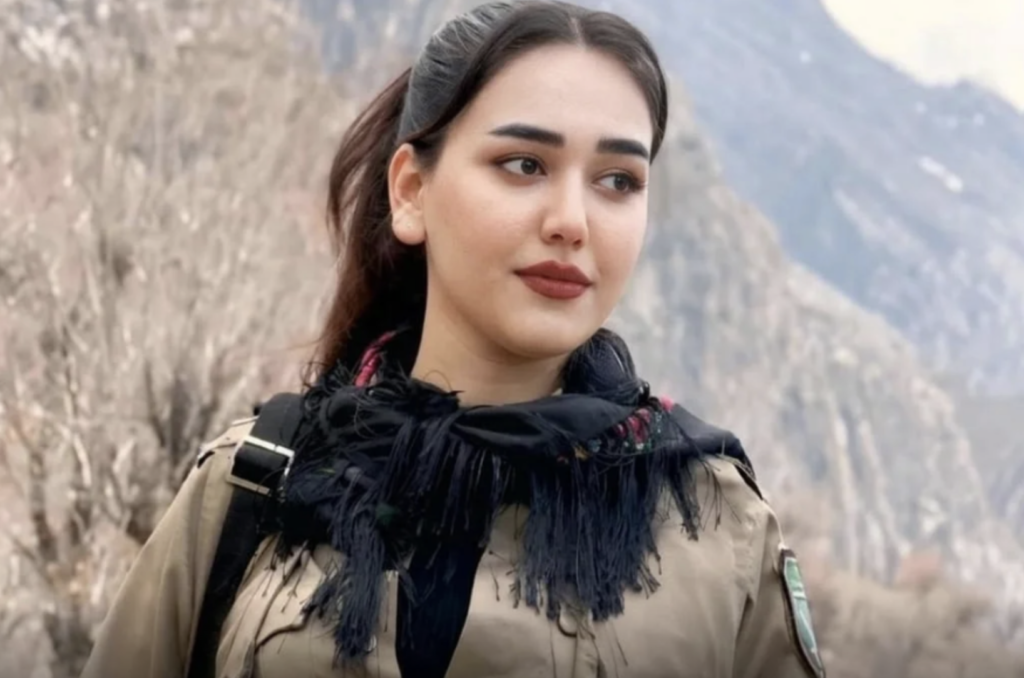
Ghazal Mawlan Chaparabad (hana.org)
A few days later, another attack hit the Jezhnikan camp near Hewler. Rudaw reported that a drone attack killed Shahin Azarbarzin, the son of a Peshmerga fighter, and seriously wounded his father. Kurdistan24 also reported that the camp housed civilians and that women and children were among the injured in related attacks. This shows that these camps are not only military or political spaces; families and civilians also live there. Together with the case of Ghazal Mawlan, this raises concern about whether wounded people in remote camp areas can reach advanced emergency care quickly after drone or missile attacks.
The danger was not limited to fighters or military sites. Civilian areas were also at risk. As a result, many Kurdish camps and nearby communities now live with constant insecurity.
Rojhelat under internal pressure
At the same time, pressure inside Iran’s Kurdish regions also increased. Hengaw reported that Iranian authorities increased the presence of plainclothes forces and created new checkpoints at city entrances, on inter-city roads, and on rural roads around Sine. It also reported that security-linked forces were deployed in several Kurdish border areas to create fear, prevent possible protests, and control public space. The report mentioned Hashd al-Shaabi forces, tanks, and armored vehicles in some Kurdish border areas. A Washington Kurdish Institute digest also described expanded military and proxy-force deployment in Kurdish areas. Together, these reports suggest that Kurdish areas were under stronger public security control after the ceasefire.
For Kurdish people, this meant more surveillance, less freedom of movement, and constant pressure. Human rights reports from the same period mentioned arrests without warrants, detention without family contact, and the execution of a Kurdish political prisoner. For example, KHRN reported that Yousef Karimi, a Kurdish man from Bukan, was arrested without a warrant and held without contact with his family. Separately, Hengaw reported that Kurdish political prisoner Naser Bakrzadeh was executed in May 2026 after his death sentence had been upheld by Iran’s Supreme Court.
These actions show that Iran was using two strategies at the same time: outside Iran, it tried to weaken Kurdish opposition groups in Iraqi Kurdistan; inside Iran, it tried to stop political mobilisation in Rojhelat.
Why Is Iran doing this?
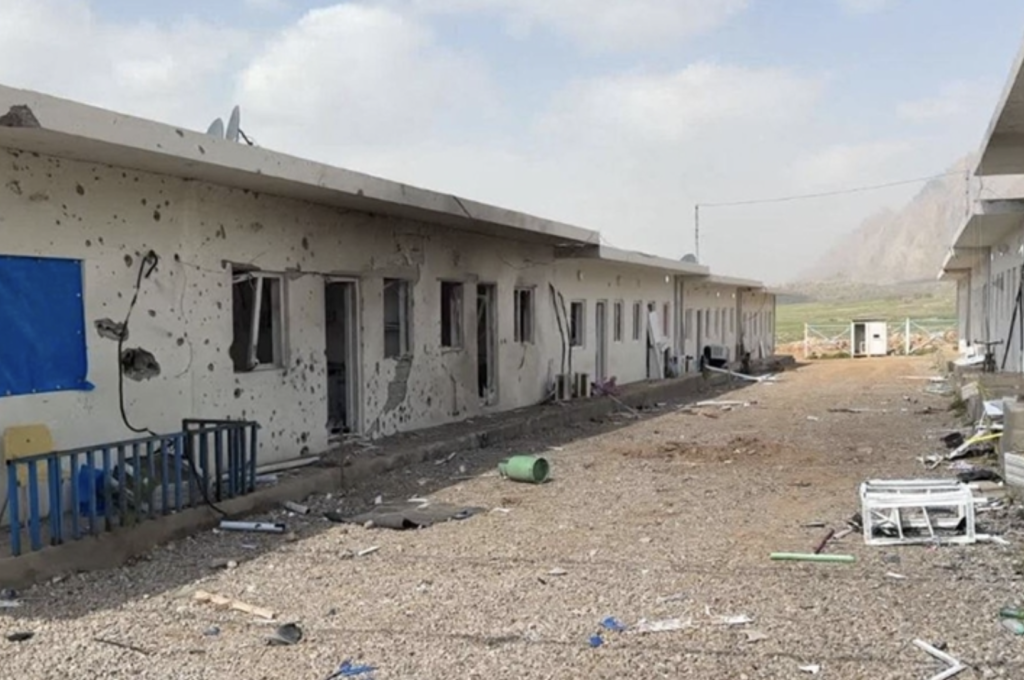
Image: Rudaw
Iran’s strategy seems to be based on fear of instability. During the wider crisis in early 2026, Chatham House reported that Kurdish opposition groups faced pressure and uncertainty because of mixed U.S. messages about a possible Kurdish uprising. It also noted that Kurdish groups based in Iraq could, in theory, create space for wider opposition activity inside Iran, but that this would be very risky because Iranian security forces still had strong capacity for violence.
The attacks after the ceasefire can therefore be understood as a warning. Iran wanted to stop Kurdish groups from reorganising, weaken their cross-border networks, and prevent Kurdish mobilisation inside Rojhelat and across the border in Iraqi Kurdistan. In this sense, the post-ceasefire attacks were not random. They were part of a security strategy aimed at controlling Kurdish political activity both inside and outside Iran.
The Conflict has changed, not ended
The April 2026 ceasefire may have reduced the risk of a larger regional war, but it did not bring stability everywhere. For Kurdish opposition movements and the wider area between Rojhelat and Iraqi Kurdistan, the conflict continued without being officially recognised.
It was not a traditional war with large battles. It was a conflict fought through drones, surveillance, arrests, and targeted attacks. For this reason, the situation in Rojhelat was not real peace, but a transformed conflict.
The Kurdish question in Iran is no longer only an internal issue. It has become part of a wider regional security struggle. The conflict has not ended; it has only become quieter, less visible, and easier for the world to overlook.