COP31 begins in Antalya: Food, agriculture, and health on the agenda for the first day

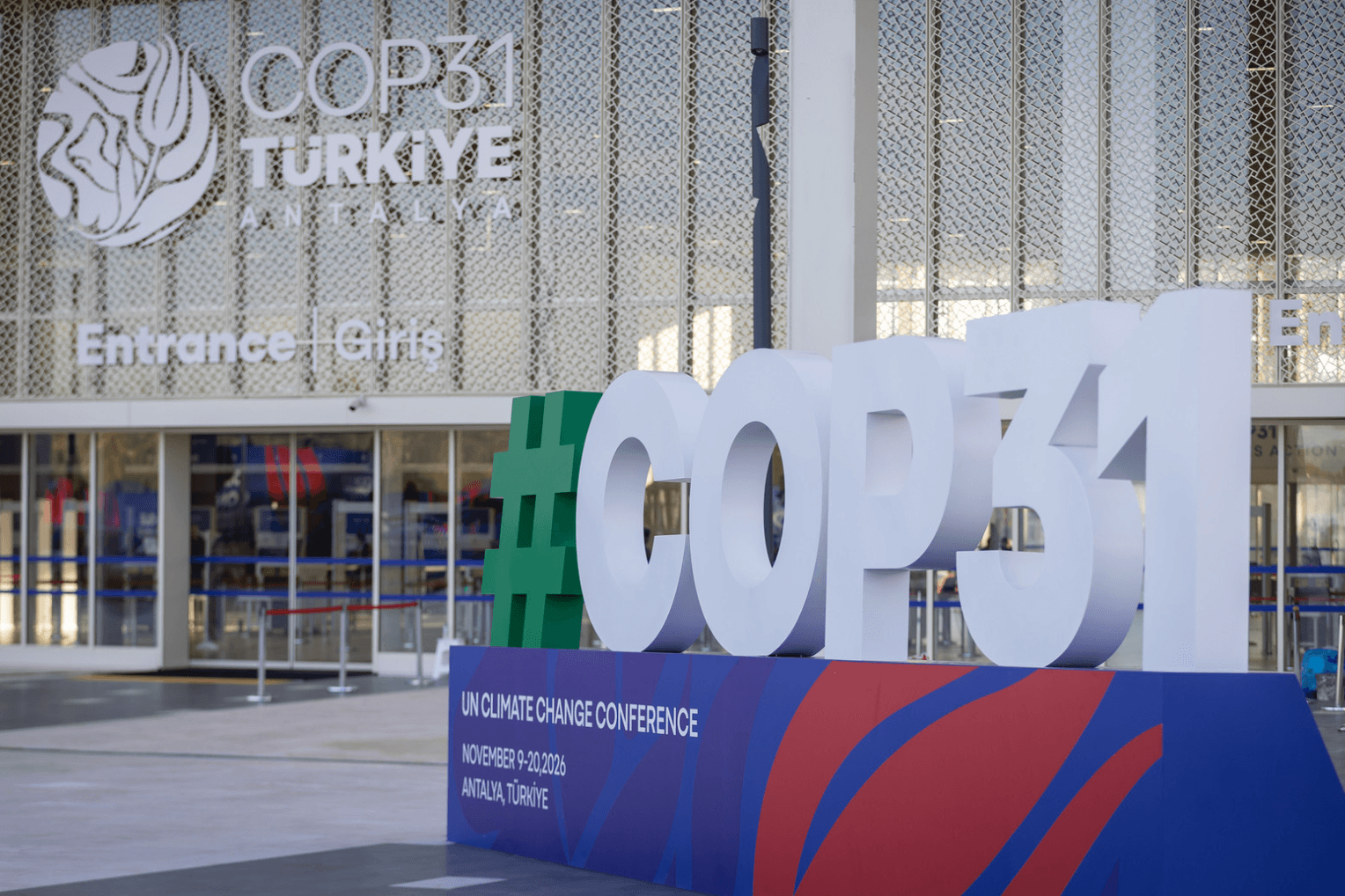
The 31st Conference of the Parties (COP31) to the UN Framework Convention on Climate Change began today in Antalya. While the first day of the summit, which will run until November 20, was dedicated to the themes of food, agriculture, and health, the event has drawn criticism. This follows the inclusion of major conglomerates such as Cengiz, Limak, IC, and Rönesans as “climate supporters” on the official website, as well as the introduction of a “public morality” clause in a declaration that speakers in the COP31 “Green Zone” are being asked to sign.
Photo: UNFCCC

The 31st Conference of the Parties (COP31) to the United Nations Framework Convention on Climate Change (UNFCCC) began today in Antalya, with participants from 198 countries. The first day of the conference, which will continue until November 20, was dedicated to food security, agriculture, water efficiency, and the impacts of climate change on public health.

The opening plenary session will take place at 10:00 AM in the Anatolia Plenary Hall at the EXPO venue. During the session, opening remarks were delivered by Murat Kurum, Minister of Environment, Urbanization and Climate Change; Simon Stiell, Executive Secretary of the UNFCCC; and Chris Bowen, COP31 President-designate. In addition to Kurum, Minister of Health Kemal Memişoğlu, Minister of Agriculture and Forestry İbrahim Yumaklı, and Mayor of Ankara Metropolitan Municipality Mansur Yavaş also took the floor.

Countries that are parties to the international agreement, adopted in 1992 under the United Nations Framework Convention on Climate Change (UNFCCC) and aimed at combating climate change, convene annually at summits known as the Conference of the Parties (COP). These nations gather each year within this supreme decision-making body to discuss and determine global climate policies. At the conference, which brings together representatives from nearly 200 countries, the global climate agenda is negotiated, with a primary focus on emissions reduction, adaptation policies, and climate finance.


Day one: Food, agriculture, and health

Throughout the day, various sessions will address the resilience of agriculture and food systems against climate change, the efficient use of water resources, and the impacts of the climate crisis on public health.

At 11:00, at the Australian Pavilion in the Blue Zone, civil society organizations from Turkey and Australia will voice their demand for a phase-out of fossil fuels. In this session—bringing together civil society representatives from Turkey (which will host COP31) and Australia (which is presiding over the negotiations)—the responsibilities of both nations in the process of transitioning away from fossil fuels will be discussed.

Other events throughout the day will cover topics such as a just energy transition, climate finance, the transformation of electricity grids, and the obligations of states under international climate law.

Leaders’ Summit on November 11–12

The Antalya Leaders’ Summit, which will be attended by heads of state and government, is set to take place on November 11–12. Hosted by President Recep Tayyip Erdoğan, the summit is expected to see leaders outline their priorities and commitments regarding the fight against climate change. The messages delivered are anticipated to help shape negotiations on topics such as emissions reduction, climate change adaptation, and the provision of financing to developing countries.

Alternative events: People’s Climate Summit and Climate Justice Forum

The People’s Climate Summit, which will bring together climate justice advocates from across the globe, is set to begin on November 14. The summit will open with a rally as part of a Global Day of Action on the same day, followed by a series of panels and workshops held at the Mimar Sinan Congress Center from November 15 to 18. Additionally, as part of the events organized as an alternative to COP31, a Climate Justice Forum will take place on November 15, hosted by the Antalya Bar Association and attended by numerous rights advocates.

Setback despite months of preparation

According to Evrensel, a total of 630 buses, 71 of which are electric, have been allocated for COP31 participants. These shuttle buses, which transport attendees from locations including the airport, the Belek hotel zone, and the city center to the event venue, operate across 21 different routes. However, yesterday, just one day before the opening of the conference, which has been in preparation for months, disruptions occurred on the COP31 shuttle routes. Participants were notified of these issues via email.

The list includes companies associated with mining and coal projects

The official website for COP31, which began today in Antalya, lists the summit’s sponsors and supporters. The list includes major corporate conglomerates such as Koç, Sabancı, Cengiz, Kalyon, Limak, IC, Rönesans, and Nurol. Environmental organizations have expressed opposition to the presence of these companies, some of which are involved in environmental lawsuits or have investments in fossil fuels, in such a capacity at the summit.

On the official website’s list of sponsors, Cengiz Holding is presented as a “sustainable transformation partner,” Koç Holding as a “global business partner,” and Sabancı Holding as an “electrification partner.” Kalyon Holding is participating in the summit as a “carbon offsetting partner.” Under the category of “climate supporter,” the list includes Limak Holding, IC Holding, Sinpaş, and Rönesans Holding. Yaşar Holding has also announced its role as a climate supporter for COP31. The list further features Garanti BBVA, Türk Telekom, and various state-owned banks as sponsors.

“Public morality” requirement at COP31

A declaration has been prepared for panelists speaking in the Green Zone at COP31, requiring them to commit to ensuring their presentations and remarks comply with “the law and general moral standards.” It is stipulated that, in the event of a breach of this declaration, the organizer may halt or terminate the presentation, remove the speaker from the session, and report the matter to the COP31 Green Zone management or the relevant authorities.

However, the code of conduct applicable to events under the UNFCCC does not include the term “general moral standards.” Furthermore, while the UNFCCC’s code of conduct explicitly prohibits behavior that disparages individuals based on their sexual orientation or gender identity, these specific grounds for discrimination are not mentioned in the declaration prepared for the Green Zone.
“A struggle for survival”: Depopulation continues in Kurdish towns amid mining plunder

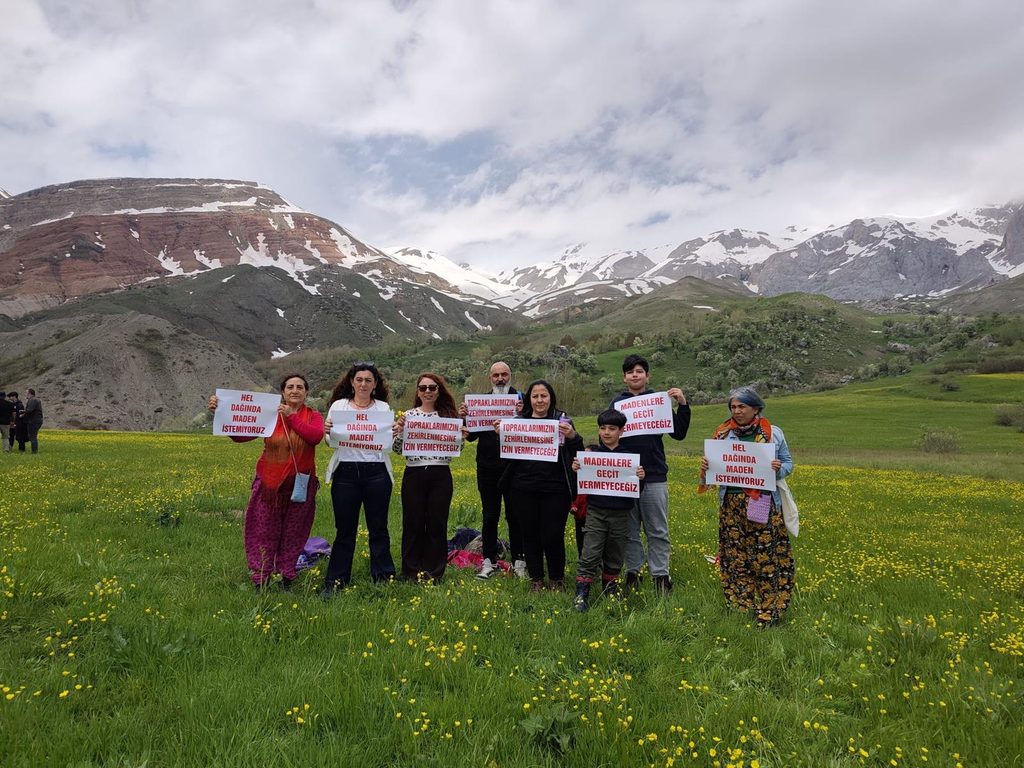
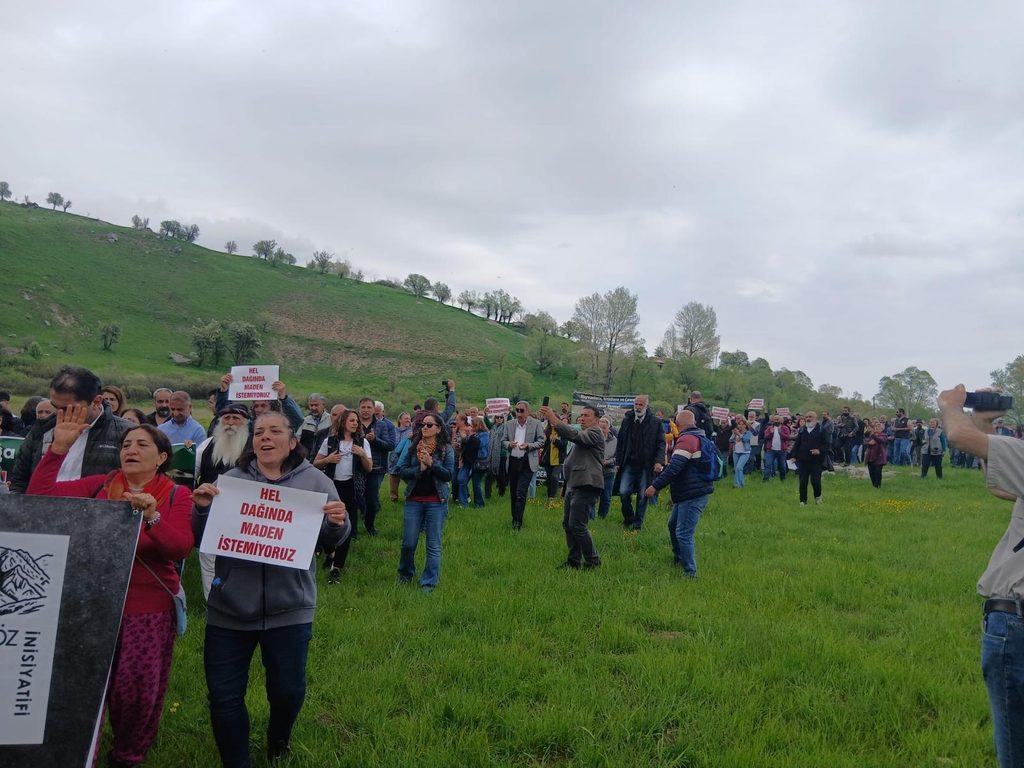
In Diyarbakır and Dersim, villagers’ resistance against mining projects continues. While mining companies now threaten the villages that were evacuated in the 1990s, the people remain determined to defend their land.

Photos: Munzur Environmental Association

In the Lice district of Diyarbakır and the Pülümür district of Dersim, villagers are continuing their resistance against Dimin Mining. The people, who were forcibly displaced from their villages in the past, are now facing the same fear once again. The companies, however, are not backing down.

In the villages of Koçmar (Koçmarin) and Kılıçlı (Mizag), located in the Lice district of Diyarbakır, the people have been fighting against Dimin Mining’s copper mine project for over two years.

Ahmet İnan, Chair of the Diyarbakır Bar Association’s Environment and Urban Planning Commission, reported that all the villages located between the Lice and Genç (Daraheni) districts of Bingöl were completely evacuated in the 1990s.

According to İnan, mining companies specifically target these villages because they have never regained their former population, and there is no longer a young population left to resist this ecological destruction.

Dimin Mining, a subsidiary of the Dimin Group, has been planning a project for quite some time in the Koçmar (Koçmarin) hamlet of the village of Kılıçlı (Mizag). It is reported that this project will be carried out as a joint venture between Dimin Mining, registered in Diyarbakır, and Dimer Mermer. The settlements expected to be affected include Akçabudak, Kılıçlı, Bayırlı, Saydamlı, Ulucak, Yorulmaz, Baharlar, Güldiken, Üçdamlar, and Hedik. To avoid receiving a negative EIA report, the company—which held a permit covering approximately 700 hectares—reported its area of operation as 24.87 hectares; as a result, the company was granted a “EIA not required” decision in 2020.

“A continuation of the assimilation policy”

İnan, who states that there are currently nearly 25 ongoing struggles against eco-genocide in Diyarbakır, characterizes these events as a continuation of assimilation policies:

“Two years ago, the villagers called us. They told us that companies had come to the areas they had been using as pastures for years and seized them, saying, ‘This place is ours now; we acquired it from the state.’ The companies view village life as an easy target and a place to plunder. The state is the one encouraging them to do so. Companies and the state are collaborating, taking advantage of the village evacuations of the 1990s and the ease afforded by the coup, to come here. Displacing a people who have managed to preserve their culture, language, and religious identity in the village—yet who still face oppression—is a continuation of assimilation policies. “What is happening today is a legally sanctioned form of forcing people to migrate.”

Unlike in the 1990s, villagers today are forced to contend primarily with ecological destruction, Environmental Impact Assessment (EIA) reports, and the health problems resulting from this destruction.


“Farming has been practiced on these lands for 1,000 years”

According to İnan, companies are seizing the people’s sources of income in these villages—where nearly the entire population has been wiped out—thereby impoverishing them day by day. İnan says these dynamics are a result of the capitalist system:

“Farming has been practiced on this land for 1,000 years, and it would have continued for another 1,000 years. But they chose to open it up to mining operations and destroy it. In other words, they prioritized 10 to 20 years of economic revenue over 1,000 years of it—all while prioritizing the prosperity of one or two individuals over the livelihoods of many villages and families.”

The villagers’ resistance continues not only on the ground but also in the legal arena. İnan says that the plundering taking place in the villages of Koçmar and Kılıçlı has been brought before the courts through multiple lawsuits. While the EIA lawsuit is in the constitutional review process, lawsuits seeking “permit revocation” and “forest permit” are expected to be filed. İnan stated that despite this bleak picture, thanks to the struggles waged, the companies have not been able to enter any of the areas, and that there is both legal and social organization in Lice, adding that the resistance will continue.

Endemic vegetation at risk

Dimin Mining, a Konya-based company attempting to operate in Lice, has also drawn the opposition of the local community in the village of Karagöz (Gurik) in the Pülümür district of Dersim.

In opposition to the planned chromium mine—which threatens the region’s endemic vegetation—villagers began a sit-in on May 28; prior to that, they had submitted 2,000 signatures to the Tunceli Provincial Directorate of Environment, Urban Planning, and Climate Change.

According to the Munzur Environmental Association, Karagöz is one of the villages that were evacuated in the 1990s, and its residents were exiled during the 1938 Dersim Massacre.

“Our village is facing irreversible destruction”

Uğur Tepe, a beekeeper in the village of Karagöz, witnessed a forced displacement in 1993 when he was just six years old. Today, however, mining operations are putting villagers who have returned under both financial and emotional strain. Tepe, who says his family began farming in the village after their return, reported that mining exploration activities pose a threat to the village’s unique endemic ecosystem:

“I was six years old when every household in our village was forcibly evacuated in 1993. Now I have a child the same age, who runs among the flowers in the village, but our village faces irreversible destruction. There is an effort to depopulate the region because of its identity. What we are doing is, from our perspective, a struggle for our historical, cultural, and productive existence.”


Tepe, who shared that his grandfather was also exiled at a young age during the Dersim Massacre in 1938, noted that the villagers—who have been subjected to a depopulation policy for generations—received compensation from the state following a ruling by the European Court of Human Rights (ECHR). Tepe added that the areas now set aside for the mine were opened up for dam construction in the 1990s, resulting in the destruction of clean water sources.

Pointing out that the site’s operations are being encroached upon by expanding new projects, Tepe noted that “it is clear that even the so-called tourism road project, which is supposed to run from Ovacık to Pülümür along the foothills of the Munzur Mountains, is actually a mining road project,” highlighting that activities in the region are being expanded without the public’s knowledge.

Dimin Mining’s project in Dersim Province was planned on Mount Hel, near the village of Karagöz. The total licensed area of the project is 686 hectares, and the EIA area is 66 hectares. According to the EIA report, the project cost is 7,827,000 TL. Of the 65.97-hectare area, 14.27 hectares are designated as waste rock storage areas. A 36-hectare portion is planned to be used directly as a mining production area. The permit area includes not only Karagöz but also the villages of Dağbek, Çakırkaya, Kovuklu, Kaymaztepe, Mezra, and Kocatepe.

The company submitted its application to the Ministry in 2024. A public participation meeting was held in June 2024, but the public protested the meeting and did not attend; subsequently, the process was withdrawn. The company restarted the EIA process in October 2025.

“We produce here in the village, we will not allow mining”

Tepe stated that Karagöz is highly suitable for livestock farming and beekeeping, and that pollen types not found in scientific literature have been identified in the village, which is home to endemic plant species. The villagers, who derive their income from the village’s rich resources, argue that there is no place for capital in their village. Tepe says that the destruction negatively affects the livelihoods of villagers who are trying to be self-sufficient:

“Life has somehow brought us back to our village, and we’re beekeeping here. We produce here in the village. The spiritual transmission is being harmed due to the damaged places of worship in the region, but there’s also a material aspect to this issue. It’s clear that the state provides incentives to the mining companies. In the past, those who were forced to migrate became cheap labor in factories in major cities. Therefore, we’re saying that we won’t allow mining operations here today.”

According to Tepe, who noted that resettling in the village is difficult, the people of Karagöz generate their own electricity from solar power because there is no electricity in the village. Although transportation to the village is nearly impossible, mining companies have been able to reach it thanks to government incentives.

“Despite the report, the EIA process has not been terminated”

Referring to the current legal situation and the uncertainty surrounding the EIA process, Tepe emphasized that the process has not been terminated despite the negative report from the Provincial Directorate of Agriculture, stating, “The EIA process has been suspended even though it should actually have been terminated.”

Sharing details of his contacts with public institutions and officials, Tepe noted, “Failing to terminate the process despite the clear legal provisions—and issuing a positive EIA report—would clearly signify a stance favoring capital.” Tepe added that a highly tense atmosphere has developed in the village during the process and that the villagers have become significantly more aware of the issues.

The Provincial Directorate of Environment and Urbanization, meanwhile, informed the villagers that they had never before received such a large number of petitions regarding any project. Although the methods in the region may change, the outcome remains the same. The Kurdish people face the threat of having the villages they returned to after many years taken away from them once again.

Mountain goat hunting auctions in Van and Hakkâri

Mountain goat hunting sparks backlash: “This isn’t tourism, it’s slaughter”

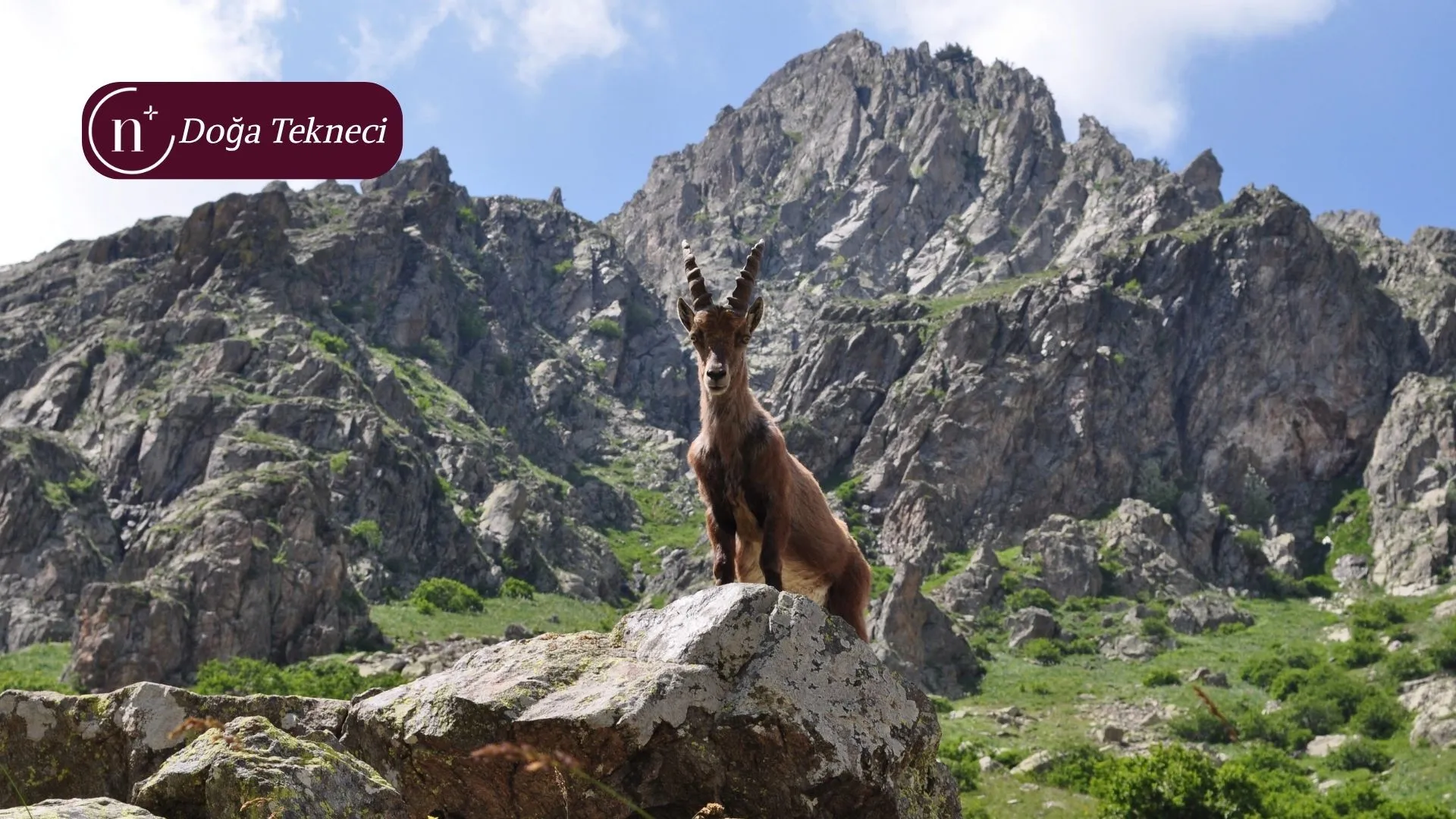
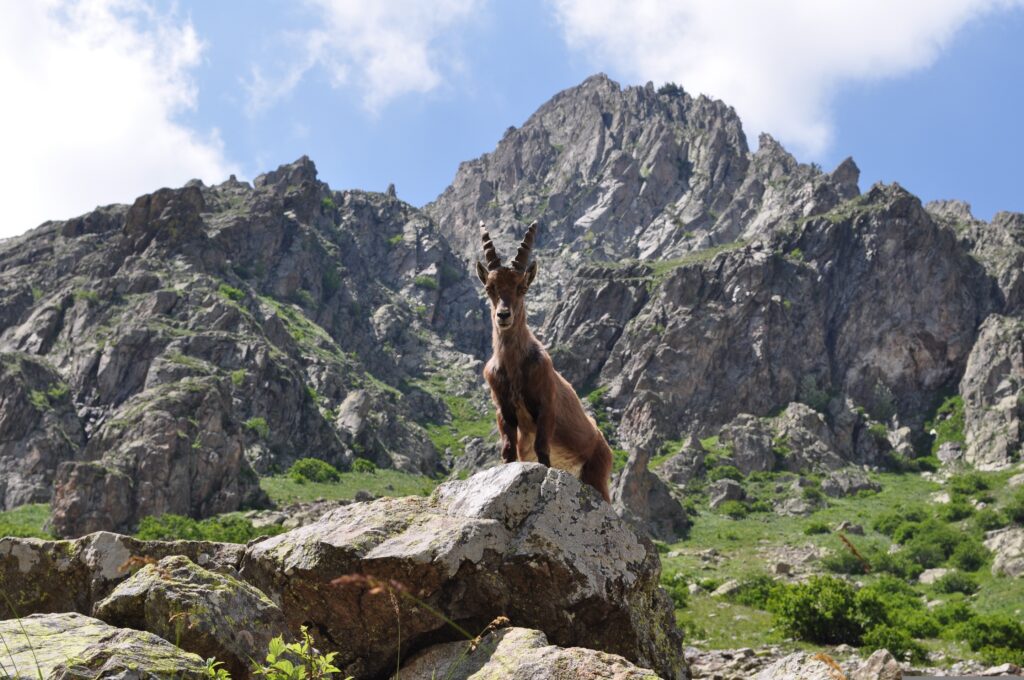
Hunting quotas for wild mountain goats have gone up for auction in Van and Hakkâri as part of the 2026-2027 hunting tourism season, drawing sharp criticism from ecology groups. “Anyone who comes to this land to kill a living being will be our target,” says Fatih Şahin from the Van Ecology Association.


The General Directorate of Nature Conservation and National Parks (DKMP), under the Ministry of Agriculture and Forestry, has put mountain goat hunting quotas up for sale as part of its “Hunting Tourism” program in Van and Hakkâri.

In Hakkâri’s Yüksekova district (Gürkavak General Hunting Ground — 2 quotas) and Şemdinli district (Konur State Hunting Ground — 1 quota), a total of three mountain goat quotas were opened for the 2026-2027 season, each with an estimated price of 1,650,000 Turkish liras and a temporary deposit of 49,500 liras. In Van, a single quota was listed at an estimated 450,000 lira. Alongside Van and Hakkâri, Bitlis and Siirt also opened a combined 13 mountain goat quotas through an open-bid tender process, bringing the total asking price for killing mountain goats across the four provinces to 6,150,000 lira. In July, 11 quotas for mountain goats in Muğla had already gone up for sale.

According to DKMP figures, a total of 4,268 wild (mountain) goats were hunted nationwide between 2000 and 2021 through hunting tourism auctions. Mountain goats are also listed on the International Union for Conservation of Nature’s (IUCN) Red List of Threatened Species, with several subspecies classified as endangered.

Turkey’s Law No. 4915 on Land Hunting imposes fines and prison sentences of two to five years on those who kill protected species but the same law permits legal, licensed hunting under its provisions. Rather than banning hunting outright, it regulates the practice within a framework of rules, seasons, quotas and permits intended to make it “sustainable.”

Only travel agencies holding a “Hunting Tourism Permit” issued by the Ministry of Agriculture and Forestry are eligible to bid in these auctions. Agencies that win quotas then offer them to domestic and foreign hunters. Among the targeted animals, mountain goats aged seven and older are generally prioritized. The “licensed” hunting of protected species like these is driven by hunters’ pursuit of tourism revenue and trophy collection.

“We will stand together with the public”

Fatih Şahin, a member of the Van Ecology Association, said the group would launch both legal action and grassroots resistance against the auctions and hunting tourism practices more broadly. He laid out the group’s plan:

“Once the agencies that won the tenders arrive in the region, our resistance begins. We’ll organize local communities through our neighborhood and village councils and take a stand wherever the hunters go. As ecology activists, we’ll be present at the hunting sites, and we won’t stay silent. Legal action will proceed in parallel.”

“Killing a living being cannot be normalized”

Şahin pointed to the region’s natural beauty, arguing that killing its wildlife has nothing to do with promoting tourism there:

“There’s no way to dress up the killing of a living being as tourism, or to promote a region that way. Killing an animal serves nothing but human ego. We see this plainly as an act of savagery. Anyone who comes to this land to kill a living being will become our target.”

Growing backlash against hunting tourism auctions

Civil society groups and ecology activists have increasingly pushed back against these government-run hunting auctions. Regional administrative courts have occasionally suspended or annulled hunting tenders following lawsuits, though similar auction processes tend to resurface in subsequent hunting seasons.

Online petition campaigns, including on platforms like Change.org, have sprung up to build public pressure against the practice.

Beyond the legal hunting tourism industry, poaching — carried out without regard to season or age restrictions — poses a further serious threat to the populations of many protected species, mountain goats chief among them.

Nayir: “COP is a summit where the system reproduces itself”

Speaking to Niha+ ahead of COP31, which will be held in Antalya this November, Polen Ecology Collective activist Cemre Nayir argued that climate summits serve to protect the interests of capital rather than nature. Describing COP31 as “a site of struggle that must be challenged,” Nayir called on social movements to confront the summit rather than accept it as a solution to the climate crisis.

Countries that are parties to the United Nations Framework Convention on Climate Change (UNFCCC)—the international agreement adopted in 1992 to combat climate change, meet annually at the Conference of the Parties (COP). These summits address issues such as climate finance, greenhouse gas emission policies, and energy transition. The 31st Conference of the Parties (COP31) will take place in Antalya, Türkiye, from 9 to 20 November 2026.

Environmentalists and climate activists, however, argue that these conferences do not genuinely aim to protect nature or address the climate crisis.

In an interview with Niha+, Polen Ecology Collective activist Cemre Nayir described COP summits as arenas of political struggle that should be confronted by all sectors engaged in social movements.

Cemre Nayir

Cemre Nayir was arrested on 3 February during a police operation targeting socialists on charges of “membership in an organization” and was released on 2 June.

“COP is a meeting where the system reproduces itself”

Although COP summits have been held for more than three decades, ecological collapse including global climate change, has continued to deepen worldwide, Nayir said, arguing that it is necessary to examine the systemic foundations of these meetings.

“At their core, COP summits are no different from other international summits whose political framework is determined by monopoly capital under the stage of imperialist globalization. They are organized under the leadership of the world’s largest monopolies—those that have secured the greatest share of global economic plunder—and the imperialist states that have historically provided the foundation for these monopolies. Whether it is the G7, the G20, NATO summits, or conferences organized under various United Nations conventions, COP functions in essentially the same way: it is another forum where the interests of imperialist powers and a handful of global monopolies are protected and expanded, where new commercial frameworks and market mechanisms are established, where the hegemony of these centers is consolidated, and where the system reproduces itself.”

According to Nayir, the annual COP summits function as a mechanism through which capital attempts to “greenwash” itself. He argued that this strategy can only be challenged through sustained pressure from social movements defending the interests of people and oppressed communities most affected by climate change.

“Like every other commodified element of nature, it is primarily working people who bear the destruction caused by this crisis. While historical responsibility should certainly be discussed at the level of states, today’s class struggles must also be brought to the forefront. Rather than searching for ways to preserve capitalism, we need to build a political path based on the understanding that the liberation of workers and peoples requires a fundamentally different social order.”

“COP31 is a site of struggle”

Nayir argued that large capital groups see nature as “a free source of rent to compensate for declining profitability.” According to her, summits such as COP help establish the legal framework necessary to remove barriers to profit-making while simultaneously “manufacturing consent among workers for new models of capital accumulation.”

Nayir stated that workers are forced to secure their livelihoods under worsening climate conditions while, at the same time, contributing through their labor to the destruction of the planet and to their own exploitation.

“As the Polen Ecology Collective, we advocate what we call labor ecology (emekoloji): a perspective that seeks to build a revolutionary, class-based struggle aimed at political power against workers’ alienation from both their labor and nature, and against the increasingly exploitative conditions created by the deepening climate crisis.”

Nayir also argued that the past thirty years of climate negotiations have amounted to little more than a delaying tactic.

“One does not even need a Marxist class analysis to recognize that these thirty years, dominated by capital’s proposed solutions, have merely served to postpone real action. We therefore see COP31 not as the place where solutions will emerge, but as a site of struggle that must be surrounded and challenged. We regard it as a legitimate target for workers, oppressed peoples, and socialists in an internationalist context. Rather than participating, the summit should ideally be protested or even obstructed, much like NATO summits, which are themselves summits of war. Of course, the level of organization, shared political purpose, and collective struggle required for such action does not currently exist within Türkiye’s social movements. But that should not lead us to retreat from these principled political discussions.”

“Ecology must be at the center of politics”

According to Nayir, the Turkish government uses international summits such as COP as a means of reinforcing its domestic legitimacy during a period of political crisis. At the same time, Nayir argued, these gatherings are important for strengthening the position of Turkish capital within the imperialist hierarchy, expanding its access to markets, and securing new sources of finance.

Nayir described everyday life in Türkiye marked by workplace fatalities, femicides, hunger, and inadequate urban infrastructure, as “a form of internal warfare.” In this context he argued that the government’s ability to consolidate its power can only come through gains made on the frontlines of war, adding that the current regime is no longer capable of maintaining lasting social consent or legitimacy.

Reflecting on the fragmented state of opposition movements, Nayir said that one of the principal reasons for disunity among oppressed groups is their tendency to seek solutions within the existing political order while remaining under the influence of various bourgeois ideological currents.

Nayir argued that the first step should be for revolutionary organizations and social movements to come together and collectively discuss what a common line of struggle should look like.

“Today, ecology must become central to the politics of all revolutionary socialist, left-wing, and progressive parties. Workers’ parties and trade unions, women’s organizations, LGBTI+ groups, and those fighting for animal liberation must recognize ecological collapse as a crisis that concerns them directly. They need to discuss how ecological destruction affects their own constituencies and how their struggles can converge on this basis. We are talking about a genuine mobilization—a matter of life and death for all species. Life on Earth will continue in one form or another; no species is indispensable. But preserving a healthy and biodiverse ecological condition is essential for the survival of all species, including humanity and the cultures we have created. We see here the foundation for an ecosocialist society: one that unites these different struggles on a class basis and enables people to act with an awareness of their shared class interests.”

Nayir added that building alliances among social movements is also inseparable from the broader task of revolutionary construction. Pointing to the “fifty-year history of organization and struggle” within Türkiye’s revolutionary movement, he said:

“There exists a movement that has endured the heaviest sacrifices, constantly sought to renew itself, developed new forms of struggle appropriate to changing conditions, and achieved a certain level of political maturity. Over the past ten to fifteen years, a variety of revolutionary alliances and fronts, both legal-democratic and underground have been established, historical thresholds have been crossed, and important gains have been won.

Today, social movements must approach this question with the seriousness it deserves. The only lasting way to secure sectoral demands is through the collective resistance of all oppressed people. We do not need to reinvent everything. Instead, we must build upon these experiences using contemporary forms of organization and communication, while cultivating cadres who are resilient, driven by class anger, prepared to face sacrifice, and consciously determined to break with the existing order. The rest, we will write as our own history.”

“The People’s Climate Summit should be a counter-summit”

Nayir said that the Polen Ecology Collective is closely following preparations for the People’s Climate Summit (Halkların İklim Zirvesi – HİZ), which will be held simultaneously with COP31. He described the process as an opportunity to reach new audiences and strengthen grassroots organizing.

According to Nayir, HİZ should function as a genuine counter-summit, one that does not confer legitimacy on any tendency operating within the existing political order. Instead, it should provide a space to discuss how to expand the organizational capacity and mobilization of the ecological liberation movement. He continued:

“This gathering does not necessarily have to take place in Antalya. On the contrary, locations that have historically suffered destruction under regional imperialism and capitalism—and where that destruction continues today—could serve as more meaningful centers for such discussions. The Varto resistance area, for example, could become a focal point for this counter-summit or for debates on ecosocialist reconstruction. Rather than summits where powerful actors conduct major political and economic negotiations, we value structured, well-organized forums that take place not once a year, but every day.”

“The problem is that energy is produced for profit”

Nayir stressed that, contrary to popular belief, the term “renewable” does not automatically mean clean, environmentally friendly, or beneficial to the public. Rather he explained the word simply refers to energy sources whose underlying materials can be naturally replenished within the timescale of human societies.

According to Nayir, the central issue is not the source of energy itself, but the fact that energy is produced for profit rather than to meet social needs.

“Every technology is a product of a class society and therefore finds its place within existing social relations of production. There is no universal rule that renewable energy automatically serves the public interest.”

Referring to the laws of thermodynamics, Nayir argued that it is impossible to generate usable energy with zero environmental impact. Nayir maintained that renewable energy could genuinely benefit society only within an ecosocialist system, where it would be organized through small-scale, decentralized, and locally appropriate forms of production.

“We know that contemporary renewable energy projects are rooted in a new process of commodification and resource appropriation. Rather than replacing fossil fuels, renewable energy investments within the existing capitalist system have simply been layered on top of fossil fuel consumption, further expanding ecological destruction. In response, those who must defend their lives, the land they live on, the air they breathe, the animals they share the world with, and the water they drink have every right to do so. We must defend ourselves against the forms of domination that increasingly seek to encompass every aspect of life. We must become nature’s self-defense. We need to be far more organized and far stronger in preventing the Earth from becoming a laboratory for capitalists. To liberate both nature and labor, all sectoral struggles should unite around the common foundation of defending life and ecology.

Specifically in the field of renewable energy, as a first step we can study and attempt to implement energy cooperatives and communal energy initiatives that replace capitalist private ownership with energy sovereignty and eliminate energy poverty. Developing alternatives to coal-fired power plants in this way would offer a genuinely labor-centered ecological alternative. At the same time, our demands should extend beyond energy production alone. We must also address transmission, distribution, and consumption, working toward the social or collective ownership of entire energy systems.”

*The responses by Cemre Nayir were prepared with contributions from the Polen Ecology Collective.

“Geothermal fluid is being released into the ground and aquifers”

“While geothermal power companies have reaped huge profits thanks to incentives and purchase guarantees, the local population has not even been able to benefit directly from the electricity generated,” says Deniz Mine Öztürk, pointing out that ecological and social devastation lies hidden behind the “clean energy” rhetoric of geothermal power plants.

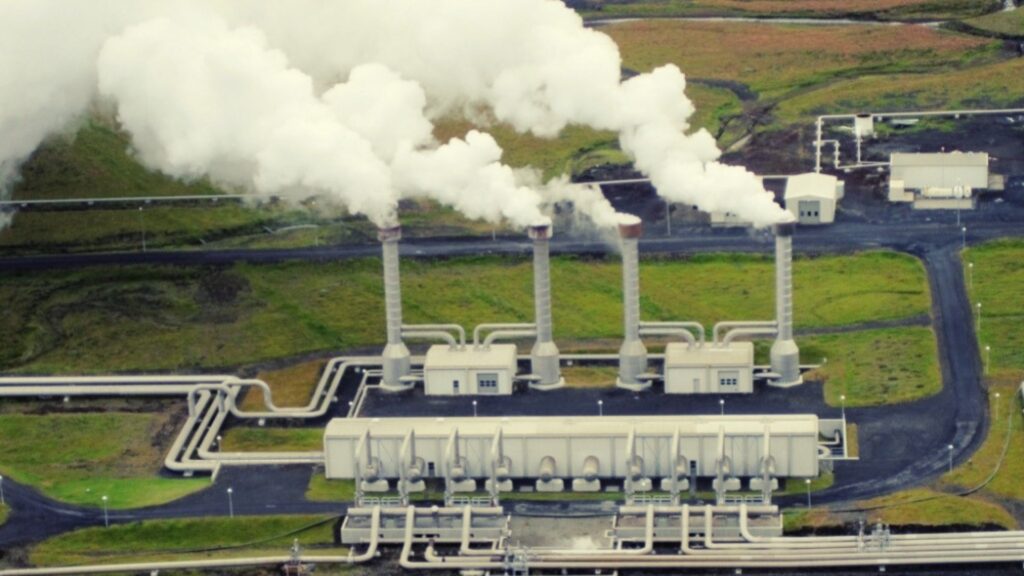
Source: Afyonkarahisar University of Health Sciences Energy Management Unit website

Geothermal power plant (GPP) projects, which are concentrated in the provinces of Aydın, İzmir, Manisa, and Denizli, are facing backlash from local communities and experts. The GPP projects planned for the districts of Varto in Muş and Karlıova in Bingöl will affect the natural habitats of a total of 22 villages. Experts and local residents are opposing two separate GPP projects to be implemented by the U.S.-based Ignis H2 Energy Production Inc. in Varto and Karlıova, stating that these projects will have a severely negative impact not only on human life but also on natural ecosystems and animal life.

Residents in the Aegean region, particularly in Aydın, continue to voice complaints about increased cancer risks, the smell of rotten eggs, and the decline in agricultural productivity due to geothermal power plants.

Öztürk: Underground minerals, gases, and heavy metals have toxic effects

Deniz Mine Öztürk

Deniz Mine Öztürk, a Ph.D. candidate in energy geography at Clark University, shared her insights with Niha+ regarding the ecological damage caused by geothermal power plants. Öztürk explained that there are different types of technology used to generate energy from geothermal sources:

“Most of the sources in Turkey are hydrothermal, formed when underground water reserves are heated by heat transmitted from the Earth’s core. Heat from the core can be transmitted to points near the Earth’s surface through fractured rocks in areas with tectonic activity. In these regions, geothermal fluid is extracted to the surface through drilled wells to generate energy. To both extend the sustainability of the resource and protect surface ecosystems, this extracted fluid must be reinjected back into the same location after energy is generated.”

Öztürk explained that as one descends deeper into the Earth, temperature and pressure increase, and this causes the minerals, metals, and gases present in the rocks contacted by the accumulated fluid to dissolve more readily. He emphasized that geothermal fluids vary depending on the region, depth, and the rock they come into contact with; in geothermal sources in Anatolia, minerals such as sodium, calcium carbonate, and sulfate, along with trace metals like boron, arsenic, and lithium, have been identified:

“When these minerals, heavy metals, and gases from the subsurface ecosystem are brought to the surface, they can have toxic effects on living organisms.”

Sodium
Na
Calcium Carbonate
CaCO₃
Sulfate
SO₄²⁻
Boron
B
Arsenic
As
Lithium
Li
Carbon Dioxide
CO₂
Hydrogen Sulfide
H₂S
Sulfuric Acid
H₂SO₄

Referring to the consequences of the fluid extraction process, Öztürk stated the following:

“Due to the high cost of reinjecting the extracted fluid back into the same location and the flexibilities provided by the Geothermal Law No. 5686, it has been observed that some geothermal power plants in the Western Aegean discharge the fluid into the ground or nearby water bodies. This has caused contamination in the soil, as well as in groundwater and surface water sources. Additionally, when re-injection is not fully carried out, over time the decline in the source’s pressure and the resulting decrease in groundwater levels have led to ground subsidence and fissures.”

“Hydrogen sulfide with a rotten egg smell in Aydın”

Explaining that non-condensable gases present in the fluid are released into the atmosphere through power plant chimneys during reinjection, Öztürk added that these gases include carbon dioxide (CO2)—one of the primary causes of climate change—and hydrogen sulfide (H2S), which has a rotten egg odor and is both toxic and flammable:

“One of the most frequently mentioned concerns in Aydın is the smell of hydrogen sulfide. Hydrogen sulfide can also react in the air to form sulfuric acid, leading to acid rain. Acid rain, in turn, causes respiratory difficulties in humans and animals and disrupts plant growth.”

Öztürk, noting that geothermal companies produce energy under the guise of “clean” energy compared to fossil fuel use, reminded that carbon dioxide emissions from geothermal power plants in Turkey are far above global averages:

“At some plants, emissions rival those of fossil fuel power plants. This means they contribute to global climate change in the long term. In addition, geothermal power plants release large amounts of water vapor, which alters the local climate.”

“Drilling can cause stress in animals”

According to Öztürk, the various elements contained in geothermal fluids, along with the resulting acid rain and climate change, can negatively impact the development of plant and animal species. Noting that these processes threaten biodiversity and endemic species, Öztürk said, “The intense noise and vibrations generated during drilling, exploration, and power plant operations can cause stress in animals and affect their migration and reproductive behaviors.”

Additionally, Öztürk noted that geothermal power plants (GPPs) built near agricultural areas can degrade soil quality, contaminate irrigation water, and consequently reduce agricultural yields. He added that damage to pastures and water sources can create significant pressures on livestock farming activities.

“These projects were implemented through top-down decisions”

Öztürk stated that authoritarian methods and corporate policies aimed at increasing company profits have caused multi-dimensional injustices in the Büyük Menderes and Gediz Graben regions—where geothermal power plants are predominantly built—specifically in Aydın, İzmir, and Manisa:

“Polluted air, water, and soil have had negative effects on the health of humans, non-human living beings, and ecosystems. The food produced in the region has been contaminated. Future generations have been deprived of their right to benefit from these natural and clean ecosystems. While geothermal power companies have reaped huge profits through incentives and purchase guarantees, the local population has not even been able to benefit directly from the electricity produced. On top of that, they lost their means of livelihood and their living spaces.”

Reminding that these projects were implemented through top-down decisions, Öztürk said, “Expropriation orders were issued in haste for land that villagers did not want to sell. People were deprived of the land where they had labored for generations, accumulated memories, and shaped their culture.”

“The local community, municipalities, experts, civil society organizations, and opposition parties were not included in the decision-making processes. They were deprived of the rights to ‘participation’ in decision-making processes—one of the most fundamental democratic rights—and the right to be recognized as a subject,” according to Öztürk’s observation. While JES companies are free to organize and easily convey their demands to the government, the organization of local communities opposing these projects was criminalized:

“The villagers’ right to protest the companies was met with attacks by law enforcement; lawsuits were filed against protesters, and they were detained. In fact, following the JES resistance in Aydın/Mezeköy, a state of emergency was declared for one week; entry and exit to the village were banned. Thus, multi-dimensional injustices—ecological, economic, political, social, and cultural—were created in the Western Aegean.”

“The displacement of Kurds and Alevis will exacerbate social inequality”

Öztürk noted that the planned new geothermal power plant projects in Muş and Bingöl, which are set to be built in Kurdish and Alevi villages historically forced to migrate in Turkey, add another dimension to the situation:

“The potential for Kurds and Alevis to be effectively driven from their living spaces and deprived of their means of livelihood poses profound social and cultural threats. In a region where people were forcibly displaced through the emptying of their villages throughout the 1980s and 1990s, the prospect of their being dispossessed once again—deprived of their living spaces, cultures, and social ties—will lead to the reproduction of historical injustices and the deepening of social inequalities. “However, despite all the injustices created and the deepening power imbalances throughout the process, the people organized in the Western Aegean have halted numerous projects through their determination and persistence. In this sense, I am certain that the organizational experience and political awareness demonstrated in Muş and Bingöl will serve as an example for energy projects in other parts of Turkey.”

Referring to Ignis H2’s report that new hot water sources had formed around Kaynarpınar village following the 2023 Maraş earthquakes, Öztürk noted that the region lies on two highly active fault lines.

According to Öztürk, the risks associated with the project can be assessed from two perspectives in this context: first, the earthquakes that geothermal activities could trigger, and second, the responses that geothermal systems might exhibit to natural earthquakes.

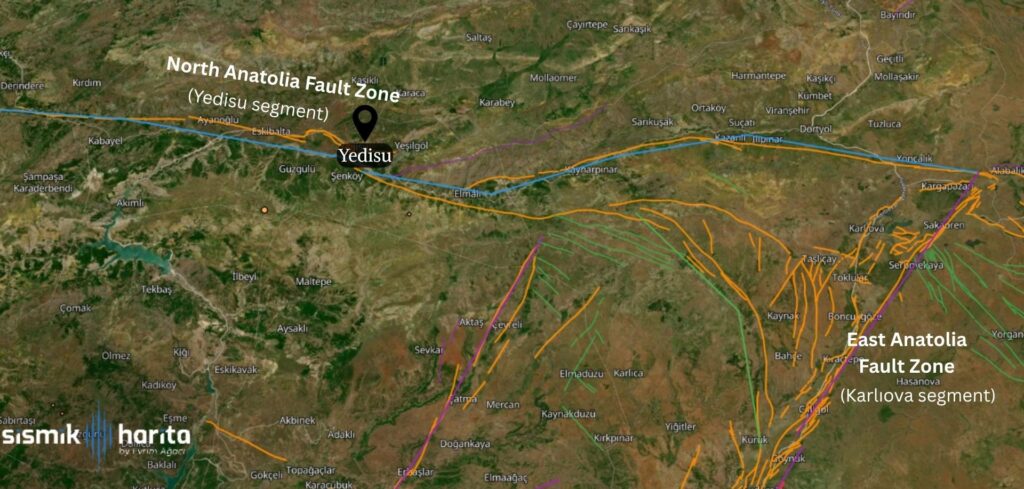
Photo collected from https://sismikharita.com/

After the 4.3-magnitude earthquake centered in Güzgülü-Yedisu on the morning of April 26, statements from the Kandilli Observatory and Naci Görür were reported in the press. In a statement made via social media, the Kandilli Observatory highlighted that the tremor in Yedisu occurred along one of Turkey’s most high-risk “seismic gaps.”

Geoscientist Prof. Dr. Naci Görür stated in his social media post that if the Yedisu fault—identified as one of Turkey’s most high-risk areas—were to rupture, a major earthquake would severely impact Erzincan, Bingöl, and Dersim.

  • A seismic gap is a segment of an active fault known to have remained stationary for a relatively long period compared to other segments along the same line, and which produces significant earthquakes.
  • The Yedisu fault is located at the eastern end of the North Anatolian Fault (NAF).

Öztürk, noting that there are examples of projects that were canceled due to studies indicating that well drilling and the reinjection of fluid into the ground at high pressure at geothermal power plants could trigger earthquake risks, listed the following examples:

“For example, in Pohang, South Korea, a geothermal power plant was shut down in 2017 after it was determined that the reinjection of fluid into the ground had triggered a 5.5-magnitude earthquake. In Germany, a geothermal project developed in 2014 sparked public backlash due to earthquake risks and potential pollution. Ultimately, it was decided that the electricity to be generated would not justify the risk, and the project was canceled before it even began.”

“On the other hand, these geothermal pipes can sometimes burst on their own. According to Öztürk, who noted that “examples of this have occurred repeatedly in Manisa and Aydın,” the company must also clarify whether it has an emergency action plan in place to address the risk of an explosion (blow-up) under any circumstances, and whether it has developed a plan to assess and mitigate the consequences of explosion and leakage risks.

“Projects are being carried out without transparency”

He noted that one of the biggest problems with all energy projects in Turkey, including geothermal power plants, is that these projects are carried out without transparency from the exploration phase all the way through to the operation of the power plant:

“Announcements and news items are prepared solely to inform investors and are removed shortly thereafter. There is no intention to involve the public in the decision-making process, nor is there any aim to provide equal access to information about the process or the project. In Aydın, there have been instances where even villagers who own titled land in the exploration area only learned of the situation a month or two before drilling began. When official documents are collectively sent to the village head, it is up to him to decide when to share this information with the villagers. This can lead to villagers starting the legal process and practical organization from a position of disadvantage.”

In 2026, it was reported in the media that geothermal exploration areas in Balıkesir, Kayseri, Bitlis, Niğde, Malatya, Konya, Çorum, Kırşehir, and Erzincan were put out to tender. Additionally, it was noted that tenders were initiated for three geothermal areas in Ağrı, Adana, and Diyarbakır.

GPP vigil in Varto: “We promised to protect our nature”

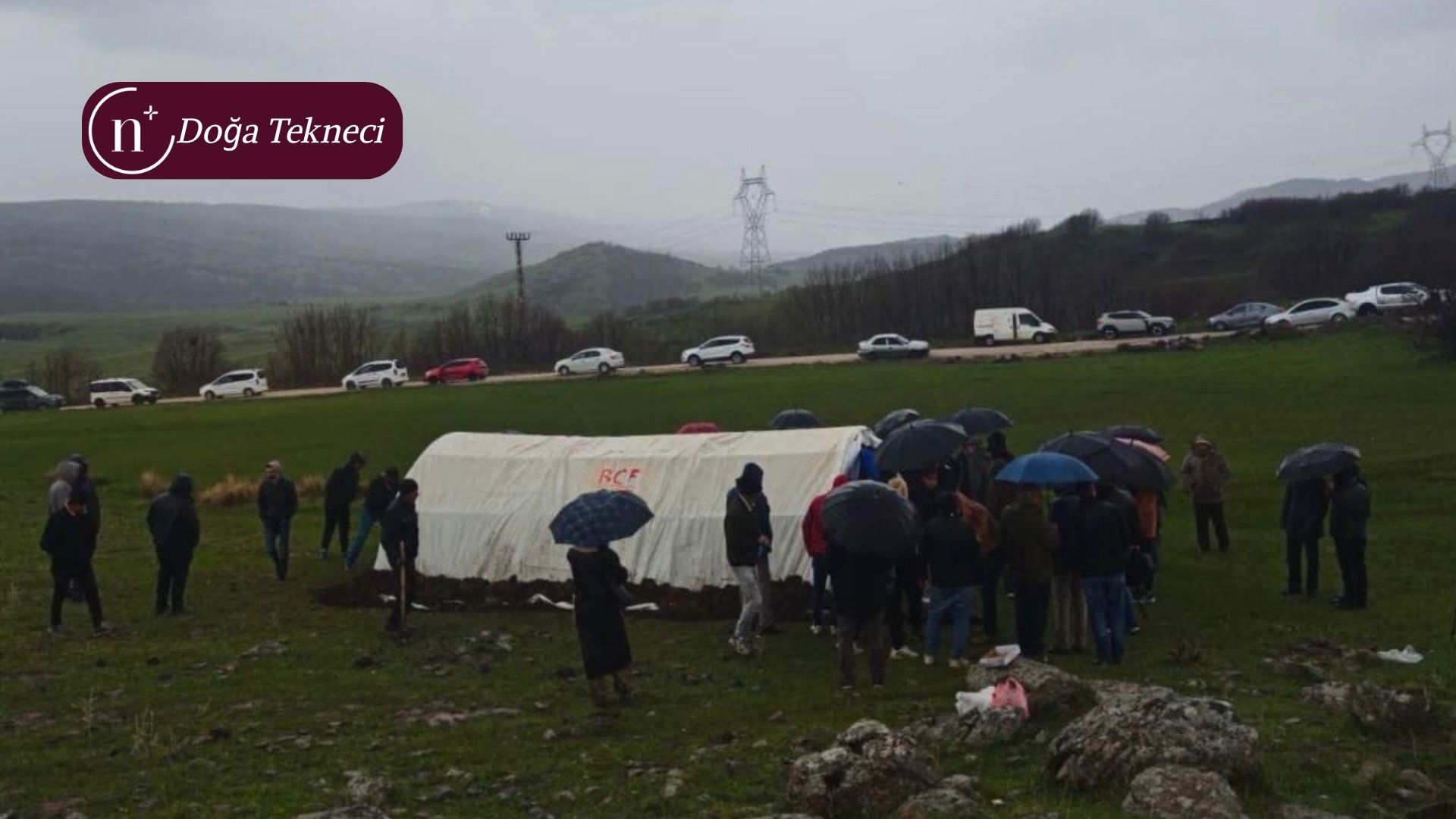
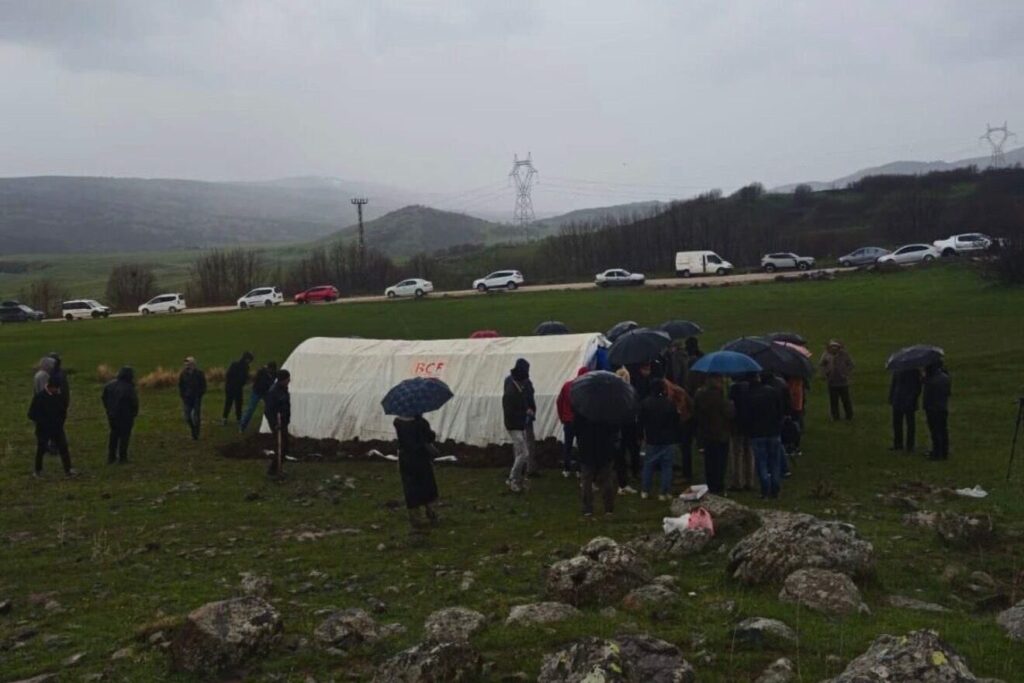
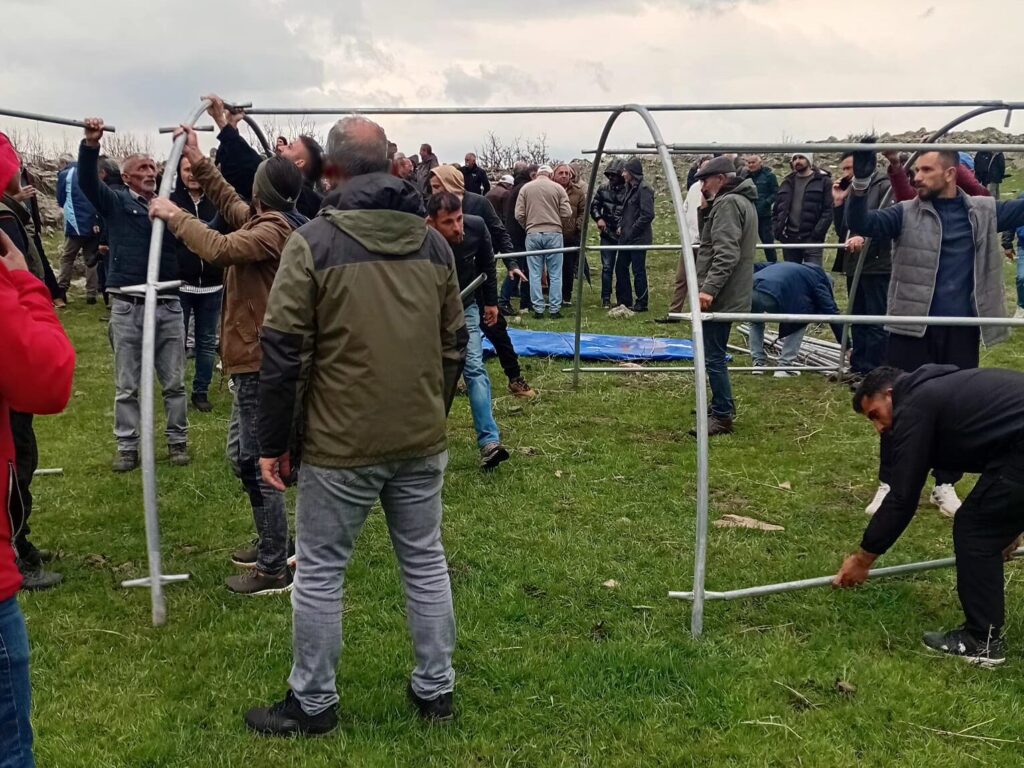
In the Varto and Karlıova regions, villagers have launched a resistance by setting up tents to protect their nature against a planned Geothermal Power Plant (GPP) project. It is reported that the first drilling activities for the projects in question are scheduled to begin on May 20.

The local population began their vigil after the American company Ignis H2 Inc. sought to implement two separate geothermal projects in the Varto (Gimgim) district of Muş and the Karlıova (Kanîreş) district of Bingöl. On May 3, residents set up a tent in the area where drilling is planned in Varto’s Çallıdere (Xwarik) village, demanding that the plants be stopped.

Experts and local residents point out that these projects carry risks of earthquakes and environmental destruction, warning they will destroy animal husbandry and life in the region.

Speaking regarding the tent protest, Varto resident Ali Rıza Vural said, “We promised one another that we would protect our land and our nature.” Lawyer Bahar Koç evaluated the situation by stating, “There are illegalities within the project introduction file.”

On April 24 in Varto and April 25 in Karlıova, rallies were held against the project, which will affect 22 villages, brought ecologists and people from many different cities together.

Vural: We are acting based on scientific reports

Ali Rıza Vural from Teknedüzü (Badan) village stated that they began organizing after examining the potential damages of the project through reports from the Union of Chambers of Turkish Engineers and Architects (TMMOB):

“This geothermal project has been on our agenda for about 3-4 months. First, we researched the damage geothermal energy causes to nature, people, and living things, and then we tried to explain it to our people. These aren’t just rote sentences; there is a real report from TMMOB. We focused intensely on this report. Out of fear that the same disasters experienced in the Greater Menderes Basin could happen here, we moved into a serious state of organization.”

16 villages on vigil against the May 20 drilling

Vural mentioned that between the villages of Çallıdere and Teknedüzü—where the first operating license was obtained and drilling is expected on May 20—the public has completed preparations to protect the area through a social reflex:

“We are trying to stand by our friends and provide support. We are providing logistical support. In three days, the youth will hand over the vigil shifts to the villages. In this sense, every evening, two of the 16 affected villages will keep watch there. Representatives of the village, including a mukhtar (village head), will be on duty. We promised each other that if the slightest thing happens while they are on watch at night, we will communicate, and we will all be in this field as a whole to protect our own land and nature.”

Photo: Varto Ecology Platform

Vural emphasized that their actions are not under the control of any political institution or NGO, but are entirely a local grassroots movement, stating that all villages have locked shoulders:

“Women, children, the elderly, and the youth… This is not under the direction of any politics, institution, or NGO; it is entirely the Varto Ecology Platform. I am talking about an organization where the old, the young, children—everyone, regardless of their political views—is united and solely claiming ownership of their nature.”

We grow stronger through solidarity

Stating that logistical and moral support for the tent resistance is growing every day, Vural said that neighbors have taken over the daily chores of those on watch:

“We can see from the tent visits that people from all walks of life come to visit. They offer all kinds of financial and moral support. The friends keeping watch there all have their own jobs and work. They have livestock. Despite this, other villagers and neighbors look after their animals and meet their needs in place of those on vigil. There is absolutely no compromise here. In fact, we are getting stronger.”

Expressing concerns that the state and ministries might clear the way for the company, Vural said that no matter what happens, they will not allow their lands to be touched.

Lawyer Koç: We are waiting for a stay of execution

Providing information on the legal dimensions of the projects intended for Varto and Bingöl, Lawyer Bahar Koç stated that separate lawsuits have been filed against both the “EIA (Environmental Impact Assessment) Not Required” decision and the operating license granted to the company:

“Normally, there is an ‘EIA not required’ decision and a license given to the company. Separate lawsuits must be filed for both. The Governor’s Office responded to both on different dates. Therefore, we filed two lawsuits, but their dates are not the same. We filed the lawsuit regarding the license earlier, and the one for the ‘EIA not required’ decision last week. Currently, our two cases are ongoing at the Bingöl Administrative Court.”

Emphasizing that the court has not yet made a decision and is waiting for the administration’s defense, Koç said the following regarding the process:

“A stay of execution has not been granted yet because the administration’s defense must be taken. The defense has not been made yet; the legal process continues. Since the authorized court in the region where the project will be built is the Bingöl Administrative Court, we filed our lawsuits there. After the defense comes from the administration, a date for a site discovery will be set.”

Social reaction is essential against a possible de facto situation

Stating that they do not have a stay of execution order in hand against the drilling work expected on May 20, Koç expressed that social reaction is essential to prevent the company from entering the field until a court decision is reached:

“Since the company holds the license, they may come and create a de facto situation. To prevent this, only a social reaction is necessary. Through social reaction, we are trying to stop this and ensure that a stay of execution is obtained from the court as soon as possible. This process is carried out in this two-pronged manner all over Turkey: social reaction on one side and the legal process on the other.”

This is a search for justice

Defending that the vigil tents established under the leadership of the youth are both a search for justice and a legally appropriate reaction, Koç said, “The project introduction file is full of provisions contrary to the law. In the face of such unlawfulness, it is perfectly legal for our friends to show resistance, set up tents, and keep watch there.”

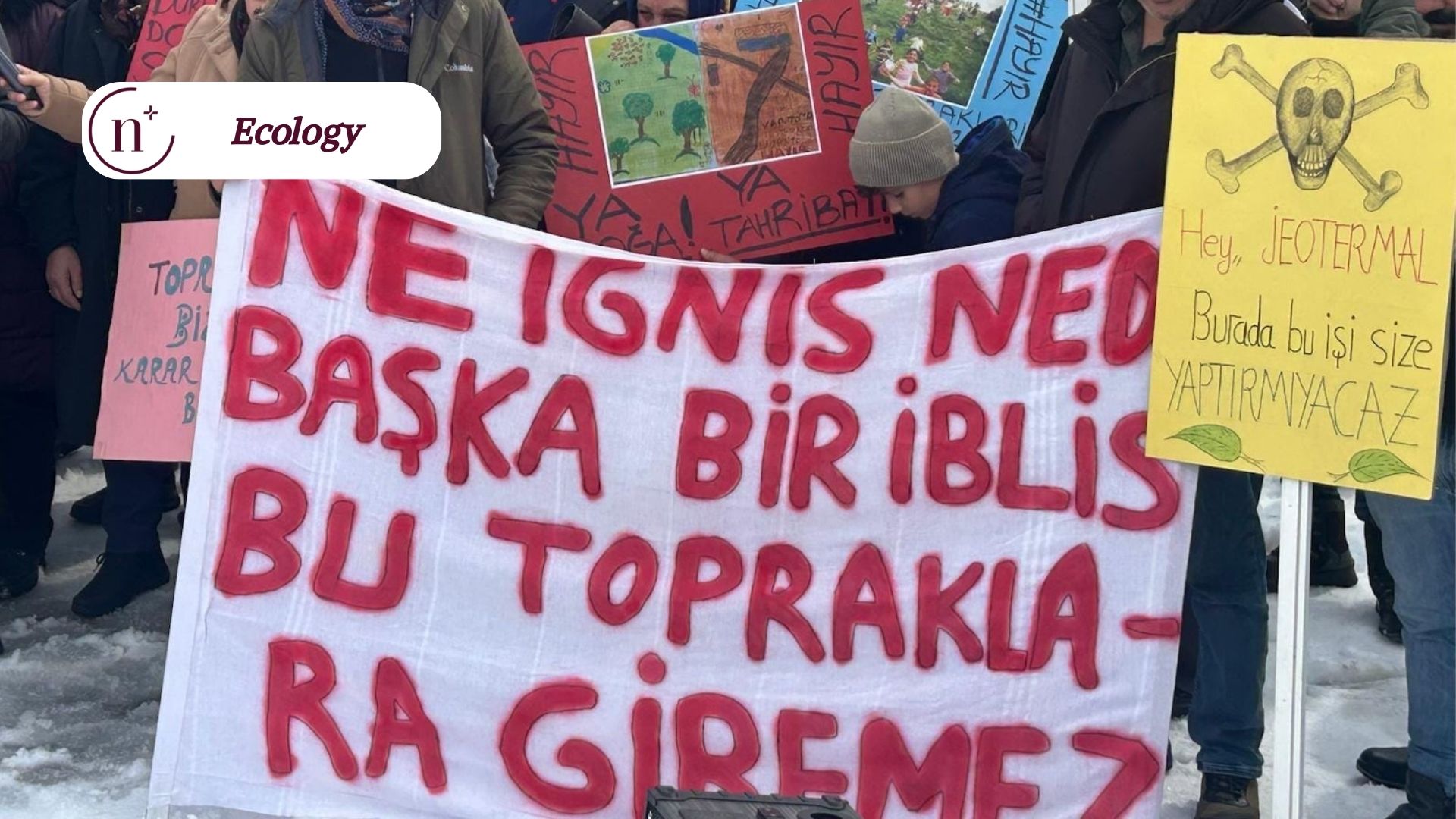
Kargapazar village protests geothermal power plant

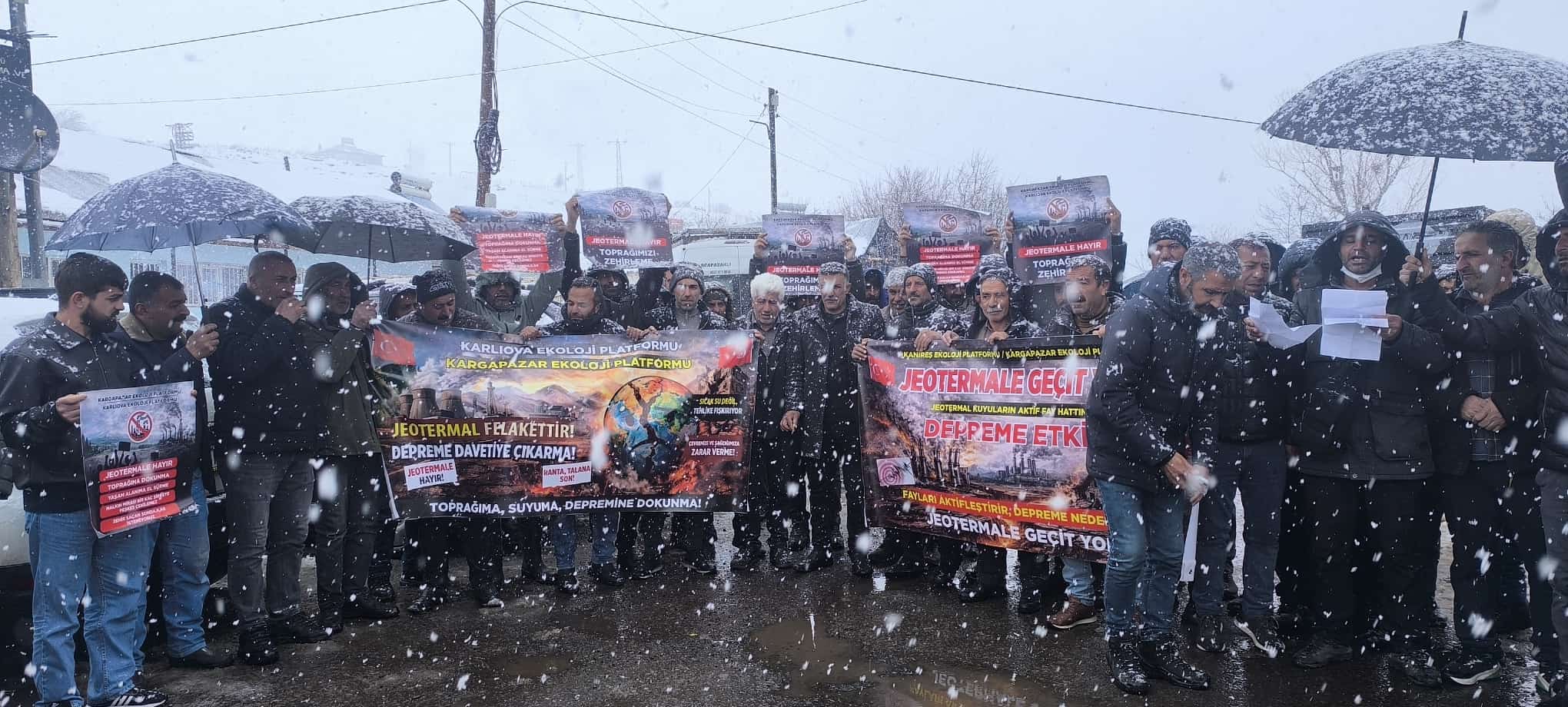
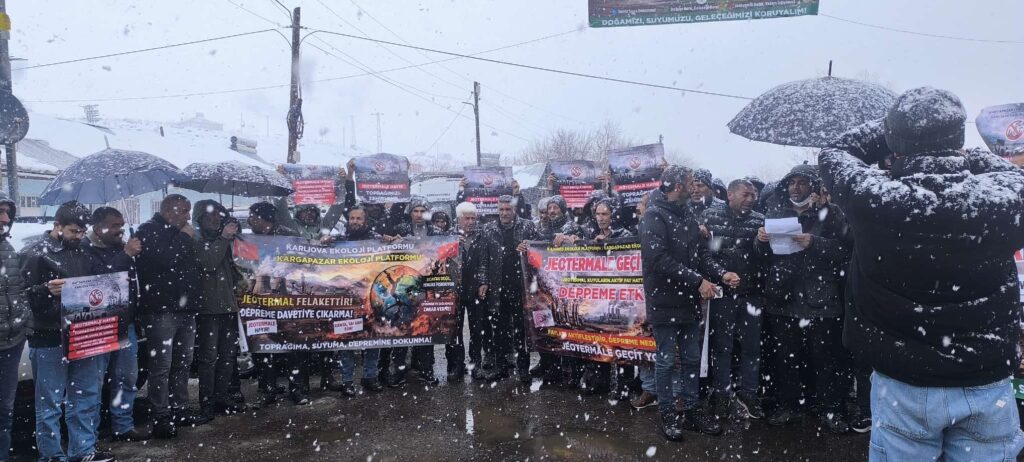
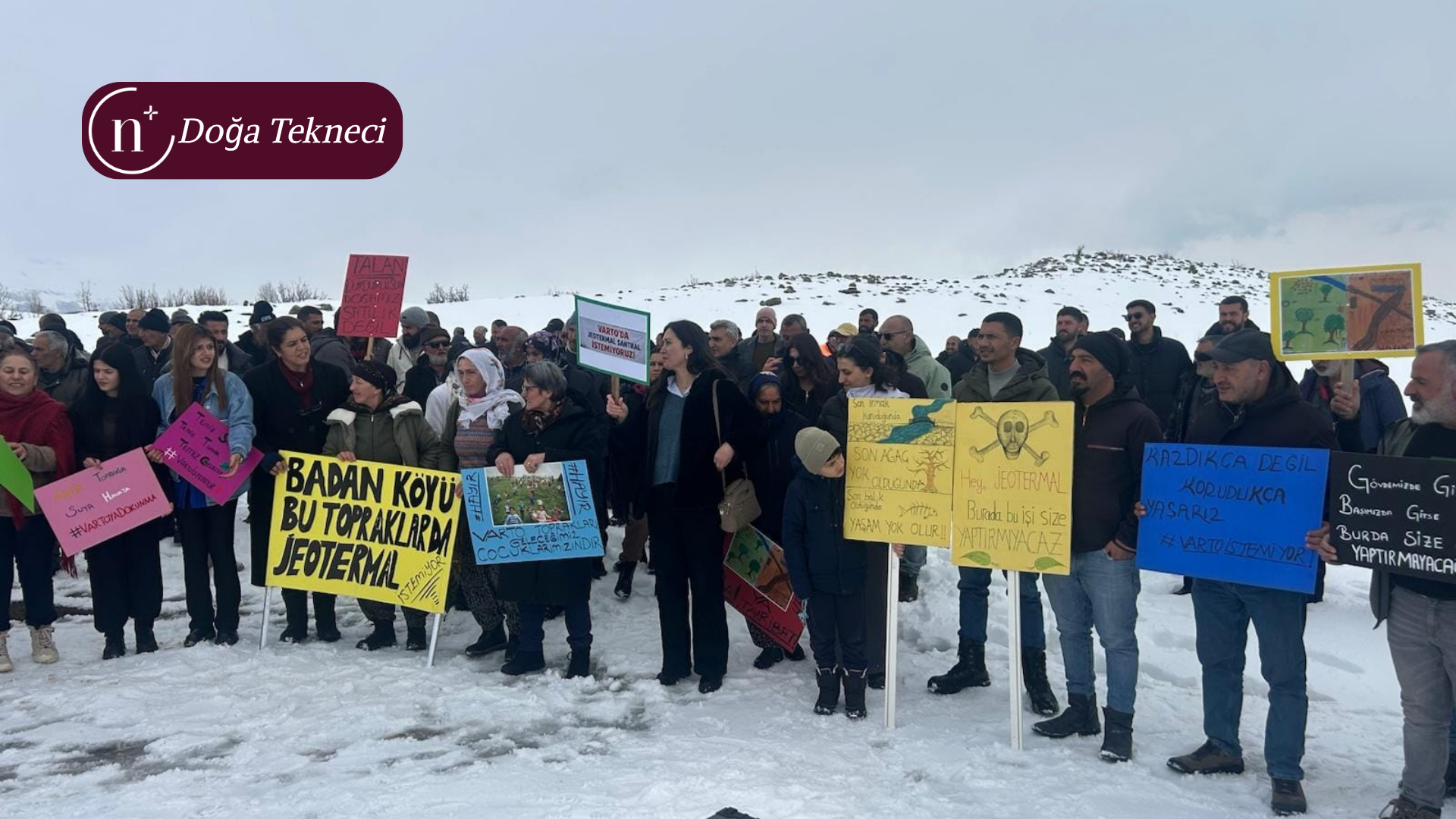
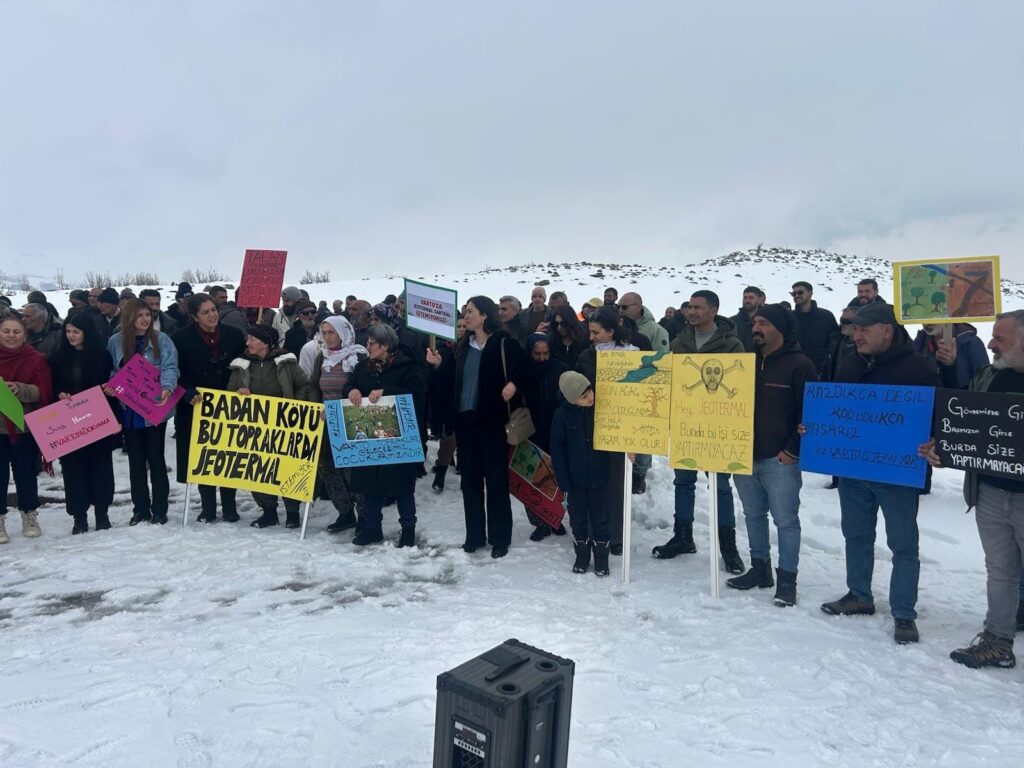
Despite snowy weather, villagers in Kargapazar (in Bingöl province, eastern Turkey) held a protest against a planned Geothermal Power Plant (GPP) project. They carried a banner reading “No to Geothermal.”

A US-based company called Ignis H2 Energy wants to build a geothermal power plant (GPP) in the Karlıova district of Bingöl. The project would affect 6 villages in the area. The problem is it would be built on an active earthquake fault line, just like a similar project the same company is pushing in nearby Varto.

Despite the snowfall, the people of Kargapazar village held their protests against the geothermal energy project on April 10th.

During the demonstration held in front of the Social Aid and Solidarity Association, a banner with “No to Geothermal Energy” was displayed.

Mehmet Ali Harmancı, a member of the Kargapazar Ecology Platform, stated that the project would negatively impact their living areas and the pastures used for agriculture and livestock. Harmancı emphasized that this project is directly related to expansionist and imperialist policies and institutions, explaining that natural resources are being targeted because of these policies.

Earthquake risk threatens thousands of lives

Following Harmancı’s statement, Kasım Demiralp, a member of the Kargapazar Ecology Platform, read a press release, stating that the GPP project was being carried out disregarding scientific facts:

“The geography we live in is a region with active fault lines and a high risk of earthquakes. Despite this sensitive structure, the desire to drill dozens of geothermal wells seriously endangers not only nature but also human lives. These projects, carried out by ignoring scientific facts, could lead to irreversible consequences.”

Demiralp also pointed out that drilling and injection operations carried out on fault lines pose an earthquake risk and threaten the living spaces of thousands of people.

“Our right to a healthy life cannot be disregarded for the sake of any self-interest.”

The statement also emphasized that the GPP project would pollute underground water resources, render agricultural areas unproductive, and negatively impact livestock farming and the ecosystem.

Demiralp emphasized that Article 56 of the Constitution, which states “Everyone has the right to live in a healthy and balanced environment,” cannot be disregarded for the sake of any project, company, or interest.

Their demand was to stop the geothermal projects immediately. “Nothing should proceed without the consent of local people” said Demiralp.

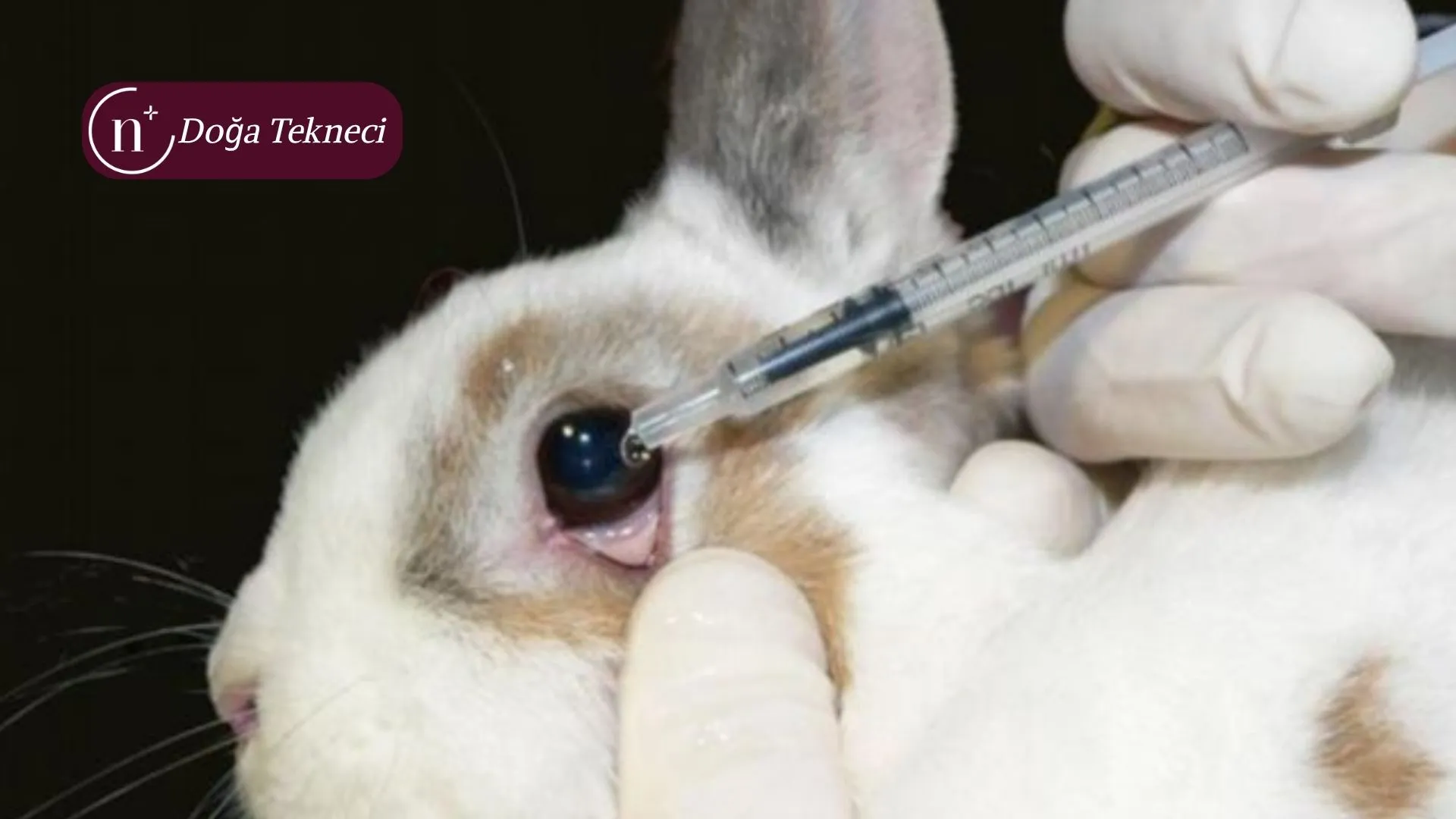
Animal testing: A necessity or an exploitation?

We spoke with academics and activists about whether animal testing is truly necessary or a systematic exploitation. The key question is whether animals should be considered “disposable.”

Animal testing is one of the most controversial topics in animal rights and ethics. On one side, animals are used in experiments as part of scientific progress. On the other, alternative methods that prioritize animal rights are still being debated. At the heart of this debate, this is the question: what ethical principles guide science, and how do scientific processes actually work?

We spoke with Prof. Dr. Uygar Halis Tazebay, a faculty member in the Department of Molecular Biology and Genetics at Gebze Technical University. He shared his views on how ethics committees handle animal testing and what alternative methods exist.

How does the ethics committee process work?

Tazebay notes that animal testing has been a controversial issue since the 13th century. He sees it as a “compromise” between scientific necessity and ethical concern, and says scientists themselves struggle with this dilemma.

“Ethics committees don’t simply approve animal use. First, they ask whether it’s truly necessary” he said. He added that applications are reviewed carefully, not just for the research goal, but also for whether alternatives exist and how many animals would be used. “How many animals? Why that number? Can this be done without animals? These are all questioned” he said.

In Turkey, the formal process for establishing ethics committees for animal experiments began with the Animal Protection Law No. 5199, enacted in 2004, and the regulations published in 2006. With the regulations of 2014, the Central Animal Experimentation Ethics Committees (HADMEK) and the Local Animal Experimentation Ethics Committees (HADYEK) were established.

Companies are mainly focused on cost

Tazebay said that while companies are trying to move away from animal testing toward alternatives, the main reason is often profit, because animal testing is expensive. “Drug companies want to get their product to market as fast as possible. The sooner you launch a discovery, the sooner you start making money” he said.

Why are alternatives still limited?

Tazebay also explained the technical side of alternatives:

“One approach is using artificial intelligence and computational biology to eliminate animals entirely. For example, toxicology studies are already fully AI-based. Another approach is switching to in vitro (lab-based) systems that mimic animals.”

However, he pointed out the limitations: “AI and computational biology give us results based only on what we already know, and we don’t yet know everything about cells. So when we build a model assuming we know everything, it doesn’t give us complete answers.”

For this reason, Tazebay believes it is currently not possible to eliminate animal testing entirely, given the limits of today’s scientific knowledge.

The current ethical approach, therefore, is not about completely eliminating animal use, but about how to limit it.

The main issue is that animals are considered disposable

However, animal rights advocates say this isn’t just a technical or scientific issue. Vegan and ecofeminist activist Özge Özgüner offered a perspective that puts animal lives at the center of the discussion.

Özgüner began by stating that animal testing is one of the most visible and systematic forms of exploitation. “From an animal rights perspective, the core problem with animal testing goes beyond recognizing rights or the issue of ‘suffering.’ It’s that animals’ lives are considered legitimately sacrificeable for human interests. In other words, animal exploitation is justified by constantly pitting the value of animal life against human life,” she said.

“For companies, it’s not about ethics, it’s about power”

Özgüner said companies are not interested in the ethical side of animal testing at all. “Companies treat animal testing as a technical matter, about regulatory compliance and risk management, so they can sell their products. For many companies, the deciding question is simply: ‘Am I required to do this or not?'” She added that while companies are increasingly moving toward alternatives, the reason is that they must comply with OECD guidelines and meet international standards. “Behind this seemingly positive shift, there’s no scientific ethics, just calculations about scientific efficiency” she said.

Özgüner explained that framing animal testing as a “scientific necessity” is tied to power dynamics shaped by scientific and economic systems.

“If alternative methods (in vitro models, organoids, computer simulations) are properly supported and expanded, many experiments can be done without using animals.”

Ethics committees focus on regulating animal use, instead of eliminating it

Özgüner noted that animal models used in research have a very low rate of reliably predicting outcomes in humans. “No matter how much testing is done on animals, the first real application of these methods still happens on humans. This shows that animal testing is not unavoidable,” she said. She believes animal rights are not recognized at the level of scientific ethics, and that committees like HADMEK focus on regulating animal use rather than ending it.

Özgüner said that in Turkey, animal testing is largely regulated in line with European Union (EU) legislation. “Ethics committees regulate how experiments are conducted within the legal framework. While animal testing in cosmetics has been banned under EU compliance laws, animal exploitation continues in drug development and academic research,” she said.

She noted that Turkey has no announced timeline or long-term national strategy to end animal testing. “Current restrictions are driven by international trade standards. Yet it is very clear that no real scientific progress can be made while animals’ right to life is disregarded and they are treated as mere tools in scientific production,” she said.

“We must transform institutional policies and support alternatives”

Özgüner said a world where animal testing is completely banned is possible. While the global push to end these experiments is not yet framed around animal rights, she pointed out that the alternatives being developed – methods that don’t exploit animals – are proving effective. If properly supported, she said, animal use could be greatly reduced.

She continued: “To achieve this, students, researchers, and ethics committees must be educated from a perspective that recognizes animal rights. The path forward is a rights-based strategy, one that refuses animal use in research, supports alternatives, and focuses on transforming institutional policies.”

The GPP project is also surrounding Karlıova: The earthquake risk is very high

Speaking about the planned geothermal power plant (GPP) project in the Varto and Karlıova region, Kasım Demiralp, a member of the Kanîrêş Ecology Platform, said: “Our goal is to provide the public with accurate information and raise awareness.”

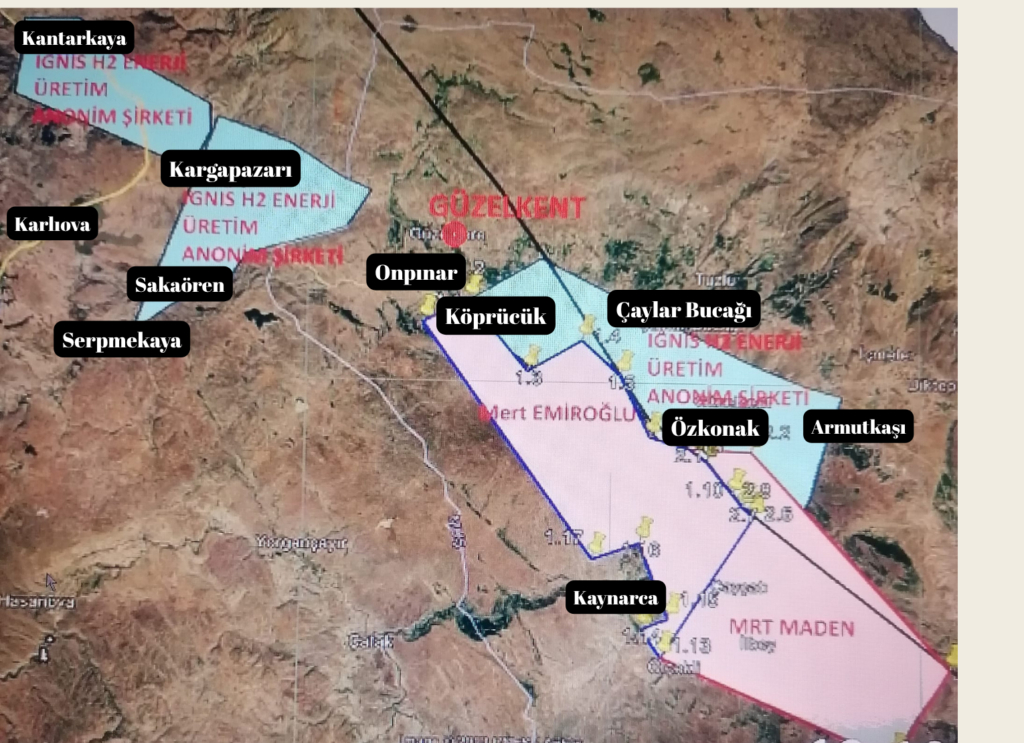
The area where the Ignis company plans to operate in Varto and Karlıova is shown.

The people of Varto and Karlıova are protesting the approval of the geothermal power plant (GPP) project that Ignis plans to implement in Varto (Gimgim) and Karlıova (Kanîrêş), as the project crosses the Varto-Karlıova fault line and is expected to have negative ecological impacts.

The Karlıova Ecology Platform has been established to oppose the Geothermal Power Plant (GPP) project planned for six villages in the Karlıova district of Bingöl. The platform continues its activities with the aim of fighting against the destruction of nature in the region and GPP projects.

Speaking to Niha+ about the GPP project, which also covers the Karlıova region, Kasım Demiralp, a member of the Kanîrêş Ecology Platform, shared his views.

Demiralp stated that the purpose of establishing the Kanîrêş Ecology Platform is to protect nature and habitats in the region, as well as to bring together the people and villagers of Karlıova to provide them with accurate information and raise their awareness:

“We also aim to develop a culture of collective struggle and decision-making against those who threaten our lives. Taking the necessary legal steps, initiating legal proceedings with lawyers experienced in protecting ecology and wildlife habitats, and simultaneously working to develop the people’s unity and solidarity; our priority is to oppose activities carried out for investment purposes in our natural habitats.”

“We are building on the experiences of the resistance in Licik”

Referring to the planned exploitation of the streams and nature in the village of Kaynarpınar (Licik) in Karlıova last year, Demiralp spoke about the platform’s plans for the near future regarding the Ignis company’s geothermal power plant project:

“We are drawing on the experiences of our friends in the village of Kaynarpınar, Karlıova, who have shown their opposition to this destructive mindset through both legal means and their struggle to build a life where we can all live together. In this regard, we plan to properly inform the villagers through meetings and announcements, create broad public awareness, and secure everyone’s support on this issue.”

Demiralp, noting that no efforts had previously been made in Karlıova to protect the environment and natural habitats—and consequently, the local community lacked a foundation of awareness and organization—said it was important to inform people about what was to come.

The risk of earthquakes in the region is high

Explaining that the most critical aspect of the project is the physical and psychological devastation caused by an earthquake and its aftermath, Demiralp discussed the fault line beneath Karlıova:

“One of the active faults that geologists in Turkey have always emphasized is the Yedisu fault line, known as the North Anatolian Fault (KAF). Karlıova is located at the intersection of the North Anatolian Fault and the East Anatolian Fault (DAF). Drilling geothermal wells on and around active faults, and the extraction and subsequent reinjection of hot water from underground—where the water is pressurized and returned to the ground—carries the risk of triggering an earthquake. All the villages of Yedisu, Karlıova, and Varto face not only an ecological disaster but also the destruction caused by the significant risk of earthquakes. Despite all these scientific facts, this company continues to carry out operations that threaten the lives and livelihoods of the people living here. We will defend our nature, our forests, our springs, our streams, and our lives to the very end and continue our struggle in this direction.”

“We will protect our villages and our mountains”

Demiralp stated that they would fight against this project and thanked everyone who supports their resistance:

“As the people of this region, we have always been here, and we will continue to be here with our nature, our forests, our springs, our streams, our pastures, and our animals. We will always protect and guard our villages, our plains, and our mountains. As we carry out our struggle, we extend our gratitude to the valuable members of the press who voice our concerns, to all the non-governmental organizations that support us, and to the public.”

“Protecting our land is protecting our honor!”

In response to the environmental destruction caused by Ignis H2 Energy Inc., which extends from Varto to Yedisu, the people of Varto and Karlıova have announced that they will unite their efforts.

The recently established Varto Ecology Platform and Karlıova Ecology Platform have prepared a joint urgent appeal to political authorities and the general public against ecological destruction. The urgent appeal reads as follows:

URGENT MESSAGE TO THE PEOPLE OF BİNGÖL AND MUŞ, THEIR REPRESENTATIVES, AND THE ENTIRE PUBLIC

This ancient landscape extending from Karlıova in Bingöl to Varto in Muş and along the Yedisu line is today the target of dirty deals and profit-driven projects being prepared behind closed doors. The licenses that have been obtained and the false reports being prepared are not only handing over our land but also sacrificing our people’s right to live, their future and their natural environment to capital. We are fully aware of the game being played!

These “energy” and “mining” projects being carried out in Karlıova and Varto are operations aimed at displacing the local population and depopulating our pastures. The unity of our people—who have lived side by side as brothers and sisters on this land for centuries, despite their different origins—is the greatest force capable of disrupting these profit-driven games.

Our Call to Our Representatives and Provincial Party Chairs:

Shout out against this plunder from the parliamentary podium! Stop this unlawful process through motions submitted to the Ministries of Agriculture and Energy. The women, youth, and all civil society organizations of Bingöl and Muş: this is not a party issue, but a matter of life and death.

We Will Not Let Them Profit!

Every signature that sacrifices our nature to capital steals from our children’s future. This line of resistance built from Karlıova to Varto will stand as an unshakable fortress against profit, plunder, and the massacre of nature. Protecting our land is protecting our honor!

The project is a death sentence for the local people

Ömer Faruk Hülakü, a member of parliament from Bingöl representing the Peoples’ Party for Equality and Democracy (DEM Party), stated during a press conference held in parliament on March 27 that GPP projects must be halted.

Hülakü noted that the fact that the GPP projects are to be built at a point where the North Anatolian Fault Line and the East Anatolian Fault Line converge makes them a death sentence for the people of Karlıova and Varto:

“Bingöl is the center of seismic activity. Permission is being granted to drill 1,000–2,000 meters deep at the exact point where the North Anatolian Fault and the East Anatolian Fault converge—in the region with Turkey’s most fragile fault lines. How can you present such a project proposal to the public?”

Opposition to the Varto’s GPP: “These lands are entrusted to us by Hızır”

Local residents are protesting the geothermal power plant (GPP) project, which is set to be implemented in an area covering 16 villages and is planned to begin within the boundaries of the village of Xwarik (Çallıdere) in Varto.

In recent weeks, the Provincial Pasture Commission of the Muş Governor’s Office approved a “drilling project as part of a geothermal resource exploration project” to be carried out by IGNIS H2 Energy Production Inc., which directly affects 16 Kurdish-Alevi villages in Varto (Gimgim). The villagers submitted a petition of objection to the relevant governor’s offices regarding this project. The petitions were rejected by the governor’s offices.

Although geothermal energy is a renewable and sustainable energy source, studies have shown that it causes significant ecological damage due to its environmental impacts. Power plants, which are mostly built in areas with villages and agricultural lands, leave the village communities facing the threat of forced displacement. In many provinces, local residents claim that geothermal power plants (GPP), as well as mines and other energy projects, are causing harm to agricultural and livestock activities, water sources, and living areas.

Local residents are voicing opposition to the GPP project, which will be implemented in an area covering 16 villages and will begin within the boundaries of the village of Xwarik (Çallıdere) in Varto.

Alev Yılmaz from the Varto Ecology Platform and Erdoğan Ödük, co-spokesperson for the Mesopotamia Ecology Movement, spoke to Niha+.

Alev Yılmaz from the Varto Ecology Platform stated that the geothermal power plant project threatens the villages, water sources, animals, and places of worship in the region, declaring, “We will not let Varto be taken over.”

IGNIS H2 Energy Production Inc.

IGNIS H2 Energy Production Inc., an American company that opened a branch in Yedisu, Bingöl in 2023 and operates in the Karlıova (Kanîreş) – Varto region; has obtained search licenses in the villages of Kızılağaç (Aynik), Kaynarpınar (Licik), Kantarkaya (Şorik), Ilıpınar (Çêrmûk), and Kargapazar (Qerxabazar), which are part of Karlıova in Bingöl.

The company states it aims to reach 1 GW of renewable energy capacity by 2030, and plans to conduct operations in the Varto-Karlıova region, where the North Anatolian Fault (KAF) and the East Anatolian Fault (DAF) intersect. Currently, the company aims to begin drilling 10 wells in Varto and Güzelkent, and the work it will carry out within an area of 453,494.83 square meters will cover approximately one-third of Varto.

“Who is this Ignis?”

Yılmaz, who has spoken against the projects of a company called Ignis seeking to operate in Varto, stated that they do not believe the company’s claims of “development”:

“Varto has been handed over to profit-seekers. There’s this company called IGNIS—we can barely even bring ourselves to say its name. What is Ignis? Who are they? Where do they come from? Why are they coming? Is IGNIS just saying, ‘I have nothing better to do, so I’ll go develop this distant, poor town of Varto’? Do you think something like that is possible?”

Yılmaz, noting that nothing the people do not want can be in the public interest, explained how the process began by pointing out that no details regarding the project had been shared with the public:

“IGNIS coming here isn’t new but we’re only hearing about it now. That’s the problem here. No one in the village knows anything about it. It’s a very high-handed situation on our land. These are our living spaces, our livelihoods, but the governor and the district governor are making the decisions. Even the current village head hasn’t been told anything to the people. They’ve spoken with the municipality. It’s claimed that very different things were told to the municipality.”

Yılmaz claimed that company representatives had held meetings with local representatives regarding the project, but the actual plans were being kept secret from the public.

“There is someone working for Ignis. They are meeting with the local bureaucrats, the governor, the district governor and the municipality. There is absolutely no mention of a geothermal power plant. They don’t say ‘We’re going to open up your 16 villages, settlements, and center of faith for profit.’ They say there’s hot water, and we’ll identify it. We’ll build thermal hotels, thermal pools and greenhouses. They say the villagers’ heating needs will be met here.”

“It’s impossible for this hot water to heat us.”

Yılmaz said that the company had made various promises to convince the local people but that they did not believe them:

“We won’t die if we don’t eat tomatoes all winter. They say they’ll heat our homes, but definitely we don’t want that either. We’ll heat ourselves with dung. Besides, we get 2.5 to 3 meters of snow here. There’s no way the hot water they’ll send through those pipes can keep us warm.”

They’ve already destroyed Goşkar Baba

Noting that the planned GPP project isn’t just about building a plant, Alev Yılmaz drew attention to the destruction that has already taken place:

“First, they came to us with the hydroelectric power plant. They plundered Goşkar Baba. They shattered the Goşkar villages and our mountains. They trapped our waters. Now they say they’ll build a geothermal power plant. They use fancy words, but we know it won’t be like that. We’re talking about 16 villages and their hamlets. Within these villages we have places of worship, our sacred sites—everything we hold dear. It’s certainly not limited to just 16 villages. We also know they’re after other mines, not just geothermal ones. Right now, who knows how many projects they have in the works that we’re not even aware of. No one is giving us any real information about this.”

Earthquake-prone region

Yılmaz, who reported that drilling is planned to reach a depth of 2500 meters, emphasized that Varto is an earthquake-prone region and that scientists’ warnings must be taken seriously. Yılmaz also reported that given the area’s status as an earthquake zone, a scientist had told them, “Don’t allow something like this.”

“They will destroy endemic species”

Alev Yılmaz, who stated that three drilling wells are planned to be opened in the village Bağdan, noted that this would disrupt the ecological balance in the region:

“When you go 3 km underground, the earth’s soil and mud will come out. There are substances in this mud. These will harm nature. When we ask, ‘What will you do with these?’ they say they’ll award the contract to local authorities. But the local authorities you’re talking about can’t even provide a shovel when we have a funeral. You’ll take them and dump them in Mengel River. There are red-spotted trout, an endemic species, in the Mengel River. You’ll kill them. You’ll disrupt the ecological balance. Here we have lynxes and chukar partridge. They live freely. We don’t touch them. Because all of these are entrusted to us by Hızır.”

In the Alevi faith, Hızır is regarded as an immortal wisdom figure who helps those in distress and those in need, provides relief from suffering, and symbolizes abundance and prosperity. Typically, during the second week of February, a three-day fast (Tuesday–Thursday) is held, rituals are performed, and lokma (kavut) is shared as a prayer for Hızır’s companionship and assistance.

“I want all the women to stand by my side”

Reminding everyone that the Çepanik Plateau, Gundêmîra, Dadina, and İnalı—all part of Varto—have been devastated by mining operations, Yılmaz stated her opposition to the company’s claims that “we will make you rich.”

Yılmaz concluded her remarks by stating that Varto’s ecology and cultural values must be protected:

“I’m afraid of snakes. I want to be afraid of snakes every day. I don’t want the bears to leave here. I want all women to stand by me as I continue this struggle. I want everyone to hear our voices. When they cut down Goşkar Baba, Grêboxa, Şehîdê Qawax, and Şehîdê Ciran, we’ll have nothing left. Let’s not abandon Varto. This is our village, our homes. If we withdraw our hands from Varto, Hızır will leave us too.”

Ödük: Projects will affect a wide geographical area

Erdoğan Ödük, Co-Spokesperson of the Mesopotamia Ecology Movement, stated that the Muş Ecology Platform has been established, noting that it was formed through the merger of organizations active in the region, such as the Varto Ecology Platform and the Goşkar Ecology Association.

Ödük expressed that the planned projects will affect not only Varto but a wide geographical area:

“Ultimately, this issue is not just Varto’s problem; it is a regional problem. There is currently a situation in the region where a geothermal energy field stretching from Varto to Karlıova and Bingöl Yedisu is being handed over. Last year, we also organized a large-scale protest there, in the Peri Valley.”

Eco-genocide policies have been implemented in the Goşkar Valley for a long time

Ödük emphasized that the eco-genocide policies that have been ongoing for a long time in Muş and the Kurdish regions are not only capital-oriented policies.

“For a long time, it has been claimed that eco-genocide has occurred in this region of Kurdistan during the war, yet even now, both domestic and foreign capital continue to commit eco-genocide in various forms across different areas. This is currently the situation in Varto, Muş. The region has already faced severe ecological destruction due to the Alparslan 1 and 2 dam projects in previous phases. Numerous villages were evacuated. Historical archaeological sites were submerged. Following that, there is another hydroelectric power plant (HES) project in the Goşkar Valley, carried out by Çağlar Elektrik in 2002.”

“Ecological destruction is also triggering migration”

Ödük noted that the exploitation in the Goşkar Valley affects not only nature but also social life, and continued:

“The last remaining water in the region is a spring called Ava Spî. Since the people there follow the Alevi faith, this situation is actually triggering migration in the region. These issues are not merely about ecological destruction; they also bring social problems in their wake.”

Companies are trying to break the resistance

“They told the villagers that a permit would be obtained, but they said it might happen or it might not. These are statements intended to break the resistance. However, it is not possible for an American company to come here, conduct no research, hand over 4 million dollars—which is the minimum cost of drilling—and then just open the well and leave.”

Success will be achieved if the area of resistance is expanded

Explaining that this is not merely a local issue, Ödük outlined the regional solidarity efforts they will carry out together with the people. Noting that village meetings and awareness-raising activities are ongoing in Varto, Ödük said they have also held meetings with members of parliament.

Unity of action in Varto

Emphasizing that the people’s role is decisive in the ecological struggle, Ödük highlighted that the plundering policies implemented in Kurdish provinces are based on more cultural and social factors compared to those in the West.

“The forests of the Black Sea are our too. The forests of India are our forests. But the difference is this: The current situation in the West revolves around a capital-centered dynamic. Here, the issue is not just capital. We saw this clearly with the Alpaslan 1-2 dams. We saw it with the dam planned for the Nerbüş River in Cizre. We saw it in the villages displaced as part of the GAP project. We saw it in the massive Ilısu Dam, in the destruction of Hasankeyf, and in the erasure of cultural memory. This situation is not merely a problem for the peoples living in Kurdistan.”,

Ödük stated that international and local environmental organizations must pay greater attention to the ecological destruction in Kurdish regions.

“We’ve managed to raise our voices for both the forests of the Black Sea region and the Kaz Mountains. Our friends are also working there to protest against the pesticides used in the Çukurova region. This nature is our shared living space. Once it’s gone, neither ideological divisions nor ethnic origins nor cultural distinctions will remain. Therefore, ecology organizations in the West must also approach Kurdistan in this way. In other words, when this place is gone, when it is devastated, they too will suffer the consequences.”

Varto Ecology Platform made press statement

Varto Ecology Platform issued a press statement on March 7, and DEM Party parlamenterian Sümeyye Boz Çakı also expressed her support for the platform members.

Privacy overview

Niha+ respects your digital footprint within the framework of independent journalism principles and reader privacy. While browsing our site, cookies are used to provide you with an uninterrupted reading experience and to secure the technical infrastructure of our platform. You can manage your cookie preferences as you wish by using the menu on the left. For detailed information on how your personal data is processed, please review our Privacy Agreement and KVKK Clarification Text.