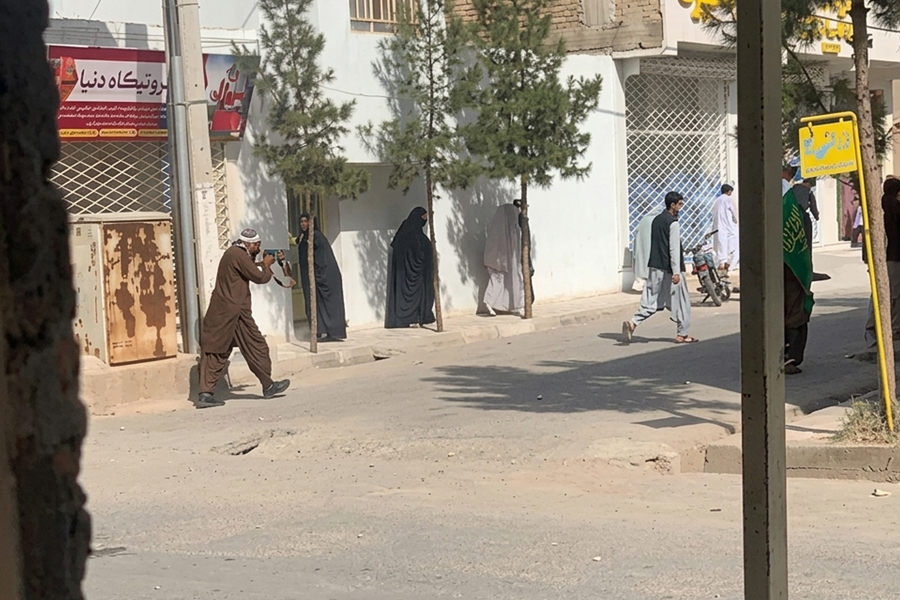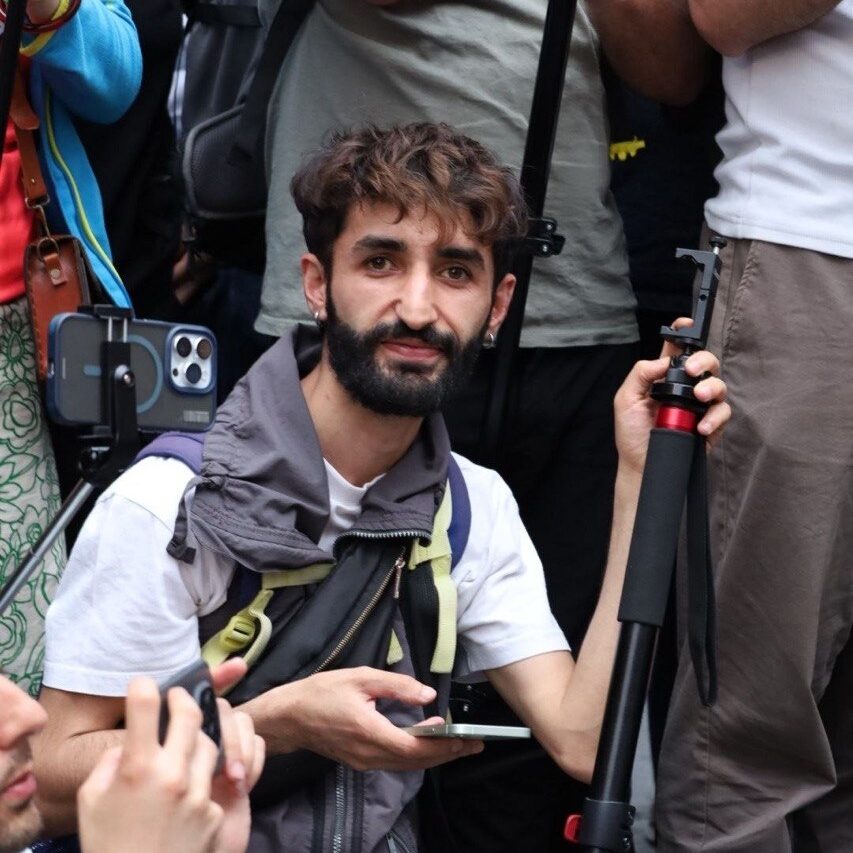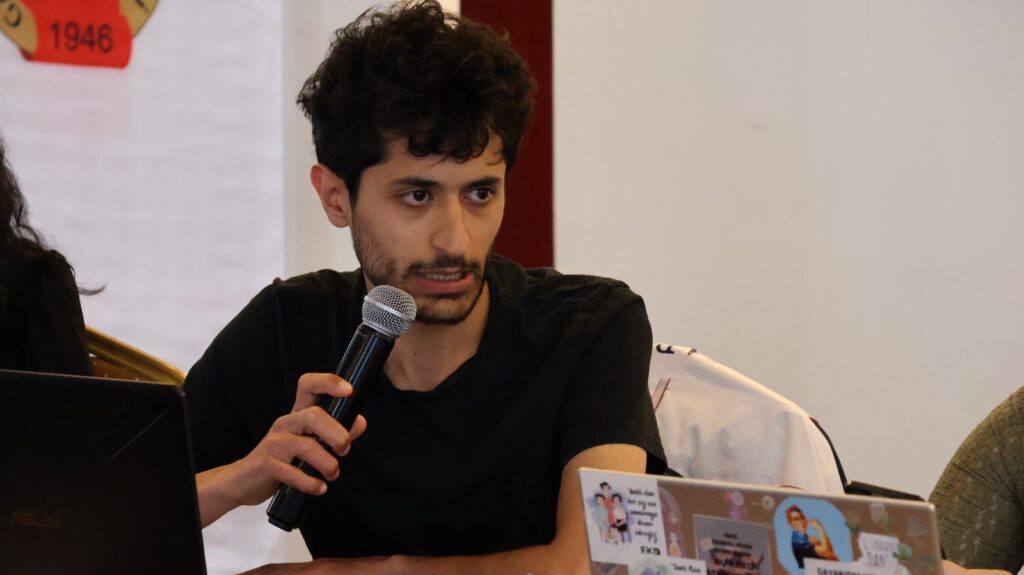

“Geothermal fluid is being released into the ground and aquifers”

“While geothermal power companies have reaped huge profits thanks to incentives and purchase guarantees, the local population has not even been able to benefit directly from the electricity generated,” says Deniz Mine Öztürk, pointing out that ecological and social devastation lies hidden behind the “clean energy” rhetoric of geothermal power plants.

Source: Afyonkarahisar University of Health Sciences Energy Management Unit website

Geothermal power plant (GPP) projects, which are concentrated in the provinces of Aydın, İzmir, Manisa, and Denizli, are facing backlash from local communities and experts. The GPP projects planned for the districts of Varto in Muş and Karlıova in Bingöl will affect the natural habitats of a total of 22 villages. Experts and local residents are opposing two separate GPP projects to be implemented by the U.S.-based Ignis H2 Energy Production Inc. in Varto and Karlıova, stating that these projects will have a severely negative impact not only on human life but also on natural ecosystems and animal life.

Residents in the Aegean region, particularly in Aydın, continue to voice complaints about increased cancer risks, the smell of rotten eggs, and the decline in agricultural productivity due to geothermal power plants.

Öztürk: Underground minerals, gases, and heavy metals have toxic effects

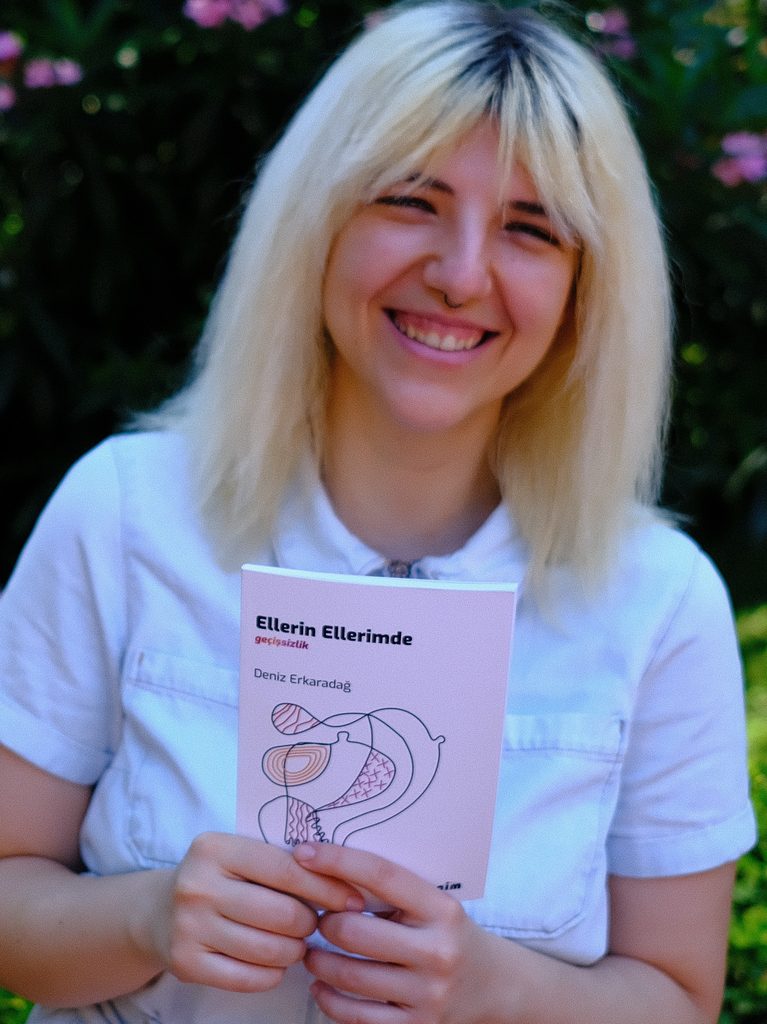
Deniz Mine Öztürk

Deniz Mine Öztürk, a Ph.D. candidate in energy geography at Clark University, shared her insights with Niha+ regarding the ecological damage caused by geothermal power plants. Öztürk explained that there are different types of technology used to generate energy from geothermal sources:

“Most of the sources in Turkey are hydrothermal, formed when underground water reserves are heated by heat transmitted from the Earth’s core. Heat from the core can be transmitted to points near the Earth’s surface through fractured rocks in areas with tectonic activity. In these regions, geothermal fluid is extracted to the surface through drilled wells to generate energy. To both extend the sustainability of the resource and protect surface ecosystems, this extracted fluid must be reinjected back into the same location after energy is generated.”

Öztürk explained that as one descends deeper into the Earth, temperature and pressure increase, and this causes the minerals, metals, and gases present in the rocks contacted by the accumulated fluid to dissolve more readily. He emphasized that geothermal fluids vary depending on the region, depth, and the rock they come into contact with; in geothermal sources in Anatolia, minerals such as sodium, calcium carbonate, and sulfate, along with trace metals like boron, arsenic, and lithium, have been identified:

“When these minerals, heavy metals, and gases from the subsurface ecosystem are brought to the surface, they can have toxic effects on living organisms.”

Sodium
Na
Calcium Carbonate
CaCO₃
Sulfate
SO₄²⁻
Boron
B
Arsenic
As
Lithium
Li
Carbon Dioxide
CO₂
Hydrogen Sulfide
H₂S
Sulfuric Acid
H₂SO₄

Referring to the consequences of the fluid extraction process, Öztürk stated the following:

“Due to the high cost of reinjecting the extracted fluid back into the same location and the flexibilities provided by the Geothermal Law No. 5686, it has been observed that some geothermal power plants in the Western Aegean discharge the fluid into the ground or nearby water bodies. This has caused contamination in the soil, as well as in groundwater and surface water sources. Additionally, when re-injection is not fully carried out, over time the decline in the source’s pressure and the resulting decrease in groundwater levels have led to ground subsidence and fissures.”

“Hydrogen sulfide with a rotten egg smell in Aydın”

Explaining that non-condensable gases present in the fluid are released into the atmosphere through power plant chimneys during reinjection, Öztürk added that these gases include carbon dioxide (CO2)—one of the primary causes of climate change—and hydrogen sulfide (H2S), which has a rotten egg odor and is both toxic and flammable:

“One of the most frequently mentioned concerns in Aydın is the smell of hydrogen sulfide. Hydrogen sulfide can also react in the air to form sulfuric acid, leading to acid rain. Acid rain, in turn, causes respiratory difficulties in humans and animals and disrupts plant growth.”

Öztürk, noting that geothermal companies produce energy under the guise of “clean” energy compared to fossil fuel use, reminded that carbon dioxide emissions from geothermal power plants in Turkey are far above global averages:

“At some plants, emissions rival those of fossil fuel power plants. This means they contribute to global climate change in the long term. In addition, geothermal power plants release large amounts of water vapor, which alters the local climate.”

“Drilling can cause stress in animals”

According to Öztürk, the various elements contained in geothermal fluids, along with the resulting acid rain and climate change, can negatively impact the development of plant and animal species. Noting that these processes threaten biodiversity and endemic species, Öztürk said, “The intense noise and vibrations generated during drilling, exploration, and power plant operations can cause stress in animals and affect their migration and reproductive behaviors.”

Additionally, Öztürk noted that geothermal power plants (GPPs) built near agricultural areas can degrade soil quality, contaminate irrigation water, and consequently reduce agricultural yields. He added that damage to pastures and water sources can create significant pressures on livestock farming activities.

“These projects were implemented through top-down decisions”

Öztürk stated that authoritarian methods and corporate policies aimed at increasing company profits have caused multi-dimensional injustices in the Büyük Menderes and Gediz Graben regions—where geothermal power plants are predominantly built—specifically in Aydın, İzmir, and Manisa:

“Polluted air, water, and soil have had negative effects on the health of humans, non-human living beings, and ecosystems. The food produced in the region has been contaminated. Future generations have been deprived of their right to benefit from these natural and clean ecosystems. While geothermal power companies have reaped huge profits through incentives and purchase guarantees, the local population has not even been able to benefit directly from the electricity produced. On top of that, they lost their means of livelihood and their living spaces.”

Reminding that these projects were implemented through top-down decisions, Öztürk said, “Expropriation orders were issued in haste for land that villagers did not want to sell. People were deprived of the land where they had labored for generations, accumulated memories, and shaped their culture.”

“The local community, municipalities, experts, civil society organizations, and opposition parties were not included in the decision-making processes. They were deprived of the rights to ‘participation’ in decision-making processes—one of the most fundamental democratic rights—and the right to be recognized as a subject,” according to Öztürk’s observation. While JES companies are free to organize and easily convey their demands to the government, the organization of local communities opposing these projects was criminalized:

“The villagers’ right to protest the companies was met with attacks by law enforcement; lawsuits were filed against protesters, and they were detained. In fact, following the JES resistance in Aydın/Mezeköy, a state of emergency was declared for one week; entry and exit to the village were banned. Thus, multi-dimensional injustices—ecological, economic, political, social, and cultural—were created in the Western Aegean.”

“The displacement of Kurds and Alevis will exacerbate social inequality”

Öztürk noted that the planned new geothermal power plant projects in Muş and Bingöl, which are set to be built in Kurdish and Alevi villages historically forced to migrate in Turkey, add another dimension to the situation:

“The potential for Kurds and Alevis to be effectively driven from their living spaces and deprived of their means of livelihood poses profound social and cultural threats. In a region where people were forcibly displaced through the emptying of their villages throughout the 1980s and 1990s, the prospect of their being dispossessed once again—deprived of their living spaces, cultures, and social ties—will lead to the reproduction of historical injustices and the deepening of social inequalities. “However, despite all the injustices created and the deepening power imbalances throughout the process, the people organized in the Western Aegean have halted numerous projects through their determination and persistence. In this sense, I am certain that the organizational experience and political awareness demonstrated in Muş and Bingöl will serve as an example for energy projects in other parts of Turkey.”

Referring to Ignis H2’s report that new hot water sources had formed around Kaynarpınar village following the 2023 Maraş earthquakes, Öztürk noted that the region lies on two highly active fault lines.

According to Öztürk, the risks associated with the project can be assessed from two perspectives in this context: first, the earthquakes that geothermal activities could trigger, and second, the responses that geothermal systems might exhibit to natural earthquakes.

Photo collected from https://sismikharita.com/

After the 4.3-magnitude earthquake centered in Güzgülü-Yedisu on the morning of April 26, statements from the Kandilli Observatory and Naci Görür were reported in the press. In a statement made via social media, the Kandilli Observatory highlighted that the tremor in Yedisu occurred along one of Turkey’s most high-risk “seismic gaps.”

Geoscientist Prof. Dr. Naci Görür stated in his social media post that if the Yedisu fault—identified as one of Turkey’s most high-risk areas—were to rupture, a major earthquake would severely impact Erzincan, Bingöl, and Dersim.

  • A seismic gap is a segment of an active fault known to have remained stationary for a relatively long period compared to other segments along the same line, and which produces significant earthquakes.
  • The Yedisu fault is located at the eastern end of the North Anatolian Fault (NAF).

Öztürk, noting that there are examples of projects that were canceled due to studies indicating that well drilling and the reinjection of fluid into the ground at high pressure at geothermal power plants could trigger earthquake risks, listed the following examples:

“For example, in Pohang, South Korea, a geothermal power plant was shut down in 2017 after it was determined that the reinjection of fluid into the ground had triggered a 5.5-magnitude earthquake. In Germany, a geothermal project developed in 2014 sparked public backlash due to earthquake risks and potential pollution. Ultimately, it was decided that the electricity to be generated would not justify the risk, and the project was canceled before it even began.”

“On the other hand, these geothermal pipes can sometimes burst on their own. According to Öztürk, who noted that “examples of this have occurred repeatedly in Manisa and Aydın,” the company must also clarify whether it has an emergency action plan in place to address the risk of an explosion (blow-up) under any circumstances, and whether it has developed a plan to assess and mitigate the consequences of explosion and leakage risks.

“Projects are being carried out without transparency”

He noted that one of the biggest problems with all energy projects in Turkey, including geothermal power plants, is that these projects are carried out without transparency from the exploration phase all the way through to the operation of the power plant:

“Announcements and news items are prepared solely to inform investors and are removed shortly thereafter. There is no intention to involve the public in the decision-making process, nor is there any aim to provide equal access to information about the process or the project. In Aydın, there have been instances where even villagers who own titled land in the exploration area only learned of the situation a month or two before drilling began. When official documents are collectively sent to the village head, it is up to him to decide when to share this information with the villagers. This can lead to villagers starting the legal process and practical organization from a position of disadvantage.”

In 2026, it was reported in the media that geothermal exploration areas in Balıkesir, Kayseri, Bitlis, Niğde, Malatya, Konya, Çorum, Kırşehir, and Erzincan were put out to tender. Additionally, it was noted that tenders were initiated for three geothermal areas in Ağrı, Adana, and Diyarbakır.

“Suspicious death has been transformed into a practice of making women disappear”

Evaluating the relationship between suspicious female deaths, impunity, and security policies, Eralp stated, “When a death remains suspicious, the issue should not only be finding the perpetrator, but also exposing the networks that make it possible to cover it up.”

Photo: Ekmek ve Gül, placard saying “How many more femicides are you going to disguise as (!) suicides?”

According to data shared by the We Will Stop Femicide Platform, while 294 women were killed by male violence in 2025, 297 women were found dead under suspicious circumstances. Today, many cases of violence defined as “suspicious deaths,” such as those of Rojin Kabaiş, Gülistan Doku, and Nadira Kadirova, are criticized by feminist and women’s movements for the lack of fair trials.

Eralp: Crimes left unpunished are consigned to uncertainty under the guise of ‘suspicious death’

Making an evaluation regarding suspicious female deaths and the judiciary’s policies of impunity, Feride Eralp, a member of Women Are Strong Together, stated that the announced data only covers cases reflected in the press. “These mean at least this many women were killed. When we also take into account the femicides and suspicious female deaths that are not reflected in the press, we can actually talk about much higher numbers,” she said.

Referring to the period when femicide statistics were announced more realistically, Eralp argued that the data disclosed in the past made the prevalence of male violence visible, which is why it is not shared today, saying, “A reality about how widespread violence against women is had been exposed.”

Stating that suspicious female deaths are not a new phenomenon, Eralp recalled the female suicides reported in Batman and Diyarbakır, especially in the 1990s and 2000s. Expressing that female deaths resulting from systematic male violence were brought to the agenda as suicides, she said, “Today, something similar is operating under the concept of ‘suspicious death’.”

“The crimes of those who feel the freedom to commit crimes by leaning their backs on powerful people—crimes involving various power relations within the state and gang formation—which remain unpunished and whose perpetrators are often not revealed, are consigned to uncertainty under the guise of ‘suspicious death’.”

Stating that the women’s movement has frequently brought this issue to the agenda in recent years by linking it with war policies, Eralp said that this situation is also a practice of making women disappear:

“This geography is accustomed to the result of disappearances in custody and the failure to prosecute perpetrators despite them being known by everyone, a state violence that intensified especially in the 90s but existed after the 80 coup. This has a previously experienced practice and form. Therefore, I can say that the women’s movement has significantly brought to the agenda how this has merged with systematic male violence and transformed into a practice of disappearance against women, especially after the end of the peace process in 2015 and the restart of the conflict process.”

“In theory, sentence increases; in practice, impunity”

Establishing a direct link between suspicious female deaths and policies of impunity, Eralp emphasized that the women’s movement has not followed a line of only demanding heavy sentences for years. Stating that sentence increases often create more impunity, she said the following:

“The last increase in sentences for sexual crimes was in 2015. At that time, as the Istanbul Feminist Collective, we said: ‘In theory, sentence increases; in practice, impunity.’ As sentences become heavier, the likelihood of judges giving those sentences gradually decreases. Especially in areas where evidence is difficult to obtain, such as sexual crimes, and in areas where the woman’s statement is essential, when you increase the sentence, they generally give up on sentencing altogether.”

Stating that changes in the execution system also create a perception in society that ‘they’ll get out anyway,’ Eralp noted that this makes it harder to prevent male violence:

“It constantly brings some aggravations for these types of crimes against women. But what happens in practice? In practice, the execution system is organized in such a way that none of these heavy sentences are executed in that manner. Either a pandemic amnesty comes or another reduction in execution follows. A perception has formed in everyone’s mind that someone who enters prison stays for a year or two, gets out, and moves to an open prison anyway. When this perception is formed, it becomes much harder to prevent male violence.”

“It is not the woman who says ‘the state protects me’ but the male perpetrator”

Emphasizing that women often make repeated requests for help before the murder, Eralp said that the failure to effectively implement restraining orders and complaints paves the way for murders:

“Women go to the state repeatedly, but crimes such as threats, insults, detention, and simple injury are almost never punished. From there, the path leading to murder is opened. While women and children should think ‘the state protects me from violence,’ on the contrary, male perpetrators think ‘no matter what I do to a woman, the state will protect me’.”

Stating that the sexist approach continues in judicial processes, Eralp expressed that even men who have no ties to anyone within the state can receive unjust provocation reductions and good conduct reductions simply due to selective judicial policies.

In the context of this approach in the judiciary, Eralp said that women’s lifestyles, sexual orientations, or clothing can still be made a subject of judgment in courtrooms. “We saw this practice in the Ayşe Tokyaz case. The killer Cemil Koç was trying to defend himself by trying to put the life of the woman he murdered on trial. This is just one example,” said Eralp, noting that women are exposed to this perspective by all men, from the rich to the poor. She added that these practices of impunity normalize violence against women, children, and LGBTI+ individuals.

“Women have now realized that violence is not normal”

According to Eralp, one of the most important gains of the feminist movement has been the social acceptance of male violence as a political issue. “In a country where at the end of the 1980s a judge could easily say, ‘you should never leave a woman’s belly without a foal or her back without a stick,’ it is much more difficult to utter this sentence today. Today, the perception among women that such a sentence cannot be uttered has become very strong,” she said.

Eralp explained that a transformation has taken place regarding the awareness of violence against women:

“Male violence against women is very common in Turkey. But we do not deserve this. In other words, him inflicting violence on me is not because something is wrong, lacking, or bad about me. That is the man’s problem. It stems from that man seeing himself as having the right to establish power over women and thinking he has the right to fortify this through violence the moment it is shaken. In fact, there is a change with the fact that gender inequality is now more widely known as a phenomenon. This change does not mean we face less violence, are killed less, or encounter less sexism. But we are not staying silent about them.”

Stating that women’s organizations have been fighting for years to prevent suspicious female deaths from being forgotten, Eralp said that the names of murdered women are specifically commemorated in protests. “Saying ‘suspicious death’ and closing the file is also an attempt at erasure. If we forget those names, they will have succeeded,” she stated.

“Musa Orhan received a sentence but did not go to prison. We continued to pursue this as well. We continued to keep it on the agenda constantly. For Gülistan Doku and Rojin Kabaiş, friends from the ÖGK (Student Youth Organizations) established justice commissions and brought this issue to the agenda in different cities. Different women’s organizations have been continuing to follow and pursue such cases in different cities for years and years. They continue to hold protests on this subject in the streets.”

“Not only the perpetrators, but also the crime networks must be exposed”

Stating that to prevent suspicious female deaths, not only the perpetrators but also the mechanisms that cover up the crimes must be exposed, Eralp drew attention to the networks of relations especially within the security bureaucracy and the judiciary:

“When a death remains suspicious, the issue should not only be finding the perpetrator, but also exposing the networks that make it possible to cover it up.”

Eralp said, “Today, there is talk of establishing a department for unsolved crimes and research. But we see that this is being established once again as a tool for a kind of political reckoning.” She emphasized that bringing some files back to the agenda is not enough on its own:

“The issue here is not just exposing the first stage. In the case of Gülistan Doku, as long as all the mechanisms that have allowed this to be covered up for 6 years are not touched, this system reproduces itself.”

“Security policies do not protect women”

Eralp said that the securitist policies defended on the grounds of women’s safety do not protect women in practice. Recalling the 700 hours of camera footage that went unexamined for years in the Gülistan Doku file, Eralp argued that the state’s security mechanisms are not for women’s safety, but to protect the interests of the state’s power centers.

Stating that the security system is often used for the purpose of suppressing protests and monitoring society, Eralp expressed that the sacralization of the security bureaucracy makes invisible the mechanisms that facilitate the covering up of femicides:

“This security network does not protect the interests of women and girls. When a woman went missing, it served no purpose for 6 years. In fact, on the contrary, it deleted the record. It saw the murdered woman. It ends up using its power directly to commit a crime.”

“The state must do its duty”

Eralp said, “If we pay taxes to this state, if we are citizens of this state, we must not give up demanding that the state do its duty.” Stating that women’s organizations continue to monitor cases for this reason, Eralp said that being present in courts means forcing state institutions to take responsibility:

“By being present in the courtrooms, we are saying this: You are obliged to conduct a trial that will ensure real justice, not one based on male-dominated prejudices.”

Expressing that the women’s movement makes it visible when police officers do not fulfill their duties, Eralp said that the slogan “Where was the police while women were dying?” came to the fore for this reason.

“Trustees in Kurdish provinces blocked the path of social transformation”

Recalling that local governments and women’s organizations developed important experiences in the past, especially in Kurdish provinces, Eralp said that trustee policies served a function that blocked this social transformation. Stating that women’s centers, shelters, and local solidarity networks played an important role in reducing female suicides and murders in Batman and Diyarbakır, Eralp noted that municipalism in Kurdish provinces radically transformed this situation; and that they did this not through a security mechanism, but through policies that erode gender inequality and by increasing the options for women to move away from violence.

Emphasizing that this is lived as social memory and experience, Eralp concluded her words by saying, “The ability of municipalities to produce policies for male violence in their own localities more autonomously without the fear of trustees, and therefore to take steps that strengthen gender equality, will certainly be able to reduce such deaths again, as it has reduced them before.”

26 femicides, 23 suspicious deaths in April 2026

According to data from the We Will Stop Femicide Platform, in just the first four months of 2026, at least 102 women were murdered, and the deaths of 99 women were recorded as “suspicious.”

According to data for April alone, 26 women were murdered, and 23 women were found dead under suspicious circumstances. Furthermore, 38% of the women were killed by the men they were married to. 69% of the women were killed in their homes.

Prominent events in the last 1 month

  • It was determined that Mustafa Türkay Sonel, the son of the governor of the period Tuncay Sonel, killed Gülistan Doku, who disappeared in Dersim on January 5, 2020, with a pistol. Sonel was arrested for the crime of “intentional killing” after being taken into custody. A total of 12 people were arrested as part of the investigation.
  • Within the scope of the investigation, 700 hours of camera footage were taken under examination 6 years later.
Photo: “Where is Gulistan Doku?”

  • It was announced that İlayda Zorlu was found dead on April 17 as a result of a shot from her father’s service pistol. Student and youth organizations organized protests in many cities to shed light on İlayda’s death.
Photo of İlayda Zorlu, placard saying “Not the lady of the house, but the rebel of the campus”

  • On May 7, the decision “not to grant permission for investigation” regarding the management of the KYK dormitory concerning the death of Rojin Kabaiş was overturned by the Erzurum Regional Administrative Court upon the appeal made by the Van Bar Association.

  • On April 8, it was reflected in the press that a man who entered the Ali İhsan Aldoğan Girls’ Dormitory inside the ITU Ayazağa Campus was caught topless in the laundry room by female students.

GPP vigil in Varto: “We promised to protect our nature”

In the Varto and Karlıova regions, villagers have launched a resistance by setting up tents to protect their nature against a planned Geothermal Power Plant (GPP) project. It is reported that the first drilling activities for the projects in question are scheduled to begin on May 20.

The local population began their vigil after the American company Ignis H2 Inc. sought to implement two separate geothermal projects in the Varto (Gimgim) district of Muş and the Karlıova (Kanîreş) district of Bingöl. On May 3, residents set up a tent in the area where drilling is planned in Varto’s Çallıdere (Xwarik) village, demanding that the plants be stopped.

Experts and local residents point out that these projects carry risks of earthquakes and environmental destruction, warning they will destroy animal husbandry and life in the region.

Speaking regarding the tent protest, Varto resident Ali Rıza Vural said, “We promised one another that we would protect our land and our nature.” Lawyer Bahar Koç evaluated the situation by stating, “There are illegalities within the project introduction file.”

On April 24 in Varto and April 25 in Karlıova, rallies were held against the project, which will affect 22 villages, brought ecologists and people from many different cities together.

Vural: We are acting based on scientific reports

Ali Rıza Vural from Teknedüzü (Badan) village stated that they began organizing after examining the potential damages of the project through reports from the Union of Chambers of Turkish Engineers and Architects (TMMOB):

“This geothermal project has been on our agenda for about 3-4 months. First, we researched the damage geothermal energy causes to nature, people, and living things, and then we tried to explain it to our people. These aren’t just rote sentences; there is a real report from TMMOB. We focused intensely on this report. Out of fear that the same disasters experienced in the Greater Menderes Basin could happen here, we moved into a serious state of organization.”

16 villages on vigil against the May 20 drilling

Vural mentioned that between the villages of Çallıdere and Teknedüzü—where the first operating license was obtained and drilling is expected on May 20—the public has completed preparations to protect the area through a social reflex:

“We are trying to stand by our friends and provide support. We are providing logistical support. In three days, the youth will hand over the vigil shifts to the villages. In this sense, every evening, two of the 16 affected villages will keep watch there. Representatives of the village, including a mukhtar (village head), will be on duty. We promised each other that if the slightest thing happens while they are on watch at night, we will communicate, and we will all be in this field as a whole to protect our own land and nature.”

Photo: Varto Ecology Platform

Vural emphasized that their actions are not under the control of any political institution or NGO, but are entirely a local grassroots movement, stating that all villages have locked shoulders:

“Women, children, the elderly, and the youth… This is not under the direction of any politics, institution, or NGO; it is entirely the Varto Ecology Platform. I am talking about an organization where the old, the young, children—everyone, regardless of their political views—is united and solely claiming ownership of their nature.”

We grow stronger through solidarity

Stating that logistical and moral support for the tent resistance is growing every day, Vural said that neighbors have taken over the daily chores of those on watch:

“We can see from the tent visits that people from all walks of life come to visit. They offer all kinds of financial and moral support. The friends keeping watch there all have their own jobs and work. They have livestock. Despite this, other villagers and neighbors look after their animals and meet their needs in place of those on vigil. There is absolutely no compromise here. In fact, we are getting stronger.”

Expressing concerns that the state and ministries might clear the way for the company, Vural said that no matter what happens, they will not allow their lands to be touched.

Lawyer Koç: We are waiting for a stay of execution

Providing information on the legal dimensions of the projects intended for Varto and Bingöl, Lawyer Bahar Koç stated that separate lawsuits have been filed against both the “EIA (Environmental Impact Assessment) Not Required” decision and the operating license granted to the company:

“Normally, there is an ‘EIA not required’ decision and a license given to the company. Separate lawsuits must be filed for both. The Governor’s Office responded to both on different dates. Therefore, we filed two lawsuits, but their dates are not the same. We filed the lawsuit regarding the license earlier, and the one for the ‘EIA not required’ decision last week. Currently, our two cases are ongoing at the Bingöl Administrative Court.”

Emphasizing that the court has not yet made a decision and is waiting for the administration’s defense, Koç said the following regarding the process:

“A stay of execution has not been granted yet because the administration’s defense must be taken. The defense has not been made yet; the legal process continues. Since the authorized court in the region where the project will be built is the Bingöl Administrative Court, we filed our lawsuits there. After the defense comes from the administration, a date for a site discovery will be set.”

Social reaction is essential against a possible de facto situation

Stating that they do not have a stay of execution order in hand against the drilling work expected on May 20, Koç expressed that social reaction is essential to prevent the company from entering the field until a court decision is reached:

“Since the company holds the license, they may come and create a de facto situation. To prevent this, only a social reaction is necessary. Through social reaction, we are trying to stop this and ensure that a stay of execution is obtained from the court as soon as possible. This process is carried out in this two-pronged manner all over Turkey: social reaction on one side and the legal process on the other.”

This is a search for justice

Defending that the vigil tents established under the leadership of the youth are both a search for justice and a legally appropriate reaction, Koç said, “The project introduction file is full of provisions contrary to the law. In the face of such unlawfulness, it is perfectly legal for our friends to show resistance, set up tents, and keep watch there.”

Trans student faces terrorism investigation under cheating regulation

Arin, an Istanbul University student and trans activist facing a disciplinary inquiry, stated, “They cannot usurp the right of LGBTI+ individuals to education.” Lawyers commenting on the matter drew attention to the irregularities and the structural dimensions of these investigations.

Since February 2026, disciplinary investigations have been launched against 13 students at Istanbul University-Cerrahpaşa. Within just two months, a trans activist student was targeted with an investigation based on allegations of “spreading propaganda for a terrorist organization.” Notably, the justification for this allegation was cited under a regulatory article pertaining to “attempting to cheat in exams.”

Arin, a trans activist and student at Istanbul University, described the process of facing a disciplinary inquiry based on “terror propaganda” allegations. Highlighting legal irregularities and contradictions in the proceedings, Arin characterized the experience as an attempt to distance LGBTI+ individuals from universities.

Pointing out that there are two separate disciplinary investigations against them, Arin stated that no specific reasons were provided in the notices:

“The first was initiated based on correspondence from the Istanbul Chief Public Prosecutor’s Office and the Istanbul Police Department. No reason was stated. It did not specify on what grounds they were conducting a disciplinary investigation. Since no specific act was alleged, this directly impacted the right to a defense. In total, 13 people faced investigations; two of those 13 were trans women.”

“Cheating” regulation used as basis for “terror propaganda” allegation

Arin highlighted a striking contradiction in the second investigation file served to them. Despite facing accusations of “spreading propaganda for a terrorist organization” following reports from the Prosecutor’s Office and the Police Department, Arin noted:

“The investigation paper cited ‘terrorist organization propaganda,’ yet the disciplinary article cited as the legal basis was ‘attempting to cheat in exams.’ Neither I nor my lawyers could understand the connection between terror propaganda and cheating. There is no court verdict and no concrete evidence.”

Reporting that police intervened during a planned press statement in front of the campus on the day of the hearing, Arin pointed out the discrepancy between school management and law enforcement:

“While the school administration claims to have opened the investigation based on police reports, the Counter-Terrorism units at the gate claimed they never sent any documents to the school. They are experiencing a major internal contradiction.”

“The LGBTI+ flag is not a crime”

Stating that the allegations are being linked to past participation in Pride Marches and Gezi Park commemorations, Arin argued that the questions asked during the interrogation were ideological rather than legal:

“The reason I was detained during the Gezi commemoration was for carrying an LGBTI+ flag. Now they are trying to associate this flag with terrorism. The rainbow flag is a globally recognized symbol; it is not a crime.”

“They cannot usurp our right to education”

Arin stated that a policy of “domination” is being established against LGBTI+ students as part of “Year of the Family” policies. She noted that being singled out among hundreds of organized youth is related to their gender identity:

“My friends and I were asked questions like ‘Are you LGBT?’, ‘Do you have regrets?’, or ‘Did you attend the March 8th events?'” Arin stated that this is a result of trustees attempting to remove LGBTI+ people from public spaces and campuses. “LGBTI+ people will remain in the squares and on campuses. They cannot usurp our right to education” Arin added.

Warning of the risk of suspension due to “hate policies,” Arin emphasized their commitment to a legal battle: “I believe that since there is no concrete evidence, no penalty should be given. If a penalty is issued, we will take the matter to the Administrative Court and higher courts.”

Lawyer Furkan Yurt: “Vague authorities granted to administration”

Furkan Yurt, legal coordinator for SPOD, emphasized that the administration is abusing its disciplinary authority. Yurt stated that Article 54 of the Higher Education Law (No. 2547) allows for vague interpretations:

“Vague phrases such as ‘attitudes not befitting the dignity of the institution’ grant administrators unlimited room for arbitrariness. Conducting an investigation for ‘terror propaganda’ through an article regulating exam cheating is the clearest example of how the administration can adopt a wholesale and discriminatory approach, disregarding even basic legal grounds.”

According to Yurt, while sexual orientation and gender identity are not crimes, they are being criminalized indirectly:

“A rainbow flag, a rights-based expression, or a peaceful protest can be thrown into this ‘catch-all crime’ category without any concrete link. Additionally, ‘obscenity’ and ‘terrorist propaganda’ are the most frequently used tools. Social media posts and participation in peaceful protests are presented as criminal elements through these articles.”

Nonconcrete accusations is a violation of rights

Yurt noted that the most fundamental violation is forcing an individual to defend themselves without knowing exactly what they are accused of. He argued that the university administration’s insistence on treating acts, which judicial authorities have found not to constitute crimes, as disciplinary offenses is a “usurpation of function and an abuse of authority.”

“A systematic attack on the democratic identity of universities”

Yurt evaluated the increase in investigations against LGBTI+ individuals as a systematic attack:

“This process is a result of the political administration’s vision of a homogenous society and the narrowing of academic freedom. These investigations often aim to intimidate students and target their right to education rather than staying within legal bounds.”

Lawyer Serhat Alan: “Freedom of expression treated as a disciplinary offense”

Lawyer Serhat Alan from the Istanbul Bar Association categorizes student investigations into two types: administrative disciplinary inquiries conducted by universities and criminal investigations handled by the police and prosecutors.

According to Alan, activities falling under freedom of expression; such as hanging posters, distributing leaflets, or joining protests, are entering disciplinary files alongside police charges like “Opposition to Law No. 2911” or “Inciting the public to hatred and hostility.”

“Institutionalized anti-LGBTI+ hate politics”

Linking the increase in investigations to a “regime of attacks” against LGBTI+ individuals, Alan stated:

“The aim of this increase is clear. The state is acting within a regime of attacks against LGBTI+ people. Following the ban on Pride events since 2015 and the withdrawal from the Istanbul Convention, we are seeing an institutionalized anti-LGBTI+ hate policy, further highlighted by the declaration of the ‘Year of the Family.’ The state uses investigations to prevent solidarity, make LGBTI+ visibility disappear, and block their organizations.”

Alan also pointed out that these pressures aim to isolate young LGBTI+ individuals and break the momentum of youth movements that have grown since March 19, 2025.

“Legislation lacks a gender lens”

Alan argued that the discrimination faced by LGBTI+ students is tied to legislation that ignores gender perspectives:

“YÖK (Council of Higher Education) legislation and internal school regulations tend to subject LGBTI+ individuals to discrimination because all regulations are drafted without a gender lens. This manifests in the refusal to recognize gender identity, the binary arrangement of facilities like toilets and dorms, the absence of effective sexual harassment prevention units, and issues with changing names on diplomas.”

Press statement was done against inquiries on April 27

A press statement was held on April 27 at Istanbul University for the students facing investigations. The statement, organized by the Istanbul University Student Assembly, is as follows:

TO THE PRESS AND THE PUBLIC

The Rectorate of Istanbul University-Cerrahpaşa (IÜC) is intensifying its policies of pressure against students every passing day.

In February 2026, disciplinary investigations were launched against 13 students, citing their participation in peaceful protests and subsequent detentions. The basis for these investigations was a police report whose content was withheld from the students. This situation clearly violates the “right to know the charges,” which is the most fundamental element of the right to a defense.

Investigations, arrests, and pressure cannot intimidate us.

The question “Are you full of regret?” directed at some students during this process demonstrates that disciplinary mechanisms have been transformed into tools for coercion and forced confession.

We will not remain silent, we are not afraid, we will not obey.

Less than two months after these processes, the appointed IÜC rectorate has now launched a disciplinary investigation against an LGBTI+ activist on allegations of “spreading terrorist organization propaganda.” Furthermore, there is neither an indictment nor an active court case regarding these claims.

Additionally, this investigation is based on Article 54/5 of the YÖK Disiplin Regulation (a provision regarding the act of attempting to cheat). The blatant contradiction between the alleged act and the legal basis proves that this process is being conducted arbitrarily and lacks any legal foundation.

Despite requests for additional time to prepare a defense, these requests were rejected on the grounds of a police notification stating that “proceedings must be completed within 30 days,” effectively eliminating the right to a defense.

We state clearly: Following students at campus exits, profiling them, and threatening them is a clear method of harassment and intimidation. These practices target the safety of students and place campus life under duress.

The consequences of this climate of pressure are fresh in our memories. İlayda Zorlu was taken from life following a process of pressure and manipulation conducted through the cooperation of the family, state, and police. This loss demonstrates once again the severe consequences of the policies of pressure carried out both on and off campus.

YÖK, police, media—this blockade will be broken!

Therefore, we state clearly: Let those who follow and threaten students on campuses know that this is harassment. We do not accept it.

Long live our organized struggle.

The right to assembly, demonstration, and making press statements, guaranteed under the Constitution and the European Convention on Human Rights, cannot be made subject to permission. The precedents of the ECHR and the Council of State clearly reveal that disproportionate interventions against peaceful actions are unlawful.

These processes are not merely individual; they represent a systematic crackdown on freedom of expression, the right to organize, and LGBTI+ existence on campuses.

Let the appointees who attempt to drive LGBTI+ individuals out of campuses under the guise of the “Family Year” know that LGBTI+ people have not given up on the streets or the campuses for years, and they never will.

As students of Istanbul University-Cerrahpaşa, we believe that universities must be independent, democratic areas for scientific production; we believe this, and we will continue to do our part to ensure it.

We address those who try to pressure us with unlawful investigations and policies of intimidation from here:

YÖK, trustees, media—this blockade will be broken! Universities will be liberated with us!

We stand by all our friends facing investigations and we will not take a step back from our struggle.

Being a journalist in Diyarbakır: “What you don’t write is also your responsibility”

Veysi Polat, Öznur Değer, Murat Bayram ve Faruk Balıkçı, the journalists worked in Diyarbakır for years facing various pressures, assessed limitations and challenges of being a journalist in Diyarbakır.

140journos’ documentary “Şeytantepe,” about the Narin Güran murder, has reignited an old debate about what it means to practice journalism in Diyarbakır.

The Narin Güran murder case refers to the killing of 8-year-old Narin Güran, who lived in the rural Tavşantepe neighborhood of the Bağlar district in Diyarbakır province. Narin’s family reported her missing on August 21, 2024, and her body was found on September 8, 2024, inside a sack in the Eğertutmaz stream near the village. Many television channels and newspapers presented claims such as “forbidden relationship,” “the sister was also killed,” “brother was a drug user,” and “Hezbollah connection” as definitive information to the public without concrete evidence, but many of these were refuted in the judicial process, leading to the perpetrator’s identity remaining unknown.

Throughout the 1990s, journalists in Diyarbakır and the surrounding region were victims of “unsolved” murders, detained, tortured, and imprisoned; and the distribution of newspapers was banned. While “unsolved” murders were no longer as common in the 2000s, the judiciary and law enforcement agencies made it difficult for journalists to report from the field. Arrests, forced exile, and house arrests kept journalists away from their profession; newspapers, TV channels, radio stations and websites were shut down, leaving hundreds of journalists unemployed. Journalists who have been reporting from this region for years recounted the hardships they faced and the price of being present in the field.

Veysi Polat: The reality in field is harsh

Veysi Polat started journalism on 1991 in Diyarbakır. He and his uncle, who was a reporter at Özgür Gündem newspaper, were together attacked with a gun. He had to go to İstanbul continue his profession there. Polat who worked for many years in press organizations that came from the Özgür Gündem tradition, returned to Diyarbakır after 21 years and built a local news platform called Aborî.

Journalist Veysi Polat at Hafız Akdemir commemoration. Source: Aborî

Polat, stating security politics, judgement processes, social sensitivities and local dinamics in Diyarbakır severely restricts the journalist’s freedom of movement, told that the reality in the field was harsh and that the space to convey that reality was limited. stated that practicing journalism in a city directly affected by the Kurdish issue, requires every news to be thought for at least few times, every sentences to be regulated, and said “Not only what you write, but also what you do not write is becomes a responsibility.”

Polat explaining the difference between doing journalism in Diyarbakır and in Western cities through the lens of “the weight of the profession,” stated that when he returned to Diyarbakır from Istanbul after 21 years, he realized that the meaning, risks, and burden of journalism had changed when the geography changed.

How is a local new is altered to another?

Polat stated that he believes information transferred from the local to the central level is often either diminished or transformed, emphasizing that this transformation often passes through political, institutional, and ideological filters:

“Especially in central media, the reflex of not harming the relationship between the institutions and government can prevent the news from being reported as it is. This leads either to overt censorship or a more sophisticated form of ‘cover-up’. As a result, the news may reflect not the event itself, but the version that the center wants to see.”

Polat reminding an example happened on 90s, “When the news of a citizen, a shepherd in the rural area of ​​Cizre, being killed in a security forces operation reached the center, it was transformed into a completely different identity and presented as ‘a PKK member neutralized in the operation.’ However, information and photographs from the field show that the truth is much more stark and shocking. The image of a person being dragged behind an armored vehicle, tied by their feet, is a document of the truth. But that image is ignored because it doesn’t fit the narrative constructed by the center. Our decision to publish it with the headline ‘Humanity is being dragged’ at that time was actually to show the truth as it was,” he said.

Hacı Lokman Birlik was killed during a conflict between him and the Turkish army on October 3, 2015 in Cizre, Şırnak. His dead body was tied to an armoured police vehicle and he was dragged to death behind the vehicle. One of the pro-AKP newspaper Sabah claimed the dragging of a body was a universally acceptable procedure to verify whether a bomb was attached to the body.

News about dragging and killing of Hacı Lokman Birlik on Özgür Gündem, with the headline “Humanity is being dragged”. Source: X/@Code644

The reality in local is experienced more rawly and more directly, while the mainstream media often softens this harshness, and sometimes makes it completely invisible.

The Narin Güran case: Being the one who reports correctively, not just first

Polat states that how cases like Narin Güran are reported directly affects the geography, language, and framing of the news. “If a similar incident had occurred in Istanbul, the news flow would likely have proceeded in a more institutional, distant, and controlled manner,” he said. Noting that media headquarters in major cities have stronger editorial oversight mechanisms, better access to diverse sources, and faster fact-checking processes, Polat explained that in a place like Diyarbakır—where political and social sensitivities are intense—the process works differently:

“We saw reports that began as a simple missing child case in the early days evolve into a different dimension within a short time through various allegations, dark connections, and leaked information. Specifically, the leaking of certain information and documents from law enforcement and judicial sources to specific media outlets revealed a picture where relationship networks, rather than journalistic reflexes, were the determining factor.”

Polat highlighted two fundamental issues at this point: “First, the lack of a healthy distance in the relationship between the journalist and the news source strengthens a practice based on transmission rather than interrogation. This can turn the journalist into a producer of information rather than just its carrier. Second is information pollution and manipulation. Especially in sensitive cases, information served piece-by-piece can serve to direct public opinion rather than enlighten it. This creates serious perceptual confusion in society.”

Stating that both the political atmosphere and the source structure in Diyarbakır can create a ground more open to such interventions, Polat emphasized that the issue boils down to the core principle of journalism: Being the one who reports correctly, not just the one who reports first.

“Journalism was a struggle for survival”

Comparing today’s conditions with those of the 1990s and early 2000s, journalist Polat noted that Diyarbakır existed within an extraordinary atmosphere during the periods when the Kurdish issue was most intense. Describing a process in the early 90s where human rights were suspended and life was devalued, Polat explained that journalism then was not just a profession but a struggle for survival:

“People were being shot in the back of the head in broad daylight, villages were being burned, forced migrations were occurring, and enforced disappearances and torture were becoming part of daily life. Practicing journalism in such an environment was truly like wearing a ‘shirt of fire.’ The fact that on June 8, 1992, while walking from home to the newspaper office with my uncle, journalist Hafız Akdemir, we were attacked and he lost his life, is enough to explain the darkness of that era.”

Polat noted that while journalists could be massacred in the middle of the street in those years, the primary difference today is that such an overt and large-scale practice of physical elimination no longer exists. Pointing out that things are possible today that were not in the 90s, Polat said, “Thanks to digital media, news can spread much faster, and opportunities arise to make one’s voice heard through alternative channels. It is not as easy as it once was to completely blackout a story.”

Journalism is now a more heavily monitored profession

However, he explained that this situation has not eliminated pressure; rather, the methods have changed, and journalism is restricted today through different tools:

“Obstructions while following news in the field, detentions, lawsuits, long judicial processes, digital access bans, and pressures exerted through social media have come to the forefront. Direct violence has been replaced by a monitoring mechanism that appears more ‘legal’ and ‘administrative’ but has an undeniable impact. Today, while journalism is faster and more accessible on one hand, it is a profession that is more closely watched and more easily targeted on the other.”

Öznur Değer: Diyarbakır, a city that turns written fate into struggle

Öznur Değer began her career as a female journalist six years ago in Diyarbakır. For her, practicing journalism in Diyarbakır means extracting a new story from every inch of a city that has been the center of special warfare policies and state pressure since the 90s.

Journalist Öznur Değer. Source: Yeni Yaşam Newspaper

Değer states that Diyarbakır is a place where there is an attempt to alter the city’s sociology—politically, socially, economically, and culturally—ranging from drugs and prostitution to assimilation and moral decay. She also notes that it is a place where the consequences of the Kurdish issue manifest in their severest form:

“From children collecting scrap paper on the streets to the Peace Mothers crying out for peace; from families waiting for their loved ones in front of prisons to mothers searching for the bones of their children; from mothers keeping watch over their children’s graves so they won’t be desecrated to women arrested for shouting ‘Jin, jiyan, azadî’ (Woman, Life, Freedom) in the field—Amed is a deeply political place.”

“The journalists most obstructed by police are women journalists”

For Değer, being a female journalist in Diyarbakır means overcoming walls of fear with courageous pens:

“While many of our colleagues were massacred in the 90s just for reporting the truth, and more recently, while Nagihan Akarsel in Sulaymaniyah and Cihan Bilgin in Rojava were murdered for their persistence in the truth, we are practically shuttling between the police headquarters, the courthouse, and the prison. On one hand, we reveal the dimensions of ‘special warfare’ through our reports on the women most affected by it; on the other, we are investigated and prosecuted because of those very reports.”

Emphasizing that many female journalists, herself included, have been tried and arrested due to the stories they uncovered, Değer noted that they are also subjected to numerous restrictions:

“Our agency, JINNEWS, which serves as an example to the world as a women’s news agency, has been blocked by the BTK (Information and Communication Technologies Authority) numerous times, and its digital media accounts have been shut down.”

Attack on journalists in 2024, Diyarbakır. Source: MLSA

Değer also stated that as female journalists, they are engaged in a tough struggle against other journalists to counter the increasingly masculinized language of the press, noting that the journalists most obstructed by police in the field are, once again, women. Having worked as a journalist in Ankara for a period, Değer explained that Ankara is the place where the policies implemented in Diyarbakır are decided:

“I saw both the memory, the legacy, and the values of a people in Amed -along with the struggle to protect them- and I saw Ankara as the place where the decisions for the policies produced there are made. For me, one was a city writing a fate (giving the orders), while the other was a place turning that written fate into a struggle.”

“MKG makes the labor of women journalists visible”

In Diyarbakır, a city with a dense population of Kurdish and politically active people, Değer says the greatest solidarity network for female journalists is the Mesopotamia Women Journalists Association (MKG):

“MKG not only puts a spotlight on the difficulties, pressures, and problems faced by women journalists and prepares monthly reports on them, but it also works to establish a female language in the press and make the labor of women journalists -who are often marginalized- visible. In this sense, it transforms their experiences into solidarity by giving presence to women’s voices and colors, weaving together the organized struggle of women journalists.”

“Many facts were distorted in the Narin case”

Değer notes that the Narin Güran case has turned into a sensationalist soap opera—a result of the sociological decay bred by “special warfare.” She states, “Rather than uncovering how and by whom Narin was murdered, many journalists, especially those coming from outside, focused on allegations of a ‘forbidden affair’ between Narin’s mother and uncle, evolving the incident into a dimension that veils the truth.”

Değer argues that if the same situation had occurred in Istanbul, the identity of a child’s killer would not remain in mystery, and the judiciary would display a different, more analytical stance:

“The fact that this happened in Kurdistan and has a political background has significant impacts. Indeed, Galip Ensarioğlu’s words in the early days of the incident, which exonerated the event and potential perpetrators, remain fresh in our memory. In Istanbul, the media—which in Amed pursued tabloid sensationalism day and night—would have focused on the perpetrators. Here, many facts were distorted by prioritizing historical, cultural, and tribal factors. Instead, the incident should have been handled as a social problem from the very beginning, pursuing the truth and all the power dynamics and elements in the background.”

Stating that journalists carry historical responsibility and conscientious obligations, Değer said the only way forward is to shout the truth fearlessly.

Murat Bayram: There is a special police group in Diyarbakır that only deals with journalists

Murat Bayram began his journalism career in 2010. After years of working for both international media and outlets broadcasting from the Kurdistan Region, Bayram now manages Botan International, which provides training for journalists and produces news in Diyarbakır. According to Bayram, practicing this profession in Diyarbakır inevitably means acquiring a political identity:

Journalist Murat Bayram

“It starts with the assumption among social, religious, and other groups that you are directly a propaganda tool. Both Kurds and the government perceive you as highly partisan. They may perceive you as a potential propaganda tool or a terrorist.”

As he worked in Istanbul for a time, Bayram noted that one can blend into the crowd while following news there. In Diyarbakır, however, he noted that there is a specific police group that only deals with journalists, who are attending every press conference, photographing journalists, knowing them by name, knowing where they work, and knowing which stories they cover, and that the pressure is more intense:

“When I first started in 2010, we would go to a story with 40-50 people. With so many journalists, you didn’t stand out much. Now, when we go to a press briefing, only 3-5 cameras show up. Everyone handles their work by gathering news from social media and agencies. This causes the existing pressure to be felt more clearly.”

“The Press Advertising Agency does not support the Kurdish language”

Bayram, who also prepares reports on the structure and problems of Kurdish media in Turkey, stated that while there are over 20 million Kurds in Turkey, there is only one news agency and only four websites broadcasting daily in Kurdish. He noted that before the end of the resolution process in 2015-2016, there were 9 television channels in Diyarbakır producing Kurdish programs, with at least 4 broadcasting exclusively in Kurdish. Currently, only Zarok TV and one local newspaper broadcast in Kurdish in Diyarbakır. Pointing out that TRT has the largest presence in Diyarbakır with over 40 media representatives, Bayram said, “It is understandable that TRT exists; what is not understandable is that only TRT exists. The only television making Kurdish news programs is the state’s television.”

Bayram mentioned that the Press Advertising Agency is the biggest sponsor of local media, yet all local newspapers are exclusively in Turkish. He explained that this is because Kurdish is not among the languages supported by the agency for publishing.

“For a Kurdish media institution to survive, it needs an economic resource,” says Bayram. According to his accounts, Google Ads does not support Kurdish in Turkey, and Kurdish media cannot receive payments from the Press Advertising Agency:

“When it’s in Kurdish, you cannot receive the advertisements that the state publishes using our own taxes. Kurdish podcasts were listed among Turkish podcasts. Kurdish music is still evaluated in the Turkish music category.”

Bayram expressed that producing Kurdish content is devalued as if it were mere volunteer work: “Reporters for Kurdish media are not exempt from rent, food costs, or vehicle costs. But while they are putting in the labor, they are exempted from receiving the wages for that labor.”

Faruk Balıkçı: In local media, you are in the ‘kitchen’ of the work

Faruk Balıkçı, who began his career at Anadolu Agency, has served as the Diyarbakır representative for outlets such as Milliyet and Hürriyet newspapers, IMC TV, and Doğan News Agency. Having worked for both national and local media for many years, Balıkçı stated that Diyarbakır is the regional center for journalism. He noted that due to the impact of wars in Iraq and Syria and the long-standing environment of conflict, Diyarbakır journalists have, in a sense, become ‘war correspondents’:

“Because of its central location and being a place where news prioritized by Turkey occurs, journalists do not just do local journalism. They simultaneously do international journalism. This makes the journalists here more effective.”

Journalist Faruk Balıkçı. Source: bianet

Balıkçı, who previously worked in mainstream media, explained that the readership and sphere of influence change between national and local newspapers:

“When you voice a local problem or negativity, officials take it into account and correct it the next day. This is important for the local area and makes one happy from a journalistic perspective. In a national newspaper, because you report on more general news, you have to access more restricted information. But if you are a local journalist, you have to exert more effort to voice the many problems experienced in the locality or region.”

Balıkçı stated that a local journalist reporting on local issues also serves a supervisory role by pointing out shortcomings.

Explaining that a journalist working for media that appeals to the general public only produces the news, while centers like Istanbul shape it, Balıkçı said: “It’s not like that in local media. In local media, you are in the kitchen of the work. You can write and present what you see in the format you want. Nothing else touches your story.”

“In this regard, local media provides more alternatives. You are freer in local media because you are in the kitchen of the work.”

Animal testing: A necessity or an exploitation?

We spoke with academics and activists about whether animal testing is truly necessary or a systematic exploitation. The key question is whether animals should be considered “disposable.”

Animal testing is one of the most controversial topics in animal rights and ethics. On one side, animals are used in experiments as part of scientific progress. On the other, alternative methods that prioritize animal rights are still being debated. At the heart of this debate, this is the question: what ethical principles guide science, and how do scientific processes actually work?

We spoke with Prof. Dr. Uygar Halis Tazebay, a faculty member in the Department of Molecular Biology and Genetics at Gebze Technical University. He shared his views on how ethics committees handle animal testing and what alternative methods exist.

How does the ethics committee process work?

Tazebay notes that animal testing has been a controversial issue since the 13th century. He sees it as a “compromise” between scientific necessity and ethical concern, and says scientists themselves struggle with this dilemma.

“Ethics committees don’t simply approve animal use. First, they ask whether it’s truly necessary” he said. He added that applications are reviewed carefully, not just for the research goal, but also for whether alternatives exist and how many animals would be used. “How many animals? Why that number? Can this be done without animals? These are all questioned” he said.

In Turkey, the formal process for establishing ethics committees for animal experiments began with the Animal Protection Law No. 5199, enacted in 2004, and the regulations published in 2006. With the regulations of 2014, the Central Animal Experimentation Ethics Committees (HADMEK) and the Local Animal Experimentation Ethics Committees (HADYEK) were established.

Companies are mainly focused on cost

Tazebay said that while companies are trying to move away from animal testing toward alternatives, the main reason is often profit, because animal testing is expensive. “Drug companies want to get their product to market as fast as possible. The sooner you launch a discovery, the sooner you start making money” he said.

Why are alternatives still limited?

Tazebay also explained the technical side of alternatives:

“One approach is using artificial intelligence and computational biology to eliminate animals entirely. For example, toxicology studies are already fully AI-based. Another approach is switching to in vitro (lab-based) systems that mimic animals.”

However, he pointed out the limitations: “AI and computational biology give us results based only on what we already know, and we don’t yet know everything about cells. So when we build a model assuming we know everything, it doesn’t give us complete answers.”

For this reason, Tazebay believes it is currently not possible to eliminate animal testing entirely, given the limits of today’s scientific knowledge.

The current ethical approach, therefore, is not about completely eliminating animal use, but about how to limit it.

The main issue is that animals are considered disposable

However, animal rights advocates say this isn’t just a technical or scientific issue. Vegan and ecofeminist activist Özge Özgüner offered a perspective that puts animal lives at the center of the discussion.

Özgüner began by stating that animal testing is one of the most visible and systematic forms of exploitation. “From an animal rights perspective, the core problem with animal testing goes beyond recognizing rights or the issue of ‘suffering.’ It’s that animals’ lives are considered legitimately sacrificeable for human interests. In other words, animal exploitation is justified by constantly pitting the value of animal life against human life,” she said.

“For companies, it’s not about ethics, it’s about power”

Özgüner said companies are not interested in the ethical side of animal testing at all. “Companies treat animal testing as a technical matter, about regulatory compliance and risk management, so they can sell their products. For many companies, the deciding question is simply: ‘Am I required to do this or not?'” She added that while companies are increasingly moving toward alternatives, the reason is that they must comply with OECD guidelines and meet international standards. “Behind this seemingly positive shift, there’s no scientific ethics, just calculations about scientific efficiency” she said.

Özgüner explained that framing animal testing as a “scientific necessity” is tied to power dynamics shaped by scientific and economic systems.

“If alternative methods (in vitro models, organoids, computer simulations) are properly supported and expanded, many experiments can be done without using animals.”

Ethics committees focus on regulating animal use, instead of eliminating it

Özgüner noted that animal models used in research have a very low rate of reliably predicting outcomes in humans. “No matter how much testing is done on animals, the first real application of these methods still happens on humans. This shows that animal testing is not unavoidable,” she said. She believes animal rights are not recognized at the level of scientific ethics, and that committees like HADMEK focus on regulating animal use rather than ending it.

Özgüner said that in Turkey, animal testing is largely regulated in line with European Union (EU) legislation. “Ethics committees regulate how experiments are conducted within the legal framework. While animal testing in cosmetics has been banned under EU compliance laws, animal exploitation continues in drug development and academic research,” she said.

She noted that Turkey has no announced timeline or long-term national strategy to end animal testing. “Current restrictions are driven by international trade standards. Yet it is very clear that no real scientific progress can be made while animals’ right to life is disregarded and they are treated as mere tools in scientific production,” she said.

“We must transform institutional policies and support alternatives”

Özgüner said a world where animal testing is completely banned is possible. While the global push to end these experiments is not yet framed around animal rights, she pointed out that the alternatives being developed – methods that don’t exploit animals – are proving effective. If properly supported, she said, animal use could be greatly reduced.

She continued: “To achieve this, students, researchers, and ethics committees must be educated from a perspective that recognizes animal rights. The path forward is a rights-based strategy, one that refuses animal use in research, supports alternatives, and focuses on transforming institutional policies.”

Opposition to the Varto’s GPP: “These lands are entrusted to us by Hızır”

Local residents are protesting the geothermal power plant (GPP) project, which is set to be implemented in an area covering 16 villages and is planned to begin within the boundaries of the village of Xwarik (Çallıdere) in Varto.

In recent weeks, the Provincial Pasture Commission of the Muş Governor’s Office approved a “drilling project as part of a geothermal resource exploration project” to be carried out by IGNIS H2 Energy Production Inc., which directly affects 16 Kurdish-Alevi villages in Varto (Gimgim). The villagers submitted a petition of objection to the relevant governor’s offices regarding this project. The petitions were rejected by the governor’s offices.

Although geothermal energy is a renewable and sustainable energy source, studies have shown that it causes significant ecological damage due to its environmental impacts. Power plants, which are mostly built in areas with villages and agricultural lands, leave the village communities facing the threat of forced displacement. In many provinces, local residents claim that geothermal power plants (GPP), as well as mines and other energy projects, are causing harm to agricultural and livestock activities, water sources, and living areas.

Local residents are voicing opposition to the GPP project, which will be implemented in an area covering 16 villages and will begin within the boundaries of the village of Xwarik (Çallıdere) in Varto.

Alev Yılmaz from the Varto Ecology Platform and Erdoğan Ödük, co-spokesperson for the Mesopotamia Ecology Movement, spoke to Niha+.

Alev Yılmaz from the Varto Ecology Platform stated that the geothermal power plant project threatens the villages, water sources, animals, and places of worship in the region, declaring, “We will not let Varto be taken over.”

IGNIS H2 Energy Production Inc.

IGNIS H2 Energy Production Inc., an American company that opened a branch in Yedisu, Bingöl in 2023 and operates in the Karlıova (Kanîreş) – Varto region; has obtained search licenses in the villages of Kızılağaç (Aynik), Kaynarpınar (Licik), Kantarkaya (Şorik), Ilıpınar (Çêrmûk), and Kargapazar (Qerxabazar), which are part of Karlıova in Bingöl.

The company states it aims to reach 1 GW of renewable energy capacity by 2030, and plans to conduct operations in the Varto-Karlıova region, where the North Anatolian Fault (KAF) and the East Anatolian Fault (DAF) intersect. Currently, the company aims to begin drilling 10 wells in Varto and Güzelkent, and the work it will carry out within an area of 453,494.83 square meters will cover approximately one-third of Varto.

“Who is this Ignis?”

Yılmaz, who has spoken against the projects of a company called Ignis seeking to operate in Varto, stated that they do not believe the company’s claims of “development”:

“Varto has been handed over to profit-seekers. There’s this company called IGNIS—we can barely even bring ourselves to say its name. What is Ignis? Who are they? Where do they come from? Why are they coming? Is IGNIS just saying, ‘I have nothing better to do, so I’ll go develop this distant, poor town of Varto’? Do you think something like that is possible?”

Yılmaz, noting that nothing the people do not want can be in the public interest, explained how the process began by pointing out that no details regarding the project had been shared with the public:

“IGNIS coming here isn’t new but we’re only hearing about it now. That’s the problem here. No one in the village knows anything about it. It’s a very high-handed situation on our land. These are our living spaces, our livelihoods, but the governor and the district governor are making the decisions. Even the current village head hasn’t been told anything to the people. They’ve spoken with the municipality. It’s claimed that very different things were told to the municipality.”

Yılmaz claimed that company representatives had held meetings with local representatives regarding the project, but the actual plans were being kept secret from the public.

“There is someone working for Ignis. They are meeting with the local bureaucrats, the governor, the district governor and the municipality. There is absolutely no mention of a geothermal power plant. They don’t say ‘We’re going to open up your 16 villages, settlements, and center of faith for profit.’ They say there’s hot water, and we’ll identify it. We’ll build thermal hotels, thermal pools and greenhouses. They say the villagers’ heating needs will be met here.”

“It’s impossible for this hot water to heat us.”

Yılmaz said that the company had made various promises to convince the local people but that they did not believe them:

“We won’t die if we don’t eat tomatoes all winter. They say they’ll heat our homes, but definitely we don’t want that either. We’ll heat ourselves with dung. Besides, we get 2.5 to 3 meters of snow here. There’s no way the hot water they’ll send through those pipes can keep us warm.”

They’ve already destroyed Goşkar Baba

Noting that the planned GPP project isn’t just about building a plant, Alev Yılmaz drew attention to the destruction that has already taken place:

“First, they came to us with the hydroelectric power plant. They plundered Goşkar Baba. They shattered the Goşkar villages and our mountains. They trapped our waters. Now they say they’ll build a geothermal power plant. They use fancy words, but we know it won’t be like that. We’re talking about 16 villages and their hamlets. Within these villages we have places of worship, our sacred sites—everything we hold dear. It’s certainly not limited to just 16 villages. We also know they’re after other mines, not just geothermal ones. Right now, who knows how many projects they have in the works that we’re not even aware of. No one is giving us any real information about this.”

Earthquake-prone region

Yılmaz, who reported that drilling is planned to reach a depth of 2500 meters, emphasized that Varto is an earthquake-prone region and that scientists’ warnings must be taken seriously. Yılmaz also reported that given the area’s status as an earthquake zone, a scientist had told them, “Don’t allow something like this.”

“They will destroy endemic species”

Alev Yılmaz, who stated that three drilling wells are planned to be opened in the village Bağdan, noted that this would disrupt the ecological balance in the region:

“When you go 3 km underground, the earth’s soil and mud will come out. There are substances in this mud. These will harm nature. When we ask, ‘What will you do with these?’ they say they’ll award the contract to local authorities. But the local authorities you’re talking about can’t even provide a shovel when we have a funeral. You’ll take them and dump them in Mengel River. There are red-spotted trout, an endemic species, in the Mengel River. You’ll kill them. You’ll disrupt the ecological balance. Here we have lynxes and chukar partridge. They live freely. We don’t touch them. Because all of these are entrusted to us by Hızır.”

In the Alevi faith, Hızır is regarded as an immortal wisdom figure who helps those in distress and those in need, provides relief from suffering, and symbolizes abundance and prosperity. Typically, during the second week of February, a three-day fast (Tuesday–Thursday) is held, rituals are performed, and lokma (kavut) is shared as a prayer for Hızır’s companionship and assistance.

“I want all the women to stand by my side”

Reminding everyone that the Çepanik Plateau, Gundêmîra, Dadina, and İnalı—all part of Varto—have been devastated by mining operations, Yılmaz stated her opposition to the company’s claims that “we will make you rich.”

Yılmaz concluded her remarks by stating that Varto’s ecology and cultural values must be protected:

“I’m afraid of snakes. I want to be afraid of snakes every day. I don’t want the bears to leave here. I want all women to stand by me as I continue this struggle. I want everyone to hear our voices. When they cut down Goşkar Baba, Grêboxa, Şehîdê Qawax, and Şehîdê Ciran, we’ll have nothing left. Let’s not abandon Varto. This is our village, our homes. If we withdraw our hands from Varto, Hızır will leave us too.”

Ödük: Projects will affect a wide geographical area

Erdoğan Ödük, Co-Spokesperson of the Mesopotamia Ecology Movement, stated that the Muş Ecology Platform has been established, noting that it was formed through the merger of organizations active in the region, such as the Varto Ecology Platform and the Goşkar Ecology Association.

Ödük expressed that the planned projects will affect not only Varto but a wide geographical area:

“Ultimately, this issue is not just Varto’s problem; it is a regional problem. There is currently a situation in the region where a geothermal energy field stretching from Varto to Karlıova and Bingöl Yedisu is being handed over. Last year, we also organized a large-scale protest there, in the Peri Valley.”

Eco-genocide policies have been implemented in the Goşkar Valley for a long time

Ödük emphasized that the eco-genocide policies that have been ongoing for a long time in Muş and the Kurdish regions are not only capital-oriented policies.

“For a long time, it has been claimed that eco-genocide has occurred in this region of Kurdistan during the war, yet even now, both domestic and foreign capital continue to commit eco-genocide in various forms across different areas. This is currently the situation in Varto, Muş. The region has already faced severe ecological destruction due to the Alparslan 1 and 2 dam projects in previous phases. Numerous villages were evacuated. Historical archaeological sites were submerged. Following that, there is another hydroelectric power plant (HES) project in the Goşkar Valley, carried out by Çağlar Elektrik in 2002.”

“Ecological destruction is also triggering migration”

Ödük noted that the exploitation in the Goşkar Valley affects not only nature but also social life, and continued:

“The last remaining water in the region is a spring called Ava Spî. Since the people there follow the Alevi faith, this situation is actually triggering migration in the region. These issues are not merely about ecological destruction; they also bring social problems in their wake.”

Companies are trying to break the resistance

“They told the villagers that a permit would be obtained, but they said it might happen or it might not. These are statements intended to break the resistance. However, it is not possible for an American company to come here, conduct no research, hand over 4 million dollars—which is the minimum cost of drilling—and then just open the well and leave.”

Success will be achieved if the area of resistance is expanded

Explaining that this is not merely a local issue, Ödük outlined the regional solidarity efforts they will carry out together with the people. Noting that village meetings and awareness-raising activities are ongoing in Varto, Ödük said they have also held meetings with members of parliament.

Unity of action in Varto

Emphasizing that the people’s role is decisive in the ecological struggle, Ödük highlighted that the plundering policies implemented in Kurdish provinces are based on more cultural and social factors compared to those in the West.

“The forests of the Black Sea are our too. The forests of India are our forests. But the difference is this: The current situation in the West revolves around a capital-centered dynamic. Here, the issue is not just capital. We saw this clearly with the Alpaslan 1-2 dams. We saw it with the dam planned for the Nerbüş River in Cizre. We saw it in the villages displaced as part of the GAP project. We saw it in the massive Ilısu Dam, in the destruction of Hasankeyf, and in the erasure of cultural memory. This situation is not merely a problem for the peoples living in Kurdistan.”,

Ödük stated that international and local environmental organizations must pay greater attention to the ecological destruction in Kurdish regions.

“We’ve managed to raise our voices for both the forests of the Black Sea region and the Kaz Mountains. Our friends are also working there to protest against the pesticides used in the Çukurova region. This nature is our shared living space. Once it’s gone, neither ideological divisions nor ethnic origins nor cultural distinctions will remain. Therefore, ecology organizations in the West must also approach Kurdistan in this way. In other words, when this place is gone, when it is devastated, they too will suffer the consequences.”

Varto Ecology Platform made press statement

Varto Ecology Platform issued a press statement on March 7, and DEM Party parlamenterian Sümeyye Boz Çakı also expressed her support for the platform members.

What are these “GPPs”?

Eventhough geothermal power plants (GPP) are being constructed to provide energy, their ecological impacts are really high.

JES görseli

Photo of GPP.

Geothermal Power Plants (GPP) and Their Ecological Affects

What is Geothermal Energy?

Geothermal energy is the use of hot water and steam found deep within the Earth’s crust, brought to the surface to generate energy.

How is the Energy Produced?

Hot fluid extracted from deep drilling wells spins turbines and generates electricity.

Ecological Risk

Geothermal fluid may include arsenic, boron and various heavy metals. If this fluid mixes with the environment, it can affect water resources and soil. In addition, the heavy metals and gases in the fluid can cause air pollution.

Earthquake Risk: Geothermal fields are often established near active fault lines. Drilling activities and the injection of fluid underground can, in some cases, trigger micro-earthquakes. This phenomenon is referred to in scientific studies as “induced seismicity.”

Substances Found in GPP Fluids

As
Arsenic
Hg
Mercury
B
Boron
CO₂
Carbon dioxite
H₂S
Hydrogen sulphur

Chain of Impact of GPP Projects

Drilling
Deep drilling wells opened for geothermal energy can affect underground geology and water ecosystems by mixing chemicals into water. In addition, the discharge of high-temperature wastewater into rivers can alter mineral concentrations.
Groundwater
When geothermal fluid reaches the surface or when reinjection fails, groundwater may become contaminated.
Agriculture
Changes in water quality and chemical impacts on soil reduce agricultural production. Fig orchards and olive groves in the Aegean region are being damaged.
Livestock
The decline in agricultural production affects feed production. Livestock, a main source of livelihood in Kurdish regions, is therefore a sensitive sector.
Village Life
The weakening of agriculture and livestock affects the rural economy. Gases and heavy metals released into the air increase health problems such as cancer. This situation forces villagers to migrate.
Biodiversity
The expansion of plant areas and the discharge of geothermal fluids lead to the fragmentation of natural habitats. Endemic plant and animal species face the danger of extinction.

Geothermal Power Plants on Fault Lines

Geothermal energy fields mostly form along fracture systems and fault lines in the Earth’s crust. These fractures make it easier for underground hot water to reach the surface. A large portion of geothermal power plant (GPP) projects are concentrated along active fault lines in regions with high earthquake risk.

GPP drilling well GPP drilling wellActive fault lineGround surface Earth’s crust

Power plant facilities, pipelines, and generators in high earthquake-risk areas may be damaged or explode. During earthquakes, uncontrolled leakage of geothermal wastewater may occur.

GPP → Soil → Crop yield → Relation of migration

In rural areas, energy projects can affect not only the environment but also the local economy. Considering the forced displacement policies historically experienced in Türkiye—especially in Kurdish regions—economic and social changes can be seen as a result of occupation policies.

GPP Activities
Drilling wells and plant sites spread over large areas.
Soil and Water
Changes in groundwater systems affect agricultural land and food production.
Crop Yield
In Aydın, fig and olive production is at risk. In Kurdish regions, the impact on pasture lands may affect livestock.
Rural migration
Weakening of agriculture and livestock farming can reduce livelihoods and accelerate migration.

How do GPP Projects Progress?

1. Exploration License: Companies apply to provincial governorships or special provincial administrations to obtain a geothermal exploration license.
2. Drilling: Deep wells are opened
3. EIA Progress: An Environmental Impact Assessment (EIA) report is prepared by the Ministry of Environment, Urbanization and Climate Change.
4. Land Permits: Non-agricultural land-use permits are granted by the Ministry of Agriculture and Forestry.
5. Expropriation: In some cases, expropriation may be carried out by presidential decree.
6. Plant Installation: Energy production begins.

Where Are GPPs Concentrated in Turkey?

  • Aegean Reagon: Aydın, Denizli and Manisa host the majority of geothermal power plants in Türkiye.
  • Central Anatolia: Konya and Nevşehir are also among the regions where exploration licenses are granted.
  • Kurdish Provinces: In recent years, geothermal exploration projects have come to the agenda around Muş and Bingöl.

How Large is Kızıldere GPP Area?

The Kızıldere geothermal field in Denizli covers approximately 528 hectares. This corresponds to an area roughly equal to 739 football fields. Across Türkiye, there are about 71 geothermal power plants.

GPP Statistics in Turkey

  • Around 71 geothermal power plant is found across Turkey.
  • 46 of them are located in Aydın.
  • Kızıldere GPP area is approximately 528 hectares.
  • The exploration license area in Tokat covers 36,000 hectares.
Geothermal energy projects are met with opposition from local people in many regions. Due to concerns that agricultural land may be damaged, water resources affected, endemic species driven to extinction, and expropriation processes imposed, local people and ecological organizations are carrying out various forms of resistance and legal struggles. For this reason, the question of whether GPP investments truly serve the public interest continues to be debated in some regions.

How do dams and HPPs destroy collective memory?

Dams and hydroelectric power plant (HPP) projects that have destroyed the collective memory and livelihoods of Kurdish provinces continue to be a significant threat to the people and wildlife in the region.

The Siege of Dams and HPPs in Kurdish Provinces

What are dams and HPPs?

Dams are structures that block the flow of water to create large artificial lakes. Hydroelectric power plants (HPPs), on the other hand, generate electricity by harnessing the kinetic energy of this water. However, this process disrupts the natural flow of rivers, fundamentally altering the ecosystem.

The dam and HPP projects being constructed in Kurdish provinces are being implemented not only for energy production but also as tools for ecological, cultural, and social transformation.

Political Background

Dams have been turned into a tool to reshape the region as part of long-standing security policies. Through the construction of what the State Hydraulic Works defines as “security” dams on the Tigris (Dicle) and Euphrates (Fırat) rivers as part of the government’s Southeastern Anatolia Project (GAP), the living spaces of many people and animals have been destroyed.

Economic Reality

The electricity generated by these projects is not being supplied to Kurdish provinces, but rather transferred to western provinces and foreign markets. The local population is not benefiting economically. Dam and HPP projects have caused the local population to become even poorer by changing natural factors such as temperature, water, and rainfall, and by destroying agricultural lands.

Migration and Destruction

Villages were emptied or flooded, people were forced to migrate, and social and cultural heritage was destroyed.

Siege of Dams in the Tigris–Euphrates Basin

Euphrates River, a total of 50 dams
Main dams:
KebanKarakayaAtatürkBirecikKarkamış
Tigris River, a total of 41 dams
Main dams:
IlısuKralkızıDicleCizre
Result:
• Artificial lakes are created
• The natural flow of rivers is cut off
• Water cannot reach downstream basins
• Rainfall patterns and humidity levels change
• Temperature and wind patterns are disrupted
• Drought increases rapidly
• Agricultural land becomes less productive
• The ecological balance collapses
• Local people are forced to migrate
• Collective memory is destroyed

New Projects

  • Number of submitted projects after 2015: 89 HPP + 28 dams
  • Environmental Impact Assessment Approval Rate: %99
  • 4 newly approved projects in the beginning of 2026, in provinces of Bingöl and Erzurum

Striking Examples

Adıyaman and Urfa – Atatürk Dam: Because of the Atatürk Dam, planned since the era of Kenan Evren, 34 villages were submerged. Structures such as the Neolithic Samsat Ancient City and rock tombs were left underwater.
Batman, Hasankeyf – Ilısu Dam: 199 villages were flooded, 15,000 people were displaced, and 12,000 years of history were destroyed.
Van, Erciş – Zilan Valley: Hydroelectric projects disrupted the river system, damaged water sources feeding Lake Van, and pushed endemic species to the brink of extinction.
Bingöl, Genç / Amed, Licê (Sarım Basin):A hydroelectric project threatened the region’s well-known honey production and disrupted the ecological balance.
Amed – Silvan Basin: The explotions during dam construction damaged historical constructions such as Taş Köprü, thousands of trees were cut down, 50 villages are under risk.
Muş, Varto – Alparslan Dams: n 2019, the Alparslan 1 and 2 dams completely submerged Tepe village, home to 60 households and around 500 people.
Urfa – Birecik Dam: After the dam, 85% of the settlement was submerged, destroying many historical mounds and living areas.
Elazığ – Keban Dam: With the construction of the Keban Dam, at least 59 villages, 26 hamlets, and 6 settlements within an area of 39,300 hectares were completely flooded.
Amed, Eğil – Dicle Dam: In Diyarbakır’s Eğil district, a gate failure in the Dicle Dam—whose construction began in 1986 and started holding water in 1997—led to the submergence of 2,400-year-old historical structures.
Şırnak – Nerdüş Dam and Cizre Dam: Çağlayan (Şax) village, with 150 households and previously burned and evacuated in the early 1990s, will be submerged by the Nerdüş hydroelectric and irrigation project. Natural formations such as the Kasrik Gorge, which separates the Gabar and Cûdî mountains, will also be flooded due to the Cizre Dam.
Dam and hydroelectric projects are used not only for energy production but also as tools of geographic and social transformation. The destruction of ecosystems, the erasure of historical heritage, and the displacement of local populations are among their most severe consequences.
Privacy overview

Niha+ respects your digital footprint within the framework of independent journalism principles and reader privacy. While browsing our site, cookies are used to provide you with an uninterrupted reading experience and to secure the technical infrastructure of our platform. You can manage your cookie preferences as you wish by using the menu on the left. For detailed information on how your personal data is processed, please review our Privacy Agreement and KVKK Clarification Text.