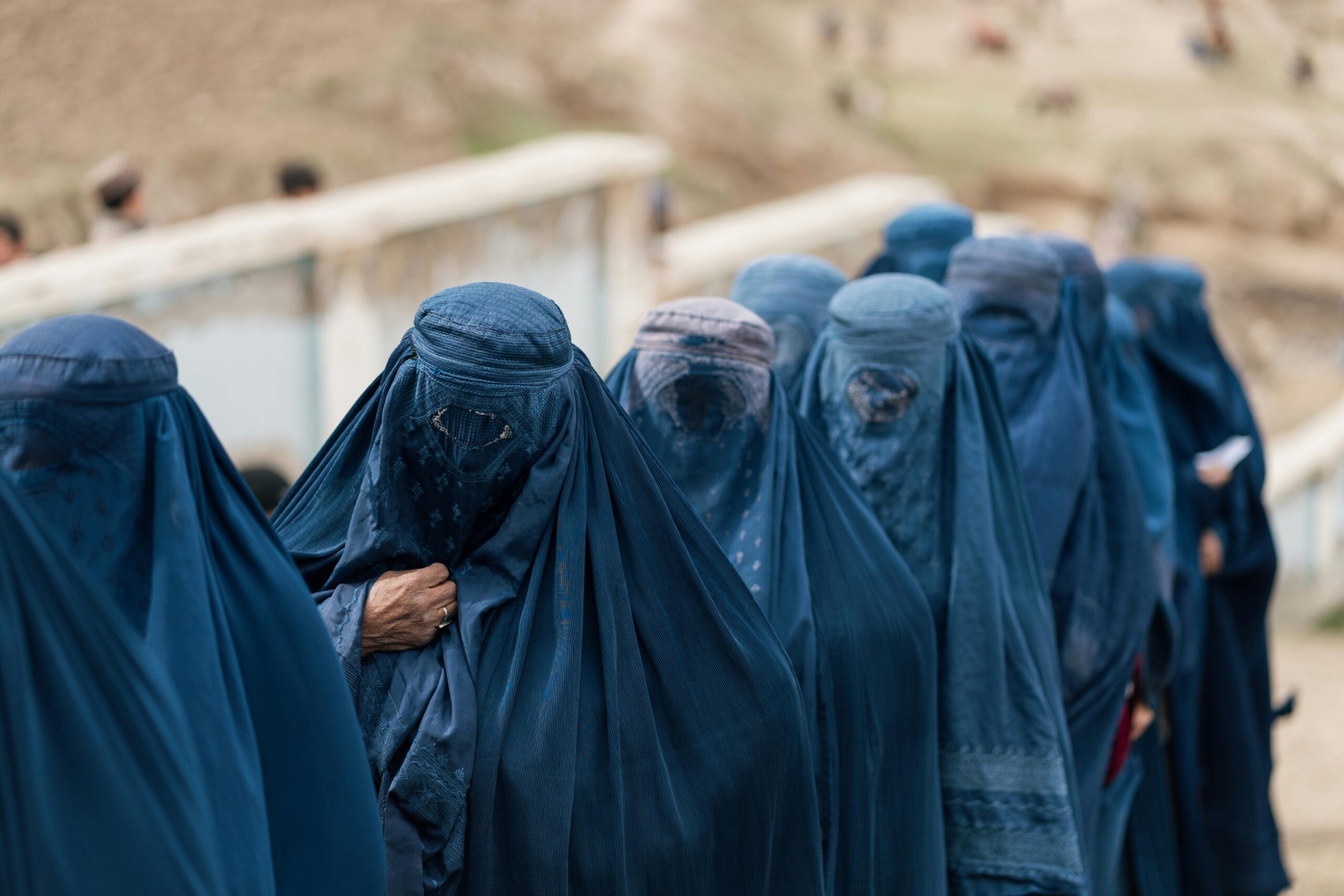
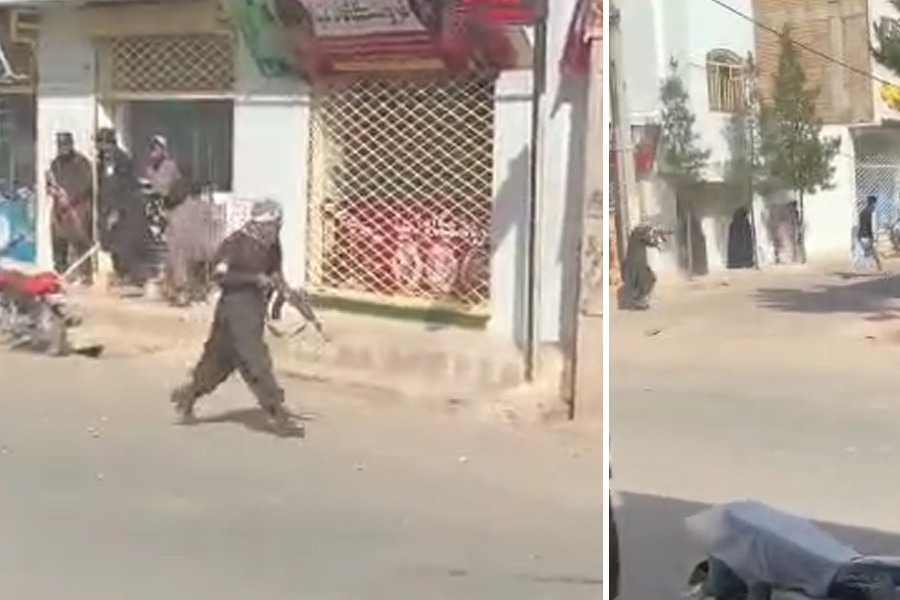
In Herat Province of Afghanistan, protests have occured over the ongoing arrests and beating of women until they fainted, for not wearing “proper hijab, Chadari or burqa”, by Taliban Morality Police.Taliban members shot some of the protesters in Herat.
Women wearing Burqa in Afghanistan.
In Afghanistan, some residents from the Jibrail area of Herat Province held a protest rally this morning to protest the detention of women by the Taliban. Sources reported that residents chanting “Education, Work, Freedom” were met with gunfire from Taliban forces.
Afghanistan Women’s News Agency (AWNA) shared that the protest rally was suppressed by Taliban forces, who opened fire on the demonstrators.
The protests have raised over the ongoing arrests and harsh treatment of women by the Taliban’s Morality Police. This treatment of Taliban began on Saturday in various parts of Herat to forcefully make women to wear Chadari or burqa and warning that those who do not wear will be imprisoned.
The Taliban’s supreme leader, Hibatullah Akhundzada, formally endorsed a sweeping 119-article criminal regulation framework. Crucially, this regulation decentralized enforcement, effectively legalizing vigilante violence by stating that any citizen who witnesses a perceived “sin” (including improper dress) has a duty to stop it on the spot.
Photo: 8AM Media
According to 8AM Media, Taliban members have been detaining and beating women until they fainted, for wearing manteau coats. Women in Herat are saying that after these events of Taliban members beating women on the streets, the presence of women in public has dropped sharply, since women are afraid of going out even for the groceries.
ترس از بازداشت؛ حضور کمرنگ زنان در بازارهای هرات
همزمان با افزایش نگرانیها از بازداشت زنان بهدلیل رعایتنکردن حجاب مورد نظر طالبان، حضور زنان در جادهی لیلامی هرات در روزهای اخیر بهگونهی چشمگیری کاهش یافته است.
— Afghanistan Women News Agency (@AWNANEWS) June 9, 2026
Taliban shot protesters
Today (June 9th) local sources told 8AM Media reporters that Taliban members fired shots to disperse and suppress the protesters. They also reported that they can continuously hear the sound of ambulances and Taliban ranger vehicles throughout the area. The exact number of casualties remains unclear. In a video on social media, residents carrying wounded individuals away as gunfire is ongoing.
Herat Protests Continue Amid Reports of Taliban Gunfire
Sources in Herat told Aamaj News that several protesters were wounded after Taliban forces resorted to ‘live fire’ to break up the demonstrations.
At least four sources told the Afghanistan Women’s News Agency today, Taliban forces checked women’s attire and hijabs at the entrances to these halls before allowing people to enter in several places of Herat.
“’Improper Hijab’ is neither consistent with Islamic values”
Zarifa Ghafari Bashir who is a former female mayor of Maidan Shahr of Afghanistan, told on her X account:
“The Taliban violently cracked down on a peaceful demonstration of residents in Herat’s Jibril area who were protesting the detention of women and girls since last few days in Herat. Videos circulating online show Taliban forces firing shots to disperse the crowd and physically assaulting several protesters. This latest incident reflects the regime’s continued use of violence to silence dissent and suppress those who stand in solidarity with Afghan women.”
Nasir Ahmad Faiq, Afghanistan’s representative at the United Nations, told on his X account that the detention of women by the Taliban’s morality police carried under the pretext of “improper Hijab” is neither consistent with Islamic principles and values nor with the culture and traditions of the Afghan people. “How do Taliban enforcers consider themselves entitled to forcibly detain and transport women in public when they are not even their mahram (stranger/legal guardian)?” he asked, and continued “This comes amid credible and well-documented reports of violence, sexual abuse and rape in Taliban prisons, as well as forced marriages involving Taliban members – cases that have never been transparently investigated nor those responsible held accountable.”
Amnesty: “Every woman has the right to choose what to wear”
Regional Office of Amnesty International South Asia called on the Taliban to immediately disclose the whereabouts of the detained women, ensure their safe return, and end measures that target women because of their clothing:
“Reports of multiple women being arrested by the Taliban in Herat province for not adhering to their restrictive dress code are deeply alarming. It is a stark reminder of the continued crackdown on the rights of women and girls in Afghanistan. Every woman has the right to choose what to wear, move freely, participate in public life, and live without fear or intimidation.”
“These arrests are part of Taliban’s gender persecution”
Afghan Women Activist’s Coordinating Body which is a global protection network and diasphora advocacy group, told on their X account that “According to eyewitnesses, photos and video footage received from Herat, Taliban forces arrested women in public spaces simply because their faces were not fully covered. These arrests are not isolated incidents. They are part of the Taliban’s systematic campaign of gender persecution, fear and total control over Afghan women’s bodies, movement and existence.”
Statement by the Afghan Women Activists Coordinating Body on the Arrest of Women in Herat
The Afghan Women Activists Coordinating Body strongly condemns the reported arrest of dozens of women and girls by the Taliban in Herat under the pretext of “bad hijab”.
— Afghan Women Activist´s Coordinating Body (AWACB) (@AWACB_DE) June 7, 2026
Tahera Nasiri, The founder and head of the “Women’s Movement Towards Freedom” stated that “The Taliban are attempting to erase women from public life, making them increasingly vulnerable whenever they leave their homes”. To Nasiri, through systematic restrictions and oppression, Taliban seek to exclude women entirely from society and deny them their fundamental rights and freedoms.
“Shame on those who lobby for this regime or portray the current situation as normal. The reality is that women in Afghanistan continue to face severe discrimination, exclusion, and repression every day” she said.
The Taliban are attempting to erase women from public life, making them increasingly vulnerable whenever they leave their homes. Through systematic restrictions and oppression, they seek to exclude women entirely from society and deny them their fundamental rights and freedoms.… pic.twitter.com/RlizxHBiKn
— Tahera Nasiri ~ طاهره ناصری (@nasiri_tahera) June 8, 2026
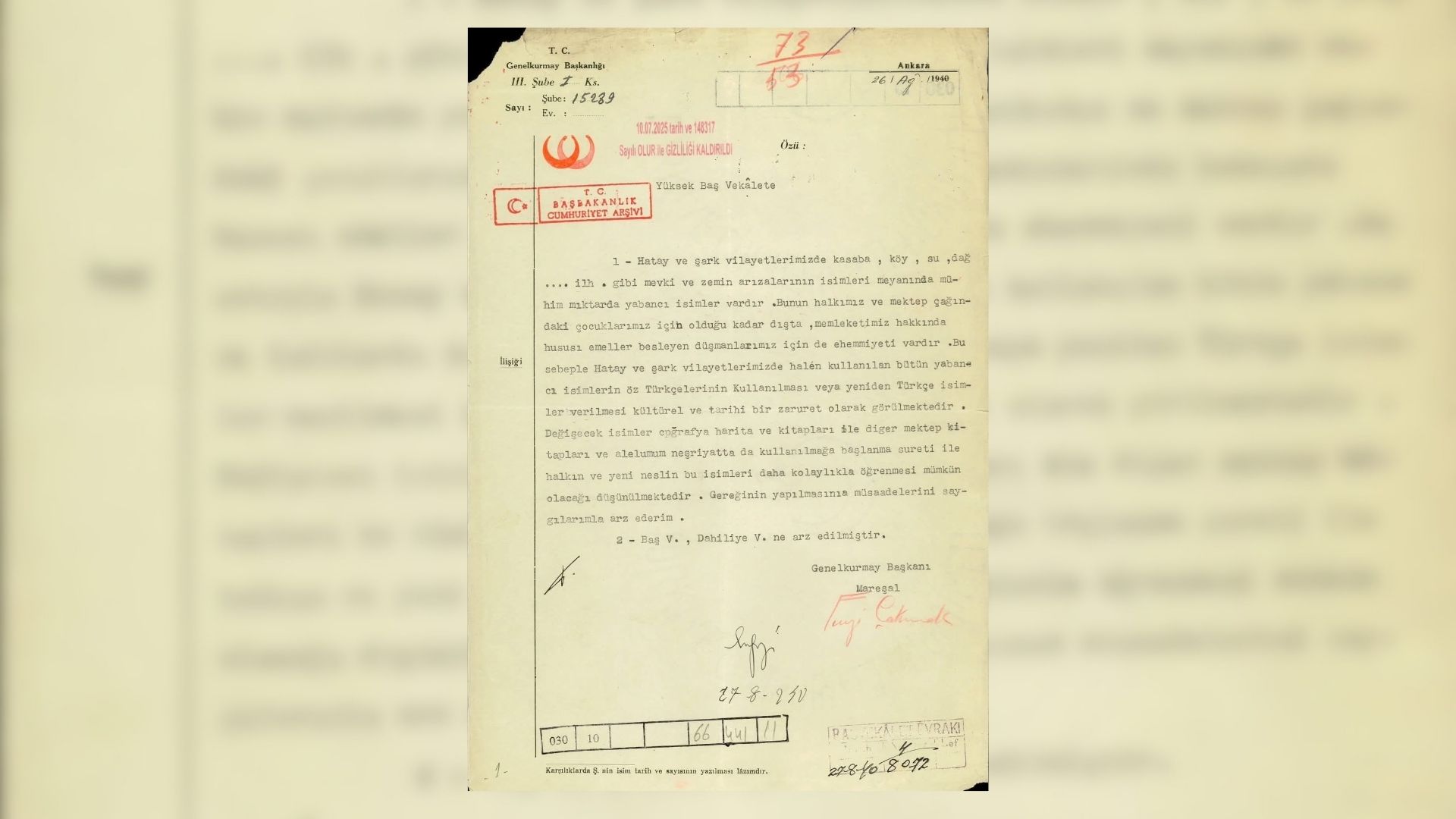
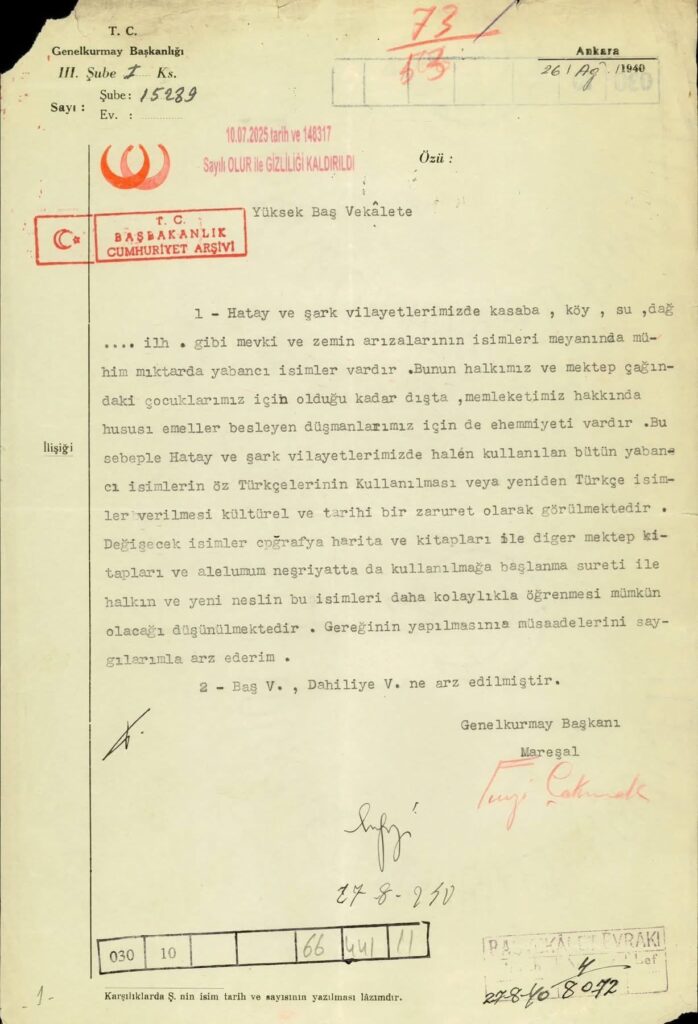
A Turkish General Staff document dated 1940 and declassified in 2025 proposes the Turkification of place names in Hatay and the eastern provinces, and the inclusion of these names in maps and educational materials.
A Turkish General Staff document from 1940, declassified in 2025, brings the Turkification of place names in Hatay and the eastern provinces to the agenda. The document suggests including the new names in maps and educational materials.
It is understood that the document, shared by researcher M. Saleh Ghaderi on his personal X account, has been newly declassified. Bearing the stamp “DECLASSIFIED with the APPROVAL dated 10.07.2025 and numbered 148317,” the document argues that changing the aforementioned names is a “cultural and historical necessity” and states the following:
“It is deemed a cultural and historical necessity to use the pure Turkish equivalents of all foreign names currently used in Hatay and our eastern provinces, or to assign them new Turkish names.”
The Education system is also part of the process
Another striking element in the document is that the name changes are not limited solely to administrative decisions. By proposing the use of the changed place names in geography books, maps, and other publications, the Turkish General Staff aims for the new generations to learn these names.
The text states that the new names should be included in educational materials so that “the public and the new generation can learn these names more easily.”
Enver Pasha’s directive is the starting point
The 1940 document also shows that the changing of place names was not a practice belonging to a single period alone.
In his recent interview published on Niha+, historian Namık Kemal Dinç states that the first comprehensive initiative regarding the changing of place names began with a directive sent to the provinces by Enver Pasha on January 5, 1916. The directive demanded the Turkification of Armenian, Greek, and Bulgarian place names.
Dinç notes that this approach continued during the Republican period, specifically targeting place names of Kurdish, Armenian, Syriac, Greek, Laz, and Georgian origin.
Institutional transformation
According to Dinç’s research, the practice acquired a systematic nature with the “Specialized Commission for Name Changing” (Ad Değiştirme İhtisas Kurulu) established in 1957. The commission, which included representatives from the Turkish General Staff, the Ministry of Interior, the Ministry of National Defense, the Ministry of National Education, the Turkish Language Association, and Ankara University, operated until 1978.
According to research, approximately 75,000 settlements were examined; official name change decisions were made for roughly 28,000 of them.
The “Politics of Memory” debate
Dinç evaluates the changing of place names not merely as an administrative regulation, but as the reconstruction of historical memory.
According to Dinç, the aim was to erase the traces of Anatolia’s multilingual and multicultural past and to create a new national memory.
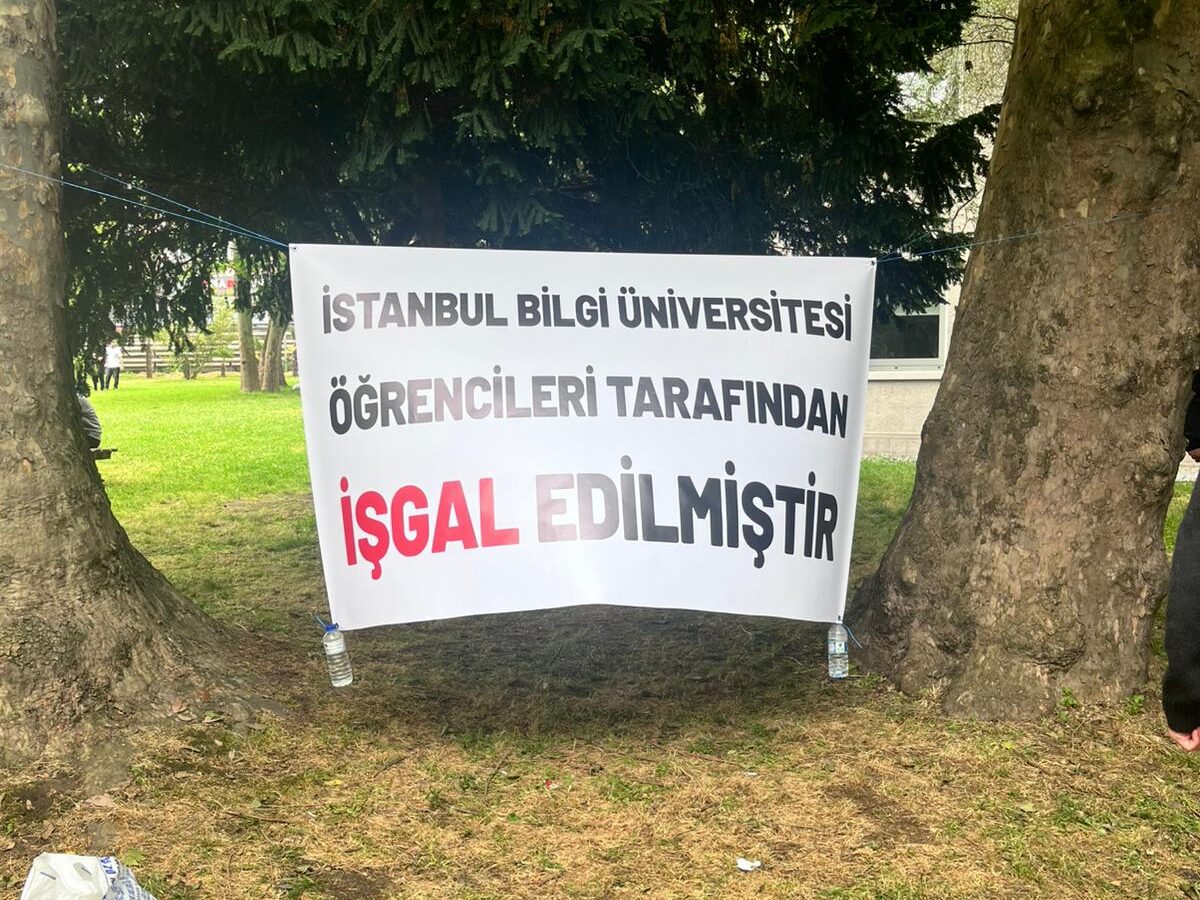
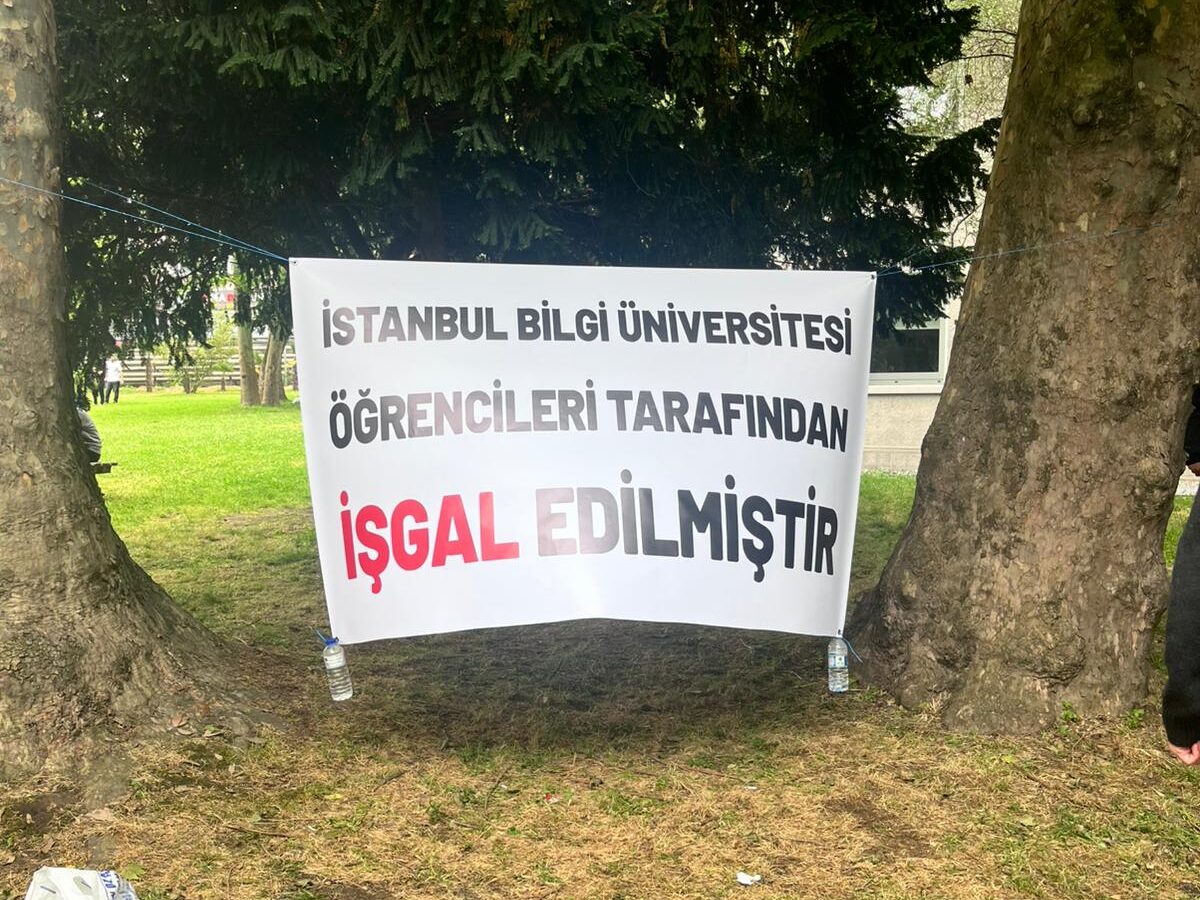
Following the closure of Istanbul Bilgi University by a presidential decree issued on May 22, students, faculty, and staff protested the decision for three days. On the night of May 24, it was announced that the closure order had been revoked by another presidential decree.
Istanbul Bilgi University, Santral Campus. Photo: Sosin Aslan
Following the closure of Istanbul Bilgi University, announced in a decision by President Recep Tayyip Erdoğan published in the Official Gazette on the night of May 22 without any prior notification to students, faculty or staff, protests broke out on the university campus. Three days after the closure, another presidential decree announced that the university had reopened. What happened during those three days?
Day one (May 22)
On the night of May 22, the decision to close Istanbul Bilgi University was published in the Resmi Gazete. Issued under Article 11 of the Additional Provisions of Law No. 2547 on Higher Education, this decision allows the Council of Higher Education (YÖK) to suspend the operations of higher education institutions established by foundations if YÖK determines deficiencies in their educational standards and these are not rectified despite warnings.
YÖK and the university administration issued a statement early this morning assuring that no one would be left in a difficult situation. Shortly after the statement, the Bilgi University Student Solidarity group reported that employees’ meal cards and private health insurance had been canceled.
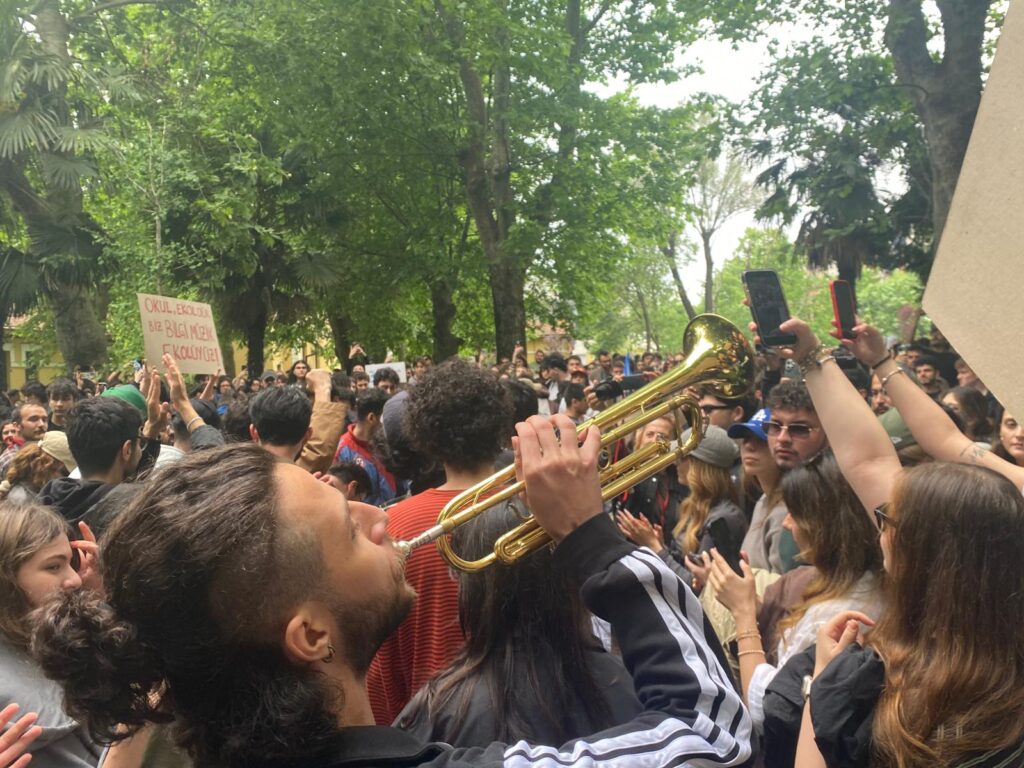
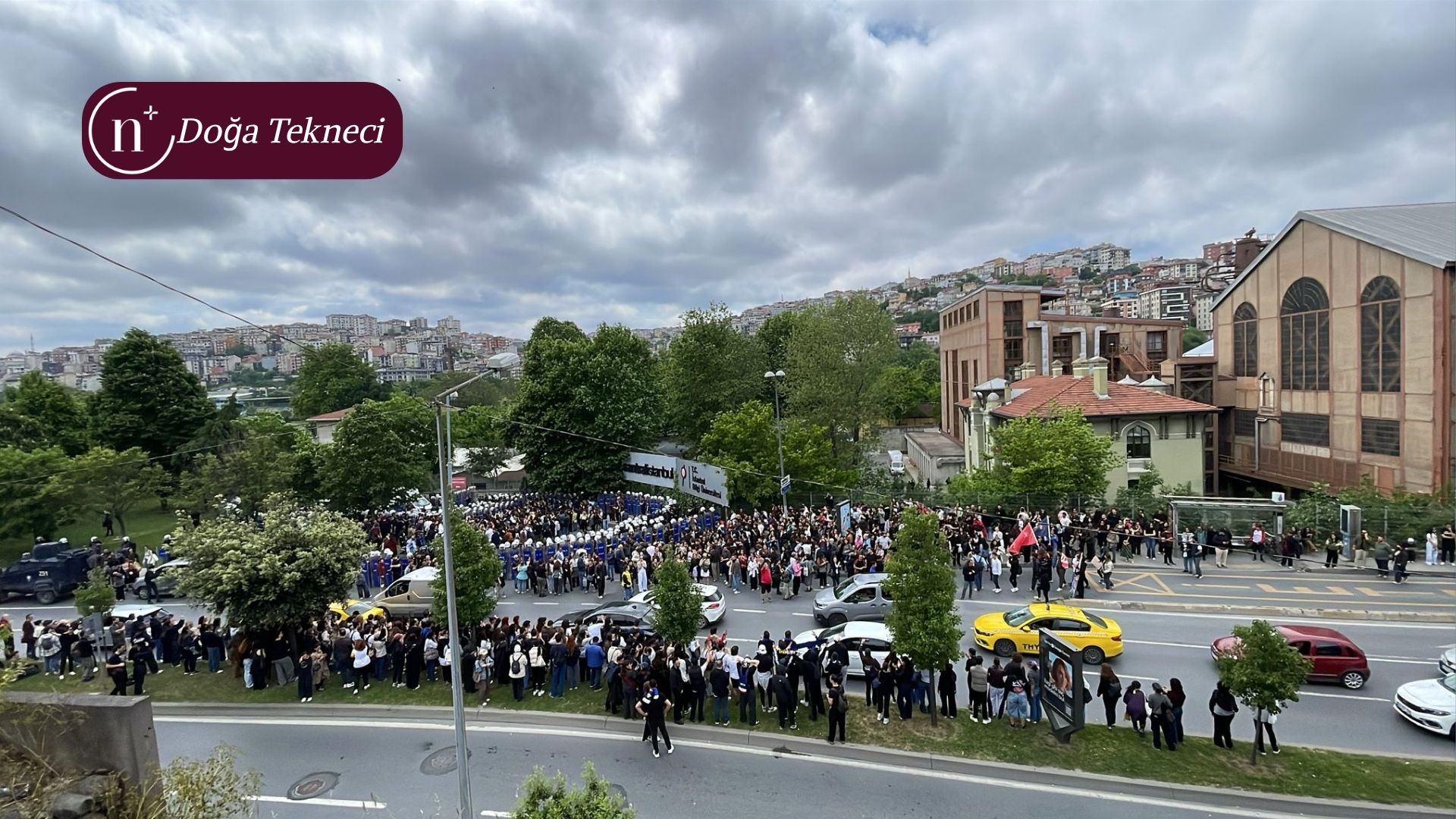
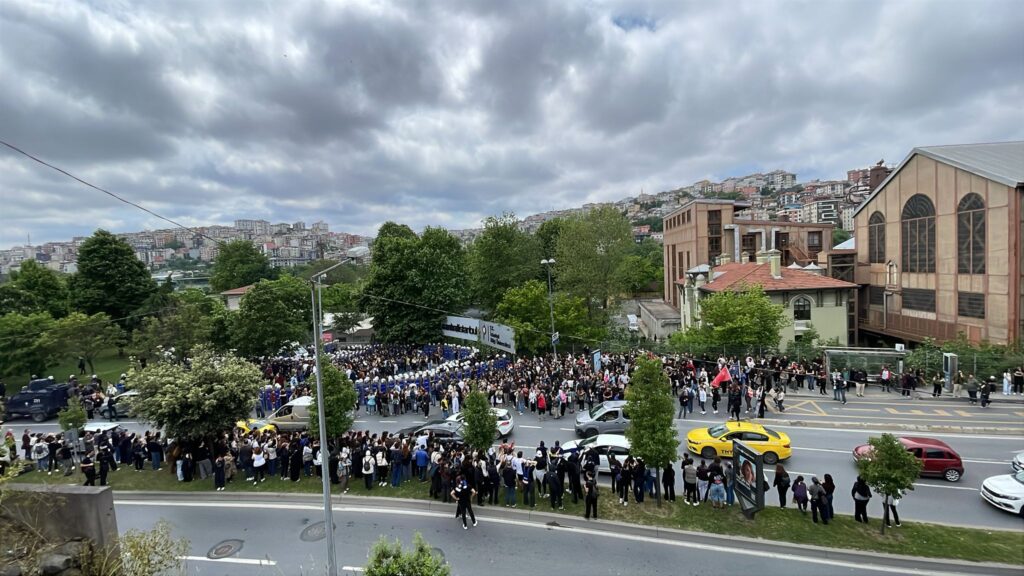
Students, faculty members, and staff gathered at the Santral Campus at 2:00 p.m. to protest the decision. Entrances were blocked by riot police with barricades, and the historic gate of the university was locked. Security units allowed students onto the campus but initially did not allow graduates to enter. Later, through negotiations led by graduates and union members, many people were able to enter the campus. Several unions, including the Private Sector Teachers’ Union (Özel Sektör Öğretmenleri Sendikası) and Eğitim-SEN, were present on campus.
A march was held to the Rector’s Office, where press statements were made in front of the building, followed by the launch of an indefinite sit-in on the campus lawns. After speeches and chants, the Music Department of Istanbul Bilgi University also arrived at the sit-in site with their instruments.
Photo: Doğa Tekneci / Niha+
Students organized a forum in the evening. After the forum, everyone on campus spent the night inside the university. As a result of negotiations with the Rector’s Office, decisions were made to provide housing for students staying on campus, set up an event tent, allow access to food and water, prevent students inside from being removed, and resume in-person education after the holiday.
Day two (May 23)
At 2:00 PM, everyone gathered on campus. This time, graduates and union members were not permitted entry. A unionized faculty member had their foot trapped in the door by private security. Following negotiations, entry was finally permitted.
Students organized a press conference to demand that the university be nationalized and resume operations within three days. They chanted slogans such as “Knowledge belongs to us, and it will remain ours,” “Knowledge is here with its professors,” and “Long live student solidarity.” A march was held to the Rector’s Office building, where a sit-in and a forum were held. During the forum, some academics and Rector Ege Yazgan pledged that the rights of everyone at Istanbul Bilgi University would be protected.
Faculty and students from the Music Department at Istanbul Bilgi University gave a concert. The students spent the night at the university again.
As night fell, the number of riot police and detention vehicles in the university parking lot increased significantly. At midnight, Rector Ege Yazgan announced that the campus would be effectively closed. The decision was put into effect, with entry prohibited for students, faculty, and alumni, and it was stated that no food or water supplies would be allowed in from outside.
Day three (May 24)
Police and private security personnel did not allow students or staff to enter the campus from outside.
People outside threw food and snacks over the fences to the students inside.
Students inside the campus were forcibly removed through torture. Police used physical violence and pepper spray against the students. Many injured students reported instances of torture through journalists covering the news. It was noted that some students had blood on their faces, arms, and legs.
Following the police intervention against the students, around 5:00 p.m., students and staff held up a banner reading “Honk for Bilgi” and called out to passing cars on the street. After everyone was forcibly removed from the campus, the sit-in continued in front of the college.
According to information published in the Resmi Gazete late at night, the decision to close Bilgi University was withdrawn by a presidential decree.
YÖK President Erol Özvar stated in a post on his social media account this morning (May 25) regarding the matter: “The initial decision was a mandatory legal procedure that had to be carried out within the framework of current legislation. However, based on the reports submitted and the assessment of the current situation, our President, as always, has carefully considered the expectations of our students, their families, and university staff.”
As at least 1,500 employees and at least 20,000 students at Istanbul Bilgi University demand the reversal of the university’s closure decision, reports indicate that no one is being allowed onto campus and that students remaining inside have been forced to leave. H. Işık, a research assistant at the university, said, “It is unacceptable to tell so many people overnight, ‘Do whatever you want.’”
The protests are now in their third day. Photo: Istanbul Bilgi University students
Following the publication of a decision in the Official Gazette on the night of May 22 ordering the closure of Istanbul Bilgi University without any prior notification to students, academics, or staff, protests began on campus. In a statement made around midnight yesterday, Rector Ege Yazgan announced that no students, academics, or food supplies would be allowed to enter the campus.
As protests continue into their third day, students and academics report an increased presence of riot police and plainclothes officers around the university. Police officers and private security personnel are reportedly preventing students and staff from entering or leaving the campus.
Video: Istanbul Bilgi Universitystudents
Despite these restrictions, students outside the campus threw food and snacks over the fences to those remaining inside.
Video: Istanbul Bilgi University students
Students attempting to enter the university through the historic gate were met with a riot police blockade, while students inside the campus reported being forcibly removed from the university. Police were also alleged to have used pepper spray against students. Several students were reportedly detained.
H. Işık, a research assistant at Istanbul Bilgi University, spoke to Niha+ about the closure decision and the developments that followed on campus.
“We expect the decision to be reversed and a statement from the Council of Higher Education”
Işık, who works as a research assistant in the Department of Sociology at Istanbul Bilgi University, emphasized that their primary and most urgent demand is the immediate reversal of the closure decision. He stated that administrative and technical staff, as well as academic personnel, have been left in a state of uncertainty and described the situation as follows:
“As academics and members of the teachers’ union, our first demand is the reversal of the decision. We also urgently expect a statement from the Council of Higher Education (YÖK). What will happen to the staff and academic personnel? We also expect an explanation regarding the future of more than 1,500 cleaning workers, security personnel, and administrative employees.”
Işık stated that access to and from the campus had come under the control of police and private security forces following the closure decision, drawing attention to the heavy security presence around the university:
“There was an incredible number of plainclothes police officers on campus—far too many. It is the same now; they outnumber the students and academics inside.”
“Education at foundation universities should be public”
Addressing precarious working conditions at foundation universities and the commercialization of education, Işık argued that the sudden closure has caused serious hardship for both students and employees:
“For students, this amounts to a complete violation of their right to education. We already know that foundation universities are places that produce a great deal of insecurity. As academics working at foundation universities, we have long been experiencing the commercialization of education, which affects both knowledge production and academic freedom. As unions, we demand the publicization of education and of foundation universities as well.”
“It is unacceptable to tell people overnight, ‘Do whatever you want’”
Criticizing the decision for being implemented without any prior notice, Işık said that thousands of people had been left in a vulnerable position overnight:
“On the other hand, there has been no information whatsoever about what approximately 400 to 500 academic staff members are supposed to do. These are not the first attacks we have faced, but shutting down the university in this manner and effectively telling 1,500 employees and 20,000 students overnight, ‘Do whatever you want,’ is unacceptable.”
Following the police intervention against students, students and staff gathered around 5:00 p.m. and appealed to passing drivers with a banner reading, “Honk for Bilgi.”
Video: Doğa Tekneci / Niha+
The sit-in protest organized by students and staff in front of the university remains ongoing.
What happened?
According to information shared by Bilgi University Student Solidarity on social media, after the closure decision was published in the Official Gazette on May 22, both the Council of Higher Education (YÖK) and the university administration issued statements early in the morning claiming that no one would suffer any hardship. However, shortly afterward, employees’ meal cards and private health insurance coverage were cancelled.
Students gathered at the university at 2:00 p.m. the same day to protest the decision. Although entrances were blocked with barricades and the historic gate was locked, students inside the campus, together with union members and alumni outside, enabled people to enter the university. Protesters marched to the rectorate building, delivered press statements, and launched an indefinite sit-in.
Following a series of forums, students decided to spend the following two nights on campus.
After negotiations with the rectorate, agreements were reportedly reached to provide accommodation for students staying on campus, allow the establishment of an activity tent, permit the entry and exit of food and water, prevent the removal of students from campus, and continue in-person education after the Eid holiday.
While the second day of protests unfolded in a similar manner, the number of riot police units and detention vehicles in the university parking lot increased significantly toward the evening. As of midnight, Rector Ege Yazgan announced that the campus would effectively be shut down. Students, academics, and alumni were banned from entering, while food and water supplies from outside were also prohibited, and these measures began to be enforced. In response, students continued their vigil.
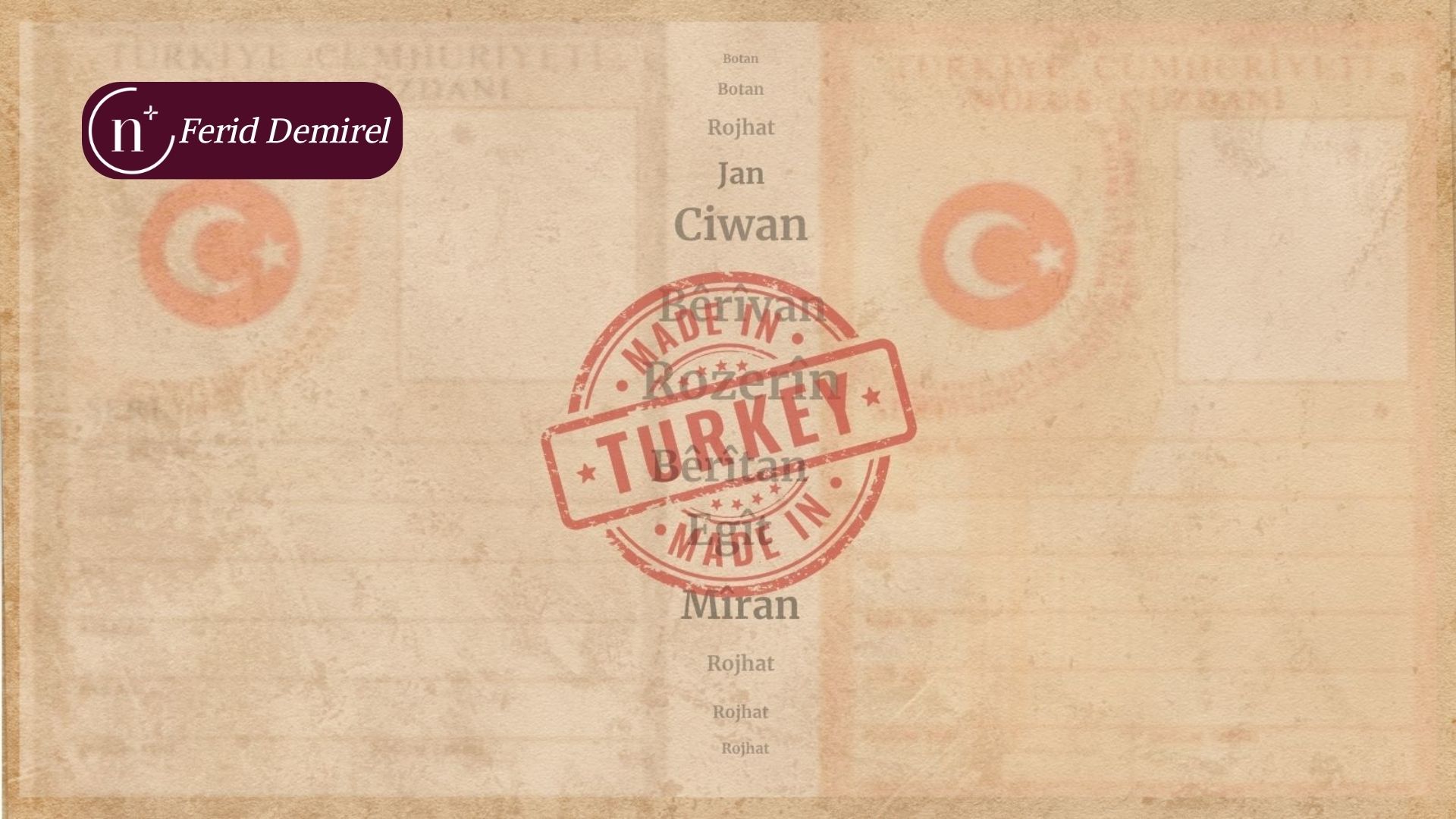
Data from the Turkish Statistical Institute (TURKSTAT) regarding the most common names in Turkey and the most popular names for newborns indicates that nationalist names are replacing traditional-religious ones. While Kurdish names are often not recorded due to legal and practical obstacles, it remains impossible to access any information regarding Kurdish names within TURKSTAT’s data system.
Image: Niha+
TURKSTAT has released data on the most frequently used and newborn names in Turkey for 2025. According to the institute’s data, the most common names for men are Mehmet, Mustafa, Ahmet, and Ali, while for women, they are Fatma, Ayşe, Emine, and Hatice. The records show that these four names in each category have maintained their rankings since 2018.
Among newborns, Alparslan ranks first among the most preferred male names. A total of 7,509 newborn boys were given this name by their families. Göktuğ, Metehan, Yusuf, and Kerem share the top spots. For newborn girls, the most preferred names are Alya, Defne, Gökçe, Zeynep, and Asel. TURKSTAT’s website provides data dating back to 2018, with rankings provided for the top 30 in each category.
“Visibility” in Baby Girl Names (2025)
Alya
8,739
Defne
7,716
Gökçe
7,582
Zeynep
6,228
Phonetic Barriers in the Registry System
While modern names like Alya and Defne have climbed to the top for baby girls, names embedded in cultural memory such as Rozerîn, Bêrîvan, and Zîlan continue to be relegated to the “unknown” or “converted” categories in official statistics. This situation is a statistical reflection of a century-old language policy.
Based on this data, it is possible to state that since 2018, nationalist names such as Alparslan, Göktuğ, and Metehan have begun to be preferred over traditional-religious names like Ahmet, Mehmet, and Mustafa for boys. While names like Mehmet and Mustafa still rank at the top of the overall “most used” list in Turkey, we see that these names have been used significantly less for newborns since 2018. This points to a clear societal shift.
The Transformation of Names in Data (2025)
Newborn Boy Name Preferences (By Number)
Alparslan
7,509
Göktuğ
6,029
Miran
3,751
Mustafa
2,407
Ahmet
2,280
Traditional Heritage: Mehmet still ranks 1st across Turkey with over 1.2M people, but fell to 11th among newborns.
New Trend: Miran rose to 6th place in 2025, surpassing long-established names like Ömer and Miraç.
Phonetic Barriers in the Registry System
While modern and nationalist names have climbed to the top, Kurdish names like Jan, Ciwan, and Arîn remain “invisible” in official statistics due to bureaucratic and phonetic barriers.
Source: TURKSTAT 2018-2025 Dataset. Chart by Niha+ Special News.
The “Outlier” hame on the list
There is, in fact, an “outlier” name among TURKSTAT’s top 30: Mîran. This name entered the Turkish naming landscape primarily through the television industry.
Mîran, which means “Mirs” or “Lords” in Kurdish, ranks 6th on the 2025 list. While Mîran was not among the top 30 names in 2018, it made an entry at 8th place in 2019. This rise is clearly linked to the influence of the TV series Hercai, which began airing in 2019 and featured a lead character named Miran Aslanbey. Following this series, the name Mîran experienced a rapid surge among male names in Turkey. Between 2020 and 2023, it fluctuated within the top 30, ranking 12th in 2024 and reaching 6th place in 2025.
This example serves as a case study for several reasons: the reliance on information in some circles that the name has Persian origins, the ease of acceptance for a name that has become a popular culture element, and the fact that it does not contain the distinctive letters of the Kurdish alphabet such as “X, Q, W.” This situation demonstrates that through popular culture, the name has been stripped of its “ethno-political” context and has become an aesthetic choice for parents from diverse backgrounds.
Kurdish names hitting the “Letter” barrier
However, beyond the name Mîran, there is a blind spot in the mirror held by official statistics. In that blind spot lies the reality of families whose chosen Kurdish names for their children hit a “letter barrier” and who must engage in a legal struggle to obtain identification documents.
Article 66 of the Constitution states, “Everyone bound to the Turkish State through the bond of citizenship is a Turk.” Yet, it is well known that people of many ethnic backgrounds other than Turkish live in Turkey, and these individuals give their children names in their own mother tongues. Due to legal and practical obstacles in Turkey, no official records are kept regarding ethnic and linguistic origins, and thus no concrete data is available. Nevertheless, daily practices show that Kurdish parents frequently give their newborns Kurdish names—a situation that has become much more visible in recent years.
Names like Bêrîvan, Zîlan, Baran, Sosin, Rojbîn, and Rojhat are heard more frequently in streets, cafes, and universities. Despite this, official statistics do not mention these names. Since TURKSTAT only provides the top 30 names, there is no information regarding names below that rank. Therefore, while conducting an objective assessment is naturally difficult, certain daily practices and obstacles bring to the fore several possibilities regarding why Kurdish names do not appear in the top 30.
Are these names absent simply because they are fewer in number, or is it because population registries—despite various amendments over time to Law No. 1353 on the Adoption and Application of Turkish Letters—still prevent such names from being recorded on IDs?
Lives with two names
While there haven’t been many reports in the press recently, news stories from a few years ago detailed the many difficulties faced by families giving their children Kurdish names.
During the research for this report, we learned the story of a father who went to the registry office years ago wanting to name his child “Rojhat.” The official at the registry office said of the name Rojhat, “This name is not allowed; it must be another name,” and forced the father to accept the official’s own name as the child’s name for the ID.
Consequently, there are people whose real names are Rozerîn or Rojbîn but are officially recorded as Ayşe or Zeynep. There are individuals who are Rozerîn, Botan, or Rojbîn at home but are Zeynep, Ayşe, or Ahmet in schools and government offices. In one case, a woman named Ayşe, whose real name was Rojbîn, took out a loan despite her poor financial situation to change her name through the courts. However, she passed away while the court case was still ongoing and was buried under the name Ayşe.
“Jan” or “Can”?
An incident in 2022 provides clues regarding the “gray areas” in TURKSTAT’s data. (The names of the family have been withheld for security reasons). A. and C. wanted to name their newborn Jan Arvîn. They went to the registry office in their province. The official asked, “What language is Jan?” The family replied that it is both Kurdish and Circassian. The official responded, “No, it’s not possible; we cannot accept Kurdish,” but stated they could accept it if it were a Turkish name.
When the family insisted on Jan, noting that a famous person had recently used a Kurdish name, the official replied, “They are artists; they have long arms; they can do it.” He then gave another example: “For instance, someone else came last week. Their name was Ciwan. We solved the problem by writing it as Civan. Come, let’s change your J to a C and make it Can. Look, this child will face many problems in the future in school and among friends because of this name.” When the family remained persistent, they were sent to a higher official and were eventually allowed to use the name Jan only after signing a document stating they took all responsibility.
Kurdish Names: A Century-Old Struggle
The process of “naming by signing a waiver” is a lingering consequence of Turkey’s language and identity policies over the last 100 years. Here is the chronology filled with bans, circulars, and “alphabet” barriers:
1925Law on Maintenance of Order and Reform Plan for the East
With the proclamation of the Republic, the use of languages other than Turkish was prohibited. Under Article 41 of the Reform Plan for the East, penalties were imposed on those using non-Turkish languages in public spaces and government offices.
1928Law No. 1353 on the Adoption and Application of Turkish Letters
The law transitioning to the Latin alphabet became the primary justification for blocking the registration of Kurdish names (specifically due to characters like q, w, x).
1980 – 1991Law No. 2932: Absolute Prohibition
Following the September 12 coup, the use of Kurdish was completely banned. Although repealed in 1991, the reality of “dual naming” (official vs. traditional) persisted in bureaucracy.
2002 – 2003EU Harmonization and “Conditional” Naming Rights
Through a Ministry of Interior circular, the ban on names was lifted under the condition of “compliance with the Turkish alphabet.”
During this period, civil registry offices continued to reject Kurdish names on grounds such as “general morality.”
2006Civil Registry Services Law No. 5490
The new law guaranteed the right to name children; however, bureaucratic obstacles and the “character ban” remained in effect.
Present DayThe Alphabet Wall and Legal Battles
Names like “Awin, Bawer, Xunaw” are still subject to bureaucratic hurdles and lawsuits due to letters not present in the official Turkish alphabet.
Constitutional Obstacles
Article 3: “The language of the State of Turkey is Turkish.” (Barrier to official recognition)
Article 42: “No language other than Turkish shall be taught as a mother tongue.” (Educational barrier)
*Infographics were created by the AI tool Gemini. Some names have been changed due to individual requests and security reasons.
While the ceasefire reached between Iran and its rivals in 2026 may have reduced tensions in the region, the situation is different for the Kurdish opposition. This “silent war,” continuing with drones and operations along the border, proves that the ceasefire is not peace but merely a change of strategy.
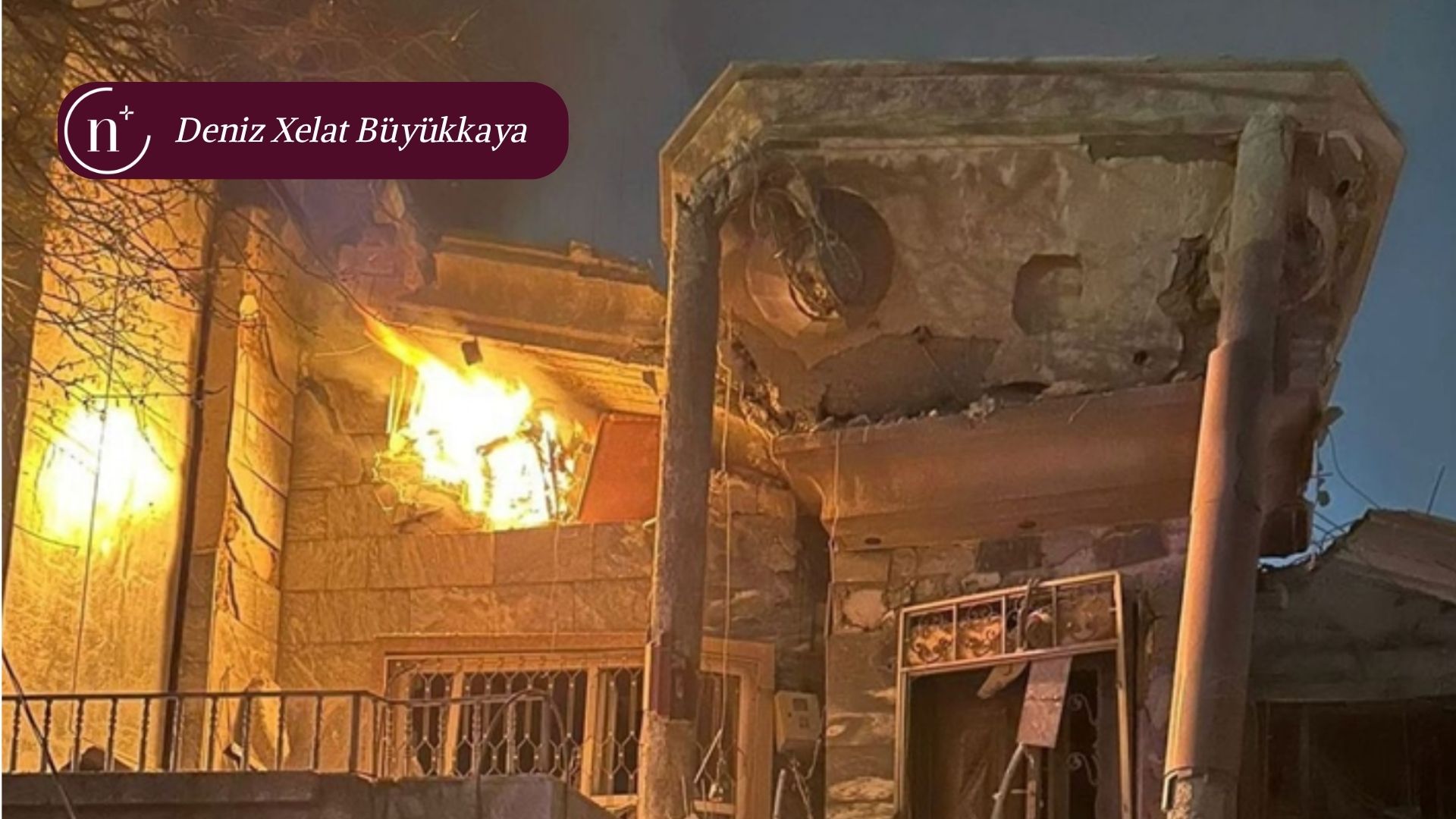
A drone strike in Sulamaniyah (Rudaw)
The ceasefire announced on April 8, 2026, between Iran and its external opponents was seen by many as a sign of lower tension in the region. However, for Iran’s Kurdish opposition movements, it did not mean sign of peace. In the area between Rojhelat, Eastern Kurdistan, and the Kurdistan Region of Iraq, the conflict did not end; it just changed its form.
While international attention focused on Iran, the United States, and Israel, another conflict continued along the Iran-Iraq border. After the ceasefire, Iranian military operations appeared to focus more directly on Kurdish opposition groups. These groups were targeted with drones, missiles, arrests, and security pressure.
This is why the situation can be called a “silent war.” It is not an official war, and there is no formal declaration. But attacks, pressure, fear, and deaths continue. It is “silent” because it receives much less international attention than other conflicts in the region.
From ceasefire to targeted attacks
After the ceasefire, Iran’s military focus seemed to shift toward Kurdish opposition groups based in Iraqi Kurdistan, including the Kurdistan Democratic Party of Iran, PDKI, Komala, and PAK.
Reports by human rights and regional monitoring organisations indicate that violence did not end after the ceasefire but shifted toward Iranian Kurdish opposition groups. CPT Iraqi Kurdistan recorded 48 attacks between 8 and 24 April 2026, of which 37 targeted Iranian Kurdish opposition camps and bases, compared with only four attacks on U.S. diplomatic or military facilities. The same report stated that 75 percent of post-ceasefire attacks were carried out directly by the IRGC, while 25 percent were attributed to affiliated groups. Human rights organisations such as the Kurdistan Human Rights Network and Hengaw also documented deadly IRGC attacks on PDKI and Komala-linked sites, including the killing of Kurdish opposition members and civilians.
The Kurdistan Regional Government’s Media and Information Office announced that between February 28 and April 20, the Kurdistan Region was targeted in a total of 809 attacks, despite not being a party to the war.
This pattern points to a clear shift in Iran’s security focus. Tehran sees these Kurdish groups as both an internal and cross-border threat because they are linked to Kurdish areas inside Iran and are also based in the Kurdistan Region of Iraq. For Kurdish groups, the ceasefire did not bring real security. It only changed the direction of Iran’s pressure.
This conflict mainly takes place along the mountainous Iran-Iraq border, especially around Hewler and Sulaymaniyah, where Iranian Kurdish opposition groups have had bases for many years.
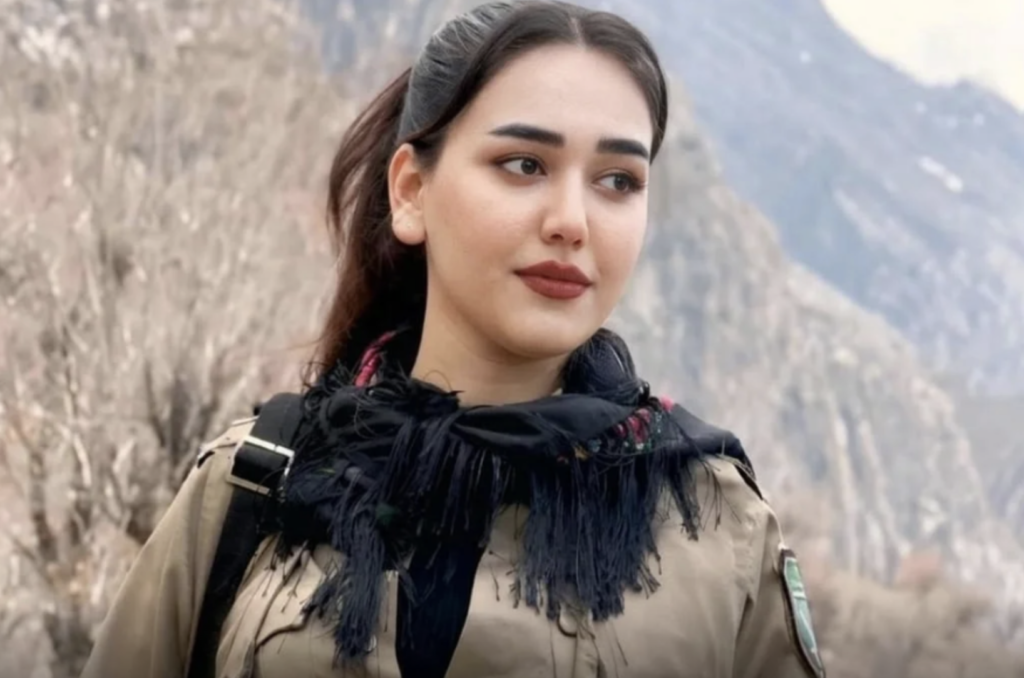
In mid-April 2026, a drone attack hit the Surdash area near Sulaymaniyah. The attack seriously injured Ghazal Mawlan Chaparabad, a young Kurdish female peshmerga affiliated with Komala Toilers of Kurdistan, who later died from her injuries. According to a HANA Human Rights Organization legal team report, she first received only initial emergency care at Shorsh Hospital and then needed urgent higher-level treatment, including advanced imaging, specialist trauma care, and intensive care support. HANA also reported serious allegations that her admission or transfer to other hospitals was delayed or refused, and that her condition worsened during these delays. This case shows that Kurdish opposition camps and nearby remote areas may be especially vulnerable after drone attacks, not only because of the strikes themselves, but also because wounded people may face delays in reaching advanced medical care.
Ghazal Mawlan Chaparabad (hana.org)
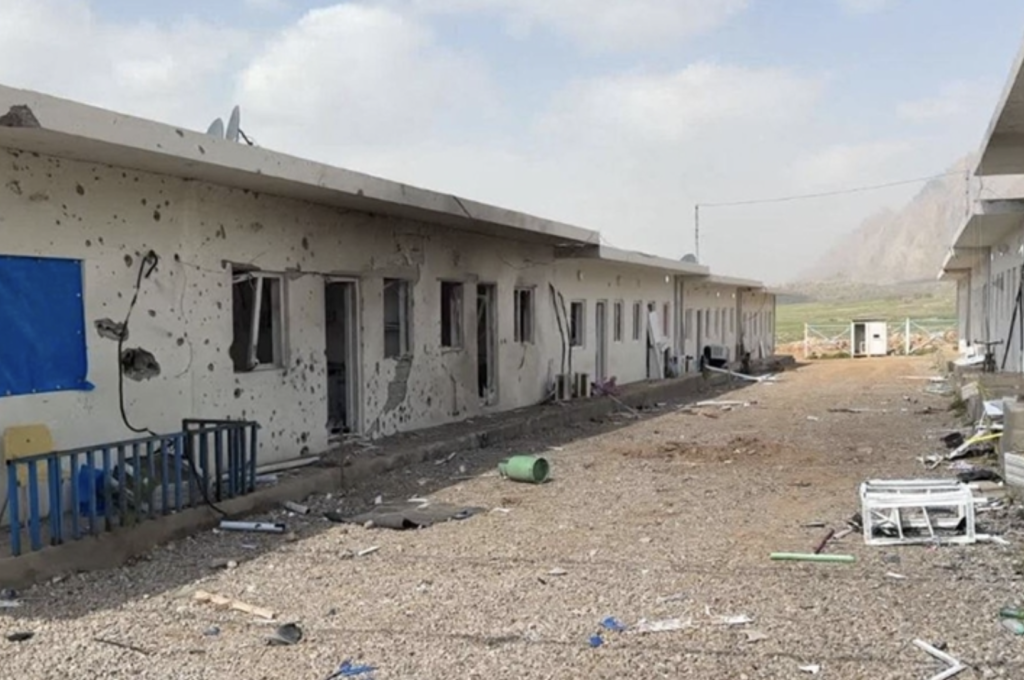
A few days later, another attack hit the Jezhnikan camp near Hewler. Rudaw reported that a drone attack killed Shahin Azarbarzin, the son of a Peshmerga fighter, and seriously wounded his father. Kurdistan24 also reported that the camp housed civilians and that women and children were among the injured in related attacks. This shows that these camps are not only military or political spaces; families and civilians also live there. Together with the case of Ghazal Mawlan, this raises concern about whether wounded people in remote camp areas can reach advanced emergency care quickly after drone or missile attacks.
The danger was not limited to fighters or military sites. Civilian areas were also at risk. As a result, many Kurdish camps and nearby communities now live with constant insecurity.
Rojhelat under internal pressure
At the same time, pressure inside Iran’s Kurdish regions also increased. Hengaw reported that Iranian authorities increased the presence of plainclothes forces and created new checkpoints at city entrances, on inter-city roads, and on rural roads around Sine. It also reported that security-linked forces were deployed in several Kurdish border areas to create fear, prevent possible protests, and control public space. The report mentioned Hashd al-Shaabi forces, tanks, and armored vehicles in some Kurdish border areas. A Washington Kurdish Institute digest also described expanded military and proxy-force deployment in Kurdish areas. Together, these reports suggest that Kurdish areas were under stronger public security control after the ceasefire.
For Kurdish people, this meant more surveillance, less freedom of movement, and constant pressure. Human rights reports from the same period mentioned arrests without warrants, detention without family contact, and the execution of a Kurdish political prisoner. For example, KHRN reported that Yousef Karimi, a Kurdish man from Bukan, was arrested without a warrant and held without contact with his family. Separately, Hengaw reported that Kurdish political prisoner Naser Bakrzadeh was executed in May 2026 after his death sentence had been upheld by Iran’s Supreme Court.
These actions show that Iran was using two strategies at the same time: outside Iran, it tried to weaken Kurdish opposition groups in Iraqi Kurdistan; inside Iran, it tried to stop political mobilisation in Rojhelat.
Why Is Iran doing this?
Image: Rudaw
Iran’s strategy seems to be based on fear of instability. During the wider crisis in early 2026, Chatham House reported that Kurdish opposition groups faced pressure and uncertainty because of mixed U.S. messages about a possible Kurdish uprising. It also noted that Kurdish groups based in Iraq could, in theory, create space for wider opposition activity inside Iran, but that this would be very risky because Iranian security forces still had strong capacity for violence.
The attacks after the ceasefire can therefore be understood as a warning. Iran wanted to stop Kurdish groups from reorganising, weaken their cross-border networks, and prevent Kurdish mobilisation inside Rojhelat and across the border in Iraqi Kurdistan. In this sense, the post-ceasefire attacks were not random. They were part of a security strategy aimed at controlling Kurdish political activity both inside and outside Iran.
The Conflict has changed, not ended
The April 2026 ceasefire may have reduced the risk of a larger regional war, but it did not bring stability everywhere. For Kurdish opposition movements and the wider area between Rojhelat and Iraqi Kurdistan, the conflict continued without being officially recognised.
It was not a traditional war with large battles. It was a conflict fought through drones, surveillance, arrests, and targeted attacks. For this reason, the situation in Rojhelat was not real peace, but a transformed conflict.
The Kurdish question in Iran is no longer only an internal issue. It has become part of a wider regional security struggle. The conflict has not ended; it has only become quieter, less visible, and easier for the world to overlook.
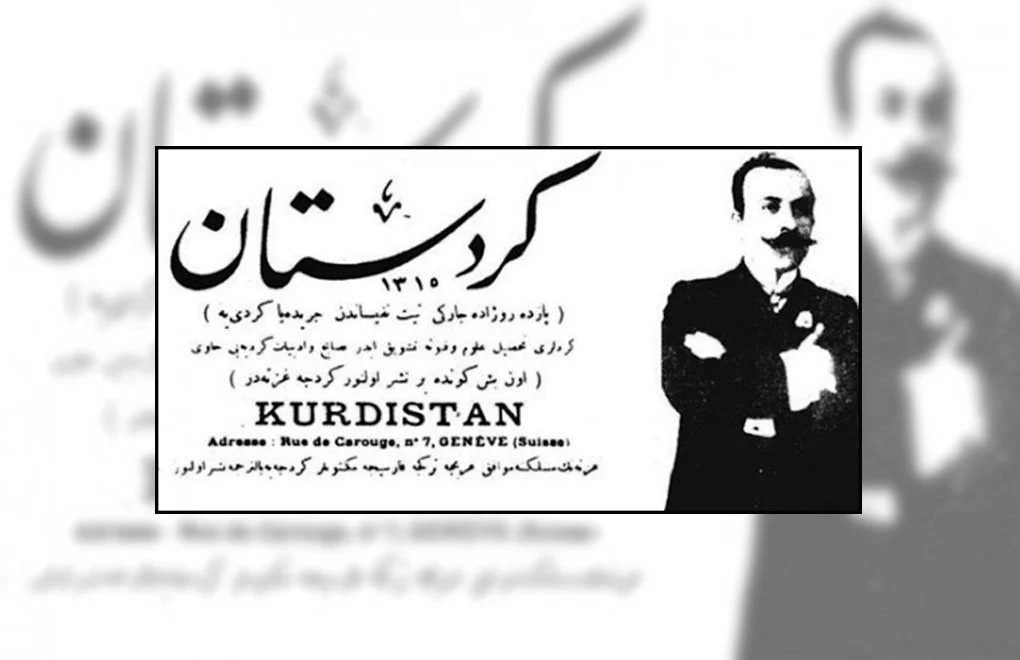
128 years ago, Mîqdat Mîdhad Bedirxan lit the torch of Kurdish journalism by publishing the Kurdistan newspaper in Cairo, Egypt. Despite all hardships, torture, murders, and exiles, this tradition continues.
From its inception, Kurdish journalism has been more than just an information tool; it has served as a mirror of national identity, an arena for linguistic struggle, and a political platform for a stateless nation. In all four parts of Kurdistan, every publication has simultaneously represented the press, resistance, and cultural memory. The character of this journalism distinguishes it from many other forms of media and makes it a vital source for political and cultural research.
From Kurdistan to Rojî Kurd, Jiyan, Hawar, Ronahî, Rojname, Welat, Azadiya Welat, and many others, Kurdish journalism continues its journey despite hardships, torture, assassinations, and exiles.
History of Kurdish Journalism (1898–2026)
From its inception, Kurdish journalism has been more than just a tool for information; it has served as a mirror of national identity, a sphere of linguistic struggle, and a political platform for a stateless nation. Every publication in all four parts of Kurdistan has simultaneously represented the press, resistance, and cultural memory.
I. EARLY PERIOD: CAIRO and EXILE (1898–1908)
Kurdistan — The First Kurdish Newspaper
On April 22, 1898, Mîqdad Midhat Bedirxan published the first Kurdish newspaper, Kurdistan, in Cairo.
[Visual: First Issue of Kurdistan Newspaper, 1898]
“Each time, I will talk to the Kurds a little about the benefits of reading and science. Through reading and science, one understands everything. Our Kurds are not as educated as other nations. Therefore, they are unaware of the world’s situation.”
Printing locations: Cairo (1–5), Geneva (6–19), Cairo again (20–23), London (24), Southern England (25–29), Geneva (30–31).
II. THE ISTANBUL PERIOD (1908–1918)
Rojî Kurd and Hetawî Kurd (1913–1914)
On June 6, 1913, the Hêvî association published the magazine Rojî Kurd. Following its closure, it continued under the name Hetawî Kurd.
[Visual: Cover of Rojî Kurd Magazine]
Jîn and Kurdistan (1916–1918)
In 1916, Süreyya Bedirxan published the Turkish-language weekly Jîn (Life) in Istanbul, advocating for Kurdish independence. This publication is entirely distinct from Pîremêrd’s Jîn newspaper in Sulaymaniyah.
III. THE SOUTH AND THE SOVIETS (1919–1932)
Pêşkewtin and Sulaymaniyah
The first newspaper published within the Kurdistan region itself, Pêşkewtin (1920–1922), was released in Sulaymaniyah. Later, Jiyan (1926), edited by Pîremêrd, became the symbol of this era.
Riya Teze (1930–) — Voice of Soviet Kurdistan
It began publication in Yerevan on March 25, 1930, serving as the Kurdish organ of the Communist Party of Armenia.
[Visual: Masthead of Riya Teze Newspaper]
IV. THE HAWAR ERA (1932–1943)
Celadet Alî Bedirxan and Hawar Magazine
In May 15, 1932, Hawar was published in Damascus. Celadet implemented the Latin-based Kurdish alphabet through this magazine, which remains the standard today.
[Visual: Hawar Alphabet and Magazine Issue]
Principal Writers: Celadet and Kamûran Bedirxan, Rewşen Bedirxan, Cegerxwîn, Osman Sebrî.
V. THE REPUBLIC OF MAHABAD (1945–1946)
Kurdistan Newspaper
Established in Mahabad on January 11, 1946. Although the Republic of Mahabad lasted only 11 months, it held a special place in Kurdish media history as a period of institutional statehood.
VI. & VII. THE FREE PRESS TRADITION (1990–2016)
Özgür Gündem and Apê Musa
On May 30, 1992, Özgür Gündem began publication. The Kurdish intellectual Musa Anter (Apê Musa) was assassinated in Diyarbakır on September 20, 1992.
[Visual: Musa Anter – Apê Musa]
Bombing of Buildings (1994)
On the night of December 2-3, 1994, the headquarters of the Özgür Ülke newspaper were bombed. Ersin Yıldız lost his life.
Newspaper Name
Year
Status
Özgür Gündem
1992
Closed (1994)
Özgür Ülke
1994
Bombed
Azadiya Welat
2006
Closed (2016)
VIII. THE ROLE OF WOMEN
Gurbetelli Ersöz (1965–1997)
The first female editor-in-chief of a daily newspaper in Turkey (Özgür Gündem). October 8th is celebrated as Kurdish Women Journalists Day.
Modern Institutions: JINNEWS and JIN TV (The first all-female satellite channel, 2018).
IX. THE SATELLITE REVOLUTION: MED TV
MED TV (1995–1999)
The first Kurdish satellite channel. It began broadcasting in March 1995, representing a media revolution for Kurds and a turning point for language standardization.
X. CONCLUSION AND HISTORICAL CHRONOLOGY
Historical Milestones
Date
Event
1898
Kurdistan, Cairo (First Newspaper)
1932
Hawar, Damascus (Alphabet Revolution)
1946
Kurdistan, Mahabad
1995
MED TV, Europe (First Satellite TV)
2018
JIN TV
Kurdish journalism is a 128-year tradition of resistance, stretching from exile to the digital age.
Sources: Wikipedia, Encyclopaedia Iranica, KurdîLit, CPJ, RSF, Cambridge History of the Kurds.
I. Kurdistan, the first Kurdish hewspaper
On April 22, 1898, Mîqdad Midhat Bedirxan (1858–1915), son of Bedirxan Pasha of Botan, published the first Kurdish newspaper under the name Kurdistan in Cairo. Under the shadow of Ottoman censorship, it was printed abroad in Geneva, London, and Folkestone, with a total of 31 issues released. The final issue was published in 1902.
In the first issue, Mîqdad Midhat Bedirxan stated his purpose with these words:
“Each time, I will talk to the Kurds a little about the benefits of reading and science. Through reading and science, one understands everything. Our Kurds are not as educated as other nations. Therefore, they are unaware of the world’s situation.”
The printing locations were as follows: Cairo (1–5), Geneva (6–19), Cairo again (20–23), London (24), Southern England (25–29), and Geneva (30–31). His brother, Abdurrahman Bey, took over the responsibility of publication in the later periods.
Kurdistan was not merely a source of information but an ideological platform. By establishing Kurdish as a medium for intellectual expression and resistance, it laid the foundation for the century to come.
II. The Istanbul period (1908–1918)
Rojî Kurd and Hetawî Kurd (1913–1914)
On July 27, 1912, the Kurdish Student Association Hêvî (Hope) was founded in Istanbul. On June 6, 1913, the association published the magazine Rojî Kurd (Kurdish Day). It was shut down by the government after four issues. During the same period, Yekbûn (1913, 3 issues) was published. On October 24, 1913, the magazine changed its name to Hetawî Kurd. It was essentially the same publication, continuing under a different name. The etymology of the names is interesting: Roj in Kurmanji and Hetaw in Sorani both mean “Sun.”
Jîn and Kurdistan (1916–1918)
In 1916, Süreyya Bedirxan published the Turkish-language weekly Jîn (Life) in Istanbul, which demanded Kurdish independence. Between 1917 and 1918, he published the weekly Kurdistan. It is important to clarify: this Istanbul-based Jîn was in Turkish and was entirely different from the Jîn newspaper published by Pîremêrd in Sulaymaniyah.
III. The South and the Soviets (1919–1932)
Pêşkewtin and Sulaymaniyah
The first Kurdish newspaper published within the geography of Kurdistan itself, Pêşkewtin (Progress), was released in Sulaymaniyah between 1920 and 1922 under British administration. 118 issues were printed. This was followed by a series of publications:
Bangê Kurdistan (1922, 14 issues)
Rojî Kurdistan (1922–1923, 15 issues)
Jiyanewe (1924–1926, 56 issues)
Jiyan (1926–1938, 556+ issues, under the editorship of Pîremêrd)
Zarî Kurmancî (1926–1932, Rawanduz, 30 issues)
Pîremêrd and Jiyan-Jîn: Born in Sulaymaniyah, Tewfîq Mehmûd Hemze, known by his pen name Pîremêrd (1867 – June 19, 1950), became the editor-in-chief of Jiyan in 1926 and its manager in 1932. In 1938, he changed the name of Jiyan to Jîn and continued publishing it until his death on June 19, 1950. He also founded the first private Kurdish school, Qutabxaney Zanistî.
Riya Teze (1930–) – The Voice of Soviet Kurdistan
On March 25, 1930, it began publication in Yerevan using the Marogulov and Shamilov alphabet. It was the Kurdish organ of the Communist Party of Armenia. Initially managed by three Armenian Kurdologists (Kevork Paris, Hrachya Kochar, and Harutyun Mkrtchyan), the Kurdish Kurmanji scholar Cerdoy Gênco became the editor-in-chief in 1934. It was suspended during the Stalin era but resumed in 1955 with a Cyrillic alphabet. Mîroyê Esed (1919–2008) managed the newspaper until 1989.
IV. The Hawar era (1932–1943)
Celadet Alî Bedirxan and Hawar Magazine
After being exiled from Turkey, Celadet Alî Bedirxan published Hawar in Damascus on May 15, 1932. A total of 57 issues were released between 1932-1935 and 1941-1943.
Hawar holds special significance as the first media outlet published in Kurmanji Kurdish. For this reason, May 15 has been celebrated as Kurdish Language Day since 2006.
Celadet created a Latin-based alphabet for Northern Kurmanji, known as the “Hawar Alphabet” or “Bedirxan Alphabet,” which remains the standard today. Its purpose was: “Hawar is the voice of science. Science is for a person to know themselves; knowing oneself opens the path to freedom and happiness.”
Key writers: Celadet and Kamûran Bedirxan, Rewşen Bedirxan, Qedrî Can, Cegerxwîn, Osman Sebrî, Nûredîn Zaza, Ekrem Cemîl Paşa, Ahmed Namî.
Roja Nû and Stêr were published in Beirut by Kamûran Bedirxan. Nûdem (1992–2001, Stockholm, 40 issues, edited by Firat Cewerî) was referred to as the “Second Hawar.”
Rewşen Bedirxan
In a field largely dominated by men, Rewşen Bedirxan took her place as an active writer among the contributors of Hawar. She stands as a pioneering example.
V. The Kurdish Republic of Mahabad (1945–1946)
On January 11, 1946, during the brief existence of the Republic of Mahabad, the newspaper Kurdistan was established as the first Kurdish newspaper of the region, releasing a total of 113 issues. Alongside it, the literary magazine Kurdistan (16 issues) was also published.
When the Iranian army entered Mahabad on December 15, 1946, the Kurdish printing press was closed, Kurdish education was banned, and all Kurdish books, including school textbooks, were burned. Qazi Muhammad was executed on March 31, 1947. The Republic of Mahabad lived for only 11 months but secured a unique place in Kurdish media history.
VI. The South (1950–1990)
South Kurdistan
Between 1950 and 1963, numerous publications emerged in Baghdad and Sulaymaniyah:
Hîwa (1957–1963, Baghdad, 36 issues)
Xebat (1959–1961, Baghdad, 462 issues)
Ray Gel (1959–1962, Kirkuk, 34 issues)
Azadî (1959–1961, Rawanduz, 56 issues)
After 1968 and the Baathist occupation, the Kurdish press came under intense pressure. The Enfal and Halabja chemical attacks in 1988 signaled a period of extreme suppression for Kurdish media.
Diaspora
From the 1970s onwards, Kurdish media shifted its center to Europe (Germany, Sweden, France, Belgium). These publications were mostly party-affiliated and primarily political in content.
“Rojname” Newspaper (May 8, 1991)
In the early 90s, when the ban on the Kurdish language was slightly relaxed, Kurdish intellectuals and journalists sought to step into daily news reporting. This newspaper is recognized as the first trial of a daily newspaper based on “Kurdish Reality” in the history of Northern Kurdistan and Turkey after a long silence. Rojname was only able to print one issue. On the very day it was released, it was confiscated and banned by the State Security Court (DGM).
VII. The northern free press (1992–2016)
Özgür Gündem (1992–1994)
On May 30, 1992, under the leadership of Ragıp Duran, Özgür Gündem began publication, reaching a circulation of 60,000. During Ocak Işık Yurtçu’s tenure, circulation reached 100,000.
Systematic Murders (1990–1995):
Between 1990 and 1995, dozens of journalists, mostly from the Kurdish free press, were killed. Within this historical context, 76 victims are remembered as “martyrs of the free press.”
The Assassination of Apê Musa, September 20, 1992
Musa Anter (1920 – September 20, 1992) was born in the village of Zivinge, Nusaybin, Mardin. Known as “Apê Musa,” he was a prominent Kurdish writer and intellectual; he wrote for Özgür Gündem, Yeni Ülke, and Welat. He had been prosecuted in the “Trial of the 49s” for Kurdish propaganda. On September 20, 1992, he was murdered in an ambush in Diyarbakır. His murder remained a “perpetrator unknown” case. In 2008, the European Court of Human Rights convicted Turkey.
The Bombing of Buildings, December 2–3, 1994
Özgür Gündem was closed on April 14, 1994. Two weeks later, Özgür Ülke was launched. On the night of December 2–3, 1994, the technical center in Kadırga, Istanbul, the Çağaloğlu bureau, and the Ankara bureau were bombed simultaneously. Transport coordinator Ersin Yıldız lost his life, and more than 20 employees were injured.
Chronology (1992–2016):
Name
Start
Outcome
Özgür Gündem
1992
Closed on April 14, 1994
Özgür Ülke
1994
Bombed on Dec 2–3, 1994
Gündem
1995
Closed
Ülke
1996
Closed
Özgür Gündem (New)
2011
Closed in August 2016
Welat and Azadiya Welat
Launched as a weekly in Istanbul on February 22, 1992, it was the first Kurdish-language newspaper in Turkey after the 1991 ban was lifted. In 1996, it became Azadiya Welat. In 2003, it moved its headquarters to Diyarbakır, and in 2006, it became a daily newspaper. It was closed on August 8, 2018, by a statutory decree (KHK) under the State of Emergency.
VIII. The role of women
Rewşen Bedirxan
She was an active writer in the Hawar ekol and served as a pioneering example in the early periods of the Kurdish press.
Gurbetelli Ersöz (1965–1997)
A chemist born in Elazığ/Palu. She was arrested in 1990 for political activities and spent two years in prison. On April 23, 1993, she began working at Özgür Gündem and became the editor-in-chief, making her the first female editor-in-chief of a daily newspaper in Turkey, not just in Kurdish media. On December 10, 1993, the newspaper building was besieged; Ersöz was detained along with 17 colleagues. After being held for 13 days, she was sent to Sağmalcılar Prison. At the trial, the prosecutor sought 15 years; Harold Pinter, Noam Chomsky, and the CPJ supported her. She was sentenced to 3 years and 9 months and released in June 1994. Since she was not allowed to work as a journalist, she joined the PKK in 1995. She lost her life in a clash on October 8, 1997. October 8 is celebrated as Kurdish Women Journalists Day.
Jinha, Jinnews, and Jin TV
JINHA began its operations as the Women’s News Agency. It was closed by the Turkish state in 2016 and subsequently continued as JINNEWS. On March 8, 2018, on International Women’s Day, JIN TV began broadcasting as the first satellite channel with an all-female staff.
IX. The Satellite revolution: MED TV and beyond (1995–2010)
MED TV (1995–1999)
In 1994, it received a license from the UK Independent Television Commission (ITC) and began test broadcasts in March 1995. It was the first Kurdish satellite channel and represented a media revolution for Kurds during a period of extreme state pressure. In the West, satellite dishes were in every Kurdish home, and dozens of families would gather in the evenings to listen to the news in their own language. At the request of the Turkish state, MED TV‘s license was revoked on April 23, 1999. Following this:
Medya TV was launched but closed by French authorities.
Roj TV (2003, Denmark) was closed.
Nûçe TV, Stêrk TV, and others were launched in succession.
European News Agencies
The first Kurdish news agency, Dam, was founded in Germany in 2000, later becoming the Mesopotamia News Agency (MHA) in Frankfurt. After MHA was closed by German police, the Firat News Agency (ANF) was founded in Belgium in 2005.
X. Rojava (2011–2019)
On January 21, 2014, the Democratic Autonomous Administration was announced in Qamishlo on the anniversary of the Mahabad Republic. That same year, when ISIS attacked Sinjar, Kurdish journalism played a key role in bringing the voice of the Yazidi community to the world. During the siege of Kobanê, the Dengê Kobanî radio became the voice of the resistance.
XI. Principal figures
The Bedirxan Family
Name
Life
Contribution
Mîqdad Midhat Bedirxan
1858–1915
Kurdistan (1898) — Founder
Süreyya Bedirxan
1883–1938
Jîn (1916), Kurdistan (1918)
Jeladet Alî Bedirxan
1893–1951
Hawar (1932–1943), Alphabet
Kamûran Bedirxan
1895–1978
Roja Nû, Stêr (Beirut)
Rewşen Bedirxan
—
Writer of the Hawar ekol
Pîremêrd (1867–1950)
Real name: Tewfîq b. Mehmûd Hemze. Born in the Gwêje neighborhood of Sulaymaniyah. He was a poet, writer, and journalist. He became the editor-in-chief of Jiyan in 1926 and its manager in 1932. In 1938, he renamed Jiyan to Jîn. He founded the first private Kurdish school, Qutabxaney Zanistî. He passed away in Sulaymaniyah on June 19, 1950.
Musa Anter — Apê Musa (1920–1992)
Born in the village of Zivinge, Nusaybin, Mardin. He was convicted in the “Trial of the 49s.” He wrote for Özgür Gündem and Yeni Ülke. He was killed by JÎTEM in Diyarbakır on September 20, 1992.
XII. Hardships and obstacles
Systematic Bans
In Turkey, publishing in Kurdish was explicitly banned from 1924 to 1991. Subsequently, Kurdish journalists were prosecuted under Article 8 of the Anti-Terror Law and later Article 314.
The 2016 Mass Shutdowns
During the State of Emergency (2016–2018), via Decree Laws (KHK):
Azadiya Welat was closed (August 2016)
JINHA was closed (2016)
IMC TV was closed (2016)Dozens of journalists were arrested and sentenced.
XIII. The digital age (2010–2026)
Digital media brought three major changes:
Proliferated: Social media, websites, and Kurdish podcasts increased.
Weakened: The financial model of print media collapsed; many newspapers closed.
Renewed:ANHA, ANF, Rudaw, Kurdistan 24 developed a global Kurdish digital media model, though most remain affiliated with political parties or governments.
Conclusion
Date
Event
April 22, 1898
Kurdistan, Cairo — Mîqdad Midhat Bedirxan
June 6, 1913
Rojî Kurd, Istanbul
March 25, 1930
Riya Teze, Yerevan
May 15, 1932
Hawar, Damascus — Jeladet Alî Bedirxan
January 11, 1946
Kurdistan, Mahabad — Republic of Mahabad
May 30, 1992
Özgür Gündem, Istanbul
February 22, 1992
Welat, Istanbul
September 20, 1992
Assassination of Apê Musa
Dec 2–3, 1994
Bombing of Özgür Ülke
March 1995
MED TV — First Satellite TV
October 8, 1997
Assassination of Gurbetelli Ersöz
March 8, 2018
JIN TV
2026
The journey continues
Kurdish journalism has faced oppression and obstacles for over 128 years. From Cairo to digital platforms, from exile to war, and from the Bedirxan family to the generation of Jinnews and Jin TV, this tradition endures.
Evaluating the revival of the Gülistan Doku case after six years as a “political reckoning,” lawyer Gülan Çağın Kaleli stated, “The reopening of the file today is not an act of judicial courage, but rather a consequence of the responsibility created by the evidence that has been suppressed for six years.”
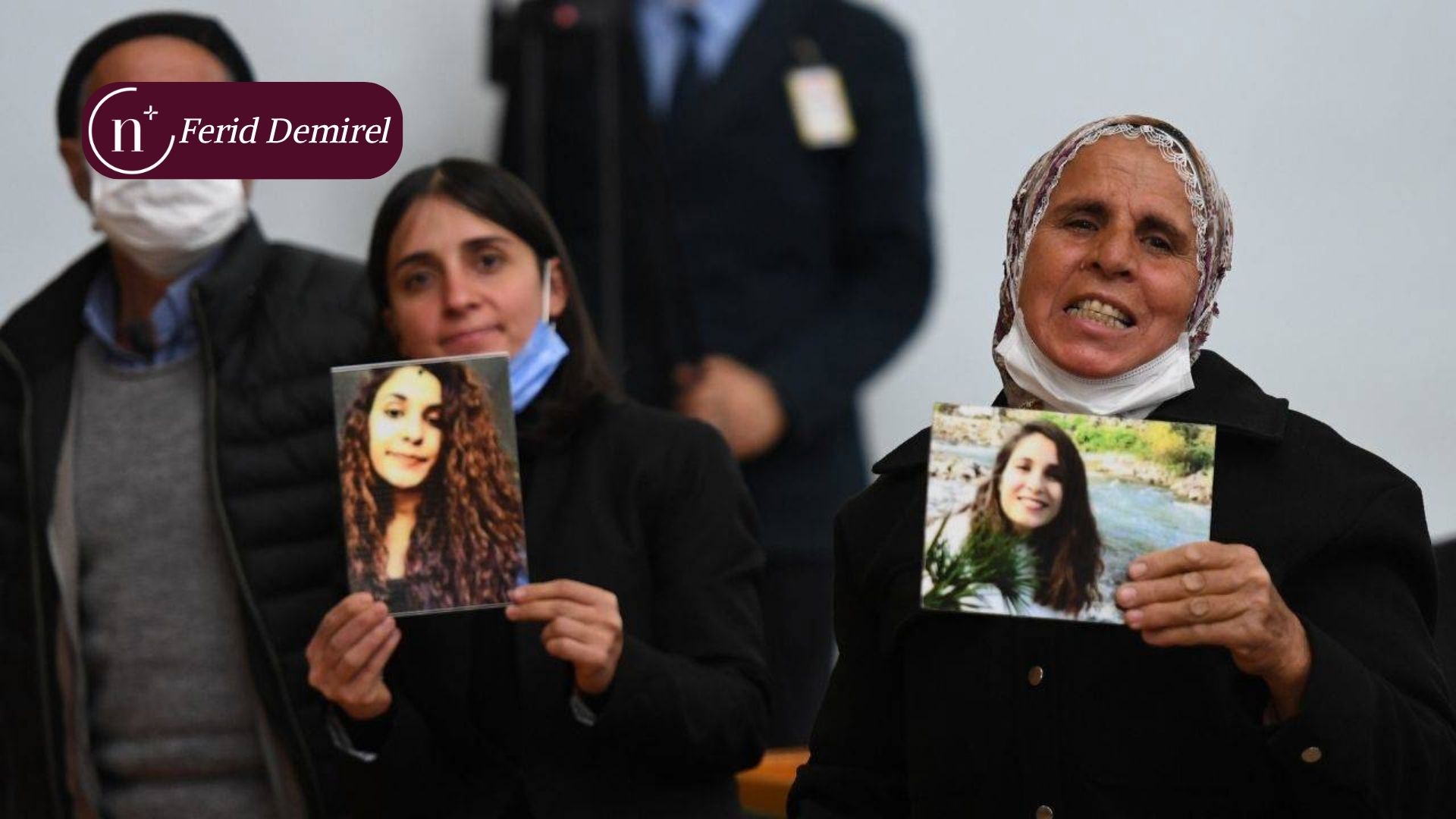
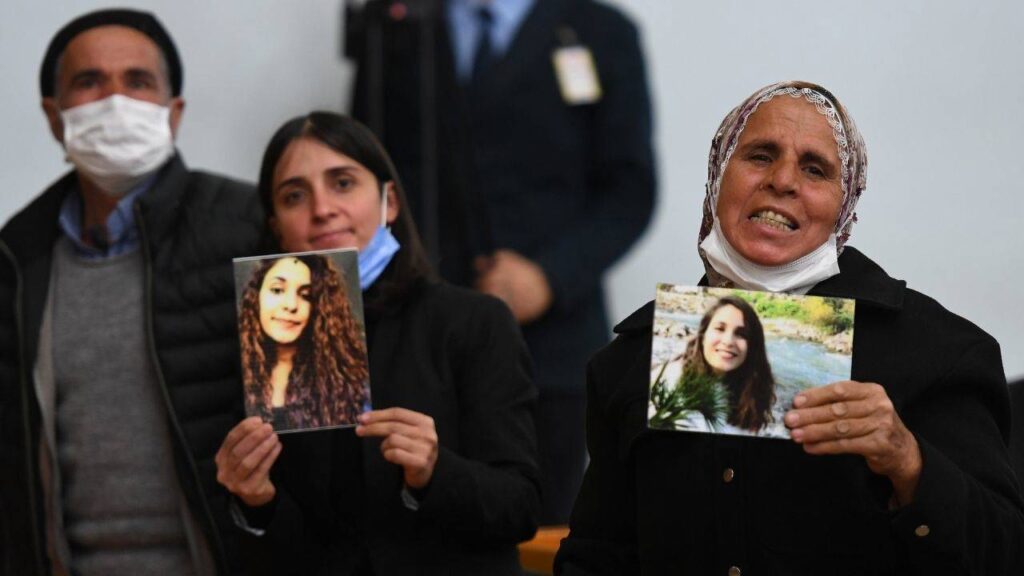
Gülistan Doku’s family (Photo: Birgün)
The murder investigation of university student Gülistan Doku, who disappeared in Dêrsim six years ago, has seen significant developments with numerous individuals, including former Tunceli Governor Tuncay Sonel and his son, being detained or arrested. The Doku family remains hopeful following the detention and arrest of new suspects.
Minister of Justice Akın Gürlek, speaking after a Cabinet Meeting on April 20, announced the establishment of a unit for unsolved murders and stated that files would be examined individually. Gürlek noted, “There is naturally an expectation after Gülistan, but that doesn’t mean every file will turn out that way.” He also announced that search efforts for Gülistan Doku’s body are ongoing.
We spoke with lawyer Gülan Çağın Kaleli—a jurist and women’s rights defender—about the reopening of the Gülistan Doku file and its potential impacts. Kaleli also serves as the lawyer for the family of İpek Er, who reportedly committed suicide after being raped by Sergeant Musa Orhan.
Lawyer Çağın Kaleli suggests that the reopening of the Gülistan Doku file could be a “new beginning.” According to Kaleli, “this situation emerged as a result of a political reckoning.” Stating that the subjection of Kurdish women’s bodies to harassment and rape cannot be considered independently of the “special war policies conducted in Kurdistan,” Kaleli recalled similar events from the 1990s. She noted that the male-dominated system views the bodies of Kurdish women as a territory to be “conquered.”
Gülistan Doku disappeared in 2020

Gülistan Doku, a second-year student at Munzur University’s Department of Child Development, disappeared on January 5, 2020, after leaving her dormitory. Her family filed a missing person report with the Provincial Police Department the following day.

Camera footage showed Doku boarding a minibus, but where she got off could not be determined. Following her disappearance, extensive searches were conducted in the Munzur River and the Uzunçayır Dam Lake in Dêrsim, where her phone last emitted a signal. Despite the lake being drained, no trace of Gülistan was found.

The last person Gülistan Doku met, her former boyfriend Zeinal A., was detained in Antalya in 2022, two years after the incident, but was released under judicial control. Another suspect, stepfather of Zeinal A., Engin Y., a police officer, was sentenced to two years and six months in prison for unlawfully obtaining and sharing Gülistan Doku's personal information on social media.

No further progress was made in the investigation over the last six years. According to lawyers examining the file, this was because the incident was treated as a "suicide." In 2024, Chief Public Prosecutor Ebru Cansu, appointed to the Tunceli Chief Public Prosecutor's Office, reopened the file.

According to media reports, earlier this year, a secret witness testified against the governor's son, leading to progress in the investigation. Reports stated the secret witness accused the governor’s son of raping and fatally shooting Gülistan Doku. Following this, simultaneous operations were carried out in seven provinces on April 13, 2026.

Justice Minister Akın Gürlek, who took office in February 2026, stated that the "investigation must be pursued to the end." At the time of Doku's disappearance, Süleyman Soylu held the Ministry seat, followed by Ali Yerlikaya.
Case Summary
Gülistan Doku Investigation: Detention and Arrest List
Homicide and Sexual Assault
Mustafa Türkay Sonel (Son of former Governor Tuncay Sonel) – Arrested
Erdoğan E. (Former Personnel of Provincial Special Administration) – Arrested
Hiding and Destroying Evidence
Tuncay Sonel (Former Tunceli Governor) – Judicial Control / Ministry Investigation
Zeinal A. (Former Boyfriend) – Arrested
Engin Y. (Dismissed Police / Stepfather) – Arrested
Cemile Y. (Mother) – Arrested
Çağdaş Ö. (Former Chief Physician) – Arrested on suspicion of deleting hospital records
Şükrü E. (Governor’s Bodyguard) – Arrested
Celal A. and Nurşen A. (Parents of Umut A.) – Arrested
Judicial Control / Released Under Terms
Savaş G. and Süleyman Ö. (University Technical Staff) – Suspicion of deleting camera records / International travel ban
* Data compiled from operation and court records dated April 13-20, 2026.
Lawyer Kaleli: “For 6 years, all evidence held by the state was suppressed”
The Gülistan Doku murder file has been reopened after six years. It has become a major headline in recent days. How do you interpret the developments of the past few days? What kind of picture do you see considering those detained so far?
I think the process that has been reflected to the public—which the Justice Minister claims to have accelerated today—should be interpreted as follows: All information, documents, and evidence held by the state for 6 years were effectively suppressed. These issues are too precious to be sacrificed to the state’s internal reckonings or conflicts between groups within the state, especially in cases of violence against women. Therefore, I believe the current picture should be characterized not as an act of courage by the Ministry of Justice, but as a fulfillment of responsibility.
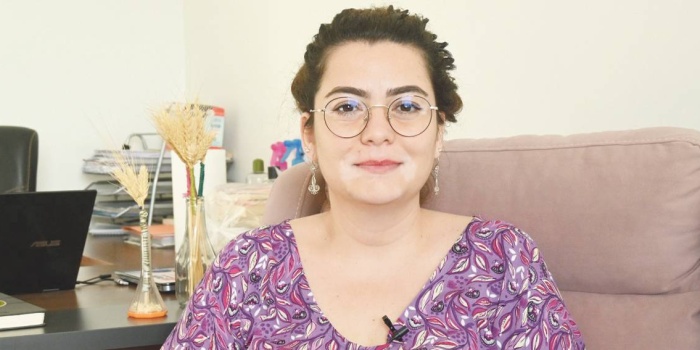
Gülan Çağın Kaleli, Photo: Özgür Politika
The matter of hiding, altering, or deleting so much information and evidence over 6 years by mobilizing all state resources once again reveals a ground where there is no legal security, where the state can interfere with the judiciary in every aspect, and where no one feels safe.
“Conflict Between ‘In-Norm’ and ‘Out-of-Norm’ Structures”
What do you mean by political reckoning?
I believe there are power balances within the Ministry of Interior. We are witnessing the definition of “in-norm” (norm içi) and “out-of-norm” (norm dışı) structures within the state quite vividly in this period. On one side, there are structures defending the functionality of the law; on the other, there was—and still is a representation leaning towards tyranny, oppression, and massacre, fostering polarization. We have gone through historical processes where “in-norm” structures played a bigger role depending on the political conjuncture, and periods where “out-of-norm” structures came to the fore.
The era when Süleyman Soylu played his role was a period when these “out-of-norm” structures fully held the state administration. Regarding the current process, I see it as a war between these structures. One side tries to create a “window dressing” by bringing concepts like human rights and justice to the forefront, while the opposition fights for a genuine ground for rights. These “out-of-norm” structures are not independent of the state; they are intrinsic to it.
It is known that the so-called “political will” must act in such cases. From this perspective, do you observe that these perpetrators could be the ones to truly shed light on the case?
We have seen many files where only the “visible face” of the curtain was touched while those with higher responsibility were not detained. The detention of high-ranking officials like the governor, deputy governors, and police officers under his command is a result of responsibility. This is positive. However, it doesn’t end with arrests. There is a risk that during these 6 years, critical information was destroyed. It is too early to comment on whether a fair trial will be conducted. At present, I can say at least part of that chain of responsibility is visible, as this appears to be a systematic and organized crime within the state. We must not “heroize” those simply doing their duty. The subject of this file is Gülistan: Her experiences, the violence, and the rape she was subjected to.
Do you expect or see signs that previous Ministers of Justice or Interior might be included in this chain of responsibility? Süleyman Soylu’s name is frequently mentioned.
During Süleyman Soylu’s term as Interior Minister, very hostile policies were produced against groups outside the hegemony, and he voiced these himself. His term left a serious wreckage, from raining instructions on every level of the judiciary to the police. However, the issue is not just Soylu as an individual, but the mentality he represents. Historically, the state has never touched those it assigned a specific mission until that mission was complete. Soylu did not act solely on his own thoughts; his role was shaped by forces within the state. Today, that role is finished. Now, a different path is being tried, and a “state reality” is attempting to polish itself through these cases. If we are to judge based on justice and equity, we saw what happened when these individuals held power previously. I personally doubt these figures will truly be affected.
You were also the lawyer for the family of İpek Er. The women’s movement and jurists evaluate such crimes in the Kurdish region as crimes committed by state officials, described as “perpertrators in uniform.” Do you evaluate the Gülistan Doku murder within this scope?
We certainly can. Following the curfews, the state deepened the wreckage using “special war policies.” These were not just against the body, but against the mind and emotions. The harassment and rape of many Kurdish women by police, soldiers, governors, or their relatives—as seen in the Gülistan Doku example—is not independent of these policies. The examples of Gülistan Doku and İpek Er are very similar. In a society that has been made precarious and impoverished, a process began where the state offered its own system as the only means of existence. It is important to highlight that women were emotionally manipulated by these perpetrators with promises of marriage before being subjected to sexual violence or forced into drug use and prostitution.
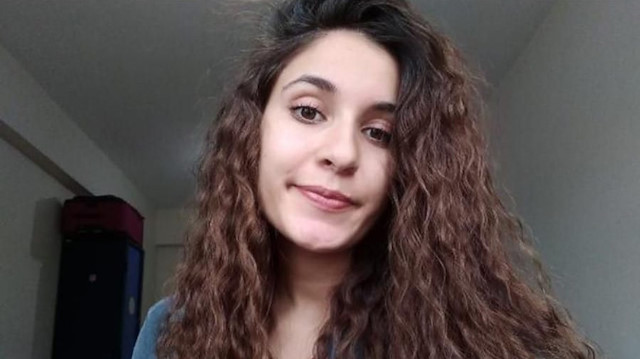
Gülistan Doku
“The law was weaponized”
The judiciary was also made a “useful apparatus” for these perpetrators. Law, which failed to mobilize to uncover the truth, was used to protect perpetrators through “good conduct” discounts or symbolic arrests to cool down public reaction. For example, after Musa Orhan raped İpek Er, no action was taken until İpek’s suicide attempt. Then, a symbolic one-week arrest was made only to decrease public reaction. Musa Orhan was sentenced to 10 years, and the case is still at the Court of Cassation. He is still being tried without arrest. Buoyed by such decisions, others in state positions feel emboldened. This is a form of psychological war.
“There is a horrific trend called ‘conquest’ targeting single women”
In the intense war environment of the 1990s, such situations were witnessed in the Kurdish region. What is the connection between the 2000s and the 1990s?
In the ’90s, there were many applications regarding sexual assault in custody, but fair trials did not occur. It was used as a war tactic that forced everyone into silence. Today, we are in a period where we have the advantage of being organized. One can express their experience to institutions, the press, or lawyers’ organizations. Historically—from the Armenian Genocide to the Dersim Massacre—the female body has been treated as a battlefield. In the ’90s, women were raped during village raids. Today, the same “rape culture” continues through emotional manipulation.
Within the gendarmerie and police in the Kurdistan region, there is a horrific orientation we call “conquest” toward single women—an attempt to “possess.” They signaled this during the curfews through graffiti or videos targeting the female body. Now, they have put this into practice in the field.
You made a connection between the female body and “conquest.” What do you mean by this?
The Kurdish movement has proven itself under women’s leadership. Therefore, an attack on Kurdish women is an attack on the Kurdish people. There is a male-dominated mindset at play; while the woman is seen as “honor” (namus), there is also a woman seeking freedom. The attempt to “possess” the body of the woman seeking freedom is a multi-layered attack on a land, a people, and a culture.
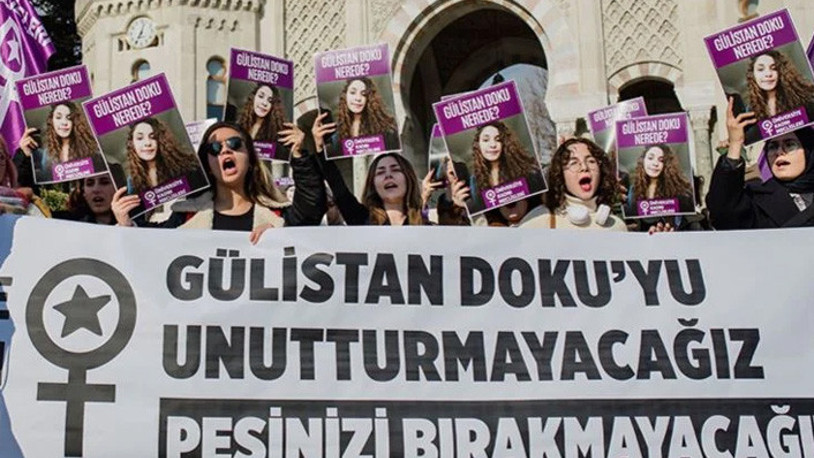
University students protesting for Gülistan Doku
“These are the results of the women’s struggle”
The Narin Güran case also returned to the public agenda. Considering the “political reckoning” you mentioned, is there a possibility that other “dark” files, such as Rojin Kabaiş or Gülistan Doku’s close friend Rojwelat Kızmaz, might resurface?
It is certainly possible. The Justice Minister called this a beginning and made a promise. However, this hope stems not just from ministers’ words, but from a powerful women’s struggle that has refused to give up for years. Women are the primary motor force here. The Gülistan Doku file is a beginning; these are domino tiles. If genuine courage is shown to touch the primary responsible parties, it could impact other files. But I believe this courage is drawn from lawyers and women’s organizations rather than state officials.
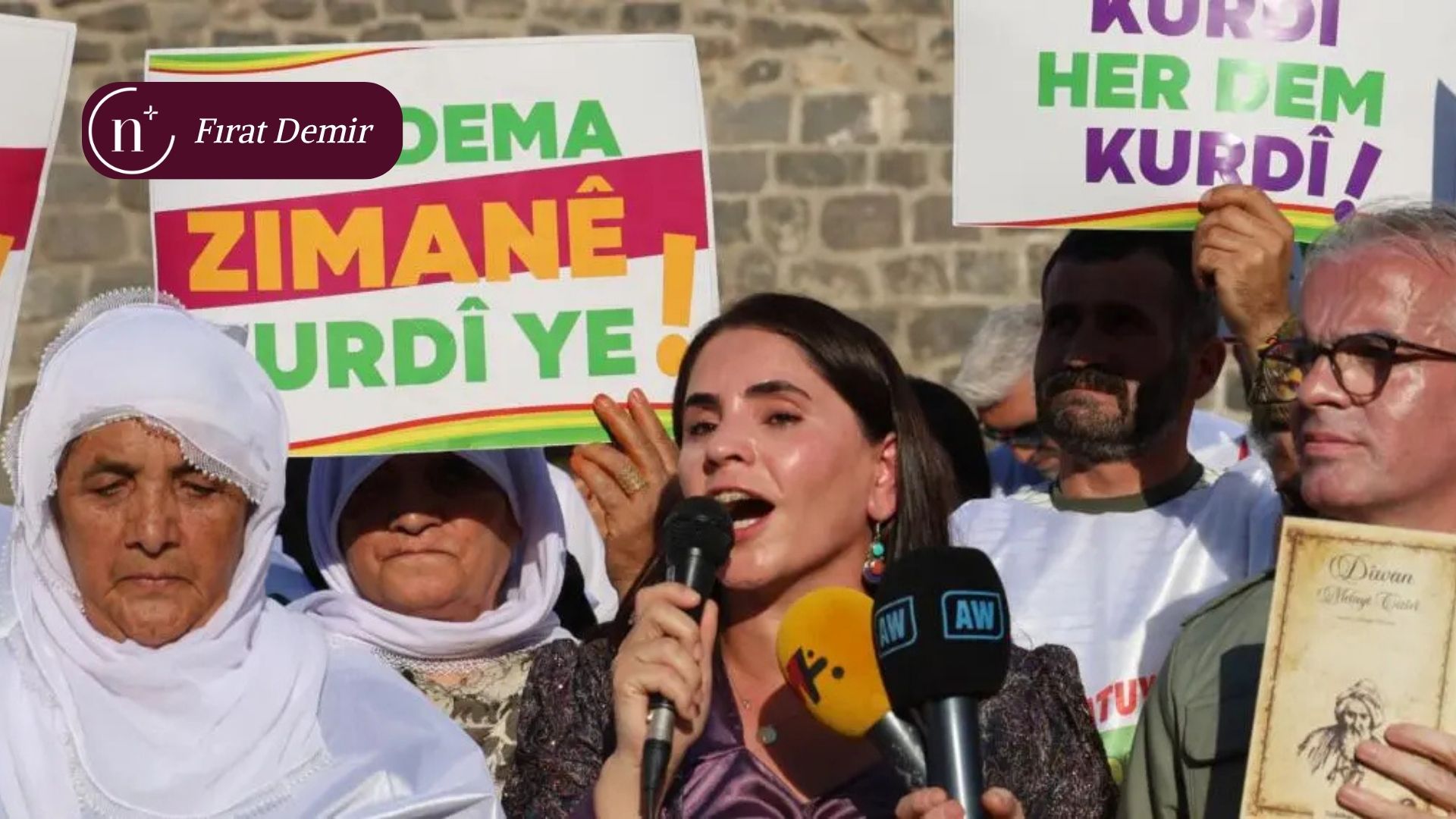
Mazlum Özdemir, one of the coordinators of Kurdish Monitoring, divides demands regarding the Kurdish language under two heading directed at the state and at Kurdish society: “Demands directed at the state can quite clearly be formulated as the removal of all legal and practical barriers placed before the Kurdish language in the public sphere.”
*Kurdish Language Day event in Şırnak / Photo: Yeni Yaşam Newspaper
Mazlum Özdemir, one of the coordinators of the Kurdish Monitoring platform, which is established in 2024 to track bans and restrictions on the use of Kurdish in the public sphere, spoke about the assimilation policies that have persisted in Turkey since the founding of the Republic, as well as the initiative’s goals. Özdemir said that the state structure shaped around Turkish national identity has systematically disregarded Kurds and the Kurdish language, and that they therefore view all violations as a serious matter that must be documented.
Kurdish Monitoring, launched in 2024 by a group of journalists, records the pressures exerted against the Kurdish language. Noting that the assimilation policy applied since the founding of the Republic has targeted Kurds, Özdemir says: “In order to institutionalize the Republic of Turkey’s structure, which was built upon the Turkish ethnic nation, all other ethnic, religious, and cultural identities were disregarded, subjected to assimilation, and exposed to massacre. Kurds and the Kurdish language received their share of this as well.” In this context, Özdemir recalls that the Law on the Maintenance of Order and other laws enacted during the Republican era denied the very existence of Kurds and banned Kurdish from the public sphere, adding: “The aim was to assimilate and eliminate Kurdish, just like all other languages spoken on these lands.”
This policy effectively continues to this day
Mazlum Özdemir emphasizes that despite some legal adjustments made after the 1990s, the use of Kurdish remains banned: “Starting from the 1990s, certain legal regulations were made and some of the barriers before Kurdish were lifted — but both legally and in physical, practical terms, the use of Kurdish in Turkey is banned. People are attacked and killed for speaking Kurdish in the street. Artists and attendees are detained and arrested for singing Kurdish songs at weddings. Kurdish-language concerts are banned by governors or mayors. The ‘right of mothers to speak Kurdish with their children in prison,’ which President Erdoğan has repeatedly claimed to have lifted and boasted about, is still banned. Kurdish publications cannot enter prisons; books written in Kurdish are blocked by prison administrations and cannot be sent outside.”
We aimed to make systematic repression visible
Describing how the initiative came about, Özdemir says: “We want the barriers to the use of Kurdish in Turkey to become visible, and to show that a systematic policy of obstruction is being applied.” He notes that while this situation is known to the public, it is often forgotten amid the intensity of the daily news agenda: “In the chaos of the day, these things often remain as stories we read and move past. Yet this is a serious violation against a language, and they need to be brought together in a systematic way — because the obstruction itself is systematic. It is not isolated or sporadic. These barriers and bans arise as the result of a policy and an ideological approach.”
Stating that they currently share their reports with the public and the media, Özdemir adds that they will also share them with national and international institutions: “The issue has an international dimension as much as a national one. Turkey is a country that has for years sought to become a member of the European Union and has undertaken certain efforts toward that goal. It is important to present, in the form of systematic reports, how a country seeking membership in the Union approaches human rights and language rights.”
Mazlum Özdemir emphasizes that they collect their data entirely from open sources: “News published in conventional media and social media, along with statements and reports released by civil society organizations, make up our sources.” However, he adds that the pressures faced by the Kurdish language are far greater than what appears in these outlets: “We also know from our daily experience that the reactions shown to people speaking Kurdish among themselves on the street or on the phone, or speaking Kurdish at school, at the grocery store, or at the hospital, are very rarely reflected anywhere. There are barriers and pressures that arise from covert racism.” Despite this, Özdemir notes that their physical and technical infrastructure remains limited, saying they currently document violations under only four main headings: “We report violations in the areas of media, prisons, public space, and culture and arts.”
The state spread assimilation through all public instruments
Describing the tools of assimilation policy, Özdemir argues that the state denied the Kurdish language through schools, media, and academia. “The Republic’s assimilation policy was shaped around the premise that Kurdish did not exist — and when that could no longer be sustained, around the premise that it was not a language. Once that became the policy, its instruments had to be set in motion. Schools became an important tool for banning Kurdish from the public sphere. Media emerges as another instrument. And these have now merged with today’s digital technology,” he says.
He goes on to describe how this process operated:
“Schools, media, academia, and all other instruments spent years propagandizing this and putting this policy into practice. Kurdish was prevented from becoming a language of education; children who spoke Kurdish at home were unable to speak it at school, and when they did, they faced systematic pressure from teachers. Teachers would assign one student among their peers the task of finding out whether children were speaking Kurdish at home — and when that student heard or saw children speaking Kurdish at home, they would report it to the teacher, causing those other children to be punished and beaten.”
Özdemir notes that this mechanism of repression was also sustained through the media: “Universities and the publications they produced spent years propagandizing that Kurds do not exist and that Kurdish is not a language. The media was used as a platform through which these policies were reproduced and disseminated.”
The warning of ‘self-assimilation’
According to Özdemir, despite all these pressures, Kurdish resisted assimilation for many years. However, he says that in recent times the concept of “self-assimilation” has also entered the conversation. “Particularly over the last 20 years, Kurds have begun using the concept of self-assimilation almost as much as assimilation itself,” he says. He explains the reason as follows: “For many years, Kurdish put up serious resistance to assimilation. Yet, particularly over the last 20 years — though it existed before as well — Kurds have begun using the concept of self-assimilation almost as frequently as assimilation. Because for some time now, certain voices have been suggesting that assimilation has been ‘successful,’ and it is acknowledged that self-assimilation is also being observed on a significant scale.”
Noting that even in villages, parents speaking Turkish with their children illustrates the extent of self-assimilation, Özdemir says: “When there is no Kurdish-language education in schools, when Kurdish television and digital media are banned and blocked, and when extra effort is made to ensure Turkish-language media reaches everywhere in response — it should come as no surprise that such an outcome would follow.”
Demands: To the state and to society
Mazlum Özdemir groups the demands regarding the Kurdish language under two headings: those directed at the state and those directed at Kurdish society. He lists the responsibilities that fall to the state as follows:
“Demands directed at the state can quite clearly be formulated as the removal of all legal and practical barriers placed before the Kurdish language in the public sphere. That is: Kurdish must become a language of education and be present at all levels of schooling; official space must be opened for Kurdish in all public institutions and organizations; barriers before Kurdish-language media must be eliminated; and the obstruction of cultural and artistic activities must come to an end. In short, all barriers must be removed and active encouragement must be provided so that Kurdish is officially recognized, becomes widespread, and can be learned and taught.”
He also draws attention to the responsibilities of Kurdish society and politics: “In parallel with these steps, Kurds themselves must use Kurdish in every area of their daily and public lives and resist assimilation as they have in the past. As for Kurdish politics — beyond reminding the state of its duties and responsibilities on this matter, it must also be criticized for not using Kurdish more within its own internal mechanisms, and public pressure must be built to push it toward taking steps in that direction. Because while the state bears responsibility for assimilation, Kurdish society and the political movement bear responsibility for self-assimilation.”
Nearly 40 years ago, in an era where “Kurdish börek” was being rebranded as “Küt börek,” a lawsuit was filed against a baker named Yusuf in İzmit simply because he wrote “Kurdish börek” on his shop sign.
Photo: Ferid Demirel
In Frankfurt, at the intersection of Battonstrasse and Langestrasse, sits a modest establishment: Dağlayan Börekçilik. It is run by Yusuf Dağlayan, a man from Bingöl. His life offers a striking window into the ongoing debates regarding Kurds in Turkey—and even into a matter as seemingly simple as the name of a pastry.
One morning in Frankfurt, while searching for an open breakfast spot, I noticed a place with “Börekçilik” written on its sign right at the junction of two streets. I stepped inside. It was still early; the shop was empty.
Behind the counter stood a middle-aged man—balding, with a slight belly—who greeted me in German. After a brief exchange, he mentioned he was from Bingöl. I ordered a börek and sat down. Once he finished his work behind the counter, the owner came over and sat across from me.
After the usual introductions, I brought up a debate that had recently resurfaced in Turkey: I asked what he thought about the attempts to rename “Kurdish börek” as “Küt börek.”
Yusuf immediately began telling a story from his past:
“I am Yusuf Dağlayan,” he said. “I am from the hamlet of Bağkıyan, in the village of Bilece, between Kiğı and Pülümür. You can’t just call it Bingöl. Kiğı used to belong to Dersim; it was only attached to Bingöl after 1948. Pülümür and Dersim are closer to us anyway. I was detained in 1982. Tortured. This was the September 12 period. Both my father and I. Back then, it was the left-right conflict; it was before the PKK. My older brother was a student, but he fled abroad. The state put pressure on us and took us in. Because of this, at the end of 1984, I had to move to İzmit.”
Unable to find steady work, he took matters into his own hands:
“I started selling börek from a mobile cart in front of the SEKA paper factory. We had no money. Just börek. So we made Kurdish börek. On the first day, they beat me. ‘You can’t stay here, you can’t sell here,’ they said. The next day, a massive fight broke out, but eventually, we took control of that spot.”
According to Yusuf, the factory provided a constant flow of people ten thousand entering and ten thousand exiting:
“Then we expanded the business. We opened a shop. We had five mobile carts and our own production facility.”
As we spoke, an acquaintance of his entered. After exchanging greetings, he sat with us, and Yusuf continued:
“In İzmit, they used to call me ‘Kurdish Yusuf.’ This was around 1987. After I opened the shop, I received a court summons one day. I went to court. The judge asked: ‘Why did you write Kurdish börek on your sign and your menu?”
Photo: Ferid Demirel
“I said: There is a man named Mehmet from our village who went to Istanbul. Among us Kurdish Alevis, we make “perğe” every New Year for Hızır. It is an oily bread that we share with people. Muslims sacrifice animals; we do this. The judge told me, ‘You are being divisive.’”
Yusuf smiled.
“I said: There is Laz börek, Circassian, Bosnian… why shouldn’t there be Kurdish börek?”
From there, Yusuf moved into another story one he also told in court about “Kurdish Mehmet the Porter,” a figure who has since become part of the pastry’s folklore:
“Mehmet was Kurdish. He was poor. He went to Istanbul, to Kasımpaşa, by ship. He worked as a porter. He had made perğe at home and took it with him to eat near the Galata Bridge. People saw what he was eating. They liked it. They gave him money and bought the kilor (rings) from him. He ended up going hungry that day but realized he had made good money.”
So, he began making more.
“He started selling them. A hundred, two hundred a day. He saw he was earning more than he did from portering. He rented a shop in Karaköy from someone from Trabzon. That shop is still there. He built a bakery. That oven is still running. He passed away long ago. His name was Kurdish Mehmet. People called him Rengo. This was 250 years ago.”
After Yusuf told this story and made his defense, the judge took a ten-minute recess. When the session resumed, he simply said, “You may go.” The case was dropped.
However, months later, another summons arrived. “This time it was a different judge,” Yusuf said. “He said: ‘You are spreading separatism. Your cart has yellow, red, and green colors; these are separatist colors. This is PKK propaganda.’”
“I said: If these colors are separatist, then from Thrace to Kars, from Trabzon to Antalya and Izmir… is the state separatist too? The judge frowned. ‘How so?’ he asked. I told him: I see traffic lights everywhere. Those colors are beautiful. That is why I used them on my shop. If I am a separatist, then the state is a separatist too.”
The judge paused and then said: “You may go.” The file was closed.
Yusuf continued working in İzmit until 1993. Eventually, as political cases persisted and an arrest warrant was issued, he became a fugitive. He lived underground