Data from the Turkish Statistical Institute (TURKSTAT) regarding the most common names in Turkey and the most popular names for newborns indicates that nationalist names are replacing traditional-religious ones. While Kurdish names are often not recorded due to legal and practical obstacles, it remains impossible to access any information regarding Kurdish names within TURKSTAT’s data system.
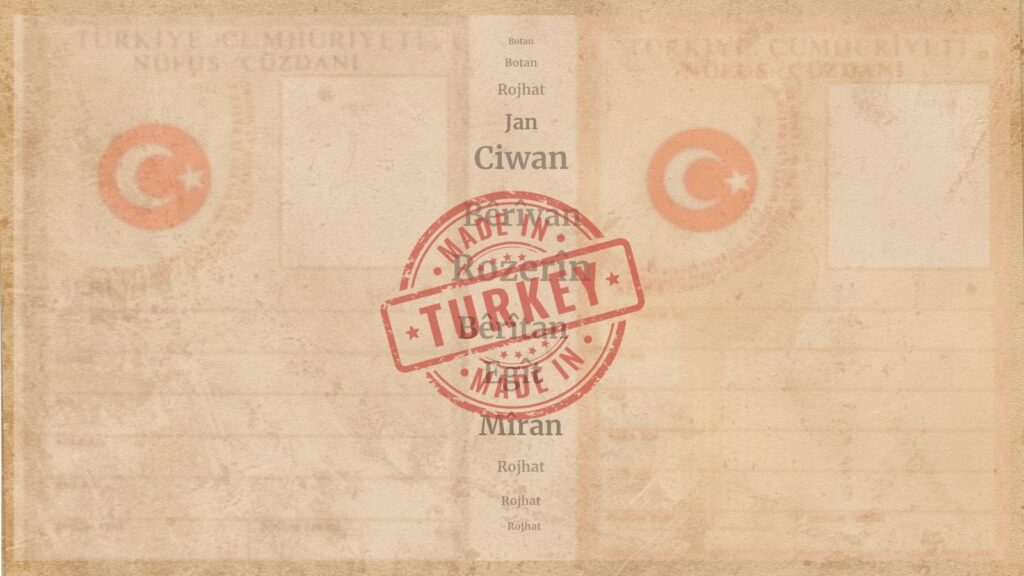
Image: Niha+
TURKSTAT has released data on the most frequently used and newborn names in Turkey for 2025. According to the institute’s data, the most common names for men are Mehmet, Mustafa, Ahmet, and Ali, while for women, they are Fatma, Ayşe, Emine, and Hatice. The records show that these four names in each category have maintained their rankings since 2018.
Among newborns, Alparslan ranks first among the most preferred male names. A total of 7,509 newborn boys were given this name by their families. Göktuğ, Metehan, Yusuf, and Kerem share the top spots. For newborn girls, the most preferred names are Alya, Defne, Gökçe, Zeynep, and Asel. TURKSTAT’s website provides data dating back to 2018, with rankings provided for the top 30 in each category.
While modern names like Alya and Defne have climbed to the top for baby girls, names embedded in cultural memory such as Rozerîn, Bêrîvan, and Zîlan continue to be relegated to the “unknown” or “converted” categories in official statistics. This situation is a statistical reflection of a century-old language policy.
Based on this data, it is possible to state that since 2018, nationalist names such as Alparslan, Göktuğ, and Metehan have begun to be preferred over traditional-religious names like Ahmet, Mehmet, and Mustafa for boys. While names like Mehmet and Mustafa still rank at the top of the overall “most used” list in Turkey, we see that these names have been used significantly less for newborns since 2018. This points to a clear societal shift.
Newborn Boy Name Preferences (By Number)
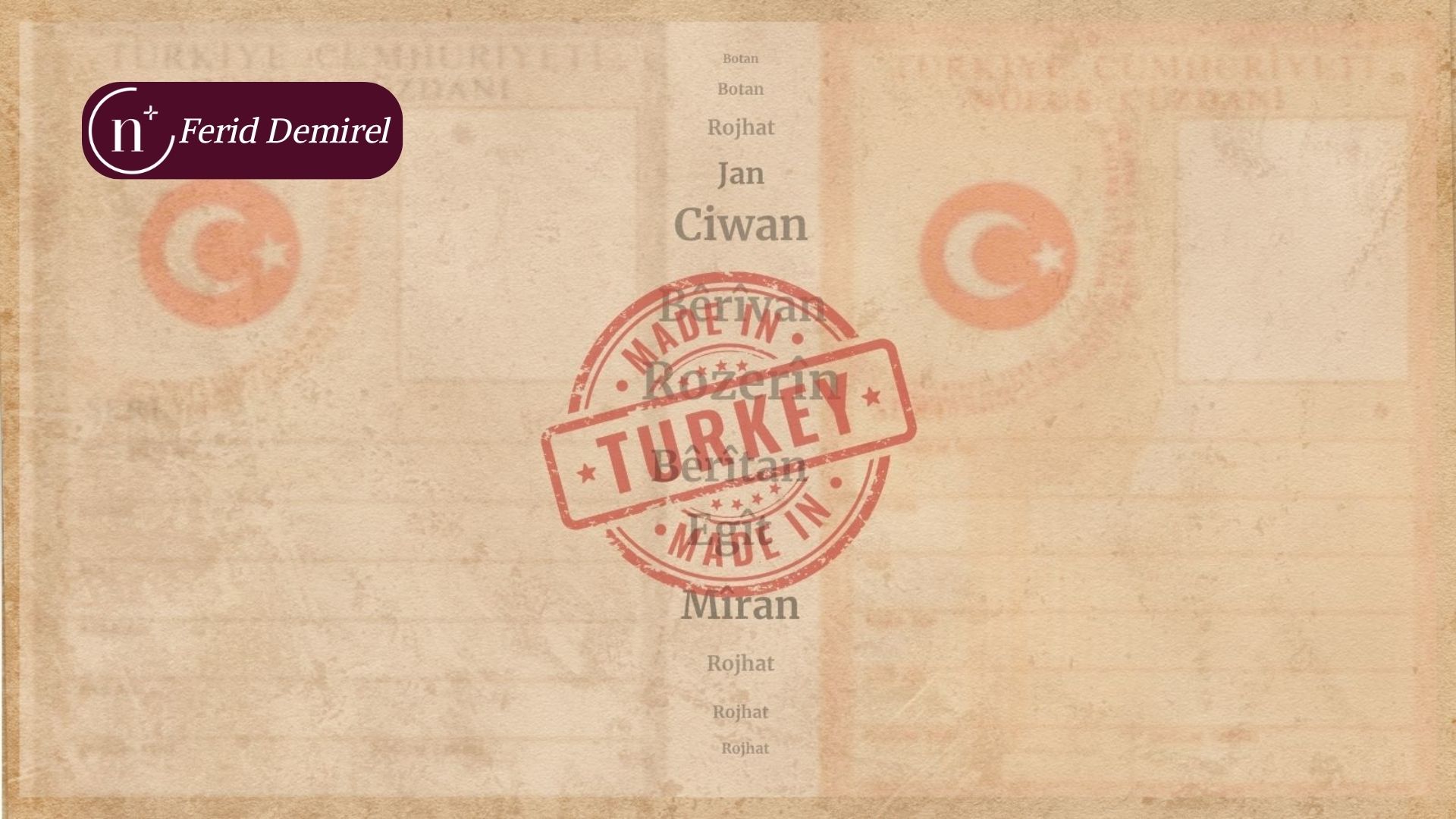
While modern and nationalist names have climbed to the top, Kurdish names like Jan, Ciwan, and Arîn remain “invisible” in official statistics due to bureaucratic and phonetic barriers.
Source: TURKSTAT 2018-2025 Dataset. Chart by Niha+ Special News.
The “Outlier” hame on the list
There is, in fact, an “outlier” name among TURKSTAT’s top 30: Mîran. This name entered the Turkish naming landscape primarily through the television industry.
Mîran, which means “Mirs” or “Lords” in Kurdish, ranks 6th on the 2025 list. While Mîran was not among the top 30 names in 2018, it made an entry at 8th place in 2019. This rise is clearly linked to the influence of the TV series Hercai, which began airing in 2019 and featured a lead character named Miran Aslanbey. Following this series, the name Mîran experienced a rapid surge among male names in Turkey. Between 2020 and 2023, it fluctuated within the top 30, ranking 12th in 2024 and reaching 6th place in 2025.
This example serves as a case study for several reasons: the reliance on information in some circles that the name has Persian origins, the ease of acceptance for a name that has become a popular culture element, and the fact that it does not contain the distinctive letters of the Kurdish alphabet such as “X, Q, W.” This situation demonstrates that through popular culture, the name has been stripped of its “ethno-political” context and has become an aesthetic choice for parents from diverse backgrounds.
Kurdish names hitting the “Letter” barrier
However, beyond the name Mîran, there is a blind spot in the mirror held by official statistics. In that blind spot lies the reality of families whose chosen Kurdish names for their children hit a “letter barrier” and who must engage in a legal struggle to obtain identification documents.
Article 66 of the Constitution states, “Everyone bound to the Turkish State through the bond of citizenship is a Turk.” Yet, it is well known that people of many ethnic backgrounds other than Turkish live in Turkey, and these individuals give their children names in their own mother tongues. Due to legal and practical obstacles in Turkey, no official records are kept regarding ethnic and linguistic origins, and thus no concrete data is available. Nevertheless, daily practices show that Kurdish parents frequently give their newborns Kurdish names—a situation that has become much more visible in recent years.
Names like Bêrîvan, Zîlan, Baran, Sosin, Rojbîn, and Rojhat are heard more frequently in streets, cafes, and universities. Despite this, official statistics do not mention these names. Since TURKSTAT only provides the top 30 names, there is no information regarding names below that rank. Therefore, while conducting an objective assessment is naturally difficult, certain daily practices and obstacles bring to the fore several possibilities regarding why Kurdish names do not appear in the top 30.
Are these names absent simply because they are fewer in number, or is it because population registries—despite various amendments over time to Law No. 1353 on the Adoption and Application of Turkish Letters—still prevent such names from being recorded on IDs?
Lives with two names
While there haven’t been many reports in the press recently, news stories from a few years ago detailed the many difficulties faced by families giving their children Kurdish names.
During the research for this report, we learned the story of a father who went to the registry office years ago wanting to name his child “Rojhat.” The official at the registry office said of the name Rojhat, “This name is not allowed; it must be another name,” and forced the father to accept the official’s own name as the child’s name for the ID.
Consequently, there are people whose real names are Rozerîn or Rojbîn but are officially recorded as Ayşe or Zeynep. There are individuals who are Rozerîn, Botan, or Rojbîn at home but are Zeynep, Ayşe, or Ahmet in schools and government offices. In one case, a woman named Ayşe, whose real name was Rojbîn, took out a loan despite her poor financial situation to change her name through the courts. However, she passed away while the court case was still ongoing and was buried under the name Ayşe.
“Jan” or “Can”?
An incident in 2022 provides clues regarding the “gray areas” in TURKSTAT’s data. (The names of the family have been withheld for security reasons). A. and C. wanted to name their newborn Jan Arvîn. They went to the registry office in their province. The official asked, “What language is Jan?” The family replied that it is both Kurdish and Circassian. The official responded, “No, it’s not possible; we cannot accept Kurdish,” but stated they could accept it if it were a Turkish name.
When the family insisted on Jan, noting that a famous person had recently used a Kurdish name, the official replied, “They are artists; they have long arms; they can do it.” He then gave another example: “For instance, someone else came last week. Their name was Ciwan. We solved the problem by writing it as Civan. Come, let’s change your J to a C and make it Can. Look, this child will face many problems in the future in school and among friends because of this name.” When the family remained persistent, they were sent to a higher official and were eventually allowed to use the name Jan only after signing a document stating they took all responsibility.
The process of “naming by signing a waiver” is a lingering consequence of Turkey’s language and identity policies over the last 100 years. Here is the chronology filled with bans, circulars, and “alphabet” barriers:
With the proclamation of the Republic, the use of languages other than Turkish was prohibited. Under Article 41 of the Reform Plan for the East, penalties were imposed on those using non-Turkish languages in public spaces and government offices.
The law transitioning to the Latin alphabet became the primary justification for blocking the registration of Kurdish names (specifically due to characters like q, w, x).
Following the September 12 coup, the use of Kurdish was completely banned. Although repealed in 1991, the reality of “dual naming” (official vs. traditional) persisted in bureaucracy.
Through a Ministry of Interior circular, the ban on names was lifted under the condition of “compliance with the Turkish alphabet.”
The new law guaranteed the right to name children; however, bureaucratic obstacles and the “character ban” remained in effect.
Names like “Awin, Bawer, Xunaw” are still subject to bureaucratic hurdles and lawsuits due to letters not present in the official Turkish alphabet.
Article 3: “The language of the State of Turkey is Turkish.” (Barrier to official recognition)
Article 42: “No language other than Turkish shall be taught as a mother tongue.” (Educational barrier)
*Infographics were created by the AI tool Gemini. Some names have been changed due to individual requests and security reasons.