Nearly 40 years ago, in an era where “Kurdish börek” was being rebranded as “Küt börek,” a lawsuit was filed against a baker named Yusuf in İzmit simply because he wrote “Kurdish börek” on his shop sign.
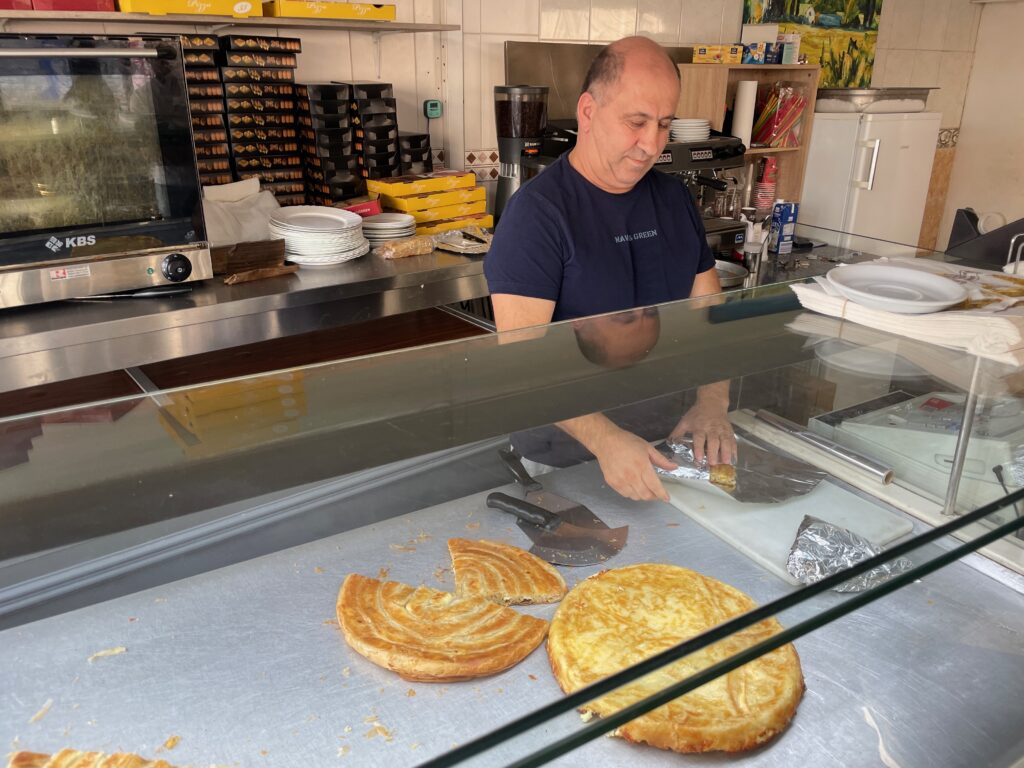
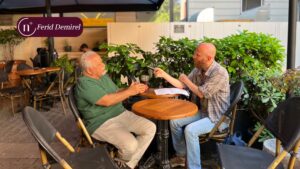
Photo: Ferid Demirel
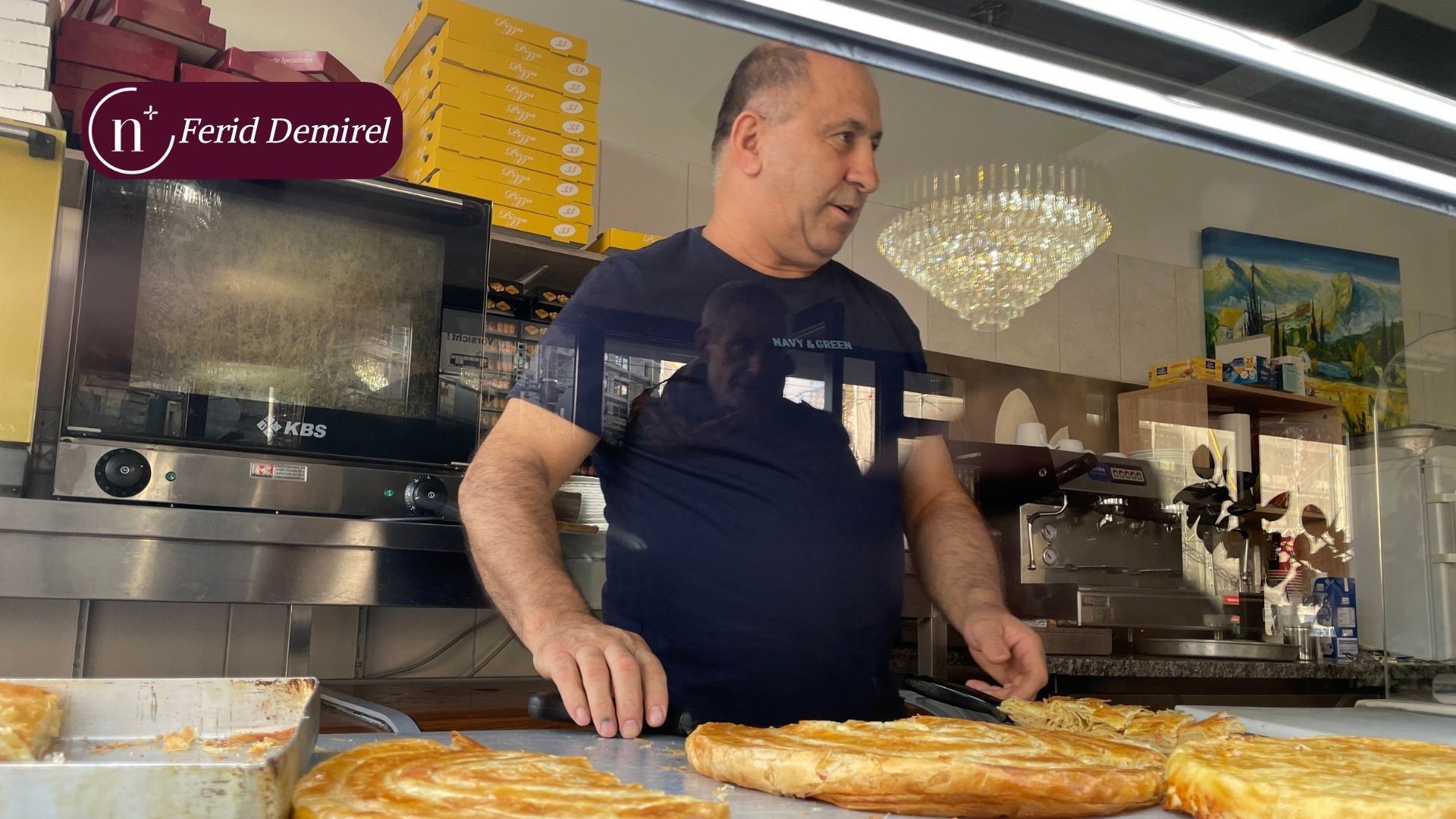
In Frankfurt, at the intersection of Battonstrasse and Langestrasse, sits a modest establishment: Dağlayan Börekçilik. It is run by Yusuf Dağlayan, a man from Bingöl. His life offers a striking window into the ongoing debates regarding Kurds in Turkey—and even into a matter as seemingly simple as the name of a pastry.
One morning in Frankfurt, while searching for an open breakfast spot, I noticed a place with “Börekçilik” written on its sign right at the junction of two streets. I stepped inside. It was still early; the shop was empty.
Behind the counter stood a middle-aged man—balding, with a slight belly—who greeted me in German. After a brief exchange, he mentioned he was from Bingöl. I ordered a börek and sat down. Once he finished his work behind the counter, the owner came over and sat across from me.
After the usual introductions, I brought up a debate that had recently resurfaced in Turkey: I asked what he thought about the attempts to rename “Kurdish börek” as “Küt börek.”
Yusuf immediately began telling a story from his past:
“I am Yusuf Dağlayan,” he said. “I am from the hamlet of Bağkıyan, in the village of Bilece, between Kiğı and Pülümür. You can’t just call it Bingöl. Kiğı used to belong to Dersim; it was only attached to Bingöl after 1948. Pülümür and Dersim are closer to us anyway. I was detained in 1982. Tortured. This was the September 12 period. Both my father and I. Back then, it was the left-right conflict; it was before the PKK. My older brother was a student, but he fled abroad. The state put pressure on us and took us in. Because of this, at the end of 1984, I had to move to İzmit.”
Unable to find steady work, he took matters into his own hands:
“I started selling börek from a mobile cart in front of the SEKA paper factory. We had no money. Just börek. So we made Kurdish börek. On the first day, they beat me. ‘You can’t stay here, you can’t sell here,’ they said. The next day, a massive fight broke out, but eventually, we took control of that spot.”
According to Yusuf, the factory provided a constant flow of people ten thousand entering and ten thousand exiting:
“Then we expanded the business. We opened a shop. We had five mobile carts and our own production facility.”
As we spoke, an acquaintance of his entered. After exchanging greetings, he sat with us, and Yusuf continued:
“In İzmit, they used to call me ‘Kurdish Yusuf.’ This was around 1987. After I opened the shop, I received a court summons one day. I went to court. The judge asked: ‘Why did you write Kurdish börek on your sign and your menu?”
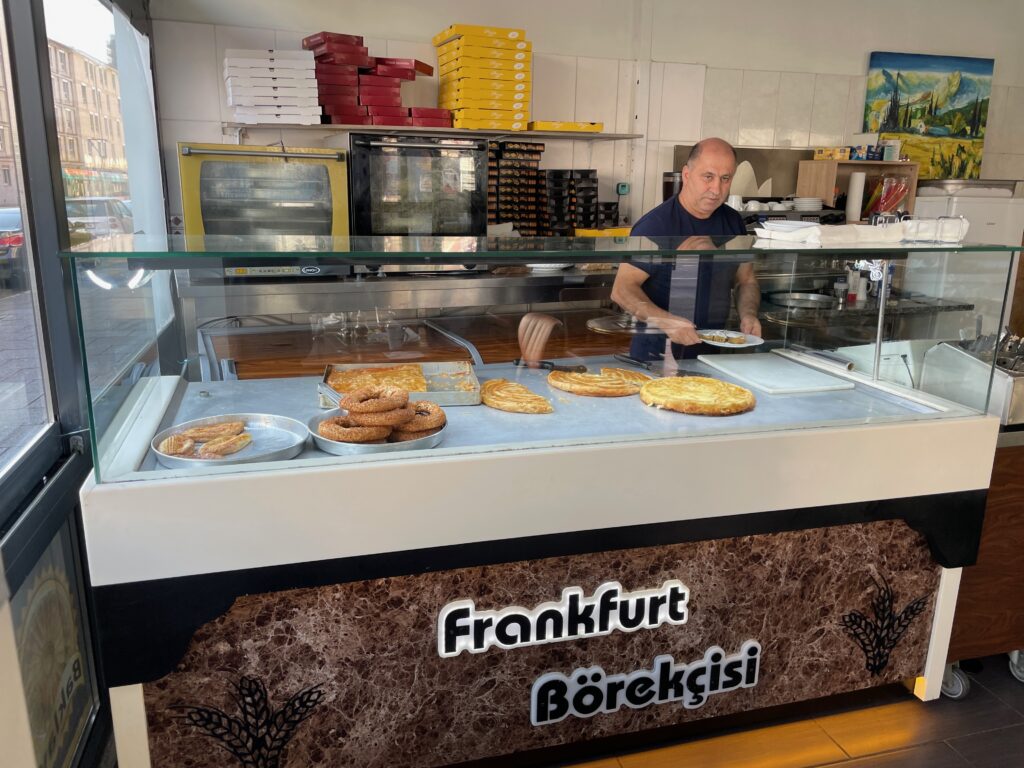
Photo: Ferid Demirel
“I said: There is a man named Mehmet from our village who went to Istanbul. Among us Kurdish Alevis, we make “perğe” every New Year for Hızır. It is an oily bread that we share with people. Muslims sacrifice animals; we do this. The judge told me, ‘You are being divisive.’”
Yusuf smiled.
“I said: There is Laz börek, Circassian, Bosnian… why shouldn’t there be Kurdish börek?”
From there, Yusuf moved into another story one he also told in court about “Kurdish Mehmet the Porter,” a figure who has since become part of the pastry’s folklore:
“Mehmet was Kurdish. He was poor. He went to Istanbul, to Kasımpaşa, by ship. He worked as a porter. He had made perğe at home and took it with him to eat near the Galata Bridge. People saw what he was eating. They liked it. They gave him money and bought the kilor (rings) from him. He ended up going hungry that day but realized he had made good money.”
So, he began making more.
“He started selling them. A hundred, two hundred a day. He saw he was earning more than he did from portering. He rented a shop in Karaköy from someone from Trabzon. That shop is still there. He built a bakery. That oven is still running. He passed away long ago. His name was Kurdish Mehmet. People called him Rengo. This was 250 years ago.”
After Yusuf told this story and made his defense, the judge took a ten-minute recess. When the session resumed, he simply said, “You may go.” The case was dropped.
However, months later, another summons arrived. “This time it was a different judge,” Yusuf said. “He said: ‘You are spreading separatism. Your cart has yellow, red, and green colors; these are separatist colors. This is PKK propaganda.’”
“I said: If these colors are separatist, then from Thrace to Kars, from Trabzon to Antalya and Izmir… is the state separatist too? The judge frowned. ‘How so?’ he asked. I told him: I see traffic lights everywhere. Those colors are beautiful. That is why I used them on my shop. If I am a separatist, then the state is a separatist too.”
The judge paused and then said: “You may go.” The file was closed.
Yusuf continued working in İzmit until 1993. Eventually, as political cases persisted and an arrest warrant was issued, he became a fugitive. He lived underground