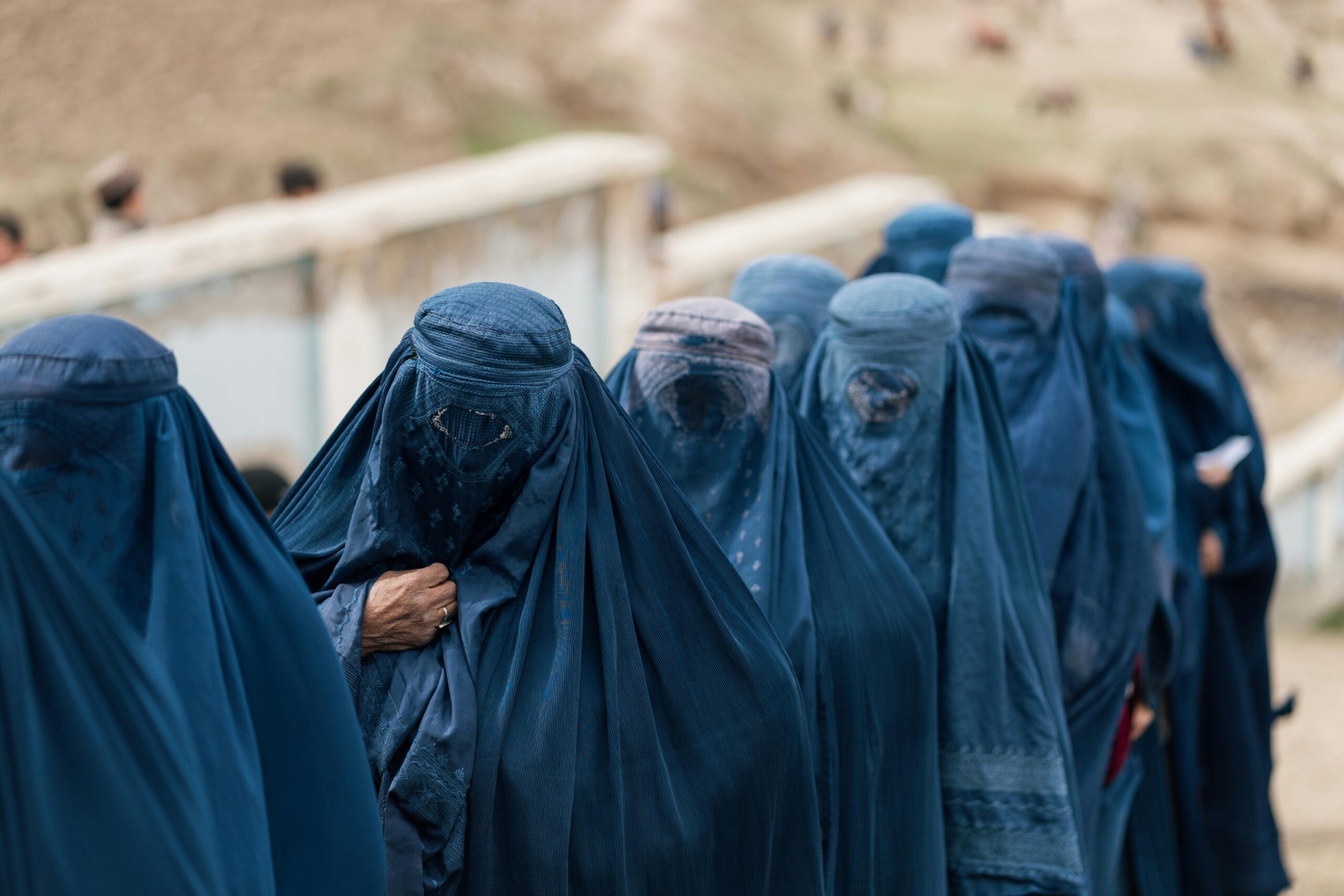
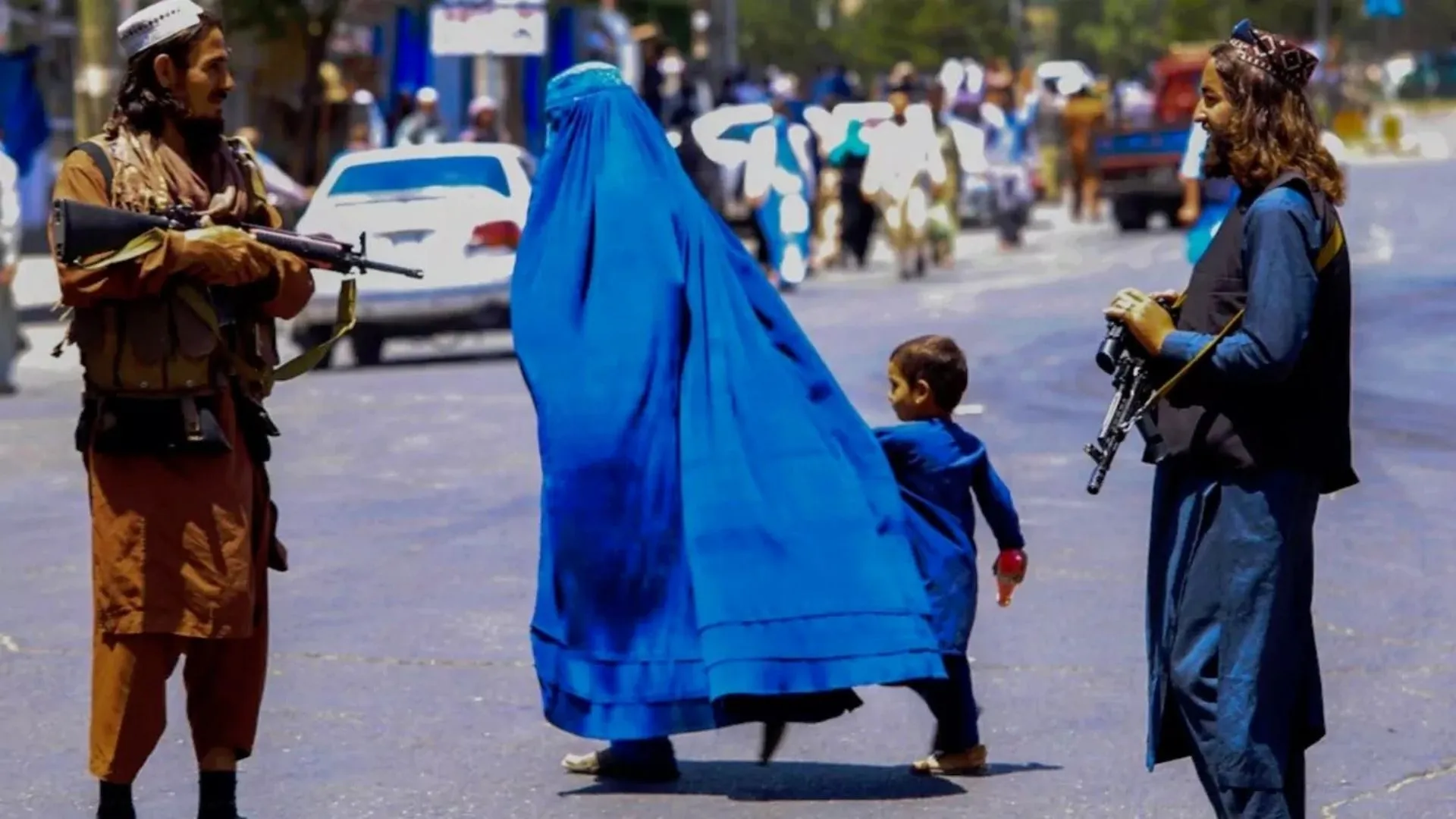
Afghanistan’s Taliban government, now five years in power, has issued a new law declaring obedience to its leader, Hibatullah Akhundzada, mandatory and vesting sole authority over decisions on jihad in him alone. The law defines men as women’s “rulers” and instructs women to “please” their husbands and thank them for the favors done for them.
Photo: AWNA
The Taliban’s Ministry of Justice published the new law, titled “Nisab-e Muballighin” (Curriculum for Preachers), on Sunday, August 16. Approved by Akhundzada and comprising six chapters, the document obligates men to ensure the women under their authority comply with the Taliban’s prescribed dress codes. It also defines men as women’s “rulers” and states that women must “please” their husbands.
In its August 16 announcement, the Ministry of Justice said the “Curriculum for Preachers” had taken effect — consisting of an introduction and six chapters — following Taliban leader Hibatullah Akhundzada’s approval, and had been published in the official gazette.
The law addresses a wide range of subjects, from religious obligations and worship to jihad, obedience to the Taliban leader, marriage, women’s rights, and the hijab.
Provisions on marriage and women
In the section titled “The Rights of Husband and Wife,” women are instructed to obey their husbands “in matters pertaining to sharia.” The law defines the husband as the wife’s “ruler” and instructs women to “please” their husbands and thank them for the favors done for them. In return, husbands are obligated to provide for their wives’ food, clothing, and housing needs and to pay their dowries (mahr).
The law permits men to marry more than one woman, while stating that husbands must “treat their wives justly.”
In the section titled “Women’s General Rights,” it states that no one should oppress or coerce a woman. It notes that an adult woman’s consent is required for marriage, and that a woman must not be handed over to another family as “baad” to settle a dispute.
Baad refers to the practice of giving a woman or girl to another family as compensation for a dispute or crime.
Under the law, a widow is not obligated to marry her deceased husband’s brother. It states that a widow retains the right to receive a dowry from any subsequent husband she marries, and that a woman has inheritance rights over the property of her husband, children, father, and other relatives.
In the curriculum’s section on “veiling and the hijab,” men are made responsible for ensuring that the women under their authority comply with the Taliban’s dress requirements in the presence of men outside the family.
Promoting jihad and obedience
Jihad is one of the central themes of the new curriculum, used here in the sense of religious struggle or armed religious war.
Taliban religious officials are instructed to teach the public the definition, purpose, and virtues of jihad, and to explain the qualities and conduct expected of a mujahid. Religious officials are also directed to encourage people to prepare for jihad and to support fighters.
The document describes being wounded or killed in jihad as a “virtue,” and instructs religious officials to encourage people toward “martyrdom.” The curriculum also calls for teaching the public religious obligations such as prayer, fasting, ablution, ritual bathing, pilgrimage, zakat, and ushr. It also calls for warning people about the punishments they may face for failing to fulfill certain religious duties.
The law makes obedience to the Taliban’s supreme leader mandatory. The document states that obedience to the emir is required “even if he is not a righteous person.” It states that authority over matters related to jihad belongs to the leader, defined as the “Imam (Commander of the Faithful),” and that no one may act on such matters without consulting the emir and obtaining his approval.
The Taliban’s record on women’s rights
This new regulation comes as the Taliban marks the fifth anniversary of its return to power. Numerous human rights organizations and the United Nations have called on the Taliban to lift restrictions on women and girls and to respect their rights.
Restrictions imposed by the Taliban on women’s and girls’ education and employment, limits on media freedom, and strict social regulations are counted among the outcomes of the Taliban’s five years in power. Women in particular have been largely barred from access to secondary and higher education. Women also face severe restrictions on participation in employment and public life. These practices have drawn extensive criticism both within Afghanistan and internationally.
The Taliban has previously issued numerous laws and decrees targeting many areas of women’s private and social lives. The “Law on the Promotion of Virtue and Prevention of Vice,” approved and published in the official gazette in 2024, introduced sweeping regulations on women’s clothing, presence in public spaces, voices, freedom of movement, and the requirement of a male chaperone (mahram). The law also granted various powers to morality police officers to intervene against behavior deemed “vice.”
In 2026, the “Regulation on the Separation of Spouses” also came to the fore. Taliban officials stated that the document was prepared to guide judges handling family disputes and requests for separation. The United Nations Assistance Mission in Afghanistan (UNAMA) raised concerns over some of the document’s possible implications, including regarding child marriage and women’s consent in marriage.
In addition, the Taliban’s “Criminal Procedure Code for Taliban Courts,” sent for implementation within the judicial system, has also drawn criticism from human rights organizations. These organizations have flagged concerns in the document regarding arbitrary punishments, violations of fundamental freedoms, and the right to a fair trial.
Restrictions on women under Taliban rule: A 2021–2026 timeline
The Taliban, who seized power in August 2021, have since issued dozens of decrees targeting women and girls. Not a single one has been reversed.
2021
August 2021
Co-education was banned, and male teachers were barred from teaching girls. Girls’ return to secondary school was effectively blocked.
September 2021
The Ministry of Women’s Affairs was abolished and replaced by the Ministry for the Promotion of Virtue and Prevention of Vice. Women with jobs were ordered to stay home “until further notice.”
December 2021
Women were banned from traveling more than 72 km without a mahram (male guardian). Public transport operators were made responsible for enforcing the directive.
2022
March 2022
Women were banned from traveling abroad without a mahram. Girls’ schools, reopened only hours earlier, were shut again, with a firm ban imposed on girls in 7th grade and above.
May 2022
Women were required to wear a burqa covering the entire body except the eyes when in public. Use of public transport without a mahram was banned, and issuance of driving licenses to women was halted.
July 2022
Female employees were told to send a male relative to work in their place in order to keep receiving a salary. Female flight attendants were dismissed.
August 2022
A morality police force targeting women was established. Gender segregation in universities was formalized, and female students were ordered to cover their faces on campus.
November 2022
Women were banned from entering public gyms, bathhouses, parks, and amusement parks.
December 2022
Women were completely banned from attending university. Female staff at international and local NGOs were dismissed, with organizations warned their licenses would be revoked otherwise. In response, several international aid organizations, including Save the Children, the Norwegian Refugee Council, and CARE, suspended their operations.
2023
March 2023
Thousands of divorces granted by courts under the former republic were declared invalid.
April 2023
Afghan women working for UN agencies were banned from their jobs. In Herat, women and families were barred from restaurants with gardens or open-air seating.
July 2023
Beauty salons were shut down nationwide, costing thousands of women their livelihoods.
October 2023
Schools in Kandahar were notified in writing that the burqa was now the only acceptable form of covering.
2024
March 2024
Taliban leader Akhundzada announced that the public stoning of women would be reinstated.
August 2024
The “Law on the Promotion of Virtue and Prevention of Vice” (35 articles) came into force. It formalized all existing restrictions and barred women’s voices from being audibly heard in public in the presence of “non-mahram” men. Women and men were banned from looking at one another. The ministry was granted powers to detain and punish without judicial oversight.
December 2024
Women were banned from studying nursing and midwifery. Universities were instructed in writing to dismiss all female administrative staff.
2025
January 2025
The International Criminal Court issued arrest warrants for Taliban leader Akhundzada and Chief Justice Haqqani on charges of crimes against humanity.
November 2025
Afghan women were completely banned from working for UN agencies. On the Iranian border, female doctors and midwives were barred from treating patients over the wearing of headscarves.
2026
January 2026
A new Criminal Procedure Regulation took effect, containing provisions that legitimize husbands beating their wives, provided it does not break bones or leave open wounds. The regulation consists of three parts, ten headings, and 119 articles. Notably using the term “golam” (slave), it legalizes violence against women and children.
May 2026
Under Justice Ministry Decree No. 18, a girl’s silence at her marriage ceremony was made to count as consent once she has reached puberty. The new penal code made it a crime for a woman to visit relatives without her husband’s permission.
June 2026
In Laghman and Nangarhar provinces, shopkeepers were told not to sell to women shopping without a mahram, or face having their shops closed and being arrested themselves.
Resource: AWNA, KabulNow