
Evaluating the revival of the Gülistan Doku case after six years as a “political reckoning,” lawyer Gülan Çağın Kaleli stated, “The reopening of the file today is not an act of judicial courage, but rather a consequence of the responsibility created by the evidence that has been suppressed for six years.”
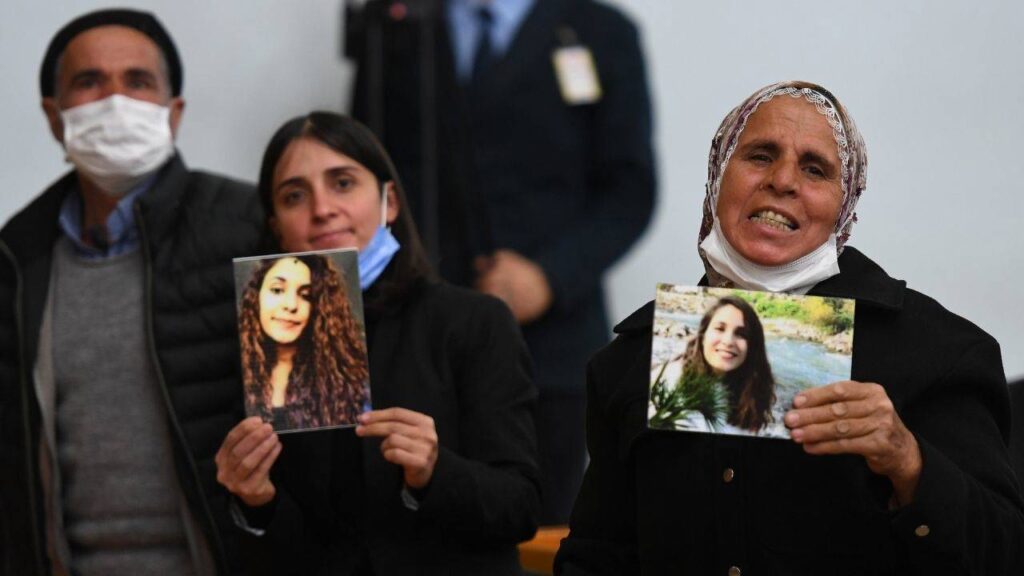
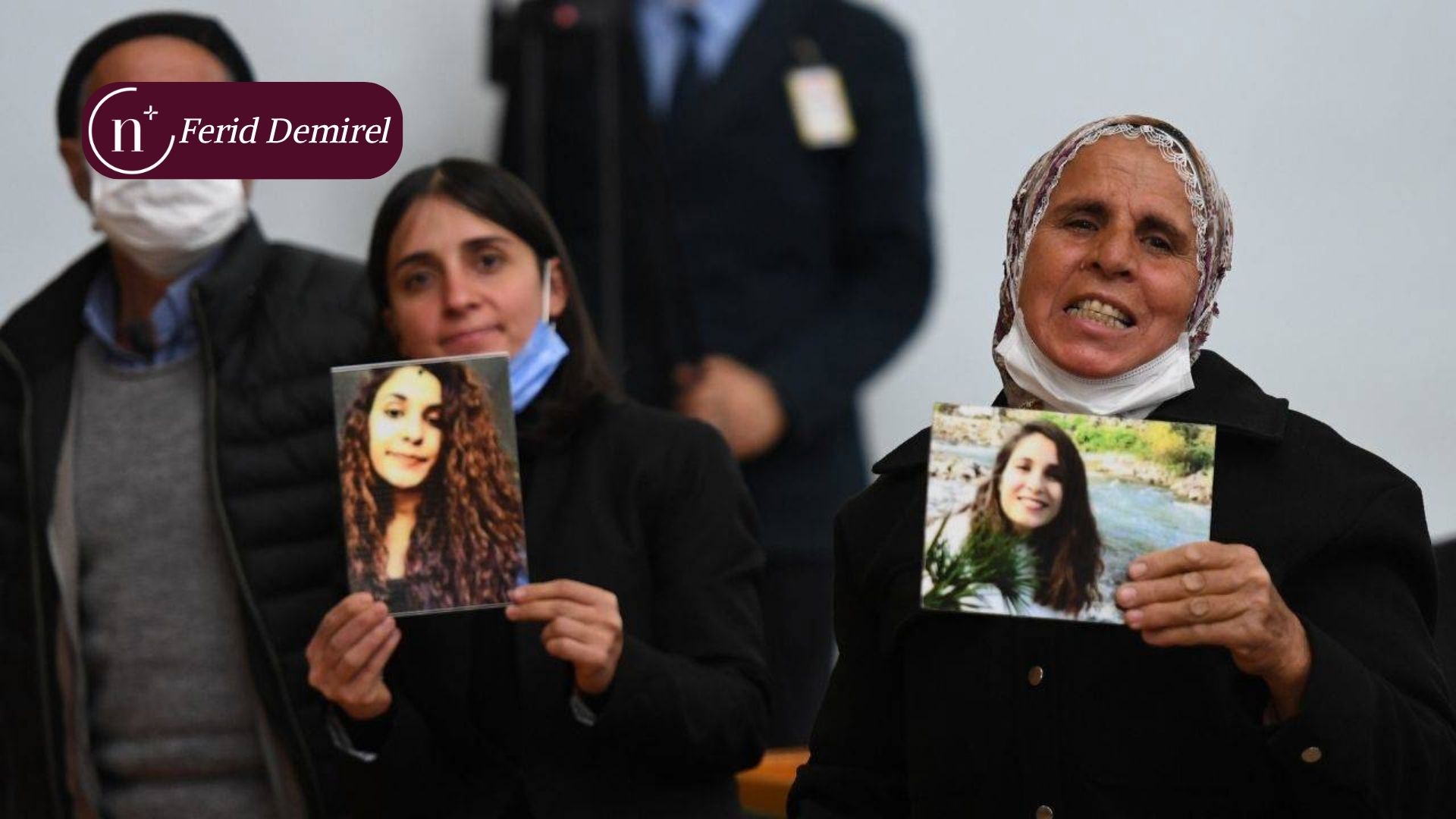
Gülistan Doku’s family (Photo: Birgün)
The murder investigation of university student Gülistan Doku, who disappeared in Dêrsim six years ago, has seen significant developments with numerous individuals, including former Tunceli Governor Tuncay Sonel and his son, being detained or arrested. The Doku family remains hopeful following the detention and arrest of new suspects.
Minister of Justice Akın Gürlek, speaking after a Cabinet Meeting on April 20, announced the establishment of a unit for unsolved murders and stated that files would be examined individually. Gürlek noted, “There is naturally an expectation after Gülistan, but that doesn’t mean every file will turn out that way.” He also announced that search efforts for Gülistan Doku’s body are ongoing.
We spoke with lawyer Gülan Çağın Kaleli—a jurist and women’s rights defender—about the reopening of the Gülistan Doku file and its potential impacts. Kaleli also serves as the lawyer for the family of İpek Er, who reportedly committed suicide after being raped by Sergeant Musa Orhan.
Lawyer Çağın Kaleli suggests that the reopening of the Gülistan Doku file could be a “new beginning.” According to Kaleli, “this situation emerged as a result of a political reckoning.” Stating that the subjection of Kurdish women’s bodies to harassment and rape cannot be considered independently of the “special war policies conducted in Kurdistan,” Kaleli recalled similar events from the 1990s. She noted that the male-dominated system views the bodies of Kurdish women as a territory to be “conquered.”
Gülistan Doku disappeared in 2020

Gülistan Doku, a second-year student at Munzur University’s Department of Child Development, disappeared on January 5, 2020, after leaving her dormitory. Her family filed a missing person report with the Provincial Police Department the following day.

Camera footage showed Doku boarding a minibus, but where she got off could not be determined. Following her disappearance, extensive searches were conducted in the Munzur River and the Uzunçayır Dam Lake in Dêrsim, where her phone last emitted a signal. Despite the lake being drained, no trace of Gülistan was found.

The last person Gülistan Doku met, her former boyfriend Zeinal A., was detained in Antalya in 2022, two years after the incident, but was released under judicial control. Another suspect, stepfather of Zeinal A., Engin Y., a police officer, was sentenced to two years and six months in prison for unlawfully obtaining and sharing Gülistan Doku's personal information on social media.

No further progress was made in the investigation over the last six years. According to lawyers examining the file, this was because the incident was treated as a "suicide." In 2024, Chief Public Prosecutor Ebru Cansu, appointed to the Tunceli Chief Public Prosecutor's Office, reopened the file.

According to media reports, earlier this year, a secret witness testified against the governor's son, leading to progress in the investigation. Reports stated the secret witness accused the governor’s son of raping and fatally shooting Gülistan Doku. Following this, simultaneous operations were carried out in seven provinces on April 13, 2026.

Justice Minister Akın Gürlek, who took office in February 2026, stated that the "investigation must be pursued to the end." At the time of Doku's disappearance, Süleyman Soylu held the Ministry seat, followed by Ali Yerlikaya.
- Mustafa Türkay Sonel (Son of former Governor Tuncay Sonel) – Arrested
- Erdoğan E. (Former Personnel of Provincial Special Administration) – Arrested
- Tuncay Sonel (Former Tunceli Governor) – Judicial Control / Ministry Investigation
- Zeinal A. (Former Boyfriend) – Arrested
- Engin Y. (Dismissed Police / Stepfather) – Arrested
- Cemile Y. (Mother) – Arrested
- Çağdaş Ö. (Former Chief Physician) – Arrested on suspicion of deleting hospital records
- Şükrü E. (Governor’s Bodyguard) – Arrested
- Celal A. and Nurşen A. (Parents of Umut A.) – Arrested
- Savaş G. and Süleyman Ö. (University Technical Staff) – Suspicion of deleting camera records / International travel ban
Lawyer Kaleli: “For 6 years, all evidence held by the state was suppressed”
The Gülistan Doku murder file has been reopened after six years. It has become a major headline in recent days. How do you interpret the developments of the past few days? What kind of picture do you see considering those detained so far?
I think the process that has been reflected to the public—which the Justice Minister claims to have accelerated today—should be interpreted as follows: All information, documents, and evidence held by the state for 6 years were effectively suppressed. These issues are too precious to be sacrificed to the state’s internal reckonings or conflicts between groups within the state, especially in cases of violence against women. Therefore, I believe the current picture should be characterized not as an act of courage by the Ministry of Justice, but as a fulfillment of responsibility.
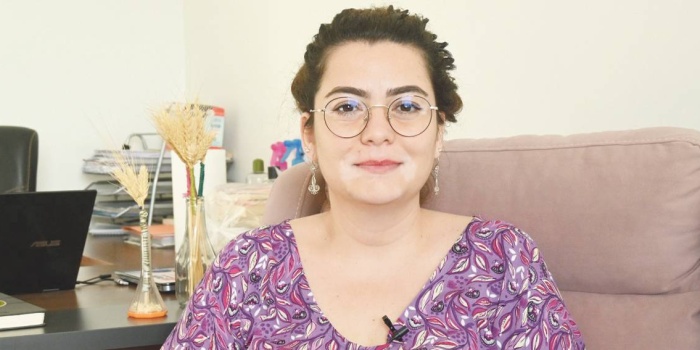
Gülan Çağın Kaleli, Photo: Özgür Politika
The matter of hiding, altering, or deleting so much information and evidence over 6 years by mobilizing all state resources once again reveals a ground where there is no legal security, where the state can interfere with the judiciary in every aspect, and where no one feels safe.
“Conflict Between ‘In-Norm’ and ‘Out-of-Norm’ Structures”
What do you mean by political reckoning?
I believe there are power balances within the Ministry of Interior. We are witnessing the definition of “in-norm” (norm içi) and “out-of-norm” (norm dışı) structures within the state quite vividly in this period. On one side, there are structures defending the functionality of the law; on the other, there was—and still is a representation leaning towards tyranny, oppression, and massacre, fostering polarization. We have gone through historical processes where “in-norm” structures played a bigger role depending on the political conjuncture, and periods where “out-of-norm” structures came to the fore.
The era when Süleyman Soylu played his role was a period when these “out-of-norm” structures fully held the state administration. Regarding the current process, I see it as a war between these structures. One side tries to create a “window dressing” by bringing concepts like human rights and justice to the forefront, while the opposition fights for a genuine ground for rights. These “out-of-norm” structures are not independent of the state; they are intrinsic to it.
It is known that the so-called “political will” must act in such cases. From this perspective, do you observe that these perpetrators could be the ones to truly shed light on the case?
We have seen many files where only the “visible face” of the curtain was touched while those with higher responsibility were not detained. The detention of high-ranking officials like the governor, deputy governors, and police officers under his command is a result of responsibility. This is positive. However, it doesn’t end with arrests. There is a risk that during these 6 years, critical information was destroyed. It is too early to comment on whether a fair trial will be conducted. At present, I can say at least part of that chain of responsibility is visible, as this appears to be a systematic and organized crime within the state. We must not “heroize” those simply doing their duty. The subject of this file is Gülistan: Her experiences, the violence, and the rape she was subjected to.
Do you expect or see signs that previous Ministers of Justice or Interior might be included in this chain of responsibility? Süleyman Soylu’s name is frequently mentioned.
During Süleyman Soylu’s term as Interior Minister, very hostile policies were produced against groups outside the hegemony, and he voiced these himself. His term left a serious wreckage, from raining instructions on every level of the judiciary to the police. However, the issue is not just Soylu as an individual, but the mentality he represents. Historically, the state has never touched those it assigned a specific mission until that mission was complete. Soylu did not act solely on his own thoughts; his role was shaped by forces within the state. Today, that role is finished. Now, a different path is being tried, and a “state reality” is attempting to polish itself through these cases. If we are to judge based on justice and equity, we saw what happened when these individuals held power previously. I personally doubt these figures will truly be affected.
You were also the lawyer for the family of İpek Er. The women’s movement and jurists evaluate such crimes in the Kurdish region as crimes committed by state officials, described as “perpertrators in uniform.” Do you evaluate the Gülistan Doku murder within this scope?
We certainly can. Following the curfews, the state deepened the wreckage using “special war policies.” These were not just against the body, but against the mind and emotions. The harassment and rape of many Kurdish women by police, soldiers, governors, or their relatives—as seen in the Gülistan Doku example—is not independent of these policies. The examples of Gülistan Doku and İpek Er are very similar. In a society that has been made precarious and impoverished, a process began where the state offered its own system as the only means of existence. It is important to highlight that women were emotionally manipulated by these perpetrators with promises of marriage before being subjected to sexual violence or forced into drug use and prostitution.
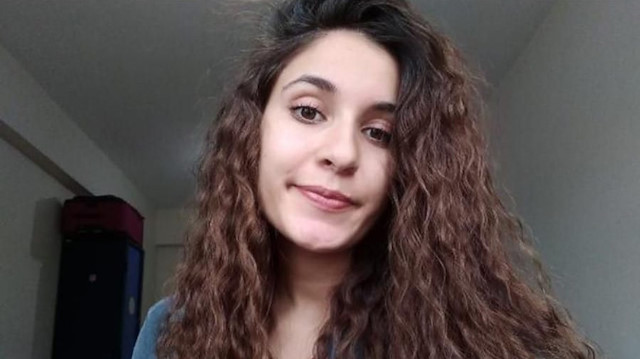
Gülistan Doku
“The law was weaponized”
The judiciary was also made a “useful apparatus” for these perpetrators. Law, which failed to mobilize to uncover the truth, was used to protect perpetrators through “good conduct” discounts or symbolic arrests to cool down public reaction. For example, after Musa Orhan raped İpek Er, no action was taken until İpek’s suicide attempt. Then, a symbolic one-week arrest was made only to decrease public reaction. Musa Orhan was sentenced to 10 years, and the case is still at the Court of Cassation. He is still being tried without arrest. Buoyed by such decisions, others in state positions feel emboldened. This is a form of psychological war.
“There is a horrific trend called ‘conquest’ targeting single women”
In the intense war environment of the 1990s, such situations were witnessed in the Kurdish region. What is the connection between the 2000s and the 1990s?
In the ’90s, there were many applications regarding sexual assault in custody, but fair trials did not occur. It was used as a war tactic that forced everyone into silence. Today, we are in a period where we have the advantage of being organized. One can express their experience to institutions, the press, or lawyers’ organizations. Historically—from the Armenian Genocide to the Dersim Massacre—the female body has been treated as a battlefield. In the ’90s, women were raped during village raids. Today, the same “rape culture” continues through emotional manipulation.
Within the gendarmerie and police in the Kurdistan region, there is a horrific orientation we call “conquest” toward single women—an attempt to “possess.” They signaled this during the curfews through graffiti or videos targeting the female body. Now, they have put this into practice in the field.
You made a connection between the female body and “conquest.” What do you mean by this?
The Kurdish movement has proven itself under women’s leadership. Therefore, an attack on Kurdish women is an attack on the Kurdish people. There is a male-dominated mindset at play; while the woman is seen as “honor” (namus), there is also a woman seeking freedom. The attempt to “possess” the body of the woman seeking freedom is a multi-layered attack on a land, a people, and a culture.
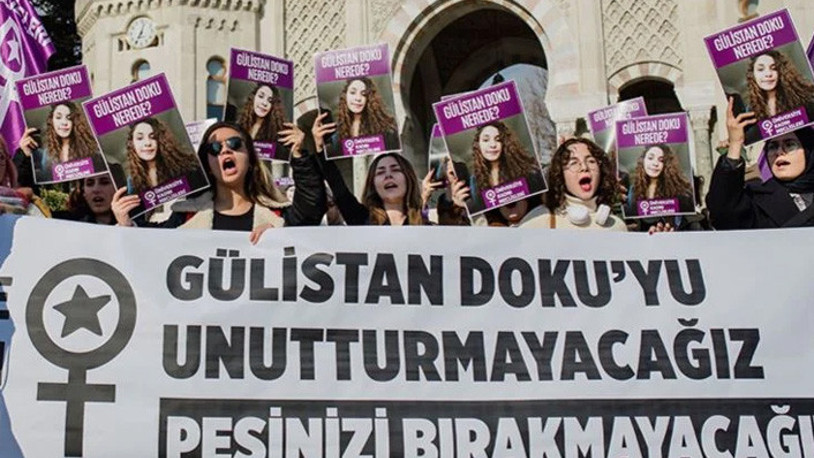
University students protesting for Gülistan Doku
“These are the results of the women’s struggle”
The Narin Güran case also returned to the public agenda. Considering the “political reckoning” you mentioned, is there a possibility that other “dark” files, such as Rojin Kabaiş or Gülistan Doku’s close friend Rojwelat Kızmaz, might resurface?
It is certainly possible. The Justice Minister called this a beginning and made a promise. However, this hope stems not just from ministers’ words, but from a powerful women’s struggle that has refused to give up for years. Women are the primary motor force here. The Gülistan Doku file is a beginning; these are domino tiles. If genuine courage is shown to touch the primary responsible parties, it could impact other files. But I believe this courage is drawn from lawyers and women’s organizations rather than state officials.