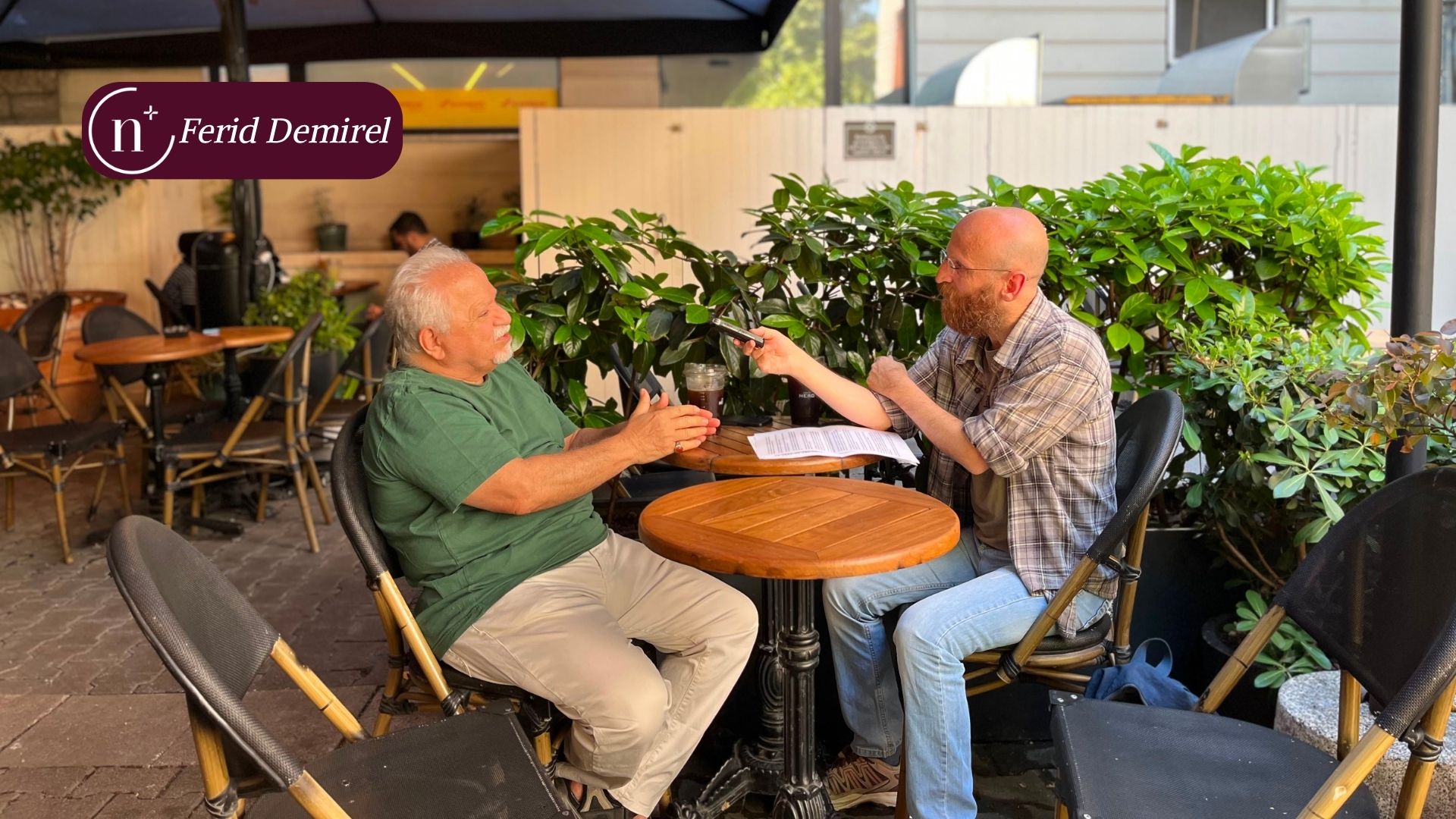
While a confidentiality order remains in place regarding the case of Niha+ reporter Abbas Vural who was among those detained during home raids conducted ahead of the NATO Summit to be held in Ankara on July 7–8, his detention period has been extended to 4 days. It has been reported that Vural was beaten during his detention.
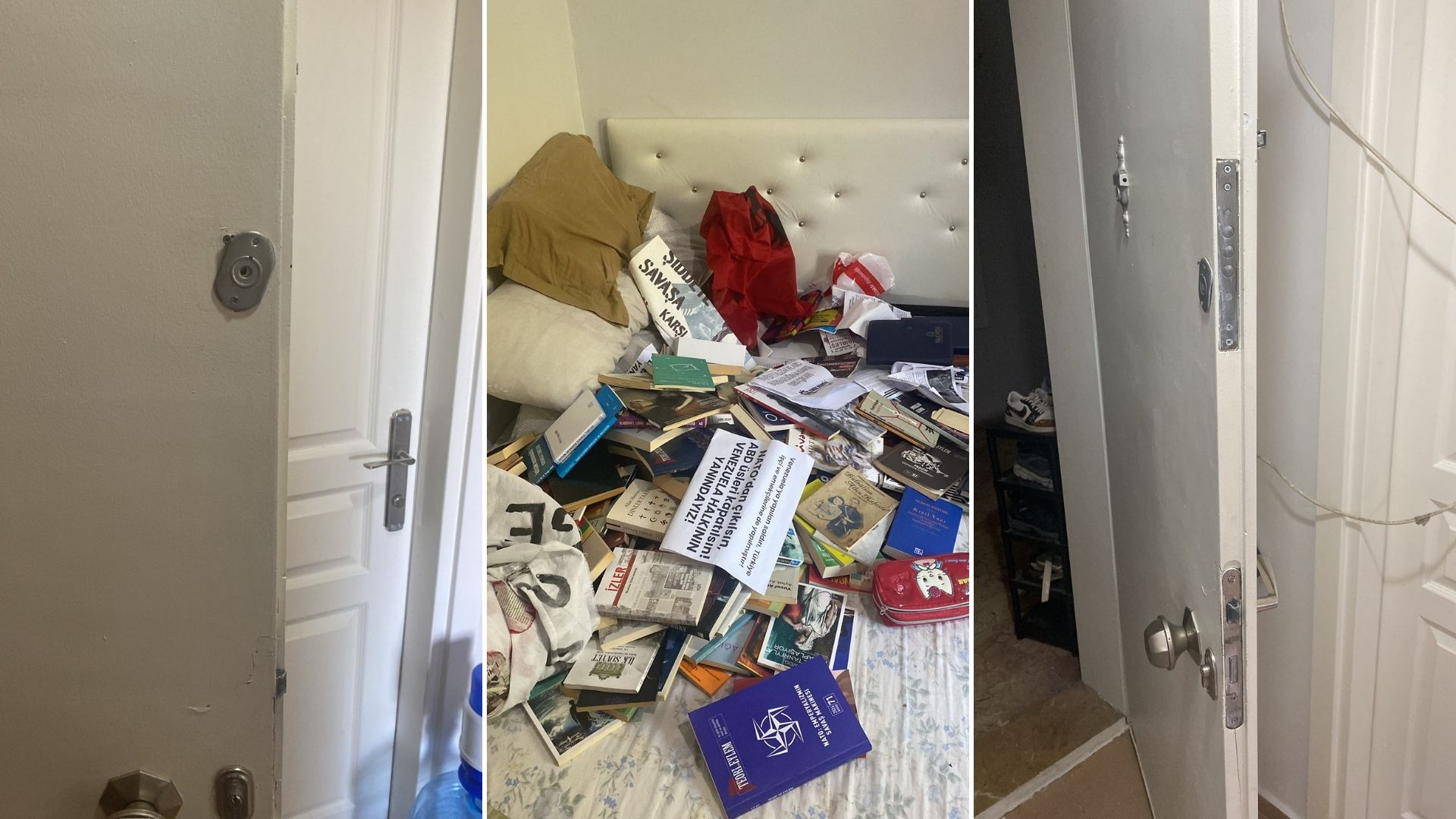
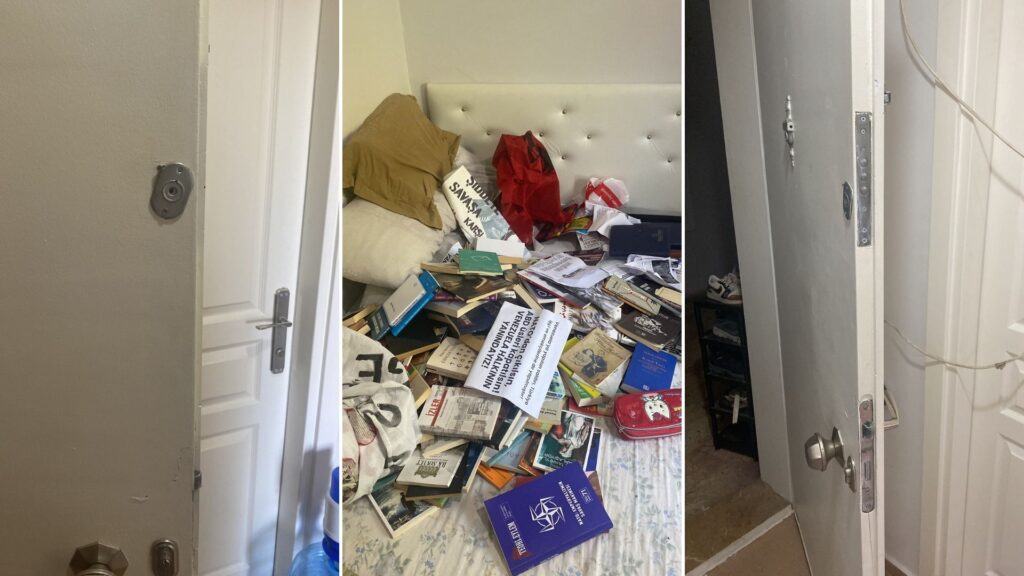
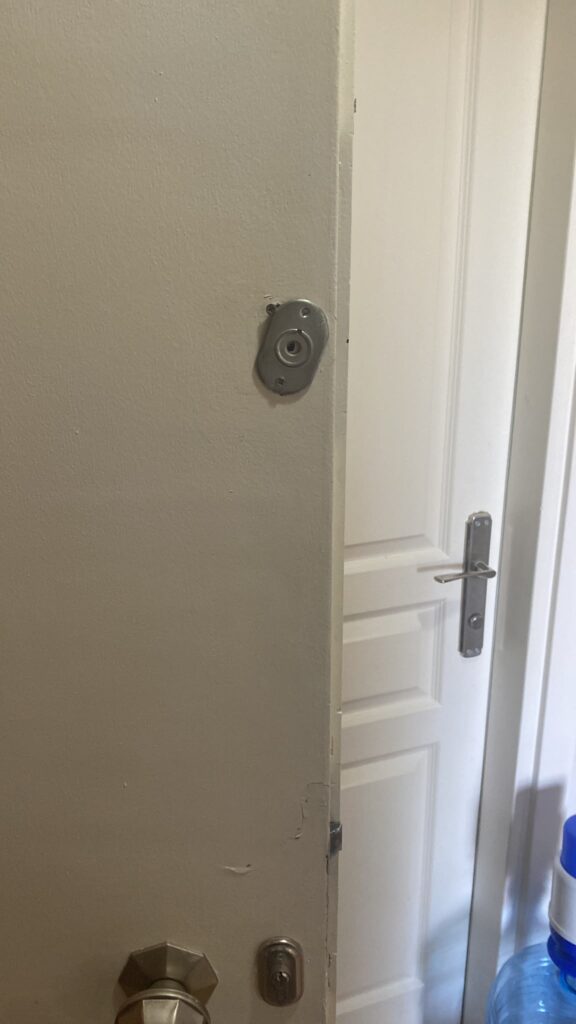
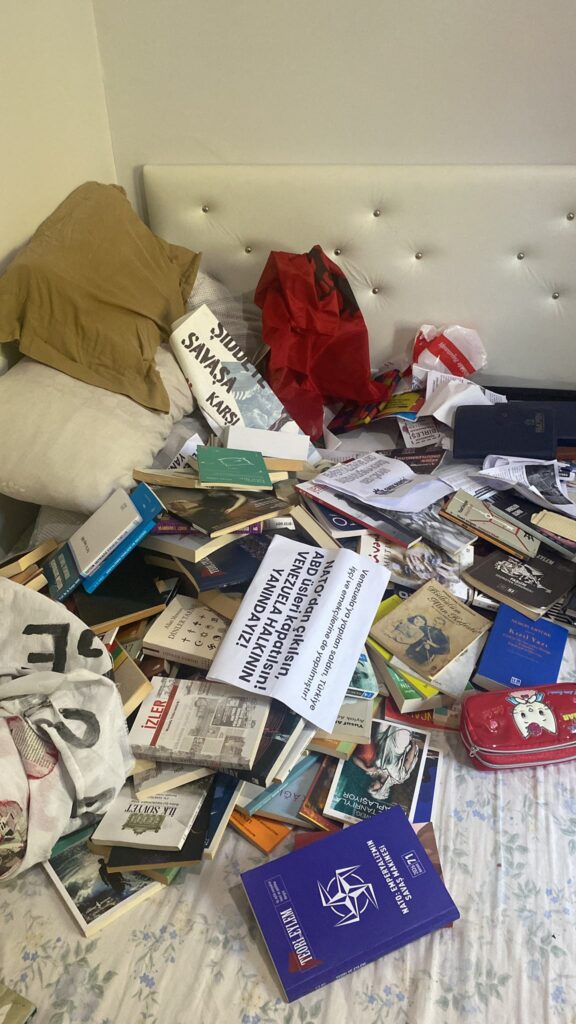
Police officers who broke down the door of the house where Abbas Vural was staying as a guest scattered the belongings and books inside the house, Photo: Niha+
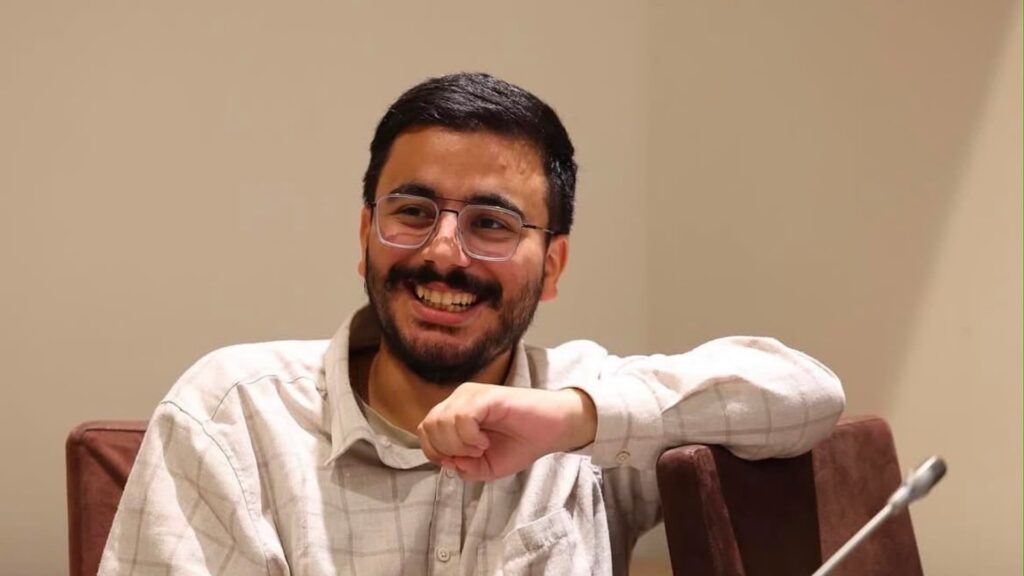
The detention period for Abbas Vural, a Niha+ reporter who was taken into custody following a home raid on July 5, ahead of the NATO Summit scheduled for July 7–8 in Ankara, has been extended to four days.
Attorney Elif Yetigin stated that, due to a confidentiality order on the case, they do not yet know what Vural is accused of, adding that defense attorneys have not been allowed to review the case file until the interrogation process begins.
Abbas Vural
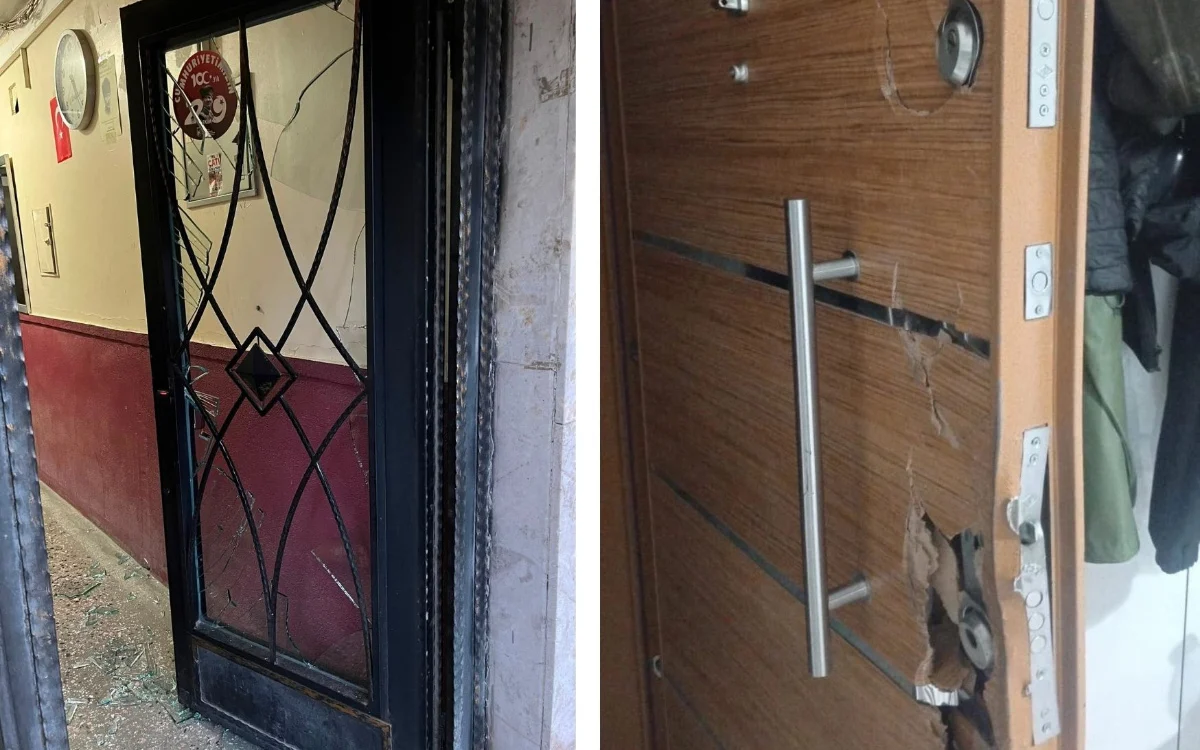
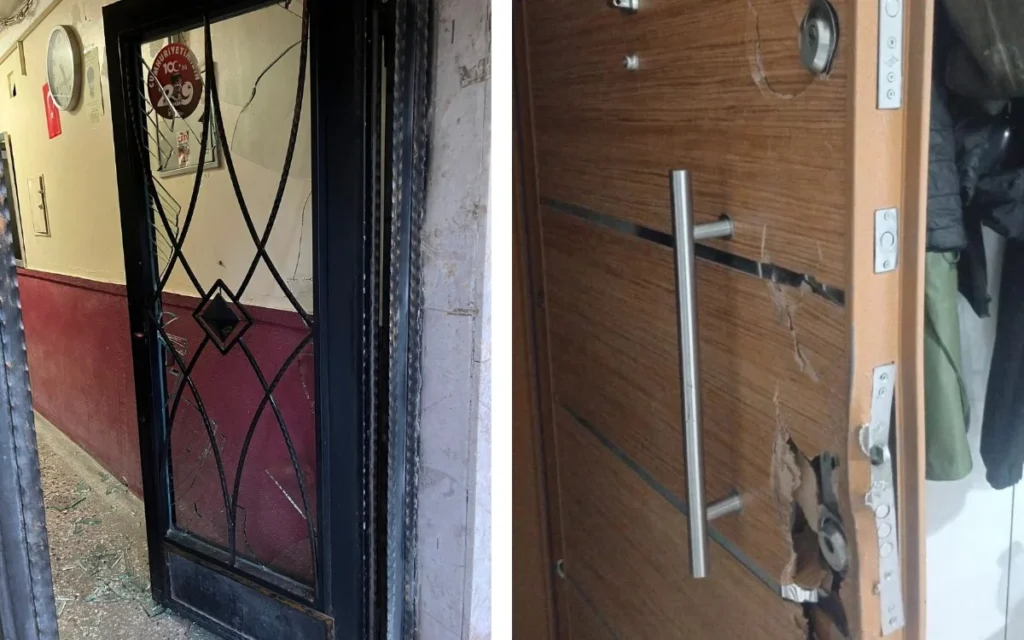
The raid was carried out by breaking down the door
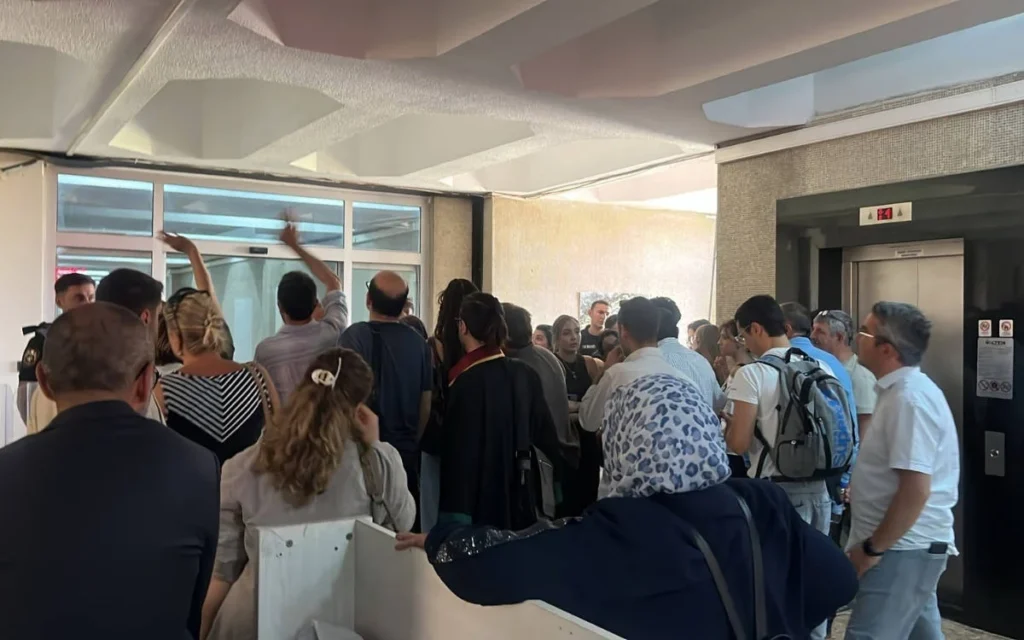
Meanwhile, details regarding Abbas Vural’s detention have begun to emerge. According to information obtained, special operations and Counter-Terrorism Branch (TEM) police officers jointly broke down the door of the home where Vural was staying and entered the premises early yesterday morning (July 5). The police, who woke up the occupants by assaulting them, pinned Vural and those with him to the ground with their hands cuffed behind their backs. After seizing phones and computers and obtaining the passwords to the electronic devices, the police identified the occupants, allowed them to change their clothes, and took them into custody.
Police officers got in by breaking down the door, Photo: Niha+
Confirming these events, Yetigin stated that the individuals, including our reporter Vural, documented the beatings and mistreatment they suffered during medical examinations at the hospital to which they were taken after their arrest.
Police officers scattered the belongings and books inside the house, Photo: Niha+
Detentions before NATO summit
Turkish police have arrested several journalists, rights activists, academics and members of leftist groups, according to media and unions in Turkey on late June.
Detention operations carried out across Turkey ahead of the NATO summit continued on July 5. In simultaneous home raids conducted in Istanbul, Ankara, Izmir, Kocaeli, Antalya, Dersim, Urfa, Çanakkale, and Bursa, a large number of people—including academics, lawyers, students, union members, and political party representatives—were taken into custody. It is known that some of the detentions were part of the “Turquoise Operation” carried out ahead of the NATO Summit.
Among those detained were Ezgi Önalan, President of the Istanbul Branch of the Association of Contemporary Lawyers (ÇHD), and association member Yunusemre Işık; Gürkan Gülseven, a member of the Executive Board of Halkevleri; Gülcan Şahin, President of the Antalya Halkevi; and the entire branch management; members of the Turkish Workers’ Party (TİP), Emek Youth, and the Kaldıraç Movement, as well as central and local executives of the Private Sector Teachers’ Union (Yiğit Pertev, Diğde Simay Pertev, and Mehmet Akif Karaca); academic Sibel Özbudun; and writer Temel Demirer.
In addition, press organizations such as DİSK Basın-İş and the Dicle Fırat Journalists’ Association (DFG) had expressed their opposition on social media to the detention of Niha+ reporter Abbas Vural, T24 foreign news editor Buse Söğütlü, and Oda TV editor Ceren Erdoğdu.
As part of the home raids conducted ahead of the NATO Summit to be held in Ankara on July 7–8, 58 more people were arrested this morning and sent to prison.
Photo: Evrensel
Investigations continued ahead of the NATO Summit, scheduled for July 7–8 in Ankara. Of the 225 people taken into custody during home raids conducted in Ankara on the morning of June 23 under the name “Operation Turkuaz” ahead of the NATO Summit, a total of 178 had been arrested. This morning, arrest warrants were issued for 58 people taken into custody as part of the same operation.
In the operations, which involved 46 teams and 396 personnel, 58 people—reported to be wanted on charges of “terrorism, narcotics, security, and public order”—were taken into custody. After undergoing procedures at the police station, the 58 individuals were transferred to the courthouse, where they were detained by the court and sent to prison. This brings the total number of detainees to 236.
On Thursday, 34 people were released under house arrest, while 6 were released by order of the prosecutor’s office. Among those detained that day were volunteers from the TEMA Foundation; Yıldız Tar, Editor-in-Chief of Kaos GL; Assoc. Prof. Dr. Emel Memiş, a faculty member at Ankara University; Hediye Yıldırım, a member of the Executive Board of Halkevleri; Burcu Arıkan, spokesperson for Umut-SEN; and attorneys Semra Demir and Kürşat Bafra from the Contemporary Journalists’ Association (ÇHD).
The Ankara Governor’s Office had banned all types of activities—including meetings, demonstrations, marches, press conferences, sit-ins, and rallies—in the city for 13 days, from 12:00 a.m. on June 28 to 11:59 p.m. on July 10, due to the NATO Summit scheduled for June 7–8.
As the dust settles from the February 2026 conflict between the US, Israel, and Iran, the regional power balance has been fundamentally reshaped. Political theorist Professor Abbas Vali argues that while the US and Israel achieved military dominance, Iran emerged with a significant strategic victory. In this deep-dive interview, Vali addresses the “strategic homelessness” of Kurdish politics, the failure of traditional armed struggle in Rojhilat, and why the path to influence in the new Middle East lies in civil society rather than the mountains.
Photo: Niha+
Although the US and Iran reached a memorandum of understanding to reconcile on June 17, 2026, the attacks and problems caused by the war continue. Especially due to the situation in the Strait of Hormuz, conflicts occur frequently, and following this, US President Donald Trump threatens to eliminate Iran.
This situation, which began with the attack of Israel and the US against Iran on February 28, 2026, changed the balance not only in Iran but also in the Middle East and the Gulf countries.
During the war, Israel and the US were attacking Iran, and in response, Iran was attacking Qatar, Kuwait, Saudi Arabia, US bases in Iraq, and several other countries.
Furthermore, Kurdish forces based in the Kurdistan Region were also exposed to Iranian bombardment.
The agreement between Iran and the US draws the most attention to the Strait of Hormuz. According to interpretations, the US was forced to compromise due to this situation in Hormuz. Professor Abbas Vali also draws attention to this situation. According to Vali, as a result of the war, the US and Israel won in the military field, but Iran won in the strategic and political field.
Abbas Vali also evaluated the situation of the Kurds in Iran and stated, “Within the Iranian opposition, the only force that is armed and capable of using weapons is the Kurdish opposition.”
About Abbas Vali
Professor Abbas Vali is a Kurdish political theorist from Mahabad, Iran, and one of the foremost scholars on Kurdish identity and nationalism. He studied in Tehran and London, earning his PhD in Historical Sociology from the University of London, and later taught at Swansea University and Boğaziçi University in Istanbul. He was also the founding president of the University of Kurdistan in Hewlêr. His works include Essays on the Origins of Kurdish Nationalism and Kurds and the State in Iran: The Making of Kurdish Identity.
Following the attacks by Israel and the US on Iran that began on February 28, the situation moved to a new phase with an agreement on May 17, following several meetings. When we look at the content and timing of the agreement, were the parties to the war forced to reconcile?
It is not a treaty. In English, they call it a Memorandum of Understanding, meaning mutual understanding and reconciliation. Apart from that, it is not an official treaty or agreement. It is an exchange of letters. They write a letter and sign it, the other side signs it and sends it back; that is what we read. There was a mutual understanding here. I must say here that both sides, America and Iran, although there was less pressure on them in terms of foreign policy, were under great pressure in domestic policy.
If we talk about Iran, there is a systemic crisis in Iran. Economic, social, cultural, and financial. But the fundamental problem and main crisis is the economic and financial crisis. It has no money; the government has almost gone bankrupt and collapsed. Therefore, they needed this. Because of this economic and financial crisis, Iran could not manage what they call Biopolitics, that is, the politics of people’s lives. Because it had no money or economic resources. This was also a fundamental issue because it feared that if it could not manage this in the long run, there was a high probability of another uprising inside. Because the January uprising was very big. This is one thing.
It is clear that Iran had been exposed to a war; it had entered that war, but a large part of Iran’s military, security, and economic programs had failed and collapsed. It could not continue in this way. However, the situation when Iran entered the war and the time the war stopped were very different from each other. When Iran entered the war, conditions were different; now they are different. There were two reasons for this. First, Iran was able to resist. It showed great resistance and defense. Of course, it also suffered great damage. Many places were devastated, its bridges were destroyed, factories and workshops were destroyed, but it continued its resistance.
The second reason was that Iran was able to hold the Strait of Hormuz in this war. With this move, it changed the calculations of the war. That is, the current mutual understanding is based on the fundamental issue of opening the Strait of Hormuz. This issue did not exist before the war. It emerged during the war. Another point is that America wants Iran to accept and promise not to build nuclear weapons. Iran has already said this from the beginning. It said we will not do it. Even during the Obama’s terms, when they had an agreement, Iran had accepted that uranium enrichment would be around 3.5%, that is, less than 4%. However, when Trump came in 2018, he changed this situation, broke the agreement, and destroyed the Obama administration’s agreement. At that time, Iran began to enrich uranium. Until it reached 60-65%. This is very close to making an atomic bomb.
Now America wants that enriched uranium, which is about 400-450 kilos, to be either destroyed or reduced in density, i.e., concentration. Or for it to be given to Russia or a country like France so that they can do this work. Iran says, “This is not in my hands right now. They are under the bombed places, and even if they are removed, we will not allow them to be taken out of Iran; we will handle it ourselves here.” That is what Iran says.
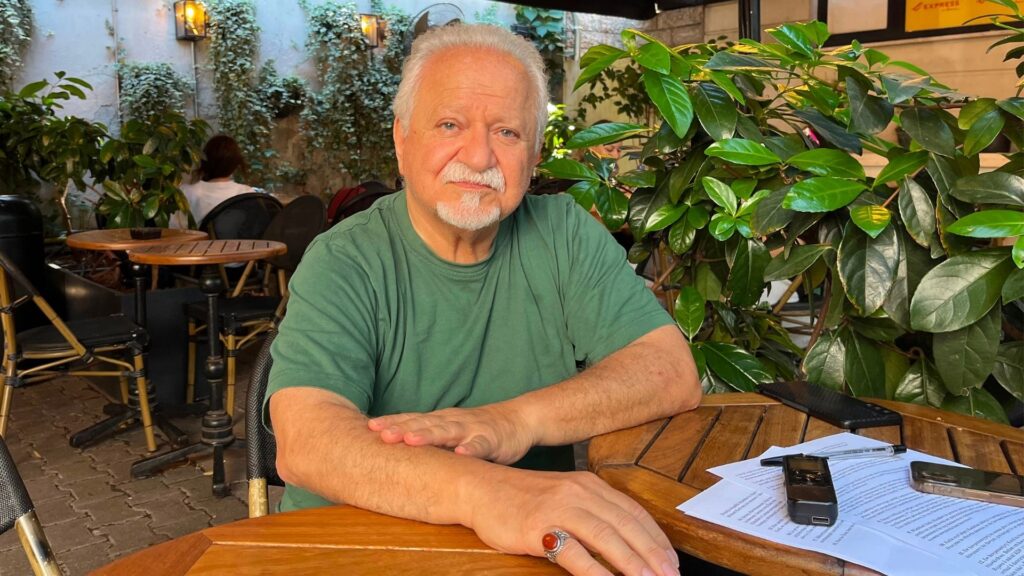
Prof. Abbas Vali, Photo: Niha+
What is the US saying?
America primarily wants the Strait of Hormuz to be opened. Because there is great pressure on America. Oil prices have risen, food prices have risen. Not only in America, but everywhere in Europe, and even in Turkey, gasoline prices and airline tickets have become more expensive. All of these have become more expensive.
They want this place to be opened. Secondly, they want Iran to accept stopping uranium enrichment, that is the issue. However, there is also great pressure on America itself. If you remember, when Trump came to power, he said, “I will be a president who does not go to war.” But he started a war that is still continuing in some way even now. On the other hand, the war Trump waged was not necessary in terms of the requirements of American politics. But a large part of this war was at the instigation of Israel; Israel forced him.
“Israel wanted the war to expand”
What did Israel want?
When that war started, the goals of America and Israel were different. America wanted to strike a blow at Iran, weaken it militarily, and force it to accept America’s terms. America did not want the Iranian regime to be changed. America did not want to wage a long-term war with Iran, nor did it want Iran to be devastated and disappear. Because America’s strategic interests were very different from Israel’s. America is a major regional power in the Middle East. The issue there is not just Iran; at the same time, it must take into account the interests of Arab countries.
The interests of Arab countries like Egypt, Saudi Arabia, Qatar, and others… Iran knew this too, so Iran’s policy was basically to know that America wanted a limited war, but it also wanted to expand the war.
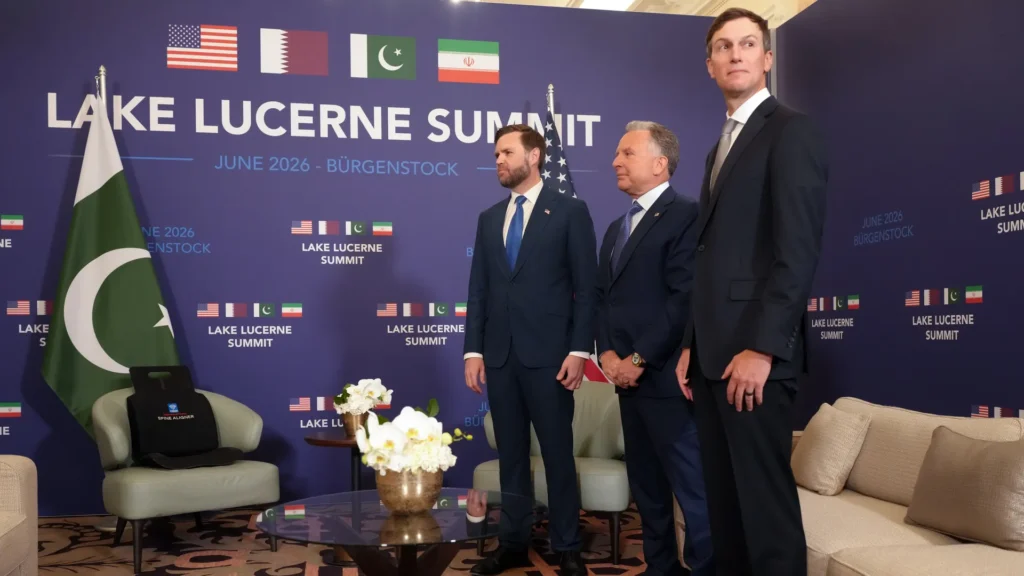
J. D. Vance, Photo: Nathan Howard-Pool/Getty Images
What was the result of this great war?
Iran could not defeat America militarily, but it could attack the countries where American military bases are located. For example, in Bahrain, Jordan, Saudi Arabia, and even in Muscat and Oman. Therefore, America was very sensitive and vulnerable in this regard. Trump could not tolerate this. Because there was something else. Arab countries had always accepted America’s dominance. They had given money to America, invested there, and at the same time left their defense in America’s hands. But when Iran attacked them, America could not protect them, and they suffered great damage.
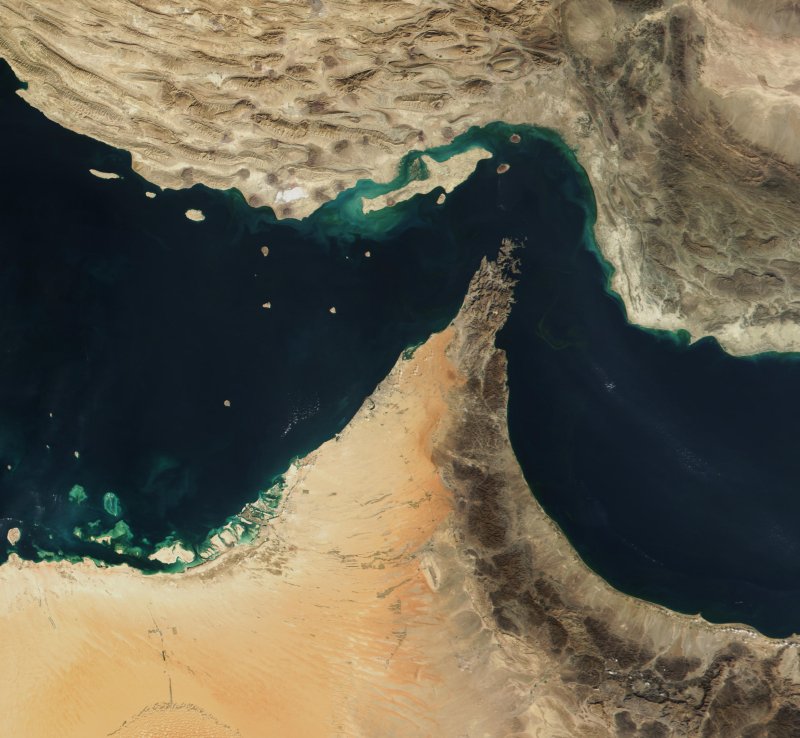
Strait of Hormuz, Photo: Wikipedia
“Iran is now much stronger”
Did the existing balance in the Gulf and the Middle East change after the Iran war?
Yes, that balance has now changed in this direction: Iran is now much stronger in the region. Because it showed that it is the only country that can stand against America, Israel and wage war. Also, a strategic region like Hormuz is under its control. But if you pay attention, Israel’s strategic interests were different. Israel wanted to change the Iranian regime as much as it could. If this did not happen, it wanted to completely devastate Iran and make it like Syria. After that, it aimed to destroy Iran’s missile project, ballistic and cruise missiles. Israel’s fourth condition was to destroy Proxy powers such as Hashd al-Shaabi, Hezbollah, and Hamas.
Did those forces disappear?
No. Iran’s current power is that it is negotiating with America. And it has enough power to put Lebanon on the political agenda of the negotiations. Lebanon is not a part of Iran, but because Iran has this power, it can put Lebanon on the negotiation agenda. This is something that is extremely contrary to Israel’s interests. If you pay attention, Israel’s strategic interests and America’s interests had not aligned from the beginning. When the war started, it is true that America and Israel were together militarily, but their political and strategic goals were different.
Did this difference disappear as a result of the war, or did the gap between the goals of the two states increase?
The situation has now reached a point where J.D. Vance is threatening Israel. On the Iranian side, they no longer allow anyone to say “Death to America.” This shows that they have reached an agreement. That is, a soft coup took place within Iran’s power structure. That soft coup caused the power centers within the Revolutionary Guards and a part of the administration to reach an agreement with America. If you pay attention, they are now agreeing with America. For example, Qalibaf goes to Beijing to say to them, “We have agreed with America, but this is not against your interests.” Therefore, if we look at the stance of Iran and America, we will see a paradox: America and Israel won in the military field, but Iran won in the strategic and political field.
“Shah’s son had no power”
Following the start of the war by America and Israel against Iran, demonstrations and an uprising were expected in Iran to overthrow the regime, but this did not happen. Why didn’t it happen? What was the obstacle that prevented this from happening?
Yes, that uprising was a real and true uprising, but it had no leadership. Because that uprising fell under the influence of right-wing forces, especially monarchists and those who wanted the Shah back. The Shah’s son came out and said, “Go to the squares, I will support you.” Trump came out and said, “Go to the streets, fight the regime’s forces, I will overthrow the regime.” The people went down, but no help came.
Did the Shah’s son have the power to engage in such an undertaking?
The Shah’s son also had no power. Here, the regime knew that this uprising was very important. On the other hand, unlike the “Jin, Jiyan, Azadî” uprising, this uprising did not have a democratic identity. More than anything, their goal was to overthrow the regime, and they were not talking about democracy or things like that. When the Iranian regime understood that the US, Israel, and the Shah’s son had a hand in this, it attacked with all its might. In 48 hours, they killed nearly 50 thousand people in Iran. Even the Iranian Medical Association says that more than 65 thousand people have been killed.
There is something here: Trump said “You go, I will help you,” but after the war started, to protect himself, he came out and told another lie, saying “We gave weapons to the Kurds but the Kurds did not come.” This is a lie. First of all, no weapons were given to the Kurds. Secondly, the opposition that existed in Iran at that time was not organized, and it had no organization. To whom will you give the weapon? A weapon is not something you go and distribute on the streets. You must give it to an organization. There was no organization. Right-wingers had no organization. Maybe the democracy advocates had a small organization, but they were not in the conditions to go out and become armed and fight the regime. The reason Trump said this is: Within the Iranian opposition, the only force that is armed and capable of using weapons is the Kurdish opposition.
So what did the Kurds do at that time?
They had already not been given weapons. Even the general of that time made a statement against Trump and said, “No weapons were given to the Kurds; the weapons went to Başûr (Irak Kurdistan Region) and are in American bases.” Two weeks ago, their representative Tom Barrack also said, “We did not give weapons to the Kurds.” This was a big lie Trump told to defend himself.
What did the Kurdish forces in Iran want during this war?
Their stance was: Of course, they were pleased that the regime would be overthrown, but they said, “This is not our war, we do not want to participate in this war.” Because they had no faith in the goals of America and Israel. What they said turned out to be true. Look, now Iran and America have agreed, and Israel has become almost marginalized. True, Israel will return to its place, but it takes time. In this regard, the Kurds said we do not support the bombing of Iran, and it was a good thing that they did not support it.
“It cannot be done with just air strikes”
What would have happened if they had supported it?
It would not have happened. Because the Iranian people had no air defense power, the people were under bombardment. Not only in Kurdistan, but the people in all of Iran were disturbed by that bombardment. Everyone, even all strategists, know that the Iranian regime will not be overthrown by bombardment. There is no example in history where a regime was overthrown only by bombardment. If America and Israel really wanted to overthrow the regime, they would have had to send an army to Iran. All strategists were saying that sending an army to Iran is like suicide. Iran’s surface area is 1 million 648 thousand square kilometers, that is, almost as large as the whole of Western Europe, and it has a population of 95 million. If you take an army to that region, it will be a hundred times worse than Iraq, and the war will spiral out of control. Its geography is very difficult. When a country is attacked, the nationalist feelings of the people rise. For example, in the Iran-Iraq war. Iran fought for 8 years. One and a half million people were killed, a large part of Khuzestan and Lorestan was devastated. But the regime did not fall and it won. America and the Soviet Union at that time were saying, “Help the Saddam regime so that it stays on its feet.” American strategists knew that Israel could only conduct an air strike in the long term, but it could not wage a ground war. Because Israel has a small army and is a very small country. It is 71-72 times smaller than Iran.
“Kurdish reconciliation is good but not enough”
An agreement was made between the Kurdish forces in Rojhilat. Several Kurdish parties and forces gathered and signed this agreement. What was the impact of this agreement of Kurdish forces during the war, and how will it be after the war?
This agreement is good, it is blessed. It is an example of what they call “necessary but not enough.” Because this agreement has no infrastructure, no operational and practical mechanism. I have said many times that their agreement must have an operational infrastructure and mechanism. There should be a kind of unified military-political operational phase. This does not exist. Even something else does not exist either, and that is a unity of discourse. That is why their current agreement is very, very weak as an organization. It must have a military-political infrastructure; above all, there must be a unified Peshmerga force. It must be unified in terms of ideology and strategy. The declarations they issue, that is, their words, must also be unified. And more importantly than all of them, a unified political and strategic program must be established for which political forces will act in accordance. But they don’t do this job.
Did the war that took place in Rojava at the beginning of 2026 and the results that emerged in Rojava affect the Kurdish forces in Rojhilat?
What happened to the Kurds in Rojava was very important, especially for the Kurds of Rojhilat. One; If you work with America, if you work with America like the Rojava forces, you must be a partner of America, not under America’s command. Furthermore, in the relationship with America in Rojava, while working with America, there was no kind of political autonomy.
It was not in the military either. Because there too, when they gave them weapons, those weapons were under America’s control. The day America said “no” to them, they also stopped their weapons.
You mentioned this before. The issue of weapons also came up for the Kurds during the Iran war process.
In American history, it is known that America has worked with opposition forces many times in the world. However, in a secret way. This was under the control of the CIA, under the control of secret military agencies. For the first time, it worked openly in Rojava. But Rojava could not benefit from this. That is, it conducted that ISIS war, twelve thousand Kurds, guerrillas, were killed in that war. But it could not obtain its political subjectivity. This is a very important point. In Rojhilat too, Trump was probably wanting exactly this. He wanted to use the Kurds as a special force.
Does America not have a political map for the Kurds?
No. It had no political map. When it came, that was the time, America was working with the Kurds and was also working with “Hayat Tahrir al-Sham.” And it was not telling the Kurds this. If the Kurds had known this then, they would have had to clarify their stance. It was clear that America and especially Britain, because this is a British project, did that work with Turkey. In the end, they said, “Here, this is our project.” America and Britain created the project. This was not Turkey’s work. They only used Turkey. That is, the project, the idea, the strategic idea was America’s and Britain’s.
“The design of the Middle East changed after the war”
There is a widespread discourse, it is said that there is a new design in the Middle East. According to your view, is there a new design in the Middle East?
That design existed, but this Iran war destroyed that design. Now, whatever design they set up, whatever military and political balance they set up, they must account for Iran. That was how it was; the goal then was to strengthen the hegemony of America, including Israel, that military hegemony. Now that calculation is gone. That is, this war destroyed it. One thing that is very important is that the war that was conducted showed the strategic limits of America’s hegemony in the Middle East. This is the biggest lesson that countries, especially Kurds, must learn. If the Kurds in Rojava had made an agreement with the Druze and Alawites in their time, if they had fought with them, that front would not have broken. They did not do that work. Because when there is defense, when there is resistance, you can change the calculations. In Rojava, they had military power. They had guerrillas, male guerrillas, female guerrillas, they had everything. At that time, the Ahmad al-Sharaa government had not held itself. But they did not make a sound. They sat down and accepted everything America said. Everything Tom Barrack said “do this” to them, they did. I believe that the Kurds in Rojava made a great strategic mistake whose consequences were not only for Rojava, but also had bad consequences for Başûr and Rojhilat.
There are comments saying that the situation of the Kurdistan Region might change after the war in Rojava. What is your opinion on this?
There is such a danger right now. America wants to centralize there too. Centralization means that the regional government must either shrink or lose a large part of its forces. However, the regional government cannot do this either. Because it is not unified. If there had been a unified government in the region, this job could not have been done. The truth is that it is not only America doing this. Turkey is also behind it. In all likelihood, Turkey will really want the conditions to be formed to take the Mosul province and its surroundings under its control. Trump’s America has a very, very weak strategic thinking. For example, the Iranians had sent people to the negotiations whose ideas were very good. But whom had America sent? They sent Jared Kushner with Witkoff, who know nothing about the Middle East. In America, the right wing, which Tom Barrack is also part of, is in power. They have a racist mentality. That racism says that democracy and equality cannot exist for Middle Eastern countries.
They say that authoritarian centralized governments must be established in the center. They want to do this in Syria. They want to do the same work in Lebanon, they want to do the same work in Iraq, and they want to do the same work in Iran, which already has such an authoritarian government. That “New Middle East” project is gone now, they must put forward another project.
What are the Kurds in the Kurdistan Region doing against this situation?
The Kurdish forces in Başûr are not unified. The Kurdish forces in Başûr have no strategic thinking. If they had strategic thinking, the Kurdish forces in Başûr would not have given control of Kirkuk to the Turkmens. They gave control of Kirkuk to the Turkmens, that is, they gave the fate and control of Kirkuk to Turkey.
The relationship between the PUK (YNK) and Turkey was bad.
Now it is good.
Why is it good now?
Because the Patriotic Union (PUK) went closer to Turkey due to the rivalry with the Party (KDP) and Erbil.
However, contrary to the PUK, the relationship between the KDP and Turkey was very good.
It is no longer like before.
What changed?
Because when the situation in Iraq came to the fore, the Party (KDP) weakened. It weakened both in the Baghdad government and in Kurdistan. Now the PUK receives both Iran’s support and Turkey’s support.
You mentioned Turkey’s role in the Kurdistan Region of Iraq. What was Turkey’s stance and position during the Iran war?
There is something that has emerged these days that I think is likely to be true. It is said that Trump said: “If we did not help the Kurds, it was because Erdogan threatened us. If you do that, I will attack Israel.”
With the Iran war, many people are now expressing this loudly. According to those who hold this view, one day Israel and Turkey will fight each other.
That probability existed. To the extent that it would frighten them, he said, “I will not fight with Iran, nor with America, but I will attack Israel.” It means that when they remove Iran from Syria, when they want to remove Iran from Lebanon, when they want to remove Iran from Iraq, all these are in Turkey’s interest. Turkey filled Iran’s place in Syria. It is likely that it will do the same work in Iraq. Because they want to remove Iran from Iraq. But this is a difficult thing, it is very difficult in Iraq. Because the majority of the Iraqi people are Shia and Iran has influence there. They cannot do this job, they can do it with great difficulty. A big war will break out. Then the problem is, this time Barzani could not easily make an alliance with the Shia forces as before, but YNK did. The fundamental problem is here.
Is the situation of the Iranian people better or worse after the war compared to before the war?
It became much worse. This war reduced the political subjectivity of revolutionaries and the people. Before the war, after the Jina Amini Revolution, civil society in Iran had become quite radicalized. But this war reduced that very much. Now the people are busy with the troubles of daily losses. That is, inflation is very high, eating bread, making a living is very difficult. In such a condition and situation, people’s political practice and political subjectivity decrease. This war reduced this.
What are your predictions for the scenarios that will take place in the Middle East in the coming period?
In my opinion, there are two main powers in the Middle East right now: One is Israel, and the other is Iran. With these conditions and circumstances that have been passed through, and with the situation that has arisen, and with the stance shown by Turkey, Egypt, and others, I think the probability of Arab countries turning their faces to Israel and becoming members of the “Abraham Accords” is very low. Very, very low. I think Arab countries will try to pressure America and say, “Make an agreement with Iran,” so that security can be established in the region and also to help a better change take place in Iran. So that Iran can stabilize. If Iran stabilizes and is not threatened, then this region can reach stability.
“Kurds are weaker than ever”
What is the role and position of the Kurds in this scenario? What falls to the Kurds’ share?
In this period, the situation of the Kurds in the Middle East is now weaker and more fragile than ever. We were in a period twenty years ago when it was said that “the twenty-first century will be the century of the Kurds.” However, the twenty-first century did not become the century of the Kurds. It happened like this: The mistakes in Başûr were very big. Başûr could not establish a unified national government. In Başûr, there is a tribal government. America knows, Turkey knows, Iran knows. They know that the enmity between Barzani and Talabani is more than anything else. Başûr could not succeed. Rojava also could not obtain weapons under those conditions and circumstances that emerged. Rojhilat is now in the same situation. Kurds are alone, that is, the Kurds themselves, cannot do such a job. If they are to do it, they must do it together with Iran’s democratic forces. But they are also not ready to accept all the demands of the Kurds. Therefore, Kurds must now truly make a strategic review in their views and strategies.
In my opinion, what has emerged now is that the strategy of armed struggle in Rojhilat has failed. They must choose another way; they must know how to gather themselves, how to establish a unity, and how to lay the foundation of a unity in the civil society of Kurdistan. The truth of it is that if a strategic change is to be made in Eastern Kurdistan (Rojhilat), it must be said that armed struggle has ended. Because armed struggle is a strategy. If its opportunities do not remain, that strategy cannot continue. Those opportunities are no longer left.
There is another thing, military technology has changed now. Now, for example, even in Bakur, the largest part of the PKK forces are underground. That is, the technology of war is like this. Right now, Turkey has I don’t know how many thousand military bases. There are many. All those bases are interconnected. That war is a drone war, an air war; that war is not a Kalashnikov war. But the Kurds’ war is really a Kalashnikov war. That’s why for Rojhilat, this strategy must change; you must know that the weight of this strategy is shifting from the mountains to the cities. That is, it is moving from the mountain to civil society. Therefore, the Kurdish strategy must direct its focus on how it can establish itself in the cities, within civil society. Okay, Kurds say the Iranian government is a despotic government, it kills. All of these are true. But staying in the mountain doesn’t go anywhere, staying in the mountain is not the solution. This is it. When the strategy changes, the center of work and activity also changes.
The Information and Communication Technologies Authority (BTK) has blocked access to the X accounts of numerous individuals, including freelance journalist Yusuf Çelik, Esra Ece Kutlu, Zilan Azad, Kaos GL Editor Oğulcan Özgenç, sendika.org Editorial Board Member Nisan Çıra, and journalist Yıldız Tar, who was arrested on June 25.
Photo: Serra Akcan / csgorselarsiv.org
Last week, on June 19, the X accounts of many associations and organizations advocating for LGBTI+ rights and sharing content related to LGBTI+ issues were blocked in Turkey.
Today (June 27), access to numerous X accounts—including those of freelance journalist Yusuf Çelik, Esra Ece Kutlu, Zilan Azad, Kaos GL Editor Oğulcan Özgenç, and sendika.org Editorial Board Member Nisan Çıra—was blocked on the grounds of “protecting national security and public order.”
Additionally, the X account of Yıldız Tar, Editor-in-Chief of Kaos GL and a journalist who was arrested on June 25, was also blocked today.
According to Kaos GL, X stated in a notification sent to users that the request for the access block was issued by the Information and Communications Technologies Authority (BTK). Accordingly, the decision to block access was made citing Article 8/A of Law No. 5651, “On the Regulation of Publications Made on the Internet and the Fight Against Crimes Committed Through Such Publications.”
Of the 209 people detained ahead of the NATO Summit in Ankara, 103 have been arrested. Journalist Yıldız Tar is among those arrested.
Photo: sendika.org
The 209 people detained during home raids conducted on the morning of June 23 ahead of the NATO Summit in Ankara have completed their police interrogations and been referred to the prosecutor’s office. Of those detained on charges of “being a member of an organization” and “spreading organizational propaganda,” 135 have completed their police procedures.
Of the 129 people referred to the magistrate’s court with a request for detention, 103 were detained, while 26 were placed under judicial supervision.
Among those detained are Nevzat Özer, Ankara Representative of the TEMA Foundation, Hediye Yıldırım, member of the Halkevleri Executive Board, Burcu Arıkan, spokesperson for Umut-SEN, Yıldız Tar, Editor-in-Chief of Kaos GL, lawyers Semra Demir and Kürşat Bafra from the Contemporary Journalists’ Association (ÇHD), and Associate Professor Dr. Emel Memiş.
Journalist Yıldız Tar was asked about the “Year of the Family”
According to information shared by Kaos GL, while journalist Yıldız Tar was not asked any questions regarding NATO during her interrogation, she was asked for her views on the government’s “Year of the Family” policies.
The Dicle Fırat Journalists’ Association posted the following on its social media accounts regarding Yıldız Tar’s arrest:
“Journalist Yıldız Tar, who was detained during operations carried out in Ankara ahead of the NATO Summit, was remanded in custody by the magistrate’s court. Tar had been detained during operations conducted on June 23. A detention order was issued for Tar, who was among those brought to court today.
The detention of journalist Yıldız Tar, who was taken into custody as part of the operations carried out ahead of the NATO Summit, constitutes an interference with press and freedom of expression.
We demand the immediate release of journalist Yıldız Tar and call for an end to all forms of pressure and interference targeting press freedom.”
In a statement, the Ankara Chief Public Prosecutor’s Office claimed that the investigation was aimed at “uncovering the actions and activities of terrorist organizations across the country.”
Procedures for the other detainees are still ongoing at the police station.
Çiçek: What is the connection between these detentions and public safety?
Cengiz Çiçek, an Istanbul MP from the Peoples’ Equality and Democracy Party (DEM Party), brought the detention of politicians, trade unionists, journalists, academics, lawyers, and LGBTI+ activists—carried out as part of an operation by the Ankara Police Department—to the agenda of the Grand National Assembly of Turkey. Çiçek’s written question reads as follows:
What is the basis for the dawn raids that led to the detention of hundreds of citizens—including politicians, union leaders, journalists, academics, lawyers, and LGBTI+ activists—ahead of the NATO Summit? Have these individuals’ democratic and peaceful activities been deemed a threat to public safety?
Were the mass detentions and bans on gatherings and demonstrations carried out under Operation Turkuaz intended to suppress democratic opposition and social dissent ahead of the NATO Summit? What is the connection between these measures and public safety?
What is the purpose of detaining journalists, lawyers, academics, union leaders, and politicians—who are prominent in social and political spheres—through dawn raids, door-breaking, and the use of handcuffs behind the back? What message are these measures intended to send to the public and the democratic opposition?
What is the justification for the 13-day ban on all meetings and demonstrations in Ankara? Has this ban effectively nullified the right to assembly and demonstration, which is guaranteed by Article 34 of the Constitution?
Have any administrative or criminal investigations been launched against the law enforcement personnel responsible for the police violence that occurred at the Ankara TEM Branch? If not, what is the reason?
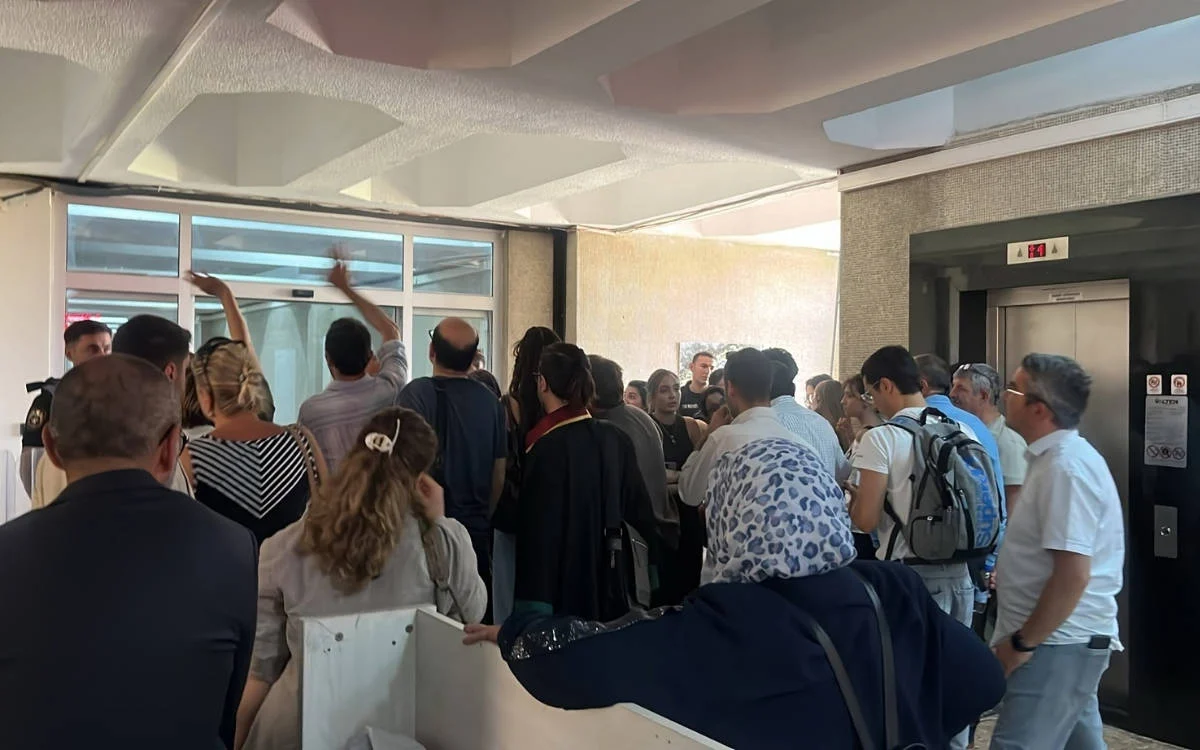
What is the legal justification for refusing to allow a representative from the Ankara Bar Association, who had come to take minutes, into the building? Does this practice not reinforce a culture of impunity by preventing oversight of law enforcement officers’ actions?
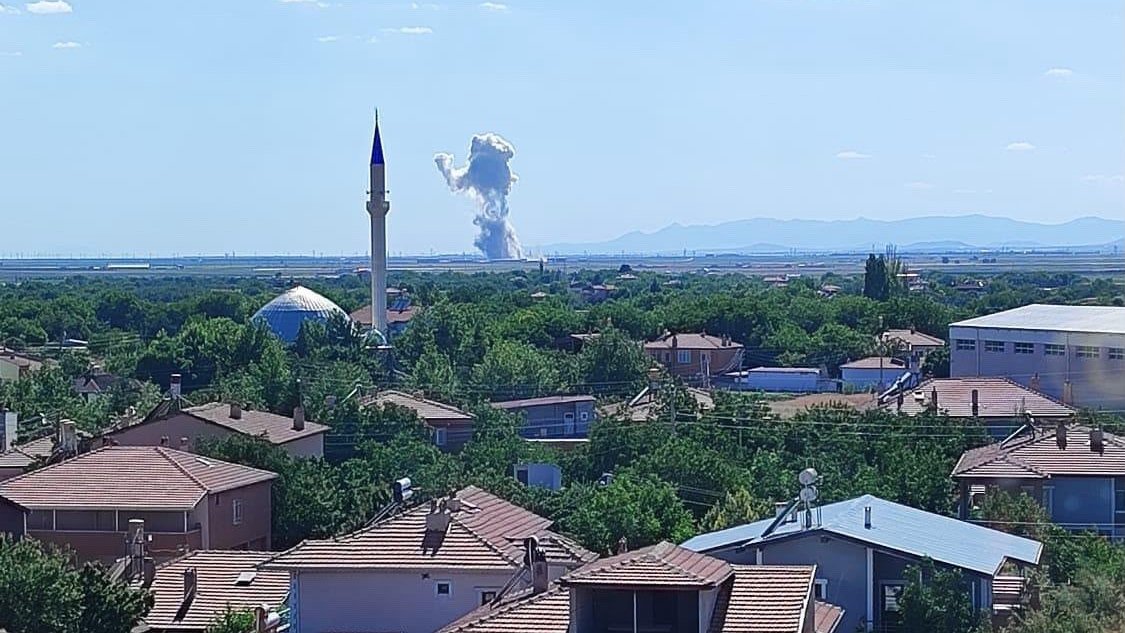
Following explosions that occurred in the Bor district of Niğde in 2018 and in the Hendek district of Sakarya in 2020, another explosion took place at the Yertaş Fireworks Factory—located in the Bor district of Niğde and owned by the same corporate group—resulting in the death of one worker and injuries to another.
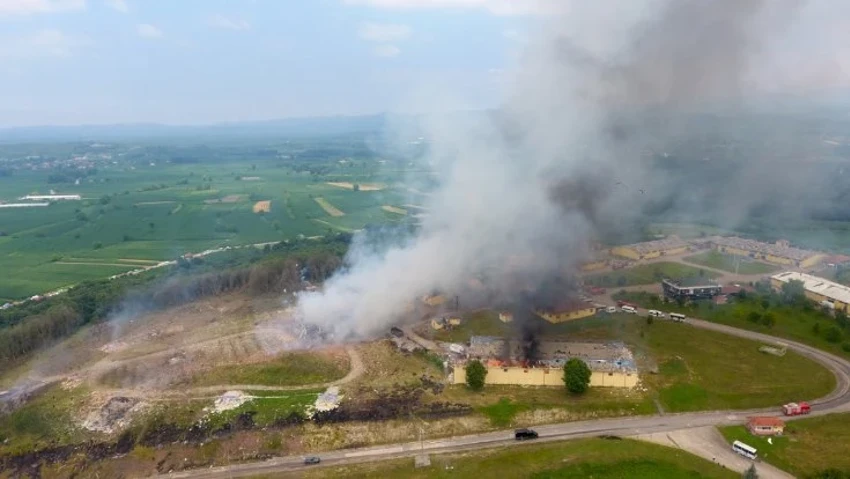
Explosion at the Yertaş Fireworks Factory in the Bor district of Niğde, Photo: Social media
A major explosion occurred around 4:45 p.m. in the underground storage facility of the Yertaş Fireworks Factory, which operates in the town of Kemerhisar in the Bor district of Niğde. Although the fire was extinguished before it could spread thanks to the fire department’s intervention, preliminary reports indicate that Nuri Özkan lost his life and Yasin Demirbaş was injured as a result of the explosion.
Niğde Governor Nedim Akmeşe stated that the fire that broke out following the explosion had been extinguished, noting, “These facilities are located in areas where safety measures have been implemented. Production is not carried out in a single, integrated facility but in separate sections. There is no ongoing incident at this time. We extend our condolences to the family of the citizen who lost his life and our best wishes for a speedy recovery to the injured worker.”
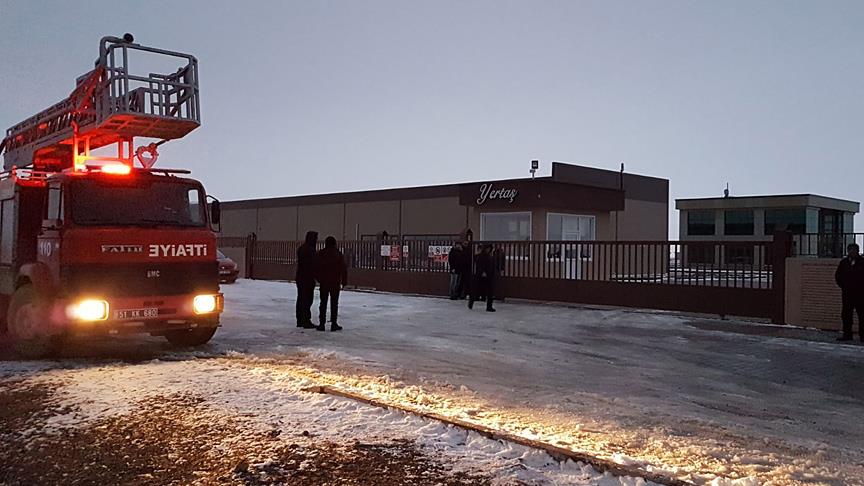
The explosion that occurred at the Yertaş fireworks factory in 2018, Photo: AA
A similar explosion had also occurred at the same factory on January 27, 2018, resulting in the deaths of two workers, İlyas Ünlü and Muharrem Alkan.
The evolution of a company: From Coşkunlar to Yertaş
The Yertaş Fireworks Factory, where today’s explosion occurred, belongs to the same investment group as the Coşkunlar Fireworks Factory, which was the site of a major disaster in the Hendek district of Sakarya in 2020.
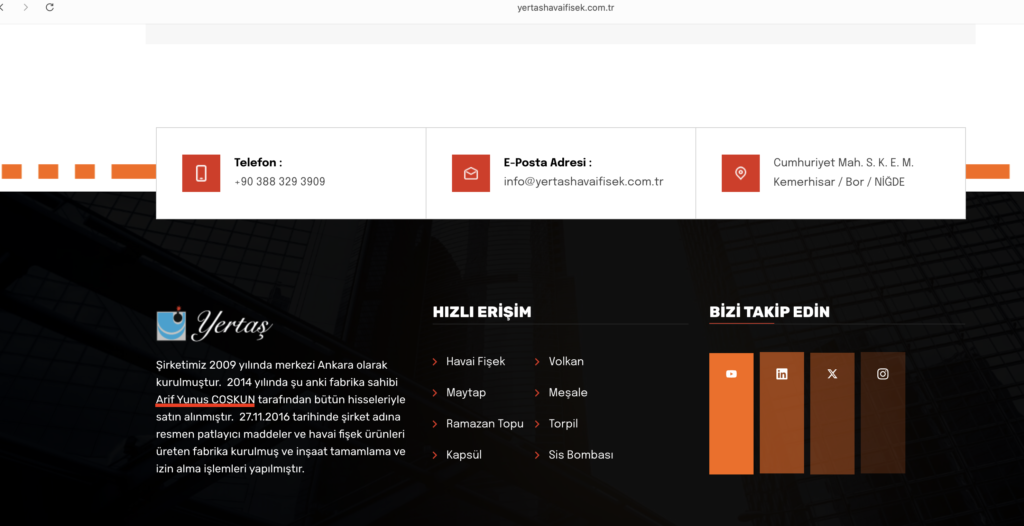
A statement about the company on the Yertaş Fireworks Factory website
In an effort to avoid public backlash following a series of fatal accidents, the company—which had been operating under names such as “Coşkunlar,” “Büyük Coşkunlar,” and “Venüs Coşkunlar”—had shifted its operations to Niğde and Sivas some time ago. The statement on Yertaş’s official website reads as follows:
“Our company was founded in 2009 with its headquarters in Ankara. In 2014, the current factory owner, Arif Yunus Coşkun, purchased all of its shares. On November 27, 2016, a factory officially producing explosive materials and fireworks was established in the company’s name, and construction completion and permitting procedures were carried out.”
These facilities, taken over by Arif Yunus Coşkun—a member of the Coşkun family, which holds a monopoly in the sector—continue to make headlines for explosion incidents, despite having changed their name.
The 2020 Hendek Disaster and the legal proceedings
The explosion in Hendek on July 3, 2020, which resulted in the deaths of 7 workers and injuries to 127 others, was felt kilometers away. The legal proceedings initiated following the incident serve as a striking example of how workplace fatality cases in Turkey often end in impunity.
The 2020 explosion in Hendek, Photo: Social media
At the sentencing hearing held on February 28, 2022, the Sakarya 1st High Criminal Court sentenced factory owners Yaşar Coşkun and Ali Rıza Ergenç Coşkun to 16 years and 3 months in prison each on charges of “causing the death and injury of multiple people through gross negligence.” Upon appeal of the decision, the 12th Criminal Chamber of the Court of Cassation reviewed the case and issued a landmark reversal. The Court of Appeals ruled that, given Yaşar Coşkun’s failure to ensure a safe working environment despite previous explosions and warnings, as well as the construction of unlicensed structures and the unauthorized storage of gunpowder, the act should be classified not as “gross negligence” but directly as “murder and injury with probable intent.”
However, the Sakarya 1st High Criminal Court, to which the case was remanded, defied the Supreme Court’s “potential intent” ruling and upheld its original decision. With this decision to uphold its ruling, Yaşar Coşkun—the sole defendant in custody in the case—was released. This decision was met with strong backlash from the victims’ families and their attorneys who had been following the trial.
The company’s defense strategy: Blaming the workers
The attitude displayed by the group’s former General Manager, Yaşar Coşkun, in the wake of past disasters also sums up the company’s perspective on workplace safety. Following an explosion in 2009, Coşkun targeted the workers who died, stating, “They packed the fuses incorrectly and didn’t wear protective gear because it was ‘too hot.’” Speaking about Hediye Hallaç, a 26-year-old woman who lost her life following another explosion in 2011, Coşkun said, “She had no burns on her body; according to the doctor, she died of fright.”
Citing explosions in China as an example, Yaşar Coşkun argued, “Hundreds of people are dying in China; if only one person dies here, that means we’re the safest factory in Europe.”
Scientific data reflected in the expert report
The report prepared by explosives expert Süleyman Polat on behalf of the Chemical Engineers’ Chamber of the Turkish Chamber of Engineers and Architects (TMMOB) following the 2020 Hendek explosion provided evidence of production irregularities at the factory:
Explosion Intensity: Although fireworks are classified as low-risk under regulations, the detonation speed of the exploding material was calculated at 5,400 meters per second. This speed falls between that of ANFO (4,400 m/s), used in mining, and the industrial explosive TNT (6,930 m/s), indicating an extremely destructive level.
Amount of Explosive: Based on seven separate shock waves recorded by the Kandilli Observatory over 111 seconds and the air shock pressure that reached 1.8 kilometers away, it was determined that at least 40 metric tons of pyrotechnic material exploded at the factory.
The TMMOB’s reports strongly emphasize that the implementation dates of regulations have been continuously postponed, administrative inspections have been inadequate, and the actual owners have evaded responsibility by shifting the entire legal burden onto technical staff who were merely designated on paper.
The 10th explosion in 19 years
The loss of life that occurred today in Niğde has gone down in records as the tenth explosion reflected in the press and official registers since 2007 at facilities belonging to the capital group in question. Here is the toll of those incidents from past to present:
September 1, 2007 (Sakarya):1 worker was injured due to a spark generated while grinding coal during gunpowder production.
May 21, 2009 (Sakarya):3 workers were injured in an explosion that occurred at a firecracker workshop.
August 17, 2009 (Sakarya):1 worker died and 33 workers were injured in an explosion that destroyed buildings in the laboratory department.
September 29, 2009 (Sakarya):1 worker died and 1 worker was injured in an explosion caused by cutting fuses before they had dried.
February 11, 2011 (Sakarya):1 worker lost their life and 14 workers were injured in an explosion in the manufacturing department.
June 30, 2013 (Sakarya):15 workers were injured as a result of flames spreading to a semi-finished goods warehouse.
December 14, 2014 (Sakarya):1 worker lost their life in an explosion that occurred on the production line.
January 27, 2018 (Niğde/Yertaş):2 workers lost their lives in an explosion at the production facility.
July 3, 2020 (Sakarya/Hendek):7 workers died and 127 workers were injured in consecutive explosions at the factory. (3 soldiers were later martyred in an explosion that occurred during the subsequent transportation of remaining waste from the area.)
June 26, 2026 (Niğde/Yertaş):1 worker lost their life and 1 worker was injured in an explosion that occurred in an underground warehouse.
Ahead of the NATO summit to be held in Ankara on July 7–8, numerous people were detained during house raids. Among the 209 detained individuals are Elif Torun Öneren, the Chairperson of the Revolutionary Party, Hediye Yıldırım, a member of the Executive Board of Halkevleri, and journalist Yıldız Tar. A 24-hour restriction on lawyer access has been issued for the case file.
Photo: Evrensel
Following the Ankara Governorship’s 13-day ban on all demonstrations and events across the city for the NATO summit to be held on July 7–8, 2009 people were detained during morning raids targeting the homes of those who participated in anti-NATO protests.
During simultaneous morning house raids, numerous individuals from various institutions were detained, including the New Democratic Youth (YDG), the Federation of Socialist Youth Associations (SGDF), the Free University Movement, the Contemporary Lawyers’ Association (ÇHD), the People’s Law Office, and the Union of Precarious Unemployed Workers (UMUT-SEN). According to a statement by the Ankara Chief Public Prosecutor’s Office, detention warrants were issued for a total of 241 people, and 209 individuals have been detained so far. A 24-hour restriction on lawyer access was imposed on those detained.
Backlash against rounding up stray animals
The Ankara Governorship had previously announced that, on the grounds of “ensuring summit security,” various bans would be implemented from 00:00 on June 28 until 23:59 on July 10, ahead of the NATO Summit to be held in Ankara on July 7–8.
On the other hand, ahead of the NATO Summit, the Ankara Provincial Security Directorate requested the rounding up of street dogs, particularly along the routes the delegation will pass and around accommodation areas. The official letter sent to municipalities requesting the rounding up of stray animals drew sharp criticism from various segments of society, led by animal rights defenders.
Melodi Zengin from the İzmir Life Rights Defenders stated, “We do not accept the rounding up of animals for the murderer NATO.” Zengin noted that rounding up animals is the product of a completely “anthropocentric” perspective that rejects ecological integrity.
The press release issued by the Turkey’s Ankara Governorship regarding the restrictions is as follows:
“Within the scope of the 36th NATO Summit to be held in Ankara on July 7–8, 2026; necessary security measures have been taken both to ensure the security of the summit and to maintain the peace and safety of our citizens by preserving public order. Accordingly, the following decisions have been made.
In order to prevent actions/activities that violate the provisions of Articles 6–10 and 22 of the Law No. 2911 on Meetings and Demonstrations, which state, ‘Meetings cannot be held in parks, places of worship, buildings and facilities performing public services and their annexes, and within an area of 1 km from the Grand National Assembly of Turkey. In meetings held in public squares, it is mandatory to comply with the regulations to be made by the Governorships and District Governorships to ensure the passage of the public and transport vehicles’;
Based on the provision of Article 17 of the Law No. 2911 on Meetings and Demonstrations, which states, ‘The regional governor, governor, or district governor may postpone a specific meeting for a period not exceeding one month, or ban it if there is a clear and imminent danger of a crime being committed, for the purpose of protecting national security, public order, prevention of crime, public health and public morals, or the rights and freedoms of others,’
and Article 11/C of the Provincial Administration Law No. 5442, which states, ‘It is among the duties and responsibilities of the Governor to ensure peace and security, personal immunity, safety regarding disposition, public welfare, and to exercise preventive law enforcement authority within provincial borders. (Additional sentence: 25/7/2018-7145/1 art.) The Governor takes the necessary decisions and measures to ensure these’;
Taking into account the protests previously held by various groups in places where guests will be accommodated and where the meeting will take place, as well as the calls made by these groups through social media;
For the purposes of ensuring national security, the reputation of our country, the peace and security of citizens, public order, the prevention of crime, and protecting the rights and freedoms of others, as well as the life safety of the delegations participating in the summit at the highest level;
ACROSS OUR PROVINCE,
Preventing the entry of unauthorized vehicles and individuals into designated sensitive areas, particularly the zones where the summit will be held, places where the delegation will stay, and transition routes,
Banning all kinds of unmanned aerial vehicle (drone, etc.) flights in the airspace of our province between the specified dates (except with the permission of the Governorship),
BANNING all kinds of open and closed area gatherings, meetings and demonstration marches, press statements, hunger strikes, sit-ins, protest actions, rallies, setting up stands, pitching tents, distributing flyers/manifestos/brochures, hanging posters/banners, etc., actions/activities within the scope of Article 11/C of Law No. 5442 and Article 17 of Law No. 2911 on Meetings and Demonstrations, from 00:00 on June 28, 2026, until 23:59 on July 10, 2026 (for a duration of 13 days), necessary decisions have been made.
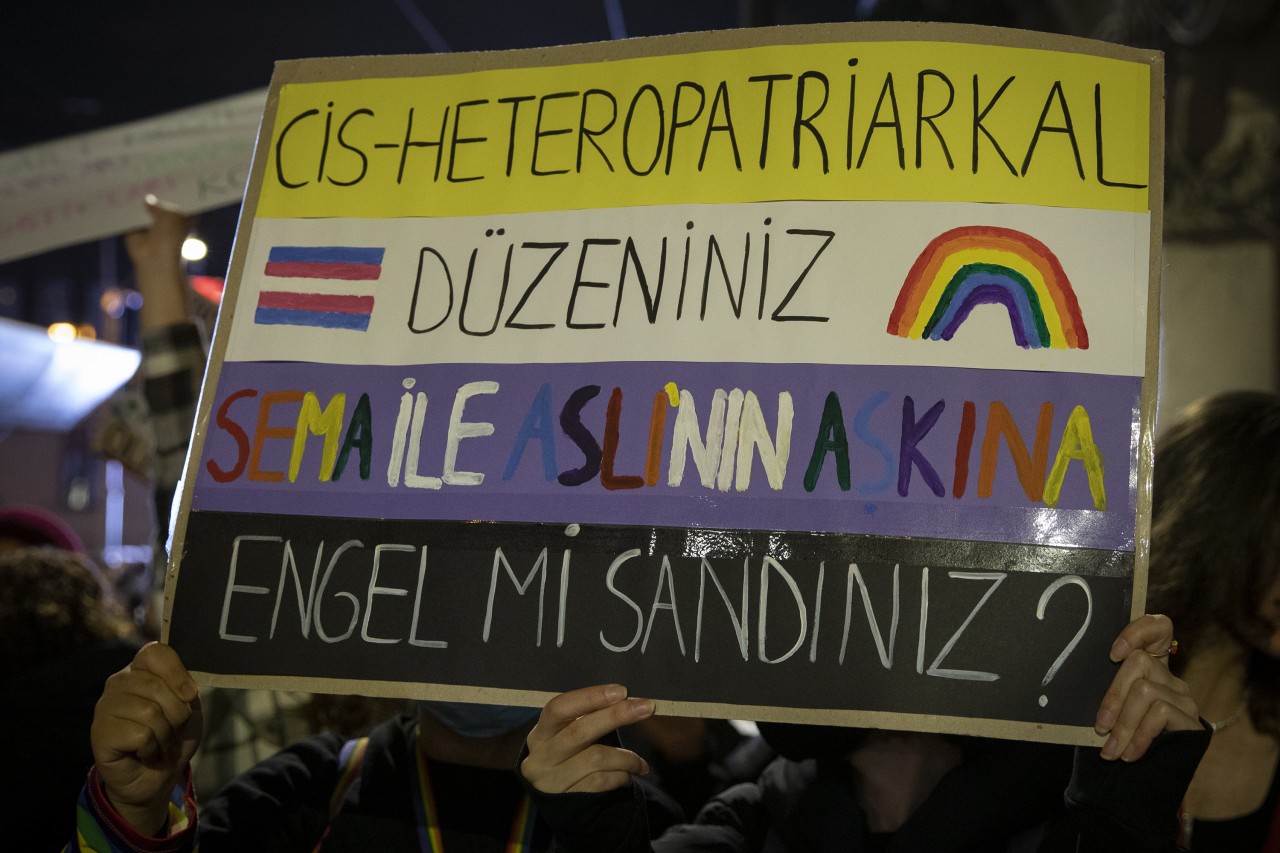
At least ten people, including Niha+ editor Doğa Tekneci and journalist Yusuf Çelik, who were covering the 12th Trans Pride March, were detained.
Photo: Doğa Tekneci/Nihaplus
Our editor Doğa Tekneci and journalist Yusuf Çelik, who were covering the 12th Trans Pride March in Kalamış, Kadıköy, Istanbul, organized by Istanbul Trans Pride Week, were detained.
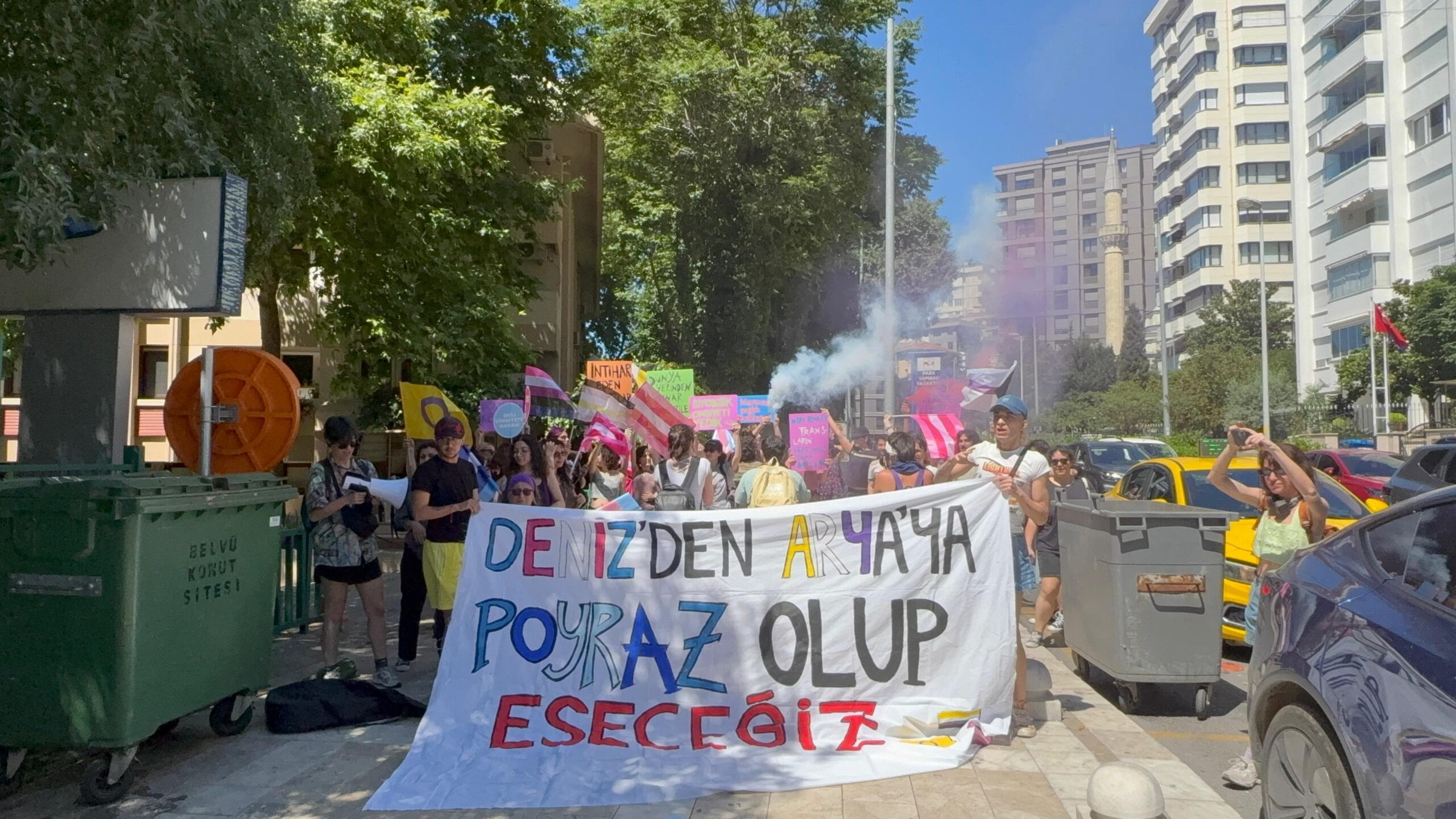
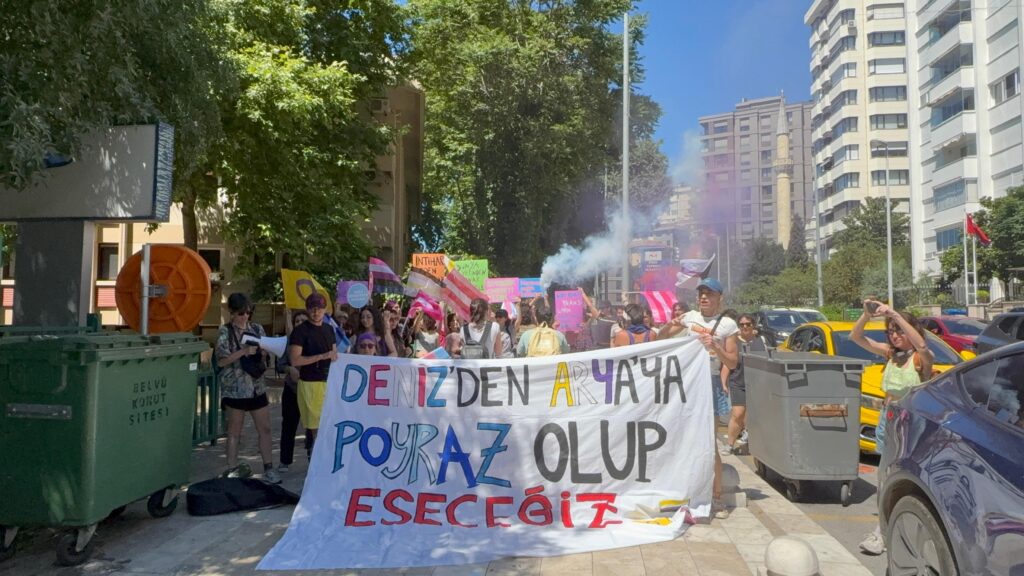
Despite the bans imposed by the Istanbul Governorship the previous day, trans rights advocates gathered and marched with a banner reading “We will be like the Poyraz [North] wind blowing from Deniz to Arya”, commemorating their murdered trans friends. Throughout the march, participants chanted the slogan “The transphobic state will surely fall”.
Following the march, the dispersing crowd was subjected to identity checks by law enforcement. At least ten people, including our editor Doğa Tekneci and journalist Yusuf Çelik, who were covering the event, were detained.
Eylem sona erdikten sonra alandan ayrılan LGBTİ+’lar, kafelerde otururken, araçlarında ve taksilerde seyahat ederken polis tarafından tek tek gözaltına alındı. pic.twitter.com/oogMqB0xIh
Meanwhile, the Kadıköy District Governor’s Office issued a statement announcing that all meetings, marches, press conferences, sit-ins, setting up stands, erecting tents, distributing leaflets, protests, and similar actions/events are prohibited in all open areas within the Kadıköy district between 00:01 and 23:59 on Sunday, June 21st, in relation to the events announced on social media under the title “Pride Takvimi Yayında” [Pride Calendar on Air].
The District Governor’s Office based its justification for the ban on Article 17 of Law No. 2911 on Meetings and Demonstrations and Article 32/ç of Law No. 5442 on Provincial Administration. The statement argued that, based on social media posts, the event is “contrary to general morality,”“could cause public outrage,”“could offend national, conscientious, and humanitarian values,” and “could threaten social peace.”
The district governor’s office also claimed that “verbal and physical provocations” could occur between those organizing the events and citizens.
Statement from DİSK Basın-İş
Press division of the Confederation of Progressive Unions of Turkey, DİSK Basın-İş, stated that the detention of journalists Doğa Tekneci and Yusuf Çelik is a form of pressure directed at the public’s right to information and the visibility of LGBTI+’s, and demanded their immediate release.
🏳️⚧️ 12. İstanbul Trans Onur Yürüyüşü kapsamında en az 10 hak savunucusuyla birlikte gazeteciler Yusuf Çelik ve Doğa Tekneci de gözaltına alındı.
Barışçıl bir şekilde gerçekleştirilen bir yürüyüşü takip eden gazetecilerin gözaltına alınması kabul edilemez. Basın ve ifade… pic.twitter.com/9Mffs4WJni
Kurdish politician Gültan Kışanak, speaking about creating an inclusive legal system, said, “Change and transformation are at our doorstep. We can no longer continue like this. We need to move forward.”
Gültan Kışanak. Photo: X / @CDDkonferans
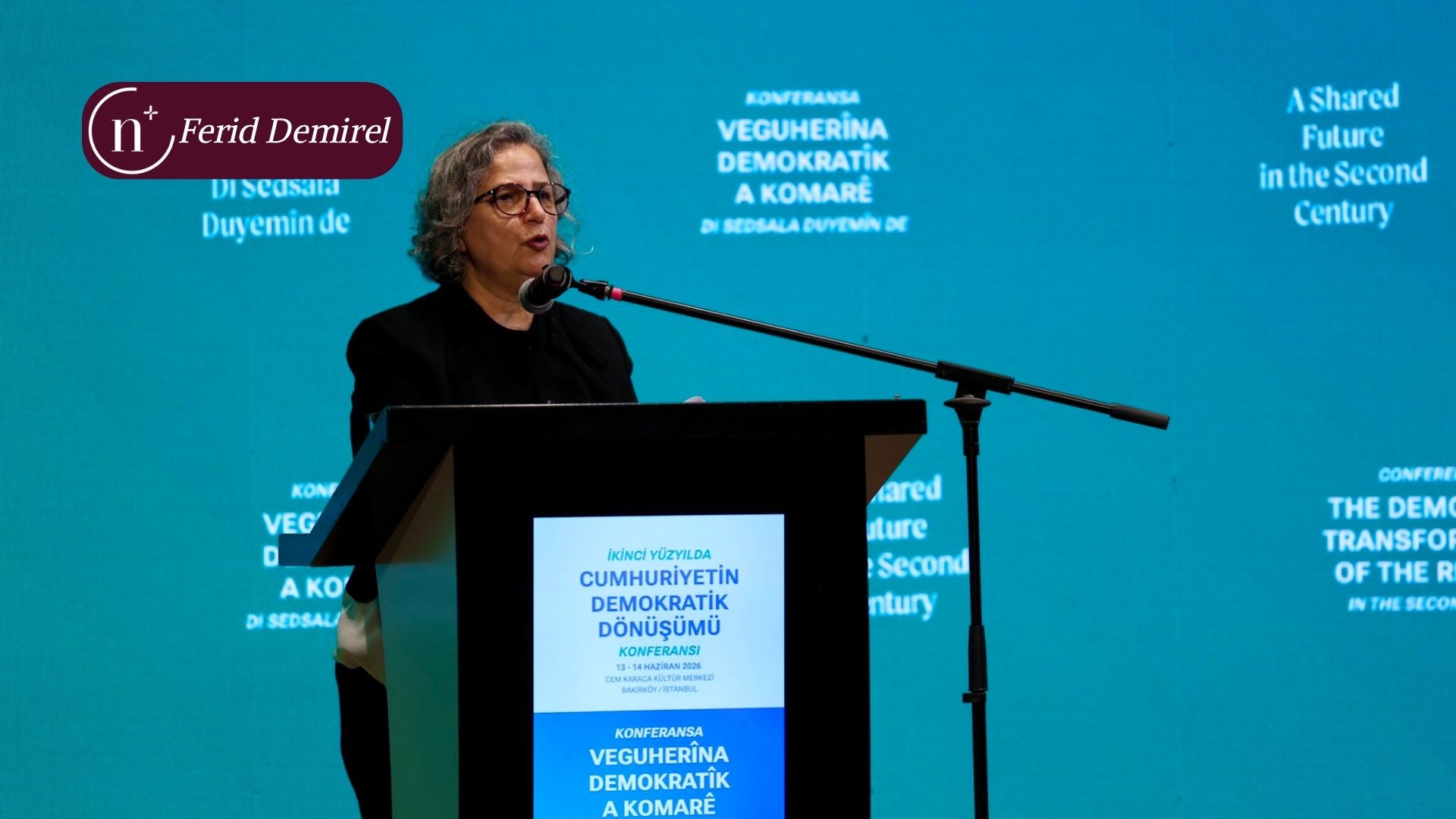
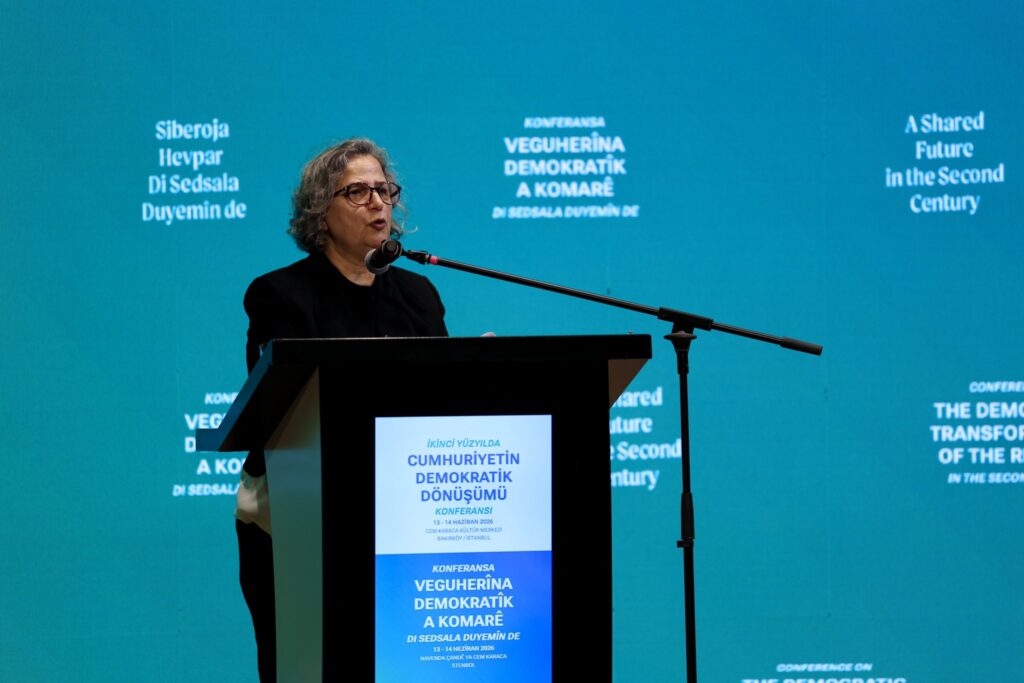
Participating in the “Conference on the Democratic Transformation of the Republic in the Second Century,” held on June 13-14, 2026, at the Cem Karaca Cultural Center in Bakırköy Municipality, Istanbul, Kurdish politician Gültan Kışanak asked in her opening speech, “Will we be able to create an inclusive legal system?”
Kışanak, who had various contacts in Europe shortly before the conference, gave Niha+ her assessments regarding both her European trip and the content of her speech at the conference.
Gülten Kışanak, who participated in meetings and events in France and Germany, said that everyone there was asking, “When will the law be passed?” Stating that they asked, “We have prepared our governor. We want to come. They are expressing a longing and yearning for the law to be passed here. At the same time, they are expressing a desire for democratic transformation,” she provided the information.
“Demanding from the government doesn’t get us anywhere”
Regarding the question she raised in her opening speech at the conference, “Can we create an inclusive legal system?”, Kışanak said, “We need to fight for it”:
“If we want something, we can do it. But if we want someone to prepare it and bring it to us tomorrow, that’s not possible. Therefore, if you want something, you have to fight for it, put in the effort, and unleash its social power. I think this state of demanding from the government doesn’t get us anywhere.”
Noting the political challenges in making this happen, Kışanak said, “A change and transformation has arrived at our doorstep. We can no longer continue like this, we cannot carry on. We need to move forward. For this, we, as a society, need to take responsibility and do something. At the same time, there is no shortcut solution. This path is long, difficult, and arduous. We have no option but to walk this path.”
Regarding President Recep Tayyip Erdoğan’s statement at a program he attended in Edirne on June 12, 2026, where he said, “We have made significant progress on the path to this goal so far. God willing, we will increase our pace a little more,” Gülten Kışanak commented, “There are commitments. We all must follow up on these commitments. Even from the most authoritative sources, from the President himself, there are statements that the law will be passed before the parliament closes. We all now expect this to be done.”
When asked about whether the framework law, which has been the subject of behind-the-scenes discussions, will meet expectations, he said, “We are fighting to ensure it does. Just as we fought to get that commission report written in parliament, we will fight to ensure that this law is passed in a holistic and comprehensive manner.”
Anti-corruption protests that began after a beach in Zvernec was sold off as part of a tourism project have continued for two weeks. Citizens explaining the reasons behind the protests, how they were organized, and what people are demanding say that local actions launched by environmental activists have grown into a national movement calling for “a new Albania.”
Protests against a planned tourism project in the Zvernec area, near the city of Vlora, have continued since May 30. Protesters have said the demonstrations will continue until the project is canceled and Albanian Prime Minister Edi Rama resigns.
The protests were sparked by the sale of a beach in Zvernec as part of a tourism project reportedly linked to Ivanka Trump, daughter of US President Donald Trump, and her husband Jared Kushner. For nearly two weeks, the slogan “Albania is not for sale” has been at the center of demonstrations involving thousands of citizens. We spoke with activists and experts about the reasons behind the protests, the corruption allegations, and what the Albanian public is demanding.
Jared Kushner, Trump’s son-in-law, is also an American businessman and adviser to the US president. His investment firm, Affinity Partners, plans to turn part of Sazan Island on the Adriatic coast into a luxury resort—reportedly part of a $4 billion tourism project that would include hotels, villas, apartments, a marina and other high-end facilities.
Kushner has also served as a US representative in a series of diplomatic efforts involving Iran, Ukraine and Russia. In February 2026, Trump formally appointed him as Special Representative for Peace.
“The protests aren’t just about this one incident”
Anila Hoxha, who has taken part in the protests, said there were multiple reasons behind the demonstrations, and that the recent incident was simply the tipping point of a much longer process. Hoxha stressed that the protests aren’t only a reaction to the tourism project, arguing that Albanians have voiced numerous complaints about what they see as a corrupt government for some time.
Hoxha said the protests have nothing to do with the policies of other states, such as the US or Israel, underlining that the issue is with their own government and corruption.
“This isn’t just Albania’s problem”
Hoxha said the nationality of the investors isn’t really the point—what matters is that the project is being built in an area of major importance for natural resources, which is why the issue concerns everyone:
“The real issue isn’t the nationality of the investors—it’s the investment itself, made in a region of major importance for natural resources. This shouldn’t be seen as just Albania’s problem, because it’s an environmental issue.”
“Our only expectation now is the government’s resignation”
Hoxha said the way the tourism project has been presented—as an exclusive, elite island—has raised serious questions among the public, and that people don’t want this land to belong to anyone as private property:
“This land has belonged to the Albanian people throughout history. It should remain that way. We no longer have any expectations from the current government, but our demand is clear: resignation, and the formation of a new government that will work for Albania based on the rule of law, always standing on the side of what is right.
Since corruption has persisted for years, it may be difficult to eliminate it quickly. But we believe there are ways to address this problem, and that it can be fought through taking measures, carrying out various activities, and raising awareness.”
“State indifference sparked major outrage”
Journalist Erisa Kryeziu said the protests began in May after environmental activists noticed heavy machinery on site, after which the area was surrounded with bulldozers and barbed wire. She said the situation escalated when a private security company tasked with guarding the area responded aggressively, beating a protester and dragging them on the ground.
Kryeziu said the incident took place in front of police, who did not intervene against the private security guards—triggering widespread public outrage. She said videos of the incident spread rapidly on social media, fueling distrust among many citizens toward the state and its security forces.
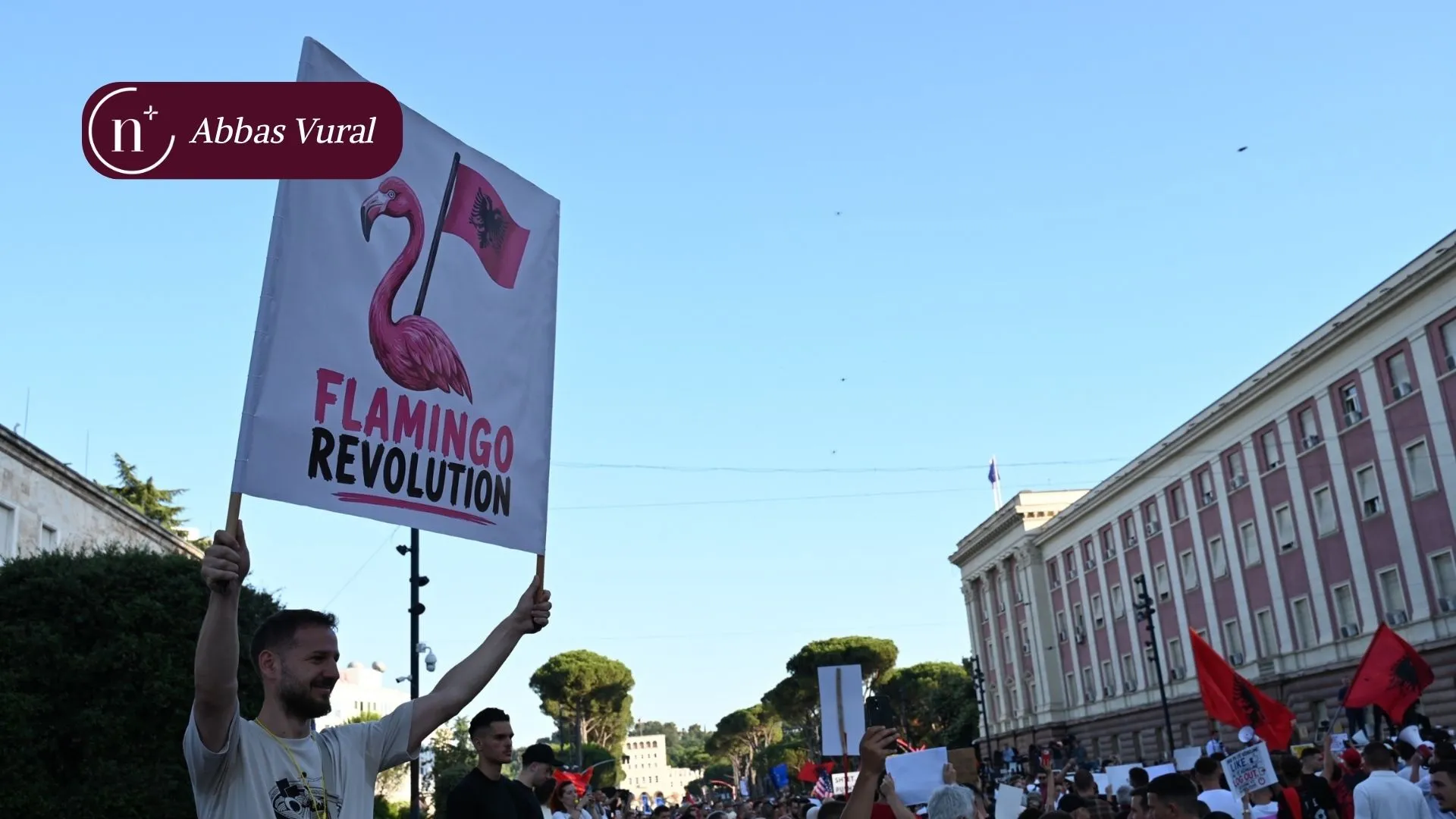
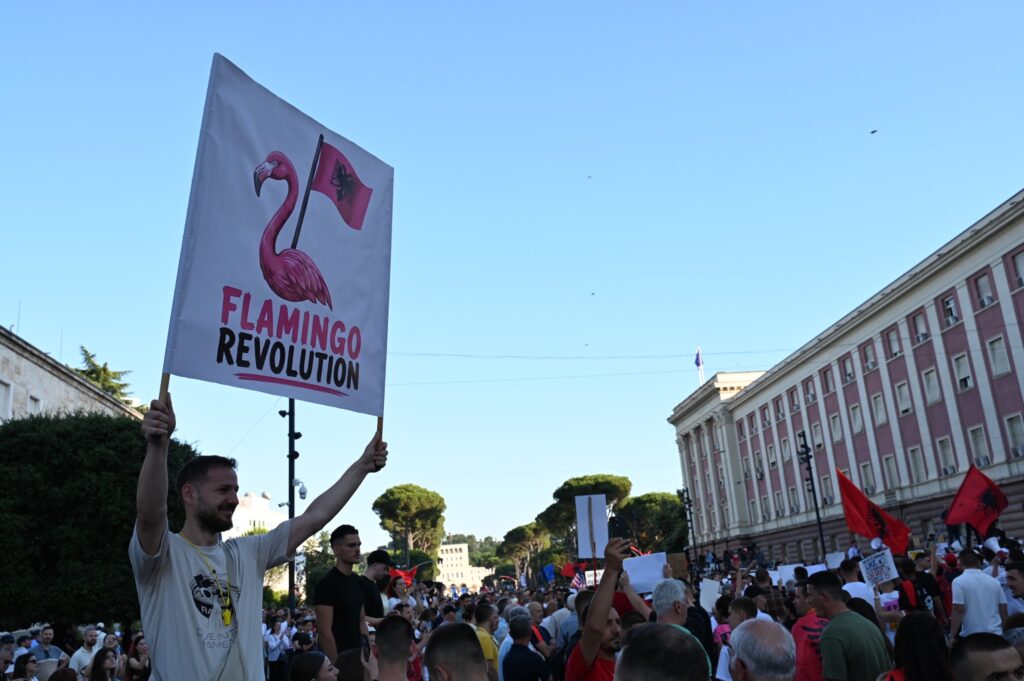
By the 12th day of the protests, demonstrations had spread to the main boulevard of the capital, Tirana, Kryeziu said. The movement came to be known as the “Flamingo Uprising,” a reference to the flamingos that symbolize the region’s rich biodiversity.
Kryeziu said the main slogans were “Albania is not for sale” and “Cancel the project,” and that the movement has since moved beyond purely ecological concerns to become a broader expression of frustration over governance, transparency, participation in decision-making, and the relationship between political power and capital groups.
“We can’t describe this as an anti-imperialist movement”
Kryeziu said that while some activists and commentators have linked the project to foreign investors and broader geopolitical interests, the movement’s core demands center on the public interest and environmental protection in Albania—meaning it cannot be characterized as a movement against American or Israeli foreign policy:
“What’s happening in Albania is that major decisions are being made in the name of tourism development. But these decisions lack transparency, and appear to benefit a small group of investors close to those in power, while offering little to no benefit to ordinary citizens. At the same time, many of these projects come at the expense of nature, biodiversity, and Albania’s protected areas. This raises serious concerns about environmental protection, the public interest, and democratic decision-making.”
“The squares are full of women and young people”
Kryeziu said that although the protests have received support from some opposition politicians and organizations, the movement itself is independent, and the one thing everyone seems to agree on is Albania’s future.
The journalist said the protests have been organized through social media pages and groups, and that the squares are filled especially with young people and women, with the direction of the protests being decided collectively by large groups.
“The protests have turned into an anti-system movement”
Kryeziu said that in the early days, many media outlets failed to report on the protests and clashes in Zvernec, and that coverage only began once the story gained international attention.
She said this reflects the close relationship between Albania’s mainstream media and the political establishment. Another point the media has overlooked, she argued, is the diversity of the protesters themselves:
“People from every part of society are in the squares. They’re tired of the Rama government, its propaganda, and a traditional opposition that has failed to represent society for years. Because of this, the protests are no longer just a reaction to a specific environmental project, they’ve become a broader anti-system movement built around the demand for ‘a new Albania.'”