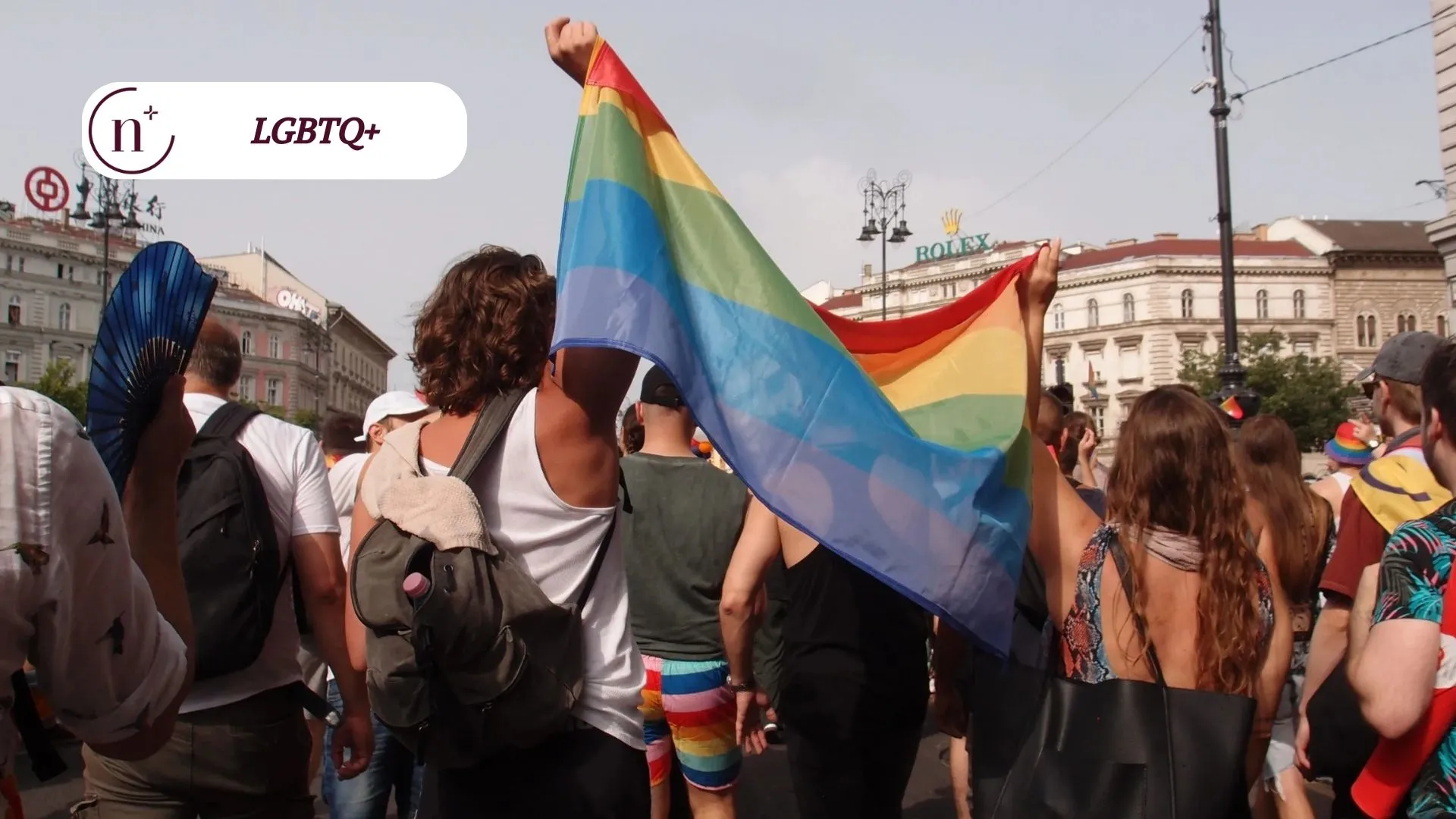
Budapest Pride: “Anti-queer laws can be repealed with two-third majority”

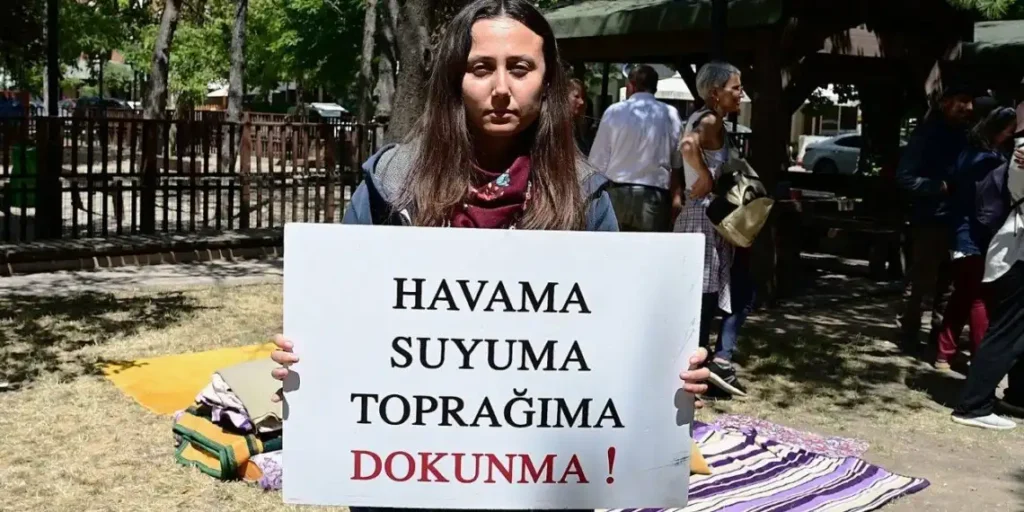
With the end of Viktor Orbán’s conservative rule, a new era began in Hungary, but the silence of Péter Magyar and the Tisza Party, who won a majority in the elections, on LGBTQ+ rights raised questions. Johanna Majercsik, spokesperson for Budapest Pride, stated: “The most urgent issue is the restoration of the right to assembly.”
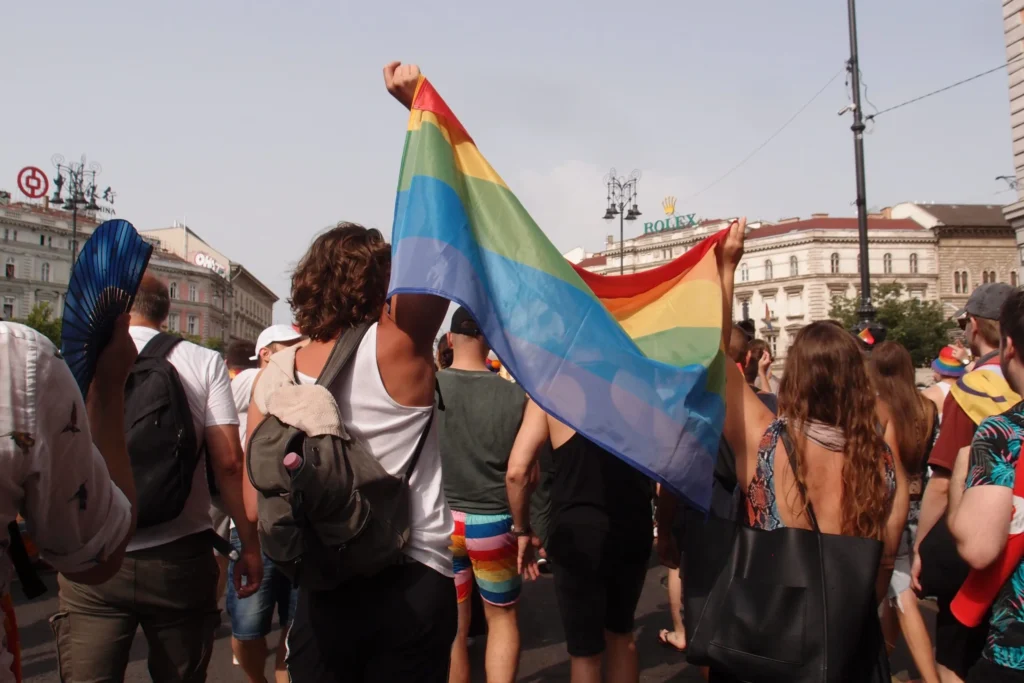
Source: Budapest Pride

In the Hungarian general elections on April 12, Victor Orbán’s far-right Fidesz (Hungarian Civic Alliance) party, which had been in power for 16 years, lost its grip on power. Péter Magyar and his Tisza (Respect and Freedom Party) party, which was initially close to Orbán but later split from Fidesz and adopted a center-right stance, achieved a victory.

According to the results from the election, with almost all the ballots counted, Tisza won 138 seats in the 199-member parliament. Having surpassed 133 seats indicates that Tisza has achieved a majority sufficient to amend the constitution.

Viktor Orbán, who served as Prime Minister of Hungary for 16 years until his electoral defeat in April 2026, became widely recognized for implementing a series of laws and policies targeting the LGBTQ+ community.

Orbán made an amendment on 2012 saying constitution recognizes only two sexes. In 2020, this was tightened to effectively ban adoption by same-sex couples. The Child Protection Act (Act LXXIX), which passed on June 2021 under the guise of protecting children, implicitly conflates LGBTQ+ individuals with child abusers. This legislation prohibits the “depiction or promotion” of homosexuality or gender reassignment to minors under 18 in education, media, and advertising. The law restricts TV programs showing LGBTQ+ content and books containing LGBTQ+ themes. Furthermore, in March 2025, Orbán government passed legislation that effectively banned LGBTQ+ Pride marches, allowing for the use of facial recognition technology to identify attendees

Budapest Pride: “The most urgent issue is the restoration of the right to assembly”

Spokesperson of Budapeşt Pride, Johanna Majercsik, evaluated the demands of Budapest Pride after the Hungary elections. Majercsik describe the collapse of Viktor Orbán’s 16-year rule as a path opened for Hungary to return to the rule of law. “A fair and just democracy cannot exist without human rights, including LGBTQ rights,” she said.

Majercsik mentioned that with a two-thirds majority, all anti-LGBTQ laws passed by the Orbán government can be repealed.

“The most urgent issue” said Majercsik, “is the restoration of the right of assembly. This is particularly urgent because we are holding the Budapest Pride March on June 27. But beyond that, the previous government passed numerous anti-queer laws that were enshrined in the Fundamental Law. With a two-third majority, however, these can also be repealed.”

“We know nothing about Magyar’s stance on legal gender and name changes”

Majercsik stated that the program of the TISZA Party that Péter Magyar was elected from makes no mention of the LGBTQ community:

“In his public speeches, he is rather vague when he says that everyone is free to love whomever they want, as long as they don’t break the law (as he stated at the international press conference on April 13). Alas, it is rather impossible to conclude from this whether he intends to use legislation to allow same-sex couples to marry and adopt, and we know nothing about his stance on legal gender and name changes.”

She stated that the LGBTQ+ community in Hungary feels fear, relief, distrust, hope at once at the moment. She lists the reasons why the community experience all these feelings at once as follows:

“The TISZA Party’s program makes no mention of the LGBTQ community, Péter Magyar is vague on this issue, and when Viktor Orbán intended to ban Pride marches last year, Magyar, our future prime minister, remained silent, he didn’t speak up for the LGBTQ people.”

People have zero toleration

Majercsik explaining more than 300,000 people took part in last year’s Pride march in Budapest, further said this can be considered an all-time record since they had estimated 35,000 participants in previous marches.She emphasized that this amount of people showed that people have no toleration to any disregard for fundamental rights.

“In 2025, the people sent a clear message to those in power that they would not tolerate the erosion of their fundamental rights, and they declared that the right to assembly belongs to everyone. Last year’s Pride march played a crucial role in the ousting of the Orbán regime: it was one of the key events where people gathered in huge numbers to express that they had had enough and wanted change.”

IHR: Events in Urfa and Maraş are a consequence of violence policies

The Human Rights Association (İHD) issued a statement regarding the armed attacks carried out in schools in Urfa and Maraş on April 14 and 15, respectively: “These grave incidents are a consequence.”

On April 14, an armed attack was carried out by a student at the Siverek Ahmet Koyuncu Vocational and Technical High School in the Siverek district of Urfa. At least 16 people were injured. Following this, on April 15, another student carried out an armed attack at Ayser Çalık Secondary School in the Onikişubat district of Maraş. Media reports indicated that there were at least 9 dead and 20 injured in the Maraş attack.

Following these consecutive attacks, several education unions announced a 2-day strike and called on the public to join a “life vigil” in front of Provincial Directorates of National Education.

The Human Rights Association (İHD) released its statement today (April 16). The statement emphasized that the attacks in Urfa and Maraş have once again exposed structural problems regarding the protection of children’s fundamental rights.

“Violence has become an ordinary occurrence”

The İHD stated that violence has become normalized everywhere and has reached a level that threatens social life by becoming a culture in Turkey recently. The statement noted that the legitimization of violence stems from many factors, ranging from the language used by politicians and the media that glorifies violence and hatred to easy access to firearms:

“Targeting based on identity and belief, the language used against dissidents and political operations, discourse against LGBTIQ+ individuals, migrants, and refugees, combined with violence and hate speech generated via media and social media -when evaluated alongside institutionalized policies of impunity- pave the way for these and similar attacks. In other words, these grave incidents are a consequence.”

“The selective attitude of the judiciary and entrenched impunity legitimize violence”

In its statement, the İHD called on everyone using violent and hateful language, especially political actors and the media, to abandon this rhetoric. It urged the judicial system to stop being “selective” regarding violence and hate speech.

The Association pointed out a clear double standard: while the judiciary shows tolerance toward violence and hate speech aligned with government policies, it applies legal pressure and threats of prosecution against dissenting, rights-based, or minority-focused expressions. This approach, they argued, transforms hate speech into violent action and legitimizes violence against certain groups.

The statement also noted that TV programs, series, movies, and games that normalize conflict as a social relationship contribute to this normalization. It called for effective measures against violence and hate speech in written, visual, and social media.

“The right to life, the right to security, and the right to access a qualified, safe educational environment -especially for children- is an absolute obligation of the state. This obligation requires not only post-incident intervention but the implementation of policies that prevent violence, eliminate risks, and protect children under all circumstances.

According to the UN Convention on the Rights of the Child, to which Turkey is a party, children must be protected from all forms of violence. Despite this, the fact that educational spaces have become vulnerable to armed attacks reveals the inadequacy of protection mechanisms and the consequences of negligence.”

“Curriculum must be purged of discriminatory and militarist discourse”

Stating that these incidents are not individual acts of violence but the result of routinized policies of hate, the İHD listed its demands to prevent further occurrences:

  1. The incidents must be investigated effectively and independently in all dimensions; impunity for those responsible must not be allowed.
  2. Rights-based and holistic protection policies centered on children’s safety in schools must be established immediately.
  3. Early warning and monitoring mechanisms to prevent violence against children should be set up and the curriculum must be cleaned of discriminatory and militarist discourse.
  4. Long-term, accessible, and free psychosocial support must be provided to all children affected by these violent events.

The İHD also expressed that broadcast bans and practices preventing the public’s access to accurate information damage transparency and accountability, rendering the events invisible. The statement concluded that an effective struggle against such incidents is only possible in an environment where truths can be spoken openly.

The Association vowed to follow the legal process regarding the events in Urfa and Maraş and called on authorities to take effective measures to ensure such violations never happen again.

Rojhelat under pressure: Politics and protest in Iran’s Kurdish regions

Deniz Xelat Büyükkaya discusses how Rojhelat has once again become the frontline of Iran’s war against its Kurdish population, amid nationwide protests and economic collapse.

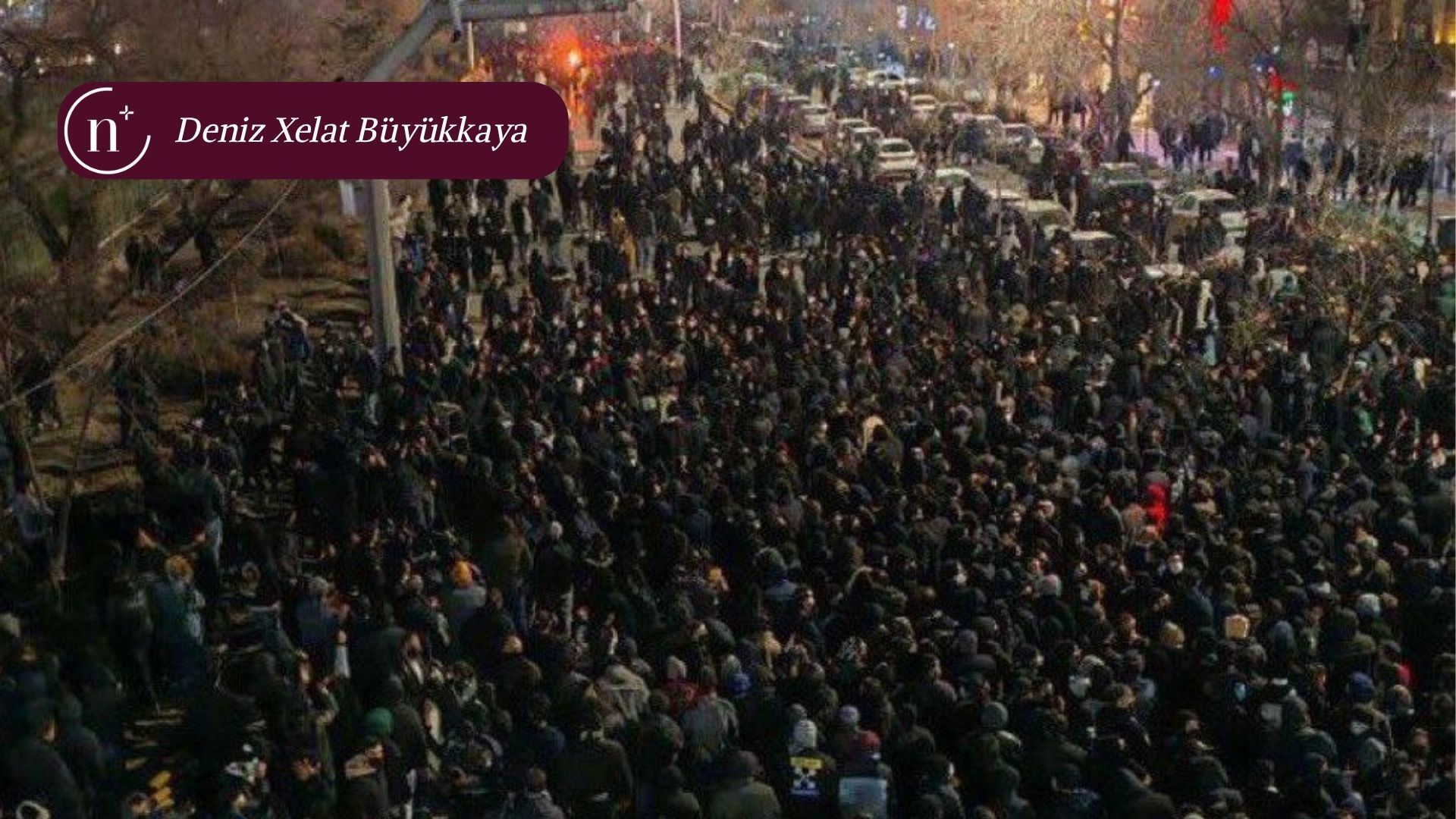
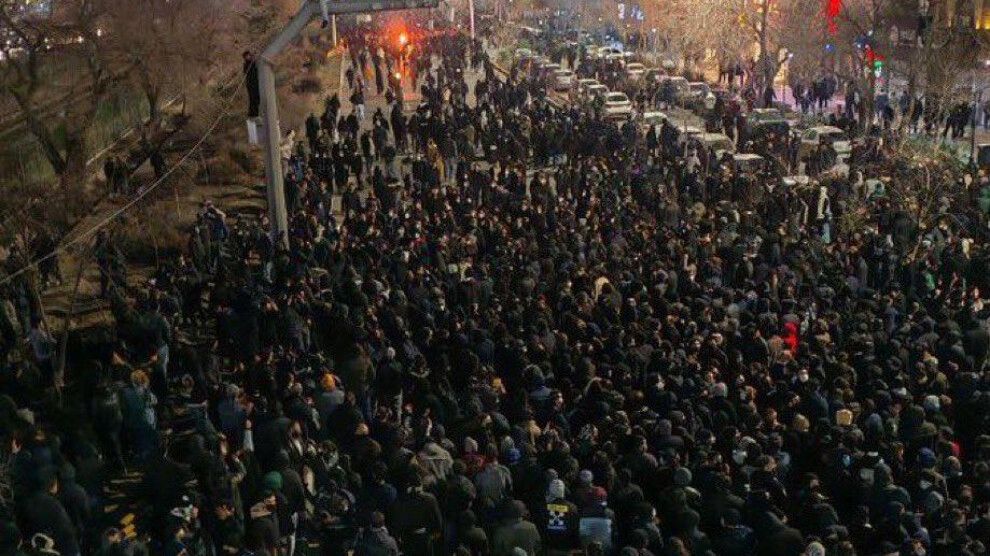
Photo of protests in Iran.

by Deniz Xelat Büyükkaya

Rojhelat (Eastern Kurdistan) or the Kurdish regions of western Iran, have once again become a key site of political tension, state repression and regional security concern. Over the past few years, Rojhelat has faced intensified government repression, increased protest activity, and rising geopolitical pressure related to regional conflicts. Latest developments show that Rojhelat remains one of the most politically sensitive regions inside Iran.

Iran has been facing nationwide protests since late 2025 because of economic collapse, rising inflation, and shortages of basic goods, fueling growing anger toward the government. The government has responded to protests with extreme repression: mass arrests, shootings of protesters, internet shutdowns, executions and death sentences.

Rojhelat: A Centre of Protest Movements

Rojhelat—especially the provinces of Kurdistan, Kermansah, West Azerbaijan, and Ilam—has long been considered by Tehran a politically sensitive border region. As a result, the Iranian state has often approached Kurdish activism through a security-focused framework shaped by fears of separatism and cross-border insurgency. Also, the region was already the centre of the nationwide “Jin, Jiyan Azadi (Woman, Life, Freedom)” movement that erupted in late 2022 after the death of Kurdish woman Jina (Mahsa) Amini in police custody.

By late 2025, Kurdish monitoring organisations reported that Iranian security forces had intensified surveillance and arrest campaigns across Rojhelat, targeting activists, journalists, and ordinary citizens. The Washington Kurdish Institute’s 2025 Annual Report notes that in November 2025 alone, 51 Kurds were detained in Iran, representing 45 percent of all recorded arrests nationwide that month.

According to Kurdistan Tribune, Kurdish regions have long been centres of anti-government protest, and state responses have often been violent. During the recent demonstrations, Rojhelat was among the most heavily affected, with security forces responding aggressively.

Many people were arrested without clear charges or proper legal procedures. This has drawn concern from international human rights organisations about fairness and legal rights in Iran’s response to political opposition. Kurdish cities often show strong political mobilisation. This is partly because of ethnic marginalisation, economic difficulties, and long-standing political grievances. In addition, Rojhelat is considered one of the less economically developed parts of Iran.

Cross-Border tension

The situation in Rojhelat cannot be completely understood without considering cross-border dynamics between Iran and Başur (Iraqi Kurdistan). While repression in Rojhelat increased, developments across the border in Başur also made the situation more tense. In March 2026, Iranian forces carried out drone strikes targeting Kurdish opposition positions in Iraqi Kurdistan, including an attack on an opposition headquarters in the town of Dekala that wounded members and damaged facilities.

These attacks were part of a broader campaign against Kurdish groups that Iran accuses of operating across the border. According to regional media reports, several Kurdish opposition sites in Erbil and Sulaymaniyah provinces, including the Koya district and nearby mountain areas, were targeted during the escalation.

Iranian officials justified these operations as necessary responses to “separatist groups” threatening national security.

Human rights concerns

Human rights organisations report that Iran has significantly increased its use of the death penalty in recent years. According to Iran Human Rights (IHR), in 2024, at least 975 executions were recorded. The number reportedly increased to around 1,500 executions in 2025, the highest level in decades.

Ethnic minorities seem to be affected more by these policies. According to a report by Hengaw around 150 Kurdish prisoners were executed in 2025. In early 2026, Hengaw also reported that at least 257 Kurdish civilians were killed during a crackdown linked to protests, including 20 children and 19 women. Many of them were accused of security-related crimes, but human rights groups often criticise the lack of fair trials and transparency in Iran’s judicial system.

Because of these numbers, many Kurds believe that the Iranian government treats Kurdish regions mainly as a security issue instead of solving political and social problems.

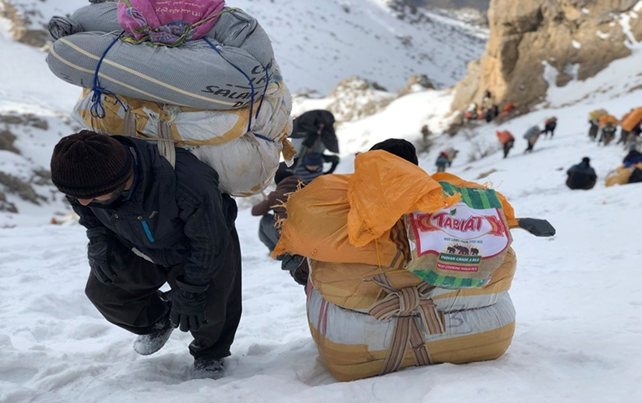
Image: Fazel Hawramy/Rudaw

Economic marginalisation and the Kolbar

In addition to political repression, economic conditions in Kurdish border areas are also very difficult. Rojhelat has some of the highest unemployment rates in Iran, especially among young people. Because of this, many residents work as kolbars. Kolbars are Kurdish porters who carry goods across mountain borders between Iran and neighbouring countries. The work is very dangerous and often illegal, but many people rely on it to earn living.

According to the Kurdistan Human Rights Network (KHRN) dozens of kolbars are killed each year by Iranian border forces, while many others are injured or arrested. Kurdish activists say that kolbar work continues because there are not enough stable job opportunities in the region. For many Kurdish families in border cities, kolbar work has become a symbol of the broader economic marginalisation faced by Rojhelat.

An unresolved political question

Despite decades of political tension, the Kurdish question in Iran remains unresolved. Kurdish activists continue to demand cultural rights, Kurdish language education, economic development, and greater political representation. However, Iranian authorities have continued to restrict Kurdish cultural and linguistic rights. In 2025, expressions of Kurdish identity were often treated as security offences. The Kurdish language is still largely excluded from formal education, and cultural activists promoting Kurdish language or traditions have faced arrests and intimidation.

At the same time, the Iranian government continues to view Rojhelat mainly through a security perspective because of concerns about territorial integrity and armed opposition. As Iran faces both internal dissent and regional pressure, Rojhelat is likely to remain an important indicator of the country’s political stability. For now, the Kurdish regions of Iran remain caught between protest movements, state repression, economic hardship, and regional geopolitical tensions.

An exhibition: the Kurdish question, fathers, and lost children.

In her solo exhibition “neither carnation nor frog,” Banu Cennetoğlu invites us to think about fatherhood, rights, boundaries, loss, and power.

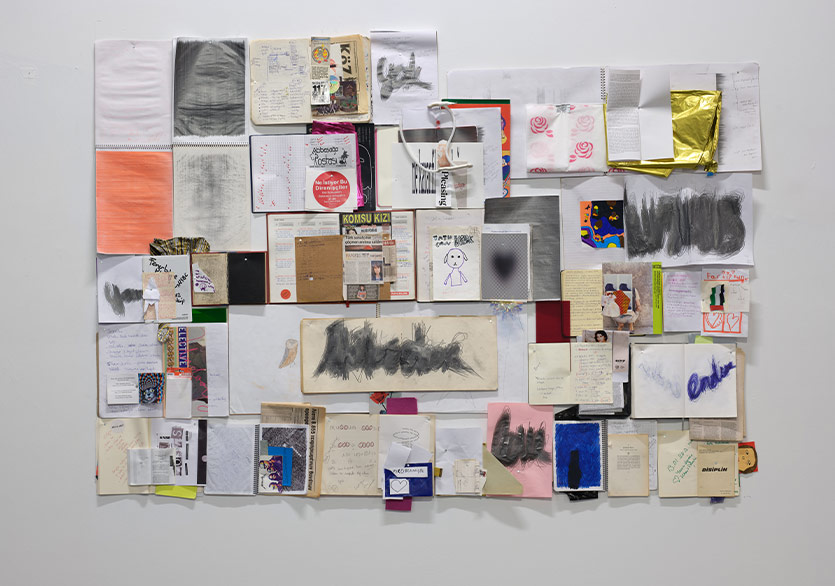
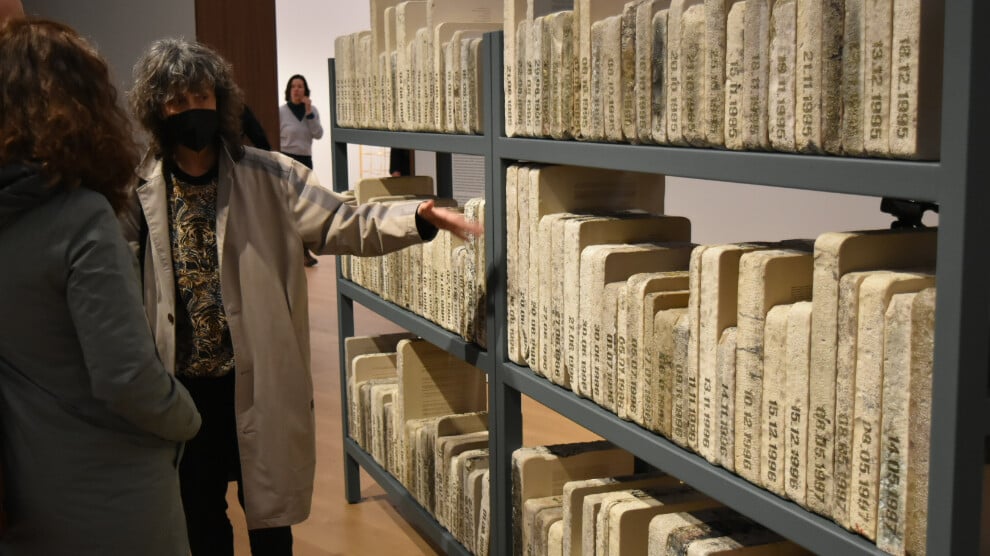
From the exhibition “neither carnation nor frog”. Photo: artfulliving.com

Artist Banu Cennetoğlu’s solo exhibition “ne karanfil ne kurbağa” (neither carnation nor frog) was shown in Bursa at İMALAT-HANE between October 25, 2025 and January 20, 2026, curated by Yavuz Parlar. It is now viewable online at https://nknk-erika.imalat-hane.com.

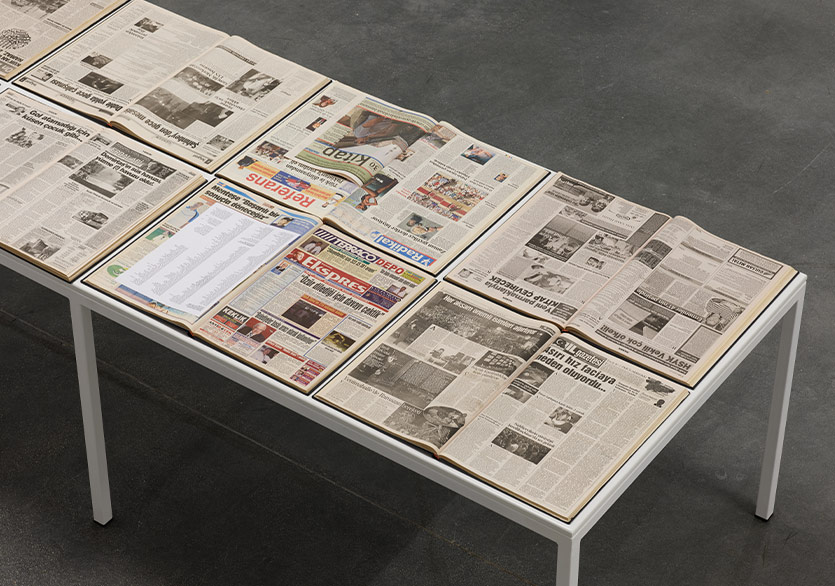
Cennetoğlu is known for her long, research-based projects rooted in personal and collective memory. In a previous work, she engraved the book “Yüreğimi Dağlara Nakşettim” which is based on the diaries of Gurbetelli Ersöz, Turkey’s first female editor-in-chief, onto 145 limestone tablets. In this new exhibition, she looks at three connected ideas: power, reputation, and denial.

Banu Cennetoğlu’s work is rooted in long, careful research and draws on both personal and shared memory. Her practice often focuses on how knowledge is produced, organized, and circulated. In this exhibition, she thinks through ideas of fatherhood, rights, boundaries, loss, and power — alongside the slipperiness of both speaking and making promises. The exhibition was curated by Yavuz Parlar. The emails, arguments, and personal outpourings that Cennetoğlu and Parlar exchanged during their collaboration didn’t just shape the exhibition, they also became a companion publication called nknk-erika.

The exhibition itself didn’t come together through a typical curatorial process. Instead, it grew naturally out of the back-and-forth between the two. It started as a digital exchange, messages sent without any fixed goal in mind. Once they decided to just begin, a simple rhythm took over: each day, one would send something to the other, and the other would respond.

“The personal is also political”

In the exhibition, the figure of the father — and everything connected to it — serves as a research space that stretches from personal experience to collective memory, and from there to apologies that can never quite be made.

The exhibition also helps us remember the grief and pain carried by children who lost their fathers, fathers killed in the struggle against the system, against what might be called the “state as father”: a power and authority that defines and enforces the rules.

In a conversation with Sina Ergün, Cennetoğlu describes the exhibition like this:

“Starting from a personal place, I’d describe it roughly as a state of being haunted. Setting aside fathers and forms of fatherhood that have managed to be different, for me, fatherhood is, both personally and socially, a way of existing that is self-satisfied, certain of itself, arrogant, and apparently without doubt about the unwritten rules it considers absolute truth.

And to keep that certainty going, three things are essential: power, reputation, and denial. A structure that loves, protects and spreads these things, that punishes those who object, wants to ‘correct’ them, and feels entitled to cross other people’s boundaries, all while claiming it’s for their own good.”

Photo: artfulliving.com

Looking at fathers and children who have experienced loss in the Kurdish conflict

Viewing the exhibition and reading the conversation afterward brings to mind the enormous cost of grief carried by fathers who lost their children — and children who witnessed their fathers’ deaths — in the struggle against political violence in Kurdistan. This cost, for any hope of peace, democracy, and living together, is immense and raw. These losses leave an indescribable pain and emptiness, felt most deeply within families and close communities.

The long-term effects of this pain and absence don’t stay private. They become part of how children who lived through it see and remember the world, and through them, part of society itself. When past suffering goes unaddressed, when those responsible are never held accountable, the sense of justice fades. And with it, so does mutual trust and the hope of sharing a future together.

Looking again at Kurdish fathers and children who have experienced such loss should be understood as an act of rebuilding memory. On one hand, it means examining the fractures in the father-child relationship through a political and social lens. On the other, it means listening to the memories of children who lost their fathers to state forces — memories filled with absence, grief, and pain. This can be read either as a wound that never fully heals, or as a genuine act of resistance.

It is also worth remembering that these children are now the adults of today and tomorrow people who carry and keep reproducing an emotional memory tied to a specific period of history.

Looking at the roots of the Kurdish conflict through the inner lives of children who were left carrying the consequences of what their fathers went through will also shed light on how these collective experiences keep being reproduced inside individual lives.

As the poet Hasan Hüseyin Korkmazgil wrote – and as this exhibition reminds us – fatherhood, where the personal is as social as the social is personal, is “neither carnation nor frog.”

“Yüreğimi Dağlara Nakşettim” was exhibited at Lausanne Art Museum. Photo: ANF

About Banu Cennetoğlu

Banu Cennetoğlu works across disciplines, using archival methods to question how memory is shaped, and how knowledge is produced, shared, and consumed. Her solo exhibitions have been shown at institutions including Kunsthal Charlottenborg, Copenhagen (2025); Sylvia Kouvali, Athens (2024); K21 Ständehaus, Kunstsammlung Nordrhein-Westfalen, Düsseldorf (2019); Sculpture Center, New York (2019); Chisenhale Gallery, London (2018); Bonner Kunstverein (2015); Salonul de proiecte, Bucharest (2013); and Kunsthalle Basel (2011). She has participated in numerous group exhibitions and biennials in Berlin, Istanbul, Liverpool, Gwangju, Athens, and Venice, as well as Manifesta 8 in Murcia, documenta 14 in Athens/Kassel, and the 58th Carnegie International in Pittsburgh. Cennetoğlu is the founder of BAS, an artist-run initiative in Istanbul focused on artist books and printed matter, and serves as an advisor at the Rijksakademie in Amsterdam. She lives and works in Istanbul.

Kargapazar village protests geothermal power plant

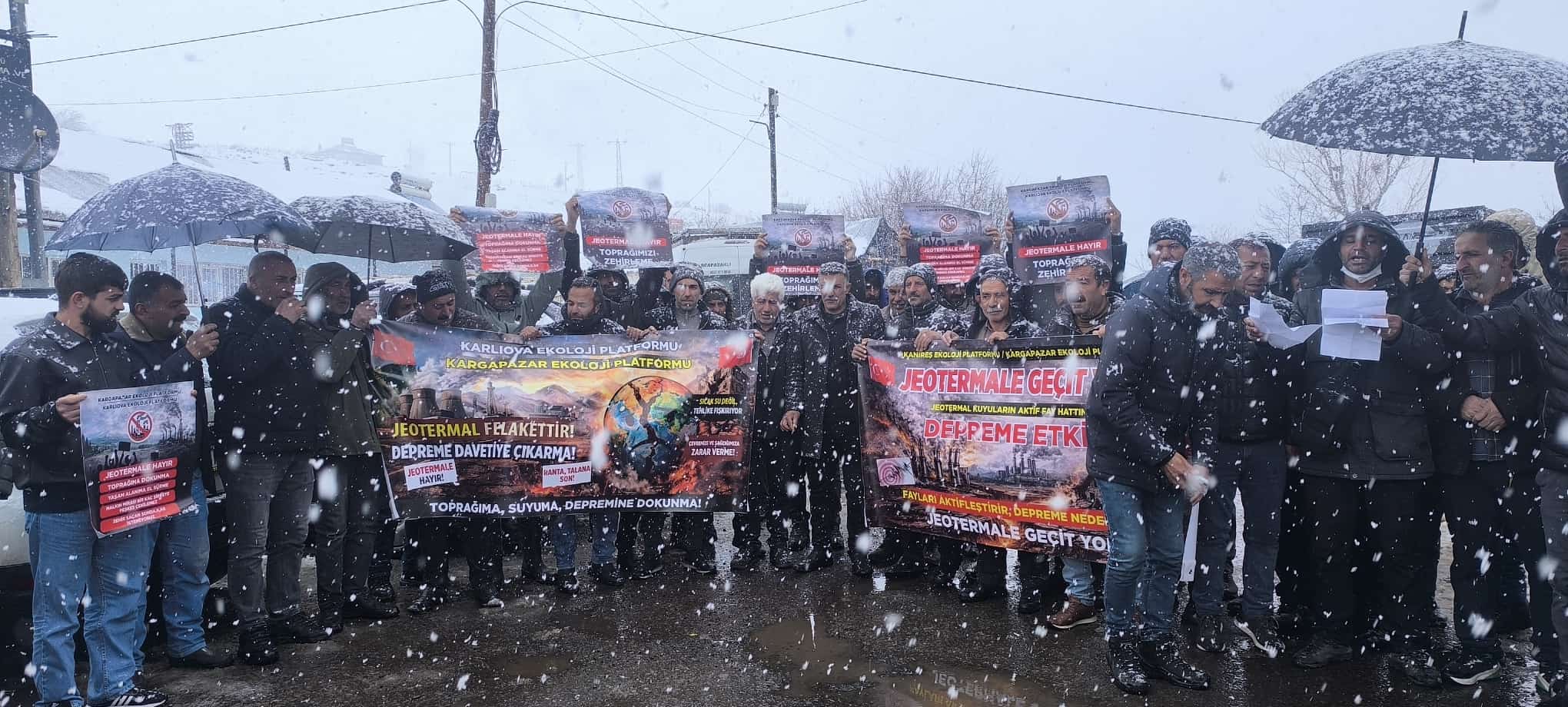
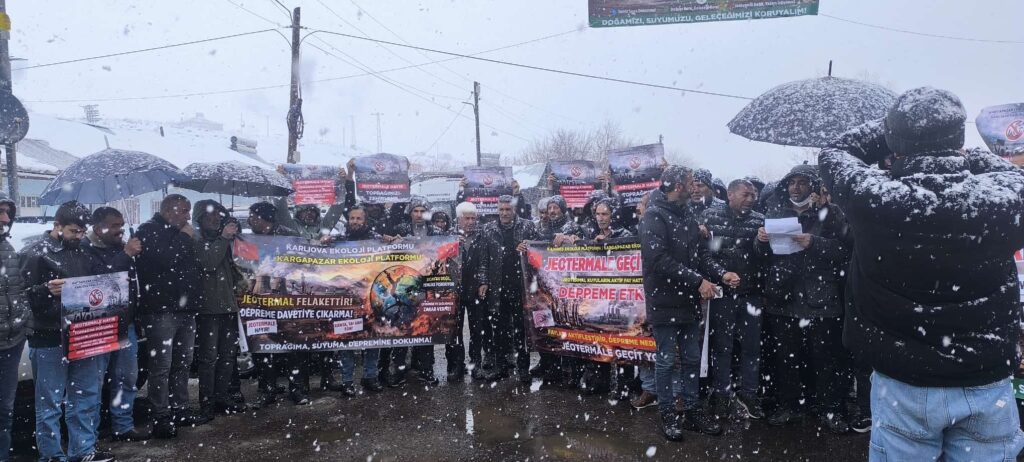
Despite snowy weather, villagers in Kargapazar (in Bingöl province, eastern Turkey) held a protest against a planned Geothermal Power Plant (GPP) project. They carried a banner reading “No to Geothermal.”

A US-based company called Ignis H2 Energy wants to build a geothermal power plant (GPP) in the Karlıova district of Bingöl. The project would affect 6 villages in the area. The problem is it would be built on an active earthquake fault line, just like a similar project the same company is pushing in nearby Varto.

Despite the snowfall, the people of Kargapazar village held their protests against the geothermal energy project on April 10th.

During the demonstration held in front of the Social Aid and Solidarity Association, a banner with “No to Geothermal Energy” was displayed.

Mehmet Ali Harmancı, a member of the Kargapazar Ecology Platform, stated that the project would negatively impact their living areas and the pastures used for agriculture and livestock. Harmancı emphasized that this project is directly related to expansionist and imperialist policies and institutions, explaining that natural resources are being targeted because of these policies.

Earthquake risk threatens thousands of lives

Following Harmancı’s statement, Kasım Demiralp, a member of the Kargapazar Ecology Platform, read a press release, stating that the GPP project was being carried out disregarding scientific facts:

“The geography we live in is a region with active fault lines and a high risk of earthquakes. Despite this sensitive structure, the desire to drill dozens of geothermal wells seriously endangers not only nature but also human lives. These projects, carried out by ignoring scientific facts, could lead to irreversible consequences.”

Demiralp also pointed out that drilling and injection operations carried out on fault lines pose an earthquake risk and threaten the living spaces of thousands of people.

“Our right to a healthy life cannot be disregarded for the sake of any self-interest.”

The statement also emphasized that the GPP project would pollute underground water resources, render agricultural areas unproductive, and negatively impact livestock farming and the ecosystem.

Demiralp emphasized that Article 56 of the Constitution, which states “Everyone has the right to live in a healthy and balanced environment,” cannot be disregarded for the sake of any project, company, or interest.

Their demand was to stop the geothermal projects immediately. “Nothing should proceed without the consent of local people” said Demiralp.

MKG-DFG: “Those who pursued the truth did not abandon it”

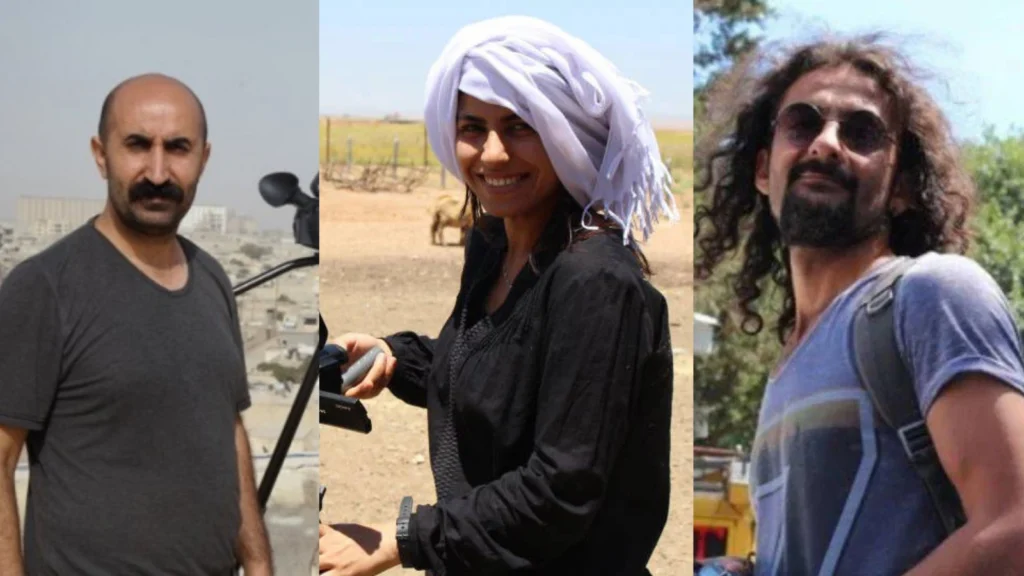
The Mezopotamya Women Journalists Association (MKG) and the Dicle Fırat Journalists Association (DFG) released a statement on April 6, the “Day of Killed Journalists,” saying: “It is our duty to expand the struggle for truth of the murdered journalists, to honor their memory, and to continue the line of a free press.”

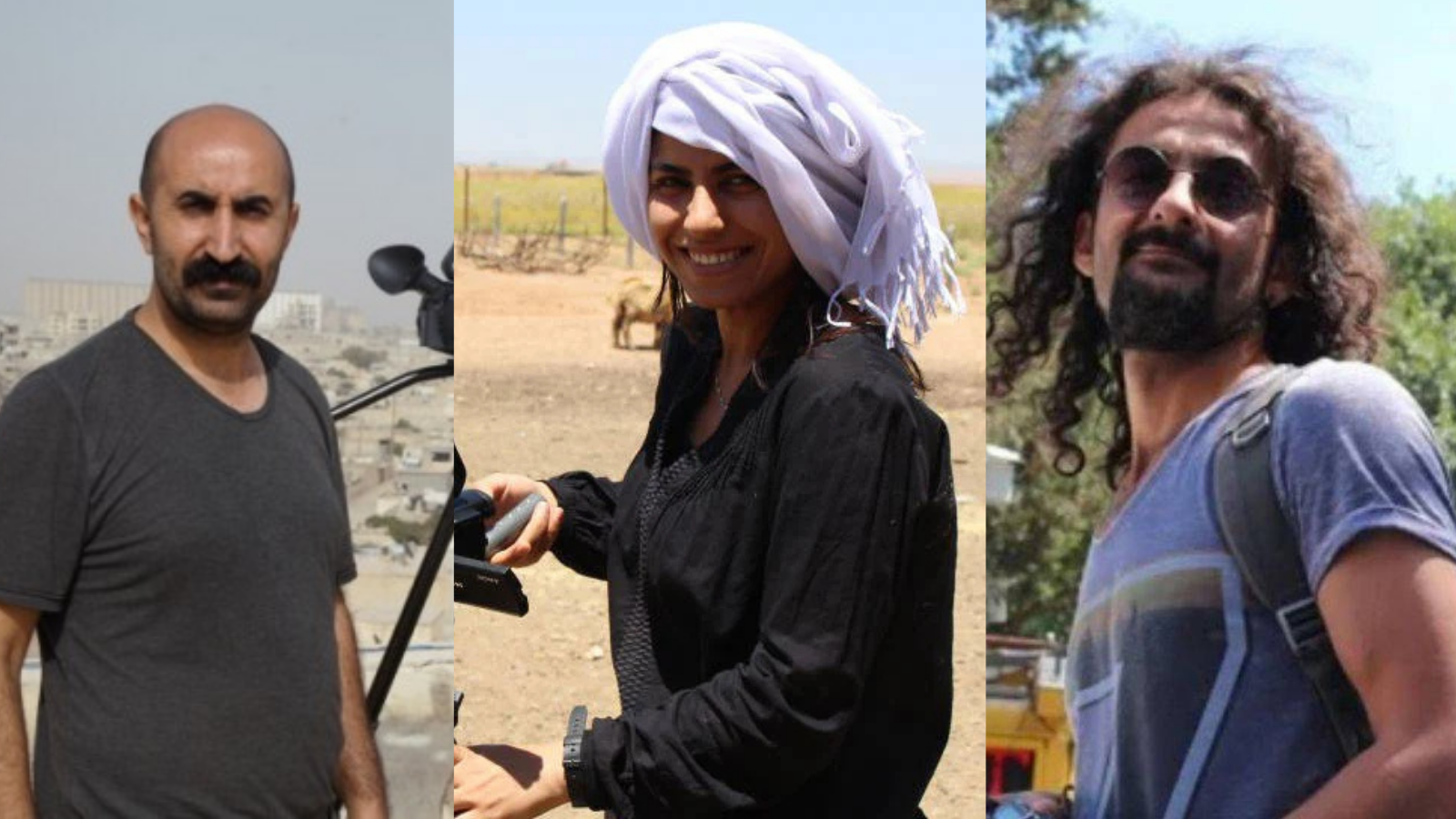
Killed journalists, respectively, Nazım Daştan, Cihan Bilgin, Hakan Tosun

MKG and DFG issued a joint statement marking April 6 “Day of Killed Journalists.”

Their collective statement reads as follows:

April 6 is a day of commemoration for journalists in Turkey who were killed because of their journalistic activities. The date was chosen because journalist and writer Hasan Fehmi Bey was assassinated on April 6, 1909, on the Galata Bridge, making him one of the first losses of this job.

The Turkish Journalists Association (TGC) designated April 6 as the “Day of Martyred Journalists” in 1997; in 2005, the name was changed to the “Day of Killed Journalists.” April 6 commemorates journalists who were killed for pursuing the truth. Targeted for exposing facts, being the voice of the people, and revealing darkness, these journalists continue to live on in the memory of the struggle for a free press.

Once again, through the memory of killed journalists, we emphasize: with every journalist whose pen was meant to be broken, the truth itself was intended to be silenced. However, pressures, threats, massacres, and policies of impunity have not been able to stop the tradition of a free press. In these lands, those who pursue the truth have always paid a price—but they have never abandoned the truth. Today, we commemorate all murdered journalists with respect and gratitude. The legacy they left behind, their resistance, and their struggle for truth continue to illuminate our path.

The pens of murdered journalists have not fallen silent, and will not. It is our responsibility to grow their struggle for truth, to uphold their memory, and to continue the line of a free press.

The DFG had also published a monthly report on April 2, regarding violations of rights against journalists in March. The report included the following data:

  • 5 journalists were detained
  • 2 journalists were arrested
  • 1 journalist was subjected to ill-treatment
  • 2 journalists were threatened
  • 1 journalist was targeted
  • Investigations were launched against 3 journalists
  • Lawsuits were filed against 5 journalists
  • 3 journalists were sentenced
  • Cases of 24 journalists are ongoing
  • 5 news coverages were blocked
  • Access bans were imposed 6 times
  • 53 social media accounts and 75 pieces of content were blocked in digital media
  • Number of imprisoned journalists: 31

Click here for the full report.

Did Kurds receive US weapons? PJAK responds, PDKI statement

Representatives of PJAK and PDKI denied Trump’s statements that the Kurds received weapons sent by the US.

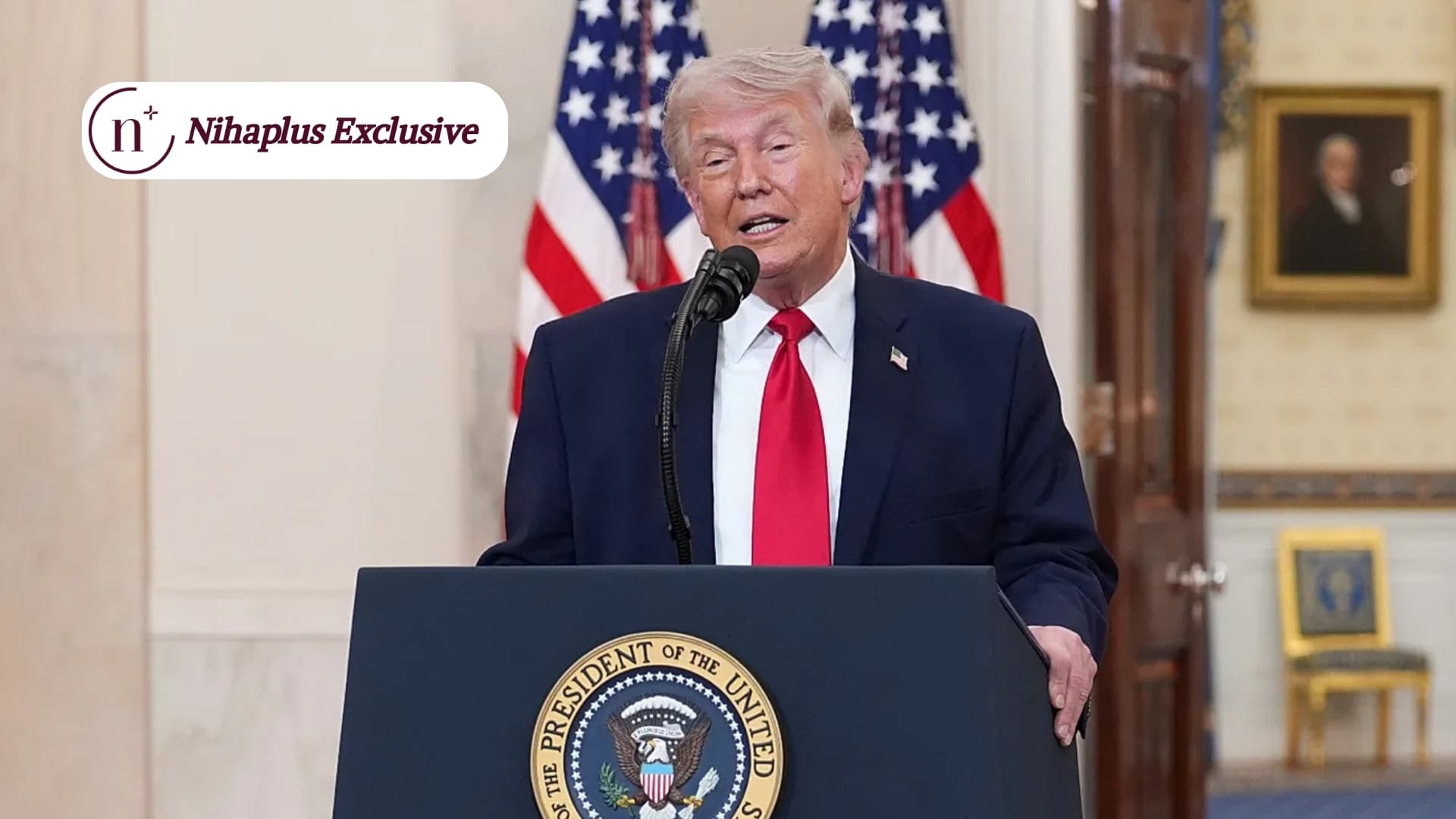
According to a news report broadcast on Fox News on April 5, 2026, US President Donald Trump said, “We sent weapons through the Kurds after the Iran protests. I think the Kurds took the weapons themselves.”

As Niha+, we asked Zegrus Enderyarî, a member of the PJAK Foreign Affairs Committee, whether Trump’s April 5 statement was accurate. Enderyarî stated that they had no information whatsoever regarding the truth or falsity of this matter. He further noted that there is no relationship of this kind between PJAK and the US.

When asked whether the Coalition of Political Forces of Iranian Kurdistan (CPFIK) had such communication with the US, Zegrus Enderyari similarly replied, “There is no such thing for the coalition either.“

PDKI also denied

Meanwhile, Hejar Berenji, the US Representative of the Democratic Party of Iranian Kurdistan (PDKI), also said in a statement on his social media account, “The information currently reported by Fox News does not accurately reflect the situation.“

Berenji also announced that the Coalition of Kurdish parties will issue an official statement shortly to clarify the situation.

Trump had previously made a statement as well

A few days after the attacks on Iran began on February 28, Trump said on March 5 regarding the discussions about the Kurds’ involvement in the war, “If the Kurds want to launch an attack on Iran, let them do it. It would be great if they wanted to do so.“

On March 8, in response to a question about the possibility of the Kurds establishing a new autonomous region in Iran and whether they would join the war, Trump replied, “We are very friendly with the Kurds, but we do not want to make the war any more complicated than it already is. I decided that I don’t want the Kurds going in there.“

The appeal against Esra Işık’s arrest has been rejected

The objection against the arrest of Esra Işık has been rejected by the Muğla 2nd Civil Court of First Instance.

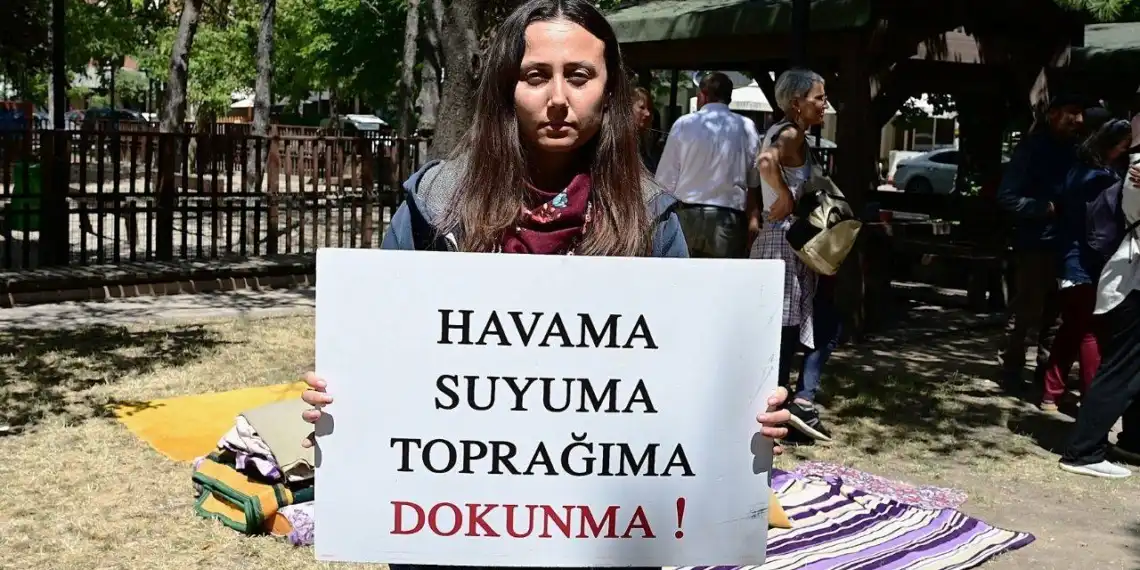
Esra Işık was detained and later arrested while protesting during an expert inspection related to a lawsuit against the urgent expropriation of agricultural land around Akbelen Forest in Milas, Muğla. The objection to her arrest has been rejected by the Muğla 2nd Civil Court of First Instance.

She is one of the leading figures in the Akbelen protests. An urgent expropriation decision decision had been issued for 679 parcels of agricultural land surrounding Akbelen Forest in Milas, Muğla which will result in villagers losing their olive groves and homes. Local residents say this action is meant to expand coal mining operations run by YK Energy, a company owned by İçtaş and Limak, and they have taken the case to court.

Court-appointed panel of experts began on-site inspections in the area on March 30 under gendarmerie supervision. Following tensions that arose during the inspection, while villagers reacting the inspection experts on March 31, Esra Işık was detained that night and arrested the same day.

İHD: Numerous violations of rights occurred during “Rojava protests”

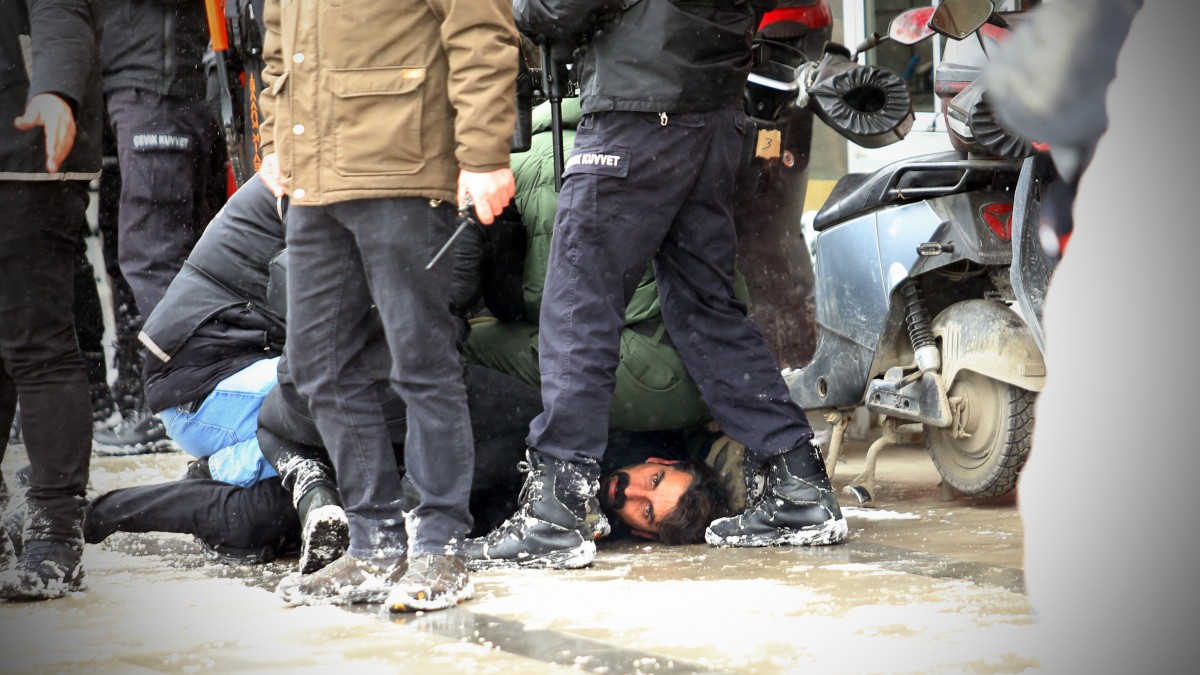
According to the Human Rights Association (İHD) report, at least 930 people were detained for participating in protests or for social media posts related to the issue. At least 123 people were arrested, including 1 journalist and 32 children.

Adnan Bilen /MA

The Human Rights Association (İHD) prepared a report on violations of rights that occurred during protests in Turkey against the attacks that began on January 6, 2026, when the Syrian interim government in Syria targeted Kurdish-populated neighborhoods in Aleppo, and which later spread across Rojava.

The report, prepared by the İHD Documentation Center using information reflected in the press and other open sources, as well as observation reports from İHD branches, covers violations identified between January 6, 2026 and February 12, 2026.

According to the report, at least 930 people were detained for participating in protests or for social media posts related to the issue. At least 123 people were arrested, including 1 journalist and 32 children.

Some of the violations identified in the report are as follows:

Interventions in 22 provinces

  • In response to protests and reactions against attacks on Kurds in Syria, law enforcement intervened in more than 70 peaceful demonstrations in at least 22 provinces. Many people, including co-mayors, human rights defenders, trade union and professional organization leaders, journalists, and children, were detained.
  • During the interventions, chemical agents such as tear gas, as well as plastic bullets and water cannons were used. It was documented that law enforcement used physical violence against many individuals and that detainees were handcuffed behind their backs.
  • Governorships in three provinces (Urfa, Mardin, and Diyarbakır) imposed bans on all types of demonstrations and events for varying periods.
  • In Mersin, one refugee died after a civilian opened random fire to threaten protesters. At least 5 people, including 4 journalists, were injured by law enforcement in various ways.
  • At least 930 people were detained for participating in protests or for related social media posts. At least 123 people were arrested, including 1 journalist and 32 children.
  • Many individuals were subjected to torture and ill-treatment both during interventions against protests and throughout detention and imprisonment processes.

Journalists were obstructed

  • At least 8 journalists were detained while covering the protests. Journalist Nedim Oruç was arrested.
  • Access was blocked to more than 40 social media accounts and websites belonging to news outlets, including Mezopotamya Agency, Jinnews, ETHA, Yeni Yaşam, and Ajansa Welat. Hundreds of social media accounts were also restricted.
  • In response to reports that HTS and affiliated armed groups cut the braids of women they executed in Syria, 4 people (2 of them children) were detained for sharing videos of themselves braiding hair on social media; one child was arrested. A nurse was suspended from duty for sharing similar content. For the same reason, the Professional Football Disciplinary Board (PFDK) imposed various administrative penalties on the Amedspor club, its president, and player Çekdar Orhan.
  • At least 46 people who were foreign nationals were deported.

Infographic

Mass Detentions and Interventions: Toll Across 22 Provinces
22 City
Interventions happened
70+ Protest
Blocked
930+ Detention
Participating protest / SM Sharing
123 Arrested
At least (32 of them children)
Intervention and Methods
Law enforcements used tear gas, plastic bullets and water in protests.
Detainees were handcuffed from the back and subjected to physical violence.
The governorships of Urfa, Mardin and Diyarbakır, banned all kinds of actions and activities.
Co-mayors, human rights defenders, trade unionists and children were also among those detained.
Missing Persons and Violations
One ​​refugee lost his life as a result of random gunfire by a civilian in Mersin.
At least 5 people, including 4 journalists, were injured by law enforcements.
Torture and ill-treatment were reported both during protests and in detention/prison processes.
Freedom of the Press and Expression
At least 8 journalists were detained; Nedim Oruç was suspended.
More than 40 news websites and social media accounts (MA, Jinnews, Yeni Yaşam etc.) were blocked.
Access to hundreds of individual social media accounts was banned.
Special Penalties and the Hair Braiding Case
• Due to the video of hair braiding 4 people, including 2 children, were detained, and one child was arrested.
• Sharing the same braiding content caused a nurse being suspended from duty.
• The PFDK (Turkish Football Federation Disciplinary Committee) fined Amedspor club, its president, and one of its players.
• At least 46 citizens from another country were deported.
Datas were compiled from the İHD report.


Turkey’s new Kurdish resolution “process”: A timeline of events

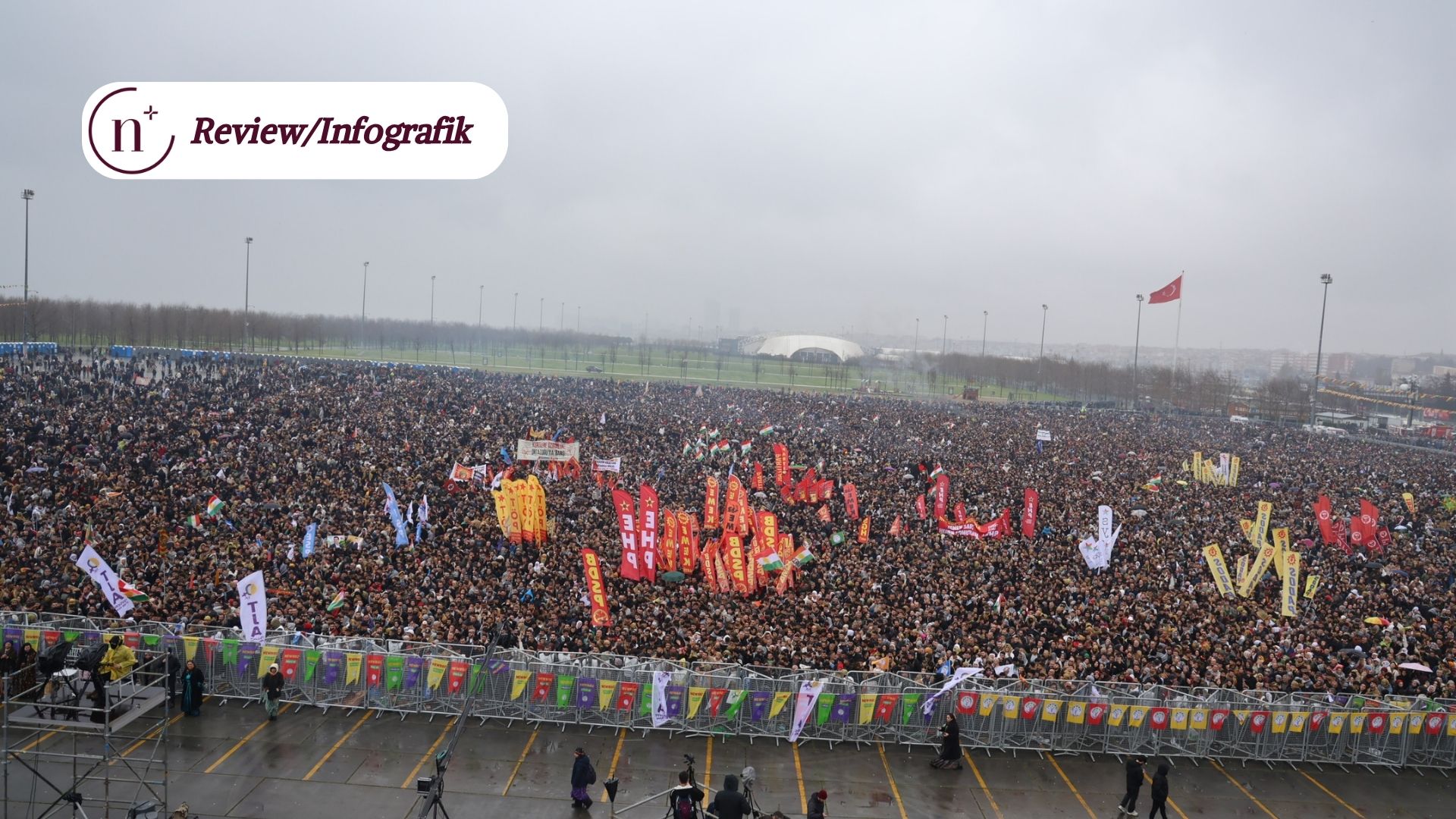
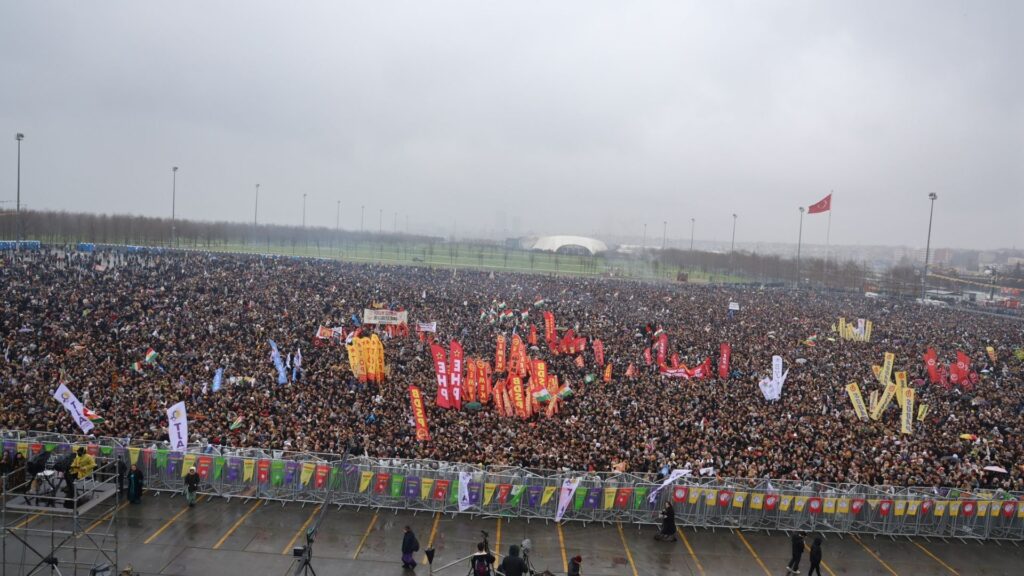
İstanbul Newroz celebrations 2026 / Photo: Ömer Demir, Ajansa Welat

It has been nearly a year and a half since MHP Chairman Devlet Bahçeli made his statement referring to Abdullah Öcalan, calling for him to “come to the TBMM and speak at the DEM Party group meeting, and declare that terrorism has ended and the organization has been disbanded, provided his isolation is lifted.” Since that day, although many issues have been discussed in this process—which the government calls a “Terror-Free Turkey,” but which is generally referred to by some as the “Second Solution Process,” by others as the “Peace Process,” and by some simply as the “Process”—so far, only the Kurdish side has taken steps. Aside from the state and ruling wing establishing a “process” commission with the participation of all parties with parliamentary groups except one, and this commission preparing a report following a long-term working schedule, there have not yet been any concrete developments regarding the legal regulations stated to be necessary for the continuation of the process.

Many developments have taken place under the heading of the “process” from October 1, 2024, to March 31, 2026. Below, we present the comprehensive chronological information we have prepared on the subject.

Signals of the New Period
October 1, 2024 Bahçeli shakes hands with DEM Party members in the Parliament.

A remarkable contact that took place on October 1, 2024, at the opening of the new legislative year of the TBMM, was interpreted as a harbinger of a “new political climate” in public opinion. Bahçeli went to the DEM Party rows and shook hands with Co-Chair Tuncer Bakırhan and other deputies. This gesture created wide repercussions both in the Parliament hall and in public opinion. When journalists asked about the meaning of this handshake, Bahçeli said, “We are entering a new era. While we want peace in the world, we must also establish peace in our own country.”

On the same day, in his speech at the General Assembly of the Parliament, President Erdoğan also used the expressions: “It must now be accepted as a fact. Today, against Israeli aggression, both at home and abroad, grounds for reconciliation must be brought to the fore rather than fields of conflict.”

October 22, 2024 Bahçeli’s call to Öcalan at the group meeting.

Following these statements, on October 22, 2024, at his party’s group meeting, Bahçeli directly addressed Öcalan and made the following call: “If the isolation is lifted, let him come and speak at the DEM Party group meeting in the TBMM, and let him shout that terrorism has completely ended and the organization has been disbanded. If he shows this determination and resolve, the way for the legal regulation regarding the use of the right of hope will be opened wide… Here is the challenge, we are ready for it.”

October 24, 2024 Ömer Öcalan shares message from İmralı.

On October 24, 2024, DEM Party Urfa MP Ömer Öcalan announced that they had met with Abdullah Öcalan in İmralı the previous day and shared Öcalan’s message: “The isolation continues. If the conditions are formed, I have the theoretical and practical power to pull this process from the ground of conflict and violence to the legal and political ground.”

A Process Under the Shadow of Trusteeships and Bans!
October 30, 2024 Ahmet Özer’s arrest and trustee appointment.

However, these signs towards a solution and peace in the Kurdish issue were overshadowed by ongoing trustee appointments and ban decisions. The practices of the Ministry of Interior once again raised the question: “Is a solution really wanted in the Kurdish issue?”

Ahmet Özer, who was elected Mayor of Esenyurt within the scope of the “urban consensus” made between the CHP and the DEM Party in the local elections, was arrested on October 30, 2024, on charges of “membership in the PKK/KCK armed terrorist organization.” The next day, Istanbul Deputy Governor Can Aksoy was appointed as trustee in his place.

November 2024 Trustees appointed to DEM Party municipalities.

Subsequently, in November 2024, trustees were appointed one after another to the DEM Party municipalities of Mardin, Batman, Urfa Halfeti, Dersim, and Van Bahçesaray, on the grounds of “terrorism” sentences against the co-mayors.

November 21, 2024 New ban on lawyer visits to Öcalan.

On top of all this, on November 21, 2024, the lawyers of the Asrın Law Office, who had requested a meeting with Öcalan, learned that a new six-month ban on lawyer visits to their client Öcalan had been imposed on November 6.

November 26, 2024 Bahçeli repeats his call.

On November 26, Bahçeli said at his party’s TBMM Group Meeting: “We stand exactly behind what we have said since our group meeting on October 22, 2024. We expect face-to-face contact between İmralı and the DEM Group without delay, and we repeat our call with determination.”

DEM Party Delegation in İmralı
December 28, 2024 DEM Party MPs visit İmralı.

After a long period, on December 28, 2024, DEM Party MPs Sırrı Süreyya Önder and Pervin Buldan met with Öcalan in İmralı. The next day, the delegation shared Öcalan’s message with the public: “Strengthening Turkish-Kurdish brotherhood again is a historic responsibility.”

December 30, 2024 KCK’s statement on the solution will.

Then, on December 30, 2024, KCK Executive Council Co-Chair Besê Hozat, in her statement to Medya Haber, said: “We stand behind the solution will shown by our Leadership. The Turkish state, the AKP-MHP government, the government and the opposition as a whole, the state itself must show a real solution will.”

January 2025 İmralı Delegation holds meetings in parliament.

Throughout January 2025, the İmralı Delegation held meetings with the parties with groups in the TBMM: MHP, AKP, CHP, Future Party, DEVA Party, Felicity Party, and New Welfare Party. After these meetings, the delegation met with Öcalan for the second time on January 22, 2025.

February 13, 2025 KCK announces letter from Öcalan.

On February 13, 2025, KCK Executive Council Co-Chair Cemil Bayık stated that they had received a letter from Öcalan and said, “We are carrying out a work to pull the Kurdish issue from the ground of war to the ground of democratization.” However, two days after this statement, on February 15, on the anniversary of Öcalan’s capture in Turkey, the Ministry of Interior appointed a trustee to Van Metropolitan Municipality.

February 18, 2025 Operations and arrests against HDK.

While these developments were taking place, on February 18, 2025, operations were carried out against the Peoples’ Democratic Congress (HDK). A total of 52 people, including political party executives, unionists, artists, and journalists, were detained; 30 of them were arrested on February 21. HDK Co-Spokesperson Meral Danış Beştaş criticized these operations by calling them “a conspiracy against peace.”

Öcalan’s “Call for Peace and Democratic Society”
February 27, 2025 Öcalan’s “Call for Peace and Democratic Society”.

The DEM Party delegation met with Öcalan in İmralı on February 27, 2025. After the meeting, the delegation shared Öcalan’s message with the public in Istanbul.

In the message titled “Call for Peace and Democratic Society,” Öcalan used the following expressions: “In this climate formed by Mr. Devlet Bahçeli’s call, Mr. President’s demonstrated will, and the positive approaches of other political parties to the known call, I am making a call to lay down arms and I take on the historic responsibility of this call. Like every contemporary society and party whose existence has not been forcibly terminated, convene your congress and decide for integration with the state and society; all groups should lay down their arms and the PKK should dissolve itself.”

March 1, 2025 PKK announces a ceasefire.

Following Öcalan’s call, the PKK announced a ceasefire on March 1. In its statement, the PKK said: “To open the way for the implementation of the Call for Peace and Democratic Society, we declare a ceasefire effective from today. Beyond that, matters such as laying down arms can only be realized with the practical leadership of Leader Apo. We are ready to hold the party congress in the way Leader Apo wants. However, for this to happen, a secure environment must be formed and Leader Apo’s personal guidance and execution are required for the success of the congress.”

March 21, 2025 Newroz celebrations with millions of participants.

Afterwards, Kurds celebrated Newroz 2025 on March 21 with the participation of millions of people in four parts of Kurdistan and many cities around the world. The intensity of participation in Newroz was interpreted by the Kurdish press as support for Öcalan’s call.

Imamoğlu’s Arrest, Sırrı Süreyya’s “Suspicious” Death
March 19, 2025 Ekrem İmamoğlu detained and arrested.

After Newroz, the agenda was shaken by the arrest of Istanbul Metropolitan Municipality President Ekrem İmamoğlu. İmamoğlu, who was detained on March 19, 2025, within the scope of investigations initiated on charges of “terrorism” and “corruption” regarding the “urban consensus,” was arrested on March 23, 2025. The Kurdish movement evaluated İmamoğlu’s arrest as a “provocative intervention” in the process.

April 15, 2025 Sırrı Süreyya Önder hospitalized and passes away.

Shortly after, DEM Party Istanbul MP and İmralı delegation member Sırrı Süreyya Önder was taken to the hospital on April 15 due to a heart condition he suffered in Istanbul. Önder fought for life in intensive care for 18 days but could not be saved and passed away on May 3, 2025. Thousands of people bid farewell to Önder on his final journey with the slogan “Our word to Sırrı will be peace.”

May 8, 2025 DEM Party statement on assassination suspicion.

Five days after the funeral, the DEM Party made a statement: “On April 2, the parking attendant noticed a sound coming from the tires while using Sırrı Süreyya Önder’s vehicle and took the vehicle to the service. In the examination, a sharp metal device made of iron that could puncture the left rear tire was found placed there.” After this information was shared, the question “Was an assassination carried out against Sırrı Süreyya?” began to be discussed in public opinion.

The PKK Dissolved Itself, Weapons Were Burned
May 12, 2025 PKK decides to dissolve itself and lay down arms.

During the days when Önder’s mourning was observed, on May 12, 2025, the PKK announced that it had dissolved itself and laid down its arms. In its statement, the PKK said: “Our congress was held safely despite the difficult conditions in which conflicts continued, aerial and ground attacks continued, and the siege on our areas and the KDP embargo continued… The PKK has completed its historic mission. The 12th Congress of the PKK has decided to dissolve the organizational structure of the PKK and end the armed struggle method, thus ending the activities carried out under the name of the PKK.” Following this decision, many discussions for and against began in different circles, and the question “What steps will the state take?” settled on the agenda of society. In the statement from the KCK, it was announced that many forces that did not want the PKK to lay down arms wanted to meet with the KCK.

July 9, 2025 Öcalan’s first video call since 1999.

Öcalan made a new call on July 9, 2025. This time, however, his call was a video call. This was Öcalan’s first video appearance since 1999. In the video, Öcalan said, “I continue to defend the Call for Peace and Democratic Society dated February 27, 2025,” and stated, “As a general aspect of the process, the voluntary laying down of arms and the comprehensive commission work to be established by law in the TBMM are important.”

July 11, 2025 Peace and Democratic Society Group burns their weapons.

Based on Öcalan’s words in this video message — “Without falling into the sterility of ‘you first, me first,’ attention and sensitivity must be shown in taking steps” — the KCK took the first step. Under the leadership of KCK Executive Council Co-Chair Besê Hozat, the “Peace and Democratic Society Group,” consisting of 30 guerrillas, 15 of whom were women, burned their weapons on July 11, 2025, in a ceremony attended by many journalists and representatives of civil society organizations.

August 5, 2025 First meeting of the parliamentary commission.

Following this ceremony, a 51-member commission chaired by TBMM Speaker Numan Kurtulmuş, which included political parties with groups in the Parliament (except the İYİ Party), held its first meeting on August 5 regarding the solution process. The name of the commission was determined as the “National Solidarity, Brotherhood and Democracy Commission.”

Developments from August 2025 to the Present
August 10, 2025 Bahçeli’s statement on TV100.

On August 10, speaking to TV100, Bahçeli stated that the process would be completed by the end of the year and that the PKK’s burning of weapons carried a strong message, saying, “Weapons can be dug up again if buried; burning them means ‘we will never lay our hands on weapons again.’”

August 19, 2025 White Toros incident in front of the TBMM.

On August 19, a white Toros car was set on fire in front of the TBMM before the fourth meeting of the “National Solidarity, Brotherhood and Democracy Commission.”

August 28, 2025 DEM Party İmralı Delegation meets with Öcalan.

On August 28, the DEM Party İmralı Delegation met with Öcalan. In the statement, it was stated that Öcalan said in the meeting, “Democratic society, peace, and integration are the three key concepts of this process, and a result can be reached on this basis,” and that he emphasized “the need for a new stage in which steps are taken urgently in all dimensions.”

September 25, 2025 DEM Party statement on the legal phase.

On September 25, in its statement, the DEM Party said that the commission in the Parliament was about to complete the listening phase and stated, “With the opening of the Parliament, the first phase, which we can describe as the political and social phase, will give way to the second phase, which we describe as the legal phase.” The DEM Party announced that in the second phase of the process, the commission would focus on legislative work and that they had prepared proposals on issues such as the Transitional Period Law, Enforcement Law, changes in the TMK, TCK, and CMK, trustee regulations, democratization of local governments, combating discrimination, and education in the mother tongue.

October 1, 2025 President Erdoğan’s message of thanks.

On October 1, at the Opening Meeting of the 4th Legislative Year of the 28th Term of the TBMM, President Erdoğan thanked Devlet Bahçeli and the DEM Party for conducting the process.

October 7, 2025 Bahçeli proposes a delegation to meet Öcalan.

At the MHP Parliamentary Group Meeting on October 7, Bahçeli suggested that a delegation of commission members meet face-to-face with Öcalan and asked Öcalan to make a call for the SDF to lay down arms.

October 13, 2025 Asrın Law Office visits İmralı.

On October 13, lawyers from the Asrın Law Office visited Abdullah Öcalan on İmralı Island. Öcalan said, “The principle of hope is a step that the state must take. It needs to remove this burden. This is an issue that affects thousands of people.”

October 26, 2025 KÖH announces withdrawal to Media Defense Areas.

On October 26, at a press conference organized in Kandil under the name of the Kurdistan Freedom Movement (KÖH) Administration because the PKK had dissolved itself, it was announced that all guerrilla forces posing a conflict risk within Turkey’s borders were being withdrawn to the “Media Defense Areas.” On November 17, it was announced that the armed forces had also withdrawn from the Zap area in northern Iraq. The KÖH Administration stated that it believed “this new step would serve peace and democratization in Turkey.”

November 18, 2025 Bahçeli announces his intent to go to İmralı.

On November 18, Bahçeli announced in his MHP group speech that if no one met with Öcalan, he would go to İmralı with three of his friends.

November 21, 2025 CHP objects as the commission votes “Yes”.

On November 21, the CHP announced that it was against the commission’s meeting with Öcalan. On the same day, the commission’s eighteenth meeting was held. In the closed session of the meeting, the proposal to meet with Öcalan was accepted with the “Yes” votes of the AK Party, MHP, DEM Party, TİP, and EMEP.

November 24, 2025 Committee visits İmralı.

On November 24, a committee formed by the AK Party, MHP, and DEM Party from the “National Solidarity, Brotherhood and Democracy Commission” went to İmralı and met with Öcalan.

August 2, 2025 First clashes between SDF and Syrian transitional government forces.

Meanwhile, from August 2025 onwards, many developments with a high probability of affecting the process in Turkey took place in Syria and Rojava. The first clashes between armed forces affiliated with the Syrian transitional government and the Syrian Democratic Forces (SDF), whose backbone is formed by Kurds, occurred on August 2, 2025, near Deyr Hafir and El-Kefse. The clashes intensified in September around Aleppo and its surroundings.

December 26, 2025 Clashes begin in Şêx Meqsûd and Eşrefiye.

On December 26, clashes began between armed forces affiliated with the Syrian transitional government and Kurdish security forces in the Şêx Meqsûd and Eşrefiye neighborhoods. The parties had signed an agreement on April 1, 2025, foreseeing that only Kurdish security forces would remain in the Kurdish neighborhoods and that the SDF would withdraw from the areas it controlled in Aleppo. However, afterwards, the Damascus side accused the SDF of not complying with the agreement and deployed Syrian army tanks near the neighborhoods.

December 27, 2025 SOHR reports Syrian government closing additional roads.

On December 27, the Syrian Observatory for Human Rights (SOHR) reported that the Syrian government had closed the additional roads leading to Şêx Meqsûd and Eşrefiye and was preventing civilians from accessing these areas.

January 4, 2026 SDF and Damascus administration meeting.

On January 4, 2026, a Kurdish delegation headed by SDF General Commander Mazlum Abdi met with officials of the temporary administration in Damascus. US-led international anti-ISIS coalition commander Kevin Lambert also attended the meeting. After the meeting, it was announced that the issue of SDF integration had been discussed and that meetings would continue until a conclusion was reached.

Early January 2026 Simultaneous meetings in Paris.

During the days when meetings with the SDF were held in Damascus, important meetings were also taking place in Paris. The meetings were represented by Syrian Foreign Minister Esad Şabani and Intelligence Chief Hussein Salameh for Syria, and by a delegation headed by Israel’s Washington Ambassador Yechiel Leiter for Israel. On behalf of the US, US Syria Special Envoy Tom Barrack and Trump’s advisors Steve Witkoff and Jared Kushner attended the meetings. Turkey’s Foreign Minister Hakan Fidan’s presence in Paris at the same time drew attention. After the meetings, it was announced that agreements had been reached between Israel and Syria on some issues.

A few days later SDF statement on the sabotaged Damascus meeting.

A few days later, SDF General Command member Sipan Hemo announced that the January 4 Damascus meeting had been sabotaged. Hemo said: “It was a very positive meeting. Because both sides had accepted the articles. Even the international powers wanted this development to be announced to the public. While we were talking about these, a state official whose name I will not mention entered. Seeing that the meeting was going positively, he took the intelligence officer and the Defense Minister with him and left. When they returned, they said, ‘We will not make any statement at this stage. Let’s leave it to the 7th or 8th.’ It was clear that a game was developing. But whether it was Şêx Meqsûd or another place was not yet clear. There was a smell of a game.”

Beginning of January 2026 Reuters reports on the Israel-Syria deal.

According to Reuters, a series of high-level closed-door meetings were held in Damascus, Paris, and Iraq at the beginning of January. In the Paris meeting, Syrian officials asked the Israeli side to cut its support for the SDF. It was stated that the Syrian government also brought up the idea of a limited operation in some areas controlled by the SDF and that it did not encounter any reservations. In return, it was claimed that Israel had made the Damascus administration accept a series of demands, especially the demilitarization of southern Syria. Neither Syria nor the US confirmed or denied Reuters’ report.

January 7, 2026 Kurdish security points declared military targets.

On January 7, 2026, the Syrian transitional government declared all Kurdish security points in the Şêx Meqsûd and Eşrefiye neighborhoods as “military targets,” and attacks on the neighborhoods increased. A major humanitarian crisis was experienced due to war crimes committed by armed persons affiliated with the Syrian Arab Army. The images of the lifeless body of Kurdish women’s security officer Deniz Çiya being thrown from a building with “Allahu Akbar” slogans created outrage among Kurds and drew strong reactions from human rights organizations.

January 8 – 11, 2026 Syrian Army takes control of Aleppo province.

Following the intense clashes, the Syrian Army entered the Eşrefiye Neighborhood on January 8, 2026, and the Şêx Meqsûd Neighborhood on January 11, 2026, declaring that control in Aleppo province was in the hands of the Syrian army.

January 9, 2026 EU delegation visits Damascus.

On January 9, 2026, EU Council President António Costa and EU Commission President Ursula von der Leyen went to Damascus and met with Ahmed Şara. Von der Leyen announced a 620 million euro support package for Syria. While attacks on Kurdish neighborhoods continued, the EU’s visit to Damascus drew criticism in public opinion.

January 17, 2026 DEM Party delegation meets with Öcalan.

On January 17, 2026, the DEM Party delegation met with Öcalan in İmralı. Öcalan, stating that he was extremely concerned due to the clashes, evaluated this situation as an attempt to undermine the Peace and Democratic Society Process.

January 17, 2026 Syrian government declares a closed military zone.

On the same day, the Syrian government declared the area west of the Euphrates, including Raqqa under SDF control, a “closed military zone” and launched an attack on some areas of Tabqa. With the SDF’s announcement that it would withdraw to the east of the Euphrates, the Damascus administration announced that its forces had begun entering the city.

January 17, 2026 Meeting in Erbil.

On January 17, Mazlum Abdi, Autonomous Administration Foreign Relations Co-Chair İlham Ahmed, Tom Barrack, and KDP Chairman Mesud Barzani met in Erbil. In the statement made by the Kurdistan Regional Government Presidency after the meeting, it was stated that “Both sides agreed that the only way to solve the problems peacefully and to ensure peaceful coexistence among the components of the new Syria is dialogue.”

January 18, 2026 Syrian army enters Tabqa and Raqqa.

On January 18, the Syrian army took Tabqa, the Tabqa Dam, and the Tabqa Air Base. It also seized the entire eastern countryside of Deir ez-Zor with all its towns and villages, as well as the oil and natural gas fields in the region. On the same day at noon, Arab tribal forces took control of Raqqa, and the Syrian army entered the city a few hours later.

January 18, 2026 Ceasefire and integration agreement.

On January 18, the SDF and the Syrian transitional government agreed on a ceasefire. According to the ceasefire agreement, the Syrian transitional government would take over the military and administrative control of Deir ez-Zor and Raqqa provinces. In addition, the SDF would hand over control of all oil and natural gas fields in northeastern Syria and international border crossings to the Syrian transitional government, and civilian institutions in Hasakah province would be integrated into the Syrian state.

January 19, 2026 Rojava Delegation leaves the Damascus meeting.

On January 19, the Rojava Delegation headed by Mazlum Abdi met in Damascus with the Damascus Administration headed by Ahmed Şara and the US Syria Special Envoy Tom Barrack. The Rojava Delegation stated that they did not accept the new articles attempted to be added to the ceasefire agreement announced the previous day and the style attempted to be imposed as a fait accompli, and left the meeting.

January 20, 2026 Global solidarity actions for Rojava.

In his statement after the inconclusive meeting, Mazlum Abdi emphasized that protecting Kurdish regions against attacks by Damascus forces was a “red line.” With the Rojava administration’s decision to resist, Kurds took to the streets on January 20 in cities across the four parts of Kurdistan and Europe, and around the world. Solidarity actions with Rojava continued uninterrupted until February, with demands for Kurdish unity marking the actions.

January 22, 2026 Braid video circulates and sparks global protests.

Meanwhile, on January 22, a highly controversial video circulated on social media. In the video, Ramî El Deheş, who was in HTS, ISIS, and Turkey-backed paramilitary structures, said he had cut the braid of a deceased YPJ female fighter in Raqqa and “gifted it.” The video was met with anger and reaction in many parts of the world. Women launched a braid protest worldwide. Some women participating in the protest in Turkey were detained and arrested.

January 30, 2026 Comprehensive integration agreement announced.

On January 30, a statement was published regarding the meeting that Mazlum Abdi and İlham Ahmed held with transitional government officials in Damascus. The statement announced that a comprehensive agreement had been reached including gradual military and administrative integration between the Syrian transitional government and the SDF, the establishment of a military division consisting of three brigades affiliated with the SDF, the formation of a separate brigade within a division affiliated with Aleppo province for Kobani forces, the deployment of Interior Ministry forces in Hasakah and Qamishli, the integration of local institutions into the state, guarantees of civil and educational rights for Kurdish society, and the return of displaced persons.

February 16, 2026 Öcalan’s evaluation of the process.

On February 16, the DEM Party İmralı Delegation met with Öcalan. In the statement made by Öcalan through the delegation, he said: “The process we have left behind has proven our ability and power of negotiation to ensure the transition from a politics of violence and separation to democratic politics and integration in essence. The TBMM Commission report must be compatible with the basic social realities. In the future progress of the process, this quality of the commission report will be extremely important. A politics that approaches with the logic of ‘eliminating terrorism’ does not express a solution, but a lack of solution.”

February 17, 2026 Commission’s 60-page report is released.

On February 17, in the 60-page report prepared by the “National Solidarity, Brotherhood and Democracy Commission,” topics such as the dissolution of the PKK and the process of laying down arms, and social integration were included. It was stated that legal regulations were tied to the condition of “the actual finalization of the PKK’s laying down of arms and its detection by the executive organ.”

February 28, 2026 US and Israel launch air strikes on Iran.

On February 28, 2026, the US and Israel launched large-scale air strikes on Iran. In the strikes, many high-level Iranian officials, including Iran’s religious leader Ayatollah Ali Khamenei, were killed. In response, Iran’s missile attacks on US bases in the region and Israeli territory turned the war into a regional and multidimensional crisis.

February 22, 2026 Formation of the Iranian Kurdistan Political Forces Alliance.

On February 22, Kurdish parties in Iran united under the name “Rojhilat Political Forces Alliance” (Iranian Kurdistan Political Forces Alliance) and formed a common front against the Iranian regime. The coalition, which included structures such as PJAK, KDP-İ, PAK, Komala, and Xebat, increased the number of parties to 6 with the participation of the Iranian Kurdistan Revolutionary Workers’ Community on March 4. Meanwhile, while claims that the US and Israel were seeking a possible alliance with the Kurds were confirmed by US sources, the Kurdish political movement’s distant and cautious statements so far drew attention.

March 4, 2026 DEM Party delegation’s meeting in Ankara.

On March 4, the DEM Party delegation held a meeting in Ankara with Interior Minister Mustafa Çiftçi and Justice Minister Akın Gürlek on legal regulations.

March 11, 2026 Passing of Salih Müslim.

On March 11, PYD Co-Presidency Council member Salih Müslim passed away in a hospital in Hewler where he had been receiving treatment for some time due to kidney failure. A funeral ceremony with the participation of thousands of people was held for Müslim in Qamishli.

March 21, 2026 Newroz celebrations and Erdoğan’s reaction.

On March 21, Kurds celebrated Newroz with the participation of millions in many cities around the world. Öcalan’s message was read at the celebrations. In his message, Öcalan emphasized that religious, sectarian, and cultural wars had continued in the Middle East for a thousand years, and stated that “the divisions created by policies of suppression, denial, and enmity in the region today provide an excuse for imperialist interventions.” Öcalan said, “On the occasion of Newroz, it is in our hands to turn this year into a real year of freedom for all the peoples of the Middle East and to make the tradition of friendship and solidarity among peoples dominant.”

On the other hand, before and after the Newroz celebrations, a total of 170 people were detained in 15 cities on charges of “making propaganda for an organization” and “violating the Law on Meetings and Demonstrations,” and 12 of those detained in Istanbul were arrested. President Erdoğan defended the detentions and arrests by calling them “provocations trying to undermine the process.” Erdoğan described the opening of posters of Abdullah Öcalan at the celebrations and the carrying of yellow, red, and green colors in the areas as “playing with the sensitive nerves of the nation.”

March 27, 2026 Öcalan evaluates the Iran crisis.

On March 27, the DEM Party İmralı Delegation met with Öcalan. Öcalan said: “This great problem we are trying to solve should not be approached narrowly. Because there are deep hegemonic plans over the Middle East. While positive developments have been experienced to some extent along with the painful situation in Syria, now the Iran war is on the agenda. Three lines have emerged in the Iran war: The first is the US-Israel line. The second is the line aimed at protecting the status quo led by Britain and some international and regional powers. The third is the line of democracy and common life that we have developed with the Peace and Democratic Society Process we defend. The developments in Iran have once again revealed the justification and importance of the process being carried out in Turkey.”

March 28, 2026 AKP’s preparation for a legal commission.

On March 28, it was announced that a commission consisting of lawyers would be established under the chairmanship of AKP Group Deputy Chairman Abdulhamit Gül. AKP officials stated: “A temporary code law is targeted to be brought to the Parliament’s agenda in June or July; it will not be a general amnesty or omnibus law.”

Privacy overview

Niha+ respects your digital footprint within the framework of independent journalism principles and reader privacy. While browsing our site, cookies are used to provide you with an uninterrupted reading experience and to secure the technical infrastructure of our platform. You can manage your cookie preferences as you wish by using the menu on the left. For detailed information on how your personal data is processed, please review our Privacy Agreement and KVKK Clarification Text.