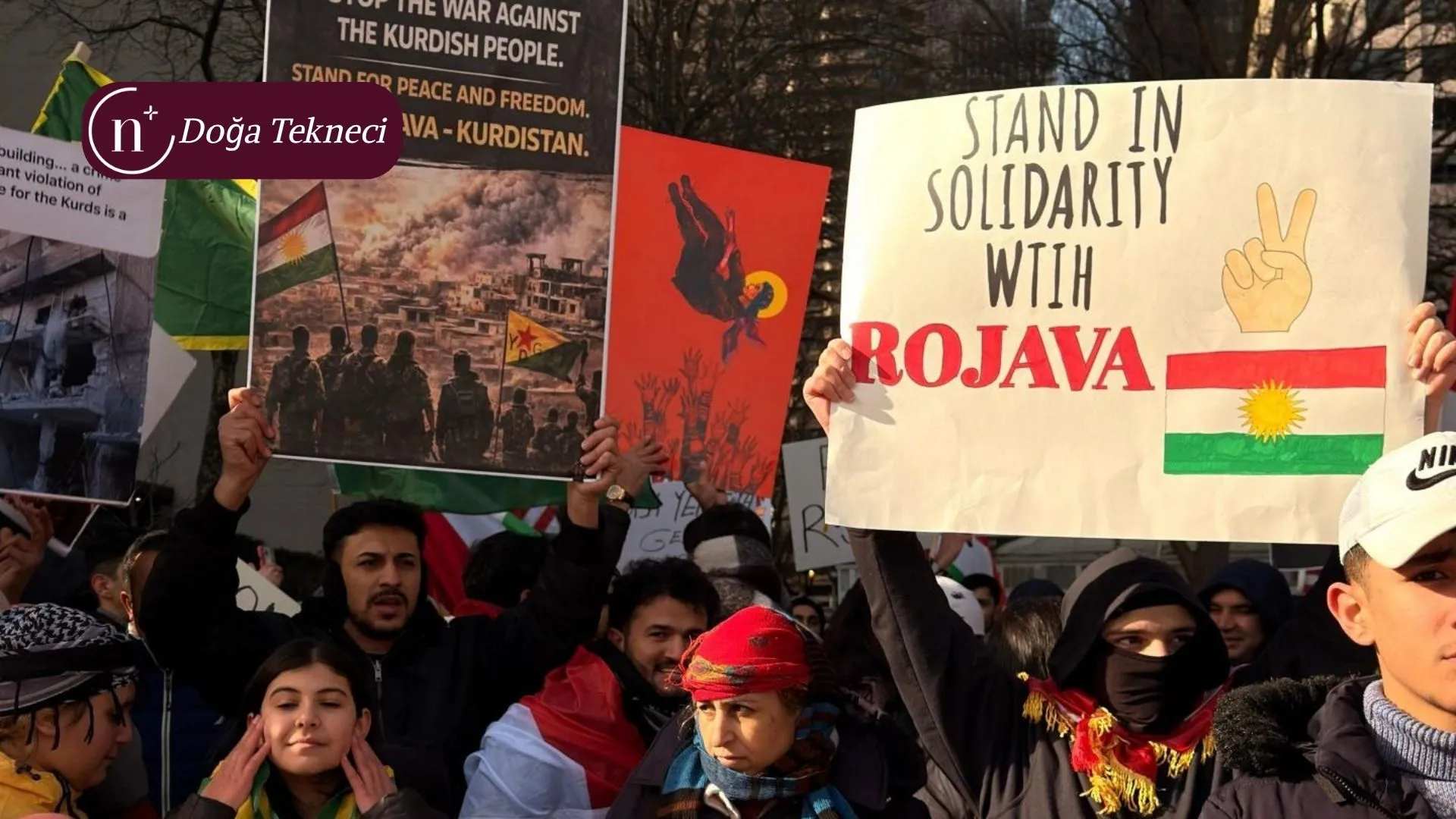
Unidentified individuals in Raqqa are abducting Kurds and demanding money from their families. These individuals take those they abduct to unknown locations and subject them to severe torture. As a result, tens of thousands of Kurdish families have been forced to flee Raqqa.
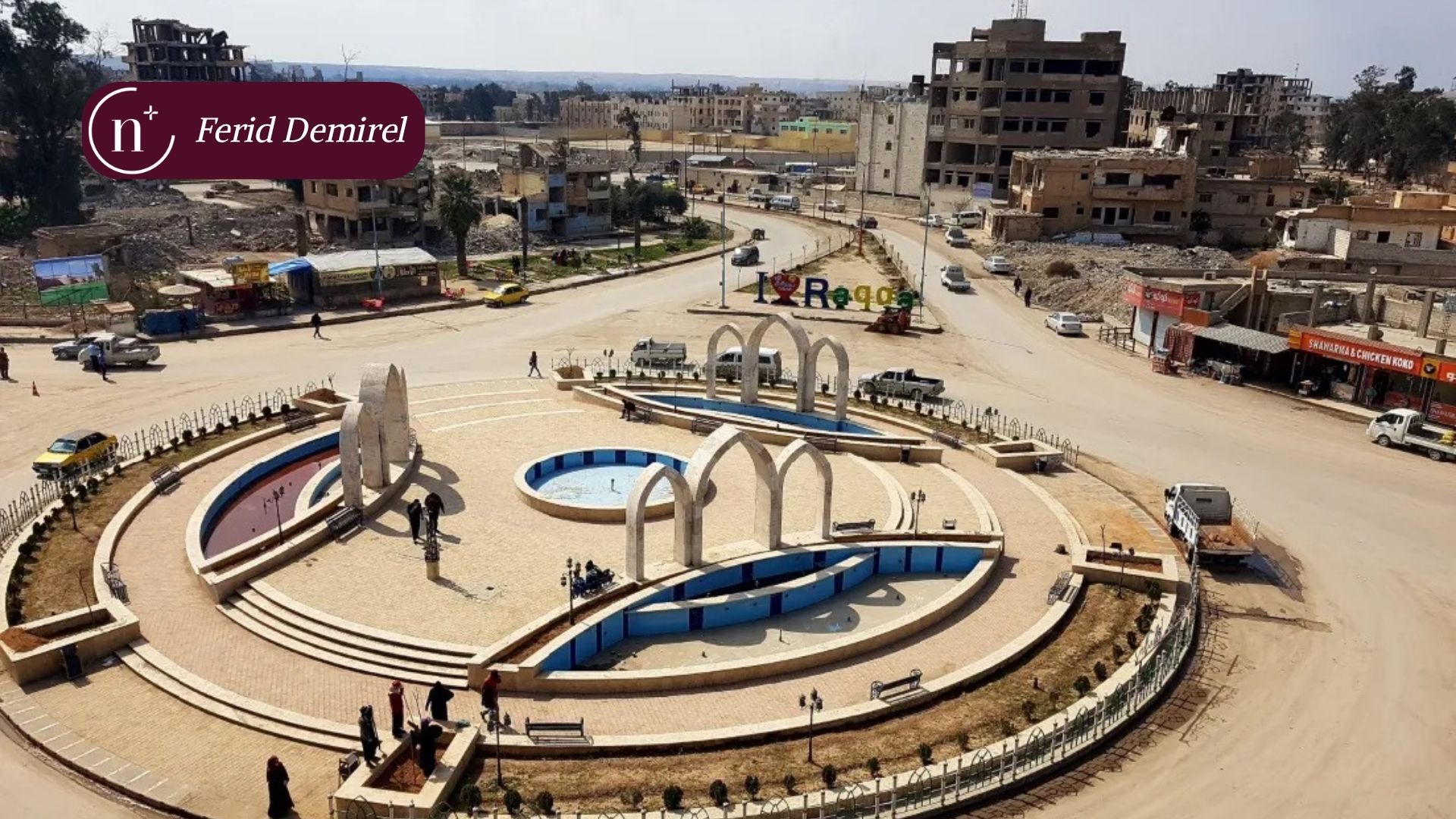
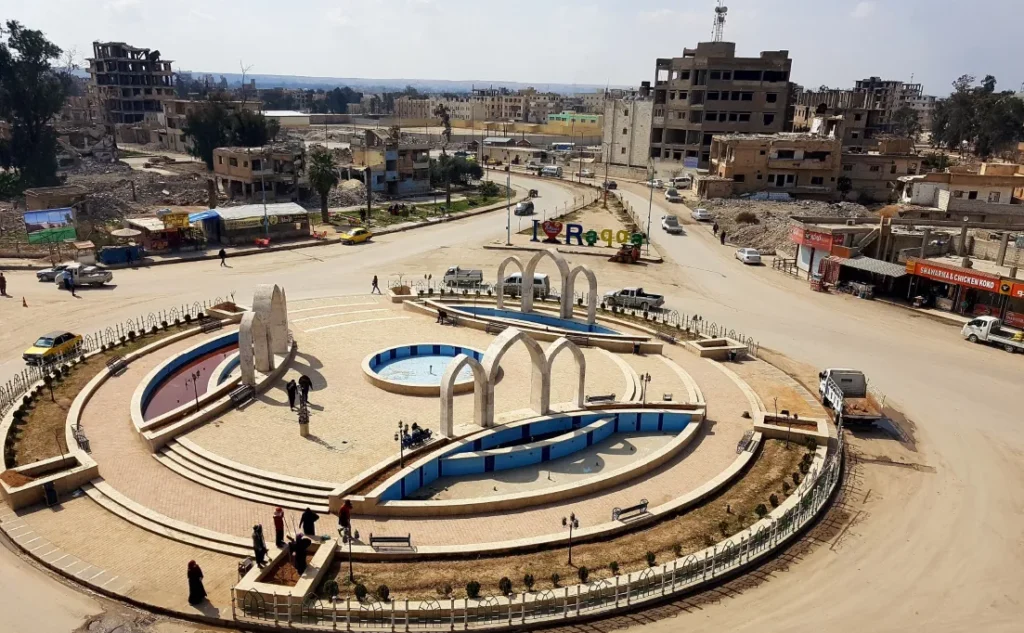
A view from Raqqa during the period it was under SDF control, Photo: Hawarnews
Some time ago, at around 11:00 a.m., Elî Mihemed was abducted in front of his home in Raqqa. When Mihemed stepped outside, he saw several people waiting for him in a black car with no license plate. These men were armed and resembled those who have recently been abducting Kurds in Raqqa. They ordered Mihemed to come with them. Making him leave behind his belongings and his phone, they put him in the car and took him away.
Mihemed is just one of nearly 10 people abducted in Raqqa over the past month and a half.
According to eyewitnesses and sources in Raqqa familiar with the matter, the group in question has for some time been operating at around 11:00 a.m., using the same method by which they abducted Mihemed. They subject those they abduct to severe torture, photograph them, send the photos to their families, and demand money from them.
According to the information available, all of those abducted are Kurds.
According to information given to Niha+ by two witnesses to the events in Raqqa, many Kurdish families have left the city since the abductions began. According to the sources, they allege that the aim of this is to cleanse Raqqa of Kurds.
Citing security concerns, these sources did not want their names disclosed. For the same reason, we have also changed the names of those who were abducted.
70 percent of the Kurdish neighborhood has fled
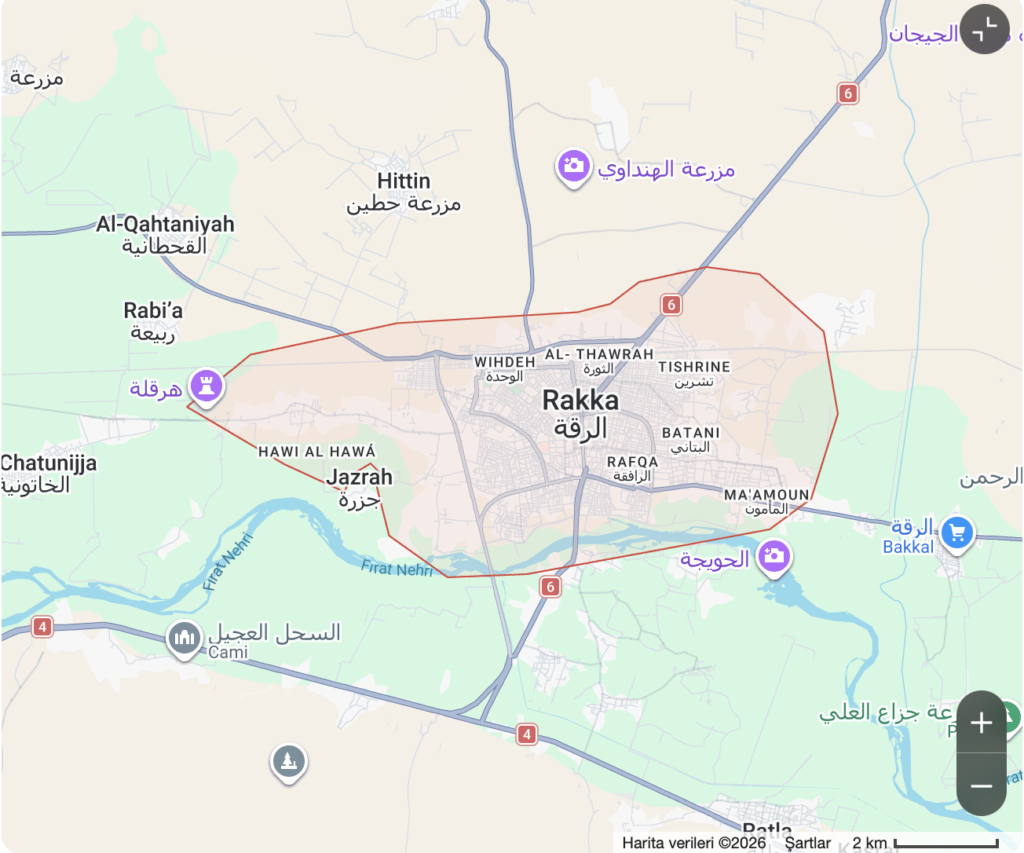
Raqqa lies in northern Syria on the banks of the Euphrates River. A strategic city, Raqqa is located 160 km east of Aleppo. It has been home to many civilizations.
Between 2014 and 2017 the city was under the control of ISIS, which described it as its “capital.” In 2017 the Syrian Democratic Forces (SDF), with the support of U.S. forces, liberated it from ISIS. Thousands of ISIS members surrendered. Those who surrendered were placed in camps.
Raqqa city map
Raqqa remained under SDF control until January 2026, but at the end of 2025 and the beginning of 2026, following attacks on the Kurdish neighborhoods of Aleppo and on Rojava, it was handed over to the interim Damascus administration.
According to the census conducted between 2011 and 2021, close to 60,000 Kurds lived in Raqqa. However, in the process that began after the Syrian war, many Kurds were forced to migrate from there. When the SDF took control of Raqqa, some of them returned. With the clashes at the start of 2026, it is reported that all the residents of the city’s Kurdish neighborhood fled. Afterward, some returned to the homes they had abandoned.
With the recent abductions, 70 percent of the Kurds in that same neighborhood have been forced to flee. In the past, Raqqa as a whole was estimated to have a Kurdish population of 40 percent and an Arab population of 60 percent. At present, however, the proportion of Kurds remaining in the city is reported to be between 5 and 10 percent.
“They say the Kurds are guests here”
After being abducted, Mahmûd Derwîş was released once he paid the money demanded of him. He, too, left Raqqa after his release, like the others. His abductors had threatened him, saying either you leave the city, or we kill you.
Some of those abducted are threatened with the abduction of their family members.
A significant portion of those who flee are forced to sell their goods and property at far below their value. Derwîş, too, had to sell his house, worth 60,000 dollars, for 40,000 dollars.
One of the sources who did not want to be named said that people are selling their shops, their harvests, and their cars and leaving Raqqa: “People think, ‘Let me lose my property rather than my life.’”
According to another source, the thinking of those carrying this out is that “the Kurds are guests here” and that they should therefore migrate away.
Recalling the “Arab Belt” project of the Baath regime era, under which Arabs were settled in Kurdish areas, the same source noted that what is being done now is similar to it. He said the aim behind it is to bring about a demographic change in the areas where Kurds live.
According to information provided by this source, in the past week to ten days three more people in Raqqa have been contacted and asked to leave the city.
What is the interim government doing?
One source says that only a single group is carrying this out, while another says there are two or three separate groups.
According to the allegations, these individuals identify themselves as members of the security forces (asayish), and for this reason they claim that no one can interfere with them.
These individuals call people from hidden numbers or from foreign country numbers.
When they abduct someone, they demand close to 250,000 dollars. However, some are only able to escape their hands for 20,000 or 30,000 dollars.
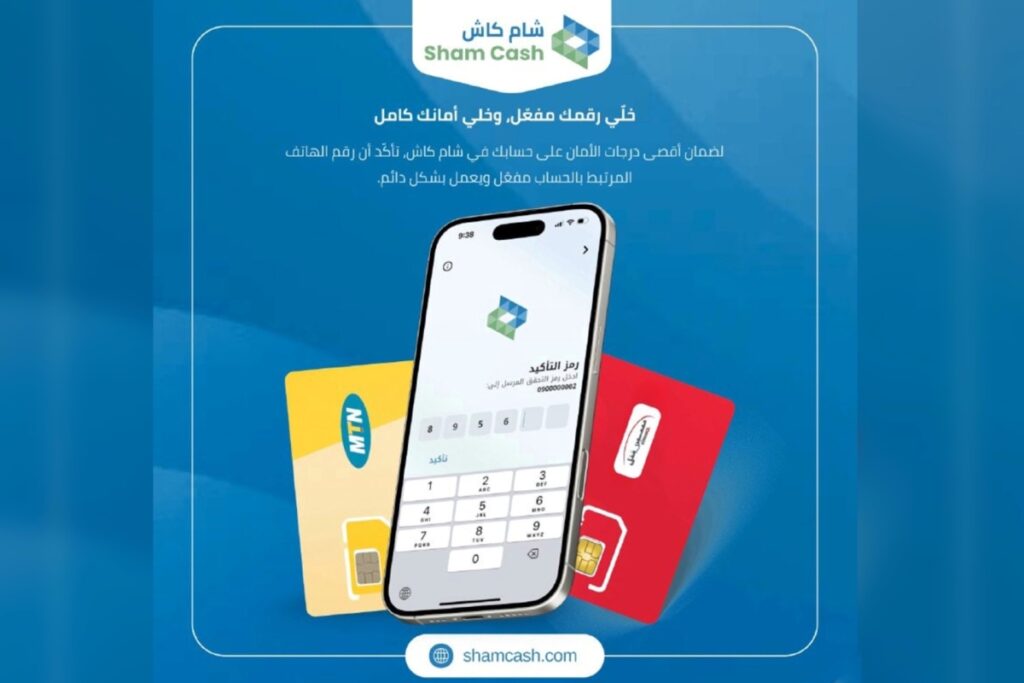
The money in question is sent through a digital currency system called Sham Cash. This is a system that the interim Damascus administration has accepted for paying the salaries of its civil servants.
As thousands of public-sector workers in Syria tried to collect their salaries this April, ahead of the Eid al-Fitr holiday, many found that they could not access a faulty application they had been asked to download a few months earlier.
The application, called Sham Cash, has become the Syrian government’s preferred method for distributing salaries, paying bills, and transferring money. But users say the app does not work, and experts say it is far from secure.
Made mandatory for public-sector workers, the Sham Cash app raises urgent concerns about digital security.
In January, Syrian public-sector workers were quietly instructed to download an app called “Sham Cash” in order to receive their salaries.
The Sham Cash app can only be downloaded from its own website and is not available in the iOS store (App Store). This means the app is not secure, because it has not passed the strict security-verification tests that apps listed in official stores must undergo.
Reports that appeared in the press in January also indicate that the app is linked to transfers coming from the “Cham Bank” in Idlib — an internationally unrecognized currency exchange registered in Turkey. Funds transferred through Sham Cash do not pass through the Central Bank of Syria or the global banking system.
By April, the app had been made entirely mandatory. But it is overshadowed by technical failures, questionable financial links, and an alarming lack of transparency. As frustration grew among users, SMEX’s Digital Forensics Unit investigated what was actually happening behind the scenes.
The unknown developer behind Sham Cash
The absence of any publicly available information about the company behind Sham Cash raises serious concerns about transparency and accountability. Because there is no known or officially registered developer, there is no party to be held responsible in cases of data breaches, fraud, or financial loss.
The app also contains no clearly stated Terms of Use, Privacy Policy, or any indication of legal jurisdiction, which makes seeking legal recourse nearly impossible.
Because Sham Cash has no connection to any legal or verifiable company, its security protocols cannot be assessed. This significantly increases the risk that malware or spyware could compromise users’ devices.
Since it has no officially registered owner, the misuse or sale of sensitive user data, including personal information, financial details, and transaction histories, cannot be tracked or audited.
A source who provided information to Niha+ noted that this app is one accepted by the interim Damascus administration, so when money is sent through it, the government ought to be able to trace it.
A committee has been formed
According to the information available, a three-member committee has been formed to deal with the matter and find solutions to the problems facing Kurds in Raqqa. According to information provided by this committee, 4,000 families have so far fled Raqqa. Some of them went to Kobanê, and others to Hasakah.
One source claims that the number of those abducted and threatened is far higher. According to this source, some do not share their cases publicly because they do not want their names made known.
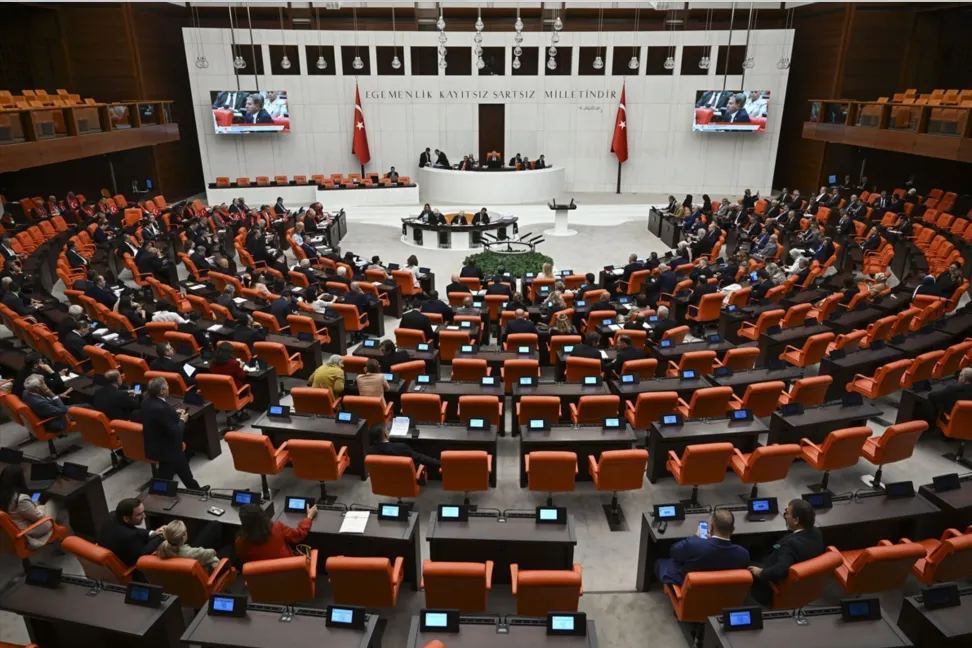
The bill, which aims to bring a 50-year conflict to a legal conclusion, sparked heated debates in the General Assembly of the Parliament. Following the vote, the bill was passed and became law.
Known to the public as the “Framework Law,” the “Draft Law on Strengthening National Solidarity and Social Integration”—which regulates the PKK’s disarmament and the legal status of PKK members—was passed by Parliament following a vote and became law. In the vote, which was conducted via electronic voting, 562 members of parliament cast their votes, with 468 voting in favor, 88 against, and 6 abstaining. Thus, the “Draft Law on Strengthening National Solidarity and Social Integration” passed the General Assembly of the Parliament and became law.
The General Assembly adjourned following the vote.
Debates on the legislation, known to the public as the “Framework Law,” began at 11:00 a.m.
In the General Assembly, the deputy group leaders of the various parties made statements regarding the bill. Bülent Kaya spoke on behalf of Yeni Yol, Turhan Çömez on behalf of the İYİ Party, Rahmi Aşkın Türeli on behalf of the CHP, Erkan Akçay on behalf of the MHP, Gülistan Kılıç Koçyiğit on behalf of the DEM Party, Murat Emir on behalf of the Yeni Party, and Abdulhamit Gül on behalf of the AKP.
The 12-article bill is expected to establish the legal framework for the new resolution process.
The “Draft Law on Strengthening National Solidarity and Social Integration”—known to the public as the “Framework Law”—which regulates the PKK’s disarmament and the legal status of PKK members, was adopted by the Grand National Assembly of Turkey (TBMM) Plenary following intense debates, and deliberations on its articles have begun.
In an electronic vote held in the General Assembly, the decision to proceed with the bill’s articles passed with 269 “Yes” votes against 28 “No” votes. While the ruling coalition (AKP and MHP) described the bill as “a historic state policy for a Turkey free of terrorism,” the İYİ Party strongly opposed it. The YENİ Party and the CHP, which announced they would vote “Yes” on the bill, noted that the process must be supported by steps toward democratization and justice. Thirty-three members of the YENİ Party parliamentary group declared they would vote “No.”
YENİ Party MPs who announced they will vote “No”
1. İzzet Akbulut
2. Hasan Öztürk
3. Sibel Suiçmez
4 Cemal Enginyurt
5 Süreyya Öneş Derici
6 Deniz Yavuzyılmaz
7 İbrahim Aslan
8 Hikmet Yalım Halıcı
9 Cumhur Uzun
10 Eylem Ertuğ Eryılmaz
11 Murat Çan
12 Servet Mullaoğlu
13 Salih Uzun
14 Uğur Bayraktutan
15 Şeref Arpacı
16 Murat Bakan
17 Seyit Torun
18 Mahmut Tanal
19 Fethi Açıkel
20 Elvan Işık Gezmiş
21 Melih Meriç
22 İsmail Atakan Ünver
23 Mehmet Tahtasız
24 Ümit Özlale
25 Mustafa Erdem
26 Ayşe Sibel Yanıkömeroğlu
27 Reşat Karagöz
28 Ayhan Barut
29 Barış Karadeniz
30 Fahri Özkan
31 Deniz Yücel
32 Seda Kaya Ösen
33 Ednan Arslan
Ekrem İmamoğlu, the detained Istanbul Metropolitan Municipality (İBB) Mayor, issued a statement through his lawyers regarding the “framework law.” Noting that Turkey is at “one of the most significant turning points in its history,” İmamoğlu said that peace, tranquility, brotherhood, democracy, and the rule of law must be strengthened.
Imamoğlu expressed his support for the decision made by Özgür Özel, Chairman of the New Party, during this process. Stating that he believes in “the new political path he has opened, his great struggle, and his leadership,” Imamoğlu said he supports “the exceptional resolve he has demonstrated through all his warnings.”
Imamoğlu said, “I stand behind the decision he made today.”
The DEM Party, meanwhile, described the law as “the first step toward resolving the conflict.”
Ş. Can Atalay, the elected MP for Hatay, sent a message from Silivri Prison emphasizing the importance of a nonviolent political environment, while Tunç Soyer noted that the law is a key to “ending the era of blood and tears.”
Chronology of the Day
11:37 – 13:55
Pre-Session and Lobby Traffic
Devlet Bahçeli, Chairman of the MHP who initiated the process, arrived at Parliament. In the lobby, DEM Party Co-Chairs Tülay Hatimoğulları and Tuncer Bakırhan, alongside Imralı Delegation members Pervin Buldan and Mithat Sancar, approached Bahçeli and shook hands. Prior to this, AKP and CHP Group Chairmen also greeted Bahçeli.
11:58 – 14:01
Initial Statements by Group Deputy Chairmen and İYİ Party’s Motion
Taking the floor at the beginning of the session, AKP Group Deputy Chairman Abdulhamit Gül defined the process as the “spirit of Gallipoli,” while Gülistan Kılıç Koçyiğit from the DEM Party stated, “The winner of peace will be 86 million people.” Representatives from CHP, YENİ Party, and Yeni Yol emphasized that laying down arms alone would not suffice without democratization. The İYİ Party submitted a group motion to prevent the start of deliberations on the grounds that the bill was unconstitutional. The motion, presented by İYİ Party’s Turhan Çömez with harsh criticism stating “You chose the day the Treaty of Sèvres was signed (August 10) to deliberate this bill that will pardon terrorists,” was rejected upon voting.
14:06
İYİ Party’s Fierce Opposition: ‘It Is a Major Uprising’
İYİ Party Chairman Müsavat Dervişoğlu was the figure who delivered the harshest reaction to the process from the podium. Arguing that the law aims to integrate PKK leaders into politics, Dervişoğlu confirmed they would vote ‘No’, stating: “No matter what anyone calls this process, it is a major uprising against our national identity and republic. Who marketed Öcalan as an acceptable political guru?”
15:56
DEM Party: ‘This Law Is Not a Concession, the Homeland Is Shared’
DEM Party Co-Chair Tuncer Bakırhan stated that the bill is the “first step in conflict resolution,” adding: “This bill is not a concession; it is neither victory nor defeat. We are not opening the integrity of the country to debate. If the Kurds wanted to secede, we would not be here. The homeland is shared.” Bakırhan noted that although the law has shortcomings, they support it, and the real step must be taken through democratization when Parliament opens.
16:07 – 16:38
YENİ Party and CHP: ‘We Will Not Stand in the Way of Peace’
YENİ Party Chairman Özgür Özel criticized the process being conducted behind closed doors and the lack of democratic steps such as trustee appointments and ECtHR rulings. However, he stated, “We will not close the door opened for laying down arms; we will vote ‘Yes’.” Özel granted his MPs a free vote based on the sensitivities of their provinces. Speaking on behalf of the CHP, İnan Alp Akgün and Oğuz Kaan Salıcı also confirmed that the CHP would vote ‘Yes’, saying, “The time has come to secure the Republic through democracy.”
18:01 – 18:03
Ruling Bloc (MHP, AKP): ‘This Is Not an Amnesty’
MHP Deputy Chairman Feti Yıldız emphasized that the bill is not an amnesty and does not alter ongoing investigations or the nature of offenses. He stated, “The goal of the process is the rule of law and the strengthening of the internal front.” AKP Group Chairman Abdullah Güler shared that the prepared report was drafted “without a third-party external observer, by the children of this land,” and that the sole objective is to ensure violence is never discussed again.
What had happened?
The bill had been debated for 18 hours in the Turkish Grand National Assembly’s Justice Committee.
The bill bears the signatures of 367 members of parliament, including representatives from the AKP, CHP, MHP, DEM Party, HÜDA PAR, the New Path Group, and the DSP.
During the discussions, which were not without controversy, the AKP and MHP argued that the bill was the “product of a historic consensus” and did not constitute an “amnesty.”
The CHP and the New Party, however, emphasized that the process lacked a democratic dimension. The New Path Group, meanwhile, stated that the measure constituted a “conditional general amnesty.”
Seat distribution in Parliament
AKP 277, New Party 91, DEM Party 56, MHP 46, CHP 45, Good Party 29, New Path Party 20, HÜDA PAR 4, Prosperity Party 4, TİP 3, Democratic Regions Party (DBP) 2, EMEP 2, Felicity Party, Democratic Left Party, and Democratic Party each hold 1 seat. Ten members of Parliament are independents.
Parliament Scoreboard: Framework Law Vote
nihaplus Special Infographic Desk • Detailed Breakdown by Party and MP
Civan Akbulut, Chair of the Information Center on Anti-Kurdish Racism (IAKR), who stated that racism against Kurds is not officially recognized in Europe, noted that what is not named remains invisible and unpunished. Akbulut, noting that Kurdish asylum seekers face high rejection rates from European countries, said, “ The closer the political rapprochement with Ankara, the harder it becomes to have a Kurdish history of persecution recognised at all.”
Photo: The Amargi
Across Europe, “anti-Kurdish racism” remains one of the least acknowledged yet most pervasive forms of systemic discrimination. While general far-right sentiment and anti-immigrant hostility continue to rise, Kurds living in Europe face a double burden: a broader xenophobic climate as well as transnational persecution influenced by geopolitics and right-wing extremism.
In countries like Germany—home to the largest Kurdish diaspora in Europe, estimated at over one million people—this manifests in daily life, public institutions and on the streets. Incidents range from physical violence by ultranationalist groups to institutional neglect. In recent years, violent clashes and attacks targeting Kurdish community centers, cultural events, and individuals in cities such as Essen, Stuttgart, and Cologne have highlighted the growing threat posed by Turkish far-right networks, most notably the Grey Wolves (Bozkurtlar).
The Grey Wolves movement (Ülkü Ocakları) is decidedly anti-Semitic and anti-democratic and is combatively directed against Kurds, Armenians, Alevis, Ponto-Greek as well as other minorities and opposition members with a connection to Turkey.
Despite these growing dangers, attacks on Kurds are frequently filed simply as “foreign political disputes” or generic “politically motivated crime,” masking the specific anti-Kurdish nature of the violence. Furthermore, the persistent criminalization of Kurdish political expression in Germany is often enforced to maintain diplomatic alignments with Turkey. This criminalization may also cause tragic ends, for example, as the data shown in the press and public opinion, dozens of Kurdish refugees have ended their lives in Germany since 2023.
According to data from the “2024 Report on Anti-Kurdish Racism” presented to the Federal Parliament by the Information Center on Anti-Kurdish Racism (IAKR), which operates in Berlin, the capital of Germany, 217 documented cases of anti-Kurdish racism were recorded in 2024 alone. The report states that 37.8% of the incidents—including political acts, physical attacks, and discrimination (82 cases)—were linked to the symbols and rhetoric of far-right Turkish nationalist groups such as the “Ülkü Ocakları” (Grey Wolves).
To understand the mechanics of this phenomenon, lawyer and politician and chair of IAKR Civan Akbulut, who pointed out anti-Kurdish racism is a constitutional problem that functions across legal, political, and daily lives in Europe.
Chair of IAKR, Civan Akbulut, Photo: ANF
“Anti-Kurdish racism reaches everyday life”
According to Akbulut, anti-Kurdish racism begins with the fundamental denial of Kurdish identity, creating a baseline where verbal abuse, threats, and physical attacks become normalized.
Hightlighting that online platforms like TikTok and X have dropped the threshold for open hostility – by becoming almost part of the “normal tone” – which routinely spills over into schools, public offices, and workplaces, Akbulut also stresses that Kurds face a unique layer of risk.
Akbulut says that what is at stake are fundamental rights: Physical integrity in the face of attacks, and protection from discrimination.
“Anyone who visibly identifies as Kurdish has to reckon, in Europe, with none of this being guaranteed to them. Racism as a whole is a growing problem in Europe, one that has increased markedly in recent years. Anti-Kurdish racism is part of this development and intensifies along with it.”
“About 18,000 are attributed to Grey Wolves”
Akbulut points out that this domestic hostility is further interlocked by both European foreign policy, alongside immigration policy, which often overlooks the activities of ultranationalist groups out of geopolitical calculations toward Ankara, effectively allowing transnational racism to operate unpunished within European borders:
“The Grey Wolves are among the largest far-right movements in Germany and Europe; they are extremely capable of mobilising and prone to violence. In Germany alone, roughly 18,000 people are attributed to them, and for this movement Kurds are the central enemy. Added to this is a European politics that, out of geopolitical calculation towards Ankara, looks the other way. When the criminalisation and blanket suspicion propagated by the Turkish government seep, in part unquestioned, into European media, this shifts the public perception of Kurds. Anti-Kurdish racism operates transnationally, but its manifestation is a German and European problem. It takes place here, is permitted and applied by domestic politics, and largely goes unpunished.”
Anti-Kurdish Racism in Germany
IAKR Special Report No. 1 (January 2026) • Key Findings
The report argues that developments in Syria have significantly intensified hate speech, digital attacks, and discrimination targeting Kurdish communities in Germany, demonstrating the direct impact of international conflicts on the Kurdish diaspora.
43
People killed during the attacks on Sheikh Maqsoud and Ashrafiyah
25
Civilian fatalities
155,000
Displaced civilians
1,500
Reported ISIS members who escaped following the Al-Shaddadi prison attack
400,000+
Population of Sheikh Maqsoud and Ashrafiyah before the attacks
10,000
ISIS detainees held in prisons across Northeast Syria
40,000+
ISIS-linked individuals and family members held in camps
54
Years of Assad family rule before its collapse
Key Findings of the Report
Alleged Bombardment of Civilian Areas
According to the Syrian Observatory for Human Rights, residential neighborhoods and hospitals were deliberately targeted during the offensive.
Mass Displacement
Even the Syrian state news agency SANA acknowledged that at least 155,000 civilians were forced to flee their homes.
Violence Against Women
The report documents that videos showing the abuse of Kurdish female fighters triggered widespread international solidarity campaigns.
Regional Security Risks
Attacks on detention facilities reportedly enabled ISIS detainees to escape, creating significant international security concerns.
Impact on the Kurdish Diaspora
According to the report, military developments in Syria contributed to an increase in anti-Kurdish hate speech and digital attacks in Germany.
January 2026 Timeline
10 January
Following the collapse of negotiations between the Syrian transitional government and Kurdish forces, military operations intensified.
11 January
Sheikh Maqsoud and Ashrafiyah were captured. According to the report, 43 people were killed, including 25 civilians.
Following Days
Videos documenting torture, executions, and abuse circulated widely on social media, prompting international condemnation.
13 January
The offensive expanded into DAANES-controlled areas. Following the attack on Al-Shaddadi Prison, approximately 1,500 ISIS members were reported to have escaped.
Source: Informationsstelle Antikurdischer Rassismus (IAKR), Special Report No. 1 – Incidents of Anti-Kurdish Racism in Germany, January 2026.
“Kurds learned to never rely on the state”
Akbulut defined the underlying problem in addressing this discrimination is the lack of official recognition:
“The category is missing, the awareness is missing. Kurdish society is under considerable pressure and is itself subjected to criminalisation, while Turkish right-wing extremists can run their associations and events largely undisturbed, which act as a catalyst against Kurds. This imbalance extends into the authorities themselves. Kurds have historically learned that they could never rely on the state, and this mistrust continues in Europe when complaints come to nothing or threats are not taken seriously.”
Akbulut drew attention to “one of the most powerful, and therefore most dangerous” one is that anti-Kurdish racism expresses itself is criminalisation, because it provides the justification for oppression and violence. “When Kurdish activism is sweepingly placed in the vicinity of ‘terror,’ a climate emerges in which every form of Kurdish self-organisation falls under blanket suspicion. Once someone has been marked as a security risk, almost anything can be legitimised against them” he continued.
Akbulut stated that in Europe, this criminalisation shows in raids on associations, in bans on flags and symbols, and in the fact that talks and events are cancelled on alleged security grounds or venues are withdrawn at short notice. He stressed the outward effect of this is those who constantly have to explain that they are not a security risk never even get to speak about the discrimination they face.
“Criminalisation reverses the roles: those affected are turned into suspects. That is a major problem” he said.
“Asylum assessments are not neutral”
Akbulut explains that Kurdish asylum seekers face exceptionally high rejection rates because European authorities routinely classify Turkey as a “safe country of origin” and falsely claim that Kurds face no group-based repression there. Akbulut, saying “They are granted protection considerably less often than other applicants”, highlighted this is not coincidental but structural:
“In the decisions, the finding recurs again and again that Kurds face no repression in Turkey on account of being Kurdish. This is simply false and contradicts reality, but it provides the basis for rejecting protection claims. These assessments are not neutral. The closer the political rapprochement with Ankara, the more favourable the official evaluation of the situation in Turkey turns out to be, and the harder it becomes to have a Kurdish history of persecution recognised at all. This does not only concern Kurds from Turkey. Kurds from Syria, Iraq and Iran also have a considerably harder time. And above all of this lies the general development. In the face of the shift to the right, agitation and an ever harsher policy of sealing off borders, refugees across Europe find it harder overall to obtain protection. Kurds stand at a point where all of these constrictions converge.”
“Anti-Kurdish racism interplay with sexism”
The impact of this discrimination is particularly severe for Kurdish women, who experience what Akbulut identifies as a textbook example of intersectional oppression. According to Akbulut, the hostility directed at Kurdish identity intersects with structural sexism, creating compounded dynamics of devaluation:
“Anti-Kurdish racism can therefore occur simultaneously and in interplay with sexism, ableism, queerphobia or classism. What is decisive is that these are not merely different experiences of oppression sitting side by side, but that they influence and reinforce one another. With Kurdish women this becomes very concrete: the racist enemy image of Kurds carries over into a devaluation of Kurdish women that is at once racist and sexist. Several logics of devaluation interlock here, and precisely for this reason the intersectional perspective is so important for our work.”
Because anti-Kurdish racism relies on the same core mechanisms as other forms of group-focused enmity—such as institutional neglect and criminalization—Akbulut emphasizes that cooperation is structurally necessary, as he further stated “Racism does not occur in isolation. Anyone fighting racism almost always encounters the same mechanisms that affect other groups too: devaluation, criminalisation, the looking-away of institutions.”
He also drew attention to the Kurdish self-organisation being a long history, since Kurds have learned to help themselves when the state does not, and this is precisely a pattern that many marginalised groups know.
“Consistent anti-racism is needed”
To dismantle these systemic barriers, Akbulut outlines three essential political and legal actions:
“First, anti-Kurdish racism must be recognised as a distinct form of racism. Without a category of its own, authorities, schools and courts cannot even record the relevant incidents, and what is not named remains invisible and unpunished.
Second, what is needed is consistent anti-racism instead of looking away. Racist actors must no longer be allowed to operate unchecked, and the Grey Wolves must be treated as what they are: a far-right movement. This cannot be separated from the larger picture. Anti-Kurdish racism grows in a climate in which racism as a whole is being normalised and the shift to the right is gaining momentum across Europe.
Third, and this is decisive, politics must stop adopting anti-Kurdish narratives itself. When criminalisation and blanket suspicion seep into European administrative practice and media language, racism is not being fought but administered and perpetuated.”
As the dust settles from the February 2026 conflict between the US, Israel, and Iran, the regional power balance has been fundamentally reshaped. Political theorist Professor Abbas Vali argues that while the US and Israel achieved military dominance, Iran emerged with a significant strategic victory. In this deep-dive interview, Vali addresses the “strategic homelessness” of Kurdish politics, the failure of traditional armed struggle in Rojhilat, and why the path to influence in the new Middle East lies in civil society rather than the mountains.
Photo: Niha+
Although the US and Iran reached a memorandum of understanding to reconcile on June 17, 2026, the attacks and problems caused by the war continue. Especially due to the situation in the Strait of Hormuz, conflicts occur frequently, and following this, US President Donald Trump threatens to eliminate Iran.
This situation, which began with the attack of Israel and the US against Iran on February 28, 2026, changed the balance not only in Iran but also in the Middle East and the Gulf countries.
During the war, Israel and the US were attacking Iran, and in response, Iran was attacking Qatar, Kuwait, Saudi Arabia, US bases in Iraq, and several other countries.
Furthermore, Kurdish forces based in the Kurdistan Region were also exposed to Iranian bombardment.
The agreement between Iran and the US draws the most attention to the Strait of Hormuz. According to interpretations, the US was forced to compromise due to this situation in Hormuz. Professor Abbas Vali also draws attention to this situation. According to Vali, as a result of the war, the US and Israel won in the military field, but Iran won in the strategic and political field.
Abbas Vali also evaluated the situation of the Kurds in Iran and stated, “Within the Iranian opposition, the only force that is armed and capable of using weapons is the Kurdish opposition.”
About Abbas Vali
Professor Abbas Vali is a Kurdish political theorist from Mahabad, Iran, and one of the foremost scholars on Kurdish identity and nationalism. He studied in Tehran and London, earning his PhD in Historical Sociology from the University of London, and later taught at Swansea University and Boğaziçi University in Istanbul. He was also the founding president of the University of Kurdistan in Hewlêr. His works include Essays on the Origins of Kurdish Nationalism and Kurds and the State in Iran: The Making of Kurdish Identity.
Following the attacks by Israel and the US on Iran that began on February 28, the situation moved to a new phase with an agreement on May 17, following several meetings. When we look at the content and timing of the agreement, were the parties to the war forced to reconcile?
It is not a treaty. In English, they call it a Memorandum of Understanding, meaning mutual understanding and reconciliation. Apart from that, it is not an official treaty or agreement. It is an exchange of letters. They write a letter and sign it, the other side signs it and sends it back; that is what we read. There was a mutual understanding here. I must say here that both sides, America and Iran, although there was less pressure on them in terms of foreign policy, were under great pressure in domestic policy.
If we talk about Iran, there is a systemic crisis in Iran. Economic, social, cultural, and financial. But the fundamental problem and main crisis is the economic and financial crisis. It has no money; the government has almost gone bankrupt and collapsed. Therefore, they needed this. Because of this economic and financial crisis, Iran could not manage what they call Biopolitics, that is, the politics of people’s lives. Because it had no money or economic resources. This was also a fundamental issue because it feared that if it could not manage this in the long run, there was a high probability of another uprising inside. Because the January uprising was very big. This is one thing.
It is clear that Iran had been exposed to a war; it had entered that war, but a large part of Iran’s military, security, and economic programs had failed and collapsed. It could not continue in this way. However, the situation when Iran entered the war and the time the war stopped were very different from each other. When Iran entered the war, conditions were different; now they are different. There were two reasons for this. First, Iran was able to resist. It showed great resistance and defense. Of course, it also suffered great damage. Many places were devastated, its bridges were destroyed, factories and workshops were destroyed, but it continued its resistance.
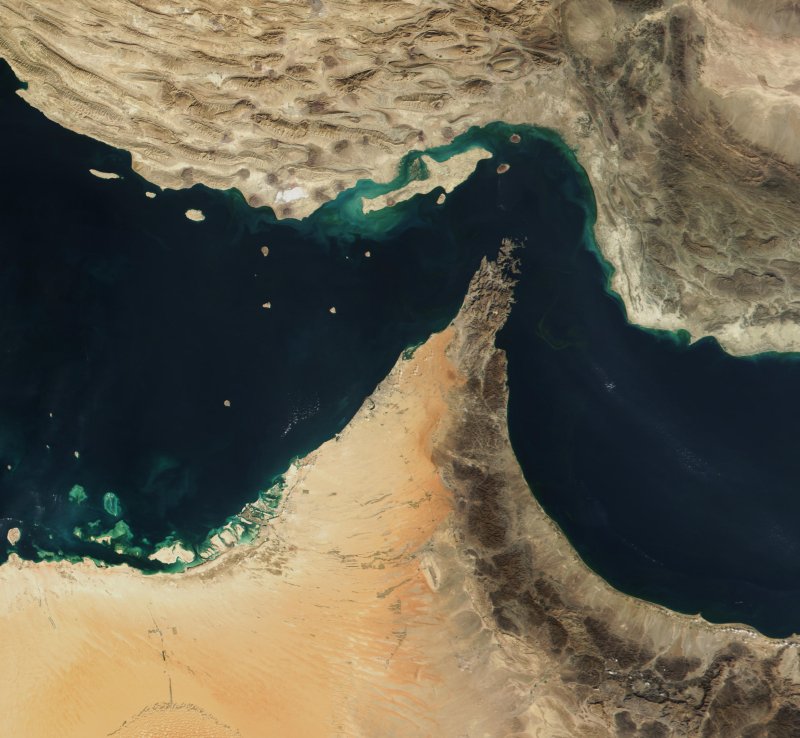
The second reason was that Iran was able to hold the Strait of Hormuz in this war. With this move, it changed the calculations of the war. That is, the current mutual understanding is based on the fundamental issue of opening the Strait of Hormuz. This issue did not exist before the war. It emerged during the war. Another point is that America wants Iran to accept and promise not to build nuclear weapons. Iran has already said this from the beginning. It said we will not do it. Even during the Obama’s terms, when they had an agreement, Iran had accepted that uranium enrichment would be around 3.5%, that is, less than 4%. However, when Trump came in 2018, he changed this situation, broke the agreement, and destroyed the Obama administration’s agreement. At that time, Iran began to enrich uranium. Until it reached 60-65%. This is very close to making an atomic bomb.
Now America wants that enriched uranium, which is about 400-450 kilos, to be either destroyed or reduced in density, i.e., concentration. Or for it to be given to Russia or a country like France so that they can do this work. Iran says, “This is not in my hands right now. They are under the bombed places, and even if they are removed, we will not allow them to be taken out of Iran; we will handle it ourselves here.” That is what Iran says.
Prof. Abbas Vali, Photo: Niha+
What is the US saying?
America primarily wants the Strait of Hormuz to be opened. Because there is great pressure on America. Oil prices have risen, food prices have risen. Not only in America, but everywhere in Europe, and even in Turkey, gasoline prices and airline tickets have become more expensive. All of these have become more expensive.
They want this place to be opened. Secondly, they want Iran to accept stopping uranium enrichment, that is the issue. However, there is also great pressure on America itself. If you remember, when Trump came to power, he said, “I will be a president who does not go to war.” But he started a war that is still continuing in some way even now. On the other hand, the war Trump waged was not necessary in terms of the requirements of American politics. But a large part of this war was at the instigation of Israel; Israel forced him.
“Israel wanted the war to expand”
What did Israel want?
When that war started, the goals of America and Israel were different. America wanted to strike a blow at Iran, weaken it militarily, and force it to accept America’s terms. America did not want the Iranian regime to be changed. America did not want to wage a long-term war with Iran, nor did it want Iran to be devastated and disappear. Because America’s strategic interests were very different from Israel’s. America is a major regional power in the Middle East. The issue there is not just Iran; at the same time, it must take into account the interests of Arab countries.
The interests of Arab countries like Egypt, Saudi Arabia, Qatar, and others… Iran knew this too, so Iran’s policy was basically to know that America wanted a limited war, but it also wanted to expand the war.
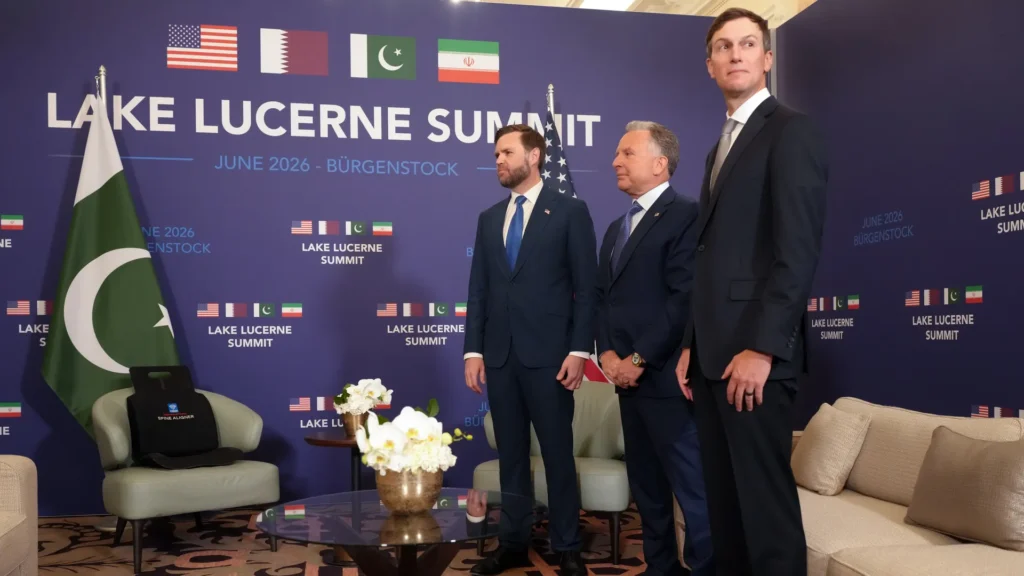
J. D. Vance, Photo: Nathan Howard-Pool/Getty Images
What was the result of this great war?
Iran could not defeat America militarily, but it could attack the countries where American military bases are located. For example, in Bahrain, Jordan, Saudi Arabia, and even in Muscat and Oman. Therefore, America was very sensitive and vulnerable in this regard. Trump could not tolerate this. Because there was something else. Arab countries had always accepted America’s dominance. They had given money to America, invested there, and at the same time left their defense in America’s hands. But when Iran attacked them, America could not protect them, and they suffered great damage.
Strait of Hormuz, Photo: Wikipedia
“Iran is now much stronger”
Did the existing balance in the Gulf and the Middle East change after the Iran war?
Yes, that balance has now changed in this direction: Iran is now much stronger in the region. Because it showed that it is the only country that can stand against America, Israel and wage war. Also, a strategic region like Hormuz is under its control. But if you pay attention, Israel’s strategic interests were different. Israel wanted to change the Iranian regime as much as it could. If this did not happen, it wanted to completely devastate Iran and make it like Syria. After that, it aimed to destroy Iran’s missile project, ballistic and cruise missiles. Israel’s fourth condition was to destroy Proxy powers such as Hashd al-Shaabi, Hezbollah, and Hamas.
Did those forces disappear?
No. Iran’s current power is that it is negotiating with America. And it has enough power to put Lebanon on the political agenda of the negotiations. Lebanon is not a part of Iran, but because Iran has this power, it can put Lebanon on the negotiation agenda. This is something that is extremely contrary to Israel’s interests. If you pay attention, Israel’s strategic interests and America’s interests had not aligned from the beginning. When the war started, it is true that America and Israel were together militarily, but their political and strategic goals were different.
Did this difference disappear as a result of the war, or did the gap between the goals of the two states increase?
The situation has now reached a point where J.D. Vance is threatening Israel. On the Iranian side, they no longer allow anyone to say “Death to America.” This shows that they have reached an agreement. That is, a soft coup took place within Iran’s power structure. That soft coup caused the power centers within the Revolutionary Guards and a part of the administration to reach an agreement with America. If you pay attention, they are now agreeing with America. For example, Qalibaf goes to Beijing to say to them, “We have agreed with America, but this is not against your interests.” Therefore, if we look at the stance of Iran and America, we will see a paradox: America and Israel won in the military field, but Iran won in the strategic and political field.
“Shah’s son had no power”
Following the start of the war by America and Israel against Iran, demonstrations and an uprising were expected in Iran to overthrow the regime, but this did not happen. Why didn’t it happen? What was the obstacle that prevented this from happening?
Yes, that uprising was a real and true uprising, but it had no leadership. Because that uprising fell under the influence of right-wing forces, especially monarchists and those who wanted the Shah back. The Shah’s son came out and said, “Go to the squares, I will support you.” Trump came out and said, “Go to the streets, fight the regime’s forces, I will overthrow the regime.” The people went down, but no help came.
Did the Shah’s son have the power to engage in such an undertaking?
The Shah’s son also had no power. Here, the regime knew that this uprising was very important. On the other hand, unlike the “Jin, Jiyan, Azadî” uprising, this uprising did not have a democratic identity. More than anything, their goal was to overthrow the regime, and they were not talking about democracy or things like that. When the Iranian regime understood that the US, Israel, and the Shah’s son had a hand in this, it attacked with all its might. In 48 hours, they killed nearly 50 thousand people in Iran. Even the Iranian Medical Association says that more than 65 thousand people have been killed.
There is something here: Trump said “You go, I will help you,” but after the war started, to protect himself, he came out and told another lie, saying “We gave weapons to the Kurds but the Kurds did not come.” This is a lie. First of all, no weapons were given to the Kurds. Secondly, the opposition that existed in Iran at that time was not organized, and it had no organization. To whom will you give the weapon? A weapon is not something you go and distribute on the streets. You must give it to an organization. There was no organization. Right-wingers had no organization. Maybe the democracy advocates had a small organization, but they were not in the conditions to go out and become armed and fight the regime. The reason Trump said this is: Within the Iranian opposition, the only force that is armed and capable of using weapons is the Kurdish opposition.
So what did the Kurds do at that time?
They had already not been given weapons. Even the general of that time made a statement against Trump and said, “No weapons were given to the Kurds; the weapons went to Başûr (Irak Kurdistan Region) and are in American bases.” Two weeks ago, their representative Tom Barrack also said, “We did not give weapons to the Kurds.” This was a big lie Trump told to defend himself.
What did the Kurdish forces in Iran want during this war?
Their stance was: Of course, they were pleased that the regime would be overthrown, but they said, “This is not our war, we do not want to participate in this war.” Because they had no faith in the goals of America and Israel. What they said turned out to be true. Look, now Iran and America have agreed, and Israel has become almost marginalized. True, Israel will return to its place, but it takes time. In this regard, the Kurds said we do not support the bombing of Iran, and it was a good thing that they did not support it.
“It cannot be done with just air strikes”
What would have happened if they had supported it?
It would not have happened. Because the Iranian people had no air defense power, the people were under bombardment. Not only in Kurdistan, but the people in all of Iran were disturbed by that bombardment. Everyone, even all strategists, know that the Iranian regime will not be overthrown by bombardment. There is no example in history where a regime was overthrown only by bombardment. If America and Israel really wanted to overthrow the regime, they would have had to send an army to Iran. All strategists were saying that sending an army to Iran is like suicide. Iran’s surface area is 1 million 648 thousand square kilometers, that is, almost as large as the whole of Western Europe, and it has a population of 95 million. If you take an army to that region, it will be a hundred times worse than Iraq, and the war will spiral out of control. Its geography is very difficult. When a country is attacked, the nationalist feelings of the people rise. For example, in the Iran-Iraq war. Iran fought for 8 years. One and a half million people were killed, a large part of Khuzestan and Lorestan was devastated. But the regime did not fall and it won. America and the Soviet Union at that time were saying, “Help the Saddam regime so that it stays on its feet.” American strategists knew that Israel could only conduct an air strike in the long term, but it could not wage a ground war. Because Israel has a small army and is a very small country. It is 71-72 times smaller than Iran.
“Kurdish reconciliation is good but not enough”
An agreement was made between the Kurdish forces in Rojhilat. Several Kurdish parties and forces gathered and signed this agreement. What was the impact of this agreement of Kurdish forces during the war, and how will it be after the war?
This agreement is good, it is blessed. It is an example of what they call “necessary but not enough.” Because this agreement has no infrastructure, no operational and practical mechanism. I have said many times that their agreement must have an operational infrastructure and mechanism. There should be a kind of unified military-political operational phase. This does not exist. Even something else does not exist either, and that is a unity of discourse. That is why their current agreement is very, very weak as an organization. It must have a military-political infrastructure; above all, there must be a unified Peshmerga force. It must be unified in terms of ideology and strategy. The declarations they issue, that is, their words, must also be unified. And more importantly than all of them, a unified political and strategic program must be established for which political forces will act in accordance. But they don’t do this job.
Did the war that took place in Rojava at the beginning of 2026 and the results that emerged in Rojava affect the Kurdish forces in Rojhilat?
What happened to the Kurds in Rojava was very important, especially for the Kurds of Rojhilat. One; If you work with America, if you work with America like the Rojava forces, you must be a partner of America, not under America’s command. Furthermore, in the relationship with America in Rojava, while working with America, there was no kind of political autonomy.
It was not in the military either. Because there too, when they gave them weapons, those weapons were under America’s control. The day America said “no” to them, they also stopped their weapons.
You mentioned this before. The issue of weapons also came up for the Kurds during the Iran war process.
In American history, it is known that America has worked with opposition forces many times in the world. However, in a secret way. This was under the control of the CIA, under the control of secret military agencies. For the first time, it worked openly in Rojava. But Rojava could not benefit from this. That is, it conducted that ISIS war, twelve thousand Kurds, guerrillas, were killed in that war. But it could not obtain its political subjectivity. This is a very important point. In Rojhilat too, Trump was probably wanting exactly this. He wanted to use the Kurds as a special force.
Does America not have a political map for the Kurds?
No. It had no political map. When it came, that was the time, America was working with the Kurds and was also working with “Hayat Tahrir al-Sham.” And it was not telling the Kurds this. If the Kurds had known this then, they would have had to clarify their stance. It was clear that America and especially Britain, because this is a British project, did that work with Turkey. In the end, they said, “Here, this is our project.” America and Britain created the project. This was not Turkey’s work. They only used Turkey. That is, the project, the idea, the strategic idea was America’s and Britain’s.
“The design of the Middle East changed after the war”
There is a widespread discourse, it is said that there is a new design in the Middle East. According to your view, is there a new design in the Middle East?
That design existed, but this Iran war destroyed that design. Now, whatever design they set up, whatever military and political balance they set up, they must account for Iran. That was how it was; the goal then was to strengthen the hegemony of America, including Israel, that military hegemony. Now that calculation is gone. That is, this war destroyed it. One thing that is very important is that the war that was conducted showed the strategic limits of America’s hegemony in the Middle East. This is the biggest lesson that countries, especially Kurds, must learn. If the Kurds in Rojava had made an agreement with the Druze and Alawites in their time, if they had fought with them, that front would not have broken. They did not do that work. Because when there is defense, when there is resistance, you can change the calculations. In Rojava, they had military power. They had guerrillas, male guerrillas, female guerrillas, they had everything. At that time, the Ahmad al-Sharaa government had not held itself. But they did not make a sound. They sat down and accepted everything America said. Everything Tom Barrack said “do this” to them, they did. I believe that the Kurds in Rojava made a great strategic mistake whose consequences were not only for Rojava, but also had bad consequences for Başûr and Rojhilat.
There are comments saying that the situation of the Kurdistan Region might change after the war in Rojava. What is your opinion on this?
There is such a danger right now. America wants to centralize there too. Centralization means that the regional government must either shrink or lose a large part of its forces. However, the regional government cannot do this either. Because it is not unified. If there had been a unified government in the region, this job could not have been done. The truth is that it is not only America doing this. Turkey is also behind it. In all likelihood, Turkey will really want the conditions to be formed to take the Mosul province and its surroundings under its control. Trump’s America has a very, very weak strategic thinking. For example, the Iranians had sent people to the negotiations whose ideas were very good. But whom had America sent? They sent Jared Kushner with Witkoff, who know nothing about the Middle East. In America, the right wing, which Tom Barrack is also part of, is in power. They have a racist mentality. That racism says that democracy and equality cannot exist for Middle Eastern countries.
They say that authoritarian centralized governments must be established in the center. They want to do this in Syria. They want to do the same work in Lebanon, they want to do the same work in Iraq, and they want to do the same work in Iran, which already has such an authoritarian government. That “New Middle East” project is gone now, they must put forward another project.
What are the Kurds in the Kurdistan Region doing against this situation?
The Kurdish forces in Başûr are not unified. The Kurdish forces in Başûr have no strategic thinking. If they had strategic thinking, the Kurdish forces in Başûr would not have given control of Kirkuk to the Turkmens. They gave control of Kirkuk to the Turkmens, that is, they gave the fate and control of Kirkuk to Turkey.
The relationship between the PUK (YNK) and Turkey was bad.
Now it is good.
Why is it good now?
Because the Patriotic Union (PUK) went closer to Turkey due to the rivalry with the Party (KDP) and Erbil.
However, contrary to the PUK, the relationship between the KDP and Turkey was very good.
It is no longer like before.
What changed?
Because when the situation in Iraq came to the fore, the Party (KDP) weakened. It weakened both in the Baghdad government and in Kurdistan. Now the PUK receives both Iran’s support and Turkey’s support.
You mentioned Turkey’s role in the Kurdistan Region of Iraq. What was Turkey’s stance and position during the Iran war?
There is something that has emerged these days that I think is likely to be true. It is said that Trump said: “If we did not help the Kurds, it was because Erdogan threatened us. If you do that, I will attack Israel.”
With the Iran war, many people are now expressing this loudly. According to those who hold this view, one day Israel and Turkey will fight each other.
That probability existed. To the extent that it would frighten them, he said, “I will not fight with Iran, nor with America, but I will attack Israel.” It means that when they remove Iran from Syria, when they want to remove Iran from Lebanon, when they want to remove Iran from Iraq, all these are in Turkey’s interest. Turkey filled Iran’s place in Syria. It is likely that it will do the same work in Iraq. Because they want to remove Iran from Iraq. But this is a difficult thing, it is very difficult in Iraq. Because the majority of the Iraqi people are Shia and Iran has influence there. They cannot do this job, they can do it with great difficulty. A big war will break out. Then the problem is, this time Barzani could not easily make an alliance with the Shia forces as before, but YNK did. The fundamental problem is here.
Is the situation of the Iranian people better or worse after the war compared to before the war?
It became much worse. This war reduced the political subjectivity of revolutionaries and the people. Before the war, after the Jina Amini Revolution, civil society in Iran had become quite radicalized. But this war reduced that very much. Now the people are busy with the troubles of daily losses. That is, inflation is very high, eating bread, making a living is very difficult. In such a condition and situation, people’s political practice and political subjectivity decrease. This war reduced this.
What are your predictions for the scenarios that will take place in the Middle East in the coming period?
In my opinion, there are two main powers in the Middle East right now: One is Israel, and the other is Iran. With these conditions and circumstances that have been passed through, and with the situation that has arisen, and with the stance shown by Turkey, Egypt, and others, I think the probability of Arab countries turning their faces to Israel and becoming members of the “Abraham Accords” is very low. Very, very low. I think Arab countries will try to pressure America and say, “Make an agreement with Iran,” so that security can be established in the region and also to help a better change take place in Iran. So that Iran can stabilize. If Iran stabilizes and is not threatened, then this region can reach stability.
“Kurds are weaker than ever”
What is the role and position of the Kurds in this scenario? What falls to the Kurds’ share?
In this period, the situation of the Kurds in the Middle East is now weaker and more fragile than ever. We were in a period twenty years ago when it was said that “the twenty-first century will be the century of the Kurds.” However, the twenty-first century did not become the century of the Kurds. It happened like this: The mistakes in Başûr were very big. Başûr could not establish a unified national government. In Başûr, there is a tribal government. America knows, Turkey knows, Iran knows. They know that the enmity between Barzani and Talabani is more than anything else. Başûr could not succeed. Rojava also could not obtain weapons under those conditions and circumstances that emerged. Rojhilat is now in the same situation. Kurds are alone, that is, the Kurds themselves, cannot do such a job. If they are to do it, they must do it together with Iran’s democratic forces. But they are also not ready to accept all the demands of the Kurds. Therefore, Kurds must now truly make a strategic review in their views and strategies.
In my opinion, what has emerged now is that the strategy of armed struggle in Rojhilat has failed. They must choose another way; they must know how to gather themselves, how to establish a unity, and how to lay the foundation of a unity in the civil society of Kurdistan. The truth of it is that if a strategic change is to be made in Eastern Kurdistan (Rojhilat), it must be said that armed struggle has ended. Because armed struggle is a strategy. If its opportunities do not remain, that strategy cannot continue. Those opportunities are no longer left.
There is another thing, military technology has changed now. Now, for example, even in Bakur, the largest part of the PKK forces are underground. That is, the technology of war is like this. Right now, Turkey has I don’t know how many thousand military bases. There are many. All those bases are interconnected. That war is a drone war, an air war; that war is not a Kalashnikov war. But the Kurds’ war is really a Kalashnikov war. That’s why for Rojhilat, this strategy must change; you must know that the weight of this strategy is shifting from the mountains to the cities. That is, it is moving from the mountain to civil society. Therefore, the Kurdish strategy must direct its focus on how it can establish itself in the cities, within civil society. Okay, Kurds say the Iranian government is a despotic government, it kills. All of these are true. But staying in the mountain doesn’t go anywhere, staying in the mountain is not the solution. This is it. When the strategy changes, the center of work and activity also changes.
Deniz Xelat Büyükkaya discusses how Rojhelat has once again become the frontline of Iran’s war against its Kurdish population, amid nationwide protests and economic collapse.
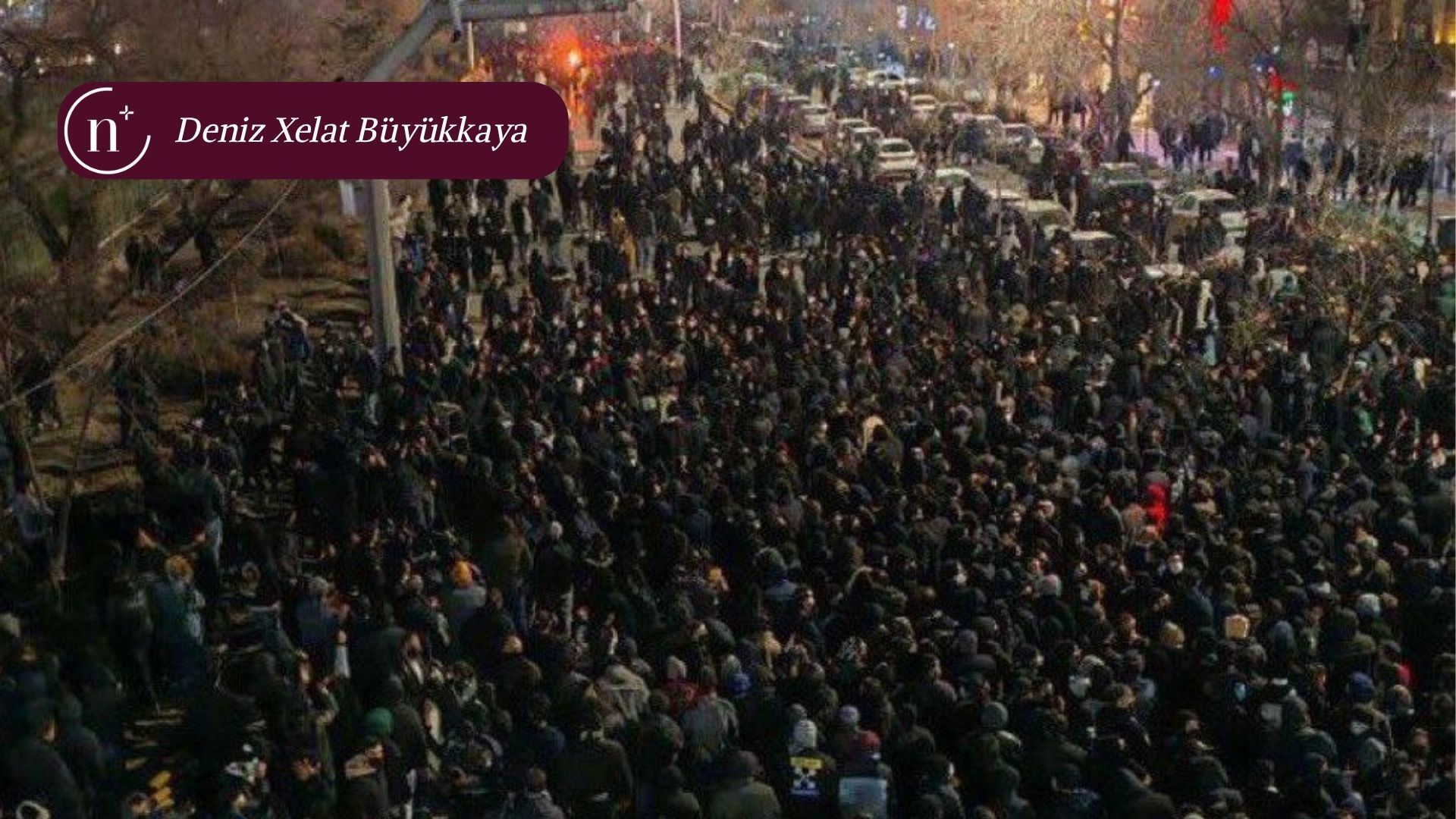
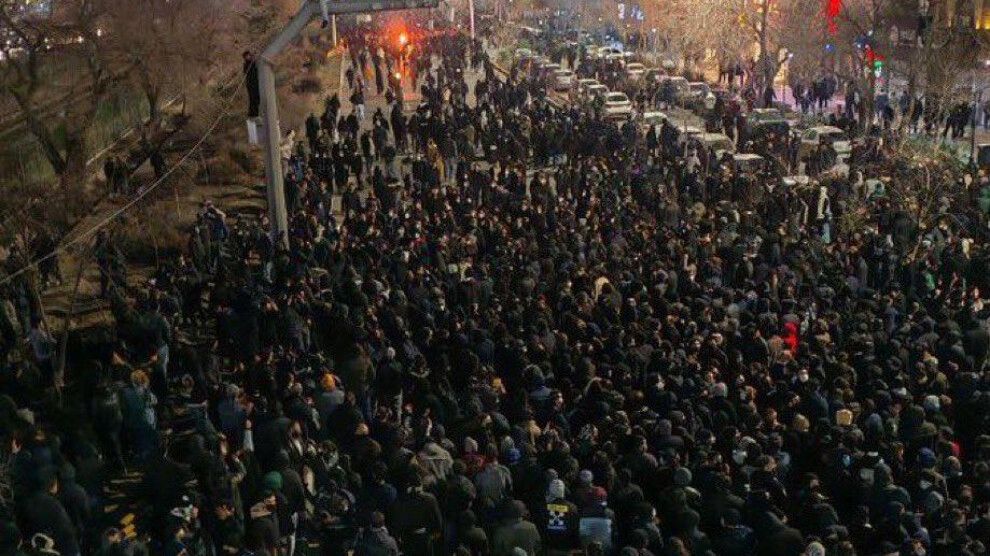
Photo of protests in Iran.
by Deniz Xelat Büyükkaya
Rojhelat (Eastern Kurdistan) or the Kurdish regions of western Iran, have once again become a key site of political tension, state repression and regional security concern. Over the past few years, Rojhelat has faced intensified government repression, increased protest activity, and rising geopolitical pressure related to regional conflicts. Latest developments show that Rojhelat remains one of the most politically sensitive regions inside Iran.
Iran has been facing nationwide protests since late 2025 because of economic collapse, rising inflation, and shortages of basic goods, fueling growing anger toward the government. The government has responded to protests with extreme repression: mass arrests, shootings of protesters, internet shutdowns, executions and death sentences.
Rojhelat: A Centre of Protest Movements
Rojhelat—especially the provinces of Kurdistan, Kermansah, West Azerbaijan, and Ilam—has long been considered by Tehran a politically sensitive border region. As a result, the Iranian state has often approached Kurdish activism through a security-focused framework shaped by fears of separatism and cross-border insurgency. Also, the region was already the centre of the nationwide “Jin, Jiyan Azadi (Woman, Life, Freedom)” movement that erupted in late 2022 after the death of Kurdish woman Jina (Mahsa) Amini in police custody.
By late 2025, Kurdish monitoring organisations reported that Iranian security forces had intensified surveillance and arrest campaigns across Rojhelat, targeting activists, journalists, and ordinary citizens. The Washington Kurdish Institute’s 2025 Annual Report notes that in November 2025 alone, 51 Kurds were detained in Iran, representing 45 percent of all recorded arrests nationwide that month.
According to Kurdistan Tribune, Kurdish regions have long been centres of anti-government protest, and state responses have often been violent. During the recent demonstrations, Rojhelat was among the most heavily affected, with security forces responding aggressively.
Many people were arrested without clear charges or proper legal procedures. This has drawn concern from international human rights organisations about fairness and legal rights in Iran’s response to political opposition. Kurdish cities often show strong political mobilisation. This is partly because of ethnic marginalisation, economic difficulties, and long-standing political grievances. In addition, Rojhelat is considered one of the less economically developed parts of Iran.
Cross-Border tension
The situation in Rojhelat cannot be completely understood without considering cross-border dynamics between Iran and Başur (Iraqi Kurdistan). While repression in Rojhelat increased, developments across the border in Başur also made the situation more tense. In March 2026, Iranian forces carried out drone strikes targeting Kurdish opposition positions in Iraqi Kurdistan, including an attack on an opposition headquarters in the town of Dekala that wounded members and damaged facilities.
These attacks were part of a broader campaign against Kurdish groups that Iran accuses of operating across the border. According to regional media reports, several Kurdish opposition sites in Erbil and Sulaymaniyah provinces, including the Koya district and nearby mountain areas, were targeted during the escalation.
Iranian officials justified these operations as necessary responses to “separatist groups” threatening national security.
Human rights concerns
Human rights organisations report that Iran has significantly increased its use of the death penalty in recent years. According to Iran Human Rights (IHR), in 2024, at least 975 executions were recorded. The number reportedly increased to around 1,500 executions in 2025, the highest level in decades.
Ethnic minorities seem to be affected more by these policies. According to a report by Hengaw around 150 Kurdish prisoners were executed in 2025. In early 2026, Hengaw also reported that at least 257 Kurdish civilians were killed during a crackdown linked to protests, including 20 children and 19 women. Many of them were accused of security-related crimes, but human rights groups often criticise the lack of fair trials and transparency in Iran’s judicial system.
Because of these numbers, many Kurds believe that the Iranian government treats Kurdish regions mainly as a security issue instead of solving political and social problems.
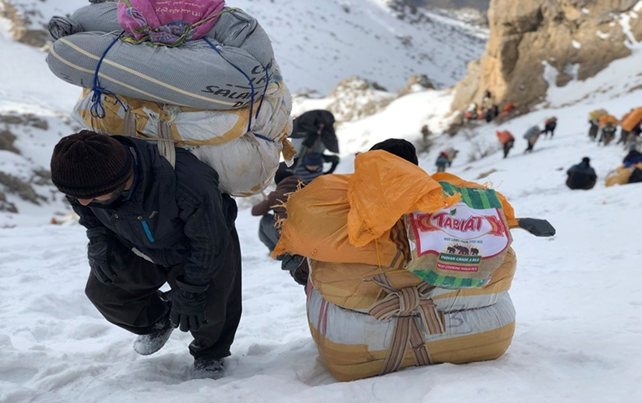
Image: Fazel Hawramy/Rudaw
Economic marginalisation and the Kolbar
In addition to political repression, economic conditions in Kurdish border areas are also very difficult. Rojhelat has some of the highest unemployment rates in Iran, especially among young people. Because of this, many residents work as kolbars. Kolbars are Kurdish porters who carry goods across mountain borders between Iran and neighbouring countries. The work is very dangerous and often illegal, but many people rely on it to earn living.
According to the Kurdistan Human Rights Network (KHRN) dozens of kolbars are killed each year by Iranian border forces, while many others are injured or arrested. Kurdish activists say that kolbar work continues because there are not enough stable job opportunities in the region. For many Kurdish families in border cities, kolbar work has become a symbol of the broader economic marginalisation faced by Rojhelat.
An unresolved political question
Despite decades of political tension, the Kurdish question in Iran remains unresolved. Kurdish activists continue to demand cultural rights, Kurdish language education, economic development, and greater political representation. However, Iranian authorities have continued to restrict Kurdish cultural and linguistic rights. In 2025, expressions of Kurdish identity were often treated as security offences. The Kurdish language is still largely excluded from formal education, and cultural activists promoting Kurdish language or traditions have faced arrests and intimidation.
At the same time, the Iranian government continues to view Rojhelat mainly through a security perspective because of concerns about territorial integrity and armed opposition. As Iran faces both internal dissent and regional pressure, Rojhelat is likely to remain an important indicator of the country’s political stability. For now, the Kurdish regions of Iran remain caught between protest movements, state repression, economic hardship, and regional geopolitical tensions.
A quantitative analysis of international media coverage of Iranian Kurds between February 28 and March 22, 2026, reveals a pattern that speaks less to increased visibility and more to the nature of that visibility: Kurds were covered more — but largely through the voices of others.
Foto: Rudaw
Following the February 28 launch of US-Israeli strikes on Iran, Kurdish political actors entered the international media agenda. The period was further amplified when, on March 5, President Donald Trump told Axios: “If the Kurds want to attack Iran, I think that’s wonderful. I’m totally in favor of it.” That statement turned global attention toward Iranian Kurdish organizations.
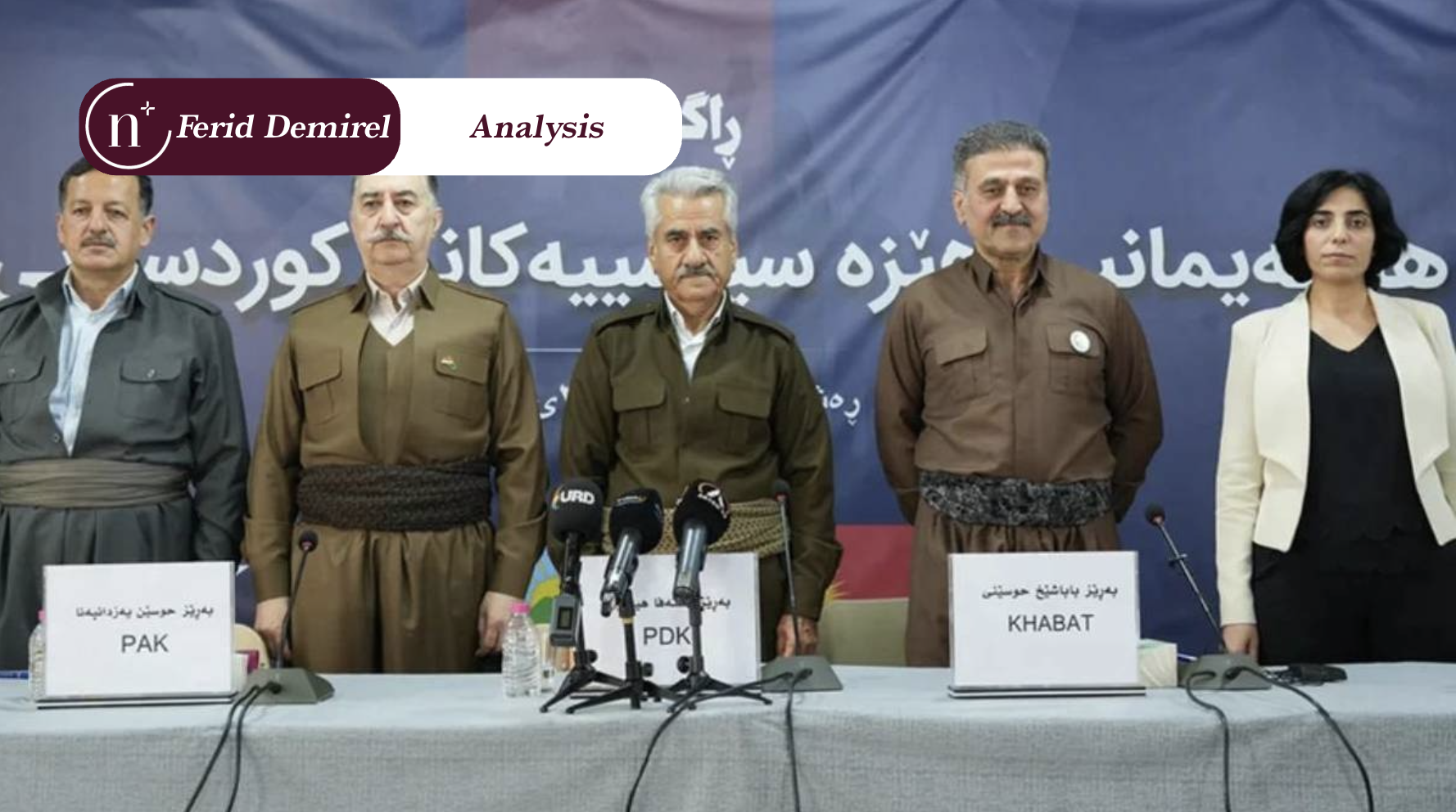
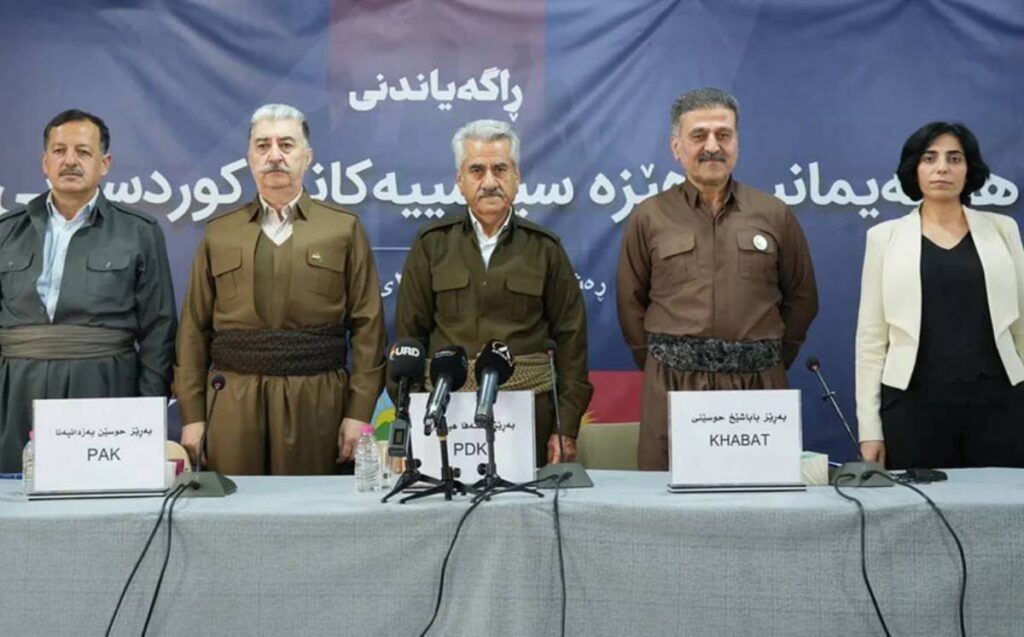
Yet Kurdish groups had already reached an agreement among themselves weeks earlier. The Coalition of Political Forces of Iranian Kurdistan — bringing together PJAK, IKDP, PAK, Komala and Xebat — was formed on February 22, thirteen days before Trump’s remarks. The coalition’s founding drew almost no attention from international mainstream media until Trump spoke. In March, the Komala Party joined, bringing the number of member organizations to six.
Once Trump’s statement focused international attention on the Kurds, coverage surged. Of more than fifty records analyzed, approximately seventy percent were published between March 1 and 8 — the first eight days of the war. Between March 9 and 22, independent Kurdish-focused coverage fell to single digits, with Foreign Policy’s March 17 analysis standing as a near-solitary exception.
The peak came between March 3 and 7. On March 3, CNN was the first to report — citing multiple anonymous sources — that the CIA was working to arm Kurdish forces. That same day, the Wall Street Journal noted that Trump was open to supporting armed militias, with Kurdish forces along the Iran-Iraq border described as holding significant military capacity. Reuters reported, citing three sources, that Iranian Kurdish militias were in discussions with the US about how and where to strike Iranian security forces. On March 5, Bloomberg reported that Israel was working to open the way for Kurdish forces to take positions in northwest Iran, citing a senior Israeli military official. Al Jazeera published a detailed explainer: “Which Kurdish groups is the US rallying to fight Iran?” On March 7, Chatham House published its analysis: “Kurdish groups in Iran face a risky dilemma amid an unclear US endgame.” The Kurdish-focused content published across those five days exceeded the combined total of the two preceding weeks and the two that followed.
Daily news intensity — Iranian Kurds
Feb 28 – Mar 22, 2026 · Estimated distribution based on dataset
Feb 28Mar 8Mar 15Mar 22
High (3+ reports)
Medium (1–2 reports)
Sparse / none
Then, on March 7–8, Trump reversed course. Asked about the possibility of Kurds establishing a new autonomous region in Iran and whether they would join the war, he said: “We’re very friendly with the Kurds, but we don’t want to make the war any more complex than it already is. I’ve decided I don’t want the Kurds going in.”
The conditions Kurdish groups themselves had put forward were central to this outcome. According to Axios, one Kurdish opposition official stated: “We cannot move until the skies above us are clear” — a demand for an arrangement comparable to the no-fly zone that enabled Kurdish autonomy in Iraq after 1991. CNN reported that Kurdish groups also sought political guarantees from the Trump administration before committing to action. Komala Secretary-General Abdullah Mohtadi summarized these conditions to Die Zeit: “We will not send our forces to the slaughterhouse.”
On March 4, Kurdish groups issued a joint denial directly contradicting media reports of a ground offensive. PAK stated: “Claims that our forces have crossed into Rojhilat are baseless. We categorically deny these reports — no such movement took place.” PJAK, PDKI and Komala issued similar statements the same day. The coalition’s first joint communiqué, released on March 2, was not a declaration of military action but a political appeal to Iranian armed forces in Kurdish regions: “Separate yourselves from the remnants of the Islamic Republic.” PDKI President Hijri had stated on March 1: “We will continue our struggle until free and democratic elections are held.” The Kurdistan Regional Government’s Interior Ministry also announced that its territory would not be used as a base for operations against neighboring countries. Trump’s reversal on March 7–8 confirmed that the conditions Kurdish groups had set would not be met.
Independence referendum and Rojava: a comparative frame
Two earlier turning points offer context for understanding Kurdish visibility in international media.
Three periods compared
How Kurds appeared in international media — 2017, January 2026, February–March 2026
Criterion
2017 Referendum
Jan 2026 Rojava
Feb–Mar 2026
Visibility level
High
Low
Very high
Trigger
Kurdish political demand
Kurdish civilian tragedy
Inclusion in great-power plans
Dominant frame
Great-power opposition
Humanitarian crisis
Strategic instrument
Subject position
Political actor (shadowed)
Victim
Object / instrument
Kurdish voice weight
Limited
Very limited
Limited but increased
Civilian dimension
Partly present
Relatively present
Almost absent
2017Political actor — but in the shadow of international opposition
Jan 2026Humanitarian crisis — but with limited attention
Feb–Mar 2026Strategic instrument — and with great intensity
In 2017, the Kurdistan independence referendum drew extensive international coverage — but structured around the near-unanimous opposition of major powers (the US, Russia, the UK, Turkey, Iran) rather than around Kurdish political demands. An academic study published in the British Journal of Middle Eastern Studies documented that in Egyptian online media, the referendum was framed as “a Zionist plan directed by the US and Israel to redraw the region.” That framing was the dominant pattern across regional Arab media in 2017. By 2026, the dynamic had inverted: Israeli support was no longer presented as a threat but as an operational reality — yet Kurds remained objects of great-power planning rather than subjects of their own story.
In January 2026, the Syrian Transitional Government’s attacks on Kurdish neighborhoods in Aleppo — dozens killed, hospitals struck, tens of thousands displaced — drew comparatively limited international coverage. The gap in intensity and framing between that period and February–March 2026 is stark. What it reveals is a pattern: international media interest is triggered not by violence against Kurds, but by Kurdish inclusion in great-power plans.
The comparative picture across three periods: In 2017, Kurds were covered as political actors — but in the shadow of international opposition. In January 2026, as a humanitarian crisis — but with limited attention. In February–March 2026, as a strategic instrument — and with great intensity. Visibility and subject position took different forms in each period.
Coverage by outlet
US media formed the dominant block. CNN produced at least seven separate Kurdish-focused pieces, five of them concentrated between March 3 and 5. Axios published four reports. Reuters and AP each produced one critical exclusive. US media’s Kurdish coverage intensity outpaced the combined output of all other countries.
Israeli media — Haaretz, Times of Israel, Channel 12, i24NEWS, Ynet — formed the second largest block in both volume and substance, though with a markedly different editorial frame.
Coverage by outlet
Estimated Kurdish-focused report count and dominant editorial frame · Feb 28 – Mar 22, 2026
FT, Economist, Guardian, Le Monde, NHK, Dawn, SCMP, etc.
—
No access
In European media, BBC Persian’s Jiyar Gol interview with PJAK leadership — conducted inside tunnels near the border — and BBC World Service’s interview with a PAK fighter were the standout pieces. Die Zeit published an interview with Komala Secretary-General Abdullah Mohtadi; the piece’s reach came largely through citations in Chatham House and Al Arabiya. InsideOver conducted the most direct leader interview on the European continent, speaking with PDKI President Hijri on March 8.
Arabic-language media in this analysis was represented only by Al Jazeera English and Al Arabiya English. The Arabic-language services of both outlets, along with Asharq Al-Awsat, Al-Quds Al-Arabi, Al-Araby Al-Jadeed, BBC Arabic, Sky News Arabia, and Gulf media, fell outside the scope of this study.
Who spoke, who was silenced
When all records in the dataset are coded by source type, approximately fifty percent relied on anonymous US or Israeli officials. CNN’s March 3 report cited “multiple people familiar with the plan”; Axios’s March 5 piece cited two separate US-Israeli officials; Reuters’s March 6 exclusive cited three anonymous sources.
Direct interviews with Kurdish leaders totaled nine over 22 days: Abdullah Mohtadi (CNN, IranWire, Die Zeit, Al Arabiya, Atlantico, Newsweek), PJAK Co-Chair Amir Karimi (CNN, Axios, AFP, Al Arabiya), PJAK Co-Chair Peyman Viyan (Channel 12), Khabat Secretary-General Babasheikh Hosseini (Al Jazeera), IKDP official Muhammed Azizi (Fox News), Komala Central Committee member Koosar Fattahi (CBS), PDKI President Mustafa Hijri (InsideOver, CSM). The distribution is telling: Mohtadi received the most direct coverage, while PJAK generated the most reporting — yet PJAK was most often reported through anonymous sources or US officials rather than its own leadership.
Iranian state media’s terminology passed into mainstream international coverage with almost no critical framing: “separatist terrorist forces.” In Al Jazeera’s March 5 report, Press TV’s characterization — “anti-Iran separatist forces” — and the IRGC statement carried by IRNA were presented side by side, directly and without contextual challenge.
Source breakdown: who spoke in the coverage?
Estimated distribution across all records · Feb 28 – Mar 22, 2026
Anonymous US/Israeli official50%
Kurdish leader written statement25%
Direct Kurdish leader interview15%
Iranian state/official sources10%
Thematic focus
Five themes emerge from the dataset.
The US-Israel-Kurdish strategic relationship was the dominant theme, accounting for approximately forty percent of all records. This framing positioned Kurds as objects of the story: coverage focused not on what they were doing, but on what great powers intended to do with them.
Military capacity and ground offensive speculation formed the second major theme — fighter numbers, arms levels, border crossing preparations. The retracted March 4 ground offensive story was this theme’s most concrete and most problematic example.
Historical betrayal and distrust was the third theme, structuring Haaretz’s March 7 analysis, the Chatham House report, the Atlantic Council assessment and France 24’s “pawn” piece.
The predicament of Iraqi Kurds was the fourth theme — the tension between the KRG’s declared neutrality and Iran’s actual strikes.
Kurdish civilian experience and human rights was the most conspicuous absence. Hengaw’s warnings about civilian casualties, strikes in Kurdish cities, women’s organizing — the presence of HPJ received a line or two. HPJ Commander Roken Nereda had not spoken on record to any international outlet before AFP’s March 8 field report.
Disinformation: one story, five outlets
March 4 disinformation chain
The origin, spread and retraction of the “ground offensive launched” story
1
Initial claim
i24NEWS reported — without footage, citing an unnamed CPFIK official — that PJAK fighters were taking positions in the mountains south of Marivan.
i24NEWS · March 4, 2026
2
Rapid amplification
Axios and Fox News ran the same story almost simultaneously. Jerusalem Post also reported similar claims citing an unnamed source.
Axios · Fox News · Jerusalem Post · March 4, 2026
3
Contradictory confirmation
Channel 12 correspondent Barak Ravid first confirmed the report citing a US official, then walked it back the same day: “There are conflicting reports.”
Channel 12 / Barak Ravid · March 4, 2026
4
Joint denial
PAK, PJAK, PDKI and Komala issued a joint denial the same day. KRG official Aziz Ahmed stated: “Not a single Iraqi Kurd has crossed the border.”
PAK · PJAK · PDKI · Komala · KRG · March 4, 2026
5
Retraction
Axios and Fox News removed the stories. The retraction did not reach the speed or scale of the original report.
Axios · Fox News · March 4–5, 2026
Five outlets published or amplified the same unverified claim. Reliance on anonymous sources, the absence of direct verification from Kurdish political actors, and the lack of real-time fact-checking mechanisms were the structural causes of this chain.
March 4 stands as this period’s best-documented media failure. i24NEWS reported — without footage and citing an unnamed CPFIK official — that PJAK fighters were taking positions in the mountains south of Marivan. Axios and Fox News ran the same story almost simultaneously. Channel 12 correspondent Barak Ravid first confirmed it citing a US official, then walked it back the same day: “There are conflicting reports.” All Kurdish parties denied it. Five outlets published or amplified the same unverified claim; the retraction did not reach the speed or scale of the original.
Notes

This study was compiled and organized using data gathered by the Claude AI model.

The analysis focused on English-language content and English-language media outlets. This methodological limitation creates several important gaps.

Non-English-language media fell outside the scope of the study. How outlets such as Le Monde, Libération, Le Figaro, Corriere della Sera, El País, NHK, Dawn, South China Morning Post and The Hindu covered — or did not cover — Kurds during this period was not examined.

Arabic-language media was represented in this study only through Al Jazeera English and Al Arabiya English. The Arabic-language services of both outlets, along with Asharq Al-Awsat, Al-Quds Al-Arabi, Al-Araby Al-Jadeed, BBC Arabic, Sky News Arabia and Gulf media, fell outside the scope of this study.

English-language outlets behind paywalls — the Financial Times, The Economist, and certain Haaretz content — could not be fully accessed. For these outlets, the accurate description is "could not be reached," not "did not publish."