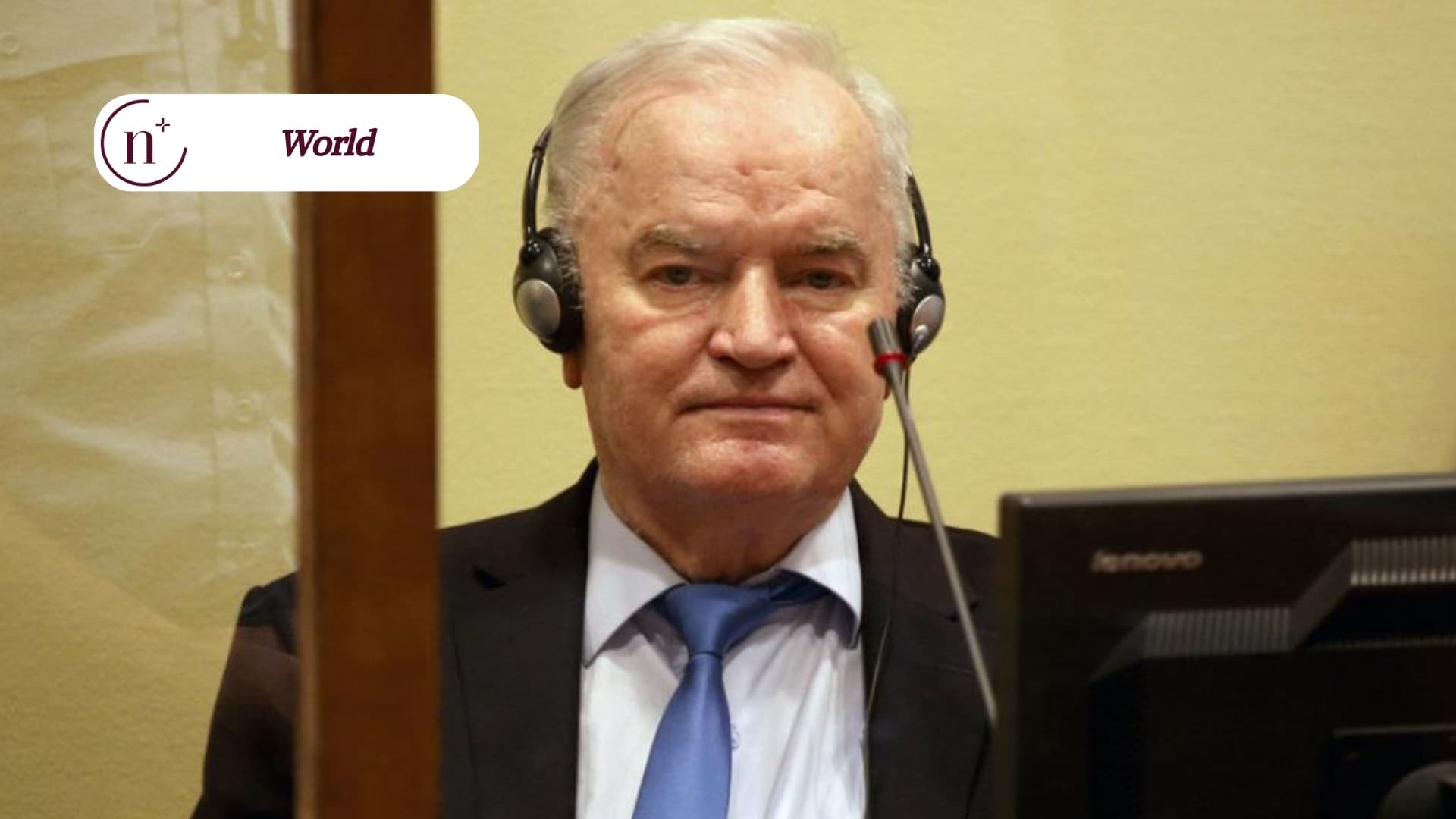
84-year-old war criminal dies

Reactions to Ratko Mladić’s death

Reactions poured in from many sides following the death of Ratko Mladić, convicted of war crimes committed during the Bosnian War. Serbia’s justice minister said the convicted general would be buried “with the highest state honours.”
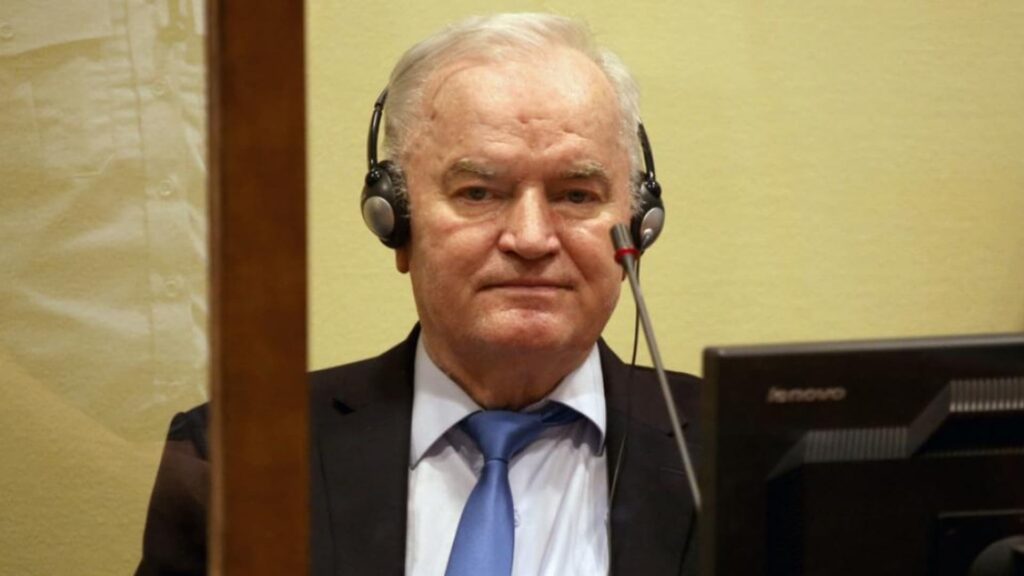
Ratko Mladić during a court hearing in The Hague. Photo: UN-IRMCT/Leslie Hondebrink-Hermer

Ratko Mladić, the Bosnian Serb general found responsible for crimes committed during the Bosnian War amid the breakup of Yugoslavia, died on August 27 (yesterday) at the age of 84. Since 2024 he had been held under United Nations (UN) custody in a hospital in The Hague, in the Netherlands.

In 2017 Mladić was found guilty of war crimes and the Srebrenica genocide and sentenced to life in prison by the International Residual Mechanism for Criminal Tribunals (IRMCT), the successor to the International Criminal Tribunal for the former Yugoslavia (ICTY). The sentence was upheld on appeal in 2021.

According to the Serbian press, about a week before Mladić’s death, Serbian President Aleksandar Vučić had asked the Hague court to let Mladić spend his final days in Serbia, citing his deteriorating health, but the request was denied.

News of Mladić’s death was first confirmed late yesterday afternoon by Lidija Pavićević, State Secretary of Serbia’s Ministry of Human and Minority Rights.

Reactions came from many different sides.

Suljagić: His death does not turn a criminal into a historical figure

Part of the statement by Emir Suljagić, head of the Srebrenica Memorial Center, posted on his X account, reads as follows:

Ratko Mladić is dead, and there is not much to say. Nor does that fact change much. It does not bring back the dead. It does not erase mass graves. It does not change verdicts. It does not turn a criminal into a historical figure.

Izetbegović: Mladić will go down in history as a war criminal

Bakir Izetbegović, son of Bosnia and Herzegovina’s first president Alija Izetbegović and chairman of the right-wing Party of Democratic Action (SDA), said on his X account that Mladić would be remembered by history exactly as the final judgment of the Hague tribunal defined him: as a war criminal sentenced to life imprisonment for the gravest crimes committed on European soil since the Second World War.

Hotić: He died in disgrace

Kada Hotić, 82, whose husband and son were killed by Serb forces in 1995, said: “I am grateful to the Tribunal because it sentenced Mladić to life and has not released him. Justice was served on the day he was sentenced to life. He died in disgrace, because he killed so many people.”

Bosnia and Herzegovina’s Justice Minister Zukan Helez, in a statement on his Facebook account, described Mladić as a convicted perpetrator of genocide and one of the most notorious war criminals Europe has seen since the Second World War.

Helez said that death brings no absolution, that mass graves will not be erased, that murdered children and parents will not return, and that all that remains is shame, the verdict, and the bloody trace of the crimes.

Justice minister: He will be buried with the highest state honours

Serbia’s Justice Minister Nenad Vujić announced that Mladić would be buried in Serbia, at a place to be determined by his family, “with the highest state honours”:

“General Mladić is a general and the protocols are known. His role is also known, but whatever belongs to General Mladić will certainly be honoured.”

However, despite the justice minister’s claim, it remains unclear whether a “state funeral” can legally be held for Mladić, who died while serving a life sentence and who, under the law, should have been discharged from military service and stripped of his rank because Article 110 (1/11) of Serbia’s Army Act provides that “unconditional imprisonment of more than one year results, on the day the judgment becomes final, in the termination of service,” and Article 185 (1/3) provides that “the same sentence results, on the day it becomes final, in the loss of rank; along with the rank, all rights tied to the rank are also lost.”

You can access the Serbian Army Act, published in the Official Gazette of the Republic of Serbia under No. 116/2007 and last amended by No. 109/2025 of 4 December 2025, here.

Aleksandar Šapić, mayor of Belgrade and a member of the Serbian Progressive Party (SNS) led by President Vučić, shared a photo of Mladić on his personal Instagram account with the caption “Rest in peace, general. May you have eternal glory and gratitude.”

In a statement on 28 August, President Vučić said, “We have received nothing from The Hague.”

Saying that “they had now seen that The Hague wanted Mladić to die behind bars,” Vučić added, “They did not allow the general to die in Serbia, where he wanted to die. That is uncivilised behaviour, without precedent or justification,” thereby also confirming the Serbian press reports that there had been an intention to bring Mladić to Serbia.

Vučić further stated that Serbian authorities would help arrange a dignified burial for Mladić in Serbia if his family requested it. However, he made no comment on the justice minister’s claim that Mladić would be buried “with the highest state honours.”

In addition, the President of Montenegro’s parliament, Andrija Mandić, posted on his official X account that he had conveyed his condolences to Mladić’s son.

Commemorated at football matches

At the match yesterday at 8:00 p.m. in which Serbia’s Red Star football club (FK Crvena Zvezda) lost 5-1 away to Czechia’s Viktoria Plzeň in the second leg of the UEFA Europa League play-off round, a banner reading “General, eternal glory and gratitude” in tribute to Mladić was unfurled by Red Star’s supporters’ group Delije and shared from the club’s official X account.

Željko Ražnatović, known as Arkan, the mafia and terrace leader who founded the Delije supporters’ group, was also one of the influential figures of the era of Yugoslavia’s breakup and the Bosnian War. Arkan, who also headed the Serb paramilitary force known as the Serb Volunteer Guards or “Arkan’s Tigers,” was indicted by the ICTY for crimes against humanity after the war. He was assassinated in January 2000.

Before the match yesterday at 9:30 p.m. in which Borac, the football club from Banja Luka, the capital of Republika Srpska (one of Bosnia and Herzegovina’s two entities), beat Iceland’s representative Vikingur 3-1 in the second leg of the UEFA Conference League play-off, applause rose from the stands when it was announced in the stadium that Mladić had died. A song praising Mladić was also sung, and a banner was unfurled reading “The earthly is a small kingdom; the heavenly is forever and ever. Eternal glory to the greatest defender of the Serbian people.*”

* The words on the banner draw on the defeat of the Serbian kingdom at the First Battle of Kosovo in 1389. According to legend, on the night before the battle, Serbian Prince Lazar was visited in a dream by an angel of God and asked to choose between an earthly kingdom and a heavenly one. Lazar, who chose the heavenly kingdom, lost the battle and died on the battlefield.

According to an 28 August report by The Athletic, the sports section of The New York Times, UEFA announced that it had opened disciplinary proceedings against Red Star on three separate counts. These counts include “racist and/or discriminatory behaviour”, “transmitting a message that is not fit for a sports event” and “improper conduct of the team.”

Following the match, the Srebrenica Memorial Center had contacted UEFA to state that the banners that were unfurled “cannot be reduced to the behaviour of fans.”

The statement of the Srebrenica Memorial Center includes the following:

“A club that consciously uses its official communication channels to spread messages glorifying a man legally convicted of genocide cannot reduce such behavior to the behavior of fans.

This is no longer just a question of the fans, but of the club’s institutional relationship to the values on which UEFA bases European football.”

UN Secretary-General: I stand in solidarity with the victims

UN Secretary-General António Guterres, in a statement through his spokesperson Stéphane Dujarric, said he stands in solidarity with the victims, survivors and their families who suffered the crimes for which Mr. Mladić was found guilty.

Stating that the facts conclusively established by the judicial findings form part of the historical record, Guterres reiterated his call on all those in positions of power to refrain from denying the seriousness of the crimes that have been adjudicated.

Guterres also said he strongly condemns any denial of the Srebrenica genocide as a historical event, and any actions that glorify those convicted of war crimes, crimes against humanity and genocide by international courts.

Dodik: This is a murder

Milorad Dodik, chairman of Republika Srpska’s Alliance of Independent Social Democrats (SNSD), former president of Republika Srpska, one of the leading figures of Serb nationalism in Bosnia and Herzegovina, and currently banned from politics, said of Mladić’s death: “It is a murder. He was respected by the Serbian people. As a commander he stood to defend Serbs.”

Šešelj: Mladić fought against villains

The far-right convicted war criminal Vojislav Šešelj* said of Mladić: “Mladić fought against those villains for a long time; they expected his death two or three years ago, but he did not give up… They killed him.”

* Vojislav Šešelj is the founder of the far-right Serbian Radical Party (SRS). Indicted by the ICTY in January 2003 over war crimes and crimes against humanity committed in Croatia and Bosnia and Herzegovina during the breakup of Yugoslavia, Šešelj went to The Hague and surrendered in February 2003 after a judge confirmed the charges. He remained in ICTY custody for 11 years and 9 months. In 2014 he was allowed to return to Serbia for cancer treatment. Later also a member of parliament, Šešelj was acquitted in 2016, but the acquittal was overturned on appeal in 2018. Šešelj, however, did not return to prison.

Russia: Mladić’s right to health was violated

Russia’s Ministry of Foreign Affairs made a statement via Facebook, and the Russian Embassy in Belgrade via its X account, regarding Mladić’s death.

The Russian Foreign Ministry said: “The Russian side has consistently pointed out that Mladić’s trial in The Hague and the conditions of his imprisonment were accompanied by disregard for his basic rights, including the right to health and adequate medical care.” The Russian Embassy in Belgrade, for its part, offered “Its sincere condolences to Mladić’s family and loved ones on the passing of General Ratko Mladić.”

Who was Ratko Mladić?

Ratko Mladić was born in 1942 in the village of Božanovići in Bosnia and Herzegovina and rose to the rank of general in the Yugoslav People’s Army. With the outbreak of the Bosnian War, he became the commander-in-chief of the newly formed Bosnian Serb army (Vojska Republike Srpske-VRS). He was among the most senior military figures responsible for the army’s actions, including the nearly four-year siege of Sarajevo and the genocide at Srebrenica. After the war he spent years in hiding as a fugitive and was captured only in May 2011 in Serbia, then handed over to The Hague.

In 2017, Mladić was found guilty by the ICTY of the Srebrenica genocide, crimes against humanity, and violations of the laws of war, and sentenced to life imprisonment. The sentence was upheld on appeal in 2021. While serving his sentence, Mladić died on 27 August 2026 in a hospital under UN custody in The Hague, following long-standing health problems.
SDF Dissolved

Ilham Ahmed: New mission in Damascus

In a press conference in Damascus after meeting with Syria’s interim President Shara, DSG General Commander Mazlum Abdi announced the end of the DSG’s mission as a military force and the completion of the integration process into the brigades within the Syrian army.

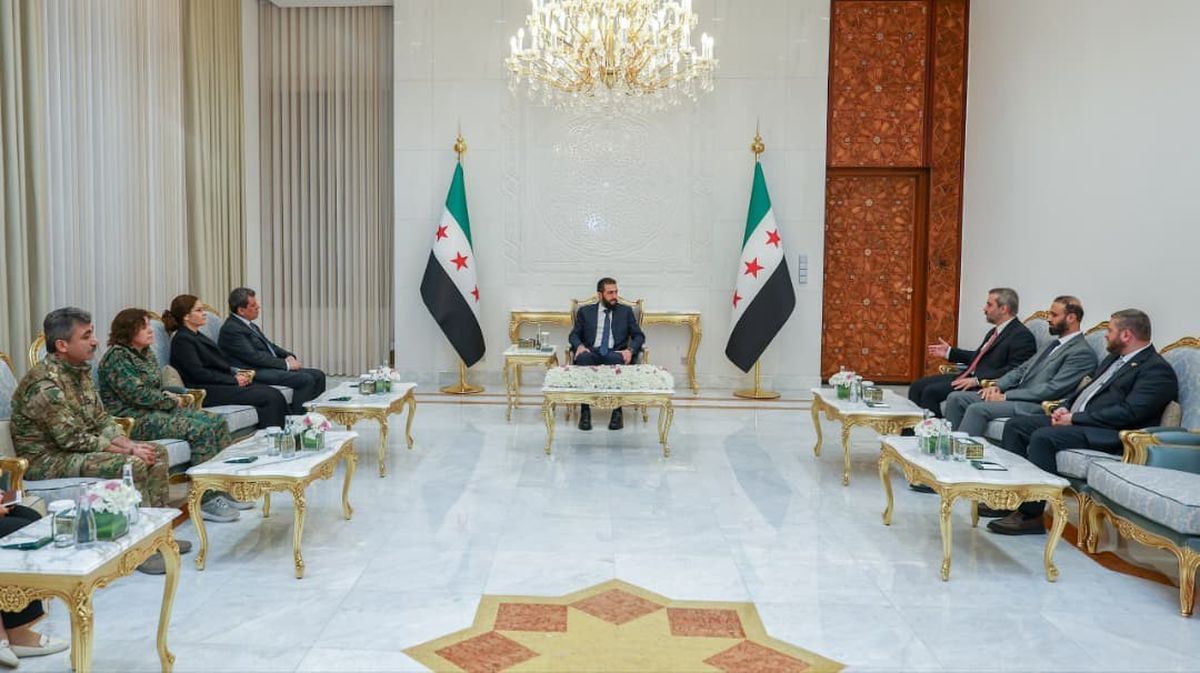
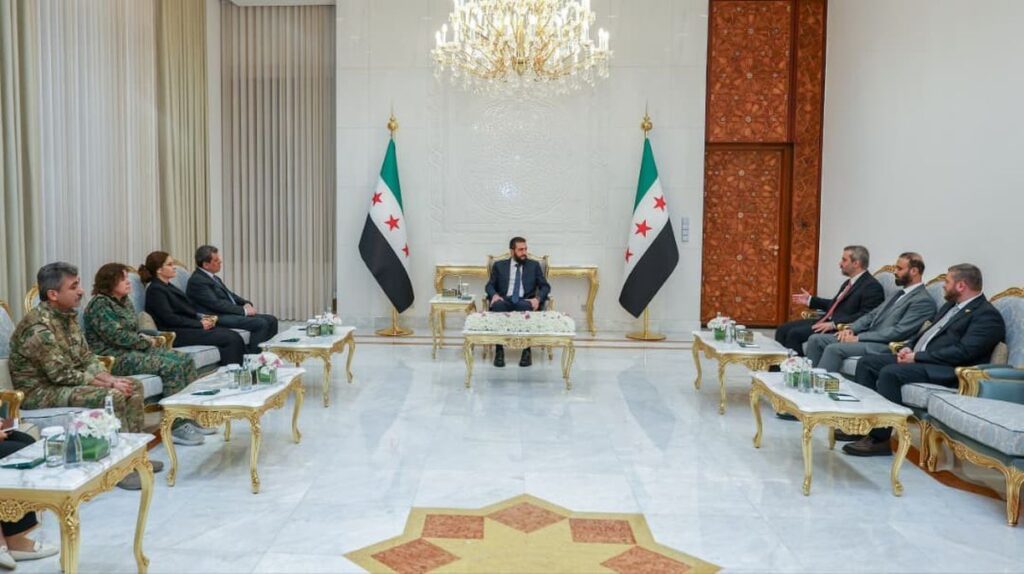
Mazlum Abdi, Ilham Ahmed and a delegation visited Ahmed al-Shara in Damascus.

Ilham Ahmed, Co-Chairman of the Department of Foreign Relations for Northern and Eastern Syria, and Mazlum Abdi, General Commander of the Syrian Democratic Forces (SDF), met in Damascus with Syrian Foreign Minister Assad Shaybani and subsequently with interim President Ahmed al-Shara. The meeting with Shara was attended by Syrian Deputy Defense Minister Sîpan Hemo, YPJ General Command Member Newroz Ehmed, as well as Foreign Minister Assad Shaybani and Syrian Presidential Special Representative responsible for the implementation of the January 29 agreement Ziyad al-Ayish.

After the parleys, Abdi held a press conference at the People’s Palace in Damascus and announced the end of the SDF’s mission as a military force. Stating that an important page in Syria’s history has closed, Abdi announced that the process of integration into the brigades within the Syrian army has been completed. Stating that the new era should be shaped on the basis of “peace, stability and the reconstruction of the country”, Abdi said, “Following the agreement reached with President Ahmed al-Shara and the completion of the integration process of our forces into the brigades within the Syrian army, today we declare with a sense of responsibility that we are ending the mission of the Syrian Democratic Forces and dissolving it as an independent military force.”

Stating that the SDF has assumed great responsibility in one of the most difficult periods in Syria since its establishment, Abdi said that QSD fighters liberated many cities and regions first from the Baath regime and then from ISIS. “We will not forget the sacrifices of the martyrs. They fought not to fight, but for a day when Syrians will no longer have to fight.” Abdi emphasized that the new era should be the beginning of the transition from the battlefields to the reconstruction sites and from the era of weapons to the era of peace.

Reminding that the Kurdish people have been struggling for the right to education in their mother tongue for decades, Abdi said that President of the transitional government Ahmed al-Shara has made several statements to protect this right. “This year we will work to implement this decision and in the near future we will be able to build on it,” Abdi said, adding that they demanded the Damascus administration to take a clear stance on the right to education in the mother tongue and to develop the existing decision in the future.

What kind of Syria?

Stating that Syria must be a country for Arabs, Kurds, Syriacs, Assyrians, Turkmens and all other peoples and components, Abdi said: “The Syria we want to build is a Syria for all its peoples and components. A united and secure Syria must protect the rights and dignity of all citizens and offer a better future for new generations.” Abdi ended his speech by commemorating those who lost their lives within the SDF.

Barrack: There should be education in Kurdish

US Ambassador to Turkey and Special Envoy for Syria and Iraq Tom Barrack, in a statement on his X account regarding the dissolution announcement of the SDF, described the dissolution decision as a historic development and said, “By paving the way for the orderly integration of the SDF into Syrian state institutions, it has transformed a past division into a lasting partnership and restored the opportunity for the Syrian people to shape their shared future” Tom Barrack,

“Recognizing the Kurdish language in education and giving our valued partners Mazlum Abdi and Ilham Ahmed important roles in the Syrian government is a sign of respect for their leadership, the sacrifices of our Kurdish partners and their constructive contribution to regional stability. Thus, yesterday’s divisions are transformed into tomorrow’s common purpose,” he said.

Shara met with Ahmed from YPJ

Speaking to The Amargi after Barrack’s announcement that Abdi and Ahmed had been given important positions, Ilham Ahmed told The Amargi that she and Abdi had been appointed to “new positions within the Syrian state”. However, the Syrian interim government has not yet made an official statement on the issue.

On the other hand, YPJ Command member Newroz Ehmed met with Syrian Interim President Ahmed al-Shara.

Newroz Ehmed, a member of the Women’s Defense Units (YPJ) Command, and Syrian Interim President Ahmed al-Shara met in the Syrian capital Damascus. During the meeting, it was stated that the files related to the YPJ within the scope of the January 29 Agreement and the next step to be taken in the implementation of the agreement were discussed.

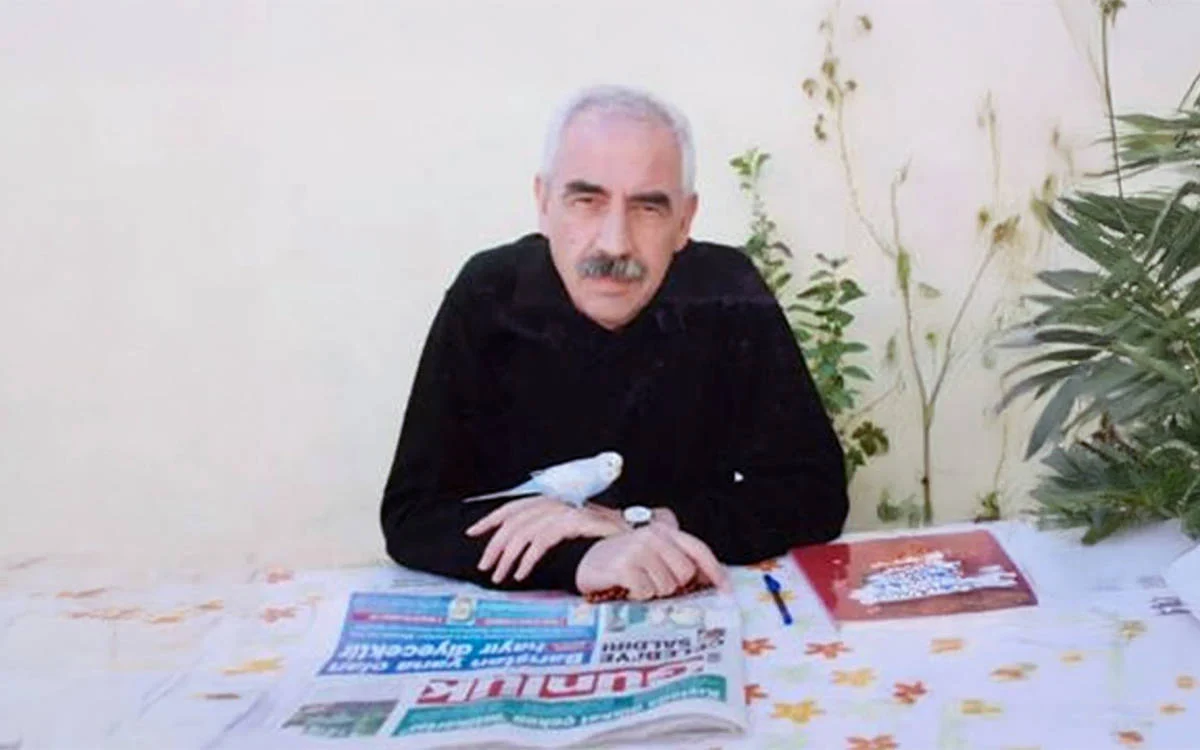
Seriously ill prisoner Mehmet Sait Yıldırım suffers heart attack

The release of seriously ill prisoner Mehmet Sait Yıldırım has been postponed for the third time by the Prison Administration and Observation Board. Following the board hearing, Yıldırım suffered a heart attack, underwent an angiogram, and had two stents fitted in his heart.


Held at İzmir Kırıklar No. 1 F-Type Closed Prison, Mehmet Sait Yıldırım (75), a seriously ill prisoner who has spent 33 years behind bars, has had his release blocked for a third time by the Prison Administration and Observation Board.

According to his lawyers, Yıldırım suffered a heart attack on August 24 after appearing before the Prison Administration and Observation Board. He was taken to hospital and yesterday (August 25) underwent an angiogram, during which two stents were placed in his heart.

According to bianet’s report, Yıldırım’s lawyers, Aryen Turan and Ali İhsan Güven, met with him for five minutes at around 4:40 p.m. today in the Coronary Intensive Care Unit on the 6th floor of İzmir City Hospital.

According to information conveyed to bianet by lawyer Ali İhsan Güven, Yıldırım appeared before the Administration and Observation Board at around 10:00 a.m. on August 24. Güven said the hearing was tense, adding that Yıldırım was once again pressured to “show remorse,” as in previous board hearings, and that an argument ensued.

Güven said that after Yıldırım returned to his cell he suffered a heart attack, and that he was transferred to hospital after his cellmate, Rohat Caruş, alerted prison staff.

According to Güven, Yıldırım was first taken to a hospital in Buca but, because it had no ward for prisoners, he was transferred to İzmir City Hospital. At around 11:00 a.m. yesterday he underwent an angiogram and had two stents fitted in his heart. According to bianet’s report, one of the main arteries leading to his heart was blocked, and Yıldırım narrowly survived a serious, life-threatening condition. Lawyer Güven said his health was now stable and that they had been told he could be discharged today.

According to his lawyers, Yıldırım’s release has been postponed for another three months.

Yıldırım: “Be honest and hang me”

Güven also told bianet that during the board hearing, Yıldırım had said the following:

The State Security Court sentenced me to death. It was commuted to life imprisonment. Now you, as the board, want to carry out the death sentence handed down by the State Security Court. Be honest, build a gallows here in the morning and hang me.

His release had already been postponed twice

Mehmet Sait Yıldırım was detained in 1993 on charges of PKK membership and sentenced to life imprisonment in 1995. Suffering from cardiovascular disease, COPD, hypertension, and other chronic conditions, he is classified among the seriously ill prisoners, and despite his grave health problems he has remained in prison for 33 years.

During the 2013–2015 peace process, Yıldırım was part of a five-member group of prisoners formed at the request of Abdullah Öcalan and publicly known as the “İmralı secretariat.” Owing to his health problems, he stayed on İmralı Island for only nine days before being transferred to another prison. He later recounted his experiences in a book titled Nine Days on İmralı. He spent a significant part of his imprisonment in a single-person cell, held in isolation.

Although Mehmet Sait Yıldırım’s prison term ended on February 27, 2025, he was not released, with the Prison Administration and Observation Board citing that he was not of “good conduct” and “showed no remorse.” Reconvening on November 25, the board once again blocked his release. It set a date nine months later (August 25, 2026) for the next assessment.

After his release was postponed for a second time in November, Yıldırım gave the following statement to bianet through his lawyer Demirer:

“My death sentence, which I received in 1996, was commuted to life imprisonment. After 30 years, I should have been released by now, but they won’t let me go. My release is being postponed for a second time on the pretext that I am not of good conduct. I said it when I appeared before the board too, in effect, you want to carry out the death sentence. If you are so determined to apply the death penalty, be honest: take me out to the yard and hang me on the gallows. Let me know I was sentenced to death, and you, too, say it openly, ‘we executed him.’”

Ayşegül Doğan’s parliamentary question

DEM Party Şırnak MP and Party Spokesperson Ayşegül Doğan submitted a written parliamentary question to the Speaker’s Office on July 28, to be answered by Justice Minister Akın Gürlek, concerning prisoner Yıldırım, whose health has been steadily deteriorating.

In her applications and in the question submitted to Parliament, Doğan noted that Yıldırım, who has not been released even though his conditional release period expired months ago, suffers from numerous chronic illnesses including heart disease, COPD, hypertension, and lung ailments, and that a blood clot had formed in his right eye in early July. The question stated that Yıldırım had been subjected to a demand for examination while handcuffed during his transfer, that his treatment had been delayed, and that his vision problems were ongoing.

Doğan also applied to the Parliamentary Human Rights Inquiry Commission, requesting answers on whether Yıldırım’s release would be reassessed, whether an investigation had been launched into the alleged handcuffed examination during his hospital transfer, and the number of ill prisoners whose release has been postponed on “good conduct” grounds. She further called for an on-site review of Yıldırım’s health conditions, a determination of whether it is medically appropriate for him to remain in prison, and the assurance of uninterrupted access to health services.


Kurdish seasonal workers attacked in Zonguldak and Düzce

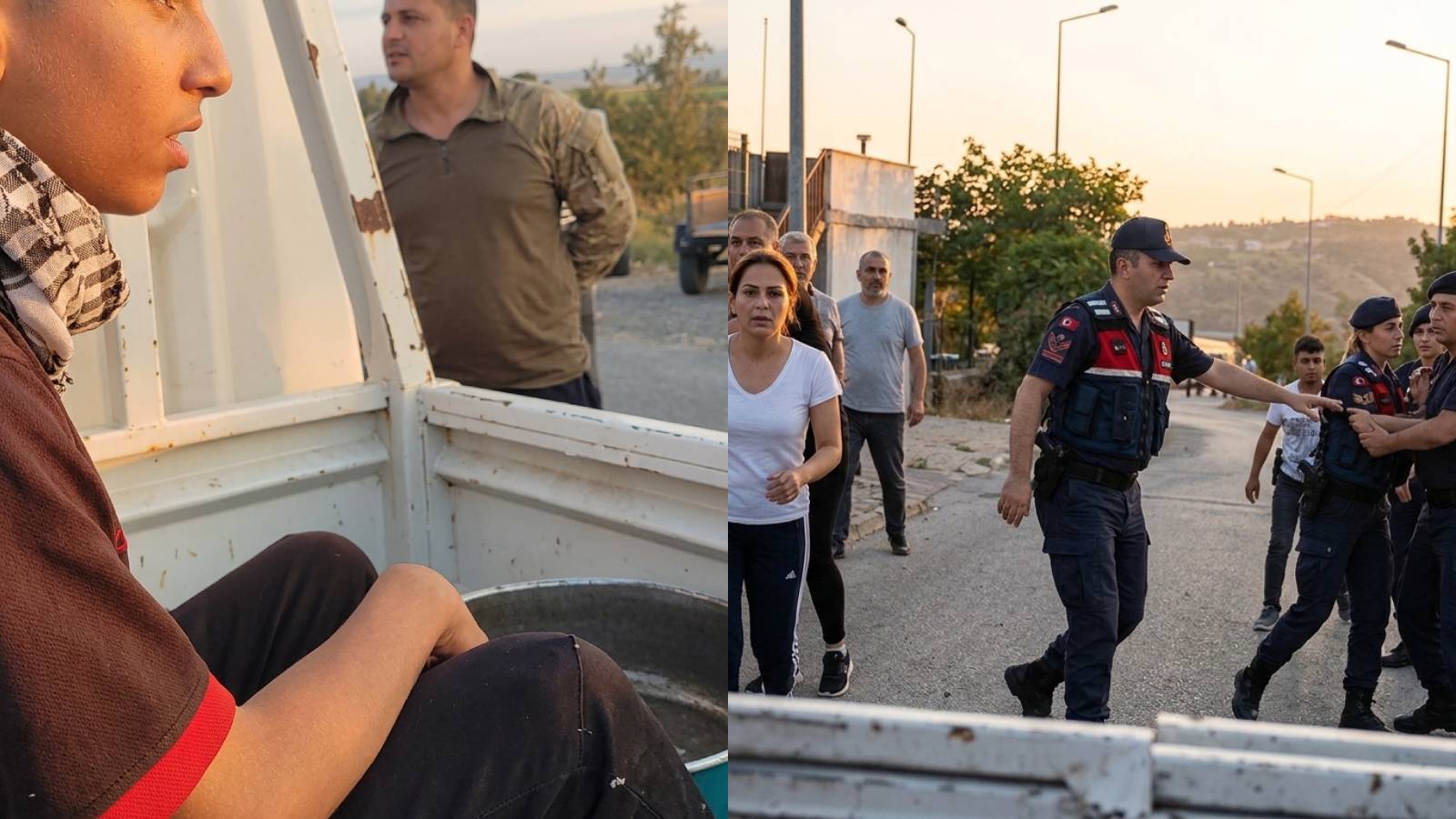
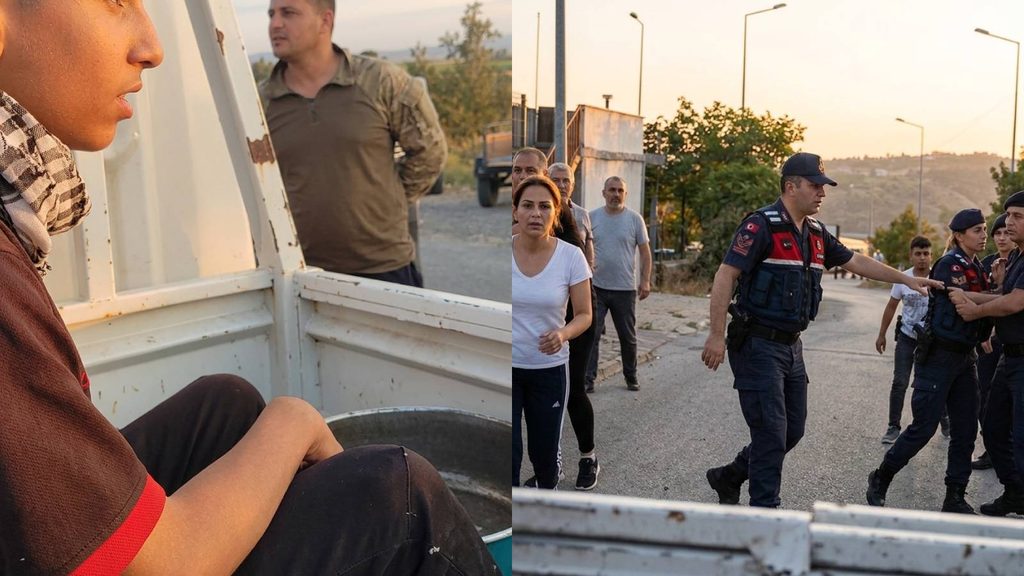
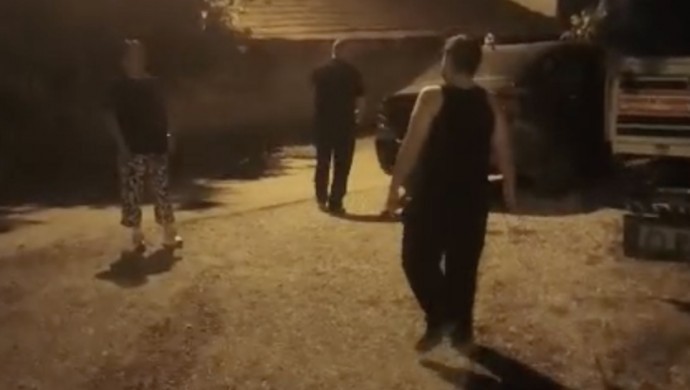
Footage has emerged of an attack on over 70 Kurdish seasonal workers who traveled from Şırnak to Zonguldak. DEM Party MP Newroz Uysal released a statement following the social media footage, confirming that judicial proceedings have been initiated. Shortly after, a similar attack on Kurdish seasonal workers was reported in Düzce.

More than 70 Kurdish workers from the Cizre and Silopi districts of Şırnak, who went to work as seasonal hazelnut harvesters in the Bektaşlı village of Alaplı, Zonguldak, have been under attack for two days. Footage of the assault was widely shared on social media.

DEM Party Şırnak MP Newroz Uysal Aslan issued a statement in response to the footage and growing public concern. She stated that she received information about the attack yesterday evening. After the workers made contact with the party this morning (August 23), she held talks with the Zonguldak Governorship and the Alaplı District Governorship.

They were attacked twice

Aslan shared that during her conversation with the workers, she was informed that gendarmerie forces had intervened to ensure their safety. However, she noted that the workers were attacked once again in the evening while returning from the fields.

In her statement, Aslan pointed out that despite the presence of gendarmerie forces at the scene in the public video clips, they failed to prevent the attack. She stressed that the physical safety of the workers and their families must be secured immediately and effectively.

Judicial process initiated

According to the statement, an investigation into the attack has been launched by the Alaplı Chief Public Prosecutor’s Office.

Noting that seasonal agricultural workers travel hundreds of kilometers to Zonguldak to earn a living, Aslan stated, “Ensuring the physical safety of our people is the responsibility of public authorities.” She affirmed that they would closely monitor the process to ensure the security of the workers and their families, a thorough investigation into all aspects of the attack, and the prevention of similar incidents in the future.

*Footage surfaced on social media

Another attack reported in Düzce

Following the racist attack targeting Kurdish seasonal workers in Zonguldak, a similar incident occurred in Düzce. Kurdish workers who traveled from Mardin to the Cumayeri and Gümüşova districts of Düzce told the Mezopotamya Agency (MA) that they were targeted at their residence.

Speaking to MA, the workers expressed deep anxiety over the assault and mentioned that they were considering leaving the area.

*Images of the attack in Düzce, Photo: MA

The workers explained that the attack occurred in the evening while they were sitting in the yard of their house, reporting that a group approached their home and pulled knives on them.

Taliban's fifth year brings new law

In Afghanistan, men are now officially women’s “rulers”

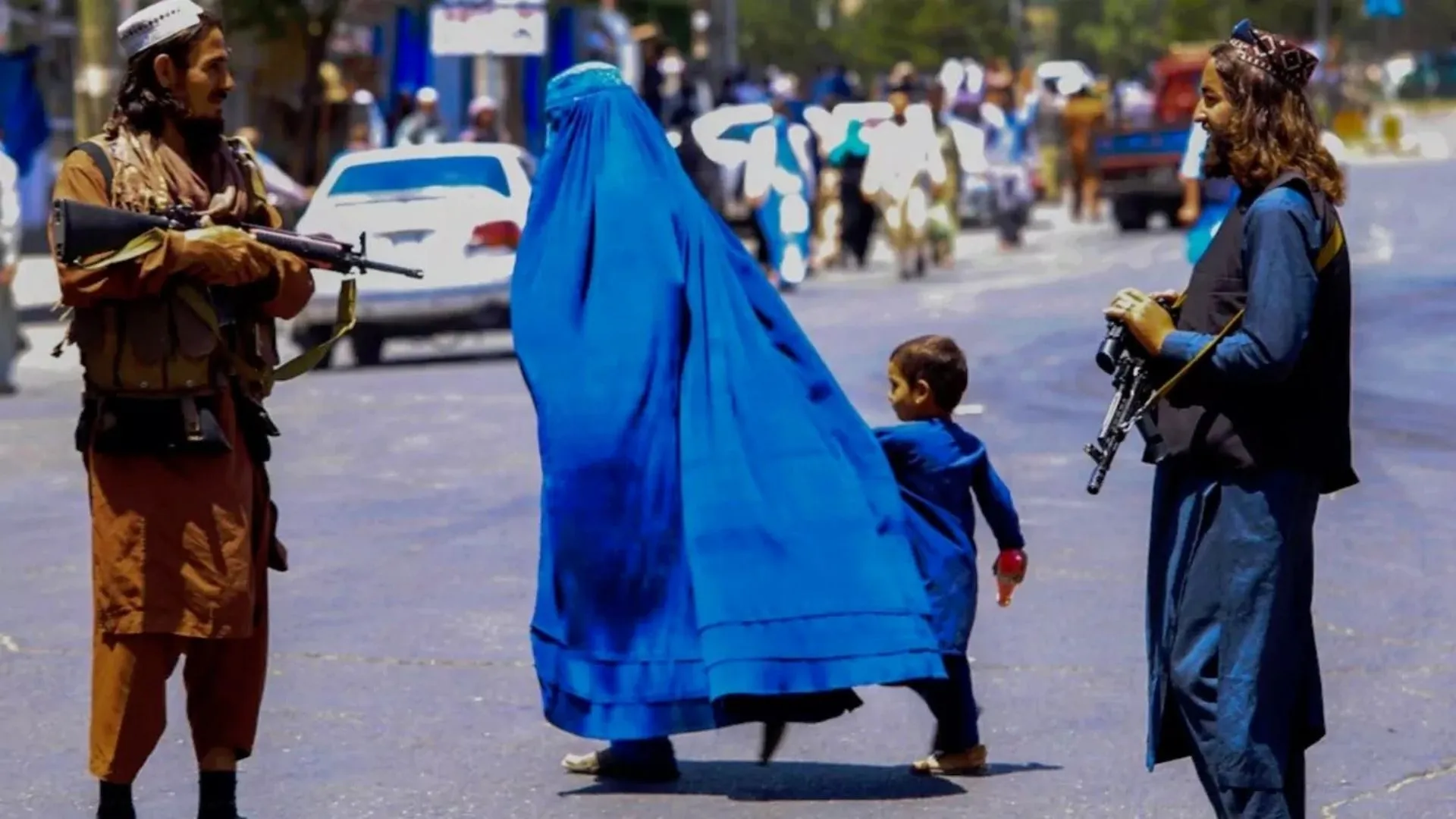
Afghanistan’s Taliban government, now five years in power, has issued a new law declaring obedience to its leader, Hibatullah Akhundzada, mandatory and vesting sole authority over decisions on jihad in him alone. The law defines men as women’s “rulers” and instructs women to “please” their husbands and thank them for the favors done for them.

Photo: AWNA

The Taliban’s Ministry of Justice published the new law, titled “Nisab-e Muballighin” (Curriculum for Preachers), on Sunday, August 16. Approved by Akhundzada and comprising six chapters, the document obligates men to ensure the women under their authority comply with the Taliban’s prescribed dress codes. It also defines men as women’s “rulers” and states that women must “please” their husbands.

In its August 16 announcement, the Ministry of Justice said the “Curriculum for Preachers” had taken effect — consisting of an introduction and six chapters — following Taliban leader Hibatullah Akhundzada’s approval, and had been published in the official gazette.

The law addresses a wide range of subjects, from religious obligations and worship to jihad, obedience to the Taliban leader, marriage, women’s rights, and the hijab.

Provisions on marriage and women

In the section titled “The Rights of Husband and Wife,” women are instructed to obey their husbands “in matters pertaining to sharia.” The law defines the husband as the wife’s “ruler” and instructs women to “please” their husbands and thank them for the favors done for them. In return, husbands are obligated to provide for their wives’ food, clothing, and housing needs and to pay their dowries (mahr).

The law permits men to marry more than one woman, while stating that husbands must “treat their wives justly.”

In the section titled “Women’s General Rights,” it states that no one should oppress or coerce a woman. It notes that an adult woman’s consent is required for marriage, and that a woman must not be handed over to another family as “baad” to settle a dispute.

Baad refers to the practice of giving a woman or girl to another family as compensation for a dispute or crime.

Under the law, a widow is not obligated to marry her deceased husband’s brother. It states that a widow retains the right to receive a dowry from any subsequent husband she marries, and that a woman has inheritance rights over the property of her husband, children, father, and other relatives.

In the curriculum’s section on “veiling and the hijab,” men are made responsible for ensuring that the women under their authority comply with the Taliban’s dress requirements in the presence of men outside the family.

Promoting jihad and obedience

Jihad is one of the central themes of the new curriculum, used here in the sense of religious struggle or armed religious war.

Taliban religious officials are instructed to teach the public the definition, purpose, and virtues of jihad, and to explain the qualities and conduct expected of a mujahid. Religious officials are also directed to encourage people to prepare for jihad and to support fighters.

The document describes being wounded or killed in jihad as a “virtue,” and instructs religious officials to encourage people toward “martyrdom.” The curriculum also calls for teaching the public religious obligations such as prayer, fasting, ablution, ritual bathing, pilgrimage, zakat, and ushr. It also calls for warning people about the punishments they may face for failing to fulfill certain religious duties.

The law makes obedience to the Taliban’s supreme leader mandatory. The document states that obedience to the emir is required “even if he is not a righteous person.” It states that authority over matters related to jihad belongs to the leader, defined as the “Imam (Commander of the Faithful),” and that no one may act on such matters without consulting the emir and obtaining his approval.

The Taliban’s record on women’s rights

This new regulation comes as the Taliban marks the fifth anniversary of its return to power. Numerous human rights organizations and the United Nations have called on the Taliban to lift restrictions on women and girls and to respect their rights.

Restrictions imposed by the Taliban on women’s and girls’ education and employment, limits on media freedom, and strict social regulations are counted among the outcomes of the Taliban’s five years in power. Women in particular have been largely barred from access to secondary and higher education. Women also face severe restrictions on participation in employment and public life. These practices have drawn extensive criticism both within Afghanistan and internationally.

The Taliban has previously issued numerous laws and decrees targeting many areas of women’s private and social lives. The “Law on the Promotion of Virtue and Prevention of Vice,” approved and published in the official gazette in 2024, introduced sweeping regulations on women’s clothing, presence in public spaces, voices, freedom of movement, and the requirement of a male chaperone (mahram). The law also granted various powers to morality police officers to intervene against behavior deemed “vice.”

In 2026, the “Regulation on the Separation of Spouses” also came to the fore. Taliban officials stated that the document was prepared to guide judges handling family disputes and requests for separation. The United Nations Assistance Mission in Afghanistan (UNAMA) raised concerns over some of the document’s possible implications, including regarding child marriage and women’s consent in marriage.

In addition, the Taliban’s “Criminal Procedure Code for Taliban Courts,” sent for implementation within the judicial system, has also drawn criticism from human rights organizations. These organizations have flagged concerns in the document regarding arbitrary punishments, violations of fundamental freedoms, and the right to a fair trial.

Restrictions on women under Taliban rule: A 2021–2026 timeline

The Taliban, who seized power in August 2021, have since issued dozens of decrees targeting women and girls. Not a single one has been reversed.

2021

August 2021

Co-education was banned, and male teachers were barred from teaching girls. Girls’ return to secondary school was effectively blocked.

September 2021

The Ministry of Women’s Affairs was abolished and replaced by the Ministry for the Promotion of Virtue and Prevention of Vice. Women with jobs were ordered to stay home “until further notice.”

December 2021

Women were banned from traveling more than 72 km without a mahram (male guardian). Public transport operators were made responsible for enforcing the directive.

2022

March 2022

Women were banned from traveling abroad without a mahram. Girls’ schools, reopened only hours earlier, were shut again, with a firm ban imposed on girls in 7th grade and above.

May 2022

Women were required to wear a burqa covering the entire body except the eyes when in public. Use of public transport without a mahram was banned, and issuance of driving licenses to women was halted.

July 2022

Female employees were told to send a male relative to work in their place in order to keep receiving a salary. Female flight attendants were dismissed.

August 2022

A morality police force targeting women was established. Gender segregation in universities was formalized, and female students were ordered to cover their faces on campus.

November 2022

Women were banned from entering public gyms, bathhouses, parks, and amusement parks.

December 2022

Women were completely banned from attending university. Female staff at international and local NGOs were dismissed, with organizations warned their licenses would be revoked otherwise. In response, several international aid organizations, including Save the Children, the Norwegian Refugee Council, and CARE, suspended their operations.

2023

March 2023

Thousands of divorces granted by courts under the former republic were declared invalid.

April 2023

Afghan women working for UN agencies were banned from their jobs. In Herat, women and families were barred from restaurants with gardens or open-air seating.

July 2023

Beauty salons were shut down nationwide, costing thousands of women their livelihoods.

October 2023

Schools in Kandahar were notified in writing that the burqa was now the only acceptable form of covering.

2024

March 2024

Taliban leader Akhundzada announced that the public stoning of women would be reinstated.

August 2024

The “Law on the Promotion of Virtue and Prevention of Vice” (35 articles) came into force. It formalized all existing restrictions and barred women’s voices from being audibly heard in public in the presence of “non-mahram” men. Women and men were banned from looking at one another. The ministry was granted powers to detain and punish without judicial oversight.

December 2024

Women were banned from studying nursing and midwifery. Universities were instructed in writing to dismiss all female administrative staff.

2025

January 2025

The International Criminal Court issued arrest warrants for Taliban leader Akhundzada and Chief Justice Haqqani on charges of crimes against humanity.

November 2025

Afghan women were completely banned from working for UN agencies. On the Iranian border, female doctors and midwives were barred from treating patients over the wearing of headscarves.

2026

January 2026

A new Criminal Procedure Regulation took effect, containing provisions that legitimize husbands beating their wives, provided it does not break bones or leave open wounds. The regulation consists of three parts, ten headings, and 119 articles. Notably using the term “golam” (slave), it legalizes violence against women and children.

May 2026

Under Justice Ministry Decree No. 18, a girl’s silence at her marriage ceremony was made to count as consent once she has reached puberty. The new penal code made it a crime for a woman to visit relatives without her husband’s permission.

June 2026

In Laghman and Nangarhar provinces, shopkeepers were told not to sell to women shopping without a mahram, or face having their shops closed and being arrested themselves.

Note: According to UN Women data, not a single decree issued since August 2021 has been reversed. This timeline was compiled from UN Women, Human Rights Watch, Wikipedia, and Hasht-e Subh (8am.media).

Resource: AWNA, KabulNow

Saçak Collective: “You cannot erase us from the streets”

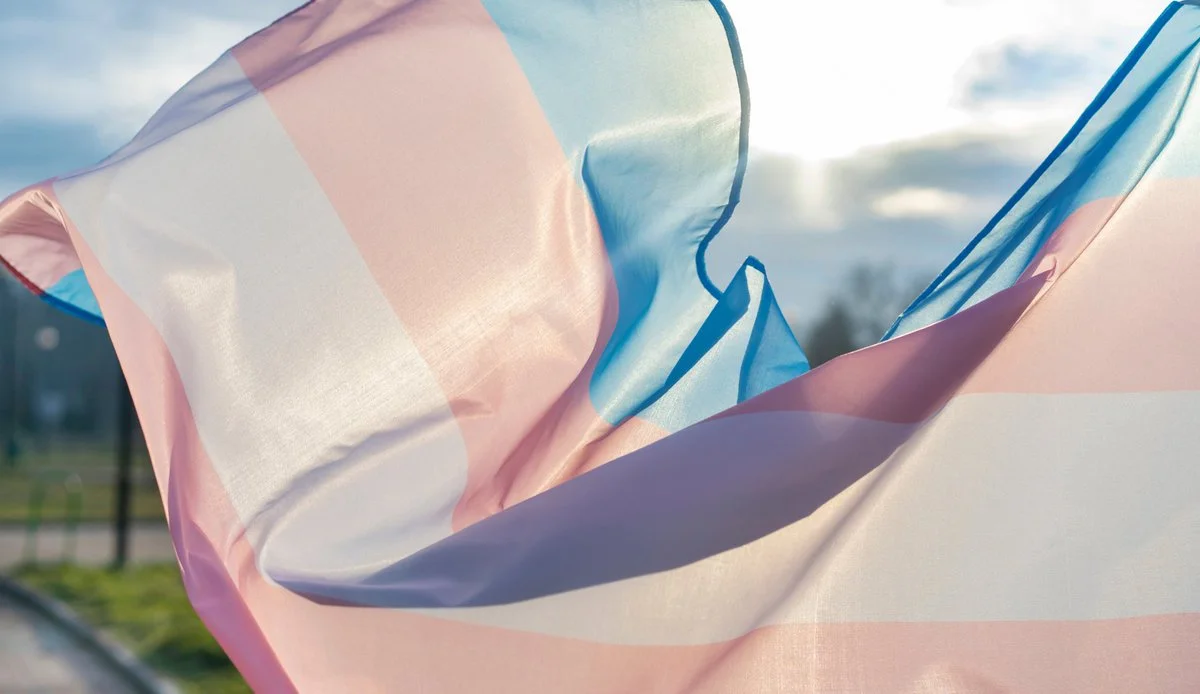
While sex workers and trans women in Taksim are frequently subjected to attacks, threats and harassment against their identities, Saçak Collective, the solidarity network of trans sex worker women, responded to this situation with a statement published on their social media accounts.

Saçak Collective, which defends the rights and solidarity of trans sex workers, issued a strong written statement against the recent violence, harassment and threats against trans women and sex workers in the Taksim area. Addressing the public through social media channels, the collective reiterated their demand: “Attacks, threats and harassment against sex worker women and trans women in Taksim must end!”

“Sex work is not a crime”

In the statement, it was pointed out that trans women and sex workers are targeted because of their identities and labor. It was stated that the targeting and rhetoric such as “We will erase you from here” was not a personal outburst of anger, but rather a clear threat of violence aimed at completely eradicating marginalized groups from the public sphere.

The collective reminded that their existence, sex work and taking part in public sphere cannot be criminalized in any way and gave the following message:

“We were on these streets yesterday and we are on these streets today. We will not be silent against any power that tries to make us invisible, to expel us from the streets, to scare and isolate us. Sex work is not a crime. Being transgender is not a crime. Existing in the public sphere is not a crime. The actual crime is attacking, threatening, harassing women and trans women and trying to erase them from the streets through violence.”

“We will increase solidarity against violence”

Stating that the right to use the streets cannot be left to the initiative of anyone, the collective announced that they will not take threats for granted, they will not leave violence uncovered and they will not allow them to break the bond between women.

The statement concluded with the following decisive statements:

“You will not silence sex workers. You will not erase trans women from the streets. You will not be able to separate us from each other. We will not be afraid, we will not retreat, we will not shut up. We will increase solidarity and organization against violence in every area we are in, particularly Taksim.”

“Framework Law” passed by parliament

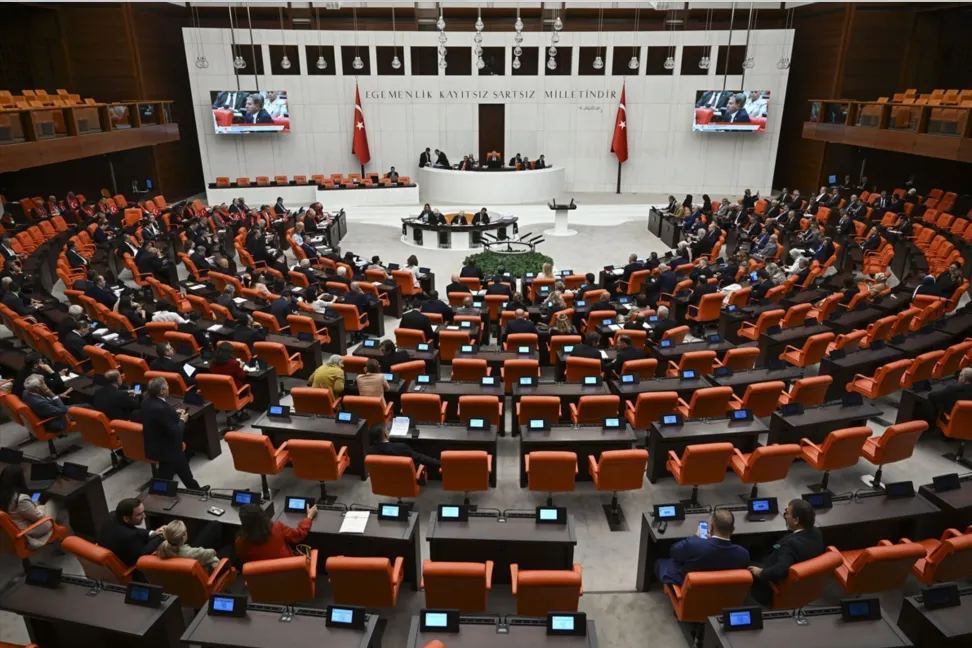
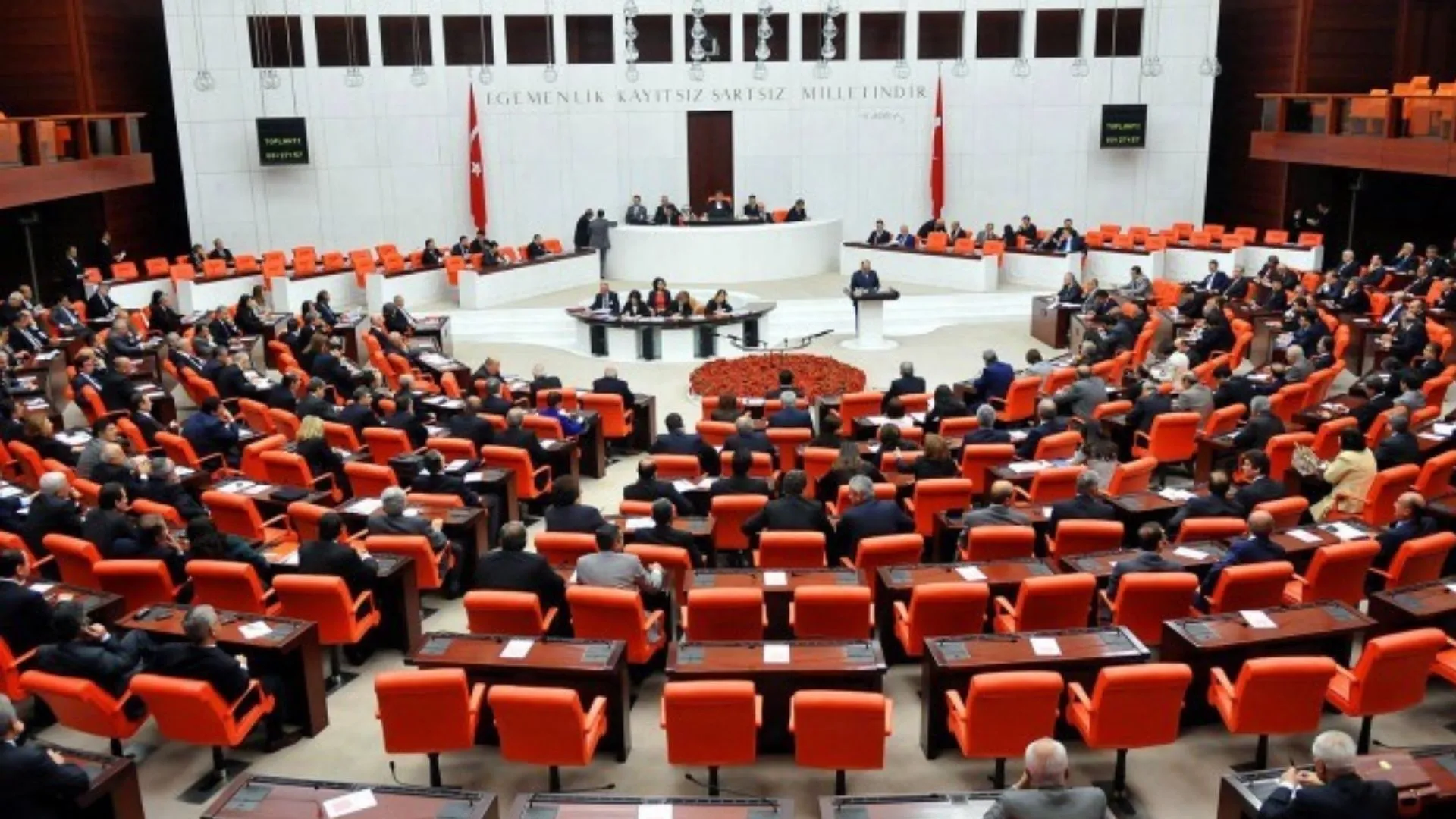
The bill, which aims to bring a 50-year conflict to a legal conclusion, sparked heated debates in the General Assembly of the Parliament. Following the vote, the bill was passed and became law.

Known to the public as the “Framework Law,” the “Draft Law on Strengthening National Solidarity and Social Integration”—which regulates the PKK’s disarmament and the legal status of PKK members—was passed by Parliament following a vote and became law. In the vote, which was conducted via electronic voting, 562 members of parliament cast their votes, with 468 voting in favor, 88 against, and 6 abstaining. Thus, the “Draft Law on Strengthening National Solidarity and Social Integration” passed the General Assembly of the Parliament and became law.

The General Assembly adjourned following the vote.

Debates on the legislation, known to the public as the “Framework Law,” began at 11:00 a.m.

In the General Assembly, the deputy group leaders of the various parties made statements regarding the bill. Bülent Kaya spoke on behalf of Yeni Yol, Turhan Çömez on behalf of the İYİ Party, Rahmi Aşkın Türeli on behalf of the CHP, Erkan Akçay on behalf of the MHP, Gülistan Kılıç Koçyiğit on behalf of the DEM Party, Murat Emir on behalf of the Yeni Party, and Abdulhamit Gül on behalf of the AKP.

The 12-article bill is expected to establish the legal framework for the new resolution process.

The “Draft Law on Strengthening National Solidarity and Social Integration”—known to the public as the “Framework Law”—which regulates the PKK’s disarmament and the legal status of PKK members, was adopted by the Grand National Assembly of Turkey (TBMM) Plenary following intense debates, and deliberations on its articles have begun.

In an electronic vote held in the General Assembly, the decision to proceed with the bill’s articles passed with 269 “Yes” votes against 28 “No” votes. While the ruling coalition (AKP and MHP) described the bill as “a historic state policy for a Turkey free of terrorism,” the İYİ Party strongly opposed it. The YENİ Party and the CHP, which announced they would vote “Yes” on the bill, noted that the process must be supported by steps toward democratization and justice. Thirty-three members of the YENİ Party parliamentary group declared they would vote “No.”

YENİ Party MPs who announced they will vote “No”

1. İzzet Akbulut

2. Hasan Öztürk

3. Sibel Suiçmez

4 Cemal Enginyurt

5 Süreyya Öneş Derici

6 Deniz Yavuzyılmaz

7 İbrahim Aslan

8 Hikmet Yalım Halıcı

9 Cumhur Uzun

10 Eylem Ertuğ Eryılmaz

11 Murat Çan

12 Servet Mullaoğlu

13 Salih Uzun

14 Uğur Bayraktutan

15 Şeref Arpacı

16 Murat Bakan

17 Seyit Torun

18 Mahmut Tanal

19 Fethi Açıkel

20 Elvan Işık Gezmiş

21 Melih Meriç

22 İsmail Atakan Ünver

23 Mehmet Tahtasız

24 Ümit Özlale

25 Mustafa Erdem

26 Ayşe Sibel Yanıkömeroğlu

27 Reşat Karagöz

28 Ayhan Barut

29 Barış Karadeniz

30 Fahri Özkan

31 Deniz Yücel

32 Seda Kaya Ösen

33 Ednan Arslan

Ekrem İmamoğlu, the detained Istanbul Metropolitan Municipality (İBB) Mayor, issued a statement through his lawyers regarding the “framework law.” Noting that Turkey is at “one of the most significant turning points in its history,” İmamoğlu said that peace, tranquility, brotherhood, democracy, and the rule of law must be strengthened.

Imamoğlu expressed his support for the decision made by Özgür Özel, Chairman of the New Party, during this process. Stating that he believes in “the new political path he has opened, his great struggle, and his leadership,” Imamoğlu said he supports “the exceptional resolve he has demonstrated through all his warnings.”

Imamoğlu said, “I stand behind the decision he made today.”

The DEM Party, meanwhile, described the law as “the first step toward resolving the conflict.”

Ş. Can Atalay, the elected MP for Hatay, sent a message from Silivri Prison emphasizing the importance of a nonviolent political environment, while Tunç Soyer noted that the law is a key to “ending the era of blood and tears.”

Chronology of the Day

11:37 – 13:55
Pre-Session and Lobby Traffic
Devlet Bahçeli, Chairman of the MHP who initiated the process, arrived at Parliament. In the lobby, DEM Party Co-Chairs Tülay Hatimoğulları and Tuncer Bakırhan, alongside Imralı Delegation members Pervin Buldan and Mithat Sancar, approached Bahçeli and shook hands. Prior to this, AKP and CHP Group Chairmen also greeted Bahçeli.
11:58 – 14:01
Initial Statements by Group Deputy Chairmen and İYİ Party’s Motion
Taking the floor at the beginning of the session, AKP Group Deputy Chairman Abdulhamit Gül defined the process as the “spirit of Gallipoli,” while Gülistan Kılıç Koçyiğit from the DEM Party stated, “The winner of peace will be 86 million people.” Representatives from CHP, YENİ Party, and Yeni Yol emphasized that laying down arms alone would not suffice without democratization. The İYİ Party submitted a group motion to prevent the start of deliberations on the grounds that the bill was unconstitutional. The motion, presented by İYİ Party’s Turhan Çömez with harsh criticism stating “You chose the day the Treaty of Sèvres was signed (August 10) to deliberate this bill that will pardon terrorists,” was rejected upon voting.
14:06
İYİ Party’s Fierce Opposition: ‘It Is a Major Uprising’
İYİ Party Chairman Müsavat Dervişoğlu was the figure who delivered the harshest reaction to the process from the podium. Arguing that the law aims to integrate PKK leaders into politics, Dervişoğlu confirmed they would vote ‘No’, stating: “No matter what anyone calls this process, it is a major uprising against our national identity and republic. Who marketed Öcalan as an acceptable political guru?”
15:56
DEM Party: ‘This Law Is Not a Concession, the Homeland Is Shared’
DEM Party Co-Chair Tuncer Bakırhan stated that the bill is the “first step in conflict resolution,” adding: “This bill is not a concession; it is neither victory nor defeat. We are not opening the integrity of the country to debate. If the Kurds wanted to secede, we would not be here. The homeland is shared.” Bakırhan noted that although the law has shortcomings, they support it, and the real step must be taken through democratization when Parliament opens.
16:07 – 16:38
YENİ Party and CHP: ‘We Will Not Stand in the Way of Peace’
YENİ Party Chairman Özgür Özel criticized the process being conducted behind closed doors and the lack of democratic steps such as trustee appointments and ECtHR rulings. However, he stated, “We will not close the door opened for laying down arms; we will vote ‘Yes’.” Özel granted his MPs a free vote based on the sensitivities of their provinces. Speaking on behalf of the CHP, İnan Alp Akgün and Oğuz Kaan Salıcı also confirmed that the CHP would vote ‘Yes’, saying, “The time has come to secure the Republic through democracy.”
18:01 – 18:03
Ruling Bloc (MHP, AKP): ‘This Is Not an Amnesty’
MHP Deputy Chairman Feti Yıldız emphasized that the bill is not an amnesty and does not alter ongoing investigations or the nature of offenses. He stated, “The goal of the process is the rule of law and the strengthening of the internal front.” AKP Group Chairman Abdullah Güler shared that the prepared report was drafted “without a third-party external observer, by the children of this land,” and that the sole objective is to ensure violence is never discussed again.

What had happened?

The bill had been debated for 18 hours in the Turkish Grand National Assembly’s Justice Committee.

The bill bears the signatures of 367 members of parliament, including representatives from the AKP, CHP, MHP, DEM Party, HÜDA PAR, the New Path Group, and the DSP.

During the discussions, which were not without controversy, the AKP and MHP argued that the bill was the “product of a historic consensus” and did not constitute an “amnesty.”

The CHP and the New Party, however, emphasized that the process lacked a democratic dimension. The New Path Group, meanwhile, stated that the measure constituted a “conditional general amnesty.”

Seat distribution in Parliament

AKP 277, New Party 91, DEM Party 56, MHP 46, CHP 45, Good Party 29, New Path Party 20, HÜDA PAR 4, Prosperity Party 4, TİP 3, Democratic Regions Party (DBP) 2, EMEP 2, Felicity Party, Democratic Left Party, and Democratic Party each hold 1 seat. Ten members of Parliament are independents.

Parliament Scoreboard: Framework Law Vote

nihaplus Special Infographic Desk • Detailed Breakdown by Party and MP
“IN FAVOR” (Yes)
AKP268
DEM Party55
MHP44
YENİ Party35
CHP29
Yeni Yol Group16
Independents7
HÜDA PAR4
TİP3
DBP2
EMEP2
DSP1
Felicity Party1
“AGAINST” (No)
YENİ Party54
İYİ Party29
CHP2
Independents1
Democrat Party1
ABSTAIN
New Welfare Party4
Yeni Yol Group3
DID NOT VOTE
CHP14
AKP9
YENİ Party2
MHP2
Independents2
DEM Party1
Yeni Yol Group1

Turkey Returns to Kirkuk: From a 10% Royalty in 1926 to a 15% Stake in 2026

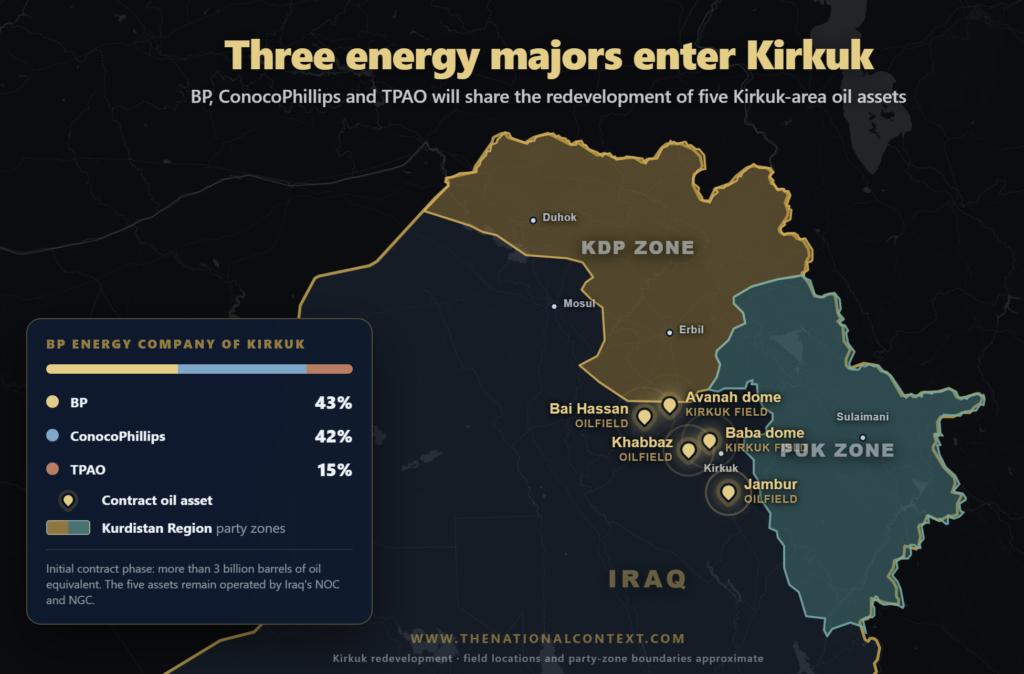
TPAO has taken a 15% stake in the BP vehicle redeveloping Kirkuk. According to The National Context, it marks Turkey’s return to a geography where a century ago it held only a royalty right; yet the share structure keeps Ankara’s seat well short of a steering wheel.

Photo: The National Context

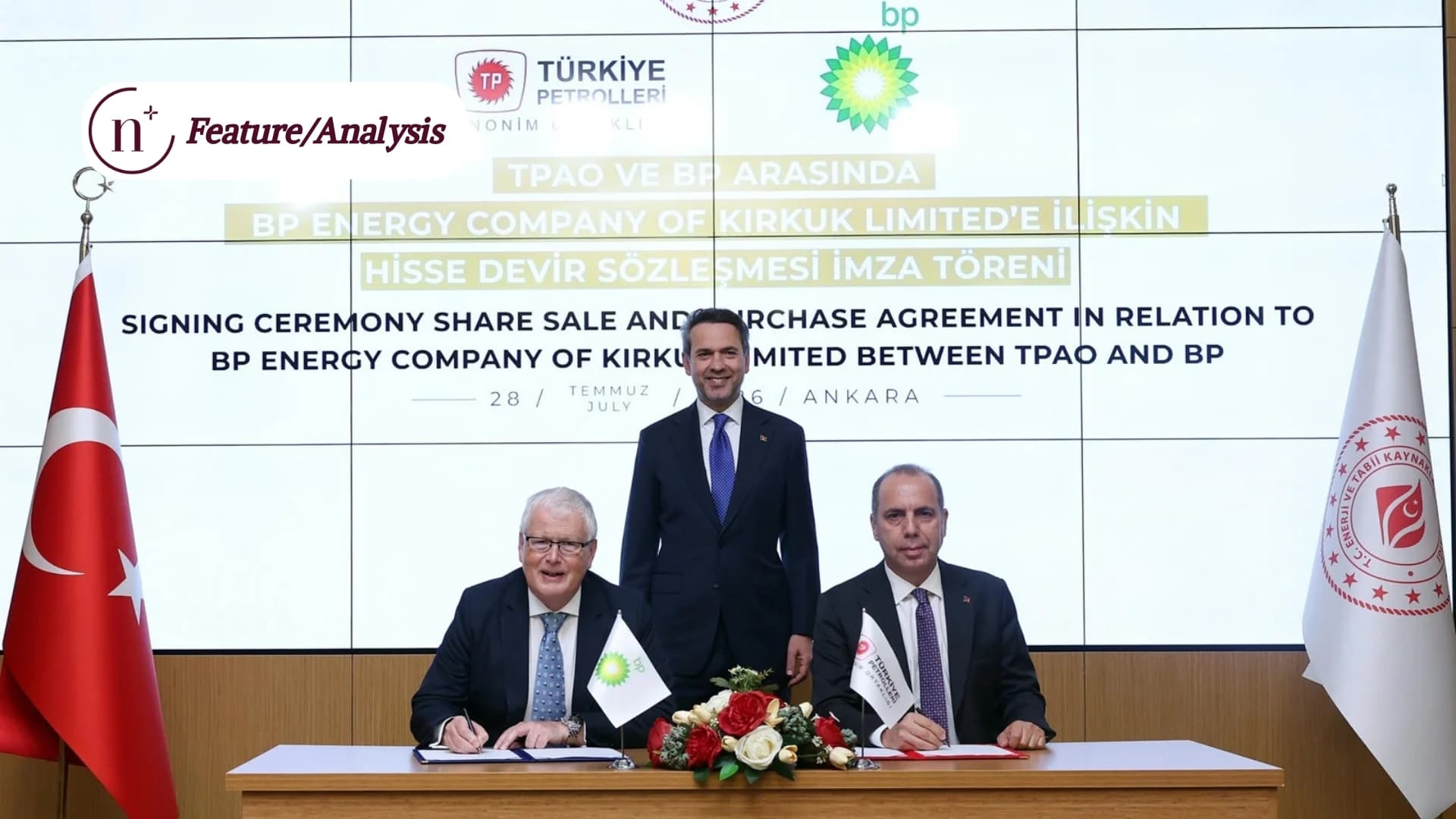
Turkey’s state oil company TPAO has acquired a 15% stake in BP Energy Company of Kirkuk Limited, the contractor vehicle for the redevelopment of the Kirkuk oil complex. An analysis published by The National Context describes this as the clearest commercial sign yet of Ankara’s return to a geography where it last held a formal economic interest a century ago.

The agreement was signed in Ankara by TPAO general manager Cem Erdem and BP upstream business development vice president Andrew McAuslan, in the presence of energy minister Alparslan Bayraktar, ahead of talks between President Recep Tayyip Erdoğan and Iraqi Prime Minister Ali al-Zaidi. It follows ConocoPhillips’s agreement earlier in the month to take a 42% interest in the same vehicle, concluded during al-Zaidi’s visit to Washington, and leaves BP with the remaining 43% and majority control.

The National Context states that the contract area covers the Baba and Avanah domes of the Kirkuk field together with Bai Hassan, Jambur and Khabbaz, with an initial gross recoverable resource above three billion barrels of oil equivalent. The transaction does not alter the contract framework: the fields remain Iraqi state property, North Oil Company and North Gas Company retain their operating roles, and the partners will book production and reserves according to the terms of the development and production contract. The signing came a day after the Iraq–Turkey crude oil pipeline agreement expired, with both governments stating that they now want a comprehensive energy cooperation agreement in its place.

Back to 1926

To measure the return, The National Context reaches back to the one earlier moment Turkey had money riding on this ground. Back then, the analysis notes, it wasn’t a business stake at all but a consolation prize for territory it had given up. The 1926 Ankara Treaty had Turkey accept the Brussels Line, which placed the old Mosul vilayet on the Iraqi side of the border. In exchange, Ankara was promised 10% of the oil royalties owed to the Iraqi government over a 25-year window, with a fallback option to trade the whole stream for a single £500,000 cheque. Crucially, that 10% bit only into royalties (not production, not exports, not profits) and it bought Turkey no piece of the Turkish Petroleum Company, an outfit the analysis describes as Turkish in name and nothing else.

The cash didn’t even start moving until Baba Gurgur was discovered. The first payment landed in 1931: Iraq collected somewhere around £400,000 in royalties and passed roughly £40,000 up to Ankara, a figure that had climbed to about £223,000 by 1939. Turkish budget records show the 10% payments still running through 1952, with one last, smaller sum in 1954, which makes the frequently repeated claim that Turkey just cashed out for £500,000 either wrong or only half the tale. The math also limits how much the entitlement was ever worth: 10% of royalties, themselves only a sliver of gross sales, left Ankara with something nearer 1% of what the oil was really worth. Lord Curzon’s instinct that the territory mattered was vindicated within a year of the settlement, when Kirkuk turned out to hold one of the largest fields in the world.

Zoom out, the analysis suggests, and the real backdrop is the regional economy that the post-1918 lines carved up. It leans on Sarah Shields’s work on nineteenth-century Mosul, which shows a city whose merchant class looked outward along old, dense regional ties (toward Aleppo, Baghdad, Damascus and the Anatolian interior) rather than toward Europe or Istanbul, with only a small share of trade by value ever leaving that orbit. Aleppo connected the interior to Mediterranean shipping through Alexandretta, and the Baghdad Railway was an unfinished attempt to bind Anatolia, northern Syria and Mesopotamia through modern infrastructure. Kirkuk didn’t enter its oil age until 1927 so, the piece argues, today’s petroleum arrangements are being draped over a map that trade, caravans and railways had already knitted together long before.

The Fulcrum Doctrine

The National Context files the TPAO stake under what it calls the Fulcrum Doctrine: a setup in which Washington calls the strategic shots across Iraq, Syria and Turkey but hands the actual work to regional players, using energy and infrastructure as the levers.

Source: The National Context

The diplomatic architecture, it argues, tells the same story. Tom Barrack serves simultaneously as US ambassador in Ankara and as special envoy for Syria and for Iraq, and he described the three countries on taking the expanded role as the strategic fulcrum on which regional stability rests, requiring a single consistent American point of contact. Syria and Iraq were bolted onto the portfolio of the ambassador resident in Turkey, not the other way round, which makes Ankara the administrative hub of Washington’s northern Middle East. The economic side lines up with the diplomacy. June’s US–Iraq joint statement backed reviving the Kirkuk–Baniyas line out to the Mediterranean, and the Iraq–Syria pipeline deal inked in Washington this month puts a US-led consortium in charge of the engineering and the financing. The point of both the northern and western corridors, the piece says, is the same: to loosen Iraq’s reliance on the Strait of Hormuz.

Inside that frame, the analysis reads the Kirkuk line-up as a neatly parcelled set of jobs. Washington holds the strategic umbrella; the American and British firms bring the capital and the corporate machinery; Turkey brings the ground, the pipes and the regional access; and Iraq keeps the sovereignty and owns the oil. The 85% that BP and ConocoPhillips split between them also sets the hard ceiling on how far Turkey can go. TPAO gets a seat, the piece argues, because Turkish soil, ports and pipelines make Ankara the northern gateway nobody can route around. Yet, the share math is built so that a seat never becomes a steering wheel. That fits its longer-running case that Turkish leverage in the region runs through corridors, host geography and rights of approval, not through owning the outcome.

1926 against 2026

The analysis suggests that the comparison with 1926 should be handled with the same precision. A royalty cut and a block of company equity are different legal instruments, so reading “10% to 15%” as a straight upgrade misses the point. The jump means nothing in pure financial terms. According to The National Context, what actually repeats is the structure: In 1926, a bargain drawn up in London turned a Turkish land claim into a short-lived royalty trickle from outside the operating company, while later American pressure bought US firms a permanent 23.75% inside it.

In 2026, the same three ingredients (a Turkish state interest, British oil capital and Kirkuk crude) are stirred back into one vehicle, with BP presents the project as a return to the field its predecessor helped discover at Baba Gurgur. The one thing that’s genuinely moved, the piece concludes, is where Turkey stands in relation to the consortium: in 1926 it took a slice of Baghdad’s royalties from the outside, in 2026 it holds shares inside the contractor within an arrangement that remains Anglo-American in design and Iraqi in sovereignty. The borders drawn after 1918 are unchanged, while the energy, security and commercial systems that cross them increasingly operate as one connected space, with Turkey positioned as its northern hub.

“Framework Law” to consist of 12 articles

The articles of the “framework law” prepared within the scope of the Peace and Democratic Society Process have been announced. In the proposal expected to be passed into law within a week, it was observed that Abdullah Öcalan and those who received life or aggravated life sentences before 2005 were excluded from the scope.

The articles included in the draft “framework law,” expected to be submitted to the Grand National Assembly of Turkey (TBMM) under the Peace and Democratic Society Process, were disclosed. The regulations of the bill titled “Law on the Strengthening of National Solidarity and Social Integration” were announced in a joint press conference held by the ruling Justice and Development Party (AKP) and its nationalist ally, the Nationalist Movement Party (MHP).

AKP Group Chairman Abdullah Güler, AKP Deputy Chairman Abdülhamit Gül, and MHP Vice President Feti Yıldız also attended the press conference held at the Parliament. Güler announced the articles of the bill titled “Law on the Strengthening of National Solidarity and Social Integration” submitted to the Speaker’s Office of the Parliament. Stating that the “Strengthening of National Solidarity and Social Integration” bill consists of 12 articles, including the execution and enforcement articles, Güler said: “Necessary regulations will be made as needed. Furthermore, interviews will be held in İmralı with individuals such as academics and journalists, subject to a certain discipline and procedure.”

According to the articles in the proposal, those who received aggravated life sentences before 2005 or crimes leading to an aggravated life sentence obligation will be kept outside the scope of the law. In this context, the fact that Kurdish People’s Leader Abdullah Öcalan, who is the interlocutor of the process, was not included in the framework law sparked public reaction.

Kartal: “The current arrangement is not an appropriate decision”

Speaking to Mesopotamia Agency, Kurdistan People’s Congress (KONGRA-GEL) Co-Chair Remzi Kartal recalled Nationalist Movement Party (MHP) Chairman Devlet Bahçeli’s rhetoric on the “right to hope,” saying: “If Leader Apo is not effective in this process, if he does not personally make a direct call, this process will not progress. The primary metric in the state’s approach to the Kurdish issue—for both the Freedom Movement and the people—is the state’s approach to Leader Apo. Leader Apo’s status, living conditions, and working conditions are the decisive metrics. If there is no reassuring development on this matter, and if familiar security policies are still being based upon, this situation will not build trust either in the Freedom Movement or among the people.”

In his evaluations regarding the process this morning to Sinan Burhan, Editor-in-Chief of Millet News Agency, MHP Chairman Devlet Bahçeli stated that the “right to hope” should be granted to Kurdish People’s Leader Abdullah Öcalan:

“Selahattin Demirtaş should return to his home, Ahmets to their duties, and Öcalan to the ‘right to hope.’ Turkey must find peace. Our goal is for Turkey and the region to attain peace.”

Kartal continued his remarks as follows:

“It may be handled this way at the initial stage by taking public sensitivities into account. However, this must definitely be resolved through other laws to be enacted and other steps to be taken in the coming period. The authorized bodies of the state and the Parliament need to be very clear on this matter. As the people and the movement, this is how we view it. Because if there is truly no development on this issue, returns to Turkey and participation in the legal-democratic process may face serious problems. Therefore, we do not view the current arrangement as an appropriate decision.”

The draft “framework law,” submitted to the Speaker’s Office of the Parliament and shared with the public, is expected to become law within a week.

CHP and HÜDAPAR also signed

AKP, MHP, DEM Party, HÜDA-PAR, and CHP signed the proposal expected to become law within a week. The bill will come before the Parliamentary Justice Commission on Friday, August 7, and discussions will begin. If accepted in the commission, the proposal will begin to be debated in the General Assembly of the Parliament.

“This law is a first step”

Following the signing meeting held in the DEM Party Parliament group room, DEM Party Co-Chairs Tülay Hatimoğulları and Tuncer Bakırhan held a press conference. Speaking first, Bakırhan said: “We had criticisms regarding the law. The law had shortcomings. Despite all this, we will grow this first step and socialize it. We will try to take it to the 86 million. In addition, we will defend and support to the end every democratic step, word, practice, and action that prevents the reproduction of conflict, primarily in the Parliament.”

Speaking after Bakırhan, Tülay Hatimoğulları stated that as DEM Party, they wanted this law to have the nature of a “core law”, adding: “The Kurdish issue is not a terrorism issue. We have always underlined this. The Kurdish issue is an economic issue. It is a social, political, and societal issue. Therefore, by handling this issue and this matter in this way, we consider this stage important in terms of the emergence of new laws that will pave the way for democratization while negotiation and dialogue continue in the upcoming process.”

12 years after the Yazidi Genocide: 40 percent of the abducted Yazidis remains unknown

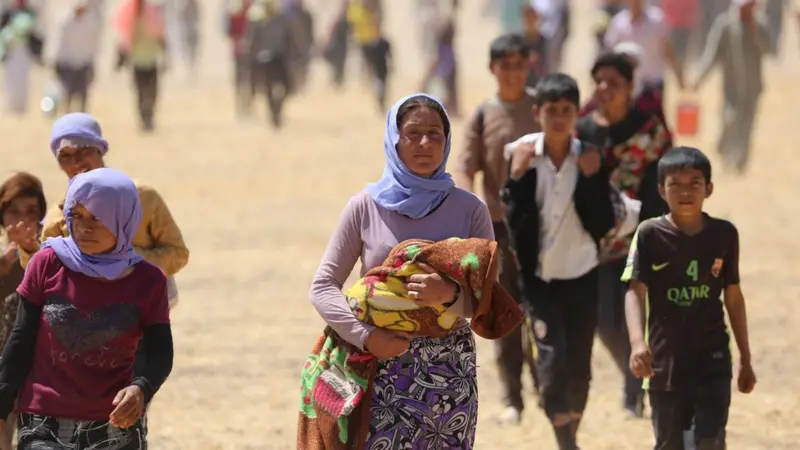
Twelve years have passed since ISIS, after capturing Mosul on August 3, 2014, turned its attention to Sinjar (Shingal), massacring thousands of Yazidis and abducting Yazidi women and children. According to data from May 4, 2026, 3,595 Yazidis abducted by ISIS have been rescued, while the fate of approximately 2,500 remains unknown.

It has been 12 years since the Islamic State of Iraq and Syria (ISIS) attacked Shingal, home to approximately 550,000 Yazidis, on August 3, 2014. Thousands of civilians were executed on the spot, tens of thousands were displaced, and Yazidi women and girls were abducted and raped. The Yazidis, who had endured 72 massacres by 2014, describe ISIS’s 2014 attacks and massacres against them as the “73rd ferman.”

Yazidis who fled the region following the attack sought refuge in camps in many areas, including Turkey, Syria, and the Kurdistan Regional Government of Iraq. According to a report by Rûdaw, approximately 2,500 homes have been built so far at the foot of Mount Sinjar (Shingal) for Yazidis who wish to build their homes there rather than in the valley. Although tens of thousands of Yazidis have returned to Shingal and the surrounding area, many still continue to live in camps far from their homeland.

SINJAR / YAZIDI GENOCIDE — IN DATA

12-Year Toll

According to official data from the Office for Rescuing Abducted Yazidis, the fate of 2,500 out of 6,417 Yazidis abducted in Shingal by ISIS remains unknown.

Attack date: August 3, 2014 Latest data update: May 4, 2026

6,417

Total Abducted Yazidis

3,595

Rescued from Captivity

~2,500

Fate Still Unknown

Current Status of the 6,417 Abducted Individuals

56%
39%
5%
Rescued (3,595) Fate unknown (~2,500) Other cases known to be killed/missing
Source: Official data from the Dohuk-based “Office for Rescuing Abducted Yazidis” (as of May 4, 2026). Percentage calculations were made based on the total number of abducted individuals (6,417).

Documents related to the Yazidis are kept on file in the archives of the United Nations (UN) ISIS Crimes Investigation Team (UNITAD)—established by United Nations Security Council Resolution 2379—as well as in the archives of the Ministry of the Interior of the Kurdistan Regional Government of Iraq and the Office for the Rescue of Those Abducted by ISIS.

In the Yazidi faith, the term “ferman” is used to describe the waves of massacres and forced displacement they have faced throughout history, effectively serving as a “death warrant.” The Yazidis say that, up until 2014, they had been subjected to similar persecution and massacres 72 times throughout history. For this reason, ISIS’s August 2014 attack on Shingal is referred to in various sources—and in the words of the Yazidis—as the “73rd Ferman.”

The Shingal Defense Forces

On June 10, 2014, ISIS seized Mosul without encountering any resistance. Having reinforced itself with military supplies left behind by the Iraqi army, it targeted the villages south of Mount Sinjar—where the Yazidis lived—on the night of August 3 of the same year. During the attack, thousands of Yazidis were killed, and women and children were taken captive and sold in slave markets; according to current data, 93 mass graves have been identified in Shingal and the surrounding area to date.

To rescue the hundreds of thousands of Yazidis trapped on Mount Sinjar as a result of ISIS’s attacks, members of the People’s Defense Forces (HPG) went to the region to fight, leading to the rescue of many Yazidis. Tens of thousands of Yazidis were able to escape thanks to a corridor opened by a 12-member HPG unit, after days of fighting, HPG fighters repelled ISIS and succeeded in evacuating the Yazidis to northern and eastern Syria.

The YBŞ (Yekîneyên Berxwedana Şengalê / Şengal Resistance Units) was founded by Yazidi youth within the same month after they were resettled in safe zones. During the Campaign to Liberate Shingal, women within the YBŞ announced at a conference in 2015 that they had organized themselves under the name YPJ-Şengal (Yekîneyên Parastina Jin ê Şengalê / Shingal Women’s Protection Units) to empower themselves.

Yazidis remaining in camps in Turkey

According to a report titled “Access to Services for Yazidis Living in Mardin and Batman,” published by the Hayata Destek Association in May 2020, 22,062 Yazidis sought refuge in Turkey between August and October 2014; following the continuation of ISIS attacks, this number exceeded 30,000. The report’s data indicates that the Yazidis settled either with relatives in Şırnak (5,675 people), Batman (2,857 people), Diyarbakır (5,360 people), Siirt (1,686 people), and Mardin (5,471 people), or in camps established by municipalities.

Following the appointment of a trustee to the Diyarbakır Municipality in 2016 and the subsequent closure of the camp in December 2016, some Yazidis returned to Shingal or Iraq, while others went to Germany, as a result, there are currently only a small number of Yazidis in Turkey.

The European Parliament had called it “genocide”

The European Parliament was the first to recognize ISIS’s attacks on the Yazidis as genocide in February 2016. UNITAD, established by a UN Security Council resolution, explicitly determined that the crimes committed in Shingal constitute the most serious international crimes, including genocide. Nearly 20 countries, including the United States, Ireland, Canada, Luxembourg, the Netherlands, Belgium, Germany, Switzerland, Armenia, the United Kingdom, and Portugal, have recognized the Yazidi genocide.

However, the “73rd ferman” has not yet been recognized as genocide by any international criminal court.

The Çilê Havînê festival before the attack

In the Yazidi faith, the 40-day fasting period that begins on June 25 ends on August 1. During this period, which is regarded as a symbol of patience, spiritual purification, and gratitude, the Yazidis devote themselves to worship by abstaining from food and drink from dawn until sunset during the hottest days of the year. This fasting period is known as Çilê Havînê (Summer Fast) in the Yazidi calendar. Another 40-day fasting period is Çilê Zivistanê (Winter Fast), observed during the winter months.

The festival celebrated on August 2, following the end of Çilê Havînê, was held just one day before August 3, 2014—the day ISIS launched its attack on Shingal.

Privacy overview

Niha+ respects your digital footprint within the framework of independent journalism principles and reader privacy. While browsing our site, cookies are used to provide you with an uninterrupted reading experience and to secure the technical infrastructure of our platform. You can manage your cookie preferences as you wish by using the menu on the left. For detailed information on how your personal data is processed, please review our Privacy Agreement and KVKK Clarification Text.