
“Framework Law” passed by parliament

The bill, which aims to bring a 50-year conflict to a legal conclusion, sparked heated debates in the General Assembly of the Parliament. Following the vote, the bill was passed and became law.
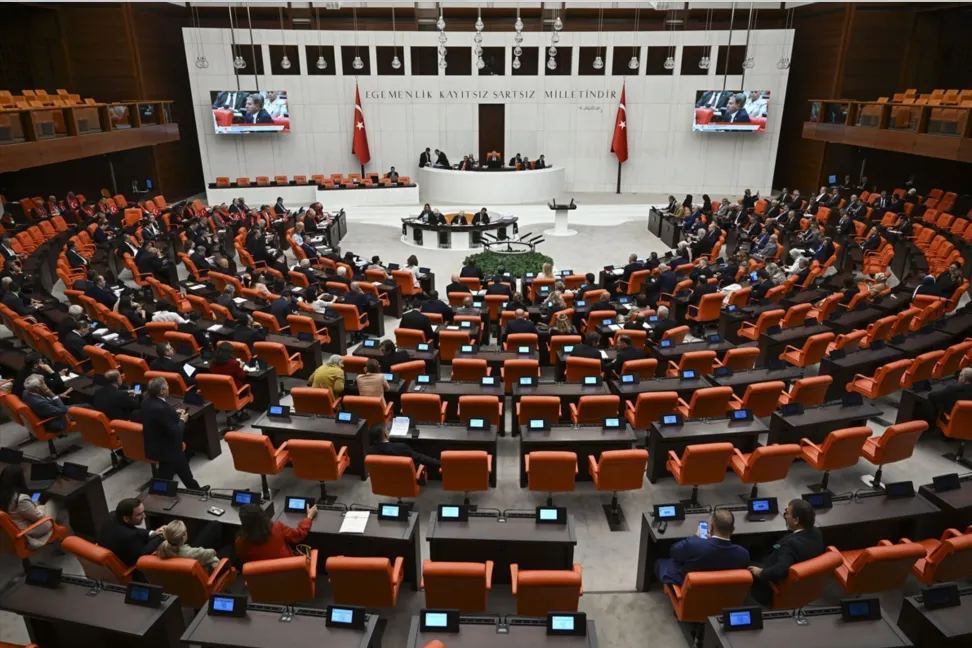
Known to the public as the “Framework Law,” the “Draft Law on Strengthening National Solidarity and Social Integration”—which regulates the PKK’s disarmament and the legal status of PKK members—was passed by Parliament following a vote and became law. In the vote, which was conducted via electronic voting, 562 members of parliament cast their votes, with 468 voting in favor, 88 against, and 6 abstaining. Thus, the “Draft Law on Strengthening National Solidarity and Social Integration” passed the General Assembly of the Parliament and became law.

The General Assembly adjourned following the vote.

Debates on the legislation, known to the public as the “Framework Law,” began at 11:00 a.m.

In the General Assembly, the deputy group leaders of the various parties made statements regarding the bill. Bülent Kaya spoke on behalf of Yeni Yol, Turhan Çömez on behalf of the İYİ Party, Rahmi Aşkın Türeli on behalf of the CHP, Erkan Akçay on behalf of the MHP, Gülistan Kılıç Koçyiğit on behalf of the DEM Party, Murat Emir on behalf of the Yeni Party, and Abdulhamit Gül on behalf of the AKP.

The 12-article bill is expected to establish the legal framework for the new resolution process.

The “Draft Law on Strengthening National Solidarity and Social Integration”—known to the public as the “Framework Law”—which regulates the PKK’s disarmament and the legal status of PKK members, was adopted by the Grand National Assembly of Turkey (TBMM) Plenary following intense debates, and deliberations on its articles have begun.

In an electronic vote held in the General Assembly, the decision to proceed with the bill’s articles passed with 269 “Yes” votes against 28 “No” votes. While the ruling coalition (AKP and MHP) described the bill as “a historic state policy for a Turkey free of terrorism,” the İYİ Party strongly opposed it. The YENİ Party and the CHP, which announced they would vote “Yes” on the bill, noted that the process must be supported by steps toward democratization and justice. Thirty-three members of the YENİ Party parliamentary group declared they would vote “No.”

YENİ Party MPs who announced they will vote “No”

1. İzzet Akbulut

2. Hasan Öztürk

3. Sibel Suiçmez

4 Cemal Enginyurt

5 Süreyya Öneş Derici

6 Deniz Yavuzyılmaz

7 İbrahim Aslan

8 Hikmet Yalım Halıcı

9 Cumhur Uzun

10 Eylem Ertuğ Eryılmaz

11 Murat Çan

12 Servet Mullaoğlu

13 Salih Uzun

14 Uğur Bayraktutan

15 Şeref Arpacı

16 Murat Bakan

17 Seyit Torun

18 Mahmut Tanal

19 Fethi Açıkel

20 Elvan Işık Gezmiş

21 Melih Meriç

22 İsmail Atakan Ünver

23 Mehmet Tahtasız

24 Ümit Özlale

25 Mustafa Erdem

26 Ayşe Sibel Yanıkömeroğlu

27 Reşat Karagöz

28 Ayhan Barut

29 Barış Karadeniz

30 Fahri Özkan

31 Deniz Yücel

32 Seda Kaya Ösen

33 Ednan Arslan

Ekrem İmamoğlu, the detained Istanbul Metropolitan Municipality (İBB) Mayor, issued a statement through his lawyers regarding the “framework law.” Noting that Turkey is at “one of the most significant turning points in its history,” İmamoğlu said that peace, tranquility, brotherhood, democracy, and the rule of law must be strengthened.

Imamoğlu expressed his support for the decision made by Özgür Özel, Chairman of the New Party, during this process. Stating that he believes in “the new political path he has opened, his great struggle, and his leadership,” Imamoğlu said he supports “the exceptional resolve he has demonstrated through all his warnings.”

Imamoğlu said, “I stand behind the decision he made today.”

The DEM Party, meanwhile, described the law as “the first step toward resolving the conflict.”

Ş. Can Atalay, the elected MP for Hatay, sent a message from Silivri Prison emphasizing the importance of a nonviolent political environment, while Tunç Soyer noted that the law is a key to “ending the era of blood and tears.”

Chronology of the Day

11:37 – 13:55
Pre-Session and Lobby Traffic
Devlet Bahçeli, Chairman of the MHP who initiated the process, arrived at Parliament. In the lobby, DEM Party Co-Chairs Tülay Hatimoğulları and Tuncer Bakırhan, alongside Imralı Delegation members Pervin Buldan and Mithat Sancar, approached Bahçeli and shook hands. Prior to this, AKP and CHP Group Chairmen also greeted Bahçeli.
11:58 – 14:01
Initial Statements by Group Deputy Chairmen and İYİ Party’s Motion
Taking the floor at the beginning of the session, AKP Group Deputy Chairman Abdulhamit Gül defined the process as the “spirit of Gallipoli,” while Gülistan Kılıç Koçyiğit from the DEM Party stated, “The winner of peace will be 86 million people.” Representatives from CHP, YENİ Party, and Yeni Yol emphasized that laying down arms alone would not suffice without democratization. The İYİ Party submitted a group motion to prevent the start of deliberations on the grounds that the bill was unconstitutional. The motion, presented by İYİ Party’s Turhan Çömez with harsh criticism stating “You chose the day the Treaty of Sèvres was signed (August 10) to deliberate this bill that will pardon terrorists,” was rejected upon voting.
14:06
İYİ Party’s Fierce Opposition: ‘It Is a Major Uprising’
İYİ Party Chairman Müsavat Dervişoğlu was the figure who delivered the harshest reaction to the process from the podium. Arguing that the law aims to integrate PKK leaders into politics, Dervişoğlu confirmed they would vote ‘No’, stating: “No matter what anyone calls this process, it is a major uprising against our national identity and republic. Who marketed Öcalan as an acceptable political guru?”
15:56
DEM Party: ‘This Law Is Not a Concession, the Homeland Is Shared’
DEM Party Co-Chair Tuncer Bakırhan stated that the bill is the “first step in conflict resolution,” adding: “This bill is not a concession; it is neither victory nor defeat. We are not opening the integrity of the country to debate. If the Kurds wanted to secede, we would not be here. The homeland is shared.” Bakırhan noted that although the law has shortcomings, they support it, and the real step must be taken through democratization when Parliament opens.
16:07 – 16:38
YENİ Party and CHP: ‘We Will Not Stand in the Way of Peace’
YENİ Party Chairman Özgür Özel criticized the process being conducted behind closed doors and the lack of democratic steps such as trustee appointments and ECtHR rulings. However, he stated, “We will not close the door opened for laying down arms; we will vote ‘Yes’.” Özel granted his MPs a free vote based on the sensitivities of their provinces. Speaking on behalf of the CHP, İnan Alp Akgün and Oğuz Kaan Salıcı also confirmed that the CHP would vote ‘Yes’, saying, “The time has come to secure the Republic through democracy.”
18:01 – 18:03
Ruling Bloc (MHP, AKP): ‘This Is Not an Amnesty’
MHP Deputy Chairman Feti Yıldız emphasized that the bill is not an amnesty and does not alter ongoing investigations or the nature of offenses. He stated, “The goal of the process is the rule of law and the strengthening of the internal front.” AKP Group Chairman Abdullah Güler shared that the prepared report was drafted “without a third-party external observer, by the children of this land,” and that the sole objective is to ensure violence is never discussed again.

What had happened?

The bill had been debated for 18 hours in the Turkish Grand National Assembly’s Justice Committee.

The bill bears the signatures of 367 members of parliament, including representatives from the AKP, CHP, MHP, DEM Party, HÜDA PAR, the New Path Group, and the DSP.

During the discussions, which were not without controversy, the AKP and MHP argued that the bill was the “product of a historic consensus” and did not constitute an “amnesty.”

The CHP and the New Party, however, emphasized that the process lacked a democratic dimension. The New Path Group, meanwhile, stated that the measure constituted a “conditional general amnesty.”

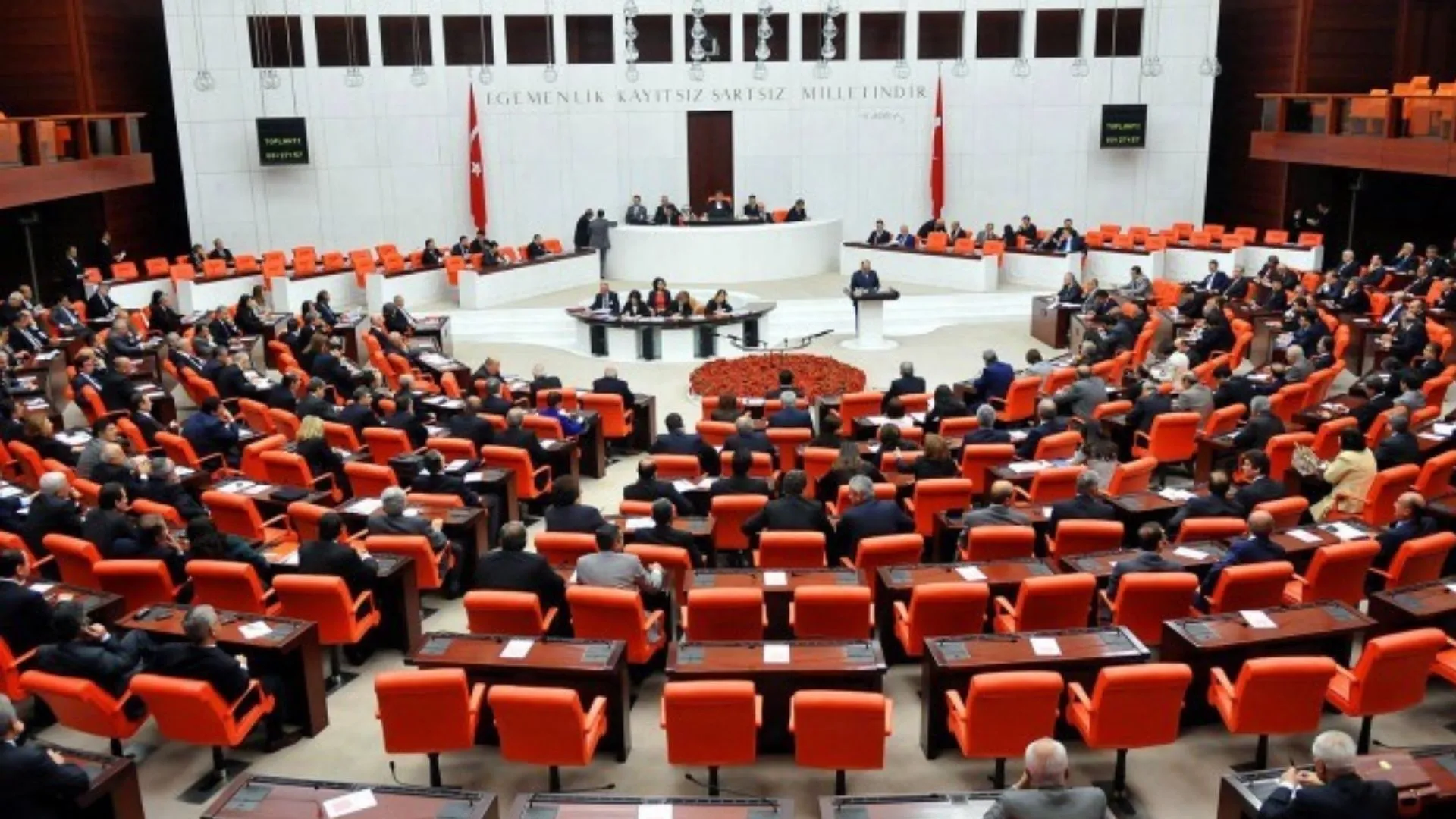
Seat distribution in Parliament

AKP 277, New Party 91, DEM Party 56, MHP 46, CHP 45, Good Party 29, New Path Party 20, HÜDA PAR 4, Prosperity Party 4, TİP 3, Democratic Regions Party (DBP) 2, EMEP 2, Felicity Party, Democratic Left Party, and Democratic Party each hold 1 seat. Ten members of Parliament are independents.
Parliament Scoreboard: Framework Law Vote

nihaplus Special Infographic Desk • Detailed Breakdown by Party and MP
“IN FAVOR” (Yes)
AKP268
DEM Party55
MHP44
YENİ Party35
CHP29
Yeni Yol Group16
Independents7
HÜDA PAR4
TİP3
DBP2
EMEP2
DSP1
Felicity Party1
“AGAINST” (No)
YENİ Party54
İYİ Party29
CHP2
Independents1
Democrat Party1
ABSTAIN
New Welfare Party4
Yeni Yol Group3
DID NOT VOTE
CHP14
AKP9
YENİ Party2
MHP2
Independents2
DEM Party1
Yeni Yol Group1

“Framework Law” to consist of 12 articles

The articles of the “framework law” prepared within the scope of the Peace and Democratic Society Process have been announced. In the proposal expected to be passed into law within a week, it was observed that Abdullah Öcalan and those who received life or aggravated life sentences before 2005 were excluded from the scope.

The articles included in the draft “framework law,” expected to be submitted to the Grand National Assembly of Turkey (TBMM) under the Peace and Democratic Society Process, were disclosed. The regulations of the bill titled “Law on the Strengthening of National Solidarity and Social Integration” were announced in a joint press conference held by the ruling Justice and Development Party (AKP) and its nationalist ally, the Nationalist Movement Party (MHP).

AKP Group Chairman Abdullah Güler, AKP Deputy Chairman Abdülhamit Gül, and MHP Vice President Feti Yıldız also attended the press conference held at the Parliament. Güler announced the articles of the bill titled “Law on the Strengthening of National Solidarity and Social Integration” submitted to the Speaker’s Office of the Parliament. Stating that the “Strengthening of National Solidarity and Social Integration” bill consists of 12 articles, including the execution and enforcement articles, Güler said: “Necessary regulations will be made as needed. Furthermore, interviews will be held in İmralı with individuals such as academics and journalists, subject to a certain discipline and procedure.”

According to the articles in the proposal, those who received aggravated life sentences before 2005 or crimes leading to an aggravated life sentence obligation will be kept outside the scope of the law. In this context, the fact that Kurdish People’s Leader Abdullah Öcalan, who is the interlocutor of the process, was not included in the framework law sparked public reaction.

Kartal: “The current arrangement is not an appropriate decision”

Speaking to Mesopotamia Agency, Kurdistan People’s Congress (KONGRA-GEL) Co-Chair Remzi Kartal recalled Nationalist Movement Party (MHP) Chairman Devlet Bahçeli’s rhetoric on the “right to hope,” saying: “If Leader Apo is not effective in this process, if he does not personally make a direct call, this process will not progress. The primary metric in the state’s approach to the Kurdish issue—for both the Freedom Movement and the people—is the state’s approach to Leader Apo. Leader Apo’s status, living conditions, and working conditions are the decisive metrics. If there is no reassuring development on this matter, and if familiar security policies are still being based upon, this situation will not build trust either in the Freedom Movement or among the people.”

In his evaluations regarding the process this morning to Sinan Burhan, Editor-in-Chief of Millet News Agency, MHP Chairman Devlet Bahçeli stated that the “right to hope” should be granted to Kurdish People’s Leader Abdullah Öcalan:

“Selahattin Demirtaş should return to his home, Ahmets to their duties, and Öcalan to the ‘right to hope.’ Turkey must find peace. Our goal is for Turkey and the region to attain peace.”

Kartal continued his remarks as follows:

“It may be handled this way at the initial stage by taking public sensitivities into account. However, this must definitely be resolved through other laws to be enacted and other steps to be taken in the coming period. The authorized bodies of the state and the Parliament need to be very clear on this matter. As the people and the movement, this is how we view it. Because if there is truly no development on this issue, returns to Turkey and participation in the legal-democratic process may face serious problems. Therefore, we do not view the current arrangement as an appropriate decision.”

The draft “framework law,” submitted to the Speaker’s Office of the Parliament and shared with the public, is expected to become law within a week.

CHP and HÜDAPAR also signed

AKP, MHP, DEM Party, HÜDA-PAR, and CHP signed the proposal expected to become law within a week. The bill will come before the Parliamentary Justice Commission on Friday, August 7, and discussions will begin. If accepted in the commission, the proposal will begin to be debated in the General Assembly of the Parliament.

“This law is a first step”

Following the signing meeting held in the DEM Party Parliament group room, DEM Party Co-Chairs Tülay Hatimoğulları and Tuncer Bakırhan held a press conference. Speaking first, Bakırhan said: “We had criticisms regarding the law. The law had shortcomings. Despite all this, we will grow this first step and socialize it. We will try to take it to the 86 million. In addition, we will defend and support to the end every democratic step, word, practice, and action that prevents the reproduction of conflict, primarily in the Parliament.”

Speaking after Bakırhan, Tülay Hatimoğulları stated that as DEM Party, they wanted this law to have the nature of a “core law”, adding: “The Kurdish issue is not a terrorism issue. We have always underlined this. The Kurdish issue is an economic issue. It is a social, political, and societal issue. Therefore, by handling this issue and this matter in this way, we consider this stage important in terms of the emergence of new laws that will pave the way for democratization while negotiation and dialogue continue in the upcoming process.”

Privacy overview

Niha+ respects your digital footprint within the framework of independent journalism principles and reader privacy. While browsing our site, cookies are used to provide you with an uninterrupted reading experience and to secure the technical infrastructure of our platform. You can manage your cookie preferences as you wish by using the menu on the left. For detailed information on how your personal data is processed, please review our Privacy Agreement and KVKK Clarification Text.