Afghan women’s rights defender Laleh Osmany said the chanting of “Woman, Life, Freedom” during the protests in Herat reflects “a deep, transnational solidarity among women rooted in a shared cultural sphere, as well as their high awareness of their fundamental rights.”
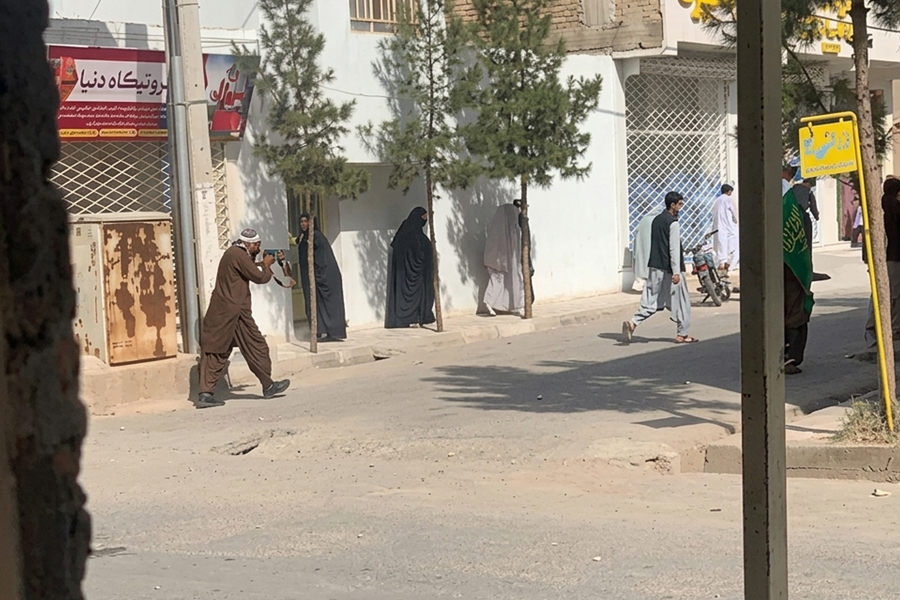
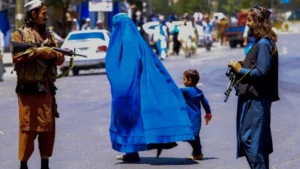
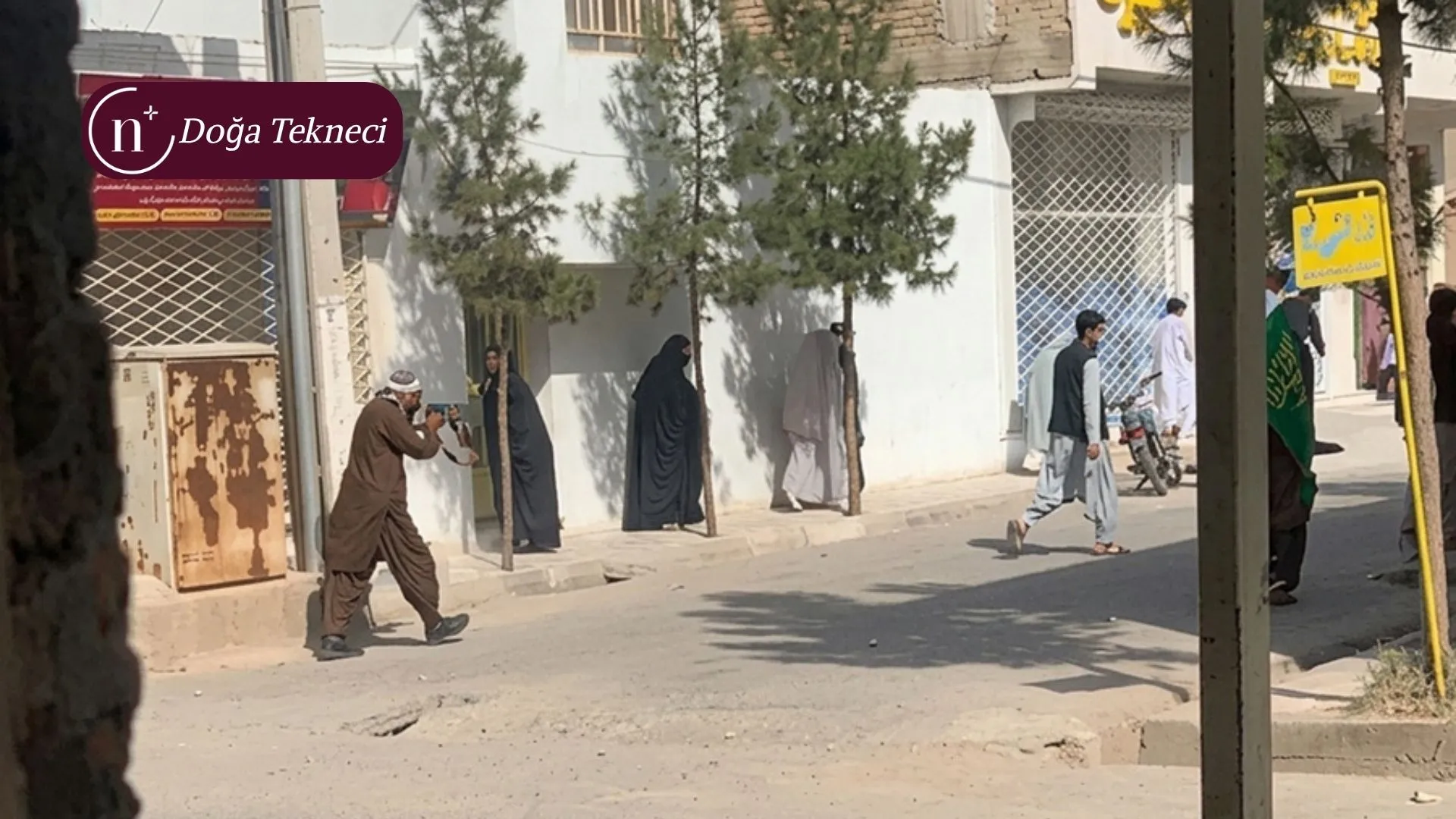
In Afghanistan, some residents from the Jibrail area of Herat Province held a protest rally on June 8th. The protests have raised over the ongoing arrests and harsh treatment of women by the Taliban’s Morality Police starting on June 6th. According to local resources, Taliban began to forcefully make women to wear Chadari or burqa and warning that those who do not wear will be imprisoned.
On June 11th, in a second wave of protests, the people of Herat gathered in front of the governor’s office to protest the acts of detention and violence against women, chanting “Death to the Dictator,” “Women, Life, Freedom,” and “Education, Work, Freedom.” Since June 8th, Taliban police had been trying to disperse the crowds by opening fire on the gathered people for days.
Murtaza, a 16-year-old Afghan youth, was wounded by two bullets to his leg during the Taliban police’s crackdown on the protests in Herat and passed away on June 16th. It was reported that at least 20 people were injured as a result of the Taliban police opening fire on the protesters.
Najibullah Ali, the Taliban’s police commander for security affairs in Herat, has announced on June 18th that so far more than 19 women – this number escalated to 30 according to local sources – have been detained by the Taliban’s forces for promoting virtue and preventing vice for what this group calls “failure to observe hijab.” He adds that the detention of women by the forces for promoting virtue and preventing vice in this province will continue.
Afghan women’s rights defender Laleh Osmany spoke about the wave of women-led protests in Herat and the systematic repression women face under Taliban rule.

“A strategy to erase women from public life”
According to Osmany, violence, terror, arbitrary detention, and public humiliation of women — carried out under the pretext of “inappropriate hijab” or leaving home without a male guardian, or mahram — have become “a structural, daily policy enforced by the Taliban’s Ministry for the Propagation of Virtue and Prevention of Vice and their intelligence agencies.” She noted that Taliban vice units, known as muhtasib, have set up numerous checkpoints across cities specifically to police women’s attire.
“In many cases, young women and girls are arrested without a male guardian present, brutally beaten with cables and whips, and released only after their families are forced to pay heavy ransoms or sign coercive pledges,” Osmany said. She described these practices as part of a calculated, larger campaign:
“These actions are a deliberate part of a broader strategy aimed at the complete eradication of women from the public sphere.”
“Woman, Life, Freedom” echoes through Herat
Osmany said the chanting of “Woman, Life, Freedom” during the Herat protests reflects “a deep, transnational solidarity among women rooted in a shared cultural sphere, as well as their high awareness of their fundamental rights.” She said the city’s history as a center of progressive civil movements: “Herat has historically been a cultural hub and a breeding ground for progressive civil movements in Afghanistan.”
Despite live gunfire, violence, and the threat of imprisonment, Osmany stated the protests demonstrated that women’s will to resist remains alive:
“These protests proved that despite brutal suppression, direct live fire, violence, and imprisonment, the will of women to resist remains alive. The protests in Herat sent a clear message to the world: the roots of Afghan women’s quest for freedom cannot be dried up by decrees of gender segregation and Taliban intimidation, and they are prepared to pay the highest price for their human dignity.”
Underground networks of resistance
Asked whether organized resistance persists despite the risks, Osmany confirmed that Afghan women have built extensive underground and overt networks, structured around three main pillars.
The first, she said, is citizen documentation: “Upon their release, detained women use pseudonyms to expose their experiences of torture and the Taliban’s inhumane treatment across social media and international news outlets.”
The second involves safe houses and underground schools: “Establishing secret home-based schools for girls deprived of education, alongside creating psychological and financial support circles for women who have lost their breadwinners.”
The third pillar, she said, is sustained civil mobilization: “Grassroots groups continuously issue statements and hold protests in closed indoor locations, raising their voices to UN human rights bodies to actively prevent the Taliban from gaining international legitimacy.”
Call from women’s organizations
Numerous calls to action continue to circulate on social media, organized by citizens of Afghanistan abroad, with protests planned in Berlin and many other places.
Members of the Justice-Seeking Women’s Movement, by launching a protest campaign and using the global distress symbol, have expressed concern over the increasing restrictions on women in Herat and urged the international community not to remain silent in the face of this situation on June 18th.
Members of this movement, through a campaign with the slogan “Afghan Women Are in Danger, Join This Campaign”, by darkening the map of Afghanistan on their faces and using the global distress symbol, have called for the international community’s immediate attention to the situation of women in the country.
Source: AWNA, 8AM Media