Kurdish Journalism Day celebrated

128 years ago, Mîqdat Mîdhad Bedirxan lit the torch of Kurdish journalism by publishing the Kurdistan newspaper in Cairo, Egypt. Despite all hardships, torture, murders, and exiles, this tradition continues.

From its inception, Kurdish journalism has been more than just an information tool; it has served as a mirror of national identity, an arena for linguistic struggle, and a political platform for a stateless nation. In all four parts of Kurdistan, every publication has simultaneously represented the press, resistance, and cultural memory. The character of this journalism distinguishes it from many other forms of media and makes it a vital source for political and cultural research.

From Kurdistan to Rojî Kurd, Jiyan, Hawar, Ronahî, Rojname, Welat, Azadiya Welat, and many others, Kurdish journalism continues its journey despite hardships, torture, assassinations, and exiles.

History of Kurdish Journalism (1898–2026)

From its inception, Kurdish journalism has been more than just a tool for information; it has served as a mirror of national identity, a sphere of linguistic struggle, and a political platform for a stateless nation. Every publication in all four parts of Kurdistan has simultaneously represented the press, resistance, and cultural memory.
I. EARLY PERIOD: CAIRO and EXILE (1898–1908)

Kurdistan — The First Kurdish Newspaper

On April 22, 1898, Mîqdad Midhat Bedirxan published the first Kurdish newspaper, Kurdistan, in Cairo.

[Visual: First Issue of Kurdistan Newspaper, 1898]
“Each time, I will talk to the Kurds a little about the benefits of reading and science. Through reading and science, one understands everything. Our Kurds are not as educated as other nations. Therefore, they are unaware of the world’s situation.”

Printing locations: Cairo (1–5), Geneva (6–19), Cairo again (20–23), London (24), Southern England (25–29), Geneva (30–31).

II. THE ISTANBUL PERIOD (1908–1918)

Rojî Kurd and Hetawî Kurd (1913–1914)

On June 6, 1913, the Hêvî association published the magazine Rojî Kurd. Following its closure, it continued under the name Hetawî Kurd.

[Visual: Cover of Rojî Kurd Magazine]

Jîn and Kurdistan (1916–1918)

In 1916, Süreyya Bedirxan published the Turkish-language weekly Jîn (Life) in Istanbul, advocating for Kurdish independence. This publication is entirely distinct from Pîremêrd’s Jîn newspaper in Sulaymaniyah.

III. THE SOUTH AND THE SOVIETS (1919–1932)

Pêşkewtin and Sulaymaniyah

The first newspaper published within the Kurdistan region itself, Pêşkewtin (1920–1922), was released in Sulaymaniyah. Later, Jiyan (1926), edited by Pîremêrd, became the symbol of this era.

Riya Teze (1930–) — Voice of Soviet Kurdistan

It began publication in Yerevan on March 25, 1930, serving as the Kurdish organ of the Communist Party of Armenia.

[Visual: Masthead of Riya Teze Newspaper]
IV. THE HAWAR ERA (1932–1943)

Celadet Alî Bedirxan and Hawar Magazine

In May 15, 1932, Hawar was published in Damascus. Celadet implemented the Latin-based Kurdish alphabet through this magazine, which remains the standard today.

[Visual: Hawar Alphabet and Magazine Issue]

Principal Writers: Celadet and Kamûran Bedirxan, Rewşen Bedirxan, Cegerxwîn, Osman Sebrî.

V. THE REPUBLIC OF MAHABAD (1945–1946)

Kurdistan Newspaper

Established in Mahabad on January 11, 1946. Although the Republic of Mahabad lasted only 11 months, it held a special place in Kurdish media history as a period of institutional statehood.

VI. & VII. THE FREE PRESS TRADITION (1990–2016)

Özgür Gündem and Apê Musa

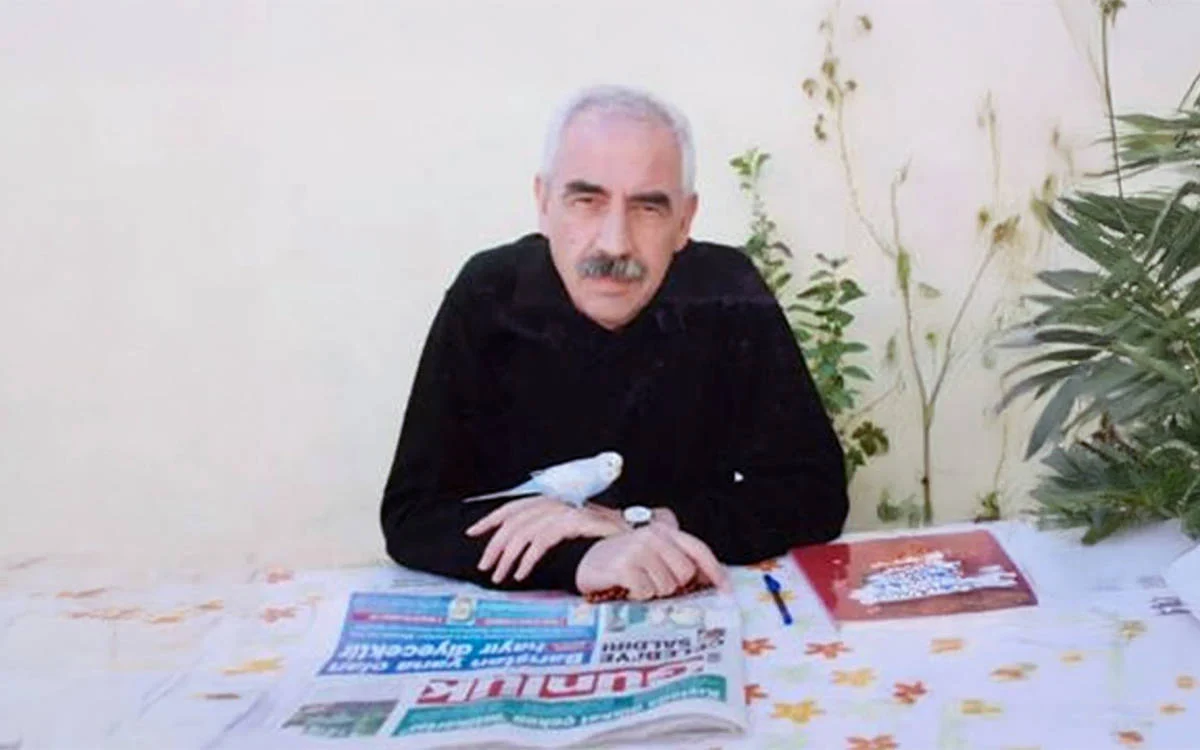
On May 30, 1992, Özgür Gündem began publication. The Kurdish intellectual Musa Anter (Apê Musa) was assassinated in Diyarbakır on September 20, 1992.

[Visual: Musa Anter – Apê Musa]

Bombing of Buildings (1994)

On the night of December 2-3, 1994, the headquarters of the Özgür Ülke newspaper were bombed. Ersin Yıldız lost his life.

Newspaper NameYearStatus
Özgür Gündem1992Closed (1994)
Özgür Ülke1994Bombed
Azadiya Welat2006Closed (2016)
VIII. THE ROLE OF WOMEN

Gurbetelli Ersöz (1965–1997)

The first female editor-in-chief of a daily newspaper in Turkey (Özgür Gündem). October 8th is celebrated as Kurdish Women Journalists Day.

Modern Institutions: JINNEWS and JIN TV (The first all-female satellite channel, 2018).

IX. THE SATELLITE REVOLUTION: MED TV

MED TV (1995–1999)

The first Kurdish satellite channel. It began broadcasting in March 1995, representing a media revolution for Kurds and a turning point for language standardization.

X. CONCLUSION AND HISTORICAL CHRONOLOGY

Historical Milestones

DateEvent
1898Kurdistan, Cairo (First Newspaper)
1932Hawar, Damascus (Alphabet Revolution)
1946Kurdistan, Mahabad
1995MED TV, Europe (First Satellite TV)
2018JIN TV

Kurdish journalism is a 128-year tradition of resistance, stretching from exile to the digital age.

Sources: Wikipedia, Encyclopaedia Iranica, KurdîLit, CPJ, RSF, Cambridge History of the Kurds.

I. Kurdistan, the first Kurdish hewspaper

On April 22, 1898, Mîqdad Midhat Bedirxan (1858–1915), son of Bedirxan Pasha of Botan, published the first Kurdish newspaper under the name Kurdistan in Cairo. Under the shadow of Ottoman censorship, it was printed abroad in Geneva, London, and Folkestone, with a total of 31 issues released. The final issue was published in 1902.

In the first issue, Mîqdad Midhat Bedirxan stated his purpose with these words:

“Each time, I will talk to the Kurds a little about the benefits of reading and science. Through reading and science, one understands everything. Our Kurds are not as educated as other nations. Therefore, they are unaware of the world’s situation.”

The printing locations were as follows: Cairo (1–5), Geneva (6–19), Cairo again (20–23), London (24), Southern England (25–29), and Geneva (30–31). His brother, Abdurrahman Bey, took over the responsibility of publication in the later periods.

Kurdistan was not merely a source of information but an ideological platform. By establishing Kurdish as a medium for intellectual expression and resistance, it laid the foundation for the century to come.

II. The Istanbul period (1908–1918)

Rojî Kurd and Hetawî Kurd (1913–1914)

On July 27, 1912, the Kurdish Student Association Hêvî (Hope) was founded in Istanbul. On June 6, 1913, the association published the magazine Rojî Kurd (Kurdish Day). It was shut down by the government after four issues. During the same period, Yekbûn (1913, 3 issues) was published. On October 24, 1913, the magazine changed its name to Hetawî Kurd. It was essentially the same publication, continuing under a different name. The etymology of the names is interesting: Roj in Kurmanji and Hetaw in Sorani both mean “Sun.”

Jîn and Kurdistan (1916–1918)

In 1916, Süreyya Bedirxan published the Turkish-language weekly Jîn (Life) in Istanbul, which demanded Kurdish independence. Between 1917 and 1918, he published the weekly Kurdistan. It is important to clarify: this Istanbul-based Jîn was in Turkish and was entirely different from the Jîn newspaper published by Pîremêrd in Sulaymaniyah.

III. The South and the Soviets (1919–1932)

Pêşkewtin and Sulaymaniyah

The first Kurdish newspaper published within the geography of Kurdistan itself, Pêşkewtin (Progress), was released in Sulaymaniyah between 1920 and 1922 under British administration. 118 issues were printed. This was followed by a series of publications:

  • Bangê Kurdistan (1922, 14 issues)
  • Rojî Kurdistan (1922–1923, 15 issues)
  • Jiyanewe (1924–1926, 56 issues)
  • Jiyan (1926–1938, 556+ issues, under the editorship of Pîremêrd)
  • Zarî Kurmancî (1926–1932, Rawanduz, 30 issues)

Pîremêrd and Jiyan-Jîn: Born in Sulaymaniyah, Tewfîq Mehmûd Hemze, known by his pen name Pîremêrd (1867 – June 19, 1950), became the editor-in-chief of Jiyan in 1926 and its manager in 1932. In 1938, he changed the name of Jiyan to Jîn and continued publishing it until his death on June 19, 1950. He also founded the first private Kurdish school, Qutabxaney Zanistî.

Riya Teze (1930–) – The Voice of Soviet Kurdistan

On March 25, 1930, it began publication in Yerevan using the Marogulov and Shamilov alphabet. It was the Kurdish organ of the Communist Party of Armenia. Initially managed by three Armenian Kurdologists (Kevork Paris, Hrachya Kochar, and Harutyun Mkrtchyan), the Kurdish Kurmanji scholar Cerdoy Gênco became the editor-in-chief in 1934. It was suspended during the Stalin era but resumed in 1955 with a Cyrillic alphabet. Mîroyê Esed (1919–2008) managed the newspaper until 1989.

IV. The Hawar era (1932–1943)

Celadet Alî Bedirxan and Hawar Magazine

After being exiled from Turkey, Celadet Alî Bedirxan published Hawar in Damascus on May 15, 1932. A total of 57 issues were released between 1932-1935 and 1941-1943.

Hawar holds special significance as the first media outlet published in Kurmanji Kurdish. For this reason, May 15 has been celebrated as Kurdish Language Day since 2006.

Celadet created a Latin-based alphabet for Northern Kurmanji, known as the “Hawar Alphabet” or “Bedirxan Alphabet,” which remains the standard today. Its purpose was: “Hawar is the voice of science. Science is for a person to know themselves; knowing oneself opens the path to freedom and happiness.”

Key writers: Celadet and Kamûran Bedirxan, Rewşen Bedirxan, Qedrî Can, Cegerxwîn, Osman Sebrî, Nûredîn Zaza, Ekrem Cemîl Paşa, Ahmed Namî.

Roja Nû and Stêr were published in Beirut by Kamûran Bedirxan. Nûdem (1992–2001, Stockholm, 40 issues, edited by Firat Cewerî) was referred to as the “Second Hawar.”

Rewşen Bedirxan

In a field largely dominated by men, Rewşen Bedirxan took her place as an active writer among the contributors of Hawar. She stands as a pioneering example.

V. The Kurdish Republic of Mahabad (1945–1946)

On January 11, 1946, during the brief existence of the Republic of Mahabad, the newspaper Kurdistan was established as the first Kurdish newspaper of the region, releasing a total of 113 issues. Alongside it, the literary magazine Kurdistan (16 issues) was also published.

When the Iranian army entered Mahabad on December 15, 1946, the Kurdish printing press was closed, Kurdish education was banned, and all Kurdish books, including school textbooks, were burned. Qazi Muhammad was executed on March 31, 1947. The Republic of Mahabad lived for only 11 months but secured a unique place in Kurdish media history.

VI. The South (1950–1990)

South Kurdistan

Between 1950 and 1963, numerous publications emerged in Baghdad and Sulaymaniyah:

  • Hîwa (1957–1963, Baghdad, 36 issues)
  • Xebat (1959–1961, Baghdad, 462 issues)
  • Ray Gel (1959–1962, Kirkuk, 34 issues)
  • Azadî (1959–1961, Rawanduz, 56 issues)

After 1968 and the Baathist occupation, the Kurdish press came under intense pressure. The Enfal and Halabja chemical attacks in 1988 signaled a period of extreme suppression for Kurdish media.

Diaspora

From the 1970s onwards, Kurdish media shifted its center to Europe (Germany, Sweden, France, Belgium). These publications were mostly party-affiliated and primarily political in content.

“Rojname” Newspaper (May 8, 1991)

In the early 90s, when the ban on the Kurdish language was slightly relaxed, Kurdish intellectuals and journalists sought to step into daily news reporting. This newspaper is recognized as the first trial of a daily newspaper based on “Kurdish Reality” in the history of Northern Kurdistan and Turkey after a long silence. Rojname was only able to print one issue. On the very day it was released, it was confiscated and banned by the State Security Court (DGM).

VII. The northern free press (1992–2016)

Özgür Gündem (1992–1994)

On May 30, 1992, under the leadership of Ragıp Duran, Özgür Gündem began publication, reaching a circulation of 60,000. During Ocak Işık Yurtçu’s tenure, circulation reached 100,000.

Systematic Murders (1990–1995):

Between 1990 and 1995, dozens of journalists, mostly from the Kurdish free press, were killed. Within this historical context, 76 victims are remembered as “martyrs of the free press.”

The Assassination of Apê Musa, September 20, 1992

Musa Anter (1920 – September 20, 1992) was born in the village of Zivinge, Nusaybin, Mardin. Known as “Apê Musa,” he was a prominent Kurdish writer and intellectual; he wrote for Özgür Gündem, Yeni Ülke, and Welat. He had been prosecuted in the “Trial of the 49s” for Kurdish propaganda. On September 20, 1992, he was murdered in an ambush in Diyarbakır. His murder remained a “perpetrator unknown” case. In 2008, the European Court of Human Rights convicted Turkey.

The Bombing of Buildings, December 2–3, 1994

Özgür Gündem was closed on April 14, 1994. Two weeks later, Özgür Ülke was launched. On the night of December 2–3, 1994, the technical center in Kadırga, Istanbul, the Çağaloğlu bureau, and the Ankara bureau were bombed simultaneously. Transport coordinator Ersin Yıldız lost his life, and more than 20 employees were injured.

Chronology (1992–2016):

NameStartOutcome
Özgür Gündem1992Closed on April 14, 1994
Özgür Ülke1994Bombed on Dec 2–3, 1994
Gündem1995Closed
Ülke1996Closed
Özgür Gündem (New)2011Closed in August 2016

Welat and Azadiya Welat

Launched as a weekly in Istanbul on February 22, 1992, it was the first Kurdish-language newspaper in Turkey after the 1991 ban was lifted. In 1996, it became Azadiya Welat. In 2003, it moved its headquarters to Diyarbakır, and in 2006, it became a daily newspaper. It was closed on August 8, 2018, by a statutory decree (KHK) under the State of Emergency.

VIII. The role of women

Rewşen Bedirxan

She was an active writer in the Hawar ekol and served as a pioneering example in the early periods of the Kurdish press.

Gurbetelli Ersöz (1965–1997)

A chemist born in Elazığ/Palu. She was arrested in 1990 for political activities and spent two years in prison. On April 23, 1993, she began working at Özgür Gündem and became the editor-in-chief, making her the first female editor-in-chief of a daily newspaper in Turkey, not just in Kurdish media. On December 10, 1993, the newspaper building was besieged; Ersöz was detained along with 17 colleagues. After being held for 13 days, she was sent to Sağmalcılar Prison. At the trial, the prosecutor sought 15 years; Harold Pinter, Noam Chomsky, and the CPJ supported her. She was sentenced to 3 years and 9 months and released in June 1994. Since she was not allowed to work as a journalist, she joined the PKK in 1995. She lost her life in a clash on October 8, 1997. October 8 is celebrated as Kurdish Women Journalists Day.

Jinha, Jinnews, and Jin TV

JINHA began its operations as the Women’s News Agency. It was closed by the Turkish state in 2016 and subsequently continued as JINNEWS. On March 8, 2018, on International Women’s Day, JIN TV began broadcasting as the first satellite channel with an all-female staff.

IX. The Satellite revolution: MED TV and beyond (1995–2010)

MED TV (1995–1999)

In 1994, it received a license from the UK Independent Television Commission (ITC) and began test broadcasts in March 1995. It was the first Kurdish satellite channel and represented a media revolution for Kurds during a period of extreme state pressure. In the West, satellite dishes were in every Kurdish home, and dozens of families would gather in the evenings to listen to the news in their own language. At the request of the Turkish state, MED TV‘s license was revoked on April 23, 1999. Following this:

  • Medya TV was launched but closed by French authorities.
  • Roj TV (2003, Denmark) was closed.
  • Nûçe TV, Stêrk TV, and others were launched in succession.

European News Agencies

The first Kurdish news agency, Dam, was founded in Germany in 2000, later becoming the Mesopotamia News Agency (MHA) in Frankfurt. After MHA was closed by German police, the Firat News Agency (ANF) was founded in Belgium in 2005.

X. Rojava (2011–2019)

On January 21, 2014, the Democratic Autonomous Administration was announced in Qamishlo on the anniversary of the Mahabad Republic. That same year, when ISIS attacked Sinjar, Kurdish journalism played a key role in bringing the voice of the Yazidi community to the world. During the siege of Kobanê, the Dengê Kobanî radio became the voice of the resistance.

XI. Principal figures

The Bedirxan Family

NameLifeContribution
Mîqdad Midhat Bedirxan1858–1915Kurdistan (1898) — Founder
Süreyya Bedirxan1883–1938Jîn (1916), Kurdistan (1918)
Jeladet Alî Bedirxan1893–1951Hawar (1932–1943), Alphabet
Kamûran Bedirxan1895–1978Roja Nû, Stêr (Beirut)
Rewşen BedirxanWriter of the Hawar ekol

Pîremêrd (1867–1950)

Real name: Tewfîq b. Mehmûd Hemze. Born in the Gwêje neighborhood of Sulaymaniyah. He was a poet, writer, and journalist. He became the editor-in-chief of Jiyan in 1926 and its manager in 1932. In 1938, he renamed Jiyan to Jîn. He founded the first private Kurdish school, Qutabxaney Zanistî. He passed away in Sulaymaniyah on June 19, 1950.

Musa Anter — Apê Musa (1920–1992)

Born in the village of Zivinge, Nusaybin, Mardin. He was convicted in the “Trial of the 49s.” He wrote for Özgür Gündem and Yeni Ülke. He was killed by JÎTEM in Diyarbakır on September 20, 1992.

XII. Hardships and obstacles

Systematic Bans

In Turkey, publishing in Kurdish was explicitly banned from 1924 to 1991. Subsequently, Kurdish journalists were prosecuted under Article 8 of the Anti-Terror Law and later Article 314.

The 2016 Mass Shutdowns

During the State of Emergency (2016–2018), via Decree Laws (KHK):

  • Azadiya Welat was closed (August 2016)
  • JINHA was closed (2016)
  • IMC TV was closed (2016)Dozens of journalists were arrested and sentenced.

XIII. The digital age (2010–2026)

Digital media brought three major changes:

  • Proliferated: Social media, websites, and Kurdish podcasts increased.
  • Weakened: The financial model of print media collapsed; many newspapers closed.
  • Renewed: ANHA, ANF, Rudaw, Kurdistan 24 developed a global Kurdish digital media model, though most remain affiliated with political parties or governments.
Conclusion
DateEvent
April 22, 1898Kurdistan, Cairo — Mîqdad Midhat Bedirxan
June 6, 1913Rojî Kurd, Istanbul
March 25, 1930Riya Teze, Yerevan
May 15, 1932Hawar, Damascus — Jeladet Alî Bedirxan
January 11, 1946Kurdistan, Mahabad — Republic of Mahabad
May 30, 1992Özgür Gündem, Istanbul
February 22, 1992Welat, Istanbul
September 20, 1992Assassination of Apê Musa
Dec 2–3, 1994Bombing of Özgür Ülke
March 1995MED TV — First Satellite TV
October 8, 1997Assassination of Gurbetelli Ersöz
March 8, 2018JIN TV
2026The journey continues

Kurdish journalism has faced oppression and obstacles for over 128 years. From Cairo to digital platforms, from exile to war, and from the Bedirxan family to the generation of Jinnews and Jin TV, this tradition endures.

*Infographics prepared with Gemini and ChatGPT.

Lawyer Çağın Kaleli: In the Gülistan case, law is a tool for perpetrators

Evaluating the revival of the Gülistan Doku case after six years as a “political reckoning,” lawyer Gülan Çağın Kaleli stated, “The reopening of the file today is not an act of judicial courage, but rather a consequence of the responsibility created by the evidence that has been suppressed for six years.”

Gülistan Doku’s family (Photo: Birgün)

The murder investigation of university student Gülistan Doku, who disappeared in Dêrsim six years ago, has seen significant developments with numerous individuals, including former Tunceli Governor Tuncay Sonel and his son, being detained or arrested. The Doku family remains hopeful following the detention and arrest of new suspects.

Minister of Justice Akın Gürlek, speaking after a Cabinet Meeting on April 20, announced the establishment of a unit for unsolved murders and stated that files would be examined individually. Gürlek noted, “There is naturally an expectation after Gülistan, but that doesn’t mean every file will turn out that way.” He also announced that search efforts for Gülistan Doku’s body are ongoing.

We spoke with lawyer Gülan Çağın Kaleli—a jurist and women’s rights defender—about the reopening of the Gülistan Doku file and its potential impacts. Kaleli also serves as the lawyer for the family of İpek Er, who reportedly committed suicide after being raped by Sergeant Musa Orhan.

Lawyer Çağın Kaleli suggests that the reopening of the Gülistan Doku file could be a “new beginning.” According to Kaleli, “this situation emerged as a result of a political reckoning.” Stating that the subjection of Kurdish women’s bodies to harassment and rape cannot be considered independently of the “special war policies conducted in Kurdistan,” Kaleli recalled similar events from the 1990s. She noted that the male-dominated system views the bodies of Kurdish women as a territory to be “conquered.”

Gülistan Doku disappeared in 2020

Gülistan Doku, a second-year student at Munzur University’s Department of Child Development, disappeared on January 5, 2020, after leaving her dormitory. Her family filed a missing person report with the Provincial Police Department the following day.

Camera footage showed Doku boarding a minibus, but where she got off could not be determined. Following her disappearance, extensive searches were conducted in the Munzur River and the Uzunçayır Dam Lake in Dêrsim, where her phone last emitted a signal. Despite the lake being drained, no trace of Gülistan was found.

The last person Gülistan Doku met, her former boyfriend Zeinal A., was detained in Antalya in 2022, two years after the incident, but was released under judicial control. Another suspect, stepfather of Zeinal A., Engin Y., a police officer, was sentenced to two years and six months in prison for unlawfully obtaining and sharing Gülistan Doku's personal information on social media.

No further progress was made in the investigation over the last six years. According to lawyers examining the file, this was because the incident was treated as a "suicide." In 2024, Chief Public Prosecutor Ebru Cansu, appointed to the Tunceli Chief Public Prosecutor's Office, reopened the file.

According to media reports, earlier this year, a secret witness testified against the governor's son, leading to progress in the investigation. Reports stated the secret witness accused the governor’s son of raping and fatally shooting Gülistan Doku. Following this, simultaneous operations were carried out in seven provinces on April 13, 2026.

Justice Minister Akın Gürlek, who took office in February 2026, stated that the "investigation must be pursued to the end." At the time of Doku's disappearance, Süleyman Soylu held the Ministry seat, followed by Ali Yerlikaya.

Case Summary
Gülistan Doku Investigation: Detention and Arrest List
Homicide and Sexual Assault
  • Mustafa Türkay Sonel (Son of former Governor Tuncay Sonel) – Arrested
  • Erdoğan E. (Former Personnel of Provincial Special Administration) – Arrested
Hiding and Destroying Evidence
  • Tuncay Sonel (Former Tunceli Governor) – Judicial Control / Ministry Investigation
  • Zeinal A. (Former Boyfriend) – Arrested
  • Engin Y. (Dismissed Police / Stepfather) – Arrested
  • Cemile Y. (Mother) – Arrested
  • Çağdaş Ö. (Former Chief Physician) – Arrested on suspicion of deleting hospital records
  • Şükrü E. (Governor’s Bodyguard) – Arrested
  • Celal A. and Nurşen A. (Parents of Umut A.) – Arrested
Judicial Control / Released Under Terms
  • Savaş G. and Süleyman Ö. (University Technical Staff) – Suspicion of deleting camera records / International travel ban
* Data compiled from operation and court records dated April 13-20, 2026.

Lawyer Kaleli: “For 6 years, all evidence held by the state was suppressed”

The Gülistan Doku murder file has been reopened after six years. It has become a major headline in recent days. How do you interpret the developments of the past few days? What kind of picture do you see considering those detained so far?

I think the process that has been reflected to the public—which the Justice Minister claims to have accelerated today—should be interpreted as follows: All information, documents, and evidence held by the state for 6 years were effectively suppressed. These issues are too precious to be sacrificed to the state’s internal reckonings or conflicts between groups within the state, especially in cases of violence against women. Therefore, I believe the current picture should be characterized not as an act of courage by the Ministry of Justice, but as a fulfillment of responsibility.

Gülan Çağın Kaleli, Photo: Özgür Politika

The matter of hiding, altering, or deleting so much information and evidence over 6 years by mobilizing all state resources once again reveals a ground where there is no legal security, where the state can interfere with the judiciary in every aspect, and where no one feels safe.

“Conflict Between ‘In-Norm’ and ‘Out-of-Norm’ Structures”

What do you mean by political reckoning?

I believe there are power balances within the Ministry of Interior. We are witnessing the definition of “in-norm” (norm içi) and “out-of-norm” (norm dışı) structures within the state quite vividly in this period. On one side, there are structures defending the functionality of the law; on the other, there was—and still is a representation leaning towards tyranny, oppression, and massacre, fostering polarization. We have gone through historical processes where “in-norm” structures played a bigger role depending on the political conjuncture, and periods where “out-of-norm” structures came to the fore.

The era when Süleyman Soylu played his role was a period when these “out-of-norm” structures fully held the state administration. Regarding the current process, I see it as a war between these structures. One side tries to create a “window dressing” by bringing concepts like human rights and justice to the forefront, while the opposition fights for a genuine ground for rights. These “out-of-norm” structures are not independent of the state; they are intrinsic to it.

It is known that the so-called “political will” must act in such cases. From this perspective, do you observe that these perpetrators could be the ones to truly shed light on the case?

We have seen many files where only the “visible face” of the curtain was touched while those with higher responsibility were not detained. The detention of high-ranking officials like the governor, deputy governors, and police officers under his command is a result of responsibility. This is positive. However, it doesn’t end with arrests. There is a risk that during these 6 years, critical information was destroyed. It is too early to comment on whether a fair trial will be conducted. At present, I can say at least part of that chain of responsibility is visible, as this appears to be a systematic and organized crime within the state. We must not “heroize” those simply doing their duty. The subject of this file is Gülistan: Her experiences, the violence, and the rape she was subjected to.

Do you expect or see signs that previous Ministers of Justice or Interior might be included in this chain of responsibility? Süleyman Soylu’s name is frequently mentioned.

During Süleyman Soylu’s term as Interior Minister, very hostile policies were produced against groups outside the hegemony, and he voiced these himself. His term left a serious wreckage, from raining instructions on every level of the judiciary to the police. However, the issue is not just Soylu as an individual, but the mentality he represents. Historically, the state has never touched those it assigned a specific mission until that mission was complete. Soylu did not act solely on his own thoughts; his role was shaped by forces within the state. Today, that role is finished. Now, a different path is being tried, and a “state reality” is attempting to polish itself through these cases. If we are to judge based on justice and equity, we saw what happened when these individuals held power previously. I personally doubt these figures will truly be affected.

You were also the lawyer for the family of İpek Er. The women’s movement and jurists evaluate such crimes in the Kurdish region as crimes committed by state officials, described as “perpertrators in uniform.” Do you evaluate the Gülistan Doku murder within this scope?

We certainly can. Following the curfews, the state deepened the wreckage using “special war policies.” These were not just against the body, but against the mind and emotions. The harassment and rape of many Kurdish women by police, soldiers, governors, or their relatives—as seen in the Gülistan Doku example—is not independent of these policies. The examples of Gülistan Doku and İpek Er are very similar. In a society that has been made precarious and impoverished, a process began where the state offered its own system as the only means of existence. It is important to highlight that women were emotionally manipulated by these perpetrators with promises of marriage before being subjected to sexual violence or forced into drug use and prostitution.

Gülistan Doku

“The law was weaponized”

The judiciary was also made a “useful apparatus” for these perpetrators. Law, which failed to mobilize to uncover the truth, was used to protect perpetrators through “good conduct” discounts or symbolic arrests to cool down public reaction. For example, after Musa Orhan raped İpek Er, no action was taken until İpek’s suicide attempt. Then, a symbolic one-week arrest was made only to decrease public reaction. Musa Orhan was sentenced to 10 years, and the case is still at the Court of Cassation. He is still being tried without arrest. Buoyed by such decisions, others in state positions feel emboldened. This is a form of psychological war.

“There is a horrific trend called ‘conquest’ targeting single women

In the intense war environment of the 1990s, such situations were witnessed in the Kurdish region. What is the connection between the 2000s and the 1990s?

In the ’90s, there were many applications regarding sexual assault in custody, but fair trials did not occur. It was used as a war tactic that forced everyone into silence. Today, we are in a period where we have the advantage of being organized. One can express their experience to institutions, the press, or lawyers’ organizations. Historically—from the Armenian Genocide to the Dersim Massacre—the female body has been treated as a battlefield. In the ’90s, women were raped during village raids. Today, the same “rape culture” continues through emotional manipulation.

Within the gendarmerie and police in the Kurdistan region, there is a horrific orientation we call “conquest” toward single women—an attempt to “possess.” They signaled this during the curfews through graffiti or videos targeting the female body. Now, they have put this into practice in the field.

You made a connection between the female body and “conquest.” What do you mean by this?

The Kurdish movement has proven itself under women’s leadership. Therefore, an attack on Kurdish women is an attack on the Kurdish people. There is a male-dominated mindset at play; while the woman is seen as “honor” (namus), there is also a woman seeking freedom. The attempt to “possess” the body of the woman seeking freedom is a multi-layered attack on a land, a people, and a culture.

University students protesting for Gülistan Doku

“These are the results of the women’s struggle”

The Narin Güran case also returned to the public agenda. Considering the “political reckoning” you mentioned, is there a possibility that other “dark” files, such as Rojin Kabaiş or Gülistan Doku’s close friend Rojwelat Kızmaz, might resurface?

It is certainly possible. The Justice Minister called this a beginning and made a promise. However, this hope stems not just from ministers’ words, but from a powerful women’s struggle that has refused to give up for years. Women are the primary motor force here. The Gülistan Doku file is a beginning; these are domino tiles. If genuine courage is shown to touch the primary responsible parties, it could impact other files. But I believe this courage is drawn from lawyers and women’s organizations rather than state officials.

The state of human rights: Resistance against systemic injustice globally

Amnesty International’s report exposes the lawlessness, discrimination, and rights violations perpetrated by nations -most notably the US, Russia, China, the UK, and Israel- while asserting that a new history of humanity is being written by the people resisting these injustices.

The 406-page report, titled The State of the World’s Human Rights 2025/26, evaluates 144 countries. It emphasizes that the international legal framework was significantly undermined in 2025, largely driven by the actions of the USA, Israel, and Russia. The report highlights that despite ceasefires, Israel continued its genocidal actions through illegal settlements and the obstruction of aid, while expanding its military offensive into countries such as Lebanon and Iran.

As the world endures one of its darkest periods of institutional impunity and state violence, the report notes that resistance has spread in equal measure. Port workers across several European countries formed a global solidarity network, putting their bodies on the line to block arms shipments to Israel. Meanwhile, youth movements from Indonesia to Peru targeted systemic injustice, transforming the streets into “spaces of transformation” throughout 2025.

“Time to write the history of human rights”

In the report’s foreword, Agnés Callamard, Secretary General of Amnesty International, stated:

“As Amnesty International has long warned, a global environment where primitive ferocity could flourish has been long in the making. But in 2025, accelerants were recklessly poured over dry kindling, as sharp U-turns were taken away from the international order that had been imagined out of the ashes of the Holocaust and the utter destruction of world wars, and constructed slowly and painfully, albeit insufficiently, over these past 80 years.”

Callamard emphasized that resistance is also about clarifying what needs to be transformed, urging people to find the courage to change as the very structures built over the last 80 years face destruction:

“We must imagine a transformed and transformative human rights vision for the world that we are becoming, not merely defend human rights in terms of the world we once were. Together, we must then lead that transformation into existence, with all our creativity, determination and resilience. History is not just something that is done to us. It is also ours to make. And for the sake of humanity, it’s time to make human rights history.”

The report documented protester deaths resulting from the unlawful use of force in countries including Turkey, Angola, Cameroon, Ecuador, Indonesia, Kenya, Madagascar, Pakistan, and Peru. In nations such as Afghanistan, Belarus, Burkina Faso, China, Cuba, Mali, Myanmar, Nicaragua, North Korea, Russia, Uganda, and Venezuela, authorities reportedly used enforced disappearances of human rights defenders, activists, and journalists to spread fear. Many other countries, including Iran and Saudi Arabia, continued to resort to the death penalty.

Turkey: Rise in baseless investigations and convictions

The report brings to light allegations of torture and rights violations by law enforcement against protesters in Turkey, alongside a culture of impunity. It further highlights an increase in baseless investigations and convictions targeting human rights defenders, noting that executive interference in the judiciary has deepened. Key findings include:

  • The report notes legislative proposals aimed at criminalizing LGBTI+ and their advocates. Similar to Hungary, Turkey banned Pride Marches, where law enforcement used unlawful force. The report also recorded bans placed on LGBTI+ associations.
  • The report recorded the detention of hundreds of peaceful protesters following the detention of Ekrem İmamoğlu, Mayor of Istanbul and CHP presidential candidate. Unlawful force was documented during the March 19-26, 2025, protests sparked by operations against the CHP and İmamoğlu’s detention.
  • Despite European Court of Human Rights (ECHR) rulings and the Council of Europe’s 2022 infringement proceedings, figures such as Osman Kavala, Selahattin Demirtaş, and Figen Yüksekdağ remain imprisoned.
  • The report identified unlawful force by both the judiciary and law enforcement during protests following the prison sentence handed to Abdullah Zeydan, the elected mayor of Van Metropolitan Municipality.
  • Rights violations during May Day protests and subsequent house raids were highlighted. In 2025, 294 femicides were committed by men, while 297 women were found dead under suspicious circumstances.

Escalating violence in the Middle East and North Africa

The report underscores a surge in attacks by various actors across the Middle East. Notable findings include:

  • Israeli attacks in Gaza continued through 2025, killing approximately 27,000 Palestinians (60% of whom were women and children). Systematic destruction of housing and infrastructure decimated living conditions. An 18-year blockade was tightened, leaving half a million people facing famine and banning medical evacuations.
  • Israel conducted military strikes against Lebanon, Iran, Qatar, Syria, and Yemen. Targeting civilian sites in Iran (such as Evin Prison) was classified as a war crime. While a new era began in Syria with the fall of the Assad regime, sectarian massacres continued. In Yemen, the humanitarian crisis deepened following a cut in US aid.
  • Non-independent judiciaries in Egypt, Tunisia, Saudi Arabia, and Iraq handed down politically motivated prison sentences. Peaceful protests were crushed in Iran, Algeria, and Tunisia. Racial attacks and collective expulsions of Black refugees increased in Tunisia and Algeria, while Libya remained a spot for the torture and arbitrary detention of migrants.

Global impunity and the reluctance of states

By early 2026, the unlawful use of force by the US and Israel against Iran -violating the UN Charter- triggered retaliatory strikes against Israel and Gulf Cooperation Council countries. The US, Israel, and Russia further weakened international accountability mechanisms, specifically the International Criminal Court (ICC).

  • The Trump administration imposed sanctions on ICC staff and the UN Special Rapporteur on the Occupied Palestinian Territory, while Russian courts issued arrest warrants for ICC officials. Most states remained reluctant to activate mechanisms to block the aggressive actions of the US, Russia, Israel, or China.
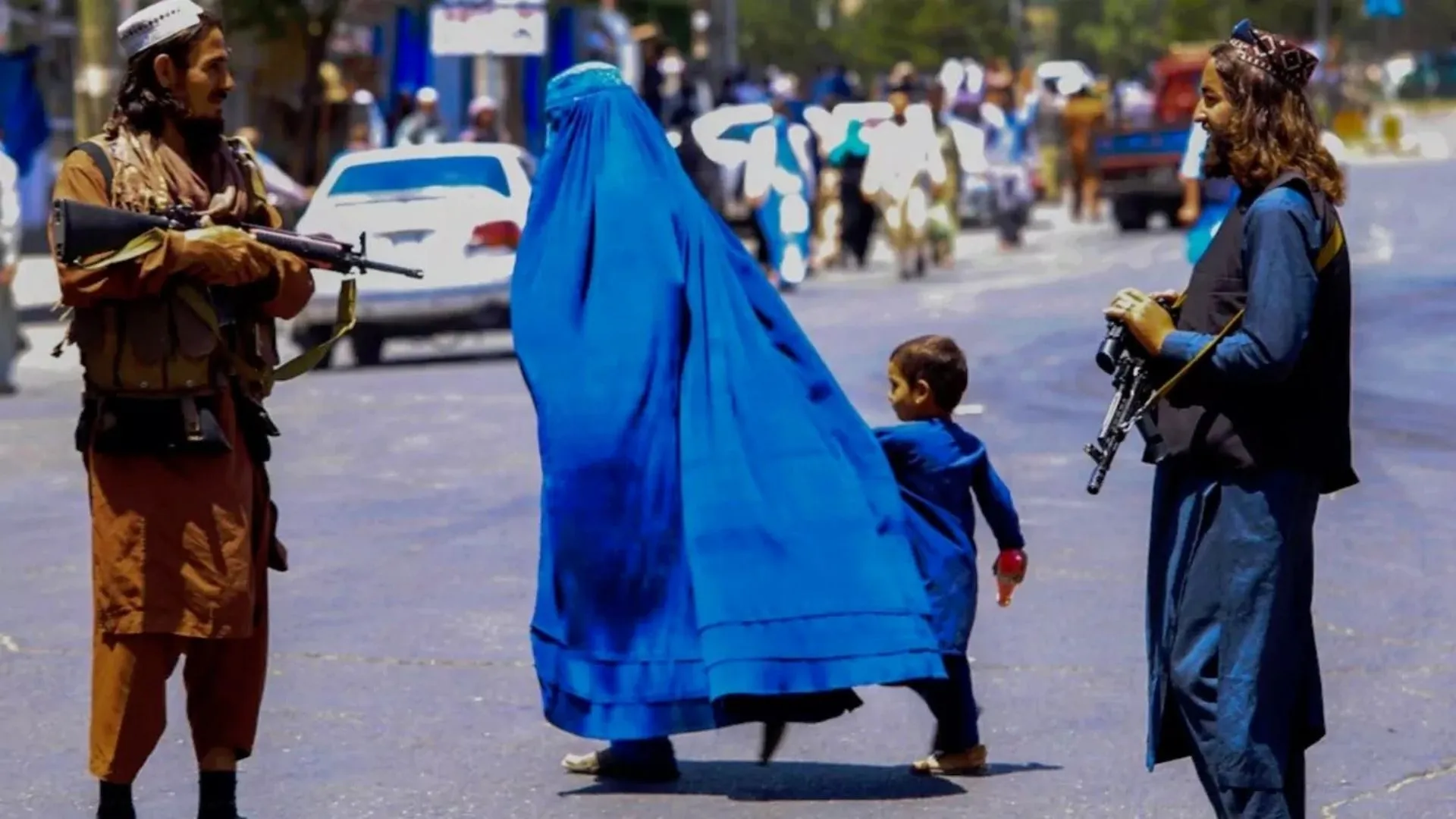
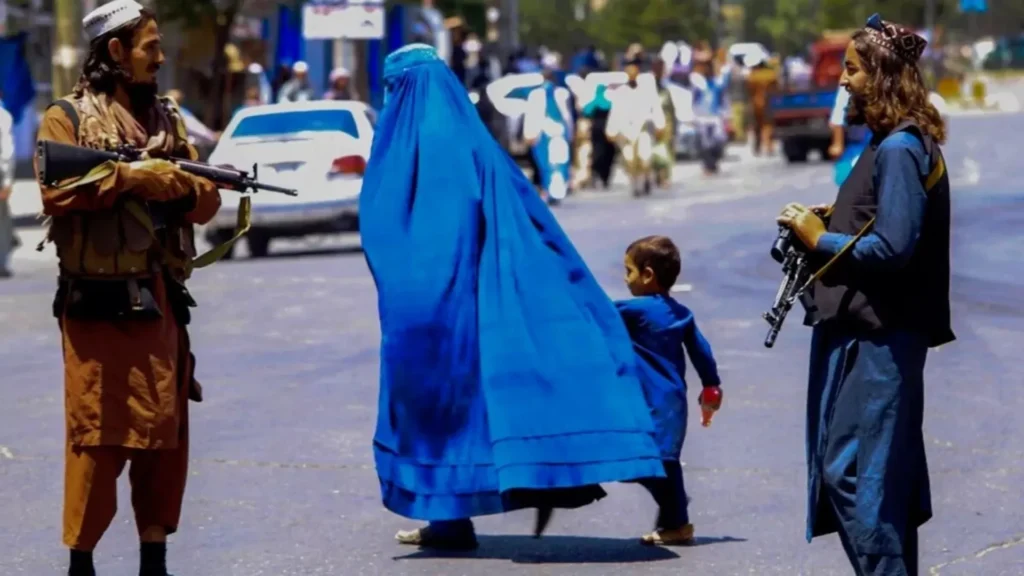
  • In Brazil, police operations in impoverished neighborhoods of Rio de Janeiro resulted in over 120 deaths, mostly among Black residents. In Afghanistan, the Taliban escalated its oppressive policies, banning women from education, work, and travel.
  • Floods in Pakistan displaced millions, while New Delhi recorded the world’s most polluted air. Pacific islands face an existential threat from rising sea levels.
  • Activism against the flow of weapons to Israel expanded globally. Port workers in France, Greece, Italy, Morocco, Spain, and Sweden blocked shipment routes. An increasing number of states acknowledged that Israel is committing genocide, with many joining the “Hague Group” or contributing to South Africa’s case at the International Court of Justice (ICJ).
  • In 2026, the Spanish government maintained a principled stance against these violations.

[Click here for the full report]

Budapest Pride: “Anti-queer laws can be repealed with two-third majority”

With the end of Viktor Orbán’s conservative rule, a new era began in Hungary, but the silence of Péter Magyar and the Tisza Party, who won a majority in the elections, on LGBTQ+ rights raised questions. Johanna Majercsik, spokesperson for Budapest Pride, stated: “The most urgent issue is the restoration of the right to assembly.”

Source: Budapest Pride

In the Hungarian general elections on April 12, Victor Orbán’s far-right Fidesz (Hungarian Civic Alliance) party, which had been in power for 16 years, lost its grip on power. Péter Magyar and his Tisza (Respect and Freedom Party) party, which was initially close to Orbán but later split from Fidesz and adopted a center-right stance, achieved a victory.

According to the results from the election, with almost all the ballots counted, Tisza won 138 seats in the 199-member parliament. Having surpassed 133 seats indicates that Tisza has achieved a majority sufficient to amend the constitution.

Viktor Orbán, who served as Prime Minister of Hungary for 16 years until his electoral defeat in April 2026, became widely recognized for implementing a series of laws and policies targeting the LGBTQ+ community.

Orbán made an amendment on 2012 saying constitution recognizes only two sexes. In 2020, this was tightened to effectively ban adoption by same-sex couples. The Child Protection Act (Act LXXIX), which passed on June 2021 under the guise of protecting children, implicitly conflates LGBTQ+ individuals with child abusers. This legislation prohibits the “depiction or promotion” of homosexuality or gender reassignment to minors under 18 in education, media, and advertising. The law restricts TV programs showing LGBTQ+ content and books containing LGBTQ+ themes. Furthermore, in March 2025, Orbán government passed legislation that effectively banned LGBTQ+ Pride marches, allowing for the use of facial recognition technology to identify attendees

Budapest Pride: “The most urgent issue is the restoration of the right to assembly”

Spokesperson of Budapeşt Pride, Johanna Majercsik, evaluated the demands of Budapest Pride after the Hungary elections. Majercsik describe the collapse of Viktor Orbán’s 16-year rule as a path opened for Hungary to return to the rule of law. “A fair and just democracy cannot exist without human rights, including LGBTQ rights,” she said.

Majercsik mentioned that with a two-thirds majority, all anti-LGBTQ laws passed by the Orbán government can be repealed.

“The most urgent issue” said Majercsik, “is the restoration of the right of assembly. This is particularly urgent because we are holding the Budapest Pride March on June 27. But beyond that, the previous government passed numerous anti-queer laws that were enshrined in the Fundamental Law. With a two-third majority, however, these can also be repealed.”

“We know nothing about Magyar’s stance on legal gender and name changes”

Majercsik stated that the program of the TISZA Party that Péter Magyar was elected from makes no mention of the LGBTQ community:

“In his public speeches, he is rather vague when he says that everyone is free to love whomever they want, as long as they don’t break the law (as he stated at the international press conference on April 13). Alas, it is rather impossible to conclude from this whether he intends to use legislation to allow same-sex couples to marry and adopt, and we know nothing about his stance on legal gender and name changes.”

She stated that the LGBTQ+ community in Hungary feels fear, relief, distrust, hope at once at the moment. She lists the reasons why the community experience all these feelings at once as follows:

“The TISZA Party’s program makes no mention of the LGBTQ community, Péter Magyar is vague on this issue, and when Viktor Orbán intended to ban Pride marches last year, Magyar, our future prime minister, remained silent, he didn’t speak up for the LGBTQ people.”

People have zero toleration

Majercsik explaining more than 300,000 people took part in last year’s Pride march in Budapest, further said this can be considered an all-time record since they had estimated 35,000 participants in previous marches.She emphasized that this amount of people showed that people have no toleration to any disregard for fundamental rights.

“In 2025, the people sent a clear message to those in power that they would not tolerate the erosion of their fundamental rights, and they declared that the right to assembly belongs to everyone. Last year’s Pride march played a crucial role in the ousting of the Orbán regime: it was one of the key events where people gathered in huge numbers to express that they had had enough and wanted change.”

IHR: Events in Urfa and Maraş are a consequence of violence policies

The Human Rights Association (İHD) issued a statement regarding the armed attacks carried out in schools in Urfa and Maraş on April 14 and 15, respectively: “These grave incidents are a consequence.”

On April 14, an armed attack was carried out by a student at the Siverek Ahmet Koyuncu Vocational and Technical High School in the Siverek district of Urfa. At least 16 people were injured. Following this, on April 15, another student carried out an armed attack at Ayser Çalık Secondary School in the Onikişubat district of Maraş. Media reports indicated that there were at least 9 dead and 20 injured in the Maraş attack.

Following these consecutive attacks, several education unions announced a 2-day strike and called on the public to join a “life vigil” in front of Provincial Directorates of National Education.

The Human Rights Association (İHD) released its statement today (April 16). The statement emphasized that the attacks in Urfa and Maraş have once again exposed structural problems regarding the protection of children’s fundamental rights.

“Violence has become an ordinary occurrence”

The İHD stated that violence has become normalized everywhere and has reached a level that threatens social life by becoming a culture in Turkey recently. The statement noted that the legitimization of violence stems from many factors, ranging from the language used by politicians and the media that glorifies violence and hatred to easy access to firearms:

“Targeting based on identity and belief, the language used against dissidents and political operations, discourse against LGBTIQ+ individuals, migrants, and refugees, combined with violence and hate speech generated via media and social media -when evaluated alongside institutionalized policies of impunity- pave the way for these and similar attacks. In other words, these grave incidents are a consequence.”

“The selective attitude of the judiciary and entrenched impunity legitimize violence”

In its statement, the İHD called on everyone using violent and hateful language, especially political actors and the media, to abandon this rhetoric. It urged the judicial system to stop being “selective” regarding violence and hate speech.

The Association pointed out a clear double standard: while the judiciary shows tolerance toward violence and hate speech aligned with government policies, it applies legal pressure and threats of prosecution against dissenting, rights-based, or minority-focused expressions. This approach, they argued, transforms hate speech into violent action and legitimizes violence against certain groups.

The statement also noted that TV programs, series, movies, and games that normalize conflict as a social relationship contribute to this normalization. It called for effective measures against violence and hate speech in written, visual, and social media.

“The right to life, the right to security, and the right to access a qualified, safe educational environment -especially for children- is an absolute obligation of the state. This obligation requires not only post-incident intervention but the implementation of policies that prevent violence, eliminate risks, and protect children under all circumstances.

According to the UN Convention on the Rights of the Child, to which Turkey is a party, children must be protected from all forms of violence. Despite this, the fact that educational spaces have become vulnerable to armed attacks reveals the inadequacy of protection mechanisms and the consequences of negligence.”

“Curriculum must be purged of discriminatory and militarist discourse”

Stating that these incidents are not individual acts of violence but the result of routinized policies of hate, the İHD listed its demands to prevent further occurrences:

  1. The incidents must be investigated effectively and independently in all dimensions; impunity for those responsible must not be allowed.
  2. Rights-based and holistic protection policies centered on children’s safety in schools must be established immediately.
  3. Early warning and monitoring mechanisms to prevent violence against children should be set up and the curriculum must be cleaned of discriminatory and militarist discourse.
  4. Long-term, accessible, and free psychosocial support must be provided to all children affected by these violent events.

The İHD also expressed that broadcast bans and practices preventing the public’s access to accurate information damage transparency and accountability, rendering the events invisible. The statement concluded that an effective struggle against such incidents is only possible in an environment where truths can be spoken openly.

The Association vowed to follow the legal process regarding the events in Urfa and Maraş and called on authorities to take effective measures to ensure such violations never happen again.

Being a journalist in Diyarbakır: “What you don’t write is also your responsibility”

Veysi Polat, Öznur Değer, Murat Bayram ve Faruk Balıkçı, the journalists worked in Diyarbakır for years facing various pressures, assessed limitations and challenges of being a journalist in Diyarbakır.

140journos’ documentary “Şeytantepe,” about the Narin Güran murder, has reignited an old debate about what it means to practice journalism in Diyarbakır.

The Narin Güran murder case refers to the killing of 8-year-old Narin Güran, who lived in the rural Tavşantepe neighborhood of the Bağlar district in Diyarbakır province. Narin’s family reported her missing on August 21, 2024, and her body was found on September 8, 2024, inside a sack in the Eğertutmaz stream near the village. Many television channels and newspapers presented claims such as “forbidden relationship,” “the sister was also killed,” “brother was a drug user,” and “Hezbollah connection” as definitive information to the public without concrete evidence, but many of these were refuted in the judicial process, leading to the perpetrator’s identity remaining unknown.

Throughout the 1990s, journalists in Diyarbakır and the surrounding region were victims of “unsolved” murders, detained, tortured, and imprisoned; and the distribution of newspapers was banned. While “unsolved” murders were no longer as common in the 2000s, the judiciary and law enforcement agencies made it difficult for journalists to report from the field. Arrests, forced exile, and house arrests kept journalists away from their profession; newspapers, TV channels, radio stations and websites were shut down, leaving hundreds of journalists unemployed. Journalists who have been reporting from this region for years recounted the hardships they faced and the price of being present in the field.

Veysi Polat: The reality in field is harsh

Veysi Polat started journalism on 1991 in Diyarbakır. He and his uncle, who was a reporter at Özgür Gündem newspaper, were together attacked with a gun. He had to go to İstanbul continue his profession there. Polat who worked for many years in press organizations that came from the Özgür Gündem tradition, returned to Diyarbakır after 21 years and built a local news platform called Aborî.

Journalist Veysi Polat at Hafız Akdemir commemoration. Source: Aborî

Polat, stating security politics, judgement processes, social sensitivities and local dinamics in Diyarbakır severely restricts the journalist’s freedom of movement, told that the reality in the field was harsh and that the space to convey that reality was limited. stated that practicing journalism in a city directly affected by the Kurdish issue, requires every news to be thought for at least few times, every sentences to be regulated, and said “Not only what you write, but also what you do not write is becomes a responsibility.”

Polat explaining the difference between doing journalism in Diyarbakır and in Western cities through the lens of “the weight of the profession,” stated that when he returned to Diyarbakır from Istanbul after 21 years, he realized that the meaning, risks, and burden of journalism had changed when the geography changed.

How is a local new is altered to another?

Polat stated that he believes information transferred from the local to the central level is often either diminished or transformed, emphasizing that this transformation often passes through political, institutional, and ideological filters:

“Especially in central media, the reflex of not harming the relationship between the institutions and government can prevent the news from being reported as it is. This leads either to overt censorship or a more sophisticated form of ‘cover-up’. As a result, the news may reflect not the event itself, but the version that the center wants to see.”

Polat reminding an example happened on 90s, “When the news of a citizen, a shepherd in the rural area of ​​Cizre, being killed in a security forces operation reached the center, it was transformed into a completely different identity and presented as ‘a PKK member neutralized in the operation.’ However, information and photographs from the field show that the truth is much more stark and shocking. The image of a person being dragged behind an armored vehicle, tied by their feet, is a document of the truth. But that image is ignored because it doesn’t fit the narrative constructed by the center. Our decision to publish it with the headline ‘Humanity is being dragged’ at that time was actually to show the truth as it was,” he said.

Hacı Lokman Birlik was killed during a conflict between him and the Turkish army on October 3, 2015 in Cizre, Şırnak. His dead body was tied to an armoured police vehicle and he was dragged to death behind the vehicle. One of the pro-AKP newspaper Sabah claimed the dragging of a body was a universally acceptable procedure to verify whether a bomb was attached to the body.

News about dragging and killing of Hacı Lokman Birlik on Özgür Gündem, with the headline “Humanity is being dragged”. Source: X/@Code644

The reality in local is experienced more rawly and more directly, while the mainstream media often softens this harshness, and sometimes makes it completely invisible.

The Narin Güran case: Being the one who reports correctively, not just first

Polat states that how cases like Narin Güran are reported directly affects the geography, language, and framing of the news. “If a similar incident had occurred in Istanbul, the news flow would likely have proceeded in a more institutional, distant, and controlled manner,” he said. Noting that media headquarters in major cities have stronger editorial oversight mechanisms, better access to diverse sources, and faster fact-checking processes, Polat explained that in a place like Diyarbakır—where political and social sensitivities are intense—the process works differently:

“We saw reports that began as a simple missing child case in the early days evolve into a different dimension within a short time through various allegations, dark connections, and leaked information. Specifically, the leaking of certain information and documents from law enforcement and judicial sources to specific media outlets revealed a picture where relationship networks, rather than journalistic reflexes, were the determining factor.”

Polat highlighted two fundamental issues at this point: “First, the lack of a healthy distance in the relationship between the journalist and the news source strengthens a practice based on transmission rather than interrogation. This can turn the journalist into a producer of information rather than just its carrier. Second is information pollution and manipulation. Especially in sensitive cases, information served piece-by-piece can serve to direct public opinion rather than enlighten it. This creates serious perceptual confusion in society.”

Stating that both the political atmosphere and the source structure in Diyarbakır can create a ground more open to such interventions, Polat emphasized that the issue boils down to the core principle of journalism: Being the one who reports correctly, not just the one who reports first.

“Journalism was a struggle for survival”

Comparing today’s conditions with those of the 1990s and early 2000s, journalist Polat noted that Diyarbakır existed within an extraordinary atmosphere during the periods when the Kurdish issue was most intense. Describing a process in the early 90s where human rights were suspended and life was devalued, Polat explained that journalism then was not just a profession but a struggle for survival:

“People were being shot in the back of the head in broad daylight, villages were being burned, forced migrations were occurring, and enforced disappearances and torture were becoming part of daily life. Practicing journalism in such an environment was truly like wearing a ‘shirt of fire.’ The fact that on June 8, 1992, while walking from home to the newspaper office with my uncle, journalist Hafız Akdemir, we were attacked and he lost his life, is enough to explain the darkness of that era.”

Polat noted that while journalists could be massacred in the middle of the street in those years, the primary difference today is that such an overt and large-scale practice of physical elimination no longer exists. Pointing out that things are possible today that were not in the 90s, Polat said, “Thanks to digital media, news can spread much faster, and opportunities arise to make one’s voice heard through alternative channels. It is not as easy as it once was to completely blackout a story.”

Journalism is now a more heavily monitored profession

However, he explained that this situation has not eliminated pressure; rather, the methods have changed, and journalism is restricted today through different tools:

“Obstructions while following news in the field, detentions, lawsuits, long judicial processes, digital access bans, and pressures exerted through social media have come to the forefront. Direct violence has been replaced by a monitoring mechanism that appears more ‘legal’ and ‘administrative’ but has an undeniable impact. Today, while journalism is faster and more accessible on one hand, it is a profession that is more closely watched and more easily targeted on the other.”

Öznur Değer: Diyarbakır, a city that turns written fate into struggle

Öznur Değer began her career as a female journalist six years ago in Diyarbakır. For her, practicing journalism in Diyarbakır means extracting a new story from every inch of a city that has been the center of special warfare policies and state pressure since the 90s.

Journalist Öznur Değer. Source: Yeni Yaşam Newspaper

Değer states that Diyarbakır is a place where there is an attempt to alter the city’s sociology—politically, socially, economically, and culturally—ranging from drugs and prostitution to assimilation and moral decay. She also notes that it is a place where the consequences of the Kurdish issue manifest in their severest form:

“From children collecting scrap paper on the streets to the Peace Mothers crying out for peace; from families waiting for their loved ones in front of prisons to mothers searching for the bones of their children; from mothers keeping watch over their children’s graves so they won’t be desecrated to women arrested for shouting ‘Jin, jiyan, azadî’ (Woman, Life, Freedom) in the field—Amed is a deeply political place.”

“The journalists most obstructed by police are women journalists”

For Değer, being a female journalist in Diyarbakır means overcoming walls of fear with courageous pens:

“While many of our colleagues were massacred in the 90s just for reporting the truth, and more recently, while Nagihan Akarsel in Sulaymaniyah and Cihan Bilgin in Rojava were murdered for their persistence in the truth, we are practically shuttling between the police headquarters, the courthouse, and the prison. On one hand, we reveal the dimensions of ‘special warfare’ through our reports on the women most affected by it; on the other, we are investigated and prosecuted because of those very reports.”

Emphasizing that many female journalists, herself included, have been tried and arrested due to the stories they uncovered, Değer noted that they are also subjected to numerous restrictions:

“Our agency, JINNEWS, which serves as an example to the world as a women’s news agency, has been blocked by the BTK (Information and Communication Technologies Authority) numerous times, and its digital media accounts have been shut down.”

Attack on journalists in 2024, Diyarbakır. Source: MLSA

Değer also stated that as female journalists, they are engaged in a tough struggle against other journalists to counter the increasingly masculinized language of the press, noting that the journalists most obstructed by police in the field are, once again, women. Having worked as a journalist in Ankara for a period, Değer explained that Ankara is the place where the policies implemented in Diyarbakır are decided:

“I saw both the memory, the legacy, and the values of a people in Amed -along with the struggle to protect them- and I saw Ankara as the place where the decisions for the policies produced there are made. For me, one was a city writing a fate (giving the orders), while the other was a place turning that written fate into a struggle.”

“MKG makes the labor of women journalists visible”

In Diyarbakır, a city with a dense population of Kurdish and politically active people, Değer says the greatest solidarity network for female journalists is the Mesopotamia Women Journalists Association (MKG):

“MKG not only puts a spotlight on the difficulties, pressures, and problems faced by women journalists and prepares monthly reports on them, but it also works to establish a female language in the press and make the labor of women journalists -who are often marginalized- visible. In this sense, it transforms their experiences into solidarity by giving presence to women’s voices and colors, weaving together the organized struggle of women journalists.”

“Many facts were distorted in the Narin case”

Değer notes that the Narin Güran case has turned into a sensationalist soap opera—a result of the sociological decay bred by “special warfare.” She states, “Rather than uncovering how and by whom Narin was murdered, many journalists, especially those coming from outside, focused on allegations of a ‘forbidden affair’ between Narin’s mother and uncle, evolving the incident into a dimension that veils the truth.”

Değer argues that if the same situation had occurred in Istanbul, the identity of a child’s killer would not remain in mystery, and the judiciary would display a different, more analytical stance:

“The fact that this happened in Kurdistan and has a political background has significant impacts. Indeed, Galip Ensarioğlu’s words in the early days of the incident, which exonerated the event and potential perpetrators, remain fresh in our memory. In Istanbul, the media—which in Amed pursued tabloid sensationalism day and night—would have focused on the perpetrators. Here, many facts were distorted by prioritizing historical, cultural, and tribal factors. Instead, the incident should have been handled as a social problem from the very beginning, pursuing the truth and all the power dynamics and elements in the background.”

Stating that journalists carry historical responsibility and conscientious obligations, Değer said the only way forward is to shout the truth fearlessly.

Murat Bayram: There is a special police group in Diyarbakır that only deals with journalists

Murat Bayram began his journalism career in 2010. After years of working for both international media and outlets broadcasting from the Kurdistan Region, Bayram now manages Botan International, which provides training for journalists and produces news in Diyarbakır. According to Bayram, practicing this profession in Diyarbakır inevitably means acquiring a political identity:

Journalist Murat Bayram

“It starts with the assumption among social, religious, and other groups that you are directly a propaganda tool. Both Kurds and the government perceive you as highly partisan. They may perceive you as a potential propaganda tool or a terrorist.”

As he worked in Istanbul for a time, Bayram noted that one can blend into the crowd while following news there. In Diyarbakır, however, he noted that there is a specific police group that only deals with journalists, who are attending every press conference, photographing journalists, knowing them by name, knowing where they work, and knowing which stories they cover, and that the pressure is more intense:

“When I first started in 2010, we would go to a story with 40-50 people. With so many journalists, you didn’t stand out much. Now, when we go to a press briefing, only 3-5 cameras show up. Everyone handles their work by gathering news from social media and agencies. This causes the existing pressure to be felt more clearly.”

“The Press Advertising Agency does not support the Kurdish language”

Bayram, who also prepares reports on the structure and problems of Kurdish media in Turkey, stated that while there are over 20 million Kurds in Turkey, there is only one news agency and only four websites broadcasting daily in Kurdish. He noted that before the end of the resolution process in 2015-2016, there were 9 television channels in Diyarbakır producing Kurdish programs, with at least 4 broadcasting exclusively in Kurdish. Currently, only Zarok TV and one local newspaper broadcast in Kurdish in Diyarbakır. Pointing out that TRT has the largest presence in Diyarbakır with over 40 media representatives, Bayram said, “It is understandable that TRT exists; what is not understandable is that only TRT exists. The only television making Kurdish news programs is the state’s television.”

Bayram mentioned that the Press Advertising Agency is the biggest sponsor of local media, yet all local newspapers are exclusively in Turkish. He explained that this is because Kurdish is not among the languages supported by the agency for publishing.

“For a Kurdish media institution to survive, it needs an economic resource,” says Bayram. According to his accounts, Google Ads does not support Kurdish in Turkey, and Kurdish media cannot receive payments from the Press Advertising Agency:

“When it’s in Kurdish, you cannot receive the advertisements that the state publishes using our own taxes. Kurdish podcasts were listed among Turkish podcasts. Kurdish music is still evaluated in the Turkish music category.”

Bayram expressed that producing Kurdish content is devalued as if it were mere volunteer work: “Reporters for Kurdish media are not exempt from rent, food costs, or vehicle costs. But while they are putting in the labor, they are exempted from receiving the wages for that labor.”

Faruk Balıkçı: In local media, you are in the ‘kitchen’ of the work

Faruk Balıkçı, who began his career at Anadolu Agency, has served as the Diyarbakır representative for outlets such as Milliyet and Hürriyet newspapers, IMC TV, and Doğan News Agency. Having worked for both national and local media for many years, Balıkçı stated that Diyarbakır is the regional center for journalism. He noted that due to the impact of wars in Iraq and Syria and the long-standing environment of conflict, Diyarbakır journalists have, in a sense, become ‘war correspondents’:

“Because of its central location and being a place where news prioritized by Turkey occurs, journalists do not just do local journalism. They simultaneously do international journalism. This makes the journalists here more effective.”

Journalist Faruk Balıkçı. Source: bianet

Balıkçı, who previously worked in mainstream media, explained that the readership and sphere of influence change between national and local newspapers:

“When you voice a local problem or negativity, officials take it into account and correct it the next day. This is important for the local area and makes one happy from a journalistic perspective. In a national newspaper, because you report on more general news, you have to access more restricted information. But if you are a local journalist, you have to exert more effort to voice the many problems experienced in the locality or region.”

Balıkçı stated that a local journalist reporting on local issues also serves a supervisory role by pointing out shortcomings.

Explaining that a journalist working for media that appeals to the general public only produces the news, while centers like Istanbul shape it, Balıkçı said: “It’s not like that in local media. In local media, you are in the kitchen of the work. You can write and present what you see in the format you want. Nothing else touches your story.”

“In this regard, local media provides more alternatives. You are freer in local media because you are in the kitchen of the work.”

Rojhelat under pressure: Politics and protest in Iran’s Kurdish regions

Deniz Xelat Büyükkaya discusses how Rojhelat has once again become the frontline of Iran’s war against its Kurdish population, amid nationwide protests and economic collapse.

Photo of protests in Iran.

by Deniz Xelat Büyükkaya

Rojhelat (Eastern Kurdistan) or the Kurdish regions of western Iran, have once again become a key site of political tension, state repression and regional security concern. Over the past few years, Rojhelat has faced intensified government repression, increased protest activity, and rising geopolitical pressure related to regional conflicts. Latest developments show that Rojhelat remains one of the most politically sensitive regions inside Iran.

Iran has been facing nationwide protests since late 2025 because of economic collapse, rising inflation, and shortages of basic goods, fueling growing anger toward the government. The government has responded to protests with extreme repression: mass arrests, shootings of protesters, internet shutdowns, executions and death sentences.

Rojhelat: A Centre of Protest Movements

Rojhelat—especially the provinces of Kurdistan, Kermansah, West Azerbaijan, and Ilam—has long been considered by Tehran a politically sensitive border region. As a result, the Iranian state has often approached Kurdish activism through a security-focused framework shaped by fears of separatism and cross-border insurgency. Also, the region was already the centre of the nationwide “Jin, Jiyan Azadi (Woman, Life, Freedom)” movement that erupted in late 2022 after the death of Kurdish woman Jina (Mahsa) Amini in police custody.

By late 2025, Kurdish monitoring organisations reported that Iranian security forces had intensified surveillance and arrest campaigns across Rojhelat, targeting activists, journalists, and ordinary citizens. The Washington Kurdish Institute’s 2025 Annual Report notes that in November 2025 alone, 51 Kurds were detained in Iran, representing 45 percent of all recorded arrests nationwide that month.

According to Kurdistan Tribune, Kurdish regions have long been centres of anti-government protest, and state responses have often been violent. During the recent demonstrations, Rojhelat was among the most heavily affected, with security forces responding aggressively.

Many people were arrested without clear charges or proper legal procedures. This has drawn concern from international human rights organisations about fairness and legal rights in Iran’s response to political opposition. Kurdish cities often show strong political mobilisation. This is partly because of ethnic marginalisation, economic difficulties, and long-standing political grievances. In addition, Rojhelat is considered one of the less economically developed parts of Iran.

Cross-Border tension

The situation in Rojhelat cannot be completely understood without considering cross-border dynamics between Iran and Başur (Iraqi Kurdistan). While repression in Rojhelat increased, developments across the border in Başur also made the situation more tense. In March 2026, Iranian forces carried out drone strikes targeting Kurdish opposition positions in Iraqi Kurdistan, including an attack on an opposition headquarters in the town of Dekala that wounded members and damaged facilities.

These attacks were part of a broader campaign against Kurdish groups that Iran accuses of operating across the border. According to regional media reports, several Kurdish opposition sites in Erbil and Sulaymaniyah provinces, including the Koya district and nearby mountain areas, were targeted during the escalation.

Iranian officials justified these operations as necessary responses to “separatist groups” threatening national security.

Human rights concerns

Human rights organisations report that Iran has significantly increased its use of the death penalty in recent years. According to Iran Human Rights (IHR), in 2024, at least 975 executions were recorded. The number reportedly increased to around 1,500 executions in 2025, the highest level in decades.

Ethnic minorities seem to be affected more by these policies. According to a report by Hengaw around 150 Kurdish prisoners were executed in 2025. In early 2026, Hengaw also reported that at least 257 Kurdish civilians were killed during a crackdown linked to protests, including 20 children and 19 women. Many of them were accused of security-related crimes, but human rights groups often criticise the lack of fair trials and transparency in Iran’s judicial system.

Because of these numbers, many Kurds believe that the Iranian government treats Kurdish regions mainly as a security issue instead of solving political and social problems.

Image: Fazel Hawramy/Rudaw

Economic marginalisation and the Kolbar

In addition to political repression, economic conditions in Kurdish border areas are also very difficult. Rojhelat has some of the highest unemployment rates in Iran, especially among young people. Because of this, many residents work as kolbars. Kolbars are Kurdish porters who carry goods across mountain borders between Iran and neighbouring countries. The work is very dangerous and often illegal, but many people rely on it to earn living.

According to the Kurdistan Human Rights Network (KHRN) dozens of kolbars are killed each year by Iranian border forces, while many others are injured or arrested. Kurdish activists say that kolbar work continues because there are not enough stable job opportunities in the region. For many Kurdish families in border cities, kolbar work has become a symbol of the broader economic marginalisation faced by Rojhelat.

An unresolved political question

Despite decades of political tension, the Kurdish question in Iran remains unresolved. Kurdish activists continue to demand cultural rights, Kurdish language education, economic development, and greater political representation. However, Iranian authorities have continued to restrict Kurdish cultural and linguistic rights. In 2025, expressions of Kurdish identity were often treated as security offences. The Kurdish language is still largely excluded from formal education, and cultural activists promoting Kurdish language or traditions have faced arrests and intimidation.

At the same time, the Iranian government continues to view Rojhelat mainly through a security perspective because of concerns about territorial integrity and armed opposition. As Iran faces both internal dissent and regional pressure, Rojhelat is likely to remain an important indicator of the country’s political stability. For now, the Kurdish regions of Iran remain caught between protest movements, state repression, economic hardship, and regional geopolitical tensions.

An exhibition: the Kurdish question, fathers, and lost children.

In her solo exhibition “neither carnation nor frog,” Banu Cennetoğlu invites us to think about fatherhood, rights, boundaries, loss, and power.

From the exhibition “neither carnation nor frog”. Photo: artfulliving.com

Artist Banu Cennetoğlu’s solo exhibition “ne karanfil ne kurbağa” (neither carnation nor frog) was shown in Bursa at İMALAT-HANE between October 25, 2025 and January 20, 2026, curated by Yavuz Parlar. It is now viewable online at https://nknk-erika.imalat-hane.com.

Cennetoğlu is known for her long, research-based projects rooted in personal and collective memory. In a previous work, she engraved the book “Yüreğimi Dağlara Nakşettim” which is based on the diaries of Gurbetelli Ersöz, Turkey’s first female editor-in-chief, onto 145 limestone tablets. In this new exhibition, she looks at three connected ideas: power, reputation, and denial.

Banu Cennetoğlu’s work is rooted in long, careful research and draws on both personal and shared memory. Her practice often focuses on how knowledge is produced, organized, and circulated. In this exhibition, she thinks through ideas of fatherhood, rights, boundaries, loss, and power — alongside the slipperiness of both speaking and making promises. The exhibition was curated by Yavuz Parlar. The emails, arguments, and personal outpourings that Cennetoğlu and Parlar exchanged during their collaboration didn’t just shape the exhibition, they also became a companion publication called nknk-erika.

The exhibition itself didn’t come together through a typical curatorial process. Instead, it grew naturally out of the back-and-forth between the two. It started as a digital exchange, messages sent without any fixed goal in mind. Once they decided to just begin, a simple rhythm took over: each day, one would send something to the other, and the other would respond.

“The personal is also political”

In the exhibition, the figure of the father — and everything connected to it — serves as a research space that stretches from personal experience to collective memory, and from there to apologies that can never quite be made.

The exhibition also helps us remember the grief and pain carried by children who lost their fathers, fathers killed in the struggle against the system, against what might be called the “state as father”: a power and authority that defines and enforces the rules.

In a conversation with Sina Ergün, Cennetoğlu describes the exhibition like this:

“Starting from a personal place, I’d describe it roughly as a state of being haunted. Setting aside fathers and forms of fatherhood that have managed to be different, for me, fatherhood is, both personally and socially, a way of existing that is self-satisfied, certain of itself, arrogant, and apparently without doubt about the unwritten rules it considers absolute truth.

And to keep that certainty going, three things are essential: power, reputation, and denial. A structure that loves, protects and spreads these things, that punishes those who object, wants to ‘correct’ them, and feels entitled to cross other people’s boundaries, all while claiming it’s for their own good.”

Photo: artfulliving.com

Looking at fathers and children who have experienced loss in the Kurdish conflict

Viewing the exhibition and reading the conversation afterward brings to mind the enormous cost of grief carried by fathers who lost their children — and children who witnessed their fathers’ deaths — in the struggle against political violence in Kurdistan. This cost, for any hope of peace, democracy, and living together, is immense and raw. These losses leave an indescribable pain and emptiness, felt most deeply within families and close communities.

The long-term effects of this pain and absence don’t stay private. They become part of how children who lived through it see and remember the world, and through them, part of society itself. When past suffering goes unaddressed, when those responsible are never held accountable, the sense of justice fades. And with it, so does mutual trust and the hope of sharing a future together.

Looking again at Kurdish fathers and children who have experienced such loss should be understood as an act of rebuilding memory. On one hand, it means examining the fractures in the father-child relationship through a political and social lens. On the other, it means listening to the memories of children who lost their fathers to state forces — memories filled with absence, grief, and pain. This can be read either as a wound that never fully heals, or as a genuine act of resistance.

It is also worth remembering that these children are now the adults of today and tomorrow people who carry and keep reproducing an emotional memory tied to a specific period of history.

Looking at the roots of the Kurdish conflict through the inner lives of children who were left carrying the consequences of what their fathers went through will also shed light on how these collective experiences keep being reproduced inside individual lives.

As the poet Hasan Hüseyin Korkmazgil wrote – and as this exhibition reminds us – fatherhood, where the personal is as social as the social is personal, is “neither carnation nor frog.”

Yüreğimi Dağlara Nakşettim” was exhibited at Lausanne Art Museum. Photo: ANF

About Banu Cennetoğlu

Banu Cennetoğlu works across disciplines, using archival methods to question how memory is shaped, and how knowledge is produced, shared, and consumed. Her solo exhibitions have been shown at institutions including Kunsthal Charlottenborg, Copenhagen (2025); Sylvia Kouvali, Athens (2024); K21 Ständehaus, Kunstsammlung Nordrhein-Westfalen, Düsseldorf (2019); Sculpture Center, New York (2019); Chisenhale Gallery, London (2018); Bonner Kunstverein (2015); Salonul de proiecte, Bucharest (2013); and Kunsthalle Basel (2011). She has participated in numerous group exhibitions and biennials in Berlin, Istanbul, Liverpool, Gwangju, Athens, and Venice, as well as Manifesta 8 in Murcia, documenta 14 in Athens/Kassel, and the 58th Carnegie International in Pittsburgh. Cennetoğlu is the founder of BAS, an artist-run initiative in Istanbul focused on artist books and printed matter, and serves as an advisor at the Rijksakademie in Amsterdam. She lives and works in Istanbul.

Iranian experts: “War deepens divisions”

Emami and Talebi stated that the “Iran War,” which has temporarily subsided with a two-week ceasefire, has deepened the fault lines within Iranian society, and that what is currently visible is not “promising.”

On February 28, the US and Israel began attacking Iran. As of April 8, a two-week ceasefire has been declared. But people are still debating the war’s effects and what comes next. We spoke with sociologist Dr. Mehrdad Emami and Iranian journalist Reza Talebi about what’s happening inside Iran and how it’s affecting ordinary people.

Dr. Emami pointed out that before the war, millions of Iranians were protesting side by side against the government. These protests, led mostly by middle and working class people, were strong enough that some called it a near-revolutionary moment. “In many central areas, Iranians were protesting hard, demanding the government be brought down. The state responded with a massacre,” he said.

He also noted that in the December-January protests, a royalist movement (Pahlavism, supporters of the old Shah monarchy) had a growing influence. Many satellite TV channels broadcasting from outside Iran are pro-Pahlavi and backed by the West. Emami said it was predictable that after the Mahsa Amini protests, this far-right nationalist movement would become more organized than leftist or pro-freedom groups. He also blamed the left and feminists for failing to produce a strong leading figure after the Amini protests.

Pahlavism is making divisions worse

Emami noted that according to official figures, over 3,000 people have been killed in the war so far, as a massive trauma for society. He argued that the Pahlavi movement is deepening existing splits:

“Iranian nationalists who spent years calling leftists and feminists traitors are now supporting the continuation of the war alongside the US and Israel. And even though millions of Iranians oppose the current government, being bombed every day pushes people toward wanting peace, not regime change. When your home is damaged and your life is at risk, the most urgent thing becomes stopping the war.”

He also noted a shift among minority communities (Kurds, Baluch, Arabs and others) who have historically been oppressed both under the Shah and under the Islamic Republic.

“These regions were actually at the center of the most recent uprisings, partly because they are resource-rich but their people remain poor. Yet in the December–January protests, turnout in these regions was low, which drew criticism from the nationalist groups leading those protests. As the result, groups that had been coming together in recent movements are now more fragmented than before.”

“Don’t underestimate political Islam”

Emami warned against dismissing political Islam in Iran:

“The left lost the 1979 revolution partly for this reason,” he said. He pointed to the Iran-Iraq war, which lasted 8 years, longer than expected, because the Iranian state at that time was young and still seen as somewhat legitimate, both at home and internationally. The world hadn’t yet seen its true nature.”

He also said that even some pro-war Pahlavi supporters are now split, because Iranians can see that the US is killing civilians and bombing Iran’s infrastructure. “Over time it has become clear that the US main goal is to weaken Iran’s oil, nuclear, and military capabilities, not to liberate its people” he said.

“This war is being fought more in the media than on the ground”

Journalist Reza Talebi said it’s sad that Iranians are stuck between two bad options for information: Iran’s official state media, which can’t go beyond slogans and denial, and international media driven mainly by profit. He added that print journalism in Iran is barely surviving, and most people are now entirely dependent on social media.

“Tension levels are high”

Talebi also spoke about the situation of Kurds and other minority communities living in Iran, and what might happen next:

“I don’t have a full picture of everything being discussed about Kurds, Turks, Arabs, and Baluch people in Iran, but the social and ethnic divisions are nothing new, and they aren’t just caused by the war.

These divisions do get deeper in wartime, of course, and they can lead to new conflicts. Tension levels are high. On top of the divisions between Kurds, Turks, Arabs, and Baluch, there are also splits between religious and secular people, and even if these cracks aren’t fully visible right now, they are very dangerous. If things aren’t handled carefully, situations similar to Syria or Afghanistan are possible.

I can’t see a clear future for Iran, and I also can’t pretend to be an expert on everything. I could be wrong but what I see doesn’t look hopeful. Iranian society is fragile and unpredictable. Maybe shared suffering can create some kind of balance.”

Kargapazar village protests geothermal power plant

Despite snowy weather, villagers in Kargapazar (in Bingöl province, eastern Turkey) held a protest against a planned Geothermal Power Plant (GPP) project. They carried a banner reading “No to Geothermal.”

A US-based company called Ignis H2 Energy wants to build a geothermal power plant (GPP) in the Karlıova district of Bingöl. The project would affect 6 villages in the area. The problem is it would be built on an active earthquake fault line, just like a similar project the same company is pushing in nearby Varto.

Despite the snowfall, the people of Kargapazar village held their protests against the geothermal energy project on April 10th.

During the demonstration held in front of the Social Aid and Solidarity Association, a banner with “No to Geothermal Energy” was displayed.

Mehmet Ali Harmancı, a member of the Kargapazar Ecology Platform, stated that the project would negatively impact their living areas and the pastures used for agriculture and livestock. Harmancı emphasized that this project is directly related to expansionist and imperialist policies and institutions, explaining that natural resources are being targeted because of these policies.

Earthquake risk threatens thousands of lives

Following Harmancı’s statement, Kasım Demiralp, a member of the Kargapazar Ecology Platform, read a press release, stating that the GPP project was being carried out disregarding scientific facts:

“The geography we live in is a region with active fault lines and a high risk of earthquakes. Despite this sensitive structure, the desire to drill dozens of geothermal wells seriously endangers not only nature but also human lives. These projects, carried out by ignoring scientific facts, could lead to irreversible consequences.”

Demiralp also pointed out that drilling and injection operations carried out on fault lines pose an earthquake risk and threaten the living spaces of thousands of people.

“Our right to a healthy life cannot be disregarded for the sake of any self-interest.”

The statement also emphasized that the GPP project would pollute underground water resources, render agricultural areas unproductive, and negatively impact livestock farming and the ecosystem.

Demiralp emphasized that Article 56 of the Constitution, which states “Everyone has the right to live in a healthy and balanced environment,” cannot be disregarded for the sake of any project, company, or interest.

Their demand was to stop the geothermal projects immediately. “Nothing should proceed without the consent of local people” said Demiralp.

Privacy overview

Niha+ respects your digital footprint within the framework of independent journalism principles and reader privacy. While browsing our site, cookies are used to provide you with an uninterrupted reading experience and to secure the technical infrastructure of our platform. You can manage your cookie preferences as you wish by using the menu on the left. For detailed information on how your personal data is processed, please review our Privacy Agreement and KVKK Clarification Text.