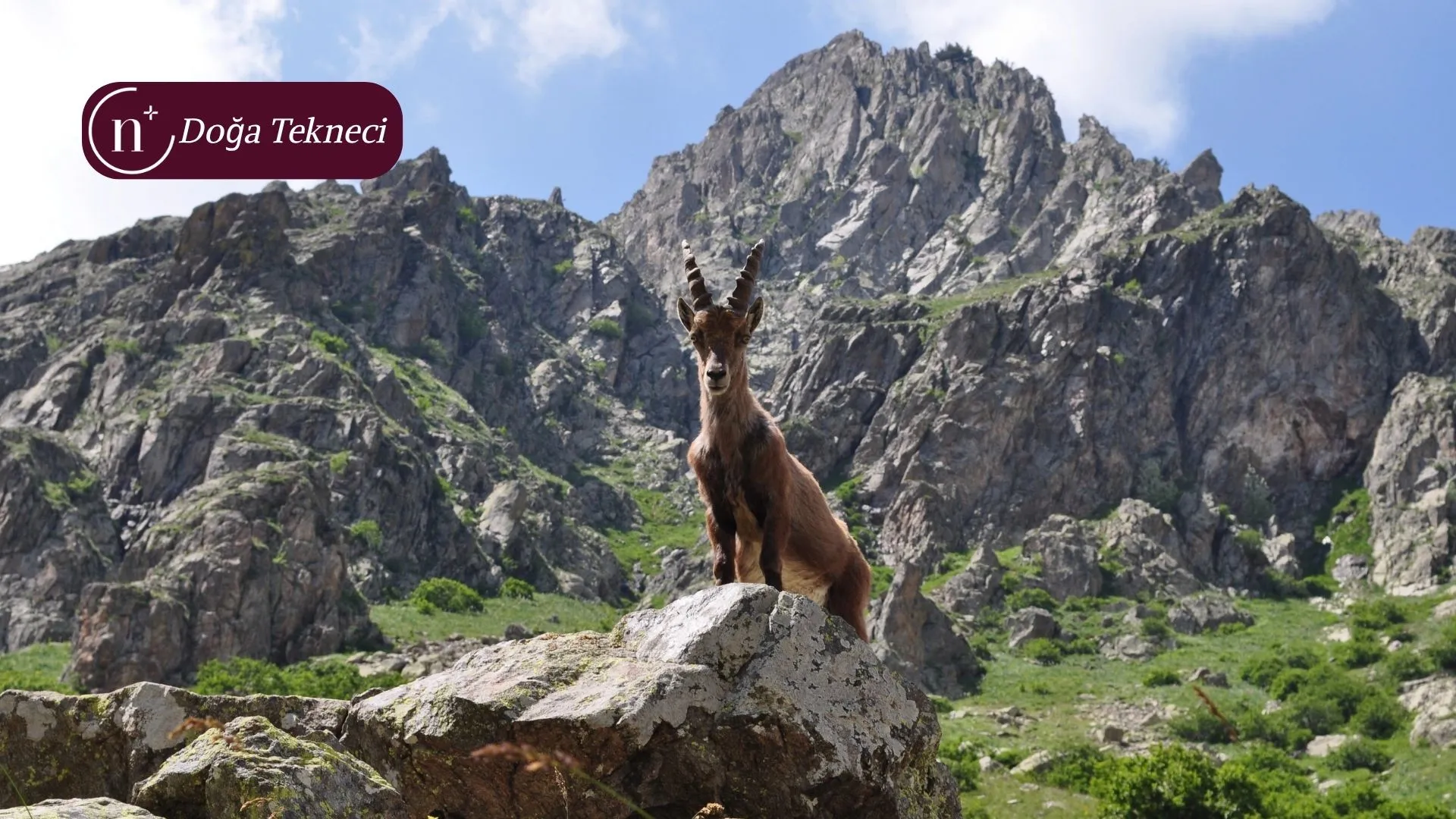
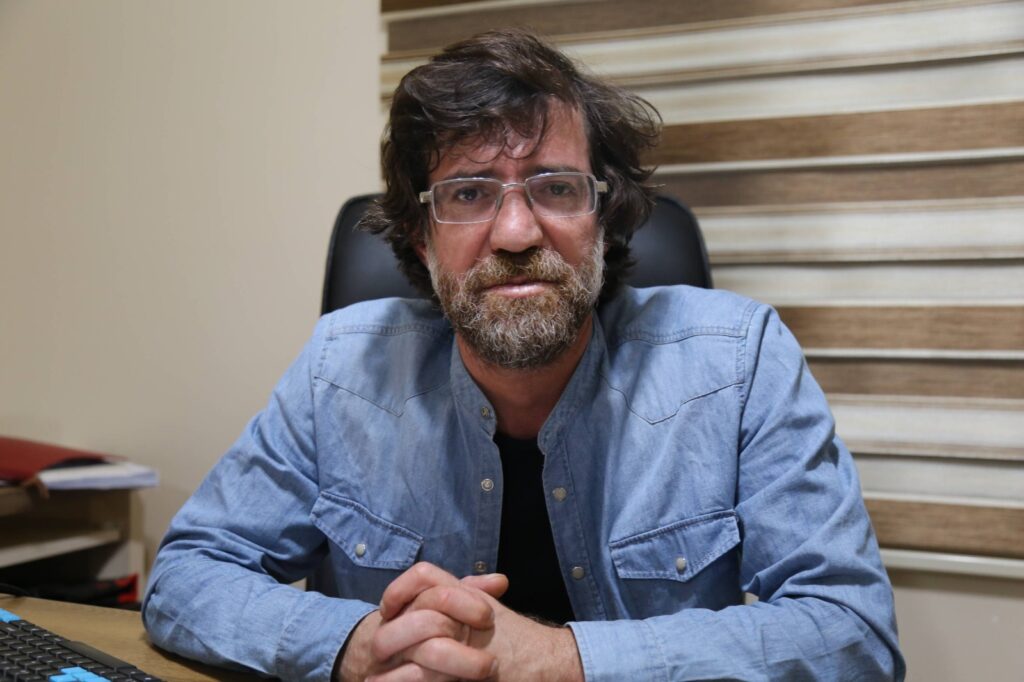
Hunting quotas for wild mountain goats have gone up for auction in Van and Hakkâri as part of the 2026-2027 hunting tourism season, drawing sharp criticism from ecology groups. “Anyone who comes to this land to kill a living being will be our target,” says Fatih Şahin from the Van Ecology Association.
The General Directorate of Nature Conservation and National Parks (DKMP), under the Ministry of Agriculture and Forestry, has put mountain goat hunting quotas up for sale as part of its “Hunting Tourism” program in Van and Hakkâri.
In Hakkâri’s Yüksekova district (Gürkavak General Hunting Ground — 2 quotas) and Şemdinli district (Konur State Hunting Ground — 1 quota), a total of three mountain goat quotas were opened for the 2026-2027 season, each with an estimated price of 1,650,000 Turkish liras and a temporary deposit of 49,500 liras. In Van, a single quota was listed at an estimated 450,000 lira. Alongside Van and Hakkâri, Bitlis and Siirt also opened a combined 13 mountain goat quotas through an open-bid tender process, bringing the total asking price for killing mountain goats across the four provinces to 6,150,000 lira. In July, 11 quotas for mountain goats in Muğla had already gone up for sale.
According to DKMP figures, a total of 4,268 wild (mountain) goats were hunted nationwide between 2000 and 2021 through hunting tourism auctions. Mountain goats are also listed on the International Union for Conservation of Nature’s (IUCN) Red List of Threatened Species, with several subspecies classified as endangered.
Turkey’s Law No. 4915 on Land Hunting imposes fines and prison sentences of two to five years on those who kill protected species but the same law permits legal, licensed hunting under its provisions. Rather than banning hunting outright, it regulates the practice within a framework of rules, seasons, quotas and permits intended to make it “sustainable.”
Only travel agencies holding a “Hunting Tourism Permit” issued by the Ministry of Agriculture and Forestry are eligible to bid in these auctions. Agencies that win quotas then offer them to domestic and foreign hunters. Among the targeted animals, mountain goats aged seven and older are generally prioritized. The “licensed” hunting of protected species like these is driven by hunters’ pursuit of tourism revenue and trophy collection.
“We will stand together with the public”
Fatih Şahin, a member of the Van Ecology Association, said the group would launch both legal action and grassroots resistance against the auctions and hunting tourism practices more broadly. He laid out the group’s plan:
“Once the agencies that won the tenders arrive in the region, our resistance begins. We’ll organize local communities through our neighborhood and village councils and take a stand wherever the hunters go. As ecology activists, we’ll be present at the hunting sites, and we won’t stay silent. Legal action will proceed in parallel.”
“Killing a living being cannot be normalized”
Şahin pointed to the region’s natural beauty, arguing that killing its wildlife has nothing to do with promoting tourism there:
“There’s no way to dress up the killing of a living being as tourism, or to promote a region that way. Killing an animal serves nothing but human ego. We see this plainly as an act of savagery. Anyone who comes to this land to kill a living being will become our target.”
Growing backlash against hunting tourism auctions
Civil society groups and ecology activists have increasingly pushed back against these government-run hunting auctions. Regional administrative courts have occasionally suspended or annulled hunting tenders following lawsuits, though similar auction processes tend to resurface in subsequent hunting seasons.
Online petition campaigns, including on platforms like Change.org, have sprung up to build public pressure against the practice.
Beyond the legal hunting tourism industry, poaching — carried out without regard to season or age restrictions — poses a further serious threat to the populations of many protected species, mountain goats chief among them.
Attorney Erdal Kuzu, noting that there is public expectation that cases involving unsolved political murders will be retried, stated, “Although the Ministry of Justice’s statements include phrases such as ‘there will be no unsolved cases left,’ it is understood that these statements apply only to cases that have not yet been barred by the statute of limitations. There is no indication that JİTEM cases or cases of unsolved murders will be reopened as a result of the ongoing negotiations between the current Kurdish political movement and the government.”
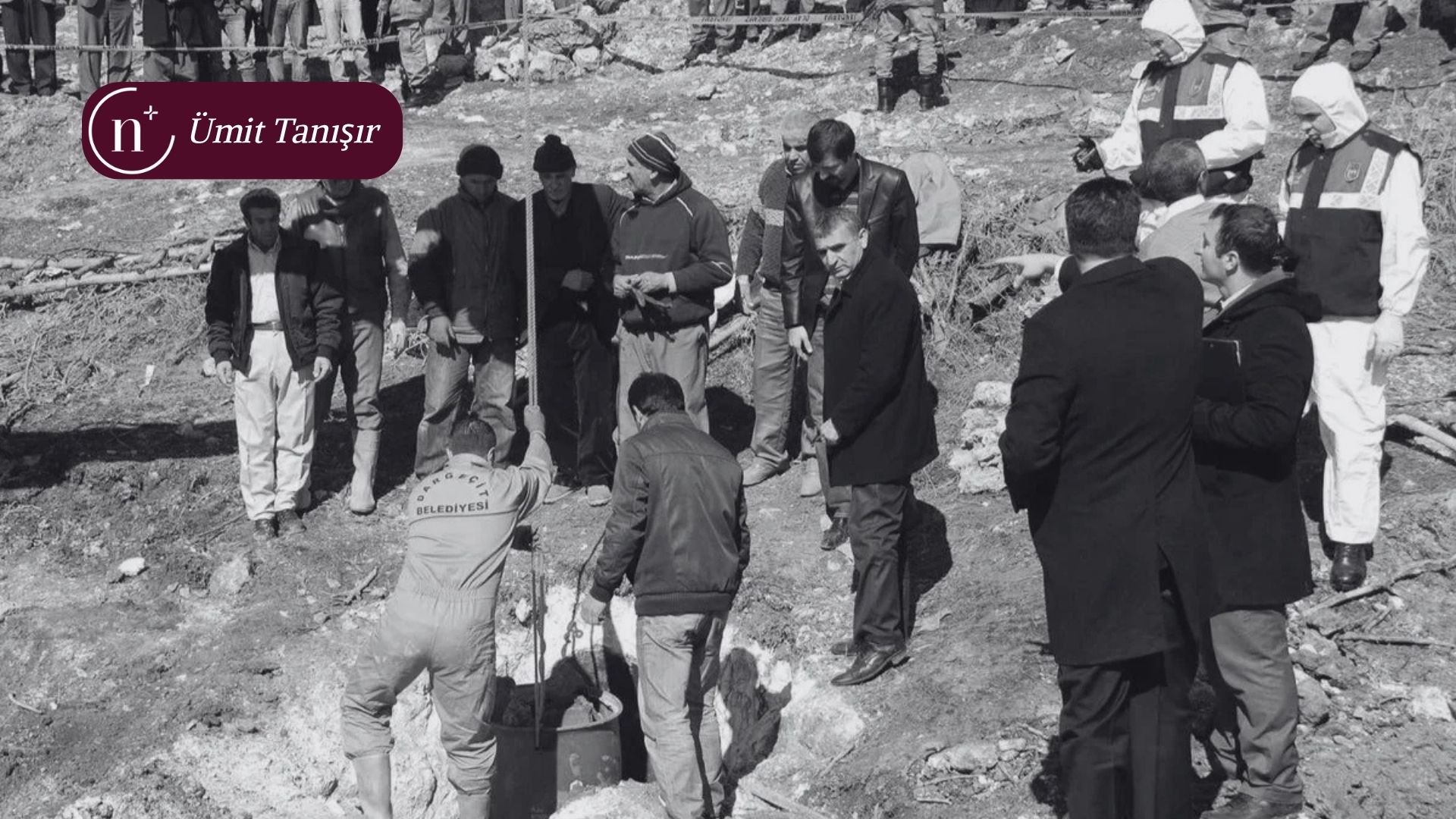
*The Dargeçit JİTEM Case
Following Akın Gürlek’s appointment as Minister of Justice by President Recep Tayyip Erdoğan, “unsolved murders” have returned to the public agenda. According to Gürlek’s statement, investigations will be conducted into 638 cases and 693 murders across 75 provinces. The Ministry, which until now has primarily focused on criminal cases, recently met first with the family of journalist Uğur Mumcu and then with the family of journalist Musa Anter. This has led to public speculation that the next phase in the “unsolved murders” case will involve political cases.
Cases were filed in 2008
In 2008, during the Ergenekon Trials, the matter was brought before the courts based on the testimony of a confidential witness codenamed “Aydos,” and lawsuits were filed against the relevant government officials and individuals. Some of the cases known to the public as the JİTEM trials were consolidated in 2010 into the JİTEM Main Trial. The Kızıltepe JİTEM Trial, however, continued to be heard separately. However, following the termination of the previous “Peace Process” in 2015 and amid the shifting political climate, the policy of impunity continued to prevail in cases involving these murders committed against Kurds. The Kızıltepe JİTEM Case was dismissed in 2019 on the grounds of the statute of limitations, and all defendants were acquitted. The main JİTEM case was also dismissed in 2025 on the grounds of the statute of limitations. Many other cases related to JİTEM that were tried separately met the same fate.
The final hearing in the Kızıltepe JİTEM case took place in 2019 at the Ankara 5th High Criminal Court. At that hearing, the court announced that the case had been dismissed due to the statute of limitations and that all defendants had been acquitted. Thus, the case—which was initiated in 2014 while negotiations were still ongoing and was characterized as a “confrontation trial”—had turned into an example of impunity and exoneration with the acquittal ruling.
At the time, Erdal Kuzu, one of the case’s attorneys, stated in a statement regarding the case that 12 people had been found in the wells, adding, “This decision is related to shifts in the balance of power. A retrial depends on the political climate. Due to the new alliance the AKP has formed since 2015, cases of this nature are being closed.”
However, in 2024, when Devlet Bahçeli went to the benches occupied by DEM Party members of Parliament to shake hands with them, and subsequently, during his party’s caucus meeting, called for Abdullah Öcalan to lay down arms and expressed expectations that new legal regulations regarding the peace process would be implemented, this brought the unsolved murders and related cases back into the spotlight. The families of the missing continue to seek justice in this matter. This situation raises the question of whether the political climate in Turkey has shifted in favor of peace once again with this new process.
JİTEM Trials
Main JİTEM Trial
The 11-defendant indictment prepared in 1999 and the 5-defendant indictment prepared in 2005 were merged in 2010 and came to be known as the “Main JİTEM Trial.” This case was later joined with the trial initiated in 2013 regarding the murder of writer-journalist Musa Anter, as well as the trial launched in 2019 concerning the tortured murder of Ayten Öztürk. There were 18 defendants in total in the main trial.
During the hearing held in Ankara on January 27, 2025, the court ruled to dismiss the JİTEM, Musa Anter, and Ayten Öztürk trial due to the statute of limitations, citing that 30 years had passed since the dates of the disappearances.
Kızıltepe JİTEM Trial
In 2014, a lawsuit was filed regarding the unlawful arbitrary execution or forced disappearance of 22 people in the Kızıltepe district of Mardin between 1992 and 1996. The charges of “establishing or managing an armed organization, membership in an armed organization, and premeditated murder” were brought against retired Colonel Hasan Atilla Uğur, then-Diyarbakır Provincial Gendarmerie Commander Colonel Eşref Hatipoğlu, Gendarmerie Commando Company Commander Ahmet Boncuk, Sergeant Major Ünal Alkan, and village guards Abdurrahman Kurğa, Mehmet Emin Kurğa, Ramazan Çetin, Mehmet Salih Kılınçaslan, and İsmet Kandemir.
The final hearing of the case involving nine defendants—four military personnel and five village guards—was held on Monday, September 9, at the Ankara 5th Heavy Penal Court. The court panel announced that the case was dismissed due to the statute of limitations and acquitted all defendants.
Dargeçit JİTEM Trial
In May 2026, the 1st Criminal Chamber of the Court of Cassation dismissed the “Dargeçit JİTEM Trial”—which was filed regarding 8 people and Sergeant Major Bilal Batırır who were forcibly disappeared in custody and killed in the Dargeçit district of Mardin between 1995 and 1996—on the grounds of the statute of limitations.
Other Trials
Other trials filed concerning JİTEM and unsolved murders that concluded with acquittals: the Derik Trial, the Nezir Tekçi Trial, the Görümlü Trial, the Vartinis Trial, the Cizre Trial, the Kızılağaç Trial, the Kulp Trial, the Lice Trial, and the Ankara Trial.
Has the political climate changed?
Speaking to Niha+ on the subject, attorney Erdal Kuzu highlighted the shift in the political climate between 2019 and 2024:
“It is impossible to say that the political climate at the time of the Kızıltepe JITEM trial is the same as that of 2019 and 2024. While in 2019 the state’s policies were shaped with the aim of eliminating Kurdish political movements, by 2024 steps had been taken toward resolving the Kurdish issue through nonviolent means, and a basis for communication had been established between the government and Kurdish political movements. Therefore, it is not possible to say that these two periods are the same. This situation is confirmed by information reflected in the public sphere.
It is possible to say that the state’s approach to the Kurdish issue changed in 2024. We can speak—at least at the level of rhetoric—of a process in which the elimination of armed struggle has expanded the political arena and paved the way for democratization. Whether this will materialize in practice, however, remains to be seen in the coming days. Yet we will see what concrete steps will be taken, to what extent the political arena will expand, and how much leeway the state will allow in this area through the practical measures to be implemented and the laws to be enacted in the coming period. In this sense, significant public expectations have been raised.”
*Attorney Erdal Kuzu
Expectations of people
In 2025, the Directorate for the Investigation of Unsolved Crimes was established within the Ministry of Justice. However, there are no signs that this newly established institution will launch a new investigation into the dismissed JİTEM cases. Attorney Kuzu made the following remarks on this matter:
“There is as yet no outward indication that the state will establish a new judicial mechanism regarding unsolved crime case files and matters related to JİTEM. Although the Ministry of Justice’s statements include phrases such as ‘there will be no remaining unsolved cases,’ it is understood that these statements apply only to cases that have not yet been barred by the statute of limitations. There is no indication that JİTEM cases or unsolved murder cases will be reopened as a result of the ongoing negotiations between the current Kurdish political leadership and the state authorities. However, if the process normalizes, weapons are completely removed from circulation, and political negotiations continue, the issue of coming to terms with the past will come to the forefront.”
However, it is also a well-known fact that as the situation and life return to normal, families will voice their demands for justice on this issue more forcefully, and their struggle in this regard will escalate.
“The state cannot remain silent”
Stating that the state cannot remain indifferent to the expectations of justice held by the relatives of the missing, Kuzu added the following:
“The perpetrators have still not been found, and the bodies remain unaccounted for. Expecting families to forget this pain goes against the natural course of life. It is well known that in countries where conflict resolution has taken place on a global scale, mechanisms for coming to terms with the past have been established. It would be natural for a similar situation to unfold in Turkey. We do not expect the political establishment to remain indifferent to demands that develop in this direction. However, we will all see in the coming days what method will be used and how this will unfold.
In 2019, we stated that the state had closed the files on unsolved murders and JİTEM cases within the framework of a political compromise, and that this was a political decision. In the process that has unfolded since 2024, it has become evident that this alliance within the state, while not yet beginning to dissolve, has undergone significant changes in certain respects. It can be said that bringing perpetrators—who hold no value for the state but are believed to have committed crimes against humanity—back before the courts would not come as a surprise in terms of the state’s efforts to restore public trust.”
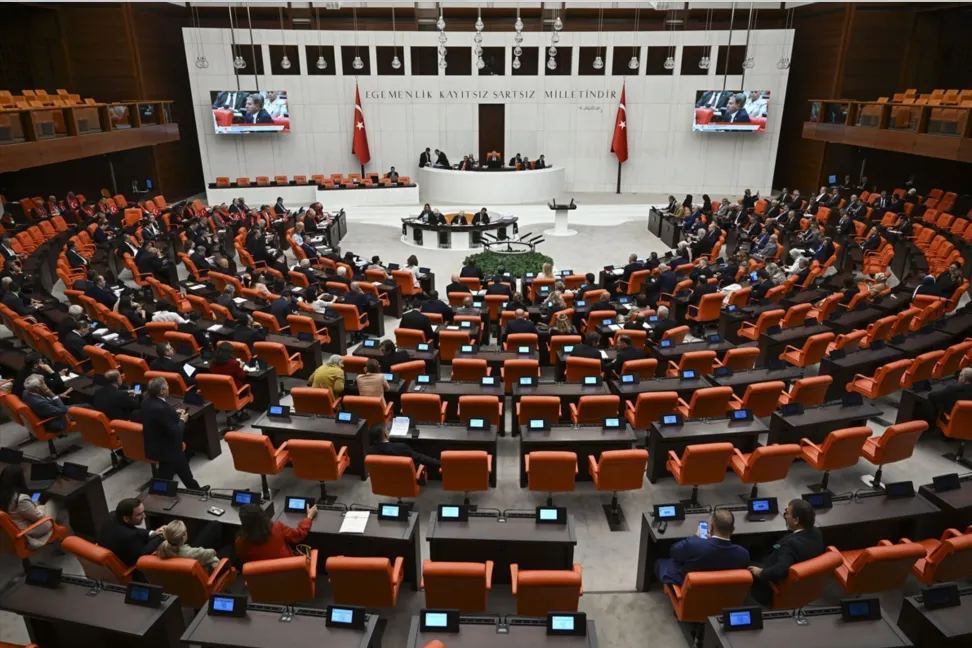
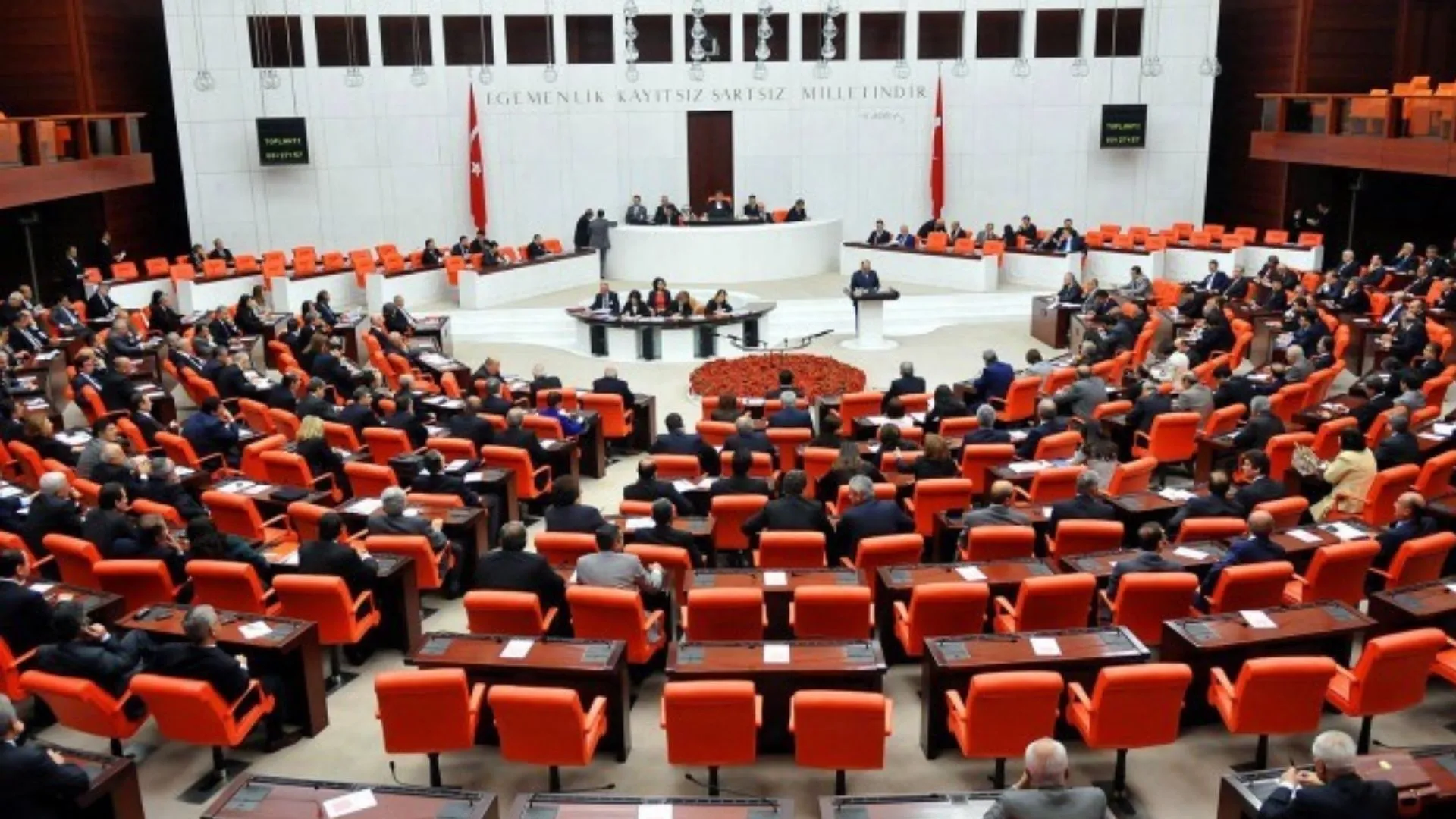
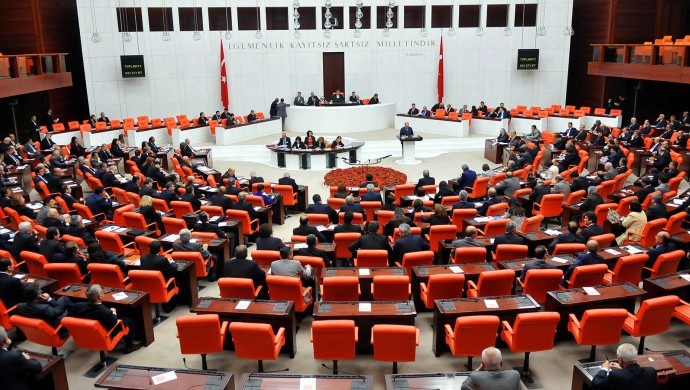
The bill, which aims to bring a 50-year conflict to a legal conclusion, sparked heated debates in the General Assembly of the Parliament. Following the vote, the bill was passed and became law.
Known to the public as the “Framework Law,” the “Draft Law on Strengthening National Solidarity and Social Integration”—which regulates the PKK’s disarmament and the legal status of PKK members—was passed by Parliament following a vote and became law. In the vote, which was conducted via electronic voting, 562 members of parliament cast their votes, with 468 voting in favor, 88 against, and 6 abstaining. Thus, the “Draft Law on Strengthening National Solidarity and Social Integration” passed the General Assembly of the Parliament and became law.
The General Assembly adjourned following the vote.
Debates on the legislation, known to the public as the “Framework Law,” began at 11:00 a.m.
In the General Assembly, the deputy group leaders of the various parties made statements regarding the bill. Bülent Kaya spoke on behalf of Yeni Yol, Turhan Çömez on behalf of the İYİ Party, Rahmi Aşkın Türeli on behalf of the CHP, Erkan Akçay on behalf of the MHP, Gülistan Kılıç Koçyiğit on behalf of the DEM Party, Murat Emir on behalf of the Yeni Party, and Abdulhamit Gül on behalf of the AKP.
The 12-article bill is expected to establish the legal framework for the new resolution process.
The “Draft Law on Strengthening National Solidarity and Social Integration”—known to the public as the “Framework Law”—which regulates the PKK’s disarmament and the legal status of PKK members, was adopted by the Grand National Assembly of Turkey (TBMM) Plenary following intense debates, and deliberations on its articles have begun.
In an electronic vote held in the General Assembly, the decision to proceed with the bill’s articles passed with 269 “Yes” votes against 28 “No” votes. While the ruling coalition (AKP and MHP) described the bill as “a historic state policy for a Turkey free of terrorism,” the İYİ Party strongly opposed it. The YENİ Party and the CHP, which announced they would vote “Yes” on the bill, noted that the process must be supported by steps toward democratization and justice. Thirty-three members of the YENİ Party parliamentary group declared they would vote “No.”
YENİ Party MPs who announced they will vote “No”
1. İzzet Akbulut
2. Hasan Öztürk
3. Sibel Suiçmez
4 Cemal Enginyurt
5 Süreyya Öneş Derici
6 Deniz Yavuzyılmaz
7 İbrahim Aslan
8 Hikmet Yalım Halıcı
9 Cumhur Uzun
10 Eylem Ertuğ Eryılmaz
11 Murat Çan
12 Servet Mullaoğlu
13 Salih Uzun
14 Uğur Bayraktutan
15 Şeref Arpacı
16 Murat Bakan
17 Seyit Torun
18 Mahmut Tanal
19 Fethi Açıkel
20 Elvan Işık Gezmiş
21 Melih Meriç
22 İsmail Atakan Ünver
23 Mehmet Tahtasız
24 Ümit Özlale
25 Mustafa Erdem
26 Ayşe Sibel Yanıkömeroğlu
27 Reşat Karagöz
28 Ayhan Barut
29 Barış Karadeniz
30 Fahri Özkan
31 Deniz Yücel
32 Seda Kaya Ösen
33 Ednan Arslan
Ekrem İmamoğlu, the detained Istanbul Metropolitan Municipality (İBB) Mayor, issued a statement through his lawyers regarding the “framework law.” Noting that Turkey is at “one of the most significant turning points in its history,” İmamoğlu said that peace, tranquility, brotherhood, democracy, and the rule of law must be strengthened.
Imamoğlu expressed his support for the decision made by Özgür Özel, Chairman of the New Party, during this process. Stating that he believes in “the new political path he has opened, his great struggle, and his leadership,” Imamoğlu said he supports “the exceptional resolve he has demonstrated through all his warnings.”
Imamoğlu said, “I stand behind the decision he made today.”
The DEM Party, meanwhile, described the law as “the first step toward resolving the conflict.”
Ş. Can Atalay, the elected MP for Hatay, sent a message from Silivri Prison emphasizing the importance of a nonviolent political environment, while Tunç Soyer noted that the law is a key to “ending the era of blood and tears.”
Chronology of the Day
11:37 – 13:55
Pre-Session and Lobby Traffic
Devlet Bahçeli, Chairman of the MHP who initiated the process, arrived at Parliament. In the lobby, DEM Party Co-Chairs Tülay Hatimoğulları and Tuncer Bakırhan, alongside Imralı Delegation members Pervin Buldan and Mithat Sancar, approached Bahçeli and shook hands. Prior to this, AKP and CHP Group Chairmen also greeted Bahçeli.
11:58 – 14:01
Initial Statements by Group Deputy Chairmen and İYİ Party’s Motion
Taking the floor at the beginning of the session, AKP Group Deputy Chairman Abdulhamit Gül defined the process as the “spirit of Gallipoli,” while Gülistan Kılıç Koçyiğit from the DEM Party stated, “The winner of peace will be 86 million people.” Representatives from CHP, YENİ Party, and Yeni Yol emphasized that laying down arms alone would not suffice without democratization. The İYİ Party submitted a group motion to prevent the start of deliberations on the grounds that the bill was unconstitutional. The motion, presented by İYİ Party’s Turhan Çömez with harsh criticism stating “You chose the day the Treaty of Sèvres was signed (August 10) to deliberate this bill that will pardon terrorists,” was rejected upon voting.
14:06
İYİ Party’s Fierce Opposition: ‘It Is a Major Uprising’
İYİ Party Chairman Müsavat Dervişoğlu was the figure who delivered the harshest reaction to the process from the podium. Arguing that the law aims to integrate PKK leaders into politics, Dervişoğlu confirmed they would vote ‘No’, stating: “No matter what anyone calls this process, it is a major uprising against our national identity and republic. Who marketed Öcalan as an acceptable political guru?”
15:56
DEM Party: ‘This Law Is Not a Concession, the Homeland Is Shared’
DEM Party Co-Chair Tuncer Bakırhan stated that the bill is the “first step in conflict resolution,” adding: “This bill is not a concession; it is neither victory nor defeat. We are not opening the integrity of the country to debate. If the Kurds wanted to secede, we would not be here. The homeland is shared.” Bakırhan noted that although the law has shortcomings, they support it, and the real step must be taken through democratization when Parliament opens.
16:07 – 16:38
YENİ Party and CHP: ‘We Will Not Stand in the Way of Peace’
YENİ Party Chairman Özgür Özel criticized the process being conducted behind closed doors and the lack of democratic steps such as trustee appointments and ECtHR rulings. However, he stated, “We will not close the door opened for laying down arms; we will vote ‘Yes’.” Özel granted his MPs a free vote based on the sensitivities of their provinces. Speaking on behalf of the CHP, İnan Alp Akgün and Oğuz Kaan Salıcı also confirmed that the CHP would vote ‘Yes’, saying, “The time has come to secure the Republic through democracy.”
18:01 – 18:03
Ruling Bloc (MHP, AKP): ‘This Is Not an Amnesty’
MHP Deputy Chairman Feti Yıldız emphasized that the bill is not an amnesty and does not alter ongoing investigations or the nature of offenses. He stated, “The goal of the process is the rule of law and the strengthening of the internal front.” AKP Group Chairman Abdullah Güler shared that the prepared report was drafted “without a third-party external observer, by the children of this land,” and that the sole objective is to ensure violence is never discussed again.
What had happened?
The bill had been debated for 18 hours in the Turkish Grand National Assembly’s Justice Committee.
The bill bears the signatures of 367 members of parliament, including representatives from the AKP, CHP, MHP, DEM Party, HÜDA PAR, the New Path Group, and the DSP.
During the discussions, which were not without controversy, the AKP and MHP argued that the bill was the “product of a historic consensus” and did not constitute an “amnesty.”
The CHP and the New Party, however, emphasized that the process lacked a democratic dimension. The New Path Group, meanwhile, stated that the measure constituted a “conditional general amnesty.”
Seat distribution in Parliament
AKP 277, New Party 91, DEM Party 56, MHP 46, CHP 45, Good Party 29, New Path Party 20, HÜDA PAR 4, Prosperity Party 4, TİP 3, Democratic Regions Party (DBP) 2, EMEP 2, Felicity Party, Democratic Left Party, and Democratic Party each hold 1 seat. Ten members of Parliament are independents.
Parliament Scoreboard: Framework Law Vote
nihaplus Special Infographic Desk • Detailed Breakdown by Party and MP
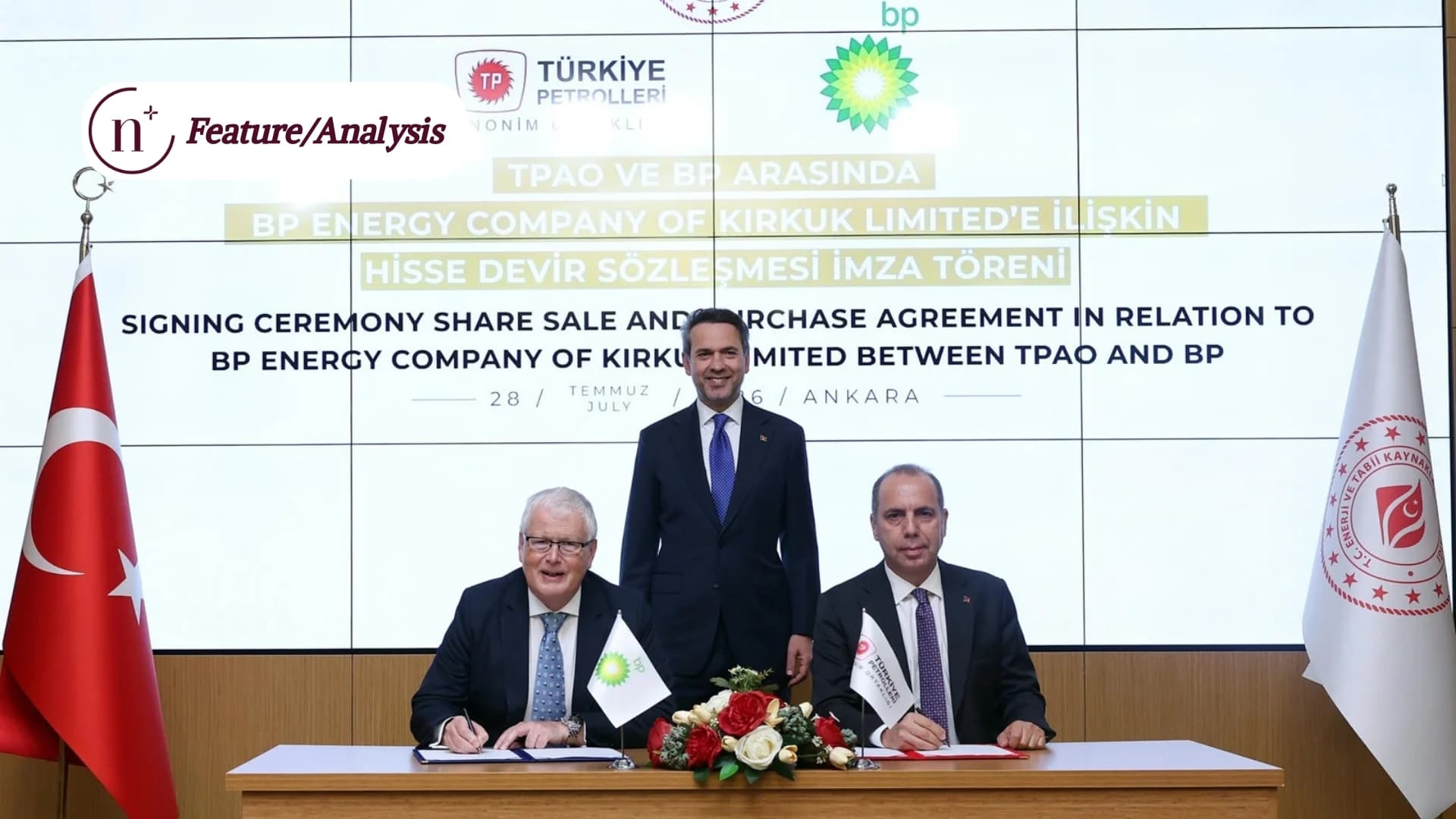
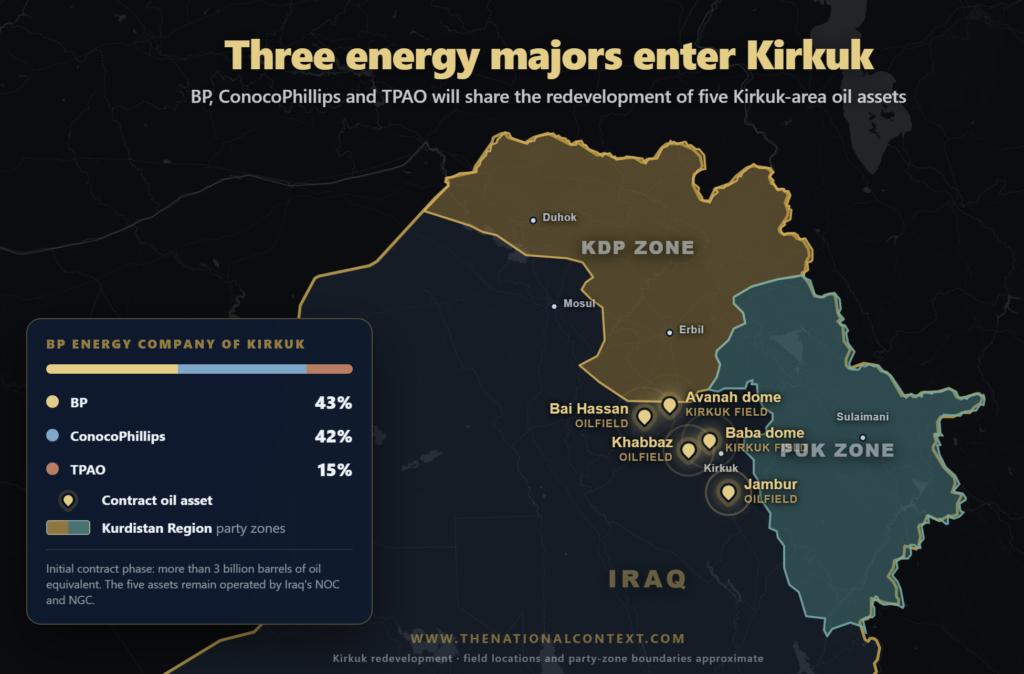
TPAO has taken a 15% stake in the BP vehicle redeveloping Kirkuk. According to The National Context, it marks Turkey’s return to a geography where a century ago it held only a royalty right; yet the share structure keeps Ankara’s seat well short of a steering wheel.
Photo: The National Context
Turkey’s state oil company TPAO has acquired a 15% stake in BP Energy Company of Kirkuk Limited, the contractor vehicle for the redevelopment of the Kirkuk oil complex. An analysis published by The National Context describes this as the clearest commercial sign yet of Ankara’s return to a geography where it last held a formal economic interest a century ago.
The agreement was signed in Ankara by TPAO general manager Cem Erdem and BP upstream business development vice president Andrew McAuslan, in the presence of energy minister Alparslan Bayraktar, ahead of talks between President Recep Tayyip Erdoğan and Iraqi Prime Minister Ali al-Zaidi. It follows ConocoPhillips’s agreement earlier in the month to take a 42% interest in the same vehicle, concluded during al-Zaidi’s visit to Washington, and leaves BP with the remaining 43% and majority control.
The National Context states that the contract area covers the Baba and Avanah domes of the Kirkuk field together with Bai Hassan, Jambur and Khabbaz, with an initial gross recoverable resource above three billion barrels of oil equivalent. The transaction does not alter the contract framework: the fields remain Iraqi state property, North Oil Company and North Gas Company retain their operating roles, and the partners will book production and reserves according to the terms of the development and production contract. The signing came a day after the Iraq–Turkey crude oil pipeline agreement expired, with both governments stating that they now want a comprehensive energy cooperation agreement in its place.
Back to 1926
To measure the return, The National Context reaches back to the one earlier moment Turkey had money riding on this ground. Back then, the analysis notes, it wasn’t a business stake at all but a consolation prize for territory it had given up. The 1926 Ankara Treaty had Turkey accept the Brussels Line, which placed the old Mosul vilayet on the Iraqi side of the border. In exchange, Ankara was promised 10% of the oil royalties owed to the Iraqi government over a 25-year window, with a fallback option to trade the whole stream for a single £500,000 cheque. Crucially, that 10% bit only into royalties (not production, not exports, not profits) and it bought Turkey no piece of the Turkish Petroleum Company, an outfit the analysis describes as Turkish in name and nothing else.
The cash didn’t even start moving until Baba Gurgur was discovered. The first payment landed in 1931: Iraq collected somewhere around £400,000 in royalties and passed roughly £40,000 up to Ankara, a figure that had climbed to about £223,000 by 1939. Turkish budget records show the 10% payments still running through 1952, with one last, smaller sum in 1954, which makes the frequently repeated claim that Turkey just cashed out for £500,000 either wrong or only half the tale. The math also limits how much the entitlement was ever worth: 10% of royalties, themselves only a sliver of gross sales, left Ankara with something nearer 1% of what the oil was really worth. Lord Curzon’s instinct that the territory mattered was vindicated within a year of the settlement, when Kirkuk turned out to hold one of the largest fields in the world.
Zoom out, the analysis suggests, and the real backdrop is the regional economy that the post-1918 lines carved up. It leans on Sarah Shields’s work on nineteenth-century Mosul, which shows a city whose merchant class looked outward along old, dense regional ties (toward Aleppo, Baghdad, Damascus and the Anatolian interior) rather than toward Europe or Istanbul, with only a small share of trade by value ever leaving that orbit. Aleppo connected the interior to Mediterranean shipping through Alexandretta, and the Baghdad Railway was an unfinished attempt to bind Anatolia, northern Syria and Mesopotamia through modern infrastructure. Kirkuk didn’t enter its oil age until 1927 so, the piece argues, today’s petroleum arrangements are being draped over a map that trade, caravans and railways had already knitted together long before.
The Fulcrum Doctrine
The National Context files the TPAO stake under what it calls the Fulcrum Doctrine: a setup in which Washington calls the strategic shots across Iraq, Syria and Turkey but hands the actual work to regional players, using energy and infrastructure as the levers.
Source: The National Context
The diplomatic architecture, it argues, tells the same story. Tom Barrack serves simultaneously as US ambassador in Ankara and as special envoy for Syria and for Iraq, and he described the three countries on taking the expanded role as the strategic fulcrum on which regional stability rests, requiring a single consistent American point of contact. Syria and Iraq were bolted onto the portfolio of the ambassador resident in Turkey, not the other way round, which makes Ankara the administrative hub of Washington’s northern Middle East. The economic side lines up with the diplomacy. June’s US–Iraq joint statement backed reviving the Kirkuk–Baniyas line out to the Mediterranean, and the Iraq–Syria pipeline deal inked in Washington this month puts a US-led consortium in charge of the engineering and the financing. The point of both the northern and western corridors, the piece says, is the same: to loosen Iraq’s reliance on the Strait of Hormuz.
Inside that frame, the analysis reads the Kirkuk line-up as a neatly parcelled set of jobs. Washington holds the strategic umbrella; the American and British firms bring the capital and the corporate machinery; Turkey brings the ground, the pipes and the regional access; and Iraq keeps the sovereignty and owns the oil. The 85% that BP and ConocoPhillips split between them also sets the hard ceiling on how far Turkey can go. TPAO gets a seat, the piece argues, because Turkish soil, ports and pipelines make Ankara the northern gateway nobody can route around. Yet, the share math is built so that a seat never becomes a steering wheel. That fits its longer-running case that Turkish leverage in the region runs through corridors, host geography and rights of approval, not through owning the outcome.
1926 against 2026
The analysis suggests that the comparison with 1926 should be handled with the same precision. A royalty cut and a block of company equity are different legal instruments, so reading “10% to 15%” as a straight upgrade misses the point. The jump means nothing in pure financial terms. According to The National Context, what actually repeats is the structure: In 1926, a bargain drawn up in London turned a Turkish land claim into a short-lived royalty trickle from outside the operating company, while later American pressure bought US firms a permanent 23.75% inside it.
In 2026, the same three ingredients (a Turkish state interest, British oil capital and Kirkuk crude) are stirred back into one vehicle, with BP presents the project as a return to the field its predecessor helped discover at Baba Gurgur. The one thing that’s genuinely moved, the piece concludes, is where Turkey stands in relation to the consortium: in 1926 it took a slice of Baghdad’s royalties from the outside, in 2026 it holds shares inside the contractor within an arrangement that remains Anglo-American in design and Iraqi in sovereignty. The borders drawn after 1918 are unchanged, while the energy, security and commercial systems that cross them increasingly operate as one connected space, with Turkey positioned as its northern hub.
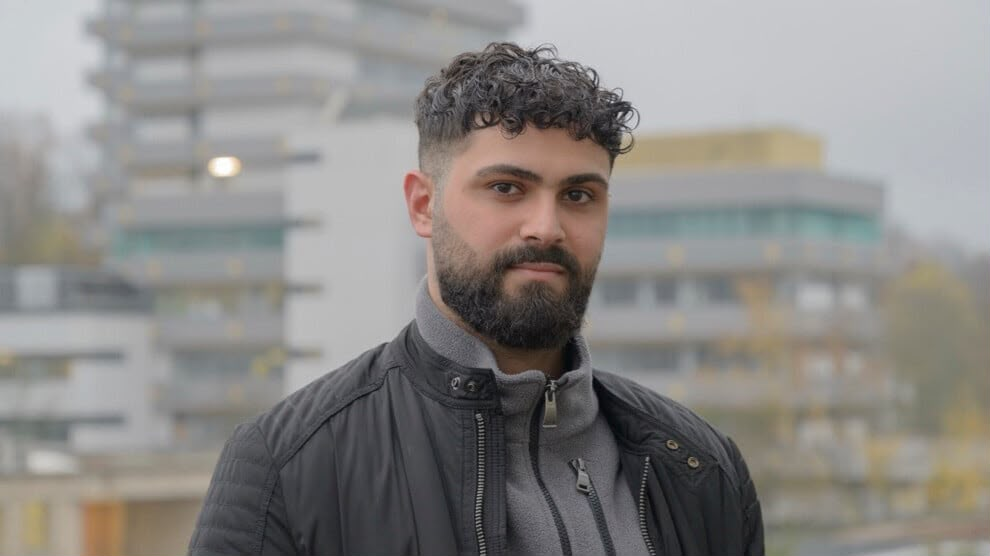
Civan Akbulut, Chair of the Information Center on Anti-Kurdish Racism (IAKR), who stated that racism against Kurds is not officially recognized in Europe, noted that what is not named remains invisible and unpunished. Akbulut, noting that Kurdish asylum seekers face high rejection rates from European countries, said, “ The closer the political rapprochement with Ankara, the harder it becomes to have a Kurdish history of persecution recognised at all.”
Photo: The Amargi
Across Europe, “anti-Kurdish racism” remains one of the least acknowledged yet most pervasive forms of systemic discrimination. While general far-right sentiment and anti-immigrant hostility continue to rise, Kurds living in Europe face a double burden: a broader xenophobic climate as well as transnational persecution influenced by geopolitics and right-wing extremism.
In countries like Germany—home to the largest Kurdish diaspora in Europe, estimated at over one million people—this manifests in daily life, public institutions and on the streets. Incidents range from physical violence by ultranationalist groups to institutional neglect. In recent years, violent clashes and attacks targeting Kurdish community centers, cultural events, and individuals in cities such as Essen, Stuttgart, and Cologne have highlighted the growing threat posed by Turkish far-right networks, most notably the Grey Wolves (Bozkurtlar).
The Grey Wolves movement (Ülkü Ocakları) is decidedly anti-Semitic and anti-democratic and is combatively directed against Kurds, Armenians, Alevis, Ponto-Greek as well as other minorities and opposition members with a connection to Turkey.
Despite these growing dangers, attacks on Kurds are frequently filed simply as “foreign political disputes” or generic “politically motivated crime,” masking the specific anti-Kurdish nature of the violence. Furthermore, the persistent criminalization of Kurdish political expression in Germany is often enforced to maintain diplomatic alignments with Turkey. This criminalization may also cause tragic ends, for example, as the data shown in the press and public opinion, dozens of Kurdish refugees have ended their lives in Germany since 2023.
According to data from the “2024 Report on Anti-Kurdish Racism” presented to the Federal Parliament by the Information Center on Anti-Kurdish Racism (IAKR), which operates in Berlin, the capital of Germany, 217 documented cases of anti-Kurdish racism were recorded in 2024 alone. The report states that 37.8% of the incidents—including political acts, physical attacks, and discrimination (82 cases)—were linked to the symbols and rhetoric of far-right Turkish nationalist groups such as the “Ülkü Ocakları” (Grey Wolves).
To understand the mechanics of this phenomenon, lawyer and politician and chair of IAKR Civan Akbulut, who pointed out anti-Kurdish racism is a constitutional problem that functions across legal, political, and daily lives in Europe.
Chair of IAKR, Civan Akbulut, Photo: ANF
“Anti-Kurdish racism reaches everyday life”
According to Akbulut, anti-Kurdish racism begins with the fundamental denial of Kurdish identity, creating a baseline where verbal abuse, threats, and physical attacks become normalized.
Hightlighting that online platforms like TikTok and X have dropped the threshold for open hostility – by becoming almost part of the “normal tone” – which routinely spills over into schools, public offices, and workplaces, Akbulut also stresses that Kurds face a unique layer of risk.
Akbulut says that what is at stake are fundamental rights: Physical integrity in the face of attacks, and protection from discrimination.
“Anyone who visibly identifies as Kurdish has to reckon, in Europe, with none of this being guaranteed to them. Racism as a whole is a growing problem in Europe, one that has increased markedly in recent years. Anti-Kurdish racism is part of this development and intensifies along with it.”
“About 18,000 are attributed to Grey Wolves”
Akbulut points out that this domestic hostility is further interlocked by both European foreign policy, alongside immigration policy, which often overlooks the activities of ultranationalist groups out of geopolitical calculations toward Ankara, effectively allowing transnational racism to operate unpunished within European borders:
“The Grey Wolves are among the largest far-right movements in Germany and Europe; they are extremely capable of mobilising and prone to violence. In Germany alone, roughly 18,000 people are attributed to them, and for this movement Kurds are the central enemy. Added to this is a European politics that, out of geopolitical calculation towards Ankara, looks the other way. When the criminalisation and blanket suspicion propagated by the Turkish government seep, in part unquestioned, into European media, this shifts the public perception of Kurds. Anti-Kurdish racism operates transnationally, but its manifestation is a German and European problem. It takes place here, is permitted and applied by domestic politics, and largely goes unpunished.”
Anti-Kurdish Racism in Germany
IAKR Special Report No. 1 (January 2026) • Key Findings
The report argues that developments in Syria have significantly intensified hate speech, digital attacks, and discrimination targeting Kurdish communities in Germany, demonstrating the direct impact of international conflicts on the Kurdish diaspora.
43
People killed during the attacks on Sheikh Maqsoud and Ashrafiyah
25
Civilian fatalities
155,000
Displaced civilians
1,500
Reported ISIS members who escaped following the Al-Shaddadi prison attack
400,000+
Population of Sheikh Maqsoud and Ashrafiyah before the attacks
10,000
ISIS detainees held in prisons across Northeast Syria
40,000+
ISIS-linked individuals and family members held in camps
54
Years of Assad family rule before its collapse
Key Findings of the Report
Alleged Bombardment of Civilian Areas
According to the Syrian Observatory for Human Rights, residential neighborhoods and hospitals were deliberately targeted during the offensive.
Mass Displacement
Even the Syrian state news agency SANA acknowledged that at least 155,000 civilians were forced to flee their homes.
Violence Against Women
The report documents that videos showing the abuse of Kurdish female fighters triggered widespread international solidarity campaigns.
Regional Security Risks
Attacks on detention facilities reportedly enabled ISIS detainees to escape, creating significant international security concerns.
Impact on the Kurdish Diaspora
According to the report, military developments in Syria contributed to an increase in anti-Kurdish hate speech and digital attacks in Germany.
January 2026 Timeline
10 January
Following the collapse of negotiations between the Syrian transitional government and Kurdish forces, military operations intensified.
11 January
Sheikh Maqsoud and Ashrafiyah were captured. According to the report, 43 people were killed, including 25 civilians.
Following Days
Videos documenting torture, executions, and abuse circulated widely on social media, prompting international condemnation.
13 January
The offensive expanded into DAANES-controlled areas. Following the attack on Al-Shaddadi Prison, approximately 1,500 ISIS members were reported to have escaped.
Source: Informationsstelle Antikurdischer Rassismus (IAKR), Special Report No. 1 – Incidents of Anti-Kurdish Racism in Germany, January 2026.
“Kurds learned to never rely on the state”
Akbulut defined the underlying problem in addressing this discrimination is the lack of official recognition:
“The category is missing, the awareness is missing. Kurdish society is under considerable pressure and is itself subjected to criminalisation, while Turkish right-wing extremists can run their associations and events largely undisturbed, which act as a catalyst against Kurds. This imbalance extends into the authorities themselves. Kurds have historically learned that they could never rely on the state, and this mistrust continues in Europe when complaints come to nothing or threats are not taken seriously.”
Akbulut drew attention to “one of the most powerful, and therefore most dangerous” one is that anti-Kurdish racism expresses itself is criminalisation, because it provides the justification for oppression and violence. “When Kurdish activism is sweepingly placed in the vicinity of ‘terror,’ a climate emerges in which every form of Kurdish self-organisation falls under blanket suspicion. Once someone has been marked as a security risk, almost anything can be legitimised against them” he continued.
Akbulut stated that in Europe, this criminalisation shows in raids on associations, in bans on flags and symbols, and in the fact that talks and events are cancelled on alleged security grounds or venues are withdrawn at short notice. He stressed the outward effect of this is those who constantly have to explain that they are not a security risk never even get to speak about the discrimination they face.
“Criminalisation reverses the roles: those affected are turned into suspects. That is a major problem” he said.
“Asylum assessments are not neutral”
Akbulut explains that Kurdish asylum seekers face exceptionally high rejection rates because European authorities routinely classify Turkey as a “safe country of origin” and falsely claim that Kurds face no group-based repression there. Akbulut, saying “They are granted protection considerably less often than other applicants”, highlighted this is not coincidental but structural:
“In the decisions, the finding recurs again and again that Kurds face no repression in Turkey on account of being Kurdish. This is simply false and contradicts reality, but it provides the basis for rejecting protection claims. These assessments are not neutral. The closer the political rapprochement with Ankara, the more favourable the official evaluation of the situation in Turkey turns out to be, and the harder it becomes to have a Kurdish history of persecution recognised at all. This does not only concern Kurds from Turkey. Kurds from Syria, Iraq and Iran also have a considerably harder time. And above all of this lies the general development. In the face of the shift to the right, agitation and an ever harsher policy of sealing off borders, refugees across Europe find it harder overall to obtain protection. Kurds stand at a point where all of these constrictions converge.”
“Anti-Kurdish racism interplay with sexism”
The impact of this discrimination is particularly severe for Kurdish women, who experience what Akbulut identifies as a textbook example of intersectional oppression. According to Akbulut, the hostility directed at Kurdish identity intersects with structural sexism, creating compounded dynamics of devaluation:
“Anti-Kurdish racism can therefore occur simultaneously and in interplay with sexism, ableism, queerphobia or classism. What is decisive is that these are not merely different experiences of oppression sitting side by side, but that they influence and reinforce one another. With Kurdish women this becomes very concrete: the racist enemy image of Kurds carries over into a devaluation of Kurdish women that is at once racist and sexist. Several logics of devaluation interlock here, and precisely for this reason the intersectional perspective is so important for our work.”
Because anti-Kurdish racism relies on the same core mechanisms as other forms of group-focused enmity—such as institutional neglect and criminalization—Akbulut emphasizes that cooperation is structurally necessary, as he further stated “Racism does not occur in isolation. Anyone fighting racism almost always encounters the same mechanisms that affect other groups too: devaluation, criminalisation, the looking-away of institutions.”
He also drew attention to the Kurdish self-organisation being a long history, since Kurds have learned to help themselves when the state does not, and this is precisely a pattern that many marginalised groups know.
“Consistent anti-racism is needed”
To dismantle these systemic barriers, Akbulut outlines three essential political and legal actions:
“First, anti-Kurdish racism must be recognised as a distinct form of racism. Without a category of its own, authorities, schools and courts cannot even record the relevant incidents, and what is not named remains invisible and unpunished.
Second, what is needed is consistent anti-racism instead of looking away. Racist actors must no longer be allowed to operate unchecked, and the Grey Wolves must be treated as what they are: a far-right movement. This cannot be separated from the larger picture. Anti-Kurdish racism grows in a climate in which racism as a whole is being normalised and the shift to the right is gaining momentum across Europe.
Third, and this is decisive, politics must stop adopting anti-Kurdish narratives itself. When criminalisation and blanket suspicion seep into European administrative practice and media language, racism is not being fought but administered and perpetuated.”
The articles of the “framework law” prepared within the scope of the Peace and Democratic Society Process have been announced. In the proposal expected to be passed into law within a week, it was observed that Abdullah Öcalan and those who received life or aggravated life sentences before 2005 were excluded from the scope.
The articles included in the draft “framework law,” expected to be submitted to the Grand National Assembly of Turkey (TBMM) under the Peace and Democratic Society Process, were disclosed. The regulations of the bill titled “Law on the Strengthening of National Solidarity and Social Integration” were announced in a joint press conference held by the ruling Justice and Development Party (AKP) and its nationalist ally, the Nationalist Movement Party (MHP).
AKP Group Chairman Abdullah Güler, AKP Deputy Chairman Abdülhamit Gül, and MHP Vice President Feti Yıldız also attended the press conference held at the Parliament. Güler announced the articles of the bill titled “Law on the Strengthening of National Solidarity and Social Integration” submitted to the Speaker’s Office of the Parliament. Stating that the “Strengthening of National Solidarity and Social Integration” bill consists of 12 articles, including the execution and enforcement articles, Güler said: “Necessary regulations will be made as needed. Furthermore, interviews will be held in İmralı with individuals such as academics and journalists, subject to a certain discipline and procedure.”
According to the articles in the proposal, those who received aggravated life sentences before 2005 or crimes leading to an aggravated life sentence obligation will be kept outside the scope of the law. In this context, the fact that Kurdish People’s Leader Abdullah Öcalan, who is the interlocutor of the process, was not included in the framework law sparked public reaction.
Kartal: “The current arrangement is not an appropriate decision”
Speaking to Mesopotamia Agency, Kurdistan People’s Congress (KONGRA-GEL) Co-Chair Remzi Kartal recalled Nationalist Movement Party (MHP) Chairman Devlet Bahçeli’s rhetoric on the “right to hope,” saying: “If Leader Apo is not effective in this process, if he does not personally make a direct call, this process will not progress. The primary metric in the state’s approach to the Kurdish issue—for both the Freedom Movement and the people—is the state’s approach to Leader Apo. Leader Apo’s status, living conditions, and working conditions are the decisive metrics. If there is no reassuring development on this matter, and if familiar security policies are still being based upon, this situation will not build trust either in the Freedom Movement or among the people.”
In his evaluations regarding the process this morning to Sinan Burhan, Editor-in-Chief of Millet News Agency, MHP Chairman Devlet Bahçeli stated that the “right to hope” should be granted to Kurdish People’s Leader Abdullah Öcalan:
“Selahattin Demirtaş should return to his home, Ahmets to their duties, and Öcalan to the ‘right to hope.’ Turkey must find peace. Our goal is for Turkey and the region to attain peace.”
Kartal continued his remarks as follows:
“It may be handled this way at the initial stage by taking public sensitivities into account. However, this must definitely be resolved through other laws to be enacted and other steps to be taken in the coming period. The authorized bodies of the state and the Parliament need to be very clear on this matter. As the people and the movement, this is how we view it. Because if there is truly no development on this issue, returns to Turkey and participation in the legal-democratic process may face serious problems. Therefore, we do not view the current arrangement as an appropriate decision.”
The draft “framework law,” submitted to the Speaker’s Office of the Parliament and shared with the public, is expected to become law within a week.
CHP and HÜDAPAR also signed
AKP, MHP, DEM Party, HÜDA-PAR, and CHP signed the proposal expected to become law within a week. The bill will come before the Parliamentary Justice Commission on Friday, August 7, and discussions will begin. If accepted in the commission, the proposal will begin to be debated in the General Assembly of the Parliament.
“This law is a first step”
Following the signing meeting held in the DEM Party Parliament group room, DEM Party Co-Chairs Tülay Hatimoğulları and Tuncer Bakırhan held a press conference. Speaking first, Bakırhan said: “We had criticisms regarding the law. The law had shortcomings. Despite all this, we will grow this first step and socialize it. We will try to take it to the 86 million. In addition, we will defend and support to the end every democratic step, word, practice, and action that prevents the reproduction of conflict, primarily in the Parliament.”
Speaking after Bakırhan, Tülay Hatimoğulları stated that as DEM Party, they wanted this law to have the nature of a “core law”, adding: “The Kurdish issue is not a terrorism issue. We have always underlined this. The Kurdish issue is an economic issue. It is a social, political, and societal issue. Therefore, by handling this issue and this matter in this way, we consider this stage important in terms of the emergence of new laws that will pave the way for democratization while negotiation and dialogue continue in the upcoming process.”
Twelve years have passed since ISIS, after capturing Mosul on August 3, 2014, turned its attention to Sinjar (Shingal), massacring thousands of Yazidis and abducting Yazidi women and children. According to data from May 4, 2026, 3,595 Yazidis abducted by ISIS have been rescued, while the fate of approximately 2,500 remains unknown.
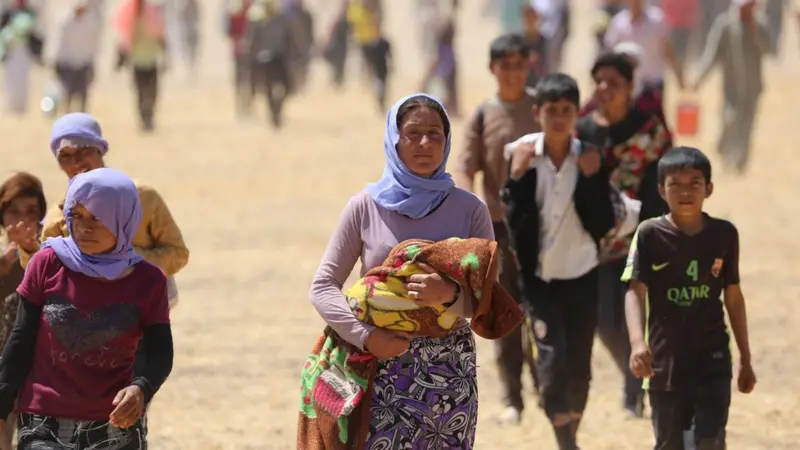
It has been 12 years since the Islamic State of Iraq and Syria (ISIS) attacked Shingal, home to approximately 550,000 Yazidis, on August 3, 2014. Thousands of civilians were executed on the spot, tens of thousands were displaced, and Yazidi women and girls were abducted and raped. The Yazidis, who had endured 72 massacres by 2014, describe ISIS’s 2014 attacks and massacres against them as the “73rd ferman.”
Yazidis who fled the region following the attack sought refuge in camps in many areas, including Turkey, Syria, and the Kurdistan Regional Government of Iraq. According to a report by Rûdaw, approximately 2,500 homes have been built so far at the foot of Mount Sinjar (Shingal) for Yazidis who wish to build their homes there rather than in the valley. Although tens of thousands of Yazidis have returned to Shingal and the surrounding area, many still continue to live in camps far from their homeland.
SINJAR / YAZIDI GENOCIDE — IN DATA
12-Year Toll
According to official data from the Office for Rescuing Abducted Yazidis, the fate of 2,500 out of 6,417 Yazidis abducted in Shingal by ISIS remains unknown.
Attack date: August 3, 2014Latest data update: May 4, 2026
6,417
Total Abducted Yazidis
3,595
Rescued from Captivity
~2,500
Fate Still Unknown
Current Status of the 6,417 Abducted Individuals
56%
39%
5%
Rescued (3,595) Fate unknown (~2,500) Other cases known to be killed/missing
Source: Official data from the Dohuk-based “Office for Rescuing Abducted Yazidis” (as of May 4, 2026). Percentage calculations were made based on the total number of abducted individuals (6,417).
Documents related to the Yazidis are kept on file in the archives of the United Nations (UN) ISIS Crimes Investigation Team (UNITAD)—established by United Nations Security Council Resolution 2379—as well as in the archives of the Ministry of the Interior of the Kurdistan Regional Government of Iraq and the Office for the Rescue of Those Abducted by ISIS.
In the Yazidi faith, the term “ferman” is used to describe the waves of massacres and forced displacement they have faced throughout history, effectively serving as a “death warrant.” The Yazidis say that, up until 2014, they had been subjected to similar persecution and massacres 72 times throughout history. For this reason, ISIS’s August 2014 attack on Shingal is referred to in various sources—and in the words of the Yazidis—as the “73rd Ferman.”
The Shingal Defense Forces
On June 10, 2014, ISIS seized Mosul without encountering any resistance. Having reinforced itself with military supplies left behind by the Iraqi army, it targeted the villages south of Mount Sinjar—where the Yazidis lived—on the night of August 3 of the same year. During the attack, thousands of Yazidis were killed, and women and children were taken captive and sold in slave markets; according to current data, 93 mass graves have been identified in Shingal and the surrounding area to date.
To rescue the hundreds of thousands of Yazidis trapped on Mount Sinjar as a result of ISIS’s attacks, members of the People’s Defense Forces (HPG) went to the region to fight, leading to the rescue of many Yazidis. Tens of thousands of Yazidis were able to escape thanks to a corridor opened by a 12-member HPG unit, after days of fighting, HPG fighters repelled ISIS and succeeded in evacuating the Yazidis to northern and eastern Syria.
The YBŞ (Yekîneyên Berxwedana Şengalê / Şengal Resistance Units) was founded by Yazidi youth within the same month after they were resettled in safe zones. During the Campaign to Liberate Shingal, women within the YBŞ announced at a conference in 2015 that they had organized themselves under the name YPJ-Şengal (Yekîneyên Parastina Jin ê Şengalê / Shingal Women’s Protection Units) to empower themselves.
Yazidis remaining in camps in Turkey
According to a report titled “Access to Services for Yazidis Living in Mardin and Batman,” published by the Hayata Destek Association in May 2020, 22,062 Yazidis sought refuge in Turkey between August and October 2014; following the continuation of ISIS attacks, this number exceeded 30,000. The report’s data indicates that the Yazidis settled either with relatives in Şırnak (5,675 people), Batman (2,857 people), Diyarbakır (5,360 people), Siirt (1,686 people), and Mardin (5,471 people), or in camps established by municipalities.
Following the appointment of a trustee to the Diyarbakır Municipality in 2016 and the subsequent closure of the camp in December 2016, some Yazidis returned to Shingal or Iraq, while others went to Germany, as a result, there are currently only a small number of Yazidis in Turkey.
The European Parliament had called it “genocide”
The European Parliament was the first to recognize ISIS’s attacks on the Yazidis as genocide in February 2016. UNITAD, established by a UN Security Council resolution, explicitly determined that the crimes committed in Shingal constitute the most serious international crimes, including genocide. Nearly 20 countries, including the United States, Ireland, Canada, Luxembourg, the Netherlands, Belgium, Germany, Switzerland, Armenia, the United Kingdom, and Portugal, have recognized the Yazidi genocide.
However, the “73rd ferman” has not yet been recognized as genocide by any international criminal court.
The Çilê Havînê festival before the attack
In the Yazidi faith, the 40-day fasting period that begins on June 25 ends on August 1. During this period, which is regarded as a symbol of patience, spiritual purification, and gratitude, the Yazidis devote themselves to worship by abstaining from food and drink from dawn until sunset during the hottest days of the year. This fasting period is known as Çilê Havînê (Summer Fast) in the Yazidi calendar. Another 40-day fasting period is Çilê Zivistanê (Winter Fast), observed during the winter months.
The festival celebrated on August 2, following the end of Çilê Havînê, was held just one day before August 3, 2014—the day ISIS launched its attack on Shingal.
According to the Syrian Observatory for Human Rights (SOHR), Turkish border guards have been responsible for the deaths of nine civilians and the injury of 41 others since the beginning of 2026.
Foto: Wikipedia, (William John Gauthier)
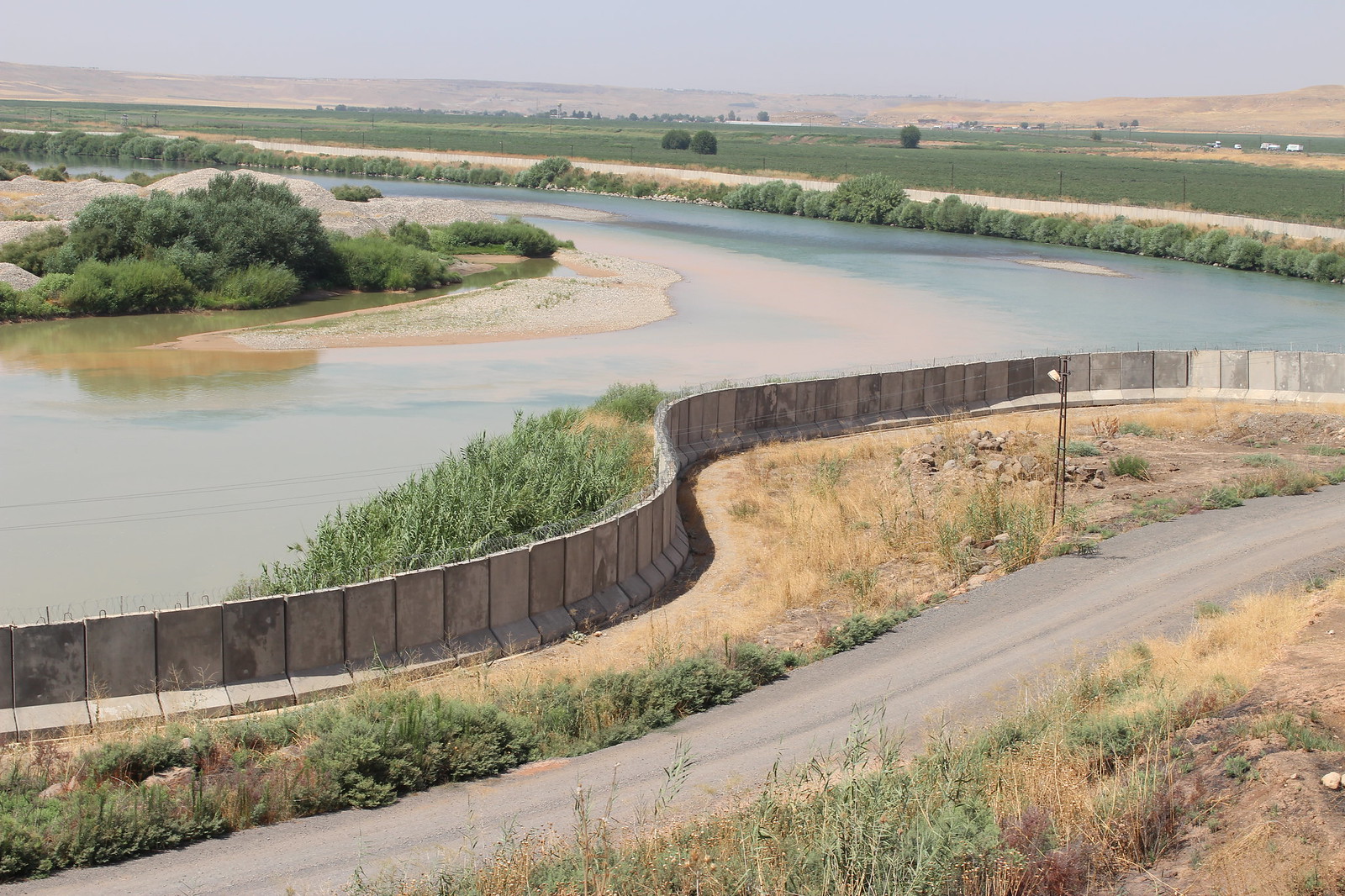
In a statement, SOHR said that during July 2026, two Syrian civilians were killed and 27 others were injured as a result of shootings and acts of torture allegedly carried out by Turkish border guards while they were attempting to cross from Syria into Türkiye through irregular routes.
According to the organization, 11 people were injured in Raqqa, one civilian was killed and 16 others were injured in Hasakah, while one civilian was killed in Aleppo during the reporting period.
SOHR stated that, since the beginning of 2026, Turkish border guards have allegedly been responsible for the deaths of nine Syrian civilians and the injury of 41 others.
The organization’s figures indicate the following regional distribution:
Hasakah: 2 killed, 16 injured
Raqqa: 2 killed, 24 injured
Aleppo: 5 killed
In its statement, SOHR renewed its call for an end to attacks against civilians along the Syrian-Turkish border and urged respect for international humanitarian law and internationally recognized standards on the protection of civilians.
SOHR also condemned what it described as the excessive use of force against civilians attempting to cross the border and called for all those responsible for violations against civilians to be held accountable.
Human Rights Violations on the Syria-Türkiye Border (2014–2026)
Cases documented by human rights organizations and independent monitoring groups
According to the Syrian Observatory for Human Rights (SOHR), Turkish border guards have allegedly been responsible for the deaths of 9 Syrian civilians and the injury of 41 others since the beginning of 2026.
2014
14-year-old child shot near Kızıltepe
A Syrian Kurdish family fleeing from Damascus attempted to cross into Türkiye near Mardin’s Kızıltepe district. During the incident, the family’s 14-year-old son was shot in the back of his head and seriously injured.
Source: Bianet
2014
Saada Darwich killed near the border
Saada Darwich, 28, was killed by gunfire while attempting to cross from Rojava’s Derik region toward Türkiye, alongside her husband and children.
Source: Bianet
2016
HRW: Five killed, 14 injured
Human Rights Watch reported that Turkish border guards opened fire on Syrian civilians attempting to cross the border during March and April 2016, killing five people and injuring 14 others.
Source: Human Rights Watch
2016
SOHR: Eight civilians killed, including four children
SOHR reported that eight civilians, including four children, were killed near the border while fleeing clashes in Manbij. The Syrian opposition coalition reported that the number of deaths was 11.
Source: SOHR
2018
HRW: Shooting, abuse and pushbacks
Human Rights Watch documented allegations of shooting, ill-treatment and forced returns against Syrians attempting to cross into Türkiye.
Source: Human Rights Watch
2023
HRW: 234 civilians killed, 231 injured
According to data reviewed by Human Rights Watch, at least 234 civilians were killed and 231 people injured between 2015 and April 2023 in incidents involving Turkish border guards.
Source: Human Rights Watch
2023
Syrian lawyer killed while attempting to cross the border
SOHR reported that a Syrian lawyer attempting to enter Türkiye from Idlib was killed after being shot by Turkish border guards.
Source: SOHR
2026
Journalist Nujan Mala Hassan shot
According to the International Federation of Journalists (IFJ), journalist Nujan Mala Hassan was wounded by live ammunition while covering protests near the Syria-Türkiye border.
Source: International Federation of Journalists
2026
SOHR: Nine killed, 41 injured
SOHR reported that nine Syrian civilians were killed and 41 others injured since the beginning of 2026. The organization called for an end to the excessive use of force against civilians.
Source: SOHR
Key figures
234
Civilians killed (HRW)
231
People injured (HRW)
9
Killed in 2026 (SOHR)
41
Injured in 2026 (SOHR)
Sources: Human Rights Watch (HRW), Syrian Observatory for Human Rights (SOHR), International Federation of Journalists (IFJ), Bianet.Figures are based on reports and statements published by these organizations.
The village of Kemaliye, located in the Ortaca district of Muğla, is an Alevi village with a significant Tahtacı community. Zeynel Altın, the village headman of Kemaliye, and Nail, a retired post office worker from the village, discussed the village’s Tahtacı-Alevi identity, cemevi practices, and economic structure.
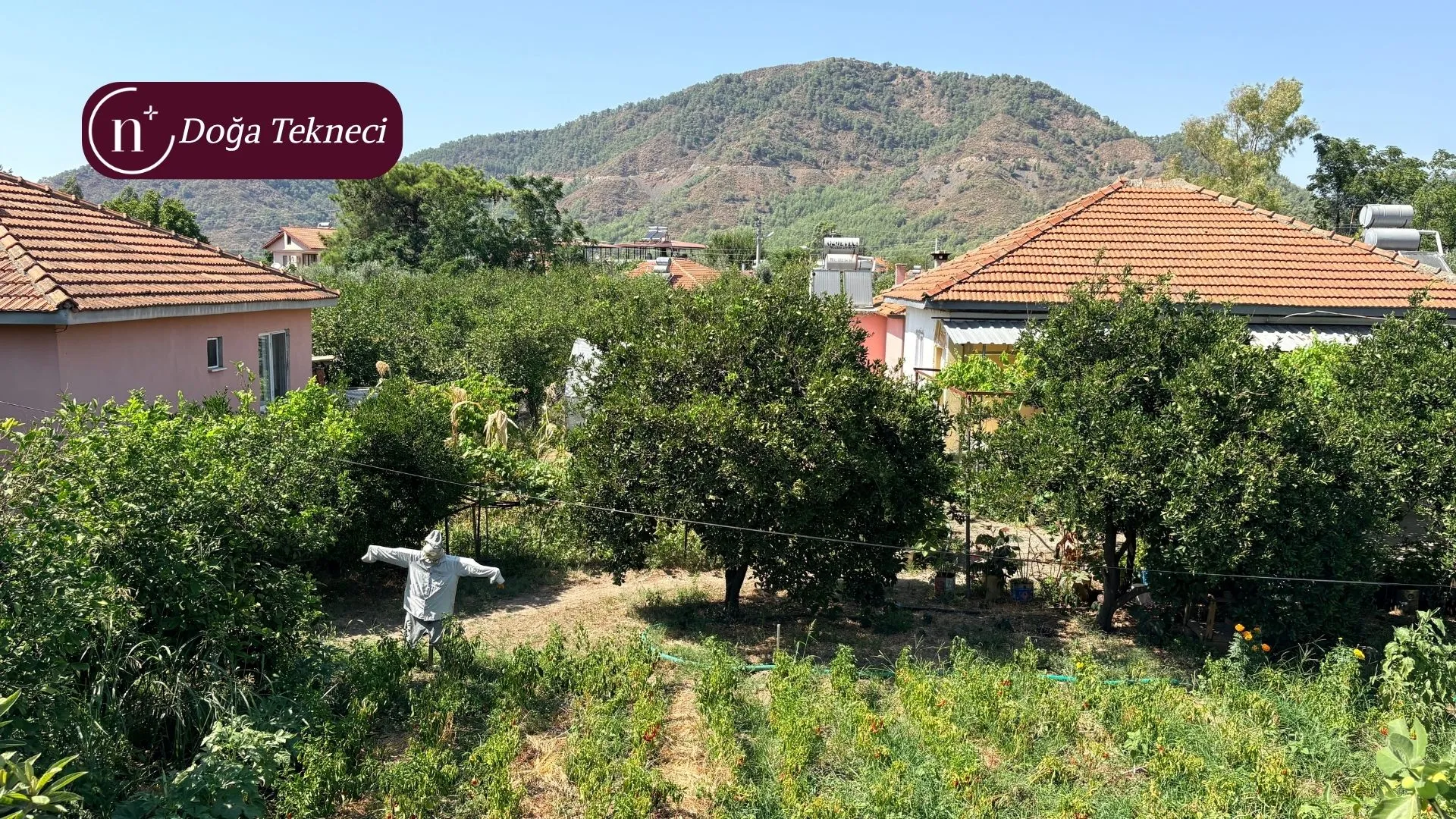
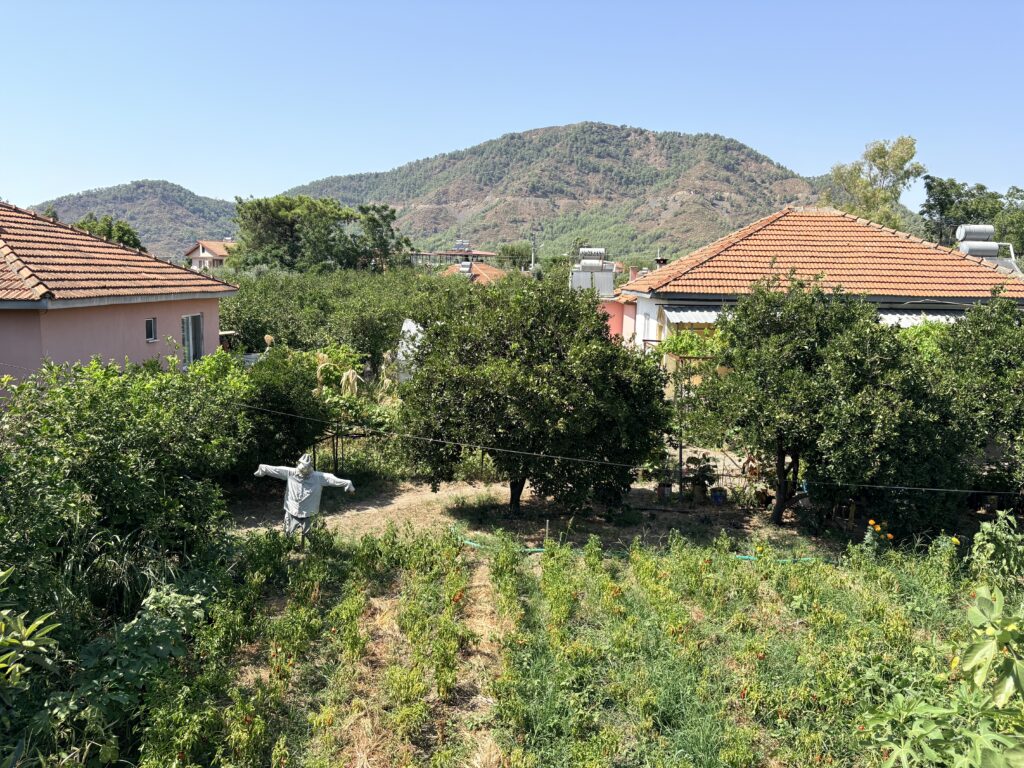
Photos: Doğa Tekneci
The Ortaca district of Muğla is known as a settlement area with a dense Alevi population. It is located between Marmaris and Fethiye. The region has made headlines at times not only for its history dating back to antiquity but also for its recent history. Having been home to many civilizations throughout history, Ortaca is characterized by its cultural, ethnic, and religious diversity; its recent settlers are the Tahtacı (Turkmen) Alevis.
According to historical accounts, during World War II, plans were made to establish a “minority camp” in Dalaman, Muğla, to force minorities who had not paid their taxes to work, and construction began. This area was under the control of the Tahtacı (Turkmen Alevi) community, who were already settled there. The government relocated the Tahtacis to another nearby Tahtacı village, Fevziye. From there, they were resettled to the former Oritenya area. This place, which was a swamp at the time, was drained and developed by the Tahtacı Alevis.
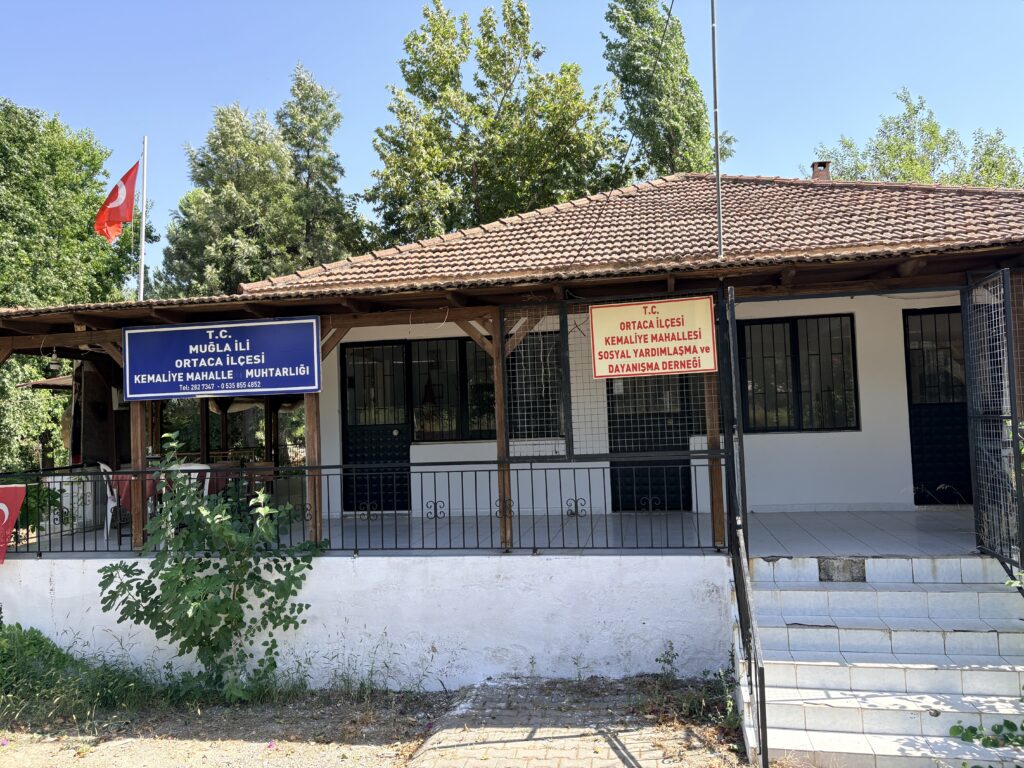
During a visit I made to Ortaca in Muğla, I had the opportunity to chat with Zeynel Altın, the village head of Kemaliye—a village with a predominantly Alevi population—and a retired postal worker who introduced himself as Nail.
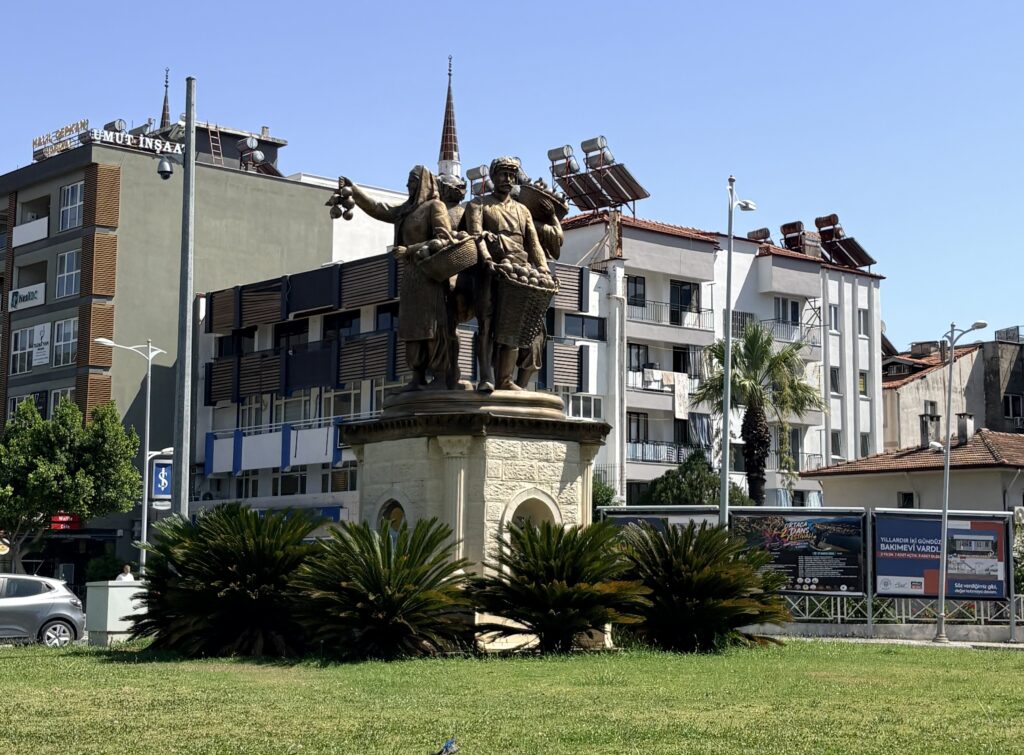
On the road leading to the village, as I passed through the center of Ortaca, there was a statue representing the citrus farming industry in Ortaca. Created in 2011, the statue features two women and two men dressed in traditional Anatolian attire. One of the women is holding a tomato vine in her hand, while the other is carrying a basket full of pomegranates on her shoulder, the basket held by one of the men is full of oranges.
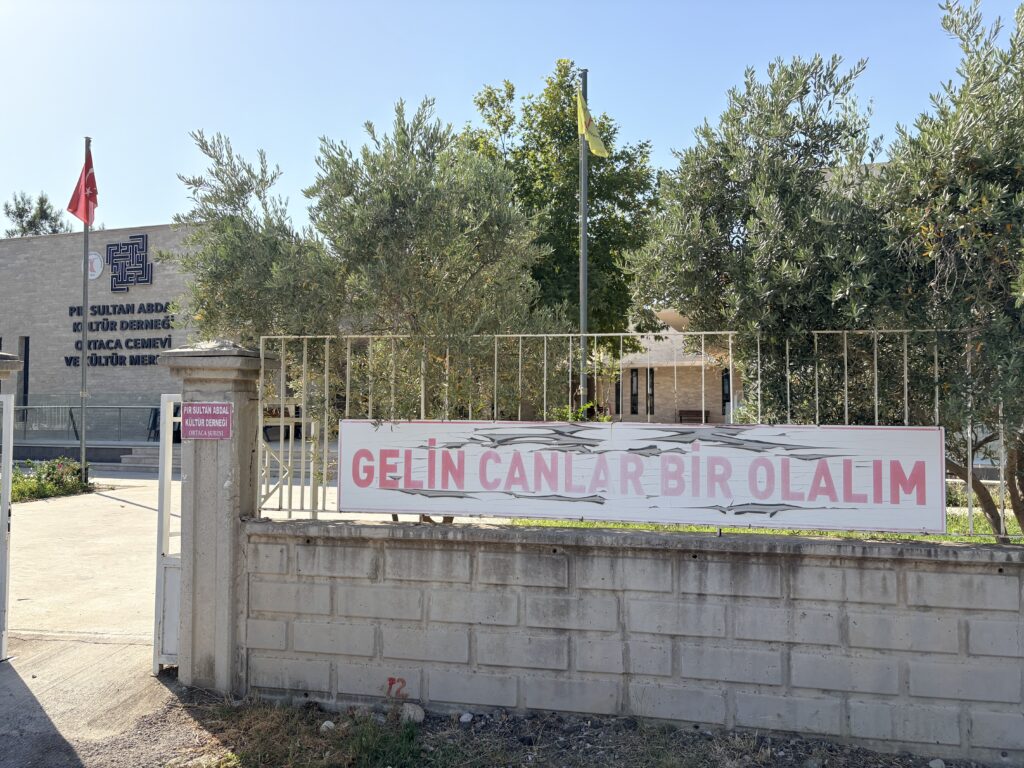
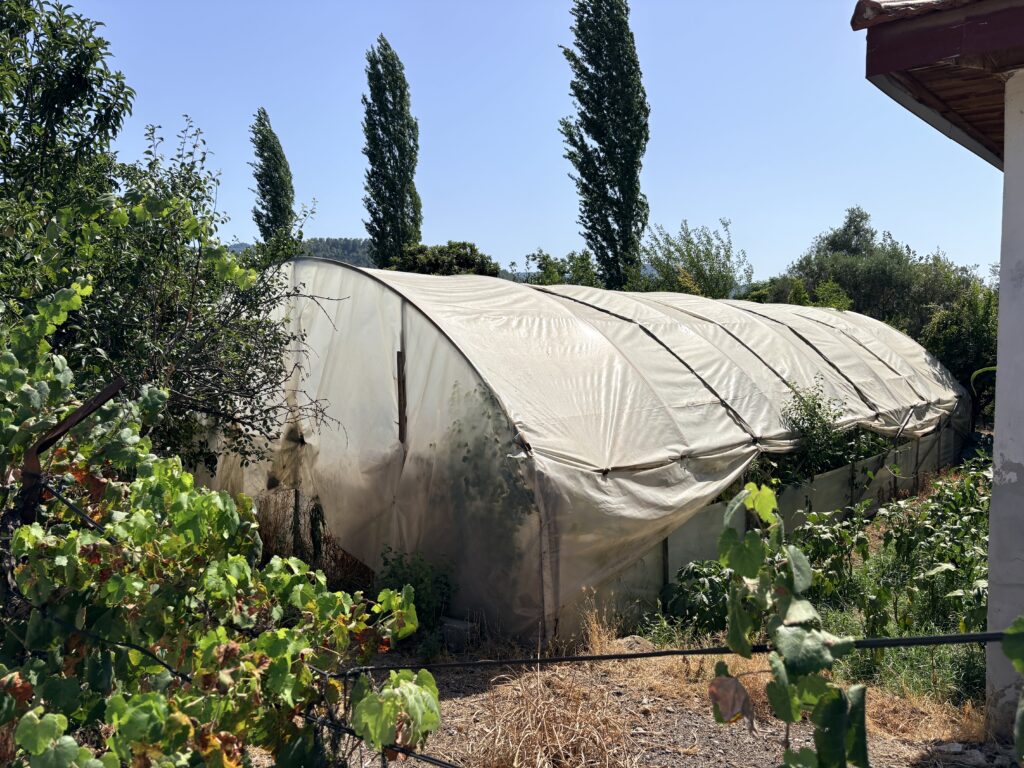
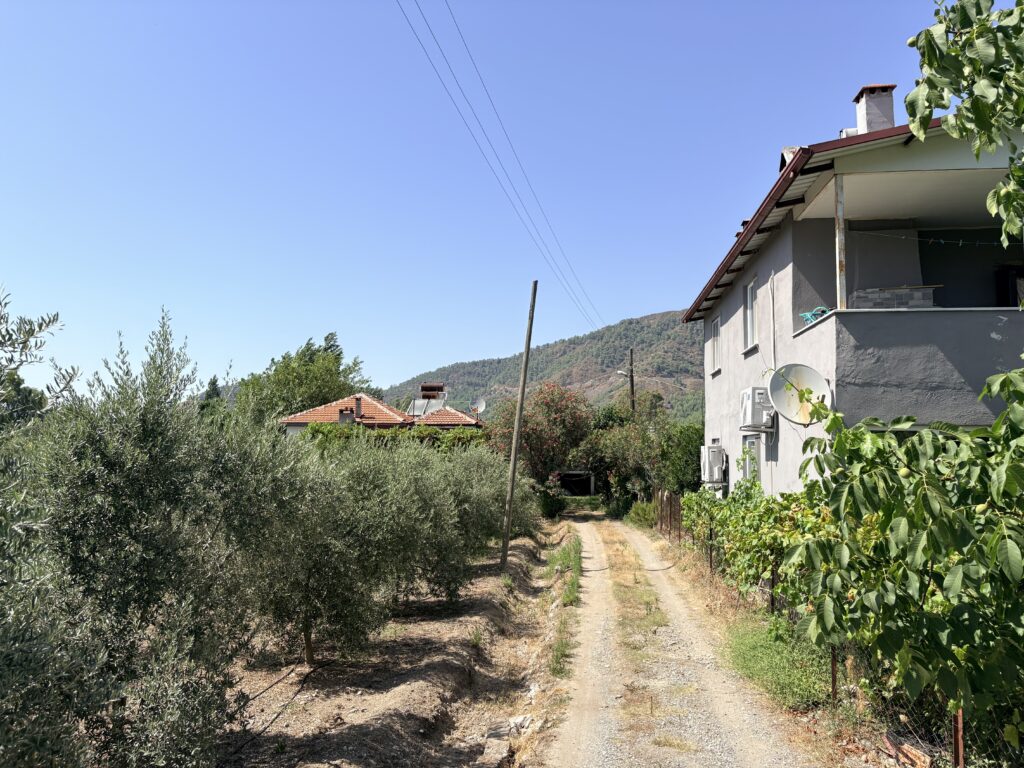
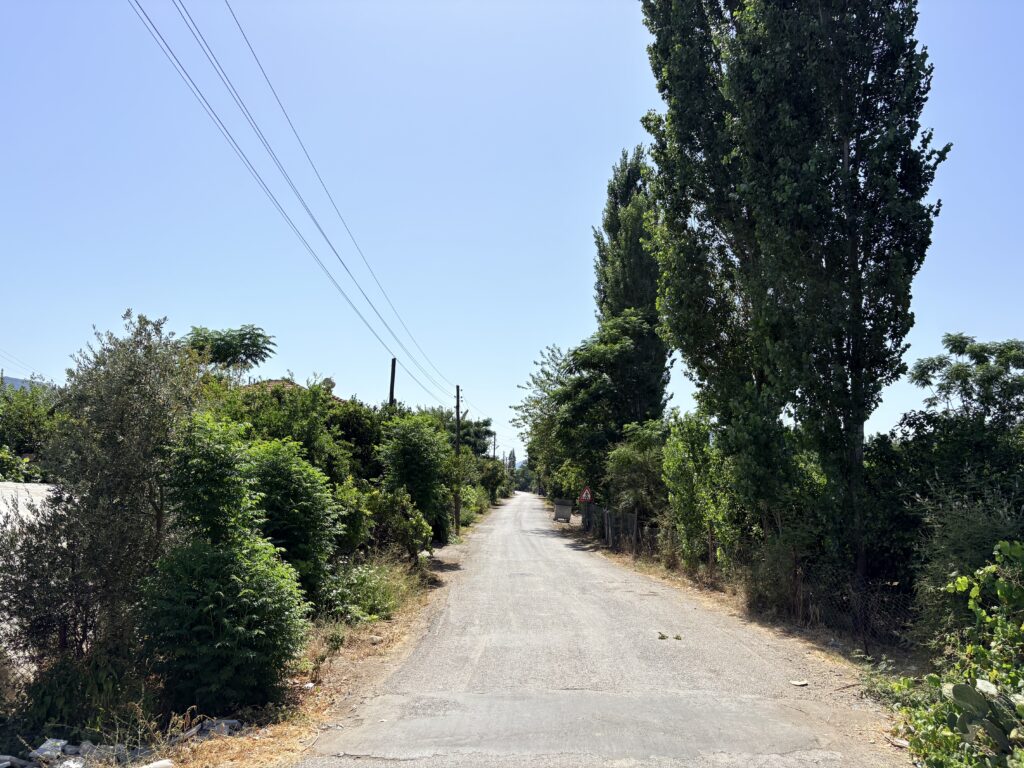
Before entering the village, the Pir Sultan Abdal Cultural Association and Cemevi, located on a side street, catch the eye. As you head toward the village, an area with abundant greenery—compared to the center of Ortaca—welcomes visitors. If you look closely at the gardens of the village homes, you’ll frequently see greenhouse covers and citrus trees. The houses in the village are arranged in an orderly manner, lined up in rows along the streets and alleys.
Over a thousand people live in Kemaliye Village. The villagers, most of whom are retired, generally make their living through greenhouse farming, citrus farming, and tourism—the latter due to the village’s proximity to the sea. A significant portion of the Alevi population here consists of the “Tahtacılar,” an Alevi community named after the carpentry trade and typically found in the Aegean and Mediterranean regions.
I asked Altın and Nail about the Alevi population in the village and how the Alevis of Kemaliye spend their days.
A Tahtacı village: Kemaliye
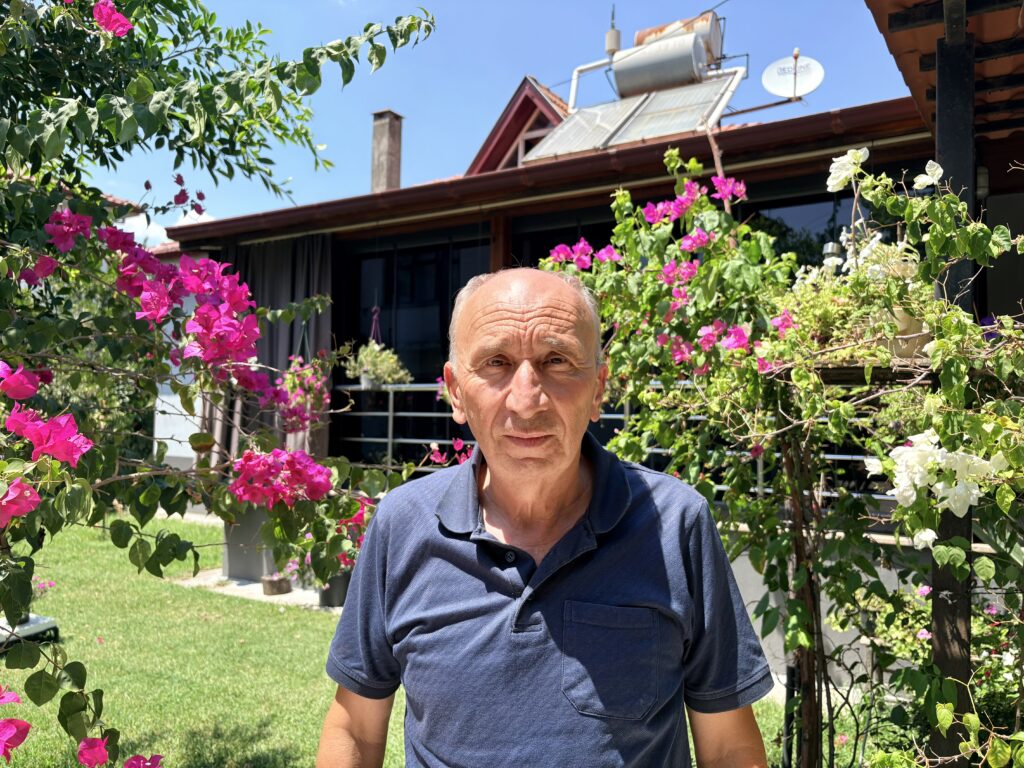
Zeynel Altın, village head of Kemaliye
Noting that there is no clear data on the Alevi population distribution in the village of Kemaliye, Altın said that, according to his own estimate, approximately 70 percent of the village’s population is Alevi. Altın stated that the village has received migrants and that the population has become more mixed over time, adding that neighboring neighborhoods with a high concentration of Alevis—such as Fevziye and Cumhuriyet—have a more cosmopolitan structure.
Altın, noting that he himself is a Tahtacı, explained the origins of the Tahtacı identity as follows:
“Our grandfather came from the Mersin-Mut area. We are part of the Tahtacı community under the Alevi umbrella. After the persecution of the Alevis following Yavuz Sultan Selim, the Alevis retreated to the mountains. To make a living, they worked as lumberjacks and woodworkers in the forest. The name ‘Tahtacı’ comes from that.”
Altın emphasized that Alevism is not a monolithic faith practice, saying, “There are 14 or 15 tribes within Alevism—from the Kipchaks to the Çepnis, they’re all there. They all have minor nuances and differences, which is actually a source of richness.”
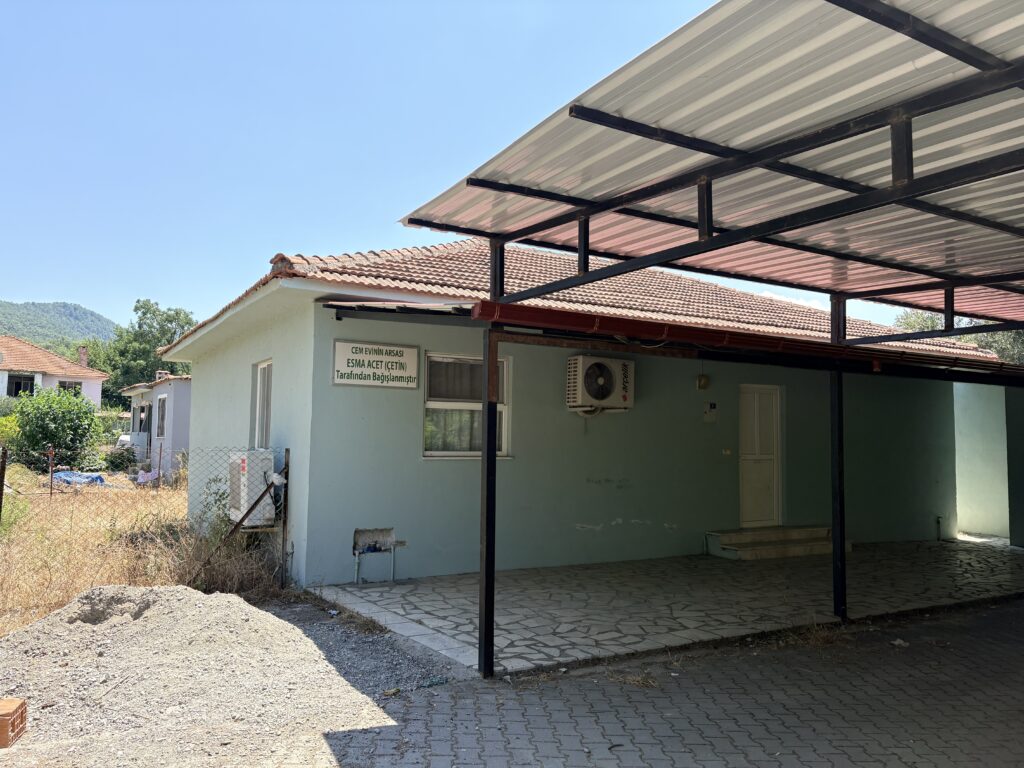
Altın mentioned that, as Tahtacılar, they built a small cemevi in the village of Kemaliye. He noted that there is also a Pir Sultan Abdal Cultural Association Cemevi at the entrance to the village, but they generally conduct their worship in the one they built themselves.
Altın also noted that there are differences in the cem rituals across Alevi communities, citing as an example that in their own community, one does not enter the cem wearing socks. “For example, a Sunni person cannot enter our cemevi,” said Altın, explaining that in order to participate in the cem, one must first make an “ikrar” (oath) declaring that they are Alevi, and that following this oath, the person is accepted into the community. He added that attitudes toward Sunni-Alevi marriages have softened over time, but have not yet completely disappeared.
Nail also noted that the Alevis in the village are affiliated with their own cemevis, explaining that Alevism is divided into many branches and that he himself belongs to the “Yolyatır Ocağı” within the Tahtacı community.
Nail explained that one may not enter the cemevi without performing ablution; upon entry, a sash is tied around the waist, the head is covered with a headscarf, and if one goes to the restroom, the ablution is considered invalid and must be performed again. He added that the meal served during the cem can only be distributed after “destur” is given.
“We mourn on May 6”
Explaining that Hıdırellez is observed differently in the village, Nail said that no celebrations take place on May 6 instead, on the evening of May 5, a fire is lit in the town square and people jump over it. According to Nail, May 6 is a day of mourning: “That day marks the anniversary of the deaths of Hüseyin İnan and Deniz Gezmiş. We don’t hold festivities that day, we observe a period of mourning.”
Nail also provided detailed information about the month of Muharrem, noting that during this period—which begins approximately 19–20 days after Eid al-Adha—the villagers observe “mourning” rather than fasting. “We don’t drink water, we don’t eat meat, we don’t shave, we don’t cut our nails… We only eat yogurt, we do not eat any other animal products,” he said. Nail explained that on the morning of the 12th day of mourning, a rooster is slaughtered in each home, after which the villagers gather to hold a ceremony and end their fast/mourning by eating a meal together.
“Being Alevi means starting life one step behind”
Altın also touched on the labor struggles of Alevis in the region. He recounted how village youths formed a theater troupe in 1975–76 and how agricultural workers went on strike in 1979 to demand better working conditions.
Altın said, “Being Alevi means starting life one goal down. If you can’t express yourself well or educate yourself properly, you’ll fall behind.”
“This is a village of retirees”
Altın noted that the literacy rate in the village is high and that the majority of villagers worked in the public sector or in jobs with social security coverage before retiring:
“Ninety percent of our village is full of retirees. Alevis aren’t afraid of hard work, they’re all hardworking. They work as laborers or civil servants.”
Altın claimed that the villagers organized a strike in the farm fields in 1979 and that this was one of the first labor protests in Ortaca.
Noting that there has been a significant decline in income from citrus production—the village’s main source of livelihood—in recent years, Altın stated that the primary cause was export issues, saying, “Most of the citrus is intended for export. If you can’t trade with neighboring countries, you can’t sell what you produce.” Nail also confirmed this situation.
Nail, meanwhile, listed the village’s sources of income as greenhouse farming, citrus cultivation, and tourism, noting that a large portion of tourism revenue comes from boat and hotel operations in Dalyan and Sarıgerme. Reiterating that “90 percent” of the village’s population is retired, Nail also touched on the fluctuations in citrus prices, adding that while citrus brought in good profits last year, in previous years it had to be left to rot in the fields: “Lemons and other citrus fruits didn’t make any money 4–5 years ago. People suffered as a result.”
What is the government’s approach toward Alevis?
According to Altın, the government’s approach toward the Alevi community has changed in recent years. He mentioned the Alevi-Bektaşi Culture and Cemevi Directorate established within the Ministry of Culture and Tourism, as well as the large cemevi complex opened in the Hacıbektaş district of Nevşehir.
“The president went to Hacıbektaş and had a cemevi built there. These are politicians chasing votes. There are some who genuinely respect the community, but politics was used for this.”
Altın stated that while he personally has not faced discrimination in accessing public services, he has been forced to keep his demands constantly on the agenda:
“If you don’t renew your demand frequently, it gets forgotten. I tell them, ‘If you don’t do my job, I’ll expose you.’ It’s a half-threat—it doesn’t work any other way. This is a human right, people must know their rights. You have to say, ‘I’m here.’”
The events known as the “Ortaca Incidents” or the “Ortaca Massacre” encompass the violence, oppression, and looting directed against the Tahtacı Alevis in Ortaca—a town in the Köyceğiz district of Muğla (at the time, Ortaca was part of Köyceğiz)—between June 5 and 16, 1966. However, there are certain discrepancies between the testimonies of the Alevi community in the region and what was reported in the press.
I asked Altın and Nail what they had heard from their elders and what they knew about the Ortaca Massacre.
“It wasn’t a massacre, it was a land dispute”
Altın drew attention to the claims of an “Alevi massacre” that are occasionally reposted on social media, arguing that the vast majority of such posts are baseless:
“They spread rumors about Alevis attacking a mosque and made up stories. Nothing like that happened. Respected Alevi figures at the time stepped forward and said, ‘There’s nothing to it, everyone should stay where they are.’ There was tension, but it wasn’t a massacre. Only one person died, and that was due to a land dispute.”
“Neighbors harmed an animal that had wandered into each other’s fields, that’s how the conversation started, and the verbal altercation turned into a fight,” said Nail, adding, “There was no mass massacre. It wasn’t like what happened in Sivas, Madımak, Maraş, Çorum, or Erzincan.”
*The incident that took place in the village of Fevziye, in the Ortaca district of Muğla—known as the “Ortaca Massacre”—stemmed from a land dispute. The Tahtacı Alevis in the region had, over time, reclaimed a marshy area and made it habitable; however, in 1960, the government transferred a nearby plot to the village headman of Kızılyurt, a village inhabited by Nurcu Sunnis. This is how the tension began.
Sources differ on what sparked the events that erupted in June 1966. According to interviews PİRHA conducted with witnesses in 2019, the incident was a dispute over a field, during the clash, a 15-year-old Sunni youth, Halil Sarı, was killed by a bullet fired from the gun of a sergeant major on extended duty, and according to witnesses, there were no other fatalities. (Zeynel Altın and Nail from the village of Kemaliye also support this account.) These witnesses state that the real breaking point that fueled the unrest following the teenager’s death was a sexual assault against an Alevi woman, and they emphasize that the situation was deliberately escalated into a sectarian conflict due to the delayed intervention of the media and security forces. Other sources also report that the incident was triggered by a sexual assault against an Alevi woman, that the clashes lasted 12 days, and that the exact death toll remains unknown.
The ALO 153 Solution Center of the Istanbul Metropolitan Municipality (İBB), which previously provided services in Turkish, English, and Arabic, has added the Kurmancî dialect of Kurdish as of today.
The Istanbul Metropolitan Municipality has added the Kurmancî dialect of Kurdish to its multilingual service offerings.
The ALO 153 Solution Center, which operates under the Istanbul Metropolitan Municipality’s Directorate of Public Relations, previously provided services in Turkish, English, and Arabic. As of today, the Kurmancî dialect of Kurdish has been added to the ALO 153 Solution Center.
With this new initiative, Kurdish speakers will also be able to access municipal services in their native language through the call center, where tens of thousands of people each day can submit requests, suggestions, and complaints without having to visit a municipal office.
Previously discussed in the Municipality Council
The implementation of this initiative had been brought up multiple times in the Istanbul Metropolitan Municipality Council.
There had been calls for this initiative to be expanded and implemented across all departments so that Kurds living in Istanbul could rise their concerns and complaints in their native language.