Article series: “The June 15-16 Resistance” turns 56

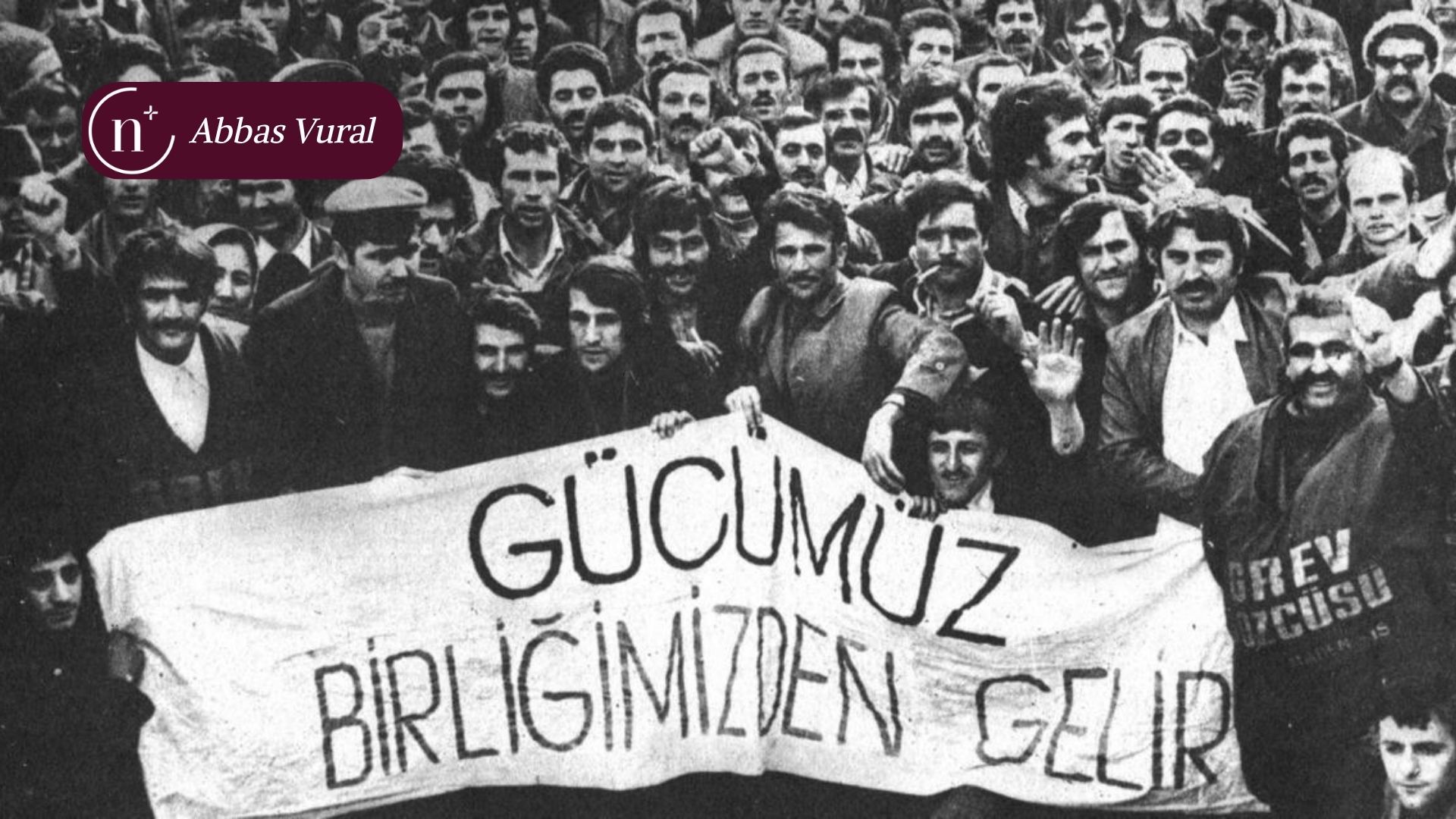
On June 15-16, 1970, nearly a hundred thousand workers took to the streets against regulations targeting union rights. Despite 56 years having passed, we have compiled a day-by-day account of the events, which remain one of the greatest resistance movements in Turkish working-class history.
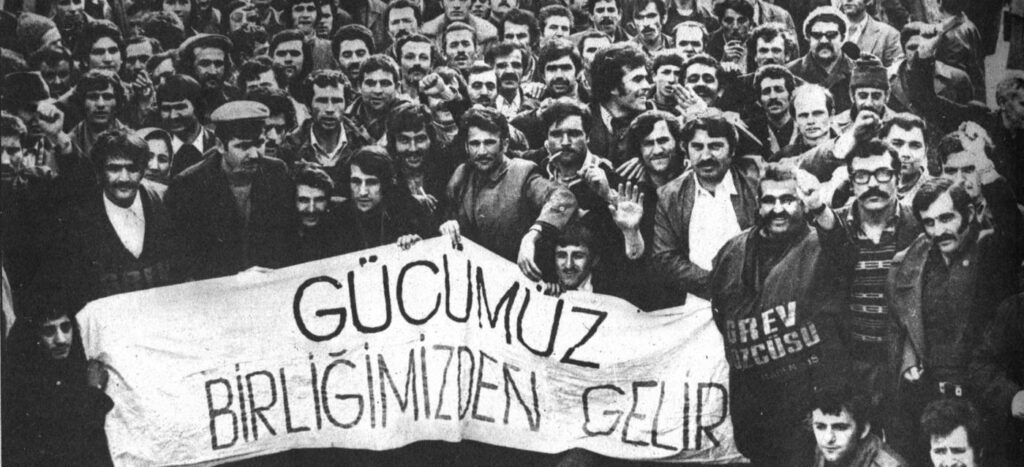
Photo: DISK Archive

Today marks the 56th anniversary of the June 15-16 resistance, one of the largest worker actions in Turkish history.

The June 15-16 resistance, the subject of numerous books, films, documentaries, and research, has maintained its status as one of the greatest actions of the Turkish working class for over half a century. The memory of these actions, in which nearly one hundred thousand workers from companies such as Türk Demir Döküm, Sungurlar, Derby, Elektrometal, Rabak, Auer, Çelik Endüstrisi, Mutlu Akü, Vinileks, Otosan, Arçelik, and Vita took to the streets, still needs to be preserved 56 years later.

On the 56th anniversary of the June 15-16 resistance, which began as a protest against the Justice Party government’s planned changes to the trade union law but transformed into a much more radical and widespread movement, we discussed the state of labor struggles and trade union rights in Turkey with Prof. Dr. Aziz Çelik, Assoc. Dr. Hakan Koçak, Özkan Atar, General President of the United Metal Workers Union, and labor historian Zafer Aydın.

The June 15–16 Resistance: A Day-by-Day Account of Events and Legal Proceedings
In June 1970, close to a hundred thousand workers took to the streets in protest against regulations targeting trade union rights. Remembered to this day as one of the greatest acts of resistance in the history of Turkey’s working class, we have compiled the course of the events and the massive legal struggle that followed — day by day.
June 11, 1970

A bill proposing amendments to Trade Unions Act No. 274 and Collective Bargaining, Strike and Lockout Act No. 275 was passed in the Grand National Assembly with the votes of all parties except the Turkish Workers’ Party (TİP) — including the Justice Party and the CHP. The bill’s primary aim was to halt the flow of workers from Türk-İş to DİSK. It introduced a requirement that a union must have enrolled as members at least one-third (1/3) of the insured workers employed in the sector in which it operates in order to function nationwide. A similar one-third representation threshold was also set for confederations.

June 13, 1970

Under the legislation, which had completed its parliamentary process, salaried state personnel such as orderlies, janitors, and cleaning workers would be classified as workers and permitted to form unions; a minimum of three years’ employment in the sector would be required to establish a union; withdrawal from union membership would be processed through a notary; union general assemblies would convene every three years rather than two; and unions’ investment permissions for funds would be subject to confederation approval.

June 14, 1970

On the grounds that the bill would eliminate freedom of union choice, workplace representatives of unions affiliated with the Confederation of Revolutionary Trade Unions (DİSK) in Ankara, İzmir, Kocaeli, and Sakarya convened a joint meeting and resolved to take action until the bill was withdrawn.

June 15, 1970

Tensions that had been building on factory floors for years spilled into the streets as between 75,000 and 100,000 workers marched toward various points across Istanbul. Although the protests were led by DİSK, large numbers of Türk-İş members also joined the marches in class solidarity, rejecting the stance taken by the parties they had previously supported. By the evening of the first day, the Council of Ministers declared 60 days of martial law.

  • Asian Side: A march column departing from Kartal advanced along the Ankara Highway (E-5). With workers from Otosan and DMO in Göztepe joining, along with groups from Beykoz and Paşabahçe, an enormous crowd formed and moved toward Üsküdar and Kadıköy.
  • European Side: Marches were held along the Bakırköy–Topkapı–Sağmalcılar route. The Istanbul–Ankara highway was closed to traffic.
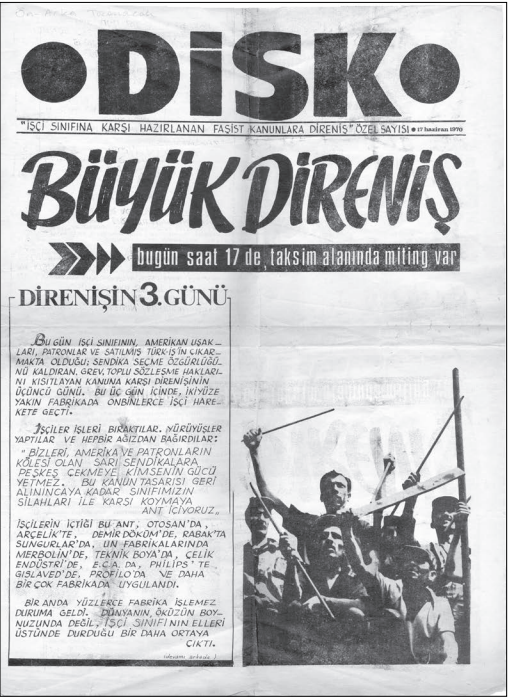
A newspaper front page published by DİSK under the headline 'The Great Resistance'.
A newspaper front page published by DİSK under the headline “The Great Resistance,” highlighting the June protests and the participation of tens of thousands of workers.
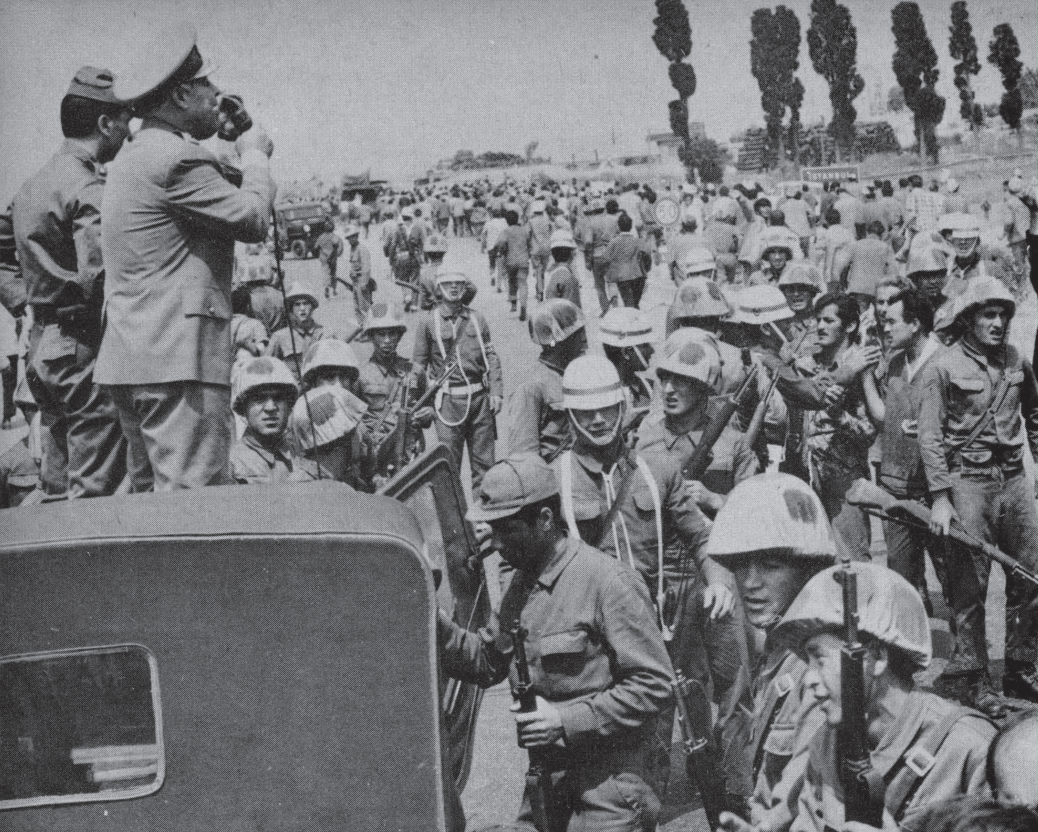
Military units taking preventive measures during the demonstrations.
Security measures taken by military units during the demonstrations and the moment of an announcement made through a loudspeaker.
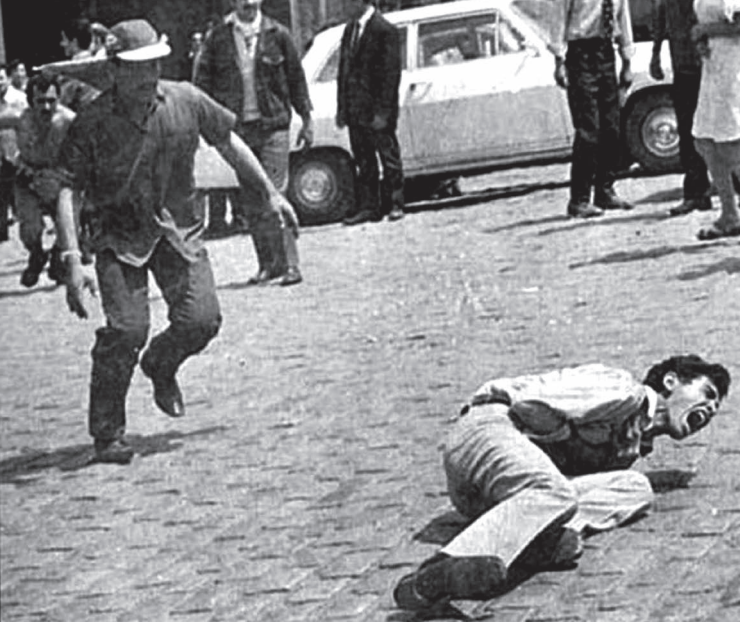
Clashes that broke out during the June 15–16 protests.
Violent clashes in the streets during the June 15–16 protests, and workers injured in the unrest.
June 16, 1970

The workers’ protests continued in full force. A march that began in Gebze merged with workers from Kartal and reached Kadıköy Ferry Square along Bağdat Avenue. On the European side, columns advancing from outside Topkapı descended via Aksaray to Sultanahmet, Cağaloğlu, and the front of the Governor’s Office, and from there to Eminönü. Actions also took place in Ankara, Adana, Bursa, and İzmir.

  • Opening of the Bridges: The Istanbul Governorship opened the Galata and Unkapanı bridges to traffic in order to prevent the Asian and European columns of the movement (or passage to the Beyoğlu side) from converging.
  • Casualties: As a result of police fire and clashes in Kadıköy, workers Yaşar Yıldırım (Mutlu Akü), Mustafa Bayram (Vinleks), and Mehmet Gıdak (Cevizli Tekel), along with shopkeeper Doğukan Dere and police officer Yusuf Kahraman, lost their lives.
  • Martial Law and DİSK’s Stance: Martial law was declared in Istanbul and in the Merkez and Gebze districts of Kocaeli. DİSK General President Kemal Türkler, in a message read on the radio, warned workers against provocations and called on them not to step outside the constitutional framework.
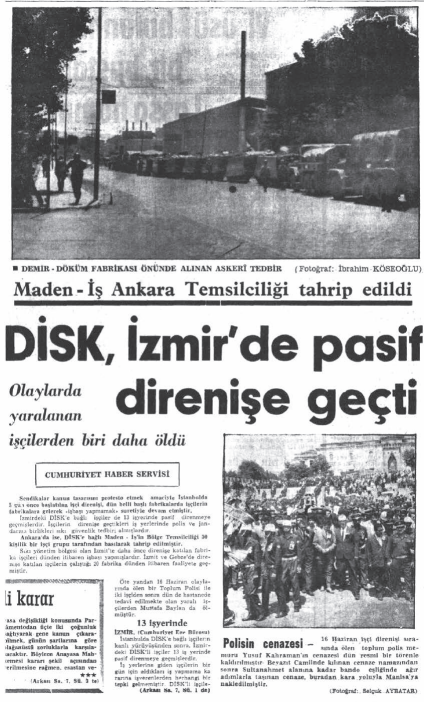
Military measures in front of the Demir-Döküm factory and news of a police officer's funeral.
A Cumhuriyet newspaper clipping: military measures in front of the Demir-Döküm factory and news reports on those who lost their lives in the events.
June 17, 1970

The Martial Law Command detained 23 union officials — including DİSK General President Kemal Türkler and Secretary General Kemal Sülker — on charges of instigating and inciting the events. These individuals were tried by the Martial Law Military Court on the grave charge of “attempting to alter, transform, and abolish the Constitution.” In addition, close to a hundred workers were taken into custody during the events, and a curfew was imposed from 21:00 onward.
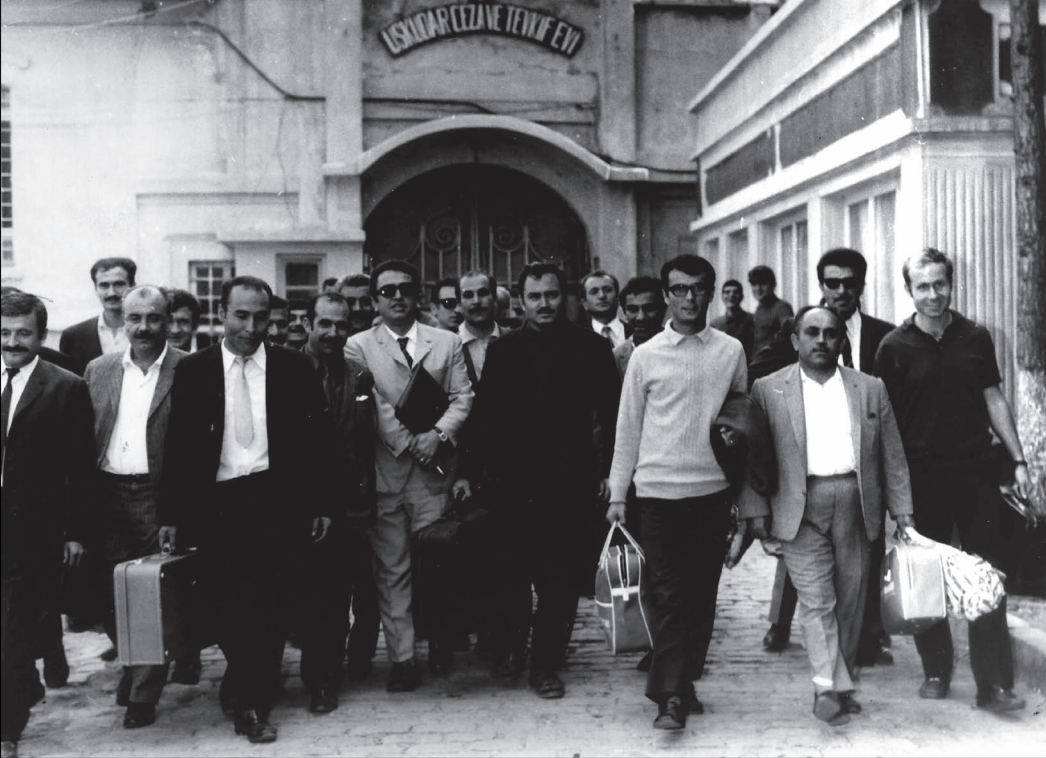
A historic photograph of DİSK officials in front of Üsküdar Prison.
Union officials, including DİSK General President Kemal Türkler and Secretary General Kemal Sülker, in front of Üsküdar Prison.
June 18, 1970

In İzmir, where martial law had not been declared, workers at certain workplaces affiliated with Lastik-İş, Maden-İş, and Gıda-İş also walked off the job in solidarity with the resistance.

June 19, 1970

Through Communiqué No. 13 of the Martial Law Command, the exercise of the right to strike was banned; a separate communiqué made collective bargaining negotiations subject to official authorization.

June 20, 1970

The printing and distribution of Maden-İş Gazetesi, the publication of the Maden-İş Union affiliated with DİSK, was banned.

June 22, 1970

Military units entered the İzsal strike zone, where a strike had begun prior to the events and was still ongoing. Martial law officials issued an order to open fire on anyone approaching within 25 metres of the military units.

Post-Resistance Mass Dismissals (July 1970)

In the aftermath of the June 15–16 events, 5,090 workers who had participated in the protests were dismissed and blacklisted. The targeted dismissal of workers silenced the labor movement in the Marmara region for a long time to come. Meanwhile, the bill amending Act No. 274 — following the suppression of the protests — received its final parliamentary approval on July 29, 1970, as Law No. 1317.
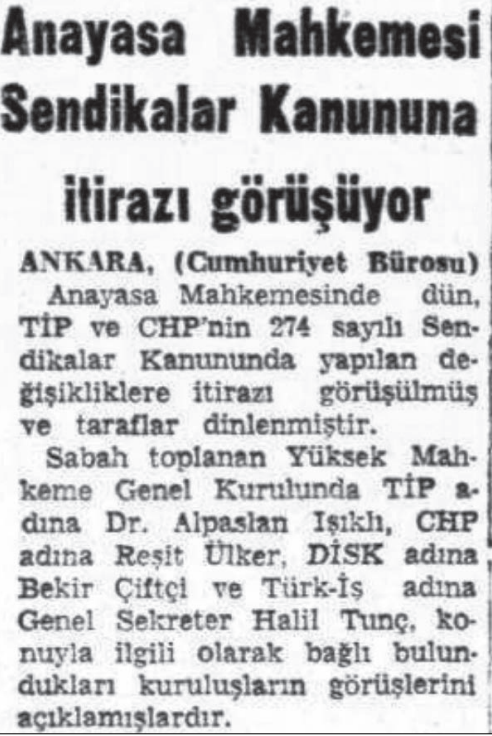
A newspaper clipping reporting the Constitutional Court's hearing of the challenge to the Trade Unions Act.
A hearing report on the annulment case filed at the Constitutional Court challenging the amendments to Trade Unions Act No. 274.
August 12, 1970

Law No. 1317 was published in the Official Gazette and entered into force. On the same day, a petition prepared on behalf of the Turkish Workers’ Party (TİP) by Prof. Dr. Alpaslan Işıklı was formally submitted to the Constitutional Court (AYM) to have the law annulled.

August 18, 1970

Shortly after TİP’s application, the Republican People’s Party — under the leadership of Secretary General Bülent Ecevit and party leader İsmet İnönü — filed a separate application with the Constitutional Court seeking the annulment of the law. (The Court later consolidated these cases and examined them under case number 1970/47.)

March 12, 1971

The Turkish Armed Forces issued a memorandum citing street conflicts and economic instability, forcing the incumbent government to resign and effectively seizing control of the administration.

October 19, 1972

The Constitutional Court’s ruling of February 9, 1972 was published in the Official Gazette and entered into force. The Court annulled the majority of the amendments in their entirety, on the grounds that they were “contrary to the constitutional principles of the right to form trade unions and the right to strike.”
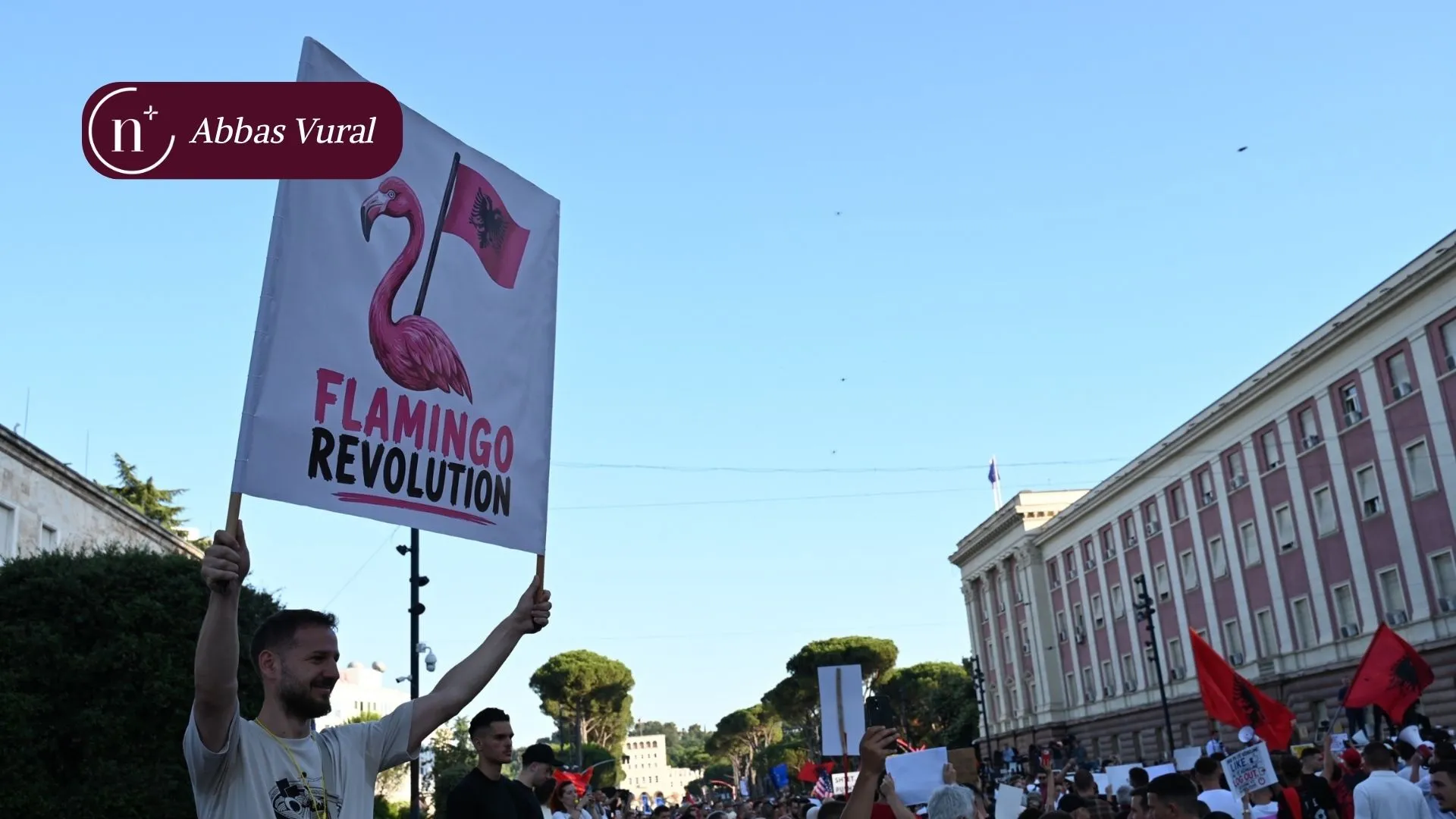
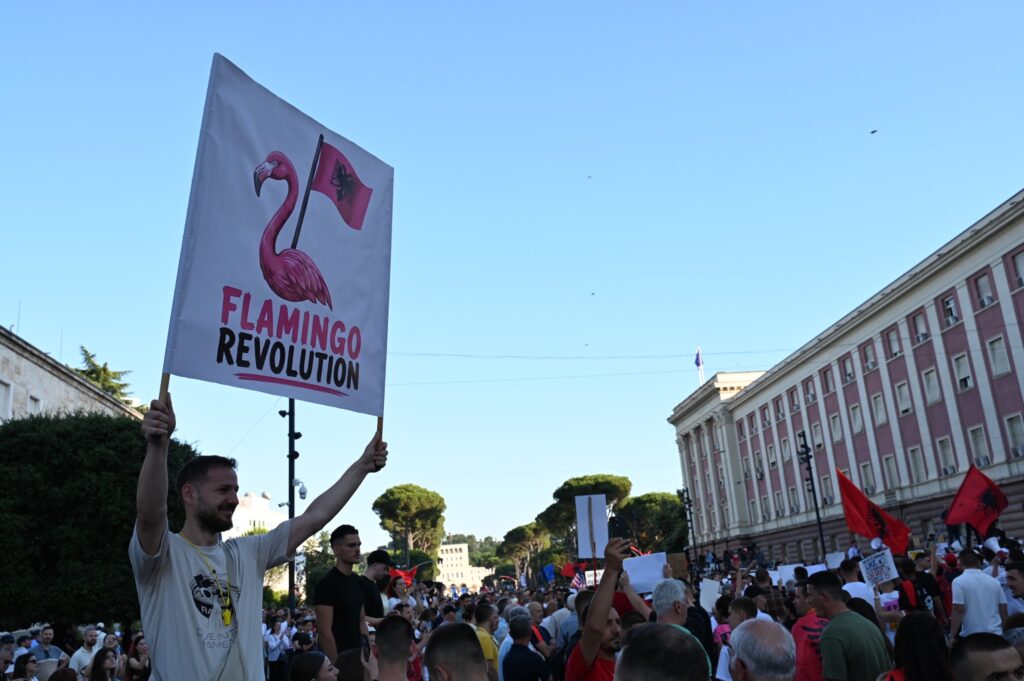
Albanians stand against the Trump family’s project

Anti-corruption protests that began after a beach in Zvernec was sold off as part of a tourism project have continued for two weeks. Citizens explaining the reasons behind the protests, how they were organized, and what people are demanding say that local actions launched by environmental activists have grown into a national movement calling for “a new Albania.”

Protests against a planned tourism project in the Zvernec area, near the city of Vlora, have continued since May 30. Protesters have said the demonstrations will continue until the project is canceled and Albanian Prime Minister Edi Rama resigns.

The protests were sparked by the sale of a beach in Zvernec as part of a tourism project reportedly linked to Ivanka Trump, daughter of US President Donald Trump, and her husband Jared Kushner. For nearly two weeks, the slogan “Albania is not for sale” has been at the center of demonstrations involving thousands of citizens. We spoke with activists and experts about the reasons behind the protests, the corruption allegations, and what the Albanian public is demanding.

Jared Kushner, Trump’s son-in-law, is also an American businessman and adviser to the US president. His investment firm, Affinity Partners, plans to turn part of Sazan Island on the Adriatic coast into a luxury resort—reportedly part of a $4 billion tourism project that would include hotels, villas, apartments, a marina and other high-end facilities.

Kushner has also served as a US representative in a series of diplomatic efforts involving Iran, Ukraine and Russia. In February 2026, Trump formally appointed him as Special Representative for Peace.

“The protests aren’t just about this one incident”

Anila Hoxha, who has taken part in the protests, said there were multiple reasons behind the demonstrations, and that the recent incident was simply the tipping point of a much longer process. Hoxha stressed that the protests aren’t only a reaction to the tourism project, arguing that Albanians have voiced numerous complaints about what they see as a corrupt government for some time.

Hoxha said the protests have nothing to do with the policies of other states, such as the US or Israel, underlining that the issue is with their own government and corruption.

“This isn’t just Albania’s problem”

Hoxha said the nationality of the investors isn’t really the point—what matters is that the project is being built in an area of major importance for natural resources, which is why the issue concerns everyone:

“The real issue isn’t the nationality of the investors—it’s the investment itself, made in a region of major importance for natural resources. This shouldn’t be seen as just Albania’s problem, because it’s an environmental issue.”

“Our only expectation now is the government’s resignation”

Hoxha said the way the tourism project has been presented—as an exclusive, elite island—has raised serious questions among the public, and that people don’t want this land to belong to anyone as private property:

“This land has belonged to the Albanian people throughout history. It should remain that way. We no longer have any expectations from the current government, but our demand is clear: resignation, and the formation of a new government that will work for Albania based on the rule of law, always standing on the side of what is right.

Since corruption has persisted for years, it may be difficult to eliminate it quickly. But we believe there are ways to address this problem, and that it can be fought through taking measures, carrying out various activities, and raising awareness.”

“State indifference sparked major outrage”

Journalist Erisa Kryeziu said the protests began in May after environmental activists noticed heavy machinery on site, after which the area was surrounded with bulldozers and barbed wire. She said the situation escalated when a private security company tasked with guarding the area responded aggressively, beating a protester and dragging them on the ground.

Kryeziu said the incident took place in front of police, who did not intervene against the private security guards—triggering widespread public outrage. She said videos of the incident spread rapidly on social media, fueling distrust among many citizens toward the state and its security forces.

By the 12th day of the protests, demonstrations had spread to the main boulevard of the capital, Tirana, Kryeziu said. The movement came to be known as the “Flamingo Uprising,” a reference to the flamingos that symbolize the region’s rich biodiversity.

Kryeziu said the main slogans were “Albania is not for sale” and “Cancel the project,” and that the movement has since moved beyond purely ecological concerns to become a broader expression of frustration over governance, transparency, participation in decision-making, and the relationship between political power and capital groups.

“We can’t describe this as an anti-imperialist movement”

Kryeziu said that while some activists and commentators have linked the project to foreign investors and broader geopolitical interests, the movement’s core demands center on the public interest and environmental protection in Albania—meaning it cannot be characterized as a movement against American or Israeli foreign policy:

“What’s happening in Albania is that major decisions are being made in the name of tourism development. But these decisions lack transparency, and appear to benefit a small group of investors close to those in power, while offering little to no benefit to ordinary citizens. At the same time, many of these projects come at the expense of nature, biodiversity, and Albania’s protected areas. This raises serious concerns about environmental protection, the public interest, and democratic decision-making.”

“The squares are full of women and young people”

Kryeziu said that although the protests have received support from some opposition politicians and organizations, the movement itself is independent, and the one thing everyone seems to agree on is Albania’s future.

The journalist said the protests have been organized through social media pages and groups, and that the squares are filled especially with young people and women, with the direction of the protests being decided collectively by large groups.

“The protests have turned into an anti-system movement”

Kryeziu said that in the early days, many media outlets failed to report on the protests and clashes in Zvernec, and that coverage only began once the story gained international attention.

She said this reflects the close relationship between Albania’s mainstream media and the political establishment. Another point the media has overlooked, she argued, is the diversity of the protesters themselves:

“People from every part of society are in the squares. They’re tired of the Rama government, its propaganda, and a traditional opposition that has failed to represent society for years. Because of this, the protests are no longer just a reaction to a specific environmental project, they’ve become a broader anti-system movement built around the demand for ‘a new Albania.'”

Iranian experts: “War deepens divisions”

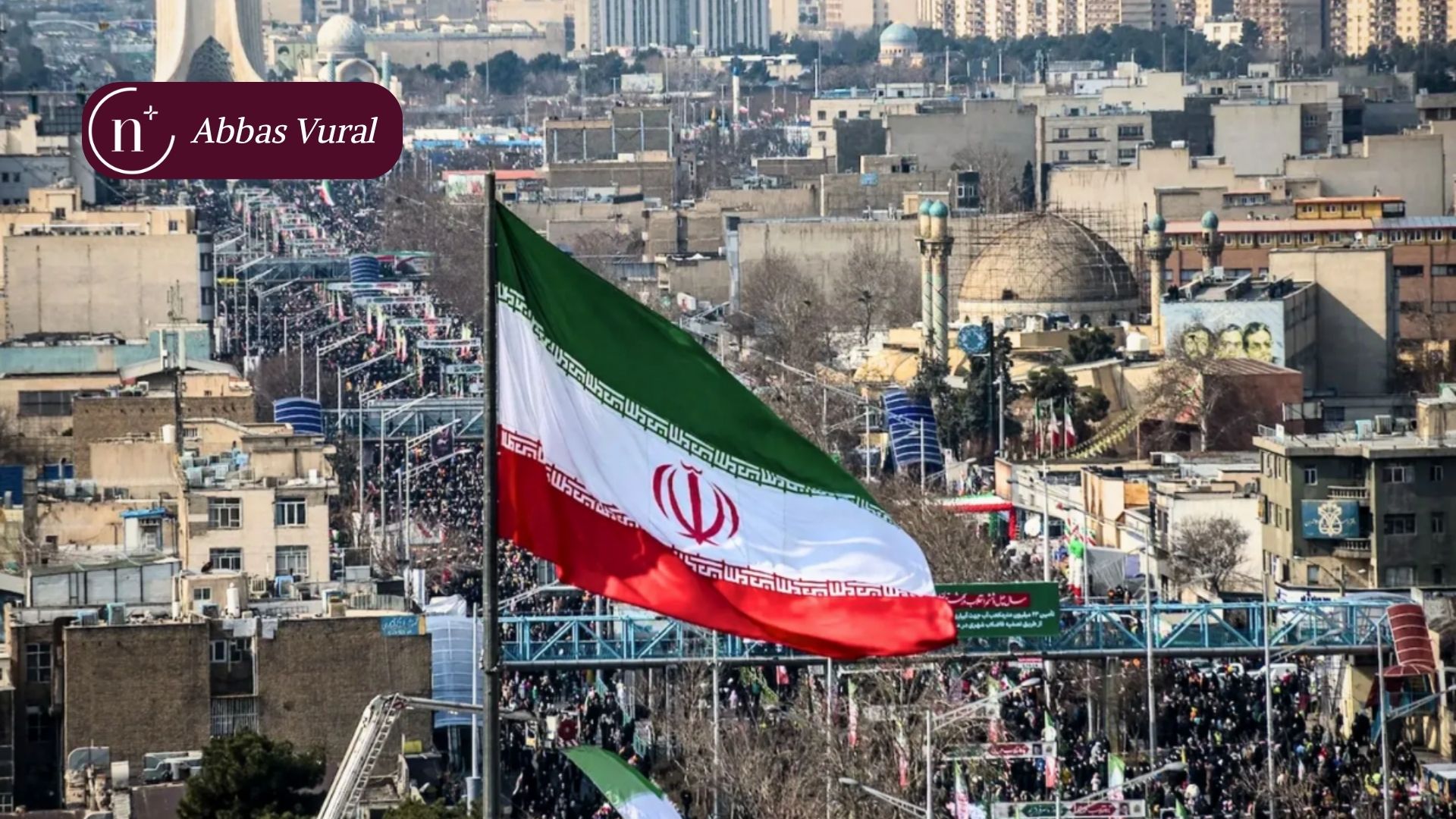
Emami and Talebi stated that the “Iran War,” which has temporarily subsided with a two-week ceasefire, has deepened the fault lines within Iranian society, and that what is currently visible is not “promising.”

On February 28, the US and Israel began attacking Iran. As of April 8, a two-week ceasefire has been declared. But people are still debating the war’s effects and what comes next. We spoke with sociologist Dr. Mehrdad Emami and Iranian journalist Reza Talebi about what’s happening inside Iran and how it’s affecting ordinary people.

Dr. Emami pointed out that before the war, millions of Iranians were protesting side by side against the government. These protests, led mostly by middle and working class people, were strong enough that some called it a near-revolutionary moment. “In many central areas, Iranians were protesting hard, demanding the government be brought down. The state responded with a massacre,” he said.

He also noted that in the December-January protests, a royalist movement (Pahlavism, supporters of the old Shah monarchy) had a growing influence. Many satellite TV channels broadcasting from outside Iran are pro-Pahlavi and backed by the West. Emami said it was predictable that after the Mahsa Amini protests, this far-right nationalist movement would become more organized than leftist or pro-freedom groups. He also blamed the left and feminists for failing to produce a strong leading figure after the Amini protests.

Pahlavism is making divisions worse

Emami noted that according to official figures, over 3,000 people have been killed in the war so far, as a massive trauma for society. He argued that the Pahlavi movement is deepening existing splits:

“Iranian nationalists who spent years calling leftists and feminists traitors are now supporting the continuation of the war alongside the US and Israel. And even though millions of Iranians oppose the current government, being bombed every day pushes people toward wanting peace, not regime change. When your home is damaged and your life is at risk, the most urgent thing becomes stopping the war.”

He also noted a shift among minority communities (Kurds, Baluch, Arabs and others) who have historically been oppressed both under the Shah and under the Islamic Republic.

“These regions were actually at the center of the most recent uprisings, partly because they are resource-rich but their people remain poor. Yet in the December–January protests, turnout in these regions was low, which drew criticism from the nationalist groups leading those protests. As the result, groups that had been coming together in recent movements are now more fragmented than before.”

“Don’t underestimate political Islam”

Emami warned against dismissing political Islam in Iran:

“The left lost the 1979 revolution partly for this reason,” he said. He pointed to the Iran-Iraq war, which lasted 8 years, longer than expected, because the Iranian state at that time was young and still seen as somewhat legitimate, both at home and internationally. The world hadn’t yet seen its true nature.”

He also said that even some pro-war Pahlavi supporters are now split, because Iranians can see that the US is killing civilians and bombing Iran’s infrastructure. “Over time it has become clear that the US main goal is to weaken Iran’s oil, nuclear, and military capabilities, not to liberate its people” he said.

“This war is being fought more in the media than on the ground”

Journalist Reza Talebi said it’s sad that Iranians are stuck between two bad options for information: Iran’s official state media, which can’t go beyond slogans and denial, and international media driven mainly by profit. He added that print journalism in Iran is barely surviving, and most people are now entirely dependent on social media.

“Tension levels are high”

Talebi also spoke about the situation of Kurds and other minority communities living in Iran, and what might happen next:

“I don’t have a full picture of everything being discussed about Kurds, Turks, Arabs, and Baluch people in Iran, but the social and ethnic divisions are nothing new, and they aren’t just caused by the war.

These divisions do get deeper in wartime, of course, and they can lead to new conflicts. Tension levels are high. On top of the divisions between Kurds, Turks, Arabs, and Baluch, there are also splits between religious and secular people, and even if these cracks aren’t fully visible right now, they are very dangerous. If things aren’t handled carefully, situations similar to Syria or Afghanistan are possible.

I can’t see a clear future for Iran, and I also can’t pretend to be an expert on everything. I could be wrong but what I see doesn’t look hopeful. Iranian society is fragile and unpredictable. Maybe shared suffering can create some kind of balance.”

Privacy overview

Niha+ respects your digital footprint within the framework of independent journalism principles and reader privacy. While browsing our site, cookies are used to provide you with an uninterrupted reading experience and to secure the technical infrastructure of our platform. You can manage your cookie preferences as you wish by using the menu on the left. For detailed information on how your personal data is processed, please review our Privacy Agreement and KVKK Clarification Text.