In Diyarbakır and Dersim, villagers’ resistance against mining projects continues. While mining companies now threaten the villages that were evacuated in the 1990s, the people remain determined to defend their land.
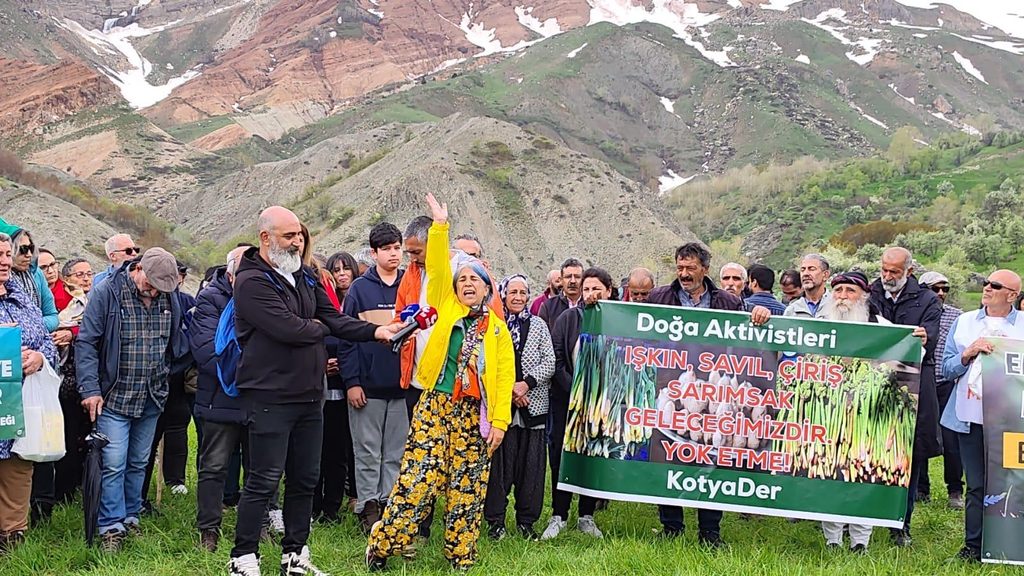
Photos: Munzur Environmental Association
In the Lice district of Diyarbakır and the Pülümür district of Dersim, villagers are continuing their resistance against Dimin Mining. The people, who were forcibly displaced from their villages in the past, are now facing the same fear once again. The companies, however, are not backing down.
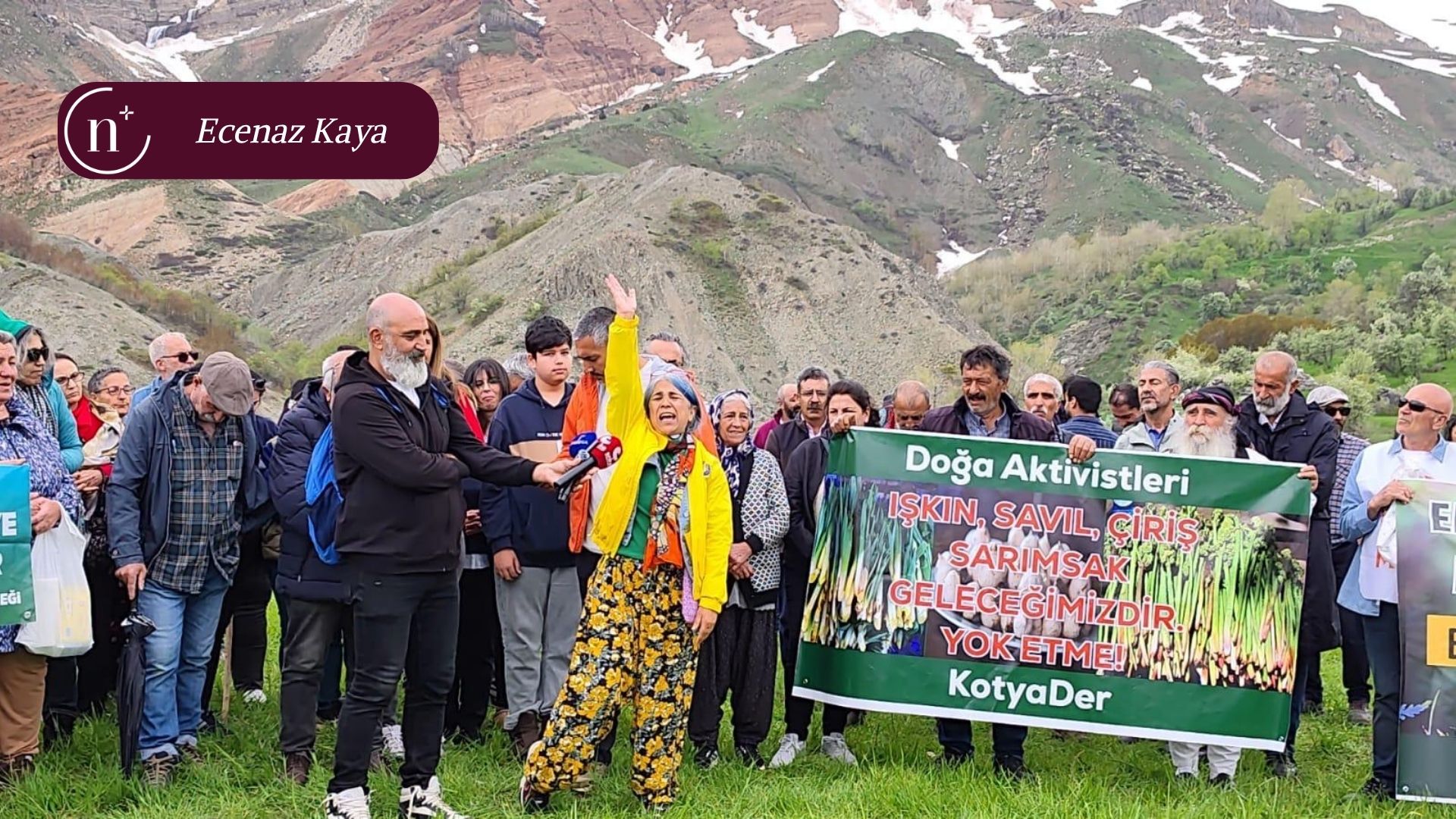
In the villages of Koçmar (Koçmarin) and Kılıçlı (Mizag), located in the Lice district of Diyarbakır, the people have been fighting against Dimin Mining’s copper mine project for over two years.
Ahmet İnan, Chair of the Diyarbakır Bar Association’s Environment and Urban Planning Commission, reported that all the villages located between the Lice and Genç (Daraheni) districts of Bingöl were completely evacuated in the 1990s.
According to İnan, mining companies specifically target these villages because they have never regained their former population, and there is no longer a young population left to resist this ecological destruction.
Dimin Mining, a subsidiary of the Dimin Group, has been planning a project for quite some time in the Koçmar (Koçmarin) hamlet of the village of Kılıçlı (Mizag). It is reported that this project will be carried out as a joint venture between Dimin Mining, registered in Diyarbakır, and Dimer Mermer. The settlements expected to be affected include Akçabudak, Kılıçlı, Bayırlı, Saydamlı, Ulucak, Yorulmaz, Baharlar, Güldiken, Üçdamlar, and Hedik. To avoid receiving a negative EIA report, the company—which held a permit covering approximately 700 hectares—reported its area of operation as 24.87 hectares; as a result, the company was granted a “EIA not required” decision in 2020.
“A continuation of the assimilation policy”
İnan, who states that there are currently nearly 25 ongoing struggles against eco-genocide in Diyarbakır, characterizes these events as a continuation of assimilation policies:
“Two years ago, the villagers called us. They told us that companies had come to the areas they had been using as pastures for years and seized them, saying, ‘This place is ours now; we acquired it from the state.’ The companies view village life as an easy target and a place to plunder. The state is the one encouraging them to do so. Companies and the state are collaborating, taking advantage of the village evacuations of the 1990s and the ease afforded by the coup, to come here. Displacing a people who have managed to preserve their culture, language, and religious identity in the village—yet who still face oppression—is a continuation of assimilation policies. “What is happening today is a legally sanctioned form of forcing people to migrate.”
Unlike in the 1990s, villagers today are forced to contend primarily with ecological destruction, Environmental Impact Assessment (EIA) reports, and the health problems resulting from this destruction.
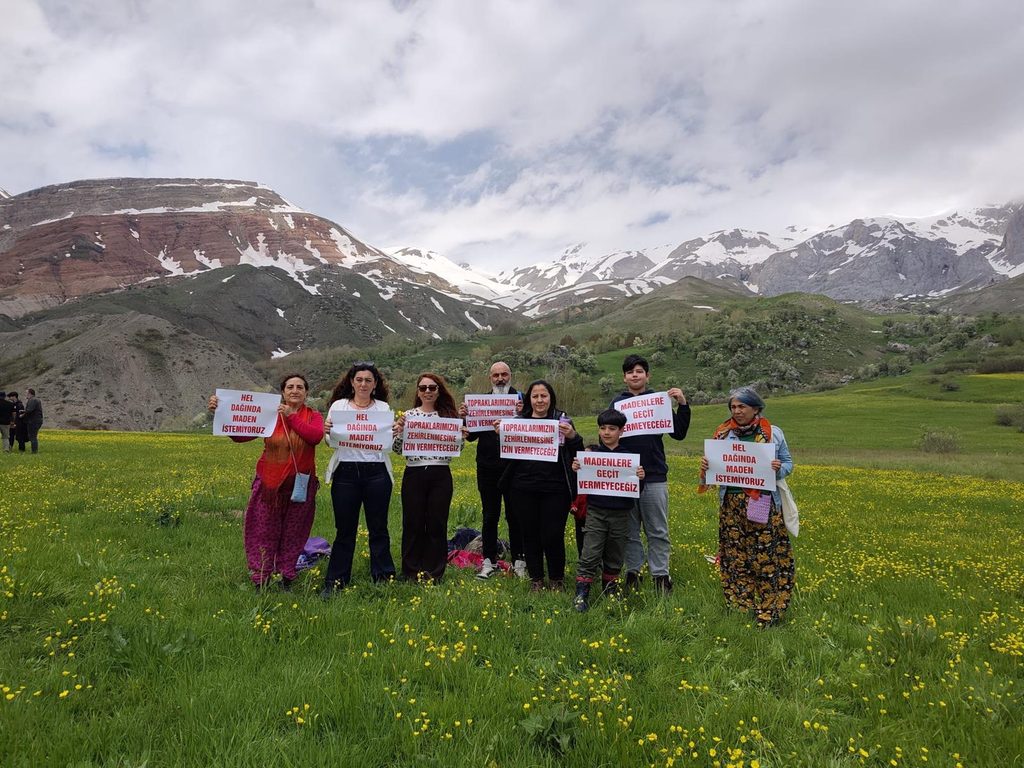
“Farming has been practiced on these lands for 1,000 years”
According to İnan, companies are seizing the people’s sources of income in these villages—where nearly the entire population has been wiped out—thereby impoverishing them day by day. İnan says these dynamics are a result of the capitalist system:
“Farming has been practiced on this land for 1,000 years, and it would have continued for another 1,000 years. But they chose to open it up to mining operations and destroy it. In other words, they prioritized 10 to 20 years of economic revenue over 1,000 years of it—all while prioritizing the prosperity of one or two individuals over the livelihoods of many villages and families.”
The villagers’ resistance continues not only on the ground but also in the legal arena. İnan says that the plundering taking place in the villages of Koçmar and Kılıçlı has been brought before the courts through multiple lawsuits. While the EIA lawsuit is in the constitutional review process, lawsuits seeking “permit revocation” and “forest permit” are expected to be filed. İnan stated that despite this bleak picture, thanks to the struggles waged, the companies have not been able to enter any of the areas, and that there is both legal and social organization in Lice, adding that the resistance will continue.
Endemic vegetation at risk
Dimin Mining, a Konya-based company attempting to operate in Lice, has also drawn the opposition of the local community in the village of Karagöz (Gurik) in the Pülümür district of Dersim.
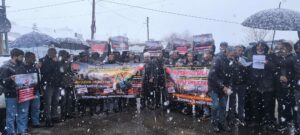
In opposition to the planned chromium mine—which threatens the region’s endemic vegetation—villagers began a sit-in on May 28; prior to that, they had submitted 2,000 signatures to the Tunceli Provincial Directorate of Environment, Urban Planning, and Climate Change.
According to the Munzur Environmental Association, Karagöz is one of the villages that were evacuated in the 1990s, and its residents were exiled during the 1938 Dersim Massacre.
“Our village is facing irreversible destruction”
Uğur Tepe, a beekeeper in the village of Karagöz, witnessed a forced displacement in 1993 when he was just six years old. Today, however, mining operations are putting villagers who have returned under both financial and emotional strain. Tepe, who says his family began farming in the village after their return, reported that mining exploration activities pose a threat to the village’s unique endemic ecosystem:
“I was six years old when every household in our village was forcibly evacuated in 1993. Now I have a child the same age, who runs among the flowers in the village, but our village faces irreversible destruction. There is an effort to depopulate the region because of its identity. What we are doing is, from our perspective, a struggle for our historical, cultural, and productive existence.”
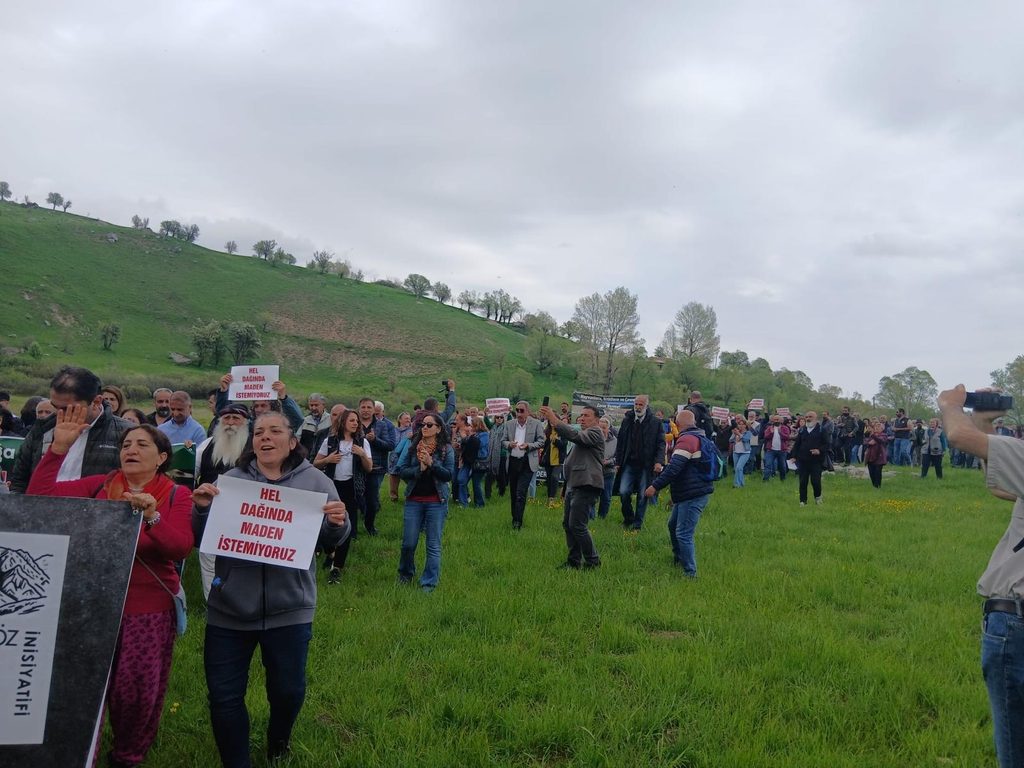
Tepe, who shared that his grandfather was also exiled at a young age during the Dersim Massacre in 1938, noted that the villagers—who have been subjected to a depopulation policy for generations—received compensation from the state following a ruling by the European Court of Human Rights (ECHR). Tepe added that the areas now set aside for the mine were opened up for dam construction in the 1990s, resulting in the destruction of clean water sources.
Pointing out that the site’s operations are being encroached upon by expanding new projects, Tepe noted that “it is clear that even the so-called tourism road project, which is supposed to run from Ovacık to Pülümür along the foothills of the Munzur Mountains, is actually a mining road project,” highlighting that activities in the region are being expanded without the public’s knowledge.
Dimin Mining’s project in Dersim Province was planned on Mount Hel, near the village of Karagöz. The total licensed area of the project is 686 hectares, and the EIA area is 66 hectares. According to the EIA report, the project cost is 7,827,000 TL. Of the 65.97-hectare area, 14.27 hectares are designated as waste rock storage areas. A 36-hectare portion is planned to be used directly as a mining production area. The permit area includes not only Karagöz but also the villages of Dağbek, Çakırkaya, Kovuklu, Kaymaztepe, Mezra, and Kocatepe.
The company submitted its application to the Ministry in 2024. A public participation meeting was held in June 2024, but the public protested the meeting and did not attend; subsequently, the process was withdrawn. The company restarted the EIA process in October 2025.
“We produce here in the village, we will not allow mining”
Tepe stated that Karagöz is highly suitable for livestock farming and beekeeping, and that pollen types not found in scientific literature have been identified in the village, which is home to endemic plant species. The villagers, who derive their income from the village’s rich resources, argue that there is no place for capital in their village. Tepe says that the destruction negatively affects the livelihoods of villagers who are trying to be self-sufficient:
“Life has somehow brought us back to our village, and we’re beekeeping here. We produce here in the village. The spiritual transmission is being harmed due to the damaged places of worship in the region, but there’s also a material aspect to this issue. It’s clear that the state provides incentives to the mining companies. In the past, those who were forced to migrate became cheap labor in factories in major cities. Therefore, we’re saying that we won’t allow mining operations here today.”
According to Tepe, who noted that resettling in the village is difficult, the people of Karagöz generate their own electricity from solar power because there is no electricity in the village. Although transportation to the village is nearly impossible, mining companies have been able to reach it thanks to government incentives.
“Despite the report, the EIA process has not been terminated”
Referring to the current legal situation and the uncertainty surrounding the EIA process, Tepe emphasized that the process has not been terminated despite the negative report from the Provincial Directorate of Agriculture, stating, “The EIA process has been suspended even though it should actually have been terminated.”
Sharing details of his contacts with public institutions and officials, Tepe noted, “Failing to terminate the process despite the clear legal provisions—and issuing a positive EIA report—would clearly signify a stance favoring capital.” Tepe added that a highly tense atmosphere has developed in the village during the process and that the villagers have become significantly more aware of the issues.
The Provincial Directorate of Environment and Urbanization, meanwhile, informed the villagers that they had never before received such a large number of petitions regarding any project. Although the methods in the region may change, the outcome remains the same. The Kurdish people face the threat of having the villages they returned to after many years taken away from them once again.