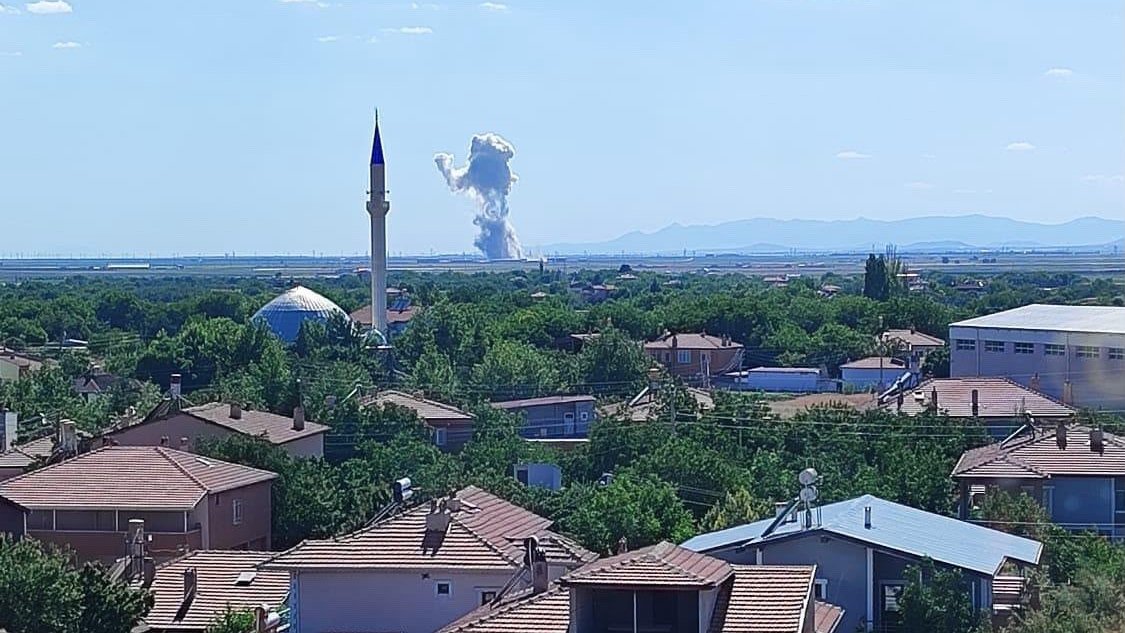
Following explosions that occurred in the Bor district of Niğde in 2018 and in the Hendek district of Sakarya in 2020, another explosion took place at the Yertaş Fireworks Factory—located in the Bor district of Niğde and owned by the same corporate group—resulting in the death of one worker and injuries to another.
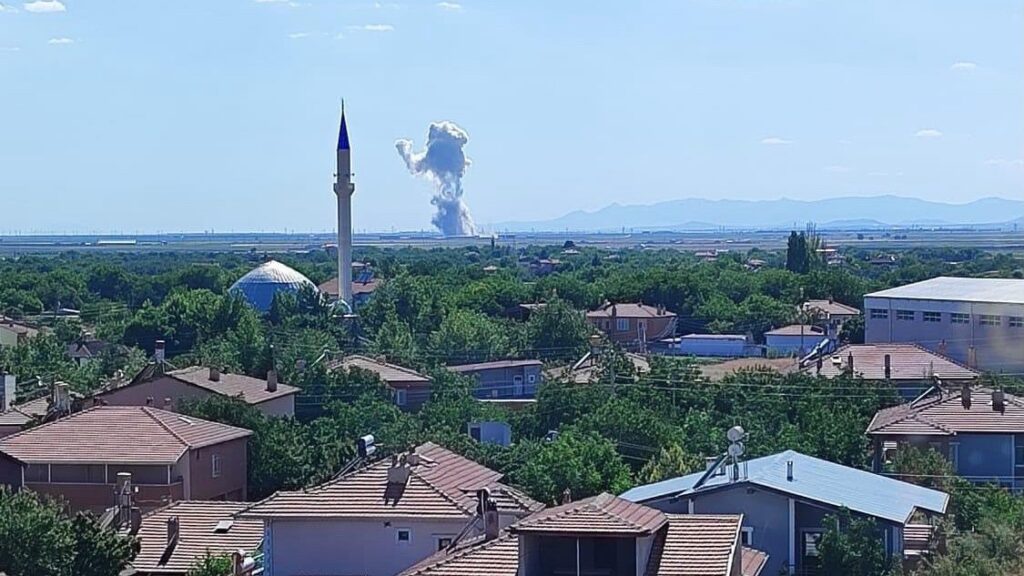
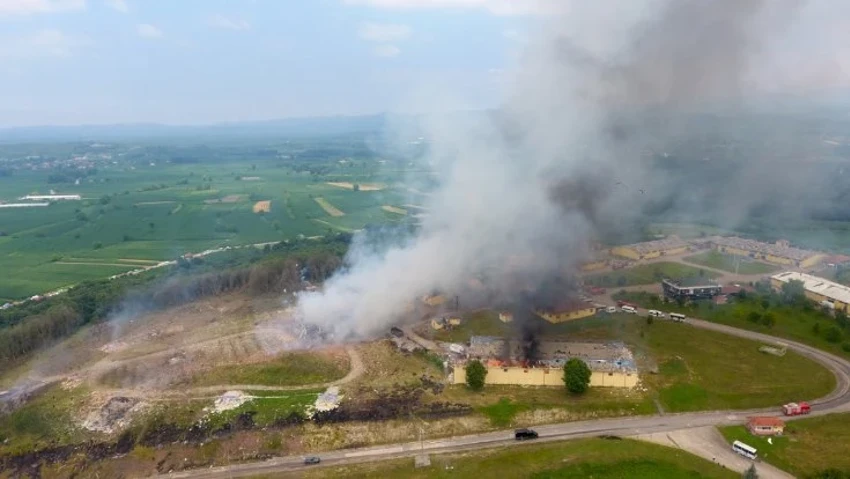
A major explosion occurred around 4:45 p.m. in the underground storage facility of the Yertaş Fireworks Factory, which operates in the town of Kemerhisar in the Bor district of Niğde. Although the fire was extinguished before it could spread thanks to the fire department’s intervention, preliminary reports indicate that Nuri Özkan lost his life and Yasin Demirbaş was injured as a result of the explosion.
Niğde Governor Nedim Akmeşe stated that the fire that broke out following the explosion had been extinguished, noting, “These facilities are located in areas where safety measures have been implemented. Production is not carried out in a single, integrated facility but in separate sections. There is no ongoing incident at this time. We extend our condolences to the family of the citizen who lost his life and our best wishes for a speedy recovery to the injured worker.”
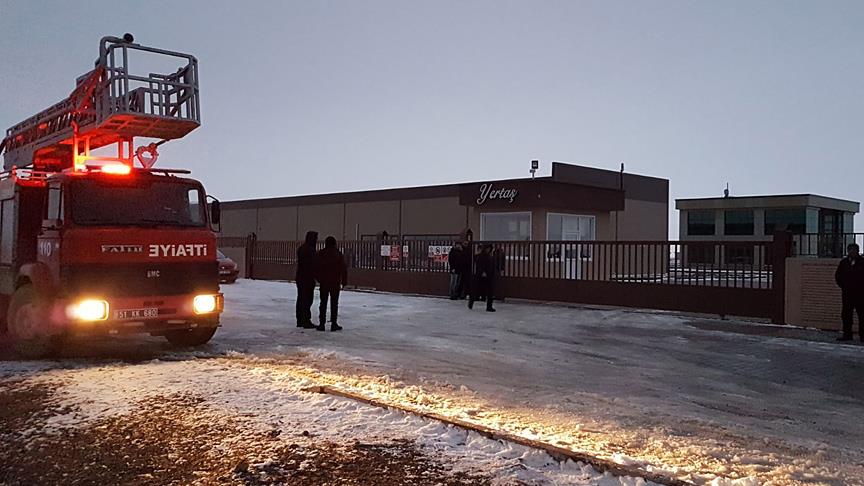
A similar explosion had also occurred at the same factory on January 27, 2018, resulting in the deaths of two workers, İlyas Ünlü and Muharrem Alkan.
The evolution of a company: From Coşkunlar to Yertaş
The Yertaş Fireworks Factory, where today’s explosion occurred, belongs to the same investment group as the Coşkunlar Fireworks Factory, which was the site of a major disaster in the Hendek district of Sakarya in 2020.
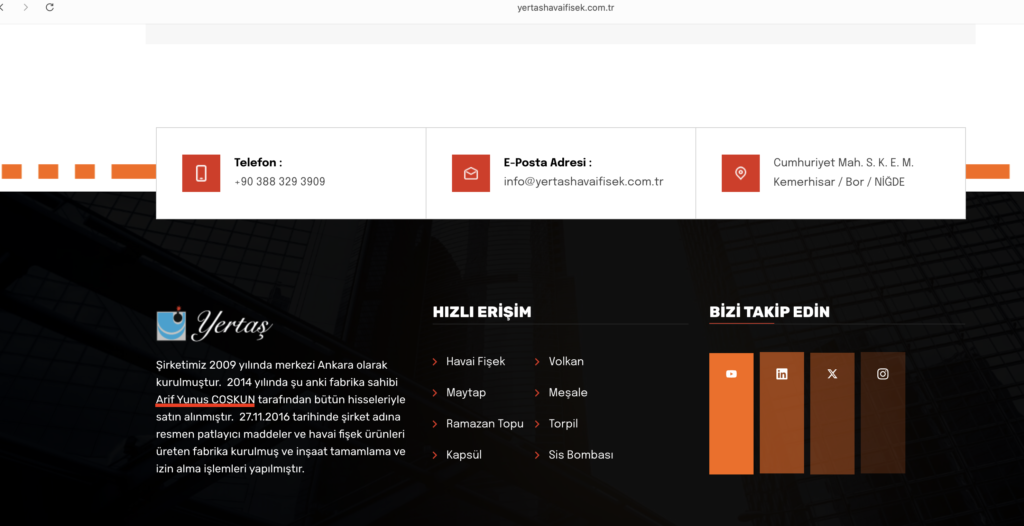
In an effort to avoid public backlash following a series of fatal accidents, the company—which had been operating under names such as “Coşkunlar,” “Büyük Coşkunlar,” and “Venüs Coşkunlar”—had shifted its operations to Niğde and Sivas some time ago. The statement on Yertaş’s official website reads as follows:
“Our company was founded in 2009 with its headquarters in Ankara. In 2014, the current factory owner, Arif Yunus Coşkun, purchased all of its shares. On November 27, 2016, a factory officially producing explosive materials and fireworks was established in the company’s name, and construction completion and permitting procedures were carried out.”
These facilities, taken over by Arif Yunus Coşkun—a member of the Coşkun family, which holds a monopoly in the sector—continue to make headlines for explosion incidents, despite having changed their name.
The 2020 Hendek Disaster and the legal proceedings
The explosion in Hendek on July 3, 2020, which resulted in the deaths of 7 workers and injuries to 127 others, was felt kilometers away. The legal proceedings initiated following the incident serve as a striking example of how workplace fatality cases in Turkey often end in impunity.
At the sentencing hearing held on February 28, 2022, the Sakarya 1st High Criminal Court sentenced factory owners Yaşar Coşkun and Ali Rıza Ergenç Coşkun to 16 years and 3 months in prison each on charges of “causing the death and injury of multiple people through gross negligence.”
Upon appeal of the decision, the 12th Criminal Chamber of the Court of Cassation reviewed the case and issued a landmark reversal. The Court of Appeals ruled that, given Yaşar Coşkun’s failure to ensure a safe working environment despite previous explosions and warnings, as well as the construction of unlicensed structures and the unauthorized storage of gunpowder, the act should be classified not as “gross negligence” but directly as “murder and injury with probable intent.”
However, the Sakarya 1st High Criminal Court, to which the case was remanded, defied the Supreme Court’s “potential intent” ruling and upheld its original decision. With this decision to uphold its ruling, Yaşar Coşkun—the sole defendant in custody in the case—was released. This decision was met with strong backlash from the victims’ families and their attorneys who had been following the trial.
The company’s defense strategy: Blaming the workers
The attitude displayed by the group’s former General Manager, Yaşar Coşkun, in the wake of past disasters also sums up the company’s perspective on workplace safety. Following an explosion in 2009, Coşkun targeted the workers who died, stating, “They packed the fuses incorrectly and didn’t wear protective gear because it was ‘too hot.’” Speaking about Hediye Hallaç, a 26-year-old woman who lost her life following another explosion in 2011, Coşkun said, “She had no burns on her body; according to the doctor, she died of fright.”
Citing explosions in China as an example, Yaşar Coşkun argued, “Hundreds of people are dying in China; if only one person dies here, that means we’re the safest factory in Europe.”
Scientific data reflected in the expert report
The report prepared by explosives expert Süleyman Polat on behalf of the Chemical Engineers’ Chamber of the Turkish Chamber of Engineers and Architects (TMMOB) following the 2020 Hendek explosion provided evidence of production irregularities at the factory:
- Explosion Intensity: Although fireworks are classified as low-risk under regulations, the detonation speed of the exploding material was calculated at 5,400 meters per second. This speed falls between that of ANFO (4,400 m/s), used in mining, and the industrial explosive TNT (6,930 m/s), indicating an extremely destructive level.
- Amount of Explosive: Based on seven separate shock waves recorded by the Kandilli Observatory over 111 seconds and the air shock pressure that reached 1.8 kilometers away, it was determined that at least 40 metric tons of pyrotechnic material exploded at the factory.
The TMMOB’s reports strongly emphasize that the implementation dates of regulations have been continuously postponed, administrative inspections have been inadequate, and the actual owners have evaded responsibility by shifting the entire legal burden onto technical staff who were merely designated on paper.
- September 1, 2007 (Sakarya): 1 worker was injured due to a spark generated while grinding coal during gunpowder production.
- May 21, 2009 (Sakarya): 3 workers were injured in an explosion that occurred at a firecracker workshop.
- August 17, 2009 (Sakarya): 1 worker died and 33 workers were injured in an explosion that destroyed buildings in the laboratory department.
- September 29, 2009 (Sakarya): 1 worker died and 1 worker was injured in an explosion caused by cutting fuses before they had dried.
- February 11, 2011 (Sakarya): 1 worker lost their life and 14 workers were injured in an explosion in the manufacturing department.
- June 30, 2013 (Sakarya): 15 workers were injured as a result of flames spreading to a semi-finished goods warehouse.
- December 14, 2014 (Sakarya): 1 worker lost their life in an explosion that occurred on the production line.
- January 27, 2018 (Niğde/Yertaş): 2 workers lost their lives in an explosion at the production facility.
- July 3, 2020 (Sakarya/Hendek): 7 workers died and 127 workers were injured in consecutive explosions at the factory. (3 soldiers were later martyred in an explosion that occurred during the subsequent transportation of remaining waste from the area.)
- June 26, 2026 (Niğde/Yertaş): 1 worker lost their life and 1 worker was injured in an explosion that occurred in an underground warehouse.