As the dust settles from the February 2026 conflict between the US, Israel, and Iran, the regional power balance has been fundamentally reshaped. Political theorist Professor Abbas Vali argues that while the US and Israel achieved military dominance, Iran emerged with a significant strategic victory. In this deep-dive interview, Vali addresses the “strategic homelessness” of Kurdish politics, the failure of traditional armed struggle in Rojhilat, and why the path to influence in the new Middle East lies in civil society rather than the mountains.
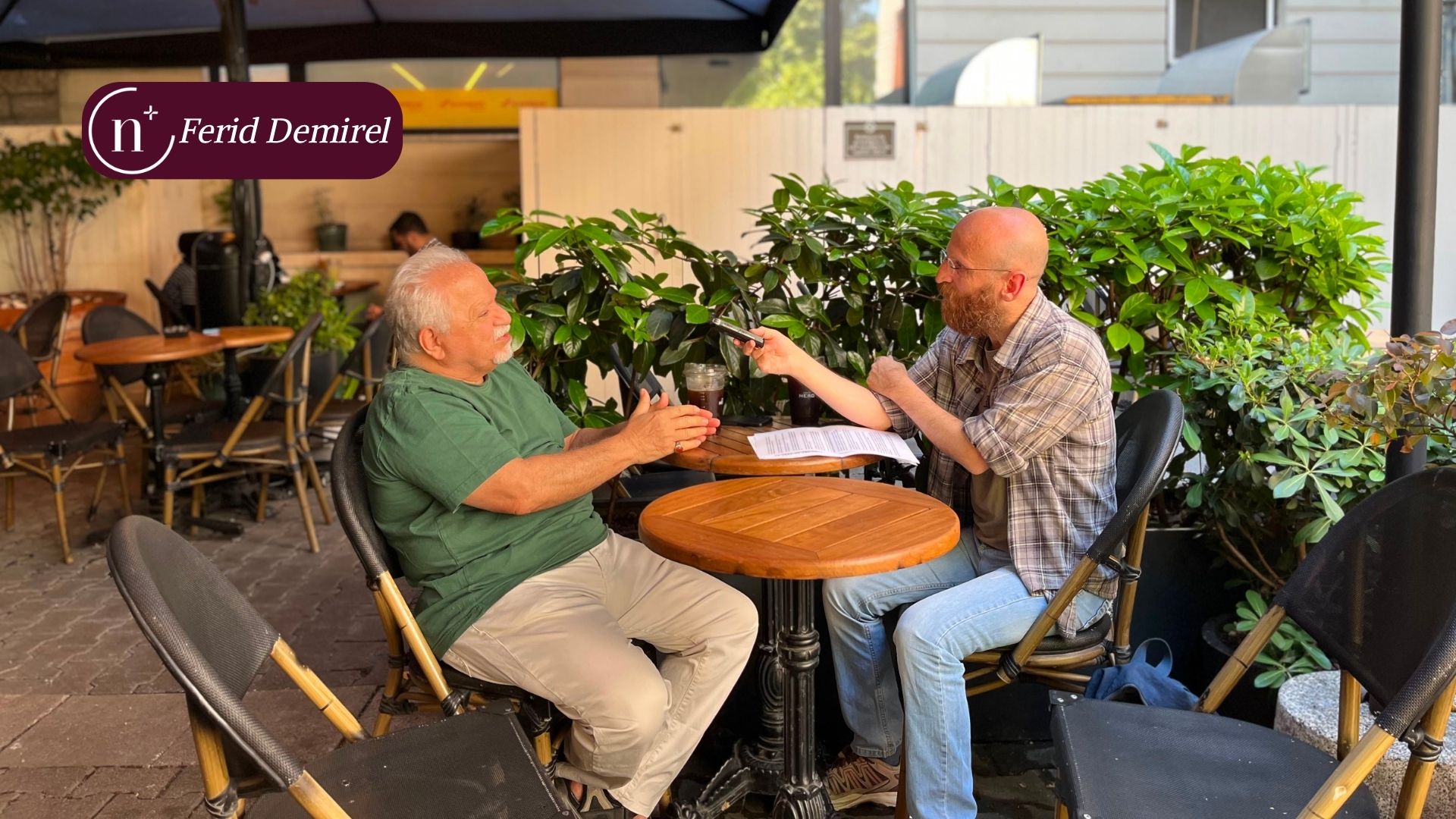
Photo: Niha+
Although the US and Iran reached a memorandum of understanding to reconcile on June 17, 2026, the attacks and problems caused by the war continue. Especially due to the situation in the Strait of Hormuz, conflicts occur frequently, and following this, US President Donald Trump threatens to eliminate Iran.
This situation, which began with the attack of Israel and the US against Iran on February 28, 2026, changed the balance not only in Iran but also in the Middle East and the Gulf countries.
During the war, Israel and the US were attacking Iran, and in response, Iran was attacking Qatar, Kuwait, Saudi Arabia, US bases in Iraq, and several other countries.
Furthermore, Kurdish forces based in the Kurdistan Region were also exposed to Iranian bombardment.
The agreement between Iran and the US draws the most attention to the Strait of Hormuz. According to interpretations, the US was forced to compromise due to this situation in Hormuz. Professor Abbas Vali also draws attention to this situation. According to Vali, as a result of the war, the US and Israel won in the military field, but Iran won in the strategic and political field.
Abbas Vali also evaluated the situation of the Kurds in Iran and stated, “Within the Iranian opposition, the only force that is armed and capable of using weapons is the Kurdish opposition.”
About Abbas Vali
Professor Abbas Vali is a Kurdish political theorist from Mahabad, Iran, and one of the foremost scholars on Kurdish identity and nationalism. He studied in Tehran and London, earning his PhD in Historical Sociology from the University of London, and later taught at Swansea University and Boğaziçi University in Istanbul. He was also the founding president of the University of Kurdistan in Hewlêr. His works include Essays on the Origins of Kurdish Nationalism and Kurds and the State in Iran: The Making of Kurdish Identity.
Following the attacks by Israel and the US on Iran that began on February 28, the situation moved to a new phase with an agreement on May 17, following several meetings. When we look at the content and timing of the agreement, were the parties to the war forced to reconcile?
It is not a treaty. In English, they call it a Memorandum of Understanding, meaning mutual understanding and reconciliation. Apart from that, it is not an official treaty or agreement. It is an exchange of letters. They write a letter and sign it, the other side signs it and sends it back; that is what we read. There was a mutual understanding here. I must say here that both sides, America and Iran, although there was less pressure on them in terms of foreign policy, were under great pressure in domestic policy.
If we talk about Iran, there is a systemic crisis in Iran. Economic, social, cultural, and financial. But the fundamental problem and main crisis is the economic and financial crisis. It has no money; the government has almost gone bankrupt and collapsed. Therefore, they needed this. Because of this economic and financial crisis, Iran could not manage what they call Biopolitics, that is, the politics of people’s lives. Because it had no money or economic resources. This was also a fundamental issue because it feared that if it could not manage this in the long run, there was a high probability of another uprising inside. Because the January uprising was very big. This is one thing.
It is clear that Iran had been exposed to a war; it had entered that war, but a large part of Iran’s military, security, and economic programs had failed and collapsed. It could not continue in this way. However, the situation when Iran entered the war and the time the war stopped were very different from each other. When Iran entered the war, conditions were different; now they are different. There were two reasons for this. First, Iran was able to resist. It showed great resistance and defense. Of course, it also suffered great damage. Many places were devastated, its bridges were destroyed, factories and workshops were destroyed, but it continued its resistance.
The second reason was that Iran was able to hold the Strait of Hormuz in this war. With this move, it changed the calculations of the war. That is, the current mutual understanding is based on the fundamental issue of opening the Strait of Hormuz. This issue did not exist before the war. It emerged during the war. Another point is that America wants Iran to accept and promise not to build nuclear weapons. Iran has already said this from the beginning. It said we will not do it. Even during the Obama’s terms, when they had an agreement, Iran had accepted that uranium enrichment would be around 3.5%, that is, less than 4%. However, when Trump came in 2018, he changed this situation, broke the agreement, and destroyed the Obama administration’s agreement. At that time, Iran began to enrich uranium. Until it reached 60-65%. This is very close to making an atomic bomb.
Now America wants that enriched uranium, which is about 400-450 kilos, to be either destroyed or reduced in density, i.e., concentration. Or for it to be given to Russia or a country like France so that they can do this work. Iran says, “This is not in my hands right now. They are under the bombed places, and even if they are removed, we will not allow them to be taken out of Iran; we will handle it ourselves here.” That is what Iran says.
Prof. Abbas Vali, Photo: Niha+
What is the US saying?
America primarily wants the Strait of Hormuz to be opened. Because there is great pressure on America. Oil prices have risen, food prices have risen. Not only in America, but everywhere in Europe, and even in Turkey, gasoline prices and airline tickets have become more expensive. All of these have become more expensive.
They want this place to be opened. Secondly, they want Iran to accept stopping uranium enrichment, that is the issue. However, there is also great pressure on America itself. If you remember, when Trump came to power, he said, “I will be a president who does not go to war.” But he started a war that is still continuing in some way even now. On the other hand, the war Trump waged was not necessary in terms of the requirements of American politics. But a large part of this war was at the instigation of Israel; Israel forced him.
“Israel wanted the war to expand”
What did Israel want?
When that war started, the goals of America and Israel were different. America wanted to strike a blow at Iran, weaken it militarily, and force it to accept America’s terms. America did not want the Iranian regime to be changed. America did not want to wage a long-term war with Iran, nor did it want Iran to be devastated and disappear. Because America’s strategic interests were very different from Israel’s. America is a major regional power in the Middle East. The issue there is not just Iran; at the same time, it must take into account the interests of Arab countries.
The interests of Arab countries like Egypt, Saudi Arabia, Qatar, and others… Iran knew this too, so Iran’s policy was basically to know that America wanted a limited war, but it also wanted to expand the war.
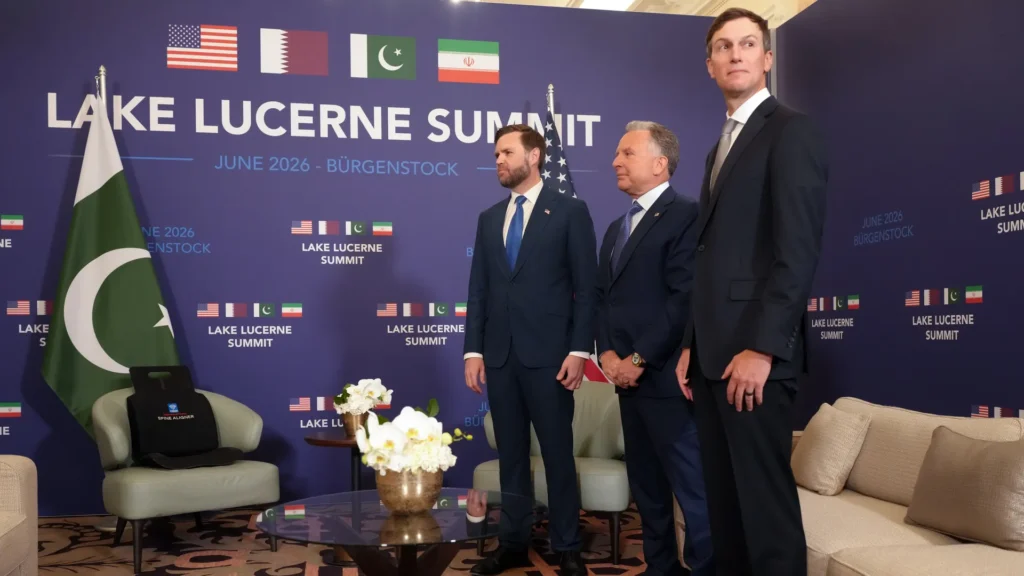
J. D. Vance, Photo: Nathan Howard-Pool/Getty Images
What was the result of this great war?
Iran could not defeat America militarily, but it could attack the countries where American military bases are located. For example, in Bahrain, Jordan, Saudi Arabia, and even in Muscat and Oman. Therefore, America was very sensitive and vulnerable in this regard. Trump could not tolerate this. Because there was something else. Arab countries had always accepted America’s dominance. They had given money to America, invested there, and at the same time left their defense in America’s hands. But when Iran attacked them, America could not protect them, and they suffered great damage.
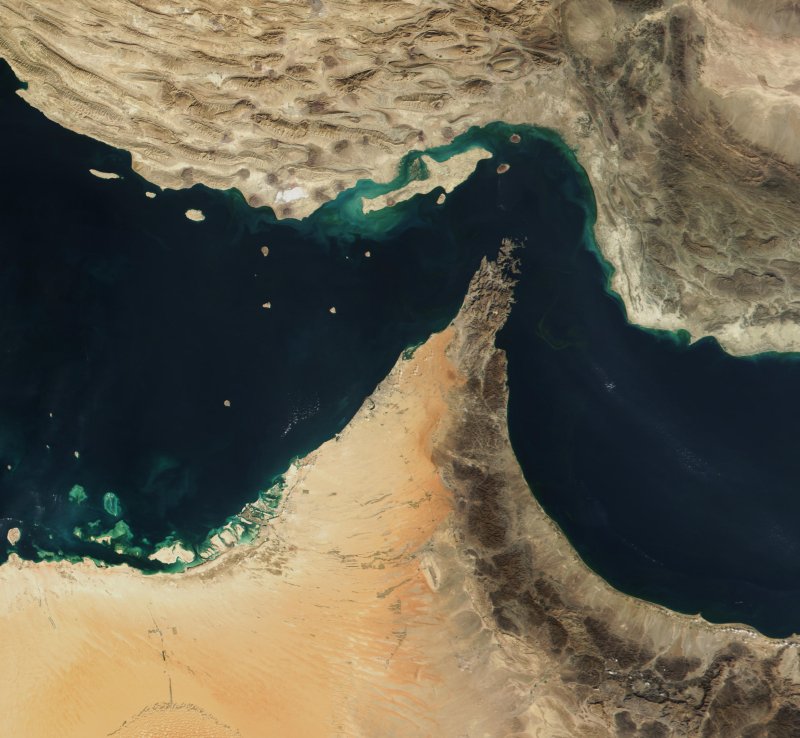
Strait of Hormuz, Photo: Wikipedia
“Iran is now much stronger”
Did the existing balance in the Gulf and the Middle East change after the Iran war?
Yes, that balance has now changed in this direction: Iran is now much stronger in the region. Because it showed that it is the only country that can stand against America, Israel and wage war. Also, a strategic region like Hormuz is under its control. But if you pay attention, Israel’s strategic interests were different. Israel wanted to change the Iranian regime as much as it could. If this did not happen, it wanted to completely devastate Iran and make it like Syria. After that, it aimed to destroy Iran’s missile project, ballistic and cruise missiles. Israel’s fourth condition was to destroy Proxy powers such as Hashd al-Shaabi, Hezbollah, and Hamas.
Did those forces disappear?
No. Iran’s current power is that it is negotiating with America. And it has enough power to put Lebanon on the political agenda of the negotiations. Lebanon is not a part of Iran, but because Iran has this power, it can put Lebanon on the negotiation agenda. This is something that is extremely contrary to Israel’s interests. If you pay attention, Israel’s strategic interests and America’s interests had not aligned from the beginning. When the war started, it is true that America and Israel were together militarily, but their political and strategic goals were different.
Did this difference disappear as a result of the war, or did the gap between the goals of the two states increase?
The situation has now reached a point where J.D. Vance is threatening Israel. On the Iranian side, they no longer allow anyone to say “Death to America.” This shows that they have reached an agreement. That is, a soft coup took place within Iran’s power structure. That soft coup caused the power centers within the Revolutionary Guards and a part of the administration to reach an agreement with America. If you pay attention, they are now agreeing with America. For example, Qalibaf goes to Beijing to say to them, “We have agreed with America, but this is not against your interests.” Therefore, if we look at the stance of Iran and America, we will see a paradox: America and Israel won in the military field, but Iran won in the strategic and political field.
“Shah’s son had no power”
Following the start of the war by America and Israel against Iran, demonstrations and an uprising were expected in Iran to overthrow the regime, but this did not happen. Why didn’t it happen? What was the obstacle that prevented this from happening?
Yes, that uprising was a real and true uprising, but it had no leadership. Because that uprising fell under the influence of right-wing forces, especially monarchists and those who wanted the Shah back. The Shah’s son came out and said, “Go to the squares, I will support you.” Trump came out and said, “Go to the streets, fight the regime’s forces, I will overthrow the regime.” The people went down, but no help came.
Did the Shah’s son have the power to engage in such an undertaking?
The Shah’s son also had no power. Here, the regime knew that this uprising was very important. On the other hand, unlike the “Jin, Jiyan, Azadî” uprising, this uprising did not have a democratic identity. More than anything, their goal was to overthrow the regime, and they were not talking about democracy or things like that. When the Iranian regime understood that the US, Israel, and the Shah’s son had a hand in this, it attacked with all its might. In 48 hours, they killed nearly 50 thousand people in Iran. Even the Iranian Medical Association says that more than 65 thousand people have been killed.
There is something here: Trump said “You go, I will help you,” but after the war started, to protect himself, he came out and told another lie, saying “We gave weapons to the Kurds but the Kurds did not come.” This is a lie. First of all, no weapons were given to the Kurds. Secondly, the opposition that existed in Iran at that time was not organized, and it had no organization. To whom will you give the weapon? A weapon is not something you go and distribute on the streets. You must give it to an organization. There was no organization. Right-wingers had no organization. Maybe the democracy advocates had a small organization, but they were not in the conditions to go out and become armed and fight the regime. The reason Trump said this is: Within the Iranian opposition, the only force that is armed and capable of using weapons is the Kurdish opposition.
So what did the Kurds do at that time?
They had already not been given weapons. Even the general of that time made a statement against Trump and said, “No weapons were given to the Kurds; the weapons went to Başûr (Irak Kurdistan Region) and are in American bases.” Two weeks ago, their representative Tom Barrack also said, “We did not give weapons to the Kurds.” This was a big lie Trump told to defend himself.
What did the Kurdish forces in Iran want during this war?
Their stance was: Of course, they were pleased that the regime would be overthrown, but they said, “This is not our war, we do not want to participate in this war.” Because they had no faith in the goals of America and Israel. What they said turned out to be true. Look, now Iran and America have agreed, and Israel has become almost marginalized. True, Israel will return to its place, but it takes time. In this regard, the Kurds said we do not support the bombing of Iran, and it was a good thing that they did not support it.
“It cannot be done with just air strikes”
What would have happened if they had supported it?
It would not have happened. Because the Iranian people had no air defense power, the people were under bombardment. Not only in Kurdistan, but the people in all of Iran were disturbed by that bombardment. Everyone, even all strategists, know that the Iranian regime will not be overthrown by bombardment. There is no example in history where a regime was overthrown only by bombardment. If America and Israel really wanted to overthrow the regime, they would have had to send an army to Iran. All strategists were saying that sending an army to Iran is like suicide. Iran’s surface area is 1 million 648 thousand square kilometers, that is, almost as large as the whole of Western Europe, and it has a population of 95 million. If you take an army to that region, it will be a hundred times worse than Iraq, and the war will spiral out of control. Its geography is very difficult. When a country is attacked, the nationalist feelings of the people rise. For example, in the Iran-Iraq war. Iran fought for 8 years. One and a half million people were killed, a large part of Khuzestan and Lorestan was devastated. But the regime did not fall and it won. America and the Soviet Union at that time were saying, “Help the Saddam regime so that it stays on its feet.” American strategists knew that Israel could only conduct an air strike in the long term, but it could not wage a ground war. Because Israel has a small army and is a very small country. It is 71-72 times smaller than Iran.
“Kurdish reconciliation is good but not enough”
An agreement was made between the Kurdish forces in Rojhilat. Several Kurdish parties and forces gathered and signed this agreement. What was the impact of this agreement of Kurdish forces during the war, and how will it be after the war?
This agreement is good, it is blessed. It is an example of what they call “necessary but not enough.” Because this agreement has no infrastructure, no operational and practical mechanism. I have said many times that their agreement must have an operational infrastructure and mechanism. There should be a kind of unified military-political operational phase. This does not exist. Even something else does not exist either, and that is a unity of discourse. That is why their current agreement is very, very weak as an organization. It must have a military-political infrastructure; above all, there must be a unified Peshmerga force. It must be unified in terms of ideology and strategy. The declarations they issue, that is, their words, must also be unified. And more importantly than all of them, a unified political and strategic program must be established for which political forces will act in accordance. But they don’t do this job.
Did the war that took place in Rojava at the beginning of 2026 and the results that emerged in Rojava affect the Kurdish forces in Rojhilat?
What happened to the Kurds in Rojava was very important, especially for the Kurds of Rojhilat. One; If you work with America, if you work with America like the Rojava forces, you must be a partner of America, not under America’s command. Furthermore, in the relationship with America in Rojava, while working with America, there was no kind of political autonomy.
It was not in the military either. Because there too, when they gave them weapons, those weapons were under America’s control. The day America said “no” to them, they also stopped their weapons.
You mentioned this before. The issue of weapons also came up for the Kurds during the Iran war process.
In American history, it is known that America has worked with opposition forces many times in the world. However, in a secret way. This was under the control of the CIA, under the control of secret military agencies. For the first time, it worked openly in Rojava. But Rojava could not benefit from this. That is, it conducted that ISIS war, twelve thousand Kurds, guerrillas, were killed in that war. But it could not obtain its political subjectivity. This is a very important point. In Rojhilat too, Trump was probably wanting exactly this. He wanted to use the Kurds as a special force.
Does America not have a political map for the Kurds?
No. It had no political map. When it came, that was the time, America was working with the Kurds and was also working with “Hayat Tahrir al-Sham.” And it was not telling the Kurds this. If the Kurds had known this then, they would have had to clarify their stance. It was clear that America and especially Britain, because this is a British project, did that work with Turkey. In the end, they said, “Here, this is our project.” America and Britain created the project. This was not Turkey’s work. They only used Turkey. That is, the project, the idea, the strategic idea was America’s and Britain’s.
“The design of the Middle East changed after the war”
There is a widespread discourse, it is said that there is a new design in the Middle East. According to your view, is there a new design in the Middle East?
That design existed, but this Iran war destroyed that design. Now, whatever design they set up, whatever military and political balance they set up, they must account for Iran. That was how it was; the goal then was to strengthen the hegemony of America, including Israel, that military hegemony. Now that calculation is gone. That is, this war destroyed it. One thing that is very important is that the war that was conducted showed the strategic limits of America’s hegemony in the Middle East. This is the biggest lesson that countries, especially Kurds, must learn. If the Kurds in Rojava had made an agreement with the Druze and Alawites in their time, if they had fought with them, that front would not have broken. They did not do that work. Because when there is defense, when there is resistance, you can change the calculations. In Rojava, they had military power. They had guerrillas, male guerrillas, female guerrillas, they had everything. At that time, the Ahmad al-Sharaa government had not held itself. But they did not make a sound. They sat down and accepted everything America said. Everything Tom Barrack said “do this” to them, they did. I believe that the Kurds in Rojava made a great strategic mistake whose consequences were not only for Rojava, but also had bad consequences for Başûr and Rojhilat.
There are comments saying that the situation of the Kurdistan Region might change after the war in Rojava. What is your opinion on this?
There is such a danger right now. America wants to centralize there too. Centralization means that the regional government must either shrink or lose a large part of its forces. However, the regional government cannot do this either. Because it is not unified. If there had been a unified government in the region, this job could not have been done. The truth is that it is not only America doing this. Turkey is also behind it. In all likelihood, Turkey will really want the conditions to be formed to take the Mosul province and its surroundings under its control. Trump’s America has a very, very weak strategic thinking. For example, the Iranians had sent people to the negotiations whose ideas were very good. But whom had America sent? They sent Jared Kushner with Witkoff, who know nothing about the Middle East. In America, the right wing, which Tom Barrack is also part of, is in power. They have a racist mentality. That racism says that democracy and equality cannot exist for Middle Eastern countries.
They say that authoritarian centralized governments must be established in the center. They want to do this in Syria. They want to do the same work in Lebanon, they want to do the same work in Iraq, and they want to do the same work in Iran, which already has such an authoritarian government. That “New Middle East” project is gone now, they must put forward another project.
What are the Kurds in the Kurdistan Region doing against this situation?
The Kurdish forces in Başûr are not unified. The Kurdish forces in Başûr have no strategic thinking. If they had strategic thinking, the Kurdish forces in Başûr would not have given control of Kirkuk to the Turkmens. They gave control of Kirkuk to the Turkmens, that is, they gave the fate and control of Kirkuk to Turkey.
The relationship between the PUK (YNK) and Turkey was bad.
Now it is good.
Why is it good now?
Because the Patriotic Union (PUK) went closer to Turkey due to the rivalry with the Party (KDP) and Erbil.
However, contrary to the PUK, the relationship between the KDP and Turkey was very good.
It is no longer like before.
What changed?
Because when the situation in Iraq came to the fore, the Party (KDP) weakened. It weakened both in the Baghdad government and in Kurdistan. Now the PUK receives both Iran’s support and Turkey’s support.
You mentioned Turkey’s role in the Kurdistan Region of Iraq. What was Turkey’s stance and position during the Iran war?
There is something that has emerged these days that I think is likely to be true. It is said that Trump said: “If we did not help the Kurds, it was because Erdogan threatened us. If you do that, I will attack Israel.”
With the Iran war, many people are now expressing this loudly. According to those who hold this view, one day Israel and Turkey will fight each other.
That probability existed. To the extent that it would frighten them, he said, “I will not fight with Iran, nor with America, but I will attack Israel.” It means that when they remove Iran from Syria, when they want to remove Iran from Lebanon, when they want to remove Iran from Iraq, all these are in Turkey’s interest. Turkey filled Iran’s place in Syria. It is likely that it will do the same work in Iraq. Because they want to remove Iran from Iraq. But this is a difficult thing, it is very difficult in Iraq. Because the majority of the Iraqi people are Shia and Iran has influence there. They cannot do this job, they can do it with great difficulty. A big war will break out. Then the problem is, this time Barzani could not easily make an alliance with the Shia forces as before, but YNK did. The fundamental problem is here.
Is the situation of the Iranian people better or worse after the war compared to before the war?
It became much worse. This war reduced the political subjectivity of revolutionaries and the people. Before the war, after the Jina Amini Revolution, civil society in Iran had become quite radicalized. But this war reduced that very much. Now the people are busy with the troubles of daily losses. That is, inflation is very high, eating bread, making a living is very difficult. In such a condition and situation, people’s political practice and political subjectivity decrease. This war reduced this.
What are your predictions for the scenarios that will take place in the Middle East in the coming period?
In my opinion, there are two main powers in the Middle East right now: One is Israel, and the other is Iran. With these conditions and circumstances that have been passed through, and with the situation that has arisen, and with the stance shown by Turkey, Egypt, and others, I think the probability of Arab countries turning their faces to Israel and becoming members of the “Abraham Accords” is very low. Very, very low. I think Arab countries will try to pressure America and say, “Make an agreement with Iran,” so that security can be established in the region and also to help a better change take place in Iran. So that Iran can stabilize. If Iran stabilizes and is not threatened, then this region can reach stability.
“Kurds are weaker than ever”
What is the role and position of the Kurds in this scenario? What falls to the Kurds’ share?
In this period, the situation of the Kurds in the Middle East is now weaker and more fragile than ever. We were in a period twenty years ago when it was said that “the twenty-first century will be the century of the Kurds.” However, the twenty-first century did not become the century of the Kurds. It happened like this: The mistakes in Başûr were very big. Başûr could not establish a unified national government. In Başûr, there is a tribal government. America knows, Turkey knows, Iran knows. They know that the enmity between Barzani and Talabani is more than anything else. Başûr could not succeed. Rojava also could not obtain weapons under those conditions and circumstances that emerged. Rojhilat is now in the same situation. Kurds are alone, that is, the Kurds themselves, cannot do such a job. If they are to do it, they must do it together with Iran’s democratic forces. But they are also not ready to accept all the demands of the Kurds. Therefore, Kurds must now truly make a strategic review in their views and strategies.
In my opinion, what has emerged now is that the strategy of armed struggle in Rojhilat has failed. They must choose another way; they must know how to gather themselves, how to establish a unity, and how to lay the foundation of a unity in the civil society of Kurdistan. The truth of it is that if a strategic change is to be made in Eastern Kurdistan (Rojhilat), it must be said that armed struggle has ended. Because armed struggle is a strategy. If its opportunities do not remain, that strategy cannot continue. Those opportunities are no longer left.
There is another thing, military technology has changed now. Now, for example, even in Bakur, the largest part of the PKK forces are underground. That is, the technology of war is like this. Right now, Turkey has I don’t know how many thousand military bases. There are many. All those bases are interconnected. That war is a drone war, an air war; that war is not a Kalashnikov war. But the Kurds’ war is really a Kalashnikov war. That’s why for Rojhilat, this strategy must change; you must know that the weight of this strategy is shifting from the mountains to the cities. That is, it is moving from the mountain to civil society. Therefore, the Kurdish strategy must direct its focus on how it can establish itself in the cities, within civil society. Okay, Kurds say the Iranian government is a despotic government, it kills. All of these are true. But staying in the mountain doesn’t go anywhere, staying in the mountain is not the solution. This is it. When the strategy changes, the center of work and activity also changes.