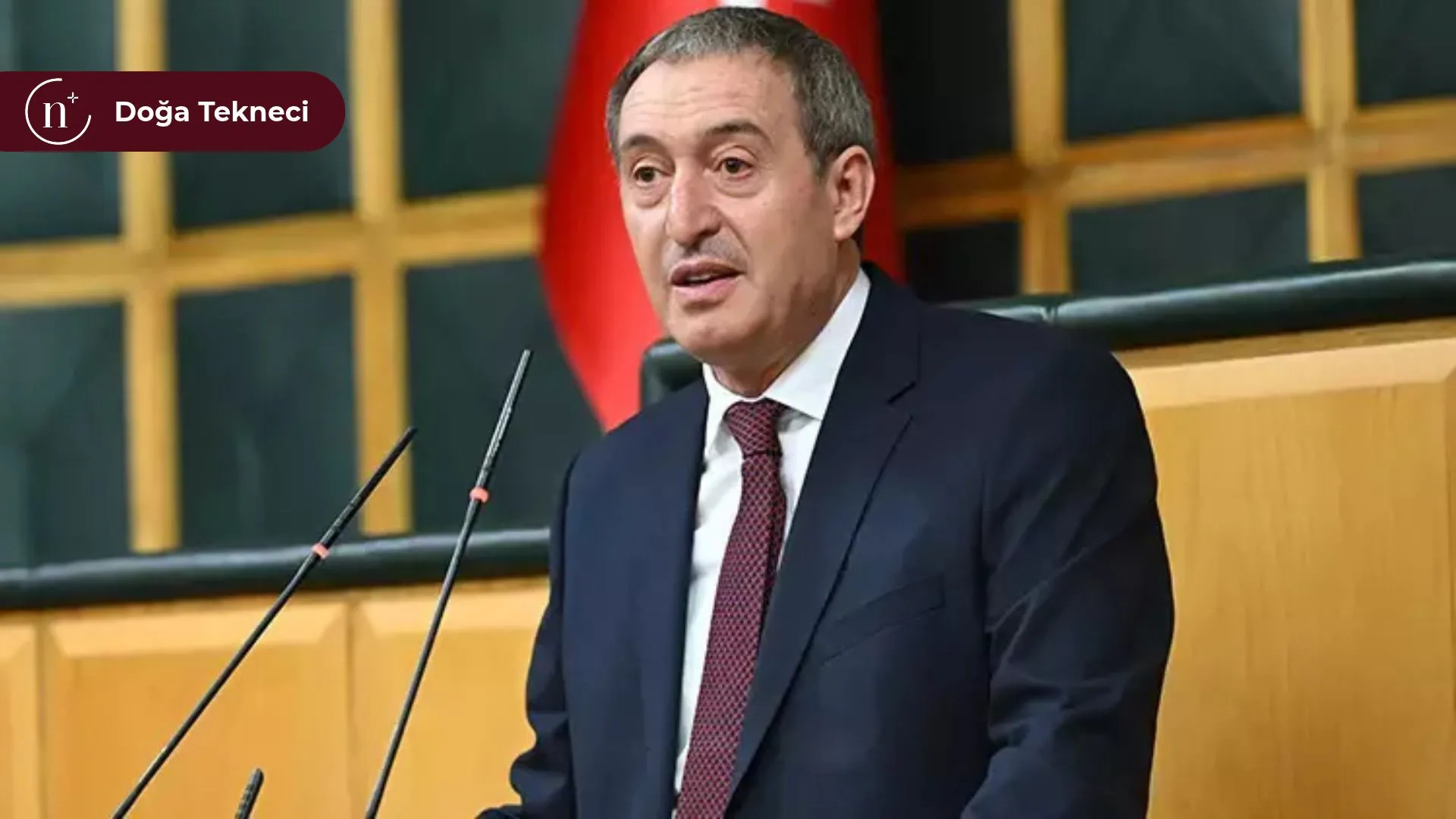
DEM Party Co-Chair Tuncer Bakırhan stated that while he shares Özgür Özel’s objections toward the government, the decision not to participate in the Monitoring Commission could weaken oversight of the process. He described Ekrem İmamoğlu’s remark, “I cannot hold the peace of my country accountable for my own freedom,” as an “important perspective.”
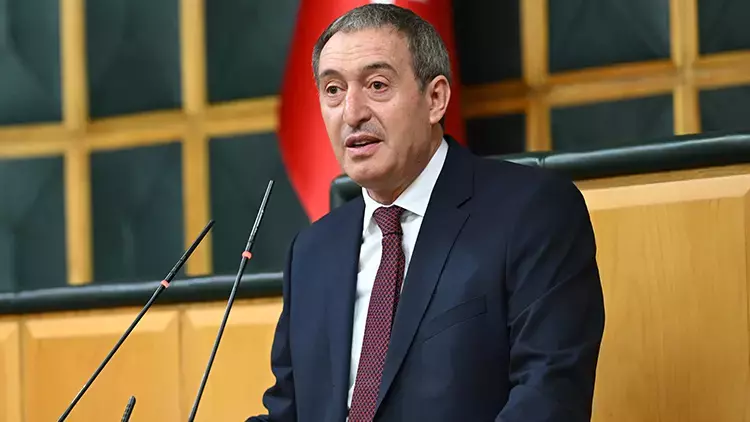
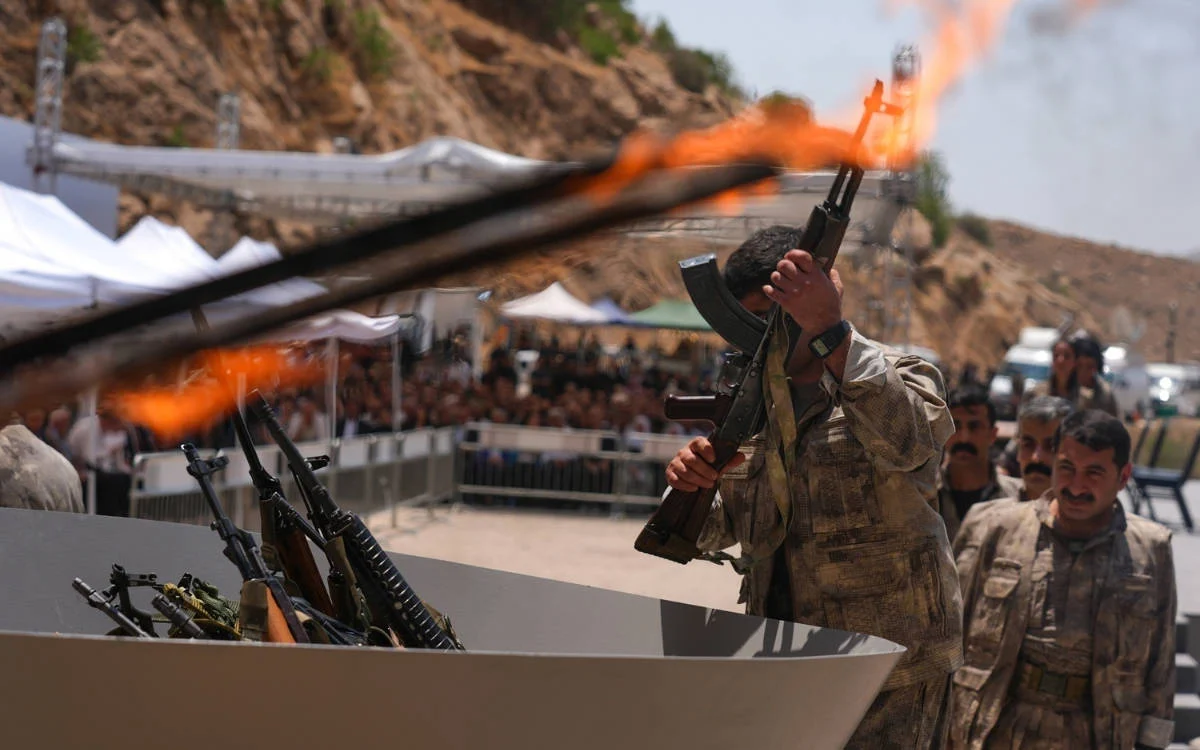
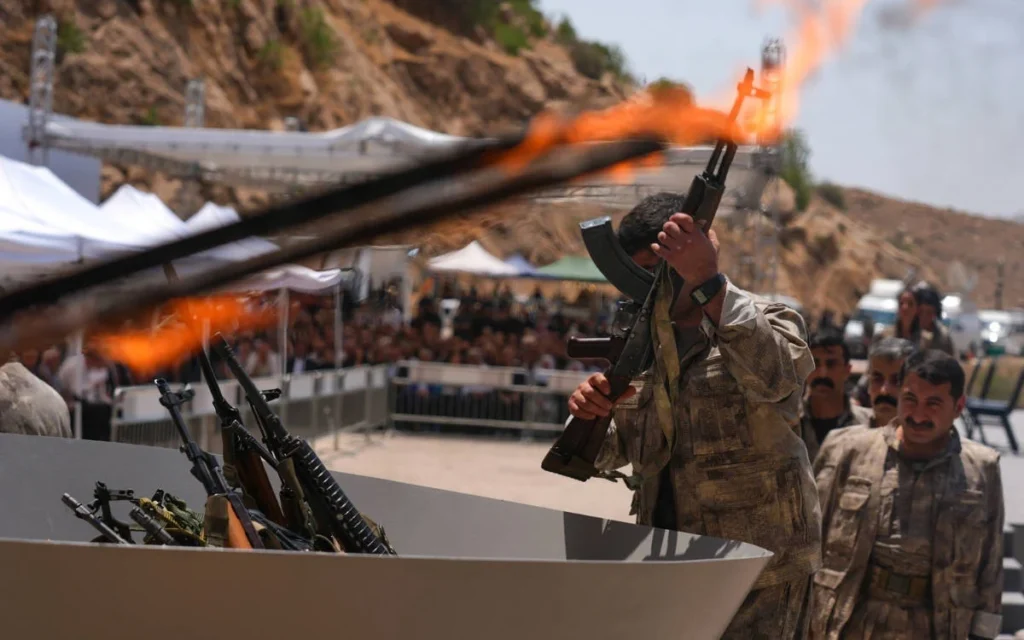
As Parliament Speaker Numan Kurtulmuş conducts visits to political parties regarding the Monitoring Commission, slated for establishment following the adoption of a “Framework Law” in Parliament, DEM Party Co-Chair Tuncer Bakırhan announced that Abdullah Öcalan has moved to a new location. This development, interpreted as a new phase in the process, has drawn attention to the upcoming National Security Council (MGK) meeting scheduled for November 27. Government circles are particularly focused on the expected outcomes of the MGK, as the Framework Law includes provisions on this matter that are considered crucial to the process’s progression.
While Parliament Speaker Numan Kurtulmuş is holding talks with political parties regarding the Monitoring Commission, to be established once the Framework Law is passed by Parliament, DEM Party Co-Chair Tuncer Bakırhan revealed that Abdullah Öcalan has been moved to a new location.
“With Mr. Öcalan’s move to a new location, his working conditions have changed; I can state this clearly here. Furthermore, his secretariat has been strengthened to enable more rapid and efficient work,” said Bakırhan, with his remarks being viewed as a significant new development in the process.
Amidst circulating claims that a delegation of journalists may soon visit Öcalan, all eyes are now on the National Security Council (MGK) meeting scheduled for November 27. With only a few days remaining until this meeting, which is expected to address the verification and confirmation of disarmament, a condition explicitly set by government circles for advancing to the next stages of the process, discussions are now turning toward both the future steps of the process and the role the opposition might play within it. Following a November 18 meeting with Parliament Speaker Numan Kurtulmuş, who visited to discuss the “Monitoring Commission”, Özgür Özel, leader of the New Party, criticized the government’s policies and announced that his party would not appoint any members to the commission.
Assessing the current stage of the process and the necessary next steps for Niha+, DEM Party Co-Chair Tuncer Bakırhan stated that while they have voiced their objections regarding the government’s unlawful actions and the inadequacy of steps taken toward democratization, they believe that participating in the commission’s work, rather than withdrawing from Parliament, will be a more effective way to hold the government accountable.
Bakırhan described Ekrem İmamoğlu’s statement in support of the peace process as “timely and valuable,” characterizing İmamoğlu’s remark, “I cannot trade the peace of my country for my own freedom”, as an “important perspective.” Bakırhan emphasized that challenging the government’s policies and supporting a resolution to the Kurdish question are not mutually exclusive.
Following the adoption of the framework law, there are expectations for the establishment of a committee chaired by Abdullah Öcalan and a parliamentary monitoring commission. Parliament Speaker Numan Kurtulmuş has also held discussions with various political parties. What concrete steps are envisioned once these two structures are established? Do you anticipate any developments by the end of November or within the next few weeks? Is the process moving at the pace and in the direction you envisioned, and what obstacles lie in its path?
During the visit of the Speaker of the Grand National Assembly, Mr. Numan Kurtulmuş, to our party, we shared our views on establishing and launching the Monitoring Commission, fully implementing the Framework Law, and advancing the broader goals of democratization and normalizing the political climate. It is essential that the work of the Peace and Politicization Board and the Monitoring Commission proceed in coordination with one another. Furthermore, the Monitoring Commission should not merely observe the process; it must engage with the relevant parties, identify needs, and, acting as a representative for all 86 million citizens, propose concrete steps toward democratization and the establishment of a legal framework. The Commission should not limit itself to passive observation; rather, it must fulfill a historic mission as the parliamentary body best positioned to contribute to peace.
The process follows a certain rhythm, which may at times slow down or accelerate. These fluctuations can be attributed to various factors, such as developments in the Middle East, the ruling government’s cautious stance, and the main opposition party’s inability to assume a constructive role in advancing the peace process. While we, for our part, work diligently to ensure that the demand for peace takes root throughout society, we also acknowledge our own shortcomings. Therefore, one must view the pace of the process in its entirety. Ultimately, there remains a very strong, shared commitment to continuing the process, a fact of great significance.
Risks arising from global and regional developments, the potential consequences of the government’s incomplete approaches, and interference by non-normative actors can create dangers. It is the duty of everyone who desires peace to work toward minimizing these risks.
Since the discussions surrounding this process began, your party has participated in various events, some organized through your local branches and others held by civil society organizations, democratic mass organizations, and other groups. What are your observations from the field regarding this process? As things stand today, how do you assess the public’s approach, and that of different segments of society, toward this process?
I can summarize what we have observed on the ground over the past month in one sentence: The public is ready for peace, but political action is lagging behind their expectations. People support peace, yet they are waiting for the government to take steps that would inspire their trust.
In Ankara, the “Peace Mothers” kept watch, wearing their white headscarves. In Diyarbakır, young people gathered in forums. We met with civil society organizations in Mersin, local neighborhood heads (muhtars) in Adana, farmers in Kızıltepe, environmental advocates in Ağrı, and those opposing a thermal power plant in Silopi. Mobilization is widespread, from women’s gatherings and labor organizations to neighborhoods and public squares.
While lives and problems differ in every place, a common demand is rising: people are calling for peace. They know the true cost of war. Mothers have lost their children, young people have lost their futures, and this country has lost years of its own existence.
On the ground, people also express frustration with the slow pace of the process and the delay in taking concrete steps. They want peace and the measures toward democratization to have a tangible impact on their daily lives. They are looking for change in the legal system, democratic rights, and recognition of the popular will.
What we see is not so much a lack of faith in peace itself, but rather an objection to the delay in the steps necessary to achieve it. This situation must be overcome. Society is taking responsibility for peace; now the political sphere must fulfill its own. That, in essence, is what it all comes down to.
Following the visit by Parliament Speaker Numan Kurtulmuş, Özgür Özel announced that the “New Party” would not appoint members to the Monitoring Commission. When you also take into account the “congratulatory” visit paid to the New Party by Ümit Özdağ, how do you interpret these developments? How might the New Party’s stance affect the subsequent stages of this process?
We face a fundamental question that concerns everyone: How can a fifty-year-old conflict be brought to an end? This is the core question that all political actors today must ask themselves, as we are discussing how to achieve peace. In this debate, rather than focusing on who is “right,” we should consider which approach will actually advance a solution.
We share Mr. Özel’s objections regarding the government’s unlawful actions, as well as the insufficiency and sluggish pace of its steps toward democratization, issues that we, too, are actively fighting against. However, being “right” is not the same as achieving results. In politics, walking away and slamming the door might seem like a strong stance at first, but if it negatively impacts the lives of millions, it could have the opposite effect. In this sense, we must ask ourselves: when we abandon a field of struggle, are we moving the issue forward, or are we setting it back? Are we gaining more effective tools, or are we, with our own hands, surrendering the oversight and the voice we already possess?
I would like to ask this in all sincerity: which approach is more likely to yield results, withdrawing from the table to observe from a distance, or maintaining a firm resolve, tracking every piece of legislation and every promise made, step by step, within Parliament, and holding the government to account by demanding, “Why are you not fulfilling the requirements of this law?” In my view, the latter is far more effective.
I have nothing to say regarding the specific visit in question. However, the fact that those who oppose peace are celebrating this decision should prompt us to reflect on its consequences and ask: “What exactly is being congratulated here?”
Look, one could simply wait for an election to change a government. However, you cannot reshape the conditions for peace, the parties involved, and those parties’ will according to your own election calendar. History does not offer the same opportunity every time you might wish for it. For this reason, we cannot view peace as a task to be left to the next administration. How many governments have changed in this country, yet peace has still not arrived?
I also understand voters’ reactions. For instance, after the “New Party” reached its decision, our own voters asked: “Isn’t it unfair to the Kurds to form a partnership with them during elections, yet fail to share the same responsibility when it comes to peace?” Acting on assumptions about what voters want is merely an attempt to evade historical responsibilities. Aside from a few racists, who wouldn’t want peace?
The duty of politics is to explain why peace is necessary, first to one’s own voters, and then to everyone else. We explain this under any and all circumstances, and we will continue to do so. If a political movement cannot explain the necessity of peace to its own base today, how will it ever convince society as a whole tomorrow?
If an approach that ties peace to a change in government ends up claiming, “our voters don’t want it” once it finally attains power, how many more springs will peace be postponed?
The responsibility of the opposition is not to “test” the ruling power by seeing if it avoids peace, but rather to test it by insisting that peace and democracy must grow together. A proper test yields proper results.
From the podium at the party congress, Mr. Özel rightly spoke of “the rule of law,” “democracy,” and “coexistence.” We share this same vision. Yet, how can a genuine coexistence be built without sharing the responsibility for resolving the Kurdish question, without both sides placing their hands under the same heavy stone together?
We believe that the “New Party” possesses the experience and capacity to shoulder this responsibility. Let us oppose the government’s misguided policies, while finding common ground on issues that serve the national interest. Yet, let us not make the prospect of peace and the resolution of the Kurdish question pay the price for our legitimate objections to the government. For peace, regardless of who holds power, is the most urgent and sacred debt that all of us owe to this land and to the children of this country.
ÖFollowing Özgür Özel’s statement, Ekrem İmamoğlu released a text in which he argued that while the government’s policies should be criticized, the peace process itself should be supported. How does the DEM Party evaluate İmamoğlu’s approach?
I have read Mr. İmamoğlu’s piece. I consider it a pertinent and valuable statement. I found the examples he provided, drawn from his personal experiences, particularly significant.
We are not pursuing peace during easy times; on the contrary, we are striving for it during difficult ones. In this context, Mr. İmamoğlu’s remark, “I cannot hold the peace of my country hostage for the sake of my own freedom,” offers a crucial perspective.
From the very beginning, our position has been clear: we cannot pit the pursuit of peace against the struggle for democracy. We cannot hold one hostage to the other. Objecting to the wrongdoings of those in power is one thing; supporting a resolution to the Kurdish question is another. One can, and indeed should, advocate for the country’s need for peace while simultaneously fighting against the injustices one personally faces.
The Kurdish question has left its mark on the last two centuries of our history; it is a challenge that transcends us all. Its resolution is not the task of any single party or administration. Peace is not the property of any one entity; it is a collective concern of society. For us, it is not merely a temporary political preference or tactic, but one of the fundamental reasons for our very existence.
Naturally, advocating for peace does not mean turning a blind eye to injustice. On the contrary, it demands that we raise our voices even more firmly wherever injustice exists. This is why, from day one, we have spoken of “social peace”; it reflects our holistic perspective. Peace is secured through the rule of law and strengthened by democracy; there is no other way.
Mr. İmamoğlu’s piece highlights this responsibility. This is the approach we need today. We must move forward by saying “Peace, and…” rather than “Peace, but…” and we must clearly articulate our demands. Our responsibility toward one another requires this.
One of the most intensely debated topics on the agenda is the “fund” issue. How does your party approach this matter? There are allegations that certain figures from the ruling party are involved in this affair. According to some assessments, this episode represents one of the largest swindles in the Republic’s history. How do you evaluate these developments, and what do you think of the ruling party’s stance?
This is neither a mere issue nor a simple scandal; it is a swindle, an act of organized malice. It is not just a few individuals coming together to commit fraud; it is a systemic problem that points to institutional decay, reveals a lack of oversight, and serves as an X-ray of the triangle formed by politics, capital, and bureaucracy. This swindle is not only an “economic Susurluk”, a reference to a notorious case of state-criminal collusion, but also a cost imposed on the public by a dysfunctional governance system.
Unless a proper diagnosis of this swindle is made, the victims’ grievances cannot be addressed, nor can Turkey learn the lessons needed to take essential structural steps. Therefore, this affair must be examined in all its dimensions. It cannot be considered in isolation from the financialization that has intensified during the AKP era, nor from the increasingly reckless conduct of those in power, behavior that has effectively castrated the rule of law and state institutions. Furthermore, it cannot be separated from the deepening impoverishment and the collapse of social classes.
Regrettably, the government is not adopting such an approach. Instead of analyzing the cause-and-effect relationships behind this swindle and seeking to turn it into a constructive turning point for Turkey, the administration is merely attempting to manage the psychological fallout and the potential electoral consequences. Let me state this clearly: this approach will neither yield the results the government hopes for nor enable Turkey to learn from this incident and evolve toward a more democratic, transparent, and equitable order.