A stabbing incident in Belfast has sparked violent anti-immigrant riots fueled by social media misinformation, raising serious concerns about racism, public safety, and Northern Ireland’s fragile social fabric.
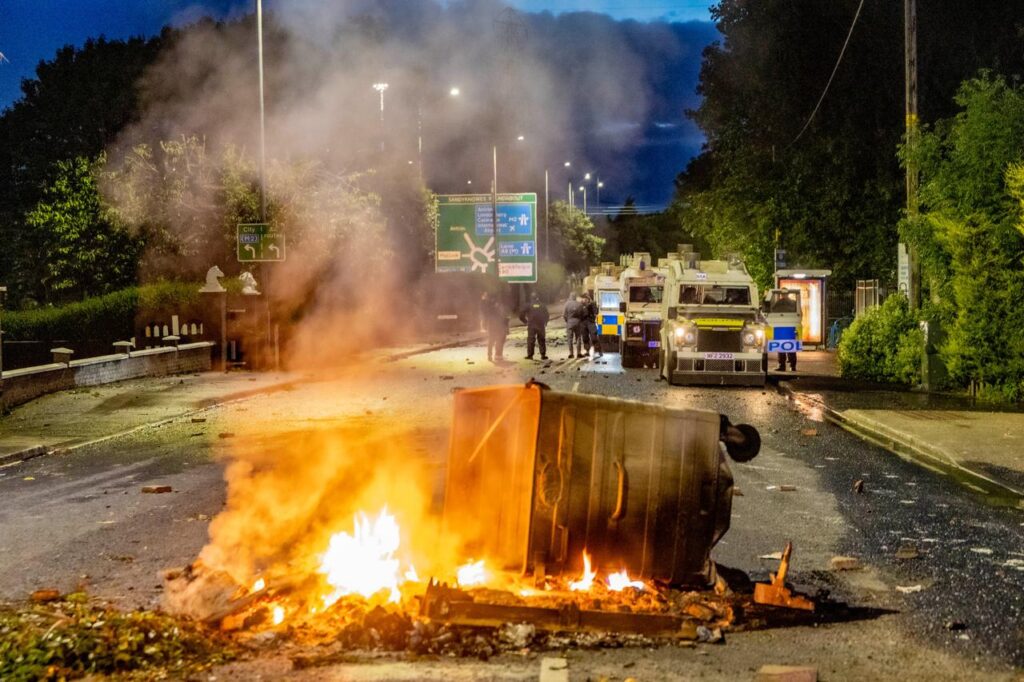
Image: Kevin Scott (@Kscott_94)
Riots in Belfast after a serious knife attack have raised concerns about anti-immigrant violence, misinformation on social media, and whether police and political leaders can stop tensions from growing.
The riots started after Stephen Ogilvie was seriously injured in a knife attack in north Belfast on 8 June. A 30-year-old Sudanese man, Hadi Alodid, was later charged with attempted murder, carrying a knife in public, and making threats to kill. He has not been convicted, and police have not publicly confirmed a motive for the attack.
The incident quickly became more than a criminal investigation. Videos and claims about the attack spread rapidly online. The suspect’s nationality and immigration status became a major topic of discussion. Soon after, anti-immigration protests took place in parts of Belfast, and some of these protests became violent.
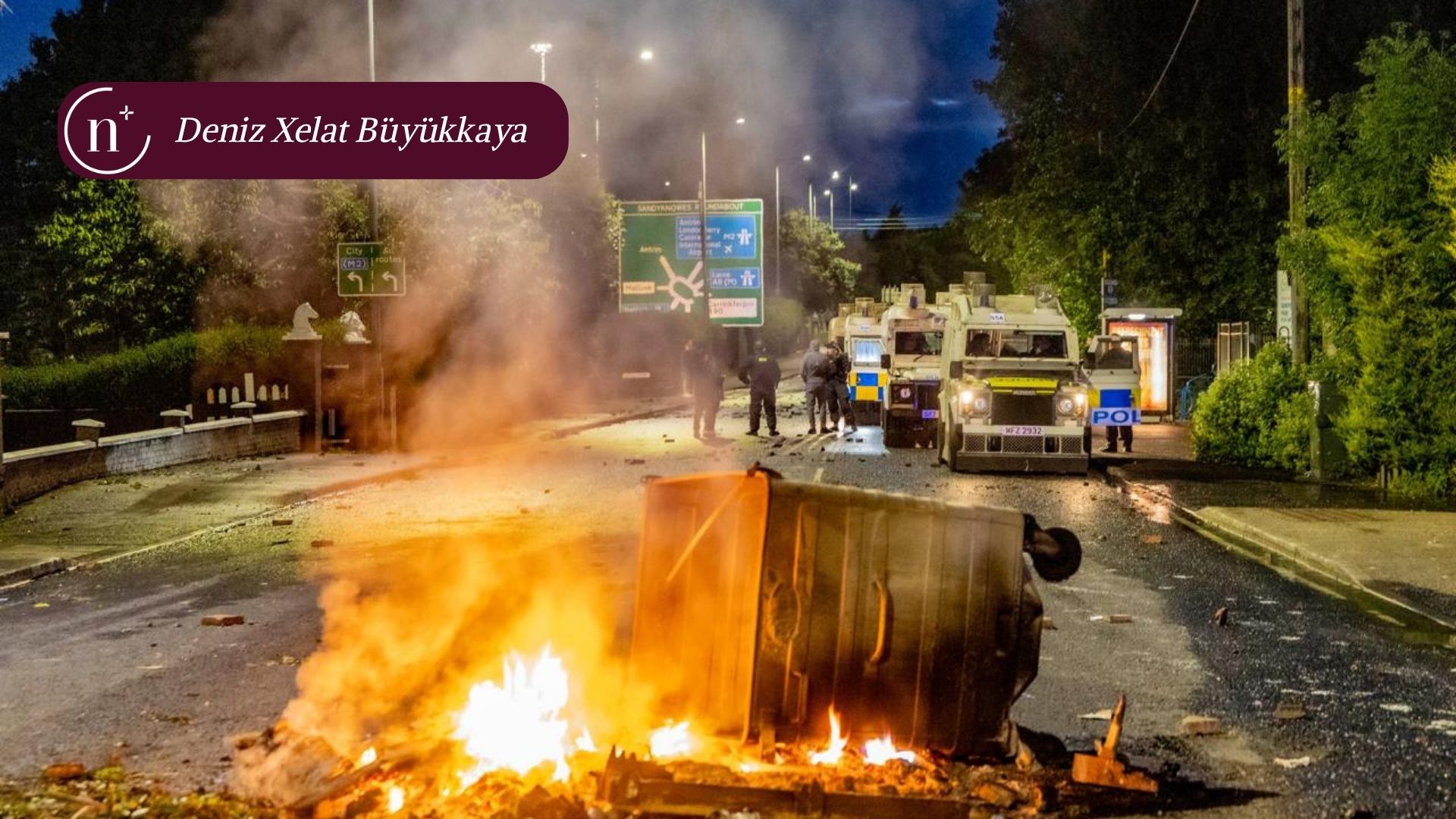
Police officers were attacked with bricks, bottles, and fireworks. Vehicles were set on fire, and homes and businesses were damaged. Some properties linked to migrants or ethnic minority residents were also targeted. The Police Service of Northern Ireland (PSNI) responded by deploying public order units and using water cannon and plastic bullets.
The violence prompted warnings from community groups that minority families were living in fear. Some people had to leave their homes for their own safety. Police asked the public to remain calm and avoid sharing material that could increase tensions.
In a statement released through the PSNI, Ogilvie’s family said they were devastated by the attack. However, they said they did not want the case to divide communities or create hostility towards migrants. They added that many migrants make an important contribution to the country and should not be blamed for the actions of one individual.
In an update yesterday, Stephen Ogilvie’s family confirmed that he is now out of an induced coma and continuing his recovery. However, his condition remains serious. His family said he has lost sight in his left eye and still faces the possibility of losing sight in his right eye.
Social media misinformation
Political leaders in Belfast and London also condemned the violence. Prime Minister Keir Starmer said the disorder was unacceptable and that those responsible would face the full force of the law. Northern Ireland Secretary Hilary Benn described the violence as “racist thuggery” and said people had been targeted because of their race or background.
First Minister Michelle O’Neill condemned the intimidation of families and the burning of homes. Deputy First Minister Emma Little-Pengelly said that anger about one person’s alleged actions could never justify attacks on innocent people. Justice Minister Naomi Long also criticised people who were using fear and anger to encourage anti-immigrant actions.
Long said social media had helped increase tensions. According to The Guardian, some people encouraging the riots were not even from the local area, saying that they would have “struggled to find Belfast on a map”.
The role of social media has become one of the central issues following the riots. Police and politicians say that videos, rumours, and inflammatory posts online helped make the situation worse. There are also concerns that threats against migrant-related addresses were not taken seriously enough before the violence began.
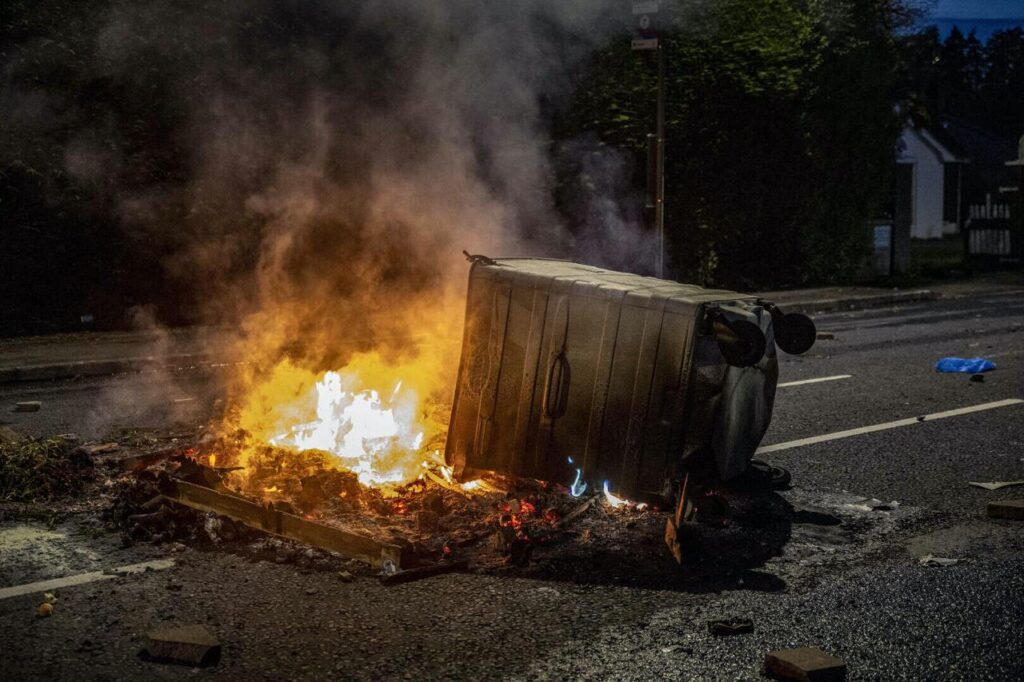
Image: Kevin Scott
The Guardian reported that a volunteer group called The Accountability Project Northern Ireland sent many reports to the PSNI between November 2025 and June 2026. The group warned police about anti-immigration activity online and about addresses being shared in extremist networks. A spokesperson said that a list circulated during the riots appeared to match one that had previously been sent to police.
The PSNI says investigations are continuing. Officers are trying to identify those involved in the disorder and are monitoring online activity. Police are also taking steps to protect people and places that may be at risk.
Northern Ireland’s context
The riots have been compared to other anti-immigrant violence in the UK. In 2024, riots broke out in several towns and cities after the murder of three girls in Southport. False information about the attacker spread online, and mosques, asylum accommodation, and police officers were targeted. A parliamentary report later described the unrest as the worst public disorder in the UK since 2011.
Northern Ireland also witnessed anti-immigrant violence in 2025. Riots erupted in Ballymena after two teenagers were accused of a serious sexual assault, but the riots soon moved beyond the specific criminal allegation and turned into hate-motivated attacks against migrant communities. Homes, cars, and businesses were burned, and police described the disorder as hate-motivated. Reuters later reported that the charges against the teenagers were withdrawn, highlighting how an unproven allegation had been mobilised to justify collective hostility toward immigrants.
The Belfast riots appear to fit a wider pattern in which serious crimes or allegations can quickly become a focus for anti-immigrant mobilisation, especially when claims and rumours spread online.
The events have also renewed debate about Northern Ireland’s unique social and political situation. Belfast has a long history of sectarian division and political conflict. Because of this history, outbreaks of street violence are especially concerning. The Guardian reported that the riots led to questions about possible loyalist paramilitary influence, although there is currently no clear evidence that such groups organised the disorder.
For police and political leaders, the challenge is now about more than restoring order. They also face pressure to respond more effectively to online threats, misinformation, and the targeting of minority communities after local incidents.
The criminal case connected to the knife attack will continue through the courts. However, the violence that followed has already left Belfast facing difficult questions about racism, social media, policing, and the risk of blaming entire communities for the alleged actions of one person.