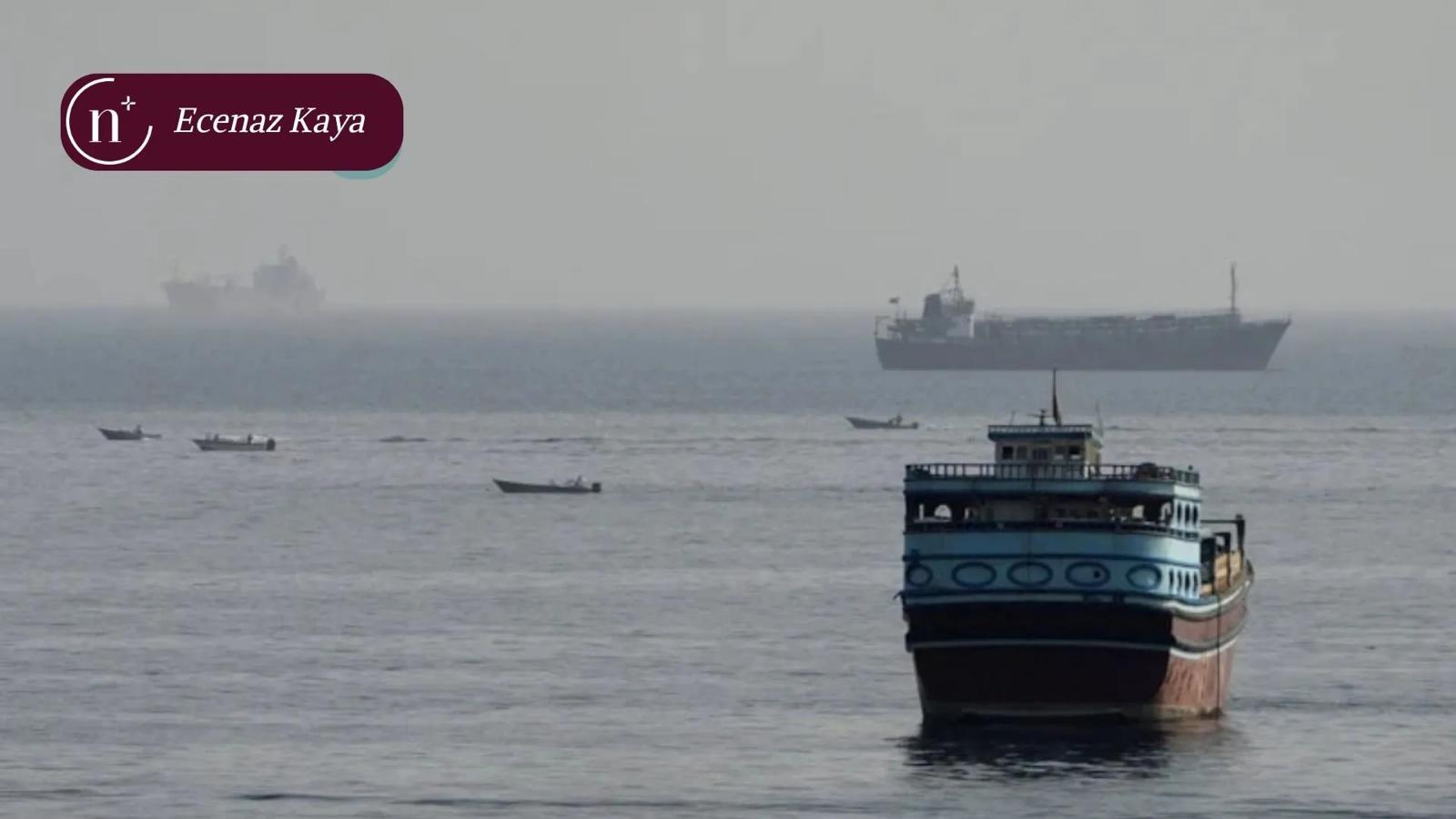
The Strait of Bab el-Mandeb, which separates Africa from the Arabian Peninsula and serves as an alternative to the Strait of Hormuz for oil trade, effectively came under Houthi control as of September 2026.
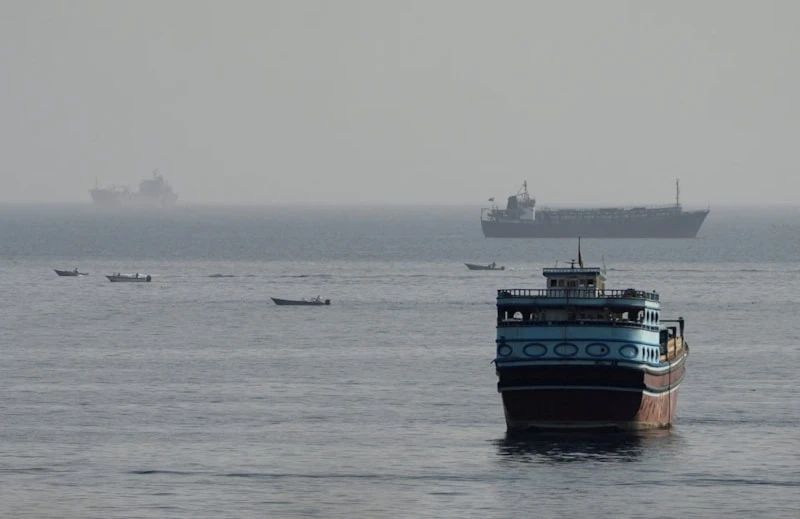
The naval blockade against Saudi Arabia declared in the Bab el-Mandeb Strait in July 2026 turned into concrete military control as of September 2026, following a ground operation launched by the Houthis (Ansarullah Movement)—who hold de facto control in Yemen—along the coastline.
On September 10, 2026, the process—which began with the capture of the Zübab district of the port city of Muha, located at a strategic distance from the strait, as well as Perim Island and the Hanish Islands, continued to spread and expand toward the hills that make control of the strait possible. The Yemeni government confirmed the fall of Muha to Reuters.
Another critical milestone in the Houthi advance was the capture on September 11 of Mayun, a small volcanic island at the entrance to the Bab el-Mandeb Strait. The force controlling this island, which divides the strait in two, gains a strategic advantage over every passing ship.
Bab al-Mandab means “Gate of Tears.” It is known by this name due to its treacherous navigation conditions. The strait lies between Yemen on the Arabian Peninsula and Djibouti and Eritrea on the African coast.
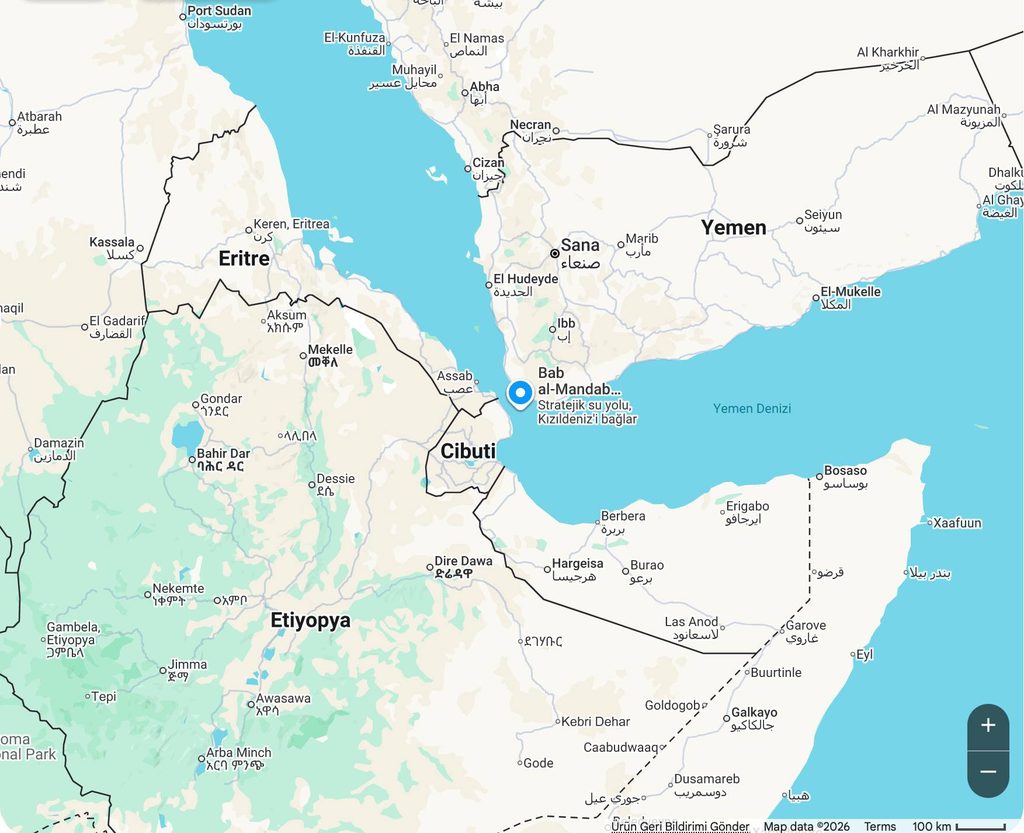
Speaking to Al Jazeera, Austrian politician Wolfgang Pusztai stated that if Muha were captured, the Houthis would completely cut off Yemen’s access to the Red Sea and, consequently, would be able to control the Bab el-Mandeb Strait more easily. Pusztai, highlighting the strait’s 20-kilometer width, described the capture of tactical positions around the strait as a strategic advance that would paralyze Red Sea shipping without the need for missiles. He added that the Houthis’ advantageous position would disrupt international trade, particularly with Saudi Arabia.
As military tensions escalate in the region, people in the port city of Muha—who make their living from the sea and have already been living with war for years—remain caught in the crossfire. It was reported that approximately 1,400 Yemenis have fled to Djibouti.
After the Strait of Hormuz, Bab el-Mandeb is next
The importance of the strait—which offers a route between Yemen and Djibouti and carries a large portion of the oil coming from the Middle East—had increased due to the unavailability of the Strait of Hormuz as a result of the conflict between the U.S. and Iran. With this route also being cut off, ships are expected to divert to the Cape of Good Hope, leading to even higher costs. Brent crude hit $100.
Experts in the region interpret the situation as an attempt by the Houthis to monopolize maritime trade. The Houthis are not only attacking ships but also deciding which vessels will pass through the strait, who will be attacked, and who will receive preferential treatment. This transforms the strait from a military front into a political lever.
The war has reached the coast
The crisis in Yemen has been ongoing for over 10 years. In 2014, the Ansarullah movement, riding a wave of public anger, took control of the capital, Sana’a, and then advanced southward.
Following the clashes, the ceasefire signed in April 2022 under the auspices of the United Nations failed to establish either a state of war or peace, as the parties were unable to reach a political agreement.
In 2023, citing solidarity with the Palestinian people in the face of attacks on Gaza, the Houthis began targeting commercial ships linked to Israel, the U.S., and the U.K. passing through the Red Sea and the Strait of Bab el-Mandeb with missiles and drones.
The latest development that ignited the conflict was Saudi Arabia’s airstrike on the airport in Sana’a. The Houthis had announced the Bab el-Mandeb blockade as a direct act of retaliation: declaring “a siege for a siege, an escalation for an escalation,” they imposed a naval blockade against Saudi Arabia on July 20.
Today, however, Houthi sources claim that life in the city has returned to normal following the withdrawal of Saudi forces from Muha. According to an AFP report, however, people fleeing with their children say they cannot find a single home in the city and that there are no shelters left.
Turkey and Pakistan are waiting to see
Amid this situation, the status of the Mecca Agreement—signed on August 7, 2026, between Turkey, Saudi Arabia, and Pakistan—is a matter of curiosity. Under the agreement, an attack on one of the three countries will be considered an attack on the other member states. Turkey and Pakistan have not yet clearly announced whether they will take action against the Houthis’ blockade of Saudi Arabia.
Islamabad has asked Iran to use its influence over the Houthis and ensure that the attacks cease. Iran, meanwhile stated that it does not control the Houthis. Pakistani Defense Minister Havace Asif said in a statement that if attacks against Saudi Arabia continue, the trilateral security agreement could be activated.
On the Turkish side of the agreement, Turkish Foreign Minister Hakan Fidan held a phone call with his Saudi counterpart, Faysal bin Ferhan Al Suud.
Since Riyadh has not yet put the pact into effect, Turkey and Pakistan have not taken any action.
Who are the Houthis?
As the Palestinian-Israeli conflict, which has been ongoing since October 7, escalates, the risk of a “regional war” is growing by the day. We have compiled what is known about the Houthis in Yemen, who on October 31 targeted Israel with ballistic missiles and drones “in support of the Palestinian resistance.”
The Ansarullah Movement, also known as the Houthis, which operates in Yemen, takes its name from its founder, Hussein Badreddin al-Houthi. The Houthis belong to the Zaidi branch of Shia Islam, which is estimated to make up about one-third of the country’s population.
The Zaidis fought against the Ottomans at various intervals from 1538, when Yemen came under Ottoman rule, until 1918. Following the Ottomans’ withdrawal from Yemen in 1918, the Zaidis maintained their dominance in the region until 1970.
Between 1962 and 1970, the pro-monarchy Zaidis fought against the republicans led by Abdullah al-Sellal, who were backed by the Egyptian army. Although the republicans won the war, Egyptian leader Gamal Abdel Nasser, citing the loss of thousands of soldiers by his army, described his intervention against the rebels in North Yemen as “Egypt’s Vietnam.”
The Houthis, one of the leading Zaidi tribes, were a group influenced by the 1979 Iranian Islamic Revolution. The leaders of the Houthi tribe, which is primarily located in the Amran and Saada regions—Bedreddin al-Houthi and his son Hussein al-Houthi—lived in Iran for a time.
The Ansarullah Movement, founded in the early 1990s under the leadership of Hussein al-Houthi, waged an active struggle against Ali Abdullah Saleh, who served as President of Yemen from 1990 to 2012.
The Houthi uprising, which began in 2004 following the killing of Hussein al-Houthi by the Yemeni army, continued intermittently until 2011, when—fueled in part by the Arab Spring—it evolved into a widespread popular uprising, culminating in Ali Abdullah Saleh’s resignation on February 21, 2012.
The Houthis and the Saudis
While the appointment of Saleh’s deputy, Abdurabbu Mansur Hadi, as his successor failed to quell the unrest in the country, clashes broke out in 2014 following the security forces’ intervention against a wave of protests led by the Houthis. This process culminated in the Houthis seizing the capital, Sana’a, on September 21, 2014, and taking control of the government.
Saudi Arabia, Yemen’s northern neighbor, launched operations against the Houthis in March 2015 on the grounds that they were supported by Iran. During this period, the Houthis were driven out of Aden, the country’s “capital” in the south, which they had briefly seized. Nevertheless, the Houthis carried out numerous operations against Saudi border posts during this period and targeted oil facilities with missiles and drones.
Who controls what areas?
The Houthis control the capital, Sana’a, and the surrounding governorates of Zemar, Ibb, Raymah, Mahwit, and Amran, as well as the centers of the Sada, Hajjah, and Hodeidah governorates and parts of Bayda and Jawf.
The Saudi-led coalition forces and the Yemeni Presidential Council maintain control over all coastal cities along the Arabian Sea, stretching from the strategic Bab al-Mandab district in Taiz province in the southwest to the Omani border.
These forces, which maintain control over the southern governorates of Taiz, Abyan, Lahij, Hadramaut, and Mahra—including the temporary capital of Aden—also control the oil-rich city of Marib, as well as parts of Jawf and the governorates of Dali and Shabwa.
Forces affiliated with the Southern Transitional Council—which the United Arab Emirates (UAE) has trained and supported under various names in parallel with the Aden administration—are actively prominent in the western part of the country, starting from the coastal districts of Taiz and extending to the coastal regions of Aden, Abyan, Shabwa, and Hadramaut in the south.
Al-Qaeda is one of the parties to the conflict in Yemen. The organization, which has one of the strongest networks on the Arabian Peninsula, continues to operate primarily in desert regions and some coastal cities.
The 6 month ceasefire and the humanitarian situation
Under the auspices of the United Nations, the parties reached a ceasefire on April 2, 2022. The six-month ceasefire ended on October 2, 2022. Since then, fighting has continued, albeit at a low intensity.
Approximately 377,000 people have lost their lives in the years-long conflict. According to a United Nations report dated April 19, 2023, more than two-thirds of Yemen’s population (21.6 million people) are in need of humanitarian aid, while 4.5 million people, including 2 million children (14 percent of the population), have been internally displaced.
The war has led to a deepening economic crisis and triggered a famine in the country.
According to a December 12, 2022, report by the United Nations Children’s Fund (UNICEF), approximately 2.2 million Yemeni children are at risk of dying from diseases such as cholera and measles due to malnutrition and a lack of vaccines, and half a million of these are 0-5 years old.