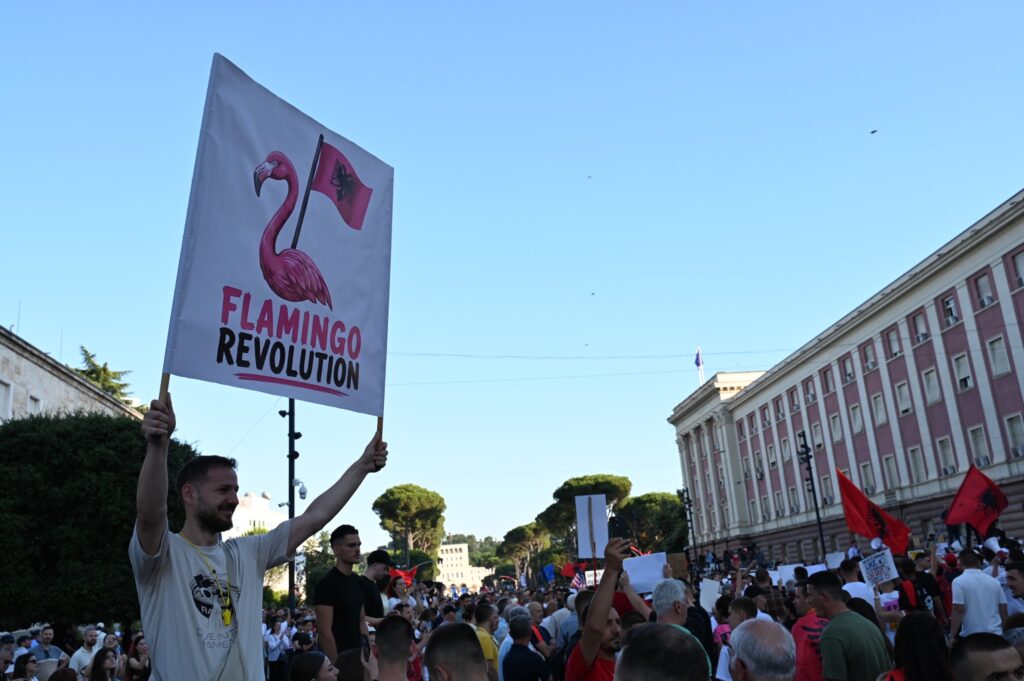
Anti-corruption protests that began after a beach in Zvernec was sold off as part of a tourism project have continued for two weeks. Citizens explaining the reasons behind the protests, how they were organized, and what people are demanding say that local actions launched by environmental activists have grown into a national movement calling for “a new Albania.”
Protests against a planned tourism project in the Zvernec area, near the city of Vlora, have continued since May 30. Protesters have said the demonstrations will continue until the project is canceled and Albanian Prime Minister Edi Rama resigns.
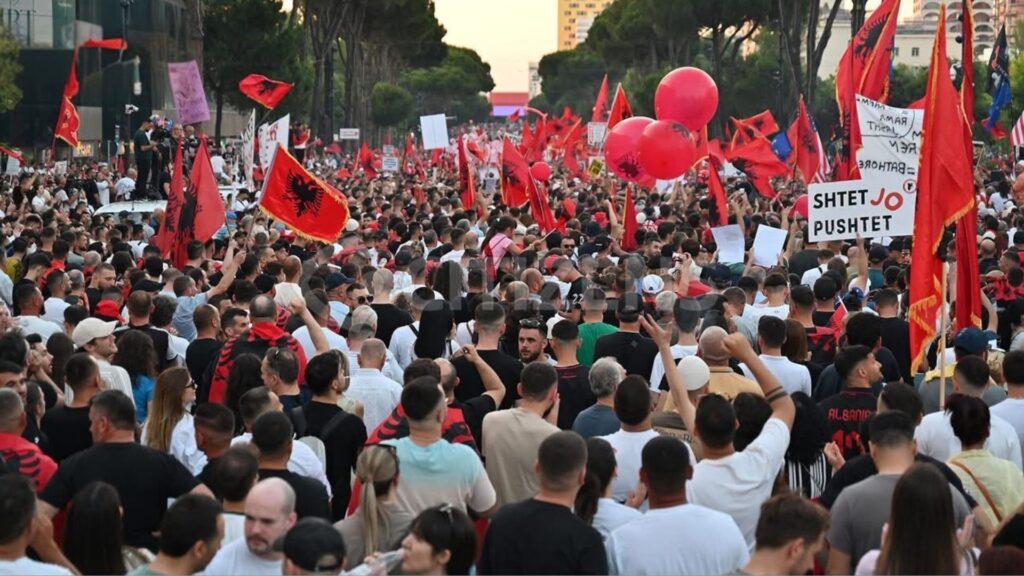
The protests were sparked by the sale of a beach in Zvernec as part of a tourism project reportedly linked to Ivanka Trump, daughter of US President Donald Trump, and her husband Jared Kushner. For nearly two weeks, the slogan “Albania is not for sale” has been at the center of demonstrations involving thousands of citizens. We spoke with activists and experts about the reasons behind the protests, the corruption allegations, and what the Albanian public is demanding.
Jared Kushner, Trump’s son-in-law, is also an American businessman and adviser to the US president. His investment firm, Affinity Partners, plans to turn part of Sazan Island on the Adriatic coast into a luxury resort—reportedly part of a $4 billion tourism project that would include hotels, villas, apartments, a marina and other high-end facilities.
Kushner has also served as a US representative in a series of diplomatic efforts involving Iran, Ukraine and Russia. In February 2026, Trump formally appointed him as Special Representative for Peace.
“The protests aren’t just about this one incident”
Anila Hoxha, who has taken part in the protests, said there were multiple reasons behind the demonstrations, and that the recent incident was simply the tipping point of a much longer process. Hoxha stressed that the protests aren’t only a reaction to the tourism project, arguing that Albanians have voiced numerous complaints about what they see as a corrupt government for some time.
Hoxha said the protests have nothing to do with the policies of other states, such as the US or Israel, underlining that the issue is with their own government and corruption.
“This isn’t just Albania’s problem”
Hoxha said the nationality of the investors isn’t really the point—what matters is that the project is being built in an area of major importance for natural resources, which is why the issue concerns everyone:
“The real issue isn’t the nationality of the investors—it’s the investment itself, made in a region of major importance for natural resources. This shouldn’t be seen as just Albania’s problem, because it’s an environmental issue.”
“Our only expectation now is the government’s resignation”
Hoxha said the way the tourism project has been presented—as an exclusive, elite island—has raised serious questions among the public, and that people don’t want this land to belong to anyone as private property:
“This land has belonged to the Albanian people throughout history. It should remain that way. We no longer have any expectations from the current government, but our demand is clear: resignation, and the formation of a new government that will work for Albania based on the rule of law, always standing on the side of what is right.
Since corruption has persisted for years, it may be difficult to eliminate it quickly. But we believe there are ways to address this problem, and that it can be fought through taking measures, carrying out various activities, and raising awareness.”
“State indifference sparked major outrage”
Journalist Erisa Kryeziu said the protests began in May after environmental activists noticed heavy machinery on site, after which the area was surrounded with bulldozers and barbed wire. She said the situation escalated when a private security company tasked with guarding the area responded aggressively, beating a protester and dragging them on the ground.
Kryeziu said the incident took place in front of police, who did not intervene against the private security guards—triggering widespread public outrage. She said videos of the incident spread rapidly on social media, fueling distrust among many citizens toward the state and its security forces.
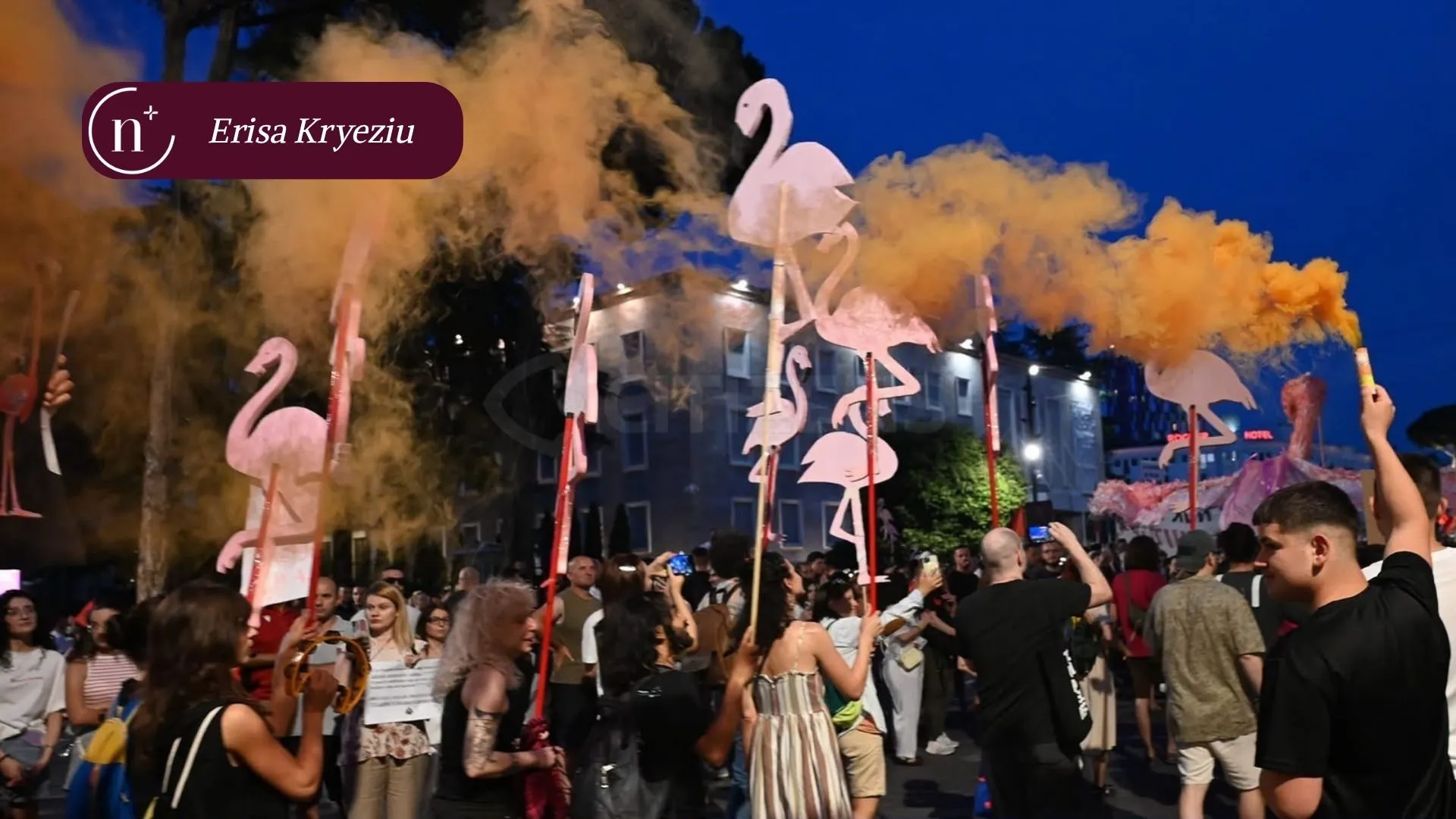
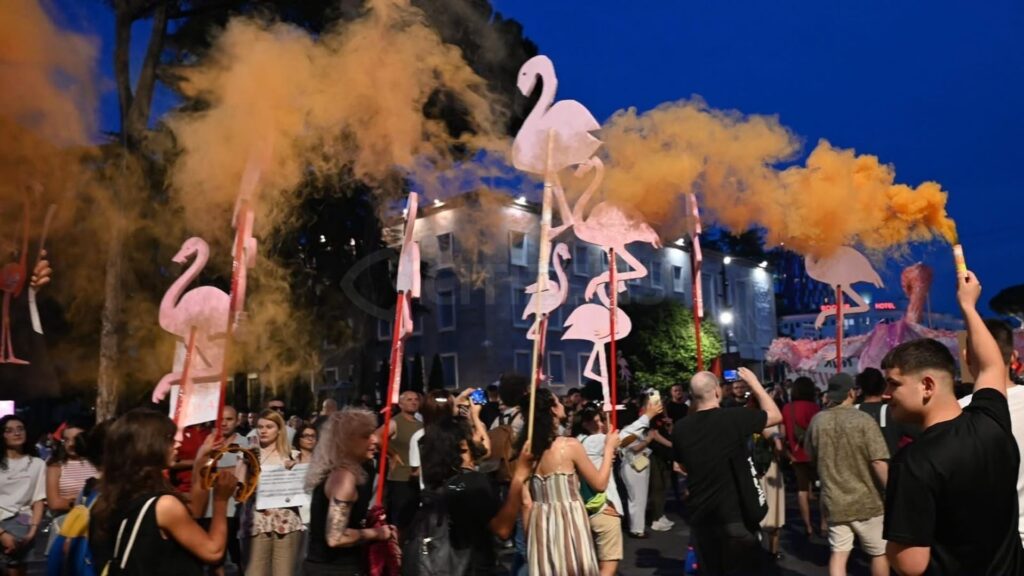
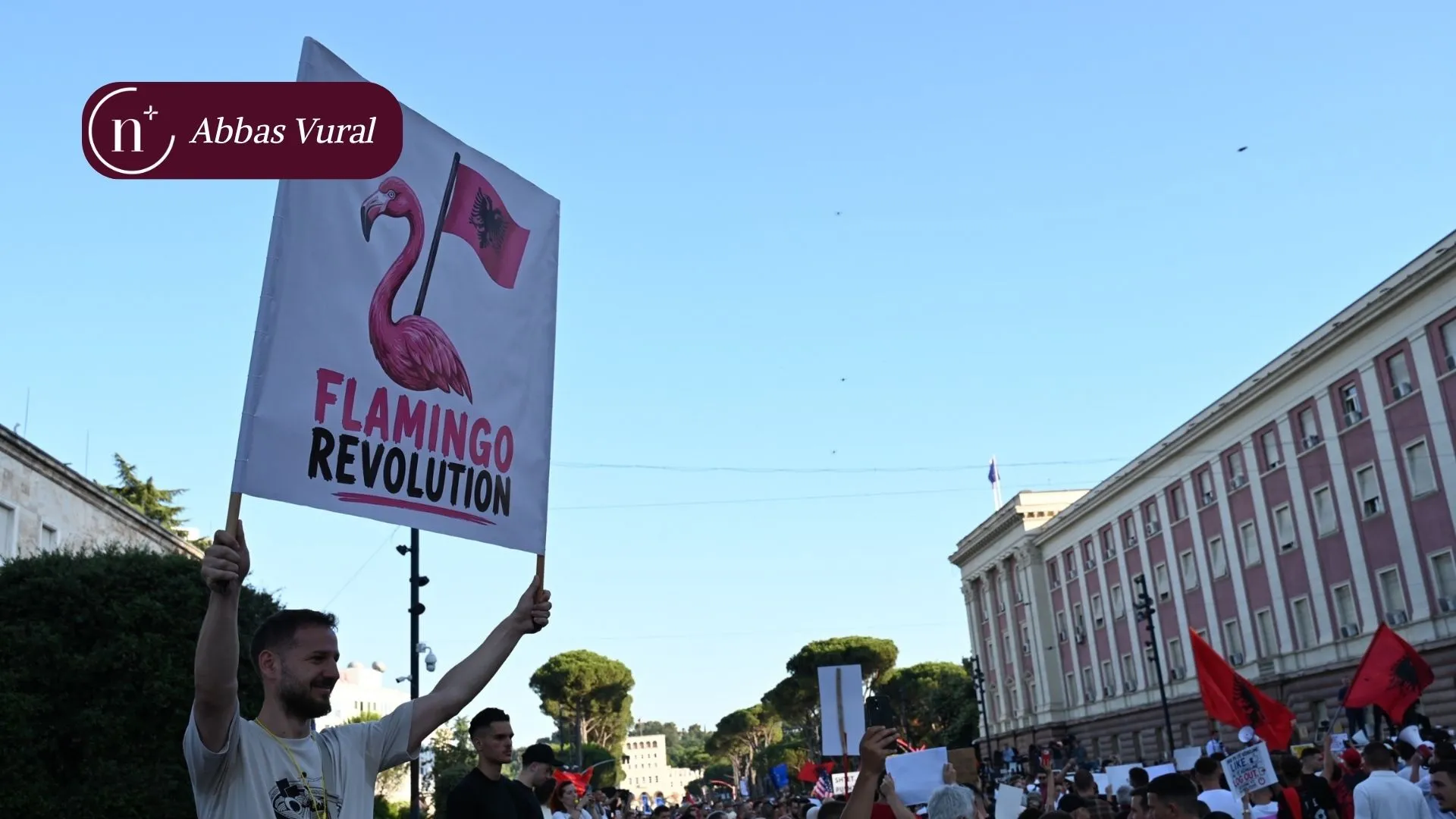
By the 12th day of the protests, demonstrations had spread to the main boulevard of the capital, Tirana, Kryeziu said. The movement came to be known as the “Flamingo Uprising,” a reference to the flamingos that symbolize the region’s rich biodiversity.
Kryeziu said the main slogans were “Albania is not for sale” and “Cancel the project,” and that the movement has since moved beyond purely ecological concerns to become a broader expression of frustration over governance, transparency, participation in decision-making, and the relationship between political power and capital groups.
“We can’t describe this as an anti-imperialist movement”
Kryeziu said that while some activists and commentators have linked the project to foreign investors and broader geopolitical interests, the movement’s core demands center on the public interest and environmental protection in Albania—meaning it cannot be characterized as a movement against American or Israeli foreign policy:
“What’s happening in Albania is that major decisions are being made in the name of tourism development. But these decisions lack transparency, and appear to benefit a small group of investors close to those in power, while offering little to no benefit to ordinary citizens. At the same time, many of these projects come at the expense of nature, biodiversity, and Albania’s protected areas. This raises serious concerns about environmental protection, the public interest, and democratic decision-making.”
“The squares are full of women and young people”
Kryeziu said that although the protests have received support from some opposition politicians and organizations, the movement itself is independent, and the one thing everyone seems to agree on is Albania’s future.
The journalist said the protests have been organized through social media pages and groups, and that the squares are filled especially with young people and women, with the direction of the protests being decided collectively by large groups.
“The protests have turned into an anti-system movement”
Kryeziu said that in the early days, many media outlets failed to report on the protests and clashes in Zvernec, and that coverage only began once the story gained international attention.
She said this reflects the close relationship between Albania’s mainstream media and the political establishment. Another point the media has overlooked, she argued, is the diversity of the protesters themselves:
“People from every part of society are in the squares. They’re tired of the Rama government, its propaganda, and a traditional opposition that has failed to represent society for years. Because of this, the protests are no longer just a reaction to a specific environmental project, they’ve become a broader anti-system movement built around the demand for ‘a new Albania.'”