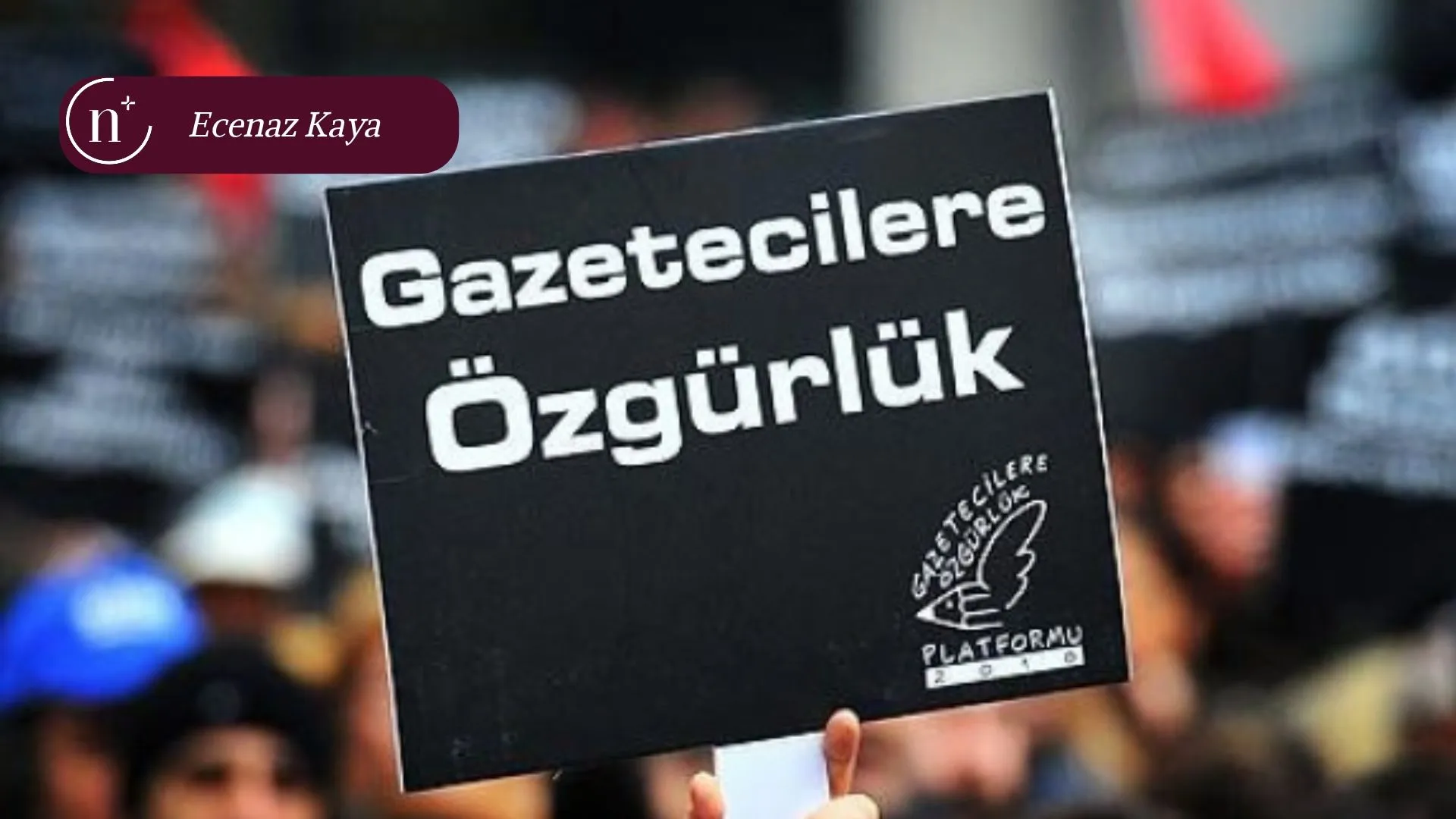
Speaking about the pressures faced by journalists in Turkey, including detentions, investigations, arrests, and censorship, Dicle Fırat Journalists Association (DFG) Co-chair Selman Çiçek and journalist Tuğçe Yılmaz explained that these practices hinder journalists’ work and lead to self-censorship in their reporting.
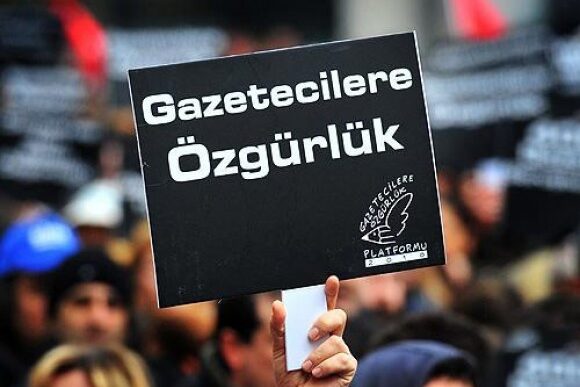
Today, the monopolization of the press in Turkey and the measures taken to obstruct media outlets are making working conditions increasingly difficult for journalists. Beyond the investigations and lawsuits faced by journalists for their reporting, it has also become harder for citizens to access independent news.
Speaking to Niha+ on this issue, Selman Çiçek, co-chair of the Dicle Fırat Journalists Association (DFG), and journalist Tuğçe Yılmaz note that treating journalism as a crime, compounded by active censorship, makes the act of reporting even more challenging.
DFG Co-chair Selman Çiçek stated that Kurdish journalists have been subjected to such pressures for many years, and that they face these challenges more intensely than the broader press. Pointing out that the Mesopotamia Agency (Mezopotamya Ajansı) has faced access bans 44 times, compared to a single instance for the news outlet T24, Çiçek interprets this as evidence that the Kurdish press operates under more intense and persistent pressure:
“For many years, Kurdish journalists have been subjected to systematic and unlawful practices. News agencies and newspapers are shut down, journalists are arrested, and access to news reports is blocked. While other journalists in Turkey also face pressure, there are significant differences in the scope and continuity of these pressures. Yet, despite all this, Kurdish journalists continue to write and bring the truth to the public. The fact that the Mesopotamia Agency has managed to continue its operations, now through its 45th website, despite repeated access bans, serves as a concrete example of this resistance.”
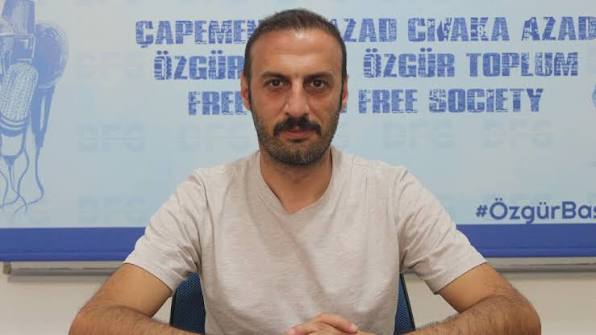
Selman Çiçek
“These practices prevent journalists from carrying out their profession”
Çiçek also pointed out that detentions could have a long-lasting, chilling effect on fellow journalists. He added that the seizure of a journalist’s professional equipment, which is essential for their work, and the fact that such equipment is often returned in a damaged state following the legal proceedings, severely hinders the practice of journalism. Furthermore, Çiçek noted that measures such as the requirement to regularly report to authorities (signing in) and travel bans, which prevent journalists from leaving the country, also obstruct their freedom to report the news. “All these practices,” he stated, “not only restrict a journalist’s personal freedom but also prevent them from carrying out their profession.”
“They want to silence every kind of dissident voice”
Çiçek noted that access restrictions have increased significantly. Stating that such restrictions represent the most prominent form of pressure exerted on journalists, he added that 3,500 accounts were blocked in the month of September alone:
“Through these access restrictions, they aim to silence any dissenting voices. In doing so, they also foster self-censorship driven by the fear of censorship. They want to ensure that people do not offer criticism or speak out.”
Despite this grim reality, Selman Çiçek, recalling the 1990s, a period marked by the bombing of newspaper offices, the closure of news agencies via statutory decrees (KHKs), and the killing of journalists, emphasizes that, in this region, journalism is pursued not merely as a profession, but as a duty to bring the truth to the public.
Yılmaz: “Unfortunately, self-censorship has now become part of our routine”
Journalist Tuğçe Yılmaz, who has faced various pressures due to her profession, including lawsuits filed against her over her reporting and the blocking of her X (formerly Twitter) account without explanation, noted that this environment has influenced her approach to journalism.
Yılmaz described ensuring the safety of journalists as a critical priority in the current climate:
“I act with greater caution, taking the risks into account. While this could be seen as a step back, we are living through a period where ensuring our own safety has become one of our most critical priorities as journalists. Unfortunately, self-censorship has now become a part of our daily routine. The way I approach my reporting has changed; everything, from the choice of headlines to the accompanying images, can end up taking on a different format.”
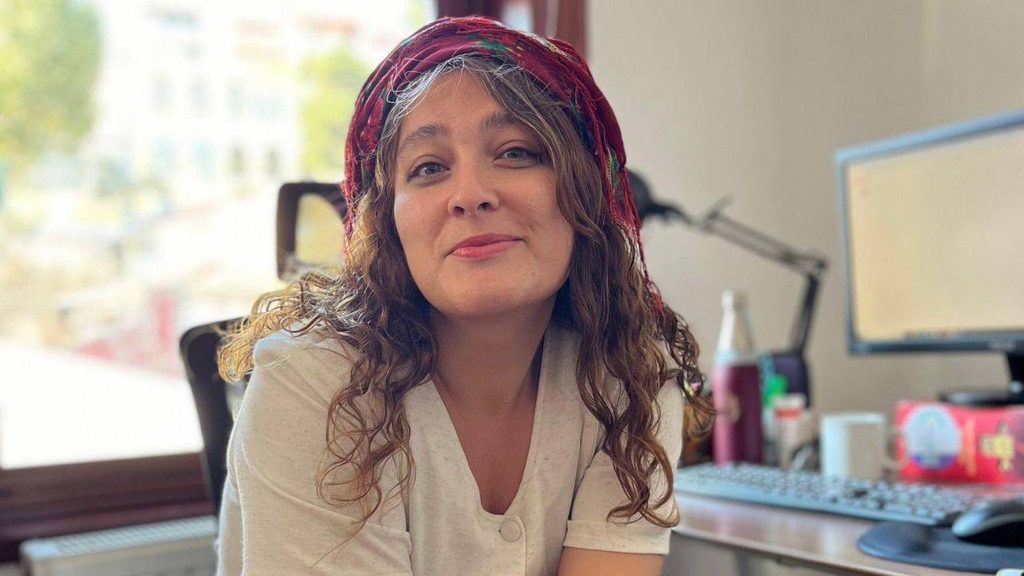
Tuğçe Yılmaz
Yılmaz stated that the experiences of Bahadır Özgür, who was taken into custody for his reporting on the “fund” issue, and Murat Ağırel, who was taken into custody and subsequently arrested while already under house arrest, represent extremely harsh measures against journalists.
“Our excitement and curiosity take shape in this work”
Criticizing the normalization of these practices, Yılmaz dismisses the warnings he receives from those around him as thoughtless:
“Just as you wouldn’t tell a greengrocer, ‘Stop selling apples,’ you shouldn’t tell a journalist, ‘Don’t report on this.’ Our passion and our curiosity take shape through this work. I cannot recall a single week in recent years where I haven’t felt exhausted. I simply cannot get used to my colleagues or human rights defenders being taken into custody or arrested. Right now, being detained or arrested is treated as if it were a standard, routine measure.”
Yılmaz added that instead of making jokes, such as telling journalists, “to not go and get themselves arrested,” people should offer solidarity to them and their families; she emphasized that turning such a serious matter into a joke only normalizes it.
“Tüm canlılara karşı sorumlusunuz”
Stating that he has no intention of abandoning his profession despite everything, Yılmaz noted that he draws his inspiration and motivation from figures like Hrant Dink, Musa Anter, and many other journalists who grew up on these lands:
“As journalists, we also bear a historical responsibility. You have a responsibility toward the public, toward everyone who reads and follows your work and, indeed, toward all living beings. I believe that nothing can prevent us from continuing our profession. My greatest source of motivation is giving a voice to those, both humans and animals, whose voices otherwise go unheard. When you encounter people from various walks of life in a courthouse, whose stories you have covered or whose lives you have touched, you realize once again that you are doing something right. I know that we will overcome these times as well.”
What happened?
Turkey has recently been facing an intense wave of censorship. Following the arrest of TELE1 Editor-in-Chief Merdan Yanardağ on charges of “espionage,” the Savings Deposit Insurance Fund (TMSF) was appointed as a trustee to the channel on October 24, 2025.
“Tele2”, a YouTube initiative launched by TELE1 staff following the appointment of the trustee, was forced to cease operations on October 2, 2026, because it could not afford the 2 million TL license fee demanded by the Radio and Television Supreme Council (RTÜK).
Under an operation targeting LGBTI+ individuals, dubbed “My Family Is Safe” (Ailem Güvende) and led by Minister of Justice Akın Gürlek, hundreds of social media accounts, including those belonging to newspapers and journalists, were blocked. Journalist Tuğba Tekerek was arrested as part of these operations.
On September 30, the Istanbul 1st Criminal Judgeship of Peace ordered the shutdown of T24’s website and social media accounts, citing its coverage of LGBTI+ issues.
On the morning of October 14, 2026, it was announced that a trustee had been appointed to Halk TV, and police entered the broadcaster’s premises. On October 21, Halk TV’s account on X was blocked. Prior to this, journalists Şaban Sevinç and Mustafa Balcı were arrested on charges of “publicly disseminating misleading information” due to their posts and reports regarding an investigation into certain funding sources; meanwhile, journalists İsmail Saymaz and Murat Ağırel were placed under house arrest as a form of judicial control. Subsequently, on October 15, Halk TV columnist Bahadır Özgür was taken into custody on charges of “violating the confidentiality of an investigation” following a post he made on X concerning the same funding investigation. Ağırel was taken into custody on the morning of October 16, while he was still under house arrest.
İsmail Arı, a reporter for the newspaper BirGün, who had previously been arrested on March 22, 2026, on charges of “publicly disseminating misleading information,” spent 75 days in Sincan Prison, and was subsequently released in June, was arrested once again on October 23, with “risk of flight” cited as the reason.
Meanwhile, various media outlets, including the Mesopotamia Agency (MA), Yeni Yaşam newspaper, Jinnews, NuJINHA, and Ajansa Welat, have continued to face access bans, detentions, arrests, and intense pressure for years.
Most recently, the entire website of the Mesopotamia Agency (MA) was blocked on October 6, following a decision by a Criminal Peace Judgeship. The MA noted that this marked the 44th time an access ban had been imposed on the agency. On October 14, an access ban was also placed on the agency’s X (formerly Twitter) account. Additionally, the Instagram account “ajansawelat1,” belonging to Ajansa Welat, was blocked by the Information and Communication Technologies Authority (BTK) on September 16, 2026.
In July, the BTK also imposed access bans on Ajansa Welat’s website and X account. During the same period, the BTK also imposed access bans on the websites and accounts of several other media outlets, including Azadiya Welat and Nûmedya24.