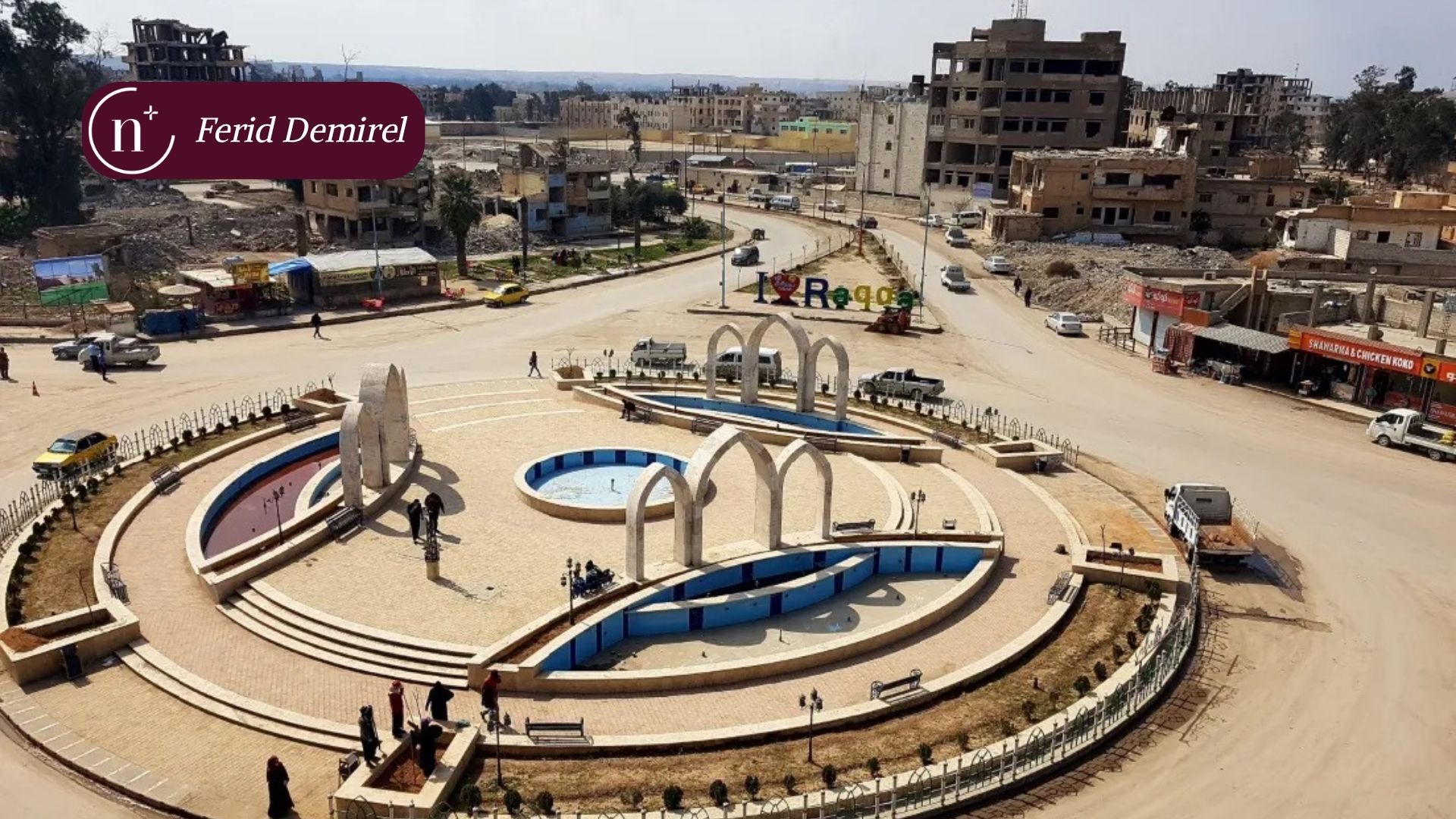
Unidentified individuals in Raqqa are abducting Kurds and demanding money from their families. These individuals take those they abduct to unknown locations and subject them to severe torture. As a result, tens of thousands of Kurdish families have been forced to flee Raqqa.
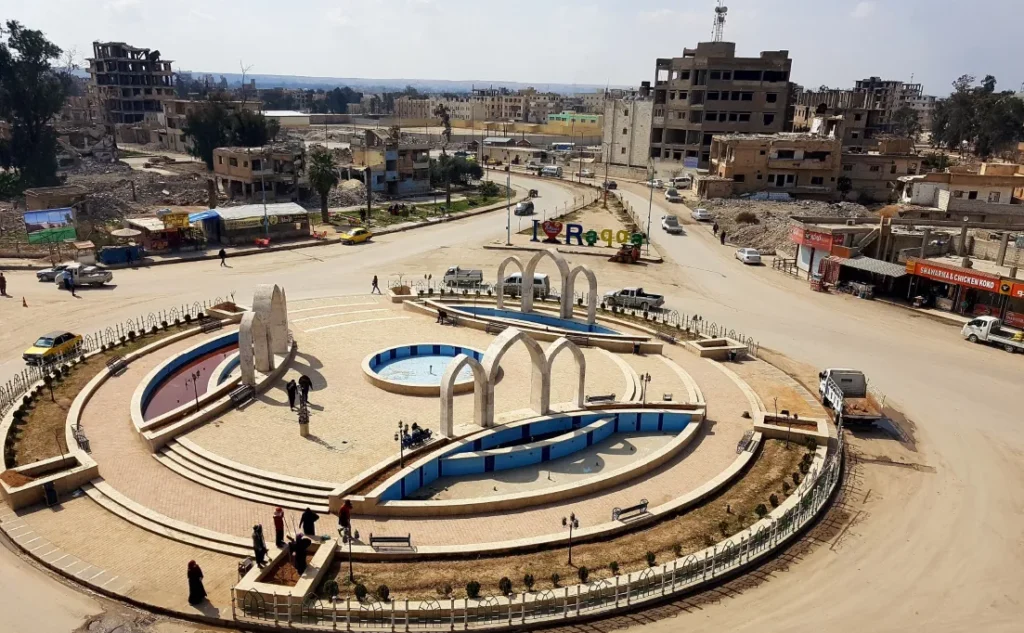
Some time ago, at around 11:00 a.m., Elî Mihemed was abducted in front of his home in Raqqa. When Mihemed stepped outside, he saw several people waiting for him in a black car with no license plate. These men were armed and resembled those who have recently been abducting Kurds in Raqqa. They ordered Mihemed to come with them. Making him leave behind his belongings and his phone, they put him in the car and took him away.
Mihemed is just one of nearly 10 people abducted in Raqqa over the past month and a half.
According to eyewitnesses and sources in Raqqa familiar with the matter, the group in question has for some time been operating at around 11:00 a.m., using the same method by which they abducted Mihemed. They subject those they abduct to severe torture, photograph them, send the photos to their families, and demand money from them.
According to the information available, all of those abducted are Kurds.
According to information given to Niha+ by two witnesses to the events in Raqqa, many Kurdish families have left the city since the abductions began. According to the sources, they allege that the aim of this is to cleanse Raqqa of Kurds.
Citing security concerns, these sources did not want their names disclosed. For the same reason, we have also changed the names of those who were abducted.
70 percent of the Kurdish neighborhood has fled
Raqqa lies in northern Syria on the banks of the Euphrates River. A strategic city, Raqqa is located 160 km east of Aleppo. It has been home to many civilizations.
Between 2014 and 2017 the city was under the control of ISIS, which described it as its “capital.” In 2017 the Syrian Democratic Forces (SDF), with the support of U.S. forces, liberated it from ISIS. Thousands of ISIS members surrendered. Those who surrendered were placed in camps.
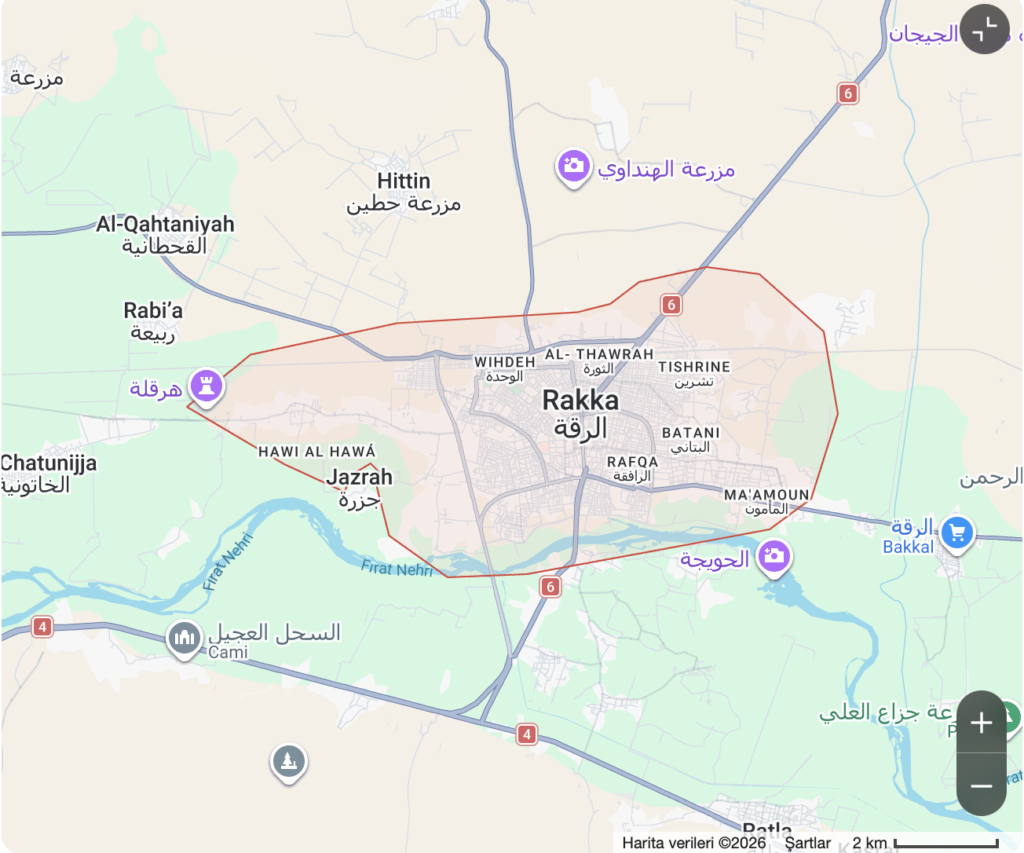
Raqqa remained under SDF control until January 2026, but at the end of 2025 and the beginning of 2026, following attacks on the Kurdish neighborhoods of Aleppo and on Rojava, it was handed over to the interim Damascus administration.
According to the census conducted between 2011 and 2021, close to 60,000 Kurds lived in Raqqa. However, in the process that began after the Syrian war, many Kurds were forced to migrate from there. When the SDF took control of Raqqa, some of them returned. With the clashes at the start of 2026, it is reported that all the residents of the city’s Kurdish neighborhood fled. Afterward, some returned to the homes they had abandoned.
With the recent abductions, 70 percent of the Kurds in that same neighborhood have been forced to flee. In the past, Raqqa as a whole was estimated to have a Kurdish population of 40 percent and an Arab population of 60 percent. At present, however, the proportion of Kurds remaining in the city is reported to be between 5 and 10 percent.
“They say the Kurds are guests here”
After being abducted, Mahmûd Derwîş was released once he paid the money demanded of him. He, too, left Raqqa after his release, like the others. His abductors had threatened him, saying either you leave the city, or we kill you.
Some of those abducted are threatened with the abduction of their family members.
A significant portion of those who flee are forced to sell their goods and property at far below their value. Derwîş, too, had to sell his house, worth 60,000 dollars, for 40,000 dollars.
One of the sources who did not want to be named said that people are selling their shops, their harvests, and their cars and leaving Raqqa: “People think, ‘Let me lose my property rather than my life.’”
According to another source, the thinking of those carrying this out is that “the Kurds are guests here” and that they should therefore migrate away.
Recalling the “Arab Belt” project of the Baath regime era, under which Arabs were settled in Kurdish areas, the same source noted that what is being done now is similar to it. He said the aim behind it is to bring about a demographic change in the areas where Kurds live.
According to information provided by this source, in the past week to ten days three more people in Raqqa have been contacted and asked to leave the city.
What is the interim government doing?
One source says that only a single group is carrying this out, while another says there are two or three separate groups.
According to the allegations, these individuals identify themselves as members of the security forces (asayish), and for this reason they claim that no one can interfere with them.
These individuals call people from hidden numbers or from foreign country numbers.
When they abduct someone, they demand close to 250,000 dollars. However, some are only able to escape their hands for 20,000 or 30,000 dollars.
The money in question is sent through a digital currency system called Sham Cash. This is a system that the interim Damascus administration has accepted for paying the salaries of its civil servants.
As thousands of public-sector workers in Syria tried to collect their salaries this April, ahead of the Eid al-Fitr holiday, many found that they could not access a faulty application they had been asked to download a few months earlier.
The application, called Sham Cash, has become the Syrian government’s preferred method for distributing salaries, paying bills, and transferring money. But users say the app does not work, and experts say it is far from secure.
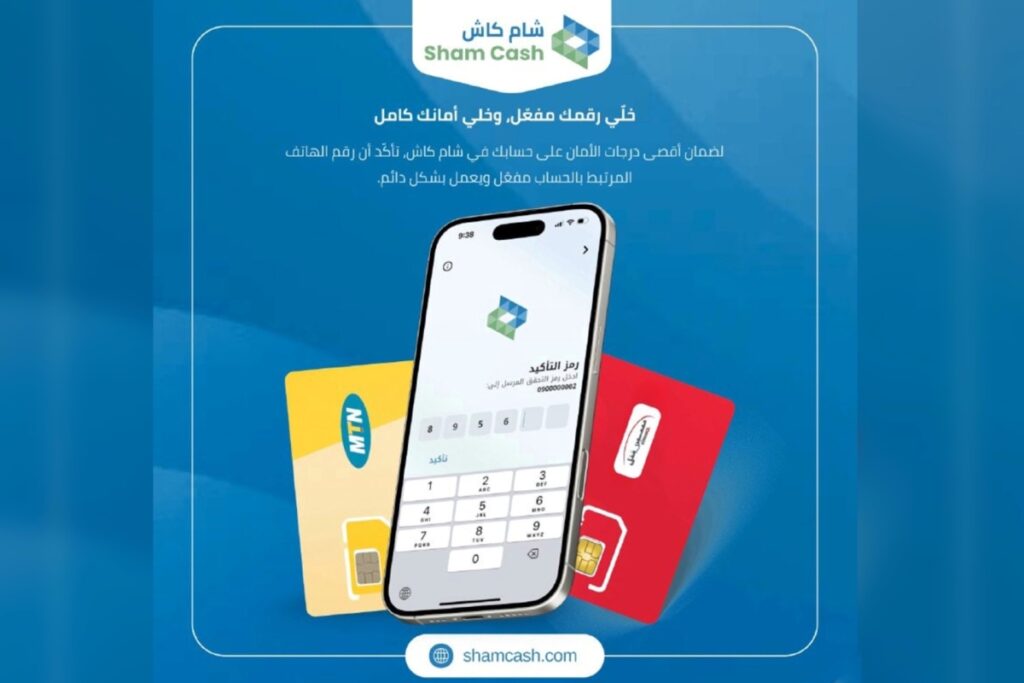
Made mandatory for public-sector workers, the Sham Cash app raises urgent concerns about digital security.
In January, Syrian public-sector workers were quietly instructed to download an app called “Sham Cash” in order to receive their salaries.
The Sham Cash app can only be downloaded from its own website and is not available in the iOS store (App Store). This means the app is not secure, because it has not passed the strict security-verification tests that apps listed in official stores must undergo.
Reports that appeared in the press in January also indicate that the app is linked to transfers coming from the “Cham Bank” in Idlib — an internationally unrecognized currency exchange registered in Turkey. Funds transferred through Sham Cash do not pass through the Central Bank of Syria or the global banking system.
By April, the app had been made entirely mandatory. But it is overshadowed by technical failures, questionable financial links, and an alarming lack of transparency. As frustration grew among users, SMEX’s Digital Forensics Unit investigated what was actually happening behind the scenes.
The unknown developer behind Sham Cash
The absence of any publicly available information about the company behind Sham Cash raises serious concerns about transparency and accountability. Because there is no known or officially registered developer, there is no party to be held responsible in cases of data breaches, fraud, or financial loss.
The app also contains no clearly stated Terms of Use, Privacy Policy, or any indication of legal jurisdiction, which makes seeking legal recourse nearly impossible.
Because Sham Cash has no connection to any legal or verifiable company, its security protocols cannot be assessed. This significantly increases the risk that malware or spyware could compromise users’ devices.
Since it has no officially registered owner, the misuse or sale of sensitive user data, including personal information, financial details, and transaction histories, cannot be tracked or audited.
A source who provided information to Niha+ noted that this app is one accepted by the interim Damascus administration, so when money is sent through it, the government ought to be able to trace it.
A committee has been formed
According to the information available, a three-member committee has been formed to deal with the matter and find solutions to the problems facing Kurds in Raqqa. According to information provided by this committee, 4,000 families have so far fled Raqqa. Some of them went to Kobanê, and others to Hasakah.
One source claims that the number of those abducted and threatened is far higher. According to this source, some do not share their cases publicly because they do not want their names made known.