Independent journalist Yusuf Çelik and freelance journalist İbrahim Türk spoke about what LGBTI+ journalists experience while doing their jobs in the field and beyond: “Even if I’m subjected to phobic attacks, I won’t give up reporting.”
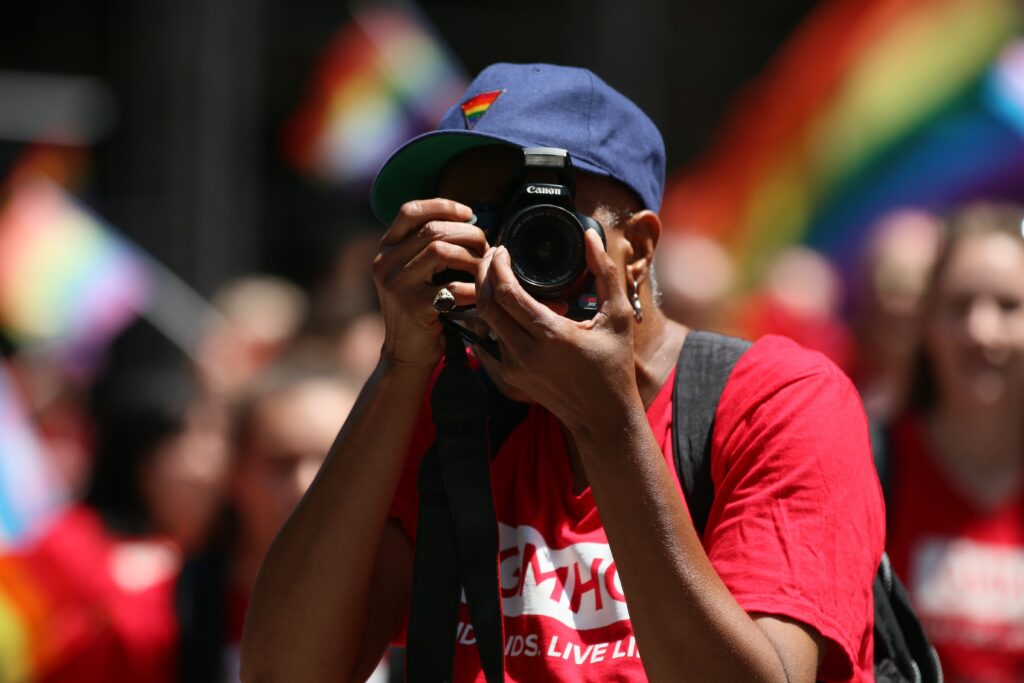
Pride Month is a time when LGBTI+ experiences of violence and discrimination tied to their identities become more visible. Among those who make visible not only Pride-related issues but social events of all kinds throughout the year are LGBTI+ journalists themselves.
While journalists in Turkey already face economic insecurity, police violence, censorship and unemployment, LGBTI+ journalists confront an additional layer of discrimination based on sexual orientation and gender identity. A concrete example of this came last February, when Yıldız Tar, editor-in-chief of Kaos GL—Turkey’s oldest and largest LGBTI+ news platform—and a prominent LGBTI+ rights advocate, was detained. In the field, LGBTI+ journalists often become targets for police while reporting, sometimes become “invisible” in job applications and are forced to conceal their identities for safety reasons.
Independent journalist Yusuf Çelik and freelance journalist İbrahim Türk spoke to Niha+ about the discrimination they face in the field and what they expect from professional organizations.
Çelik: “LGBTI+ journalists face ‘compounded discrimination’”
Journalist Yusuf Çelik said that while all journalists already face economic and professional difficulties, queer journalists experience “compounded discrimination” in the field. Çelik said they have faced discriminatory attitudes from police, older male colleagues, and news sources, describing many moments in which they felt rendered invisible.
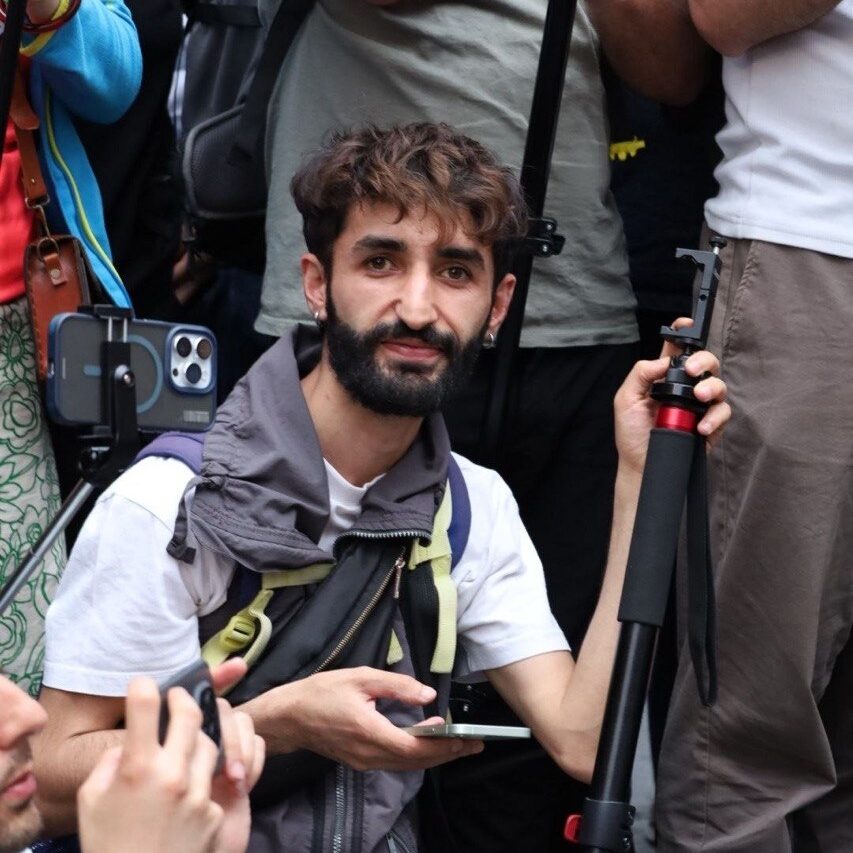
Noting that police violence is a shared problem for all journalists, Çelik said the consequences can be more severe for LGBTI+ journalists. “If there’s going to be violence, if there’s going to be an intervention, it’s us, LGBTI+ and women journalists, who are targeted first” they said.
Recalling the “Gezi” commemoration held in Taksim on May 31, 2026, Çelik said a police officer directly singled them out. “There were many journalists there, but the police grabbed my arm and tried to remove me. My colleagues intervened, asking, ‘Why are you touching a journalist?’” they said.
Çelik also said that during their detention in Dersim on July 25, 2025, they faced pressure specifically because of their queer identity, recalling that police made remarks implying they should stop doing this kind of reporting. “There was essentially a push to recruit me as an informant—comments like, ‘Why don’t you just stay out of this? Why don’t you stop doing these kinds of stories?’” they said.
Referring to a detention they experienced on May 1, 2026, Çelik said:
“There was no real justification—the protest had already dispersed—but I was told, ‘Turn off your camera, we’re taking you in,’ and detained. I can’t explain this through journalism alone, because I face things my colleagues don’t, and I think this is deeply tied to my queer identity. On top of that, when we’re detained and can’t work in the field, we go home that day having earned nothing, which puts us under economic strain too. We face a whole series of violations and difficulties like this.”
“There are unspoken ‘buts’”
Çelik have also struggled to find work because of their identity, noting that they have been unemployed for about six to seven months:
“During my job search, even though I spoke with some institutions and journalists, the process went nowhere because of unspoken ‘buts.’ They like my journalism, they know and appreciate the work I do in the field. But I need work, and during the hiring process everyone takes a step back. There are unspoken ‘buts’ there. ‘But you’re a queer journalist,’ ‘but you’re an activist,’ ‘but you can’t separate journalism from being queer’… Even when these things aren’t said out loud, I can feel those ‘buts.’ There’s no other explanation for why someone who is normally out in the field, following the news, and voluntarily sharing their work with institutions would remain unemployed for this long.”
“Even if I face phobia, I won’t give up reporting”
Çelik said that while they haven’t faced direct censorship in covering LGBTI+ news, they have often been kept away from certain assignments. They said they haven’t been assigned to out-of-town stories or coverage of workers’ strikes, with the reasoning usually framed around concerns that “something might happen to them”:
“I’m told, ‘If you go, you’ll face phobic attacks, it’ll be hard for you.’ But the person saying that is, in that moment, actually subjecting me to phobia themselves. Even though I carry an activist identity, when I go out into the field, I go out as Yusuf the journalist. Being LGBTI+ comes after that. This isn’t the first time I’ve been out in the field, and it won’t be the last. I might face hostility from a crowd—that’s understandable, because women journalists experience this too. They don’t give up reporting. Neither will I.”
Çelik also noted that women and LGBTI+ journalists are often not assigned stories like economic news, and said they end up being treated as if they’re not capable—which is part of why they continue working as an independent journalist.
According to Çelik, the discrimination starts the moment they leave the house:
“Everything—how I dress, how I walk, how I talk—gets assigned a gender. Sometimes I’m ‘the LGBTI+ journalist,’ sometimes slurs get used. Some police officers single me out, asking things like ‘isn’t that the gay journalist?’” Çelik also said they regularly face online harassment campaigns, and that in particular, following certain stories, they have been targeted with HIV-related smears. “We have to fight this on the street, at home, and on social media, all at once.”
“We don’t have strong structures to organize through”
Çelik said there are serious gaps in solidarity networks among LGBTI+ journalists. While some of these issues have been discussed at meetings held in Ankara, they said this has not translated into lasting organization.
Assessing the work of professional associations and unions, Çelik said independent and freelance journalists in particular face serious barriers to accessing union rights:
“I’m currently unemployed, and since I don’t have social security registration, I can’t directly join a union. I can’t organize. Independent and freelance journalists can’t access union rights, and they can’t even get through the union’s door. The first thing we need to do is strengthen LGBTI+ journalists in the field. Strengthen journalists in the field.”
Çelik said unions could offer workshops and protective equipment support tailored to LGBTI+ journalists, adding: “LGBTI+ people are a reality now. We’re more visible than yesterday, and we’ll be even more visible tomorrow. At this point, institutions and unions need to transform themselves too.”
“We have to tell our own stories”
Addressing young LGBTI+ people entering journalism, Çelik encouraged them to stay in the field as much as possible and keep producing stories.
“If there’s an LGBTI+ story, let a queer journalist cover it first—because they understand the issue best,” Çelik said, adding that the discrimination young journalists will face shouldn’t push them away from the profession.
Çelik concluded:
“My journalism has been questioned, and it still is. You have to fight that. You do more work. The more work you do, the more those who try to erase you will be forced to back down. Just as we as LGBTI+ journalists carry our struggle into every part of life, we have to carry it into our profession too. The phobia may never end—but neither will the struggle.”
Türk: “In some stories, I have to hide my identity”
Freelance journalist İbrahim Türk, based in Ankara, said they began their journalism career in 2021 as a photojournalist and now work for various national and international media organizations.
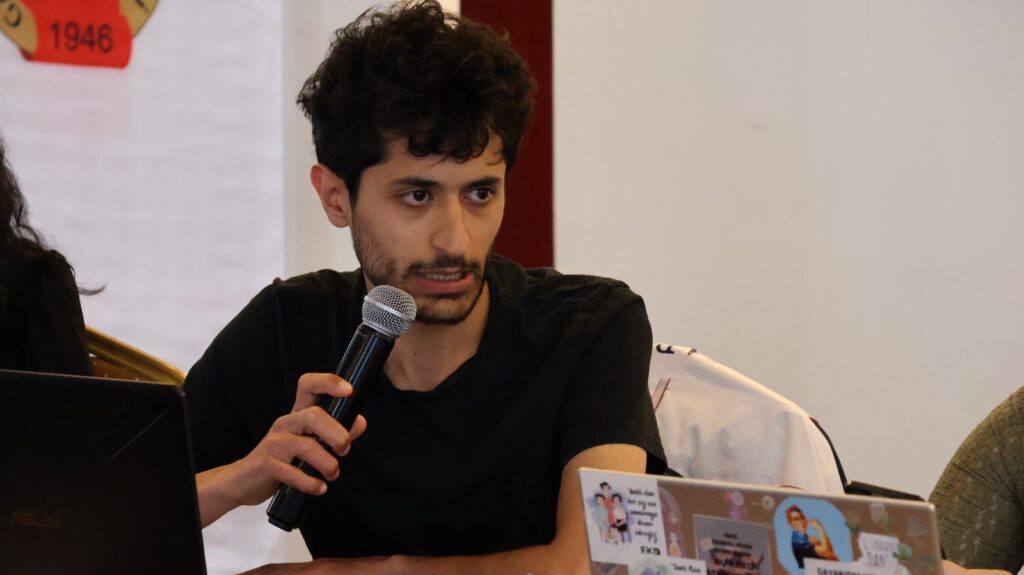
Türk said they take a somewhat distanced view of the constant pairing of journalism with sexual identity: “I’m a journalist and I’m queer. Journalism is a job, being queer is an identity. The fact that these two are constantly mentioned together feels a bit strange to me.”
Türk said one of the biggest challenges they face in the field is having to hide their queer identity during certain assignments for their own protection. They said they feel especially uneasy at events organized by Islamist and radical right-wing groups, and that they use different methods to ensure their safety while reporting in such settings.
“When talking to people, you sometimes have to say you work for Anadolu Ajansı so you don’t get beaten up—because some of our friends have been beaten. You have to make sure you’re not wearing anything in rainbow colors. You try to approach people as neutrally as possible so you can get unbiased responses.”
Türk said this isn’t always a disadvantage, however—in left-wing and democratic circles, their queer identity can actually make communication easier. “In left-wing circles, sometimes all doors open. People communicate more freely, and trust can build faster.”
“I met every requirement, but I wasn’t hired”
While Türk said they have never directly been told “don’t cover this story” or “don’t do this job,” they believe their identity may have been a factor in some job applications and at some organizations where they’ve worked. They said they haven’t faced such problems at the organizations they currently work with.
Türk said that during a period of unemployment, they applied to several media outlets but never heard back. “I met every requirement, but I wasn’t accepted,” they said.
“I was attacked by the police”
Türk said they have also experienced physical violence in the field, recalling one incident during the protests against the 11th Judicial Package.
Describing what happened during the protests, Türk said: “I was choked by police officers. A trans woman saved me—if she hadn’t intervened, it could have ended much worse.”
Türk said the police generally recognize them, yet they were still subjected to violence: “There was no chance they didn’t know who I was. And they attacked me anyway.”
“First, we need to learn to protect each other”
Türk said they find the work professional associations and unions have done for LGBTI+ journalists insufficient. While they said they’re aware of some union-led initiatives, they argued that there still isn’t enough contact with journalists actually working in the field.
Türk said that to address the problems LGBTI+ journalists face, solidarity networks need to be strengthened—and that this starts with journalists supporting one another:
“We need to support more queer journalists, there need to be more queer journalists. We don’t support each other. What we actually need to do first is look out for ourselves. We need to learn to protect each other first. If we did that, we wouldn’t even need any organization—or we’d be in a position to tell organizations what they need to do. But right now, both the organizations and the journalists themselves are preoccupied with how to get more funding, how to grow, so nobody really cares.”
“Journalism is journalism”
Türk said they feel journalism is increasingly being defined by an excessive number of labels:
“Journalism is journalism. Labels like ‘opposition journalism’ or ‘queer journalism’ don’t really sit right with me. Of course our identities shape how we see the world. But we can’t explain everything we do solely through that lens. First and foremost, I’m a journalist. Yes, at some point my identity affects what I write or which stories I look at. But not in every story I do.”
After the AKP declared 2025 the “Year of the Family,” provisions directly targeting LGBTI+ people emerged in the draft 10th and 11th Judicial Packages expected to be submitted to Turkey’s Parliament (TBMM) in 2025. Numerous media organizations and professional associations issued a statement in 2025 regarding the 11th Judicial Package, which sought to criminalize reporting on LGBTI+ issues. The statement read as follows:
Journalists reporting LGBTQ+ issues risk criminalisation: Withdraw the proposed law!
The draft of the 11th Judicial Package was shared with the members of the press last week and is expected to be submitted to Parliament in the coming days. Under the heading “Obscene acts,” the draft introduces a so-called “Turkish-style ban on homosexual propaganda.” It stipulates prison sentences of up to three years for any behaviour or attitude that is “contrary to one’s biological sex and public morality,” as well as for praising, promoting, or encouraging such behaviour. In its current form, the proposal is even broader and more vague than Russia’s 2013 “gay propaganda ban,” posing a grave threat to freedom of expression and press freedom in Turkey.
If enacted, this regulation would restrict LGBTQ+ people of their right to access and share information central to their lives.. Journalists reporting on LGBTQ+ issues such as human rights violations, sexual health, Pride marches etc. risk criminal prosecution on the grounds of “promotion.”
Since 2025 was declared the “Year of the Family,” numerous violations have occurred targeting LGBTQ+ journalism in Turkey. In February, Yıldız Tar — Editor-in-Chief of KAOS GL, the country’s largest and oldest LGBTQ+ news platform, and a prominent LGBTQ+ rights advocate — was arrested.
In June, the KAOS GL news website and its social media accounts were blocked for allegedly “publicly inciting to commit crimes.” That same month, journalists covering the LGBTQ+ Pride March in Istanbul’s Beşiktaş district were detained and later prosecuted.
T24 correspondent Can Öztürk was questioned by prosecutors after publishing a story about sexual harassment allegations against an academic who claimed to offer “conversion therapy” to LGBTQ+ children. The Radio and Television Supreme Council (RTÜK) also fined streaming platforms such as Netflix for hosting LGBTQ+ content.
Following all these violations, the inclusion of the proposed provision in the 11th Judicial Package would escalate rights violations even further and criminalize the already difficult task of reporting on LGBTQ+ issues. Moreover, vague terms such as “contrary to one’s biological sex” or “contrary to public morality” would allow arbitrary interference with the press and civil society.
This proposal would not only target LGBTQ+ individuals but also place journalists reporting on LGBTQ+ issues and related rights violations under threat of criminal punishment.
For all these reasons, as the undersigned press and freedom of expression organizations, we urgently call for the immediate removal of this provision from the 11th Judicial Package.
Signed by:
- Media and Law Studies Association (MLSA)
- Dicle Fırat Journalism Association
- European Centre for Press and Media Freedom (ECPMF)
- DİSK Basın-İş
- P24 Platform for Independent Journalism
- International Press Institute (IPI)
- Progressive Journalists Association (ÇGD)
- Journalists’ Union of Turkey (TGS)
- European Federation of Journalists (EFJ)
- Osservatorio Balcani Caucaso Transeuropa (OBCT)
- International Federation of Journalists (IFJ)
- Committee to Protect Journalists (CPJ)
- PEN International
- Foreign Media Association Turkey
- PEN Norway
- Media and Migration Association (MMA)
- Balkan Investigative Reporting Network (BIRN)
- Norwegian Helsinki Committee