
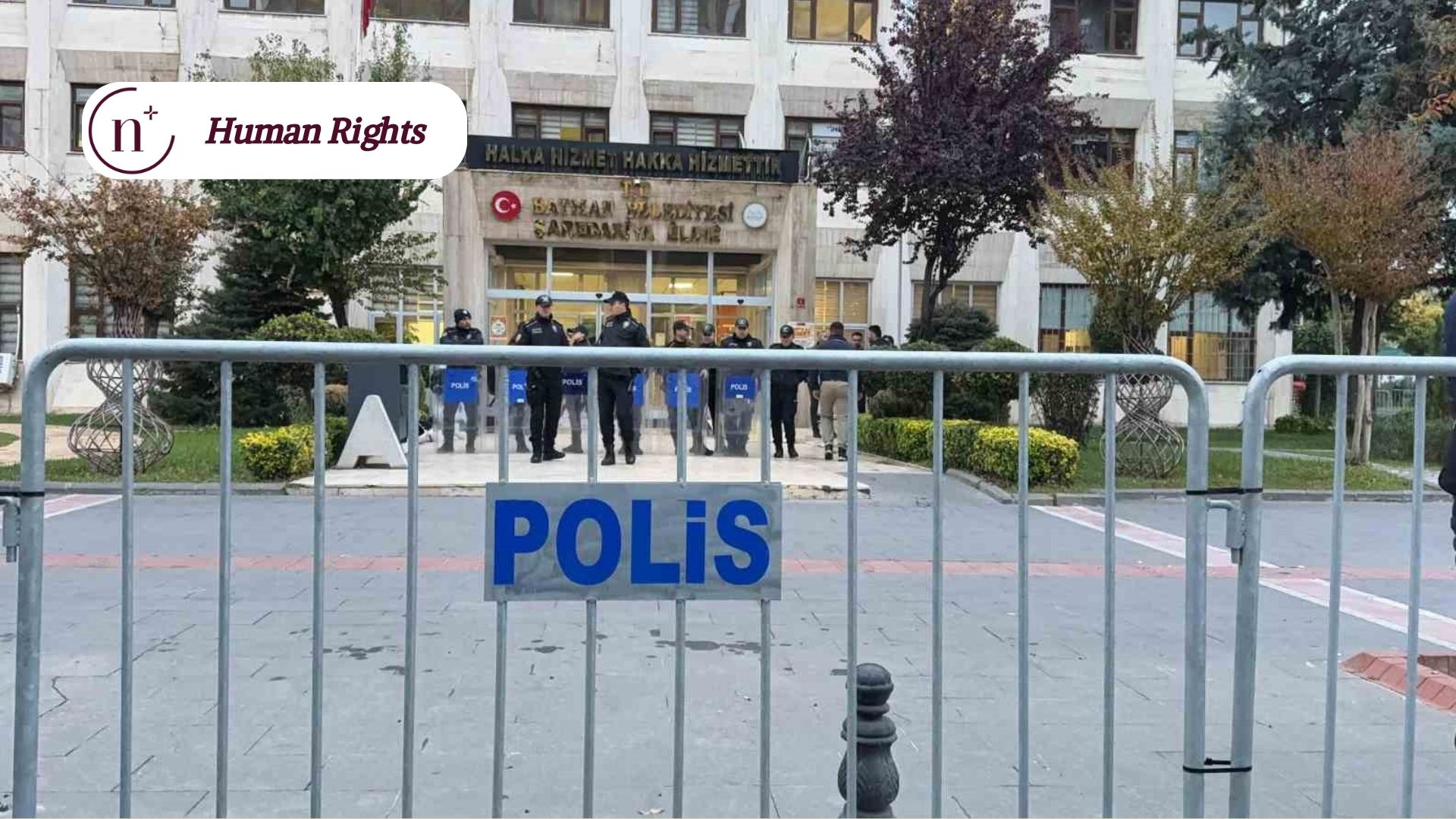
Public will has been usurped over the past two years

TÜM-BEL-SEN report reveals that since the 2024 local elections, the administration of 85 municipalities has been changed through trustee appointments, dismissals, and political interventions.
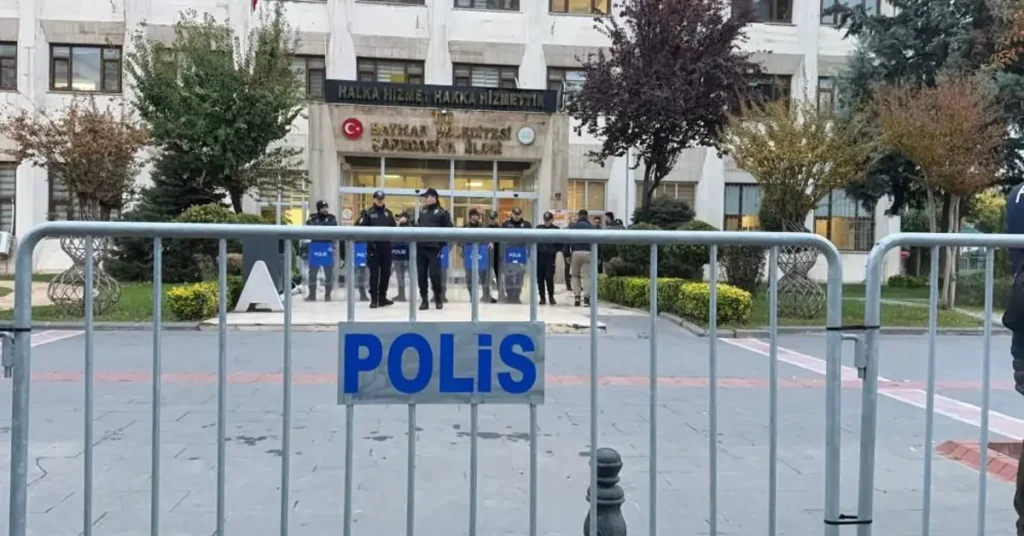
The Union of Municipal and Local Government Workers in Turkey (TÜM-BEL SEN) released a report on the second anniversary of the March 31, 2024 local elections. The report focuses on political pressure against municipalities run by opposition parties.

According to the report, since the 2024 elections, government interventions in local administrations have become against labor and democracy. It states that local democracy in Turkey has effectively been suspended due to practices; such as appointing government trustees, removing elected officials, judicial actions and financial restrictions.

“Public will has been ignored”

The report highlights that a large portion of votes for opposition parties has been ignored. It tells that 44.4% of the votes for the CHP (Republican People’s Party, main opposition party in Turkey) and 27.7% for the DEM Party (Peoples’ Equality and Democracy Party) were effectively taken away.

Report also argues that these practices violate the constitution, especially the basic democratic right to vote and be elected of people. After Hakkari, similar interventions continued in many (most of them are Kurdish-majority) municipalities, including Esenyurt, Batman, Mardin, Halfeti, Dersim, Ovacık, Siirt, Van, Kağızman, and Şişli.

The report states that these trustee appointments have damaged local politics, which is a key space for a peaceful and democratic solution to the Kurdish issue. Since the 2024 elections, public will has been ignored not only through trustee appointments but also through suspensions, political pressure to switch parties, and changes in municipal councils.

85 administration has been changed

According to the report, the administration of 85 municipalities has been changed since the elections, making millions of votes ineffective. It says that about 8.8 million votes (20.55% of all votes) have been disregarded.

The report also recalls that the election certificate of Van Metropolitan Municipality’s elected mayor, Abdullah Zeydan, was first mayor to be unlawfully attempted to be taken away. In total, elected mayors or co-mayors in 30 municipalities -including major cities like Istanbul, Van, Mardin, Adana, and Antalya- were removed from office. In 55 municipalities, political control changed through different methods, such as altering municipal council arithmetics.

The report notes that municipalities in Turkey depend heavily on the central government for funding. Due to limited resources, cities -where 94% of the population lives- receive only 12% of total public spending.

Finally, it states that since the elections, 1,342 public workers have been dismissed due to canceled contracts and around 3,200 workers have directly lost income.


Ill prisoner Taşar has passed away: “The ATK is not objective”

Mehmet Edip Taşar, an ill prisoner whose release had been repeatedly postponed, passed away on March 24. Yıldız, a member of the ÖHD Prison Commission, stated: “Ill prisoners are being left to die.”

Mehmet Edip Taşar, a ill prisoner held at Marmara No. 5 L-Type Closed Prison since December 27, 2022, passed away on March 24 at the hospital where he was receiving treatment.

According to a report by bianet, the Istanbul Bar Association’s Human Rights Center held a press conference in Istanbul’s Beyoğlu district regarding the condition of the ailing prisoner Mehmet Edip Taşar.

Rabia Gündoğmuş, a member of the Istanbul Bar Association’s Human Rights Center, who read the press statement, emphasized that Taşar had dropped to 40 kilograms and that his ability to see, walk, and speak had diminished.

According to a report by İlke TV, on February 26, the Istanbul Branch of the Lawyers’ Association for Freedom (ÖHD) stated that Taşar had been subjected to verbal and physical attacks by doctors during his transfer to the Forensic Medicine Institution (ATK).

The number of ill prisoners in 2025

According to the IHD’s 2025 Report on Ill Prisoners, there are at least 1,412 ill prisoners in Turkish prisons, including 161 women and 1,251 men. According to the report, 335 prisoners are in serious health condition.

Of these, 230 are unable to care for themselves, and 105 require assistance. Additionally, 188 prisoners require constant monitoring due to their illnesses.

The report noted that ill prisoners were not taken to the infirmary in a timely manner, were kept waiting for months for referrals to tertiary healthcare services, and were living in conditions of inadequate nutrition, heating, and hygiene.

In a statement following Taşar’s death, ÖHD noted that despite numerous legal appeals, the ATK had not issued a “cannot remain in prison” report, nor had it granted a stay of execution, despite his health condition.

Destina Yıldız as a member of the ÖHD Istanbul Branch Prison Commission, spoke to Niha+.

Yıldız stated that due to the ATK’s lack of objectiveness and independence, there were inconsistencies in many cases -particularly those involving ill prisoners- regarding the deaths of Mehmet Edip Taşar and all other ill prisoners.

Yıldız, explaining the process of how ATK reports are prepared, continued:

“Specifically regarding ill prisoners, Article 16, Paragraph 3 of Law No. 5275 requires the execution of a sentence may be postponed for individuals for whom a decision has been made based on a report, prepared by the Forensic Medicine Institution or by the medical boards of fully equipped hospitals designated by the Ministry of Justice and approved by the Forensic Medicine Institution, stating that ‘the illness poses a definite threat to life.’ Accordingly, to postpone the execution of a ill prisoner, one must first apply to the prosecutor’s office to arrange for the prisoner’s transfer to a hospital, then obtain a report from the relevant medical board, and either submit this report to the Forensic Medicine Institution for approval or directly transfer the ill prisoner to the Forensic Medicine Institution. Following the examination, the report must be prepared here and approved by the Forensic Medicine Institution, or after the report prepared by the Forensic Medicine Institution, the relevant chief prosecutor’s office must determine that the prisoner “does not pose a threat to public safety.”

“Forensic Medicine Institution reports are not actually being implemented“

Yıldız noted that, considering the circumstances of ill prisoners, reports from the ATK are not actually being implemented.

“Even in cases where the Forensic Medicine Institution issues a report stating that the prisoner ‘cannot remain in prison,’ the prisoner’s release is not carried out by the prosecutor’s offices or the courts. Ill prisoners are sentenced to death due to conflicting reports between the prosecutor’s office, the hospital, and the Forensic Medicine Institution.”

Yıldız explained that the European Court of Human Rights (ECHR) has stated that the continued detention of individuals suffering from a terminal illness or whose health condition is no longer compatible with prison conditions is considered a violation of the prohibition against torture under Article 3.

“Under international and national regulations and judicial decisions, the state is responsible for the health and lives of prisoners in prisons. It is obligated to remove obstacles to prisoners’ rights to treatment and health, and to ensure their access to these rights.”

Ill prisoners are left to death

“Yet today in Turkey, ill prisoners are either not released at all or are not released until they are on the brink of death. Those ill prisoners who are released at this stage lose their lives shortly afterward due to delayed diagnoses and treatments. Ill prisoners are being condemned to death. Mehmet Edip Taşar, a ill prisoner who lost his life, is one such case. The fact that he was not released despite a report from the Forensic Medicine Institute stating he ‘cannot remain in prison,’ and was instead condemned to death, is the clearest indication of the state’s approach toward political prisoners and ill prisoners.”

Privacy overview

Niha+ respects your digital footprint within the framework of independent journalism principles and reader privacy. While browsing our site, cookies are used to provide you with an uninterrupted reading experience and to secure the technical infrastructure of our platform. You can manage your cookie preferences as you wish by using the menu on the left. For detailed information on how your personal data is processed, please review our Privacy Agreement and KVKK Clarification Text.