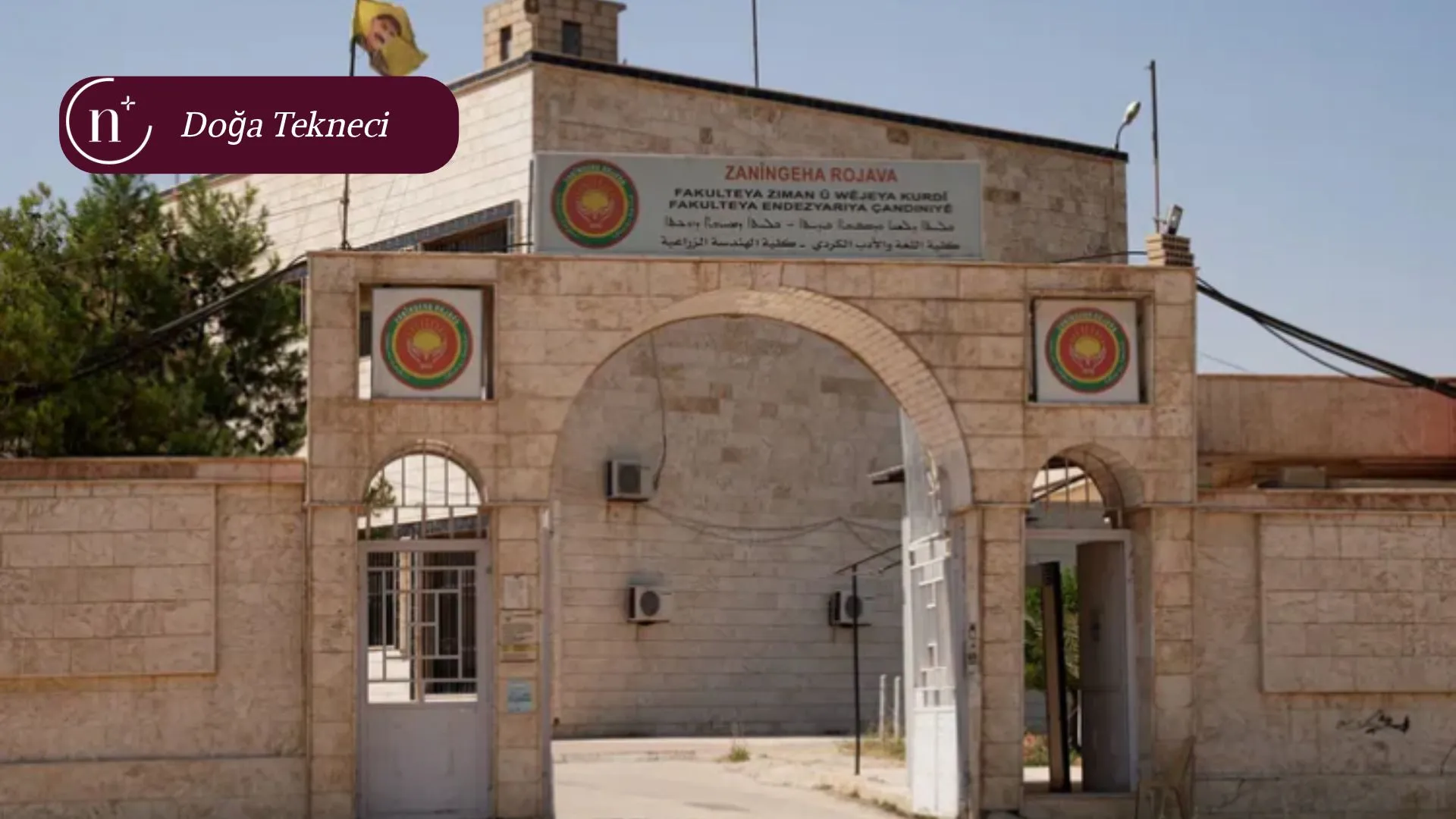
During the integration process between the Hay’at Tahrir al-Sham (HTS) government in Damascus and the Syrian Democratic Forces (SDF), Kurdish-language education was limited to three hours per week. Academician Sardar Saadi, noting that the universities’ autonomous status has not been recognized, emphasized that Western countries such as Germany are acting “hypocritically” by turning a blind eye to the experience at universities in Rojava and Kobani.
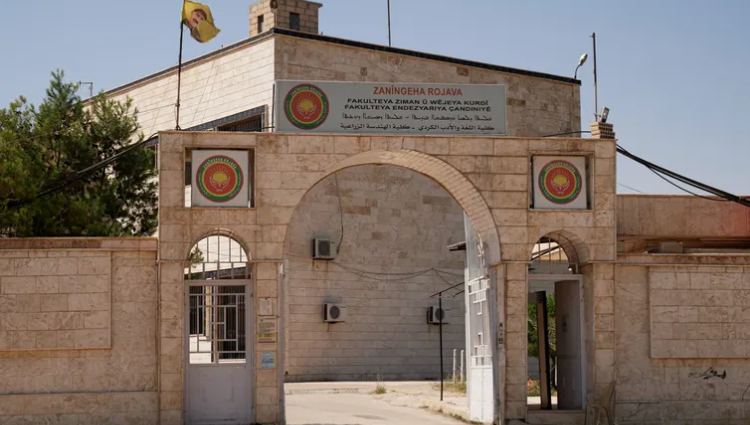
Following the agreement reached on January 30, 2026, between the Syrian government and the Syrian Democratic Forces (SDF), the future of Kurdish-language education in Northern and Eastern Syria is being debated. At the center of the debate are the number of Kurdish language class hours in schools and the status of Qamishlo University (known as Rojava University), Kobani University, and al-Sharq University in Raqqa. While the Hay’at Tahrir al-Sham (HTS) administration in Damascus seeks to integrate these universities into Syria’s state university system, the Kurdish people insist on the recognition of Kurdish as a language of instruction.
“Making Kurdish the language of education is our primary struggle”
Sardar Saadi, an academic who helped establish the Institute of Social and Human Sciences at Rojava University, previously served as the institute’s co-director, and continues his work at the university, noted in his assessment of the issue that while some courses have been accepted to a limited extent, Kurdish has not been recognized as the language of instruction:
“What we truly want, and what we are fighting for is for Kurdish to be the language of instruction in every subject. Especially at the university level: natural sciences, history, social sciences, philosophy, chemistry, physics… All of these should be taught in Kurdish. This is our primary struggle.”
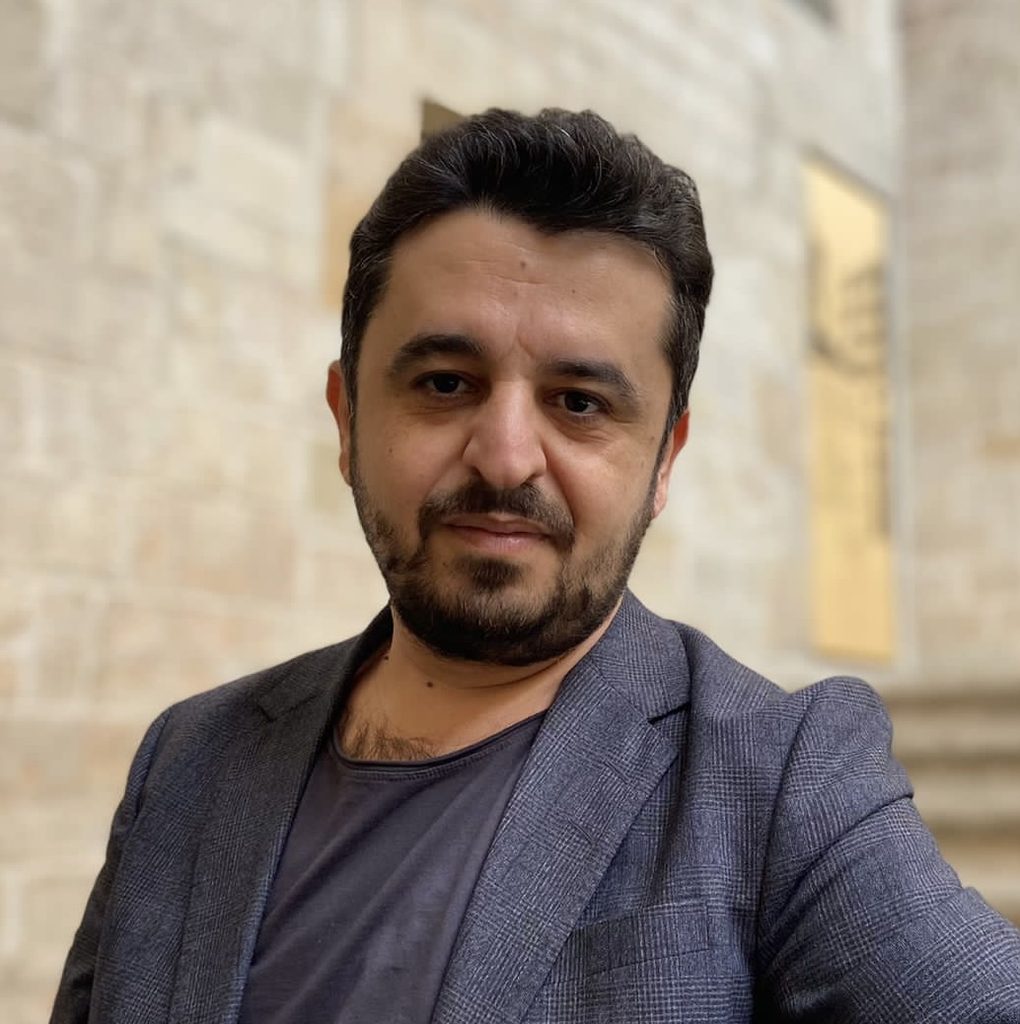
Sardar Saadi
Saadi said that the Syrian Ministry of Education’s regulation, issued on August 27, 2026, limiting Kurdish language instruction in schools to three hours per week, was a policy meant to “erase Kurdish from daily life”:
“What the Syrian state wants is to affiliate Rojava University with the University of the Euphrates. Frankly, they do not accept these universities with their own status, their own administrative and autonomous rights. They are not saying, ‘If another university is established, let’s affiliate it with Rojava University.’”
Saadi said that students, faculty, and staff at Rojava University do not accept this affiliation and that the university is currently continuing its operations de facto. According to Saadi, approximately 5,000 students enrolled at the university this year.
“A form of genocide perpetrated by the government”
Stating that the Syrian state does not recognize the universities, does not allocate a budget for them, and does not accept the documents they issue, Saadi argued that Rojava is the biggest problem for the Damascus regime:
“This is not merely an administrative or technical issue; it is a deeply ideological, structural, and historical issue. The government established in Damascus is a jihadist government, and we must acknowledge this.”
Saadi, who states that the government’s policy is not merely about killing people but about destroying the local experience, language, and culture, describes this situation as “a form of genocide.”
“Why doesn’t the West accept the Rojava experience?”
Noting that Rojava has at least a decade of university experience, Saadi criticized the stance of Germany and other Western countries toward the university system in Rojava:
“Germany is spending millions of euros. It spends 800,000 euros just for a single conference. A total of 60 million euros in funding is being sent there to restructure higher education in Syria and for other projects. Not a single cent of this has gone to the universities in Rojava and Kobani.”
Describing the West’s stance on universities as “hypocrisy,” Saadi described the experience at Rojava University as follows:
“Student councils, women’s councils, a 50 percent quota for women, a co-presidency system, a department of jineology, and the integration of jineology into all courses… It’s an incredible experience. This is a democratic, women-led experience unlike anything seen anywhere else in the world. Why doesn’t the West accept this experience? Why is Germany giving 60 million dollars to the Syrian state?”
“Global Scholars’ Network for Rojava Universities”
Saadi said they had established an academic solidarity network called the “Global Scholars’ Network for Rojava Universities” (GSNRU). Approximately 150 people, including academics from the world’s leading universities, signed on to the network. Saadi, who said their sole focus was to put pressure on Germany, noted that they had participated in various conferences for this purpose.
The Global Scholars’ Network for Rojava Universities is a solidarity initiative established by international scientists and academics to provide academic and institutional support to Rojava University and Kobani University in Northern and Eastern Syria. Established to raise international awareness and exert pressure for the preservation of Kurdish-language education and the official recognition of academic programs at universities in the region, this network will organize international academic solidarity campaigns, conferences, and petition drives.
According to Saadi, as part of the solidarity network’s activities, an event titled “Higher Education in Syria’s Transition Process” will be held on November 3 at Humboldt University in Berlin, followed by an event titled “International Conference on the Transformation of Higher Education in Syria” on November 24–26 at the German-Jordanian University. The events are being organized in partnership with Humboldt University of Berlin and the German-Jordanian University, along with the Berlin Institute for Empirical Integration and Migration Research (BIM) and the German Academic Exchange Service (DAAD).
Saadi also explained that Turkey has been exerting pressure on many countries regarding these conferences and programs:
“Last month, I participated in a program at University College Cork (UCC) in Ireland. The Turkish Embassy sent a threatening letter asking, ‘Why are you doing this?’ Moreover, they linked this to the situation in Turkey. It has absolutely nothing to do with it. Rojava is not a geographical issue, nor is Kurdistan merely an issue confined to Turkey—it is a Middle Eastern issue. We don’t understand why Turkey is making such a fuss, or why it is resorting to pressure and threats, especially during this process. They aren’t just targeting us—they’re also going to the Germans, the Irish, and the Americans, asking, ‘Why are you working with them?’ They’ve previously exerted pressure on Bremen as well as on a university in the U.S. We see that Turkey is playing a very negative role in this process.”
What happened before?
Following the clashes that broke out in Aleppo in early January, the SDF lost a large portion of its territory in northeastern Syria as a result of a government offensive. On January 16, President Ahmed al-Shara issued a decree recognizing Kurdish as a “national language” alongside Arabic and permitting its teaching in schools. Decree No. 13 granted citizenship to all Syrians of Kurdish origin, including unregistered Kurds. The decree was regarded as the first official recognition of Kurdish national rights since independence. Kurdish was to be taught as an elective course or through cultural activities in regions where Kurds constitute a significant portion of the population. However, the Democratic Autonomous Administration of North and East Syria deemed the decree insufficient.
Mazlum Abdi also stated that Decree No. 13 was insufficient regarding the Kurdish language, noting that Kurdish has been the language of instruction in Rojava for 15 years and has reached the university level.
On January 30, the SDF and the Syrian government announced an agreement outlining a permanent ceasefire and a framework for integration. In June, the Ministry of Education initiated the process of recognizing certificates issued under the Rojava administration and allowed students to take the 2026 and 2027 national exams. On the same day, the ministry announced that 38,000 teachers working under the Kurdish administration had been integrated into state institutions.
The dissolution of the SDF was announced on August 25. Two days later, on August 27, Education Minister Muhammad Abdurrahman Turku amended the implementing regulations of Decree No. 13. According to the regulation, Kurdish will be taught for three hours per week, and the grade will be included in the year-end score. Additionally, a one-hour Kurdish cultural activities class will be held each week.
Rojava University described the regulation as “a step backward” and called for its withdrawal. With the start of the new school year, students in Qamishlo and the surrounding area staged protests, demanding that Kurdish be made an official language of education rather than simply increasing the number of class hours.