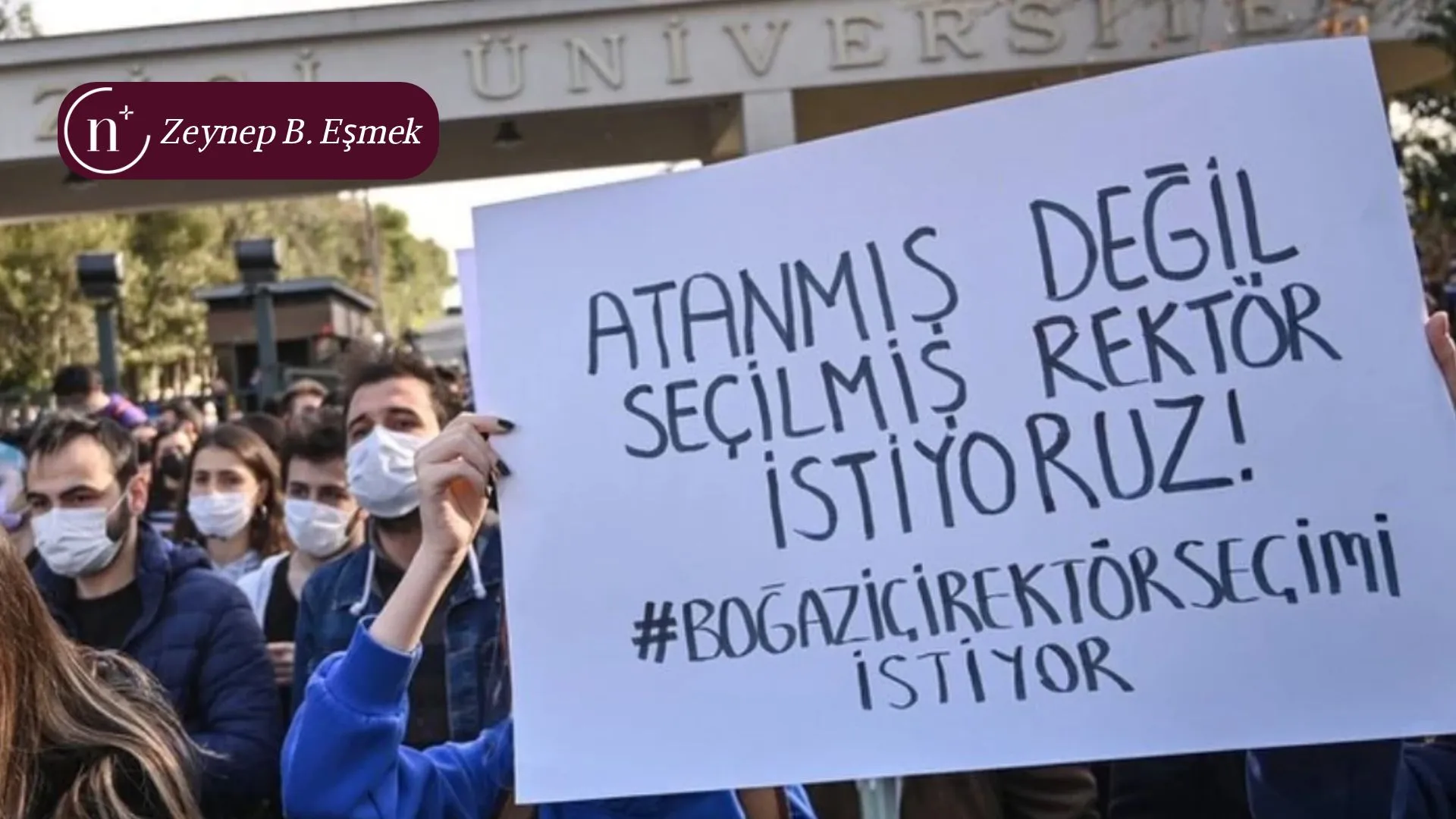
Over the past five years in Turkey, more than 80 trustee rectors have been appointed to universities. Students summarized the current situation at universities after the trustee management: Areas where students gather are under surveillance, clubs and societies cannot continue their activities, and students are being victimized.
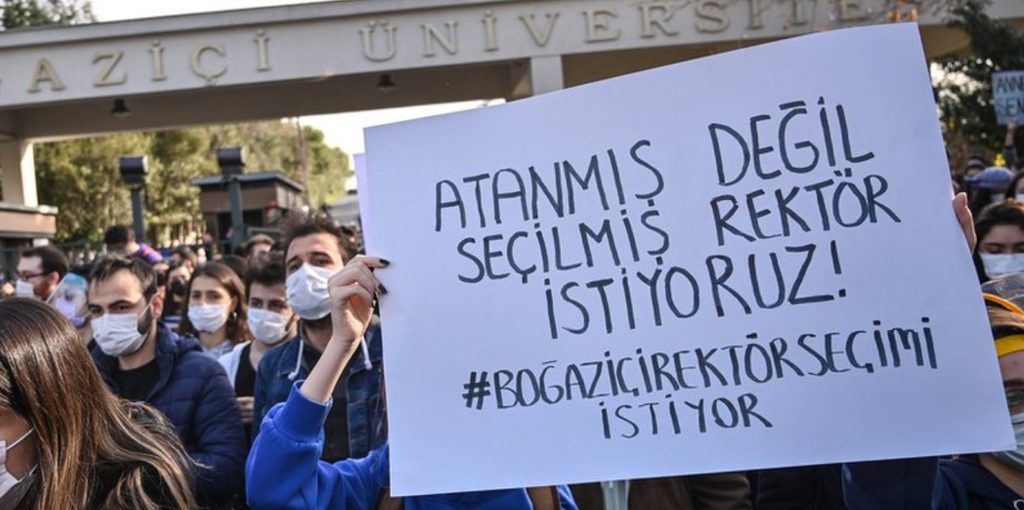
Photo: AFP
Over the past five years, more than 80 trustee rectors have been appointed to universities in Turkey by presidential decree. Following the trustee administrations, student activities were suspended at many schools, club rooms were closed, and events were halted. For example, at Boğaziçi University, CİTÖK was effectively shut down, and the number of private security guards and police officers was increased. Academics were suspended and replaced with “parachute” academics brought in from outside, and conferences featuring hate speech were held under the banner of the “Year of the Family.” Students who gathered on their university campuses faced detentions and investigations.
Middle East Technical University (ODTÜ), Boğaziçi University, Istanbul University, Hacettepe University, Marmara University, Dicle University, and Yıldız Technical University have been operating under trustee administrations for a long time. Students state that a democratic and autonomous educational environment no longer exists at these institutions.
Boğaziçi University: A campus turned into a barracks
Prof. Dr. Melih Bulu was appointed rector of Boğaziçi University on January 2, 2021, and Prof. Dr. Naci İnci on August 21, 2021.
Boğaziçi University students described the events that have unfolded since then as follows:
“Since 2021, students’ freedom of movement on campus has been severely restricted. Campus gates have frequently been closed, classes have been canceled, and clubs and organizations have been unable to continue their activities. Areas where students gather are under surveillance by police and private security. The Faculties of Law and Communication were opened unlawfully, the Faculty of Arts and Sciences was split up, and some departments were transferred to the Faculty of Economics and Administrative Sciences. Faculty members were suspended, and students were barred from classes through disciplinary expulsions. Despite all this, we are proud to be part of this resistance.”
Students note that the campus has effectively turned into a military barracks, with police present at every corner of the school and its surroundings. Despite all this being justified under the pretext of “security,” on August 30, 2025, a man with 18 prior criminal records murdered a 15-year-old girl on the South Campus.
Istanbul University: “A constant state of anxiety”
Prof. Dr. Osman Bülent Zülfikar was appointed as the interim rector of Istanbul University on August 1, 2023. Since his appointment, many established routines on campus have been altered. Disciplinary actions and investigations have been launched against students protesting these changes.
Kayra, a student at Istanbul University, describes the atmosphere on campus following the appointment of the interim rector as “a constant state of unease.” Kayra says the disciplinary investigations have created serious pressure on students and notes that they are now hesitant to post even on their own social media accounts.
Kayra, who also highlights issues with the cafeteria and the budget, says, “Meals used to be free. Now, even though the budget has increased, we’re getting meals that are both more expensive and of lower quality.” He adds that the plans to move to the Küçükçekmece Campus will create serious difficulties for students:
“Commuting to Küçükçekmece means a waste of both time and money. Moving away from the city center also significantly weakens social life.”
Kayra notes that many students have been disadvantaged during the graduation process due to glitches in the electronic oath and e-diploma systems.
Marmara University: Campuses opened up to capital
Marmara University students also describe facing serious pressure and interference on campus under the trusteeship administration. Mustafa Kurt, appointed to Marmara University in 2021, made headlines for mistreating female students residing in the dormitories at the Göztepe Campus, for irregularities in the food service contract, and for launching an investigation against students who protested femicides following the murders of Ayşenur Halil and İkbal Uzuner.
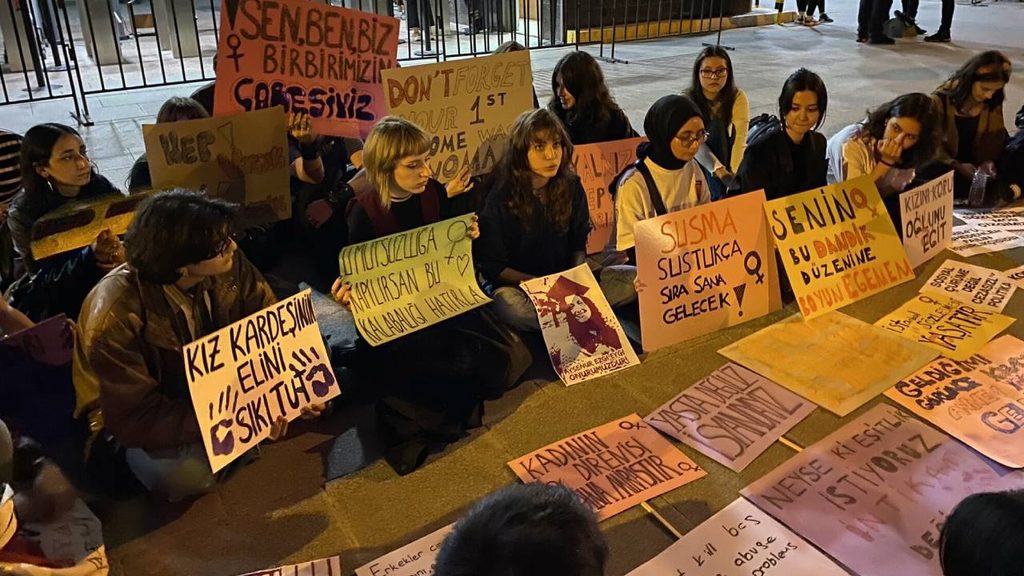
Photo: ANKA
During the tenure of Prof. Dr. Mehmet Emin Okur, who took office on September 6, 2025, by presidential decree, statements made by some academics in the Faculties of Communication and Theology, expressing homophobia, transphobia, and opposition to the Istanbul Convention, drew public backlash.
Students are also voicing criticism that campuses are being opened up to private capital. According to audit reports by the Court of Accounts, certain properties at the Haydarpaşa Campus were allocated to TÜRGEV and TÜGVA free of charge. One student comments on this situation as follows:
“We learned about the relocation through an email this summer. Decisions like this have been announced to us without consultation before. We’ve long suspected that our faculties are being relocated out of concern that they’ll be handed over to private interests.”
Drawing attention to the distance between faculties at the Maltepe Campus and the lack of social spaces, they add:
“Even though it’s such a large campus, what we miss the most are shared living spaces. No budget is allocated to clubs and student organizations.”
Students emphasize that security measures on campus have intensified following the events of March 19, and that this has deepened the sense of oppression:
“Plainclothes police are constantly patrolling, and detention vehicles are on standby. It’s even become difficult to stand side by side. We’re having a hard time focusing on our classes.”
Students also explain that, despite the university’s large budget, basic needs are not being met:
“The budget allocated to the university is in the billions of lira, but we don’t see any of it. There has been no improvement in any area—from food to transportation, from clubs to restrooms. We’re getting poorer by the day and are forced to work.”
Yıldız Technical University: A wedding on campus
During the tenure of Prof. Dr. Eyüp Debik, who was appointed rector of Yıldız Technical University on September 20, 2024, the Yıldız Stage and 11 clubs were closed, and investigations were launched against students who protested the blocking of their events. A report by the Court of Accounts revealed to the public that an excessive number of administrators had been appointed at the university in violation of regulations. Other incidents that drew attention included the pouring of acid on the “Yıldızlı Ağaç” tree on campus, the intervention in the march marking the anniversary of the Gezi protests, and the holding of a wedding on campus for the son of the AKP district chair.
A female student at Yıldız Technical University was removed from the film club’s leadership by the university administration. The student explains what “Cep Sinema” meant to students as follows:
“It was very easy to watch movies, chat, and socialize here. I’ve been going there frequently ever since my first day at school. Free film screenings and subsequent discussions about the films were an opportunity unavailable at many universities. These restrictions place an extra burden on students already struggling with financial hardships and academic pressures.”
However, the trustee administration continues to implement policies that curtail students’ right to have a say and restrict their social spaces. The rendering of the Student Union (ÖTK) ineffective, the disregard for student demands, and the use of private security are making it harder for students to defend their rights. Furthermore, inadequacies in educational and academic conditions are increasing:
“The libraries are inadequate, and some areas are constantly under renovation. Studying in the faculties is not productive. Practices such as failing to allocate a budget for clubs and student organizations and not turning on the heaters in the summer show that resources are not being used for the benefit of students.”
Hacettepe University: Suspensions lasting up to four years
Prof. Dr. Mehmet Cahit Güran was appointed to Hacettepe University on July 26, 2024, by presidential decree. At the Beytepe Campus, allowing attackers armed with clubs to enter with the rector’s permission and the expulsion of 14 students from the dormitory for protesting the early closure of Yurdum Café highlight the pressure the interim administration is exerting on students. At the Ankara State Conservatory, 12 faculty members were dismissed, and on April 16, 2025, the Special Security Forces (ÖGB) intervened against students protesting the removal of the Ali İsmail Korkmaz mural. Students who participated in the protests during the March 19 events were suspended from school for four years.
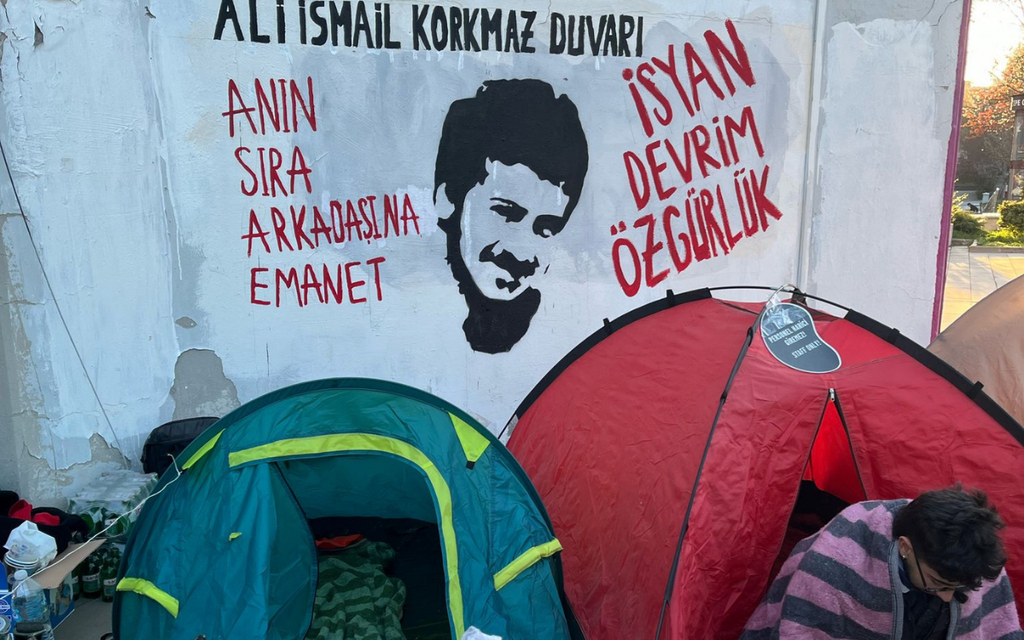
Students emphasize that living conditions have not improved despite a high budget, campus security and private security measures are increasing the pressure. At the Sıhhiye Campus, they report that no staff members were present when individuals armed with shovels entered the campus, and that they act stems from the trustee administration:
“The few spaces where we used to feel safe have now turned into dangerous places if we do not act according to certain demands.”
Bilgi University: The trustee and staffing at a foundation university
An administrator was appointed to Istanbul Bilgi University as part of an investigation into its owner, Can Holding.
The administrator, Prof. Dr. Ahmet Ulusoy, a professor of financial economics, ran as a prospective parliamentary candidate for the AKP in 2007 and 2015 and wrote for Yeni Şafak in 2015. He stopped writing upon assuming his position at the Higher Education Council (YÖK) in 2021. Following his appointment, Delil Yorgun, a research assistant in the Department of Economics and Finance at Bilgi University, was dismissed from his permanent position without cause.
On the night of May 22, 2026, Istanbul Bilgi University was closed by a decision of President Recep Tayyip Erdoğan published in the Official Gazette, without any prior notification to students, faculty, or staff. Students protested the decision for three days, after which the closure order was rescinded.
Students report that academic freedom has been lost, club activities and events have been restricted, the practice of appointing loyalists has intensified, and access to gender equality courses has been blocked. From the time of the trustee administration to the present, the demand for an egalitarian, democratic, and scientifically autonomous university continues.
Trustee pressure at METU: Academic and social life under restrictions
At ODTÜ, which has been under trustee administration since 2016, students report that pressure and restrictions on campus have increased following the appointment of Prof. Dr. Mustafa Yozgatlıgil. While concerts for the International Spring Festival have been canceled, investigations are even being launched into graduation banners. One student summarizes the situation as follows: “Common rooms are being closed, classrooms aren’t being provided for events, and department buildings are being locked.” Although the International Spring Festival had been banned by the university administration in the past, students had organized the festival on their own through a two-week-long protest.
Describing how faculty positions are not being filled and academic freedom is being restricted, the student draws attention to inadequate physical conditions:
“There are heating problems in the buildings; there is no toilet paper or soap in the restrooms. In some buildings, there is no hot water. Meanwhile, millions are being spent on priority projects.”
The students emphasize that under the trustee administration, campus life, both academic and daily, is becoming increasingly restricted, and that the importance of struggle and solidarity is growing.
Academics who signed the peace declaration at Dicle University were dismissed
On August 14, 2020, Prof. Dr. Mehmet Karakoç was appointed rector of Dicle University by a decision of President Erdoğan. Currently, the university’s rector is Prof. Dr. Kamuran Eronat, who was appointed by a Presidential Decree on August 16, 2024.
Prof. Dr. Erhan Ünlü, Assoc. Prof. Dr. Romedi Çelik, and research assistants Hümeyra Yılmaz, Eda Aslı Şeran, Aslı Aydemir, and Düzgün Uğur, all of whom signed the peace declaration at Dicle University, were removed from the academic staff via a published Decree Law. The person who served as Rector of Dicle University during this period (2016–2020) and submitted the dismissal lists to the Higher Education Council (YÖK) was Prof. Dr. Talip Gül.
Students point out that the university has long been under the administration of a trustee and that it has become nearly impossible to convey their basic living and academic demands to the administration.
“Our public spaces have been restricted, and basic necessities such as heating, restrooms, and soap are lacking in the faculty buildings. The presence of plainclothes police on campus and expensive cafes restricts our freedom of movement,” the students say, emphasizing how crucial the demand for an autonomous university is. The dismissal of faculty members demonstrates the extent to which freedom of expression and democratic demands have been suppressed at the university under the trusteeship administration for many years.
The academic impact of the trustees
Before the trusteeship, Turkey’s leading universities were ranked higher in international rankings. For example, in the Times Higher Education (THE) World University Rankings 2015 report, it had risen to 139th place globally and was one of the few universities in Turkey to have reached this level. However, following the appointment of trustees, these universities’ rankings have declined. According to the QS 2026 World University Rankings, METU is ranked 269th, Boğaziçi University 371st; Hacettepe University 571st, Istanbul University 628th, Yıldız Technical University 731–740, and Marmara University is in the 1001–1200 range.
This table shows that changes in academic autonomy and administration following the appointment of trustees have affected universities’ international visibility and their rankings, particularly in fields such as economics and engineering
The 2024–2025 Turkey University Rankings, published by the URAP Research Center affiliated with METU, revealed that Boğaziçi University has dropped 11 places over the past six years. During the period beginning with the appointment of a trustee rector in 2021, the university’s academic score dropped from 1,245 to 760 by 2025.
Dicle University experienced a decline in academic performance following the appointment of a trustee in 2016. The university, which had a trustee appointed for the second time in 2024, fell to approximately 92nd place in the 2024–2025 rankings according to URAP data, showing a decline compared to previous years.