
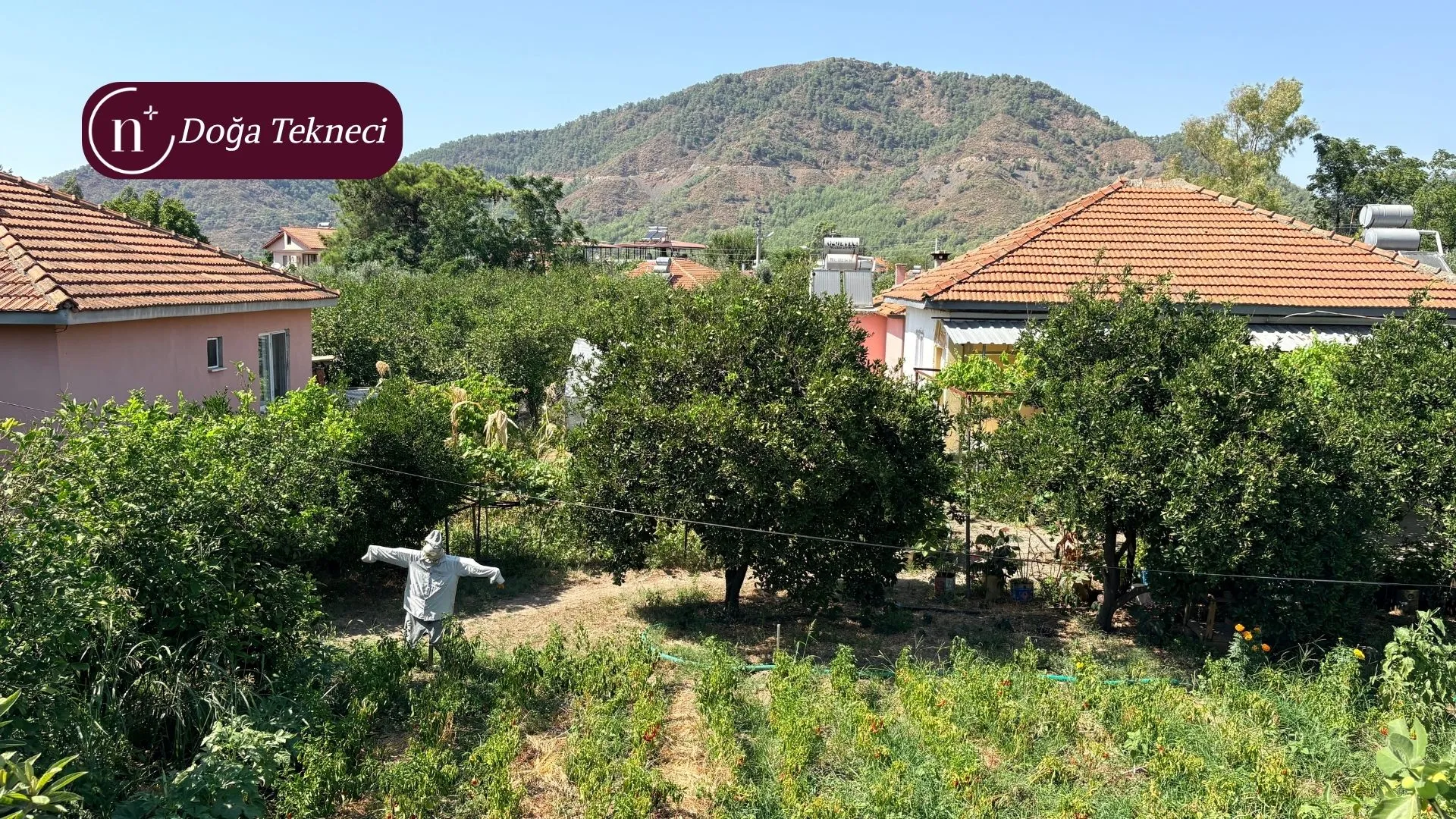
The village of Kemaliye, located in the Ortaca district of Muğla, is an Alevi village with a significant Tahtacı community. Zeynel Altın, the village headman of Kemaliye, and Nail, a retired post office worker from the village, discussed the village’s Tahtacı-Alevi identity, cemevi practices, and economic structure.
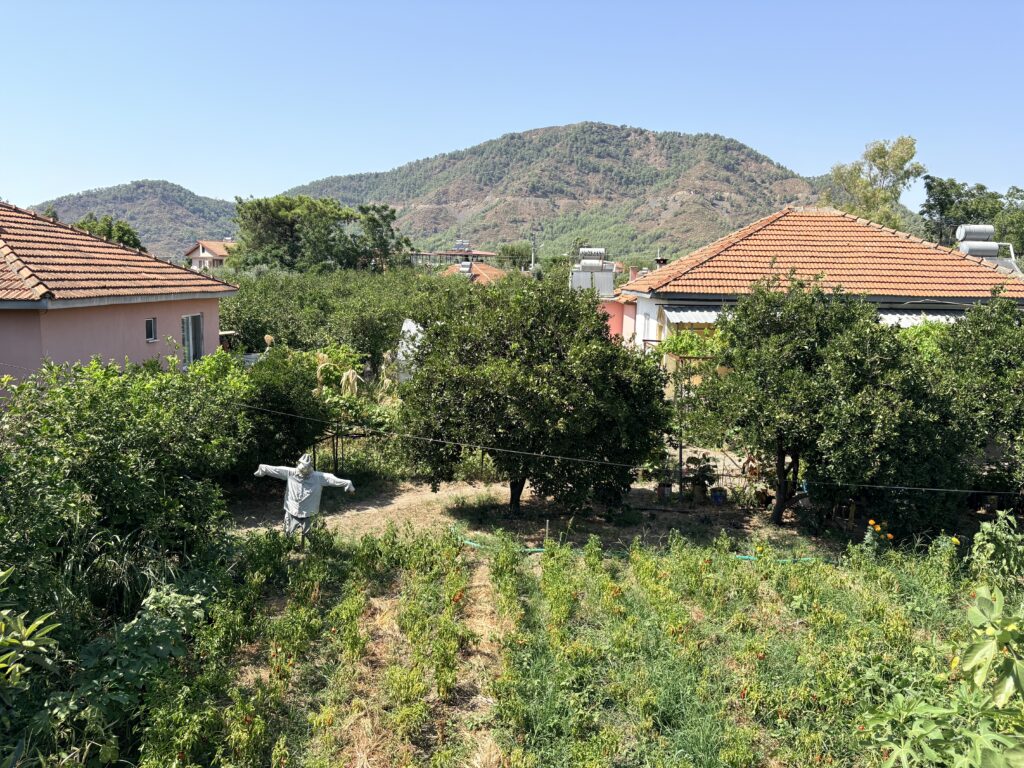
The Ortaca district of Muğla is known as a settlement area with a dense Alevi population. It is located between Marmaris and Fethiye. The region has made headlines at times not only for its history dating back to antiquity but also for its recent history. Having been home to many civilizations throughout history, Ortaca is characterized by its cultural, ethnic, and religious diversity; its recent settlers are the Tahtacı (Turkmen) Alevis.
According to historical accounts, during World War II, plans were made to establish a “minority camp” in Dalaman, Muğla, to force minorities who had not paid their taxes to work, and construction began. This area was under the control of the Tahtacı (Turkmen Alevi) community, who were already settled there. The government relocated the Tahtacis to another nearby Tahtacı village, Fevziye. From there, they were resettled to the former Oritenya area. This place, which was a swamp at the time, was drained and developed by the Tahtacı Alevis.
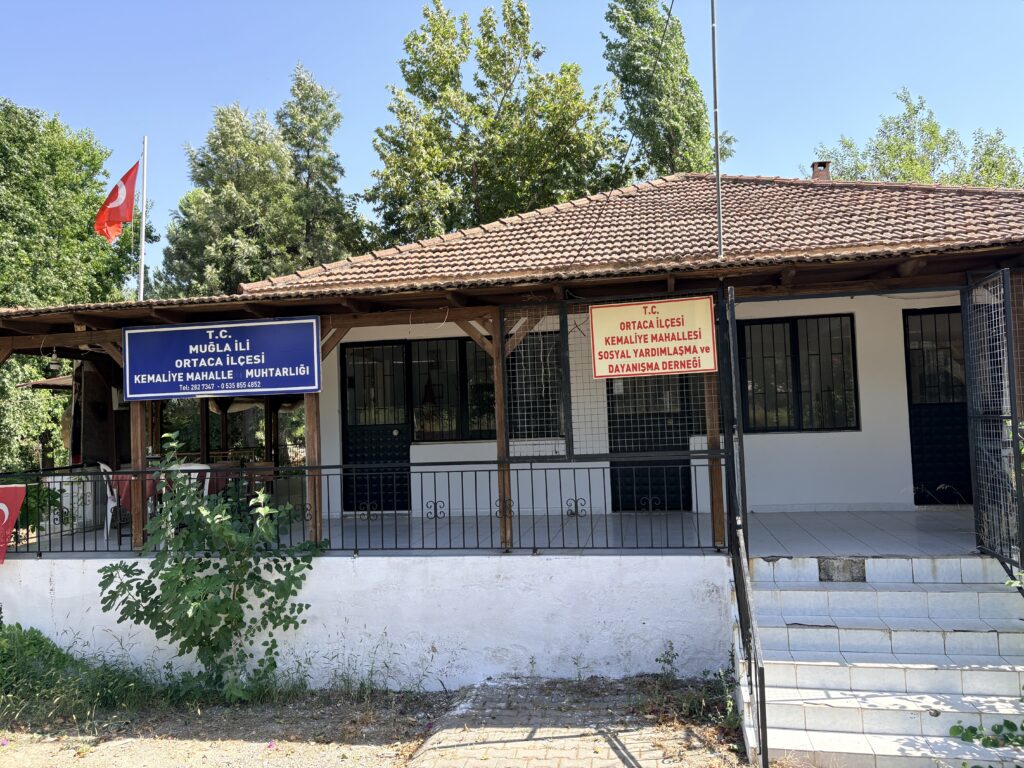
During a visit I made to Ortaca in Muğla, I had the opportunity to chat with Zeynel Altın, the village head of Kemaliye—a village with a predominantly Alevi population—and a retired postal worker who introduced himself as Nail.
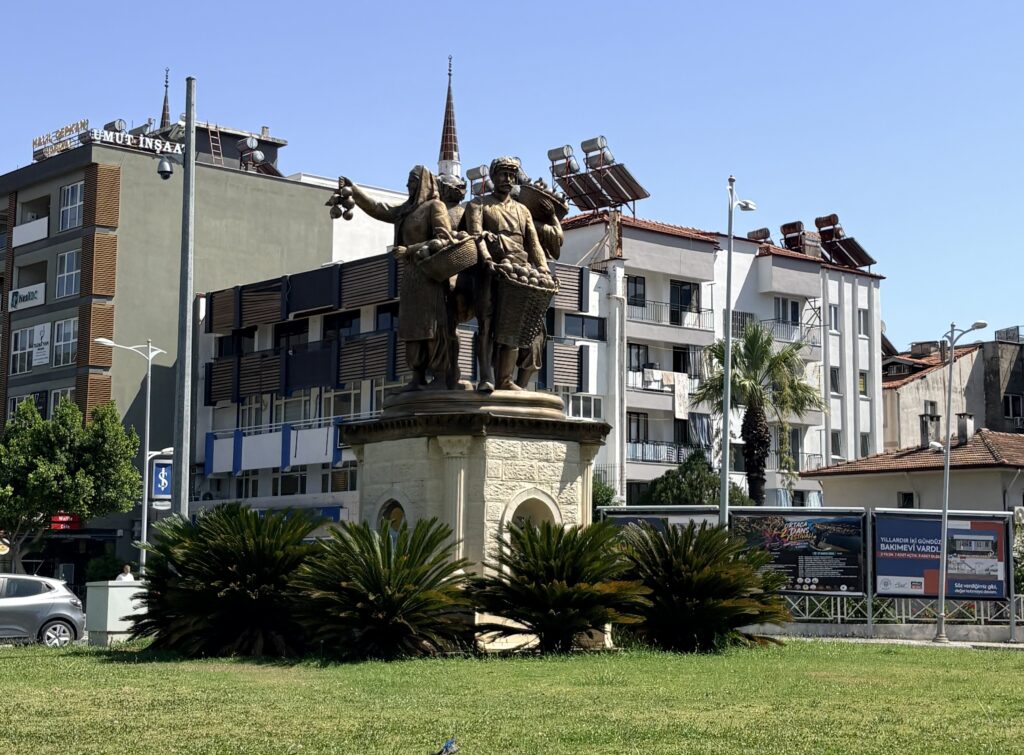
On the road leading to the village, as I passed through the center of Ortaca, there was a statue representing the citrus farming industry in Ortaca. Created in 2011, the statue features two women and two men dressed in traditional Anatolian attire. One of the women is holding a tomato vine in her hand, while the other is carrying a basket full of pomegranates on her shoulder, the basket held by one of the men is full of oranges.
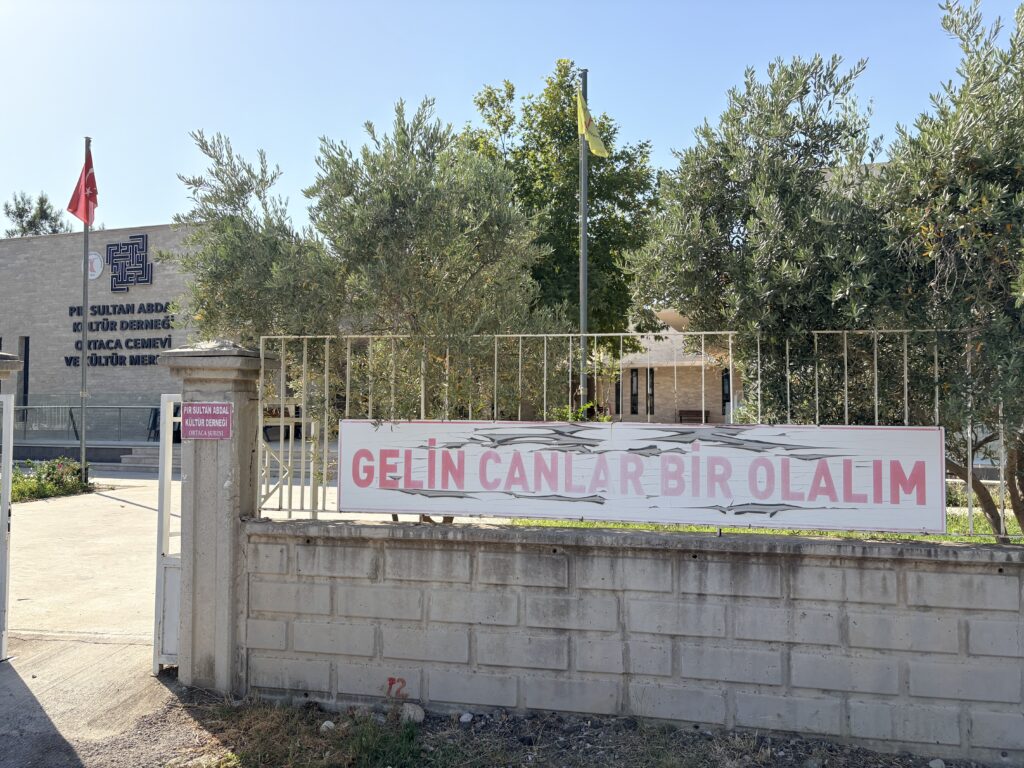
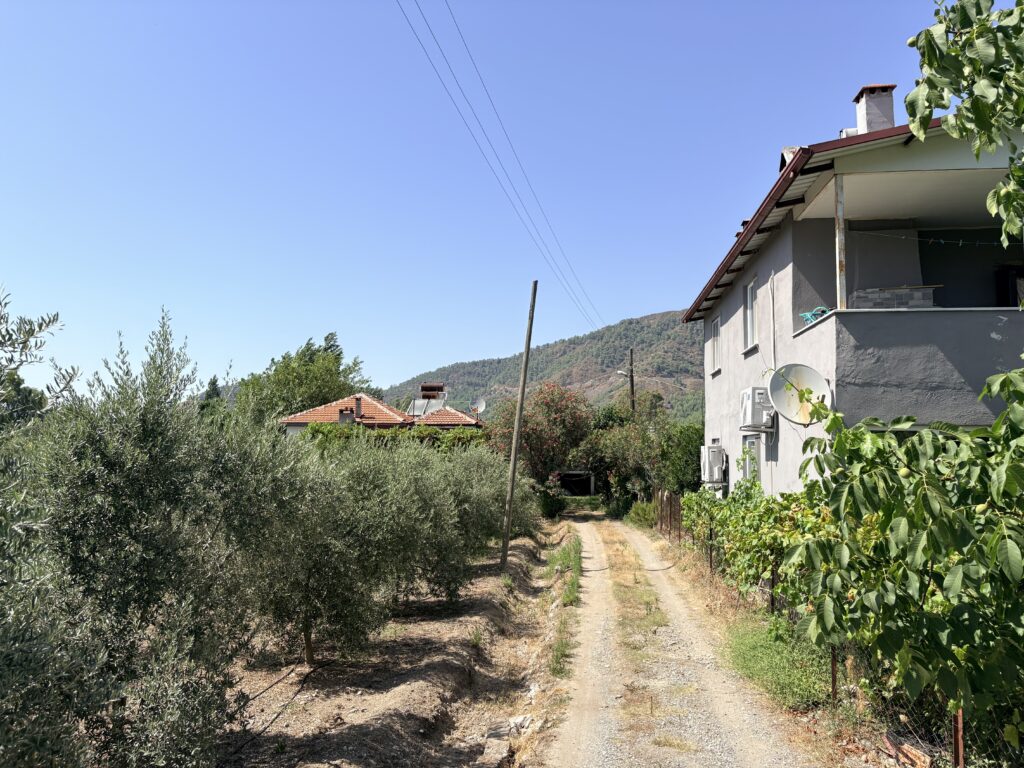
Before entering the village, the Pir Sultan Abdal Cultural Association and Cemevi, located on a side street, catch the eye. As you head toward the village, an area with abundant greenery—compared to the center of Ortaca—welcomes visitors. If you look closely at the gardens of the village homes, you’ll frequently see greenhouse covers and citrus trees. The houses in the village are arranged in an orderly manner, lined up in rows along the streets and alleys.
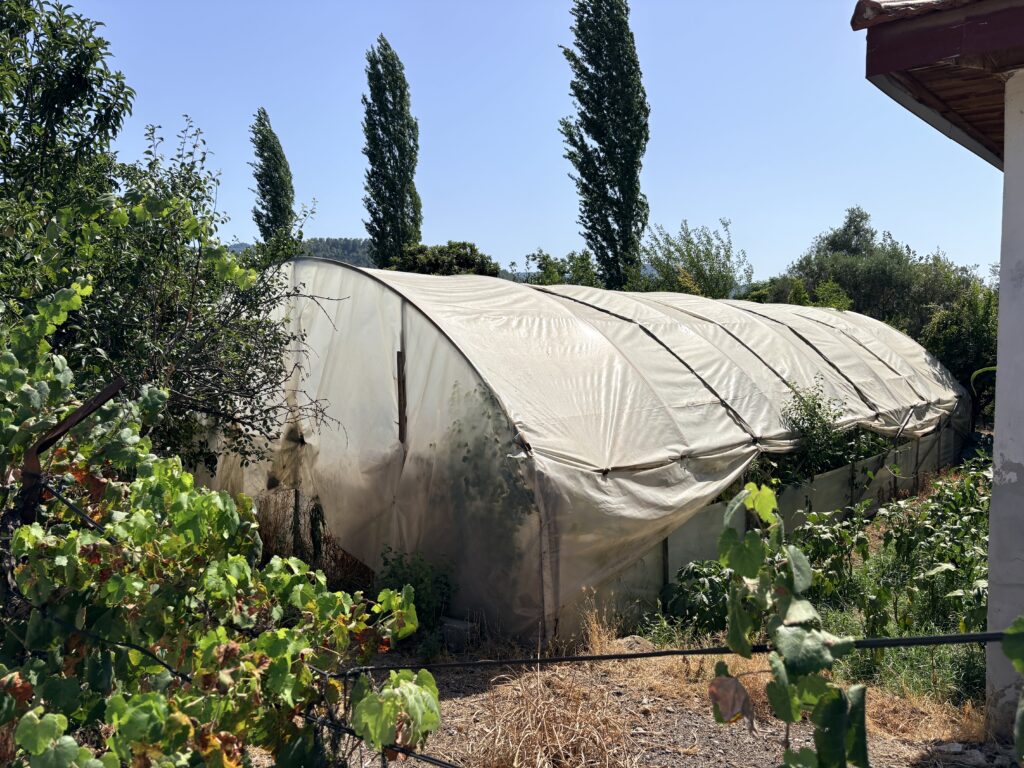
Over a thousand people live in Kemaliye Village. The villagers, most of whom are retired, generally make their living through greenhouse farming, citrus farming, and tourism—the latter due to the village’s proximity to the sea. A significant portion of the Alevi population here consists of the “Tahtacılar,” an Alevi community named after the carpentry trade and typically found in the Aegean and Mediterranean regions.
I asked Altın and Nail about the Alevi population in the village and how the Alevis of Kemaliye spend their days.
A Tahtacı village: Kemaliye
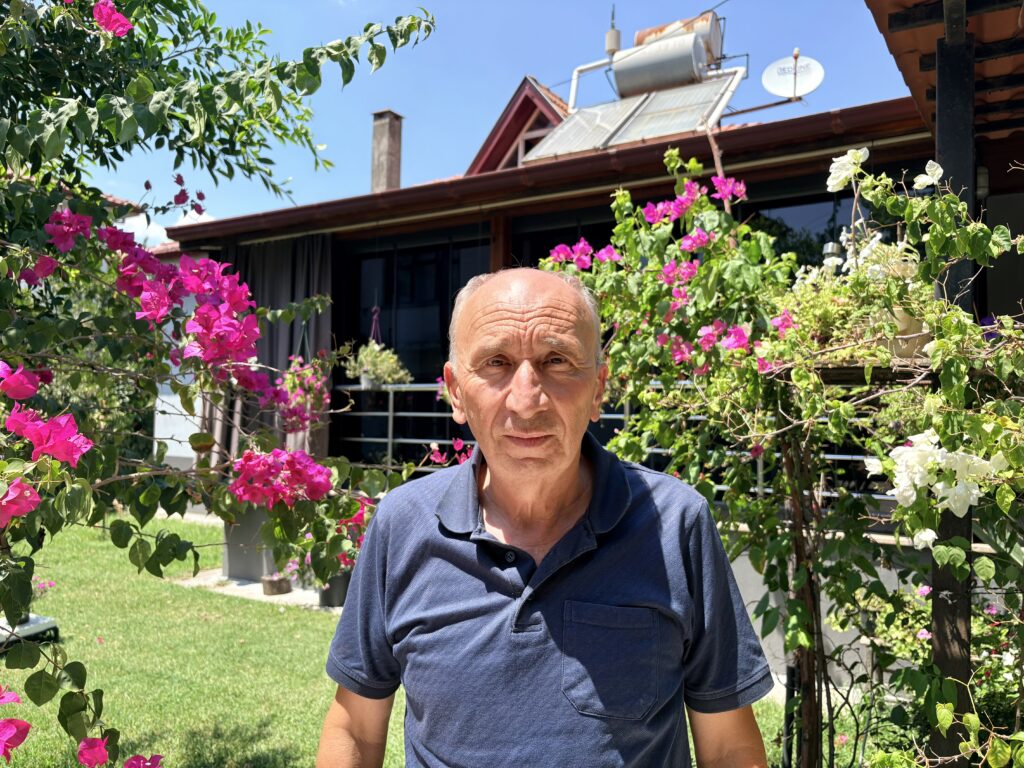
Noting that there is no clear data on the Alevi population distribution in the village of Kemaliye, Altın said that, according to his own estimate, approximately 70 percent of the village’s population is Alevi. Altın stated that the village has received migrants and that the population has become more mixed over time, adding that neighboring neighborhoods with a high concentration of Alevis—such as Fevziye and Cumhuriyet—have a more cosmopolitan structure.
Altın, noting that he himself is a Tahtacı, explained the origins of the Tahtacı identity as follows:
“Our grandfather came from the Mersin-Mut area. We are part of the Tahtacı community under the Alevi umbrella. After the persecution of the Alevis following Yavuz Sultan Selim, the Alevis retreated to the mountains. To make a living, they worked as lumberjacks and woodworkers in the forest. The name ‘Tahtacı’ comes from that.”
Altın emphasized that Alevism is not a monolithic faith practice, saying, “There are 14 or 15 tribes within Alevism—from the Kipchaks to the Çepnis, they’re all there. They all have minor nuances and differences, which is actually a source of richness.”
Altın mentioned that, as Tahtacılar, they built a small cemevi in the village of Kemaliye. He noted that there is also a Pir Sultan Abdal Cultural Association Cemevi at the entrance to the village, but they generally conduct their worship in the one they built themselves.
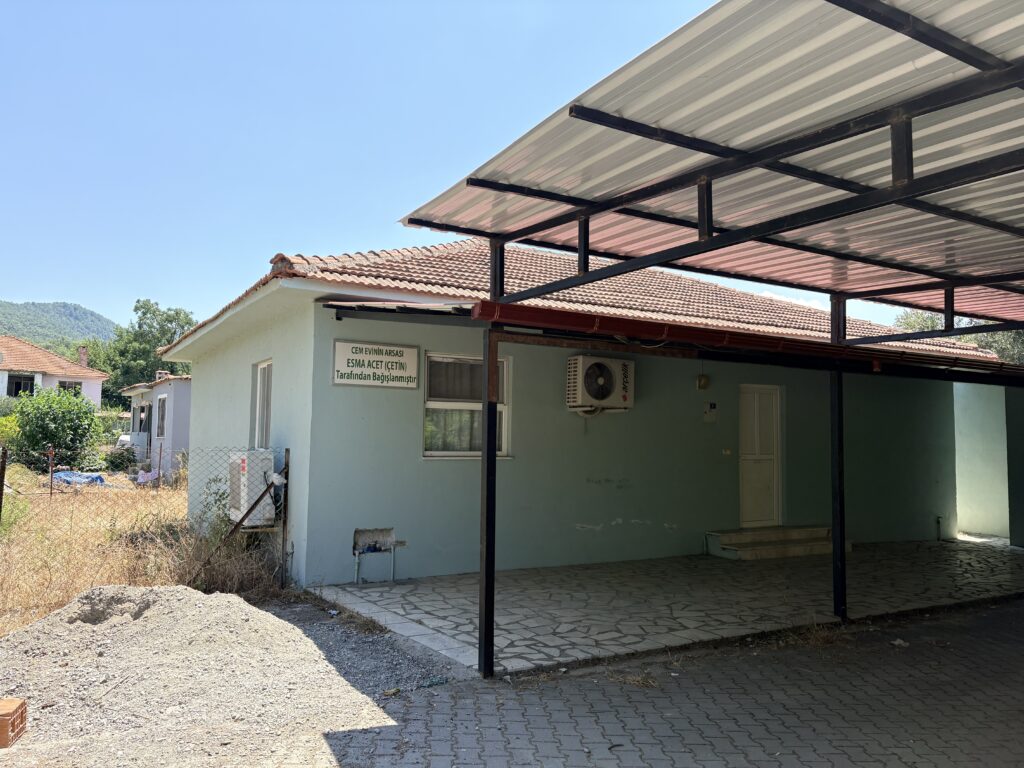
Altın also noted that there are differences in the cem rituals across Alevi communities, citing as an example that in their own community, one does not enter the cem wearing socks. “For example, a Sunni person cannot enter our cemevi,” said Altın, explaining that in order to participate in the cem, one must first make an “ikrar” (oath) declaring that they are Alevi, and that following this oath, the person is accepted into the community. He added that attitudes toward Sunni-Alevi marriages have softened over time, but have not yet completely disappeared.
Nail also noted that the Alevis in the village are affiliated with their own cemevis, explaining that Alevism is divided into many branches and that he himself belongs to the “Yolyatır Ocağı” within the Tahtacı community.
Nail explained that one may not enter the cemevi without performing ablution; upon entry, a sash is tied around the waist, the head is covered with a headscarf, and if one goes to the restroom, the ablution is considered invalid and must be performed again. He added that the meal served during the cem can only be distributed after “destur” is given.
“We mourn on May 6”
Explaining that Hıdırellez is observed differently in the village, Nail said that no celebrations take place on May 6 instead, on the evening of May 5, a fire is lit in the town square and people jump over it. According to Nail, May 6 is a day of mourning: “That day marks the anniversary of the deaths of Hüseyin İnan and Deniz Gezmiş. We don’t hold festivities that day, we observe a period of mourning.”
Nail also provided detailed information about the month of Muharrem, noting that during this period—which begins approximately 19–20 days after Eid al-Adha—the villagers observe “mourning” rather than fasting. “We don’t drink water, we don’t eat meat, we don’t shave, we don’t cut our nails… We only eat yogurt, we do not eat any other animal products,” he said. Nail explained that on the morning of the 12th day of mourning, a rooster is slaughtered in each home, after which the villagers gather to hold a ceremony and end their fast/mourning by eating a meal together.
“Being Alevi means starting life one step behind”
Altın also touched on the labor struggles of Alevis in the region. He recounted how village youths formed a theater troupe in 1975–76 and how agricultural workers went on strike in 1979 to demand better working conditions.
Altın said, “Being Alevi means starting life one goal down. If you can’t express yourself well or educate yourself properly, you’ll fall behind.”
“This is a village of retirees”
Altın noted that the literacy rate in the village is high and that the majority of villagers worked in the public sector or in jobs with social security coverage before retiring:
“Ninety percent of our village is full of retirees. Alevis aren’t afraid of hard work, they’re all hardworking. They work as laborers or civil servants.”
Altın claimed that the villagers organized a strike in the farm fields in 1979 and that this was one of the first labor protests in Ortaca.
Noting that there has been a significant decline in income from citrus production—the village’s main source of livelihood—in recent years, Altın stated that the primary cause was export issues, saying, “Most of the citrus is intended for export. If you can’t trade with neighboring countries, you can’t sell what you produce.” Nail also confirmed this situation.
Nail, meanwhile, listed the village’s sources of income as greenhouse farming, citrus cultivation, and tourism, noting that a large portion of tourism revenue comes from boat and hotel operations in Dalyan and Sarıgerme. Reiterating that “90 percent” of the village’s population is retired, Nail also touched on the fluctuations in citrus prices, adding that while citrus brought in good profits last year, in previous years it had to be left to rot in the fields: “Lemons and other citrus fruits didn’t make any money 4–5 years ago. People suffered as a result.”
What is the government’s approach toward Alevis?
According to Altın, the government’s approach toward the Alevi community has changed in recent years. He mentioned the Alevi-Bektaşi Culture and Cemevi Directorate established within the Ministry of Culture and Tourism, as well as the large cemevi complex opened in the Hacıbektaş district of Nevşehir.
“The president went to Hacıbektaş and had a cemevi built there. These are politicians chasing votes. There are some who genuinely respect the community, but politics was used for this.”
Altın stated that while he personally has not faced discrimination in accessing public services, he has been forced to keep his demands constantly on the agenda:
“If you don’t renew your demand frequently, it gets forgotten. I tell them, ‘If you don’t do my job, I’ll expose you.’ It’s a half-threat—it doesn’t work any other way. This is a human right, people must know their rights. You have to say, ‘I’m here.’”
The events known as the “Ortaca Incidents” or the “Ortaca Massacre” encompass the violence, oppression, and looting directed against the Tahtacı Alevis in Ortaca—a town in the Köyceğiz district of Muğla (at the time, Ortaca was part of Köyceğiz)—between June 5 and 16, 1966. However, there are certain discrepancies between the testimonies of the Alevi community in the region and what was reported in the press.
I asked Altın and Nail what they had heard from their elders and what they knew about the Ortaca Massacre.
“It wasn’t a massacre, it was a land dispute”
Altın drew attention to the claims of an “Alevi massacre” that are occasionally reposted on social media, arguing that the vast majority of such posts are baseless:
“They spread rumors about Alevis attacking a mosque and made up stories. Nothing like that happened. Respected Alevi figures at the time stepped forward and said, ‘There’s nothing to it, everyone should stay where they are.’ There was tension, but it wasn’t a massacre. Only one person died, and that was due to a land dispute.”
“Neighbors harmed an animal that had wandered into each other’s fields, that’s how the conversation started, and the verbal altercation turned into a fight,” said Nail, adding, “There was no mass massacre. It wasn’t like what happened in Sivas, Madımak, Maraş, Çorum, or Erzincan.”
*The incident that took place in the village of Fevziye, in the Ortaca district of Muğla—known as the “Ortaca Massacre”—stemmed from a land dispute. The Tahtacı Alevis in the region had, over time, reclaimed a marshy area and made it habitable; however, in 1960, the government transferred a nearby plot to the village headman of Kızılyurt, a village inhabited by Nurcu Sunnis. This is how the tension began.
Sources differ on what sparked the events that erupted in June 1966. According to interviews PİRHA conducted with witnesses in 2019, the incident was a dispute over a field, during the clash, a 15-year-old Sunni youth, Halil Sarı, was killed by a bullet fired from the gun of a sergeant major on extended duty, and according to witnesses, there were no other fatalities. (Zeynel Altın and Nail from the village of Kemaliye also support this account.) These witnesses state that the real breaking point that fueled the unrest following the teenager’s death was a sexual assault against an Alevi woman, and they emphasize that the situation was deliberately escalated into a sectarian conflict due to the delayed intervention of the media and security forces. Other sources also report that the incident was triggered by a sexual assault against an Alevi woman, that the clashes lasted 12 days, and that the exact death toll remains unknown.
Source: PİRHA, bianet, Evrensel