

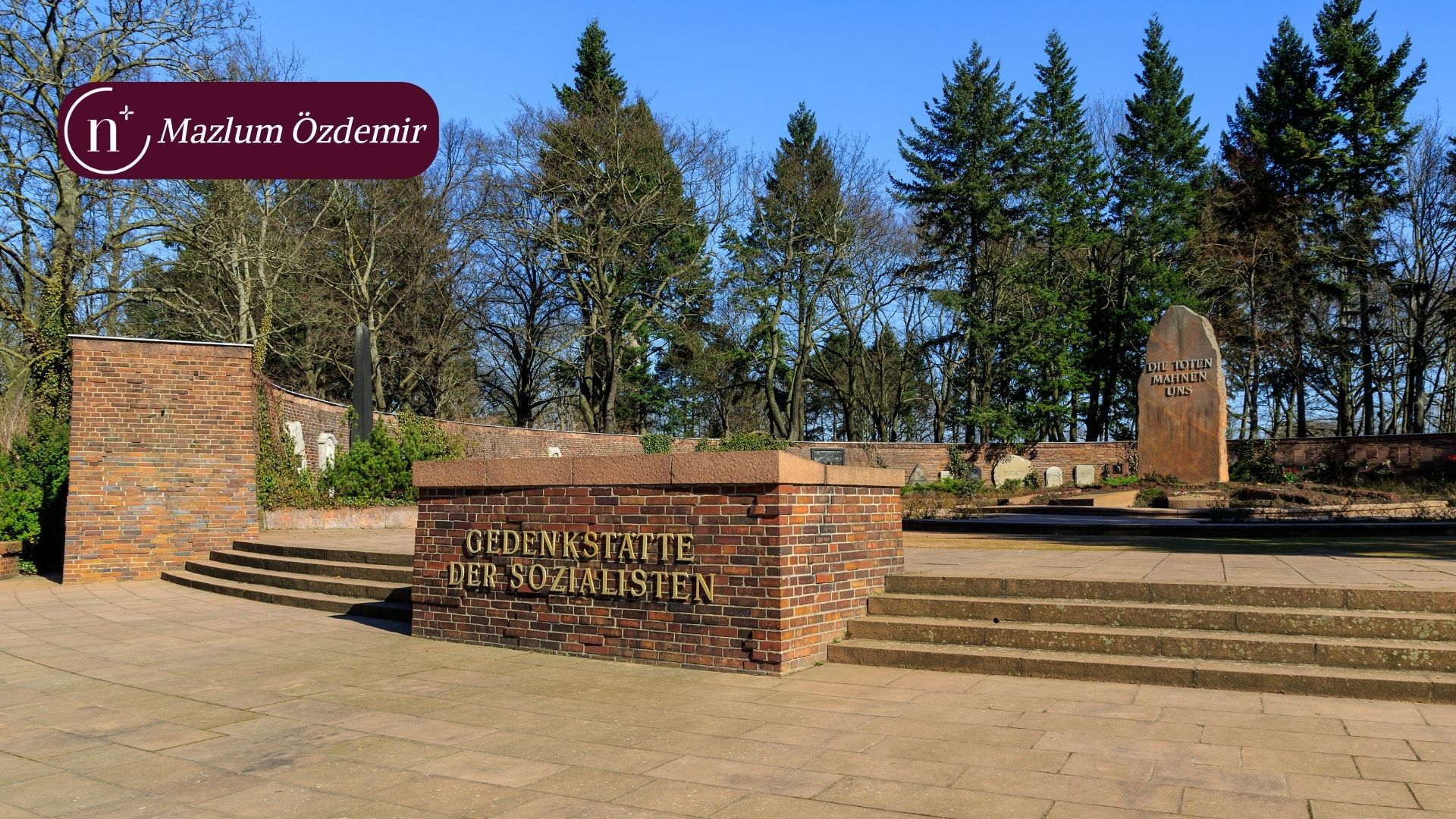
In the Socialists’ Cemetery, the revolutionaries of the German Socialist Movement engraved in the history books lie side by side with nameless heroes.
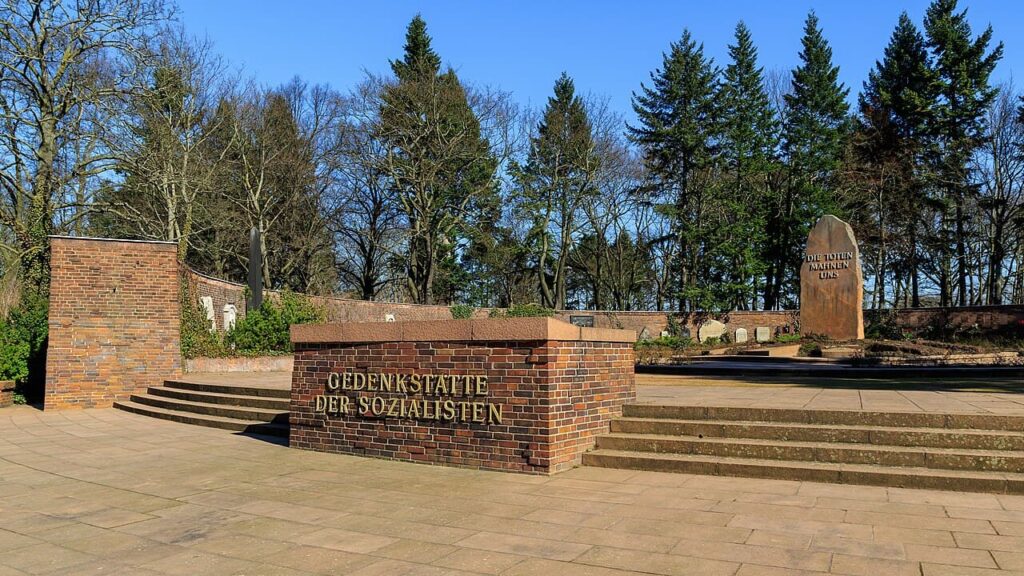
As you walk through the silence of a large park in Berlin’s Friedrichsfelde district, you come across three words engraved on a stone: “Die Toten mahnen uns.” In English, “The dead warn us.” With this phrase, you suddenly feel as though an entirely different era has begun, with slogans and marches echoing around you; this is Zentralfriedhof Friedrichsfelde. In other words, the Socialists’ Cemetery…
When the Berlin Municipality purchased this 25-hectare site in 1880, it commissioned landscape architect Hermann Mächtig to design the area as a garden cemetery. At the time of its opening, it became the first municipal cemetery open to all Berliners, regardless of faith. No distinction was made between rich and poor… The city’s poor were buried here, with the municipality covering their funeral expenses. For this reason, it came to be known as the “Armenfriedhof,” meaning the “Cemetery of the Poor.”
On one side, the cemetery is home to the well-kept and magnificent tombs of the city’s wealthy families, while on the other lie the graves of thousands of poor Berliners, some lacking even a name… Here, those whose only possession in life was their bodies are “equalized” with the rich in death.
And it is also here that the revolutionaries of the German Socialist Movement, etched into history books, lie side by side with nameless heroes.
The Funeral That Changed the Cemetery’s Fate
August 7, 1900… Wilhelm Liebknecht, one of the pioneers of the German Socialist movement, suffered a stroke while returning home after working late at the socialist newspaper Vorwärts, which he had been an editor for years, and died at the age of 74. On August 12, Berlin witnessed one of the largest funerals in its history. Tens of thousands of people joined the procession stretching from the city center to Friedrichsfelde Cemetery.
This ceremony and the crowd in attendance did not merely bid farewell to Liebknecht. They also altered the cemetery’s fate. Liebknecht’s burial here instantly transformed Friedrichsfelde into a shrine for the labor movement. His grave, standing like a monument, became a gathering point for generations of social democrats, socialists, and anti-fascists. Subsequently, other leaders of the labor movement, such as Ignaz Auer, Paul Singer, Carl Legien, and Theodor Leipart, were also laid to rest here. Thus, Friedrichsfelde took on the name “Socialists’ Cemetery” and was cemented into the symbolic map of the people’s struggle in Berlin. Thereafter, each new burial added new layers of meaning to the cemetery, accompanied by inscriptions carved into stones and newly erected statues. Each statue became a silent but screaming manifesto.
Rosa is Here: “I Was, I Am, I Shall Be”
January 1919 was a time when the streets of Berlin became the scene of the Spartacist Uprising, echoing with clashes between the Spartacists and Freikorps units (paramilitary forces). On January 15, 1919, more than a hundred revolutionaries, including Rosa Luxemburg and Karl Liebknecht, were massacred by Freikorps troops. Some died in clashes, while others were executed by firing squad in extrajudicial killings…
The bodies of Karl Liebknecht and 33 others were buried in the Socialists’ Cemetery on January 25. Karl was now in the same cemetery as his father, Wilhelm Liebknecht. Rosa, however, was made to disappear after being killed. It took months to find her body. She was eventually found in May 1919 in the Landwehr Canal, where she had been thrown, and was buried in this cemetery. Rosa was one of the revolutionaries that the fascists feared the most, so that they wanted her body to be lost and for her to be forgotten. But they failed. Rosa is now in the Socialists’ Cemetery, and through her final article, she declares: “Tomorrow, the revolution will already rise up resoundingly and proclaim to your horror with trumpets: I was, I am, I shall be!“
Destruction and Reconstruction
The year 1926 marked a new turning point for the Socialists’ Cemetery. On June 13, 1926, the “Revolutionsdenkmal” (Monument to the Revolution) was unveiled. Built as a red brick cube, it symbolized the resilience of the revolutionary movement and the revolutionaries who were lined up against a wall and executed by a firing squad. However, the Nazi regime destroyed this memorial of the revolution with dynamite in 1935.
Following the Second World War, the German Democratic Republic (GDR), established in East Berlin, sought to once again glorify the symbols of the labor movement. On January 14, 1951, a new site was opened in the center of the Socialists’ Cemetery: the “Gedenkstätte der Sozialisten” (Memorial to the Socialists). A large porphyry stone was erected right in the middle of the memorial. Only three words are inscribed on the obelisk: “Die Toten mahnen uns” (The dead warn us.) A simple, brief sentence, yet one that strikes every reader to the core…
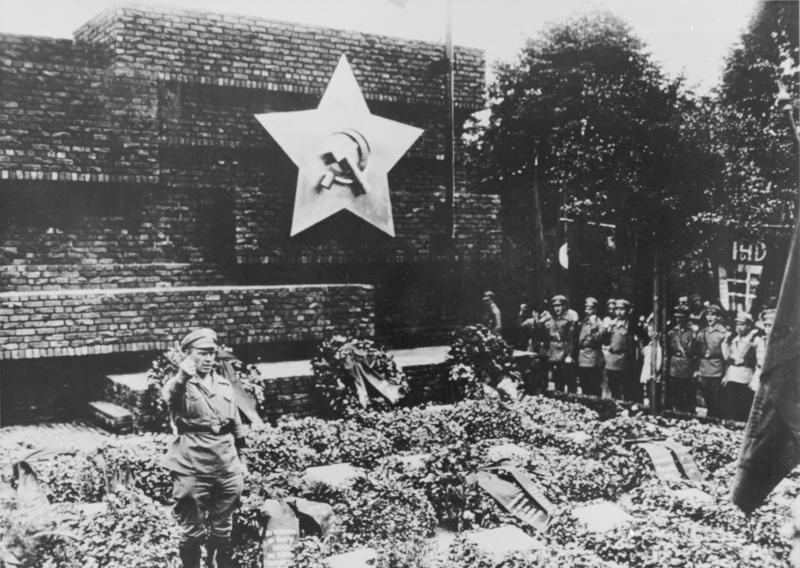
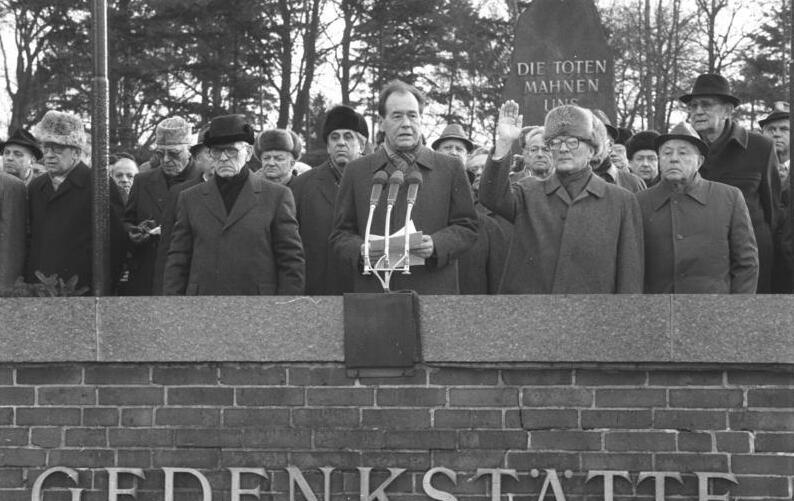
During the GDR era, the monument became an indispensable venue for state ceremonies. In the final years of East Germany, while the cemetery became a burial ground for party elites and the state bureaucracy, it was closed to new burials following the fall of the Berlin Wall and reunification of Germany. The existing graves remain standing, preserving history like a stone memory.
The Call Echoing in the Silence
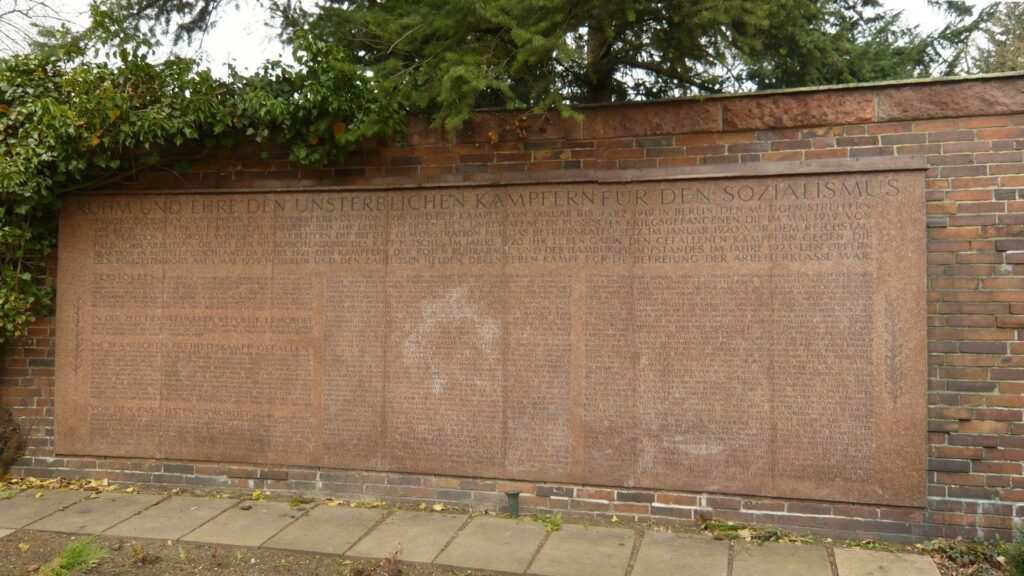
Although the crowds at the official ceremonies held in the Socialists’ Cemetery dwindled after the fall of the Berlin Wall, thousands of people still come here every January, braving the cold, to commemorate Rosa and Karl. The graves of the 327 anti-fascists in the outer semicircle of the cemetery, who took part in resistance networks during the Hitler era, are not forgotten either. Among them are workers, trade unionists, teachers, and ordinary people. Ordinary, but brave people…
The sentence carved in stone continues to ring in the ears of visitors leaving the cemetery: “The dead warn us!” This is not merely a reminder. It is a call that carries the lessons of the past into today and tomorrow. And everyone asks themselves this question: Do the dead in our geography warn us too?