
Beginning his public career as an academic, Ahmet Davutoğlu went on to serve as a foreign policy adviser, Minister of Foreign Affairs, and Prime Minister, becoming one of the key political actors during some of the most critical turning points in Türkiye’s recent history.
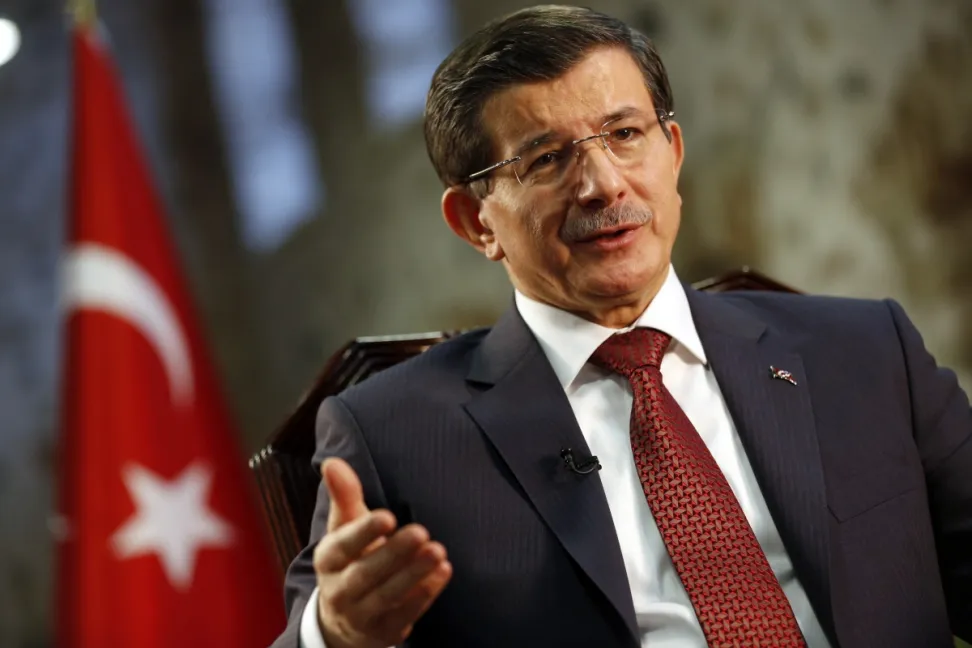
One of the most influential figures in Türkiye’s politics over the past two decades, Ahmet Davutoğlu has announced his retirement from active politics. His political career—from academia to the prime ministership—has been marked by dramatic shifts in foreign policy, widespread human rights violations during curfew periods, urban destruction documented in civil society reports, and controversial security policies that have become part of the country’s political history through his own public statements.
As the chief architect of the Justice and Development Party’s (AKP) foreign policy, Davutoğlu entered the highest levels of government. His political legacy remains closely associated with some of the deepest crises in Türkiye’s domestic and foreign policy.
Former Turkish Prime Minister and Future Party (Gelecek Partisi) leader Ahmet Davutoğlu announced that he is withdrawing from politics and that his party will cease its political activities.
In a written statement, Davutoğlu said that in 2021 they had sought to establish an alliance among three conservative parties in response to an electoral system that effectively made political alliances necessary. After those efforts failed, he said they joined an alliance that balanced the main opposition party “to prevent the dangers of revanchism arising from polarization and to create common ground for social reconciliation.”
He continued:
“After the 2023 elections, we made every possible sacrifice—including our party’s name—in order to ensure that alternative conservative politics would be represented in the Grand National Assembly of Türkiye as a parliamentary group and would emerge as a strong political alternative for the future. We first formed a parliamentary group together with the Felicity Party (Saadet Partisi), and later under the name New Path Party (Yeni Yol Partisi). From the very beginning, we worked to transform this parliamentary group into a single party by first uniting internally and then, if possible, incorporating other conservative parties as well. Where a merger proved impossible, we sought to establish an organic alliance. Unfortunately, these efforts also failed.”
Davutoğlu argued that “the widespread erosion of political ethics and the transfer of members of parliament regardless of party affiliation have made it increasingly difficult to build a strong political alternative and have weakened our parties’ standing in the eyes of society.”
He continued: “At the point we have reached today, we see that the political system in general—and party politics in particular—has reached a profound impasse. On the one hand, power has become increasingly monopolized; on the other, fragmentation has rendered alternative political forces ineffective. The corruption that began at the highest levels of politics has spread, regardless of party affiliation, to political cadres, civil society organizations, and ultimately every layer of society. The existing political mechanisms have largely exhausted their capacity for self-correction.”
Davutoğlu announced his decision to withdraw from party politics and terminate the Future Party’s political activities with the following words:
“In light of these assessments, and following consultations with our party’s authorized bodies and the colleagues who have carried the Future Party to this day, we have decided to withdraw from party politics and end the political activities of the Future Party in order not to become part of the contaminated political climate. This is not a decision of surrender. It is a decision to establish moral distance. It is not an abandonment of politics, but rather a call for everyone to rethink politics.”
From academia to the center of power
Born in 1959 in the Taşkent district of Konya Province, Ahmet Davutoğlu pursued an academic career in international relations.
Known for his work on international relations, strategy, and foreign policy, Davutoğlu developed an approach arguing that Türkiye should make more effective use of its historical and geographical position in international affairs. This vision was most clearly articulated in his influential book Strategic Depth.
Following the Justice and Development Party’s (AKP) rise to power in 2002, Davutoğlu entered government as Prime Minister Recep Tayyip Erdoğan’s chief foreign policy adviser.
In 2009, he was appointed Minister of Foreign Affairs, giving him the opportunity to translate his academic ideas directly into state policy.
During this period, Türkiye’s foreign policy came to be defined by the doctrine of “Zero problems with neighbors.”
From “Zero problems with neighbors” to regional intervention
At the heart of Davutoğlu’s foreign policy vision was the idea that Türkiye should strengthen its relations with neighboring countries and act as a stabilizing regional power.
During the period when relations with Syria improved, Ankara and Damascus significantly expanded their economic and diplomatic ties. However, the popular uprising that began in Syria in 2011 and rapidly evolved into a civil war became the greatest test of this policy. Türkiye soon adopted a much more confrontational stance toward the government of Bashar al-Assad.
The government’s direct involvement in Syria’s internal affairs—guided by the symbolic slogan of the time, “We will pray at the Umayyad Mosque”—marked one of the most controversial turning points in Turkish foreign policy. During this period, the political, logistical, and military support provided to armed opposition groups in Syria effectively made Türkiye a direct party to the conflict.
Security policies and controversial statements
As the Syrian civil war deepened, ISIS emerged as one of the region’s most significant security threats. Türkiye came under both domestic and international criticism over border security, the movement of foreign fighters, and ISIS’s presence within the country.
Some of the statements Davutoğlu made during this period became the subject of intense public debate regarding the state’s approach to ISIS and the limits of its security policies.
While assessing the organization’s rapid territorial expansion in the Middle East, Davutoğlu said that “ISIS may be seen as a radical, terrorist organization, but (…) the situation there reflects earlier grievances and anger that have produced a broad reaction across a wide front.” Although he did not literally describe ISIS members as “angry young men,” these remarks were widely summarized and remembered by the public under that characterization.
Another statement that drew widespread attention came after the 10 October 2015 Ankara Train Station Massacre. Speaking during a television interview, Davutoğlu said:
“We have a list of suicide bombers currently in Türkiye. However, under the rule of law, we cannot arrest them before they carry out an attack.”
The statement, which was widely paraphrased in public discourse as “We cannot arrest suicide bombers before they blow themselves up,” triggered intense criticism, particularly in the aftermath of the Ankara Train Station Massacre.
From the peace process to renewed armed conflict
One of the defining turning points of Ahmet Davutoğlu’s tenure as prime minister was the collapse of the Kurdish peace process and the resumption of armed conflict.
The Peace Process, which began in 2013, entered a new phase with the Dolmabahçe Declaration in 2015. However, escalating violence during the summer of 2015 led to extensive security operations across predominantly Kurdish cities.
During the clashes in Sur, Cizre, Nusaybin, and several other districts, numerous civilians lost their lives, residential areas were heavily damaged, and thousands of people were displaced. As prime minister, Davutoğlu was one of the government’s highest-ranking political officials responsible for the security policies implemented during this period.
Human rights organizations criticized the government’s handling of the curfews, the protection of civilians, forced displacement, and the large-scale destruction of urban areas.
Sur and the “Toledo” remark
One of the areas most severely affected by the clashes was the historic Sur district of Diyarbakır, renowned for its rich cultural heritage and centuries-old urban fabric.
The destruction of Sur and the subsequent reconstruction projects became the subject of extensive public debate.
Among the most controversial statements of the period was Davutoğlu’s pledge:
“We will turn Sur into Toledo.”
The remark sparked criticism from many who argued that it reflected an approach prioritizing urban redevelopment over preserving the district’s historical and cultural identity.
The Ankara Train Station Massacre
The attack targeting a peace rally outside Ankara’s main railway station on 10 October 2015 became one of the deadliest terrorist attacks in Türkiye’s history.
More than one hundred people were killed and hundreds more were injured.
In the aftermath of the massacre, public debate extended beyond the perpetrators themselves to include questions surrounding intelligence failures, security shortcomings, and the state’s obligation to protect the right to life.
Following the attack, Davutoğlu stated:
“We conducted polling after the terrorist attack in Ankara, and there is an upward trend in our support.”
Like his earlier remarks concerning ISIS, this statement provoked widespread public criticism.
In later years, responding to criticism directed at him, Davutoğlu argued that he had never personally used the phrase “angry young men” to describe ISIS. He also maintained that his comments regarding suicide bombers and post-attack polling had been taken out of context and distorted as part of a campaign to discredit him.
Academics for peace
Davutoğlu’s term as prime minister was also marked by intense debate over freedom of expression, press freedom, and academic freedom.
The appointment of government trustees to media outlets, legal proceedings against journalists, and investigations targeting academics drew criticism regarding Türkiye’s democratic standards.
Following the publication of the Academics for Peace declaration titled “We Will Not Be a Party to This Crime” in 2016, criminal and administrative investigations were launched against its signatories.
In subsequent years, the Constitutional Court of Türkiye ruled in several cases that the proceedings against some of the signatory academics had violated their right to freedom of expression.
The period reignited broader debates over how the balance should be drawn between state security policies and fundamental freedoms, particularly freedom of expression and academic independence.
Departure from power
Davutoğlu stepped down as Chairman of the Justice and Development Party (AKP) and Prime Minister in 2016. His departure was widely viewed as more than a routine leadership change; it marked a significant political turning point that reflected shifting power dynamics within the ruling party.
One of the defining episodes of this process was the publication of the document that became known as the “Pelican Brief” (Pelikan Bildirisi), an anonymous manifesto sharply criticizing Davutoğlu and widely regarded as a catalyst for his resignation.
In the years that followed, Davutoğlu increasingly advocated for the rule of law, judicial independence, stronger democratic institutions, and the restoration of institutional checks and balances.
However, this new political stance continued to be evaluated in light of the policies implemented during the years in which he had served in government.
A new party
In 2019, Davutoğlu founded the Future Party (Gelecek Partisi).
The party presented itself as an alternative conservative political movement, emphasizing the rule of law, the separation of powers, judicial independence, and the strengthening of democratic institutions.
Despite these ambitions, the Future Party struggled to establish itself as a major political force. In later years, Davutoğlu sought cooperation with other conservative opposition parties, ultimately participating in parliamentary alliances in an effort to consolidate an alternative political bloc.
Following the 2023 general elections, these efforts resulted in the formation of a parliamentary group first with the Felicity Party (Saadet Partisi) and later under the banner of the New Path Party (Yeni Yol Partisi). Nevertheless, attempts to unite the conservative opposition under a single political organization ultimately proved unsuccessful.
A contested political legacy
Ahmet Davutoğlu’s political career is closely associated with one of the most transformative and contentious periods in Türkiye’s recent history.
As the principal architect of the AKP’s foreign policy, he played a central role in shaping Türkiye’s regional strategy through the doctrine of “Strategic depth” and the policy of “Zero problems with neighbors.” Yet the outbreak of the Syrian civil war, Ankara’s direct involvement in the conflict, and the subsequent deterioration of regional relations fundamentally altered that vision.
His tenure as prime minister also coincided with the collapse of the Kurdish peace process, prolonged curfews and security operations in predominantly Kurdish cities, the Ankara Train Station Massacre, and widespread debates over human rights, freedom of expression, and democratic governance.
While Davutoğlu has consistently argued that some of his most controversial statements were taken out of context and that his later political agenda sought to strengthen democratic institutions and the rule of law, critics continue to hold him politically responsible for many of the policies implemented during his years in office.
With his announcement that he is withdrawing from politics and bringing the Future Party’s political activities to an end, Davutoğlu closes a chapter that remains one of the most debated in contemporary Turkish political history.