Iraqi Prime Minister Ali al-Zaidi has issued instructions to transfer border crossings currently under the Kurdistan Regional Government’s authority to the central government and to place certain oil fields under Baghdad’s control. The Kurdistan Regional Government, in turn, has repeatedly called for adherence to the constitution. So, which articles of the constitution are currently in dispute?
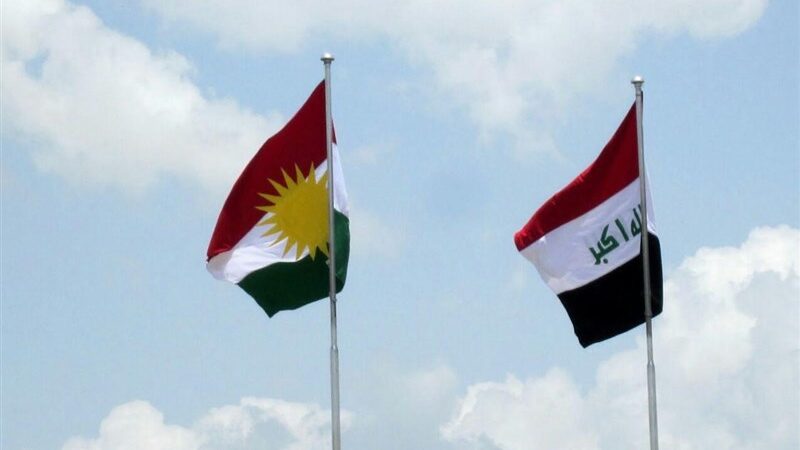
Iraqi Prime Minister Ali al-Zaidi has issued instructions to transfer border crossings currently under the authority of the Kurdistan Regional Government (KRG) to the central government and to place certain oil fields under the control of Baghdad.
Sabah Numan, spokesperson for the Iraqi Armed Forces Command, stated that these decisions were made following a review of a report by an investigative commission that had examined allegations of oil smuggling from fields operated by the state-owned North Oil Company.
Joint statement from the KDP and PUK emphasizing the constitution
The two main parties of Iraqi Kurdistan, the Kurdistan Democratic Party (KDP) and the Patriotic Union of Kurdistan (PUK), have issued a joint statement regarding recent developments and decisions.
The statement notes that the remarks made by the spokesperson for the Iraqi Armed Forces, along with the developments and measures taken in Iraq over the past few days, have come as an unexpected shock to the citizens of the Kurdistan Region.
Stating that the Kurdistan Region seeks nothing beyond the rights enshrined in the Iraqi Constitution, and noting that its constitutional rights have been violated over the years, the statement emphasizes that all parties must remain committed to the constitution and that it should serve as the final arbiter. It further states the following:
“Any measure or decision taken against the Kurdistan Region outside the framework of the Constitution is unconstitutional. The Kurdistan Region is the product of the blood and the long-standing struggle of the people of Kurdistan. The violation of these rights and achievements constitutes a ‘red line.’
We advocate for dialogue, transparency, and mutual understanding; unilateral decisions do not serve the security and stability of Iraq.”
Masoud Barzani: “We are asking for our constitutional right”
In a statement regarding the matter, KDP leader Masoud Barzani noted that an approach violating the Iraqi Constitution is gaining strength within the decision-making centers in Baghdad. “We are demanding our constitutional rights. These rights must be recognized as they are, and it is our duty to take the necessary steps. We will not accept anything that falls outside the framework of the Constitution,” Barzani said, reminding people that the Kurdistan Regional Government played a significant role in shaping post-Saddam Iraq.
Stating that they support Prime Minister Ali al-Zaidi in resolving issues and combating corruption, Barzani added that they are also prepared to assist Baghdad in tackling smuggling and illegal activities, provided that such efforts are carried out through constitutional and legal channels.
Furthermore, Barzani declared, “The Kurdistan Regional Government emerged as a result of a century-long struggle and the sacrifices of the people of Kurdistan, bought with the blood of hundreds of thousands of martyrs, and it possesses legitimate rights. The Kurdistan Regional Government will not bow to unconstitutional decisions, nor will it submit to the imposition of the will of any individual or party.“
Which articles are at the center of the constitutional debates?
At the root of the power struggle between Baghdad and Erbil lie provisions in the 2005 Iraqi Constitution that leave the boundaries between the central government and the regional administration ambiguous.
- Article 110 of the Constitution places the protection of national borders and the determination of customs policies directly under the authority of the federal government in Baghdad. However, Article 114 defines the operation of customs administrations as a “joint authority” shared between Baghdad and Erbil. While Baghdad seeks to take control of border crossings based on its authority over border security, Erbil argues that this contradicts the principle of joint administration.
- Article 111 states that oil and natural gas are the common property of all the people of Iraq. Article 112 places the management of existing oil fields and the sharing of revenues under the joint control of the central government and the producing regions. While Prime Minister al-Zaidi seeks to consolidate the authority to approve exports, the Kurdistan Regional Government argues that the constitutional requirement for “joint management” is being violated.
- The provinces of Kirkuk, Diyala, Salah al-Din, and Nineveh, explicitly mentioned in al-Zaidi’s ruling, are classified as “disputed territories” under Article 140 of the constitution. This article stipulates that the final status of these regions should be determined through a census and a referendum. Baghdad’s move to bring the oil fields and transit routes within these four provinces under its direct control is interpreted as an attempt to create a fait accompli in areas whose status remains unresolved.
- Article 115 strengthens the Kurdistan Regional Government’s position. Under this article, in the event of a dispute between Baghdad and Erbil over areas of shared jurisdiction, regional laws take precedence. Furthermore, Article 121 grants the Kurdistan Region the authority to ensure its own internal security. The Erbil administration views the deployment of federal security forces at border crossings and other sites as a direct infringement upon these two articles.
Masrour Barzani: “We are ready to become Peshmerga”
Masrour Barzani, Prime Minister of the Kurdistan Regional Government in Northern Iraq, stated that Baghdad’s decisions came as a surprise, noting that they do not align with the approach and messages conveyed during discussions with the Iraqi government.
“We have constitutional duties and rights,” said Masrour Barzani. “We are demanding our rights, and all of these must be fulfilled as required. Naturally, we are also fulfilling our own obligations. Nothing outside the framework of the Constitution is acceptable to us.”
Noting that the door to dialogue remains open and that they wish to resolve issues through negotiation, Barzani emphasized that preserving the current status of the Kurdistan Regional Government is a shared responsibility of all political parties, and issued the following call:
“I hope all parties come to realize that the issue of preserving the status of the Kurdistan Regional Government in Northern Iraq, and the experience it represents, transcends any partisan or personal gain. Every single individual in this land must be mindful of their historical responsibility. We are prepared to set aside our differences and, together, become ‘Peshmerga’ to safeguard the status of the Kurdistan Regional Government in Northern Iraq.”
Talabani calls for common sense, stability, and the rule of law
PUK leader Bafel Talabani stated that the Iraqi Constitution should serve as the basis for resolving disputes between Baghdad and Erbil. Emphasizing the need to prioritize common sense, stability, and the rule of law, Talabani asserted that serious and constructive dialogue is the only path forward, both for protecting the rights of citizens and for maintaining peace in the region.
“We are proud of our Kurdish identity and the rights of our people, which we achieved after a difficult struggle. We also emphasize our full commitment to protecting our honor, our land, and our constitutional position when necessary,” he said.
Gorran: A dangerous development
The Change Movement (Gorran) described Baghdad’s decisions as a “dangerous development.” Gorran said that while they do not oppose efforts to combat smuggling and corruption, these issues cannot be used as a pretext to dismantle the constitutional powers of the Kurdistan Regional Government in northern Iraq.
Interior Minister Ahmed: “The party causing the obstruction is definitely not the Kurdistan Region”
Reber Ahmed, Minister of Interior for the Kurdistan Regional Government in northern Iraq, stated that they are prepared to implement decisions consistent with the Iraqi Constitution, but that they will not comply with any decision, declaration, directive, or law that runs counter to the constitution:
“We have a joint protocol, signed by the Kurdistan Region’s Ministry of Finance and Ministry of Natural Resources along with the relevant officials from the Iraqi government, and subsequently approved by the Iraqi Economic Council. However, for months, this protocol has not been brought before the Iraqi Council of Ministers for final approval. Therefore, it is certainly not the Kurdistan Region that is preventing the implementation of these agreements.”
Stating that they are prepared to cooperate with Baghdad in the fight against corruption, Ahmed added that disputes should be resolved not through public statements, but rather through discussions conducted on a constitutional and legal basis.
In his statement, Ahmed referred to the joint declaration by the KDP and the PUK, expressing his appreciation for the message of unity demonstrated by both parties, and added the following:
“All political parties in the Kurdistan Region must stand united on national issues and act with the same determination to protect the constitutional status of the Kurdistan Region.”
Support for Zaydi from the Shia Coordination Framework
The Shia Coordination Framework, an alliance of major Shia parties in the Iraqi Council of Representatives formed after the March 2021 elections and instrumental in the government-formation process, has expressed support for Prime Minister Ali Zeidi’s decisions. The alliance argued that the measures implemented to combat smuggling and corruption serve to protect national wealth, strengthen state authority, and uphold the rule of law.
The statement emphasized that investigations must be conducted within a legal framework, ensuring that no individual or group can evade accountability. Furthermore, it highlighted the necessity of managing natural resources and border crossings in accordance with the constitution and existing laws, while also calling for the resolution of issues between Baghdad and Erbil through dialogue.