
In 1991, the ban on the Kurdish language was partially lifted, and from that point on, Istanbul particularly the Mesopotamia Cultural Center in Beyoğlu became a hub for a new wave of music production aimed at urban Kurdish youth.
The 1990s marked a period of transformation for Kurdish music in Türkiye. With the partial lifting of the ban on the Kurdish language in 1991, Istanbul became the center of Kurdish cultural production. Numerous groups, operating both within the Mesopotamia Cultural Center (NÇM/MKM) and independently, reinterpreted traditional Kurdish folk music with contemporary arrangements. During the same period, diaspora communities in Europe were developing a completely different musical political approach through groups like Koma Berxwedan.
The ban on the Kurdish language in Türkiye was expanded in both public and private spheres following the 1980 military coup. In 1991, the ban was partially relaxed. From that point on, the Mesopotamia Cultural Center (Navenda Çanda Mezopotamya, NÇM) in Istanbul, particularly in Beyoğlu, became a focal point for new music production aimed at urban Kurdish youth. Meanwhile, in Europe, especially in Germany, Belgium, and the Netherlands, established diaspora communities continued the circulation of Kurdish music through cassettes smuggled into Türkiye.
Groups with roots spanning the 1980s into the 1990s
Koma Berxwedan
One of the most important groups in the history of Kurdish music. It was founded in Germany in 1983 under the umbrella of Hunerkom, a Kurdish cultural and artists’ organization; this structure was renamed the Kurdish Academy of Culture and Arts in 1994. The group had a constantly changing membership structure, making it an “open group”.
The group, which spread to Kurdish cultural centers in France, Germany, and the Netherlands, carried out the most comprehensive research and preservation work on traditional Kurdish folk music. Albums released in the 1990s were smuggled into Türkiye and reached a wide audience through cassettes smuggled across the border. The group, which disbanded in 2019, recently announced that it will resume its work.
Founded: 1983, Germany
Selected albums: Dîlan (1985), Botan (1987), Newroz (1989), Amed (1991)
Area of activity: Germany, France, Netherlands; banned in Turkey
Notable songs: Lê Amedê, Oy Kurdistan, Herne Pêş, Newroz
Koma Dengê Azadî
Founded in Istanbul in 1990 and led by Hakan Ener, this group became one of the most popular and long-lasting Kurdish music ensembles of the 1990s. They created a unique sound appealing to urban Kurdish youth: a style entirely new for the time, blending traditional folk music with funk, funk-jazz, and rock’n’roll. They combined Eastern instruments such as the bağlama, duduk, and mey with guitar and trumpet.
The group, which included a Kurdish translation of “Bella Ciao” in its repertoire, had all four of its albums banned by the state for a period. Despite the bans, hundreds of thousands of copies were sold. They continued their extensive concert activity in Germany, Belgium, the Netherlands, and the United Kingdom.
Songs like “Selîmo”, “Hat karwanê Helebê”, “Lo şivano”, and “Roj roja me ye” have achieved cultural icon status and have been covered countless times to this day. Recently, the song “Çavên me sondxwarîne” has become very popular.
Founded: 1990, Istanbul
Albums: Hêvî (1991), Em Azadîxwaz in (1993), Welatê min / Roj wê bê (1995), Fedî (1998)
Musical style: Jazz-funk, rock’n’roll, folk Label: Ses Plak
Groups associated with the Mesopotamia Cultural Centre
On MKM / NÇM
Navenda Çanda Mezopotamya (NÇM) was founded in Beyoğlu, Istanbul in 1991, following the easing of the ban on the Kurdish language. Becoming a center for Kurdish cultural production, it housed numerous music groups. Most of these groups worked with the same studio, sound engineer, arranger, and recording musicians; this collaboration gave the sound of the era a distinct unity.
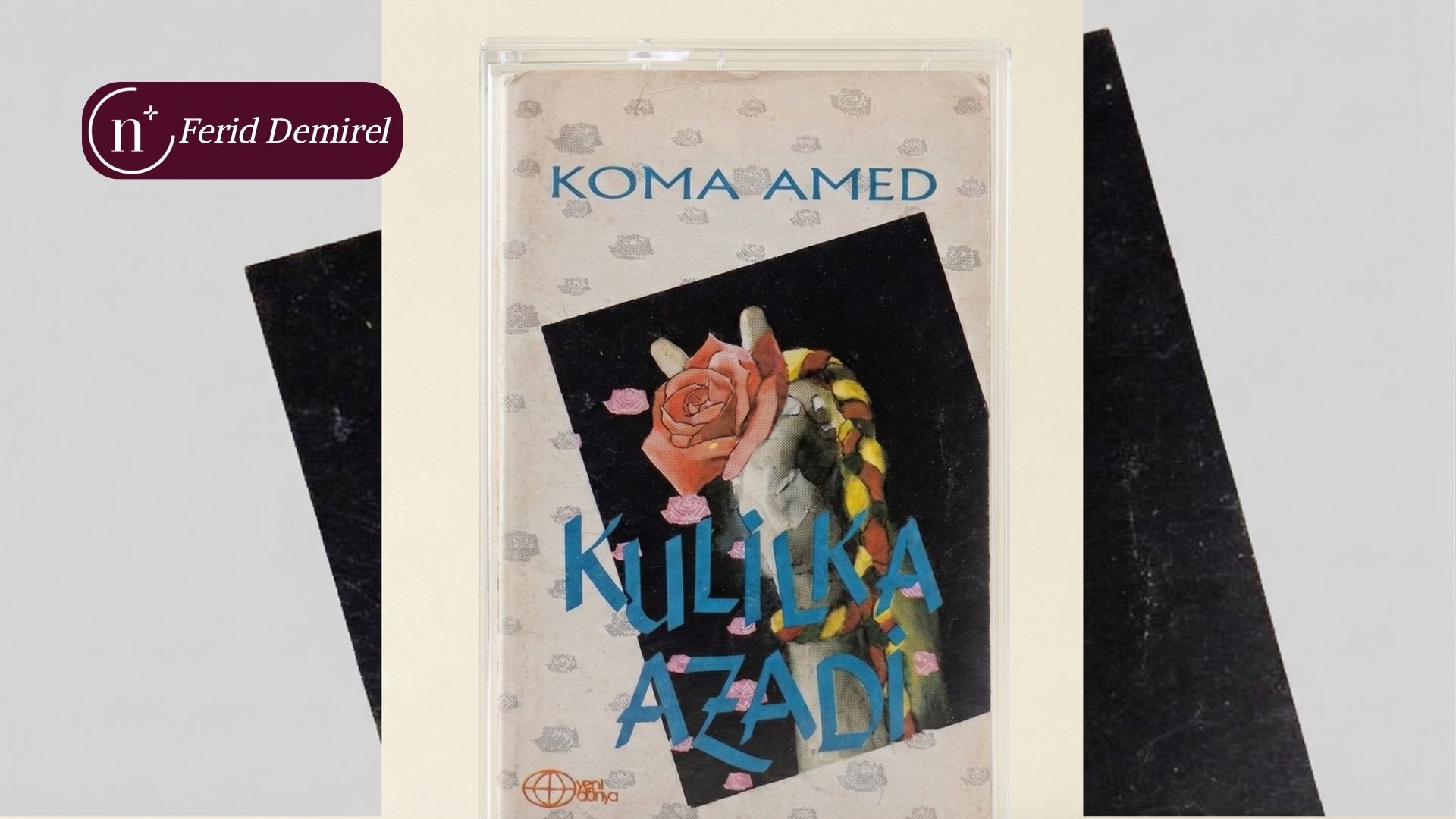
Koma Amed
It was founded in 1988 in Ankara by medical students. Among the founders, Evdilmelik Şêxbekir (Melek), a Kurd from Rojava studying at Hacettepe University, stood out. During its establishment, they faced significant difficulties finding a studio that played Kurdish music. In 1993, they moved to Istanbul and began working with NÇM.
The group, applying a folk-jazz synthesis with an experimental approach, broke away from the conventions of traditional Kurdish music. Their first album included “Çav Bella,” a Kurdish adaptation of “Bella Ciao.” This transformation was orchestrated by Şêxbekir. The Dergûş album sold over 400,000 copies; the then Minister of Foreign Affairs, İsmail Cem, presented this album as a gift to his EU counterparts, arguing that “Kurdish is not banned.”
Founded: 1988, Ankara
Albums: Kulîlka Azadî (1990), Agir û Mirov, Dergûş (1997)
Musical style: Folk-jazz, experimental folk
Label: Ses Plak
After Koma Amed: Çar Newa
Following the dissolution of Koma Amed, four members of the group came together to form Çar Newa. The number “çar” (four) in its name directly refers to this founding story. It was active in the late 1990s and early 2000s.
Koma Amed, a group that sought to build its own sound upon the folk-jazz heritage of the past, continued the musical language of its predecessor.
Founded: Late 1990s, Istanbul
Origin: Continuation of Koma Amed — four former members
Period: Late 1990s – early 2000s
Koma Rewşen
Recognised as the first Kurdish-language rock group in Turkey. Operating under the NÇM, the group occupies a distinctive place in the Kurdish music landscape of the period by virtue of this pioneering role. Koma Rewşen combined a rock formation with Kurdish lyrics and traditional motifs, becoming known through live performances in student circles and at NÇM events.
Significance: First Kurdish-language rock group in Turkey
Affiliation: NÇM, Istanbul Period: Early to mid-1990s
Koma Asmîn
A music group composed entirely of women. This characteristic gives it a singular place in the Kurdish music landscape of the period, carrying distinct symbolic weight in terms of both gender and cultural identity. Active at the same time as NÇM-affiliated groups, Koma Asmîn contributed to the visibility of Kurdish women’s voices in public life.
Composition: Women members only
Affiliation: NÇM circle, Turkey Period: 1990s
Agirê Jiyan
One of the prominent groups of the 1990s, developing a distinctive approach in an effort to bring Kurdish music onto a modern and popular footing. It operated in connection with the NÇM, sharing the same studio infrastructure and technical team as the other groups of the period. Known particularly for its dance rhythms and arrangements, it is frequently cited alongside Koma Çiya, Koma Azad and Koma Amed in academic sources.
Selected album: Adarê (1995)
Musical style: Modern Kurdish folk, dance Period: Early to late 1990s
Koma Çiya
One of the groups operating within the NÇM. Consistently present across the recordings of Kurdish music production of the period, Koma Çiya is grouped with other ensembles sharing similar political themes and sonic approaches. It is best known for the album Dîlana Bêsînor, released in 1998 on the Kom Müzik label.
Selected album: Dîlana Bêsînor (1998, Kom Müzik)
Affiliation: NÇM, Istanbul
Koma Rojhilat
The group took on a musical identity shaped by its reference to Iranian Kurdistan (Rojhilat), as the name indicates. One of the principal groups of the NÇM, it produced work in Istanbul throughout the 1990s. Its recorded centrepiece is the album Mezrabotanim Ez, released in 1997 on the Kom Müzik label.
Selected album: Mezrabotanim Ez (1997, Kom Müzik)
Affiliation: NÇM, Istanbul
Koma Azad
It is one of the groups documented to be active both in Türkiye and in the diaspora. It is the most widely known among the Kurdish groups bearing the name “Freedom”. In terms of musical style, its name is mentioned alongside Koma Azadî and Koma Dengê Kawa.
It was active during the same period as groups affiliated with NÇM. It shared a common aesthetic in terms of political themes and the reinterpretation of folk music.
Other groups of the period
Vengê Sodirî
A group occupying a singular position in the Kurdish music landscape of the period: it produced music exclusively in Zazaki and worked with an experimental approach. Taken together, these two characteristics place it in a rare position among the groups of the era.
Language: Zazaki (distinct from other groups active in Turkey)
Musical approach: Experimental Period: 1990s
Gulên Mezrabotan
One of the most unusual formations in the Kurdish music landscape of the period: all of the group’s members were children. It took on a symbolic role in the transmission of Kurdish cultural identity to younger generations. Its direct incorporation of children into Kurdish music production stands as a singular undertaking within the era.
Composition: All members children
Affiliation: Turkey Period: 1990s
Koma Gulên Xerzan
Taking its name from the Xerzan region of Batman, the group combined folkloric roots and political lyrics in Kurdish music of the 90s. Their music, which spread through cassette culture, carried themes of identity, exile, and resistance. They became synonymous with names like Rojda and Çiya.
A pioneering group from the Soviet sphere
Koma Wetan
Although its historical significance extends back well before the 1990s, this group, founded in Soviet Tbilisi in 1973, holds the distinction of being the world’s first Kurdish-language rock ensemble. Its lineup consisted of three Yazidi Kurds and one Armenian; the lead performer, Kerem Gerdenzerî, was born in Tbilisi, though his family was originally from Kars and Van. With state support from the Soviet authorities, the group was granted the status of a “vocal-instrumental ensemble” and featured on state television and at festivals.
It recorded demos in 1979; its sole album, Bayê Payizê (Autumn Winds), was not released until 1989. Combining Kurdish poetry with classic rock, psychedelic textures and the works of the region’s Kurdish bards, the record attracted considerable interest among Kurdish musicians in Turkey during the 1990s and was acknowledged by a number of groups as a source and point of reference.
Founded: 1973, Tbilisi (USSR)
Album: Bayê Payizê (1989)
Musical style: Kurdish poetry + rock, psychedelic
Significance: World’s first Kurdish-language rock group.
*The map and timeline were generated using the AI tool Claude.