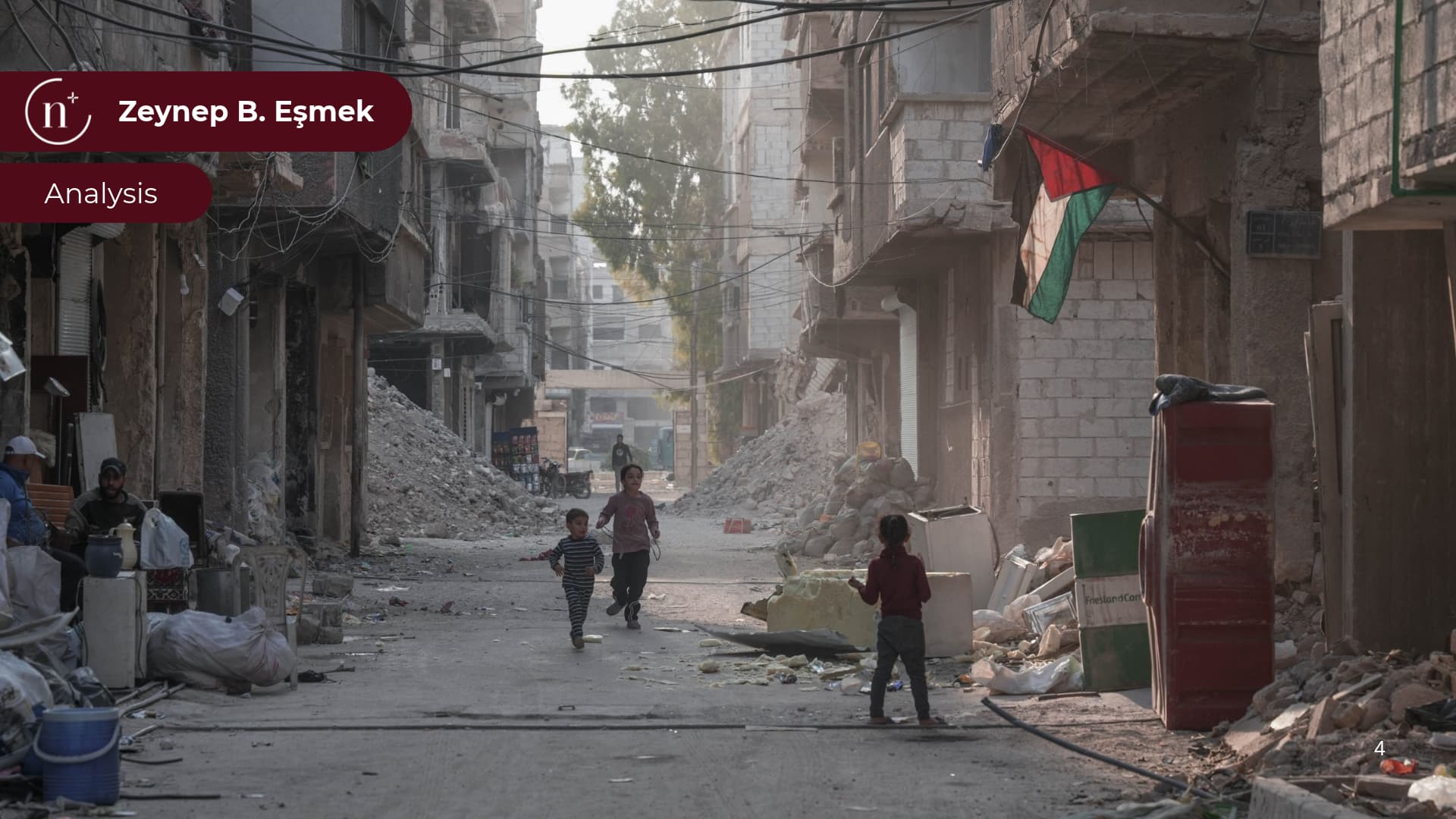
Seventy-nine years have passed since the United Nations General Assembly adopted Resolution 181, which provided for the partition of Palestinian territory. November 29, the anniversary of the resolution, has been observed since 1978 as the “International Day of Solidarity with the Palestinian People.” Meanwhile, Israeli attacks in Gaza, now past the three-year mark, and occupation policies in the West Bank continue to worsen the living conditions of Palestinians.
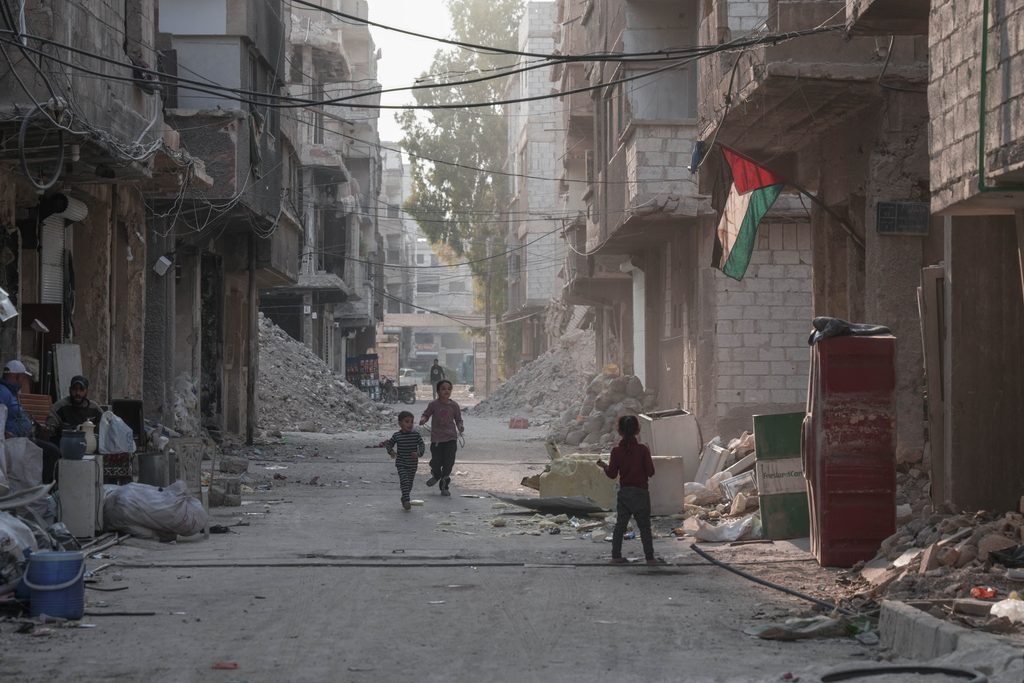
Photo: Pexels.com
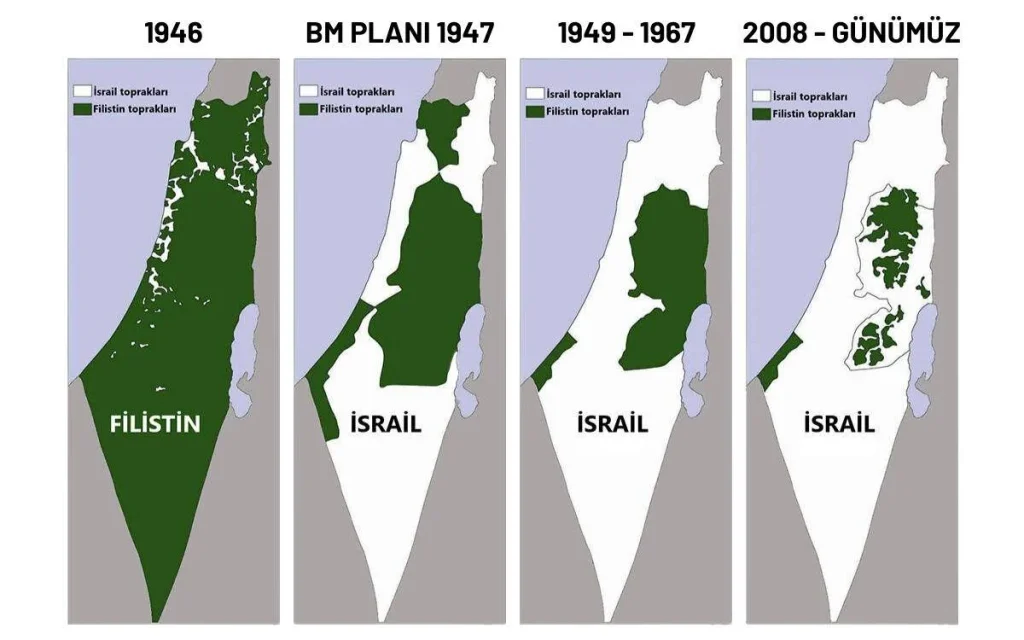
In 1947, approximately 1.35 million Palestinians and 630,000 Jews lived in Palestinian territory. On November 29, 1947, after two months of negotiations, the United Nations (UN) General Assembly adopted Resolution 181. It approved a plan to partition the territory of Palestine under the British Mandate between an Arab state and a Jewish state. Jerusalem was to be administered under a special international regime. In the vote, 33 countries, including the United States and the Soviet Union, voted in favor, 13 countries, including Turkey, voted against, and 10 abstained.
Palestinians, who made up about 67 percent of the population at the time, were allocated 42.9 percent of the land. Jews, who made up about 33 percent of the population, were allocated 56.5 percent. The roughly 0.6 percent of the territory containing Jerusalem was to have a special status under international administration. As a result, the gap between population and land distribution was at the center of debate even when the plan was adopted.
Occupation expanding since 1948
The partition plan, which a large share of Palestinians opposed, was never implemented on the ground. Fighting broke out in 1947-1948, and the State of Israel was established in 1948. By the end of the war, Israel had taken control of approximately 78 percent of the former British Mandate territory of Palestine. Jordan took control of the West Bank and Egypt took control of the Gaza Strip. Hundreds of thousands of Palestinians were forcibly displaced from their land. This process, which Palestinians commemorate as the “Nakba” (Great Catastrophe), formed the basis of the region’s refugee issue.
In the Six-Day War, which began on June 5, 1967, Israel occupied the West Bank, East Jerusalem, the Gaza Strip, the Sinai Peninsula and the Golan Heights. The Sinai Peninsula was later returned to Egypt under a peace agreement, but the occupation and territorial control of the other areas continued.
In Resolution 242, adopted in November 1967, the UN Security Council called on Israel to withdraw from the territories it had occupied during the war. Yet 59 years later, the occupation of Palestinian territory has not ended. Israel’s settlement activities in the West Bank, its policies on East Jerusalem and its practices toward Gaza remain among the main obstacles to Palestinians establishing an independent state.
Source: bianet
No resolution in sight in the 49th year of the Solidarity Day
With Resolution 32/40 B, adopted on December 2, 1977, the UN General Assembly decided that November 29 would be observed every year as the “International Day of Solidarity with the Palestinian People.” The first events were held on November 29, 1978. The call was reiterated in Resolution 34/65 D, adopted on December 12, 1979.
The annual events aim to have the international community draw attention to the Palestinian people’s rights to self-determination, national independence and sovereignty, and to the right of displaced people to return to their homes and property. However, in the 49th year of the Solidarity Day, the situation on the ground shows that the Palestinian question remains unresolved.
The heavy toll of three years of war in Gaza
On October 7, 2023, Hamas-led armed groups attacked southern Israel. According to Israeli authorities, approximately 1,200 people were killed and 251 were taken hostage. Israel then launched a large-scale military operation against the Gaza Strip. The attacks, which began with the operation Israel named “Iron Swords,” have now passed the three-year mark.
Over these more than three years, Gaza has suffered severe humanitarian and physical devastation. According to the Humanitarian Situation Report issued by the UN Office for the Coordination of Humanitarian Affairs (OCHA) on November 18, 2026, the death toll reported by the Gaza Ministry of Health has reached 74,710 and the number of injured has reached 176,131. OCHA notes that these figures come from the Gaza Ministry of Health and have not been independently verified by the UN. The report also includes detailed data on the deaths of 74,237 people whose identities the ministry has established.
According to the same report, 82 percent of structures in Gaza have been destroyed or damaged. Education has also suffered heavy losses. Approximately 93 percent of educational facilities need extensive repair or reconstruction before they can function again, and more than 63 university buildings have reportedly been destroyed. Health services have also been severely disrupted, and many hospitals are unable to operate at full capacity.
The ceasefire in Gaza: a one-year toll
According to OCHA’s Humanitarian Situation Report dated November 26, 2026, a ceasefire agreement was announced on October 10, 2025. In the roughly one year since then (October 2025–November 2026), at least 1,679 Palestinians have been killed and 6,100 injured in continued attacks in the Gaza Strip. As of November 23, the number of bodies recovered from under the rubble had reached 851. Over the same period, 294,250 families needed winter shelter assistance, but supplies were reportedly available to provide only partial support to about 52,000 of them. As of November 2026, 21,468 patients and wounded people were awaiting medical evacuation, and 2,027 patients had died while waiting. Approximately 771,200 children in Gaza were also reported to need educational support for the 2026-2027 school year.
At least 1,679 people killed in Gaza since the ceasefire
Source: UN Office for the Coordination of Humanitarian Affairs (OCHA), Humanitarian Situation Report, November 26, 2026
Destruction, hunger and the genocide debate
More than three years of attacks have severely damaged living conditions in Gaza. According to data from the UN Satellite Centre (UNOSAT), 82 percent of structures in Gaza had been destroyed or damaged as of June 2026. Approximately 1.98 million people in the territory need shelter assistance, and a large part of the population is struggling to survive in tents and heavily damaged buildings.
The food crisis is also deepening. According to an Integrated Food Security Phase Classification (IPC) analysis dated July 23, 2026, more than 1.4 million people, about 67 percent of Gaza’s population, are expected to face acute food insecurity between July and December 2026. The number is projected to rise further if humanitarian aid cannot be delivered.
The legal side of the war is also at the center of the international agenda. The Independent International Commission of Inquiry, which reports to the UN Human Rights Council, published a report on September 16, 2025. It concluded that Israeli authorities and security forces had committed the crime of genocide in Gaza. Amnesty International and the Israeli human rights organization B’Tselem also described Israel’s actions in Gaza as genocide in their own investigations. The Israeli government rejects the genocide accusations and maintains that its military operations are self-defense against Hamas.
In December 2023, South Africa filed a genocide case against Israel at the International Court of Justice (ICJ). The court has not yet issued a final ruling. Under its order of May 21, 2026, South Africa must submit its next written pleading by November 22, 2027, and Israel must submit its response by May 22, 2029. These are not the dates when the final ruling will be announced. They are the deadlines set for the parties to submit their written pleadings.