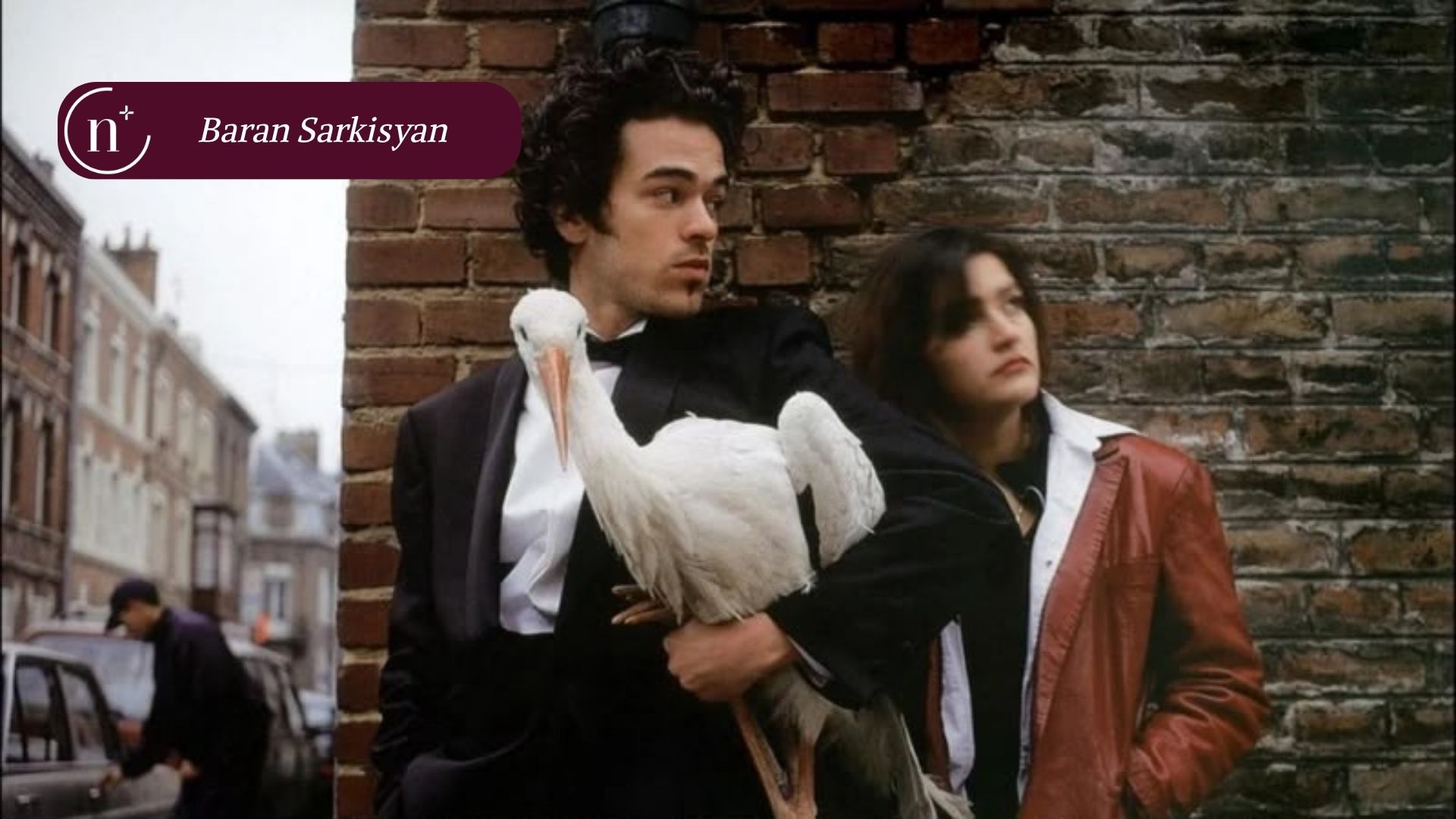
Written and directed by Tony Gatlif, Children of the Stork places an injured stork at the film’s center as the main character, alongside three young people living in Paris who are also cast as that stork’s children. Because all of us are the settled, assimilated children of a wounded, nomadic stork.
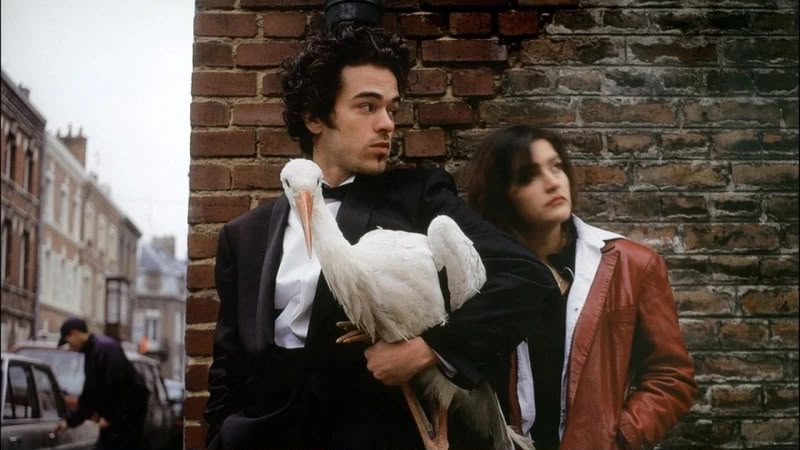
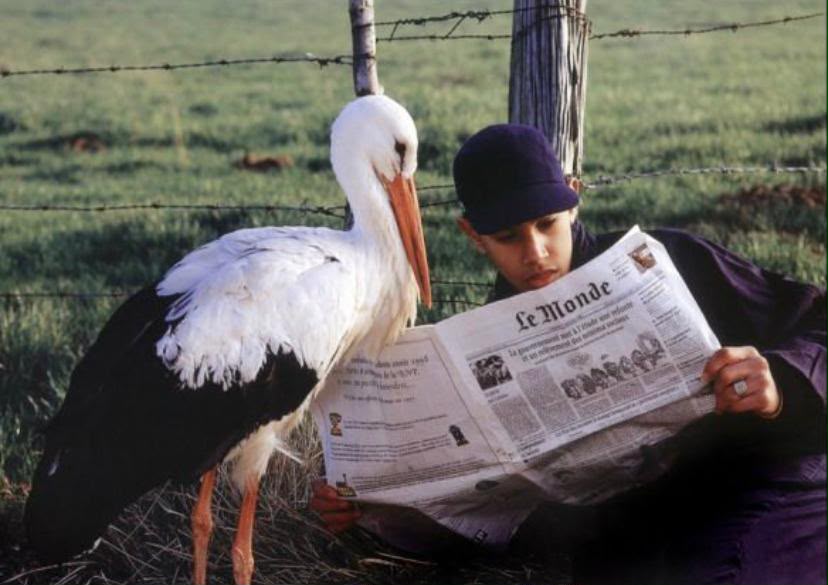
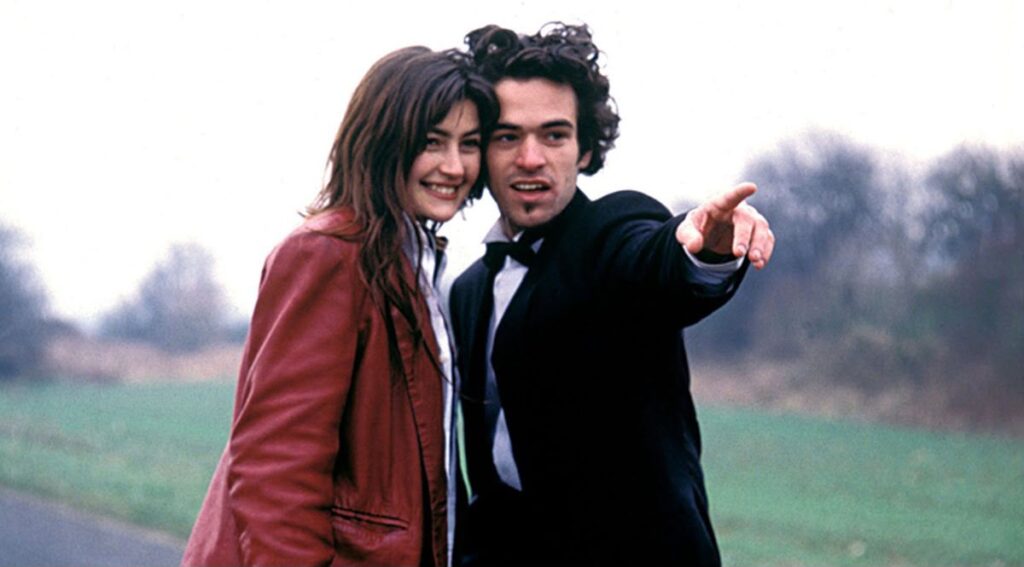
Otto is an unemployed young man living with his mother, making his living selling newspapers on trains. Launa, whom he meets while selling papers on the trains, is a hairdresser whose constant lateness worries her boss on commercial grounds, but she is also a free spirit who will soon join the rebellious union of the unemployed. Ali, also living in Paris with his family, is an intellectual living with his assimilated family, who will soon be thrown out by his father for refusing to assimilate himself. The condition that will bring these three characters together is their resignation from the roles and duties assigned to them by their families and employers within the established order.
Setting out with nothing left to lose, these three young people, without starting from anywhere in particular or arriving anywhere in particular, present the very possibility and course of being on the road.
In the film, Otto’s unemployment is emphasized in particular. Unlike the way unemployment tends to be seen in today’s conditions — as uselessness, almost as a plague — here it is highlighted with pride and praise. Unemployed Otto does not live as someone perpetually dependent on another, instead, like Launa, he turns his unemployment into a protest, an opposition to the established order.
A mocking gaze at the system
In the film, law and the state are briefly represented — without any need for elaboration — through the figure of the police officer and bailiff who come to seize a home. The serious, tense, emotionless face of the mechanism of discipline and surveillance is loosened and rendered absurd by a series of anarchist hammer blows. Before the disorderly uprising launched by the three unemployed young people against the established order, the film underscores that having a job and conforming to the system produces distress, stress, and unhappiness. In this sense, the film is, in a way, a praise of idleness. But the principle of this idleness is not inaction, since what makes the difference is action, and since difference is affirmed, it is action that produces neither commodity, exploitation, nor alienation.
Parrots, the sovereign’s echo
In anarchist ethics, theft is not absolute evil; done out of need — without requiring courtesy — it becomes a kind of borrowing: a gun becomes not a symbol of massacre but of unemployment, a tool that breaks a lock opened by wages; the nomadism of storks becomes a symbol of freedom, and the hunters who wound the stork become a symbol of fascism. The parrots being symbolized as fascists lies in their repeating their owners. The parrot that squawks, as its owner’s voice, phrases like “foreigners go home!” and “dirty Arabs” ends up — fittingly, with Launa’s modest contribution — in a trash bin along with its cage; meaning, all fascists belong in the dustbin of history.
Borders exist even for storks
The film’s central character, the stork named Muhammed, is in fact a free bird pursuing its own course within its own nature, unaware of bourgeois borders — the very kind of bird we were told as children brings us into the world. But its journey is interrupted when it is wounded by a hunter while migrating over France. The hunter is called a fascist; the stork, transformed into a symbol of freedom, is wounded in the eyes of all nomadic souls and migrants. Three young people, having abandoned themselves to chance encounters without map or purpose, encounter the stork while traveling in their stolen/borrowed vehicle, and after bandaging its wounds, they take it upon themselves to smuggle it back to its migratory path through illegal routes. In a world where even storks get caught up in borders and wounded because of hunters/fascists, what state is human freedom in?
For migrants whether for political, economic, or educational reasons, the options awaiting them in our age are limited: either a deep-rooted integration and assimilation, felt as a perpetual pressure, meaning walking around perpetually wearing a mask, or else the threat of being disregarded and sent back.
As the film discusses the phenomenon of migration, it also problematizes today’s relatively milder form of assimilation — integration/adaptation — through the impression: “what if the thing we are adapting to is itself sick?”
The low-level acts of violence set off by Laura spray-painting “burn it, tear it down” on a wall are presented — if we look at it from Fanon’s perspective — as a purifying force at the individual level, a gain in self-confidence, in the face of the pressure of assimilation and exploitation.
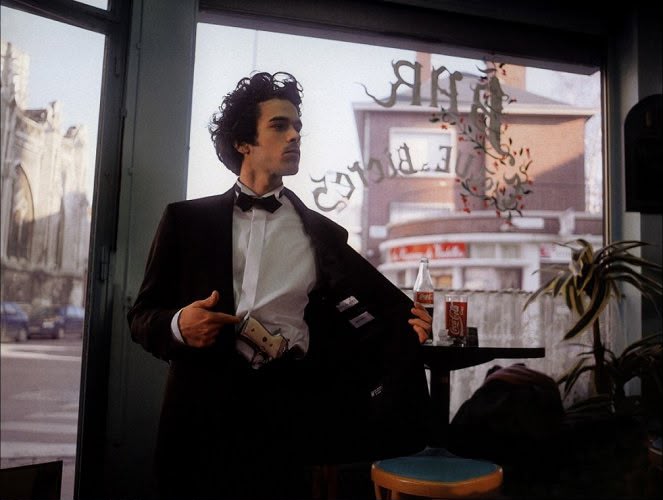
Through the character of Ali who constantly reads Che Guevara, Guy Debord and anti-colonial writers, and who despises bourgeois cinema, the perception of migrant identity is scattered apart. Ali, as a migrant, is someone who knows what exploitation and assimilation are, and is engaged in an act of rebellion against them.
There are also scenes in the film where characters argue with the camera, flee from it, and speak directly to the audience. This too is a blow against mainstream cinema’s structure of producing representation and alienation. Industrial cinema, which produces entertainment through representation, spectacle, and commodification, is defeated both technically and through the screenplay.
Through its emphasis on nomadism, the film can be read as a colorful, joy-filled gypsy air — or equally, as a loose salute of respect.
*The film is dedicated to Muhammed, an Algerian who crossed from Morocco to France underneath a truck at the age of 22.
Film credits:
Director: Tony Gatlif
Screenplay: Tony Gatlif
Year of release: 1999
Film title: Children of the Stork (Je Suis né d’une Cigogne)