Sometimes, it does not take thousands of words to describe the loneliness of a people. One Baloch refugee, sitting alone outside Number 10, says enough.
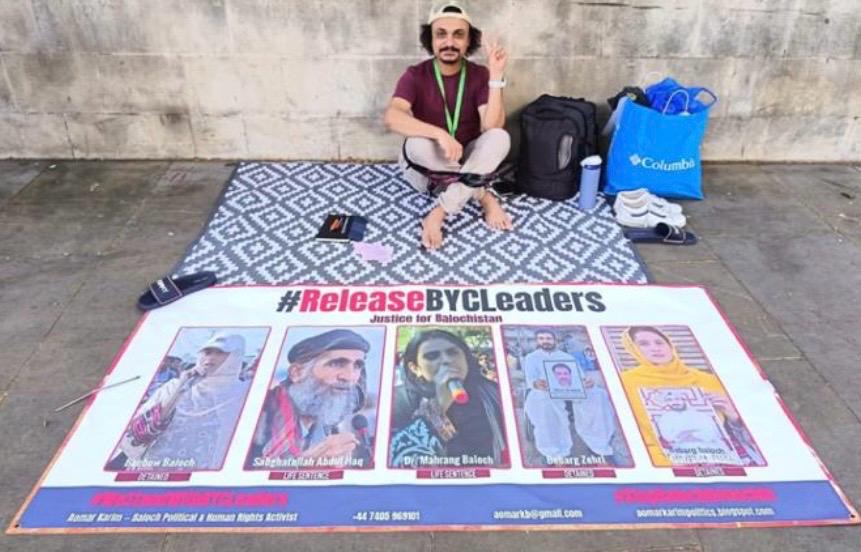
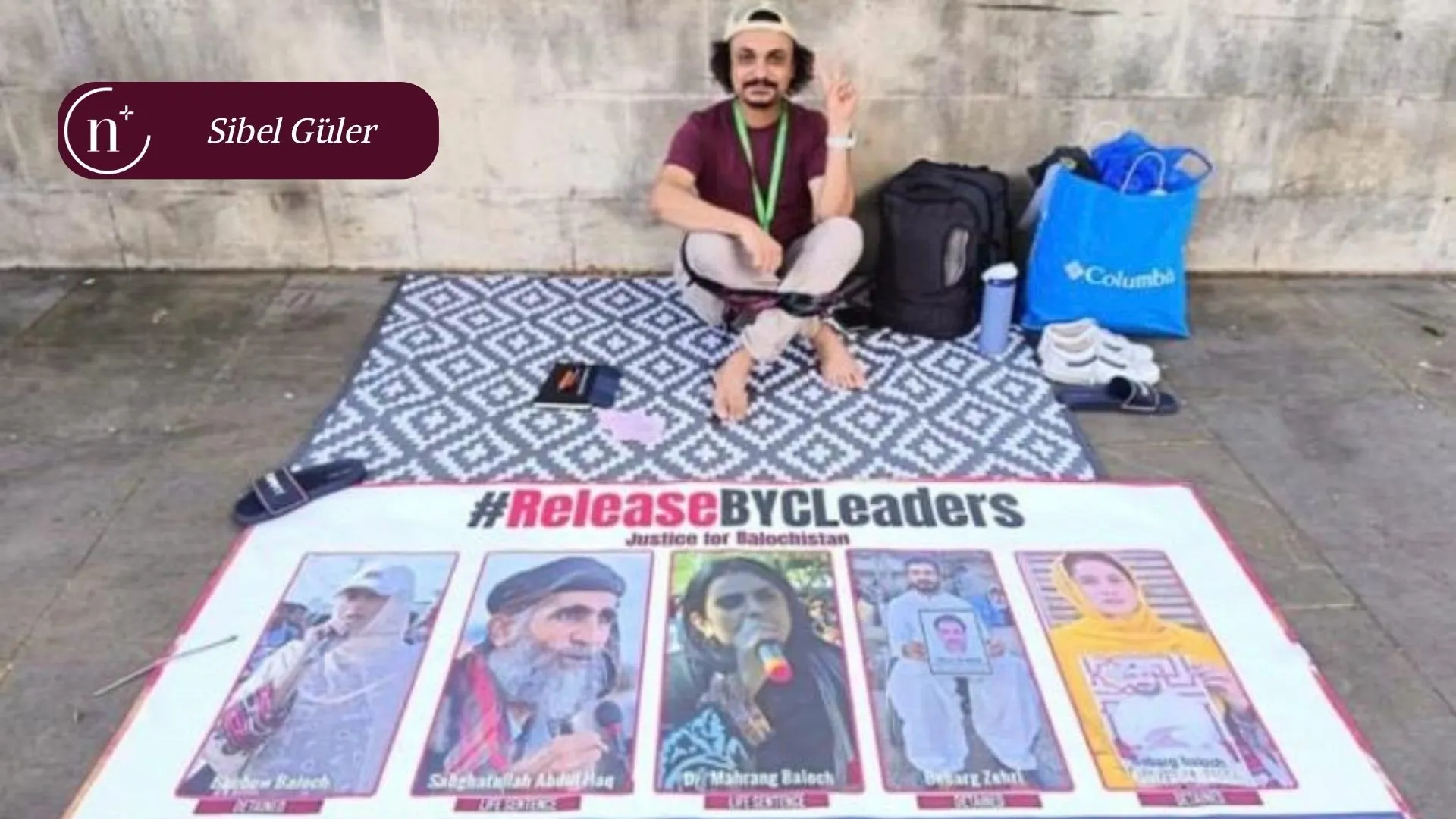
In the heart of London, directly opposite one of the world’s most powerful centres, one man has been sitting alone since 1 July.
His name is Aomar Karim.
He is a friend I met in exile.
A Baloch human rights activist, Karim sought political asylum in the United Kingdom four years ago. It had become impossible for him to continue his struggle in his homeland. But exile changes only where you live. It does not end the struggle.
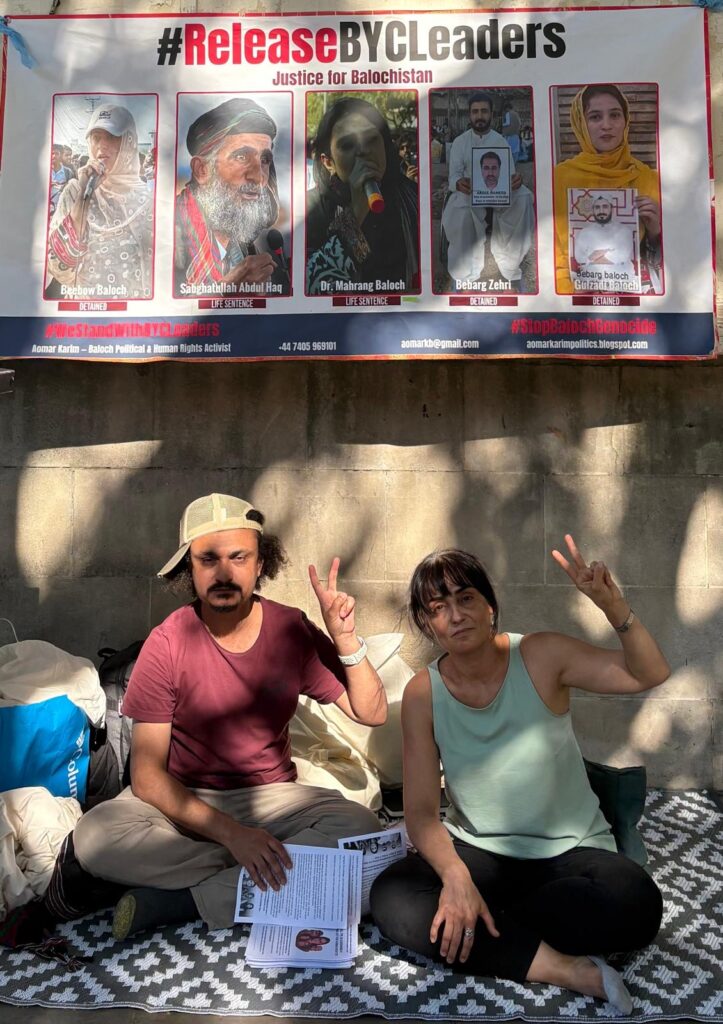
Today, on the anniversary of the Sivas Massacre of 2 July 1993, I went to see him. More precisely, I went to stand beside him in solidarity.
I found Karim sitting directly opposite Number 10 Downing Street. Behind him there was a banner. Beside him, a few personal belongings. He sat quietly, watching the famous black door.
At the same time, hundreds of tourists posed for photographs outside the iron gates of the Prime Minister’s residence, eager to capture another London landmark.
Yet almost nobody noticed the Baloch refugee sitting beneath his banner.
Except for one South Korean tourist.
She was the only person who stopped to ask what he was doing.
On one of the world’s busiest political streets, he was almost invisible.
“May someone hear our voices”
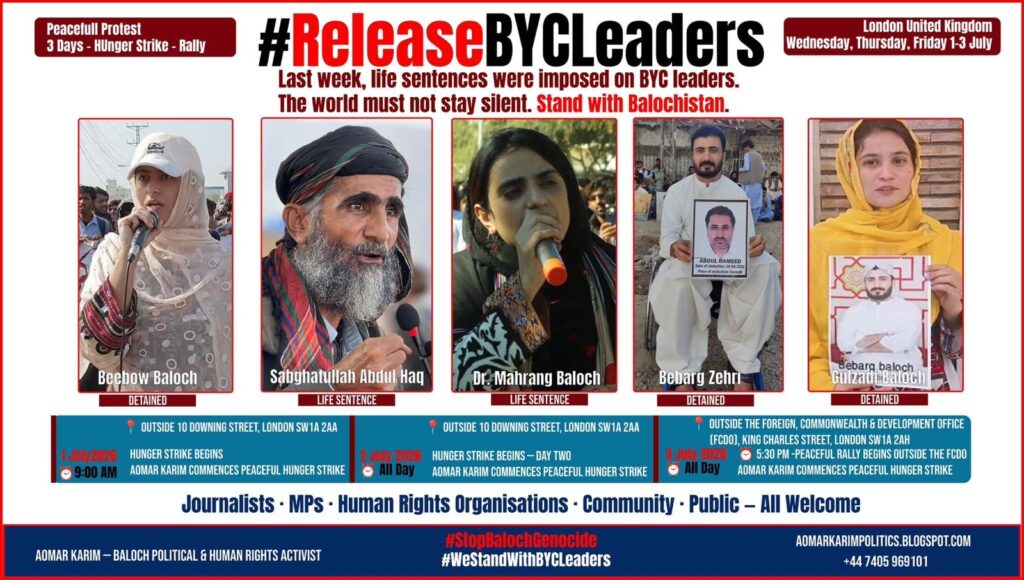
On 1 July, Aomar Karim began a three-day hunger strike. His aim is to bring the long-standing repression and human rights abuses in Pakistani-controlled Balochistan to the attention of the British government and the international community.
His demands are clear.
He is calling on the UK government to publicly condemn the life sentences handed down by Pakistan against Baloch human rights defenders Dr. Mahrang Baloch and Sibghatullah Shah Ji, and to urge the Pakistani authorities to drop all charges against them and other Baloch activists.
A people divided
The Baloch are one of the indigenous peoples of Southwest Asia. Their historical roots are often traced to the Medes, and they are widely regarded as being closely related to the Kurds.
Like the Kurds, their historic homeland has been divided among three states: Pakistan, Iran and Afghanistan. Their language, Balochi, belongs to the Indo-European language family and is distantly related to Kurdish.
And, like the Kurds, they have spent decades struggling for their identity, political rights and fundamental freedoms, particularly in the part of Balochistan controlled by Pakistan.
One of the most prominent figures in that struggle is physician and human rights defender Dr. Mahrang Baloch. Known internationally for campaigning against enforced disappearances and extrajudicial killings, she is one of the leading figures of the Baloch Yakjehti Committee (Baloch Unity Committee – BYC).
The Pakistani authorities arrested Dr. Mahrang Baloch in 2025 after years of attempting to criminalise her activism. In June 2026, she was sentenced to life imprisonment after being accused of responsibility for the death of a police officer during a protest in 2024.
How familiar that sounds.
A movement for rights treated as a crime.
Activists branded as terrorists to silence them.
People who disappear.
And despite everything, a people who refuse to give up.
A call to protect the Baloch people
From his place outside Downing Street, Aomar Karim says the Pakistani state, military and judiciary bear responsibility for grave human rights violations against the Baloch people.
His appeal to the United Kingdom and the international community is simple:
“Protect the Baloch people. Take action to end enforced disappearances. Hold those responsible for human rights violations accountable, and pressure Pakistan to release all detained Baloch political prisoners. The UK government should begin by unequivocally condemning the shameful life sentences imposed on Dr. Mahrang Baloch and Sibghatullah Shah Ji.”
The weight of silence
One man sitting alone across from Downing Street.
People who never looked up from their phones.
Tourists taking photographs.
The crowds flowing around him.
A silent protest that almost no one noticed.
As I left my friend there and made my way home that evening, I carried a lump in my throat and a weight in my heart. The heaviest burden was not simply his solitude—it was the silence that surrounded it, even in the midst of so many people.
Sometimes, it does not take thousands of words to describe the loneliness of a people.
One Baloch refugee, sitting alone outside Number 10, says enough.